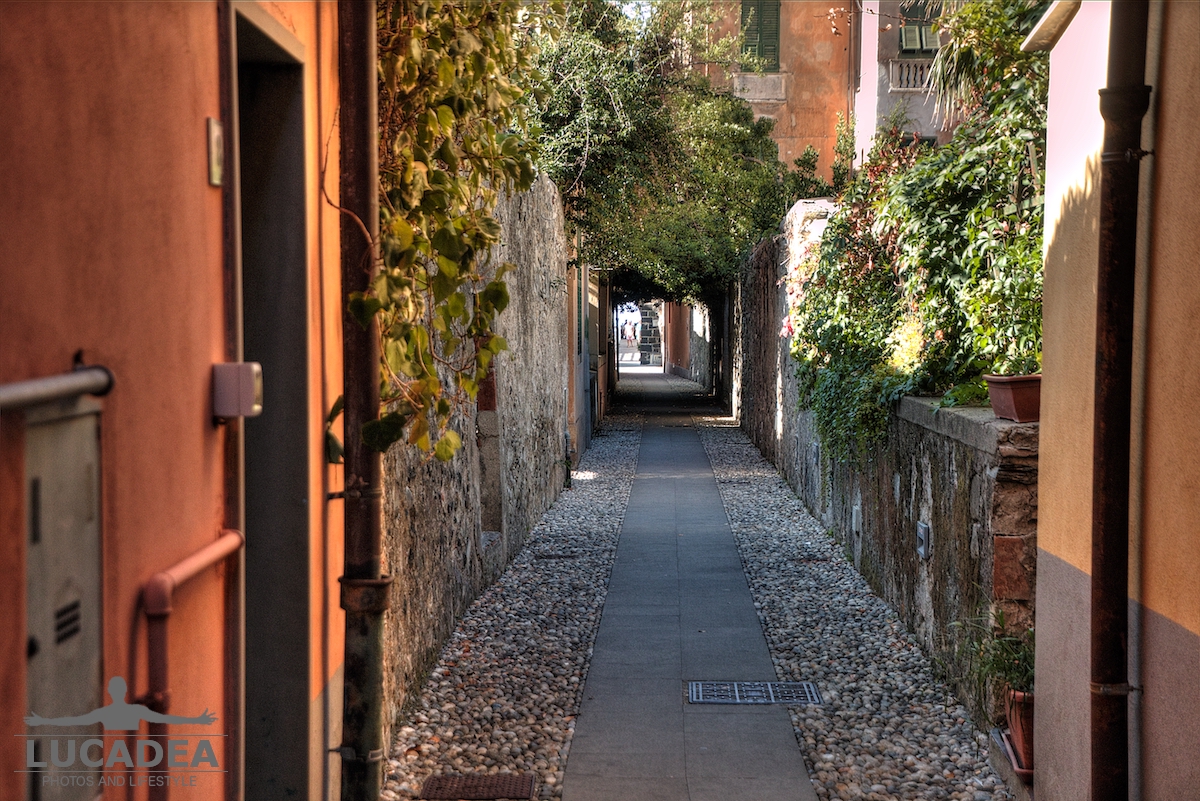
Alley in Monterosso at evening light.
In this glimpse of Monterosso al Mare in the Cinque Terre, during the summer of 2024, I find myself walking through a narrow passage where the evening light slowly settles between tall walls and dark stone steps. The alley in Monterosso at evening light feels tight and intimate, shaping every movement as the space narrows and opens in small, irregular rhythms.
As I continue through Monterosso al Mare, Liguria, Italy, I start thinking about what to see in Monterosso al Mare beyond its coastline. The answer is not only in the sea views but in these inner paths, where daily life quietly unfolds. The alley in Monterosso at evening light becomes a way of reading the village from the inside rather than from above.
I often recall other Cinque Terre stories shared on lucadea.com, but this moment feels more enclosed and personal. The village reveals a layered structure: Monterosso is the largest of the Cinque Terre and the only one with a wide sandy beach, yet its historic center remains dense, with narrow passages that preserve a medieval layout still clearly visible today.
The alley in Monterosso at evening light continues as the light fades further, and warm reflections appear on the stone ground. If you are visiting the Cinque Terre and wondering what to see in Monterosso al Mare, these hidden walkways often reveal more character than any panoramic viewpoint.
And as I leave this passage behind, I realize how much of the village is defined not by its open spaces, but by these quiet, compressed corridors.
Add a comment or go to the bottom of the site to read what other visitors have written.
Alley in Monterosso at evening light – Rue à Monterosso à la lumière du soir – Callejón en Monterosso con luz del atardecer – Beco em Monterosso ao entardecer – Gasse in Monterosso im Abendlicht – Ngõ Monterosso trong ánh sáng chiều – 蒙特罗索傍晚光影小巷 – モンテロッソの夕暮れの路地の風景
The text of this post was written with the help of ChatGPT, a language model from OpenAI.
Add one comment to this article or read here what other visitors have written.
Adv
Disclamer
The rights on images, videos, choruses, text and all other material on the LUCADEA.com website are governed as per Copyright page.
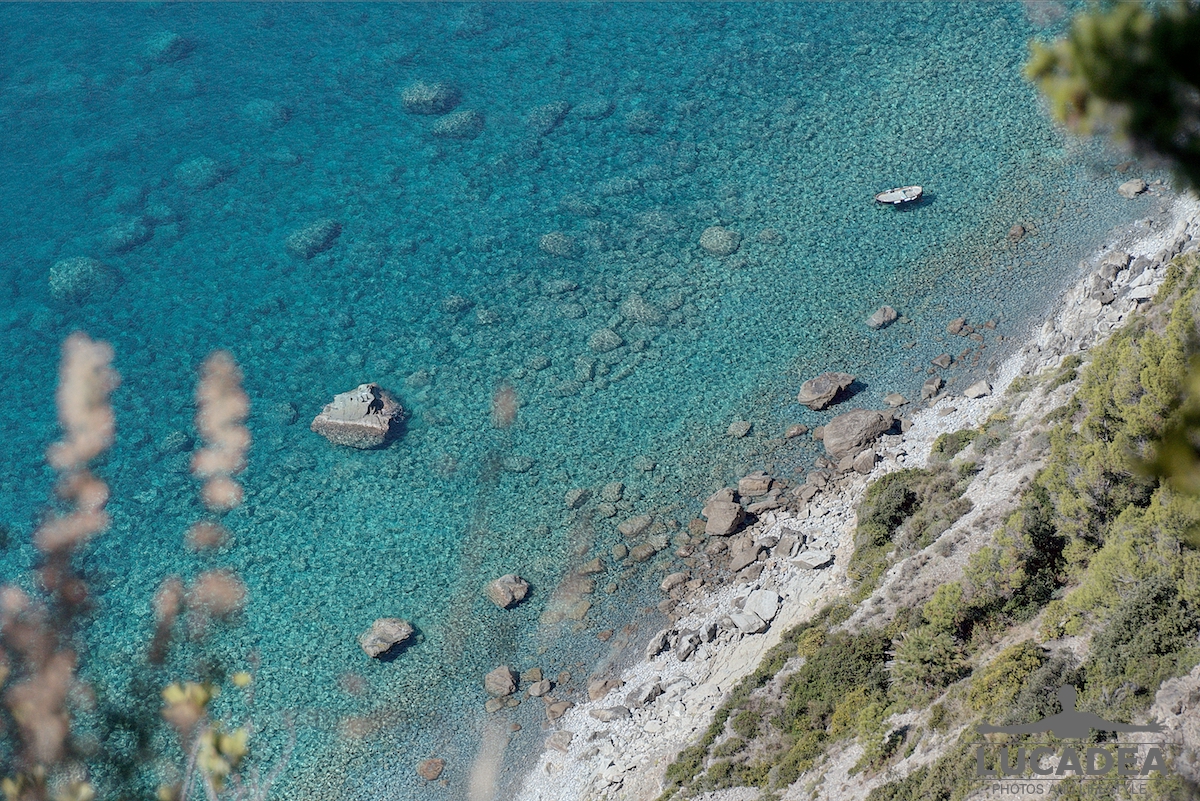
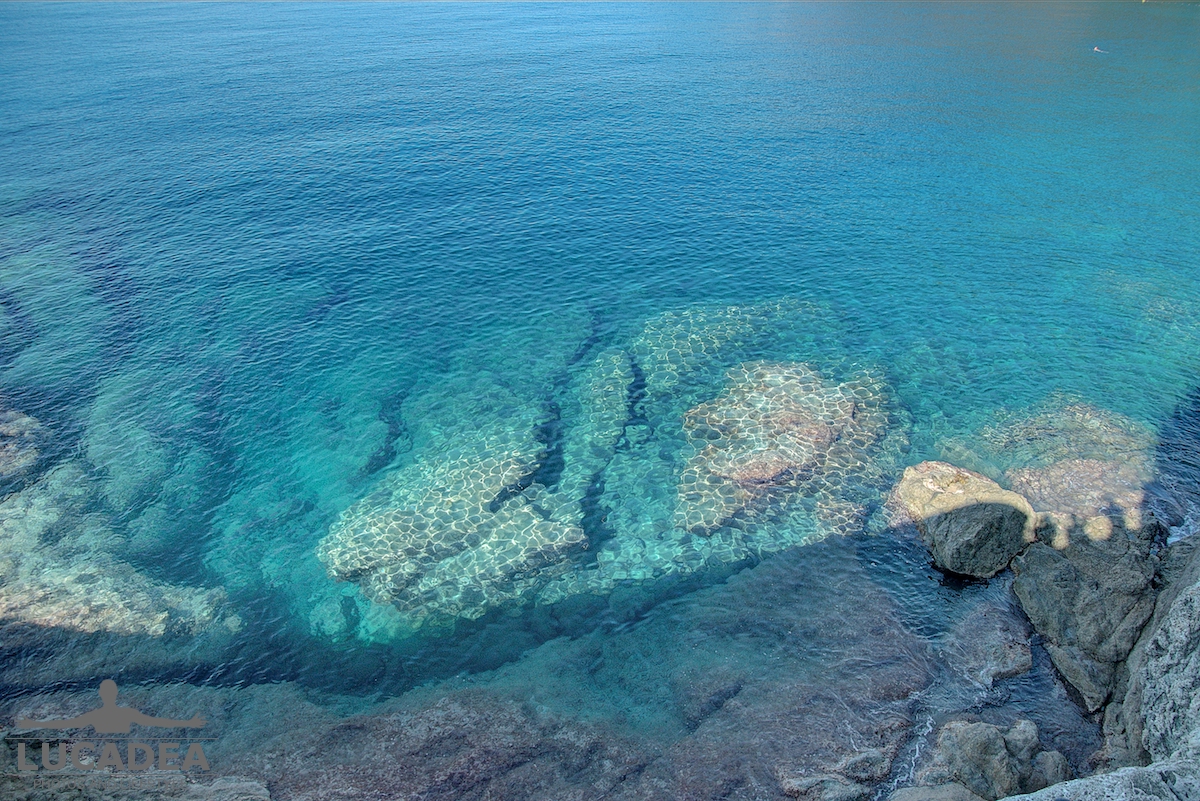
Clear water between Levanto and Mesco Cape.
During a walk along the coast between Framura and Monterosso al Mare, I stopped when I noticed this small cove and the remarkably deep blue water below the trail. It was one of those views that immediately reminded me why the Ligurian coast has so many places worth seeing when you take the time to explore it on foot.
I took this photograph during a hike along the coast near Levanto, in Liguria, Italy. More precisely, I was following the trail towards Mesco Cape, the headland separating Levanto from Monterosso. It is a section of the route I have already photographed several times, and it continues to reveal different details whenever I walk through it.
This time it was not the wide panorama that made me stop. It was the color and clarity of the water below the trail. From above, I could clearly see the small beach and, just a short distance from the shore, a little boat anchored in the sea. Looking at it, I immediately thought how pleasant it would be to be there rather than standing on the trail, with the boat resting in front of the cove.
I wanted to capture this detail with my camera because it seemed to represent one of the things I enjoy most about the Ligurian coastline. Photographs of the Cinque Terre often focus on villages, colorful houses and the best-known viewpoints, but walking the trails reveals countless smaller scenes that can be just as memorable. This cove, seen from above, was one of them.
If you are wondering what to see between Levanto and Monterosso, the section around Mesco Cape offers exactly this kind of surprise. The walk is not particularly short and some sections can be demanding, but the scenery changes constantly and the trail gives you viewpoints that cannot be experienced simply by arriving in a village by train.
The blue of the water is what stands out most to me in this photograph. There is not much more that needs to be said: when you see a cove like this, the first thought is almost inevitably about swimming. Perhaps that is also what makes some photographs of the sea so enjoyable. They do not simply show what I saw; they make you imagine what it would have been like to step beyond the frame and reach the water.
The little boat completes the scene perfectly. It was close enough to the shore to suggest that someone had deliberately chosen to stop there, perhaps for a few quiet hours away from the busier parts of the coast. I have no idea who was on board, of course, but I can honestly say that I felt a little envious while looking at it from the trail.
Mesco Cape is also interesting from a historical point of view. The remains of the old hermitage of Sant’Antonio del Mesco can be found on the headland, reminding visitors that this stretch of coastline was frequented long before it became one of Liguria’s best-known areas for hikers and visitors. It is a small historical detail that adds depth to the walk without taking attention away from the landscape.
This photograph also connects naturally with other images I have recently published from the same route. I have already shared photographs of the signs along the Mesco Cape trail and another view of Monterosso from above. They are different images, but they all belong to the same walk and together they tell the story of several moments along this stretch of coastline.
I like photographing this way during a hike, without knowing in advance which image will become the most interesting one of the day. Sometimes it is the big panorama, sometimes a detail of the path, and sometimes a small cove appearing between the vegetation. On this occasion, it was the sea that made me stop.
The coast between Levanto and Mesco Cape is one of those places where walking without rushing makes a real difference. The trail can certainly test your legs, but it continually offers new viewpoints. And when you come across water this clear, a small beach and a boat anchored just offshore, it is difficult not to stop for a photograph.
I have also included the video with this post because some parts of a walk are easier to convey through movement. Photography, however, remains my favorite way of keeping a moment like this: a small piece of the Ligurian coast seen during a hike, with that intense blue water still making me want to go back.
Would you stop at a cove like this for a swim? Add a comment or go to the bottom of the site to read what other visitors have written.
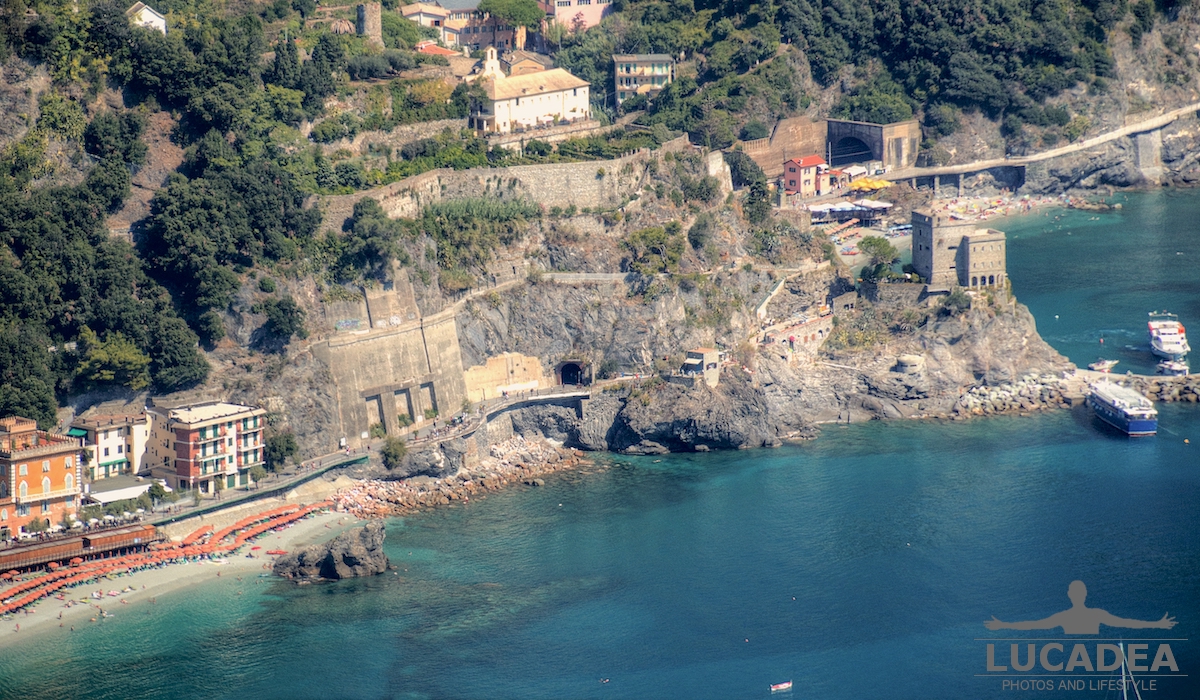
Monterosso seen from Punta Mesco.
From this section of the trail between Levanto and Monterosso al Mare, the village finally comes into view and the Cinque Terre coastline suddenly takes on a completely different perspective. This second photograph of Monterosso was taken in September, and it captures one of the most memorable views I remember from the walk.
Monterosso al Mare is in Liguria, in the Province of La Spezia, Italy, and is the first Cinque Terre village encountered when approaching from Levanto. The photograph was taken from Punta Mesco, the large headland separating the two towns, where the right point along the trail offers an impressive view of the village and the sea.
This is the second photograph of Monterosso I took during that September walk, and I decided to publish it later, almost as a way of bringing a little summer back to the blog. Looking at it now gives me a certain nostalgia, not only for the summer months but also for this part of eastern Liguria, a coastline that has become very familiar to me over the years.
The trail from Levanto to Monterosso through Punta Mesco is beautiful, but it is also long and can be quite demanding. I walked it approaching from the Punta Mesco side, and for me the final section was the descent towards Monterosso. After the distance already covered, the downhill stretch made itself felt, but the view more than repaid the effort.
If you are looking for what to see between Levanto and the Cinque Terre, this trail is worth considering precisely because of its viewpoints. It is not a simple seaside walk, nor is it the quickest way to reach Monterosso, but it allows you to enter the landscape gradually and approach the village from a perspective that you cannot experience from the train or the road.
What stands out most to me in this photograph is the color of the water. From Punta Mesco, the sea seems to shift through different shades as it approaches the coastline, creating a strong contrast with the vegetation and the buildings of Monterosso further ahead. That color was what made me stop and take the photograph.
I took this image with my camera during the walk and, although I already knew that Monterosso would eventually appear, there was still something special about the moment when the village opened up in front of me. After spending so much time surrounded by vegetation and following the trail, the sudden wider view makes you realize just how much ground you have covered.
There is also an interesting detail about the future of coastal connections in this area. Old railway routes and coastal paths in eastern Liguria have increasingly been adapted or discussed as alternatives for walking and cycling, following the example of the popular cycle and pedestrian path between Framura and Levanto. It would be interesting to see whether similar ideas could eventually make this section easier to experience without necessarily taking on the full Punta Mesco hike.
For those who enjoy walking, however, the effort is also part of the experience. The length of the route and its more demanding sections make the moment when Monterosso finally appears even more rewarding. For me, it is precisely this contrast between effort and scenery that gives the photograph some of its meaning.
Seen from above, the village seems almost tucked between the headland and the sea. It is a very different perspective from the photographs taken directly in the village, especially around Fegina beach. On the blog I have already shared photographs of the Fegina rock and the umbrellas covering the beach, and together these images show Monterosso from completely different viewpoints.
I also like the fact that this photograph was taken in September. It is no longer quite the height of the busiest summer period, but the colors and atmosphere of the sea are still there. Perhaps that is why I waited before publishing it: some photographs seem to have their own timing, and this one felt right for bringing a little summer back to the photoblog.
Punta Mesco is therefore much more than a simple passage between Levanto and Monterosso. It is a place where you can stop, look at the sea and watch the village from a distance before tackling the final part of the route. The walk can certainly be tiring, especially on the descent, but when a view like this opens up in front of you, it becomes difficult to complain.
Have you ever seen Monterosso from Punta Mesco or walked the trail from Levanto? Add a comment or go to the bottom of the site to read what other visitors have written.
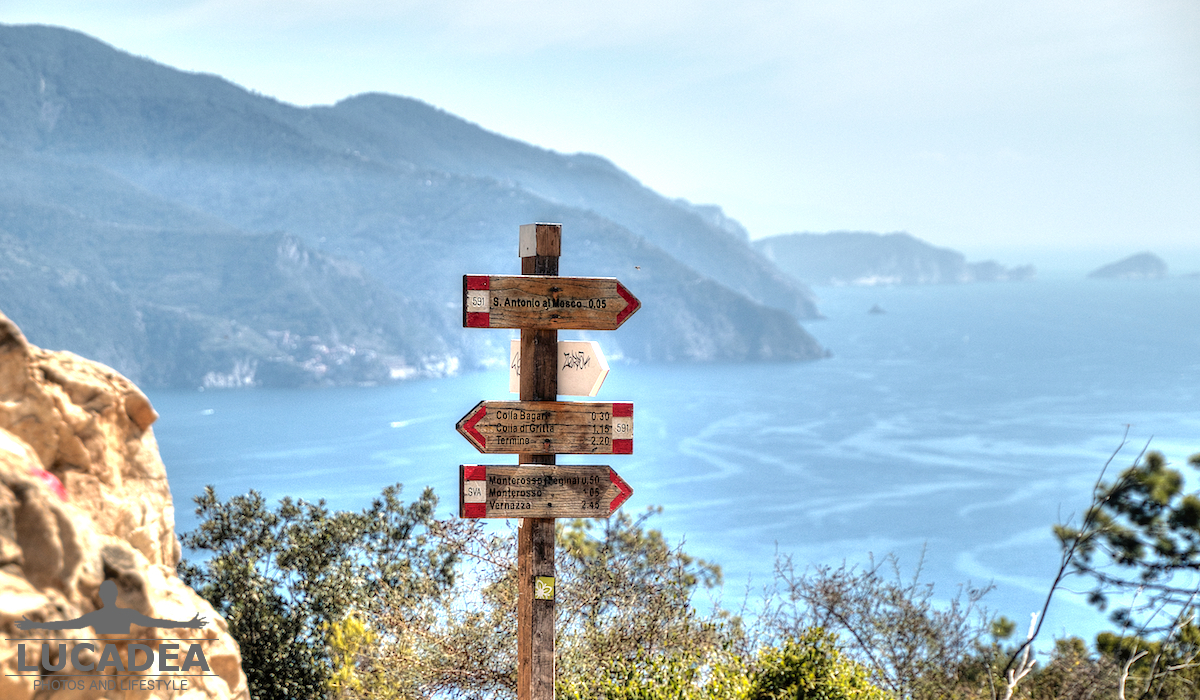
Signs along the Punta Mesco trail.
While walking the trail between Levanto and Monterosso al Mare, I stopped in front of these signs, just a few minutes from the headland, along one of the most interesting sections of this Cinque Terre route. The Punta Mesco trail is one of the walks in eastern Liguria that is worth taking, especially because of the landscape revealed after crossing the promontory.
Punta Mesco lies between Levanto and Monterosso al Mare, in Liguria, Province of La Spezia, Italy, and is one of the most recognizable points along this part of the Cinque Terre coastline. The photograph does not show the most spectacular panorama of the walk, but rather a few simple trail signs that help hikers understand where they are. These are exactly the kind of details that often catch my attention when I photograph a path.
There are dozens of hiking trails in Liguria, but the route connecting Levanto and Monterosso has a character of its own. It crosses the Punta Mesco promontory and, after a fairly demanding walk because of its length and elevation changes, offers a completely different perspective of the coast. Once the headland has been crossed, the views towards the Cinque Terre begin to open up.
If you are looking for what to see while hiking in the Cinque Terre area, this route is interesting because there is no single destination that makes the whole experience worthwhile. The landscape changes gradually throughout the walk. Starting from Levanto, the trail climbs through vegetation, with glimpses of the sea appearing and disappearing between the trees and openings in the path. As Punta Mesco gets closer, the coastline becomes increasingly visible.
I took this photograph a few minutes from the headland, where the trail continues towards Monterosso. I wanted to capture the signs because they are part of the actual experience of walking here. They are not a monument and probably would not attract the attention of someone looking only for scenic views, but for a hiker they are a practical and familiar part of the journey.
What I remember most about this trail is the transition from the enclosed sections of the path to the open view of the sea and the Cinque Terre. The walk can certainly be tiring, especially when taken at a relaxed pace, but the landscape changes the feeling completely once the view opens up. This is one of those occasions when the final panorama becomes more meaningful because of everything experienced along the way.
There is also a small historical curiosity connected with Punta Mesco. The remains of the ancient hermitage of Sant’Antonio del Mesco can be found on the promontory. The ruins are a reminder that this landscape, now crossed mainly by hikers, was also inhabited and visited centuries ago, adding a historical layer to a coastline that is otherwise dominated by nature.
I took this photograph with my camera during the walk, without trying to create a particularly elaborate composition. I simply wanted to preserve a moment from the route, almost like a visual note of the road I had already covered. The signs, placed within the trail itself, quietly suggest that the walk towards Monterosso is still continuing.
The connection between Levanto and Monterosso is also a way of experiencing the Cinque Terre differently from the classic train journey. It is not necessarily the right choice for everyone, since the distance and elevation changes require a reasonable level of preparation, but for anyone who enjoys walking it provides a slower and more gradual way of entering the landscape.
After crossing Punta Mesco, the reward is mainly visual. The Cinque Terre begin to appear from a perspective that is completely different from the one experienced from the sea or railway. For me, that change is the most interesting part of the walk and what makes the route particularly memorable.
On my photoblog I have already shared several photographs from eastern Liguria, including trails and villages along the coast. This photograph of the signs at Punta Mesco naturally belongs to that wider story and almost anticipates the more panoramic images that can be taken further along the route.
Looking at the photograph again, I like the idea that these signs mark a small pause before the landscape changes. The path continues from there, but the views ahead make it much easier to understand exactly where you are.
Have you ever walked from Levanto to Monterosso through Punta Mesco? Add a comment or go to the bottom of the site to read what other visitors have written.
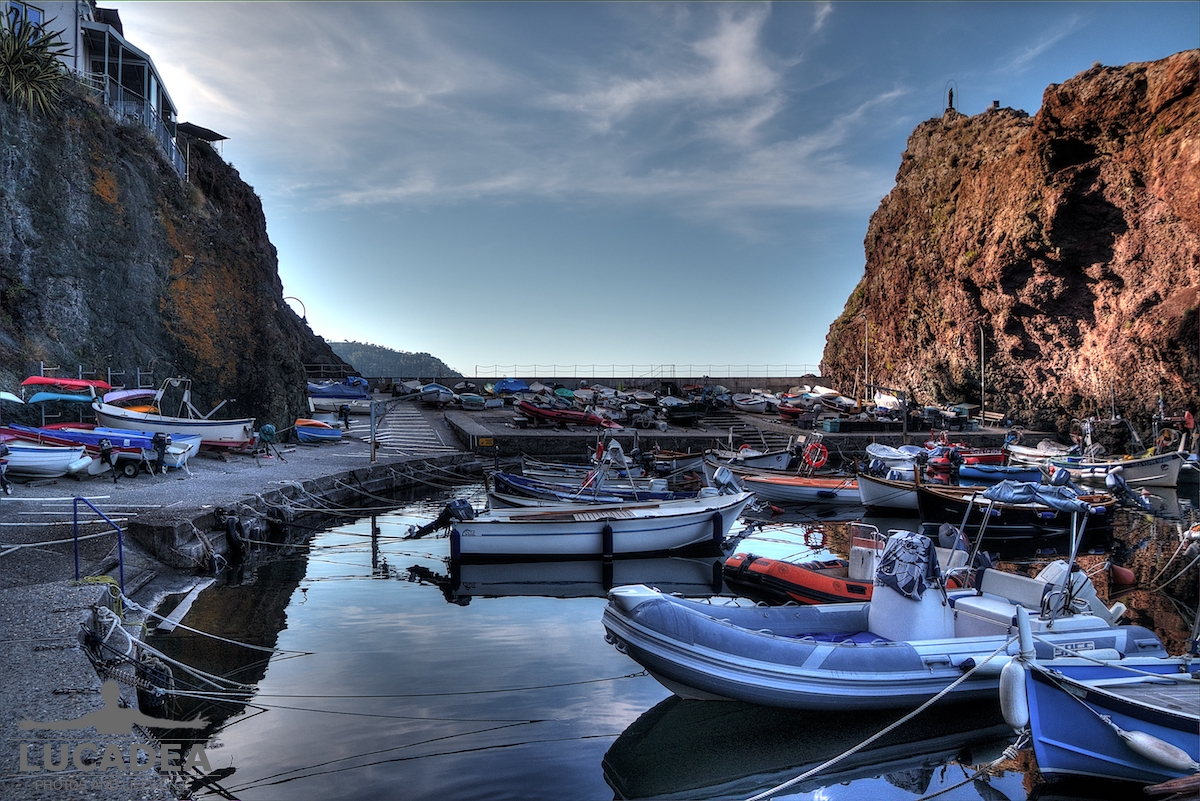
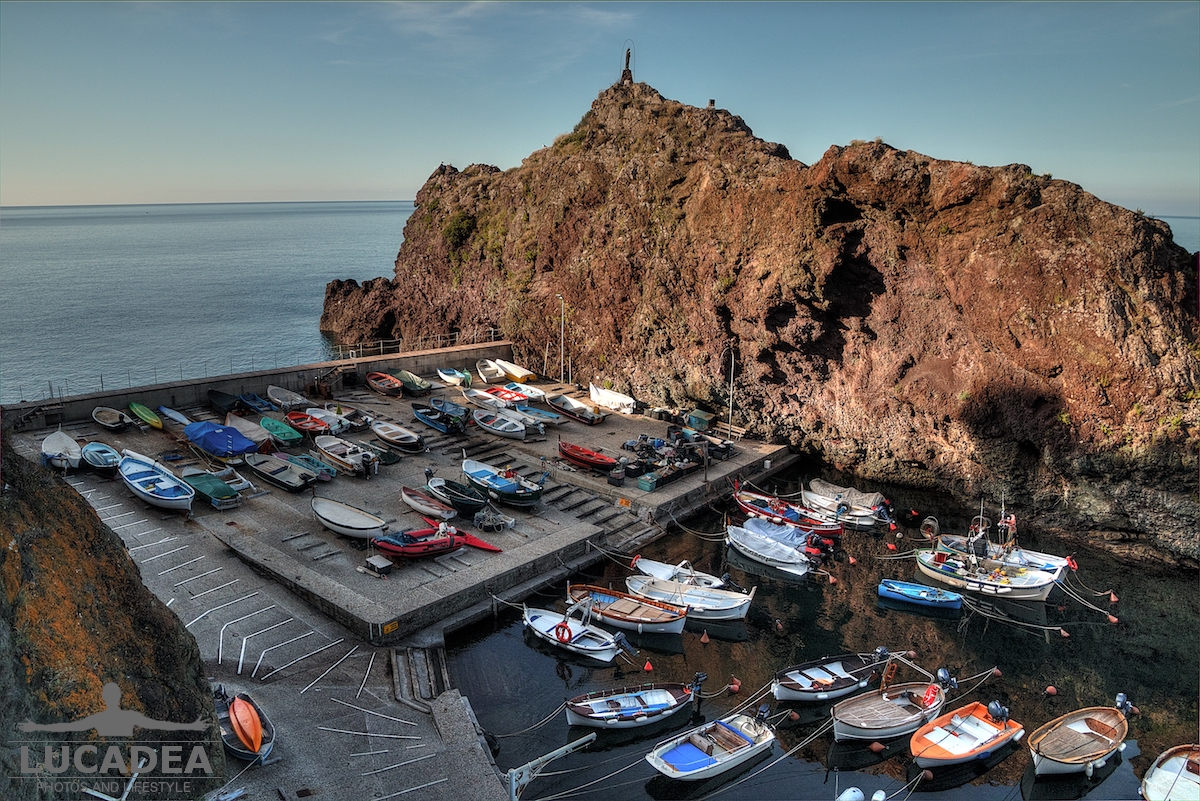
The small harbor of Framura.
I started my walk from here early in the morning, following the coastal cycle and pedestrian path towards Levanto while the little harbor was still quiet and almost empty. It is one of those places along the Ligurian Riviera di Levante that I already know quite well, yet it still manages to offer a slightly different view whenever I return.
Framura is in Liguria, in the Province of La Spezia, Italy, not far from the Cinque Terre, and its small harbor is one of my favorite starting points when I want to explore this stretch of coast on foot. The compact village and rocky shoreline keep the sea present almost everywhere, even when you are simply standing at the beginning of the route.
That morning, Levanto was my destination, but before setting off I wanted to spend a few minutes looking at the harbor. I took this photograph to preserve the quiet atmosphere of the beginning of the day. There was no need to look for anything particularly unusual. The small harbor, the boats and the coastline were already enough to create the scene I wanted to capture.
If you are wondering what to see in Framura, the harbor is certainly worth including in a walk around the village. From here, you can continue along the coast and reach the route leading towards Bonassola and Levanto. It is a good way of experiencing this part of the Riviera di Levante rather than simply looking at it from one viewpoint.
What I like most is the relationship between the harbor and the surrounding landscape. This is not a large marina filled with boats and facilities, but a smaller space gathered between the rocks and the sea. That is also why it can feel completely different in the early morning compared with the more crowded coastal destinations nearby.
The route towards Levanto was one of the reasons I had decided to come to Framura for a longer walk. The cycle and pedestrian path partly follows the old railway line and passes through some of the most interesting sections of this coastline. The conversion of the former railway route created a new way of experiencing the landscape on foot or by bicycle.
There is a small piece of local history behind the route that I find particularly interesting. The railway once connected the coastal communities along this part of Liguria, while today sections of its former path can be explored at a much slower pace, with the sea, tunnels and cliffs becoming part of the walk.
This photograph therefore belongs to the very beginning of my outing, before the walk itself became the main experience. I like photographing these preliminary moments too, when a place is not yet simply a stop on the way somewhere else, but something to observe without rushing.
Framura is also a place I have photographed several times for the blog from different perspectives. I have already shared its clear waters, the small coves along the seaside path and Madonna du Ma standing on the large rock above the harbor. This image naturally continues those stories and adds another small piece to my personal photographic collection of Framura.
Looking at the photograph now, what I remember most is the quietness of that moment. Starting early can make a familiar place feel different without requiring dramatic scenery or unusual conditions. Sometimes a nearly empty little harbor is enough to make a photograph worth keeping.
The walk to Levanto then gave me the chance to continue following the coast and experience Framura from another perspective. But before setting off, this small harbor definitely deserved its own photograph.
Have you ever started the walk towards Levanto from Framura’s little harbor? Add a comment or go to the bottom of the site to read what other visitors have written.
Dreamlike sea in Bonassola, Liguria.
Looking at the coast of Bonassola, a small village on the Ligurian Riviera, I found water so clear that it could easily remind you of faraway destinations, even though this beautiful sea is right here in Italy. This photograph of crystal-clear water shows one of the most surprising sides of Liguria: places where the colours of the sea can still leave you speechless.
I took this image last year during a day spent in an area that I enjoy visiting and photographing. Many people think that to find transparent waters and beautiful beaches you need to travel to tropical locations, but the Italian coastline can offer many unexpected views as well.
Bonassola is one of those places where the charm of a Ligurian village meets the beauty of the sea. The beach, protected between hills and the surrounding coastline, creates a peaceful setting where the connection between land and water is always visible. This balance between nature, the village and the coast is one of the reasons why I enjoy photographing this area.
I wanted to capture this scene with my camera because the colour of the water was the real subject of the image. There was no need for complex compositions or famous landmarks: the sea, the coastline and the changing shades created everything needed for a memorable photograph.
Bonassola is located in Liguria, Italy, in the province of La Spezia, not far from the Cinque Terre, and it is known for its beach, quiet atmosphere and scenic paths along the coast. If you are visiting the Cinque Terre area, Bonassola is a place worth seeing for those who want to discover a more relaxed side of the Ligurian coast.
A small curiosity about Bonassola is that the village is connected with nearby coastal areas through old railway tunnels that have been transformed into cycling and walking paths. These routes offer a unique way to explore the landscape while following part of the former railway line.
On my website I have already shared other views of the Ligurian Riviera, from Moneglia and Sestri Levante to smaller hidden corners along the coast, because these less famous places often create some of the most interesting photographs.
This image of Bonassola is a reminder that sometimes the most beautiful landscapes are much closer than we expect.
Have you ever found such a beautiful sea without travelling to a tropical destination? Add a comment or go to the bottom of the site to read what other visitors have written.
According to some historical sources, the village’s name derives from *Bulnetia* or *Bodetia*, names that appear in early medieval writings. Other sources, considered more reliable, point instead to the ancient term *Vallis Bonazolae*, referring to the coastal area situated between the present-day towns of Framura to the west and Levanto to the east.
Read more on Wikipedia
A small alley in Bonassola by the sea.
Walking through the small Ligurian village of Bonassola, I found this quiet corner made of colourful walls, narrow passages and the typical atmosphere of the villages along the Ligurian coast. A simple photograph, but one that captures the character of a place lived at a slower pace.
I took this image during a summer day spent walking between the sea and the mountains. After exploring some of the paths around the area and enjoying the landscape from different viewpoints, I also stopped to photograph the village itself, where the smallest details often become the most interesting subjects.
The narrow alleys of Bonassola are one of the things worth discovering while walking through the village. They may not have the importance of famous monuments or large squares, but they preserve all those details that make a Ligurian town recognizable: colourful facades, shutters, small streets following the shape of the land and unexpected views opening towards the sea.
Bonassola is located in Liguria, Italy, in the province of La Spezia, and is a small coastal village known for its beach, peaceful atmosphere and scenic paths connecting the coast with the surrounding hills. This combination of sea and hiking routes makes it a place worth seeing for those who enjoy walking and discovering quieter destinations.
I took this photograph because it represents the kind of image I often look for during my walks: not necessarily the most famous attraction, but a small corner that can bring back the feeling of being there at that exact moment.
A small curiosity about Bonassola is that the village is part of an area where, in the past, connections between coastal towns relied mainly on walking paths and mule tracks. Many of these routes are now appreciated by hikers who want to explore the landscape more slowly.
Just like other Ligurian villages I have photographed, from the alleys of Moneglia to the narrow streets of Sestri Levante, these small passages often reveal the true identity of a place.
Sometimes a simple alley is enough to preserve the memory of a beautiful day spent walking without a hurry.
Have you ever discovered a small corner of a village that became one of your favourite memories? Add a comment or go to the bottom of the site to read what other visitors have written.
According to some historical sources, the village’s name derives from *Bulnetia* or *Bodetia*, names that appear in early medieval writings. Other sources, considered more reliable, point instead to the ancient term *Vallis Bonazolae*, referring to the coastal area situated between the present-day towns of Framura to the west and Levanto to the east.
Read more on Wikipedia
The caruggio of Brugnato old village.
A walk through the beautiful historic centre of Brugnato, a small village in the La Spezia area that surprised me with its care, attention to detail and authentic atmosphere.
Walking along the caruggio, the typical narrow street found in Ligurian villages, I discovered many interesting views to photograph: old houses facing the street, quiet corners and small details that tell the story of this place. This is exactly what I enjoy about small villages in Liguria, where even a simple walk can become an opportunity to discover something unexpected.
What impressed me most about Brugnato was how well the historic centre is maintained. Many points of interest have signs and explanations that help visitors understand what they are seeing. It is a simple but effective way to enhance the identity of the village and make the visit more engaging.
The caruggio is certainly one of the most characteristic places in Brugnato. Walking through these streets, you can still feel the atmosphere of the old village, with traditional buildings and a peaceful rhythm that invites you to slow down.
Brugnato is located in the province of La Spezia, in Liguria, Italy, and it is an interesting place to visit if you are exploring the inland areas of the region. Its position also makes it a useful stop for those travelling towards the Cinque Terre area.
One historical curiosity is that Brugnato developed around a Benedictine abbey and for centuries played an important role in the area because of its position along ancient communication routes.
I took this photograph during my walk through the village, trying to capture not only the street itself but also the quiet feeling that surrounds these historic places. As I have already shared in other articles about Ligurian villages, small details are often what make a location memorable.
Just a short distance from the historic centre, you can also find the outlet Shopinn, a modern shopping destination that creates an interesting contrast with the old village atmosphere.
Have you ever visited the caruggio and the historic centre of Brugnato? Add a comment or go to the bottom of the site to read what other visitors have written.
To see all the photos I took in the village, click here:
Between the 7th and 8th centuries, following the Lombard conquest of Liguria, the Columbanian monks of Bobbio—who followed the Rule of Saint Columbanus and continued their evangelization efforts—established a monastery that grew over time into a vital religious and economic hub. The origins of Brugnato are thus linked to the founding of this abbey, which, like other monastic sites in Liguria and northern Italy, was subordinate to the Abbey of San Colombano in Bobbio.
Read more on Wikipedia
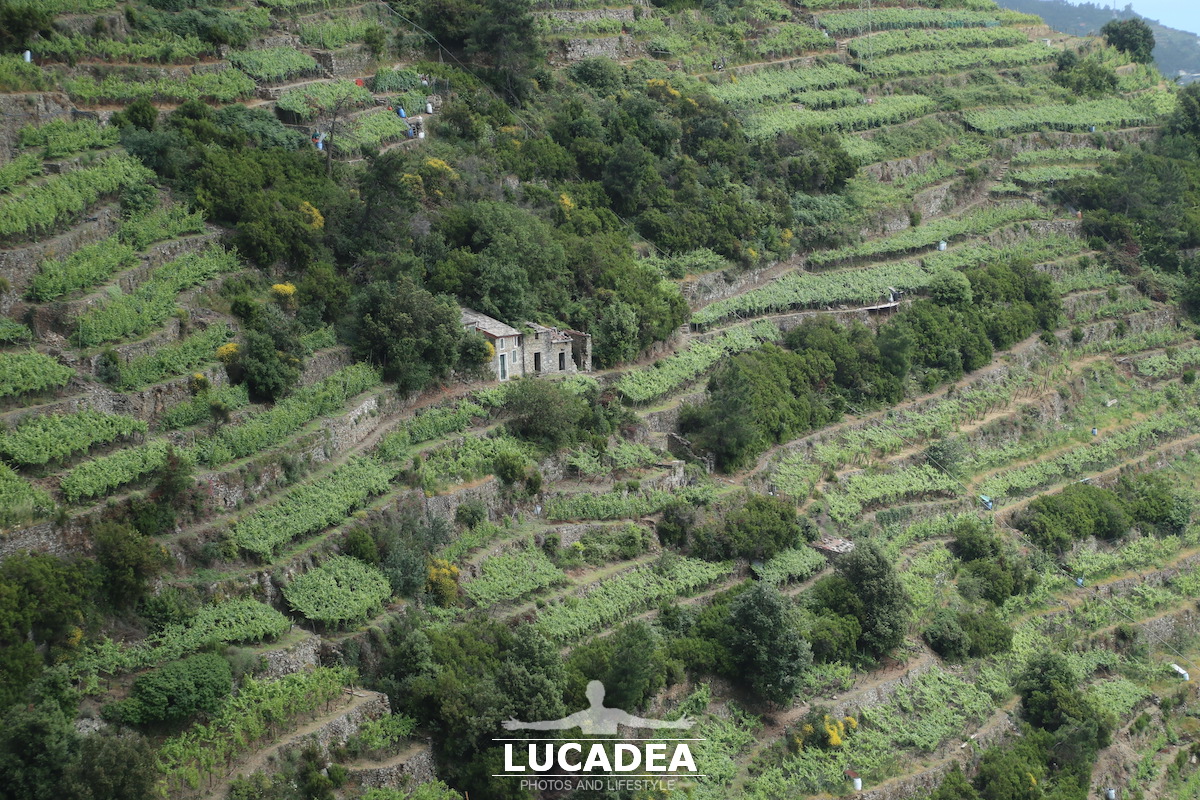
The seaside terraces of Cinque Terre in Liguria.
There are places where the relationship between humans and nature is so strong that it creates landscapes unlike anywhere else in the world. Cinque Terre, on the Ligurian coast of Italy, is one of these places: small villages overlooking the sea, mountains reaching the coastline, and ancient terraces built over centuries of hard work.
This photograph shows one of the most characteristic features of Cinque Terre: the terraces overlooking the Ligurian Sea that transform the steep hills into a fascinating and carefully shaped landscape. Dry stone walls, vineyards, olive trees, and colorful houses create one of the most beautiful views in Liguria.
Cinque Terre includes five world-famous villages: Monterosso al Mare, Vernazza, Corniglia, Manarola, and Riomaggiore. Each village has its own personality, but all share the same extraordinary balance between sea, mountains, and human activity.
I was in Cinque Terre, Liguria, Italy, and what I wanted to capture with this photograph was the feeling of standing in front of a landscape slowly created over time. These terraces are not only beautiful to see, but they also tell the story of generations of local people who shaped the mountains to cultivate the land.
One of the most famous products of this area is Sciacchetrà, the traditional sweet wine of Cinque Terre, produced from grapes grown on these difficult slopes. Even today, many activities are carried out by hand, preserving an ancient connection with the territory.
Besides the spectacular views, Cinque Terre is also a perfect destination for hiking lovers. The trails connecting the villages offer constantly changing perspectives, with sea views that become different at every turn.
Cinque Terre was declared a UNESCO World Heritage Site in 1997, thanks to its extraordinary beauty and the cultural value of its unique terraced landscape.
What fascinates me most about this place is the contrast between the power of nature and human effort. A difficult territory that has become one of the most recognizable symbols of Liguria around the world.
On my blog I have shared many other views of the Ligurian coast, because these apparently simple landscapes often create the strongest emotions.
Have you ever walked the trails of Cinque Terre or admired these villages from the sea? Add a comment or go to the bottom of the site to read what other visitors have written.
The terraces overlooking the sea of the Cinque Terre in Liguria – Les terrasses avec vue sur la mer des Cinque Terre en Ligurie – Las terrazas con vistas al mar de Cinque Terre en Liguria – Os terraços com vista para o mar de Cinque Terre na Ligúria – Die Terrassen mit Blick auf das Meer der Cinque Terre in Ligurien – Ruộng bậc thang nhìn ra biển Cinque Terre ở Liguria – 俯瞰利古里亚五渔村大海的露台 – リグーリア州チンクエテッレの海を見渡すテラス
The text of this post was written with the help of ChatGPT, a language model from OpenAI.
Flowery Glimpse of Monterosso al Mare in Summer.
The flowery glimpse of Monterosso al Mare in summer stays with me as a layered memory from last July, when I photographed a small corner of the village softened by foreground flowers and warm coastal light. That flowery glimpse of Monterosso al Mare was never meant to be a perfect composition, but rather an impression caught in the middle of movement and heat.
I remember walking slowly through the village paths, feeling how Monterosso al Mare in summer reshapes every detail into something brighter, almost intensified by the season. The flowery glimpse of Monterosso al Mare appeared when I lowered my gaze slightly, noticing how the blurred flowers in front of me created a soft veil over the distant architecture.
There was a quiet tension in that frame: the softness of the foreground contrasting with the stability of the village behind it. Monterosso al Mare seemed to breathe through layers, and I kept adjusting my position, trying not to force the scene but to let it settle naturally. The flowery glimpse of Monterosso al Mare became less about focus and more about sensation.
What I remember most is how July light behaves in Liguria—never harsh enough to erase detail completely, yet strong enough to flatten time into a single continuous moment. The flowery glimpse of Monterosso al Mare carried that feeling perfectly, as if the image itself was still unfolding even after I pressed the shutter.
Looking back, I realize that what drew me in was not clarity but depth created by softness. And that small imperfect frame still feels more honest than many carefully composed images.
Have you ever kept a photograph that speaks more through blur than through detail? Add a comment or go to the bottom of the site to read what other visitors have written.
Scorcio fiorito a Monterosso al Mare d’estate – Flowery view in Monterosso al Mare summer – Vista floral en Monterosso al Mare verano – Vue fleurie à Monterosso al Mare été – Blühender Blick in Monterosso al Mare Sommer – Vista florida em Monterosso al Mare verão – Bloemrijke blik in Monterosso al Mare zomer – モンテロッソ・アル・マーレの夏の花の風景
The text of this post was written with the help of ChatGPT, a language model from OpenAI.