In the carrugio of Sestri Levante toward the church

Carrugio di Sestri Levante con chiesa di Santa Maria di Nazareth sullo sfondo e tavolini dei ristoranti sulla sinistra

In the carrugio of Sestri Levante toward the church.
Walking through the carrugio of Sestri Levante, I feel how the narrow stone passage slowly compresses perspective until everything converges toward the church of Santa Maria di Nazareth in the background. This carrugio of Sestri Levante is not just a corridor, but a visual transition where street photography becomes a matter of patience and timing rather than action.
I am in Sestri Levante, Liguria, Italy, and the atmosphere here is shaped by the way the old town opens and closes in sudden rhythm. The carrugio of Sestri Levante guides my movement almost instinctively, as if every step is already part of an invisible composition. On the left side, the restaurant tables sit quietly aligned along the passage, still empty, waiting for the evening life to begin.
The church of Santa Maria di Nazareth remains a constant visual anchor, appearing and disappearing between architectural gaps as I move forward. It makes me think about what to see in the carrugio of Sestri Levante, where the experience is less about landmarks and more about how light and structure interact in such a compressed space. I also recall another post on this site about the narrow alleys of Genoa, where the density feels similar but the rhythm is completely different.
A small historical curiosity: Sestri Levante developed between two bays, the Bay of Silence and the Bay of Fables, and this unique geography influenced the way the historic center grew, creating passages like this carrugio that naturally connect land and sea.
As I continue walking, the carrugio of Sestri Levante toward the church becomes a quiet sequence of frames, each one slightly different but connected by the same slow rhythm of the town.

Have you ever followed a narrow street just to see where it leads? Add a comment or go to the bottom of the site to read what other visitors have written.

Carrugio di Sestri Levante con chiesa di Santa Maria di Nazareth sullo sfondo e tavolini dei ristoranti sulla sinistra

Photo taken with Oppo Reno 12.

Add one  comment to this article or read  here what other visitors have written.
 
Adv
 
Disclamer

The rights on images, videos, choruses, text and all other material on the LUCADEA.com website are governed as per  Copyright page.


This page has been viewed 1 times today.
This month it has been viewed 1 times.
In total it has been viewed 1 times.
 

A Sunday Cappuccino in the Bay of Silence

Cappuccino al bar Cutter Cucca davanti al mare nella Baia del Silenzio a Sestri Levante in una domenica di settembre

A Sunday Cappuccino in the Bay of Silence. It was a September Sunday morning in Sestri Levante, Liguria, and I stopped for a simple break by the sea. I was sitting at one of the tables at Cutter Cucca, just a few metres from the water, with the Bay of Silence in front of me and the soft morning light typical of the end of summer.
Having a cappuccino by the sea in Sestri Levante felt different from an ordinary breakfast. The drink itself was nothing unusual, but the setting made the moment memorable. The beach was right nearby, the coastline stretched beyond the water, and the town was slowly beginning its Sunday morning. September also brought a quieter atmosphere compared with the busiest weeks of summer, while the connection with the sea was still very strong.
I like photographing these ordinary moments. A breakfast table, a cup of cappuccino and the sea can sometimes describe a place more naturally than a carefully planned photograph. I took this image myself during that morning break, trying to keep the feeling of a slow Sunday rather than turning the scene into a conventional tourist postcard.
The Bay of Silence is one of the best-known places in Sestri Levante. Its compact shape and sheltered position give it a distinctive atmosphere, especially during the quieter hours of the day. Sestri Levante is also famous for the nearby Bay of Fables, whose name recalls Hans Christian Andersen, who stayed in the town in 1833. The literary connection is still part of the identity of Sestri Levante today.
If you are visiting Sestri Levante and wondering what to see, the Bay of Silence will probably be one of the first places on your list. But I think a place can also be experienced through much simpler moments. Sitting at a table, ordering a cappuccino and looking at the sea without having anywhere else to go is another way of discovering the bay.
That morning, this was exactly what I enjoyed. The sea was only a few metres away, people were walking around the bay, and the town still had the slower rhythm of a Sunday morning. Nothing particularly extraordinary was happening, yet the combination of the light, the water and the quiet made the moment worth remembering.
I have photographed other corners of Sestri Levante for Lucadea.com as well, always trying to look beyond the most obvious postcard views and capture small details of everyday life. This photograph belongs to the same approach: rather than simply showing the Bay of Silence, it records a personal moment spent there.
Perhaps this is one of my favourite ways of remembering Liguria: not only through its famous landscapes, but also through a cappuccino slowly enjoyed in front of the sea.

Would you stop for breakfast here too if you found yourself in Sestri Levante? Add a comment or go to the bottom of the site to read what other visitors have written.

Cappuccino al bar Cutter Cucca davanti al mare nella Baia del Silenzio a Sestri Levante in una domenica di settembre

Add one  comment to this article or read  here what other visitors have written.
 
Adv
 
Disclamer

The rights on images, videos, choruses, text and all other material on the LUCADEA.com website are governed as per  Copyright page.


This page has been viewed 1 times today.
This month it has been viewed 1 times.
In total it has been viewed 1 times.
 

The windmills of Mykonos under the sea wind

Mulini a vento di Mykonos affacciati sul mare delle Cicladi, simbolo dell’isola tra le cose da vedere a Mykonos

The windmills of Mykonos under the sea wind.
Arriving on the island of Mykonos, trying to figure out what to see in Mykonos beyond its beaches and nightlife, I found myself standing in front of the famous windmills overlooking Chora. Among the places to see in Mykonos, these windmills are the most recognizable symbol, the image that defines the island in countless photographs.
The wind is constant here, almost like a language of its own. The windmills of Mykonos were built to work with this force, using it to grind grain and sustain life on the island long before tourism became its main identity. When you search for what to see in Mykonos, you might expect only beaches and sunsets, but this place adds a deeper layer to that expectation.
We are in Mykonos, in the Cyclades, Greece, where whitewashed structures stand against the blue of the Aegean Sea. From this elevated point, the view opens wide, and the horizon feels endless. Historically, there were around sixteen windmills on the island, built between the 16th and 19th centuries, many of which still survive as cultural landmarks.
Standing there, I noticed how the silence of the windmills contrasts with the constant movement of the air. If you are visiting Mykonos and wondering what to see, this is one of those places that naturally becomes part of every journey, because it captures the essence of the island in a simple form.
It reminded me of another photo I shared on my site from a different island landscape, where wind shaped everything around it, but here the atmosphere feels lighter, almost suspended between sky and sea.
A small interesting fact: the windmills were mainly used for milling wheat into flour, forming an essential part of the island’s economy before tourism reshaped its identity.
If you’re exploring what to see in Mykonos, this is one of those views that stays with you long after you leave.

Have you ever stood somewhere where the wind felt like part of the place itself? Add a comment or go to the bottom of the site to read what other visitors have written.

Mulini a vento di Mykonos affacciati sul mare delle Cicladi, simbolo dell’isola tra le cose da vedere a Mykonos

Mulini a vento di Mykonos affacciati sul mare delle Cicladi, simbolo dell’isola tra le cose da vedere a Mykonos

Photos taken with Canon EOS M100 and Canon EF-M 11-22 lens.

To see all the photos of the town, click here:
foto gallery

Mykonos (Greek: Μύκονος) is a Greek island in the Cyclades, located near Tinos, Syros, Greece, and Naxos. It has an area of ​​96 km², and its highest point reaches 341 m above sea level. At the 2001 census, it had 9,320 inhabitants, most of whom live in the town of Mykonos (also known as Chora), which is located on the western coast.
Continue on Wikipedia

Where is Mykonos located:

The windmills of Mykonos under the sea wind – Les moulins à vent de Mykonos face à la mer – Los molinos de viento de Mykonos frente al mar – Os moinhos de vento de Mykonos diante do mar – Die Windmühlen von Mykonos am Meer – Những cối xay gió Mykonos bên biển – 米科诺斯风车在海风中 – ミコノスの風車と海の風

The text of this post was written with the help of ChatGPT, a language model from OpenAI.

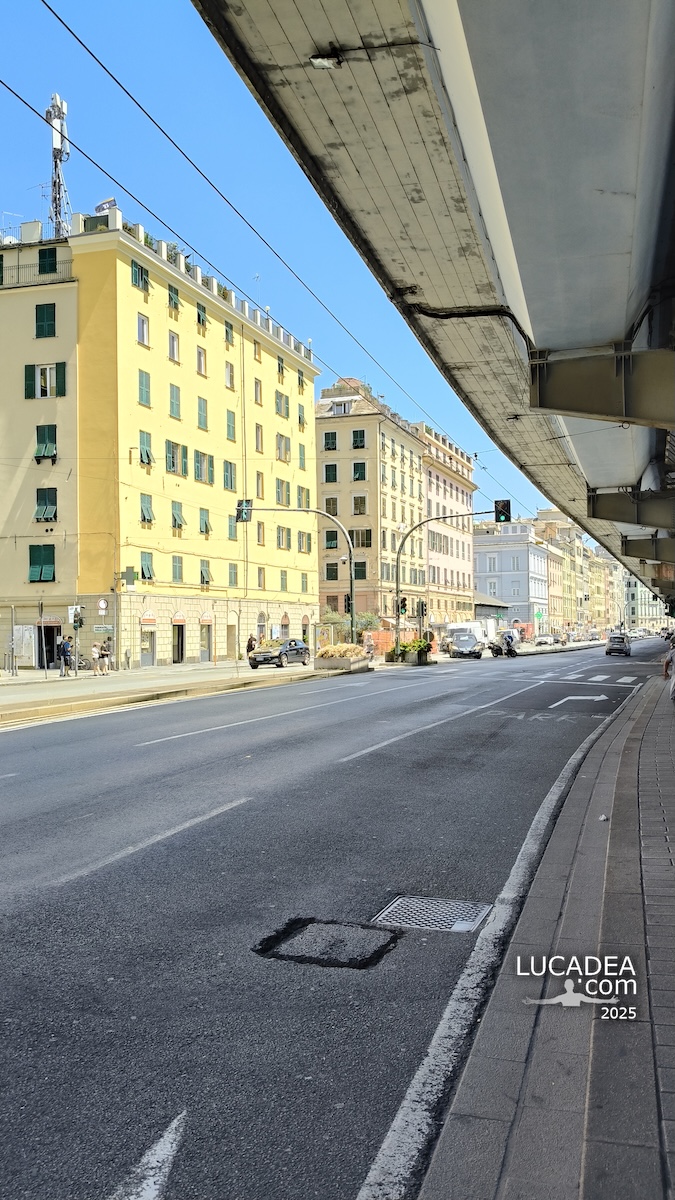
Gramsci street in Genoa between traffic and sea

Via Antonio Gramsci a Genova con sopraelevata e palazzi sul fronte mare, tipica scena urbana per chi cerca cosa vedere a Genova

Gramsci street in Genoa between traffic and sea.
Walking along Via Antonio Gramsci in Genoa, trying to understand what to see in Genoa beyond the usual highlights, I found myself standing beneath the elevated road, surrounded by movement and layers of the city unfolding in front of me. It’s one of those places where the real character of Genoa reveals itself quietly but unmistakably.
Cars were passing above and below, creating a constant flow that felt almost like a rhythm. When people search for what to see in Genoa, they often think of historic alleys or iconic landmarks, but this stretch of road tells another side of the story. It’s a place worth seeing in Genoa if you want to understand how the city lives day by day, balancing its past with the demands of modern life.
Here, in Genoa, Liguria, Italy, the sea is close but not always fully visible. You sense it behind the buildings, beyond the traffic, as if it’s always present but slightly out of reach. The elevated structure above changes the perspective completely, framing the sky and shaping the way light reaches the street.
I paused to take the shot, trying to capture that contrast between the solid concrete and the softer tones of the waterfront buildings. If you are visiting Genoa and wondering what to see, this kind of urban scene might not be the first suggestion you find, but it offers something more subtle and real. It shows how the city adapts and evolves without losing its identity.
It reminded me of another photograph I shared on my site from the Porto Antico area, where the relationship with the sea feels more open. Here, instead, everything is layered, compressed, almost hidden in plain sight.
A small interesting fact: the elevated road known as Sopraelevata Aldo Moro was built in the 1960s to ease traffic across the dense port area, running for several kilometers above the streets below. Today, it remains one of the most recognizable urban elements in Genoa.
If you’re exploring what to see in Genoa, maybe it’s not only about beauty in the traditional sense, but about finding meaning in these everyday views.

Do you ever find yourself drawn to places that others might overlook? Add a comment or go to the bottom of the site to read what other visitors have written.

Via Antonio Gramsci a Genova con sopraelevata e palazzi sul fronte mare, tipica scena urbana per chi cerca cosa vedere a Genova

Photo taken with Oppo Reno 12.

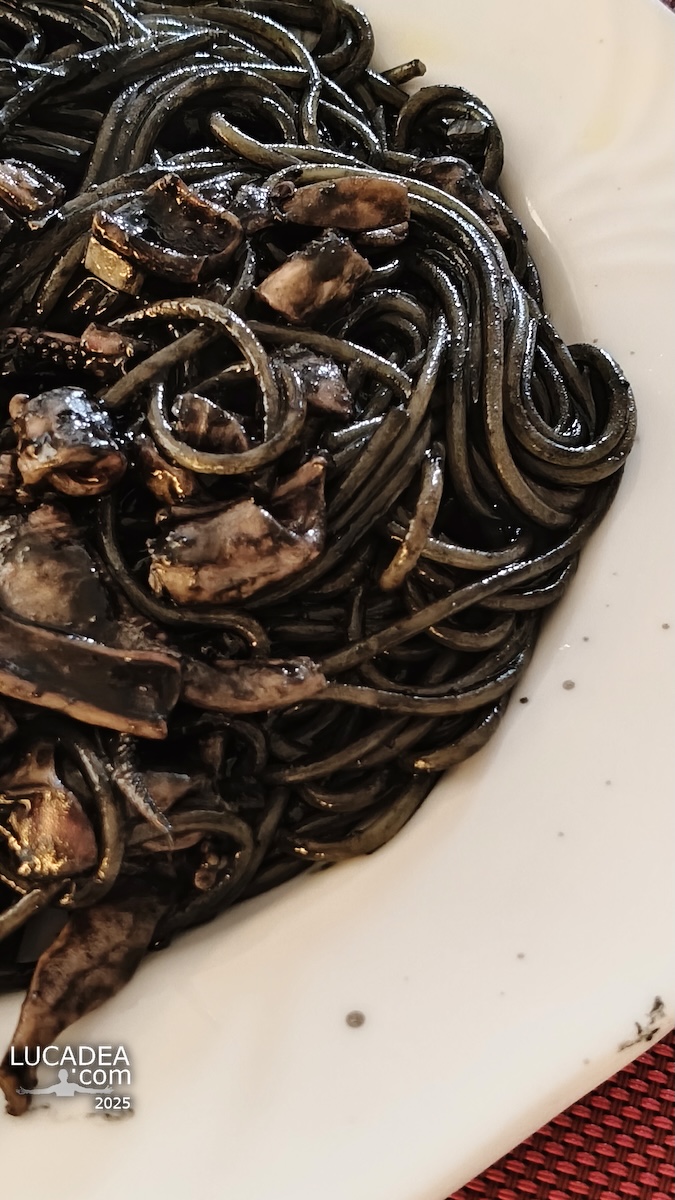
Squid ink spaghetti, the recipe

Piatto di spaghetti al nero di seppia cremosi con prezzemolo su fondo scuro

Squid ink spaghetti, the recipe.
There are dishes that instantly bring the sea to mind, and squid ink spaghetti is definitely one of them for me. That deep, glossy black color already tells a story before you even taste it. It’s a recipe I’ve come to appreciate over time, especially after learning how such simple ingredients can create something so bold and distinctive.
Making it is not complicated, but it does require attention to detail, especially when handling fresh squid. The key lies in respecting the main ingredient and building a sauce that is rich, smooth, and balanced without overpowering its natural flavor.

Ingredienti

– spaghetti;
– fresh squid (with ink sac);
– garlic;
– extra virgin olive oil;
– white wine;
– parsley;
– salt;
– pepper.

Preparazione

Start by carefully cleaning the squid. Gently remove the ink sac without breaking it and set it aside. Rinse the squid thoroughly under running water, remove any remaining parts, and slice it into thin strips.
In a large pan, heat a generous drizzle of extra virgin olive oil and add a clove of garlic. Let it cook on low heat until fragrant, making sure it doesn’t burn. Add the squid and sauté for a few minutes, stirring regularly.
Pour in a splash of white wine and let the alcohol evaporate completely. Once the squid starts to soften, lower the heat and add the ink, dissolving it with a bit of warm water. Stir well until the sauce becomes smooth and evenly black.
Meanwhile, cook the spaghetti in salted boiling water. Drain them al dente and transfer directly into the pan with the sauce. Toss everything together, adding a bit of cooking water if needed to achieve a creamy consistency.
Finish with chopped parsley and a touch of black pepper. The final result should be rich, silky, and well combined.

Do you enjoy the bold flavor of squid ink or do you prefer milder seafood dishes? Add a comment or go to the bottom of the site to read what other visitors have written.

Photos taken with Oppo Reno 12.

Compass rose on the Bay of Silence

Rosa dei venti sulla Baia del Silenzio a Sestri Levante dipinta su un palazzo sul mare con vista sulla baia ligure tranquilla

The compass rose on the Bay of Silence appears unexpectedly as I walk along the waterfront of Bay of Silence, and this painted detail immediately pulls my attention away from the sea for a moment. It is placed on the side of a building facing the water, and it feels less like decoration and more like a quiet marker embedded in the rhythm of the coastline.
I am in Sestri Levante, Liguria, Italy, where the shoreline curves gently and the town opens directly onto the sea. The atmosphere here is subtle rather than dramatic, shaped by small visual elements that reveal themselves slowly. The compass rose on the Bay of Silence becomes part of this language of details, as if it belongs equally to architecture and to the marine horizon.
If you are searching for what to see in Sestri Levante, this kind of detail often goes unnoticed, yet it changes the way the place is perceived. It is not a monument or a landmark in the traditional sense, but a visual signal that connects navigation, wind, and coastal life. I recall a similar experience from another post on my blog about Ligurian seaside towns, where unexpected elements on facades ended up telling more about the atmosphere than the main attractions.
Standing still, I watch how light moves across the wall, briefly sharpening the lines of the compass rose on the Bay of Silence. The contrast between the stillness of the painted symbol and the constant motion of the water creates a quiet tension that defines the moment.

A thought stays with me: how many people walk past this wall every day without ever noticing what is drawn on it, and how many, like me, stop just long enough to let it become a memory? Add a comment or go to the bottom of the site to read what other visitors have written.

Rosa dei venti sulla Baia del Silenzio a Sestri Levante dipinta su un palazzo sul mare con vista sulla baia ligure tranquilla

Rosa dei venti sulla Baia del Silenzio a Sestri Levante dipinta su un palazzo sul mare con vista sulla baia ligure tranquilla

Photos taken with Canon EOS R50 V and lens Tamron 16-300.

Where is the palace:

Rosa dei venti sulla Baia del Silenzio – Compass rose on Baia del Silenzio – Rose des vents sur la Baia del Silenzio – Rosa de los vientos en Baia del Silenzio – Windrose an der Baia del Silenzio – Hoa gió ở Baia del Silenzio – 巴亚德尔西伦齐奥的风向玫瑰 – バイア・デル・シレンツィオの風配図

The text of this post was written with the help of ChatGPT, a language model from OpenAI.

The Cathedral of Cadiz from the slow sea

La Cattedrale di Cadice dal mare lento vista dalla nave con la città di Cadice sullo sfondo e il profilo urbano costiero

The Cathedral of Cadiz from the slow sea.
The ship moves gently across the water, and the Cathedral of Cadiz from the slow sea slowly emerges along the coastline of Cadice, becoming the first clear shape that defines the arrival. The Cathedral of Cadiz from the slow sea feels distant yet central, as if the entire city is organizing itself around its silhouette.
From the deck, I watch how the harbor gradually opens and how the urban edge becomes more defined with every meter. The Cathedral of Cadiz from the slow sea anchors my attention repeatedly, standing above the pale rooftops like a calm landmark that guides orientation. It is not just architecture; it is a visual signal that the transition from open sea to city has begun.
There is a quiet continuity in this approach that reminds me of other coastal journeys described on this site, where cities are first perceived as outlines and only later become fully readable spaces. Here, the Cathedral of Cadiz from the slow sea plays that exact role, bridging water and land in a single uninterrupted gesture.
If you are traveling through southern Spain and wondering what makes Cádiz unique, this kind of arrival by sea is one of the most memorable experiences you can have. The Cathedral of Cadiz from the slow sea is both a landmark and a reference point, helping the eye settle into the geometry of the city.
Cadice has a strong maritime identity, and its cathedral, built over the 18th and 19th centuries, combines baroque and neoclassical elements. Even from a distance, this mixture can be perceived as subtle shifts in shape and brightness.

As the ship continues forward, I find myself wondering how many cities change completely when seen from the water instead of the land. Have you ever experienced a city arriving like this? Add a comment or go to the bottom of the site to read what other visitors have written.

La Cattedrale di Cadice dal mare lento vista dalla nave con la città di Cadice sullo sfondo e il profilo urbano costiero

Photo taken with Canon EOS RP and Tamron 16-300 lens.

To see all the photos of the Spanish city, click here:
foto gallery

Here’s where the cathedral is located:

Oven-baked sea bream with potatoes and mussels

Orata al forno

Oven-baked sea bream with potatoes and mussels.
When I cook sea bream at home, I like to keep things simple and let the fish remain the main character of the dish. In this photograph, there are a few sea bream fillets served with potatoes and some mussels, a combination I find particularly satisfying.
Oven-baked sea bream is one of those dishes that reminds me how rewarding simple cooking can be. The flesh is delicate but full of flavour, and once cooked it works beautifully with uncomplicated side dishes. The potatoes provide a natural accompaniment, while the mussels bring an extra taste of the sea that fits perfectly with the fish.
I took this photograph at home, capturing what was actually served at the table. There was no intention of turning it into an elaborate restaurant-style presentation. It is simply one of those meals I enjoy preparing, and, at least according to the chef at home, it can easily compete with something served in a restaurant.
Food photography has a different rhythm from photographing streets, landscapes or buildings. With a plate like this, the photograph is tied to a very specific moment: the meal is ready, everything is on the table, and there is usually not much time to think about the composition before somebody starts eating.
I like that spontaneity. A photograph of food can preserve the memory of an ordinary lunch or dinner just as effectively as a photograph from a journey. Sometimes the most familiar moments are precisely the ones that are worth keeping.
Sea bream with potatoes is also a wonderfully flexible preparation. It can remain very simple, allowing the natural flavour of the fish to stand out, or it can be enhanced with a few herbs and seasonings. Baking is particularly convenient because the fish and the side dish can be prepared together without requiring complicated cooking techniques.
There is a small detail behind the name of sea bream itself. The fish is easily recognised by the distinctive golden band between its eyes, which becomes especially noticeable when the fish is whole. It has long been appreciated around the Mediterranean and is commonly prepared baked, grilled or with other straightforward methods that preserve its delicate flavour.
In this image, however, what catches my attention is simply the finished plate: the sea bream fillets, the potatoes beside them and the mussels completing the meal. It is quite different from the photographs of Ligurian villages, streets and seaside views that usually appear on my blog, but food is also part of the places and memories I want to record.
And yes, I have to admit it: at my house we cook like a restaurant. Actually, better!

How do you like to cook sea bream? Add a comment or go to the bottom of the site to read what other visitors have written.

Oven-baked sea bream fillets with potatoes and mussels, a simple homemade seafood dish

Photo taken with Canon 600D and Canon EF 40.

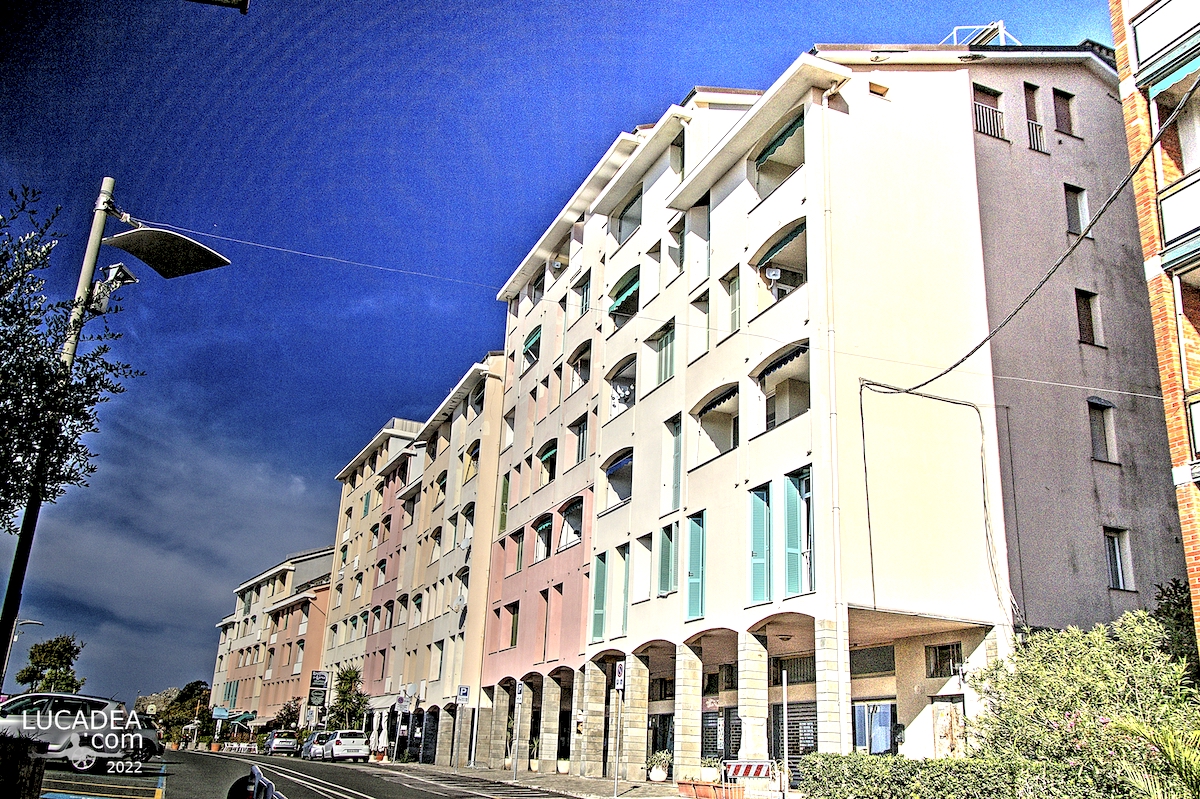
The modern waterfront building in Deiva Marina

Moderno caseggiato sul fronte mare di Deiva Marina, con balconi e facciate affacciate sulla costa ligure

The modern waterfront building in Deiva Marina.
While walking along the waterfront of Deiva Marina, Liguria, Italy, I stopped to photograph this modern building, which contrasts with the more traditional image often associated with the villages of the Ligurian coast. That contrast is what caught my attention and made me want to capture the scene with my camera.
When I think about what to see in Deiva Marina, I do not necessarily think only of the beach or the most picturesque corners of the village. Everyday architecture can also become an interesting photographic subject, especially when it has a direct relationship with the landscape. In this photograph, the building occupies an important part of the scene while the nearby sea helps define its setting.
I often enjoy photographing buildings that do not necessarily have monumental or historical importance. They are structures belonging to everyday life and, precisely because of that, they can tell us something about a particular period and a different way of living. This waterfront building in Deiva Marina seemed to me a good example.
Its modern forms, balconies and large openings toward the outside make the relationship with the coastal landscape particularly clear. In a seaside town, the sea is not simply something seen from a distance. It becomes an important part of everyday life and of the way buildings are experienced.
That is what interests me most about this photograph. I was not simply trying to document a building, but to show its relationship with the surroundings. On one side there is relatively recent architecture; on the other is the landscape of the Ligurian coast, with the sea only a short distance away.
Deiva Marina is a coastal town on the Italian Riviera di Levante, located between Moneglia and Framura, in an area where the relationship between the built environment and the sea is particularly close. Its position keeps the coastline nearby while also providing quick access to the hills inland.
There is a small detail about Deiva Marina’s development that I find interesting. Over time, the town gradually developed into a seaside destination, and newer residential buildings and structures appeared alongside older elements as tourism grew. The result is a landscape where architecture from different periods can coexist within a relatively small area.
This kind of layering is exactly what I think is worth photographing. When walking through a Ligurian coastal town, it is easy to concentrate only on the oldest or most picturesque buildings. I also like looking at what was built later and considering how those structures fit into the surrounding landscape.
The building in this photograph is therefore not a monument or a traditional attraction. It is part of the urban landscape. Its position directly along the waterfront, however, makes it particularly visible and turns it into an interesting photographic subject.
What I especially like is the contrast between the building’s lines and the natural character of the coastline. The geometry of the facades and balconies belongs to a modern architectural language, while the sea and the surrounding landscape recall the more traditional Liguria that I know through so many other photographs.
This image also connects naturally with other posts I have published about villages along the Ligurian coast. I have photographed places such as Moneglia, Sestri Levante and Bogliasco, often looking not only for monuments but also for the smaller details that belong to everyday life.
In Deiva Marina, this time, I stopped in front of a building that many people probably pass without paying much attention to it. For me, that was precisely the reason to photograph it: even an ordinary residential building can say something about the place where it stands.
A waterfront changes constantly according to the buildings that form it. Alongside the beach and natural landscape there is the architecture created by people, with its changes and different choices over time. Looking at these elements together allows Deiva Marina to be understood beyond the usual image of a seaside destination.
The photograph therefore comes from a fairly simple observation: a modern building can become interesting when it is considered within its surroundings. And here, of course, those surroundings are the Ligurian coast and the sea of Deiva Marina.

When you photograph a seaside town, do you also stop to look at modern buildings, or do you mainly search for the oldest and most traditional views? Add a comment or go to the bottom of the site to read what other visitors have written.

Modern waterfront building in Deiva Marina, with balconies and facades overlooking the Ligurian coast

Photo taken with Canon EOS M100 and lens Tamron 16-300.

To see all the photos taken in Deiva Marina click here:

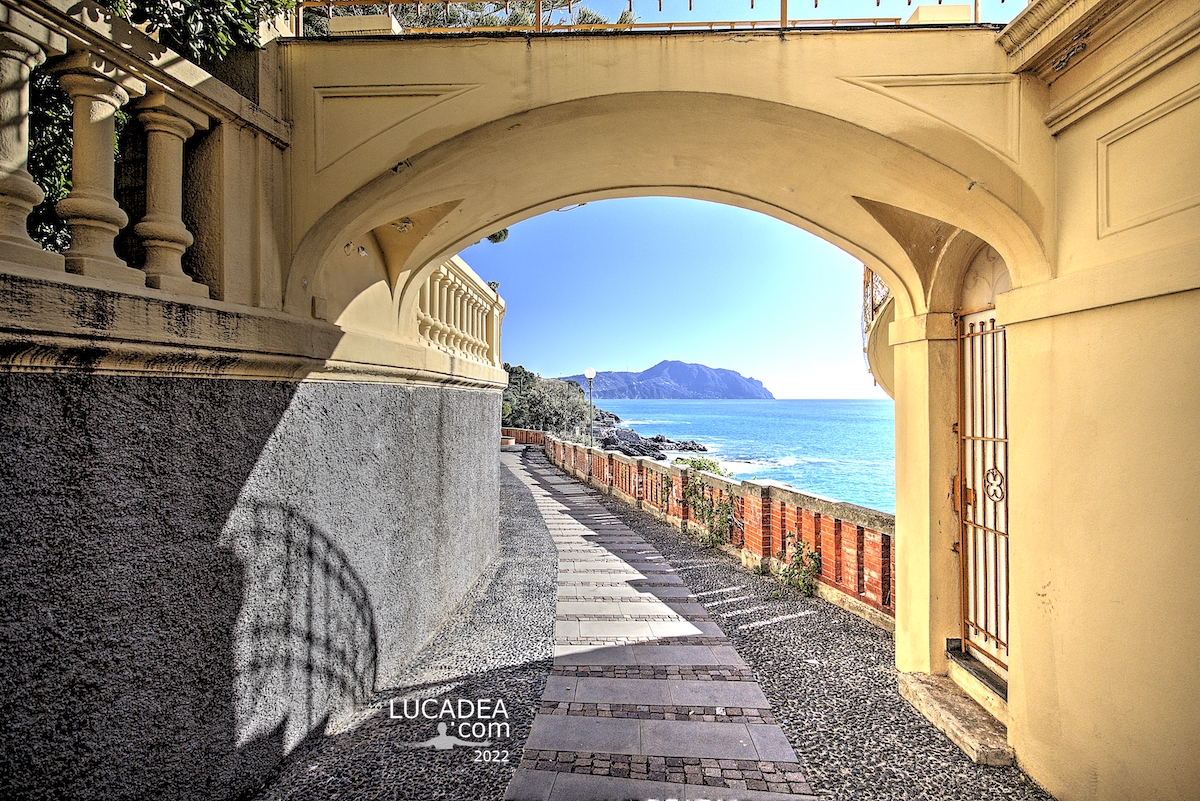
A seaside creuza in Bogliasco

Creuza sul mare a Bogliasco con piccolo ponte verso una villa affacciata sulla costa ligure

A seaside creuza in Bogliasco.
While walking east of the small harbor in Bogliasco, Liguria, Italy, I stopped to photograph this typical Ligurian creuza running close to the sea and connecting the coastal houses with the road. It is one of those corners of Bogliasco that immediately shows how closely the village is tied to the landscape between the hills and the water.
I took this photograph quite some time ago during a walk along this path. What caught my attention was the small bridge, almost suspended between the villa overlooking the sea and the route leading back toward the road. It is a simple detail, but I think it says a lot about the way Bogliasco has adapted to a landscape where space is limited and the coast drops quickly toward the water.
When I think about what to see in Bogliasco, I do not think only of the harbor or the beach. I am also interested in the quieter passages found just a few steps away from the places most people recognize. A seaside creuza is already a distinctive feature, but here the bridge and the villa make the scene even more unusual.
Creuze are among the features I immediately associate with Ligurian seaside villages. They are often narrow, steep paths that developed to connect houses, farmland and the sea. Their paving can vary from one place to another, but they generally retain an intimate character that separates them from ordinary roads.
In Bogliasco, this relationship with the sea is particularly clear. The village lies along the coast east of Genoa, where built-up areas and the shoreline are often very close together. Because of this, even a simple pedestrian path can become an interesting viewpoint.
There is no major monument in this photograph. The subject is the relationship between the different elements: the creuza, the little bridge, the villa and the sea just beyond them. I wanted to capture this detail because it seemed representative of a part of Liguria where houses appear to make use of every possible opening toward the water.
There is also a small linguistic curiosity connected with the word creuza. The term is strongly associated with Ligurian and Genoese culture and traditionally refers to a path or lane, often narrow and steep, shaped by the local terrain. It is therefore more than simply another word for alleyway: it describes a particular type of route deeply connected with the landscape.
Photographing these places also requires some attention to perspective. A narrow creuza can look completely different depending on where you stand. In this image, I was especially interested in the little bridge because it creates continuity between the different parts of the scene and makes the relationship between the villa and the path easier to read.
If you are wondering where Bogliasco is or what to see near Genoa, the village is one of those places where it is worth looking beyond the main streets. A side path can quickly reveal quieter corners and architectural details that sometimes tell the everyday story of a place better than a panoramic view.
This is also the kind of photograph I like to place alongside my other stories about villages along the Ligurian coast. In several posts I have focused on small architectural details: an archway, a staircase, an old lane or a path leading toward the sea. They are different subjects, but they all belong to the same landscape.
Seen through this creuza, Bogliasco feels more interesting to me than it would through a simple photograph of the harbor. Part of its identity lies in the succession of paths, houses, bridges and small passages following a coastline that leaves little room for large, straight routes.
Looking at this photograph again today, I like the fact that it does not necessarily show the most famous side of Bogliasco. Instead, it preserves a small fragment of the village, one of those places you can discover simply by walking without having planned to find it.

Have you ever walked along a creuza in Bogliasco or in another Ligurian seaside village? Add a comment or go to the bottom of the site to read what other visitors have written.

Seaside creuza in Bogliasco with a small bridge leading toward a villa overlooking the Ligurian coast

Photo taken with a Canon EOS M100 camera and Canon EF-M 11-22 lens.

To see all the photos I took in the village, click here:
foto gallery

And here are some videos I’ve made:

Videos recorded with Gopro Hero 10 Black.

🏠
  • Italiano