The round square and houses of Varese Ligure

La piazza e le case di Varese Ligure

The round square and houses of Varese Ligure.
When I arrive in the centre of Varese Ligure, in Liguria, Italy, it is the characteristic arrangement of the houses around the square that immediately catches my attention. The unusual circular layout may not be completely obvious in this photograph, but it is precisely this arrangement that makes the heart of the village so recognisable.
This is one of those images that makes me think about how distinctive the layout of small Ligurian villages can be. The houses do not simply face an open central space. Instead, they follow a particular geometry and guide the eye around the perimeter of the square.
Varese Ligure is one of those inland villages I enjoy photographing precisely because of details like these. Away from the coast and the sea views usually associated with Liguria, the attention here shifts towards the houses, streets and structure of the village. It only takes a moment of looking carefully to realise that even an apparently simple square can reveal something about the place itself.
I took this photograph because of the way these houses are gathered around the centre of the village. I enjoy photographing architecture like this because the buildings work best when seen as a whole. One facade may catch the eye, but it is the sequence of houses that gives the scene its character.
The square is part of the distinctive layout of Varese Ligure’s historic centre and is closely connected with the castle. The circular arrangement of the buildings is one of the features that makes this part of the village so easy to recognise. It is an architectural curiosity that becomes much clearer when viewed from above, while from street level the overall shape can be much harder to perceive, as happens in this photograph.
If you are wondering what to see in Varese Ligure, this is certainly one of the places worth exploring. Not necessarily because there is one particular attraction to look for, but because walking around the square makes it easier to understand the structure of the village and appreciate the details of its buildings.
What I find interesting is the relationship between the houses and the central space. The square does not feel like something simply added to the village. It seems to be an integral part of its structure, with the buildings almost guiding visitors along a circular route and creating different perspectives at every step.
It is also a rewarding place for photography. Moving just a few metres can change the relationship between the houses, the square and the architectural elements around it. One photograph may focus on a particular facade, while another can try to make the circular arrangement more apparent.
I have already photographed Varese Ligure from another viewpoint, from Grecino bridge, showing the houses overlooking the Vara River. That image also presented the village without focusing only on its most famous features. I enjoy returning to places like this because every viewpoint can reveal another side of them.
In this photograph, perhaps, the circular shape of the square is not immediately obvious. But that is also what I like about the image. It can become an invitation to imagine what lies beyond the frame and to look more carefully at the village itself.
Varese Ligure is one of those places where it is worth slowing down, walking without rushing and observing how the houses, streets and public spaces have been arranged over time. Sometimes a simple photograph of a square and its buildings is enough to make me want to return with my camera.

Did you already know about the unusual circular arrangement of the houses in Varese Ligure? Add a comment or go to the bottom of the site to read what other visitors have written.
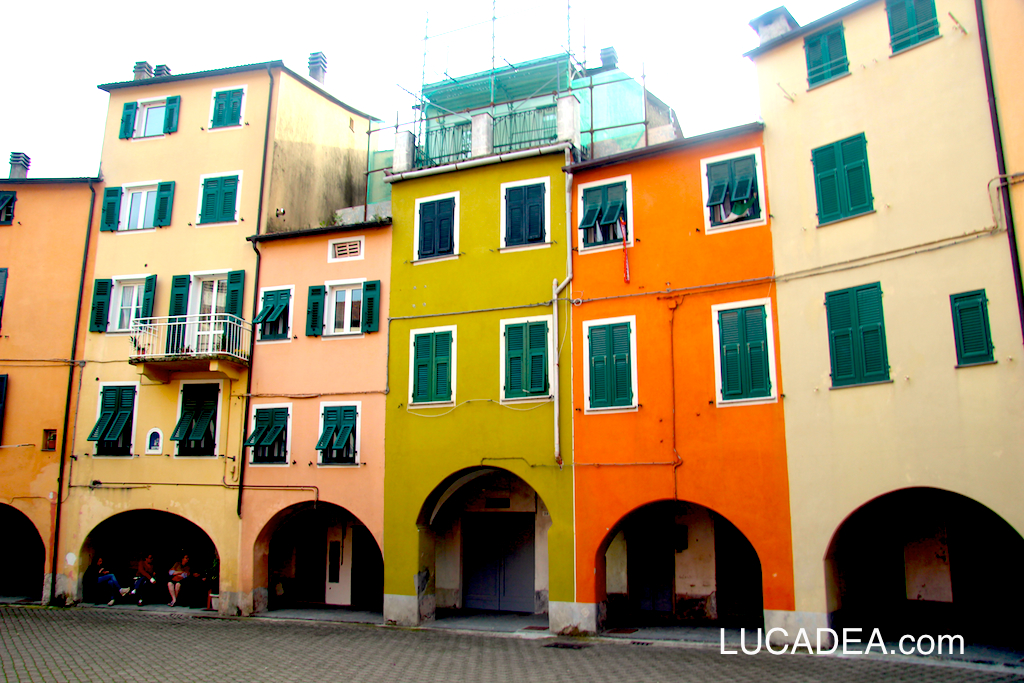
The round square in Varese Ligure with its characteristic houses arranged around the village centre

Click here to see more photos of the village:
foto gallery

Add one  comment to this article or read  here what other visitors have written.
 
Adv
 
Disclamer

The rights on images, videos, choruses, text and all other material on the LUCADEA.com website are governed as per  Copyright page.


This page has been viewed 0 times today.
This month it has been viewed 0 times.
In total it has been viewed 0 times.
 

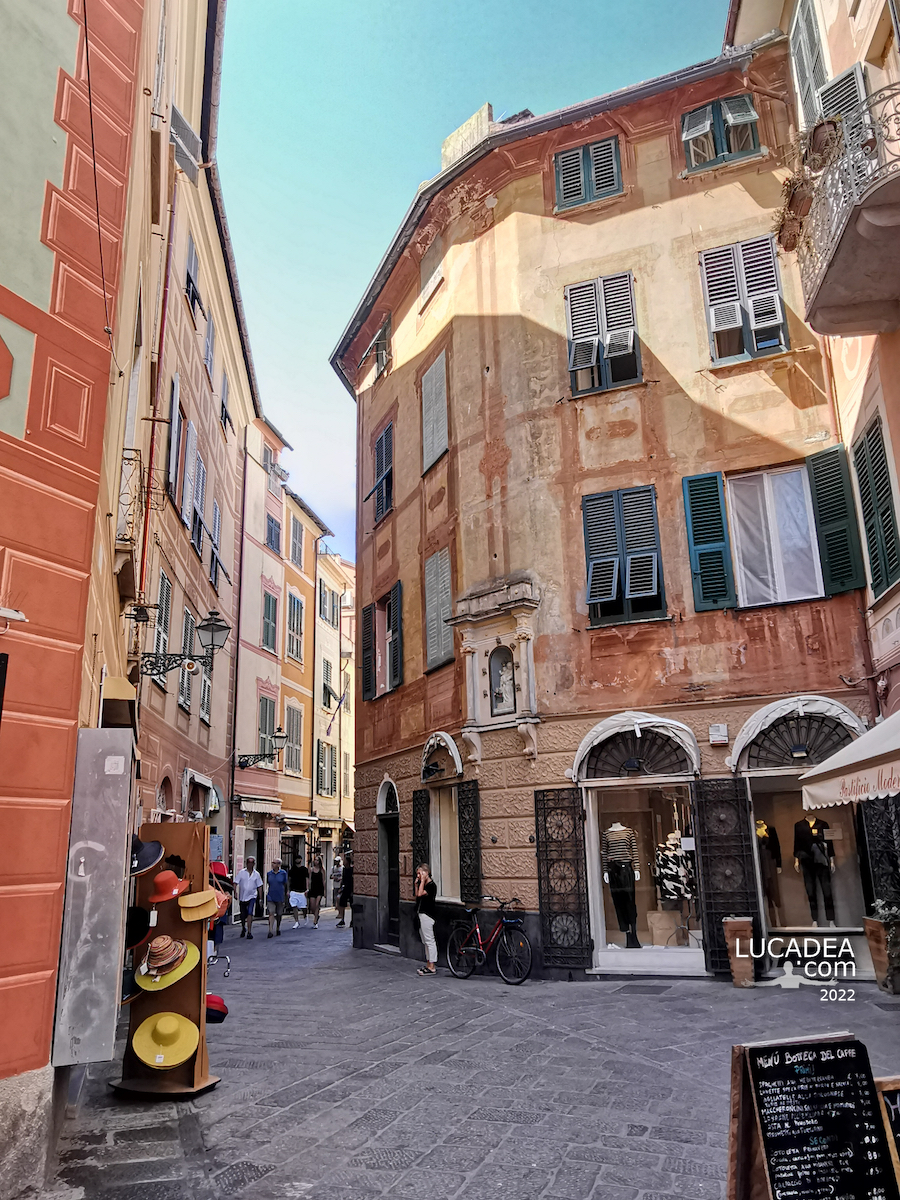
Fieschi Square in the village of Varese Ligure

Esplorando la bellezza di Piazza Fieschi a Varese Ligure

Fieschi Square in the village of Varese Ligure.
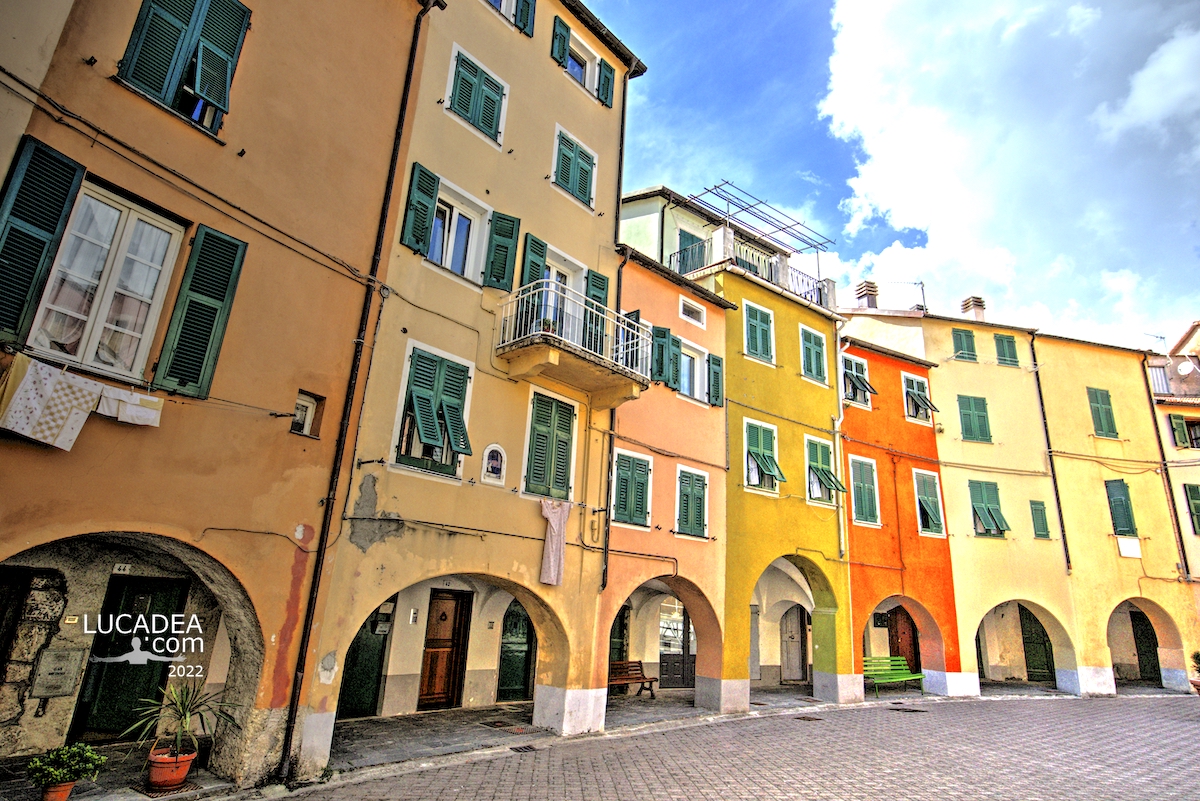
When I reach the historic centre of Varese Ligure, in Liguria, Italy, this unusual square is one of those places that immediately makes me slow down. Its particular shape, the buildings around it and the covered walkways create a scene that is worth looking at carefully rather than simply passing through.
Fieschi Square is at the heart of the historic village and, if you are wondering what to see in Varese Ligure, it is certainly one of the most interesting places to photograph. Its rounded layout makes it instantly recognisable and gives it a perspective quite different from that of many traditional Italian squares. The colourful houses and arcades following its perimeter make the space feel particularly intimate.
When I took this photograph, I was interested in the combination of all these elements. I was not looking for one particular building, but rather for the overall composition: the closely arranged facades, the openings beneath the arcades and the unusual geometry of the square. It is the kind of scene that can easily attract my attention when I am walking through a small historic village with my camera.
Varese Ligure lies inland in the Province of La Spezia, away from the coastal landscapes usually associated with Liguria. That is one of the things I find particularly interesting about the village. Here the region shows a different character, made up of valleys, mountains, historic settlements and architecture shaped by the life of the inland communities.
Fieschi Square is also known as Round Square because of its distinctive layout. Its history is connected with the Fieschi family, one of the important aristocratic families of Genoa, who played a significant role in the history of this area. That small historical detail is enough to understand why such an unusual square became one of the symbols of Varese Ligure without turning the photograph into a history lesson.
What I particularly enjoy photographing here is the perspective. The buildings seem to guide the eye around the perimeter, while the arcades create a succession of openings, architectural details and sheltered passages. Even without searching for a spectacular composition, there are plenty of viewpoints to discover.
The square is also a good example of how architecture can become part of a village’s identity. It is not simply an open space surrounded by buildings. Its shape influences the way people move through the centre and the way the village is perceived. Walking inside it, I get the feeling of being almost enclosed by the buildings that define its unusual outline.
This photograph also connects with another image I published on the blog, showing the houses of Varese Ligure from the Grecino bridge above the Vara River. The two photographs offer very different perspectives, but both show a side of the village that goes beyond the most obvious views.
For me, this is one of the pleasures of photographing small places such as Varese Ligure. You do not need a monumental landmark to find something worth capturing. A square, a house, an arcade or a small architectural detail can be enough to preserve the memory of a walk.
Fieschi Square remains one of the places I would immediately associate with Varese Ligure. Its compact atmosphere, unusual shape and architectural details make it an especially rewarding subject for photography, particularly when I take the time to slow down and let the details suggest the composition.

Have you ever visited Varese Ligure and seen the unusual shape of Fieschi Square for yourself? Add a comment or go to the bottom of the site to read what other visitors have written.

Fieschi Square in Varese Ligure, with colourful houses and arcades surrounding the historic village centre

Photo taken with a Canon EOS M100 camera and Canon EF-M 11-22 lens.

If you want to see all the photos taken in Varese that afternoon—as well as previous ones—click here:
foto gallery

Add one  comment to this article or read  here what other visitors have written.
 
Adv
 
Disclamer

The rights on images, videos, choruses, text and all other material on the LUCADEA.com website are governed as per  Copyright page.

This page has been viewed 0 times today.
This month it has been viewed 0 times.
In total it has been viewed 0 times.
 

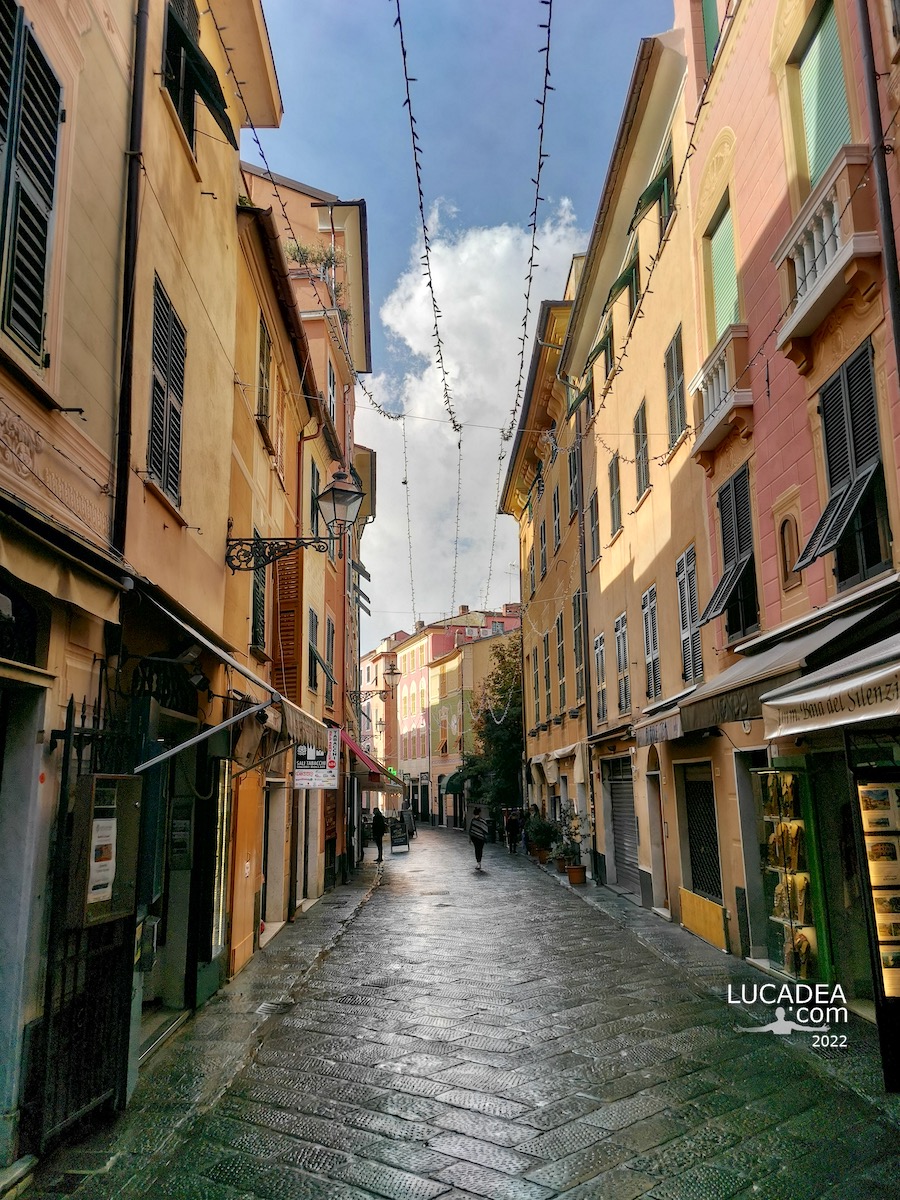
The authentic heart of Sestri Levante: the alley

Il caruggio nel centro storico di Sestri Levante, tra facciate colorate e scorci caratteristici della Liguria

The authentic heart of Sestri Levante: the alley.
In the historic centre of Sestri Levante, Liguria, Italy, walking into the old alleyways brings me straight into one of the parts of town I most enjoy photographing. Between colourful facades, small shops, restaurants and details that seem to change at every step, this narrow street still has the intimate character I look for when I carry my camera.
When I think about what to see in Sestri Levante beyond its famous bays, the old alley is one of the first places that comes to mind. It is one of the most recognisable parts of the historic centre, and following it towards the Bay of Silence means crossing through the liveliest part of the town before reaching the sea.
The word caruggio belongs to Ligurian tradition and is used for the narrow streets typical of historic settlements across the region. In Sestri Levante, this characteristic creates a particularly interesting setting for photography, with buildings, shutters, signs and small architectural details constantly changing as you move through the street.
That is what I like to photograph most. Not necessarily a wide view, but a small scene capable of telling something about the town without showing everything. A doorway, a window, a sign or simply the perspective of the street can become the subject of a photograph.
This image comes from that way of looking at Sestri Levante. I wanted to capture this part of the old alley with my camera, keeping the street itself at the centre of the frame and trying to preserve the feeling of continuity that accompanies anyone walking through it.
The alley is also a natural connection between different parts of the historic centre. From here, you can continue towards the Bay of Silence, one of the places I have photographed many times, or simply stop and look at the everyday activity along the street. Local life and visitors naturally mix together here.
That coexistence is what I find particularly interesting. Sestri Levante is a well-known seaside destination and can become very busy during the tourist season, yet it is still possible to find small details that belong to the everyday identity of the town.
The historic centre developed around the narrow strip of land connecting the mainland with the peninsula of Sestri, creating an unusual relationship between the streets, the buildings and the sea. This geography helps explain why the two bays remain so close even while walking through the centre.
One small curiosity is Sestri Levante’s connection with literature. The landscape around the town and the Bay of Silence has attracted writers and artists over the years, helping create the romantic image that still surrounds the place today.
But when I photograph the old alley, I am not necessarily thinking about its reputation. I am much more interested in whatever happens to be in front of my lens at that particular moment. A weathered facade, a balcony, a glimpse between two buildings or a row of windows can tell me something about Sestri in a more personal way than a conventional panoramic photograph.
This is also why I return to this part of town so often in my photoblog. After photographing the Bay of Silence and other corners of the historic centre, the old alley feels almost like a thread connecting different images of the same place.
Every time I walk through it, I can find something new to photograph even though the street itself has not changed. The viewpoint changes, the people change, the shops change and small details on the buildings catch my attention differently. Together, these simple elements create a very everyday image of Sestri Levante.
For me, that is where its authenticity lies: not in trying to find a perfect scene, but in walking slowly and allowing the details along the way to attract your attention.

If you are visiting Sestri Levante, would you take a slow walk through the old alley before heading towards the Bay of Silence? Add a comment or go to the bottom of the site to read what other visitors have written.

Old alley in the historic centre of Sestri Levante, with colourful facades and a typical Ligurian street scene

Photo taken with Honor 20.

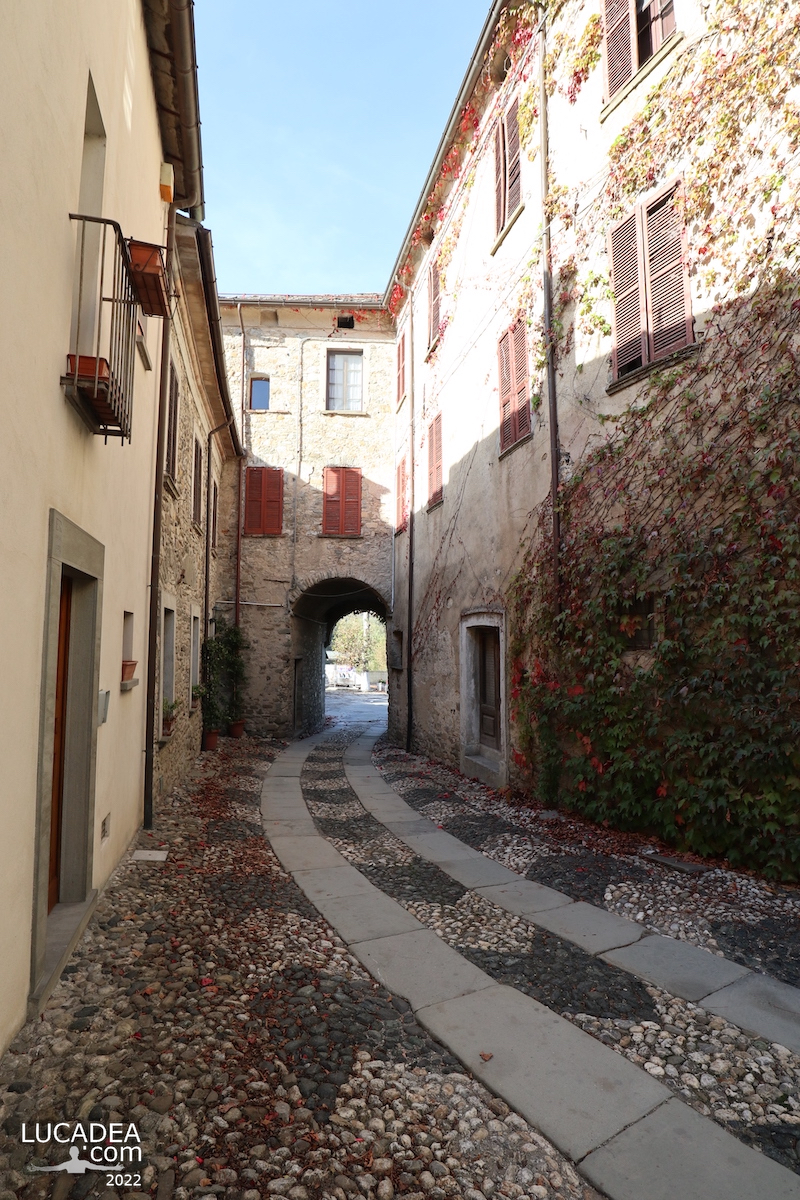
Compiano, a medieval village in Parma

Compiano, un gioiello medievale nell'Emilia che ti incanterà

Compiano, a medieval village in Parma.
Among the hills of the Parma Apennines, in Emilia-Romagna, Italy, I found myself in front of one of those small villages that seem naturally made for photography. Compiano is a compact medieval town where stone houses, narrow streets and the imposing presence of its castle create a setting that encourages you to slow down and look more carefully.
This photograph comes from that feeling. As I walked through the village, I wanted to observe not only the most important buildings but also the relationship between the streets, the houses and the surrounding hills. This is what I enjoy when photographing small historic towns: places where taking a side street can completely change the perspective.
Compiano is included among Italy’s Most Beautiful Villages, and walking through its historic center makes the reason fairly easy to understand. The village retains a compact layout and a number of historic buildings that preserve its medieval character. What interests me, though, is not simply how well these elements have survived, but how naturally they remain part of everyday life.
The dominant landmark is, of course, Compiano Castle. Its elevated position and fortified appearance immediately recall the strategic role the village played for centuries. Looking at it during a walk, it is easy to imagine how important this hill must once have been for controlling routes across the Apennines.
There is also a small historical detail behind the castle’s importance. Over the centuries, it went through several changes and different uses, while remaining one of the most recognizable symbols of the village. Its presence should therefore not be seen only as a picturesque backdrop: it is also evidence of the strategic importance of this territory and its position between Emilia and the mountain areas.
If you are wondering what to see in Compiano, the castle is naturally one of the first places to look for, but I think it would be a shame to stop there. The historic center is best explored slowly, allowing the smaller details to suggest where to stop. Narrow streets, closely built houses and views toward the hills can often be more interesting precisely because they are not presented as conventional attractions.
That is also why I wanted to photograph the village. A photograph of Compiano does not necessarily need to place the castle in the foreground. I am more interested in preserving the feeling of the place, its intimate scale and the way the architecture meets the surrounding landscape.
The countryside adds another important element. Compiano lies within the area of the Cento Laghi Regional Park in the Parma Apennines, and the landscape gradually changes as you move away from the historic center. Hills, woods and valleys become part of the same visual story, even when they are not directly visible in the photograph.
If you are visiting Compiano, I think it is worth alternating between the streets of the village and the more open viewpoints around it. After walking among the houses, moving only a short distance can reveal how unusual the position of the settlement is and how closely the village is connected to the surrounding landscape.
The local food tradition also belongs naturally to the identity of this area, but it is not what I wanted to place at the center of this photograph. I prefer to let the streets and buildings tell the story of my first impression, because walking through the village is when its character becomes most apparent.
This is one of the things I appreciate about small Apennine towns. You do not necessarily need a fixed route to find photographs. Every turn can reveal a different composition, and almost every old building can become part of the frame. Compiano makes that feeling particularly easy to experience.
The photograph also connects naturally with other stories I have published about Italian villages and smaller towns in Emilia and Liguria. They are very different places, but they share the ability to offer interesting images away from the best-known monuments.
Compiano stayed with me as a place to observe slowly. The castle immediately gives the eye a focal point, but the streets, the stone buildings and the landscape around them complete the image. That balance between history and environment is probably what makes the village so interesting to photograph.

Do you already know Compiano, or which other village in the Parma Apennines would you like to see through a photograph? Add a comment or go to the bottom of the site to read what other visitors have written.

Photos taken with a Canon EOS M100 camera and Canon EF-M 11-22 lens.

To see all the photos, click here:

Sestri Levante’s old lane toward the sea

Alla scoperta del caruggio di Sestri Levante, meraviglia di Liguria

Sestri Levante’s old lane toward the sea.
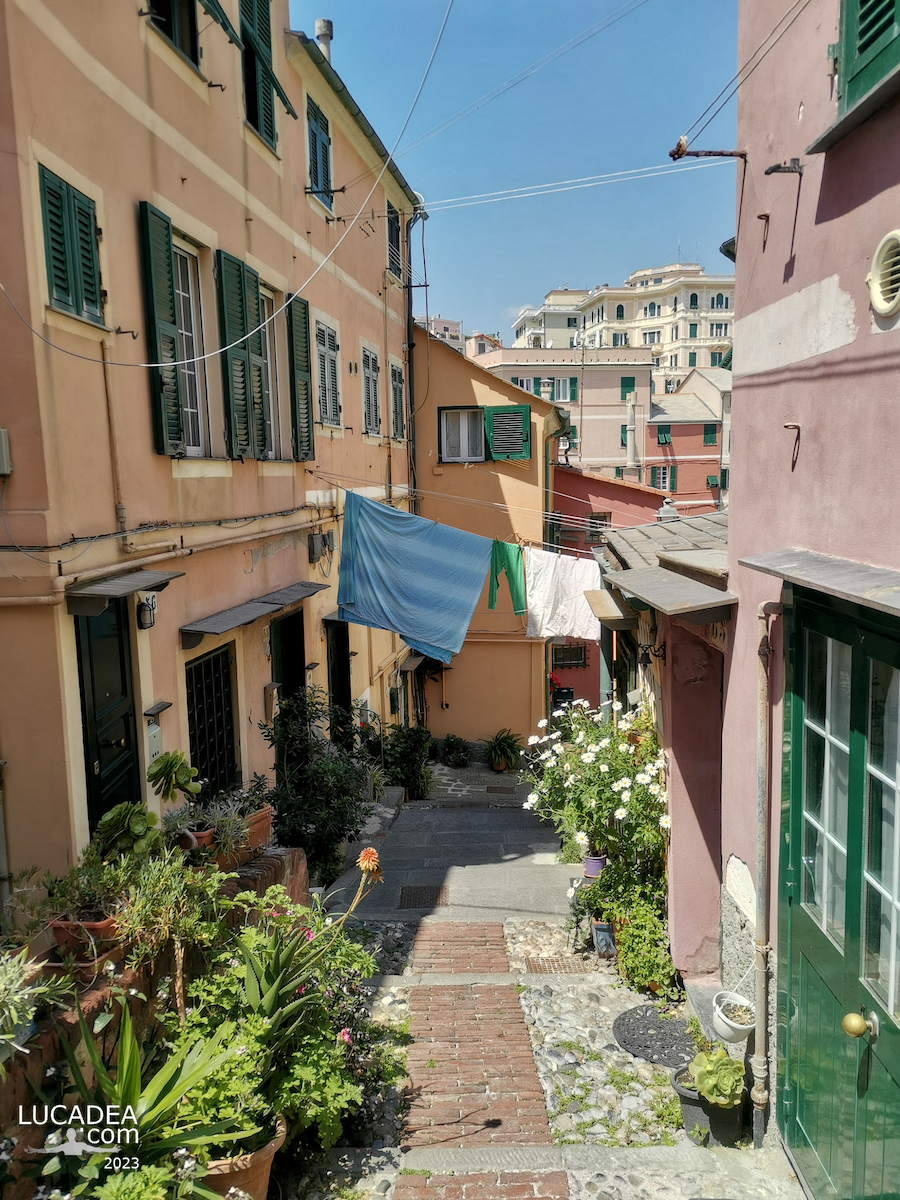
Walking through the historic center of Sestri Levante, Liguria, Italy, I often find myself passing through this old lane leading toward the Bay of Silence. It is a route I know well, yet it still manages to offer small details and perspectives that make me want to stop and take another photograph.
Calling Sestri Levante’s old lane a wonder of Liguria might sound a little too grand, as I admitted in the original text, but I still genuinely think it is one of the most attractive old lanes in this part of the region. Not because it is monumental or spectacular in the conventional sense, but because of the way it connects the everyday life of the town with one of its best-known coastal views.
I took this photograph during one of my walks through the town. The narrow lane, with houses opening directly onto the street, naturally draws you toward the sea. It is a simple perspective, but to me it captures something essential about Sestri Levante: you do not have to walk far to move from the atmosphere of the historic center into the landscape of the bay.
If you are wondering what to see in Sestri Levante, the Bay of Silence will almost certainly be near the top of the list. But reaching it from the town center means walking through streets that deserve attention in their own right. The old lane is therefore not merely a route to the bay; it is already part of the experience.
What I like photographing here is the continuity between the buildings and the street. In Ligurian old towns, façades often stand very close together and the relationship between private buildings and public space is immediate. Windows, shutters, doorways and small architectural details become part of one continuous scene rather than isolated subjects.
Sestri Levante also has a particular geography that makes this transition especially interesting. The historic center lies on the narrow isthmus connecting the peninsula with the mainland, while the Bay of Fables and the smaller Bay of Silence open on either side. This unusual shape makes it feel very natural to move from the town streets toward two completely different coastal settings.
There is a small historical curiosity behind the name of Sestri. The area was associated in antiquity with the name Segesta Tigulliorum, while the modern name developed through the historical evolution of the place name. It is a small reminder of how old the settlement is within the Gulf of Tigullio.
But coming back to the photograph, it is the lane itself that interests me most. I was not trying to create another postcard image of the Bay of Silence. Instead, I stopped before reaching the sea, when the bay is still only suggested by the direction of the street.
This is something I often enjoy doing in the photographs I publish on the blog. I like showing a place not only through its most famous viewpoint, but also through the route that leads there. In this case, the connection with my photographs of the Bay of Silence comes naturally: the old lane becomes the small journey that comes before the view.
Walking here also makes it clear how closely the center of Sestri Levante is connected with tourism. During summer, the lane can become busy, particularly when visitors are heading toward the bay, while at other times it retains a quieter and more local atmosphere. That contrast is one of the reasons I enjoy photographing the same streets at different moments.
For people who live here, familiar views can easily become invisible through repetition. Yet holding a camera changes the way I look at them. A façade, a perspective or a small architectural detail that I would normally walk past can suddenly become the reason to stop.
Perhaps that is why I continue to think of this old lane as one of the nicest corners of Liguria. It does not need exaggerated descriptions. Within a short distance, it brings together the houses, the historic center, the movement of people and, just beyond the end of the street, the sea.
And then there is that final destination that makes the route even more special: the Bay of Silence. Knowing that you only have to keep walking to reach the beach gives this otherwise ordinary street a different meaning.
This photograph also fits naturally with other posts I have published about Sestri Levante, especially those dedicated to the Bay of Silence and the less obvious corners of the town. Together they form a more personal record of a place I know well and continue to photograph.
So perhaps the real charm is not simply the lane itself, but everything it promises at the end of the walk.

Do you think Sestri Levante’s old lane deserves a place among the most beautiful lanes in Liguria? Add a comment or go to the bottom of the site to read what other visitors have written.

Photos taken with Honor 20.

Here’s where via XXV Aprile is located:

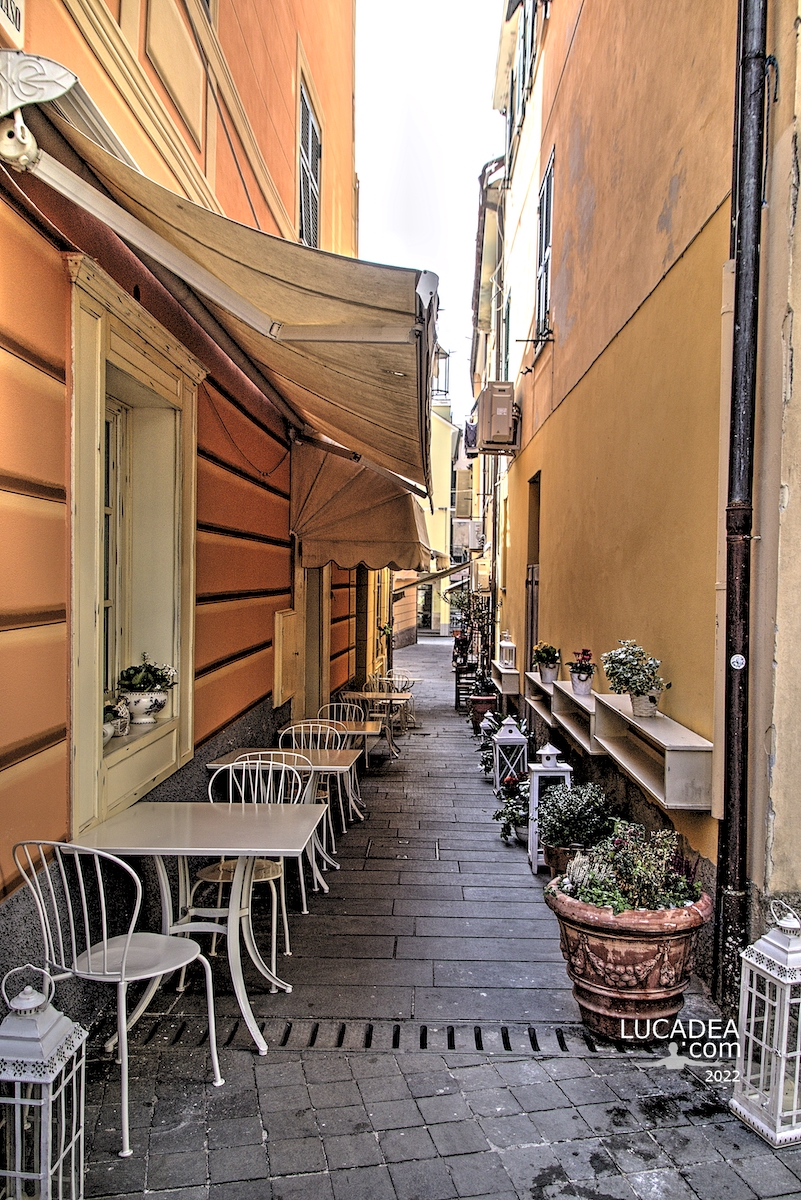
A narrow alley in Moneglia’s old town

Stretto vicolo del centro storico di Moneglia in Liguria, con case affacciate sul piccolo caruggio del borgo

A narrow alley in Moneglia’s old town.
While walking through the old town of Moneglia in Liguria, Italy, I came across this small side passage and immediately found it worth photographing. It is the kind of narrow alley that seems to appear almost unexpectedly from the main street, inviting you to stop for a moment and look more closely.
Moneglia lies along the Ligurian coast east of Genoa, not far from Sestri Levante, and it is one of those villages where moving just a few meters away from the main streets can completely change the view. Some time ago, while walking through the old town, I noticed this particular corner and decided to capture it with my camera.
What interested me most was the way these small side alleys are actually used. They are not simply narrow passages between buildings. They are part of everyday life in the village and, in some places, they are compact enough to become small outdoor seating areas for cafés and restaurants. The result feels natural, as if the old architecture and contemporary life have simply found a way to share the same limited space.
This is exactly the kind of detail I enjoy photographing in Ligurian villages. I am not always looking for a sea view or the most famous square. Sometimes a narrow passage, a doorway, a window or a small section of a wall can tell me more about a place than a postcard panorama.
If you are wondering what to see in Moneglia, there is naturally much more than this single alley. But I think these secondary corners are an important part of the village’s character. The old town is compact and easy to explore on foot, and wandering without a precise destination often leads to the most interesting views.
The main alley provides the obvious route through the village, but stepping into one of its side passages immediately changes the perspective. The buildings seem closer together, the street becomes more intimate and ordinary details become much more noticeable.
A small historical curiosity about Ligurian villages is the role played by their narrow alleys. These passages were not designed with modern tourism or photography in mind. They developed as a practical response to the limited space available between the coast and the surrounding hills. Their narrow proportions are still one of the features that give many Ligurian old towns their distinctive character.
There was nothing staged about this photograph. I simply encountered the alley while walking and liked the way it looked. The fact that such a small space can also function as an outdoor seating area is, to me, a good example of how villages like Moneglia make use of every available corner without losing their identity.
Moneglia also has a different scale from some of the larger coastal towns of Liguria. It is small enough to explore at a relaxed pace, yet there are plenty of details for someone who enjoys walking and photography. That is one of the reasons I find myself returning to places like this.
Its proximity to Sestri Levante makes Moneglia particularly familiar to me. From my area, it takes roughly twenty minutes by car to reach it, so visiting does not necessarily require a long trip or elaborate planning. Sometimes a few free hours are enough to walk through the village again and see what catches my attention.
Looking at this photograph, I particularly like the fact that it is not one of the obvious postcard views of Moneglia. It could almost be any one of the many narrow passages found while walking through the old town. That is precisely why it fits the way I like to photograph. My blog is also a collection of these small fragments of familiar places, rather than only their most famous images.
This photograph connects naturally with another story on my blog about Ligurian villages, the steep alley in Vernazza. There too, the subject was not a monument but a passage through the village. In both photographs, it was the shape of the street and the way it fitted into the surrounding buildings that caught my attention.
These are simple details, but they are often the ones I remember most clearly. A narrow street, a few tables in a small corner, the buildings close together: ordinary elements of village life that can become a good photographic subject when you take the time to notice them.
Perhaps that simplicity is what I like most about Moneglia. There is no need to search constantly for something spectacular. Walk through the old town, take a side street and let curiosity decide where to go next.

When you visit a Ligurian village, do you also end up wandering into the side alleys, or do you prefer to stay on the main streets? Add a comment or go to the bottom of the site to read what other visitors have written.

Narrow alley in Moneglia's old town in Liguria, with traditional houses lining the small village passage

Photo taken with Canon EOS M100 and lens Tamron 16-300.

This is a video of the alley of the village:

Video recorded with a GoPro Hero 10 Black.

I took several photos in the village, and if you’d like to see them all, click here:

A glimpse of Boccadasse on Genoa’s coast

Scorcio del borgo di Boccadasse a Genova con case colorate, vicoli stretti e il mare del Levante

A glimpse of Boccadasse on Genoa’s coast.
Among the houses facing the sea in eastern Genoa, Liguria, Italy, Boccadasse still preserves the compact character that I enjoy finding when photographing the city, even though the old fishing village has long been absorbed into the urban fabric of Genoa. In this photograph, what caught my attention was one of those quiet corners that can briefly make the city feel much smaller.
Boccadasse is one of those places in Genoa that I can recognize immediately, even through a photograph. The colorful houses, narrow streets leading toward the sea and small beach create a very distinctive setting. Yet just a short distance away, the urban character of Genoa returns, with its streets, buildings and everyday city life.
I do not always look for the classic view when I photograph Boccadasse. I often prefer the side streets, partial views of the houses and compositions where the sea appears only between buildings rather than filling the entire frame. That was the kind of detail I wanted to capture with my camera here.
Looking at the photograph, what I remember most is the sense of calm that Boccadasse can offer when the village happens to be less crowded. It is a very well-known place and naturally attracts visitors, but it does not always have to feel busy. On a quieter day, simply walking between the houses can bring back something of the atmosphere of a small fishing village.
If you are wondering what to see in Genoa beyond the historic center and its grand buildings, Boccadasse is one of the places worth seeing along the eastern side of the city. There is no need to look for a major monument here. The interest comes from the combination of houses, sea, beach and narrow streets that still form the structure of the old village.
One of the most interesting things about Boccadasse is precisely its history as a small maritime settlement that became part of a much larger city. Genoa expanded around it, but the village retained much of the appearance and layout that make it recognizable today. It is a good example of how an older settlement can preserve its identity while becoming part of a modern urban environment.
That contrast is particularly interesting to me as a photographer. On one side there is Genoa, with its dense urban landscape and neighborhoods stretching along the coast. On the other there is Boccadasse, with a much smaller scale and a strong connection with the sea.
I did not try to explain all of this directly through the photograph. I was simply interested in the view in front of me and in the way the buildings seemed to create a protected space around the street. These are often the images that come from an ordinary walk, when something unexpectedly makes me slow down and look more carefully.
Boccadasse is also one of those places where the atmosphere can change considerably depending on the moment. A crowded day produces a very different photograph from a quieter one. That is another reason I find it worth returning to places I already know: the same street corner can feel completely different from one visit to another.
I also like the fact that Boccadasse is not an isolated village preserved under glass. It remains part of contemporary Genoa. The houses, businesses and people belong to the present city, while the layout of the old fishing settlement continues to reveal something about its maritime origins.
This photograph naturally connects with another story on my blog about Genoa, the view from Castelletto Esplanade. There, I photographed the city from above, with its rooftops, church towers and domes stretching toward the sea. Here the viewpoint is completely different, much closer to the houses and streets of the old village. Together, the two photographs show two very different sides of the same city.
That is perhaps what makes Genoa such an interesting place to photograph. It does not have a single face. The city changes as you move from the narrow streets of the historic center to the hills, and then toward the sea, where a place like Boccadasse suddenly feels almost separate from the metropolis around it.
When I look at this photograph now, I therefore think less about the beauty of the location and more about that particular feeling of finding a quiet corner in a very well-known place. Even in a city as familiar and visited as Genoa, there are still views that can feel unexpectedly private when the timing is right.

Have you ever found a corner of Boccadasse that looked completely different once the village became quiet? Add a comment or go to the bottom of the site to read what other visitors have written.

A glimpse of Boccadasse in Genoa with colorful houses, narrow streets and the sea along the Ligurian coast

Photo taken with an Honor 20.

All the photos I took in the village, across various visits, are here:
foto gallery

Where the village is located:

A gate opening onto the Bay of Silence

Cancello affacciato sulla Baia del Silenzio a Sestri Levante, con il mare e le case del borgo sullo sfondo

A gate opening onto the Bay of Silence.
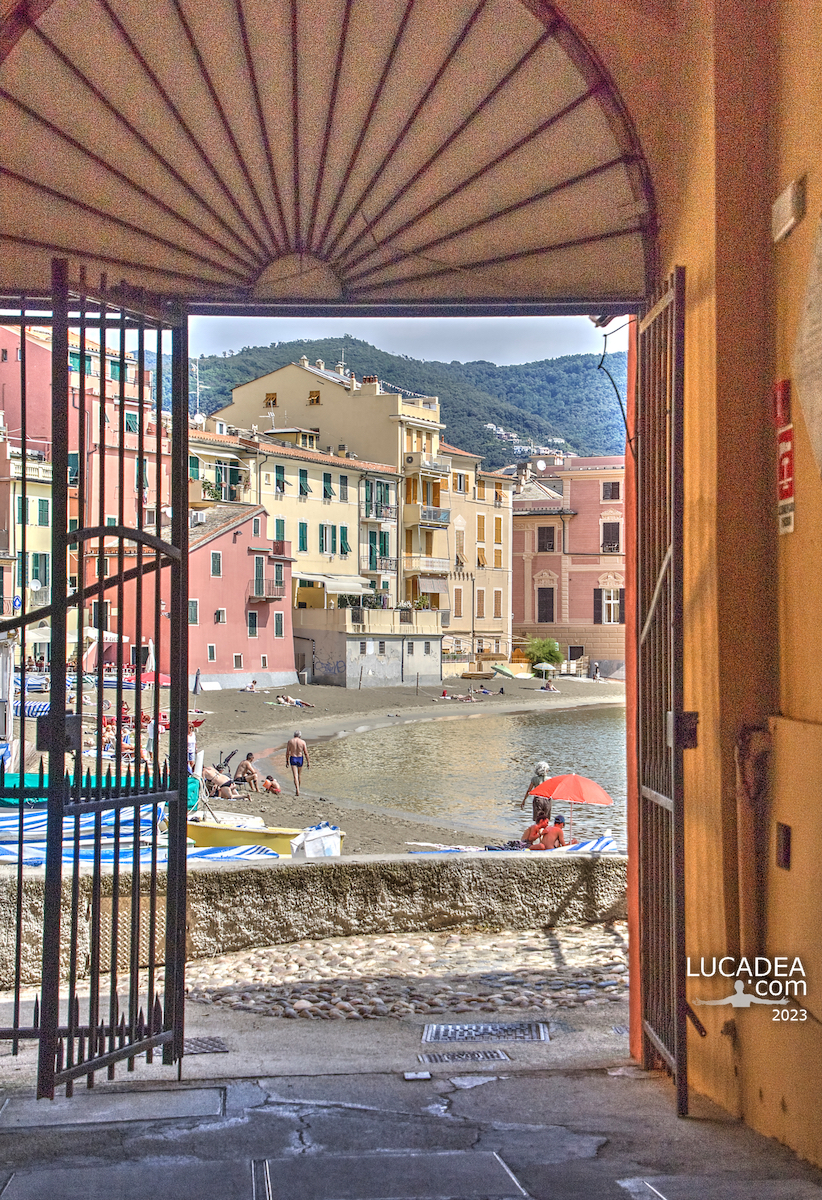
From this gate in Sestri Levante, Liguria, Italy, I found myself looking toward one of the most recognizable views on this part of the coast: the Bay of Silence, with the sea and the village gathered around the small sheltered inlet. What made me stop was not simply the view, but the way the gate framed it.
The scene gave me an immediate feeling that is difficult to describe precisely. There was nothing artificial about it and nothing that needed to be added to make the landscape interesting. The gate was already there, creating a simple boundary between the place where I was standing and the view beyond it. Looking through that opening made the bay feel almost like an image waiting to be photographed.
I took this photograph because I wanted to preserve that particular perspective. The Bay of Silence is one of the best-known views in Sestri Levante, so I was not looking for another conventional panorama. Instead, I was interested in the relationship between the foreground and the landscape beyond it.
If you are wondering what to see in Sestri Levante, the Bay of Silence is naturally one of the places that comes to mind. Its sheltered shape, the buildings facing the water and the peninsula separating it from the nearby Bay of Fables make the area immediately recognizable. Yet for me, the most interesting part of this photograph is the point from which I happened to see it.
The gate creates a small visual transition. On one side there is an ordinary architectural element, something that could easily be ignored while walking. On the other side there is the sea and the village. The two elements are very different, but together they create the composition I noticed that day.
The name Bay of Silence is particularly fitting for a place whose sheltered shape has long contributed to its quiet character. Today it is a well-known part of Sestri Levante and can be busy at certain times, but the compact form of the bay still gives it a very different atmosphere from the more exposed stretches of the Ligurian coast.
I do not want to turn this photograph into a tourist description, though. For me it remains the record of a simple moment when I looked through that gate and realized that the foreground belonged in the picture. Removing it would have produced a more conventional view, but it would also have removed the detail that originally attracted my attention.
This is something I often enjoy in photography. A gate, window, archway or passage can change the way we look at a landscape. Instead of simply showing the view, it can guide the eye toward it. Here, the gate does not really block the Bay of Silence; it almost seems to invite the viewer to look through it.
Sestri Levante is particularly rewarding in this respect because of the way its peninsula separates two very different bays. Walking through the town and around the peninsula can produce many changes of perspective within a relatively small area. That is one reason I still enjoy photographing places in Liguria that I already know.
This photograph also reminds me of another story on my blog about the Passeggiata of Nervi, where the relationship between architecture, foreground details and the sea also became an important part of the image. In both cases, I was less interested in presenting a complete panorama than in finding the element that made that particular viewpoint different.
Looking at this photograph again, I understand why the scene made me think of a dream. Not because it looked unreal, but because the gate seemed to open directly onto a carefully framed image. The feeling was spontaneous, and photography was the easiest way I had to keep it.
What I like most is that I did not need to arrange anything. I simply encountered the gate, looked beyond it and recognized a composition worth keeping. These are often the photographs I enjoy most afterwards because they preserve the moment of discovery rather than the result of a carefully planned shot.
Perhaps that is also why I keep photographing familiar places. I am not always trying to discover somewhere new. Sometimes I simply want to find a different way of looking at somewhere I have already seen. Even a famous coastal view can become something different when the viewpoint changes.
This time, that small change was a gate.

Have you ever found an unexpected viewpoint that made a familiar place look completely different? Add a comment or go to the bottom of the site to read what other visitors have written.

Gate overlooking the Bay of Silence in Sestri Levante, with the sea and village buildings beyond

Photo taken with Canon EOS RP and lens Tamron 16-300.

Varese Ligure seen from Grecino Bridge

Varese Ligure vista dal ponte Grecino, con le case del borgo affacciate sul fiume Vara

Varese Ligure seen from Grecino Bridge.
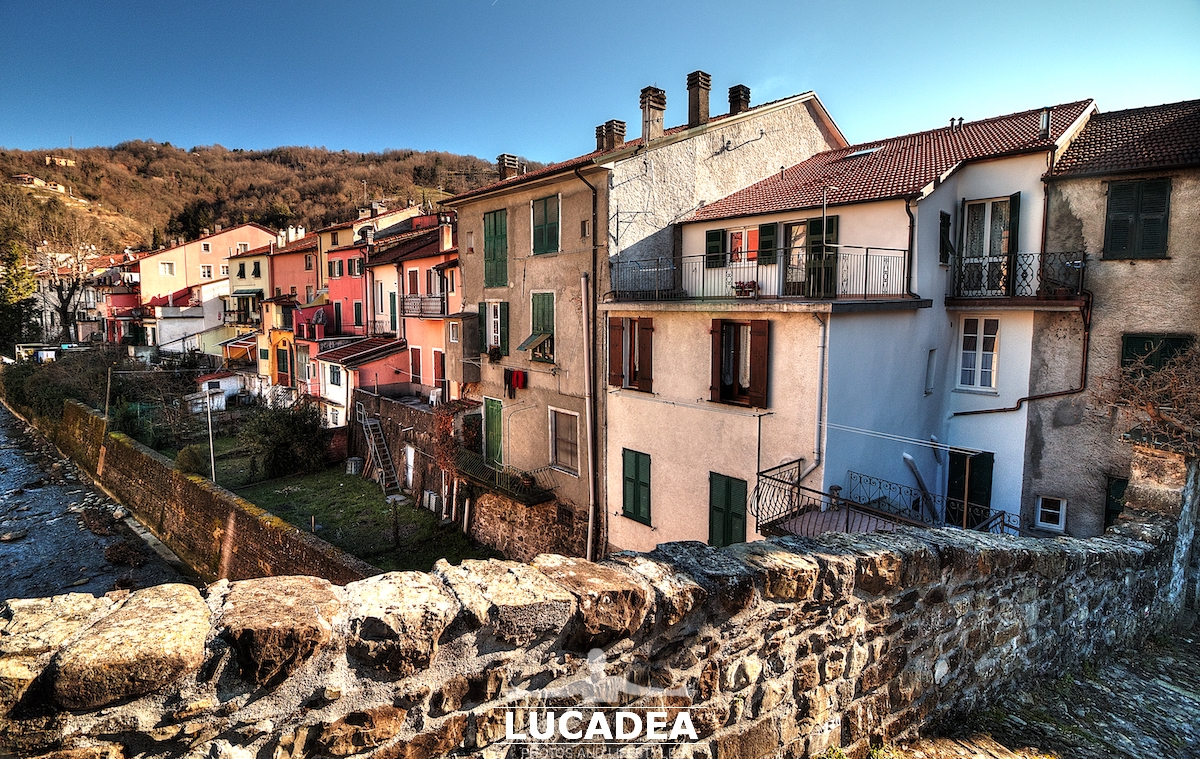
From Grecino Bridge in Varese Ligure, Liguria, Italy, I photographed the houses of the village as they face the Vara river, showing a side of the historic center that is normally hidden from view. This different perspective was what made me stop and take the photograph.
When walking through Varese Ligure, it is natural to follow the streets of the historic center and look at the houses from their more familiar side. From Grecino Bridge, however, the view changes completely. The photograph shows what could almost be called the back of the buildings along the carrugio, facing the river and forming a much quieter view of the village.
I wanted to capture this particular angle because it offered a different way of looking at Varese Ligure. It is not necessarily the image most people associate with the village, but that is exactly what I like about it. The houses appear different when seen from the opposite side, and details that are easy to miss while walking through the main street suddenly become visible.
Grecino Bridge is one of the historic elements worth noticing when exploring Varese Ligure. Crossing the Vara river, it provides a distinctive viewpoint over the village and makes it easier to understand the relationship between the houses, the river and the surrounding landscape. If you are looking for things to see in Varese Ligure beyond its famous square, this is a small but interesting place to stop.
Piazza Fieschi is probably the most recognizable image of the village. Its unusual elliptical shape gives it a very distinctive appearance and is also connected with Varese Ligure’s nickname, the “round village”. But there is much more to photograph here than the famous square.
I am particularly interested in these less obvious viewpoints. When I photograph a village, I do not necessarily look for the classic postcard composition. I like walking around, changing direction and seeing how the buildings change when viewed from another position. Sometimes crossing a bridge is enough to reveal an entirely different side of a place.
Here the Vara river almost becomes a line separating two ways of seeing the village. From the streets, the houses are part of the everyday walking experience. From the bridge, the secondary façades, walls and architectural details become the main subject instead.
That is what caught my attention. The back of a building may not have the same formal appearance as its main façade, but it can reveal how the houses are actually connected to the landscape. In Varese Ligure, the river is an important part of that relationship.
A small historical detail I find interesting is the distinctive planning of Piazza Fieschi. Its regular elliptical form is one of the defining features of the village, while the surrounding historic buildings preserve traces of different periods of development. The result is a place where the shape of the streets, the architecture and the presence of the river all contribute to its identity.
Looking at this photograph, though, I am less interested in turning the scene into a historical explanation and more interested in the effect of perspective. The same building can look completely different from a street, a square or the opposite bank of a river.
This is something I often notice when photographing villages and narrow streets in Liguria. An earlier photograph might show a familiar façade, while moving only a few dozen meters can reveal another composition entirely. That is one reason I enjoy returning to places I have already photographed: there is no guarantee that I will see them in the same way twice.
Grecino Bridge therefore seems interesting to me not only as a way of crossing the Vara river, but also as a small viewpoint over Varese Ligure. The photograph came from that simple observation, away from the better-known image of the village.
If I return here, I would probably look for more views along the river, following its course and seeing how the houses change from one position to another. These small changes of perspective often lead to the photographs that stay in my memory longest.
This image also connects naturally with other stories on my blog about Ligurian villages, where I have tried to photograph not only the most famous views but also narrow streets, bridges and architectural details encountered while walking. Over time, these photographs become a kind of visual diary of Liguria, made up of well-known places as well as quieter corners.
For anyone wondering where to look for a different view of Varese Ligure, Grecino Bridge offers exactly that kind of opportunity. It does not compete with Piazza Fieschi; instead, it shows another side of the same village and makes the relationship between the historic buildings and the river easier to appreciate.

Have you ever stopped on Grecino Bridge to look at the hidden side of the houses along Varese Ligure’s carrugio? Add a comment or go to the bottom of the site to read what other visitors have written.

Varese Ligure seen from Grecino Bridge, with historic village houses facing the Vara river

Photo taken with a Canon EOS M100 camera and a Canon EF-S 10-18 lens.

I also shot a nice video while walking across the bridge:

Video recorded with a GoPro Hero5.

To see all the photos I took in Varese, click here:
foto gallery

A small square in Deiva Marina

Piazzetta nel centro di Deiva Marina, affacciata su via G. Embriaco durante una passeggiata nel borgo ligure

A small square in Deiva Marina.
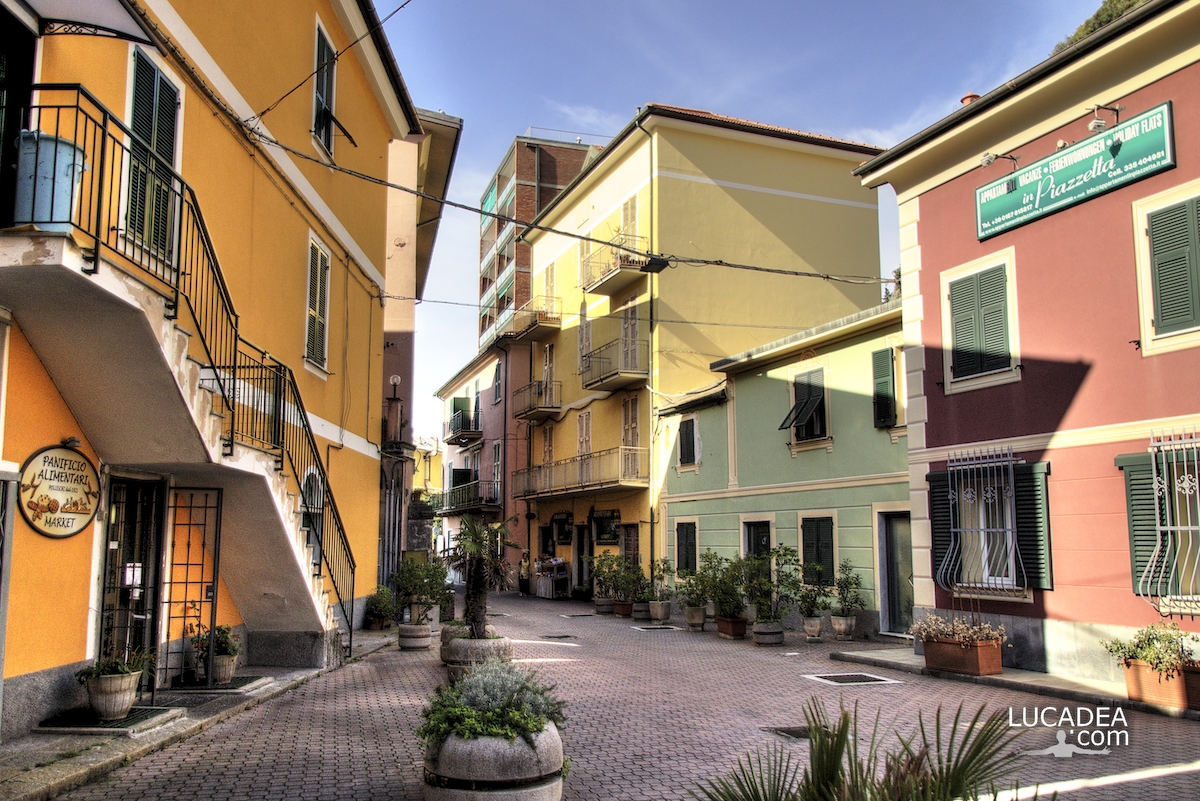
While walking through the seaside part of Deiva Marina, in Liguria, Italy, I came across this small open space along G. Embriaco street. It was one of those quiet corners that appear almost unexpectedly when you explore a small coastal town without following a strict route, and I found myself stopping to take a photograph.
The image was taken a few months ago, during a pleasant autumn day. I was walking through the part of the village closest to the sea rather than looking for a particular landmark. The street suddenly opened into this modest little square, and the change in space caught my attention.
I like this kind of scene because it does not need to be spectacular to be worth photographing. The buildings, the street and the small open area create a simple view of everyday life in a Ligurian village. Instead of searching for a postcard image, I decided to photograph the place as I found it.
The street is named after Guglielmo Embriaco, an important figure in medieval Genoese history. Known as Guglielmo Embriaco il Testadimaglio, he was a Genoese merchant and military leader who lived around the eleventh and twelfth centuries and took part in Genoese campaigns during the Crusades. It is a small historical detail, but I find these connections interesting because an ordinary street name can preserve a link with a much older part of Ligurian history.
If you are wondering what to see in Deiva Marina, the seaside and beach are naturally among the first places that come to mind, but I think the village itself is worth exploring on foot. Its streets and smaller spaces offer a more everyday view of the town, away from the more obvious coastal scenery.
That was exactly what I was looking for that day. I was not trying to create a formal portrait of Deiva Marina. I simply wanted to record something I noticed while walking.
Autumn is also a particularly interesting time for me to photograph coastal villages. The rhythm of the seaside towns changes outside the busiest summer period, and I can pay more attention to buildings, streets and small architectural details instead of concentrating only on the sea.
I do not want to invent details about the weather or the exact light in the photograph, but I remember the walk itself clearly. It was a relaxed opportunity to explore the seaside part of Deiva Marina and to see the village at a slower pace.
I took this photograph with my camera because the small square seemed to capture something of that experience. It was not a planned photographic stop. The place simply caught my attention as I walked past.
Deiva Marina is a small coastal town in eastern Liguria, between Levanto and Moneglia. Its position makes it easy to combine a walk near the sea with a little exploration of the streets behind the coast. For me, that combination is one of the most enjoyable aspects of photographing the smaller towns of the Ligurian Riviera.
A place worth seeing in Deiva Marina does not necessarily have to be a famous landmark. Sometimes the more ordinary corners are the ones that give a stronger sense of the town itself. A small square, an old building or a street name can become a starting point for understanding a place.
That is what happened with G. Embriaco street. Before taking the photograph, it was simply another street I was walking along. After noticing the square and later thinking about the name, it became a small piece of Deiva Marina that I wanted to remember.
I often find that this is how my travel photographs are created. I start walking, notice something that catches my eye and only afterwards understand why that particular scene stayed with me.
This photograph is therefore less about presenting Deiva Marina as a tourist destination and more about recording one moment from an ordinary walk through the village. The sea was nearby, but the camera was pointing towards the buildings and the small space created between them.
I like that balance. Coastal towns are often photographed almost exclusively from the waterfront, while their streets can reveal another side of the place. Here, the small square gave me exactly that opportunity.
It also connects naturally with the other photographs I have taken in small towns along the Ligurian Riviera. Each village has its own details, even when the distance between them is relatively short. Walking through them with a camera makes those differences easier to notice.
Deiva Marina gave me this modest but memorable scene during an autumn walk. There is no famous panorama in the photograph and no major monument to explain. Instead, there is simply a small part of the village that caught my attention and became worth remembering.
That is often enough for a photograph.

Have you ever explored Deiva Marina beyond the beach and stopped to notice its smaller streets and squares? Add a comment or go to the bottom of the site to read what other visitors have written.

Small square in Deiva Marina, with G. Embriaco street and historic buildings in the Ligurian coastal village

Photo taken with Canon EOS M100 and lens Tamron 16-300.

To see all the photos taken in Deiva Marina click here:

Here is where I took the photo:

🏠
  • Italiano