The Tree-Lined Corso Torino in Genoa

Gli alberi di Corso Torino all'altezza di piazza Savonarola a Genova.

The Tree-Lined Corso Torino in Genoa.
Walking near Piazza Savonarola, in the Foce district, I found myself following the long row of trees lining Corso Torino. This tree-lined avenue is one of those urban views I enjoy observing during my photographic walks around Genoa. I particularly like the way the greenery blends into the surrounding architecture, adding a distinctive character to an otherwise everyday city street.
Corso Torino runs through one of the best-known areas of eastern Genoa. This is the Foce district, in Genoa, Liguria, Italy, an urban neighbourhood characterised by relatively wide streets, residential buildings and spaces shaped around everyday city life. The atmosphere here is quite different from the narrow lanes of the historic centre. Instead of the dense network of alleys and old buildings, the streets open up, offering longer perspectives in which trees and buildings share the same urban landscape.
I enjoy photographing places like this during my walks around the city, even when there is no famous monument or particularly remarkable building to capture. Sometimes the most ordinary details provide the most interesting photographic opportunities. In this case, I wanted to focus on the sequence of trees along Corso Torino. Their presence creates a visual rhythm along the avenue and makes this stretch of Genoa recognisable in its own way.
The area around Piazza Savonarola is an interesting place to observe this part of the city. The square forms part of the urban fabric of Foce, a neighbourhood where residential architecture, everyday businesses and greenery coexist. It is not a natural landscape, of course, but an urban environment in which trees play an important role. They soften the appearance of the street and help make the surrounding buildings feel less imposing.
There are also two small details in this photograph that deserve a closer look: the green newsstands along the avenue. They are modest structures, easy to overlook when walking past without paying attention, but they add a familiar touch to this part of Corso Torino. What caught my eye was the fact that they are still there, surviving the changes that have gradually transformed the city and the way people use its streets.
Traditional newsstands once played an important role in Italian neighbourhood life. They were places where people stopped to buy newspapers, magazines and other publications, often becoming familiar meeting points for residents. Their number and function have changed over time, partly because of the shift towards digital news and online reading. Those that remain are still a visible reminder of an older form of everyday street commerce.
I took this photograph myself during one of my walks through Genoa. I was not looking for a particular landmark or a famous architectural feature. I simply wanted to capture a familiar urban scene, paying attention to the relationship between the trees, the buildings and the small structures along the pavement. This is one of the aspects I appreciate most about urban photography: it encourages me to look more carefully at places that might otherwise become part of the background of everyday life.
If you are exploring Genoa and wondering what to see beyond the historic centre, the Foce district offers a different perspective on the city. Walking along Corso Torino, especially around Piazza Savonarola, gives you an opportunity to observe a more residential and everyday side of Genoa. It may not be one of the city’s most famous attractions, but it is precisely this ordinary character that makes the area interesting to photograph.
On Lucadea.com, I have also shared other photographs of Genoa, featuring historic streets, squares and less familiar corners of the city. Together, these images create a personal collection of urban impressions, showing that Genoa is not only about its best-known monuments and picturesque old town. Its identity can also be found in the avenues, neighbourhoods and small details encountered during an ordinary walk.

When you explore a city, do you prefer its tree-lined avenues and open streets, or do you find yourself more attracted to the narrow alleys of the historic centre? Add a comment or go to the bottom of the site to read what other visitors have written.

Tree-lined Corso Torino in Genoa, with two green newsstands near Piazza Savonarola in the Foce district

Photo taken with Canon EOS M100 camera and Canon EF-S 10-18 lens.

Here’s the exact spot where I took the photo:

Add one  comment to this article or read  here what other visitors have written.
 
Adv
 
Disclamer

The rights on images, videos, choruses, text and all other material on the LUCADEA.com website are governed as per  Copyright page.

This page has been viewed 0 times today.
This month it has been viewed 0 times.
In total it has been viewed 0 times.
 

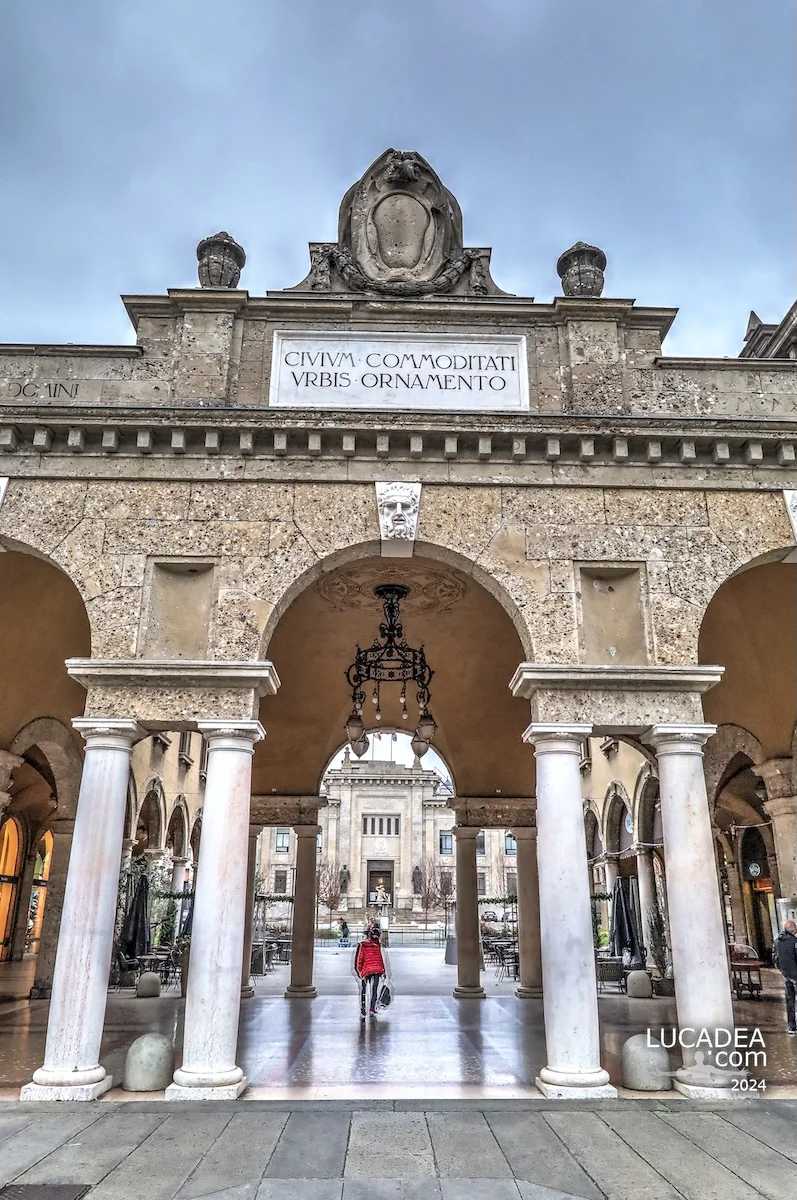
The Piacentiniano Center in Bergamo

Porticato del Centro Piacentiniano a Bergamo con colonne, iscrizione latina e vista prospettica verso la piazza

The Piacentiniano Center in Bergamo.
Walking through the heart of Bergamo’s lower town, I found one of the most elegant and balanced urban spaces in modern Italian architecture. The Piacentiniano Center stands out for its symmetry, the use of stone, and that sense of order that invites you to slow down and observe.
In this shot, I tried to capture one of the most representative arcades, with columns perfectly framing the view toward the building in the background. The central perspective naturally guides the eye, while the person walking through the scene adds a sense of everyday life.
Bergamo, in Lombardy, Italy, is well known for its dual identity: the historic upper town and the more modern lower city. The Piacentiniano Center belongs to this second part and was designed in the early 20th century by architect Marcello Piacentini, creating a spacious and well-organized urban area.
A notable detail visible in the photo is the Latin inscription above the arch: “CIVIVM COMMODITATI VRBIS ORNAMENTO,” emphasizing that this space was designed for the comfort of citizens and the beautification of the city.
Photographing a place like this means capturing not only architecture but also how it is lived. The arcades host cafés and shops, people pass through, stop, and meet. It is a space designed for everyday life.
On the blog, I have shared other Italian locations where architecture and daily life come together, because these are the places that best express the true identity of a city.

This image makes me reflect on how the balance between aesthetics and function can create truly enjoyable spaces. Do you prefer historic old towns or more modern and rational architecture? Add a comment or go to the bottom of the site to read what other visitors have written.

Photos taken with Canon EOS RP and Canon RF 24-50 lens.

To see all the photos I took in Bergamo, click here:

Add one  comment to this article or read  here what other visitors have written.
 
Adv
 
Disclamer

The rights on images, videos, choruses, text and all other material on the LUCADEA.com website are governed as per  Copyright page.


This page has been viewed 1 times today.
This month it has been viewed 1 times.
In total it has been viewed 1 times.
 

The Borzoli district plaque in Rapallo

Targa del Sestriere Borzoli nel centro storico di Rapallo su una parete con edifici colorati liguri

The Borzoli district plaque in Rapallo.
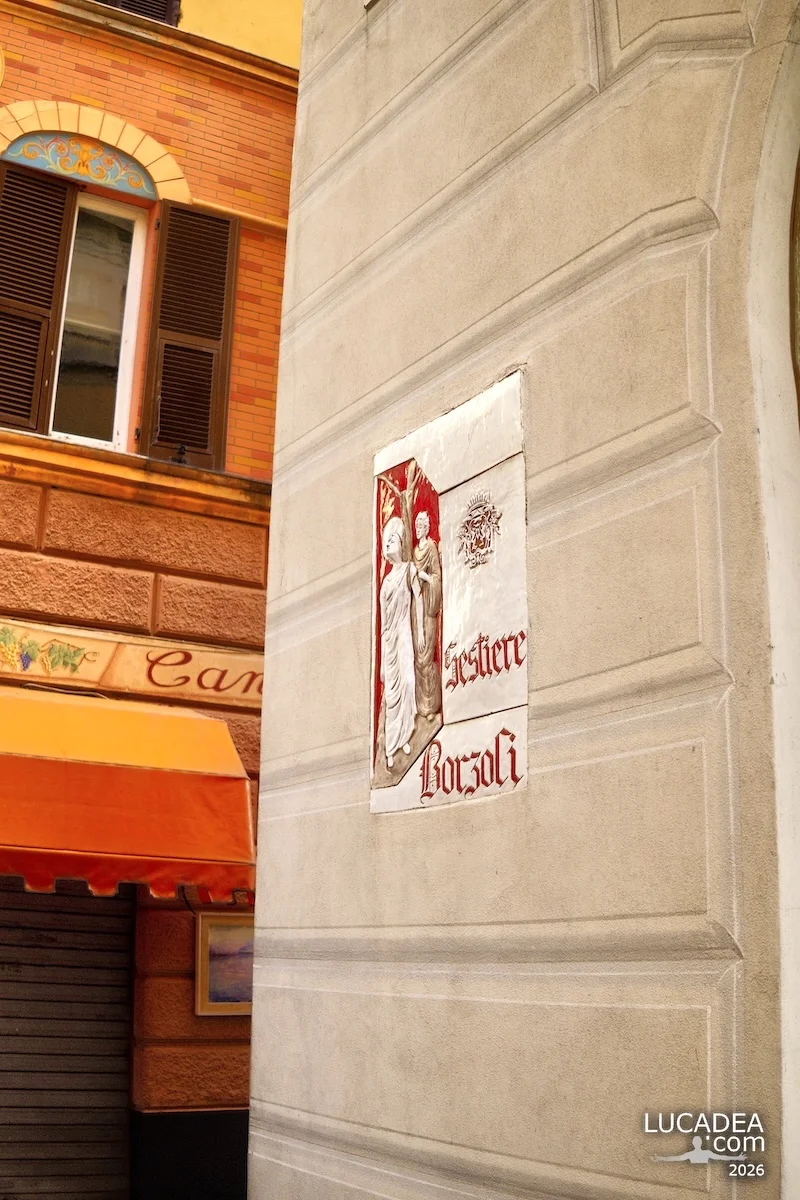
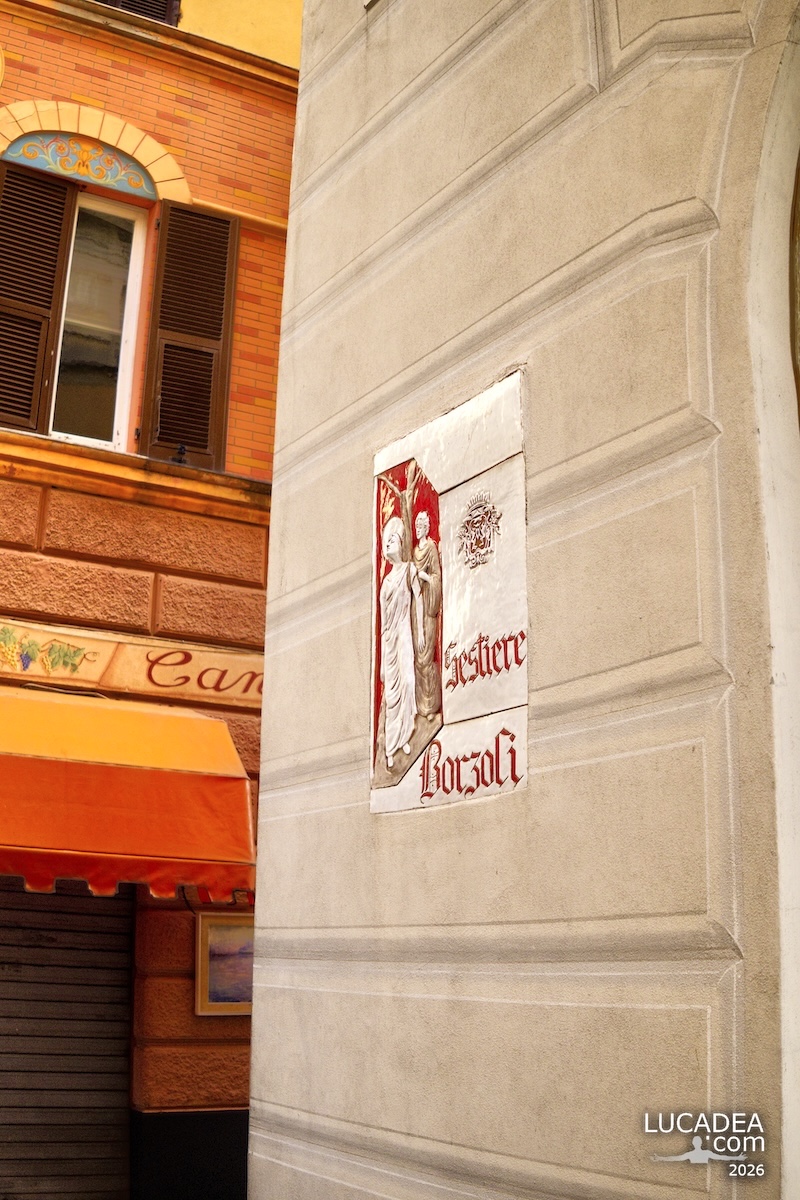
While walking through the streets of Rapallo’s historic center, I came across this small but meaningful detail: a plaque that reflects part of the city’s historical organization. It is often through these subtle elements that we can better understand the identity of a place.
The photo shows the plaque of the Borzoli district placed on the wall of a building in the heart of the town. Around it, the warm tones of Ligurian houses and traditional shutters create a familiar and welcoming atmosphere typical of the Riviera. These everyday architectural details give each corner its own character.
Rapallo, in Liguria, Italy, still preserves traces of its historical division into districts, known as “sestieri.” Borzoli is one of them, and these plaques serve as reminders of how the city was once organized.
Taking photos of details like this allows me to tell a different kind of story, moving beyond the most famous views and focusing instead on the small elements that define a place. A simple plaque can reveal history, tradition, and a sense of belonging.
An interesting curiosity is that these districts were not only administrative divisions, but also played a role in social life and local traditions.
On the blog, I have shared other views and details from Rapallo and the Ligurian coast, because I believe that these small discoveries make every walk more meaningful.

This image reminds me that cities are full of hidden stories, often written on their walls. Have you ever noticed a small detail that changed the way you see a place? Add a comment or go to the bottom of the site to read what other visitors have written.

Targa del Sestriere Borzoli nel centro storico di Rapallo su una parete con edifici colorati liguri

Photo taken with Canon EOS R50 V and lens Canon RF 24-50.

The War Memorial in Villa Square, Genoa

Monumento ai Caduti di piazza Villa a Genova

The War Memorial in Villa Square, Genoa.
While walking through Castelletto, one of Genoa’s hillside neighbourhoods, I stopped to look at this memorial dedicated to those who lost their lives during the First World War. Located in Villa Square, it is closely connected to the history of the local community and to the memory of two different periods in Italian history. It is a quieter corner of Genoa, away from the city’s most familiar landmarks, but one that deserves attention.
The story behind the memorial is particularly interesting because getting it installed in its present location was far from straightforward. The original idea came from the desire to honour the people from the neighbourhood who never returned from the Great War. For the local community, the monument was not simply a public sculpture: it was a way of preserving the memory of those who had made the ultimate sacrifice.
The project was entrusted to Francesco Messina, who would later become one of the most recognised Italian sculptors of the twentieth century. However, the proposed location became the subject of disagreement with the city authorities. They preferred to concentrate the commemoration of Genoa’s fallen soldiers in Piazza della Vittoria, rather than allowing individual neighbourhoods to create their own memorials.
The dispute did not end there. The monument was initially installed, but its bronze sculptural group was later removed by order of the Prefect and transferred to the courtyard of Palazzo Rosso. Local residents strongly opposed this decision and continued to support the project. Eventually, the monument was returned and permanently installed in Villa Square, where it was officially inaugurated with a ceremony and military honours.
Knowing this history changes the way I look at the monument. What might appear to be a relatively ordinary memorial in a neighbourhood square is actually the result of a long effort by local residents to preserve their own way of remembering the First World War. I find this connection between public art and community identity particularly interesting.
The name of the square adds another historical dimension. Goffredo Villa was an Italian partisan who was killed by Fascists in 1944. The square named after him therefore recalls another difficult chapter in the country’s history, following the events of the First World War. Two different periods of conflict and sacrifice are remembered in the same small urban space.
If you would like to learn more about the complicated history of this memorial, I recommend reading the article published by A Me Zena, which explores the story of the monument and its installation. It offers useful background to understand why the memorial stands in this particular location today.
I took this photograph because I enjoy documenting the less obvious aspects of Genoa. The city has plenty of famous sights, but I often find just as much photographic interest in smaller squares, historic details and neighbourhood landmarks. Genoa, in Liguria, Italy, has a rich history that can be discovered far beyond the traditional routes through the old town and the harbour.
Castelletto is a particularly interesting area to explore on foot. Its hillside position creates different perspectives across the city, and its streets reveal a mixture of historic buildings, public spaces and unexpected views.
Just behind Villa Square lies Spianata Castelletto, one of Genoa’s best-known panoramic viewpoints. From there, the rooftops, harbour and surrounding urban landscape open up in front of you. I like the contrast between these two nearby places: the memorial invites reflection on the past, while the panoramic terrace offers a broad view of the city as it exists today.
I have also photographed Spianata Castelletto, and those images provide a natural continuation of this photographic walk through the neighbourhood. I enjoy showing different sides of the same place, moving from its historical details to its wider views rather than focusing exclusively on the landmarks that are already familiar to everyone.
The War Memorial in Villa Square is worth discovering if you are interested in what to see in Castelletto beyond its famous viewpoints. It does not require a long visit, but understanding its background makes the experience more meaningful. For me, taking this photograph was a way of preserving a small piece of Genoa’s history and sharing a detail that might otherwise go unnoticed.

Had you already noticed this memorial while exploring Castelletto, or did you know the story behind its unusual journey to Villa Square? Add a comment or go to the bottom of the site to read what other visitors have written.

First World War memorial in Villa Square, Castelletto, Genoa, commemorating local soldiers who lost their lives

Photo taken with a Canon EOS M100 camera and Canon EF-S 10-18 lens.

Here’s where the statue is located:

Trenette with pesto, a taste of Liguria

Trenette al pesto con parmigiano a Genova, un piatto ligure tradizionale fotografato a tavola

Trenette with pesto, a taste of Liguria.
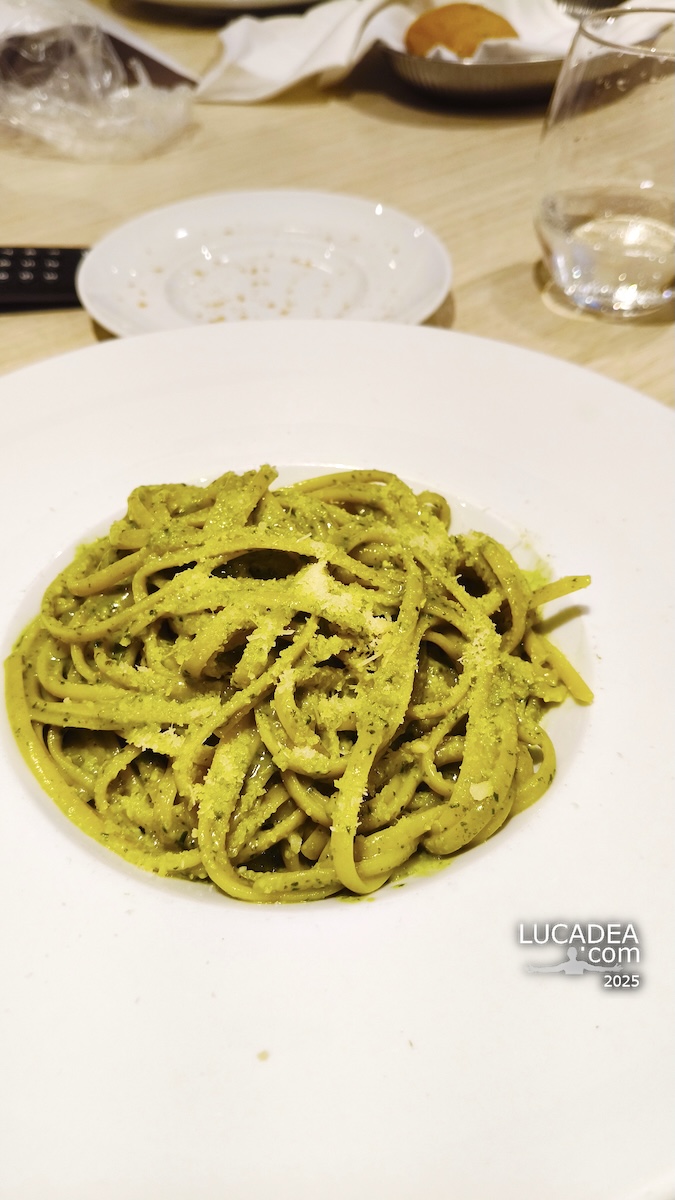
Looking at this image, I am brought back to the simple pleasure of Italian cuisine, where the aroma of basil and the richness of a carefully prepared dish tell a story through every detail. This photograph captures a plate of trenette with pesto and generous parmesan, a traditional Ligurian pasta dish that immediately evokes the flavors and character of the region.
I took this photo on March 2, 2025 at 1:11:14 pm, capturing a quiet moment around the table where food becomes part of a personal memory. The scene is not about perfection or a carefully arranged composition; it is about the authenticity of a dish ready to be enjoyed. The green color of the pesto, the shape of the pasta, and the final layer of parmesan create a visual connection between taste and memory.
When I think about what to eat in Liguria, trenette with pesto is one of the first dishes that comes to mind. The recipe is strongly connected to Genoa, Liguria, Italy, where pesto has become an important symbol of local culinary culture. For me, this image represents more than a meal because it shows how a simple plate can preserve a sense of place.
A small curiosity about this preparation is that traditional Genoese pesto is made by combining basil, pine nuts, garlic, extra virgin olive oil, cheese, and salt into a fragrant sauce. The balance between fresh aromas and the savory notes of the cheese is what makes it so recognizable.
If you are visiting Liguria and looking for a dish worth trying, this pasta is one of the most meaningful choices because it expresses the identity of the area without being complicated. The photograph focuses on the everyday side of this tradition, the moment when a familiar recipe arrives at the table and becomes part of an experience.
I also enjoy sharing similar stories on my photo blog, where other images explore local food, places, and small details that create a connection between photography and memories. Like those previous posts, this one starts from a single frame and expands into a personal story.
The more I observe this photo, the more I appreciate how food photography can preserve emotions. A plate of pasta can become a visual reminder of a journey, a conversation, or a moment shared with someone special.

What traditional dish from your country or region would you choose to photograph because it tells your own story? Add a comment or go to the bottom of the site to read what other visitors have written.

If you want to know the recipe for authentic Genoese pesto, I invite you to read the article written some time ago by my dad Loris. Want fresh Genoese Basil DOP delivered directly to your door anywhere in Italy? Check out this offer for you.

Photos taken with Oppo Reno 12.

Stromboli, the Volcano Seen from the Sea

Stromboli

Stromboli, the Volcano Seen from the Sea.
The Stromboli volcano, in the Aeolian Islands off Sicily, Italy, is the subject of this photograph taken from a ship during a fairly close passage along the island. Sailing past the coast offers a very special viewpoint of one of the best-known volcanoes in the Mediterranean. Its imposing silhouette rises straight out of the water and dominates the surrounding landscape, creating a view that is hard to forget.
Seeing Stromboli from the sea is quite different from looking at it from land. From a ship, it is possible to appreciate the shape of the entire island and the way the volcano rises directly from the water, with its dark, steep slopes climbing towards the summit. As the vessel draws closer, the mountain seems to grow larger and more impressive. This perspective gives a real sense of the power of the landscape and the volcanic nature of this small island.
Stromboli is one of the world’s best-known active volcanoes and is famous for its persistent activity. Its characteristic intermittent explosions are known as Strombolian eruptions, a term that comes directly from the name of the island. This photograph focuses mainly on the volcano’s outline and its relationship with the sea, but knowing that this mountain is still active adds another fascinating dimension to the view.
The Aeolian Islands, located off the northern coast of Sicily, offer a variety of landscapes, but Stromboli has an identity all of its own. Its conical shape, dark slopes and isolated position in the Tyrrhenian Sea make it an extraordinary subject for photography. From the ship, there is an unobstructed view of the island, allowing the volcano’s profile to take centre stage.
I particularly enjoy this kind of travel photography because it allows me to preserve the memory of encountering a place, even if only while passing by. There is not always a need to go ashore or spend many hours somewhere to appreciate its beauty. Sometimes it is enough to approach from the sea, take a moment to admire the view and try to capture it in a photograph. A passing glimpse can become a lasting memory.
Stromboli is a remarkable sight, whether viewed from the water or from one of the nearby islands. Its imposing presence reminds us how dramatic and powerful the natural landscapes of the Mediterranean can be.

Have you ever seen Stromboli from the sea? Which viewpoint do you find more fascinating: from a ship or from the shore? Add a comment or go to the bottom of the site to read what other visitors have written.

Stromboli volcano photographed from a ship during a close passage, with its steep slopes rising dramatically above the sea

Corniglia, the Village Perched on the Hillside

Corniglia, the Village Perched on the Hillside.
This photograph of Corniglia, in the Cinque Terre area of Liguria, Italy, is the last image I am sharing from yesterday’s outing. This time I chose a viewpoint a little farther away, along the trail, to show the village as a whole and highlight its distinctive position high on the hillside overlooking the sea. It is a different perspective from the closer views, allowing us to appreciate the relationship between the houses, the surrounding landscape and the coastline.
Corniglia has a particularly interesting setting. Unlike the other villages of the Cinque Terre, it does not sit directly at sea level. Instead, it stands on elevated ground, surrounded by steep slopes and terraced hillsides. From this distance, the outline of the village is easy to recognise, with its houses gathered closely together and following the shape of the hill. The buildings form a compact settlement that seems almost to blend into the surrounding landscape.
I enjoy photographing places like this from a distance because stepping away from the centre allows me to notice features that can easily be missed while walking through the narrow streets. The houses become part of a much wider composition, while the sea and the hills give the scene depth and a stronger sense of place. In this photograph, the village is the main subject, but the landscape around it is just as important in completing the view and expressing the character of the Cinque Terre.
The photograph was subsequently edited using HDR processing, with adjustments to the dynamic range to bring out details in both the brighter areas and the shadows. I worked on the image to make the different parts of the scene more visible and emphasise the subtle tones of the landscape, while keeping the overall result balanced. The editing does not change the subject of the photograph; rather, it helps bring out details that contribute to the composition of such a wide view.
This image brings my little photographic story of yesterday’s trip to Corniglia to an end. It was a lovely opportunity to see the village from different angles and pay attention to a variety of details and perspectives. I hope you enjoy this photograph too. Taken a little farther away from the village, it offers another way to appreciate the beauty of this corner of Liguria.

Which view do you prefer: Corniglia up close, among its narrow streets, or a wider panorama showing the village within its surrounding landscape? Add a comment or go to the bottom of the site to read what other visitors have written.

Distant view of Corniglia from a trail, showing the village perched on a hillside with the sea in the background

The Colourful Houses of Dante Alighieri Street

Le belle case in via Dante Alighieri a Lavagna

The Colourful Houses of Dante Alighieri Street.
In Lavagna, Liguria, Italy, these brightly coloured façades overlook the beautiful square in front of the Basilica of Santo Stefano, creating an architectural scene that captures the authentic character of the town centre. I enjoy the way the houses stand side by side, their different colours forming a harmonious composition made even more attractive by the elegant porticoes on the ground floor.
Dante Alighieri Street is one of those corners of Lavagna where it is worth taking a moment to look around. The buildings facing the square have a welcoming appearance: their façades display a variety of complementary shades, while the windows, shutters and decorative details give each house its own personality. Together, they create more than just a row of buildings. Seen from the square, they form a charming urban backdrop.
The ground-floor porticoes are among the most striking features. Their openings create a pleasing rhythm along the buildings and provide an interesting contrast with the colours above. These architectural elements are also part of everyday town life. They offer sheltered passageways and connect the buildings with the surrounding public space, naturally drawing the eye along the street. Their presence gives this view a distinctive character, especially when the light brings out the different shades of the façades.
The Basilica of Santo Stefano stands nearby and is one of Lavagna’s most recognisable landmarks. The square in front of the church creates an appealing relationship between the religious building and the surrounding homes. On one side is the imposing presence of the basilica; on the other, the lively and familiar character of the colourful houses and their porticoes. This meeting between architecture and everyday urban life is part of what makes a walk through this area so enjoyable.
When I photograph places like this, I often try to look beyond the best-known monument. Streets, façades and small architectural details can tell us just as much about a town’s identity. These houses on Dante Alighieri Street are a lovely example of how an apparently simple view can become an engaging photograph through the combination of colour, building proportions and traditional porticoes.

It is a corner of Lavagna that encourages visitors to slow down for a moment and appreciate the understated beauty of the historic centre. Which detail catches your eye most: the colourful façades or the elegant porticoes? Add a comment or go to the bottom of the site to read what other visitors have written.

Colourful houses with elegant porticoes on Dante Alighieri Street, overlooking the square beside the Basilica of Santo Stefano in Lavagna

Photo taken with a Canon EOS M100 camera and Canon EF-M 11-22 lens.

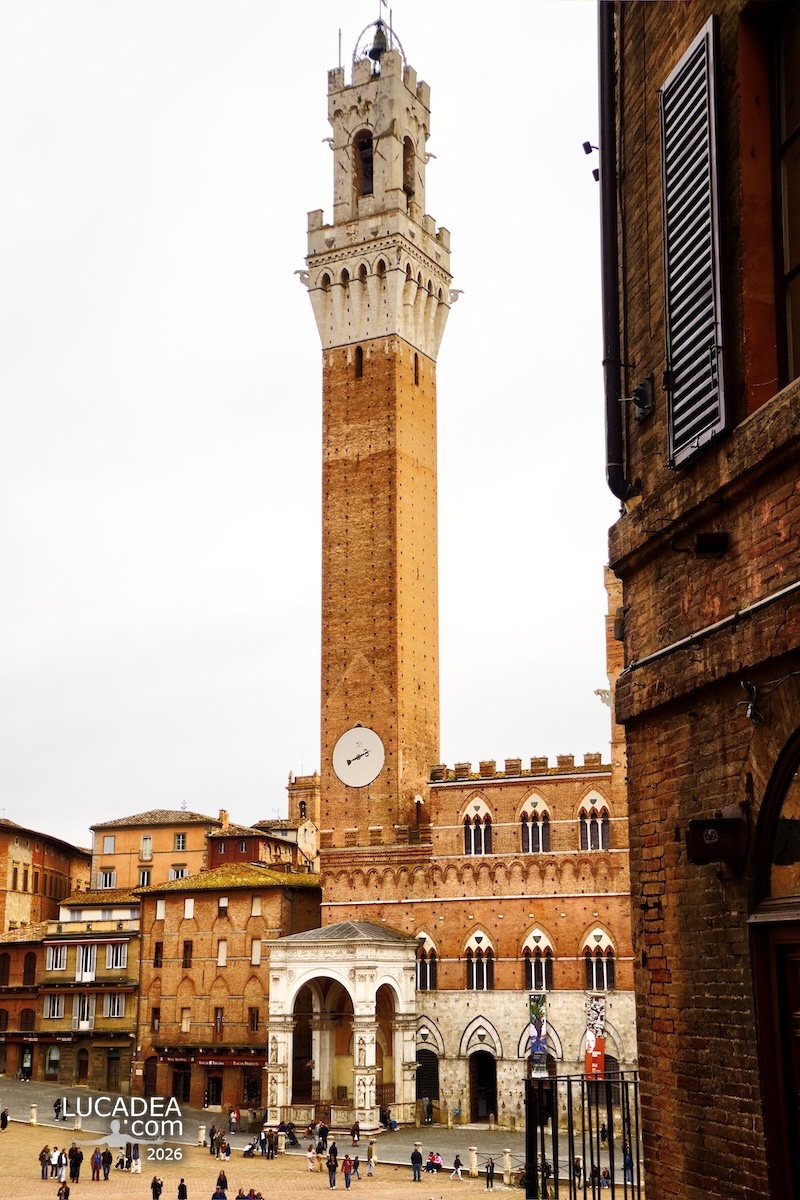
The Mangia Tower in the heart of Siena

La Torre del Mangia nel cuore di Siena vista da Piazza del Campo con Palazzo Pubblico e architettura medievale

The Mangia Tower in the heart of Siena.
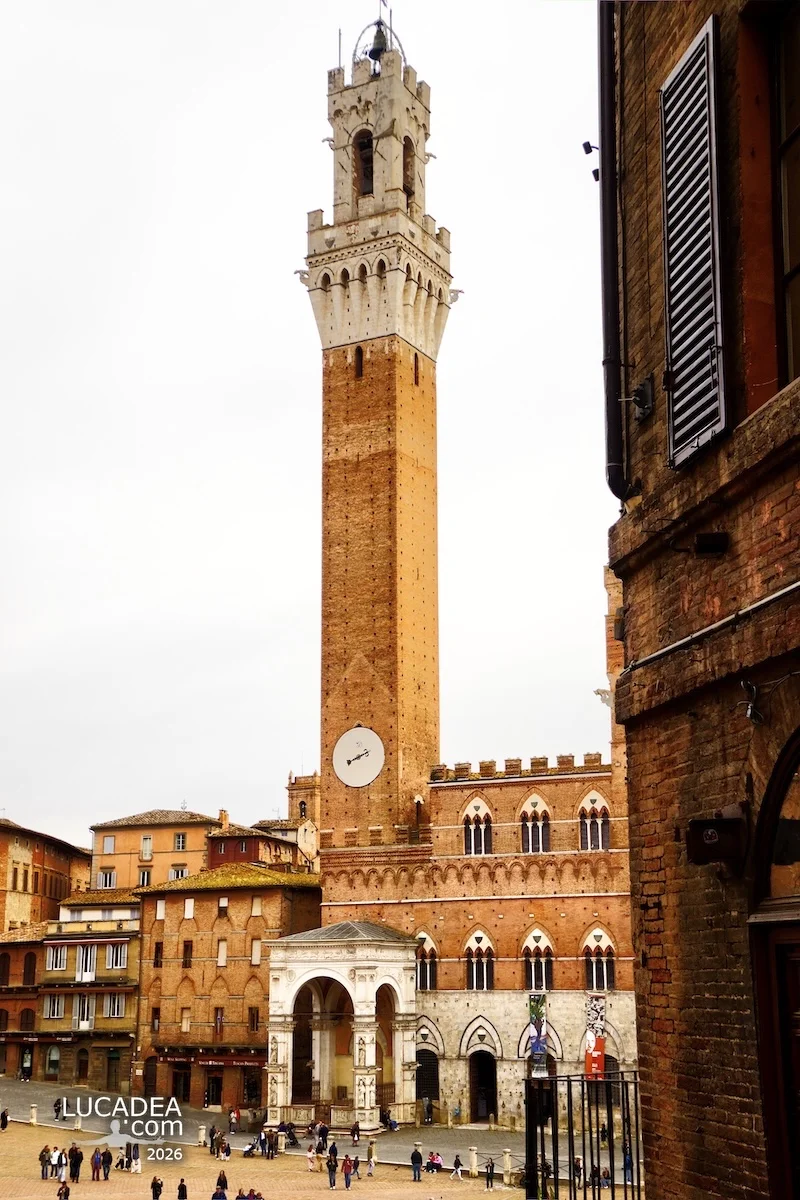
Through my lens, I captured the Mangia Tower in Siena, one of the most recognizable landmarks in Tuscany and one of the places to see in Italy for those who love medieval architecture and historic city squares. The side perspective of this photograph reveals the connection between the tower, Campo Square and the elegant Public Palace, creating a scene where centuries of history meet the rhythm of everyday life.
Looking at this image, what immediately catches my attention is the balance between the impressive height of the tower and the harmony of the surrounding buildings. The warm brick structure rises above the square with a strong vertical presence, while the lighter stone section at the top creates a refined contrast that makes the monument instantly recognizable. The Mangia Tower seems almost too tall for the frame, yet it remains perfectly connected with the architecture around it.
I took this photograph in Campo Square, in Siena, Tuscany, Italy, one of the most famous urban spaces in the country and a place where history is still part of daily life. Walking through this square, I noticed how visitors and locals share the same environment, stopping to admire the buildings, sit in the open space or simply experience the unique atmosphere created by centuries of architecture.
The Mangia Tower was built in the 14th century and became a symbol of Siena’s civic identity. One of the most interesting details about this monument is that its height was intentionally designed to be almost equal to the height of the cathedral, representing a symbolic balance between political and religious power. This historical choice gives the tower an even deeper meaning when viewed through photography.
If you are visiting Siena, Campo Square is a place worth seeing in Tuscany because it offers much more than a famous view. The relationship between the Mangia Tower, the Public Palace and the surrounding medieval buildings creates a unique setting where architecture tells the story of the city. It is a place that invites you to slow down and observe the details that are often missed when simply passing through.
This photograph also connects with other stories from my photo blog about historic Italian towns and old squares, where buildings become witnesses of time and preserve memories through their shapes, materials and details. Every corner can reveal something different, and this is what makes photographing these places so fascinating.
When I look again at this image, I feel that the Mangia Tower represents the true character of Siena: elegant, strong and deeply connected to its past. The tower is not only an architectural symbol but also a constant presence above Campo Square, watching generations of people experience this extraordinary place.

Which detail of the Mangia Tower or Campo Square would you like to discover first? Add a comment or go to the bottom of the site to read what other visitors have written.

La Torre del Mangia nel cuore di Siena vista da Piazza del Campo con Palazzo Pubblico e architettura medievale

Photo taken with Canon EOS R50 V and Tamron 16-300 lens.

To see all the photos I took in Siena, click here:
foto gallery

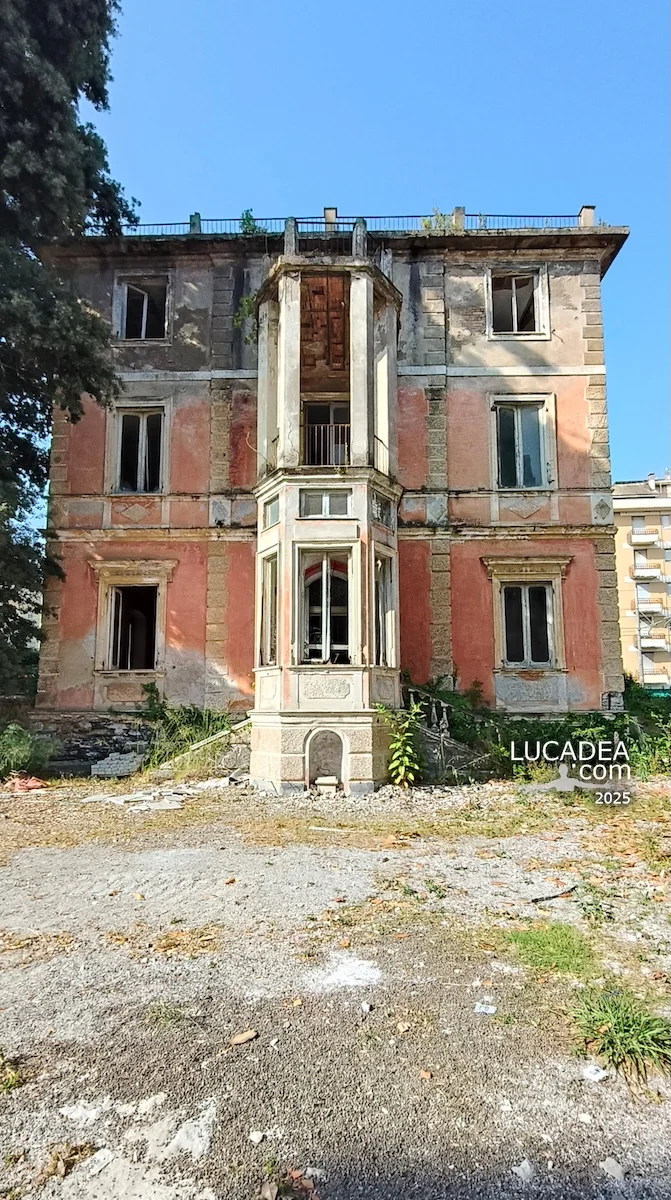
Abandoned villa on Dei Devoto street in Lavagna

Villa abbandonata in via Devoto a Lavagna con facciata storica rovinata e dettagli architettonici ancora visibili.

Abandoned villa on Dei Devoto street in Lavagna.
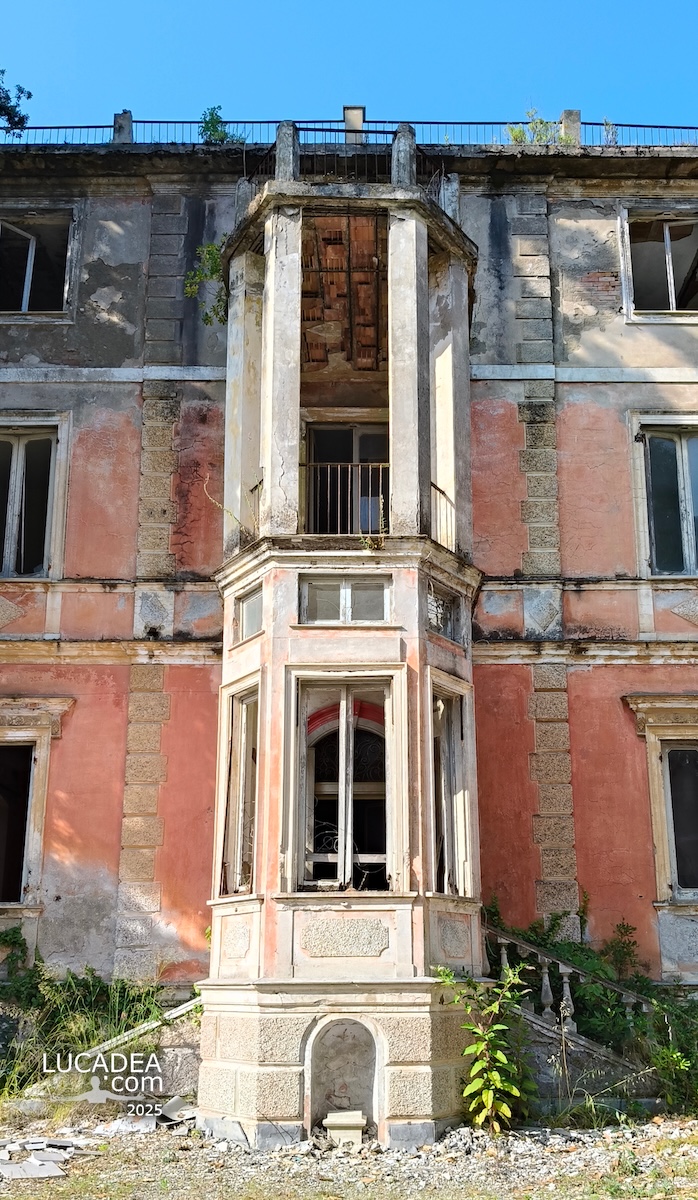
Standing in front of this abandoned villa, I found a quiet scene shaped by years of silence, where worn walls, empty windows and faded architectural details still preserve the feeling of a forgotten story. This forgotten building in Liguria represents the charm of abandoned places in Italy, locations where the traces of past lives remain visible through the surfaces and structures left behind.
When I photographed the facade, I wanted to capture more than the simple appearance of the building. I focused on the small details that reveal the passage of time: damaged decorations, aged surfaces and elegant shapes that continue to survive despite neglect. An abandoned villa can create a unique connection between architecture and memory, allowing the observer to imagine the voices, movements and everyday moments that once filled those rooms.
The photograph was taken in Lavagna, Liguria, Italy, along Dei Devoto street, where this abandoned villa remains as a distinctive element within the urban landscape. For anyone wondering what to see in Lavagna beyond the most familiar views, places like this can offer another way to understand the identity of a town and the transformations that happen quietly over decades.
Looking at this building, I imagined the period when it was still a living home, with occupied rooms, personal objects and families creating memories inside. A small historical curiosity is that many villas built between the nineteenth and twentieth centuries were designed not only as residences but also as symbols of style, social position and architectural taste.
Through my photographic stories about forgotten buildings and hidden corners of the area, I often search for places where time has created a different kind of beauty. This abandoned villa is interesting because it shows how a place can lose its original function while still keeping a strong visual identity.
If you are visiting this part of Liguria, discovering locations like this can reveal a quieter side of the landscape, where everyday streets may hide unexpected stories. The value of this place is not only in its appearance but also in the questions it creates about the people who lived there and the changes that followed.
I have explored similar subjects in other posts about forgotten architecture and overlooked details of the territory, because these places often contain stories that deserve attention before they disappear completely.
Photography allows me to preserve these fragile moments, capturing buildings that exist between their past and their uncertain future.

Have you ever walked past an abandoned building and wondered about the lives that once happened behind its walls? Add a comment or go to the bottom of the site to read what other visitors have written.

Photos taken with Honor 20.

Where is the palace:

🏠
  • Italiano