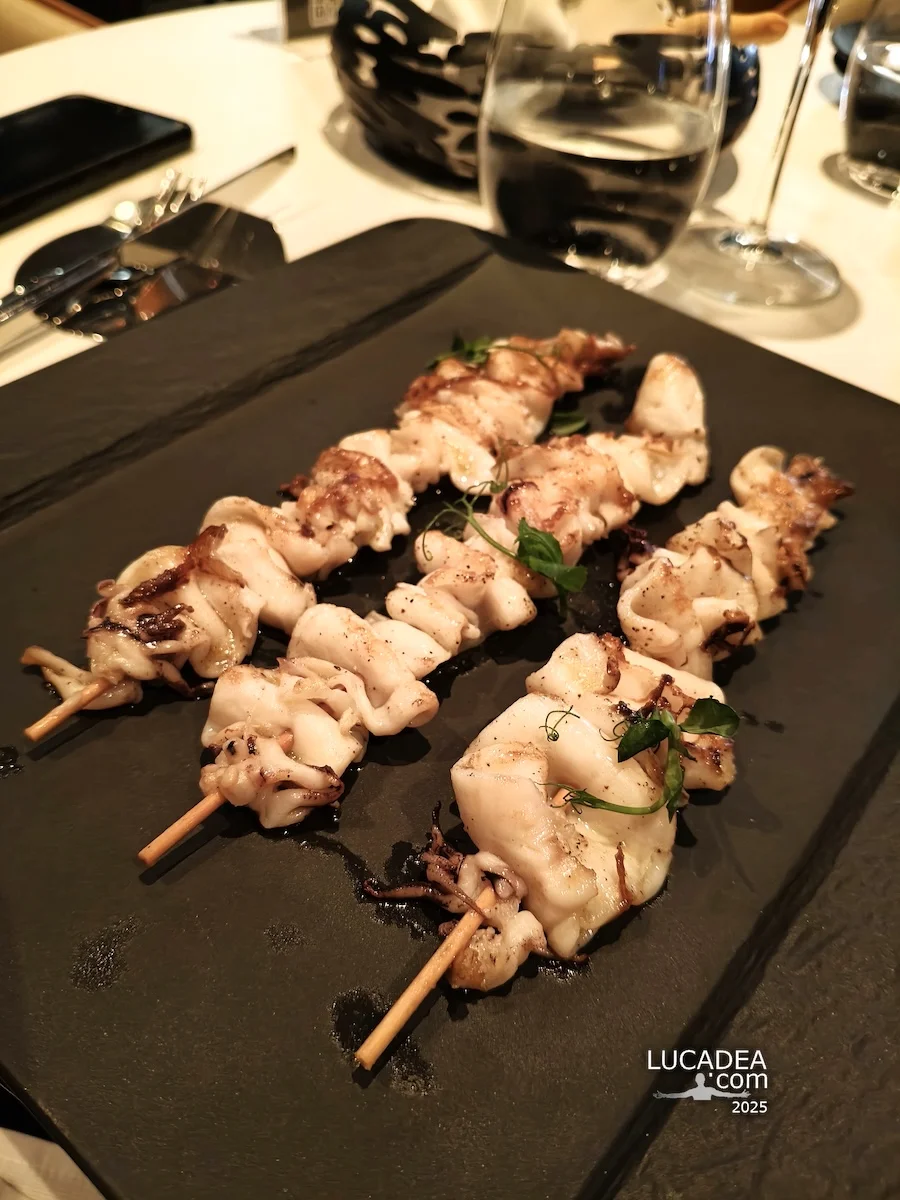
Squid skewers enjoyed on Costa Toscana

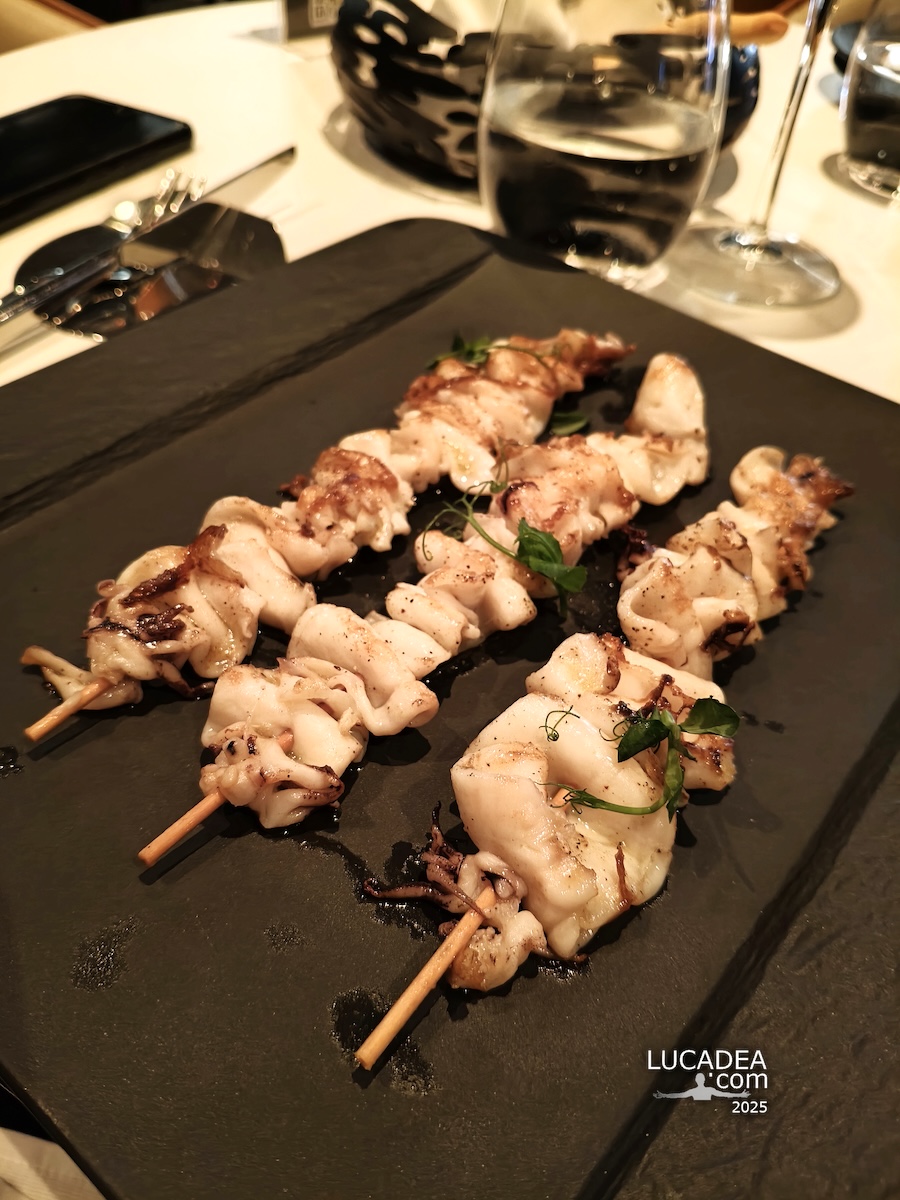
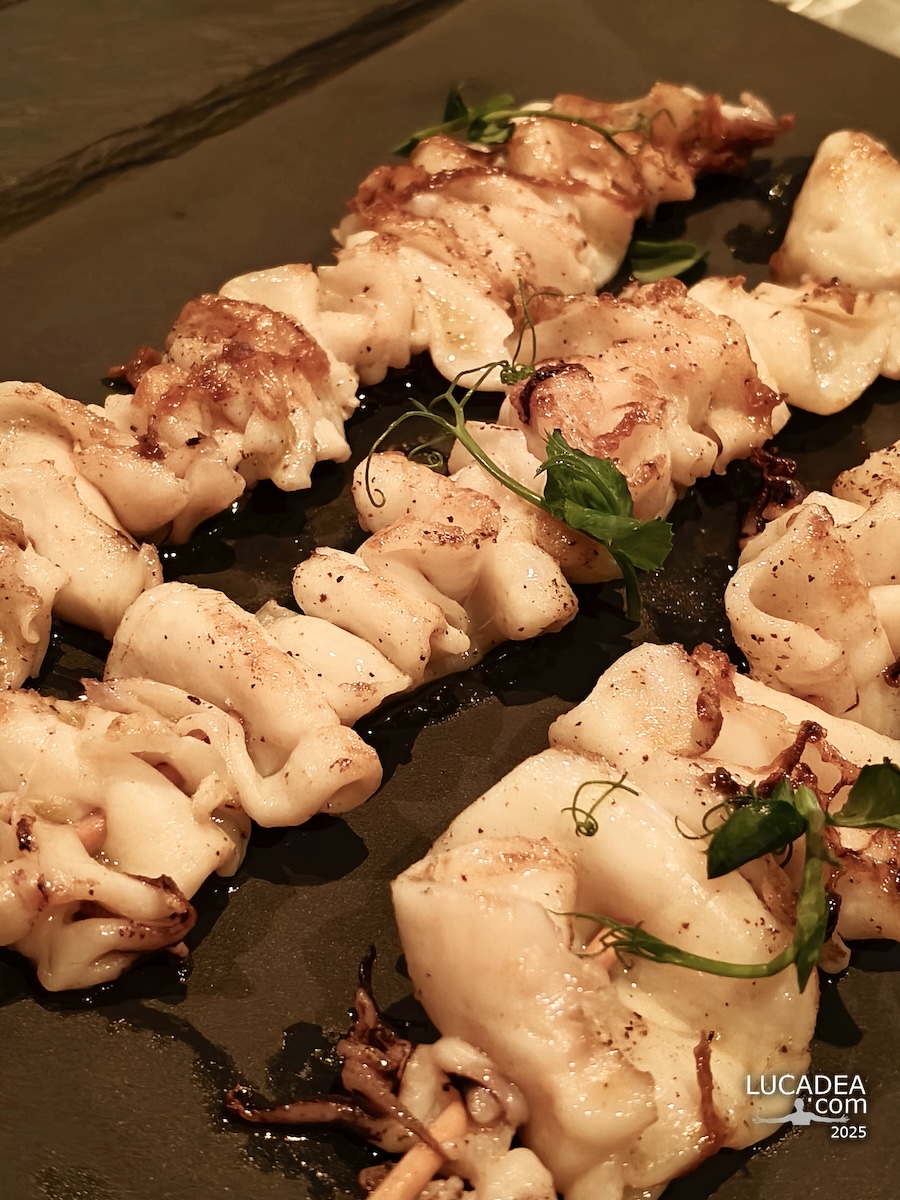
Spiedini di calamari al Ferrai bar sulla Costa Toscana, un piatto di mare fotografato durante una pausa in crociera.

Squid skewers enjoyed on Costa Toscana.
In this photograph I wanted to preserve a simple moment connected to the pleasure of tasting a seafood dish during a cruise experience, where even a small detail can become part of a personal travel memory. These squid skewers on Costa Toscana represent a meeting between Mediterranean flavors and the emotions created by discovering something new while travelling.
I chose to capture this dish because food often becomes one of the strongest connections to a place and a moment. A carefully presented meal can tell a story without needing many words, bringing back memories through its appearance, its flavors, and the atmosphere surrounding it. At the Ferrai bar on Costa Toscana, this small seafood experience became a moment worth remembering.
For me, food photography is not only about showing what is on the plate. It is also about capturing the feeling connected to it: the pause during the journey, the curiosity before tasting something, and the memory that remains afterward. These squid skewers became a small symbol of a cruise moment, a detail that could easily pass unnoticed but deserved to be preserved.
Squid is a common ingredient in Mediterranean cuisine and has always been appreciated for its ability to adapt to many different preparations. Grilled, cooked in simple recipes, or served as skewers, it remains a familiar flavor connected with coastal traditions and the relationship between people and the sea.
When I look at this image, I think about how travel memories are often created by unexpected details. A large landscape can be impressive, but sometimes a simple dish can bring back the atmosphere of a journey even years later. Like other stories I have shared on my photoblog about small discoveries along the way, this photograph focuses on a personal experience rather than a famous view.
Costa Toscana becomes the setting for this memory, a place where moments of relaxation, taste, and curiosity come together naturally. If you are visiting a cruise ship, sometimes the most interesting memories are found in the quiet moments between the main experiences, when you simply stop and enjoy what is in front of you.

Have you ever photographed a meal during a trip because it represented something more than just food? Add a comment or go to the bottom of the site to read what other visitors have written.
Photos taken with Oppo Reno 12.

Add one  comment to this article or read  here what other visitors have written.
 
Adv
 
Disclamer

The rights on images, videos, choruses, text and all other material on the LUCADEA.com website are governed as per  Copyright page.


This page has been viewed 1 times today.
This month it has been viewed 1 times.
In total it has been viewed 1 times.
 

Caribbean Cruise: Four Ships off Grand Cayman

navi da crociera ai caraibi

A Caribbean cruise is a wonderful way to discover tropical islands, enjoy the sea and experience different destinations without having to change hotels along the way. There are plenty of cruise lines offering itineraries across the Caribbean, so travellers have no shortage of options. My personal favourite is Costa Cruises, of course!
This photograph shows the anchorage off Grand Cayman, in the Caribbean Sea, where four cruise ships can be seen gathered offshore. It is an impressive sight and a good reminder of how popular these islands are with cruise passengers. A Caribbean itinerary can combine relaxing days at sea with stops in places known for their beaches, warm climate and distinctive island atmosphere.
Grand Cayman is the largest of the Cayman Islands, a British Overseas Territory in the western Caribbean, south of Cuba and northwest of Jamaica. Its location makes it a regular stop on a number of cruise itineraries. When several ships arrive on the same day, the view from the coast becomes quite striking: large vessels sit on the water, each carrying thousands of passengers who are ready to explore the island for a few hours.
One interesting detail about Grand Cayman is that cruise ships often remain at anchor rather than docking directly at the shore. Passengers are then taken to land in smaller boats, a process commonly known as tendering. It is a practical part of visiting destinations where the harbour cannot accommodate every large ship at a dedicated pier. From a photographic point of view, the ships waiting offshore also create a distinctive scene, with their size and presence contrasting with the open Caribbean waters.
For me, a cruise is about more than what happens on board. The restaurants, entertainment and comfortable cabins are part of the experience, but so are the places visited along the route and the memories captured in photographs. Seeing four ships together at Grand Cayman gives a sense of the scale of Caribbean cruising and the number of travellers drawn to these islands. On Lucadea.com, I also share impressions from other journeys, because a single photograph can bring back the atmosphere of a destination long after the trip has ended.

Would you choose Costa Cruises for a Caribbean holiday, or would you prefer to sail with another cruise line? Add a comment or go to the bottom of the site to read what other visitors have written.

Four cruise ships anchored off Grand Cayman in the Caribbean Sea, surrounded by tropical blue water

Add one  comment to this article or read  here what other visitors have written.
 
Adv
 
Disclamer

The rights on images, videos, choruses, text and all other material on the LUCADEA.com website are governed as per  Copyright page.


This page has been viewed 0 times today.
This month it has been viewed 0 times.
In total it has been viewed 0 times.
 

A view over Santorini caldera with a ship

Vista sulla caldera di Santorini con case bianche e nave da crociera nel mare blu intenso delle Cicladi

A view over Santorini caldera with a ship.
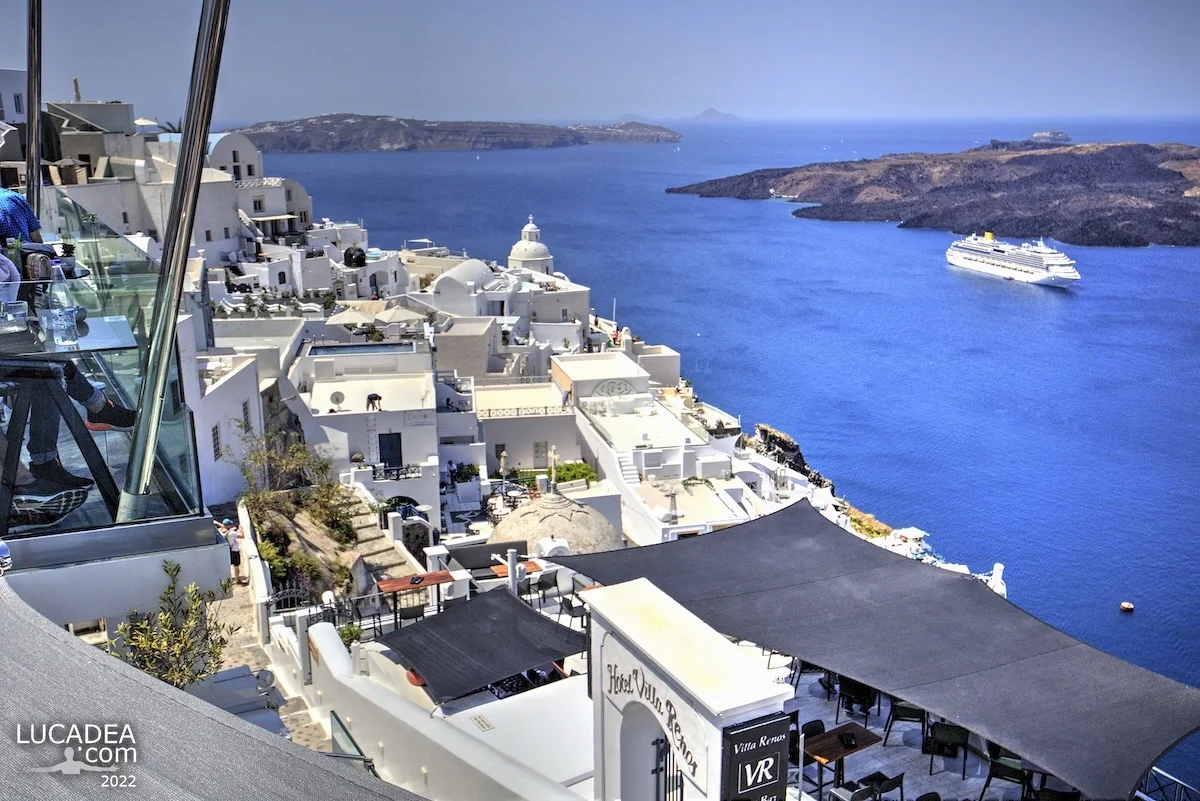
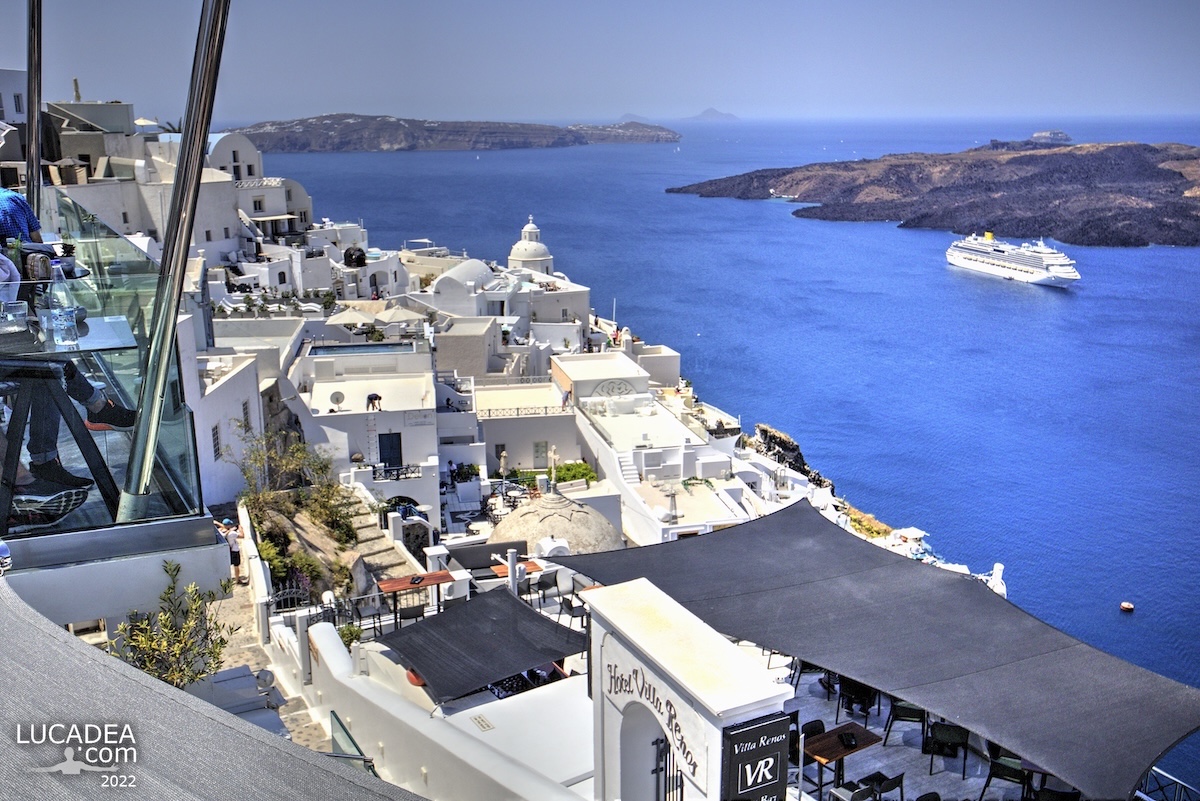
I still remember the exact moment I took this photo overlooking the Santorini caldera, one of those scenes that stays with you long after you leave. The view over the Santorini caldera, with its deep blue sea and white houses climbing the cliffs, is far more than just another idea of what to see in Greece—it’s something you feel all around you.
I was standing there, leaning slightly over the terrace, while the Costa Pacifica rested quietly in the bay, almost as if it had stopped just to admire the same view. In that moment, being in Santorini, Cyclades, Greece felt almost unreal, like everything had aligned perfectly between light, sea, and silence.
The white buildings reflected the sunlight so brightly that they almost blended into the sky, while the shadows carved sharp, geometric shapes across the landscape. If you are visiting Santorini and wondering what to see, this is one of the most iconic views you can experience, yet it still manages to feel personal and intimate.
It reminded me of another photo I shared on the site, also focused on a seaside landscape, but with a completely different mood. Here, everything felt open and radiant, filled with that unmistakable Mediterranean light.
An interesting fact is that the Santorini caldera was formed by one of the largest volcanic eruptions in history, and what we see today is actually the rim of a massive submerged crater.
If you are looking for what to see in Santorini, this is definitely a place worth seeing—not just for its beauty, but for the feeling it leaves behind.

Have you ever stood in front of a view so perfect it almost didn’t feel real? Add a comment or go to the bottom of the site to read what other visitors have written.

Vista sulla caldera di Santorini con case bianche e nave da crociera nel mare blu intenso delle Cicladi

Photo taken with Canon EOS M100 camera and Canon EF-M 11-22 lens.

The Cathedral of Cadiz from the slow sea

La Cattedrale di Cadice dal mare lento vista dalla nave con la città di Cadice sullo sfondo e il profilo urbano costiero

The Cathedral of Cadiz from the slow sea.
The ship moves gently across the water, and the Cathedral of Cadiz from the slow sea slowly emerges along the coastline of Cadice, becoming the first clear shape that defines the arrival. The Cathedral of Cadiz from the slow sea feels distant yet central, as if the entire city is organizing itself around its silhouette.
From the deck, I watch how the harbor gradually opens and how the urban edge becomes more defined with every meter. The Cathedral of Cadiz from the slow sea anchors my attention repeatedly, standing above the pale rooftops like a calm landmark that guides orientation. It is not just architecture; it is a visual signal that the transition from open sea to city has begun.
There is a quiet continuity in this approach that reminds me of other coastal journeys described on this site, where cities are first perceived as outlines and only later become fully readable spaces. Here, the Cathedral of Cadiz from the slow sea plays that exact role, bridging water and land in a single uninterrupted gesture.
If you are traveling through southern Spain and wondering what makes Cádiz unique, this kind of arrival by sea is one of the most memorable experiences you can have. The Cathedral of Cadiz from the slow sea is both a landmark and a reference point, helping the eye settle into the geometry of the city.
Cadice has a strong maritime identity, and its cathedral, built over the 18th and 19th centuries, combines baroque and neoclassical elements. Even from a distance, this mixture can be perceived as subtle shifts in shape and brightness.

As the ship continues forward, I find myself wondering how many cities change completely when seen from the water instead of the land. Have you ever experienced a city arriving like this? Add a comment or go to the bottom of the site to read what other visitors have written.

La Cattedrale di Cadice dal mare lento vista dalla nave con la città di Cadice sullo sfondo e il profilo urbano costiero

Photo taken with Canon EOS RP and Tamron 16-300 lens.

To see all the photos of the Spanish city, click here:
foto gallery

Here’s where the cathedral is located:

Costa Firenze arriving at Copenhagen port

La Costa Firenze in arrivo nel porto di Copenhagen lo scorso luglio

Costa Firenze arriving at Copenhagen port.
Last July, I was standing on the quay waiting for the ship to complete its maneuver, with my camera ready to capture that moment. The cruise ship was entering Copenhagen port, Denmark, and these two photographs have a particular meaning for me: it was my first day of a new contract.
My previous work contract had been on board Costa Firenze, when the ship was still part of the Costa Cruises fleet. Today the ship is no longer part of the Costa fleet, but when I took these photographs she was still Costa Firenze, and this was the ship where I was about to begin my new contract.
That made her arrival very different from simply seeing an interesting cruise ship in a harbor. I was waiting for the ship I was about to work on, so that moment naturally became connected with the beginning of a new experience.
From the quay, the perspective was very different from what I was used to seeing from inside the ship. Once I was back on land, the size of Costa Firenze immediately became much more apparent. During the maneuver towards the berth, the ship moved slowly and carefully, while the surrounding port made her scale even easier to understand.
I took these two photographs while I was waiting. What interested me most was preserving the moment of arrival, while the ship was still moving and finding the correct position for docking. It was not a staged photograph and I was not looking for a particular Copenhagen landmark. The subject was simply Costa Firenze at the moment she was entering the port.
Copenhagen, Denmark, is one of the cities found on Northern European cruise itineraries. On this occasion, however, I was not experiencing the city as an ordinary passenger. I was there to begin my contract, so the port represented the starting point of a new working experience.
If you are wondering what to see in Copenhagen, it is natural to think first about the city center, its streets, squares and best-known buildings. In this photograph, I wanted to show another perspective: the port seen from the quay and the relationship between a large cruise ship and the space around it.
One of the things that becomes especially clear when you watch a cruise ship from land is its scale. On board, you quickly become accustomed to the size of the spaces and the ship starts to feel almost like an everyday environment. From the quay, however, the comparison with the water, buildings and port structures immediately shows how large a ship like Costa Firenze really is.
There is also a small detail that gives these photographs another meaning today. Costa Firenze is no longer part of the Costa Cruises fleet and was transferred to Carnival Cruise Line, where she now sails as Carnival Firenze. When I took these photographs, however, she was still Costa Firenze, the ship where I had worked and the ship I was waiting for at the beginning of my new contract.
That personal connection is what makes the photograph more important to me than it might initially appear. A ship arriving in port can be photographed by countless people, but when you are waiting for it because it represents the beginning of a new job, the same scene takes on a completely different meaning.
On the blog I have also shared other moments connected with the ships I have worked on and with the ports I encountered during these experiences. I like keeping that thread between the photographs because, taken together, they gradually become a personal record made not only of places, but also of different periods of my working life.
Looking at these images today, what I remember most is the waiting on the quay. Costa Firenze was slowly approaching her berth, and I knew that once the maneuver was finished, my first day of that new contract would begin. You cannot see that detail in the photograph, but for me it is an essential part of the image.
Sometimes that is exactly why I keep and publish apparently simple photographs. They do not necessarily need to show something rare or spectacular. They simply need to take me back, even years later, to the moment when I pressed the shutter.
This photograph therefore tells more than the story of Costa Firenze arriving in Copenhagen. It preserves a moment of waiting and the beginning of a working period that became part of the personal story I continue to collect through photography.

Have you ever photographed a ship knowing that it would mark the beginning of a new experience in your life? Add a comment or go to the bottom of the site to read what other visitors have written.

Photos taken with Honor 20.

The wake left by the ship

La scia della nave vista dalla poppa durante la partenza dal porto di Savona

The wake left by the ship.
When a ship leaves the port, one of the most relaxing things for me is sitting at the stern and watching the wake stretching out behind. It is a simple view, yet it creates a sense of calm that is hard to describe.
This photo was taken during one of those moments, on board the Costa Fascinosa, shortly after departing from Savona last week. The sound of the water, the steady motion of the ship and that long white trail fading into the horizon create an almost hypnotic atmosphere.
Working on ships, I do not always have the time to enjoy these moments. Days can be busy and full of tasks, but whenever I manage to take a short break, this is one of my favorite ways to slow down and look at the sea.
The wake of a ship is always changing, yet always the same. No matter where you depart from or where you are heading, that trail on the water follows every journey and becomes a symbol of movement and distance from the starting point.
Watching it gives me a strong feeling of being in transit, somewhere between one place and another. It is a different way of experiencing the sea, focusing not on its vastness, but on a small detail that tells the story of motion.
This image represents one of those rare quiet moments during work, when I can stop, take my camera and capture what is in front of me.

Have you ever been on a cruise? Have you ever stopped to watch the ship’s wake? Add a comment or go to the bottom of the site to read what other visitors have written.

Ship wake seen from the stern after departing from the port of Savona

Photo taken with Honor 10.

Costa Fascinosa is a cruise ship operated by the Genoa-based company Costa Cruises. It was ordered in October 2007 and built at the Fincantieri shipyard in Marghera. It entered service on May 5, 2012. The names Costa Fascinosa and Costa Favolosa were selected through a contest. The naming process involved approximately 40,000 travel agents across more than 40 countries, who submitted over 16,000 pairs of potential names for the two ships. Ultimately, twenty-five name pairs were published on the “World of Costa” website, where visitors were invited to vote for their favorite combination; after more than 42,000 votes were cast, “Favolosa” and “Fascinosa” emerged as the winning names.
Read more on Wikipedia

The Stern Lines of Costa Toscana

Le linee di poppa della nave Costa Toscana viste da bordo, con curve moderne e design imponente sul mare aperto durante la navigazione

The Stern Lines of Costa Toscana.
I still remember the feeling of standing in front of something immense yet surprisingly fluid, almost shaped by wind and sea itself. The stern lines of Costa Toscana open up in front of my eyes like a soft geometry, curves drawn to follow the movement of water rather than cut through it.
I recall the moment I was observing the stern of Costa Toscana from the deck where I was on board: there was no rush, only the slow rhythm of navigation and that particular way the ship seemed to communicate with the open sea. Costa Toscana never feels static, even when it is in port or sailing calmly, because its architecture carries an idea of constant motion within itself.
The stern lines of Costa Toscana become almost a visual language, an aesthetic signature recognizable from afar. I found myself following them with my gaze several times, as if each curve could tell something different depending on light and distance. The stern of Costa Toscana in particular gives a feeling of openness toward the outside, as if the ship does not truly end there but continues ideally toward the horizon.
There is a detail that struck me while I was there: the perception of scale completely changes when you are on board. What looks compact from a distance becomes, once you are inside, a complex system of layers, terraces, and surfaces interlocking with each other. Costa Toscana was launched in 2021 and is one of the largest modern ships in the Costa Cruises fleet, designed to combine sustainability with Italian-inspired design, featuring spaces that resemble a floating city.
Putting those memories together, what remains most vivid is not only the scale of the ship, but the way light rested on the stern lines of Costa Toscana, constantly transforming them. I found myself wondering how much the perception of a ship changes when experienced from within rather than seen from afar.

And in the end, looking again at those shapes, I wondered: can a ship become a landscape of its own? Add a comment or go to the bottom of the site to read what other visitors have written.

Photos taken with Oppo Reno 12.

Costa Toscana is a cruise ship of the Genoa-based Costa Crociere company, built at the Meyer Turku shipyard in Finland. It has a sister ship named Costa Smeralda. Costa Toscana is part of the Excellence class, a category of cruise ships designed for the Carnival Corporation & plc cruise group for its brands, and is the second ship of this type built for Costa Crociere.
Continue and learn more on Wikipedia

Le linee di poppa della Costa Toscana – The stern lines of Costa Toscana – Les lignes de poupe du Costa Toscana – Las líneas de popa del Costa Toscana – As linhas de popa do Costa Toscana – Die Hecklinien der Costa Toscana – Đường đuôi tàu Costa Toscana – コスタ・トスカーナの船尾ライン – 迪斯科斯托斯卡纳号船尾线条 – コスタ・トスカーナの船尾ライン

The text of this post was written with the help of ChatGPT, a language model from OpenAI.

A cruise ship in Santorini’s caldera

Nave da crociera Costa Pacifica nella caldera di Santorini con le case bianche di Thira affacciate sul mare

A cruise ship in Santorini’s caldera.
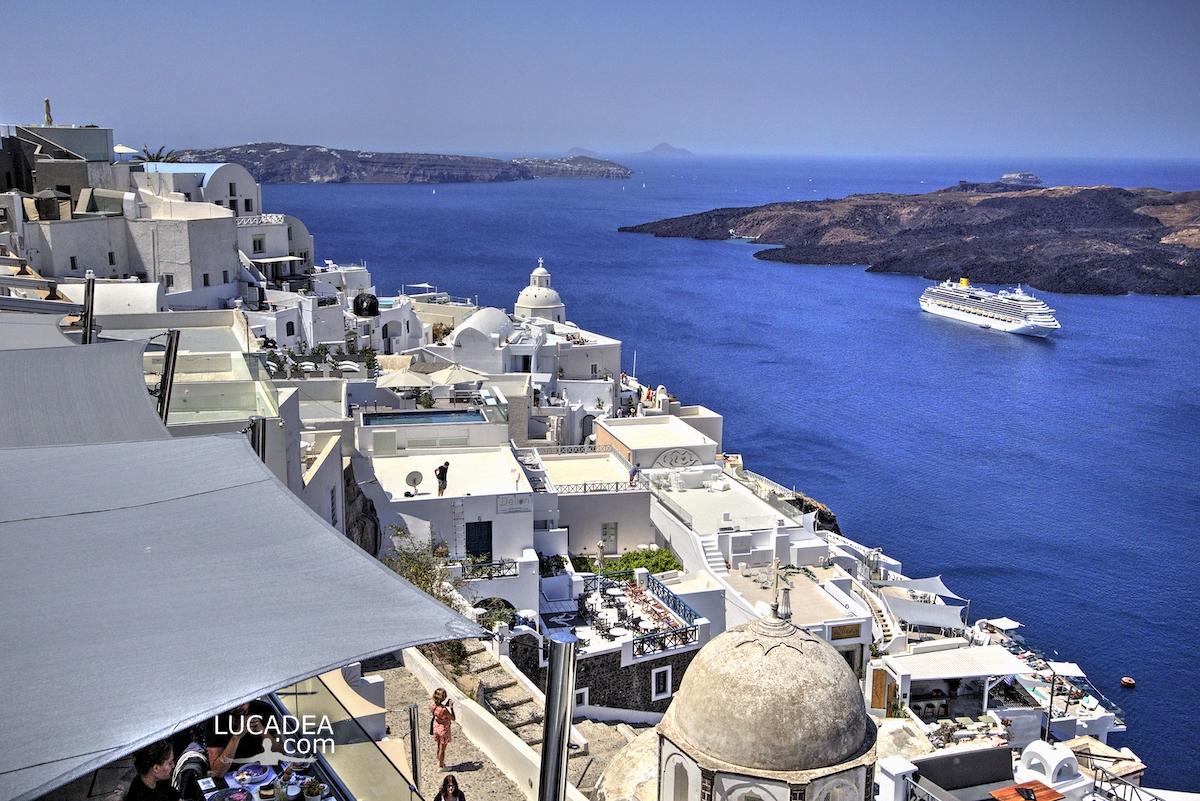
Standing along the edge of the caldera in Santorini, Greece, my eyes were immediately drawn to a view that many people search for when wondering what to see in Santorini: the white houses of Thira above and a cruise ship resting in the deep blue sea below. The caldera of Santorini offers one of those scenes that feel almost too perfect, yet every time I see it, it feels slightly different.
In this particular moment, I focused on capturing the balance between land and sea. The bright white buildings cascade down the cliff, while the Costa Pacifica sits quietly at anchor, almost like part of the landscape itself. Even though I work on cruise ships, that wasn’t my vessel at the time, but it still belongs to Costa Crociere, a company you often spot in these waters during the busy months.
From the top of Thira, this composition comes naturally: the village above, the steep drop, and the open sea dotted with ships. If you are visiting Santorini and looking for one of the most iconic views, this is definitely a place worth seeing, not just for the scenery but for the feeling of space and depth it creates.
The caldera itself is the result of a massive volcanic eruption thousands of years ago, shaping the island into what it is today. This geological formation allows large ships to anchor surprisingly close to the cliffs, making the contrast between the human presence and the natural environment even more striking.
While taking this photograph, I couldn’t help but think about how different the experience is from the deck of a ship. There, you look up at the island; here, you look down at the sea. I’ve shared similar perspectives in other posts on the site, especially when exploring ports and coastal towns from unusual viewpoints.
Even though this is a well-known scene, it never feels repetitive. The light shifts, the ships change, and the atmosphere evolves constantly. That’s probably why I keep coming back to capture it again.

Have you ever seen Santorini from this perspective, or do you prefer discovering it from the sea? Add a comment or go to the bottom of the site to read what other visitors have written.

Costa Pacifica cruise ship in Santorini caldera with white houses of Thira overlooking the deep blue sea

Photo taken with a Canon EOS M100 camera and a Canon EF-M 11-22 lens.

To see the other images I took in Santorini, you can click here:
foto gallery

I’m also sharing a few videos I made (though on a different day):

Videos recorded with Gopro Hero 10 Black.

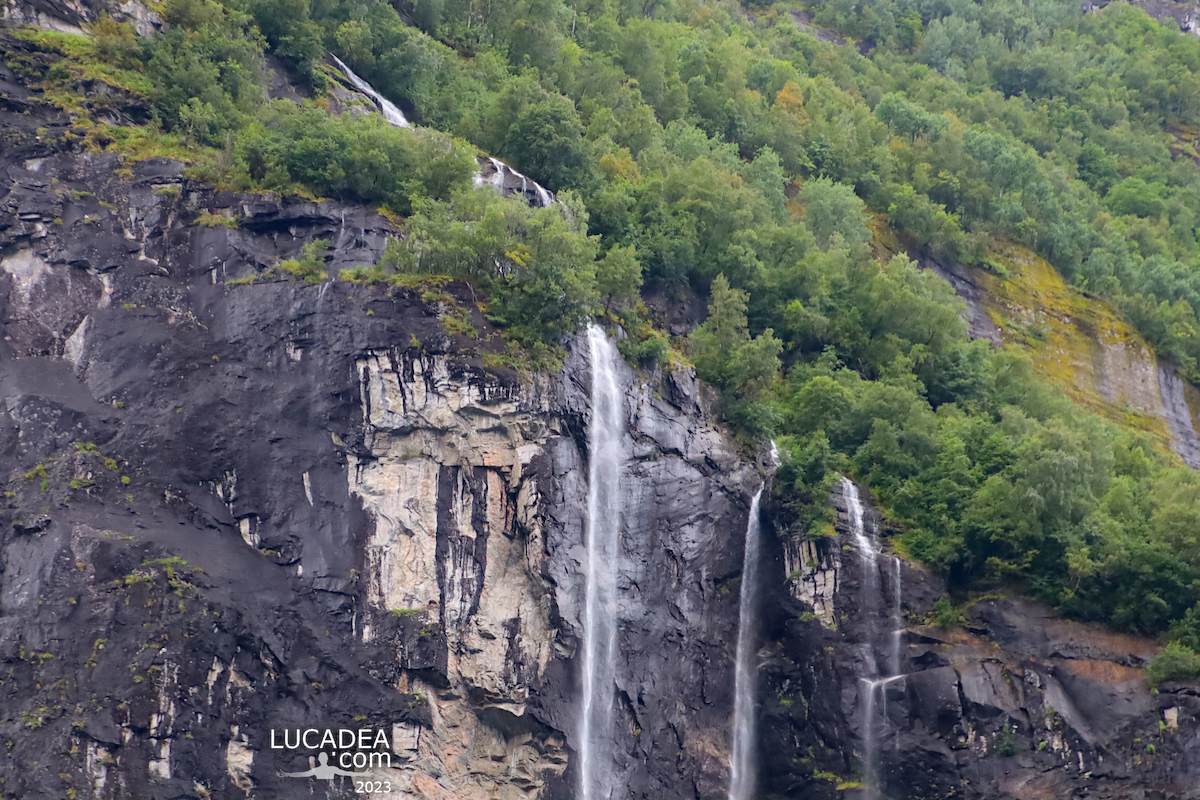
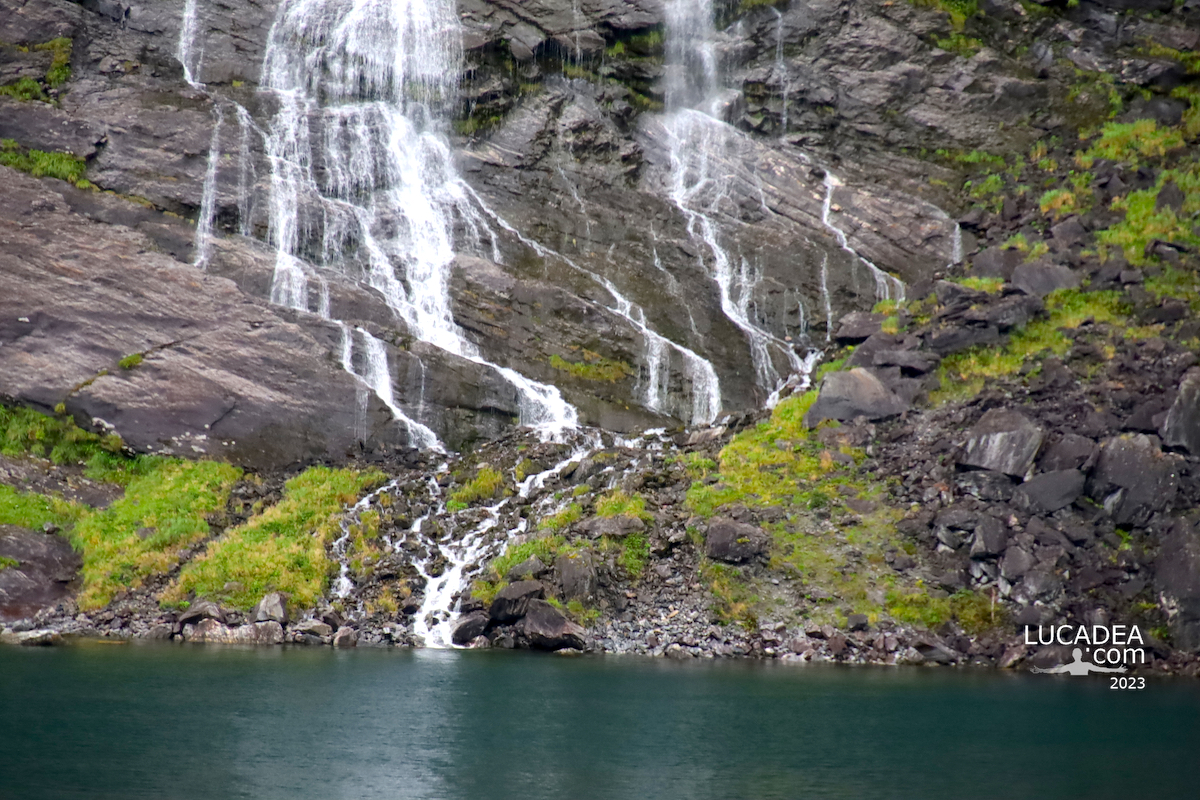
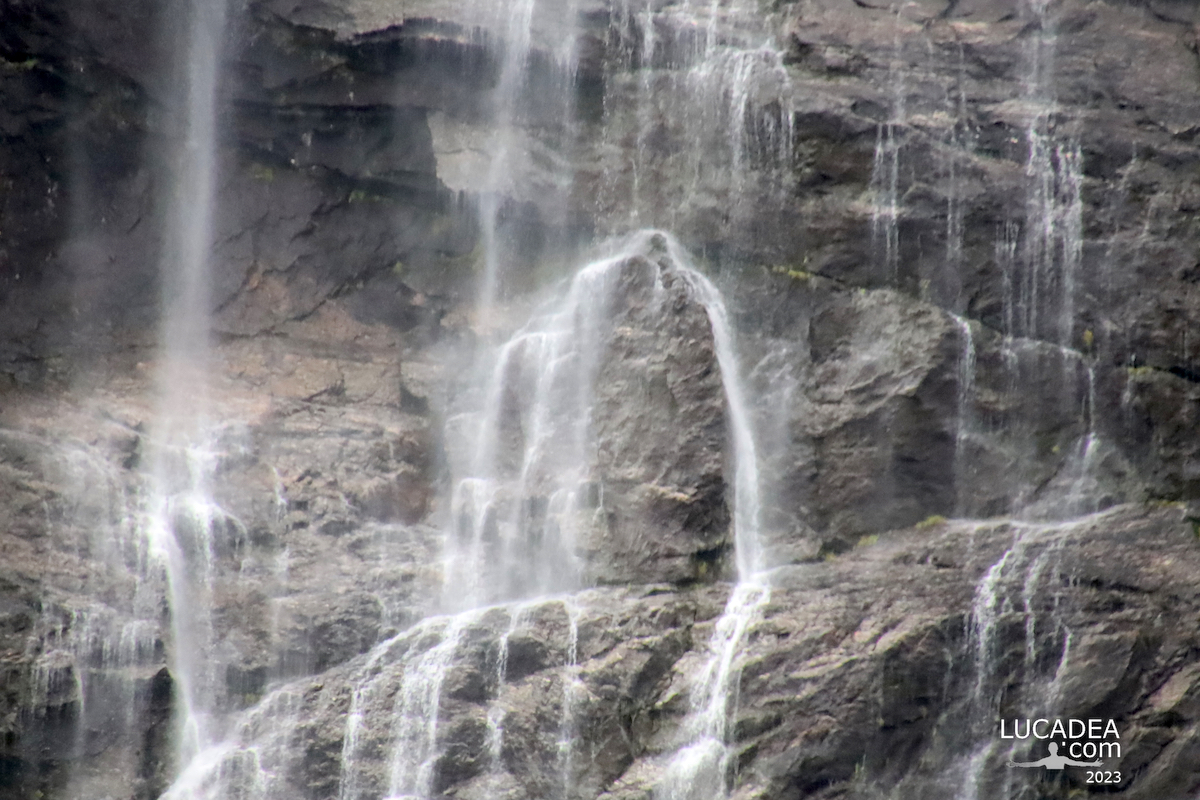
Waterfalls of Geirangerfjord in Norway

Alcune cascate che si ammirano nel Geirangerfjord in Norvegia

Waterfalls of Geirangerfjord in Norway.
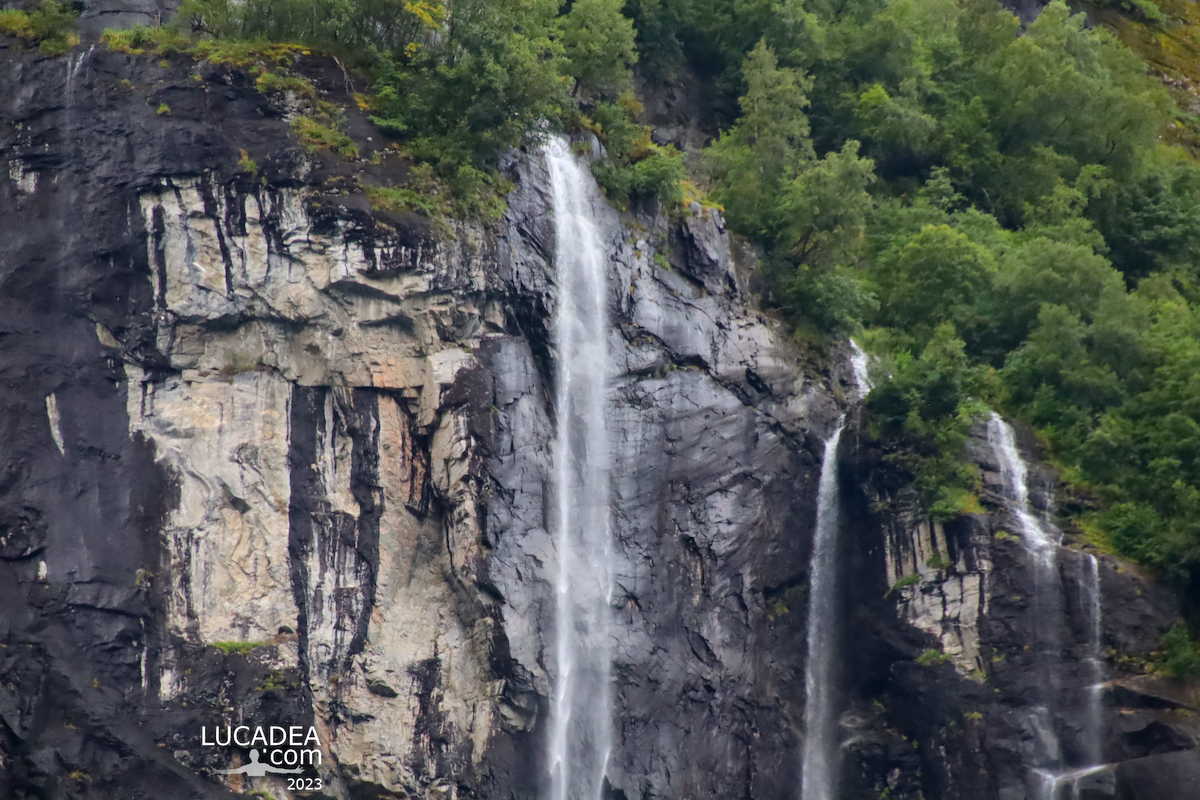
After several years away from Norwegian fjords, sailing again between these mountains was one of those experiences that remain in your memory. From the ship, I watched the landscape slowly change, with huge rocky walls and countless waterfalls flowing down towards the sea.
This photograph was taken during one of my journeys aboard Costa Firenze by Costa Cruises, when during the summer season I had the opportunity to spend about a month exploring some Northern Europe routes. Among them, sailing through Geirangerfjord was certainly one of the most fascinating moments of the trip.
The waterfalls of Geirangerfjord are one of the elements that make this place so special. From the top of the mountains, the water runs down the steep green and rocky slopes until it reaches the cold waters of the fjord. Every viewpoint offers a different perspective, and from the ship the feeling of being surrounded by such a vast landscape is unforgettable.
I was in Geirangerfjord, in Møre og Romsdal, Norway, and what I wanted to capture with this image was the relationship between the ship, the water, and the enormous natural environment around it. It is not simply a beautiful view, but a place where every element reminds you of the power of nature.
If you are visiting Norway by cruise, Geirangerfjord is definitely one of the places worth seeing. Its mountains, waterfalls, and calm waters create a landscape that feels unique and almost unreal.
A curious detail is that Geirangerfjord has been included in the UNESCO World Heritage list together with nearby Nærøyfjord because of its exceptional natural beauty and geological importance.
On my blog I have shared other moments from my journeys by ship, because the view from a cruise deck often offers perspectives that are difficult to experience in any other way.

Have you ever sailed through Norwegian fjords or visited a place that gave you the same feeling of wonder? Add a comment or go to the bottom of the site to read what other visitors have written.

Photos taken with a Canon EOS RP camera and a Tamron 16-300 lens.

To see all the other photos, click here:
foto gallery

Here is where the fjord is located:

The Geirangerfjord (Geirangerfjorden) is a fjord winding through the Sunnmøre region in the southern part of Møre og Romsdal county, Norway. It is a branch of the much larger Storfjorden, and the famous village of Geiranger is located within it. The fjord is one of Norway’s most visited natural sites and, since 2005, has been included—along with the Nærøyfjord—on the UNESCO World Heritage List. However, the inclusion of these two fjords on the list is threatened by a plan to construct power lines across the fjord.
Read more on Wikipedia

The waterfalls of Geirangerfjord in Norway – Les cascades du Geirangerfjord en Norvège – Las cascadas del Geirangerfjord en Noruega – As cascatas do Geirangerfjord na Noruega – Die Wasserfälle des Geirangerfjords in Norwegen – Những thác nước ở Geirangerfjord Na Uy – 挪威盖朗厄尔峡湾的瀑布 – ノルウェーのガイランゲルフィヨルドの滝

The text of this post was written with the help of ChatGPT, a language model from OpenAI.

🏠
  • Italiano