
The Clock of Santa Maria di Nazareth Church


The Tree-Lined Corso Torino in Genoa.
Walking near Piazza Savonarola, in the Foce district, I found myself following the long row of trees lining Corso Torino. This tree-lined avenue is one of those urban views I enjoy observing during my photographic walks around Genoa. I particularly like the way the greenery blends into the surrounding architecture, adding a distinctive character to an otherwise everyday city street.
Corso Torino runs through one of the best-known areas of eastern Genoa. This is the Foce district, in Genoa, Liguria, Italy, an urban neighbourhood characterised by relatively wide streets, residential buildings and spaces shaped around everyday city life. The atmosphere here is quite different from the narrow lanes of the historic centre. Instead of the dense network of alleys and old buildings, the streets open up, offering longer perspectives in which trees and buildings share the same urban landscape.
I enjoy photographing places like this during my walks around the city, even when there is no famous monument or particularly remarkable building to capture. Sometimes the most ordinary details provide the most interesting photographic opportunities. In this case, I wanted to focus on the sequence of trees along Corso Torino. Their presence creates a visual rhythm along the avenue and makes this stretch of Genoa recognisable in its own way.
The area around Piazza Savonarola is an interesting place to observe this part of the city. The square forms part of the urban fabric of Foce, a neighbourhood where residential architecture, everyday businesses and greenery coexist. It is not a natural landscape, of course, but an urban environment in which trees play an important role. They soften the appearance of the street and help make the surrounding buildings feel less imposing.
There are also two small details in this photograph that deserve a closer look: the green newsstands along the avenue. They are modest structures, easy to overlook when walking past without paying attention, but they add a familiar touch to this part of Corso Torino. What caught my eye was the fact that they are still there, surviving the changes that have gradually transformed the city and the way people use its streets.
Traditional newsstands once played an important role in Italian neighbourhood life. They were places where people stopped to buy newspapers, magazines and other publications, often becoming familiar meeting points for residents. Their number and function have changed over time, partly because of the shift towards digital news and online reading. Those that remain are still a visible reminder of an older form of everyday street commerce.
I took this photograph myself during one of my walks through Genoa. I was not looking for a particular landmark or a famous architectural feature. I simply wanted to capture a familiar urban scene, paying attention to the relationship between the trees, the buildings and the small structures along the pavement. This is one of the aspects I appreciate most about urban photography: it encourages me to look more carefully at places that might otherwise become part of the background of everyday life.
If you are exploring Genoa and wondering what to see beyond the historic centre, the Foce district offers a different perspective on the city. Walking along Corso Torino, especially around Piazza Savonarola, gives you an opportunity to observe a more residential and everyday side of Genoa. It may not be one of the city’s most famous attractions, but it is precisely this ordinary character that makes the area interesting to photograph.
On Lucadea.com, I have also shared other photographs of Genoa, featuring historic streets, squares and less familiar corners of the city. Together, these images create a personal collection of urban impressions, showing that Genoa is not only about its best-known monuments and picturesque old town. Its identity can also be found in the avenues, neighbourhoods and small details encountered during an ordinary walk.
When you explore a city, do you prefer its tree-lined avenues and open streets, or do you find yourself more attracted to the narrow alleys of the historic centre? Add a comment or go to the bottom of the site to read what other visitors have written.

Photo taken with Canon EOS M100 camera and Canon EF-S 10-18 lens.
Here’s the exact spot where I took the photo:
The rights on images, videos, choruses, text and all other material on the LUCADEA.com website are governed as per Copyright page.

The Basilica of Carignano, a Genoa Landmark.
The Basilica of Santa Maria Assunta in Carignano is one of the largest and most recognisable churches in Genoa. Standing on Carignano Hill, in a commanding position overlooking the harbour and much of the city, this magnificent building is one of the most important landmarks in Genoa’s historical and artistic heritage. Its impressive scale, distinctive architecture and prominent setting make it a familiar feature of the city’s skyline, visible from many different viewpoints.
The history of the basilica is closely connected with the Sauli family, one of the most influential aristocratic families in the Republic of Genoa. It was the Sauli who commissioned the church during the second half of the sixteenth century, choosing an ambitious project intended to demonstrate their wealth, influence and prestige. Some historical interpretations also suggest that the undertaking may have been motivated by a desire to compete with the powerful Fieschi family, which had already established an important presence in the religious and political life of Genoa.
Construction began in 1552, based on a design by the architect Galeazzo Alessi, one of the leading figures of the Italian Renaissance. The project adopted a centralised layout inspired by the great architectural tradition of Renaissance churches. Its Greek-cross plan, large central dome and four bell towers at the corners give the building a remarkably distinctive appearance. The result is a monumental structure that stands out from many other churches in the city.
The basilica’s location is just as impressive as its architecture. Carignano occupies one of the hills surrounding Genoa’s historic centre, and the church seems almost to watch over the city from above. From nearby viewpoints, it is possible to admire the harbour, the rooftops of the old town and the hills rising behind the urban landscape. It is a place where architecture and scenery come together, offering a different perspective on Genoa from the narrow streets and waterfront areas for which the city is so famous.
The interior is equally worth exploring. Its spacious layout, balanced proportions and the natural light entering through the dome create a solemn and impressive atmosphere. The basilica also houses important works of art, including sculptures by Pierre Puget and Filippo Parodi. These works reflect the artistic richness of Genoa during the seventeenth century and the Baroque period, when the city was one of the most important cultural and commercial centres in the Mediterranean.
One interesting feature is the centralised design itself. This was an ambitious architectural choice for a church in Genoa during the sixteenth century. Its unusual layout and monumental dimensions make the Basilica of Carignano quite different from many other religious buildings in the city and help explain why it has become such an important symbol of the neighbourhood.
Today, the Basilica of Carignano remains deeply appreciated by the people of Genoa. It is more than a place of worship: it is part of the city’s landscape, history and collective memory. I find it fascinating to think about how much Genoa has changed over the centuries, while this magnificent church has remained on its hill, overlooking the harbour and accompanying the transformation of the surrounding neighbourhoods.
And what about you? Have you ever visited the Basilica of Carignano and admired Genoa from the hill on which it stands? Add a comment or go to the bottom of the site to read what other visitors have written.


Photos taken with a Canon EOS M100 camera and Canon EF-S 10-18 lens.
The rights on images, videos, choruses, text and all other material on the LUCADEA.com website are governed as per Copyright page.

Grimaldi Street Seen from Chiavari’s Arcades.
Grimaldi Street, in the historic centre of Chiavari, is one of those little urban scenes I enjoy discovering whenever I walk through the town. I took this photograph from beneath the arcades, while strolling along Vittorio Veneto Street and coming across the entrance to this characteristic street. I wanted to capture the view as nicely as possible, making use of the arches in the foreground and the light coming from the open street beyond.
Although I live in Sestri Levante, a nearby town, I always enjoy returning to Chiavari with my camera. Its historic centre offers countless photographic opportunities, and almost every walk reveals something worth stopping for. It is a wonderful place for urban photography, with arcades, historic buildings, narrow lanes, squares and views that change depending on the time of day and the light.
The arcades are probably among the most distinctive features of Chiavari’s old town. They run along many of its main streets, creating sheltered walkways that are pleasant to explore in every season. Walking beneath the arches, you come across shops, residential entrances, cafés and architectural details that can easily go unnoticed when you are in a hurry. Sometimes all it takes is a short pause and a glance down a side street to discover an interesting composition.
That is exactly what happened when I found this view of Grimaldi Street. I was standing beneath the arcades of Vittorio Veneto Street, looking towards the entrance to this street in the historic centre. The sequence of arches creates a natural frame, almost like a window through which to observe the town. I particularly enjoy this kind of photographic composition: the arcade in the foreground guides the eye towards the street and adds depth to the image, while the surrounding building façades complete the scene.
Chiavari’s historic centre is a lovely place to explore on foot. Its traditional urban layout has many of the features typical of Ligurian towns, with relatively narrow streets, closely spaced buildings and a network of arcades that gives the town centre its distinctive appearance. As you walk around, you move between open spaces and more intimate passages, from bright squares to shaded streets. This variety offers plenty of opportunities for anyone who enjoys looking carefully at the details of a place.
The arcades are not simply decorative. They also serve a practical purpose, offering shelter from rain and sunshine and making it easier to walk between the shops and businesses in the town centre. Over the centuries, they have become an essential part of Chiavari’s urban identity and one of the architectural features that distinguish it from many other towns along the Ligurian Riviera.
Whenever I photograph Chiavari, I like to think that there is at least one photograph waiting to be taken beneath every arch. Of course, I will probably never manage to photograph them all, but every visit brings a different detail, a particular quality of light or a composition I had not noticed before. Even an ordinary corner like this one can become a lovely photograph when you take the time to look at it properly.
And what about you? Do you know Chiavari’s historic centre? Do you enjoy photographing its arcades and the many little views hidden between one arch and the next? Add a comment or go to the bottom of the site to read what other visitors have written.

Photo taken with Canon EOS M100 camera and Canon EF-S 10-18 lens.
Here’s exactly where I took the photo:

Dante Avenue and Its Old Maritime Pines.
Dante Avenue is one of the streets in Sestri Levante, on the Ligurian Riviera, where a distinctive feature of the town’s past can still be seen: its old maritime pine trees. These trees line the avenue and give it a character that I particularly enjoy. They were originally planted alongside the former Fit factory buildings, and although the urban landscape has changed over time, the pines have remained an important part of this corner of the town.
Sestri Levante is well known for its beautiful coastal scenery. The Bay of Silence, the Bay of Fables and the seafront are among the places that visitors most often photograph. However, I have always felt that the less famous streets deserve attention too. They are part of everyday life in the town, and sometimes they preserve details that tell us just as much about its identity as its best-known landmarks.
What makes Dante Avenue special to me is the presence of these mature maritime pines. Their distinctive trunks, textured bark and broad crowns create a pleasant green setting along the street. They are not just decorative trees: they help define the appearance and atmosphere of the avenue. In an urban environment that is constantly changing, mature trees provide a sense of continuity and a visible connection with earlier times.
The pines were planted beside the buildings of the former Fit factory. Those industrial buildings belonged to a different period in Sestri Levante’s history, when manufacturing and local employment helped shape the town and its neighbourhoods. Over the years, industrial spaces can change their purpose, be redeveloped or disappear altogether. Trees, when they are preserved, can remain as living reminders of the landscape that once surrounded them.
This is one of the reasons why I enjoy photographing streets such as Dante Avenue. A photograph does not always need a famous monument, a dramatic view or a particularly unusual subject. Sometimes the most interesting image comes from an everyday scene: sunlight filtering through the branches, the repeated shapes of the trunks along the pavement, or the contrast between the greenery and the surrounding buildings.
I also like the idea that these pines are part of Sestri Levante’s collective memory. People who have lived here for many years may associate them with a familiar landscape and with memories of how this part of town used to look. Visitors discovering the area for the first time can appreciate them for a different reason: they bring shade, greenery and a pleasant sense of character to an ordinary urban street.
When I take photographs around my hometown, I often look for places that are not necessarily included in the usual lists of attractions. Streets, squares, buildings and small details can all become interesting subjects when we take the time to observe them. Dante Avenue is a good example. Its old maritime pines make it recognisable and give the avenue an atmosphere that I would not want to lose.
I like this street very much, especially because these trees have survived the changes around them. They are a simple but meaningful reminder that a town’s identity is made not only of famous views, but also of the everyday places that residents pass through and remember.
What about you? Do you enjoy walking beneath the old maritime pines along Dante Avenue in Sestri Levante? Add a comment or go to the bottom of the site to read what other visitors have written.

Photo taken with a Canon EOS M100 camera and Canon EF-S 10-18 lens.

Camogli Beach on the First Day of Summer.
Camogli Beach is one of the most recognisable views along the Ligurian coast, an image that immediately captures the character and beauty of this part of Italy. Colourful buildings stand close together beside the sea, while the Basilica of Santa Maria Assunta provides a distinctive landmark in the background. This photograph was taken on the first Sunday of summer, during a relaxed afternoon walk in Camogli with a few friends.
Summer began quietly that year. The dreaded virus was still affecting everyday life, changing the habits of both tourists and local residents. Even a simple visit to a seaside town felt different from what we had been used to. There was still uncertainty, people were being careful, and many familiar activities required a little more thought than before. After such a difficult period, however, being able to enjoy the sea and spend a few hours outdoors with friends already felt like something special.
That Sunday afternoon, we decided to visit Camogli, one of the loveliest and most distinctive towns on the Ligurian Riviera, in the Gulf of Paradise near Genoa. We had no particular plan. We simply wanted to enjoy a stroll, take in the views and spend some time together. Camogli is perfect for this kind of visit: even without an itinerary, there is always something interesting to discover around its harbour, streets and waterfront.
The beach is one of the town’s most famous landmarks. Unlike many seaside destinations, it is not made up of a wide stretch of golden sand. Instead, smooth pebbles form a long shoreline beneath the colourful buildings that make Camogli so distinctive. From the beach, the view moves naturally between the open sea and the town itself. The houses create a beautiful backdrop, with their varied colours and traditional Ligurian architecture, while the historic buildings add another layer to the scene.
At the far end of the beach, the Basilica of Santa Maria Assunta can be seen overlooking the waterfront. Its origins date back to the twelfth century, although the building has been altered and enlarged over the centuries. Its position so close to the sea is part of what makes the view so special. In Camogli, the town’s history, religious heritage and maritime identity seem to meet in a very small space.
For me, this is one of the classic views of my Liguria. Some places remain beautiful no matter how many times we see them, and Camogli’s beach is certainly one of them. I would put it alongside the little harbour of Vernazza in the Cinque Terre and the Bay of Fables in Sestri Levante. They are very different locations, but each has become an unmistakable image of the Ligurian coast.
I enjoy photographing these familiar places because they are more than attractive views. They are part of the identity of the region, landscapes that many people immediately associate with Liguria. In this picture, the sea, the pebble beach, the colourful houses and the basilica come together to tell the story of Camogli. There is no need for an elaborate composition when the place itself offers such a wonderful setting.
That first day of summer may have felt quieter and more uncertain than usual, but the beauty of the landscape had not changed. The beach was still there, the sea stretched out in front of us, and Camogli offered another one of those views that make me happy to live and take photographs in Liguria.
And what about you? Have you ever walked along Camogli Beach and taken a photograph of this classic Ligurian view? Add a comment or go to the bottom of the site to read what other visitors have written.

Photo taken with a Canon EOS M100 camera and Canon EF-S 10-18 lens.
If you want to see all the photos taken in the beautiful Riviera town, click here:

Here I’m also leaving you a video, which I made on another occasion, always in the little harbor of Camogli:
Video recorded with Gopro Hero5.
And these too:
Videos recorded with Gopro Hero 10 Black.
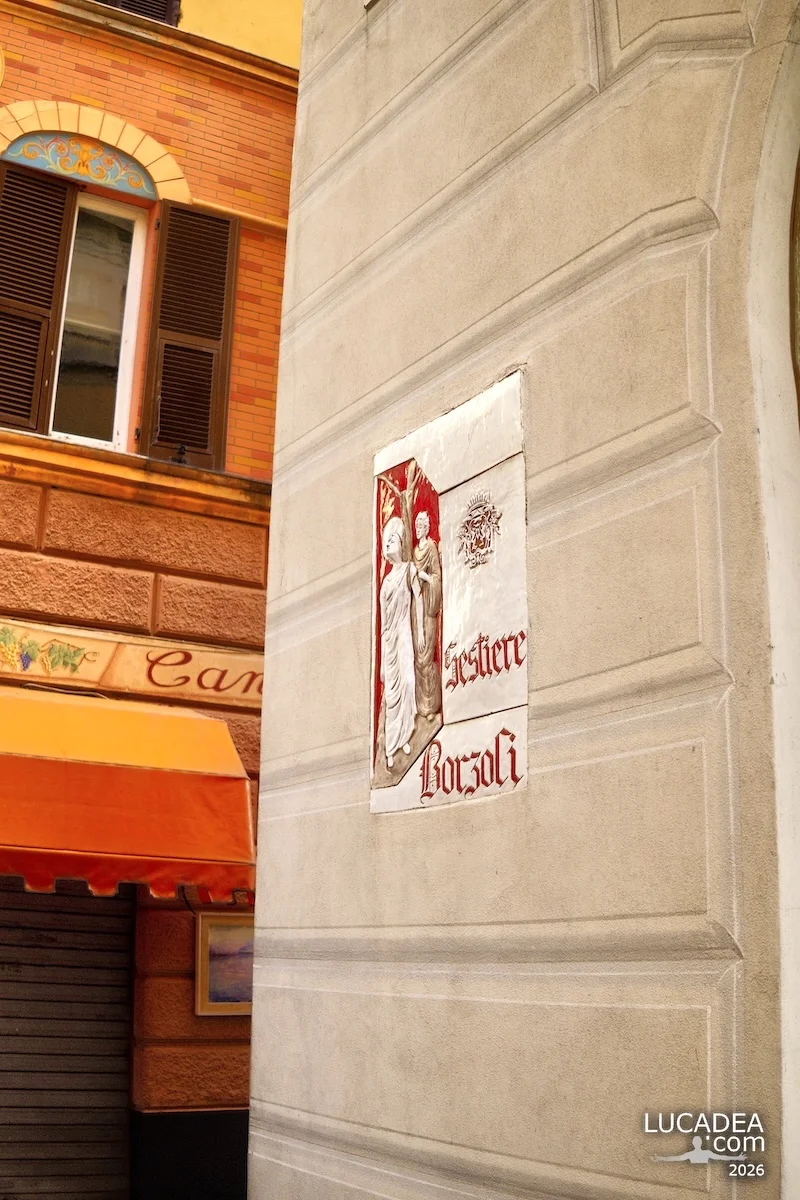
The Borzoli district plaque in Rapallo.
While walking through the streets of Rapallo’s historic center, I came across this small but meaningful detail: a plaque that reflects part of the city’s historical organization. It is often through these subtle elements that we can better understand the identity of a place.
The photo shows the plaque of the Borzoli district placed on the wall of a building in the heart of the town. Around it, the warm tones of Ligurian houses and traditional shutters create a familiar and welcoming atmosphere typical of the Riviera. These everyday architectural details give each corner its own character.
Rapallo, in Liguria, Italy, still preserves traces of its historical division into districts, known as “sestieri.” Borzoli is one of them, and these plaques serve as reminders of how the city was once organized.
Taking photos of details like this allows me to tell a different kind of story, moving beyond the most famous views and focusing instead on the small elements that define a place. A simple plaque can reveal history, tradition, and a sense of belonging.
An interesting curiosity is that these districts were not only administrative divisions, but also played a role in social life and local traditions.
On the blog, I have shared other views and details from Rapallo and the Ligurian coast, because I believe that these small discoveries make every walk more meaningful.
This image reminds me that cities are full of hidden stories, often written on their walls. Have you ever noticed a small detail that changed the way you see a place? Add a comment or go to the bottom of the site to read what other visitors have written.
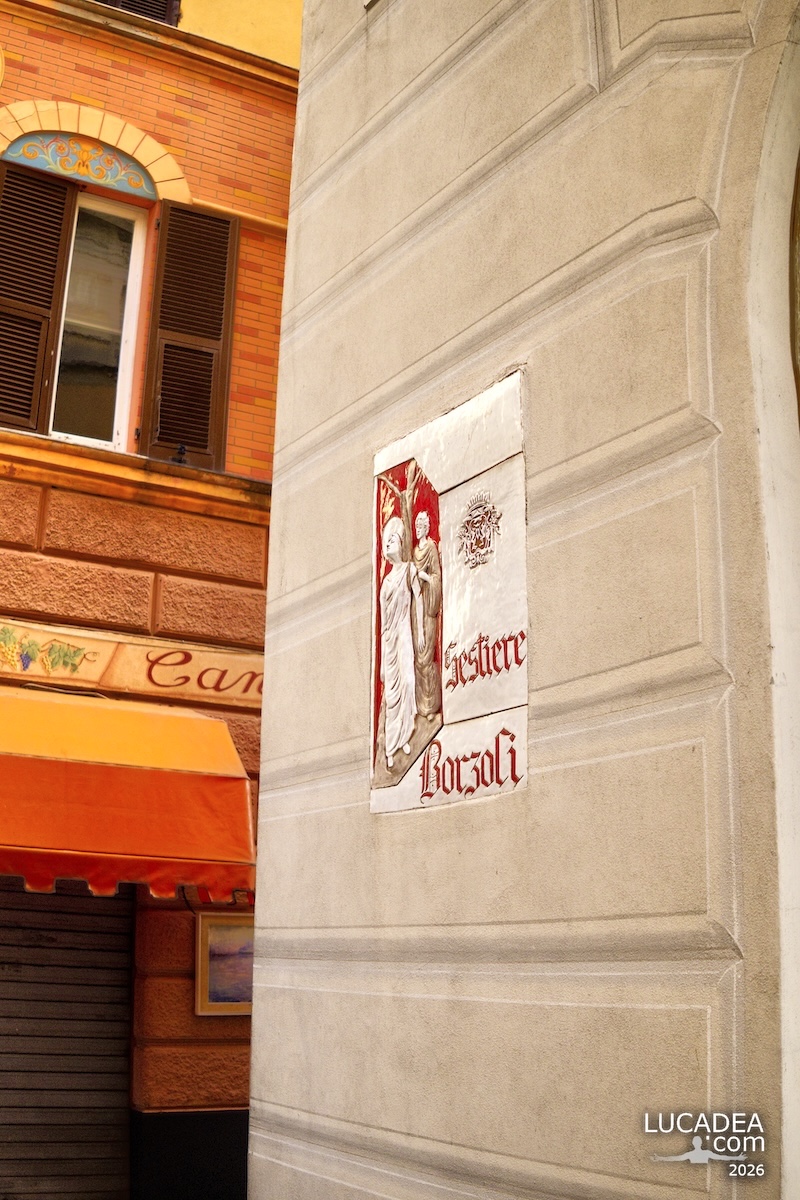
Photo taken with Canon EOS R50 V and lens Canon RF 24-50.

Colourful Houses in Sestri Levante’s Bay of Silence.
The colourful houses of the Bay of Silence are among the most recognisable sights in Sestri Levante, a beautiful seaside town in Liguria, Italy. Standing right beside the beach and the sea, their warm pastel façades create a distinctive atmosphere that makes this small bay so special and memorable for visitors.
The building in this photograph is one of the many houses overlooking the bay. It is more than just an attractive colourful façade: it is also a small reminder of the history of this corner of Sestri Levante. In the past, many of these homes belonged to fishing families. For those residents, the sea was not simply a beautiful view from the window. It was where they worked every day and an essential part of their family life.
The position of the houses tells much of that story. They stand close together, facing the beach and the water, creating a particularly close relationship between the buildings and the shoreline. For people who made their living from fishing, living near the boats and the beach was a practical choice. The bay was a workplace, a meeting place and part of everyday life, long before it became one of the most photographed destinations on the Ligurian Riviera.
Life here has changed considerably over the years. Many of the old fishermen’s homes are now second homes, used mainly during holidays and the busiest tourist periods. The Bay of Silence is known far beyond Liguria and attracts visitors from Italy and abroad, especially during the summer. Even so, despite these changes in how the buildings are used, the houses have retained much of their original charm.
I find this contrast particularly interesting. On one side there is the memory of an old fishing village, where daily life revolved around the sea. On the other, there is a popular holiday destination, visited by people who come to enjoy the beach, take photographs or simply admire the scenery. The colourful façades provide a setting for both worlds and seem to preserve a connection with the past, even when the buildings themselves now serve a different purpose.
The Bay of Silence, historically also known as Portobello, is one of the two beautiful bays that define the coastline of Sestri Levante. The other is the nearby Bay of Fables. The sheltered shape of the bay, its beach and the houses surrounding the shoreline combine to create a distinctive landscape. It is easy to understand why this place has become one of the town’s best-known landmarks and an essential stop for anyone visiting Sestri Levante.
I took this photograph on September 5, 2019, at the beginning of September, when summer is not quite over but the atmosphere of the seaside town begins to change. It is a time of year I particularly enjoy. The days are still bright, the sea often retains its summer colours and, after the busiest weeks of August, the bay can feel a little more peaceful.
I like to pay attention to architectural details like this because they tell a quieter story than the major tourist attractions. An ordinary house, with its windows, shutters and colourful façade, can become a symbol of the place where it stands. In the Bay of Silence, every building contributes to the view, and together they create a harmonious scene that changes with the light and the seasons.
And what about you? When you walk around the Bay of Silence, do you take time to admire the individual colourful houses, or do you prefer to enjoy the whole panorama? Add a comment or go to the bottom of the site to read what other visitors have written.

Photo taken with a Canon EOS M100 camera and a Tamron 16-300 lens.

Savona’s Medieval Riario and Corsi Towers.
Savona’s medieval towers are among the most distinctive features of the historic centre of this Ligurian city. As I walk through the streets and around the buildings facing the harbour, I often find traces of the medieval town emerging between more recent constructions. Some towers are easy to spot, while others are partly hidden, incorporated into houses and palaces built around them over the centuries.
This photograph shows two particularly interesting examples: the Riario and Corsi Towers, standing just in front of Savona’s harbour. Their position makes them an unmistakable part of the waterfront and a striking sight for visitors arriving by sea. For passengers stepping ashore from cruise ships, these old stone structures offer an unexpected first glimpse of the city’s history, set against the modern activity of the port.
I find their appearance especially fascinating because they are not isolated monuments surrounded by carefully designed gardens or large squares. They belong to the everyday urban landscape. Buildings have grown around them, streets and businesses have changed, and the harbour itself has developed, but the medieval towers are still there. Their solid stone walls and simple shapes make them stand out from the surrounding architecture.
The Riario and Corsi Towers date back to the 12th century, when Savona was an important and growing maritime and commercial centre. The harbour was at the heart of the city’s economic life, and wealthy families built houses and towers that expressed both their social standing and their influence. These urban towers were not simply defensive or residential structures: they were also visible symbols of the families that owned them.
Their history, however, was shaped by the long and difficult rivalry between Savona and Genoa. After Savona came under Genoese control, many of its medieval towers were lowered during the 16th century. The decision was connected with the construction and military control of the Priamàr fortress: tall towers could represent a potential obstacle to the new defensive system. The Riario and Corsi Towers consequently lost part of their original height and, over time, became increasingly incorporated into the surrounding buildings.
A tragic event brought them back into view. On 30 October 1943, a devastating air raid struck the old harbour district, destroying much of the surrounding neighbourhood and causing many casualties. Among the ruins, the medieval towers emerged clearly from the rubble. Structures that had been partly concealed by later buildings suddenly became visible again, reminders of a much older Savona.
Today, the two towers retain a sober and imposing appearance. Their stonework, narrow openings and irregular surfaces reveal building techniques from a very different age. The Riario Tower, also known as the Guarnero Tower, has surviving brickwork towards its upper section. The Corsi Tower has an almost square ground plan and an uneven top, giving it a distinctive outline.
They are part of a wider medieval heritage that can still be discovered around Savona’s old harbour. Not far away stands the Brandale Tower, known locally as “A Campanassa”, one of the city’s best-known landmarks. Together with the historic buildings of the old Darsena and the narrow streets of the centre, these structures tell the story of a town whose fortunes were closely connected to trade, seafaring and its position on the Ligurian coast.
Whenever I look at these towers, I think about how many generations have lived alongside them. They have witnessed changes to the city, conflicts, destruction and the transformation of the harbour. Today they welcome visitors arriving from the sea, almost like a quiet introduction to Savona’s past. Their presence is a reminder that the modern port city still preserves a medieval identity, written into its stone walls.
This photograph captures that meeting between past and present: two medieval towers standing beside the harbour, still an unmistakable part of Savona, Liguria, Italy.
And what about you? When visiting Savona, do you stop to admire these medieval towers, or do you see them simply as part of the city’s everyday scenery? Add a comment or go to the bottom of the site to read what other visitors have written.


The Bay of Silence on May 20, 2016.
It was a beautiful spring morning in Sestri Levante, Liguria, Italy, with the sunshine lighting up one of the most picturesque bays on the Italian Riviera. It was Friday, May 20, 2016, and when I found myself in front of this wonderful view, I could not resist taking a photograph. The Bay of Silence, also known as Portobello, looked particularly bright and inviting, with the sea creating the perfect setting for a quiet moment and a little time spent enjoying the scenery.
I took this photograph that very morning and later edited it using HDR, or High Dynamic Range, a technique that helps bring out details in both bright and shadowed areas of an image. The result is a photograph with vivid colours, in which the blue sky, the sea and the colourful buildings come together beautifully. I enjoy using this technique when I want to emphasise the colours and details of a landscape, especially when the natural light already provides such a lovely starting point.
The Bay of Silence is one of the best-known places in Sestri Levante, a seaside town whose charm is closely connected to its unusual geography. The historic centre stands on a narrow strip of land that links the mainland to a small peninsula known as the Island. This stretch of land separates two very different bays: the larger Bay of Fables and the smaller, more intimate Bay of Silence. One side is associated with the harbour and its maritime activities, while the other offers a sheltered beach surrounded by colourful houses that seem to reach almost to the water’s edge.
The name Bay of Silence has an interesting story behind it. It was the local poet Giovanni Descalzo who first used this evocative name in 1919, helping to give one of the town’s most beautiful views an identity of its own. The older name, Portobello, has never completely disappeared and is still commonly used by local residents to refer to the bay and its surrounding area.
What makes this place so special is the relationship between the village and the sea. The pastel-coloured houses, with their green shutters and adjoining facades, seem almost to rest directly on the beach. Fishing boats, sand and water that changes colour with the light complete a view that is difficult to get tired of. Even if I have seen this place many times, there is always something worth photographing: a reflection, a boat pulled up on the shore, an open window or simply the changing colours of the sky.
On a morning like that of May 20, the bay shows one of its most attractive sides. Spring is a wonderful season for photographing places like this. The days are already bright, temperatures are pleasant and it is often possible to enjoy the scenery without the crowds that arrive during the summer months. Sestri Levante still has a more relaxed rhythm at this time of year, making it easier to appreciate the details of its historic centre and its beautiful coastline.
This photograph is also a little reminder of a morning that left me with a very pleasant feeling. It was Friday, and along with the satisfaction of having taken a photograph I liked, there was the simple pleasure of approaching the weekend with such beautiful weather. That was why I wanted to share the image and wish everyone a good weekend, hoping that the sunshine would stay with us for the following days.
And what about you? Do you prefer the Bay of Silence on peaceful spring mornings, or during the summer when the beach is full of life? Add a comment or go to the bottom of the site to read what other visitors have written.

