Grimaldi Street Seen from Chiavari’s Arcades

Via Grimaldi a Chiavari da sotto i portici

Grimaldi Street Seen from Chiavari’s Arcades.
Grimaldi Street, in the historic centre of Chiavari, is one of those little urban scenes I enjoy discovering whenever I walk through the town. I took this photograph from beneath the arcades, while strolling along Vittorio Veneto Street and coming across the entrance to this characteristic street. I wanted to capture the view as nicely as possible, making use of the arches in the foreground and the light coming from the open street beyond.
Although I live in Sestri Levante, a nearby town, I always enjoy returning to Chiavari with my camera. Its historic centre offers countless photographic opportunities, and almost every walk reveals something worth stopping for. It is a wonderful place for urban photography, with arcades, historic buildings, narrow lanes, squares and views that change depending on the time of day and the light.
The arcades are probably among the most distinctive features of Chiavari’s old town. They run along many of its main streets, creating sheltered walkways that are pleasant to explore in every season. Walking beneath the arches, you come across shops, residential entrances, cafés and architectural details that can easily go unnoticed when you are in a hurry. Sometimes all it takes is a short pause and a glance down a side street to discover an interesting composition.
That is exactly what happened when I found this view of Grimaldi Street. I was standing beneath the arcades of Vittorio Veneto Street, looking towards the entrance to this street in the historic centre. The sequence of arches creates a natural frame, almost like a window through which to observe the town. I particularly enjoy this kind of photographic composition: the arcade in the foreground guides the eye towards the street and adds depth to the image, while the surrounding building façades complete the scene.
Chiavari’s historic centre is a lovely place to explore on foot. Its traditional urban layout has many of the features typical of Ligurian towns, with relatively narrow streets, closely spaced buildings and a network of arcades that gives the town centre its distinctive appearance. As you walk around, you move between open spaces and more intimate passages, from bright squares to shaded streets. This variety offers plenty of opportunities for anyone who enjoys looking carefully at the details of a place.
The arcades are not simply decorative. They also serve a practical purpose, offering shelter from rain and sunshine and making it easier to walk between the shops and businesses in the town centre. Over the centuries, they have become an essential part of Chiavari’s urban identity and one of the architectural features that distinguish it from many other towns along the Ligurian Riviera.
Whenever I photograph Chiavari, I like to think that there is at least one photograph waiting to be taken beneath every arch. Of course, I will probably never manage to photograph them all, but every visit brings a different detail, a particular quality of light or a composition I had not noticed before. Even an ordinary corner like this one can become a lovely photograph when you take the time to look at it properly.

And what about you? Do you know Chiavari’s historic centre? Do you enjoy photographing its arcades and the many little views hidden between one arch and the next? Add a comment or go to the bottom of the site to read what other visitors have written.

Grimaldi Street in Chiavari's historic centre, seen from beneath the arcades of Vittorio Veneto Street

Photo taken with Canon EOS M100 camera and Canon EF-S 10-18 lens.

Here’s exactly where I took the photo:

Add one  comment to this article or read  here what other visitors have written.
 
Adv
 
Disclamer

The rights on images, videos, choruses, text and all other material on the LUCADEA.com website are governed as per  Copyright page.


This page has been viewed 1 times today.
This month it has been viewed 1 times.
In total it has been viewed 1 times.
 

Dante Alighieri Street from the Brignardello Portico

Via Dante Alighieri a Lavagna vista dal tetto del Porticato Brignardello

Dante Alighieri Street from the Brignardello Portico.
In Lavagna, Liguria, Italy, on the Italian Riviera, Dante Alighieri Street can be seen from an unusual viewpoint: the terrace above the Brignardello Portico, beside the Basilica of Santo Stefano. I really enjoy taking photographs in this part of the old town, where historic architecture, the square and the surrounding streets come together to create views I never tire of exploring.
I have photographed the basilica’s churchyard many times. Its broad open space, monumental staircase and traditional decorative pebble pavement make it an endlessly interesting subject. The Brignardello Portico has its own special charm, with its columns and elegant covered walkway bordering the square. This time, however, I decided to look beyond these familiar features and focus on the street running through the area: Dante Alighieri Street.
What makes this photograph different is the position from which I took it. From the terrace above the portico, the street can be viewed from above, giving it a very different appearance from the one you experience while walking along it. The perspective changes the relationship between the buildings, making it easier to appreciate the lines of the street and how it fits into the surrounding townscape. It is a viewpoint that can easily be overlooked when simply crossing the square.
The Brignardello Portico was built in the late nineteenth century at the initiative of Nicola Brignardello, a benefactor who provided funds for a portico with an elevated terrace for public use. Completed between 1894 and 1898, it has become one of the distinctive landmarks of this part of Lavagna.
One of the things I enjoy most about photography is the opportunity to return to a familiar place and discover something new. You do not always need to travel to another city or venture far away. Sometimes, climbing a few steps, moving a short distance or looking at a street from a different height is enough to create a completely new image.
In this photograph, Dante Alighieri Street takes centre stage, while the nearby basilica and portico remain part of the wider setting. It is another way of telling the story of Lavagna, through an everyday street seen from a less familiar position.

Do you know this elevated viewpoint above the Brignardello Portico, or have you always seen Dante Alighieri Street from street level? Add a comment or go to the bottom of the site to read what other visitors have written.

Dante Alighieri Street in Lavagna viewed from the terrace above the Brignardello Portico, near the Basilica of Santo Stefano

Photo taken with a Canon EOS M100 camera and Canon EF-M 11-22 lens.

Add one  comment to this article or read  here what other visitors have written.
 
Adv
 
Disclamer

The rights on images, videos, choruses, text and all other material on the LUCADEA.com website are governed as per  Copyright page.


This page has been viewed 0 times today.
This month it has been viewed 0 times.
In total it has been viewed 0 times.
 

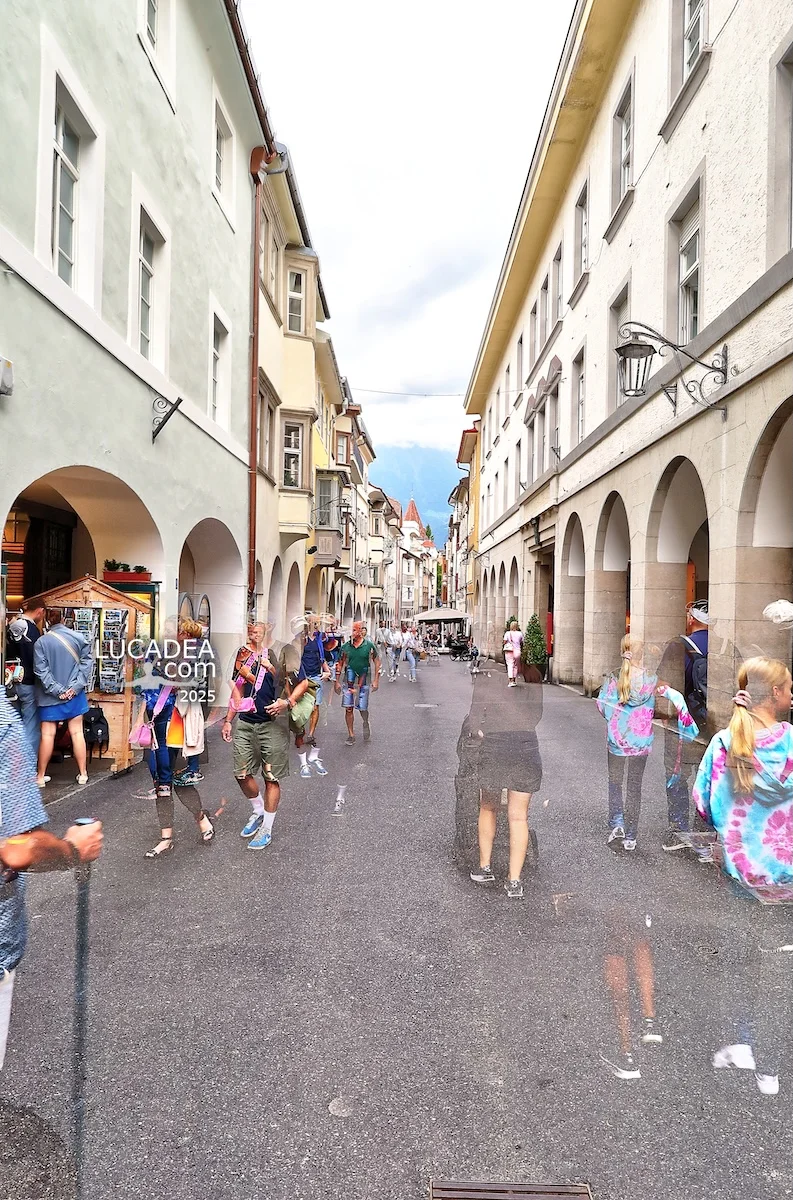
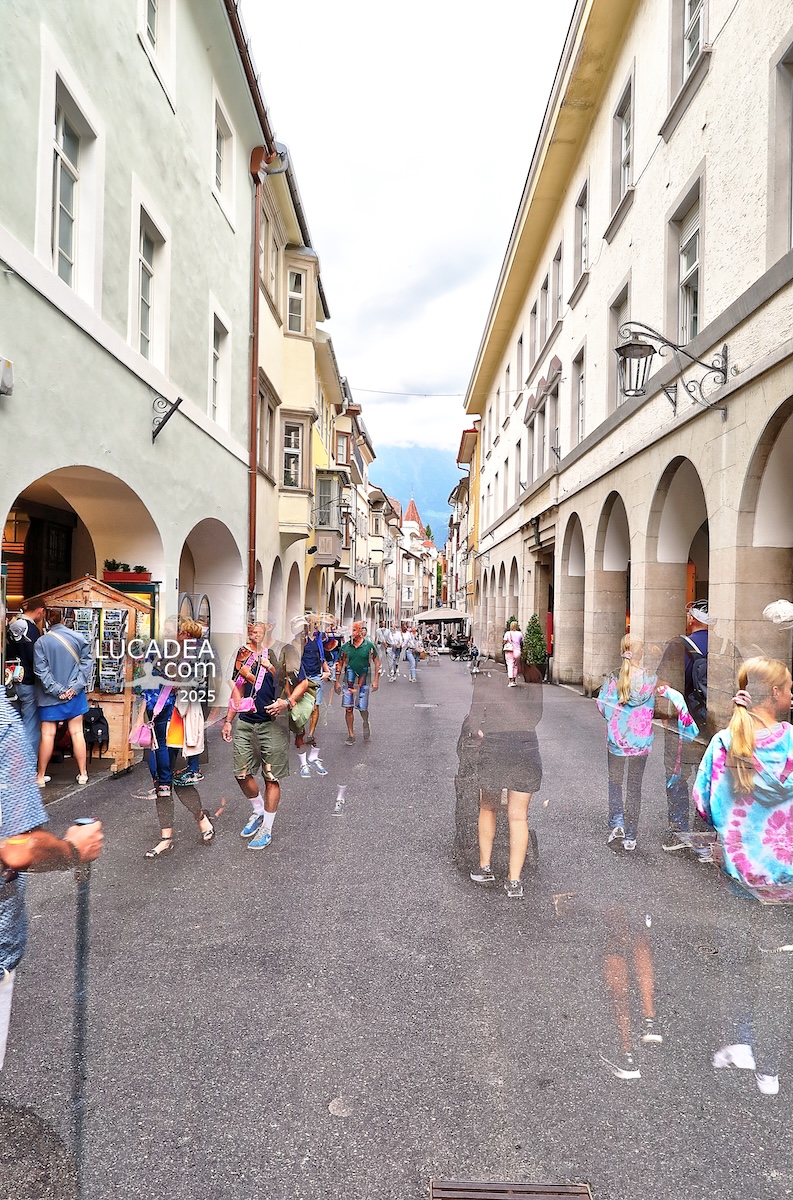
Merano, Portici street among arcades and people

Via Portici a Merano con portici storici, persone in movimento e prospettiva urbana nel centro storico del Trentino-Alto Adige

Merano, Portici street among arcades and people.
Portici street in Merano opens in front of me as a continuous urban corridor where people and architecture merge, and Portici street in Merano immediately defines the rhythm of the scene. Portici street in Merano runs through a sequence of arches, historic façades and constant movement that turns the street into a living structure.
I am in Merano, Italy, where the historic center is shaped by a strong relationship between pedestrian space and architectural rhythm. Portici street is one of the main arteries of the old town, combining commercial life and historical identity in a single continuous flow.
Walking along Portici street, I notice how the arcades create a repetitive pattern that guides both movement and perception. People pass in both directions, some slow down, others continue steadily, but all contribute to the dynamic texture of the street.
Portici street in Merano is also a social and commercial space, where shops and covered walkways define a typical Alpine urban environment. I have already described similar streets in other posts on this site about northern Italian towns, where arcades are not just structures but tools that shape everyday life.
If you are visiting northern Italy, this is one of those streets where architecture directly influences how you move and observe. The repetition of arches and the density of pedestrians create a layered visual experience that changes with every step.
I keep walking and the street subtly transforms, while Portici street in Merano continues to guide the perspective forward through light, shadow and constant human presence.

Have you ever walked through a portico street that seemed to naturally set your pace? Add a comment or go to the bottom of the site to read what other visitors have written.

Via Portici a Merano con portici storici, persone in movimento e prospettiva urbana nel centro storico del Trentino-Alto Adige

Photo taken with Canon EOS RP and Canon RF 24-50 lens.

To see all the photos I took in Merano, click here:

Where is the street located:

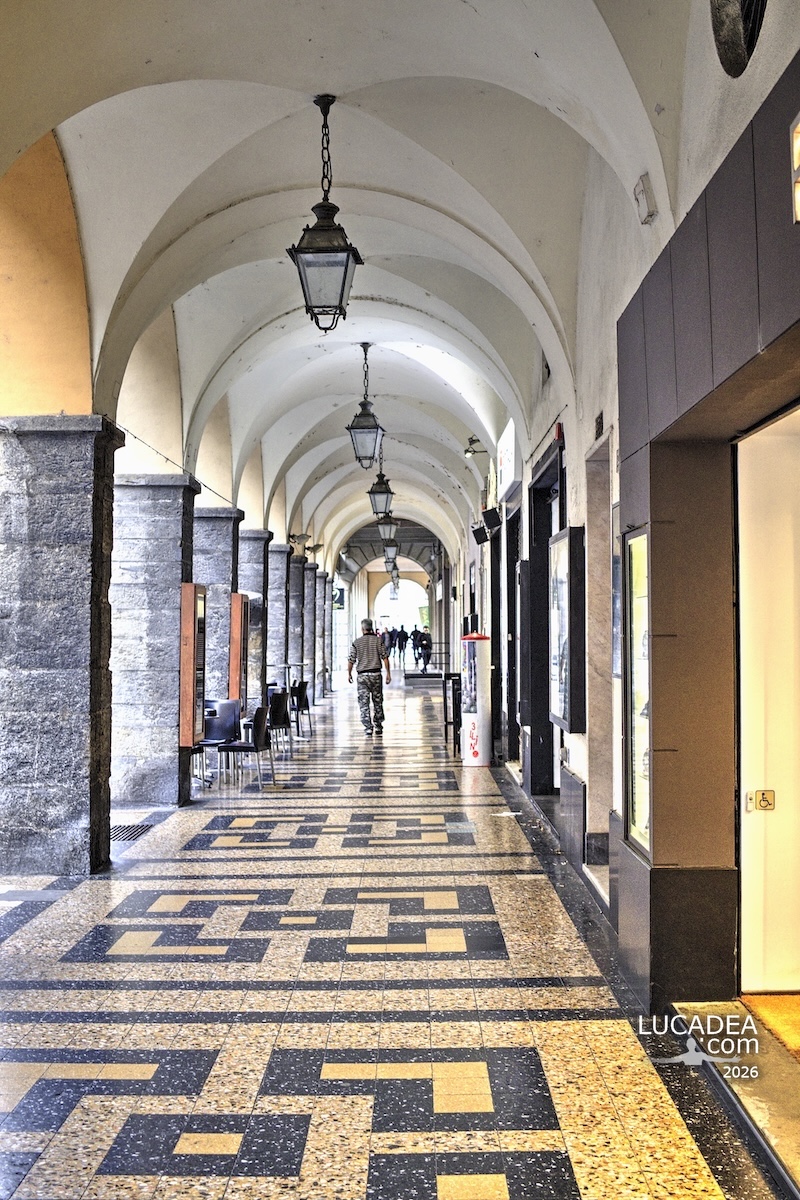
Chiavari, arcades of Garibaldi street

Porticato di Corso Garibaldi a Chiavari con pavimento decorato e arcate storiche nel centro urbano della città ligure

Chiavari, arcades of Garibaldi street.
The arcades of Garibaldi street in Chiavari immediately create a strong visual rhythm, and the arcades of Garibaldi street in Chiavari become the central element of this photograph as I walk through the covered passage. The arcades of Garibaldi street in Chiavari guide the eye forward with a continuous sequence of arches, stone columns, and patterned flooring that naturally shapes the perspective.
I am in Chiavari, Liguria, Italy, where the historic town center is built around these sheltered walkways that define both movement and daily life. The arcade feels almost like an architectural corridor, where sound, light, and space are compressed into a single linear experience.
Historically, arcades in Italian towns like Chiavari were designed not only for protection against weather conditions but also to support social and commercial life. They created a hybrid space between public street and private architecture, a feature that is still clearly readable today in many Ligurian and northern Italian cities.
If you are exploring Liguria, Italy, this is one of those urban elements worth noticing because it represents how architecture can shape behavior and perception at the same time. The repetition of arches becomes almost hypnotic, especially when seen in long perspective like in this stretch of Garibaldi street.
I have already described similar architectural passages in other posts on this site about Chiavari, where the relationship between light and covered walkways often changes the entire mood of a scene.
Walking through the arcades of Garibaldi street in Chiavari feels like moving inside a structured frame, where every step is part of a visual composition already defined by the city itself. The exit toward open light always feels like a sudden change of dimension.

Have you ever noticed how a simple arcade can completely change the way you perceive distance? Add a comment or go to the bottom of the site to read what other visitors have written.

Porticato di Corso Garibaldi a Chiavari con pavimento decorato e arcate storiche nel centro urbano della città ligure

Photo taken with Canon EOS R50 V and lens Canon RF 28.

A Quiet Morning in Sestri Levante’s Old Town

Il carruggio di Sestri Levante quasi vuoto al mattino, tra facciate colorate, pavimentazione in pietra e tavolini all'aperto

A Quiet Morning in Sestri Levante’s Old Town.
This morning I took a walk through the old lane in Sestri Levante and found it almost completely empty. It was a lovely surprise to see such a familiar part of town without the usual crowds. I often pass through here among people browsing the shops, chatting as they walk or sitting at the outdoor tables, but today the street felt wonderfully peaceful. I couldn’t resist taking a photograph while I enjoyed the quiet atmosphere.
The narrow street is one of the characteristic features of the town centre, lined with colourful buildings, shopfronts and cafés that bring the area to life throughout the day. In this picture, the warm pink and terracotta façades stand out against the pale sky, while the shutters, wall lanterns and decorative balconies add character to the buildings. On the right, the restaurant tables are waiting for their first guests, making the scene feel as though the day is only just beginning.
I particularly enjoy seeing places like this early in the morning. Without the usual movement of people, small details become easier to notice: the uneven stone paving underfoot, the shape of the old façades and the way the street draws the eye towards the colourful buildings in the distance. The view feels different from the busy scene that will develop later, when visitors and locals fill the lane again.
Sestri Levante is a seaside town in Liguria, north-western Italy, best known for the Bay of Silence and the Bay of Fables. Yet I think the historic centre has its own special charm, beyond the famous coastal views. Its narrow lanes invite you to slow down, look at the architecture and discover the everyday details that make the town distinctive. The atmosphere changes throughout the day, and even a familiar street can feel completely new when it is nearly empty.
That was what I wanted to capture in this morning’s photograph. I didn’t need a dramatic view or a famous landmark; the simple beauty of the street was enough. The colourful buildings, old stone pavement and quiet outdoor seating came together to create a scene that felt calm and inviting. For me, photography is often about noticing these little moments and preserving them before the bustle returns.

Do you enjoy exploring Sestri Levante’s old town when the streets are still quiet, or do you prefer the lively atmosphere later in the day? Add an comment or go to the bottom of the site to read what other visitors have written.

A nearly empty lane in Sestri Levante in the morning, with colourful façades, stone paving and outdoor restaurant tables

Photo taken with iPhone 17e.

The Portal of Palazzo Lorenzo Cattaneo in Genoa

Il portale di Palazzo Lorenzo Cattaneo nel centro storico di Genova

The Portal of Palazzo Lorenzo Cattaneo in Genoa.
One of the pleasures of wandering through Genoa’s old town is discovering beautiful details when you least expect them. The narrow lanes, known locally as *caruggi*, are full of historic buildings, hidden entrances and architectural features that can easily go unnoticed if you walk through them too quickly.
That is how I came across the portal of Palazzo Lorenzo Cattaneo. Its richly decorated entrance immediately caught my eye, and I stopped to take a photograph. Only afterwards did I learn more about the building and its connection to Genoa’s famous Palazzi dei Rolli, a group of aristocratic residences associated with the city’s important role in European trade and diplomacy.
The palace dates back to the early sixteenth century, and its entrance portal is attributed to the sculptor Antonio della Porta, also known as Tamagnino. The marble decoration makes the doorway particularly striking. In historic Genoa, an entrance like this was much more than a practical way into a building: it was also a statement of prestige, craftsmanship and the standing of the family who owned the residence.
The palace’s history is connected with the Rolli system, established in 1576. Under this arrangement, selected aristocratic residences were designated to accommodate distinguished visitors arriving in Genoa on official business. You can learn more about this tradition through the information on the city’s Palazzi dei Rolli, which help explain how the city’s noble families played a role in welcoming important guests.
I photographed the portal during one of my walks through the old town. I enjoy these unplanned discoveries because they give me a reason to pause and look more closely at places I might otherwise pass without a second thought. Photography often begins with something simple: an interesting shape, a carved detail or the way an old doorway stands out against the surrounding buildings.
A few weeks after taking the picture, I experienced another unexpected connection with this place. I recognised the palace as a setting in an episode of *Blanca*, the Italian television series broadcast by Rai. I later discovered that the interiors shown in the programme were not the actual interiors of the palace, but recognising the exterior on screen was still a pleasant surprise.
Genoa offers countless opportunities for this kind of discovery. Its historic centre rewards anyone willing to explore slowly, look beyond the main streets and pay attention to the details. I often find that the photographs I enjoy most come from these spontaneous moments rather than from visits planned in advance.

Have you ever recognised a place you had photographed while watching a film or television series? Add an comment or go to the bottom of the site to read what other visitors have written.

Photo taken with a Canon EOS M100 camera and Canon EF-S 10-18 lens.

Chiavari’s Old Town Buildings

I palazzi del carrugio di Chiavari

Chiavari’s Old Town Buildings.
One of the things I enjoy photographing in historic Ligurian towns is the architecture of their narrow streets, where ordinary buildings can reveal unexpected beauty. In this photograph from Chiavari, in Liguria, Italy, what catches my attention is the contrast between two adjoining buildings and the way they share a central stone column supporting the arches of the covered walkway.
The building on the left has a warm pink façade, pale decorative mouldings and green shutters. Its carefully framed windows and ornamental details give it an elegant appearance. The neighbouring building looks quite different, with weathered plaster, faded colours and patches that reveal the effects of time. Together, the two façades create an interesting visual contrast: one looks carefully maintained, while the other displays the character of an older surface that has been exposed to the elements for years.
I particularly like the open windows and tilted shutters, which offer little glimpses into the interiors. These details make the buildings feel lived in rather than simply architectural subjects. At street level, the arches shelter shopfronts and create a covered passage for pedestrians. The stone columns, dark paving and warm shop lights add further depth to the scene.
Chiavari’s historic centre is a wonderful place to explore on foot. Its traditional narrow lanes, known locally as *carruggi*, invite visitors to look upwards and notice details that might otherwise be missed. A decorative window frame, an old doorway or the shape of an arch can be just as interesting as a famous landmark. For me, these everyday architectural features are an essential part of a town’s identity.
In this picture, I wanted to emphasise the relationship between the two buildings and the central column that seems to divide the composition into two distinct halves. Despite their different colours and condition, the façades belong to the same streetscape, connected by the continuous arcade below. That shared architectural feature gives the image its balance and makes the contrast even more striking.
I often find that photographing historic streets is about slowing down and noticing how buildings relate to one another. A simple walk through an old town can reveal plenty of subjects when you take the time to look carefully.

When you explore a historic town, do you tend to look at the famous landmarks first, or do small architectural details like these catch your eye? Add an comment or go to the bottom of the site to read what other visitors have written.

Two adjoining historic buildings in Chiavari, Italy, with green shutters, contrasting façades and a shared arched stone arcade

Photo taken with a Canon EOS M100 camera and Canon EF-M 11-22 lens.

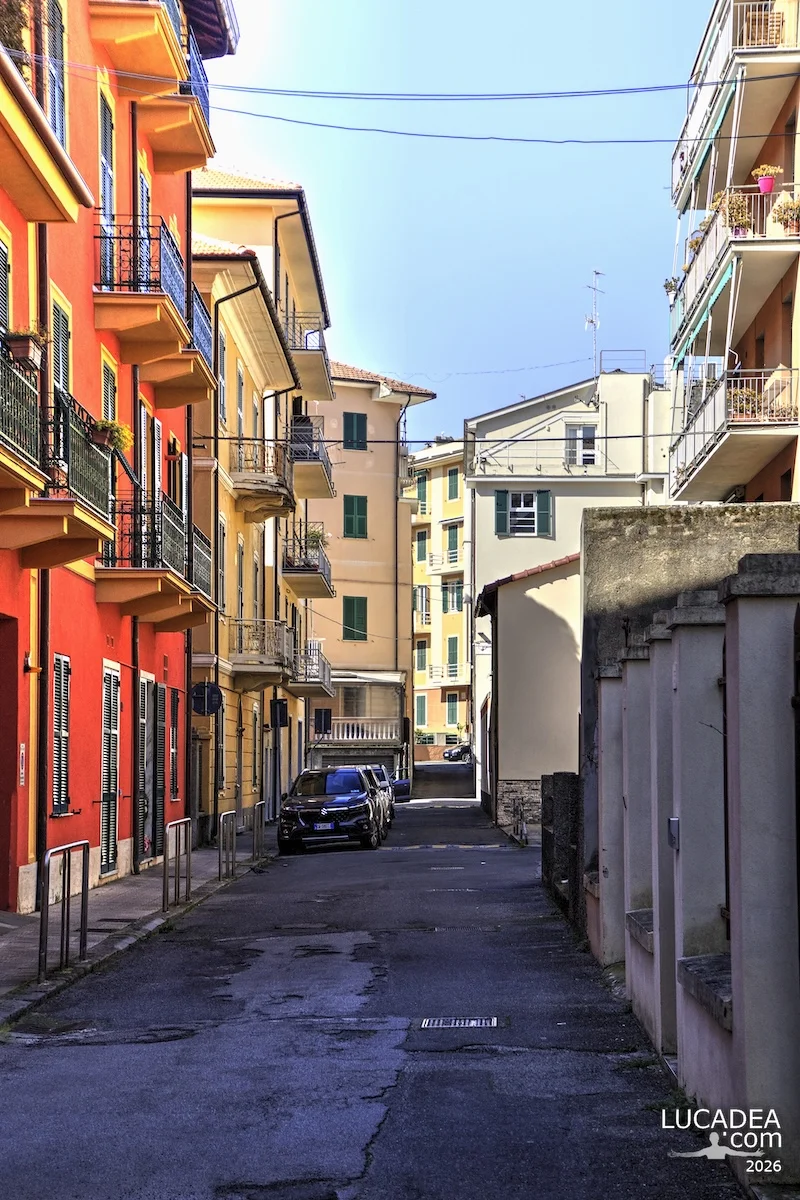
A quiet corner of Via Olive Stanghe in Sestri

Scorcio di via Olive Stanghe a Sestri Levante con strada stretta del centro storico ligure tra muri e prospettive urbane

A quiet corner of Via Olive Stanghe in Sestri.
A glimpse of Via Olive Stanghe in Sestri Levante appears in front of me as a narrow and understated passage, where the rhythm of the town slows down and becomes more intimate. A glimpse of Via Olive Stanghe in Sestri Levante, Liguria, Italy, feels like one of those small urban moments that do not demand attention but gently hold it.
As I walk through Via Olive Stanghe in Sestri Levante, I notice how the street changes from the more open and familiar areas of the town into something more enclosed and personal. The light behaves differently here, bouncing softly off the walls and creating a quiet visual rhythm.
In Sestri Levante, Liguria, northern Italy, this kind of side street reveals another layer of the town, far from the postcard views of the coastline. It is in places like this that the real texture of daily life becomes visible, built from small architectural details and narrow perspectives.
One interesting aspect of these historic streets is that many of them still follow ancient pedestrian routes that once connected different parts of the village before modern expansion reshaped the area.
As I look at this scene, I am reminded of other contrasts I have photographed on the site, such as the open brightness of Baia del Silenzio, where everything expands toward the sea. Here in Via Olive Stanghe, everything contracts inward, creating a very different emotional tone.

This small view of Via Olive Stanghe in Sestri Levante becomes a reminder that not all meaningful places are grand or famous; sometimes they are simply quiet transitions between more visible spaces. Have you ever found a street that felt more honest than the main squares around it? Add a comment or go to the bottom of the site to read what other visitors have written.

Scorcio di via Olive Stanghe a Sestri Levante con strada stretta del centro storico ligure tra muri e prospettive urbane

Photo taken with Canon EOS R50 V and lens Tamron 16-300.

Where is the street:

A quiet glimpse of Via Olive Stanghe in Sestri Levante – Un angolo quieto di via Olive Stanghe a Sestri Levante – Un rincón de Via Olive Stanghe en Sestri Levante – Um recanto de Via Olive Stanghe em Sestri Levante – Eine ruhige Ecke der Via Olive Stanghe in Sestri Levante – Một góc yên tĩnh của Via Olive Stanghe ở Sestri Levante – 锡斯特里莱万特奥利韦街的安静一角 – セストリ・レヴァンテのヴィア・オリーヴェ・スタンゲの静かな一角

The text of this post was written with the help of ChatGPT, a language model from OpenAI.

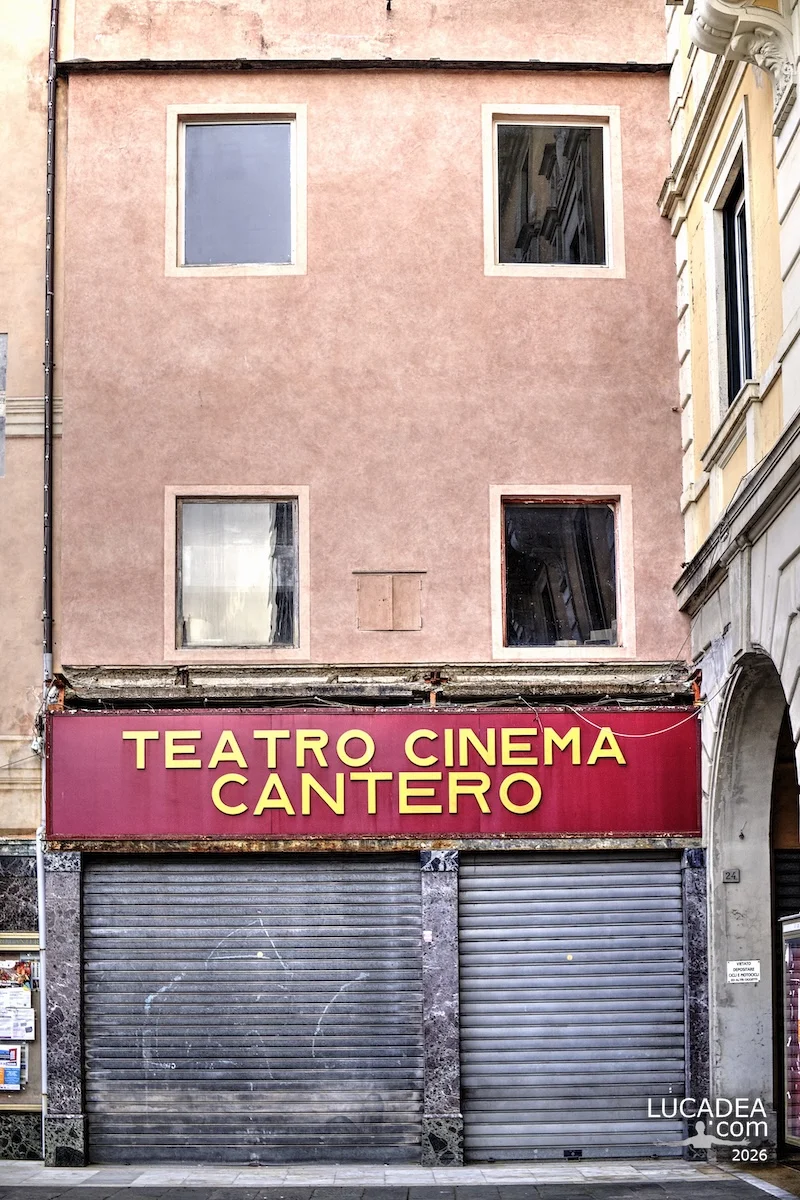
The closed entrance of Cantero Cinema Theatre in Chiavari

Ingresso del Teatro Cinema Cantero a Chiavari con serranda chiusa, edificio storico del centro cittadino in attesa di riapertura

The closed entrance of Cantero Cinema Theatre in Chiavari.
Standing in front of the entrance of the Cantero Cinema Theatre in Chiavari, I immediately notice the closed shutter, a metal surface that dulls the reflections of the street and transforms the façade into something quiet and paused. The entrance of the Cantero Cinema Theatre in Chiavari, Liguria, Italy, feels like a threshold between what the building once was and what it is waiting to become.
I remain in front of it for a while, observing how even in closure the structure still communicates its identity. The entrance of the Cantero Cinema Theatre in Chiavari does not feel abandoned; instead, it feels temporarily suspended, as if the story of the building is unfolding in a different phase.
From what is known, the theatre has been closed for several years, and there have been ongoing discussions and projects regarding renovation and reopening. The Cantero has long been one of the most important cultural landmarks in the Tigullio area, originally opened in the early 20th century and used for both cinema and theatre performances across decades.
One interesting aspect is that this building is considered one of the most significant historic cinema-theatres in Liguria, representing a rare architectural example of a space designed for both cinematic and theatrical experiences, adapted over time without losing its original identity.
As I stand there, I recall other coastal scenes I have photographed, like the elegant seafront houses in Rapallo, where life flows continuously without interruption. Here in Chiavari, everything feels paused instead.

The entrance of the Cantero Cinema Theatre in Chiavari becomes a symbol of transition, caught between memory and expectation, and that suspended state gives the image its quiet strength. Have you ever looked at a closed building and imagined the life still inside it?Add a comment or go to the bottom of the site to read what other visitors have written.

Ingresso del Teatro Cinema Cantero a Chiavari con serranda chiusa, edificio storico del centro cittadino in attesa di riapertura

Photo taken with Canon EOS R50 V and lens Canon RF 28.

The Fascie Rossi tower in Sestri Levante

La torre Fascie Rossi a Sestri Levante nel centro urbano ligure, elemento architettonico storico tra edifici cittadini.

The Fascie Rossi Tower in Sestri Levante.
Walking through the center of Sestri Levante, I notice how the Fascie Rossi Tower quietly defines the skyline in a way that feels both subtle and persistent. The Fascie Rossi Tower in Sestri Levante, Liguria, Italy, is not overwhelming, yet it holds a strong visual presence among the surrounding buildings.
As I move closer, the Fascie Rossi Tower in Sestri Levante becomes a reference point that changes slightly with every angle, as if the town itself reshapes it through perspective. I am not following a guide or a plan, just observing how architecture and daily life overlap in this coastal town.
If you are walking through Sestri Levante in Liguria, northern Italy, you might first think of its beaches, but the inland streets reveal a quieter architectural rhythm. This contrast is one of the most interesting aspects of Sestri Levante, where sea and city coexist without separation.
There is a clear connection here with other moments I have described on the site, especially those from Baia del Silenzio, where nature dominates the frame completely. Here instead, the Fascie Rossi Tower introduces structure and verticality into the scene, giving balance to the urban environment.
Locals often point out that Palazzo Fascie Rossi has maintained its identity over time, even as its function evolved, and the tower remains its most recognizable element.

The Fascie Rossi Tower in Sestri Levante stays with me even after I leave the street, almost like a mental landmark rather than just a physical one. What details would stay with you after a slow walk through this town? Add a comment or go to the bottom of the site to read what other visitors have written.

La torre Fascie Rossi a Sestri Levante nel centro urbano ligure, elemento architettonico storico tra edifici cittadini.

Photo taken with Canon EOS RP and lens Canon RF 28.

The Fascie Rossi Tower in Sestri Levante – La torre di Fascie Rossi a Sestri Levante – La Torre Fascie Rossi en Sestri Levante – A Torre Fascie Rossi em Sestri Levante – Der Fascie-Rossi-Turm in Sestri Levante – Tháp Fascie Rossi ở Sestri Levante – 锡斯特里莱万特的法西·罗西塔楼 – セストリ・レヴァンテのファッシェ・ロッシの塔

The text of this post was written with the help of ChatGPT, a language model from OpenAI.

🏠
  • Italiano