Green Ivy Growing on a Wall

Edera verde su muro

Green Ivy Growing on a Wall.
Green ivy growing on a wall is a simple subject, yet it can catch your attention when you take a moment to look closely. This photograph captures just that: a climbing plant spreading across a wall, with its green leaves adding colour and life to an otherwise understated scene.
Some time ago, I published another post featuring ivy growing on a wall. This time, however, the plant also has green leaves, giving the image a different appearance and offering another way to look at such a familiar subject. A slight change in colour, the arrangement of the leaves or the way the light falls can be enough to turn something ordinary into a detail worth photographing again.
Ivy is an evergreen climbing plant, known for its ability to spread across different surfaces and grow in places where other plants may struggle to find space. Its leaves, often recognisable by their lobed shape, can create interesting patterns as they spread along a wall. The green stands out against the surface beneath it, creating a contrast that changes according to the material, the light and the surrounding conditions.
That contrast is what caught my attention. You do not need a spectacular landscape or a rare subject to find something worth photographing. Sometimes, all it takes is looking up during a walk and noticing a shape, a texture or a colour that would normally go unnoticed. A wall covered in ivy can become a small exercise in observation, an opportunity to focus on the details rather than the bigger picture.
I also like the way a plant can change the appearance of a surface made by people. The wall remains there, with its own texture and imperfections, while the leaves introduce a natural element that makes the scene feel less uniform. The result is a simple image that does not need extra elements or an elaborate composition to be interesting.
This photograph is closely related to my earlier post about ivy on a wall, but it is not simply a repeat of the same subject. The green leaves add another detail and make it worthwhile to return to a familiar theme with a slightly different perspective. On Lucadea.com, I often share pictures of small details I notice while walking around, because even the most ordinary things can provide photographic inspiration when we take the time to observe them.

Do you ever stop to photograph small details in nature, such as ivy leaves growing along a wall? Add a comment or go to the bottom of the site to read what other visitors have written.

Green ivy leaves growing across a wall, creating a natural contrast between the climbing plant and the masonry surface

Add one  comment to this article or read  here what other visitors have written.
 
Adv
 
Disclamer

The rights on images, videos, choruses, text and all other material on the LUCADEA.com website are governed as per  Copyright page.

This page has been viewed 0 times today.
This month it has been viewed 0 times.
In total it has been viewed 0 times.
 

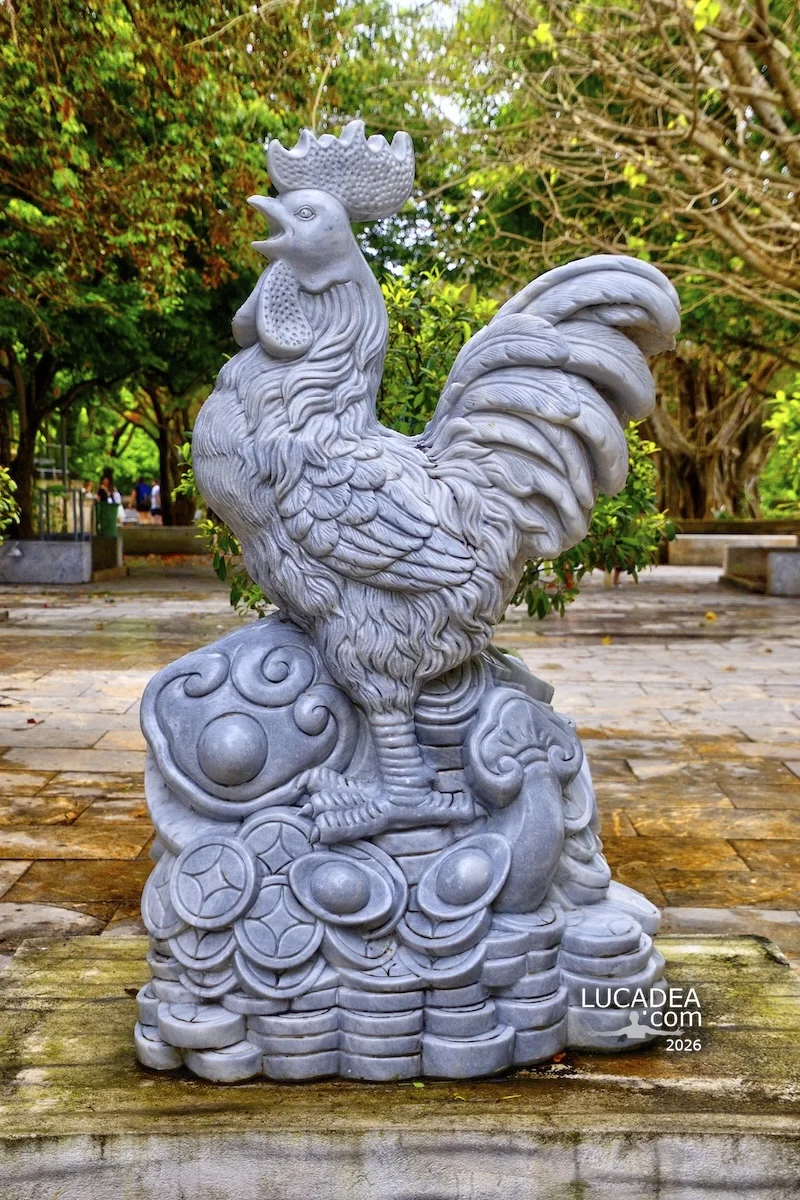
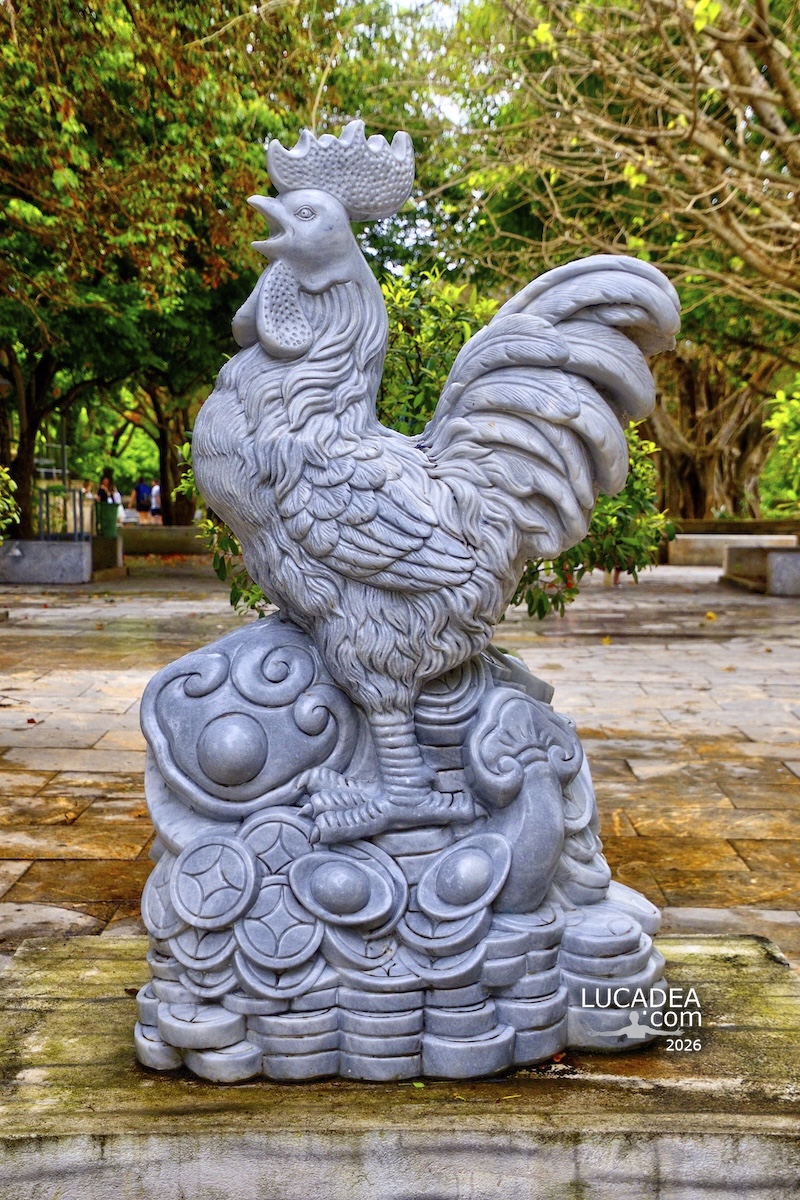
Da Nang, stone rooster at Linh Ung Pagoda

Statua del gallo a Linh Ung Pagoda a Da Nang in Vietnam con base decorata e contesto naturale del tempio buddhista

Da Nang, stone rooster at Linh Ung Pagoda.
The stone rooster at Linh Ung Pagoda Da Nang immediately stands out as a quiet but powerful detail within the temple complex, and the stone rooster at Linh Ung Pagoda Da Nang feels like one of those small elements that carries symbolic weight beyond its size. The stone rooster at Linh Ung Pagoda Da Nang sits on an ornate base, surrounded by greenery and the calm atmosphere of the sacred site.
I am in Da Nang, Vietnam, inside the Linh Ung Pagoda area, a place where religious architecture blends naturally with landscape and open space. The stone rooster at Linh Ung Pagoda Da Nang appears almost unexpectedly among the larger structures, yet it contributes to the visual and symbolic rhythm of the temple.
In Vietnamese and broader Asian tradition, the rooster is often associated with vigilance, protection, and the transition between darkness and light. This makes its presence in a spiritual context particularly meaningful, even when it is not the central monument of the site.
If you are visiting Da Nang, Vietnam, Linh Ung Pagoda is widely known for its monumental statues and panoramic views over the coastline, but details like this stone rooster reveal a more intimate layer of the place, where craftsmanship and symbolism coexist in quieter forms.
I have already mentioned similar observations in other travel stories on this site about Southeast Asian temples, where small sculptural elements often carry as much meaning as the main structures.
Standing here for a moment, I watch how the stone rooster at Linh Ung Pagoda Da Nang interacts with the surrounding space, not by dominating it, but by completing it in a subtle way. It makes me think about how many visitors might pass without noticing it at all.

Have you ever discovered a place’s meaning through a single small detail rather than its main landmark? Add a comment or go to the bottom of the site to read what other visitors have written.

Statua del gallo a Linh Ung Pagoda a Da Nang in Vietnam con base decorata e contesto naturale del tempio buddhista

Photo taken with Canon EOS R50 V and Tamron 16-300 lens.

To see all the photos I took in the pagoda, click here:
foto gallery

Where is the pagoda located:

Add one  comment to this article or read  here what other visitors have written.
 
Adv
 
Disclamer

The rights on images, videos, choruses, text and all other material on the LUCADEA.com website are governed as per  Copyright page.

This page has been viewed 1 times today.
This month it has been viewed 1 times.
In total it has been viewed 2 times.
 

Bicolor Angel geranium in a local nursery

Geranio Angel bicolore in vivaio con piccoli fiori dai colori contrastanti tra bianco e viola su pianta ornamentale

Bicolor Angel geranium in a local nursery.
Walking through a small nursery near my home, the bicolor Angel geranium immediately draws my attention with its delicate yet vivid flowers. The bicolor Angel geranium stands out among rows of plants, and in this quiet corner of a local nursery, it becomes the perfect subject to pause and observe. The Pelargonium ‘Angel Eyes Bicolour’ feels both simple and surprisingly expressive at the same time.
I lean in a little closer, noticing how the bicolor Angel geranium combines soft tones with deeper shades, creating a natural contrast that feels almost designed. In a place like this, surrounded by everyday greenery, the bicolor Angel geranium becomes a reminder of how even common plants can offer something visually striking if you take the time to look carefully.
If you are looking for flowers to brighten a balcony or a small outdoor space, the bicolor Angel geranium is often considered a great choice, thanks to its compact size and abundant blooms. It’s one of those plants that manages to be both decorative and easy to integrate into daily life, making it popular among gardening enthusiasts.
This moment also reminds me of other floral photos I’ve shared on lucadea.com, where different environments change the way flowers are perceived. Here, in a simple nursery setting, everything feels closer and more intimate, and the bicolor Angel geranium fits perfectly into that atmosphere.
A small interesting fact: Angel geraniums are a hybrid variety of pelargoniums, appreciated for their smaller but more numerous flowers, which give them a lighter and more dynamic appearance compared to traditional geraniums.

I stay there for a few more moments, observing the plant and imagining it in a different setting. Would you stop to notice a flower like this in such an ordinary place? Add a comment or go to the bottom of the site to read what other visitors have written.

Geranio Angel bicolore in vivaio con piccoli fiori dai colori contrastanti tra bianco e viola su pianta ornamentale

Photo taken with Canon EOS RP camera and Canon RF 50 lens.

The nursery I visited was: Vivai Gaggero in Carasco.

Bicolor Angel geranium in a nursery near home – Géranium Angel bicolore dans une pépinière près de chez moi – Geranio Angel bicolor en un vivero cerca de casa – Gerânio Angel bicolor em um viveiro perto de casa – Zweifarbige Angel-Geranie in einer Gärtnerei in der Nähe von zu Hause – Hoa phong lữ Angel hai màu trong vườn ươm gần nhà – 附近苗圃中的双色天使天竺葵 – 近所の園芸店で見たバイカラーのエンジェルゼラニウム

The text of this post was written with the help of ChatGPT, a language model from OpenAI.

Frigate Bay, a dream beach that stays with you

Spiaggia da sogno a Frigate Bay a Basseterre con sabbia chiara e mare caraibico in Saint Kitts e Nevis atmosfera naturale

Frigate Bay, a dream beach that stays with you.
The sand of Frigate Bay moves softly under my steps, and this dream beach in Frigate Bay immediately creates a feeling that is hard to place but easy to remember. I walk slowly, letting this dream beach in Frigate Bay unfold without expectation, just presence, just the steady rhythm of water and shore.
In Basseterre, Saint George Basseterre Parish, Saint Kitts and Nevis, the coastline feels layered, as if the island itself is divided into different emotional tones. Frigate Bay is one of those places where the idea of a dream beach is not about perfection, but about contrast and movement. This dream beach in Frigate Bay shifts constantly between calm and energy, and that balance is what makes it stay in memory.
If you are visiting Saint Kitts and Nevis and wondering what to see near Basseterre, this stretch of coast often appears in travel searches, but being here is different from reading about it. The sound of the sea replaces any explanation, and the landscape becomes something you interpret rather than simply observe. I recall a similar feeling from another post on the blog about Caribbean shores, where every coastline seemed to hold its own identity.
A small detail often mentioned by locals is that Frigate Bay has two distinct sides, one more sheltered and one facing the open Atlantic Ocean, creating completely different moods within a short walking distance.

And as I stand here, I keep thinking: can a single beach really hold two completely different worlds at once? Add a comment or go to the bottom of the site to read what other visitors have written.

Photos taken with Gopro Hero 10 black.

Here’s where the beach is:

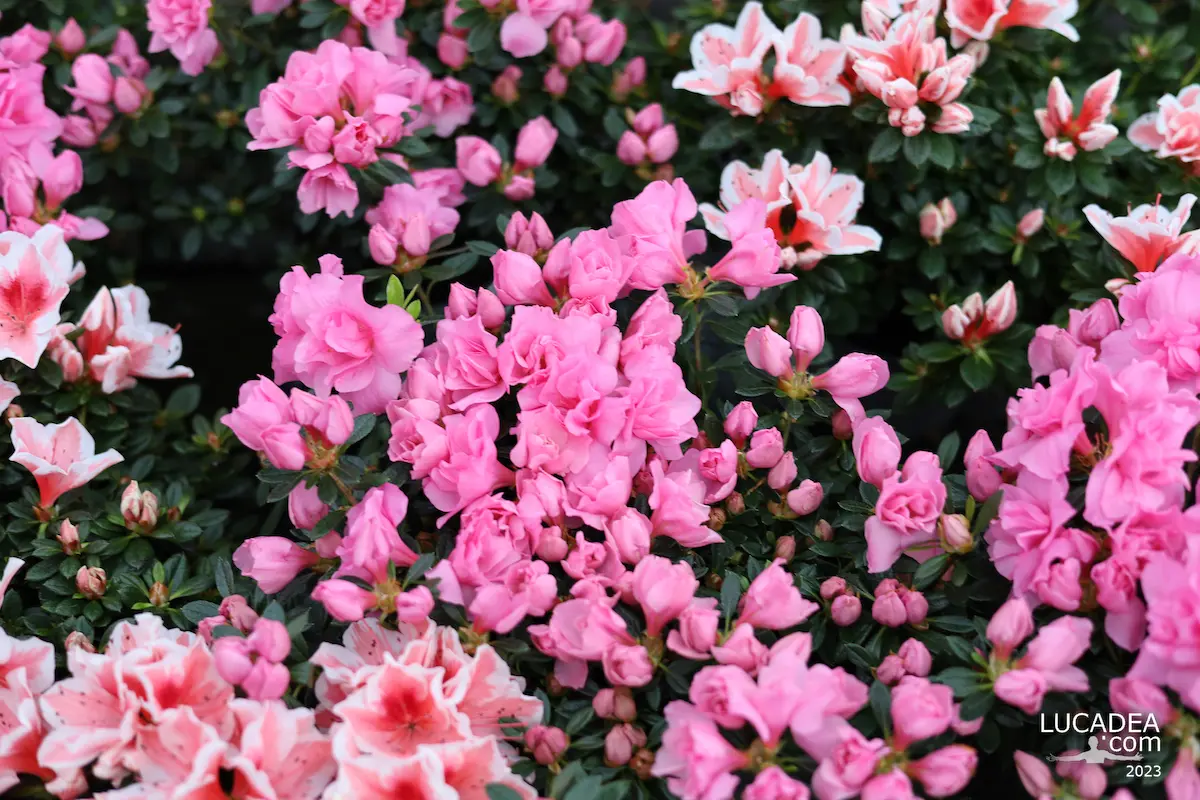
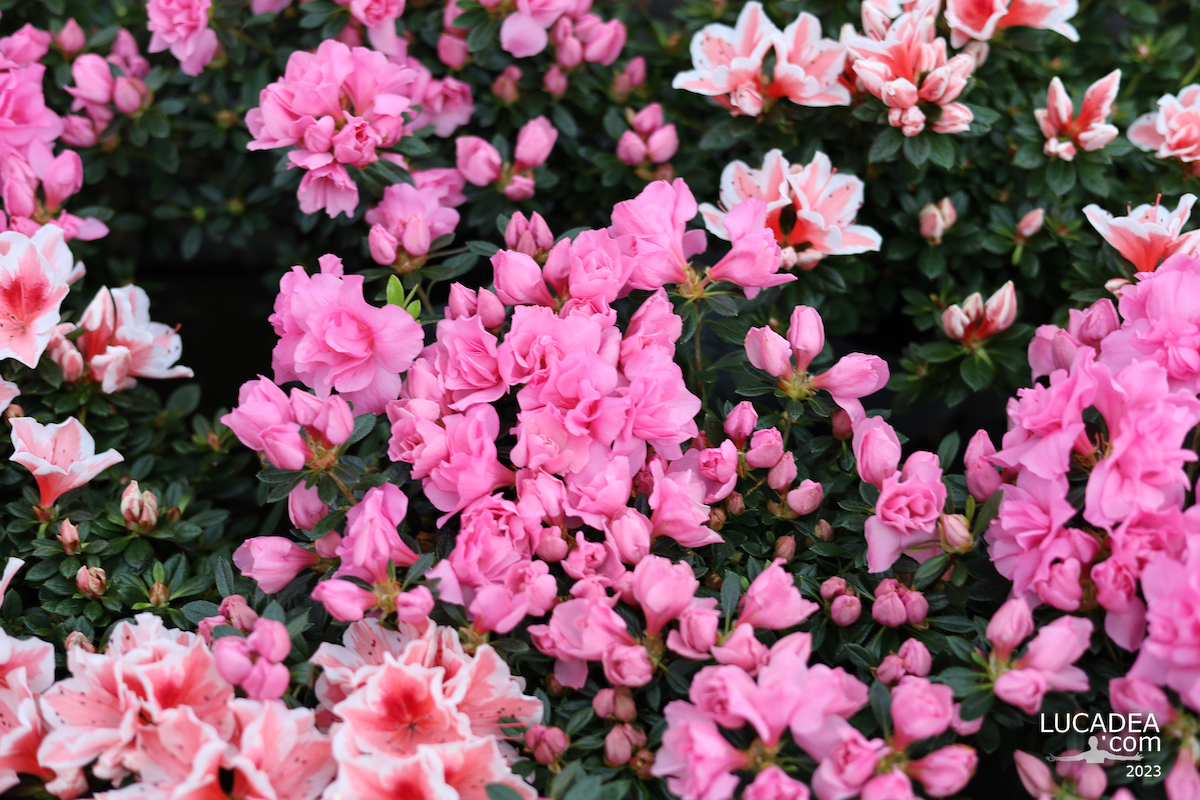
The many pink flowers of an azalea

Tanti fiori rosa di un’azalea in piena fioritura, fotografati da vicino per mostrare petali e diverse tonalità

The many pink flowers of an azalea.
Standing in front of a plant covered with so many pink flowers, it is difficult not to stop and look, especially when the bloom completely changes the appearance of the azalea. That is the detail I wanted to photograph: a dense group of small flowers, with different shades of pink filling almost the entire frame.
Azaleas are widely known and appreciated as ornamental plants because of their spectacular blooms, but for me photographing one means looking beyond a simple botanical description. Here, I was especially interested in the repetition of the flowers, the way they build a large mass of color and make it difficult at first to distinguish every individual shape.
I took this photograph by looking closely at the plant and trying to keep the surrounding environment from distracting from the flowers themselves. When I photograph a natural subject like this, I often try to remove mentally everything that is not necessary and let shapes, petals and colors build the image.
Pink azaleas can have many different shades. Some varieties produce very pale and delicate flowers, while others have much stronger and more vivid colors. This variety is one reason azaleas are so widely used in gardens and green spaces: when they bloom, they can create an impressive area of color even without being particularly large plants.
Looking at a photograph like this, the first thing that probably catches the eye is the color. Then the individual flowers begin to emerge. The petals are not perfectly arranged, and every corolla has slightly different shapes and positions. That small irregularity is what keeps the mass of flowers from looking artificial.
There is also a small botanical curiosity behind the familiar name azalea. The term is commonly used for several plants belonging to the genus Rhododendron. In modern botanical classification, azaleas are therefore not considered a completely separate genus, even though their common name might suggest otherwise. I find this interesting because it shows how a very familiar garden plant can have a more complex botanical background.
When the flowering season arrives, an azalea naturally becomes an appealing photographic subject. You do not necessarily need to search for an unusual composition. Simply moving closer can reveal how the flowers interact with one another. A wider view emphasizes the abundance of the bloom, while a closer photograph can isolate smaller groups of flowers and reveal the details of the petals.
For this image, I preferred to concentrate on the overall effect. The many pink flowers almost merge together, creating a continuous surface in which the eye can then search for individual details. I like this kind of photograph because it does not focus on a single flower; instead, it captures the visual effect created by the entire bloom.
Azaleas are not completely undemanding plants, either. They generally prefer acidic soil and conditions that protect them from excessive heat and strong sunlight during the hottest part of the day, although exact requirements vary according to the variety and climate. These details help explain why some plants produce particularly abundant blooms in certain environments.
For me, however, the azalea remains primarily a photographic subject. Nature constantly offers simple details that can become interesting images when observed carefully. After photographing other plants, flowers and small elements of vegetation, this azalea gave me another opportunity to stop in front of something familiar and try to tell its story through my camera.
I also like the fact that a flower photograph has a completely different rhythm from the urban images I often publish on the blog. After streets, squares, buildings and landscapes, focusing for a while on a flowering plant means changing scale entirely and looking at the world from much closer.
In that sense, the many pink flowers of an azalea are a simple subject, but certainly not a boring one. Their visual strength comes from the abundance of flowers, the different shades and the variety of shapes that make up the same plant.

Do you prefer photographing a single flower or a rich bloom like this one? Add a comment or go to the bottom of the site to read what other visitors have written.

Many pink azalea flowers in full bloom, photographed close up to show their petals and subtle color variations

Photo taken with a Canon EOS RP camera and a Canon RF 50 lens.

The nursery I visited is: Vivai Gaggero in Carasco.

Klein Bonaire, a Caribbean beach escape

Spiaggia di Klein Bonaire nei Caraibi, con sabbia chiara, mare turchese e coralli vicino all'isola di Bonaire

Klein Bonaire, a Caribbean beach escape.
Just a short distance from Bonaire in the Caribbean, I found myself looking at a stretch of sand and sea that felt remarkably far removed from everything else. Klein Bonaire is one of those places where the simplicity of the landscape is exactly what makes it so memorable.
A couple of days ago I was lucky enough to spend a few hours on this small island, and naturally I had my camera with me. I took this photograph during that short stay, trying to capture the scene as I experienced it rather than adding anything to it. There was very little to distract the eye: the beach, the water, the coral and the open space surrounding us.
Klein Bonaire lies just off Bonaire, in the Caribbean Netherlands. The distance from the main island is small, but arriving on the beach creates a very different feeling. There are no urban streets, houses or busy surroundings to compete with the landscape. The simplicity of the place becomes its main feature.
If you are wondering what to see around Bonaire, Klein Bonaire is one of those places that naturally stands out because of its untouched character. There is no particular building or monument that needs to be found here. The attraction is the environment itself, especially the beach and the marine world surrounding the island.
What I liked most while taking this photograph was precisely how little there was to arrange. The scene was already there in front of me. I only had to pay attention and choose the moment to press the shutter. The photograph is therefore a simple record of a few hours spent on the island, but looking at it again brings back the feeling of being surrounded by sea and sand.
Klein Bonaire is closely connected to the marine environment of Bonaire, which is well known for its coral reefs and underwater ecosystems. One detail I find particularly interesting is that Klein Bonaire is uninhabited. That absence of permanent settlement helps preserve the island’s natural character and creates a strong contrast with the more developed parts of Bonaire.
During those few hours, I did not feel the need to search for something more complicated to photograph. The beach itself was enough. Walking along the sand, looking at the water and noticing the coral made the experience feel complete without requiring any particular itinerary.
That is one of the reasons I enjoy photography while travelling. Not every photograph needs a complicated story behind it. Sometimes an image simply preserves the memory of a place where you spent a pleasant few hours. In this case, looking at the photograph brings back that brief experience of being on Klein Bonaire and the feeling of being somewhere completely different from the main island.
The proximity to Bonaire makes the contrast even more interesting. Geographically, Klein Bonaire is very close, yet once you are standing on the beach it can feel surprisingly distant from everyday life. It is a good reminder that a short journey does not necessarily mean a small change of atmosphere.
The photograph also works for me because there is nothing artificial about the scene. I did not need to add anything exotic to make it look Caribbean. The clear water, pale sand and coral were already enough to communicate the character of the place.
It is easy to understand why Klein Bonaire is often associated with the idea of a Caribbean paradise. I do not normally like using words such as “paradise” too casually when describing places, but after spending those hours there, I can understand why the expression comes to mind.
For me, the most valuable part of the photograph is that it records a real moment. I was there, I had only a limited amount of time, and I wanted to bring back something that would preserve the memory. The resulting image is not an attempt to describe everything about Klein Bonaire. It is simply my view of the island during those few hours.
This photograph also connects naturally with some of the other travel stories on my blog, where I have photographed beaches, islands and coastal landscapes very different from the streets, squares and historic buildings I often encounter in Italy. I like moving between these subjects because each environment changes the way I look through the camera.
The stay was short, but perhaps that is part of what makes the memory so clear. A few hours were enough to see why this small island is so appealing. Klein Bonaire does not need much explanation: the beach, coral and Caribbean sea already provide the entire setting.

Have you ever visited Klein Bonaire, or another small Caribbean island that left a similar impression? Add a comment or go to the bottom of the site to read what other visitors have written.

Klein Bonaire beach in the Caribbean, with pale sand, turquoise water and coral near Bonaire island

Klein Bonaire beach in the Caribbean, with pale sand, turquoise water and coral near Bonaire island

Photos taken with the GoPro Hero 10 Black.

And here is a nice video of the beach:

Video recorded with Gopro Hero 10 Black.

A Swallow Nest in the Caruggio of Sestri Levante

Un nido di rondini nel caruggio di Sestri Levante

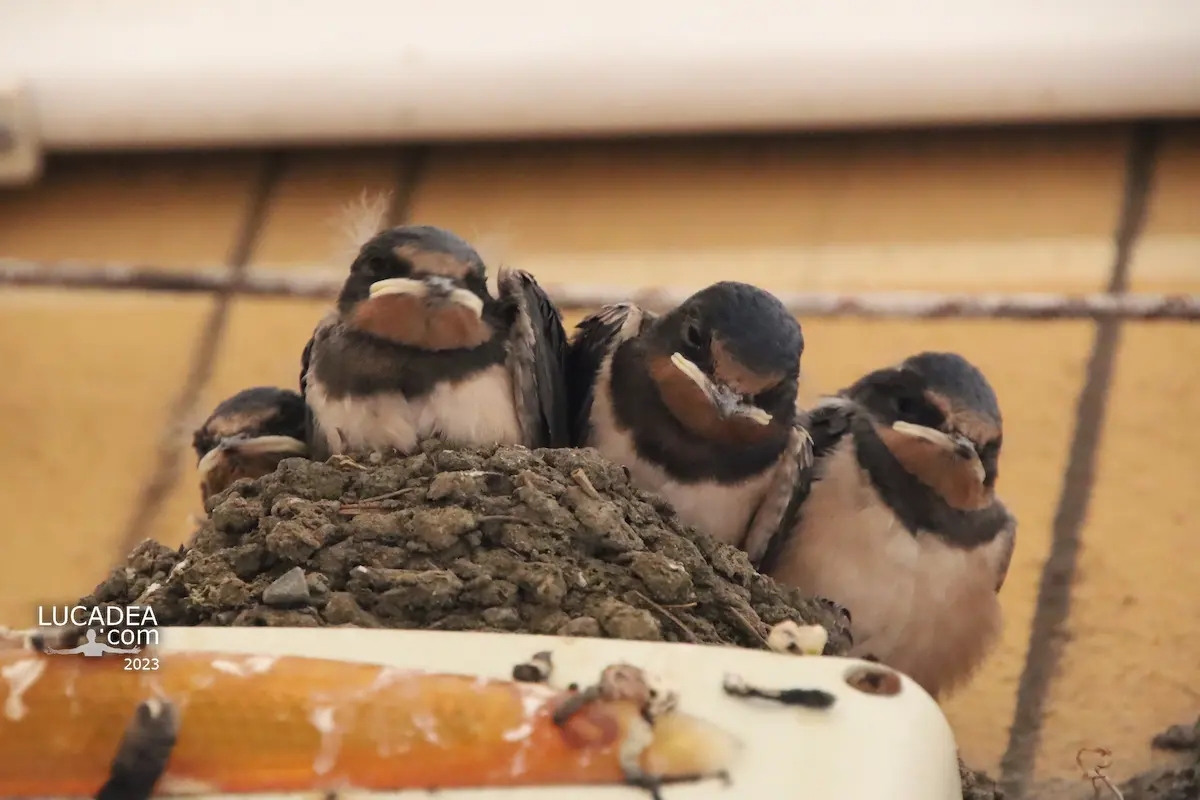
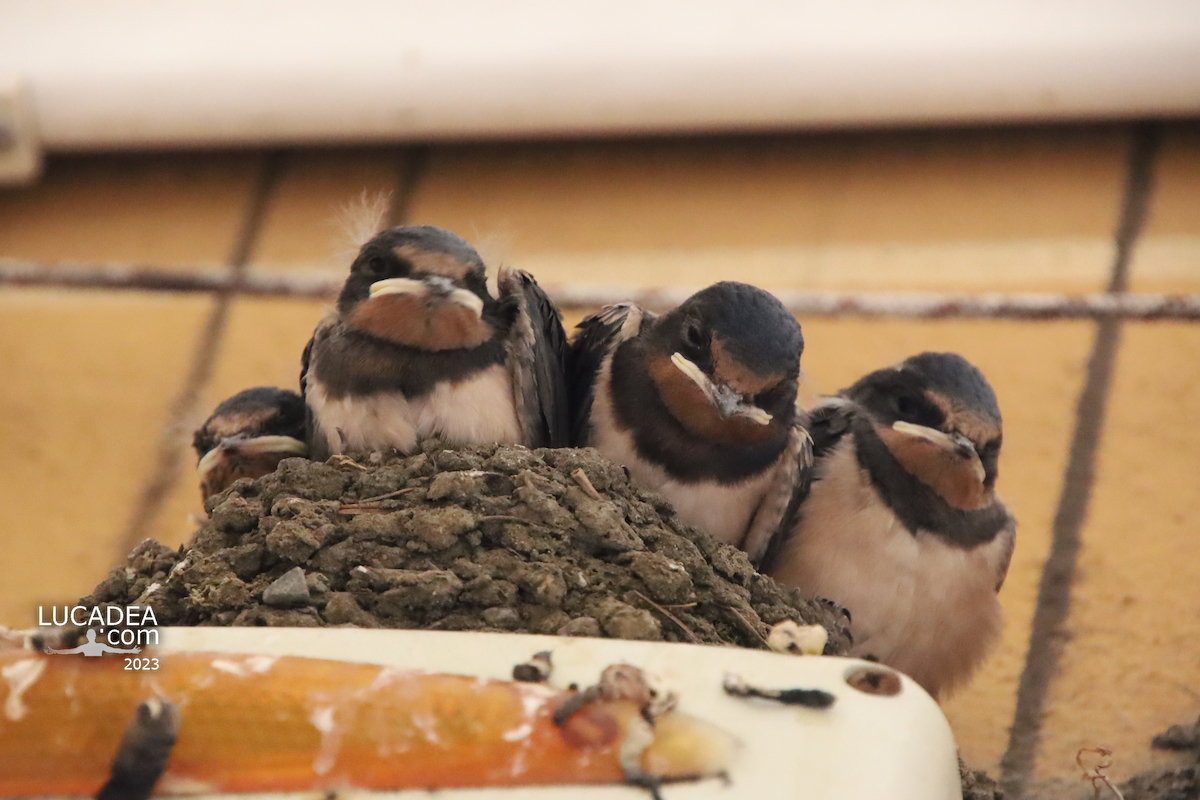
A swallow nest in the caruggio of Sestri Levante.
In spring and autumn, the caruggio of Sestri Levante is home every year to dozens of swallows that build their nests under balconies or beneath the awnings of the local shops.
It is one of those small natural spectacles that can be seen right in the center of town, without having to go anywhere special. All you need to do is look up while walking along the caruggio and, between the shops and old houses, you may find these little nests full of life.
The swallows fly above the houses, come and go from their nests and fill the street with their calls. Rather than simply chirping, as we often say, swallows chatter and twitter, and their distinctive calls immediately make me think of the warmer seasons.
This time I stopped to photograph one of the nests in the caruggio. The young birds, who are not really that small anymore, were waiting impatiently for their parents to return, ready for the next meal.
It is a very simple scene, but that is exactly what I like about it. The caruggio is normally associated with people, shops, walks and everyday life in Sestri Levante. In spring, however, it also becomes a small natural habitat for these birds, which return every year to occupy the same kinds of sheltered spaces.
Photographing a swallow nest in the middle of a town is a reminder of how nature can find its own space even in urban environments. A balcony, a shop awning or a small recess beneath a roof can become a safe place to build a nest and raise a new generation.
And then there are the young birds themselves, with their wide-open beaks and impatient expressions as they wait for one of their parents to return. It is the kind of scene that always makes me smile.
Sestri Levante is best known for the Bay of Silence, the Bay of Fables and its coastline, but the historic center and the caruggio also tell an important part of the story of everyday life in the town. Sometimes you simply have to look up to find something worth photographing.
This photograph is therefore a small tribute to the swallows that return to Sestri Levante every year and, with their flights and calls, bring a little extra joy to the heart of the town.

Have you ever noticed the swallow nests in the caruggio of Sestri Levante? Add a comment or go to the bottom of the site to read what other visitors have written.

Swallow nest in the caruggio of Sestri Levante with young birds waiting for their parents

Swallow nest in the caruggio of Sestri Levante with young birds waiting for their parents

Swallow nest in the caruggio of Sestri Levante with young birds waiting for their parents

Photos taken with Canon EOS RP and lens Tamron 16-300.

Perito Moreno Glacier in Argentina

Ghiacciaio Perito Moreno in Patagonia argentina, con la grande parete di ghiaccio affacciata sulle acque del lago

Perito Moreno Glacier in Argentina.
This photograph takes me to the other side of the world, in front of one of the most recognizable natural landscapes in Patagonia. Perito Moreno is probably Argentina’s most famous glacier and one of the best-known glaciers in the Americas, with its enormous wall of ice reaching the waters of the lake.
The photograph was taken by Valerio during a trip to Argentina a few years ago. I was not the person behind the camera on this occasion, but I am happy to share an image that captures a place so different from the landscapes I usually photograph myself. Photographs like this allow the blog to look beyond the places I personally visit and include experiences from much farther away.
Looking at Perito Moreno, it is easy to understand why it has become such a recognizable photographic subject. The huge mass of ice dominates the scene, while the water and the surrounding Patagonian landscape provide a striking contrast. There is no need for many elements to explain what we are looking at: the glacier is clearly the main character of the photograph.
Perito Moreno Glacier is located in Santa Cruz Province, in Argentine Patagonia, within Los Glaciares National Park. If you are looking for what to see in Patagonia, it is naturally one of the places most closely associated with the region. Its position on Lake Argentino also makes it possible to view the glacier’s front from a particularly impressive perspective.
There is one natural detail I find especially interesting. Although the glacier is constantly losing ice from its front, Perito Moreno has historically maintained a relatively unusual balance between ice accumulation and loss compared with many other glaciers in the region. This has made it an important subject for scientific observation as well as one of Patagonia’s best-known landscapes.
What I like most about Valerio’s photograph is the sense of scale. The ice appears enormous compared with everything around it, giving a real impression of standing in front of something that belongs to a completely different dimension from everyday life. A photograph can suggest that scale, even though it can never fully reproduce how large the glacier actually feels when seen in person.
This is one of the reasons I think travel photographs have such lasting value. Even when we are not the ones experiencing the journey, an image can place us in front of a distant landscape and make us imagine what it would be like to stand there.
Valerio’s trip to Argentina a few years ago therefore left the blog with this beautiful photograph. I wanted to keep it here as a simple record of a famous place, but also because the image has enough presence to make me curious about the landscape beyond the frame.
Perito Moreno is one of those places you can recognize immediately, yet photographs of it can still look very different depending on the viewpoint, the perceived scale and the moment when the image is taken. A well-known subject can therefore still be personal when it is seen through someone else’s camera.
I also like the way photographs like this can connect with the other travel stories on the blog. Distant places, personal experiences and individual images gradually become a much wider collection of landscapes and memories.
For anyone interested in what to see in Argentina or Patagonia, Perito Moreno is certainly a place that deserves attention. But for me, this particular post is less about giving information to travelers and more about sharing Valerio’s view of a landscape that is difficult to forget once you see it.
The image also reminds me of why I enjoy keeping photographs from other people’s journeys on the site. They add perspectives that I could not create myself and make the collection of places represented on the blog much broader.

Have you ever had the chance to see Perito Moreno Glacier in person? Add a comment or go to the bottom of the site to read what other visitors have written.

Perito Moreno Glacier in Argentine Patagonia, with its towering ice front reaching the lake waters

To see the other stunning photos, click here:
foto gallery

The Pink Flower of Cosmos Bipinnatus

Fiore rosa di Cosmos bipinnatus fotografato durante una passeggiata nella mia zona

The Pink Flower of Cosmos Bipinnatus.
A few months ago, during one of my walks around my area, I came across this beautiful pink flower and, naturally, I could not resist taking a photograph.
This is Cosmos bipinnatus, an ornamental plant known for its delicate and colourful flowers, which can range from white to pink and red. The flower has a light and elegant appearance, with its petals seeming almost suspended around the yellow centre.
What particularly caught my attention was the soft pink colour of this particular flower. In the evening light, the petals seemed even more delicate, creating a very simple image that I nevertheless found particularly pleasing.
Cosmos bipinnatus is native to Mexico and other parts of Central America and is now widely grown as an ornamental plant. It is especially appreciated in gardens for its abundant flowering and for the colourful displays it can create when several plants grow together.
I photographed it simply because the flower caught my eye. This is one of the things I enjoy about this kind of photography: you do not necessarily need to visit a special place. Sometimes all you need is an interesting subject and a camera with you.
Following the photographs of the primrose, sundevilla and dahlias that I recently brought back from my archive, I am adding this Cosmos bipinnatus to the small collection of flower photographs I have been sharing.
Seen from close up, what I particularly like is the simplicity of its shape. The pink petals, yellow centre and green background create a natural contrast that makes the flower stand out immediately.
This is also one of those photographs that I took some time ago and left waiting in my archive. Every now and then I enjoy looking back through these older images and finding photographs that perhaps did not seem particularly important when I took them, but that I still enjoy several months later.

Do you know Cosmos bipinnatus? Do you like these delicate and colourful flowers? Add a comment or go to the bottom of the site to read what other visitors have written.

Pink Cosmos bipinnatus flower photographed during a walk in my local area

Photo taken with a Canon EOS RP camera and Canon RF 50 lens.

The nursery I visited is: Vivai Gaggero in Carasco.

The Red Dahlia Flower at a Local Nursery

Il bel fiore rosso della Dahlia fotografato in un vivaio

The Red Dahlia Flower at a Local Nursery.
Among the many flower photographs still sitting in my archive, there is also this image taken quite some time ago during a visit to a nursery near where I live. That day I photographed dozens of different flowers and, looking back through the older images now, I realize that I still have plenty of subjects waiting to be shared.
This reddish Dahlia caught my attention because of the richness of its flower head. Seen from close up, the many petals form a dense and almost regular structure, creating a pattern that fills much of the frame. It is one of those flowers that does not need a complicated background or an elaborate setting to become an interesting photographic subject.
This is one of the reasons I enjoy photographing flowers. They may seem like simple subjects at first, but getting closer reveals details that are easy to overlook. With this Dahlia, I mainly wanted to capture the shape of the flower and its strong red tone, which made it stand out among the other plants in the nursery. I took several photographs before choosing the one that seemed to show the structure of the petals most clearly.
The Dahlia, also called dahlia in English, is a plant native to Central America, particularly Mexico, and belongs to the Asteraceae family. One of its most remarkable characteristics is the enormous variety of flower shapes, sizes and colours available. Some dahlias have relatively simple flowers, while others have extremely dense layers of petals. This diversity has made them a familiar choice for ornamental gardens.
I was not looking for a particular variety when I took this photograph. I was simply walking among the plants at the nursery and photographing the flowers that caught my attention. After taking so many pictures that day, it was inevitable that some would remain unpublished for months or even longer.
This red Dahlia was one of those photographs I had set aside. Looking at it again now, I think it deserves its place on the site because it is quite different from the photographs I usually publish when I am documenting villages, cities and landscapes. There is no need for a wide panorama here. The entire image is concentrated on the structure of the flower itself.
It also fits naturally with some of the other flower photographs I have shared, such as the common primrose and the white sundevilla. They were all photographed in a similar kind of environment, but every plant offers something different to observe. Once you start paying attention, even an ordinary nursery can become a collection of shapes, colours and small details.
What I remember most about that visit is simply how many photographs I took. There were so many different flowers around me that it was difficult not to stop every few steps. Some images were published soon afterwards, while others remained in my archive and occasionally resurfaced when I looked through older photographs.
This Dahlia is therefore one of those small discoveries from my own archive that has finally found the right moment to be shared. It may be an ordinary flower to encounter at a nursery, but viewed up close it becomes a surprisingly detailed subject.

Is there a particular flower you especially enjoy photographing because of its shape or colour? Add a comment or go to the bottom of the site to read what other visitors have written.

Red Dahlia flower photographed close up among the plants at a local nursery in Liguria

Photo taken with a Canon EOS RP camera and a Canon RF 50 lens.

The nursery I visited is: Vivai Gaggero in Carasco.

🏠
  • Italiano