The Mangia Tower in the heart of Siena

La Torre del Mangia nel cuore di Siena vista da Piazza del Campo con Palazzo Pubblico e architettura medievale

The Mangia Tower in the heart of Siena.
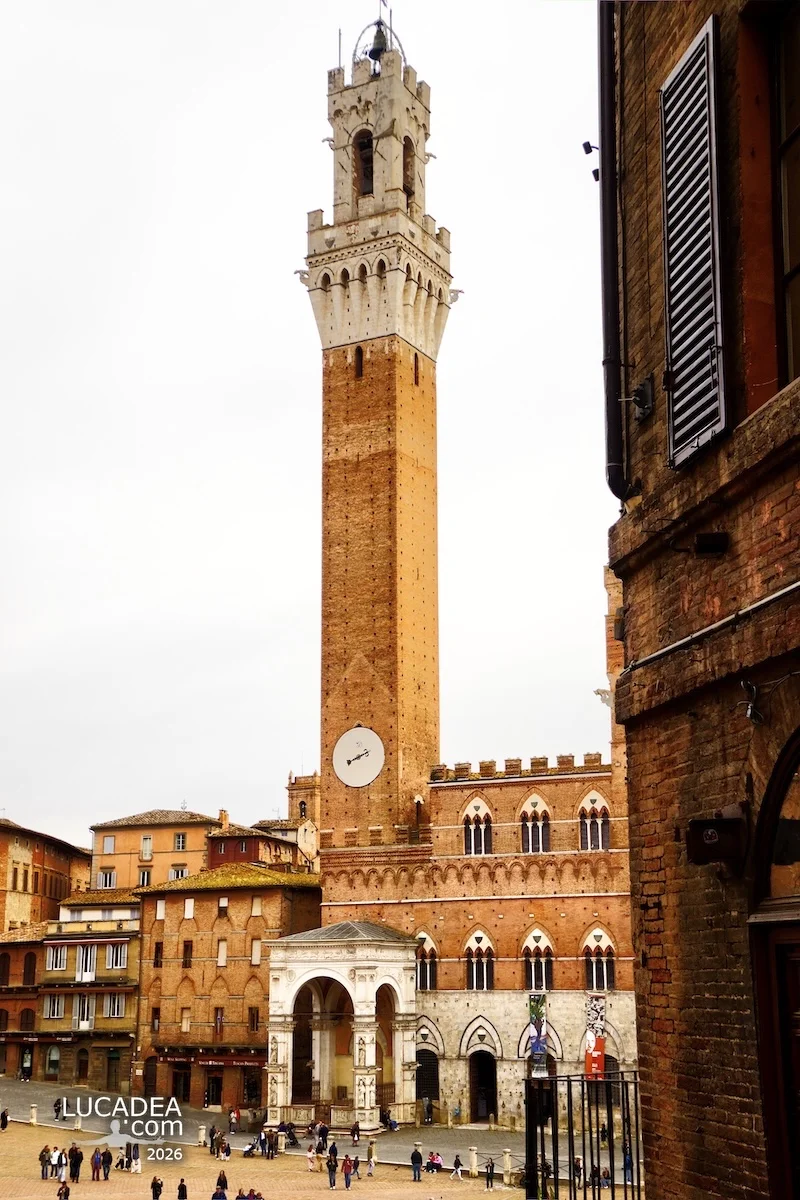
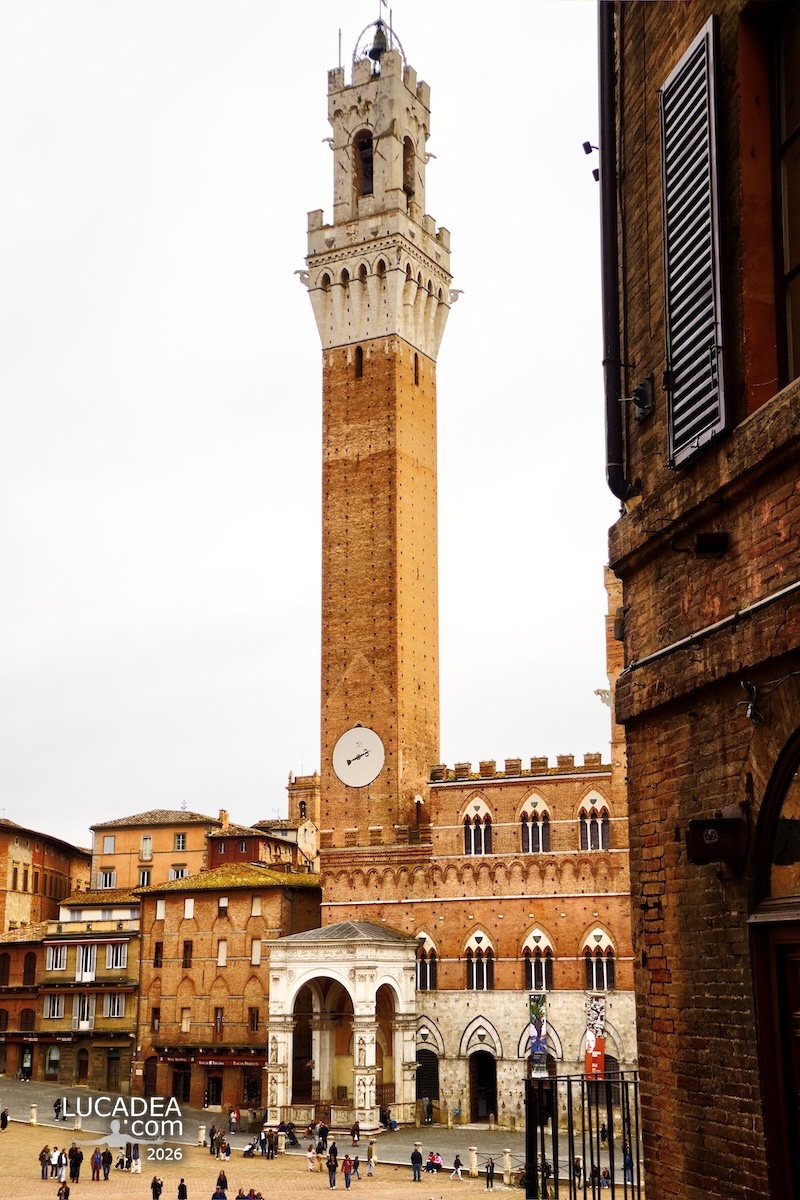
Through my lens, I captured the Mangia Tower in Siena, one of the most recognizable landmarks in Tuscany and one of the places to see in Italy for those who love medieval architecture and historic city squares. The side perspective of this photograph reveals the connection between the tower, Campo Square and the elegant Public Palace, creating a scene where centuries of history meet the rhythm of everyday life.
Looking at this image, what immediately catches my attention is the balance between the impressive height of the tower and the harmony of the surrounding buildings. The warm brick structure rises above the square with a strong vertical presence, while the lighter stone section at the top creates a refined contrast that makes the monument instantly recognizable. The Mangia Tower seems almost too tall for the frame, yet it remains perfectly connected with the architecture around it.
I took this photograph in Campo Square, in Siena, Tuscany, Italy, one of the most famous urban spaces in the country and a place where history is still part of daily life. Walking through this square, I noticed how visitors and locals share the same environment, stopping to admire the buildings, sit in the open space or simply experience the unique atmosphere created by centuries of architecture.
The Mangia Tower was built in the 14th century and became a symbol of Siena’s civic identity. One of the most interesting details about this monument is that its height was intentionally designed to be almost equal to the height of the cathedral, representing a symbolic balance between political and religious power. This historical choice gives the tower an even deeper meaning when viewed through photography.
If you are visiting Siena, Campo Square is a place worth seeing in Tuscany because it offers much more than a famous view. The relationship between the Mangia Tower, the Public Palace and the surrounding medieval buildings creates a unique setting where architecture tells the story of the city. It is a place that invites you to slow down and observe the details that are often missed when simply passing through.
This photograph also connects with other stories from my photo blog about historic Italian towns and old squares, where buildings become witnesses of time and preserve memories through their shapes, materials and details. Every corner can reveal something different, and this is what makes photographing these places so fascinating.
When I look again at this image, I feel that the Mangia Tower represents the true character of Siena: elegant, strong and deeply connected to its past. The tower is not only an architectural symbol but also a constant presence above Campo Square, watching generations of people experience this extraordinary place.

Which detail of the Mangia Tower or Campo Square would you like to discover first? Add a comment or go to the bottom of the site to read what other visitors have written.
La Torre del Mangia nel cuore di Siena vista da Piazza del Campo con Palazzo Pubblico e architettura medievale

Photo taken with Canon EOS R50 V and Tamron 16-300 lens.

To see all the photos I took in Siena, click here:
foto gallery

Add one  comment to this article or read  here what other visitors have written.
 
Adv
 
Disclamer

The rights on images, videos, choruses, text and all other material on the LUCADEA.com website are governed as per  Copyright page.


This page has been viewed 1 times today.
This month it has been viewed 2 times.
In total it has been viewed 3 times.
 

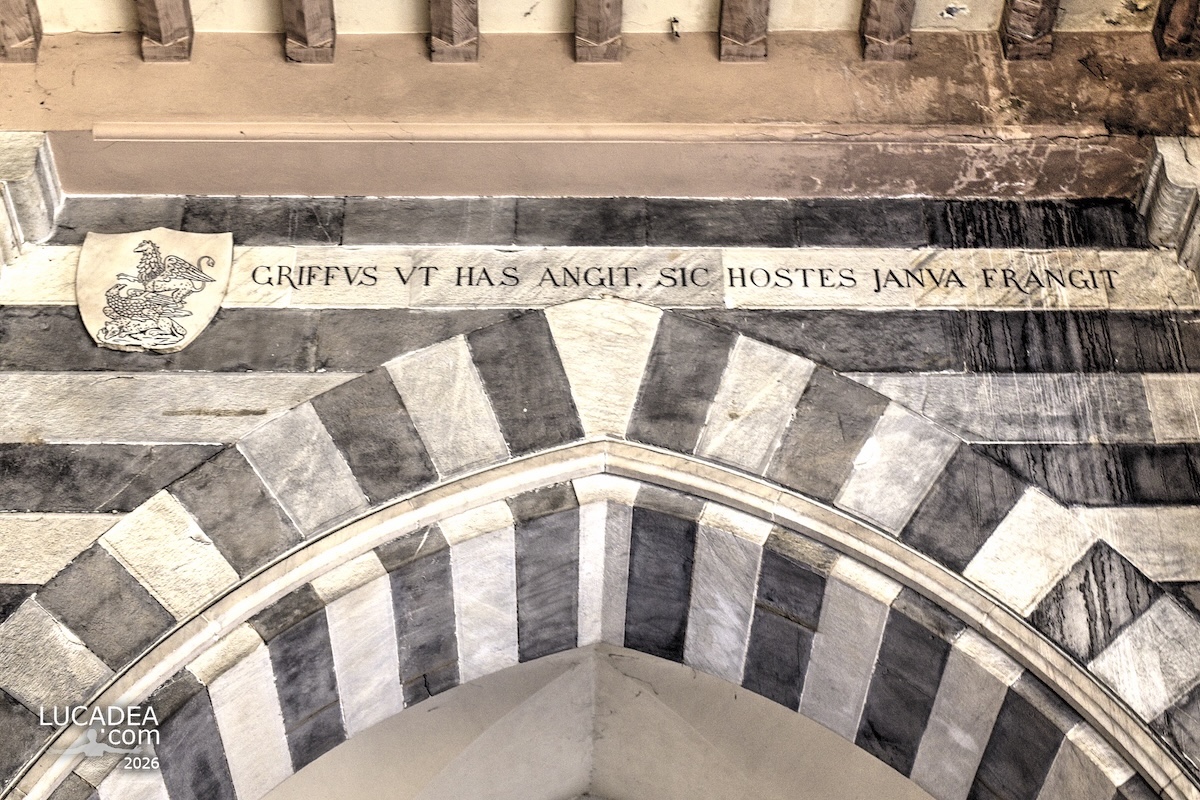
Under the Stone of Genoa Latin Inscription

Dettaglio dell’arco marmoreo a Genova con iscrizione latina di Genova e stemma del grifone scolpito nella pietra storica

Under the Stone of Genoa Latin Inscription.
The marble arch stands quietly in front of me, carrying a sense of time that feels almost suspended, and the Latin inscription of Genoa immediately becomes the visual and emotional focus of the scene. The Latin inscription of Genoa is carved into the stone like a message that refuses to fade, guiding my attention through every groove and shadow.
I am in Genoa, Liguria, Italy, walking through a city where stone is never just architecture but a layered memory of centuries. The Latin inscription of Genoa appears here as a fragment of civic identity, something that still connects the present streets with a medieval past. The geometry of the arch, with its alternating marble tones, frames the inscription as if it were part of a larger dialogue between structure and meaning.
The griffin emblem carved nearby adds another level to the composition, suggesting protection and strength. A historical curiosity explains this symbol: the motto associated with Genoa refers to the griffin holding its power over enemies, a medieval representation of the city’s resilience and identity. This detail transforms the stone into something more than decoration, turning it into a statement of belonging and defense.
As I look closer, I think about how many times I might have passed similar details without noticing them. The Latin inscription of Genoa feels like a quiet reminder that cities speak through their surfaces, even when we are not paying attention. I remember a similar atmosphere in another post from my blog, where Genoa revealed itself through equally hidden architectural traces, almost like a visual conversation across time.
If you are visiting Genoa, Liguria, Italy, this is one of those small but meaningful details worth seeing, not because it is grand, but because it carries the weight of centuries in a few carved letters. It makes me wonder how many stories are still written into stone around us, waiting to be read.

What would you notice if you slowed down in front of an old city wall like this? Add a comment or go to the bottom of the site to read what other visitors have written.

Dettaglio dell’arco marmoreo a Genova con iscrizione latina di Genova e stemma del grifone scolpito nella pietra storica

Photo taken with Canon EOS R50 V and lens Canon RF 28.

Under the Stone of Genoa Latin Inscription – Sous la pierre de Gênes inscription latine – Bajo la piedra de Génova inscripción latina – Sob a pedra de Génova inscrição latina – Unter dem Stein von Genua lateinische Inschrift – Dưới đá Genoa bia khắc Latin – 热那亚石下的拉丁铭文 – ジェノヴァの石の下のラテン碑文

The text of this post was written with the help of ChatGPT, a language model from OpenAI.

Add one  comment to this article or read  here what other visitors have written.
 
Adv
 
Disclamer

The rights on images, videos, choruses, text and all other material on the LUCADEA.com website are governed as per  Copyright page.

This page has been viewed 1 times today.
This month it has been viewed 1 times.
In total it has been viewed 1 times.
 

Compiano, a medieval village in Parma

Compiano, un gioiello medievale nell'Emilia che ti incanterà

Compiano, a medieval village in Parma.
Among the hills of the Parma Apennines, in Emilia-Romagna, Italy, I found myself in front of one of those small villages that seem naturally made for photography. Compiano is a compact medieval town where stone houses, narrow streets and the imposing presence of its castle create a setting that encourages you to slow down and look more carefully.
This photograph comes from that feeling. As I walked through the village, I wanted to observe not only the most important buildings but also the relationship between the streets, the houses and the surrounding hills. This is what I enjoy when photographing small historic towns: places where taking a side street can completely change the perspective.
Compiano is included among Italy’s Most Beautiful Villages, and walking through its historic center makes the reason fairly easy to understand. The village retains a compact layout and a number of historic buildings that preserve its medieval character. What interests me, though, is not simply how well these elements have survived, but how naturally they remain part of everyday life.
The dominant landmark is, of course, Compiano Castle. Its elevated position and fortified appearance immediately recall the strategic role the village played for centuries. Looking at it during a walk, it is easy to imagine how important this hill must once have been for controlling routes across the Apennines.
There is also a small historical detail behind the castle’s importance. Over the centuries, it went through several changes and different uses, while remaining one of the most recognizable symbols of the village. Its presence should therefore not be seen only as a picturesque backdrop: it is also evidence of the strategic importance of this territory and its position between Emilia and the mountain areas.
If you are wondering what to see in Compiano, the castle is naturally one of the first places to look for, but I think it would be a shame to stop there. The historic center is best explored slowly, allowing the smaller details to suggest where to stop. Narrow streets, closely built houses and views toward the hills can often be more interesting precisely because they are not presented as conventional attractions.
That is also why I wanted to photograph the village. A photograph of Compiano does not necessarily need to place the castle in the foreground. I am more interested in preserving the feeling of the place, its intimate scale and the way the architecture meets the surrounding landscape.
The countryside adds another important element. Compiano lies within the area of the Cento Laghi Regional Park in the Parma Apennines, and the landscape gradually changes as you move away from the historic center. Hills, woods and valleys become part of the same visual story, even when they are not directly visible in the photograph.
If you are visiting Compiano, I think it is worth alternating between the streets of the village and the more open viewpoints around it. After walking among the houses, moving only a short distance can reveal how unusual the position of the settlement is and how closely the village is connected to the surrounding landscape.
The local food tradition also belongs naturally to the identity of this area, but it is not what I wanted to place at the center of this photograph. I prefer to let the streets and buildings tell the story of my first impression, because walking through the village is when its character becomes most apparent.
This is one of the things I appreciate about small Apennine towns. You do not necessarily need a fixed route to find photographs. Every turn can reveal a different composition, and almost every old building can become part of the frame. Compiano makes that feeling particularly easy to experience.
The photograph also connects naturally with other stories I have published about Italian villages and smaller towns in Emilia and Liguria. They are very different places, but they share the ability to offer interesting images away from the best-known monuments.
Compiano stayed with me as a place to observe slowly. The castle immediately gives the eye a focal point, but the streets, the stone buildings and the landscape around them complete the image. That balance between history and environment is probably what makes the village so interesting to photograph.

Do you already know Compiano, or which other village in the Parma Apennines would you like to see through a photograph? Add a comment or go to the bottom of the site to read what other visitors have written.

Photos taken with a Canon EOS M100 camera and Canon EF-M 11-22 lens.

To see all the photos, click here:

Vacca Gate at the start of Genoa’s alleys

Porta dei Vacca a Genova all’inizio di via del Campo, storico accesso ai caruggi del centro antico

Vacca Gate at the start of Genoa’s alleys.
When I reached Genoa’s historic centre, I found myself once again in front of one of the city’s most recognisable gateways to the narrow old-town streets, right where Campo street begins. If you are looking for what to see in Genoa’s old town, Vacca Gate is one of those places that immediately brings you into the atmosphere of the caruggi, where the wider streets give way to the dense network of historic alleys.
I was in Genoa that day with my camera and had taken many photographs that I planned to publish gradually on the blog and in my section dedicated to Zena. This was one of the images I decided to keep because it captures a simple but very characteristic moment: the entrance into the older part of the city.
Vacca Gate is more than an old gateway in the medieval walls. Its position is what makes it particularly interesting to me. Immediately beyond the arch begins Campo street, one of the best-known streets in Genoa’s historic centre. The gate therefore works almost like a threshold, marking the moment when the character of the surrounding city begins to change.
The structure belongs to Genoa’s medieval fortifications and dates back to the twelfth century. It was originally known as the Gate of Santa Fede, after the nearby church, while its current name is connected with the Vacca family. I find this kind of small historical detail useful because it gives a little more depth to something that might otherwise look simply like an old stone gateway.
Genoa, Liguria, Italy, still preserves a remarkably dense network of narrow streets in its historic centre, and it is very easy to lose your sense of direction while walking through them. That is one of the things I enjoy photographing. I am not always looking for the most famous monument; sometimes I am more interested in the point where a street narrows, changes direction or, as here, passes through an old gateway.
Vacca Gate has survived centuries of change and is now completely integrated into everyday city life. People pass through the area, traffic moves along the surrounding streets and businesses continue to operate nearby, while the medieval arch remains as a reminder of the defensive system that once surrounded Genoa.
I took this photograph because I liked that contrast. I was not trying to create an isolated architectural portrait of the gate. I wanted to show an old element of Genoa still surrounded by the life of the modern city, precisely at the point where one of its most characteristic historic streets begins.
Then there is Campo street itself. The street became famous far beyond Genoa through Fabrizio De André, who dedicated one of his best-known songs to it. That connection with music has given the street another layer of cultural memory, alongside its history and architecture.
I have already written on Lucadea.com about walking from Campo street to Fossatello square. It is a natural continuation of this photograph, because here the journey begins at the gateway and then continues deeper into the old-town streets. I like these connections between photographs because they allow individual images to become part of a larger record of walking through Genoa.
Another photograph I published in English shows the same Vacca Gate from Antonio Gramsci street. That different viewpoint makes the gate look quite different, and it is a good reminder that familiar places can change considerably depending on where the camera is standing.
This is one of the reasons I keep photographing Genoa even when I already know the area. I do not necessarily need a completely new subject. A different viewpoint, a different walk or simply a little more attention can be enough to produce another photograph.
For anyone visiting Genoa, this is also a useful point from which to understand the geography of the historic centre. From Vacca Gate, Campo street leads directly into the network of narrow streets that makes this part of the city so distinctive. You can continue walking without following a strict itinerary and simply let the streets guide you.
That freedom is part of what I like about the caruggi. The city reveals itself gradually. A doorway, an old façade, a small square or a passage beneath a building can become the subject of a photograph simply because I happened to notice it while walking.
That day I had planned to take many pictures around Genoa, but I did not know which ones would eventually become articles. Some photographs stay in my archive, while others immediately feel connected to a particular memory. This one belongs to the second group because Vacca Gate is such a clear marker of the transition into the old town.
Looking at the image again, I still like its simplicity. I was not trying to create a dramatic composition. I simply wanted to preserve a place I had encountered during my walk, at the exact point where the wider urban environment gives way to Campo street and the narrow streets beyond it.
For me, this is an important part of keeping a photographic blog. The photographs are not only about famous landmarks. They also record the places I actually walked through, the details that caught my attention and the small discoveries that gradually build my personal memory of a city.
Vacca Gate works particularly well in that sense. It is a historic monument, but it is also an entrance, a meeting point and part of an ordinary Genoese street scene. Its meaning comes from both its history and the way it continues to be used today.

Have you ever walked through Vacca Gate on your way into the caruggi of Genoa? Add a comment or go to the bottom of the site to read what other visitors have written.

Vacca Gate in Genoa at the beginning of Campo street, leading into the historic centre and its narrow alleys

Photo taken with Canon EOS M100 and lens Tamron 16-300.

Where is the Gate:

Inside the Basilica of San Domenico Maggiore

Navata centrale della Basilica di San Domenico Maggiore a Napoli, con altari e decorazioni dell’interno storico

Inside the Basilica of San Domenico Maggiore.
While wandering through the narrow streets of Naples, I came across this important basilica almost by chance and decided to step inside. The central nave of San Domenico Maggiore immediately changed the atmosphere of the walk, replacing the movement of the historic streets with a deep architectural space filled with details that invited me to slow down and look more carefully.
This photograph came from that unexpected stop. I had not planned a visit to the church, but finding it during my walk made me curious enough to enter. Once inside, I took my camera out and chose to photograph the central nave, trying to preserve that first impression rather than simply recording the building as an architectural subject.
When searching for things to see in Naples, it is easy to think first of the streets, squares, historic buildings and views that make the city so recognizable. San Domenico Maggiore offers another way of seeing Naples, through its churches and interiors and through the layers of history that are still present inside them. For me, this is one of the pleasures of photographing a city: sometimes the most interesting frame appears after leaving the obvious route for a few minutes.
The basilica stands in the historic centre of Naples, in Campania, Italy, in the area of Piazza San Domenico Maggiore. Its position is part of what makes the place so interesting. The surrounding streets are among the most characteristic parts of the old city, and the transition from the lively urban setting outside to the interior of the church happens within only a few steps.
Looking at the central nave through the camera, I was interested in the way the architecture guides the eye into the depth of the building. Columns, altars, decorations and architectural lines create a strong perspective, while the many individual details prevent the scene from becoming too simple or purely geometric. I wanted the photograph to retain that sense of looking forward while still allowing the eye to stop on the smaller elements along the way.
San Domenico Maggiore has a long connection with the Dominican Order and has played an important role in the religious and cultural history of Naples. The complex has medieval origins and was modified over the centuries. One of its better-known historical connections is with Thomas Aquinas, who studied and taught within the Dominican tradition and is associated with the complex. The basilica and convent were also connected with intellectual and religious life in Naples over a long period.
That history adds meaning to the photograph, but I did not want the historical background to become more important than the image itself. What interested me was the experience of arriving there after walking through the narrow streets. Naples often creates these sudden changes in perspective: outside there is traffic, conversation and constant movement; inside a historic church, attention naturally shifts toward architecture, artworks and small details.
If you are visiting Naples and looking for places worth seeing in the historic centre, San Domenico Maggiore is the kind of place that can become part of a walk rather than feeling completely separate from it. Its location makes it easy to encounter while exploring the old city, and the surrounding urban fabric helps explain why the basilica feels so closely connected to Naples itself.
I like photographs that begin with an unplanned discovery. There is something different about photographing a place after unexpectedly finding it compared with arriving with a carefully prepared shot in mind. In this case, the photograph records not only the interior of San Domenico Maggiore, but also a small moment in my walk through Naples.
This way of photographing connects with other stories on my blog about churches, historic buildings and details discovered while walking through Italian cities. I often find that one photograph leads naturally to another, especially when the original subject appears unexpectedly along the way.
For me, the central nave remains the most important part of this image because it preserves the feeling of that first look inside. The photograph does not need to explain everything about the basilica. It only needs to remind me why I stopped, looked around, and decided that this particular view deserved a place in my photographic story of Naples.

Have you ever entered a historic church in Naples simply because you happened to pass its entrance? Add a comment or go to the bottom of the site to read what other visitors have written.

Central nave of the Basilica of San Domenico Maggiore in Naples, showing historic altars and detailed interior decoration

Photo taken with a Canon EOS M100 camera and Canon EF-M 11-22 lens.

To see all the photos I took in Naples—both that weekend and on other trips—click here:

Campopisano Square in Genoa’s old town

La bella piazza Campopisano nel centro storico di Genova

Campopisano Square in Genoa’s old town.
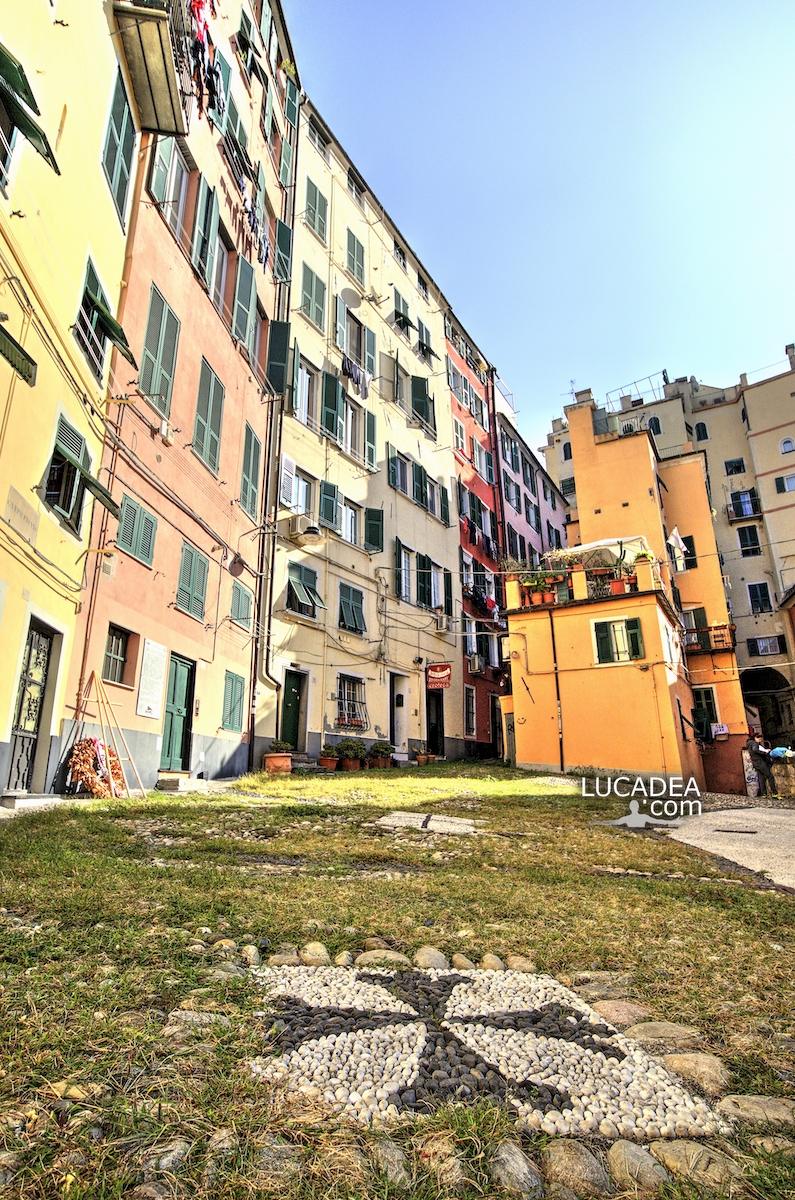
Walking through Genoa’s narrow streets, I had passed near this small square many times without ever making the effort to look for it. When thinking about what to see in Genoa’s old town, it is easy to focus on the better-known landmarks, while smaller places such as Campopisano Square can remain hidden in plain sight.
For a long time, I had promised myself that I would finally find Campopisano Square. Whenever I wandered through the caruggi without a precise destination, I would remember the square and then, almost inevitably, take another turn and forget about it. A few months ago, my wife and I finally decided to make a point of finding it and visiting the place properly.
Reaching the square is part of the pleasure. Genoa’s historic centre is made of narrow passages, stairways and unexpected turns, and a small open space can appear almost suddenly between the surrounding buildings. Campopisano Square has this particular quality. After walking through the dense network of streets, arriving in the square creates a welcome change of perspective and gives you a moment to stop and look around.
This is one of the places worth seeing in Genoa if you enjoy discovering the less obvious side of the city. I was especially interested in the way the square fits into the surrounding historic fabric rather than standing apart from it. The buildings, the narrow streets leading towards the square and the compact open space all belong to the same urban setting.
I took this photograph myself during our visit, wanting to keep the impression of finally reaching a place I had postponed seeing for years. I was not searching for a spectacular postcard view. Instead, I wanted the photograph to preserve the character of the square and the feeling of being surrounded by the old streets of Genoa.
Campopisano Square is in Genoa, Liguria, Italy, in the heart of the historic centre. If you are visiting Genoa and looking for what to see beyond the city’s most famous attractions, this is the kind of small corner that can naturally become part of a walk through the caruggi. Its appeal comes precisely from the fact that it does not feel like a separate attraction, but like something you discover while exploring the city.
There is also a historical curiosity behind the name Campopisano. The square is traditionally associated with the long rivalry between Genoa and Pisa and with the Pisan prisoners brought to Genoa after the Battle of Meloria in 1284. It is a brief piece of history, but it adds another layer to a place that today can seem surprisingly quiet.
That contrast stayed with me while taking the photograph. Genoa’s history is enormous, but it is not always encountered through imposing monuments. Sometimes it appears in a small square hidden among narrow streets, in an old building or simply in the shape of the urban space around you.
Campopisano Square also reminded me of why I enjoy photographing Genoa’s historic centre. I often prefer these smaller discoveries to the places I already know I am going to photograph. There is a different kind of attention involved when I arrive somewhere after having looked for it, especially when the visit has been postponed several times.
It also connects naturally with other photographs of Genoa that I have shared on the site. The historic centre offers so many details that one photograph rarely feels like a complete story. A square can lead to a street, a street to another small corner, and before long the original plan of the walk has disappeared. For me, that is part of the pleasure of photographing this city.
Looking back at this image, I am pleased that my wife and I finally decided to stop postponing the visit. Campopisano Square may be a relatively small space, but finding it gave me exactly the kind of photographic moment I enjoy: no need for a grand panorama, just a place with enough character to make me stop, look carefully and take the camera out.

Have you ever discovered a small corner of Genoa only after walking past it many times? Add a comment or go to the bottom of the site to read what other visitors have written.

Photos taken with a Canon EOS M100 camera and Canon EF-M 11-22 lens.

And here is where the square is located:

Rapallo’s Civic Tower from Montallegro

Torre Civica di Rapallo vista dall'alto durante la discesa da Montallegro, tra gli edifici del centro storico

Rapallo’s Civic Tower from Montallegro.
Coming down from the Montallegro trail, I noticed the Civic Tower standing out among the buildings of Rapallo’s center and becoming the main point of this view. It is one of those details I had probably passed near many times without ever really stopping to look at it.
I took this photograph while descending from the Sanctuary of Montallegro towards Rapallo, as the town gradually opened up below me. From that position, the tower stands clearly in the middle of the scene. What caught my attention most was the realization that I could not remember ever photographing it from this particular viewpoint.
The Civic Tower stands in the heart of Rapallo, in Liguria, in the Metropolitan City of Genoa, Italy, attached to the Church of Saint Stephen. Its position is especially interesting because it belongs to an area of the historic center where several buildings connected with the religious and civic history of the town are gathered together.
The date that particularly caught my attention is 1443, traditionally associated with the construction of the tower. Seen from above while walking down the trail, however, the tower becomes something different from the building you would experience at street level. From a distance, its vertical shape makes it an easy reference point among the surrounding buildings.
That change of perspective is what made me stop. I know Rapallo quite well and over the years I have photographed many of its streets, buildings and waterfront views. Yet knowing a place does not mean that every detail has already been noticed. In this case, simply looking towards the center from a higher position revealed something that had somehow escaped my attention.
The area around the Civic Tower also contains buildings connected with old local religious confraternities. The headquarters of the Confraternity of the Whites can be found nearby, adding another historical layer to this part of the town.
This is also a small reminder of the role confraternities once played in Italian towns. For centuries they were involved in religious and social life, and some of their historic buildings have survived within the urban fabric. In Rapallo, their presence helps explain why several apparently ordinary streets contain buildings with such a strong historical character.
Looking at this photograph, I therefore do not see only a general view of Rapallo. I see a detail I discovered almost by chance during a walk. This is one of the things I enjoy about personal photography: you do not always begin a walk looking for a specific subject. Sometimes the place itself offers something unexpected.
The Montallegro trail naturally provides changing views of the town, particularly while descending towards Rapallo. After a stretch through the hills, the landscape gradually becomes more urban and the town begins to appear below. It was during one of these transitions that I took this photograph.
The Civic Tower works almost like a visual landmark within the image. Around it are the buildings of the historic center and, beyond the individual structures, the familiar urban shape of Rapallo. I like photographs in which a specific architectural detail can be identified while still remaining connected to the wider landscape.
This image also fits naturally with other photographs I have published on the blog about Rapallo and the Montallegro trail. I have previously photographed parts of the route to the sanctuary and several views across the town, but this time my attention shifted to an architectural detail I had almost overlooked.
That is probably why I wanted to keep this photograph. It is not simply another view of Rapallo; it also records a small personal discovery. Even after visiting a place many times, changing your viewpoint can still reveal something new.
If you are looking for things to see in Rapallo, this is the kind of detail that can easily be missed when walking quickly through the center. Sometimes a higher viewpoint is enough to make a familiar building suddenly stand out.

Have you ever noticed Rapallo’s Civic Tower from this section of the Montallegro trail? Add a comment or go to the bottom of the site to read what other visitors have written.

Rapallo Civic Tower seen from the Montallegro trail, rising above the historic center and surrounding buildings

Photo taken with a Canon EOS M100 camera and a Tamron 16-300 lens.

Here is where the tower and the church are located:

The largest and most important of the city’s ancient towers, the Civic Tower is a structure dating back to 1473. According to historical sources, its construction was commissioned by the city’s nobility to symbolize peace among the townspeople following a century marked by internal strife and power struggles between the major factions of the medieval era.
Read more on Wikipedia

Valle Christi Monastery in Rapallo

Il monastero di Valle Christi a Rapallo, con le antiche rovine immerse nel verde della Riviera ligure

Valle Christi Monastery in Rapallo.
For a long time, I had only seen this place in other people’s photographs, until a couple of weeks ago when I finally decided to visit it myself. Valle Christi Monastery, behind Rapallo’s golf course, immediately caught my attention with its ancient remains rising among the greenery and the distinctive atmosphere surrounding the ruins.
This time I did not simply pass nearby. I entered the small area around the complex and finally had the chance to see it at close range. I had been postponing this visit for quite a while, so I was particularly curious to compare the images I had seen before with the real place. As often happens with photography, seeing a location in person is a completely different experience.
I took this photograph during that visit. I wanted to capture the monastery as part of its surroundings rather than isolate the architecture from the landscape. The ruins have a particular character because they do not simply look like an old building. They seem to have gradually become part of the vegetation and the landscape around them.
If you are wondering what to see in Rapallo beyond the better-known places along the Ligurian coast, Valle Christi is certainly worth considering. It is located in Rapallo, Liguria, Italy, behind the local golf course, and it is surprisingly convenient to reach by car. The monastery is only a few hundred meters from the Rapallo motorway exit, which makes it an easy stop even during a short exploration of the area.
I remember finding a parking area close to the entrance, which seemed convenient and free, although I would not treat that as permanent information because arrangements can change. For access to the site itself, it is best to check the current opening hours before visiting, as they may vary.
Once you arrive, however, the convenience of reaching the place quickly becomes secondary. You are suddenly standing in front of something that feels connected to another period of history. The stone walls, openings and vegetation create a view very different from the Rapallo usually shown in photographs of the seafront and town center.
The complex dates back to the thirteenth century and was founded as a Cistercian monastery for women. Over the centuries, it went through several changes and was eventually abandoned, leaving mainly the remains of the church and convent buildings. That ruined condition is part of what makes the place so interesting to photograph: you are not simply looking at an old building, but at what time has left behind.
For me, the atmosphere goes beyond its historical importance. There is something quiet and slightly mysterious about seeing those walls surrounded by vegetation. I would not automatically describe every historic site as magical, but in this particular case I understand why Valle Christi had fascinated me after seeing it so many times in photographs.
What I enjoyed most was being able to walk around the complex and change my viewpoint. From a photographer’s perspective, this makes a big difference. Moving only a few steps can completely alter the composition. In one frame the ruins become the main subject, while another view may be more about the relationship between stone, trees and sky.
During the visit, I tried not to rush. After knowing Valle Christi only through photographs on a screen for so long, it seemed important to give myself enough time to actually observe the place. This is one of the things I like about photography: sometimes carrying a camera simply encourages you to look more carefully.
I have already written about the ruins of Valle Christi on the blog through another photograph, and this image comes from the same visit. I like keeping this kind of continuity between posts because different photographs of the same place can reveal completely different aspects. One image may focus on the ruins, another on the surrounding landscape, and another on a small detail that was easy to miss the first time.
For anyone who has never visited Valle Christi, I would not let its proximity to the motorway put you off. It is one of those places that, despite being very easy to reach, can make you slow down for a while. You arrive by car and shortly afterwards you are looking at medieval remains surrounded by greenery, with a much stronger sense of distance from everyday life than the actual location would suggest.
It was a visit I should probably have made much earlier. Now, whenever I look back at the photographs I took, I find myself wanting to return and see the monastery again from different viewpoints.

Do you already know Valle Christi Monastery, or had you only seen it in photographs like I had until recently? Add a comment or go to the bottom of the site to read what other visitors have written.

Valle Christi Monastery in Rapallo, with its medieval ruins surrounded by the greenery of the Ligurian coast

Photo taken with a Canon EOS M100 camera and a Canon EF-S 10-18 lens.

There is also the official website for the festival held there annually: vallechristi.it.

If you would like to see all the photos I took at the monastery, click here:

The Monastery of Santa Maria in Valle Christi was a Catholic place of worship located in the hamlet of San Massimo—on Via San Massimo—within the municipality of Rapallo, in the Metropolitan City of Genoa. This former 13th-century monastic complex is listed among Italy’s national monuments and stands as one of the few surviving examples of Gothic architecture in the entire Liguria region.
Read more on Wikipedia

Parma Cathedral and its historic bell tower

Facciata del Duomo di Parma con il caratteristico campanile in pietra nel centro storico della città

Parma Cathedral and its historic bell tower.
During a walk through the center of Parma, in Emilia-Romagna, I stopped in front of the cathedral’s façade and bell tower, two architectural elements that stand out strongly within the historic heart of the city. The façade of Parma Cathedral and its tall tower naturally draw the eye as you approach the complex.
The cathedral faces Cathedral Square and forms, together with the Baptistery, one of the most recognizable views in Parma. In this photograph I wanted to focus mainly on the façade and the bell tower, allowing the architecture itself to shape the composition. It is a view that makes it possible to appreciate both the scale of the building and some of the details that can easily be overlooked from farther away.
When I think about what to see in Parma, the cathedral is naturally one of the places I would consider essential. Not only because of its religious importance, but also because it represents an important part of the city’s artistic and historical identity. The façade, with its main entrance and decorative details, introduces a building whose history is much broader than what can be understood from a quick look outside.
This is Parma, Emilia-Romagna, Italy, and the cathedral occupies an important position within the historic center. Walking around the square, it becomes clear that the complex is not an isolated monument but part of the urban fabric of the city. The surrounding buildings and public spaces make the cathedral feel naturally connected to everyday life in Parma.
I took this photograph myself because I wanted to preserve the relationship between the façade and the bell tower. The tower rises vertically above the broader structure of the cathedral and creates an interesting contrast in scale. I did not need to search for a particularly unusual detail; the architecture already provided enough visual information to make the composition work.
The history of Parma Cathedral goes back to the Middle Ages. The present cathedral replaced an earlier church that was destroyed by fire around the year 1000, and the construction of the new building developed during the following decades. This small historical detail changes the way I look at the photograph: behind the façade visible today lies a much longer story connected to the city and its religious community.
The bell tower plays an important role in the identity of the complex. Its vertical shape naturally extends the composition upward and makes the scale of the cathedral more apparent. In the photograph, I was particularly interested in this relationship because the tower is not simply an additional structure beside the church. It is part of the overall architectural image that appears when approaching Cathedral Square.
The façade invites a closer look. Even without a detailed knowledge of Romanesque architecture, it is possible to notice the main entrance, the decorative elements, the openings and the way the stone defines different surfaces and volumes. These details become easier to appreciate when looking at a photograph later, after the visit itself has ended.
One of the things I enjoy about photographing historic buildings is precisely this possibility of stopping a particular viewpoint in time and examining it later. In person, it is easy to take in the whole building and then continue walking. A photograph gives me the chance to return to the proportions and relationships between its different parts.
Looking at this image again, my eyes move first toward the façade and then upward to the bell tower. The architecture almost creates that movement by itself. The photograph therefore comes from observing an already strong composition rather than trying to construct something artificial around the building.
The cathedral also connects naturally with other photographs I have published from Italian cities and their historic buildings. As with those images, I prefer to keep the monument at the center of the story and use the historical information only to add context to what can actually be seen in the photograph.
If you are visiting Parma and wondering what to see, Cathedral Square is an obvious place to include, especially if you want to see one of the city’s most important historic landmarks. For me, though, this photograph is less about ticking a monument off a list and more about remembering a walk through the city and the moment when I stopped to look upward at a façade that deserved a little more time.

Have you ever stopped to look closely at Parma Cathedral’s façade and bell tower? Add a comment or go to the bottom of the site to read what other visitors have written.

Parma Cathedral façade with its distinctive stone bell tower in the historic center of the city

Photo taken with a Canon EOS M100 camera and Canon EF-M 11-22 lens.

There is also the official website for the Cathedral: piazzaduomoparma.com.

To see all the photos I took in the city, click here:

The façade of the Cathedral of Santa Maria Assunta faces Piazza Duomo, on the side opposite the Bishop’s Palace. It features a gabled design with masonry made of squared stone blocks. The lower section is smooth and unadorned; here, three portals open—two smaller side portals and a larger central one—each slightly splayed and surmounted by a glazed lunette.
Read more on Wikipedia

Ravecca Street and the Soprana Gate in Genoa

Via di Ravecca nel centro storico di Genova con edifici ravvicinati e Porta Soprana visibile in fondo alla strada

Ravecca Street and the Soprana Gate in Genoa.
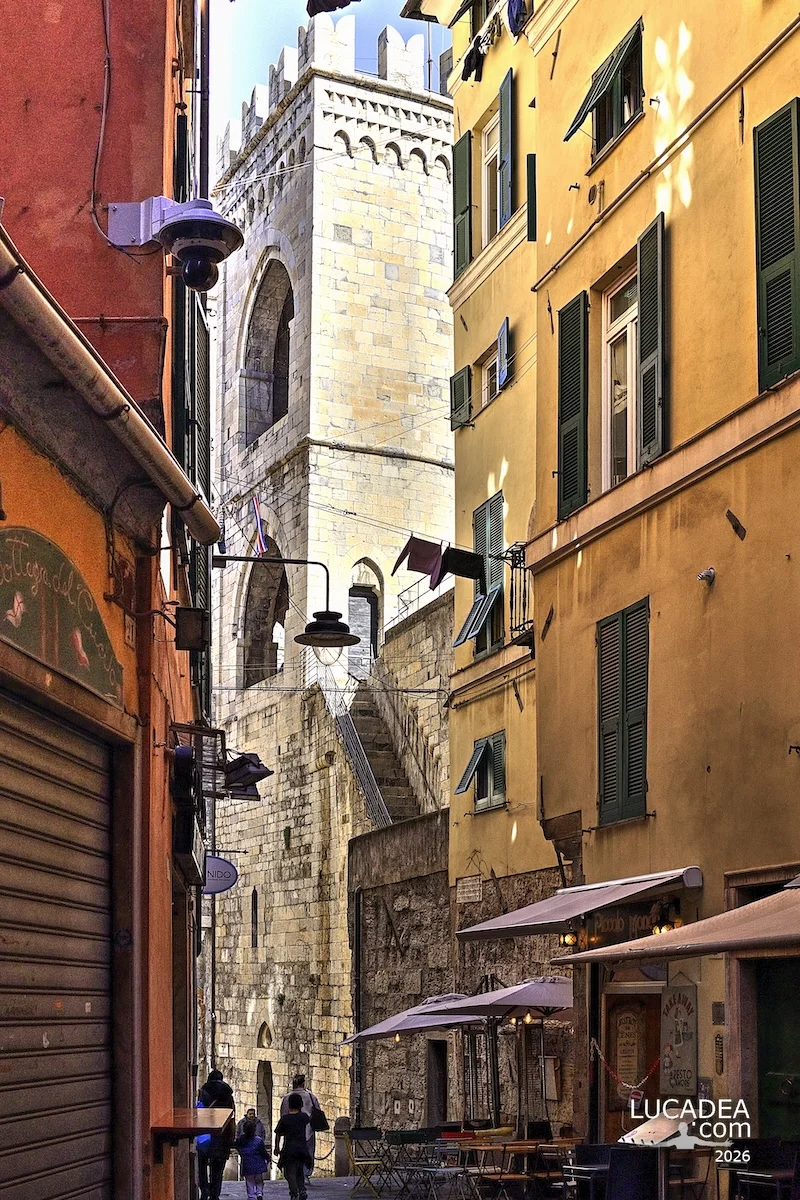
Walking through the historic center, I found myself drawn into a narrow perspective where the street seemed to guide my eyes naturally toward the old city gate in the distance. The view of the Soprana Gate and the surrounding historic streets came together almost without effort, and that was what made me stop and take a closer look.
Ravecca Street has a particular rhythm. The buildings become close enough to shape the view, while their worn walls and uneven surfaces give the scene an everyday character. At the end of this perspective, the Soprana Gate appears with a clear and solid presence, becoming the natural point where the eye comes to rest.
When I think about what to see in Genoa’s historic center, these kinds of views often interest me more than a monument photographed on its own. The surroundings are part of the subject. Here, the medieval gate gains meaning because of the street leading toward it, while the buildings on either side create a frame that was already there.
I took this photograph myself because the composition seemed to suggest itself. I did not want to interfere with the scene or look for a more elaborate arrangement. The irregular façades, changing textures and marks left by time were important parts of the image. Those imperfections give the photograph a more direct connection with the street as I actually saw it.
This is Genoa, Liguria, Italy, a city where historic architecture remains closely connected to everyday urban life. That is one of the things I enjoy when photographing the old center. You can walk along an apparently ordinary street and suddenly find yourself looking toward a structure that belongs to another period of the city’s history.
The Soprana Gate, also known as Saint Andrew’s Gate, was part of Genoa’s medieval defensive walls and served as one of the historic entrances to the city. Its two towers are particularly recognizable from nearby, but from Ravecca Street they become part of a wider urban composition. The gate remains the destination of the view without dominating the photograph from the very beginning.
This small historical detail adds another layer to the image. What is now a familiar landmark was once part of a practical defensive system designed to protect the city and regulate access through its walls. Today, the gate stands naturally within the historic center, surrounded by streets that continue to form part of everyday Genoese life.
If you are visiting Genoa and looking for places worth seeing in the historic center, perspectives like this are worth noticing. You do not always need to stand directly in front of a landmark to appreciate it. Sometimes the more interesting photograph comes from the way a street gradually reveals what lies beyond it.
While I was taking the picture, I had the feeling that there was nothing to add or remove. Ravecca Street already created the direction of the composition, while the Soprana Gate provided a strong visual ending. The buildings and walls filled the space between the two, making the image feel complete without requiring anything artificial.
Looking at the photograph again, I like the way the eye moves through it. First come the façades and the textures of the street, then the perspective becomes stronger and finally the medieval gate appears in the distance. It is a simple sequence, but it reflects the way I actually encountered the scene.
It also connects naturally with the other photographs of Genoa I have shared on the site, especially those where the historic streets themselves become part of the subject. In these images, I am less interested in presenting a place as a postcard and more interested in recording the particular view that made me stop with my camera.

Have you ever walked along Ravecca Street and followed its perspective toward the Soprana Gate? Add a comment or go to the bottom of the site to read what other visitors have written.

View of Ravecca Street in Genoa with the Soprana Gate framed by historic façades in the old city center

Photo taken with Canon EOS R50 V and lens Canon RF 28.

Where I took the photo:

🏠
  • Italiano