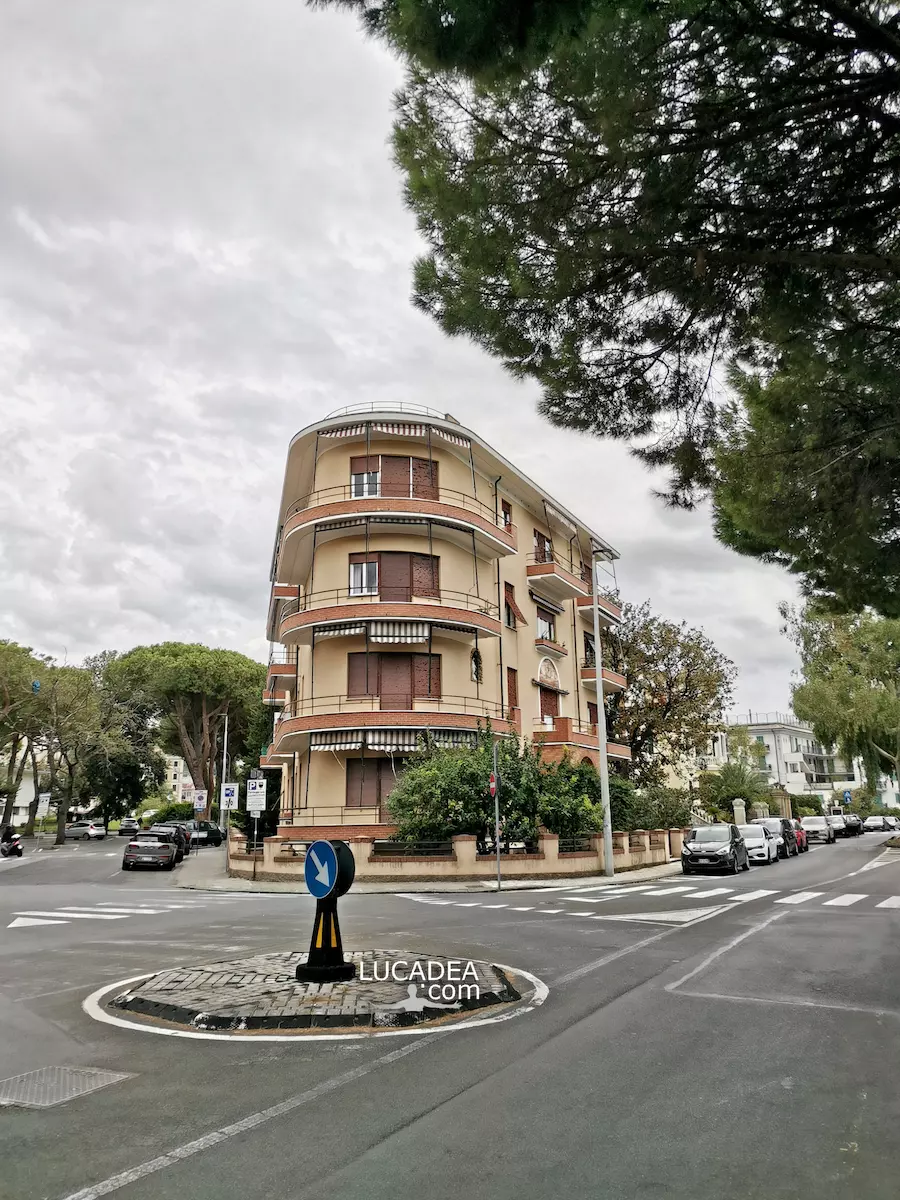

The modern waterfront building in Deiva Marina.
While walking along the waterfront of Deiva Marina, Liguria, Italy, I stopped to photograph this modern building, which contrasts with the more traditional image often associated with the villages of the Ligurian coast. That contrast is what caught my attention and made me want to capture the scene with my camera.
When I think about what to see in Deiva Marina, I do not necessarily think only of the beach or the most picturesque corners of the village. Everyday architecture can also become an interesting photographic subject, especially when it has a direct relationship with the landscape. In this photograph, the building occupies an important part of the scene while the nearby sea helps define its setting.
I often enjoy photographing buildings that do not necessarily have monumental or historical importance. They are structures belonging to everyday life and, precisely because of that, they can tell us something about a particular period and a different way of living. This waterfront building in Deiva Marina seemed to me a good example.
Its modern forms, balconies and large openings toward the outside make the relationship with the coastal landscape particularly clear. In a seaside town, the sea is not simply something seen from a distance. It becomes an important part of everyday life and of the way buildings are experienced.
That is what interests me most about this photograph. I was not simply trying to document a building, but to show its relationship with the surroundings. On one side there is relatively recent architecture; on the other is the landscape of the Ligurian coast, with the sea only a short distance away.
Deiva Marina is a coastal town on the Italian Riviera di Levante, located between Moneglia and Framura, in an area where the relationship between the built environment and the sea is particularly close. Its position keeps the coastline nearby while also providing quick access to the hills inland.
There is a small detail about Deiva Marina’s development that I find interesting. Over time, the town gradually developed into a seaside destination, and newer residential buildings and structures appeared alongside older elements as tourism grew. The result is a landscape where architecture from different periods can coexist within a relatively small area.
This kind of layering is exactly what I think is worth photographing. When walking through a Ligurian coastal town, it is easy to concentrate only on the oldest or most picturesque buildings. I also like looking at what was built later and considering how those structures fit into the surrounding landscape.
The building in this photograph is therefore not a monument or a traditional attraction. It is part of the urban landscape. Its position directly along the waterfront, however, makes it particularly visible and turns it into an interesting photographic subject.
What I especially like is the contrast between the building’s lines and the natural character of the coastline. The geometry of the facades and balconies belongs to a modern architectural language, while the sea and the surrounding landscape recall the more traditional Liguria that I know through so many other photographs.
This image also connects naturally with other posts I have published about villages along the Ligurian coast. I have photographed places such as Moneglia, Sestri Levante and Bogliasco, often looking not only for monuments but also for the smaller details that belong to everyday life.
In Deiva Marina, this time, I stopped in front of a building that many people probably pass without paying much attention to it. For me, that was precisely the reason to photograph it: even an ordinary residential building can say something about the place where it stands.
A waterfront changes constantly according to the buildings that form it. Alongside the beach and natural landscape there is the architecture created by people, with its changes and different choices over time. Looking at these elements together allows Deiva Marina to be understood beyond the usual image of a seaside destination.
The photograph therefore comes from a fairly simple observation: a modern building can become interesting when it is considered within its surroundings. And here, of course, those surroundings are the Ligurian coast and the sea of Deiva Marina.
When you photograph a seaside town, do you also stop to look at modern buildings, or do you mainly search for the oldest and most traditional views? Add a comment or go to the bottom of the site to read what other visitors have written.
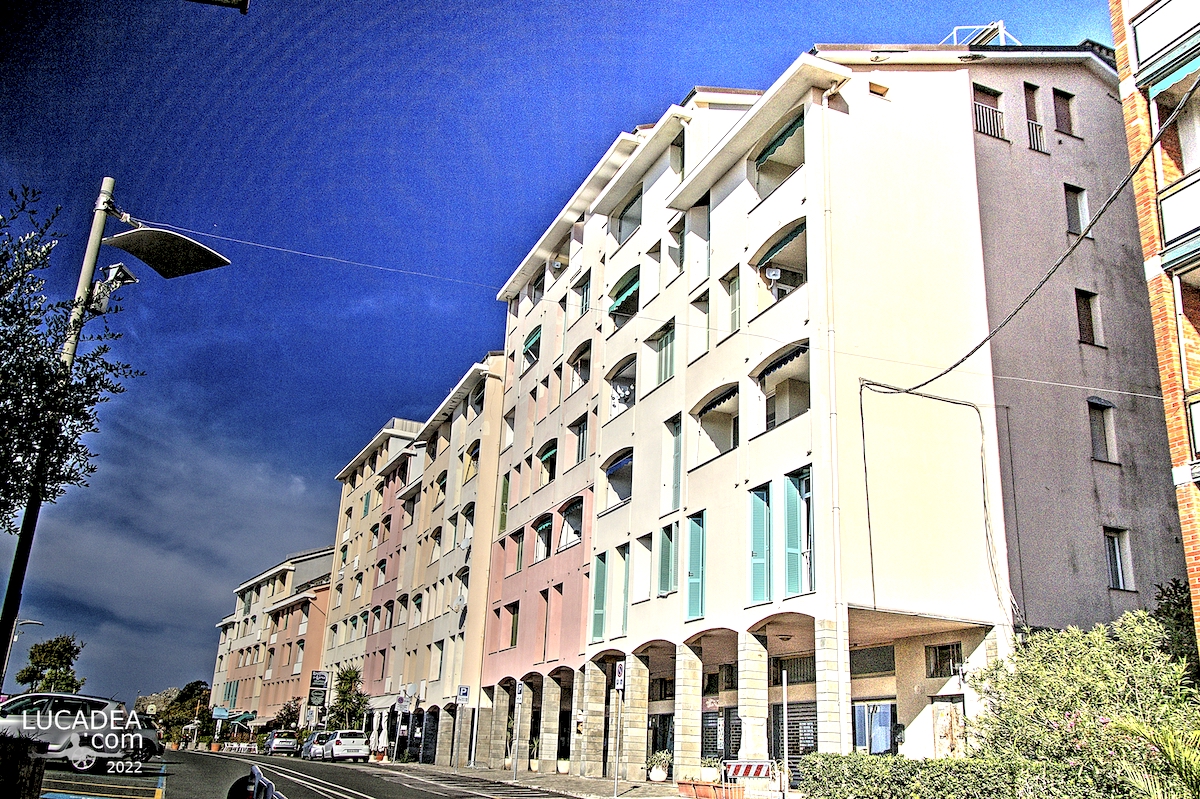
Photo taken with Canon EOS M100 and lens Tamron 16-300.
To see all the photos taken in Deiva Marina click here:

The rights on images, videos, choruses, text and all other material on the LUCADEA.com website are governed as per Copyright page.