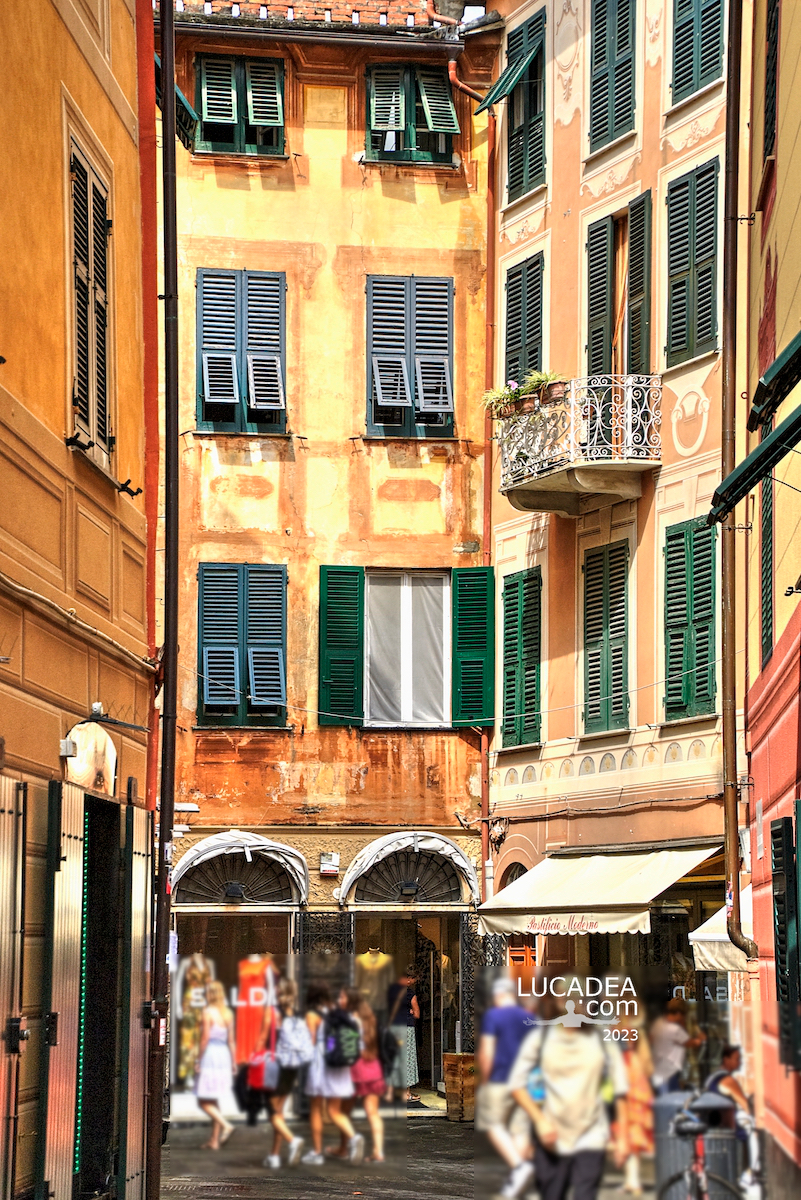
The Narrow Streets of Parma’s Historic Centre

I vicoli del centro storico di Parma

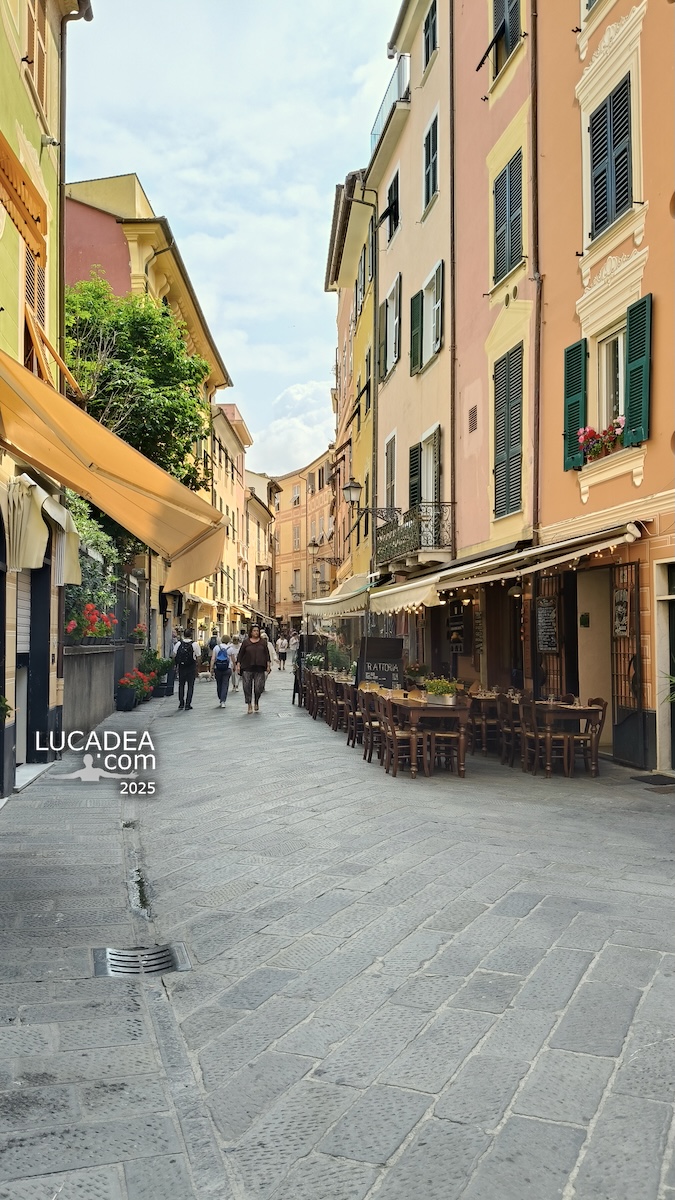
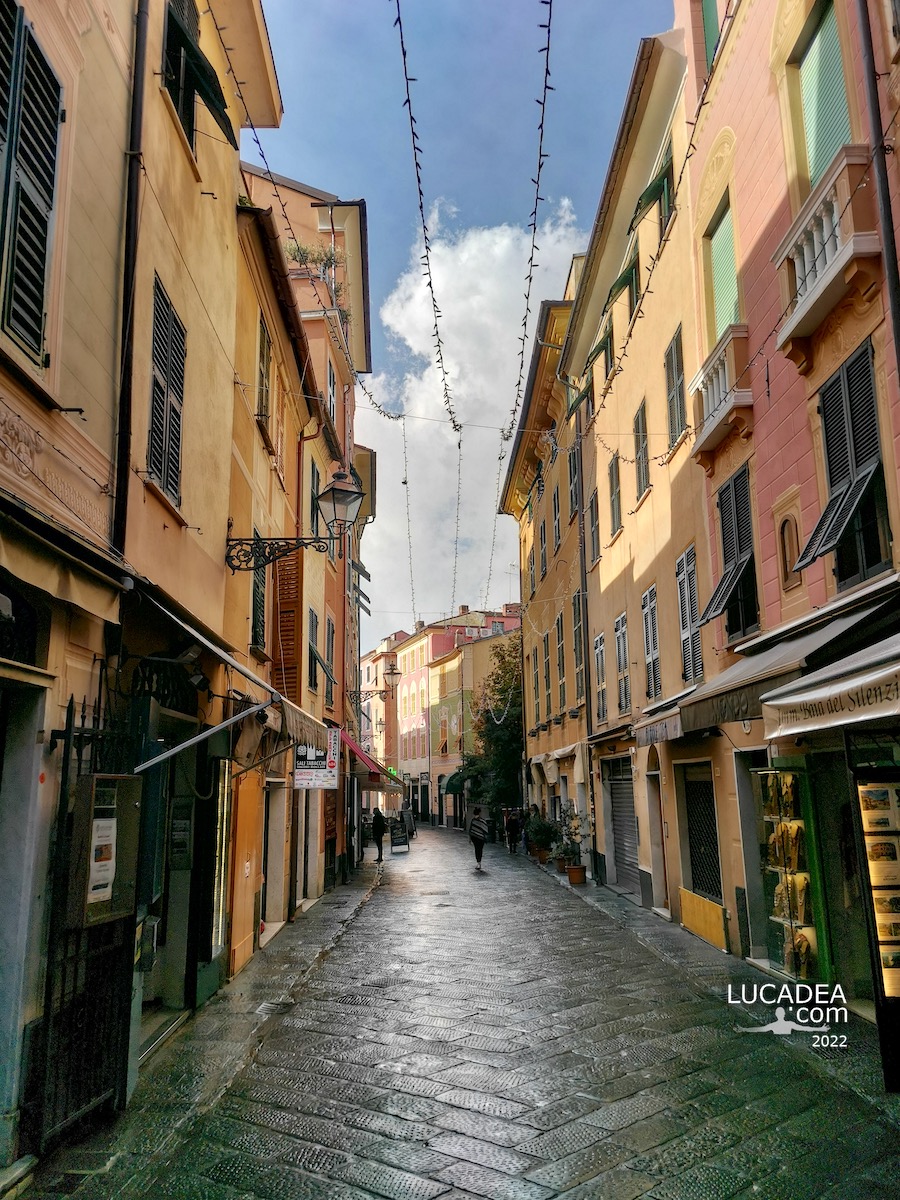
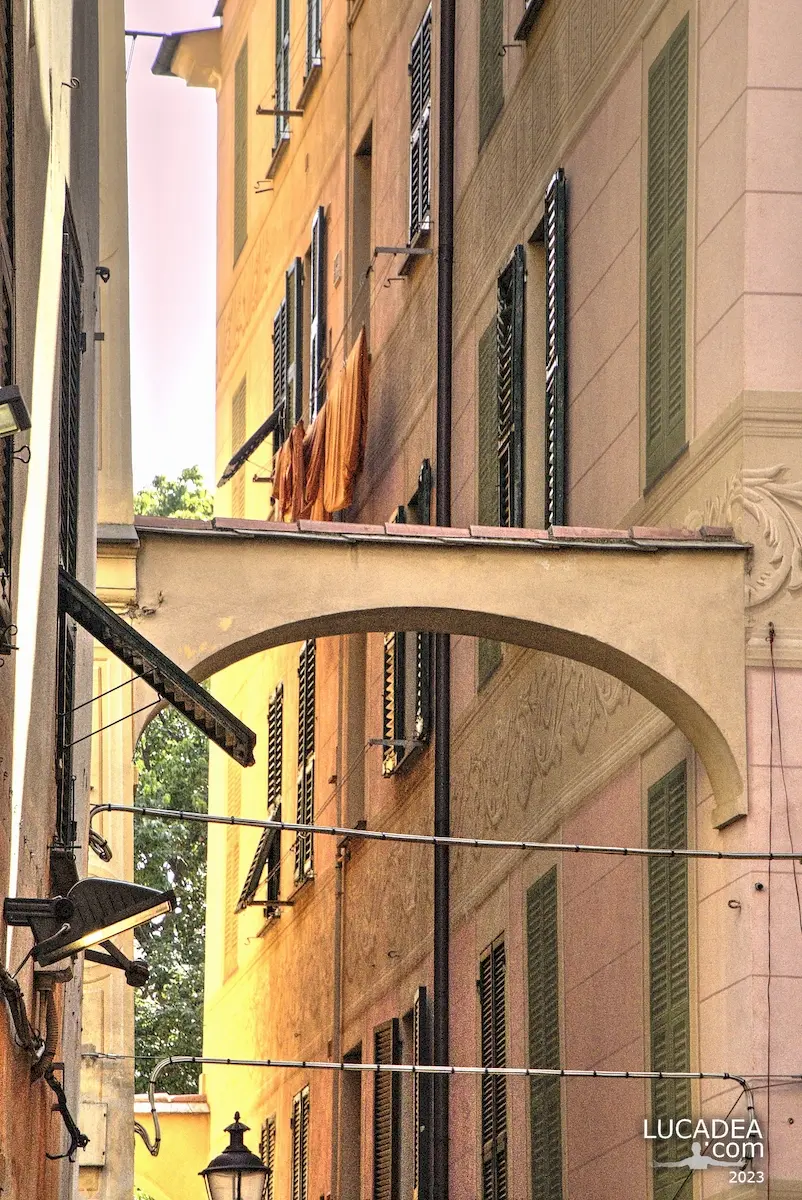
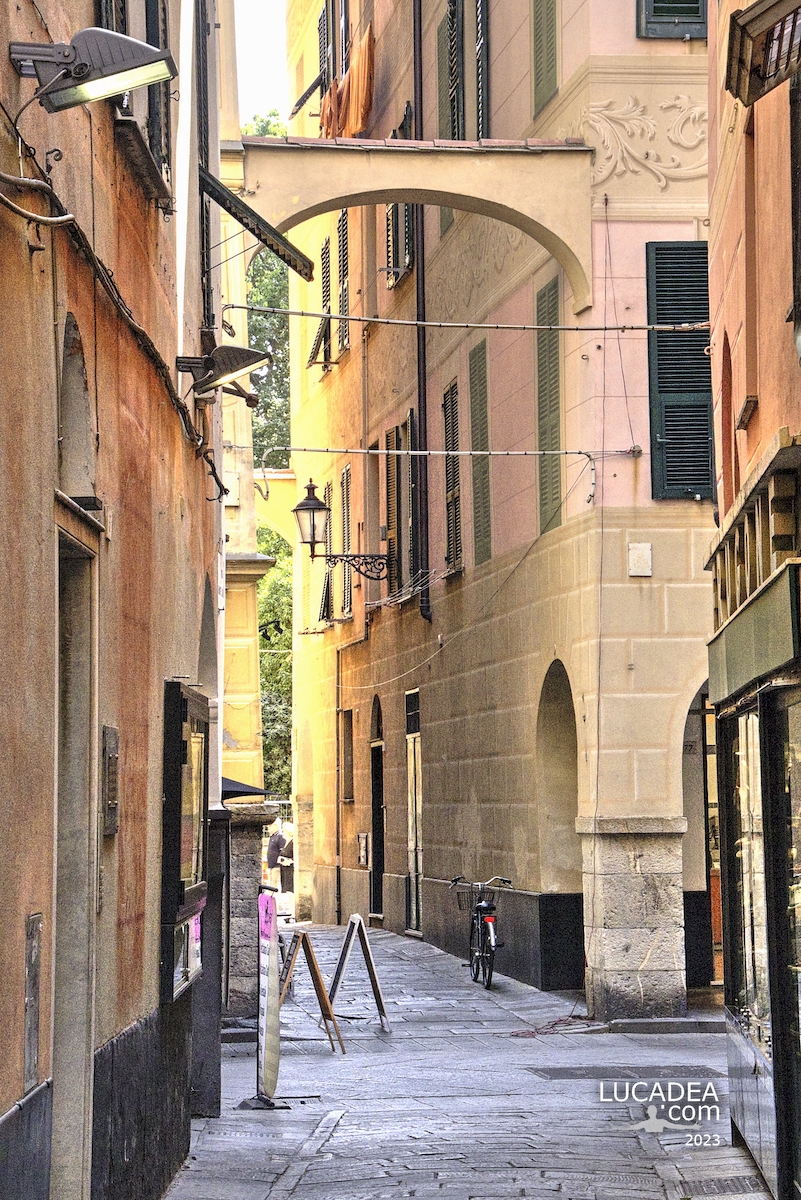
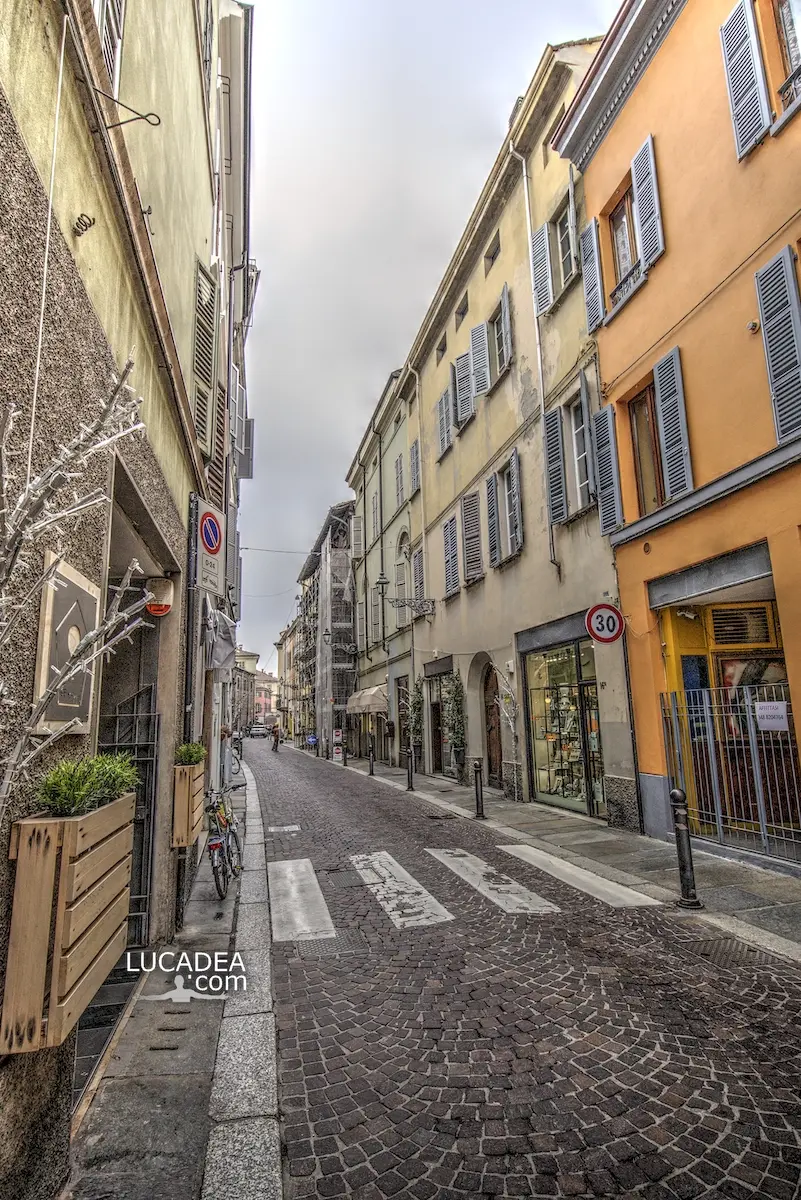
The Narrow Streets of Parma’s Historic Centre.
Walking through the historic centre of Parma, in the Emilia-Romagna region of Italy, I enjoyed exploring its characterful streets, small craft shops and places where good food is never far away. It is the kind of city centre that invites you to slow down, look around and follow whichever little street happens to catch your attention.
What I particularly liked was the atmosphere of these narrow lanes. Traditional façades, shop windows and unexpected views between the buildings give the streets plenty of character. You do not always need to visit a famous landmark to find something worth photographing. Sometimes an ordinary street corner, a small shop or an interesting doorway can capture the spirit of a place just as well.
As I wandered through Parma, I found myself thinking about the *caruggi* of Liguria, the narrow alleys in the region’s historic centres that I often photograph and share here. There is a similar pleasure in turning into a side street, discovering a small independent business and seeing everyday life unfold among old buildings. The two places are certainly different, each with its own history and identity, but the atmosphere brought those familiar Ligurian streets to mind.
Parma is famous for its food traditions, and a walk through the old town offers plenty of opportunities to appreciate that side of local life. Along the way, small shops and inviting places to eat add to the experience. Yet there is more to the city than its celebrated cuisine. Its streets also reveal a rich urban character, with details that reward anyone willing to explore at a relaxed pace.
For street photography, these lanes provide plenty of inspiration. The changing perspectives, signs, colours and architectural details make every turn a little different. I enjoy photographing this kind of setting because it captures more than buildings: it records the feeling of being there, moving through the city and noticing things that might otherwise go unseen.
One of the pleasures of travelling is discovering places that unexpectedly remind you of somewhere familiar. In Parma, these streets brought back memories of the Ligurian alleys that appear so often in my photographs.

Have you explored the historic centre of Parma? And have you ever found a street in another city that reminded you of somewhere you already knew and loved? Add an comment or go to the bottom of the site to read what other visitors have written.

Narrow streets in Parma's historic centre, with traditional buildings, small craft shops and charming views between old façades

Photo taken with a Canon EOS M100 camera and Canon EF-M 11-22 lens.

To see all the photos I took in the city, click here:

Add one  comment to this article or read  here what other visitors have written.
 
Adv
 
Disclamer

The rights on images, videos, choruses, text and all other material on the LUCADEA.com website are governed as per  Copyright page.


This page has been viewed 0 times today.
This month it has been viewed 0 times.
In total it has been viewed 0 times.
 

In the Caruggio of Sestri Levante Among Colors

Caruggio di Sestri Levante con fiori rossi e palazzi colorati nel centro storico ligure tra vicoli suggestivi

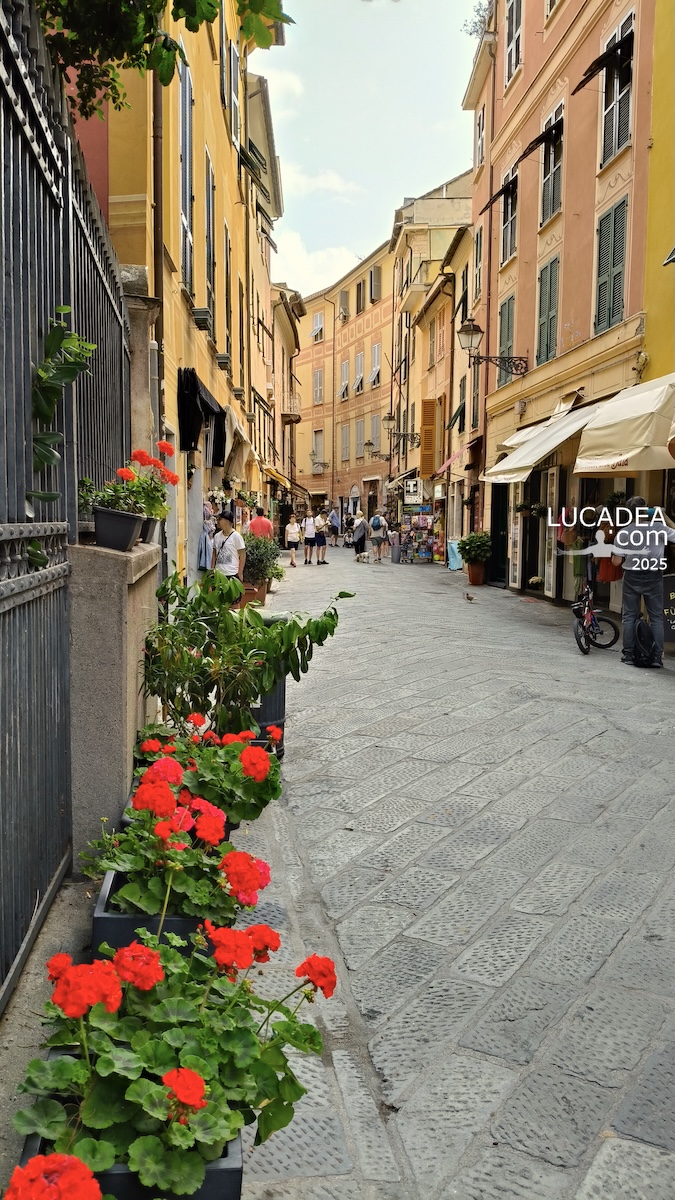
In the Caruggio of Sestri Levante Among Colors.
The Caruggio of Sestri Levante opens in front of me like a narrow ribbon of life, where pastel facades and small details guide every step deeper into its rhythm. The Caruggio of Sestri Levante feels immediately alive, not as a tourist image but as a lived-in passage where color and texture shape the experience.
I am in Sestri Levante, Liguria, Italy, walking through the historic center where every stone underfoot seems to carry memory. The narrow street is framed by tall buildings painted in warm tones, and red geraniums spill from balconies and windowsills, creating a contrast that feels both spontaneous and perfectly balanced. The Caruggio of Sestri Levante becomes a visual thread connecting these elements into a single continuous scene.
As I move forward, the soundscape softens. Footsteps, distant voices, and the faint echo of daily life blend into the architecture itself. The shutters, the shopfronts, and the slightly curved perspective of the street create a sense of depth that invites slow observation. If you are visiting Sestri Levante, Liguria, Italy, this is one of those places where you understand the charm not through monuments, but through atmosphere and detail.
There is a small but interesting aspect about these “caruggi”: they were historically designed to provide shade and shelter from coastal winds, shaping not only the look of the town but also the rhythm of daily life. In another post from my blog about Sestri Levante, I explored a similar street where light and architecture created an equally intimate feeling, almost like a visual conversation between different corners of the same town.
The Caruggio of Sestri Levante lingers in my mind as a space where color is not decoration but identity, where everyday life becomes composition without effort. It makes me wonder how many hidden stories are carried by streets like this all along the Ligurian coast.

What would you notice first if you walked through this narrow street in person? Add a comment or go to the bottom of the site to read what other visitors have written.

Photos taken with Honor 20.

The Caruggio of Sestri Levante among colors – Le caruggio de Sestri Levante parmi les couleurs – El caruggio de Sestri Levante entre colores – O caruggio de Sestri Levante entre cores – Die Caruggio von Sestri Levante zwischen Farben – Con hẻm Sestri Levante giữa sắc màu – 锡斯特里莱万特小巷的色彩之间 – セストリ・レヴァンテの路地の色彩の中で

The text of this post was written with the help of ChatGPT, a language model from OpenAI.

Add one  comment to this article or read  here what other visitors have written.
 
Adv
 
Disclamer

The rights on images, videos, choruses, text and all other material on the LUCADEA.com website are governed as per  Copyright page.

This page has been viewed 1 times today.
This month it has been viewed 1 times.
In total it has been viewed 1 times.
 

The authentic heart of Sestri Levante: the alley

Il caruggio nel centro storico di Sestri Levante, tra facciate colorate e scorci caratteristici della Liguria

The authentic heart of Sestri Levante: the alley.
In the historic centre of Sestri Levante, Liguria, Italy, walking into the old alleyways brings me straight into one of the parts of town I most enjoy photographing. Between colourful facades, small shops, restaurants and details that seem to change at every step, this narrow street still has the intimate character I look for when I carry my camera.
When I think about what to see in Sestri Levante beyond its famous bays, the old alley is one of the first places that comes to mind. It is one of the most recognisable parts of the historic centre, and following it towards the Bay of Silence means crossing through the liveliest part of the town before reaching the sea.
The word caruggio belongs to Ligurian tradition and is used for the narrow streets typical of historic settlements across the region. In Sestri Levante, this characteristic creates a particularly interesting setting for photography, with buildings, shutters, signs and small architectural details constantly changing as you move through the street.
That is what I like to photograph most. Not necessarily a wide view, but a small scene capable of telling something about the town without showing everything. A doorway, a window, a sign or simply the perspective of the street can become the subject of a photograph.
This image comes from that way of looking at Sestri Levante. I wanted to capture this part of the old alley with my camera, keeping the street itself at the centre of the frame and trying to preserve the feeling of continuity that accompanies anyone walking through it.
The alley is also a natural connection between different parts of the historic centre. From here, you can continue towards the Bay of Silence, one of the places I have photographed many times, or simply stop and look at the everyday activity along the street. Local life and visitors naturally mix together here.
That coexistence is what I find particularly interesting. Sestri Levante is a well-known seaside destination and can become very busy during the tourist season, yet it is still possible to find small details that belong to the everyday identity of the town.
The historic centre developed around the narrow strip of land connecting the mainland with the peninsula of Sestri, creating an unusual relationship between the streets, the buildings and the sea. This geography helps explain why the two bays remain so close even while walking through the centre.
One small curiosity is Sestri Levante’s connection with literature. The landscape around the town and the Bay of Silence has attracted writers and artists over the years, helping create the romantic image that still surrounds the place today.
But when I photograph the old alley, I am not necessarily thinking about its reputation. I am much more interested in whatever happens to be in front of my lens at that particular moment. A weathered facade, a balcony, a glimpse between two buildings or a row of windows can tell me something about Sestri in a more personal way than a conventional panoramic photograph.
This is also why I return to this part of town so often in my photoblog. After photographing the Bay of Silence and other corners of the historic centre, the old alley feels almost like a thread connecting different images of the same place.
Every time I walk through it, I can find something new to photograph even though the street itself has not changed. The viewpoint changes, the people change, the shops change and small details on the buildings catch my attention differently. Together, these simple elements create a very everyday image of Sestri Levante.
For me, that is where its authenticity lies: not in trying to find a perfect scene, but in walking slowly and allowing the details along the way to attract your attention.

If you are visiting Sestri Levante, would you take a slow walk through the old alley before heading towards the Bay of Silence? Add a comment or go to the bottom of the site to read what other visitors have written.

Old alley in the historic centre of Sestri Levante, with colourful facades and a typical Ligurian street scene

Photo taken with Honor 20.

An archway in Chiavari’s old town

Uno scorcio del caruggio nel centro storico di Chiavari, in Liguria

An archway in Chiavari’s old town.
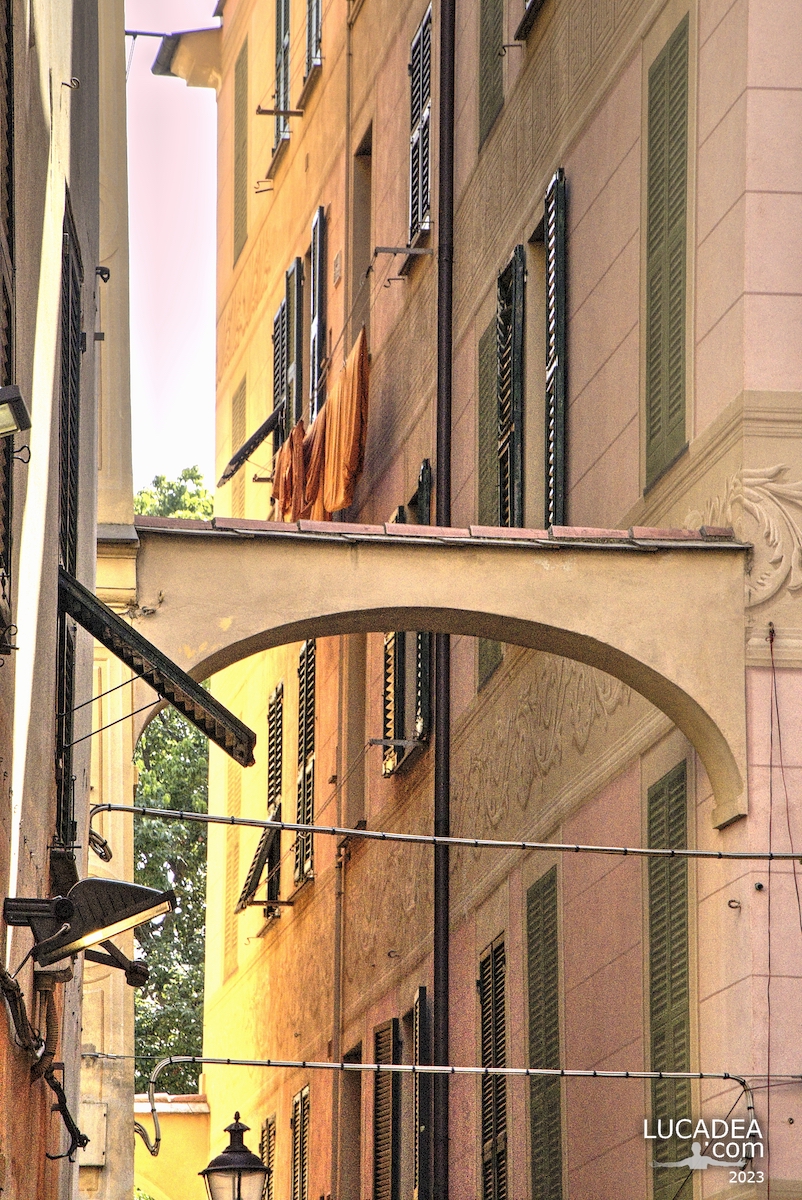
While walking through the historic center of Chiavari, Liguria, Italy, I often look upward for the small arches connecting buildings above the narrow streets. Known as sbatacchio arches, these structures are part of the character of Ligurian old lanes and can become particularly interesting subjects when photographed with a telephoto lens.
I took this photograph during one of my walks through the center of Chiavari. The archway is in a small lane between the Caruggio Dritto and Rivarola street, in an area where moving just a few steps away from the main streets can reveal more intimate perspectives and architectural details that are very easy to overlook.
This is one of the things I enjoy most when photographing historic centers in Liguria. I do not always look for the most important monument or the most recognizable view. Sometimes a small architectural feature is enough, especially when it belongs naturally to the structure of the old town and helps define its character without immediately demanding attention.
Chiavari is particularly rewarding for this kind of observation. The Caruggio Dritto, now Martiri della Liberazione street, forms the main axis of the historic center, while a network of narrower side lanes opens around it. These smaller streets create a more intimate architectural setting, and this is where several sbatacchio arches can be found, suspended between the buildings.
Using a telephoto lens allows me to isolate these structures without necessarily including the entire lane in the photograph. Here I wanted to compress the perspective and draw attention to the arch, the nearby façades and the way the buildings seem to move closer together above the narrow passage.
There is also a practical side to these arches. They are not simply decorative features. In many historic towns, connections between buildings were used to improve structural stability and to reinforce constructions facing each other across narrow streets. What looks like a characteristic architectural detail can therefore also be understood as a small example of traditional building techniques.
That double meaning is what makes them interesting to me. From a photographic point of view, the shape and perspective are enough to create a compelling subject. At the same time, knowing why these arches exist gives the image another layer without turning the story into an architectural lesson.
If you are wondering what to see in Chiavari beyond the better-known streets, I would suggest simply paying attention to the side lanes and looking above eye level. Many details are difficult to notice from the middle of a busy street and reveal themselves only when you slow down.
It is also why I keep photographing places I already know. A historic center never really runs out of details. Changing the route, the lens or even the angle from which I look can reveal something completely different. With a telephoto lens, in particular, I enjoy searching for architectural elements that might otherwise disappear into the overall pattern of the façades.
This photograph naturally connects with other posts I have published about Ligurian old lanes. From the narrow streets of Genoa to the historic corners of Sestri Levante, I often return to this subject because these structures are part of the everyday landscape of Liguria and are among the details I most enjoy observing through a camera.
Chiavari is especially interesting because of the relationship between the Caruggio Dritto and the smaller streets around it. A short detour from the main route can completely change the perspective and produce an image that tells the story of the historic center in a much quieter way.
There is no major monument to celebrate in this photograph. It is simply a small architectural feature, one that many people probably walk beneath without ever looking up. For me, however, these are exactly the details that make a photographic walk worthwhile.

How many sbatacchio arches have you noticed while walking through Ligurian old towns? Add a comment or go to the bottom of the site to read what other visitors have written.

Photos taken with a Canon EOS RP camera and a Tamron 16-300 lens.

Here is the exact spot where I took the photo:

Sestri Levante’s old lane toward the sea

Alla scoperta del caruggio di Sestri Levante, meraviglia di Liguria

Sestri Levante’s old lane toward the sea.
Walking through the historic center of Sestri Levante, Liguria, Italy, I often find myself passing through this old lane leading toward the Bay of Silence. It is a route I know well, yet it still manages to offer small details and perspectives that make me want to stop and take another photograph.
Calling Sestri Levante’s old lane a wonder of Liguria might sound a little too grand, as I admitted in the original text, but I still genuinely think it is one of the most attractive old lanes in this part of the region. Not because it is monumental or spectacular in the conventional sense, but because of the way it connects the everyday life of the town with one of its best-known coastal views.
I took this photograph during one of my walks through the town. The narrow lane, with houses opening directly onto the street, naturally draws you toward the sea. It is a simple perspective, but to me it captures something essential about Sestri Levante: you do not have to walk far to move from the atmosphere of the historic center into the landscape of the bay.
If you are wondering what to see in Sestri Levante, the Bay of Silence will almost certainly be near the top of the list. But reaching it from the town center means walking through streets that deserve attention in their own right. The old lane is therefore not merely a route to the bay; it is already part of the experience.
What I like photographing here is the continuity between the buildings and the street. In Ligurian old towns, façades often stand very close together and the relationship between private buildings and public space is immediate. Windows, shutters, doorways and small architectural details become part of one continuous scene rather than isolated subjects.
Sestri Levante also has a particular geography that makes this transition especially interesting. The historic center lies on the narrow isthmus connecting the peninsula with the mainland, while the Bay of Fables and the smaller Bay of Silence open on either side. This unusual shape makes it feel very natural to move from the town streets toward two completely different coastal settings.
There is a small historical curiosity behind the name of Sestri. The area was associated in antiquity with the name Segesta Tigulliorum, while the modern name developed through the historical evolution of the place name. It is a small reminder of how old the settlement is within the Gulf of Tigullio.
But coming back to the photograph, it is the lane itself that interests me most. I was not trying to create another postcard image of the Bay of Silence. Instead, I stopped before reaching the sea, when the bay is still only suggested by the direction of the street.
This is something I often enjoy doing in the photographs I publish on the blog. I like showing a place not only through its most famous viewpoint, but also through the route that leads there. In this case, the connection with my photographs of the Bay of Silence comes naturally: the old lane becomes the small journey that comes before the view.
Walking here also makes it clear how closely the center of Sestri Levante is connected with tourism. During summer, the lane can become busy, particularly when visitors are heading toward the bay, while at other times it retains a quieter and more local atmosphere. That contrast is one of the reasons I enjoy photographing the same streets at different moments.
For people who live here, familiar views can easily become invisible through repetition. Yet holding a camera changes the way I look at them. A façade, a perspective or a small architectural detail that I would normally walk past can suddenly become the reason to stop.
Perhaps that is why I continue to think of this old lane as one of the nicest corners of Liguria. It does not need exaggerated descriptions. Within a short distance, it brings together the houses, the historic center, the movement of people and, just beyond the end of the street, the sea.
And then there is that final destination that makes the route even more special: the Bay of Silence. Knowing that you only have to keep walking to reach the beach gives this otherwise ordinary street a different meaning.
This photograph also fits naturally with other posts I have published about Sestri Levante, especially those dedicated to the Bay of Silence and the less obvious corners of the town. Together they form a more personal record of a place I know well and continue to photograph.
So perhaps the real charm is not simply the lane itself, but everything it promises at the end of the walk.

Do you think Sestri Levante’s old lane deserves a place among the most beautiful lanes in Liguria? Add a comment or go to the bottom of the site to read what other visitors have written.

Photos taken with Honor 20.

Here’s where via XXV Aprile is located:

A narrow alley in Moneglia’s old town

Stretto vicolo del centro storico di Moneglia in Liguria, con case affacciate sul piccolo caruggio del borgo

A narrow alley in Moneglia’s old town.
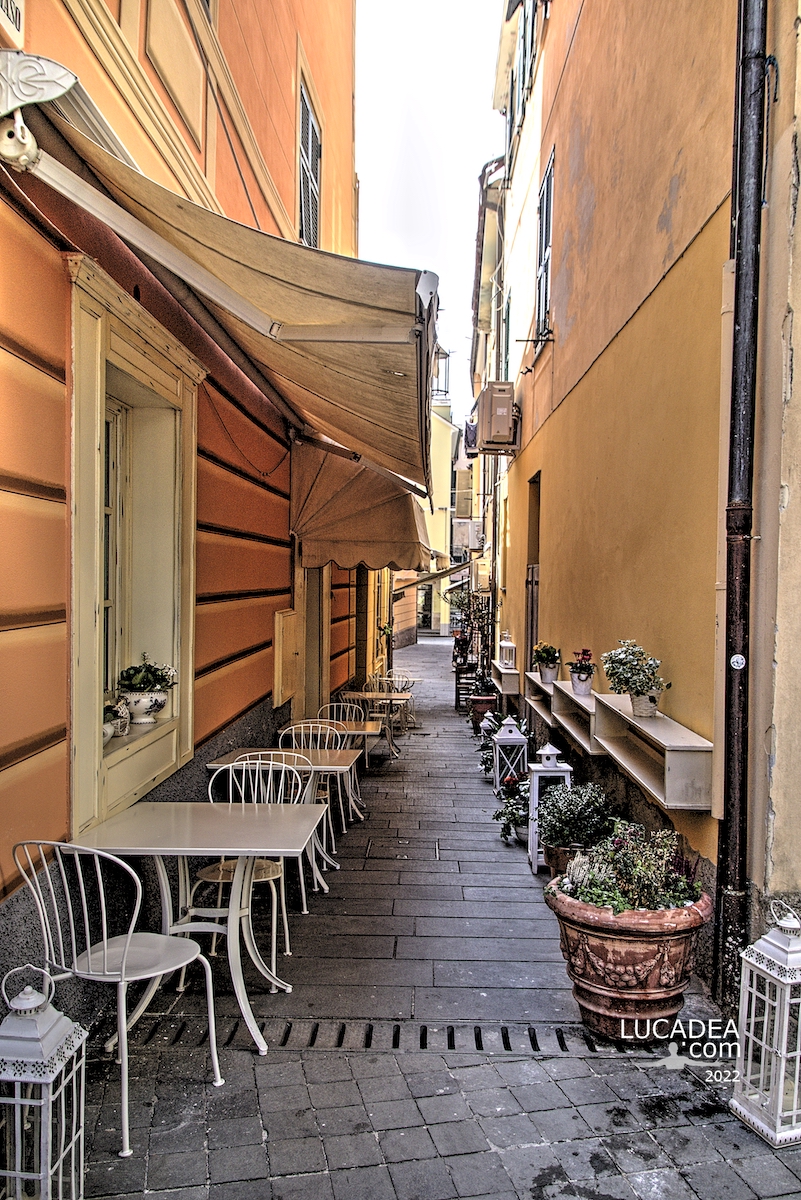
While walking through the old town of Moneglia in Liguria, Italy, I came across this small side passage and immediately found it worth photographing. It is the kind of narrow alley that seems to appear almost unexpectedly from the main street, inviting you to stop for a moment and look more closely.
Moneglia lies along the Ligurian coast east of Genoa, not far from Sestri Levante, and it is one of those villages where moving just a few meters away from the main streets can completely change the view. Some time ago, while walking through the old town, I noticed this particular corner and decided to capture it with my camera.
What interested me most was the way these small side alleys are actually used. They are not simply narrow passages between buildings. They are part of everyday life in the village and, in some places, they are compact enough to become small outdoor seating areas for cafés and restaurants. The result feels natural, as if the old architecture and contemporary life have simply found a way to share the same limited space.
This is exactly the kind of detail I enjoy photographing in Ligurian villages. I am not always looking for a sea view or the most famous square. Sometimes a narrow passage, a doorway, a window or a small section of a wall can tell me more about a place than a postcard panorama.
If you are wondering what to see in Moneglia, there is naturally much more than this single alley. But I think these secondary corners are an important part of the village’s character. The old town is compact and easy to explore on foot, and wandering without a precise destination often leads to the most interesting views.
The main alley provides the obvious route through the village, but stepping into one of its side passages immediately changes the perspective. The buildings seem closer together, the street becomes more intimate and ordinary details become much more noticeable.
A small historical curiosity about Ligurian villages is the role played by their narrow alleys. These passages were not designed with modern tourism or photography in mind. They developed as a practical response to the limited space available between the coast and the surrounding hills. Their narrow proportions are still one of the features that give many Ligurian old towns their distinctive character.
There was nothing staged about this photograph. I simply encountered the alley while walking and liked the way it looked. The fact that such a small space can also function as an outdoor seating area is, to me, a good example of how villages like Moneglia make use of every available corner without losing their identity.
Moneglia also has a different scale from some of the larger coastal towns of Liguria. It is small enough to explore at a relaxed pace, yet there are plenty of details for someone who enjoys walking and photography. That is one of the reasons I find myself returning to places like this.
Its proximity to Sestri Levante makes Moneglia particularly familiar to me. From my area, it takes roughly twenty minutes by car to reach it, so visiting does not necessarily require a long trip or elaborate planning. Sometimes a few free hours are enough to walk through the village again and see what catches my attention.
Looking at this photograph, I particularly like the fact that it is not one of the obvious postcard views of Moneglia. It could almost be any one of the many narrow passages found while walking through the old town. That is precisely why it fits the way I like to photograph. My blog is also a collection of these small fragments of familiar places, rather than only their most famous images.
This photograph connects naturally with another story on my blog about Ligurian villages, the steep alley in Vernazza. There too, the subject was not a monument but a passage through the village. In both photographs, it was the shape of the street and the way it fitted into the surrounding buildings that caught my attention.
These are simple details, but they are often the ones I remember most clearly. A narrow street, a few tables in a small corner, the buildings close together: ordinary elements of village life that can become a good photographic subject when you take the time to notice them.
Perhaps that simplicity is what I like most about Moneglia. There is no need to search constantly for something spectacular. Walk through the old town, take a side street and let curiosity decide where to go next.

When you visit a Ligurian village, do you also end up wandering into the side alleys, or do you prefer to stay on the main streets? Add a comment or go to the bottom of the site to read what other visitors have written.

Narrow alley in Moneglia's old town in Liguria, with traditional houses lining the small village passage

Photo taken with Canon EOS M100 and lens Tamron 16-300.

This is a video of the alley of the village:

Video recorded with a GoPro Hero 10 Black.

I took several photos in the village, and if you’d like to see them all, click here:

A Swallow Nest in the Caruggio of Sestri Levante

Un nido di rondini nel caruggio di Sestri Levante

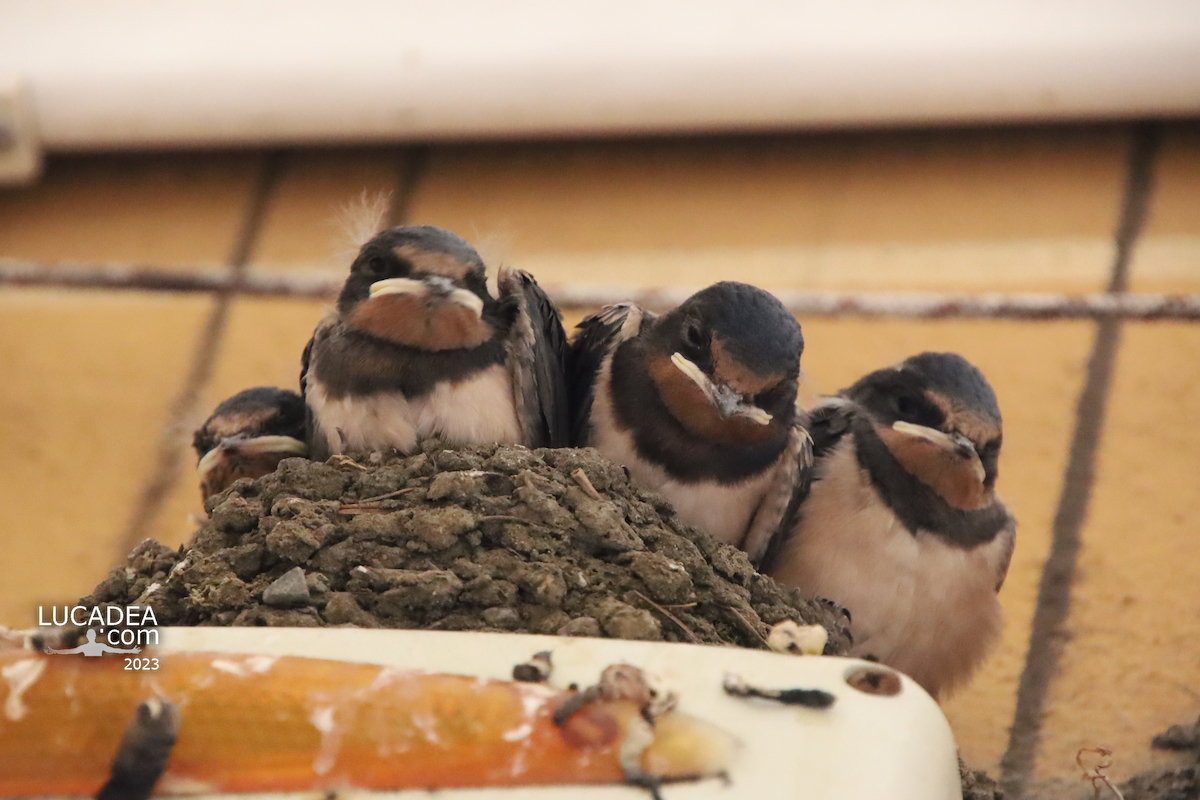
A swallow nest in the caruggio of Sestri Levante.
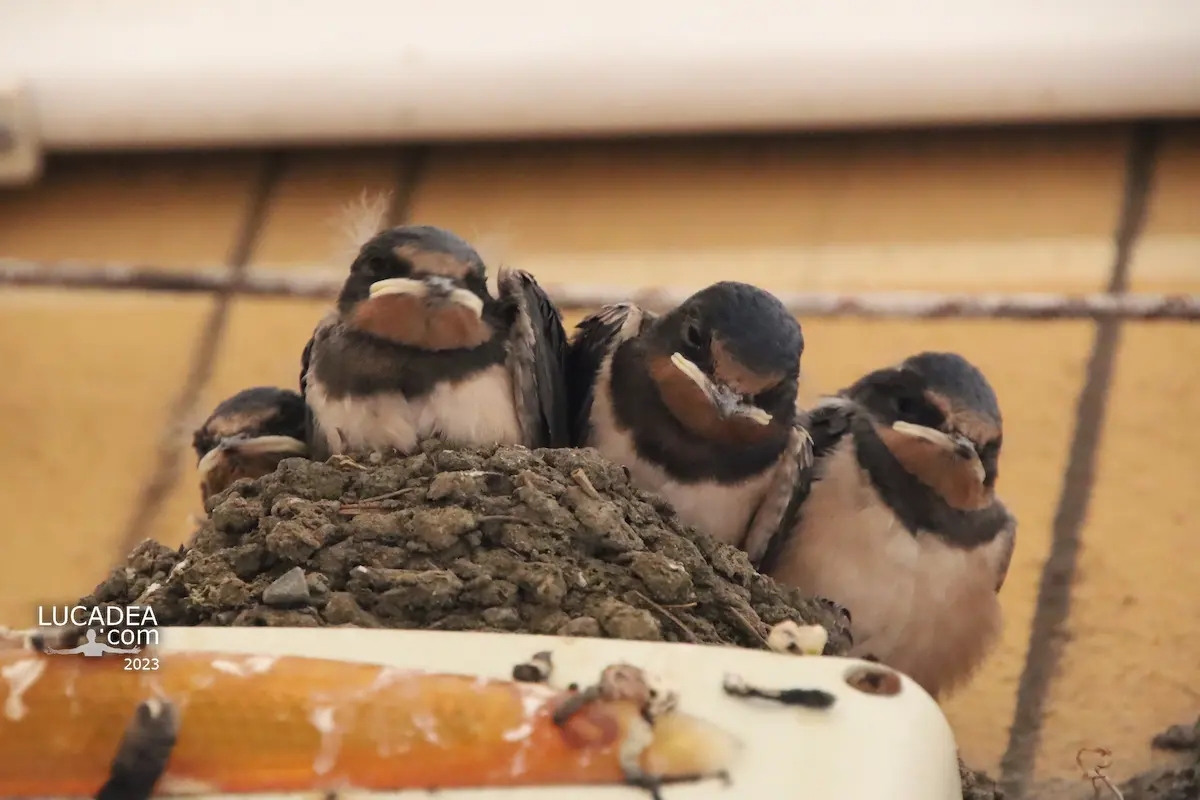
In spring and autumn, the caruggio of Sestri Levante is home every year to dozens of swallows that build their nests under balconies or beneath the awnings of the local shops.
It is one of those small natural spectacles that can be seen right in the center of town, without having to go anywhere special. All you need to do is look up while walking along the caruggio and, between the shops and old houses, you may find these little nests full of life.
The swallows fly above the houses, come and go from their nests and fill the street with their calls. Rather than simply chirping, as we often say, swallows chatter and twitter, and their distinctive calls immediately make me think of the warmer seasons.
This time I stopped to photograph one of the nests in the caruggio. The young birds, who are not really that small anymore, were waiting impatiently for their parents to return, ready for the next meal.
It is a very simple scene, but that is exactly what I like about it. The caruggio is normally associated with people, shops, walks and everyday life in Sestri Levante. In spring, however, it also becomes a small natural habitat for these birds, which return every year to occupy the same kinds of sheltered spaces.
Photographing a swallow nest in the middle of a town is a reminder of how nature can find its own space even in urban environments. A balcony, a shop awning or a small recess beneath a roof can become a safe place to build a nest and raise a new generation.
And then there are the young birds themselves, with their wide-open beaks and impatient expressions as they wait for one of their parents to return. It is the kind of scene that always makes me smile.
Sestri Levante is best known for the Bay of Silence, the Bay of Fables and its coastline, but the historic center and the caruggio also tell an important part of the story of everyday life in the town. Sometimes you simply have to look up to find something worth photographing.
This photograph is therefore a small tribute to the swallows that return to Sestri Levante every year and, with their flights and calls, bring a little extra joy to the heart of the town.

Have you ever noticed the swallow nests in the caruggio of Sestri Levante? Add a comment or go to the bottom of the site to read what other visitors have written.

Swallow nest in the caruggio of Sestri Levante with young birds waiting for their parents

Swallow nest in the caruggio of Sestri Levante with young birds waiting for their parents

Swallow nest in the caruggio of Sestri Levante with young birds waiting for their parents

Photos taken with Canon EOS RP and lens Tamron 16-300.

Where Chiusa street meets the caruggio

Via della Chiusa incontra il caruggio di Sestri Levante, tra le case del centro storico e il passaggio verso il borgo

Where Chiusa street meets the caruggio.
I almost always reach the caruggio in Sestri Levante by walking along Chiusa street, and this is the view I usually have when I enter the historic center. It has become one of those familiar perspectives that I recognize immediately, partly because when I arrive by car or motorcycle, I usually park near Market square.
There is another reason why Chiusa street has become such a familiar part of my route through Sestri Levante: my friend Alessandro has his shop here. Over time, that has made me pay attention to small details along the street that I might otherwise pass without noticing. This photograph came from one of those ordinary moments, when I stopped to look at the point where the street meets the caruggio.
Sestri Levante, in Liguria, Italy, is best known for the Bay of Silence and its position between the sea and the headland, but the historic center reveals a different side of the town when you walk through it. I am not photographing one of the famous coastal views here. The subject is a simple connection between two streets, but it also has a personal meaning because it is part of a route I take so often.
If you are wondering what to see in Sestri Levante, the beaches, bays and seafront naturally come to mind first. Yet the streets of the historic center are part of the town’s character too. Walking along Chiusa street towards the caruggio, the surroundings gradually become more enclosed, with buildings and shops coming closer to the pedestrian route.
That transition is what I wanted to keep in the photograph. I was not looking for one particular building or landmark, but for the feeling of entering the heart of the old town through a street that I know well. Photographing familiar places has always been slightly different for me. I am not discovering something unknown; instead, I am trying to stop an ordinary perspective for a moment and look at it with fresh attention.
The word caruggio belongs to Liguria’s traditional urban vocabulary and refers to a narrow street, especially one found in historic centers. The term immediately evokes the compact layout of many Ligurian towns, where buildings stand close to the pedestrian passage and streets often feel more intimate than modern roads. It is a small linguistic detail, but it helps explain why these streets have such a recognizable character.
Here in Sestri Levante, the caruggio is therefore not simply somewhere I am heading towards. It is something I encounter almost naturally whenever I follow Chiusa street. That is probably what I like most about this photograph: it shows a familiar place through a personal route, made up of parking the car or motorcycle, meeting friends, running everyday errands and eventually entering the historic center.
Alessandro’s shop adds another personal layer to this corner. It may not be the main subject of the image, but it is part of the reason why this street has become meaningful to me. A photograph of a familiar place can contain things that are not visible in the frame: the people we meet there, the routines that bring us back and the paths we repeat over the years.
I often find myself photographing Sestri Levante through these less celebrated details. Other posts on the blog have focused on different corners and views of the town, and this photograph naturally continues that visual journey, but from a more everyday and personal perspective.
For me, reaching the caruggio from Chiusa street means entering the historic center through a route I know almost by heart. It is a simple view, connected to ordinary habits rather than a special occasion, and perhaps that is exactly why it feels representative of the way I experience and photograph Sestri Levante.

What is your usual way of reaching the caruggio in Sestri Levante? Add a comment or go to the bottom of the site to read what other visitors have written.

Chiusa street meeting the caruggio in Sestri Levante, with historic buildings lining the entrance to the old town

Photo taken with a Canon EOS RP camera and a Tamron 16-300 lens.

Here is the location where I took the shot:

Mattarana’s caruggio in Vara Valley

Il caruggio nel piccolo borgo di Mattarana in provincia della Spezia

Mattarana’s caruggio in Vara Valley.
The narrow caruggio through Mattarana brings the houses close to the street, giving this small village in Vara Valley the quiet character I associate with Liguria’s inland towns.
As I walked through the village, there was no single landmark demanding attention. Instead, I found myself looking at the relationship between the buildings and the passageway: doors opening almost directly onto the street, walls standing close together, and small architectural details that become easier to notice when there is no reason to hurry.
I was in Mattarana, in the municipality of Carrodano, Liguria, Italy, and I decided to capture this simple view with my camera. The photograph came from paying attention to an ordinary part of the village rather than looking for a spectacular viewpoint. For me, that is often where the character of a place becomes most visible.
The street crossing the settlement is now known as Aldo Moro street, while the older word caruggio immediately recalls the traditional layout of many Ligurian villages. In everyday Italian usage, a caruggio is a narrow street or passage, especially associated with historic settlements where buildings stand close to one another. It is one of those words that carries a strong sense of Ligurian architecture without needing a long explanation.
Here, the caruggio is not an isolated attraction. It belongs naturally to the fabric of Mattarana, connecting the houses and creating a compact space in which everyday life takes place. That is what makes it interesting to photograph. A visitor can look at the street and, through its proportions and details, get a sense of how the village is organized without turning the experience into a formal tour.
If you are visiting Liguria and wondering what to see beyond the better-known coastal destinations, the Vara Valley offers a very different atmosphere. The landscape becomes more inland and mountainous, while the small settlements reveal another side of the region. Mattarana is part of this quieter setting, where the interest often lies in details rather than famous landmarks.
That difference also influenced the way I approached this photograph. I did not need a dramatic panorama to make the image meaningful. The narrow street, the adjoining houses and the succession of doors and windows were enough. When photographing small villages, I often find that the strongest images come from noticing how ordinary elements fit together.
The caruggio also gives a useful answer to the simple question of what makes Mattarana worth seeing. It is not necessarily about finding one major sight, but about observing the structure and atmosphere of the settlement itself. The street offers a close view of the village, allowing architectural details to become part of the photographic story.
Mattarana can easily be overlooked by travelers following the most famous routes through Liguria. Yet places like this are precisely why I enjoy photographing the inland areas of the region. They do not need to compete with the sea or with celebrated monuments. Their interest comes from their scale, their everyday appearance and the small differences that distinguish one village from another.
I have looked for a similar connection between architecture and everyday life in other photographs from my journeys through Liguria, and this image belongs naturally to that collection. The caruggio of Mattarana is a modest subject, but that modesty is part of what attracted me to it. The photograph keeps the focus on the place as I found it, without trying to turn a quiet street into something more dramatic.
For anyone exploring the Vara Valley, this kind of street can be as revealing as a more famous sight. Walking slowly, looking at the doors, walls and proportions of the buildings, it becomes possible to notice how much information can be contained in a very small space.

Would you stop to photograph a quiet caruggio like this one in Mattarana? Add a comment or go to the bottom of the site to read what other visitors have written.

Photos taken with a Canon EOS RP camera and Canon RF 24-50 lens.

To see all the photos I took in the village, click here:

Here is where the village is located:

A lively afternoon along Sestri Levante alley

Caruggio di Sestri Levante con persone che passeggiano tra negozi e case colorate in una via stretta del centro storico

A lively afternoon along Sestri Levante alley.
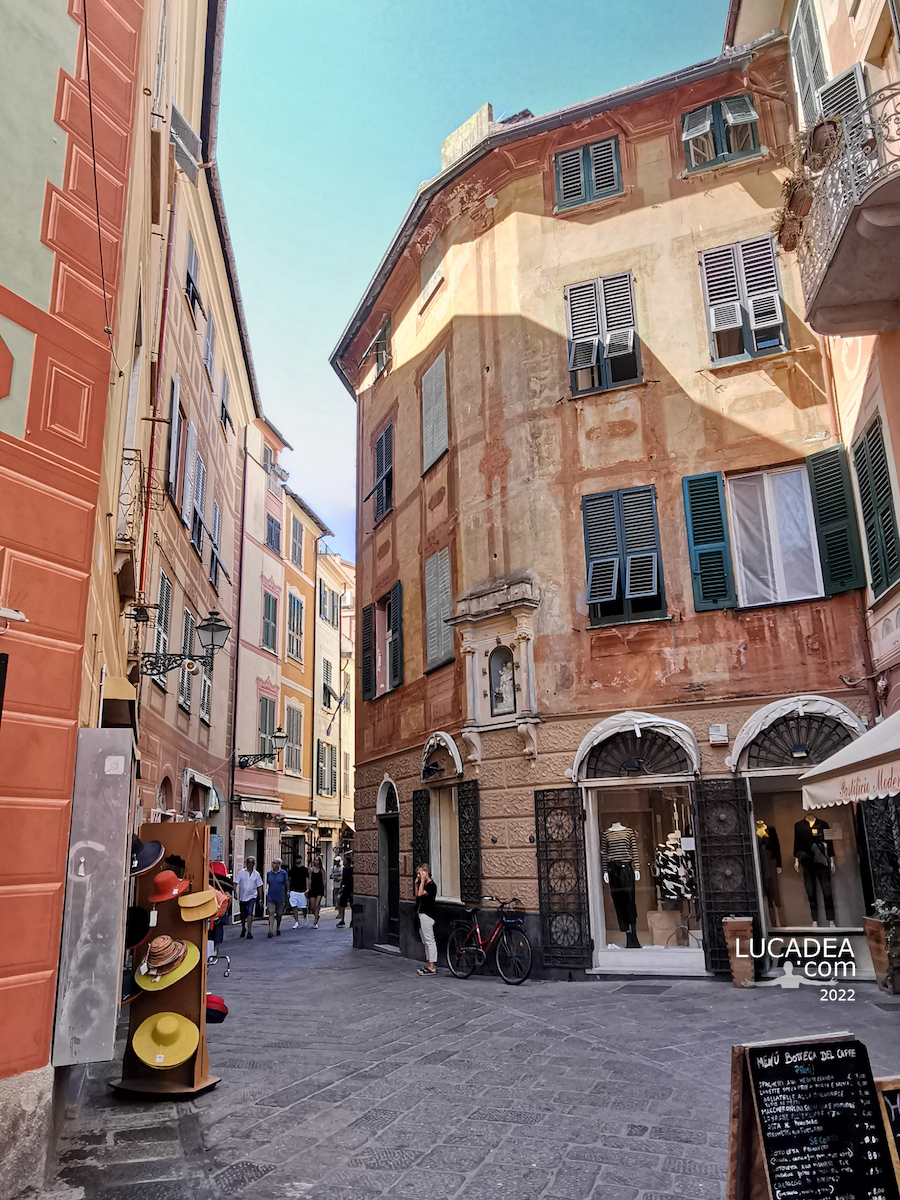
Light slips between the narrow buildings, warming the facades while the alley fills with footsteps, voices, and small everyday gestures. There is no real rush here, even though people are constantly moving; it feels more like a natural flow than a busy passage. The alley of Sestri Levante has its own rhythm, made of brief encounters, passing glances, and moments that overlap without asking to be noticed.
I walk slowly, trying not to miss anything. Open shops, modest signs, half-closed doors: everything contributes to a scene that isn’t staged, but simply happening. The warm tones of yellow and red walls reflect softly on the slightly damp pavement, creating a visual continuity that draws the eye deeper into the street. I pay attention to the people: a family walking together, a child holding a bright bag, someone pausing to chat in front of a store.
This alley is more than just a street; it is a living part of the town, a place where time seems to stretch without ever really stopping. In Sestri Levante, these narrow passages reflect a Ligurian tradition of compact, shared spaces. An interesting detail is the word “alley” here translates the local term “caruggio,” used across Liguria to describe these tight streets originally designed to protect from wind and make efficient use of limited space.
I stand still for a moment before taking the shot, watching how everything naturally falls into place. I’m not searching for perfection, just for something that conveys this sense of everyday life. When I finally press the shutter, I feel like I’ve captured only a small fragment of what was unfolding around me.

Do you enjoy watching people as they move through a street full of life like this? Add a comment or go to the bottom of the site to read what other visitors have written.

Caruggio di Sestri Levante con persone che passeggiano tra negozi e case colorate in una via stretta del centro storico

Photo taken with Canon EOS R50 V and lens Tamron 16-300.

🏠
  • Italiano