
Anchovy pizza, simple and full of flavor


Salted anchovies and the taste of simplicity.
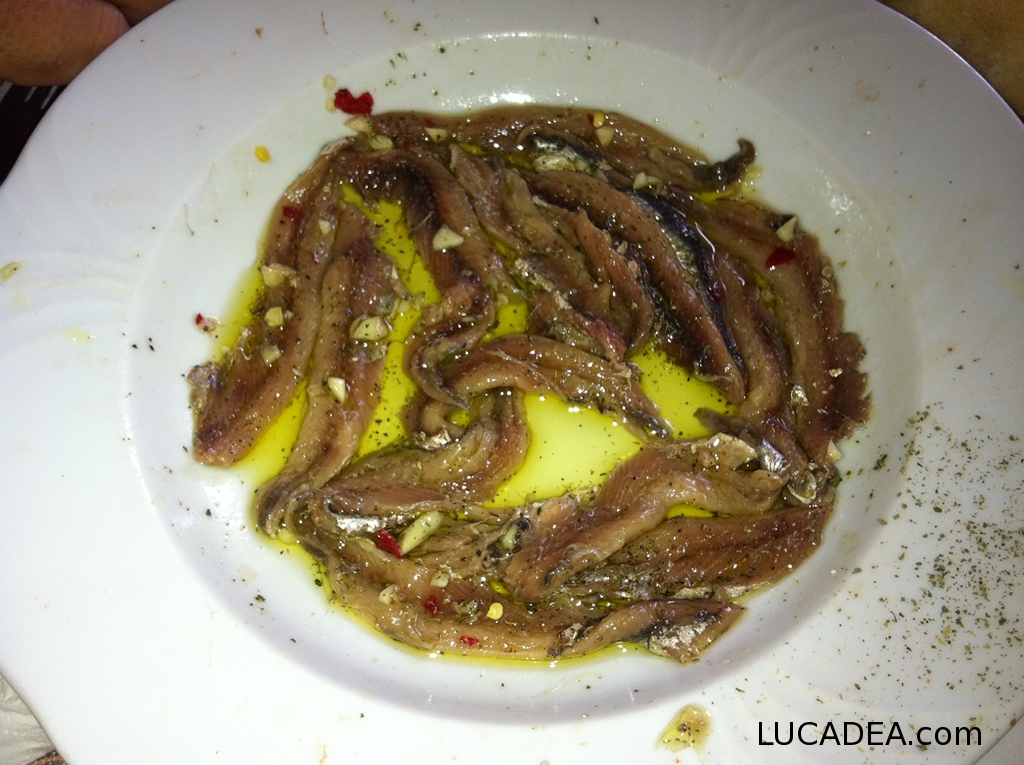
The anchovies in front of me have already been taken out of their preserving jar and dressed with olive oil, garlic, rosemary, and chili pepper. It is a straightforward way to serve them, but their strong flavor is exactly what makes salted anchovies so useful in many other dishes.
The word “poor” in the expression “poor cuisine” can sometimes be misleading. In this case, it refers to a style of cooking based on simple ingredients, practical methods, and the ability to make the most of what was available. It certainly does not mean poor in flavor. Salted anchovies are actually the opposite: they are intensely savory and can add a remarkable amount of taste even when used in small quantities.
That is what caught my attention when I photographed this dish. The anchovies had already gone through their preservation process and were ready to be eaten. A little oil surrounds the fish, while garlic, rosemary, and chili pepper add fragrance and a sharper note. Nothing is complicated, and nothing needs to be hidden.
I wanted to keep the photograph focused on the food as it actually was rather than turning it into a carefully constructed restaurant-style image. The ingredients are simple enough to speak for themselves. There is something satisfying about seeing a preserved ingredient return to the table in such an uncomplicated form.
Salted anchovies are made using salt as a preservation method. The process allows the fish to be kept for much longer than fresh anchovies and also changes its texture and concentrates its flavor. This traditional technique became particularly important in coastal communities, where preserving fish was a practical part of everyday food culture.
When I think about this kind of preparation, I also think of Genoa, Liguria, Italy, where anchovies and preserved fish have a strong connection with local culinary traditions. The photograph itself does not need to belong to that particular place, though, because salted anchovies have long been used across Italian cooking. Their ability to bring a deep savory flavor to other ingredients is what made them so enduring.
The jar itself is worth mentioning too. In parts of northern Italy, the word “arbanella” is traditionally used for a jar or container, often made of glass, used for preserving food. It is a small everyday detail, but it fits perfectly with the practical character of this kind of cooking.
If you are looking at what makes salted anchovies interesting, the answer is not only the way they are served. Their real strength is their versatility. They can be enjoyed simply with oil and herbs, but they can also be used to strengthen sauces, accompany vegetables, flavor pasta dishes, or become part of preparations where the anchovy itself is no longer the main visible ingredient.
That concentrated flavor is one of the reasons I find them so interesting to photograph. They are a small ingredient with a surprisingly large role in the kitchen. A few anchovies can change the character of a dish without requiring a long list of additional ingredients.
This photograph captures the stage after preservation, when the fish has left the jar and returned to the table. I like that transition because it connects two different moments: the practical need to preserve food and the pleasure of eating it later.
It also fits naturally with the other food-related photographs I have shared on the blog. I often find that familiar ingredients become more interesting when I stop to look at them outside the context of a complete recipe. Here, the anchovies themselves are enough to suggest a story about taste, preservation, and everyday cooking.
If you are interested in traditional Italian food, this is one of those simple ingredients worth seeing beyond its appearance: its importance comes from what it can do to the flavor of everything around it.
How do you usually enjoy salted anchovies, simply dressed or as an ingredient in another dish? Add a comment or go to the bottom of the site to read what other visitors have written.
The rights on images, videos, choruses, text and all other material on the LUCADEA.com website are governed as per Copyright page.

Edible crickets spotted on Koh Samui, Thailand.
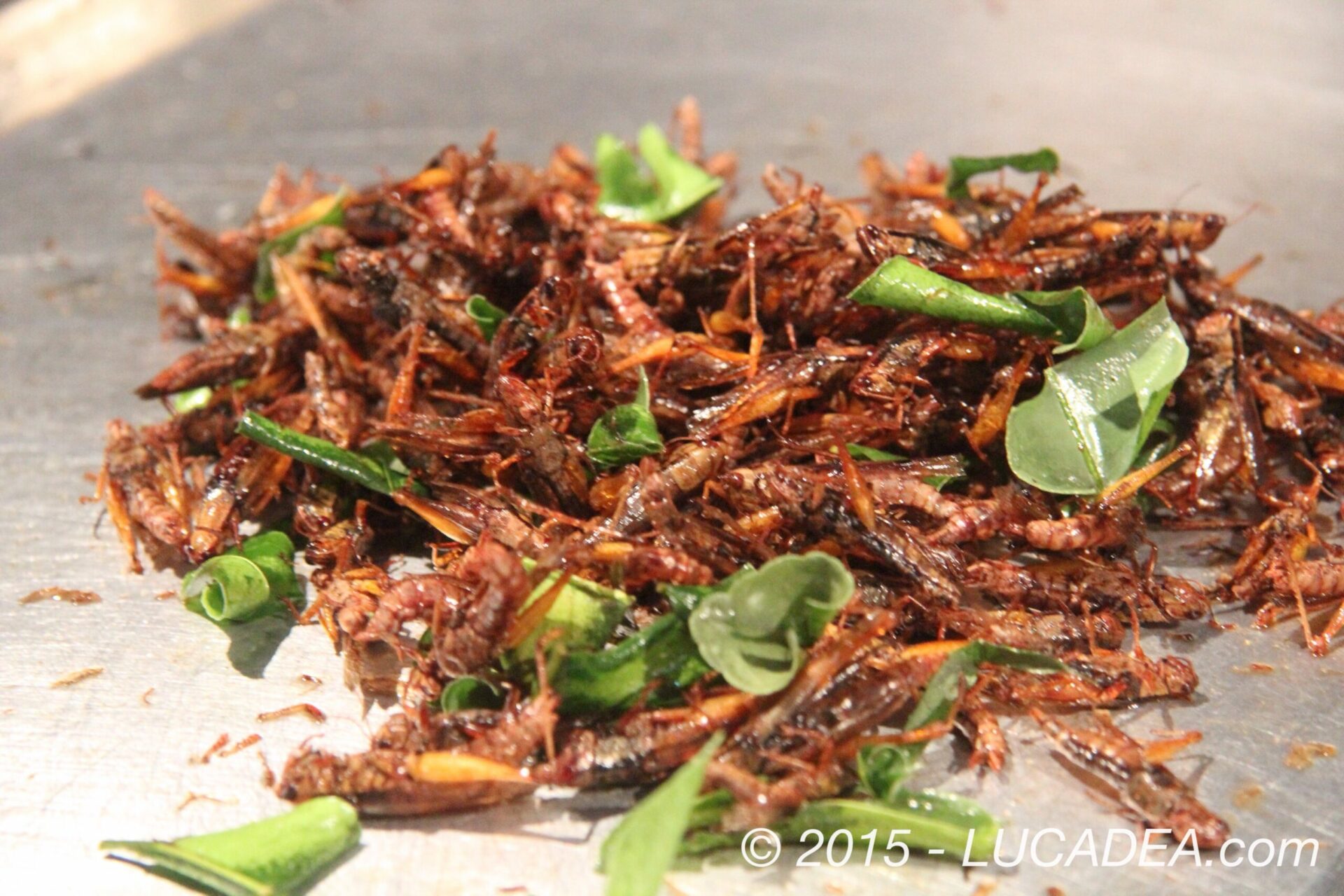
Looking at the photograph, these really do seem to be crickets, prepared and ready to be eaten as one of the many unusual insect snacks that can be found in Thailand. I had already photographed other edible insects on Koh Samui, and once again the sight was curious enough to make me take out my camera.
Their shape is immediately recognisable. Unlike some other food items that are difficult to identify at first glance, these insects look very much like crickets, gathered together and displayed ready for customers. I cannot be completely certain about the exact species from a photograph alone, though, so I prefer to describe them as crickets rather than turn an impression into a definite identification.
Edible insects are part of the food traditions of several parts of Thailand, although they are certainly not an everyday food for everyone in the country. They can appear at markets and street food stalls, where different varieties are prepared in fairly simple ways, often by frying them. The result is usually a crisp snack that can look rather unusual to a visitor from Europe.
I came across this kind of food while in Koh Samui, one of Thailand’s best-known islands. These are precisely the little details I enjoy photographing while travelling because they reveal something about local food habits without needing a staged scene or a famous landmark.
If you are visiting Thailand and looking for something genuinely different from the dishes you might normally encounter, edible insects are certainly one of the more unexpected sights at some markets. I found the visual side of it particularly interesting: trays filled with insects are difficult to ignore, especially when you are seeing them as food for the first time.
I have to admit that when faced with a tray full of insects, my first thought is probably to wonder exactly what I am looking at and, after that, whether I would actually have the courage to taste it. In this case, I was happy to stick with photography. The camera lets me get close to these unusual culinary discoveries without necessarily having to put them on my plate!
There is a small cultural detail worth mentioning. Eating insects is especially associated with parts of northern and northeastern Thailand, where the practice has deeper culinary roots. Fried insects are among the preparations that can be found as snacks, although their availability varies considerably from one place to another.
This photograph also fits naturally with other images I have taken of unusual foods and objects during my travels. Just as with the other insects I have photographed, what interests me is not deciding whether they look appetising, but preserving that moment of surprise when something very different from my usual food culture appears in front of me.
In the end, the photograph leaves me with the obvious question: would you be brave enough to taste these crickets? Add a comment or go to the bottom of the site to read what other visitors have written.
The rights on images, videos, choruses, text and all other material on the LUCADEA.com website are governed as per Copyright page.

Oven-baked sea bream with potatoes and mussels.
When I cook sea bream at home, I like to keep things simple and let the fish remain the main character of the dish. In this photograph, there are a few sea bream fillets served with potatoes and some mussels, a combination I find particularly satisfying.
Oven-baked sea bream is one of those dishes that reminds me how rewarding simple cooking can be. The flesh is delicate but full of flavour, and once cooked it works beautifully with uncomplicated side dishes. The potatoes provide a natural accompaniment, while the mussels bring an extra taste of the sea that fits perfectly with the fish.
I took this photograph at home, capturing what was actually served at the table. There was no intention of turning it into an elaborate restaurant-style presentation. It is simply one of those meals I enjoy preparing, and, at least according to the chef at home, it can easily compete with something served in a restaurant.
Food photography has a different rhythm from photographing streets, landscapes or buildings. With a plate like this, the photograph is tied to a very specific moment: the meal is ready, everything is on the table, and there is usually not much time to think about the composition before somebody starts eating.
I like that spontaneity. A photograph of food can preserve the memory of an ordinary lunch or dinner just as effectively as a photograph from a journey. Sometimes the most familiar moments are precisely the ones that are worth keeping.
Sea bream with potatoes is also a wonderfully flexible preparation. It can remain very simple, allowing the natural flavour of the fish to stand out, or it can be enhanced with a few herbs and seasonings. Baking is particularly convenient because the fish and the side dish can be prepared together without requiring complicated cooking techniques.
There is a small detail behind the name of sea bream itself. The fish is easily recognised by the distinctive golden band between its eyes, which becomes especially noticeable when the fish is whole. It has long been appreciated around the Mediterranean and is commonly prepared baked, grilled or with other straightforward methods that preserve its delicate flavour.
In this image, however, what catches my attention is simply the finished plate: the sea bream fillets, the potatoes beside them and the mussels completing the meal. It is quite different from the photographs of Ligurian villages, streets and seaside views that usually appear on my blog, but food is also part of the places and memories I want to record.
And yes, I have to admit it: at my house we cook like a restaurant. Actually, better!
How do you like to cook sea bream? Add a comment or go to the bottom of the site to read what other visitors have written.

Photo taken with Canon 600D and Canon EF 40.

Testaieu with pesto at Turin in Sestri.
When I am in the centre of Sestri Levante with friends and an aperitivo runs later than expected, we often end up stopping somewhere for something to eat. Testaieu with pesto is one of the dishes I am always happy to choose, especially when I want something simple with a strong connection to Ligurian cuisine.
I took this photograph at Turin in Sestri Levante, Liguria, Italy, during one of those evenings. It was not a dinner planned around discovering a particular dish. We were already in town, the aperitivo had gone on for a while, and eventually we decided to stop for something quick to eat. These ordinary moments are exactly the kind of memories I like to keep through photographs.
The plate shows testaieu, also known as testaroli in Italian, served with pesto and a little grated Parmesan. It is one of my favourite combinations. The pesto immediately brings the flavour I associate with Ligurian cooking, while the texture of testaieu is quite different from the pasta we normally imagine served with this sauce.
Testaieu is a traditional Ligurian preparation, particularly common in the eastern part of the region. One small detail I find interesting is the connection between the dish and the traditional testi used for cooking it. These are terracotta cooking vessels that are heated before the mixture is prepared, giving the finished food its distinctive character.
What I like about testaieu is that they do not need much else. The pesto already provides plenty of flavour and aroma, while the Parmesan adds a slightly stronger savoury note. When I have a plate like this in front of me, I am not looking for an elaborate preparation. I simply want to enjoy it.
That is also why I took the photograph. I did not prepare the dish for the camera and I did not create a special setting around the table. I simply wanted to capture something I had actually chosen to eat, something that represents one of the small routines of evenings spent in Sestri Levante.
Turin is one of the places where we sometimes stop when we are already in the centre. I do not want to turn this post into a full restaurant review, because the photograph and the dish remain the main subjects. For people interested in other opinions about the restaurant, the original post included a TripAdvisor review of Turin.
If you are visiting Sestri Levante and looking for something connected with local food, testaieu are certainly a dish worth knowing. They are not simply another type of pasta found everywhere, and that local character is part of what makes them interesting to me.
I had already photographed testaieu with pesto on another occasion, at Da E Figge Du Baratta. There is also an English article on Lucadea about testaieu with pesto cooked in the testi, which fits naturally with this photograph and creates a direct connection between the two memories without using the Italian version of the article.
Pesto is probably one of the flavours I most naturally associate with Liguria. With testaieu, I think it works particularly well because the dish remains uncomplicated while still having plenty of character. The Parmesan adds another small detail, and for my taste it completes the combination nicely.
I also enjoy photographing food without trying to make every image look like a professional food campaign. The plate arrives at the table, I look at it, I think it is something worth remembering and I take the photograph. The image remains connected to the actual moment rather than becoming a carefully constructed scene.
If you enjoy Genoese pesto and would like fresh Basilico Genovese DOP delivered anywhere in Italy, I had also included this offer for fresh Genoese Basil DOP in the original article.
There is another reason I like having food photographs on the blog. They allow me to tell the story of Sestri Levante from a different perspective. When people think about the town, the sea, the Baia del Silenzio, the beaches and the views naturally come to mind. But there is also the everyday side of the town: friends, aperitivi, restaurants and traditional dishes.
Testaieu are particularly well suited to this kind of story because of their connection with the local area. I did not choose them because they happen to look good in a photograph. I genuinely enjoy eating them, and they are one of the traditional dishes I am always happy to find when I am around Sestri Levante.
For me, pesto remains probably the favourite combination. The texture of the testaieu holds the sauce nicely, while the Parmesan adds a final savoury touch without making the dish complicated. After an aperitivo with friends, it is exactly the kind of informal dinner I enjoy.
This photograph therefore says very little about a major event and quite a lot about an ordinary evening in Sestri Levante. That is precisely why I wanted it in the photoblog. Simple moments can still be worth remembering when they are connected with a place, good food and people I enjoy spending time with.
I like that this photograph can also sit alongside the other food memories on Lucadea. Looking at them together, the subject is not really just food: it is the connection between local dishes, familiar places and the ordinary moments in which I happen to photograph them.
For me, that is what makes a food photograph worth keeping. It does not have to show something sophisticated or unusual. What matters is that the photograph has a real connection with the place, the people and the moment when I pressed the shutter.
Have you ever tried testaieu with pesto, and which sauce do you prefer with them? Add a comment or go to the bottom of the site to read what other visitors have written.
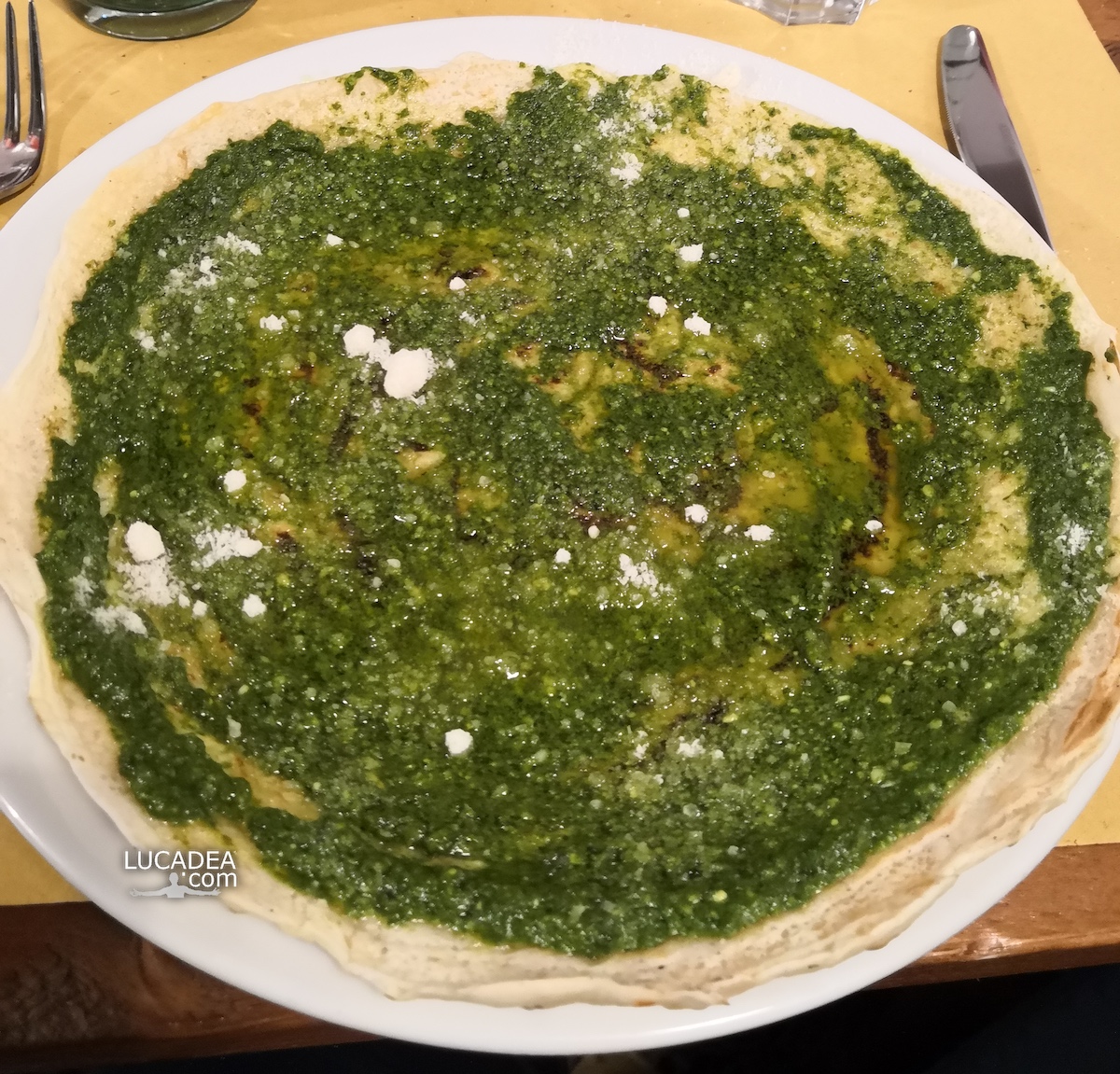
Photo taken with Honor 10.

Lobster in Moneglia, lunch at La Ruota.
Among the things worth seeing and experiencing in Moneglia, there is also the simple pleasure of sitting down for a good meal, especially when a generous lobster dish arrives at the table. I remember that lunch at La Ruota quite clearly, with the village and the Ligurian coast providing the setting for a relaxed midday meal.
Some time ago I was invited to have lunch at this restaurant in Moneglia, and this was the dish that made me reach for my camera. There was plenty of lobster on the plate, enough to make the meal feel immediately special without needing an elaborate presentation. I like photographs like this because they preserve something very ordinary and very personal at the same time: a meal shared with other people, a place I happened to be visiting, and a dish that deserved to be remembered.
The view from the dining room was almost a second part of the experience. The village and the coastline provided the wider setting, while our attention was naturally drawn back to the food in front of us. I did not take this photograph as a restaurant review or as a promotional image. I simply wanted to keep a visual memory of that invitation and of a particularly generous seafood course enjoyed during lunch.
If you are visiting Moneglia and looking for things to see as well as places connected with local food, this kind of moment can become part of the memory of the town. Moneglia is in Liguria, in the Province of Genoa, Italy, and its position along the Ligurian coast gives the village a particular relationship with the sea. In this case, however, I was not trying to create a classic coastal photograph. I was simply having lunch, enjoying the occasion, and noticed that the meal itself was worth photographing.
One small curiosity about lobster is the dramatic change in appearance that takes place during cooking. Live lobster can have darker bluish or brownish tones, while cooking brings out the familiar red-orange color associated with the finished dish. It is a simple detail, but one that makes seafood interesting to photograph because its visual appearance changes so noticeably between the kitchen and the plate.
What makes this photograph meaningful to me is therefore not only the lobster. It is the combination of food, company and place. La Ruota became part of my memory of Moneglia through this lunch, while the view from the room connected the meal with the coastal landscape outside. A photograph can sometimes work precisely because it does not try to explain everything. It keeps one particular moment and lets the details bring the memory back.
This image also fits naturally with the other stories from Liguria that I have shared on the site. In some of those photographs the landscape or architecture takes center stage; here, the subject is much closer and more immediate. The wider setting is still present, but it remains in the background, leaving the lobster to tell the story of that particular lunch.
There is also something I like about photographing food during a trip or a visit to another place. These images are often less planned than photographs of monuments or landscapes, but years later they can bring back very specific memories. In this case, the lobster immediately reminds me of that lunch at La Ruota and of the view from the dining room.
Looking at the photograph again, I remember more than what was on the plate. I remember being there, sitting down for lunch and discovering that the view from the room made the whole experience feel connected to Moneglia itself. That is why I wanted to keep this image in the blog: it records a real moment rather than simply a dish.
Would you choose a generous lobster dish like this for lunch in Moneglia? Add a comment or go to the bottom of the site to read what other visitors have written.


Photo taken with Honor 20.
This is the restaurant’s website: laruotamoneglia.it.

Genovese Ravioli with Tuccu at Raviolhouse.
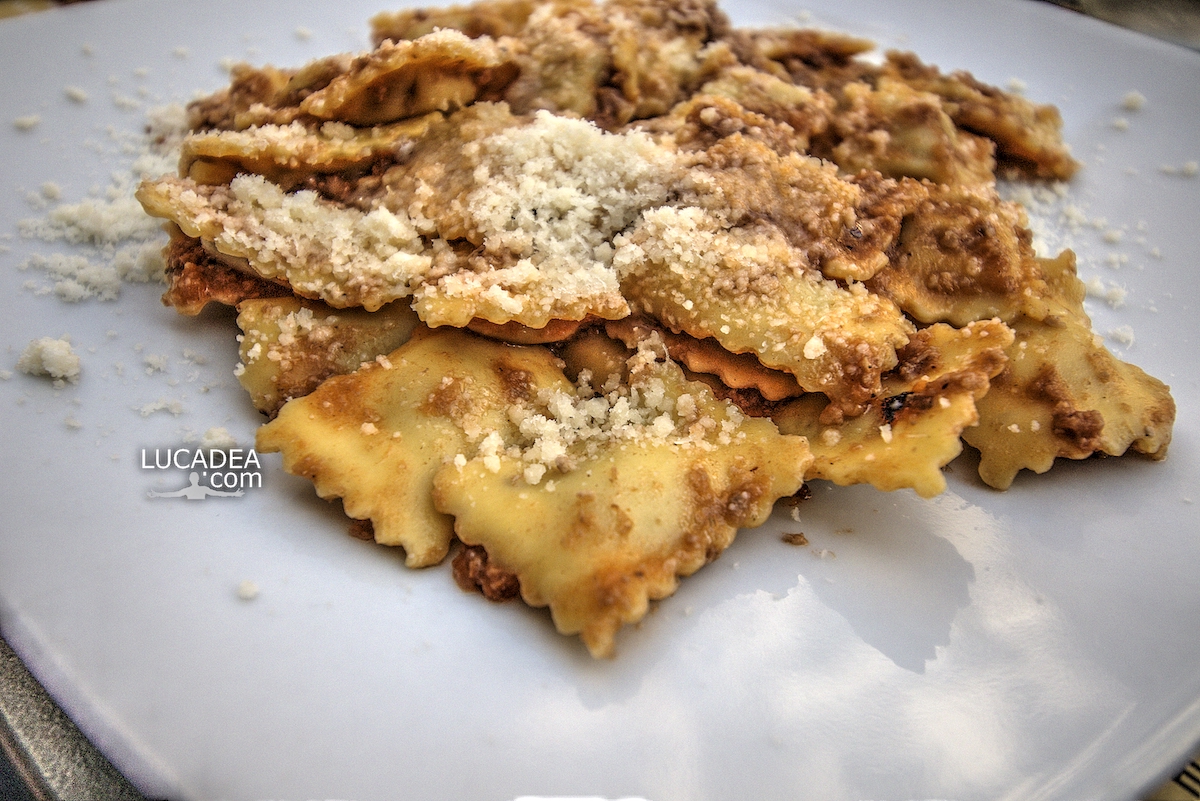
After seeing how deeply ravioli belong to Ligurian food traditions, I felt like returning to one of the dishes I enjoy most through a photograph. This time the subject is a plate of Genovese ravioli with tuccu that I ate at Raviolhouse in Genoa, a restaurant whose name already makes its speciality quite clear.
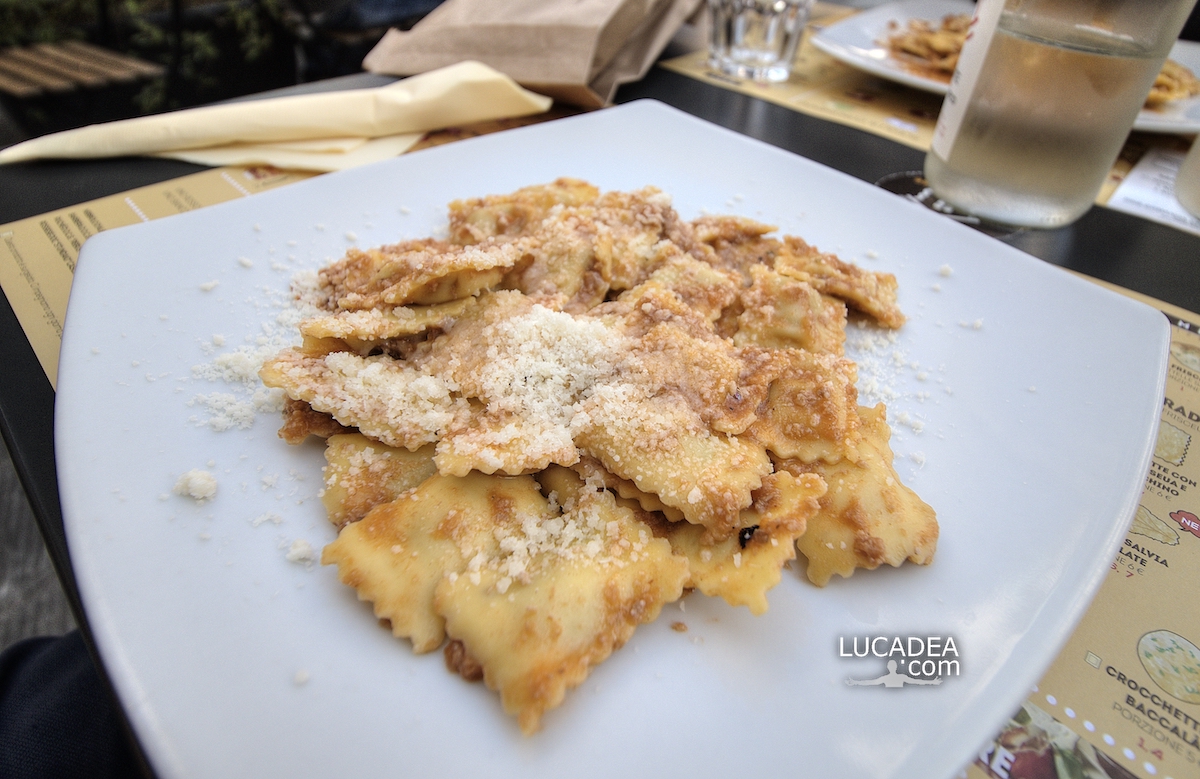
The photograph shows a plate of ravioli covered with tuccu, the traditional Genovese meat sauce. Even at first glance, it is clear that filled pasta is the real focus here. Raviolhouse keeps its menu centred mainly on ravioli, with different fillings and sauces and relatively little else. For someone like me who never gets tired of filled pasta, that is a rather appealing idea.
For this dish I chose the classic meat-filled ravioli. This is worth mentioning because Ligurian ravioli are also often associated with fillings containing vegetables and ricotta. Here, however, the meat filling is paired with what I consider one of the most traditional combinations: filled pasta served with tuccu.
I wanted to photograph this dish because it represents the kind of food I continue to look for when I explore Liguria. It is not a preparation designed to impress through complicated presentation. It is simply pasta, sauce and tradition. Yet when the plate arrives, there are plenty of details worth capturing, from the deep colour of the sauce to the shape of the ravioli and the way the tuccu coats the pasta.
If you are wondering what to eat in Genoa when you want to try ravioli with traditional Genovese meat sauce, Raviolhouse naturally belongs to the conversation. The name of the restaurant leaves little doubt about its focus, and the menu follows that idea, putting ravioli firmly at the centre.
There is a small detail I particularly like about the word “tuccu”. In Genoese dialect, it refers to the traditional meat-based sauce used with pasta and is associated with slow cooking, which allows the sauce to develop a deep and concentrated flavour. It is quite different from a quick everyday meat sauce and belongs to a well-established tradition of home cooking in Genoa.
This plate also connects naturally with other food stories I have shared on the blog. If you enjoy ravioli with meat sauce, you can continue with my personal ranking of the restaurants where I have eaten some of the best ravioli with ragù in the eastern part of the Province of Genoa. It is another way of following this small gastronomic journey through my photographs.
There is another connection that I am particularly happy to keep here. Some time ago I wrote about the tuccu made at home, showing how deeply this sauce belongs to family cooking as well as to restaurant menus. This time, instead, I wanted to see how the same tradition appears in a Genoese restaurant specialising in filled pasta.
The reason I chose to publish this photograph was also linked to a small coincidence. On a day when ravioli with sauce were once again the kind of dish being enjoyed in many Ligurian homes, I felt like bringing this older image back to the blog. Some foods simply need very little explanation. Mentioning ravioli with tuccu is often enough to bring back the idea of a generous plate of pasta and a slow-cooked sauce.
Looking at the photograph, what interests me most is the simplicity of the dish. The ravioli remain clearly visible while the tuccu brings everything together with its rich sauce. It is a combination deeply connected with Genovese cooking and, at least for me, one that never really loses its appeal.
Have you ever tried ravioli with tuccu in a restaurant in Genoa, or do you prefer them prepared at home? Add a comment or go to the bottom of the site to read what other visitors have written.
Photos taken with Canon EOS M100 and lens Canon EF-S 10-18.

Ligurian ham and cheese fried sticks.
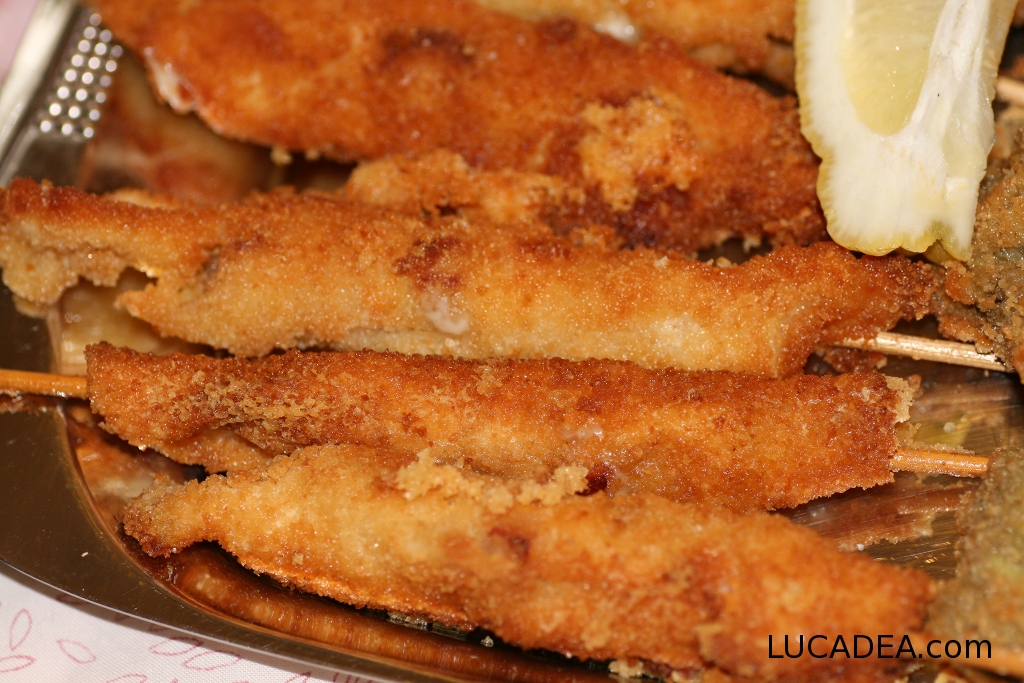
Just looking at these little fried treats is enough to remind me of the traditional mixed Italian fry that is so familiar around my part of Liguria. Ham and cheese fried sticks are a fairly common presence in trattorias and restaurants along the Riviera di Levante and its inland valleys, especially when the traditional fried selection arrives as part of a main course.
The ones in this photograph, however, did not come from a restaurant. My mother made them at home and, judging by how they turned out, they could easily have been served in a good local trattoria. That is exactly what made me want to photograph them. They are a nice example of the kind of Ligurian home cooking that can reproduce dishes usually associated with restaurants with remarkable care.
The idea behind these sticks is quite simple, although preparing them properly takes some attention. Small cubes of ham and cheese are threaded onto a long wooden toothpick. The filling is then wrapped in a thin wafer-like sheet, coated in breadcrumbs and finally deep-fried. The result is a crisp golden shell hiding a soft and savoury centre.
These fried sticks are associated with the culinary traditions of the Riviera di Levante in Liguria, Italy. If you are wondering what to eat in eastern Liguria beyond the region’s most famous dishes, this is one of those smaller local specialities that may be unfamiliar to visitors but immediately recognisable to people who grew up eating them.
What I like about them is that the ingredients themselves are not particularly complicated. Ham and cheese are everyday foods, while the thin wafer helps hold the filling together before the final coating and frying. It is the cooking process that changes everything, creating the crisp exterior that makes these little sticks so tempting.
They are also an interesting subject to photograph because their elongated shape immediately gives away their identity. The breadcrumb coating hides almost everything inside, so you have to imagine the ham and cheese before taking the first bite. For this photograph, I preferred to leave them just as they had been prepared rather than creating an elaborate food scene.
There is a small detail behind their name that I find quite practical. The long toothpick running through the filling gives the preparation its characteristic form and helps keep everything together while the sticks are being assembled and fried. It is a very simple solution, but an effective one when several of them have to be prepared for a mixed fried dish.
In the local cuisine I know, mixed Italian fried food is one of those dishes that needs very little introduction. The exact ingredients can change from one area to another, but in the version familiar to me, these ham and cheese sticks often have their own place on the plate. They are almost expected, to the point that a mixed fry without them can feel slightly incomplete.
What I find particularly interesting is that something so closely associated with local restaurants can also be prepared at home. These were entirely made by my mother. The photograph therefore becomes another small record of family cooking, much like the Genovese cima I photographed and wrote about in another post on the blog.
This is the kind of food photography I enjoy sharing here: not only elaborate restaurant dishes, but also the preparations that belong to everyday life and that someone visiting Liguria might not necessarily know.
Looking at the photograph, the hardest part is probably resisting the temptation to eat one immediately. The golden coating gives a good idea of the crisp texture, while the ham and cheese remain hidden inside until the first bite reveals the filling.
For me, these little fried sticks represent a very familiar side of cooking in eastern Liguria: straightforward, connected to local habits and able to turn a handful of simple ingredients into something memorable because it belongs to a particular food tradition.
Have you ever tasted these ham and cheese sticks in a trattoria along the Riviera di Levante, or have you ever made them at home? Add a comment or go to the bottom of the site to read what other visitors have written.

Greek octopus salad from Santorini.
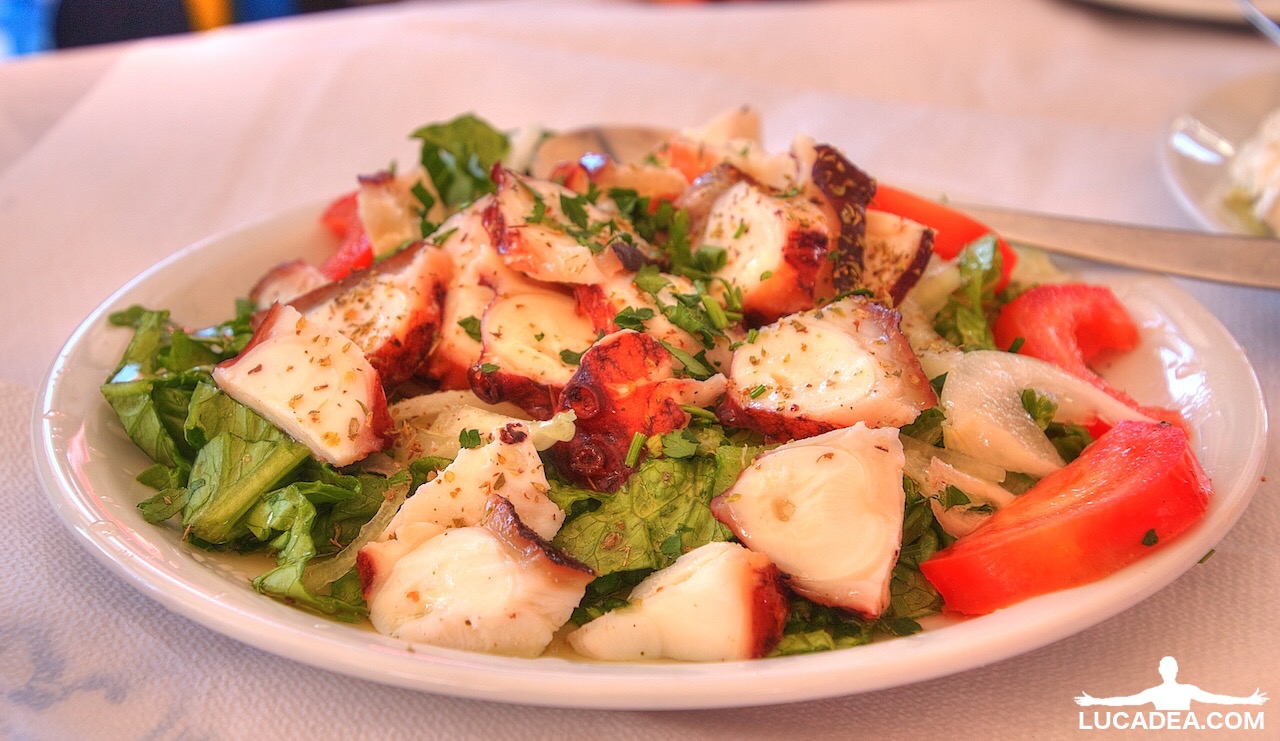
While I was in Santorini, Greece, I found myself looking at a simple but very appealing dish in which octopus was clearly the main ingredient. This Greek octopus salad, made with fresh vegetables, olive oil, vinegar and oregano, is the kind of food that can say quite a lot about local cooking without needing a long list of ingredients.
Many of my recent food photographs have focused on seafood, and octopus in particular has appeared several times. Whenever I come across a dish that catches my attention, I like to photograph it before eating, trying to preserve something of the moment rather than creating an image that feels too carefully arranged.
Here the ingredients were straightforward: lettuce, onion, tomatoes and stewed octopus, dressed with a little olive oil and a few drops of vinegar. A light sprinkling of oregano finished the dish and immediately gave it a flavour that, at least to me, feels closely connected with Greek cooking.
I took this photograph myself in Santorini during my trip to Greece. I did not want to turn the plate into an overly staged food photograph. I simply wanted to show what was actually in front of me. I enjoy food images more when they retain something of the real situation in which they were taken, because they become part of the memory of the journey rather than looking like catalogue photographs.
If you are wondering what to eat in Santorini, octopus is one of the ingredients you can easily encounter in the island’s local cuisine. Being surrounded by the Aegean Sea, it is natural for seafood to have an important place on local tables, and octopus can be prepared in several different ways, from grilled dishes to slower cooking methods and cold preparations such as the salad I photographed.
What I liked about this particular salad was the balance between the ingredients. The octopus brings its distinctive texture, while lettuce and tomatoes add freshness. Onion, vinegar and oregano give the dish more character, while olive oil brings everything together without making the preparation feel complicated.
It is not the kind of dish that needs a complicated explanation. The photograph immediately reveals most of the main ingredients and gives an idea of what the combination might taste like. This is one of the things I appreciate about Mediterranean cooking: a relatively small number of ingredients can be enough when they work well together.
Octopus has also long been an important ingredient in the cooking of Greek islands and coastal communities. One small culinary curiosity is that Greek tavernas commonly serve octopus grilled or cooked after being allowed to dry, a traditional practice connected with preparing and preserving the catch. It is a simple detail, but it reflects the long relationship between island communities and the sea.
In Santorini, food and landscape often seem to belong to the same Mediterranean setting. Even when sitting at a table with a relatively uncomplicated dish, the ingredients can evoke the island around you. Tomatoes, olive oil, oregano, vegetables and seafood all belong to a very recognisable culinary landscape.
That is why the simplicity of this photograph appealed to me. There was no need to add many elements or create an elaborate composition. The colours of the vegetables, the pieces of octopus and the dressing were enough to tell the story.
After photographing so many places, monuments and city details during my travels, I enjoy occasionally switching to something much more ordinary: a dish that has just been served. Food photographs preserve another part of a journey, the pauses at a table and the meals that can become just as memorable as a beautiful view.
This Greek octopus salad belongs exactly to that kind of memory. It may not be the most elaborate dish I encountered in Santorini, but it caught my attention and, naturally, it also caught the attention of my camera.
I also like the fact that the photograph does not really tell only the story of the food. It brings back the journey in which I discovered it. Santorini remains part of the memory behind the image, while the plate becomes a small reminder of time spent in Greece.
In other food stories on my photo blog, I have also written about dishes I encountered while travelling, always trying to keep the personal experience and the photograph at the centre. Here, I am returning to Greek flavours through a preparation that is simple and immediately recognisable.
Sometimes these uncomplicated dishes are the ones that stay with us. A portion of octopus, a few vegetables, olive oil, vinegar and oregano: ordinary ingredients that together bring back some of the Mediterranean atmosphere I experienced in Santorini.
Have you ever tried octopus salad while travelling in Greece? Add a comment or go to the bottom of the site to read what other visitors have written.
Photos taken with Canon 600D and Tamron 16-300.

Ravioli with meat sauce at Cantarana.
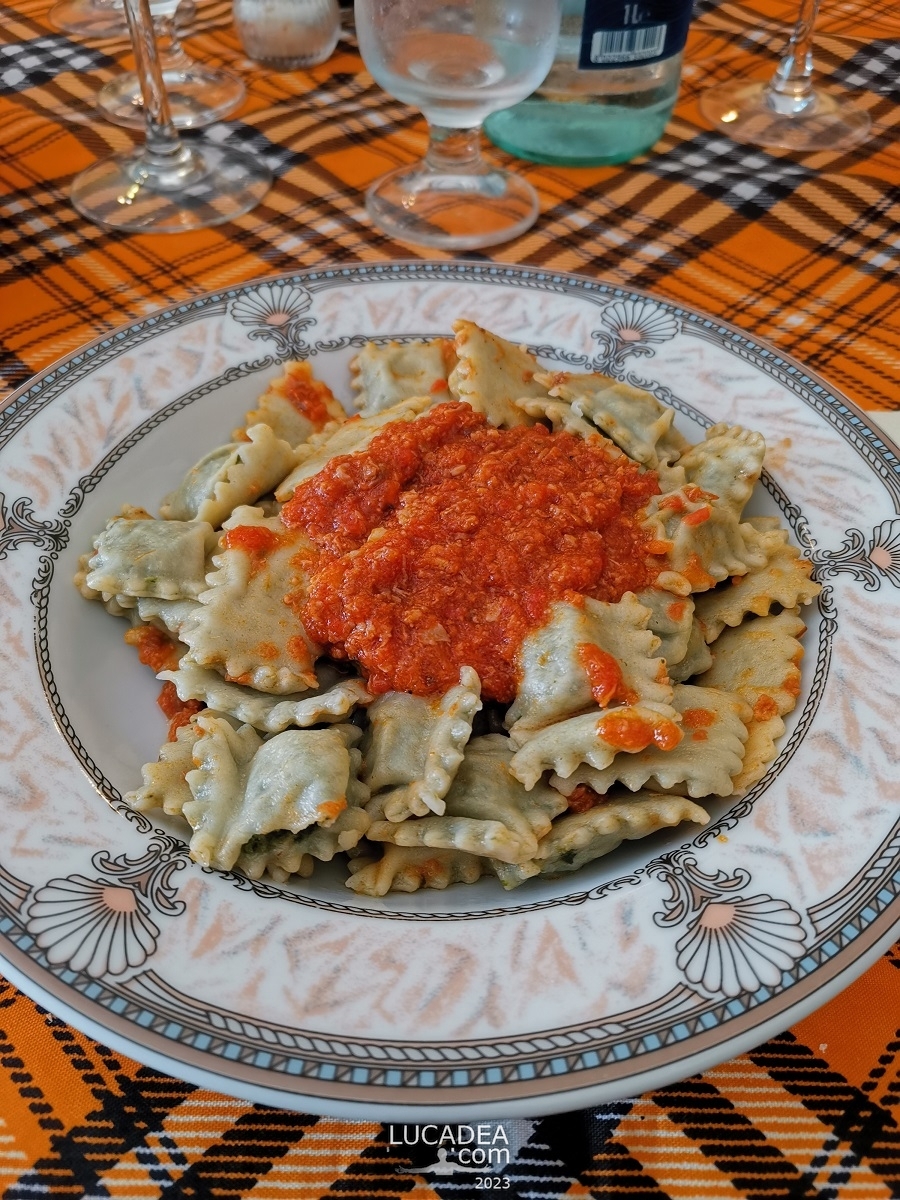
A few months ago, following a recommendation from some friends, I went to Sesta Godano, in the Province of La Spezia, to try the ravioli at Ristorante Cantarana. It was one of those simple food outings that ends with a new place being added to your personal list of restaurants worth remembering.
The plate in front of me looked immediately inviting: large, plump ravioli served generously and covered with a rich meat sauce. The filling was substantial, but what really convinced me was the combination of pasta, filling and sauce. The local Ligurian tuccu added plenty of flavour without taking away the character of the ravioli.
When I think about ravioli with meat sauce in Liguria, this is exactly the kind of balance I look for. I like being able to recognise the pasta, taste the filling and still have a savoury sauce that brings everything together. At Cantarana, I found that balance and, most importantly, I enjoyed the dish from the first raviolo to the last.
Ristorante Cantarana is in Sesta Godano, Liguria, Italy, in the inland part of the Province of La Spezia. This is an area where traditional cooking remains strongly connected to local recipes and to the substantial dishes that have long been part of the cuisine of the Ligurian inland.
I took this photograph because I like keeping a visual memory of meals that make an impression on me. When a dish looks particularly good, I usually photograph it before starting to eat. In this case, the generous portion also makes it easy to understand just how substantial the plate was.
There is a small culinary detail that is worth mentioning about the word tuccu. In Ligurian cuisine, it traditionally refers to a meat-based sauce prepared slowly to develop a rich and savoury flavour. The exact preparation can vary from one local area to another, but the idea of a slow-cooked, flavourful sauce is central to the tradition.
At Cantarana, the sauce played an important role in the dish. It was not simply something placed over the ravioli at the last moment. It helped create the overall balance, adding flavour while allowing the pasta and filling to remain clearly recognisable.
If you are looking for where to eat ravioli with meat sauce in the inland area of the Province of La Spezia, this is a place I would personally keep in mind. Not because my opinion should be considered an absolute verdict, but because I left with the very simple feeling that I would happily return.
That matters to me when I visit a restaurant. I can enjoy a dish without necessarily wanting to order it again, while here the conclusion came quite naturally: I liked the ravioli, and Cantarana became one of those places I would be happy to revisit.
The portion was another aspect I appreciated. The ravioli were large and generous, exactly what I hope for when ordering a traditional dish. It did not feel like a plate designed simply to look good in a photograph. It was a substantial meal meant to be enjoyed at the table.
This experience also connects with a food search I have been following on the blog for quite some time. I have collected my personal selection of the best ravioli with meat sauce in eastern Liguria, based on the restaurants where I have actually tasted them.
Cantarana fits naturally into that ongoing search because every new restaurant gives me another point of comparison. It is not a scientific competition and it is not meant to be one. It is simply a collection of my own meals, photographs and personal preferences.
hat is also what I enjoy about traditional food. A dish that sounds almost identical on a menu can be completely different from one kitchen to another. The pasta, filling, sauce, proportions and serving style can all change. In the end, however, what matters most is the impression the meal leaves behind.
In the case of the Cantarana ravioli, that impression was definitely positive. They were plump, generous and served with a savoury tuccu, making them one of those dishes that immediately made me think it would be good to come back.
The photograph therefore represents more than a plate of pasta. It records a meal, a recommendation from friends and a small culinary discovery in the Province of La Spezia. This is one of the reasons I continue photographing the food I eat during my outigs: behind a picture of a dish there can be the memory of a place and the discovery of something worth tasting again.
Sesta Godano has now become another stop in my personal search for great ravioli with meat sauce. And, at least this time, my friends’ recommendation turned out to be exactly right.
Have you ever tasted the ravioli with meat sauce at Cantarana in Sesta Godano? Add a comment or go to the bottom of the site to read what other visitors have written.


Photos taken with Honor 20.
