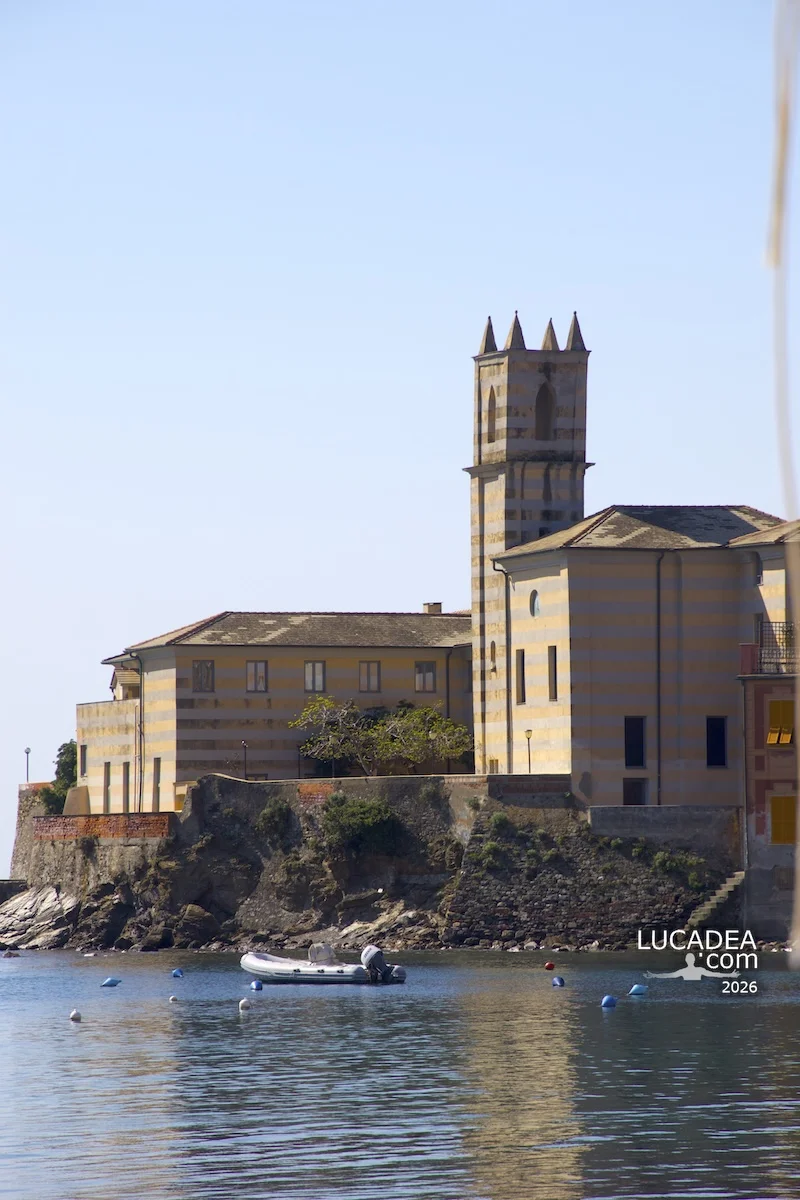
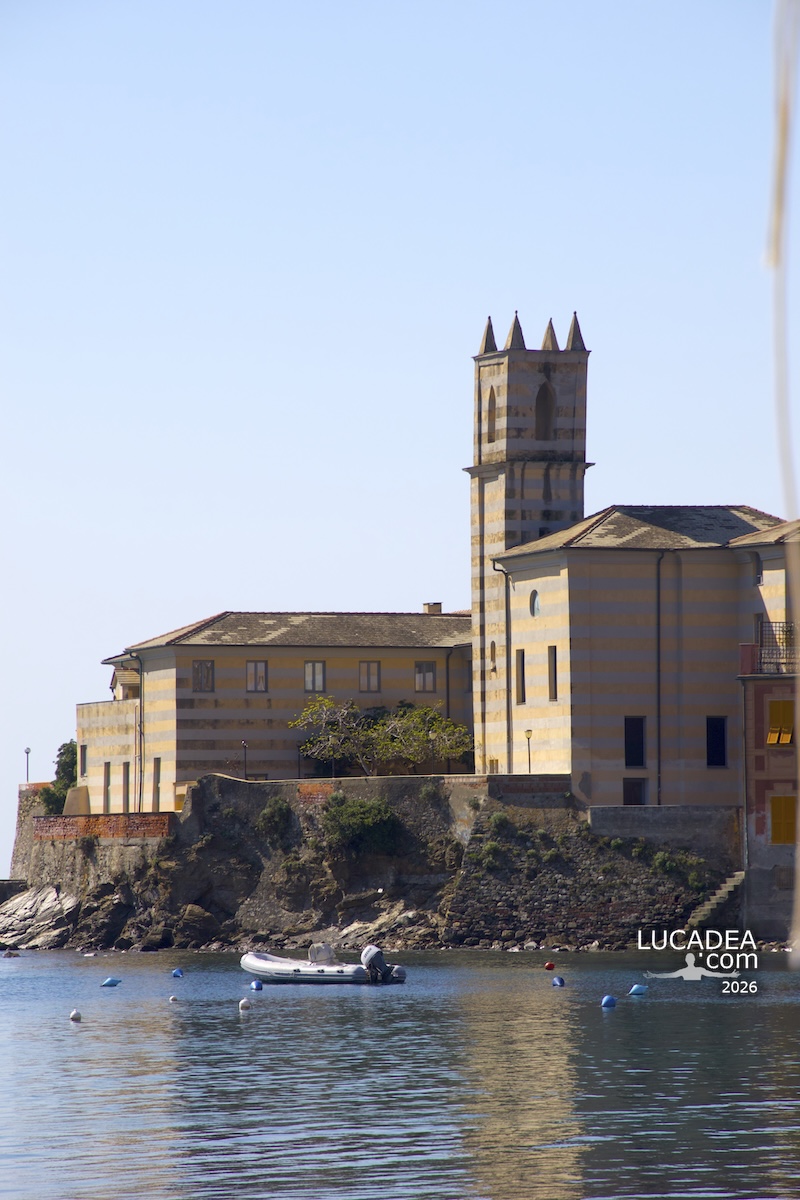
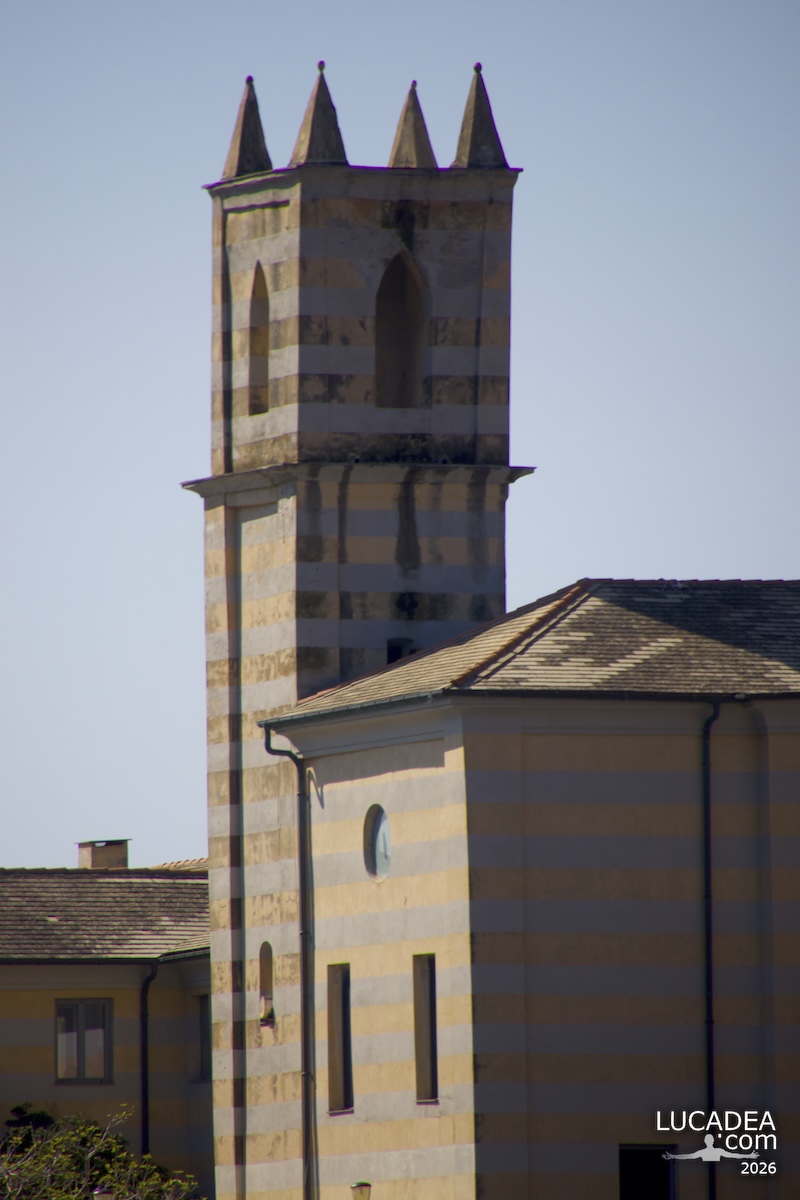
Annunziata seen from the Bay of Silence.
When thinking about the Bay of Silence in Sestri Levante, one of the most iconic views is the Annunziata building facing the calm water. If you are looking for things to see in Sestri Levante, this spot captures the essence of Liguria in a quiet and authentic way.
I was standing along the Bay of Silence without chasing the perfect frame, just letting the stillness guide me. The former Annunziata convent stood there with its soft colors and clean lines, reflected gently on the water’s surface. It’s one of those scenes that answers the question of what to see in Sestri Levante, Italy without needing any explanation.
Sestri Levante, Liguria, Italy is known for its dual coastline, but here everything feels more intimate. The sounds are softer, movements slower, and even the small boats seem to drift with more care. Looking at the Annunziata from this angle gives a sense of balance, as if the entire scene has quietly settled into place.
It reminded me of another photograph I took nearby, from a different side of the bay, where the light created a completely different mood. That time the sea felt more alive, while here it seemed almost still, holding the moment in suspension. It’s fascinating how the same place can tell different stories depending on where you stand.
A small historical note adds depth to the view: the Annunziata complex dates back centuries and has served various purposes over time, and today it hosts cultural events and exhibitions. Knowing this makes the scene feel layered, as if those walls have witnessed countless moments like this one.
If you are visiting Sestri Levante, this is definitely one of the most interesting places to see, not for its grandeur but for its quiet presence.
Have you ever looked at a place from afar and still felt completely connected to it? Add a comment or go to the bottom of the site to read what other visitors have written.
Portofino Harbour from the Lighthouse Road.
Some places along the Italian Riviera are recognised almost instantly, and Portofino is certainly one of them. Its small harbour, colourful waterfront buildings and sheltered bay have made it one of Italy’s most famous coastal destinations. It is also known for its exclusive atmosphere and high prices, making it one of the more expensive places to visit on the Italian mainland. Even so, the beauty of the setting is difficult to deny.
I took this photograph from the road leading towards Portofino’s lighthouse. Leaving the main square and walking along this route offers a different perspective on the village, with glimpses of the sea and the coastline appearing between the bends and the Mediterranean vegetation. It is a lovely way to discover more of the area beyond the familiar harbour scene that appears in so many photographs and travel guides.
From this viewpoint, the harbour looks particularly attractive. The pastel-coloured buildings cluster around the water, and the boats moored in the bay add to the picture-postcard atmosphere. The surrounding green hills frame the village and create a striking contrast with the colours of the houses and the sea. It is a view that captures much of what makes the Ligurian Riviera so distinctive: a dramatic coastline, Mediterranean greenery and small settlements closely connected to the water.
Portofino lies in the Metropolitan City of Genoa, within the Portofino Regional Natural Park. Its international reputation is associated with luxury tourism, elegant restaurants, expensive boutiques and yachts visiting the harbour. The village is compact, but its setting gives it a remarkable sense of place. Looking down from the road, it is easy to understand why so many visitors want to see it for themselves.
What I particularly enjoy when photographing well-known destinations is finding a viewpoint that changes the way I see them. The harbour is beautiful when explored at street level, but from above the relationship between the buildings, the bay and the surrounding landscape becomes much clearer. Even a place that has been photographed countless times can still offer a fresh composition when viewed from a different angle.
The walk towards the lighthouse is worth considering if you visit Portofino and have time to explore beyond the waterfront. It gives you the chance to enjoy the coastal scenery at a slower pace and look back towards the village. Before setting off, check the current conditions of the route and allow enough time to enjoy the walk rather than rushing from one attraction to another.
Portofino may be famous for its exclusivity, but its landscape is what makes the strongest impression on me. The harbour, the colourful façades and the surrounding hills come together in a view that remains memorable long after the visit. I enjoy sharing these photographs alongside other images of the Italian Riviera, where familiar places often reveal something new from a different viewpoint.
Have you seen Portofino Harbour from the road to the lighthouse, or do you prefer exploring the village from the waterfront? Add an comment or go to the bottom of the site to read what other visitors have written.
To see all (or many) of the photos I took in Portofino, click here:
Add one comment to this article or read here what other visitors have written.
Adv
Disclamer
The rights on images, videos, choruses, text and all other material on the LUCADEA.com website are governed as per Copyright page.
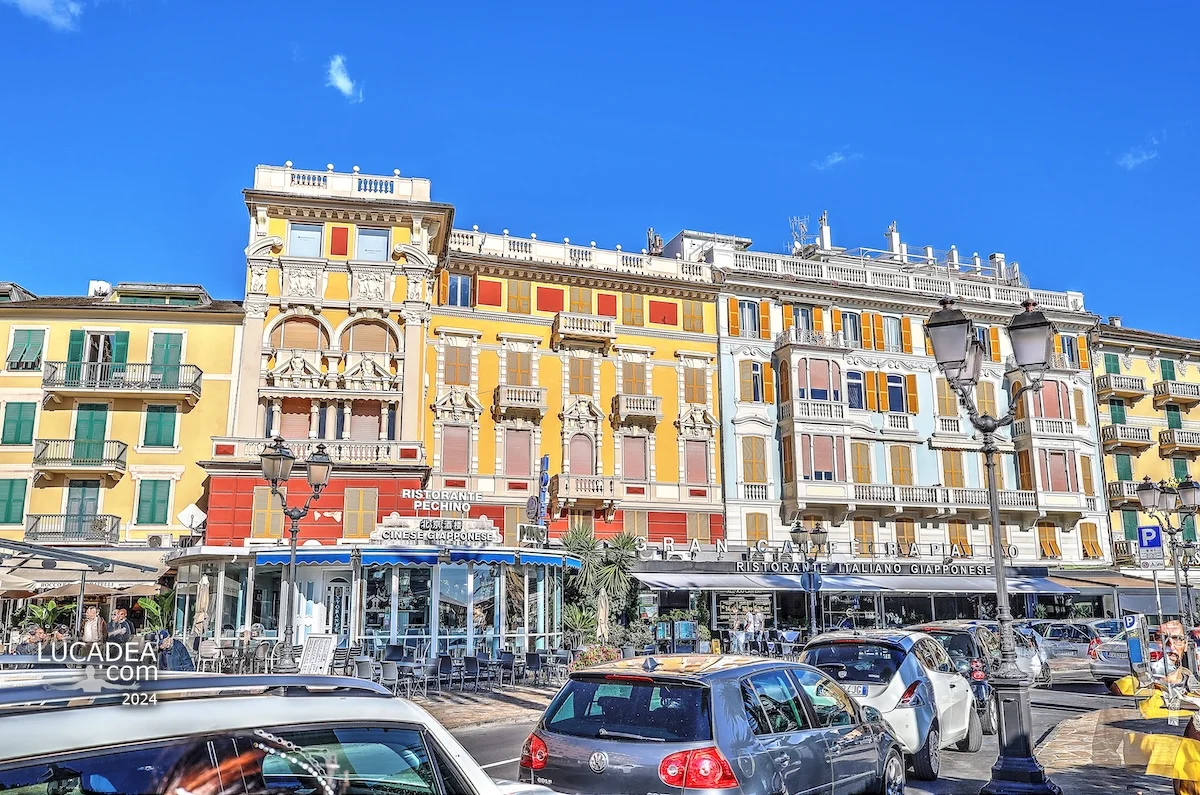
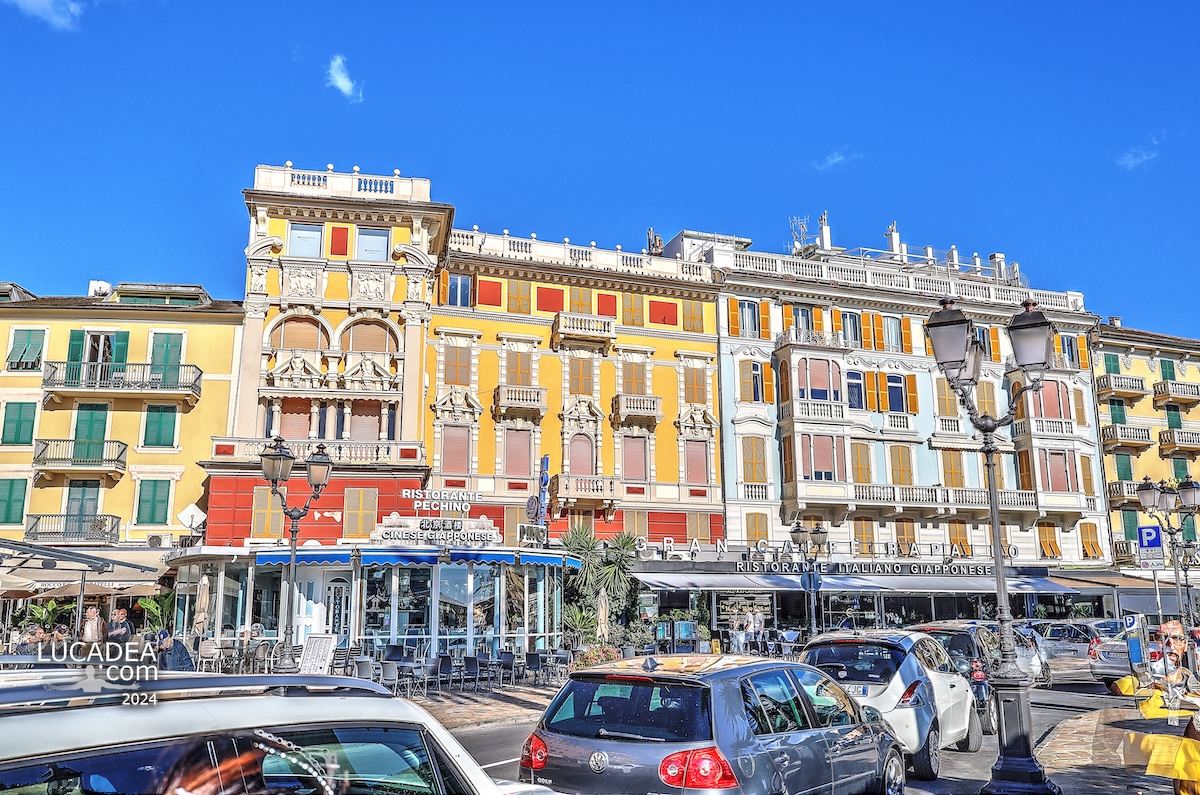
Elegant houses along Rapallo seafront promenade.
The Rapallo seafront unfolds in front of me with a quiet rhythm, where architecture and daily life blend into a continuous visual line. The Rapallo seafront in Liguria, Italy, feels like a place where every building contributes to a larger composition, shaped by the sea just steps away.
As I walk along the promenade, the Rapallo seafront reveals elegant houses that seem designed not only to be lived in, but also to be observed. Their façades interact with light, movement, and the constant presence of people passing below, creating a layered urban experience that feels both intimate and open.
The ground floors host restaurants and bars, and this detail transforms the Rapallo seafront into a living corridor where social life and architecture overlap naturally. Even if this visit happened some time ago, the impression remains vivid: a seafront that is not just a view, but a structure of everyday experiences.
If you are visiting Rapallo in Liguria, northern Italy, you will quickly notice how the promenade acts as the town’s social spine. One of the most interesting aspects of Rapallo is how these buildings maintain an elegant coherence despite their different histories and modifications over time.
There is a natural connection here with other coastal atmospheres I have shared on the site, especially the quieter Bay of Silence in Sestri Levante, where nature dominates everything. In Rapallo instead, the seafront is architectural, human, and continuously active.
A small detail often overlooked is how many of these façades were adapted through decades while preserving a unified seaside identity, which gives the whole promenade its distinctive elegance.
The Rapallo seafront stays in my memory as a place where simple observation becomes enough. What would you notice first: the buildings, or the life moving beneath them? Add a comment or go to the bottom of the site to read what other visitors have written.
Le case eleganti sul lungomare di Rapallo – Elegant houses on Rapallo seafront – Les maisons élégantes sur le front de mer de Rapallo – Casas elegantes no passeio marítimo de Rapallo – Elegante Häuser an der Uferpromenade von Rapallo – Những ngôi nhà thanh lịch trên bờ biển Rapallo – 拉帕洛海滨长廊上的优雅房屋 – ラパッロの海沿いの美しい家々
The text of this post was written with the help of ChatGPT, a language model from OpenAI.
The Fascie Rossi Tower in Sestri Levante.
Walking through the center of Sestri Levante, I notice how the Fascie Rossi Tower quietly defines the skyline in a way that feels both subtle and persistent. The Fascie Rossi Tower in Sestri Levante, Liguria, Italy, is not overwhelming, yet it holds a strong visual presence among the surrounding buildings.
As I move closer, the Fascie Rossi Tower in Sestri Levante becomes a reference point that changes slightly with every angle, as if the town itself reshapes it through perspective. I am not following a guide or a plan, just observing how architecture and daily life overlap in this coastal town.
If you are walking through Sestri Levante in Liguria, northern Italy, you might first think of its beaches, but the inland streets reveal a quieter architectural rhythm. This contrast is one of the most interesting aspects of Sestri Levante, where sea and city coexist without separation.
There is a clear connection here with other moments I have described on the site, especially those from Baia del Silenzio, where nature dominates the frame completely. Here instead, the Fascie Rossi Tower introduces structure and verticality into the scene, giving balance to the urban environment.
Locals often point out that Palazzo Fascie Rossi has maintained its identity over time, even as its function evolved, and the tower remains its most recognizable element.
The Fascie Rossi Tower in Sestri Levante stays with me even after I leave the street, almost like a mental landmark rather than just a physical one. What details would stay with you after a slow walk through this town? Add a comment or go to the bottom of the site to read what other visitors have written.
The Fascie Rossi Tower in Sestri Levante – La torre di Fascie Rossi a Sestri Levante – La Torre Fascie Rossi en Sestri Levante – A Torre Fascie Rossi em Sestri Levante – Der Fascie-Rossi-Turm in Sestri Levante – Tháp Fascie Rossi ở Sestri Levante – 锡斯特里莱万特的法西·罗西塔楼 – セストリ・レヴァンテのファッシェ・ロッシの塔
The text of this post was written with the help of ChatGPT, a language model from OpenAI.
Cycle path in Mandela Park on a humid evening.
I walk along the cycle path in Mandela Park while the humidity hangs in the air, creating that soft, diffused atmosphere that often appears in autumn evenings; the cycle path in Sestri Levante becomes one of those quiet places worth seeing in Liguria, especially if you are visiting outside the busy summer season. The streetlights glow through the mist, gently lighting the way ahead.
It’s October, and the late afternoon slowly fades into evening without a clear transition. The cycle path in Mandela Park, in Sestri Levante, Liguria, Italy, feels both familiar and slightly different every time I pass through. The grass on the sides looks damp, and the nearby sports field seems distant, softened by the light fog that blurs the edges of everything.
I pause for a moment, watching how the light reflects on the slightly wet surface. There are only a few people around, moving quietly in the distance. If you are looking for a peaceful walk in Sestri Levante, this part of Mandela Park is a place worth seeing, simple but meaningful.
It reminds me of another photo I took here in a completely different light, showing how much the same place can change depending on the conditions. This time, it’s the humidity that transforms the scene, adding depth and turning something ordinary into something almost cinematic.
A small curiosity: Mandela Park is one of the main green areas in the town, named after Nelson Mandela, a symbol of freedom and reconciliation, which gives even a simple walk a deeper meaning.
I keep walking along the cycle path, following the lights that slowly disappear into the mist. It’s not a long journey, but it’s one that stays with you.
Have you ever seen a park change so much just because of the evening humidity? Add a comment or go to the bottom of the site to read what other visitors have written.
Cycle path in Mandela Park with evening humidity – Piste cyclable au parc Mandela avec humidité du soir – Carril bici en el Parque Mandela con humedad nocturna – Ciclovia no Parque Mandela com umidade ao entardecer – Radweg im Mandela Park mit abendlicher Feuchtigkeit – Đường xe đạp trong công viên Mandela với độ ẩm buổi tối – 曼德拉公园的自行车道与傍晚湿气 – マンデラ公園の自転車道と夕方の湿気
The text of this post was written with the help of ChatGPT, a language model from OpenAI.
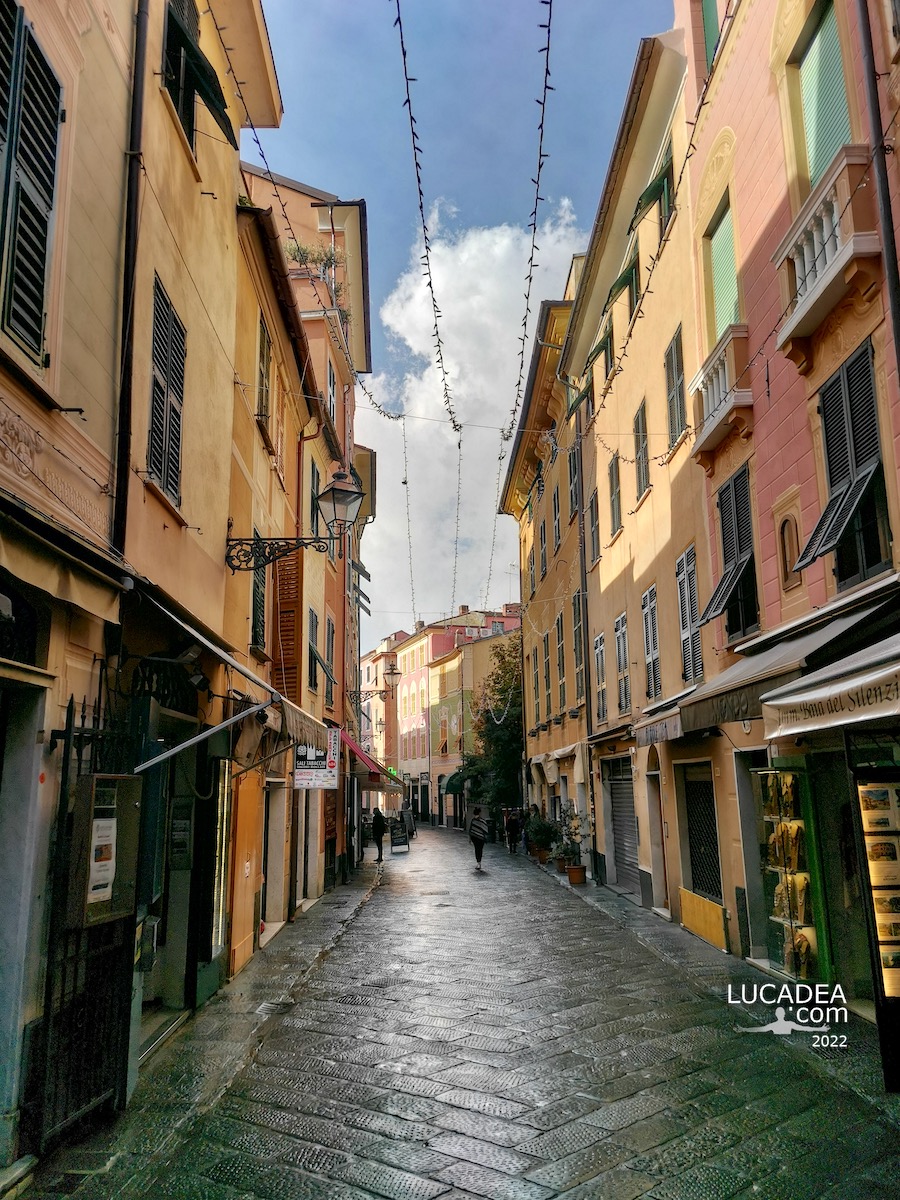
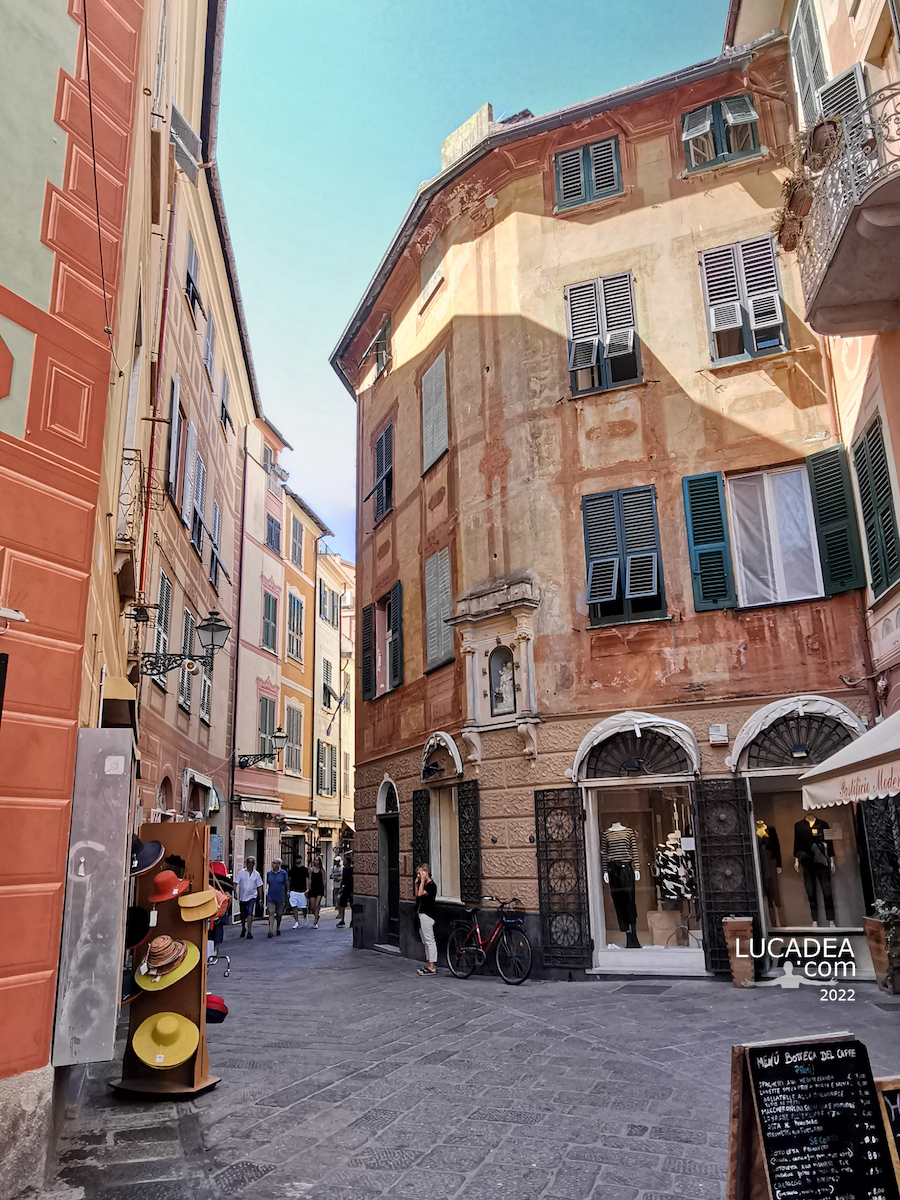
The authentic heart of Sestri Levante: the alley.
In the historic centre of Sestri Levante, Liguria, Italy, walking into the old alleyways brings me straight into one of the parts of town I most enjoy photographing. Between colourful facades, small shops, restaurants and details that seem to change at every step, this narrow street still has the intimate character I look for when I carry my camera.
When I think about what to see in Sestri Levante beyond its famous bays, the old alley is one of the first places that comes to mind. It is one of the most recognisable parts of the historic centre, and following it towards the Bay of Silence means crossing through the liveliest part of the town before reaching the sea.
The word caruggio belongs to Ligurian tradition and is used for the narrow streets typical of historic settlements across the region. In Sestri Levante, this characteristic creates a particularly interesting setting for photography, with buildings, shutters, signs and small architectural details constantly changing as you move through the street.
That is what I like to photograph most. Not necessarily a wide view, but a small scene capable of telling something about the town without showing everything. A doorway, a window, a sign or simply the perspective of the street can become the subject of a photograph.
This image comes from that way of looking at Sestri Levante. I wanted to capture this part of the old alley with my camera, keeping the street itself at the centre of the frame and trying to preserve the feeling of continuity that accompanies anyone walking through it.
The alley is also a natural connection between different parts of the historic centre. From here, you can continue towards the Bay of Silence, one of the places I have photographed many times, or simply stop and look at the everyday activity along the street. Local life and visitors naturally mix together here.
That coexistence is what I find particularly interesting. Sestri Levante is a well-known seaside destination and can become very busy during the tourist season, yet it is still possible to find small details that belong to the everyday identity of the town.
The historic centre developed around the narrow strip of land connecting the mainland with the peninsula of Sestri, creating an unusual relationship between the streets, the buildings and the sea. This geography helps explain why the two bays remain so close even while walking through the centre.
One small curiosity is Sestri Levante’s connection with literature. The landscape around the town and the Bay of Silence has attracted writers and artists over the years, helping create the romantic image that still surrounds the place today.
But when I photograph the old alley, I am not necessarily thinking about its reputation. I am much more interested in whatever happens to be in front of my lens at that particular moment. A weathered facade, a balcony, a glimpse between two buildings or a row of windows can tell me something about Sestri in a more personal way than a conventional panoramic photograph.
This is also why I return to this part of town so often in my photoblog. After photographing the Bay of Silence and other corners of the historic centre, the old alley feels almost like a thread connecting different images of the same place.
Every time I walk through it, I can find something new to photograph even though the street itself has not changed. The viewpoint changes, the people change, the shops change and small details on the buildings catch my attention differently. Together, these simple elements create a very everyday image of Sestri Levante.
For me, that is where its authenticity lies: not in trying to find a perfect scene, but in walking slowly and allowing the details along the way to attract your attention.
If you are visiting Sestri Levante, would you take a slow walk through the old alley before heading towards the Bay of Silence? Add a comment or go to the bottom of the site to read what other visitors have written.
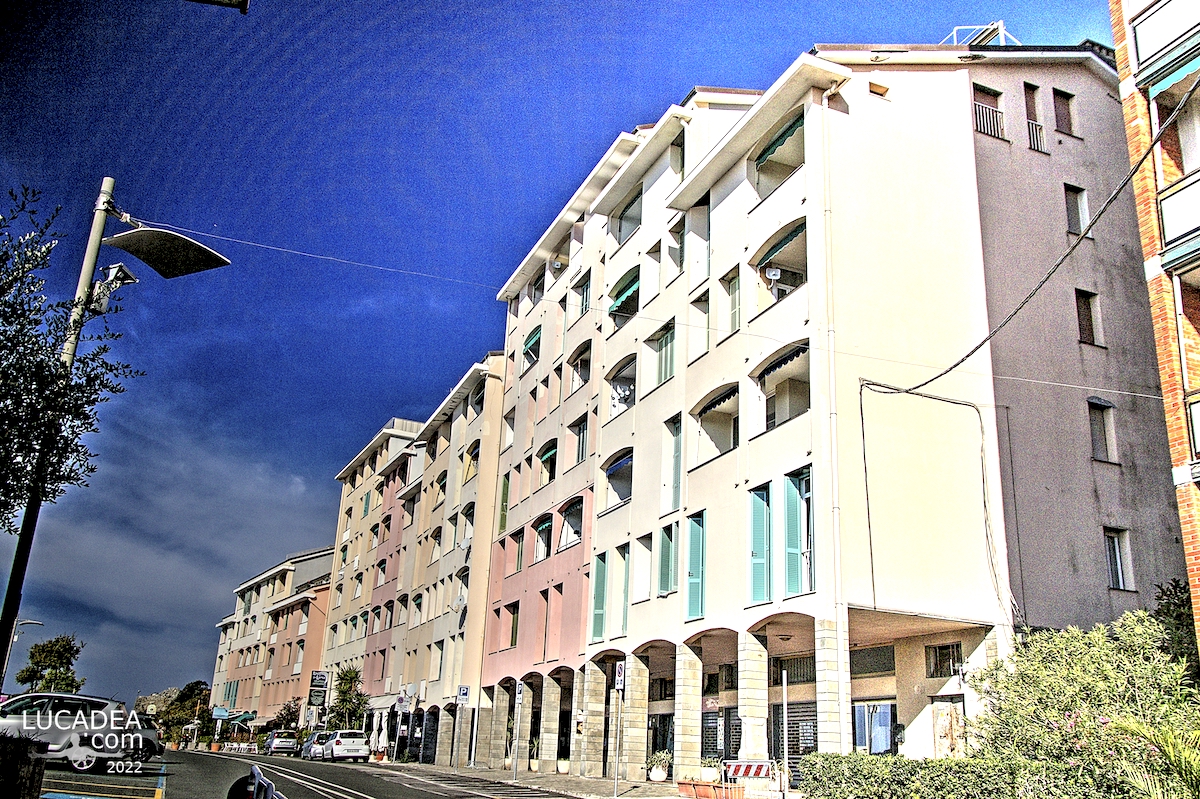
The modern waterfront building in Deiva Marina.
While walking along the waterfront of Deiva Marina, Liguria, Italy, I stopped to photograph this modern building, which contrasts with the more traditional image often associated with the villages of the Ligurian coast. That contrast is what caught my attention and made me want to capture the scene with my camera.
When I think about what to see in Deiva Marina, I do not necessarily think only of the beach or the most picturesque corners of the village. Everyday architecture can also become an interesting photographic subject, especially when it has a direct relationship with the landscape. In this photograph, the building occupies an important part of the scene while the nearby sea helps define its setting.
I often enjoy photographing buildings that do not necessarily have monumental or historical importance. They are structures belonging to everyday life and, precisely because of that, they can tell us something about a particular period and a different way of living. This waterfront building in Deiva Marina seemed to me a good example.
Its modern forms, balconies and large openings toward the outside make the relationship with the coastal landscape particularly clear. In a seaside town, the sea is not simply something seen from a distance. It becomes an important part of everyday life and of the way buildings are experienced.
That is what interests me most about this photograph. I was not simply trying to document a building, but to show its relationship with the surroundings. On one side there is relatively recent architecture; on the other is the landscape of the Ligurian coast, with the sea only a short distance away.
Deiva Marina is a coastal town on the Italian Riviera di Levante, located between Moneglia and Framura, in an area where the relationship between the built environment and the sea is particularly close. Its position keeps the coastline nearby while also providing quick access to the hills inland.
There is a small detail about Deiva Marina’s development that I find interesting. Over time, the town gradually developed into a seaside destination, and newer residential buildings and structures appeared alongside older elements as tourism grew. The result is a landscape where architecture from different periods can coexist within a relatively small area.
This kind of layering is exactly what I think is worth photographing. When walking through a Ligurian coastal town, it is easy to concentrate only on the oldest or most picturesque buildings. I also like looking at what was built later and considering how those structures fit into the surrounding landscape.
The building in this photograph is therefore not a monument or a traditional attraction. It is part of the urban landscape. Its position directly along the waterfront, however, makes it particularly visible and turns it into an interesting photographic subject.
What I especially like is the contrast between the building’s lines and the natural character of the coastline. The geometry of the facades and balconies belongs to a modern architectural language, while the sea and the surrounding landscape recall the more traditional Liguria that I know through so many other photographs.
This image also connects naturally with other posts I have published about villages along the Ligurian coast. I have photographed places such as Moneglia, Sestri Levante and Bogliasco, often looking not only for monuments but also for the smaller details that belong to everyday life.
In Deiva Marina, this time, I stopped in front of a building that many people probably pass without paying much attention to it. For me, that was precisely the reason to photograph it: even an ordinary residential building can say something about the place where it stands.
A waterfront changes constantly according to the buildings that form it. Alongside the beach and natural landscape there is the architecture created by people, with its changes and different choices over time. Looking at these elements together allows Deiva Marina to be understood beyond the usual image of a seaside destination.
The photograph therefore comes from a fairly simple observation: a modern building can become interesting when it is considered within its surroundings. And here, of course, those surroundings are the Ligurian coast and the sea of Deiva Marina.
When you photograph a seaside town, do you also stop to look at modern buildings, or do you mainly search for the oldest and most traditional views? Add a comment or go to the bottom of the site to read what other visitors have written.
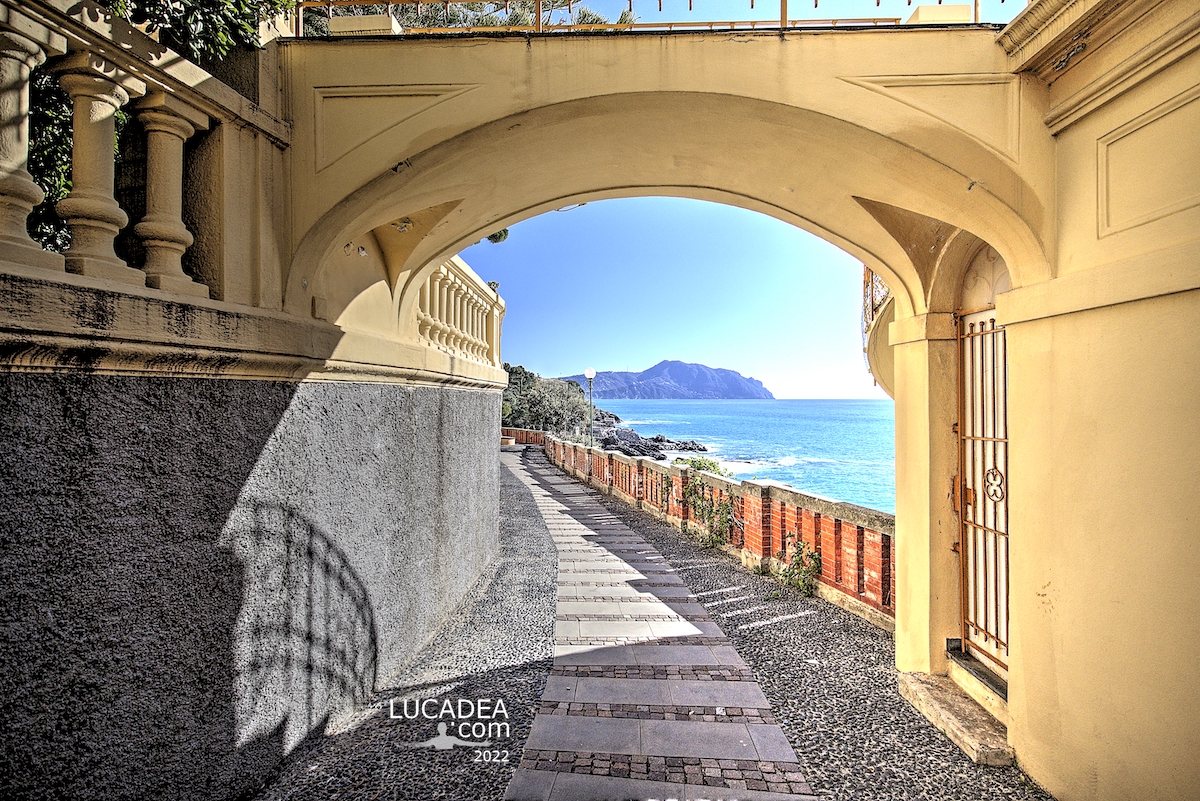
A seaside creuza in Bogliasco.
While walking east of the small harbor in Bogliasco, Liguria, Italy, I stopped to photograph this typical Ligurian creuza running close to the sea and connecting the coastal houses with the road. It is one of those corners of Bogliasco that immediately shows how closely the village is tied to the landscape between the hills and the water.
I took this photograph quite some time ago during a walk along this path. What caught my attention was the small bridge, almost suspended between the villa overlooking the sea and the route leading back toward the road. It is a simple detail, but I think it says a lot about the way Bogliasco has adapted to a landscape where space is limited and the coast drops quickly toward the water.
When I think about what to see in Bogliasco, I do not think only of the harbor or the beach. I am also interested in the quieter passages found just a few steps away from the places most people recognize. A seaside creuza is already a distinctive feature, but here the bridge and the villa make the scene even more unusual.
Creuze are among the features I immediately associate with Ligurian seaside villages. They are often narrow, steep paths that developed to connect houses, farmland and the sea. Their paving can vary from one place to another, but they generally retain an intimate character that separates them from ordinary roads.
In Bogliasco, this relationship with the sea is particularly clear. The village lies along the coast east of Genoa, where built-up areas and the shoreline are often very close together. Because of this, even a simple pedestrian path can become an interesting viewpoint.
There is no major monument in this photograph. The subject is the relationship between the different elements: the creuza, the little bridge, the villa and the sea just beyond them. I wanted to capture this detail because it seemed representative of a part of Liguria where houses appear to make use of every possible opening toward the water.
There is also a small linguistic curiosity connected with the word creuza. The term is strongly associated with Ligurian and Genoese culture and traditionally refers to a path or lane, often narrow and steep, shaped by the local terrain. It is therefore more than simply another word for alleyway: it describes a particular type of route deeply connected with the landscape.
Photographing these places also requires some attention to perspective. A narrow creuza can look completely different depending on where you stand. In this image, I was especially interested in the little bridge because it creates continuity between the different parts of the scene and makes the relationship between the villa and the path easier to read.
If you are wondering where Bogliasco is or what to see near Genoa, the village is one of those places where it is worth looking beyond the main streets. A side path can quickly reveal quieter corners and architectural details that sometimes tell the everyday story of a place better than a panoramic view.
This is also the kind of photograph I like to place alongside my other stories about villages along the Ligurian coast. In several posts I have focused on small architectural details: an archway, a staircase, an old lane or a path leading toward the sea. They are different subjects, but they all belong to the same landscape.
Seen through this creuza, Bogliasco feels more interesting to me than it would through a simple photograph of the harbor. Part of its identity lies in the succession of paths, houses, bridges and small passages following a coastline that leaves little room for large, straight routes.
Looking at this photograph again today, I like the fact that it does not necessarily show the most famous side of Bogliasco. Instead, it preserves a small fragment of the village, one of those places you can discover simply by walking without having planned to find it.
Have you ever walked along a creuza in Bogliasco or in another Ligurian seaside village? Add a comment or go to the bottom of the site to read what other visitors have written.
Sestri Levante’s old lane toward the sea.
Walking through the historic center of Sestri Levante, Liguria, Italy, I often find myself passing through this old lane leading toward the Bay of Silence. It is a route I know well, yet it still manages to offer small details and perspectives that make me want to stop and take another photograph.
Calling Sestri Levante’s old lane a wonder of Liguria might sound a little too grand, as I admitted in the original text, but I still genuinely think it is one of the most attractive old lanes in this part of the region. Not because it is monumental or spectacular in the conventional sense, but because of the way it connects the everyday life of the town with one of its best-known coastal views.
I took this photograph during one of my walks through the town. The narrow lane, with houses opening directly onto the street, naturally draws you toward the sea. It is a simple perspective, but to me it captures something essential about Sestri Levante: you do not have to walk far to move from the atmosphere of the historic center into the landscape of the bay.
If you are wondering what to see in Sestri Levante, the Bay of Silence will almost certainly be near the top of the list. But reaching it from the town center means walking through streets that deserve attention in their own right. The old lane is therefore not merely a route to the bay; it is already part of the experience.
What I like photographing here is the continuity between the buildings and the street. In Ligurian old towns, façades often stand very close together and the relationship between private buildings and public space is immediate. Windows, shutters, doorways and small architectural details become part of one continuous scene rather than isolated subjects.
Sestri Levante also has a particular geography that makes this transition especially interesting. The historic center lies on the narrow isthmus connecting the peninsula with the mainland, while the Bay of Fables and the smaller Bay of Silence open on either side. This unusual shape makes it feel very natural to move from the town streets toward two completely different coastal settings.
There is a small historical curiosity behind the name of Sestri. The area was associated in antiquity with the name Segesta Tigulliorum, while the modern name developed through the historical evolution of the place name. It is a small reminder of how old the settlement is within the Gulf of Tigullio.
But coming back to the photograph, it is the lane itself that interests me most. I was not trying to create another postcard image of the Bay of Silence. Instead, I stopped before reaching the sea, when the bay is still only suggested by the direction of the street.
This is something I often enjoy doing in the photographs I publish on the blog. I like showing a place not only through its most famous viewpoint, but also through the route that leads there. In this case, the connection with my photographs of the Bay of Silence comes naturally: the old lane becomes the small journey that comes before the view.
Walking here also makes it clear how closely the center of Sestri Levante is connected with tourism. During summer, the lane can become busy, particularly when visitors are heading toward the bay, while at other times it retains a quieter and more local atmosphere. That contrast is one of the reasons I enjoy photographing the same streets at different moments.
For people who live here, familiar views can easily become invisible through repetition. Yet holding a camera changes the way I look at them. A façade, a perspective or a small architectural detail that I would normally walk past can suddenly become the reason to stop.
Perhaps that is why I continue to think of this old lane as one of the nicest corners of Liguria. It does not need exaggerated descriptions. Within a short distance, it brings together the houses, the historic center, the movement of people and, just beyond the end of the street, the sea.
And then there is that final destination that makes the route even more special: the Bay of Silence. Knowing that you only have to keep walking to reach the beach gives this otherwise ordinary street a different meaning.
This photograph also fits naturally with other posts I have published about Sestri Levante, especially those dedicated to the Bay of Silence and the less obvious corners of the town. Together they form a more personal record of a place I know well and continue to photograph.
So perhaps the real charm is not simply the lane itself, but everything it promises at the end of the walk.
Do you think Sestri Levante’s old lane deserves a place among the most beautiful lanes in Liguria? Add a comment or go to the bottom of the site to read what other visitors have written.
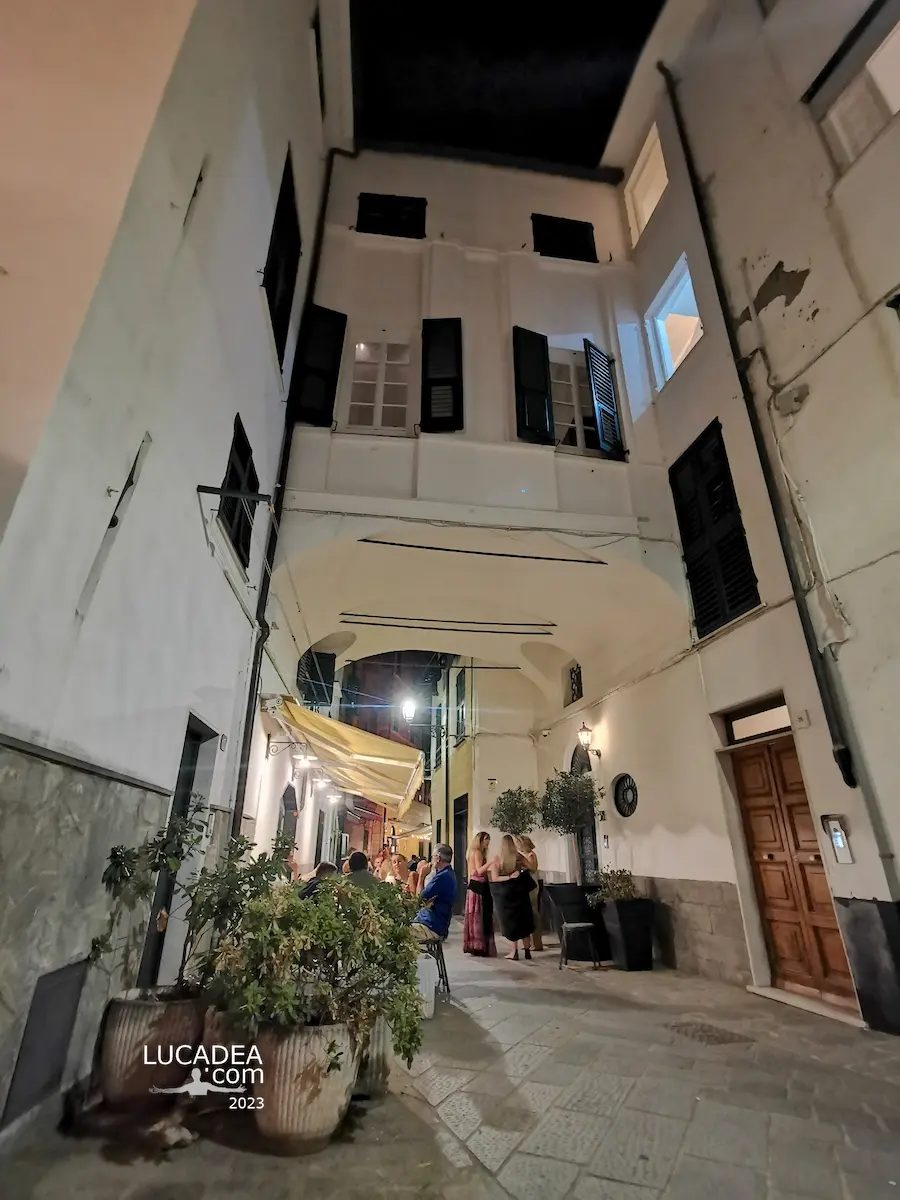
Summer nightlife in Sestri Levante.
In the historic center of Sestri Levante, Liguria, Italy, the streets gradually change character in the evening as restaurant tables fill and the town’s summer nightlife begins. It is a different way of experiencing Sestri Levante after dark, less connected with the crowds I remember from years ago and increasingly shaped by visitors choosing to spend the evening in the many restaurants around the old town.
This photograph, however, shows a much quieter moment. I was near the archway on Garibaldi street when I photographed this small corner occupied by a few restaurant tables. There is no large crowd here, no packed alleyway and no obvious rush. For that reason, I think the image captures a quieter side of nightlife in Sestri Levante that can still be found among the streets of the historic center.
Compared with the past, summer evenings in Sestri seem to me to have changed considerably. I remember the old town being particularly popular with younger people, who would often spend part of the evening walking through the center before continuing toward the Castelli swimming pool. The town center was then one of the stages of a longer night out.
In recent years, evening tourism has developed in a different direction. There are more restaurants and many more outdoor tables than I remember from years ago. During summer evenings, visitors often stay in the center for dinner, making the narrow streets feel like a natural extension of the restaurants themselves.
The character of the noise changes too. Once dinner is over and the restaurant tables begin to empty, the atmosphere can become considerably livelier. Groups of young people take over parts of the center and the relative quiet of the earlier evening can give way to a much noisier scene.
My photograph tells the other side of that story. The archway on Garibaldi street creates a small, enclosed space that feels almost separate from the movement elsewhere in the town. A few tables beneath the passage are enough to turn an ordinary corner into a place where people can sit, eat and talk.
That small detail is what caught my attention. I was not trying to photograph the busiest side of Sestri Levante or document its nightlife at its loudest. I was more interested in showing a brief moment of an evening, one of those places where the night is already underway but has not yet reached its more chaotic rhythm.
If you are wondering what to do in Sestri Levante at night, the historic center naturally offers plenty of choices during the summer season. But the evening is not necessarily about crowds and noise everywhere. There are still corners where the night moves at a slower pace, perhaps around a dinner table beneath an old archway like this one.
Sestri Levante is a place where the historic center, restaurants and seaside atmosphere are closely connected. The town is compact enough that its different evening moods eventually meet in the same streets. A quiet dinner, a walk through the old town and a much livelier late evening can all belong to the same night.
Looking at this photograph also reminds me how difficult it is to describe a town through a single image. A street can be almost empty at one moment and crowded shortly afterward. The same corner can have a completely different atmosphere depending on the hour and the particular stage of the summer season.
This is one of the things I enjoy photographing in Sestri Levante. I do not always want to photograph the classic views of the Bay of Silence or the most recognizable parts of the town. Sometimes I prefer recording small changes in everyday life, such as the way a quiet corner becomes part of the evening scene.
The photograph also connects naturally with other posts I have written about Sestri Levante, where I have focused on less obvious corners of the town rather than only its best-known views. Together, these images create a more personal record of a place that I have seen change over time.
The archway on Garibaldi street, with its few restaurant tables and discreet activity, feels almost like a small pause within the summer evening. It does not represent the loudest version of Sestri Levante, but perhaps that is exactly why I like the photograph.
Nightlife changes with habits, tourism and generations, and the way people experience a town during summer inevitably changes with them. Some things disappear, others take their place, while small details remain almost unnoticed. Photographing these changes is also a way of keeping a record of what an ordinary summer evening once looked like.
How do you remember summer evenings in Sestri Levante: did you prefer the livelier nights of the past or these quieter corners? Add a comment or go to the bottom of the site to read what other visitors have written.