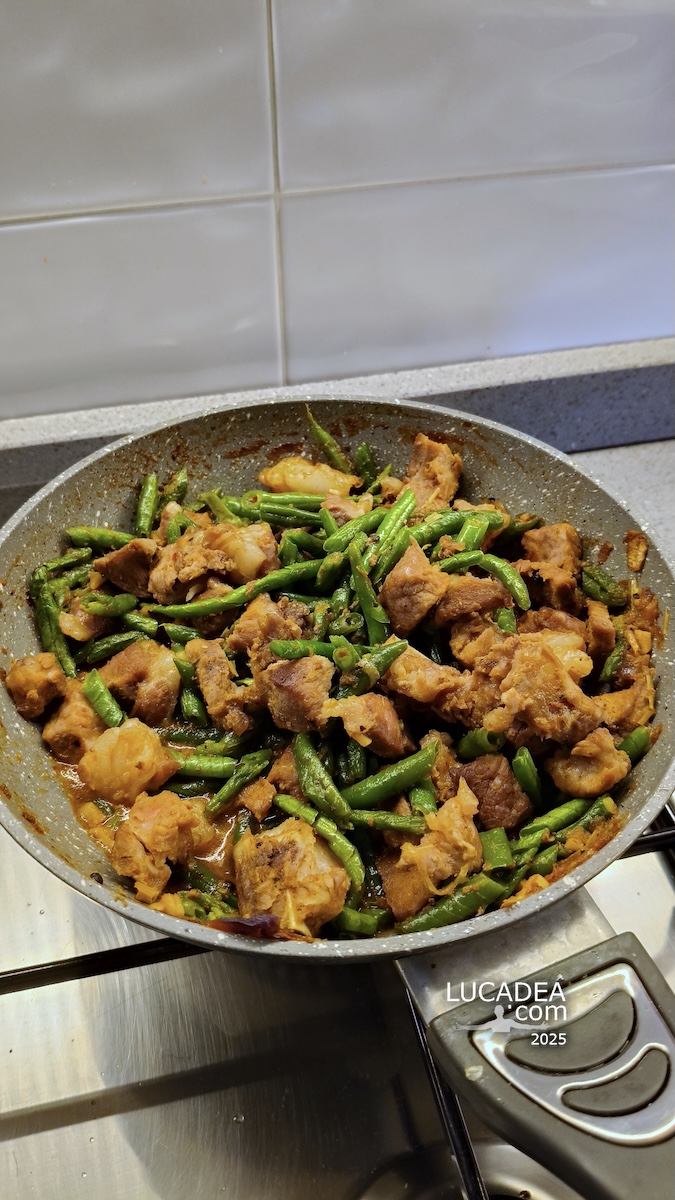
Đậu đũa xào thịt heo cooked at home in Italy, the recipe

Padella di Đậu đũa xào thịt heo con fagiolini e maiale saltati in casa in Italia, piatto vietnamita casalingo ricco e saporito

Đậu đũa xào thịt heo cooked at home in Italy.
The smell of stir-fried long beans and pork fills my kitchen here in Italy, and every time I prepare Đậu đũa xào thịt heo, I feel like I am reconnecting with my roots in Vietnam. This simple Đậu đũa xào thịt heo dish carries more meaning than just food for me; it is memory, family, and distance all in one pan.
I live in Italy, and cooking Đậu đũa xào thịt heo here has become part of my daily rhythm, blending Vietnamese tradition with Italian life. The sound of pork sizzling in the pan, followed by the fresh green beans, creates a familiar harmony that reminds me of home kitchens in Vietnam. Even here in Europe, the spirit of Đậu đũa xào thịt heo remains unchanged.
While I cook, I often think about how food travels with us. My husband watches me prepare this dish, curious about every step, and for him it is a small window into another culture. I sometimes write about similar Vietnamese dishes on my blog, especially those I adapt while living abroad, and this recipe is one of the most meaningful.
If you are visiting Italy or simply curious about Vietnamese home cooking, this is one of those dishes that shows how simple ingredients can create something deeply emotional. It is not just stir-fried beans and pork; it is a story in a pan.
A lesser-known detail is that this dish is often cooked in many variations across Vietnam, depending on the region, but the heart of it always stays the same: quick cooking, strong flavor, and family sharing.

Ingredients

– Long green beans (đậu đũa);
– Pork pieces;
– Garlic;
– Fish sauce;
– Soy sauce;
– Oil;
– Salt and pepper.

Preparation

First, I prepare all the ingredients ahead of time, as this dish requires quick, high-heat cooking. I cut the long green beans (đậu đũa) into pieces about 4–5 cm, trying to keep them the same size for even cooking. I choose a slightly fatty pork, so it remains more tender and flavorful in the pan, and I cut it into bite-sized pieces.
I heat a wok or a large skillet with a drizzle of oil. Once the oil is hot, I add the minced garlic and let it brown slightly, being careful not to burn it, as this would give the dish a bitter flavor.
At this point, I add the pork and sauté it over medium-high heat. I let it brown well on all sides, until it turns a light golden brown and begins to release its aroma. If needed, I add a pinch of salt and a grind of pepper to immediately flavor the base.
When the meat is almost cooked (but still slightly tender), I raise the heat and add the green beans. I quickly sauté them with the meat, stirring often to blend the flavors without letting them become too soft: they should remain crunchy and maintain their bright green color.
At this point, I pour in the fish sauce and a small splash of soy sauce. The aroma immediately changes, becoming more intense and “Vietnamese.” I continue sautéing everything for a few minutes, until the green beans are cooked but still firm and the meat is perfectly coated in the sauce.
If the dish is too dry, I add a tablespoon of hot water to create a light sauce that binds the ingredients better.
Before turning off the heat, I taste and adjust if necessary with a splash of fish sauce or a pinch of pepper.
I serve the Đậu đũa xào thịt heo immediately, still steaming hot, often accompanied by plain white rice, which perfectly absorbs the juices from the meat and green beans.

And every time I serve it, I ask myself again: how can something so simple feel so close to home even when you are far away? Add a comment or go to the bottom of the site to read what other visitors have written.
Photos taken with Honor 20.

Add one  comment to this article or read  here what other visitors have written.
 
Adv
 
Disclamer

The rights on images, videos, choruses, text and all other material on the LUCADEA.com website are governed as per  Copyright page.


This page has been viewed 1 times today.
This month it has been viewed 1 times.
In total it has been viewed 1 times.
 

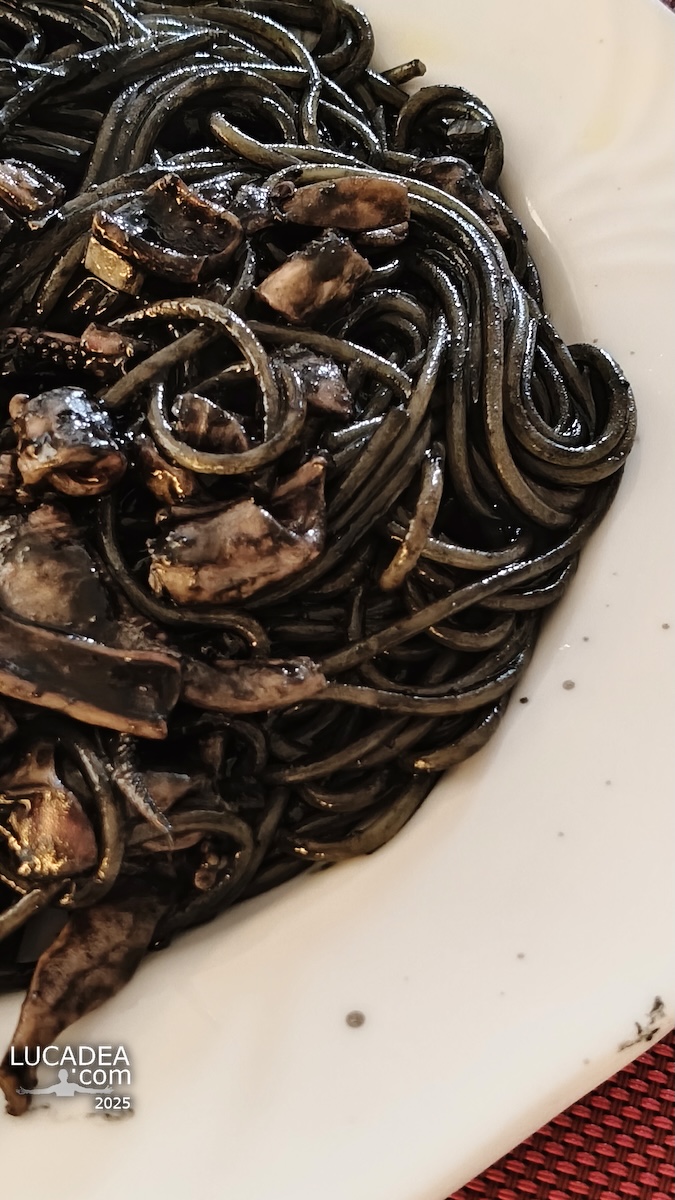
Squid ink spaghetti, the recipe

Piatto di spaghetti al nero di seppia cremosi con prezzemolo su fondo scuro

Squid ink spaghetti, the recipe.
There are dishes that instantly bring the sea to mind, and squid ink spaghetti is definitely one of them for me. That deep, glossy black color already tells a story before you even taste it. It’s a recipe I’ve come to appreciate over time, especially after learning how such simple ingredients can create something so bold and distinctive.
Making it is not complicated, but it does require attention to detail, especially when handling fresh squid. The key lies in respecting the main ingredient and building a sauce that is rich, smooth, and balanced without overpowering its natural flavor.

Ingredienti

– spaghetti;
– fresh squid (with ink sac);
– garlic;
– extra virgin olive oil;
– white wine;
– parsley;
– salt;
– pepper.

Preparazione

Start by carefully cleaning the squid. Gently remove the ink sac without breaking it and set it aside. Rinse the squid thoroughly under running water, remove any remaining parts, and slice it into thin strips.
In a large pan, heat a generous drizzle of extra virgin olive oil and add a clove of garlic. Let it cook on low heat until fragrant, making sure it doesn’t burn. Add the squid and sauté for a few minutes, stirring regularly.
Pour in a splash of white wine and let the alcohol evaporate completely. Once the squid starts to soften, lower the heat and add the ink, dissolving it with a bit of warm water. Stir well until the sauce becomes smooth and evenly black.
Meanwhile, cook the spaghetti in salted boiling water. Drain them al dente and transfer directly into the pan with the sauce. Toss everything together, adding a bit of cooking water if needed to achieve a creamy consistency.
Finish with chopped parsley and a touch of black pepper. The final result should be rich, silky, and well combined.

Do you enjoy the bold flavor of squid ink or do you prefer milder seafood dishes? Add a comment or go to the bottom of the site to read what other visitors have written.

Photos taken with Oppo Reno 12.

Add one  comment to this article or read  here what other visitors have written.
 
Adv
 
Disclamer

The rights on images, videos, choruses, text and all other material on the LUCADEA.com website are governed as per  Copyright page.

This page has been viewed 1 times today.
This month it has been viewed 1 times.
In total it has been viewed 1 times.
 

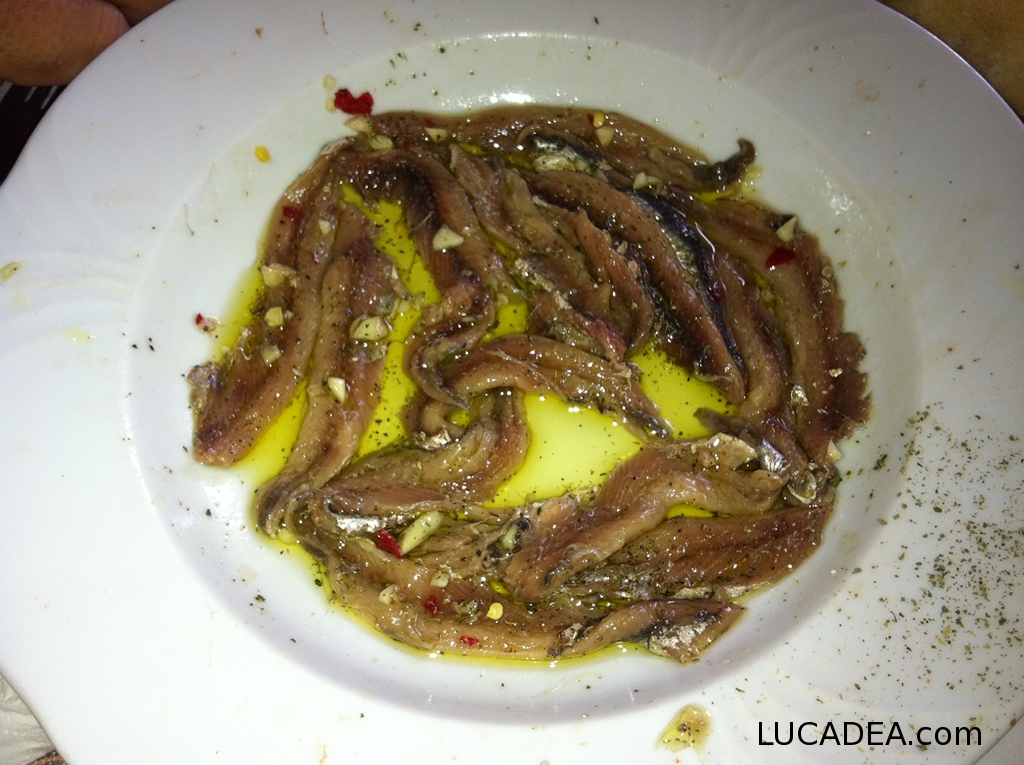
Salted anchovies and the taste of simplicity

Acciughe sotto sale condite con olio, aglio, rosmarino e peperoncino, tolte dall’arbanella

Salted anchovies and the taste of simplicity.
The anchovies in front of me have already been taken out of their preserving jar and dressed with olive oil, garlic, rosemary, and chili pepper. It is a straightforward way to serve them, but their strong flavor is exactly what makes salted anchovies so useful in many other dishes.
The word “poor” in the expression “poor cuisine” can sometimes be misleading. In this case, it refers to a style of cooking based on simple ingredients, practical methods, and the ability to make the most of what was available. It certainly does not mean poor in flavor. Salted anchovies are actually the opposite: they are intensely savory and can add a remarkable amount of taste even when used in small quantities.
That is what caught my attention when I photographed this dish. The anchovies had already gone through their preservation process and were ready to be eaten. A little oil surrounds the fish, while garlic, rosemary, and chili pepper add fragrance and a sharper note. Nothing is complicated, and nothing needs to be hidden.
I wanted to keep the photograph focused on the food as it actually was rather than turning it into a carefully constructed restaurant-style image. The ingredients are simple enough to speak for themselves. There is something satisfying about seeing a preserved ingredient return to the table in such an uncomplicated form.
Salted anchovies are made using salt as a preservation method. The process allows the fish to be kept for much longer than fresh anchovies and also changes its texture and concentrates its flavor. This traditional technique became particularly important in coastal communities, where preserving fish was a practical part of everyday food culture.
When I think about this kind of preparation, I also think of Genoa, Liguria, Italy, where anchovies and preserved fish have a strong connection with local culinary traditions. The photograph itself does not need to belong to that particular place, though, because salted anchovies have long been used across Italian cooking. Their ability to bring a deep savory flavor to other ingredients is what made them so enduring.
The jar itself is worth mentioning too. In parts of northern Italy, the word “arbanella” is traditionally used for a jar or container, often made of glass, used for preserving food. It is a small everyday detail, but it fits perfectly with the practical character of this kind of cooking.
If you are looking at what makes salted anchovies interesting, the answer is not only the way they are served. Their real strength is their versatility. They can be enjoyed simply with oil and herbs, but they can also be used to strengthen sauces, accompany vegetables, flavor pasta dishes, or become part of preparations where the anchovy itself is no longer the main visible ingredient.
That concentrated flavor is one of the reasons I find them so interesting to photograph. They are a small ingredient with a surprisingly large role in the kitchen. A few anchovies can change the character of a dish without requiring a long list of additional ingredients.
This photograph captures the stage after preservation, when the fish has left the jar and returned to the table. I like that transition because it connects two different moments: the practical need to preserve food and the pleasure of eating it later.
It also fits naturally with the other food-related photographs I have shared on the blog. I often find that familiar ingredients become more interesting when I stop to look at them outside the context of a complete recipe. Here, the anchovies themselves are enough to suggest a story about taste, preservation, and everyday cooking.
If you are interested in traditional Italian food, this is one of those simple ingredients worth seeing beyond its appearance: its importance comes from what it can do to the flavor of everything around it.

How do you usually enjoy salted anchovies, simply dressed or as an ingredient in another dish? Add a comment or go to the bottom of the site to read what other visitors have written.

Salted anchovies with olive oil, garlic, rosemary and chili pepper, removed from their preserving jar

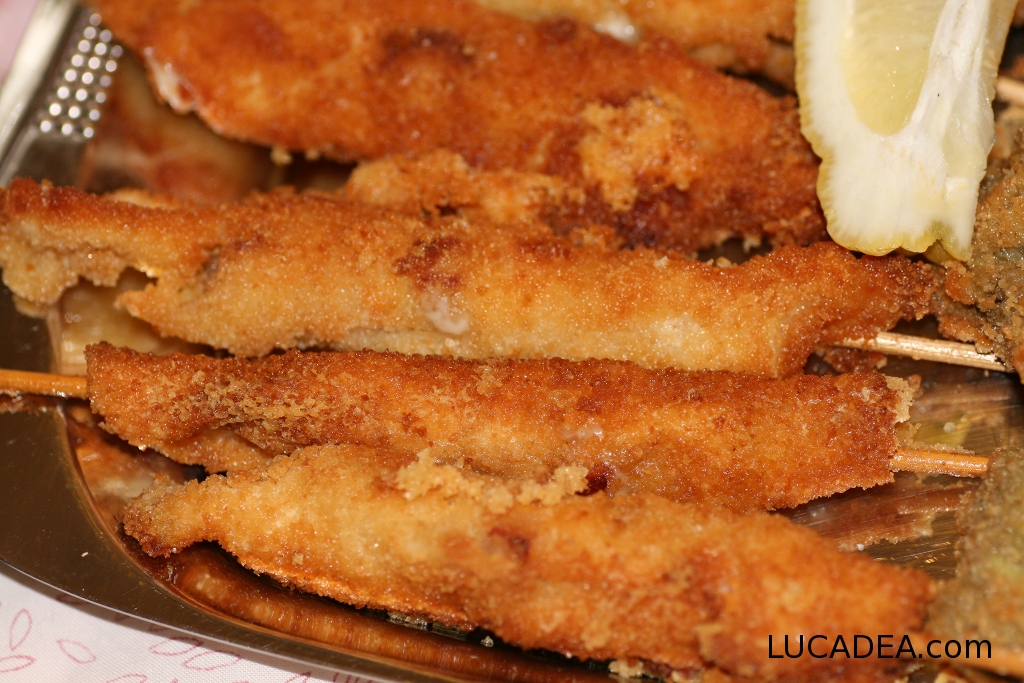
Ligurian ham and cheese fried sticks

Stecchini liguri fritti con prosciutto e formaggio, preparati in casa e tipici del fritto misto della Riviera di Levante

Ligurian ham and cheese fried sticks.
Just looking at these little fried treats is enough to remind me of the traditional mixed Italian fry that is so familiar around my part of Liguria. Ham and cheese fried sticks are a fairly common presence in trattorias and restaurants along the Riviera di Levante and its inland valleys, especially when the traditional fried selection arrives as part of a main course.
The ones in this photograph, however, did not come from a restaurant. My mother made them at home and, judging by how they turned out, they could easily have been served in a good local trattoria. That is exactly what made me want to photograph them. They are a nice example of the kind of Ligurian home cooking that can reproduce dishes usually associated with restaurants with remarkable care.
The idea behind these sticks is quite simple, although preparing them properly takes some attention. Small cubes of ham and cheese are threaded onto a long wooden toothpick. The filling is then wrapped in a thin wafer-like sheet, coated in breadcrumbs and finally deep-fried. The result is a crisp golden shell hiding a soft and savoury centre.
These fried sticks are associated with the culinary traditions of the Riviera di Levante in Liguria, Italy. If you are wondering what to eat in eastern Liguria beyond the region’s most famous dishes, this is one of those smaller local specialities that may be unfamiliar to visitors but immediately recognisable to people who grew up eating them.
What I like about them is that the ingredients themselves are not particularly complicated. Ham and cheese are everyday foods, while the thin wafer helps hold the filling together before the final coating and frying. It is the cooking process that changes everything, creating the crisp exterior that makes these little sticks so tempting.
They are also an interesting subject to photograph because their elongated shape immediately gives away their identity. The breadcrumb coating hides almost everything inside, so you have to imagine the ham and cheese before taking the first bite. For this photograph, I preferred to leave them just as they had been prepared rather than creating an elaborate food scene.
There is a small detail behind their name that I find quite practical. The long toothpick running through the filling gives the preparation its characteristic form and helps keep everything together while the sticks are being assembled and fried. It is a very simple solution, but an effective one when several of them have to be prepared for a mixed fried dish.
In the local cuisine I know, mixed Italian fried food is one of those dishes that needs very little introduction. The exact ingredients can change from one area to another, but in the version familiar to me, these ham and cheese sticks often have their own place on the plate. They are almost expected, to the point that a mixed fry without them can feel slightly incomplete.
What I find particularly interesting is that something so closely associated with local restaurants can also be prepared at home. These were entirely made by my mother. The photograph therefore becomes another small record of family cooking, much like the Genovese cima I photographed and wrote about in another post on the blog.
This is the kind of food photography I enjoy sharing here: not only elaborate restaurant dishes, but also the preparations that belong to everyday life and that someone visiting Liguria might not necessarily know.
Looking at the photograph, the hardest part is probably resisting the temptation to eat one immediately. The golden coating gives a good idea of the crisp texture, while the ham and cheese remain hidden inside until the first bite reveals the filling.
For me, these little fried sticks represent a very familiar side of cooking in eastern Liguria: straightforward, connected to local habits and able to turn a handful of simple ingredients into something memorable because it belongs to a particular food tradition.

Have you ever tasted these ham and cheese sticks in a trattoria along the Riviera di Levante, or have you ever made them at home? Add a comment or go to the bottom of the site to read what other visitors have written.

Ligurian fried sticks with ham and cheese, homemade and typical of mixed fried food from the Riviera di Levante

Trigoso, a small village near Sestri Levante

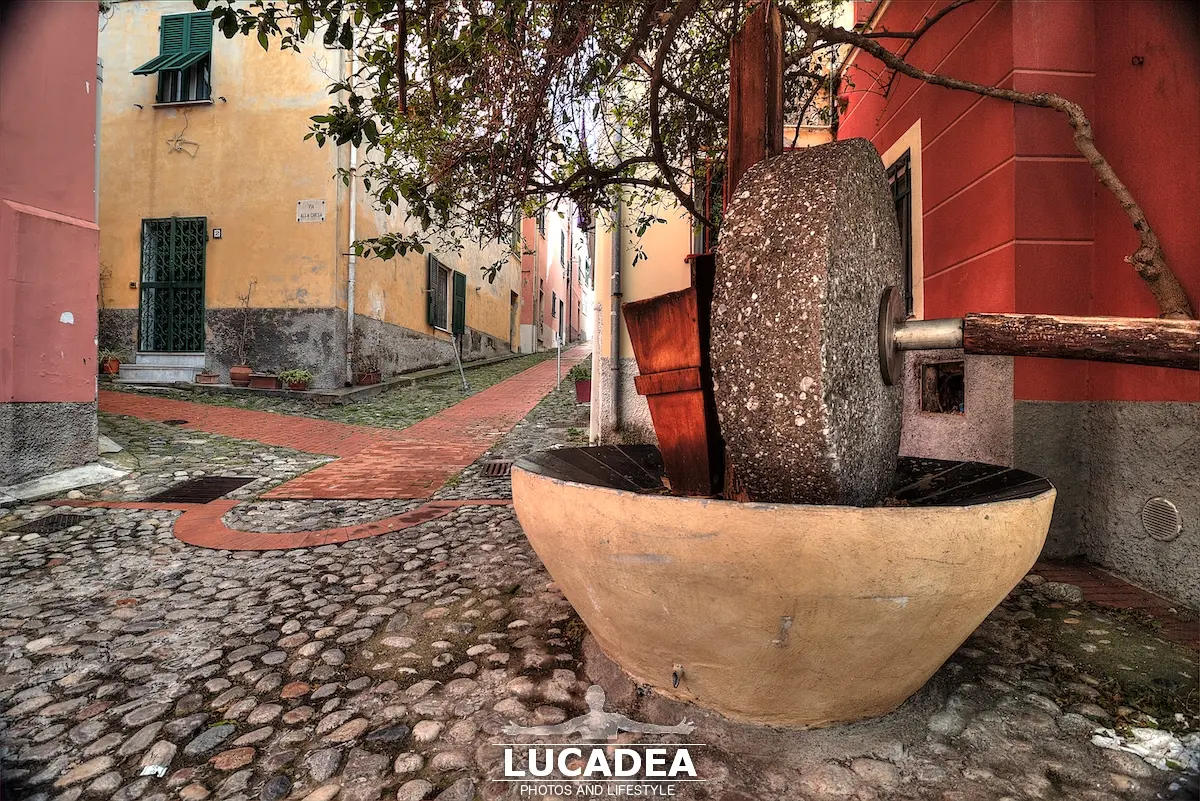
Antica creuza in pietra e mattoni a Trigoso, con una vecchia mole di pietra nel borgo di Sestri Levante

Trigoso, a small village near Sestri Levante.
A few days ago I went for a walk in this small hamlet belonging to the municipality of Sestri Levante, and I realized that it had been several years since my last visit. I had forgotten how pleasant it can be to rediscover such simple corners, especially when a small local road takes you away from the main route for a while.
Trigoso lies along the Aurelia, the historic road that leaves Sestri Levante, crosses the Bracco Pass and continues towards La Spezia before eventually becoming part of the long route leading south towards Rome. This is an area where the road and the Ligurian landscape constantly meet, but stepping into one of the smaller internal lanes quickly creates a completely different atmosphere.
I took this photograph at the beginning of a small lane that immediately caught my attention because of its traditional appearance. The paving of stone and bricks is typical of a Ligurian creuza, the narrow paths that historically connected villages, houses and countryside while following the natural shape of the hills.
The detail that really holds my attention here, however, is the old stone millstone. It is a simple object, but within this setting it becomes surprisingly prominent. These are exactly the kinds of details that make me stop with my camera, especially when they appear almost naturally within an old village environment.
I was not looking for a carefully staged image. I simply wanted to photograph what I found while walking through Trigoso. After several years away, it was nice to discover that this small village still had corners capable of catching my eye.
If you are looking for things to see around Sestri Levante, Trigoso can be an interesting little detour precisely because of its quiet, local character. There is no need to search for a famous monument here. Sometimes entering a small lane, looking at traditional buildings and noticing old materials and objects is enough to understand something about the place.
The creuza is perhaps one of the details most strongly associated with the traditional landscape of Liguria. Stone, bricks, walls and changes in elevation are part of a way of building that developed around the geography of the region, where paths had to adapt to the hills rather than follow perfectly straight routes.
The old stone millstone adds another small reference to everyday life in the past. Objects like this once had a practical purpose and could remain in use for many years, eventually becoming part of the landscape and a quiet reminder of how different daily life once was.
I liked photographing this particular combination: a modest lane, its stone paving and an old object that seems almost to have remained there while generations of people passed by.
This is also one of the reasons I enjoy returning to places I already know. After several years, familiar surroundings can look different, and small details that once went unnoticed can suddenly become interesting. Trigoso gave me exactly that kind of small surprise this time.
As in some of my other photographs from the lesser-known corners of Sestri Levante and its surroundings, it was not a famous landmark that made me stop, but an everyday detail that seemed capable of saying something about the character of the place.
The photograph therefore came from a simple walk with no particular plan, from the curiosity of revisiting a small hamlet I had not seen for years, and from finding a scene that felt particularly representative of the quieter side of Liguria.

Have you ever walked through Trigoso and followed this little creuza? Add a comment or go to the bottom of the site to read what other visitors have written.

Old stone and brick creuza in Trigoso, with a traditional stone millstone in this small village near Sestri Levante

Photo taken with a Canon EOS M100 camera and a Canon EF-S 10-18 lens.

Click here if you want to see all the photos I took in the village:
foto gallery

Here is where the small village is located:

The two place names, Riva and Trigoso, were combined for the first time in 1874 in the name of the “Riva-Trigoso” railway station, which was then located halfway between the two villages. This combined name gradually came into common use, though it was often—and incorrectly—used to refer solely to the hamlet of Riva.
Read more on Wikipedia

Recco cheese focaccia, a Ligurian tradition

Macro della focaccia al formaggio di Recco in Liguria con impasto sottile e ripieno cremoso

Recco cheese focaccia, a Ligurian tradition.
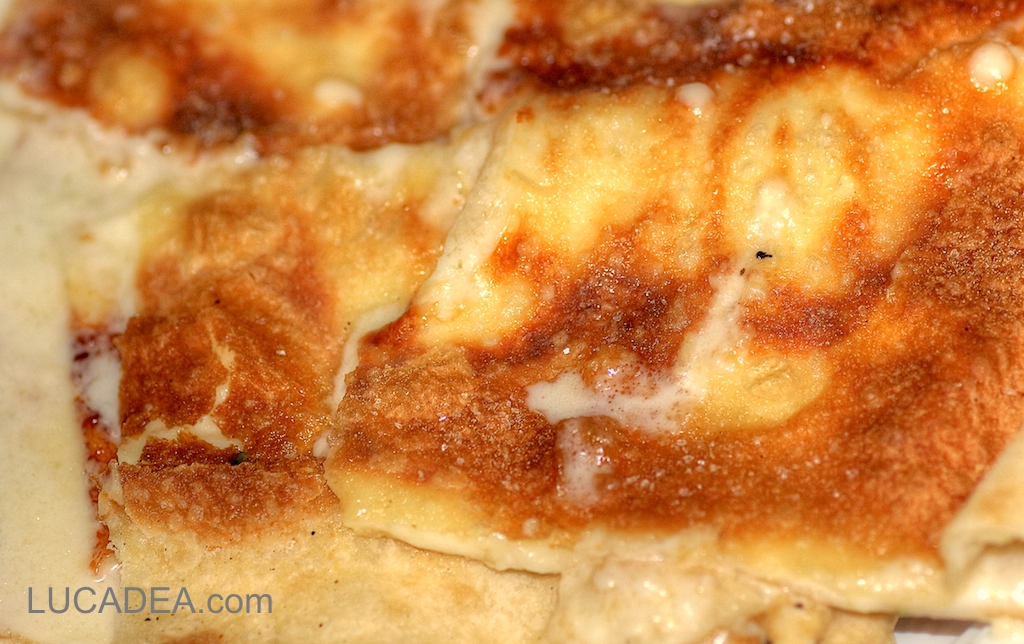
Among the most representative foods to discover in Liguria, Italy, Recco cheese focaccia is one of the specialties that best expresses the identity of this coastal region. This macro photograph was created to capture the details of a simple but meaningful dish: the thin dough, the golden surface created by baking and the creamy cheese filling that has made this preparation famous far beyond Liguria.
When I photograph food, I try to tell the story of the place where it comes from. A dish is not only something to taste, but also a memory connected to a journey, a tradition and the people who keep that tradition alive. I wanted to capture this image with my camera because Recco cheese focaccia represents the perfect balance between simple ingredients and careful preparation.
The most distinctive feature of this specialty is its extremely thin dough, which surrounds a soft and melted cheese filling. The contrast between the lightly crisp surface and the creamy interior is what makes this focaccia immediately recognizable. It may look like a simple recipe, but achieving the traditional result requires attention, experience and respect for the original method.
Recco, located in the Metropolitan City of Genoa, Liguria, Italy, is the coastal town historically connected to this preparation. Overlooking the Gulf of Paradise, Recco has developed a strong gastronomic identity thanks to its cheese focaccia, which has become one of the symbols of Ligurian cuisine.
A small historical detail about Recco cheese focaccia is that Focaccia di Recco col formaggio has received the European PGI certification. This recognition protects the connection between the product and its territory, preserving the traditional characteristics of the authentic preparation.
This image is part of my photographic story of Liguria, a region made not only of seaside landscapes and historic villages, but also of flavors that tell the culture of the places where they are created. Just like a street, a church or a coastal view, a traditional dish can become a way to understand a territory.
Macro photography allows me to focus on details that are often unnoticed during a normal meal: the texture of the dough, the marks left by baking and the small differences that make every preparation unique.
If you are visiting Liguria and wondering what to taste, Recco cheese focaccia is definitely one of the local specialties worth discovering.

Which traditional dish from a place you visited has become a memory of that journey? Add a comment or go to the bottom of the site to read what other visitors have written.

Macro view of Recco cheese focaccia in Liguria with thin dough and creamy cheese filling

Focaccia with cheese (sometimes, though inaccurately, called *focaccia al formaggio*—or *a fugassa cö formaggio* in the Genoese dialect) is a type of filled focaccia typical of Liguria and the Oltregiogo region.
Read more on Wikipedia

Recco cheese focaccia at Manuelina

La focaccia al formaggio della Manuelina

Recco cheese focaccia at Manuelina.
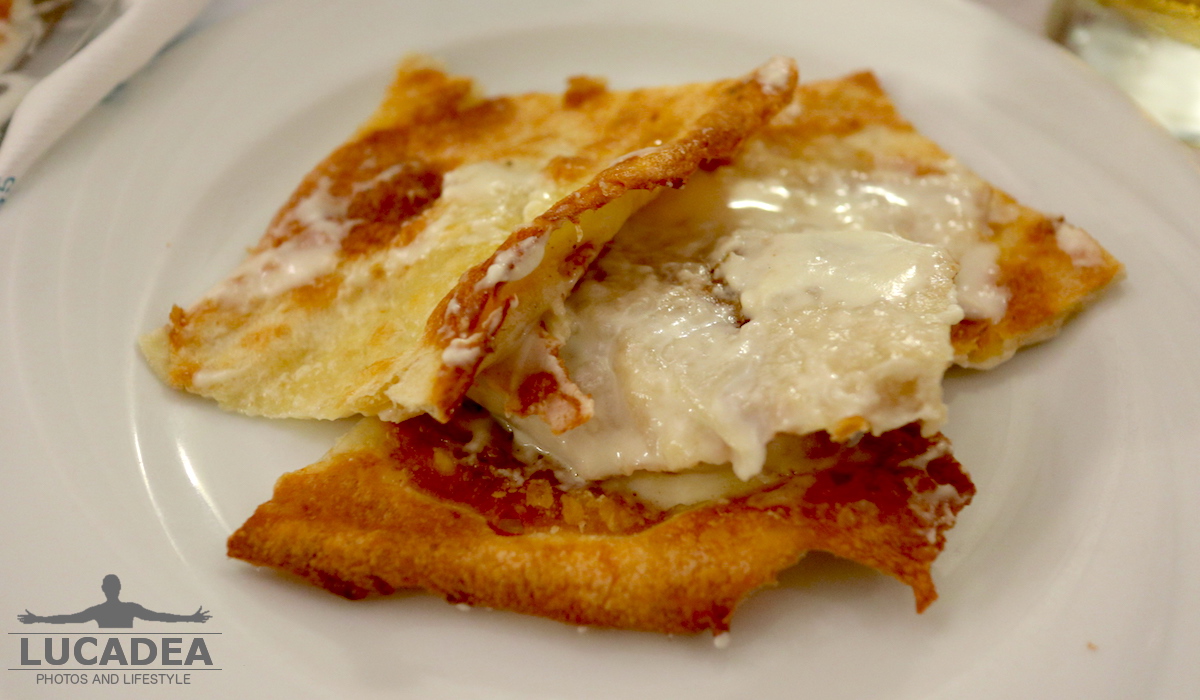
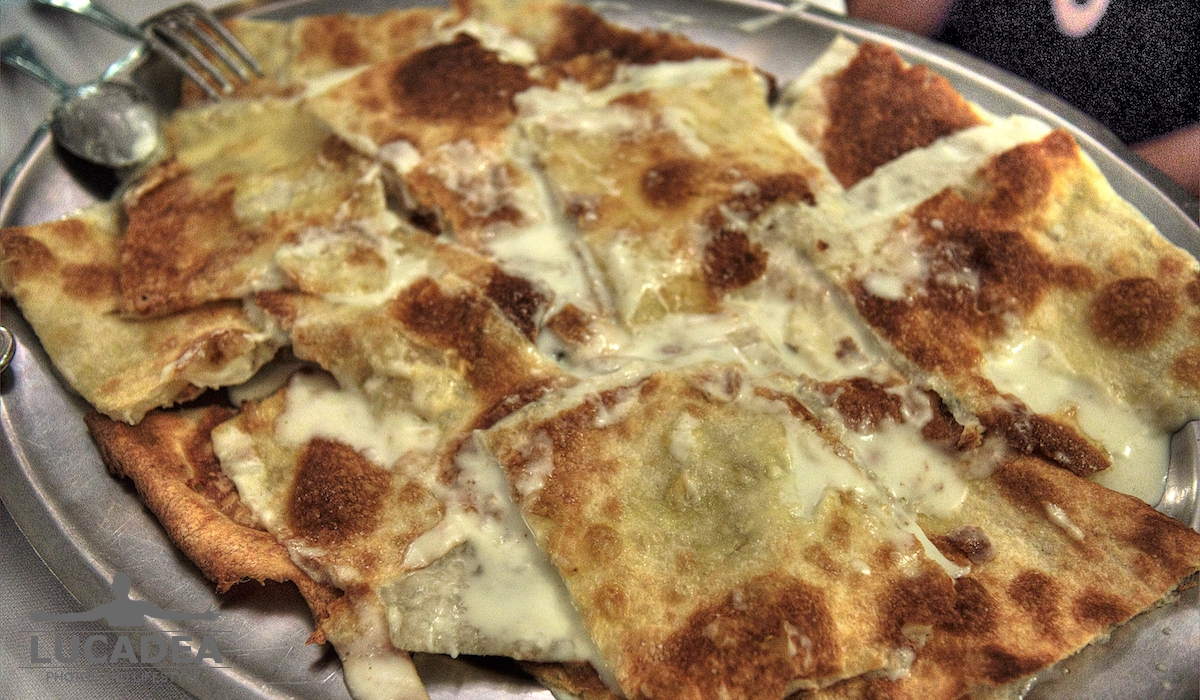
Among the things to taste in Recco, Liguria, Italy, cheese focaccia is one of the most famous specialties and a true symbol of local food tradition. During a visit to this area, I had the chance to try the version prepared by the focacceria Manuelina, a historic place closely connected with the tradition of Recco cheese focaccia.
This photograph comes from my desire to tell my travels also through food. I do not only photograph landscapes, monuments or old streets, but also those flavors that represent the identity of a place. I wanted to capture this dish with my camera because it was not just a meal, but a small part of the Ligurian culture I was experiencing.
Recco cheese focaccia is appreciated for its simplicity: a very thin dough, soft cheese filling and a baking process that creates a contrast between the golden surface and the creamy interior. The focaccia I tasted at Manuelina was excellent, with a well-balanced flavor and careful preparation, although personally I found it slightly more crispy than my ideal preference.
Recco, located in the Metropolitan City of Genoa, Liguria, Italy, is known worldwide mainly because of this specialty, which has become one of the most recognizable foods of the region. The connection between the sea, local traditions and simple ingredients is part of the identity of this coastal town.
A small historical detail about Recco cheese focaccia is that Focaccia di Recco col formaggio has received the European PGI recognition, protecting the traditional link between the product and its territory and defining the characteristics of the authentic preparation.
After sharing photographs of places, villages and landscapes from Liguria, this image adds another perspective to the story: the experience of discovering a territory through its flavors. Just like a historic building or a seaside view, a traditional dish can become a memory connected to a specific moment of a journey.
Food photography is also a way of preserving experiences. A dish can tell the story of a place, the people who prepare it and the traditions passed down through generations.

When you travel, is there a typical dish you have photographed because it truly represented the place you were visiting? Add a comment or go to the bottom of the site to read what other visitors have written.

Recco cheese focaccia from Manuelina in Liguria with golden crust and creamy cheese filling

Recco cheese focaccia from Manuelina in Liguria with golden crust and creamy cheese filling

Recco cheese focaccia from Manuelina in Liguria with golden crust and creamy cheese filling

Photos taken with Canon EOS M100 and lens Canon EF-M 22.

Where is Manuelina located:

A well-known type of cheese-filled focaccia is *Focaccia di Recco col formaggio* (known in the Genoese dialect as *a fugassa de Réccu*), with historical references dating back to the 19th century. Originally prepared in restaurants and bakeries in Recco and neighboring towns, the focaccia spread rapidly—first throughout the Tigullio and Genoa areas, and later across the entire Liguria region—often featuring slight variations in the types of cheese used.
Read more on Wikipedia

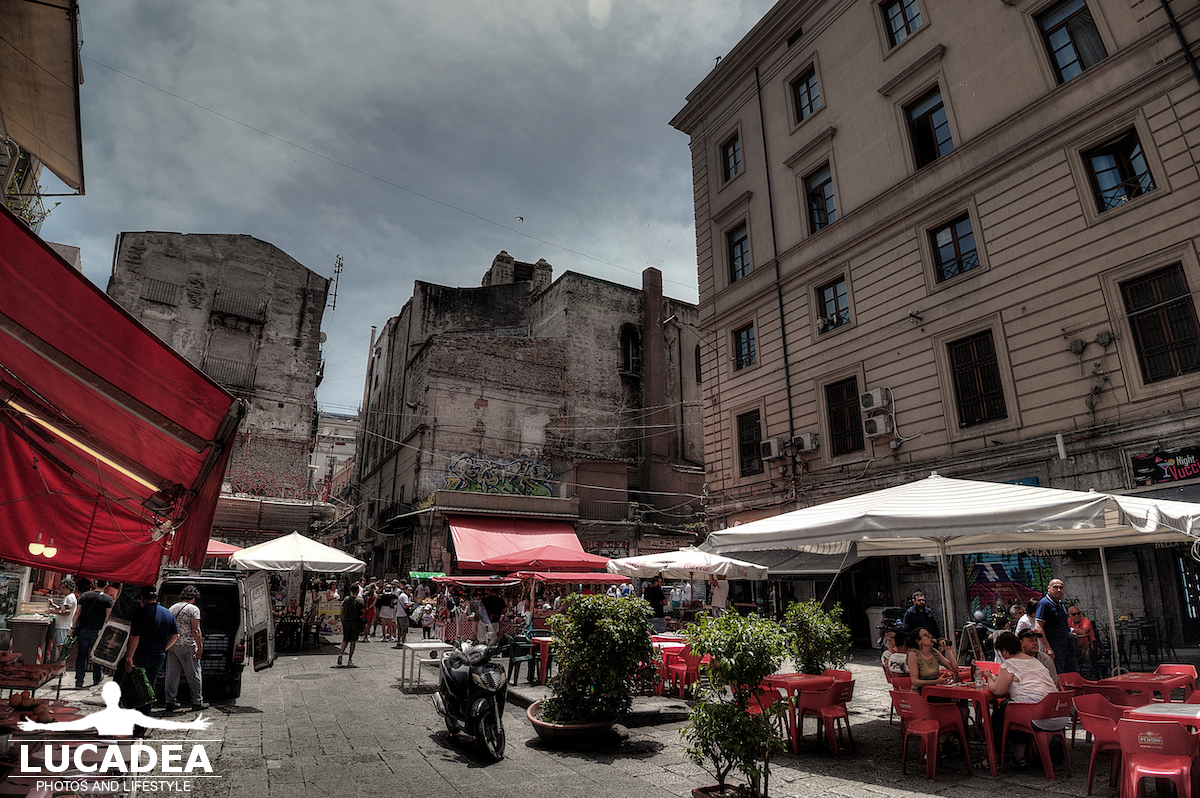
The Vucciria district in Palermo

La Vucciria a Palermo

The Vucciria district in Palermo.
Among the most characteristic places in the historic centre of Palermo, Sicily, there is certainly the Vucciria district, one of the city’s historic markets and a place that still preserves a very distinctive atmosphere. Walking through its narrow streets and small squares means discovering colours, flavours and details that tell the story of a different side of Palermo.
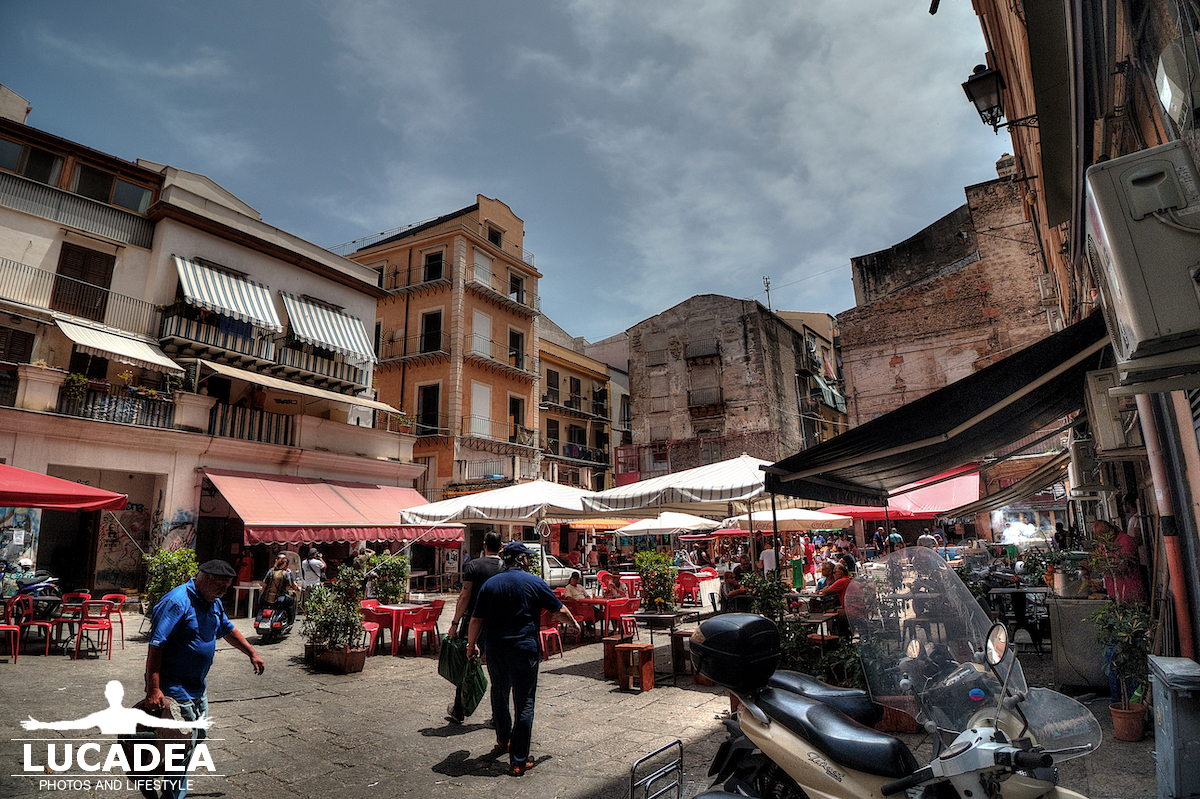
A few weeks ago I visited this area with some colleagues and we decided to stop in one of the small squares to eat something. It was a simple moment, but these everyday experiences often become the most memorable parts of a trip and, of course, interesting subjects for my camera.
The Vucciria is located in the heart of Palermo, Sicily, Italy, in an urban area where centuries of history can still be seen in the buildings, streets and old commercial spaces. Today the neighbourhood is known not only for its past as a popular market, but also for the restaurants, bars and evening atmosphere that have brought new life to these streets.
What caught my attention was the contrast between the old surroundings and the daily life taking place inside them. Tables, signs, people talking and historic buildings all come together to create a unique scene.
I took this photograph because I wanted to capture more than just a famous destination. I wanted to preserve a normal moment of the neighbourhood, the kind of detail that often reveals the real character of a place. My photography is frequently focused on these small scenes where architecture and everyday life meet.
A small curiosity about the Vucciria is that its name probably comes from the French word “boucherie”, meaning butcher shop, because the area was originally connected with meat markets. Over the centuries, the market changed and became one of Palermo’s most recognizable symbols.
After photographing many Ligurian villages, squares and alleys, this visit to Palermo allowed me to add a completely different atmosphere to my collection. Just like the narrow streets of Genoa and Liguria that I often photograph, here too the details of everyday life are what make the place fascinating.
The Vucciria is certainly one of the places worth seeing in Palermo, not only because of its history but because of the atmosphere you can experience while walking through its streets.

Have you ever visited the Vucciria district in Palermo, and what was your impression? Add a comment or go to the bottom of the site to read what other visitors have written.

Small square in the Vucciria district of Palermo with tables and historic market atmosphere

Small square in the Vucciria district of Palermo with tables and historic market atmosphere

Photos taken with a Canon EOS RP camera and a Canon EF-S 10-18 lens.

The name of this market derives from the word *Bucceria*—taken from the French *boucherie*—meaning “butcher shop.” Indeed, the market was originally designated for slaughtering (a slaughterhouse stood there during the Angevin era) and the sale of meat. Later, it became a market for selling fish, fruit, and vegetables. In the past, it was known as “la Bucciria grande” (the Great Bucciria) to distinguish it from smaller markets. In the Palermitan dialect, *Vuccirìa* means “confusion” or “hubbub.” Today, the clamor of overlapping voices and the shouts of the vendors (known as *abbanniati*) are among the defining characteristics of this market in Palermo.
Read more on Wikipedia

🏠
  • Italiano