Painted window in Lavagna between red and green

Finestra dipinta a Lavagna su facciata rossa con persiane verdi simulate in stile trompe-l’œil tipico ligure

Painted window in Lavagna between red and green.
At first glance it looks like a real architectural detail, but the painted window reveals itself only when you slow down and study the facade carefully. I am in Lavagna, Italy, and this painted window immediately becomes the focal point of a red building wall that plays with perception and illusion.
The entire composition is centered on a row of what seems to be windows with closed green shutters, yet everything is part of a painted illusion. The painted window is not just decoration; it is a visual trick that transforms a simple surface into something that feels architectural and alive. From a distance, it blends perfectly into the urban fabric of the Ligurian coast.
Walking closer, I realize how precise the details are: shadows, proportions, and color balance all work together to create depth where there is none. This painted window belongs to a tradition of visual storytelling that is deeply rooted in northern Italian coastal towns, where art often merges with everyday buildings.
Genova is not far from here, and similar decorative facades can be found throughout the region, where architecture often becomes a canvas for artistic expression. In this context, the painted window feels like part of a larger cultural language that connects towns along the Ligurian coastline.
I remember seeing similar details in other posts on this site, where small architectural illusions become a way of telling the story of a place without words. Here, the painted window does exactly that, quietly shaping the identity of the street.
A historical note: trompe-l’œil painting has been used in European architecture for centuries to simulate structural elements and add visual order to facades, especially in densely built historic centers.

As I step away, the illusion remains convincing from certain angles, as if the building holds two realities at once. Have you ever noticed something that looked real only to realize it was entirely painted? Add a comment or go to the bottom of the site to read what other visitors have written.

Finestra dipinta a Lavagna su facciata rossa con persiane verdi simulate in stile trompe-l’œil tipico ligure

Photo taken with Oppo Reno 12.

Where is this beautiful building located?

Painted Window in Lavagna between red and green – Finestra dipinta a Lavagna tra rosso e verde – Fenêtre peinte à Lavagna entre rouge et vert – Ventana pintada en Lavagna entre rojo y verde – Janela pintada em Lavagna entre vermelho e verde – Gemaltes Fenster in Lavagna zwischen Rot und Grün – Cửa sổ vẽ ở Lavagna giữa đỏ và xanh – 拉瓦尼亚红绿之间的手绘窗户 – ラヴァーニャの赤と緑の間のペイント窓

The text of this post was written with the help of ChatGPT, a language model from OpenAI.

Add one  comment to this article or read  here what other visitors have written.
 
Adv
 
Disclamer

The rights on images, videos, choruses, text and all other material on the LUCADEA.com website are governed as per  Copyright page.


This page has been viewed 1 times today.
This month it has been viewed 1 times.
In total it has been viewed 1 times.
 

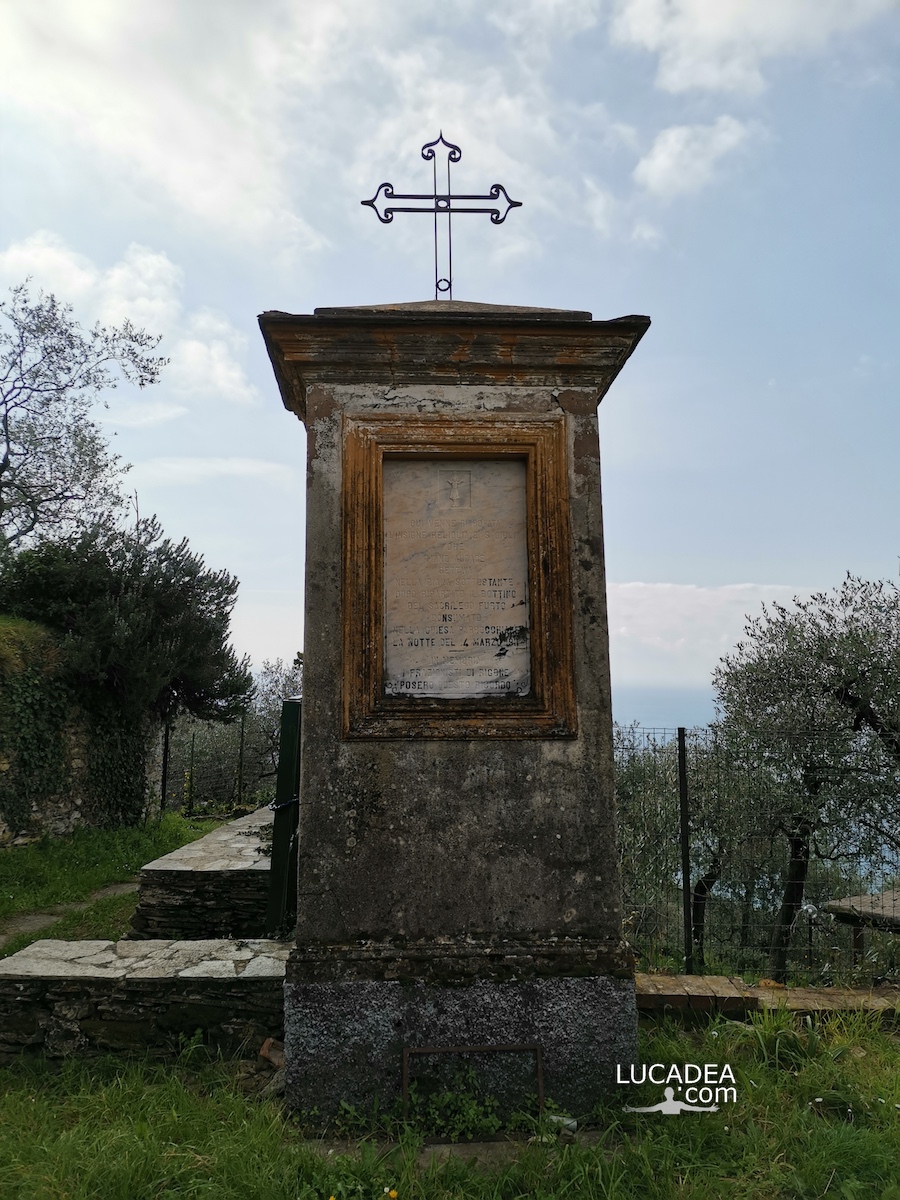
The memorial plaque of Saint Julia near Lavagna

La lapide in ricordo del ritrovamento delle reliquie Santa Giulia a Lavagna

The memorial plaque of Saint Julia near Lavagna.
Walking down from the church of Saint Julia towards Lavagna, I came across this small shrine, a discreet detail that could easily be overlooked but preserves a very specific memory connected with the religious history of the area.
I took this photograph because I am always curious about the small signs of local history that appear along roads and paths. This is not a large monument and it does not have the immediate presence of a church or historic building, but the story carved into the plaque made me stop and take a closer look.
The shrine stands along the road leading from the church of Saint Julia down towards Lavagna, in the area of Rigone. Its location is particularly meaningful because the memorial refers to an event that took place in this very area. The plaque commemorates the discovery of a relic of Saint Julia after a sacrilegious theft from the parish church.
The inscription explains that the important relic of Saint Julia was found on the plain below after it had been thrown there by one of the thieves once the stolen goods had been divided. The date recorded on the stone is the night of March 14, 1911. The inhabitants of Rigone placed the memorial here to preserve the memory of what happened.
It is the kind of story that can suddenly make an ordinary road much more interesting. When I think about what to see around Lavagna, I enjoy these unexpected discoveries because they add another layer to a landscape that might otherwise seem familiar and ordinary.
The relic mentioned on the plaque is connected with the devotion to Saint Julia, a saint venerated in several parts of Italy and across the Mediterranean. In Lavagna, the devotion is closely associated with the church of Saint Julia, which stands above the surrounding area and remains an important landmark in the local landscape.
The historical detail behind this photograph is therefore quite simple but significant. The night of March 14, 1911, became more than an isolated episode of religious history: it was preserved through local memory and eventually recorded on this small memorial. More than a century later, the words remain visible along the road.
What attracted me most was precisely the modest appearance of the plaque. If you are simply walking past, you might notice the shrine without realizing why it is there. Once you stop and read the inscription, however, the place takes on a completely different meaning.
I took the photograph myself because I wanted to preserve this small piece of Lavagna’s local memory. There was no need to create a dramatic composition. In photographs like this, the subject already contains the reason for taking the picture: the words, the location and the story connected with them.
I have photographed other places around Lavagna as well, including streets and architectural details in the historic center. In one of my photographs of Dante Alighieri street, for example, I focused on a completely different side of the town. Together, these images show how varied the local landscape can be, from historic streets in the center to small memorials encountered along the roads leading towards the surrounding villages.
For me, this is one of the most rewarding aspects of photographing familiar places. A city or village is not made only of the buildings that appear in guidebooks. Sometimes a small plaque, an old shrine or a few words carved into stone can tell you something that would otherwise remain invisible.
If you are looking for the history of Saint Julia in Lavagna, this little memorial provides a tangible connection between the saint’s devotion, the church and the surrounding territory. It is a modest piece of local heritage, but knowing its story changes the way I look at the road.
That is why I decided to photograph it. The image is simple, but behind those few lines on the stone there is an episode that people in Rigone considered important enough to remember for generations.

The plaque reads:
Here was found the distinguished relic of St. Julia, which a daring hand had cast onto the plain below after the spoils of the sacrilegious theft—committed in the parish church on the night of March 14, 1911—had been divided up. The residents of Rigone erected this memorial.

Have you ever discovered an unexpected piece of local history simply by stopping to read a memorial plaque? Add a comment or go to the bottom of the site to read what other visitors have written.

Photo taken with Honor 20.

Add one  comment to this article or read  here what other visitors have written.
 
Adv
 
Disclamer

The rights on images, videos, choruses, text and all other material on the LUCADEA.com website are governed as per  Copyright page.

This page has been viewed 0 times today.
This month it has been viewed 0 times.
In total it has been viewed 0 times.
 

A Slate Portico in Lavagna’s Old Town

Portico del centro storico di Lavagna con pavimento, portale in ardesia e caratteristico portone verde

A Slate Portico in Lavagna’s Old Town.
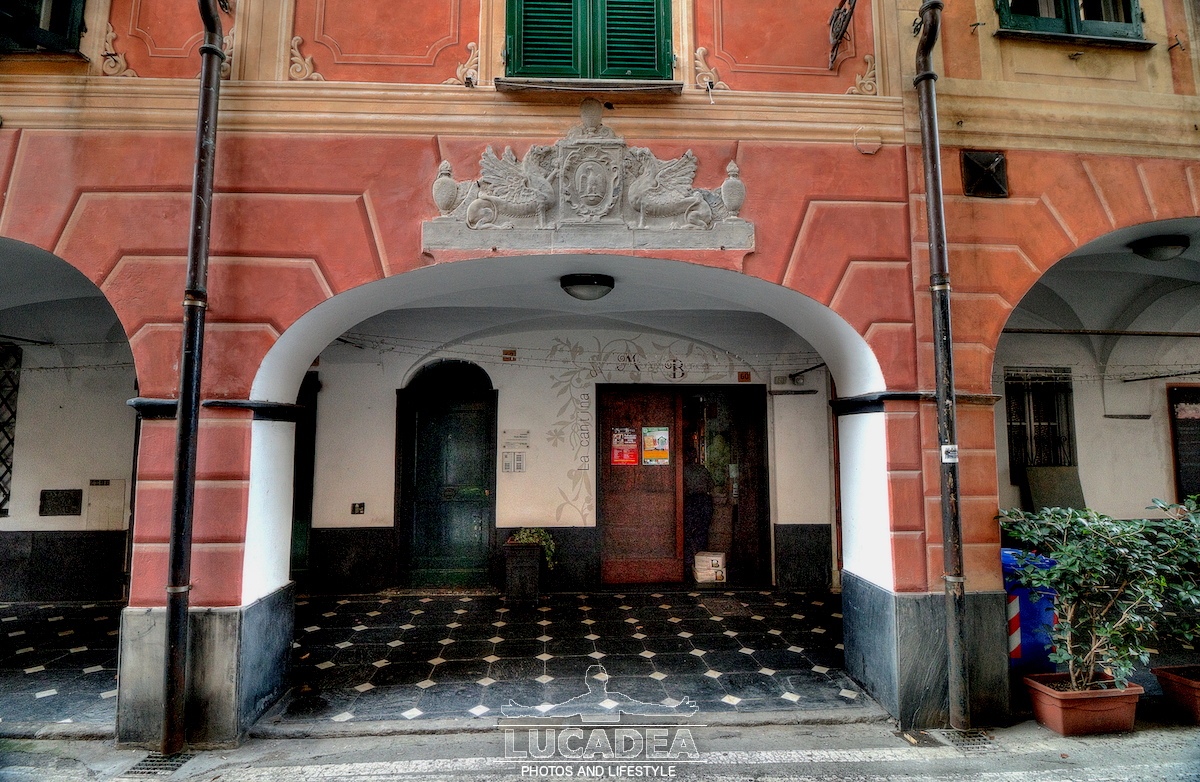
While walking through the historic center of Lavagna, I stopped in front of this portico because, looking at it carefully, I realized how many details were gathered into a single frame. The slate, pavement, green doorway and carved stone portal create a small architectural scene that says quite a lot about the traditional character of the Tigullio.
I took this photograph in Lavagna, Liguria, Italy, in the Metropolitan City of Genoa, with the slate decoration of the portico as the main subject. At first it might seem like a photograph devoted to just one architectural detail, but the longer I look at it, the more elements I find worth noticing.
The slate pavement leads the eye towards the entrance, while the large green doorway adds a touch of color that I often notice in the porticoes and historic streets of the Ligurian Riviera. Above the arch, there is another slate portal, carefully incorporated into the building. These are exactly the kinds of small details that can make a photographic walk much more interesting.
Slate has a strong presence in Ligurian architecture and an especially close connection with the Lavagna area, which has a long history of slate extraction and craftsmanship. The dark stone appears in many parts of local buildings, from roofs and paving to portals and decorative elements.
This is also why the view immediately reminded me of some photographs I took in Sestri Levante. In particular, the portal above the arch brought back memories of the slate portals I photographed in the old lanes of Sestri Levante. They are different places, but they share architectural details shaped by the same Ligurian tradition.
That is one of the things I enjoy about photographing historic centers. I do not always need to look for the most famous monument or the widest view. Sometimes it is enough to stop in front of a portico and observe the way materials, colors and shapes work together.
There is also a small connection with everyday life in this photograph. The portico is home to a wine shop, Monna Bianca. I like the fact that the image does not show only a historic architectural detail, but also a space that is still part of daily life in the town. The portico is not something frozen in the past; it continues to be used.
If you are wondering what to see in Lavagna, these are precisely the details that make a walk through the old town rewarding. Between one street and another, you can find porticoes, slate portals, old doorways and stone paving that deserve a moment of attention.
I wanted to capture this particular view with my camera because it seemed like a good example of how an urban photograph can tell something about a place without necessarily showing an entire square or monument. The composition is relatively close, but it contains several elements connected with both the history and everyday life of Lavagna.
Lavagna, like Chiavari and other towns along the Ligurian Riviera, still preserves many of these architectural characteristics. Walking slowly and looking not only ahead but also upwards, or even down towards the pavement, often reveals details that would otherwise go unnoticed.
This is the kind of photograph I enjoy keeping on the blog: an image of a place I know, or am still getting to know, captured through a detail that may be small but can immediately take me back to the exact spot where I took it.

When you walk through Lavagna, do you also find yourself noticing the slate details of its porticoes? Add a comment or go to the bottom of the site to read what other visitors have written.

Portico in Lavagna's old town with slate paving, carved slate portal and distinctive green doorway

Photo taken with a Canon EOS M100 camera and Canon EF-S 10-18 lens.

Lavagna is divided into several districts, named after the ancient *sestieri* (sixths) into which the town was split during the era of the Fieschi family.
These are: the Borgo district, corresponding to the historic center; the Scafa district, located in the harbor area and bordering Chiavari; the Moggia district, in the town’s inland area; the Ripamare district in the east; and the Cavi district, which encompasses the hamlet of Cavi di Lavagna—from which it takes its name—as well as the hillside hamlets of Santa Giulia, Sorlana, and Barassi.
Read more on Wikipedia

Lavagna’s Slate Porticoes in the Old Town

Portici del centro storico di Lavagna decorati con elementi in ardesia, tipici dell'architettura ligure

Lavagna’s Slate Porticoes in the Old Town.
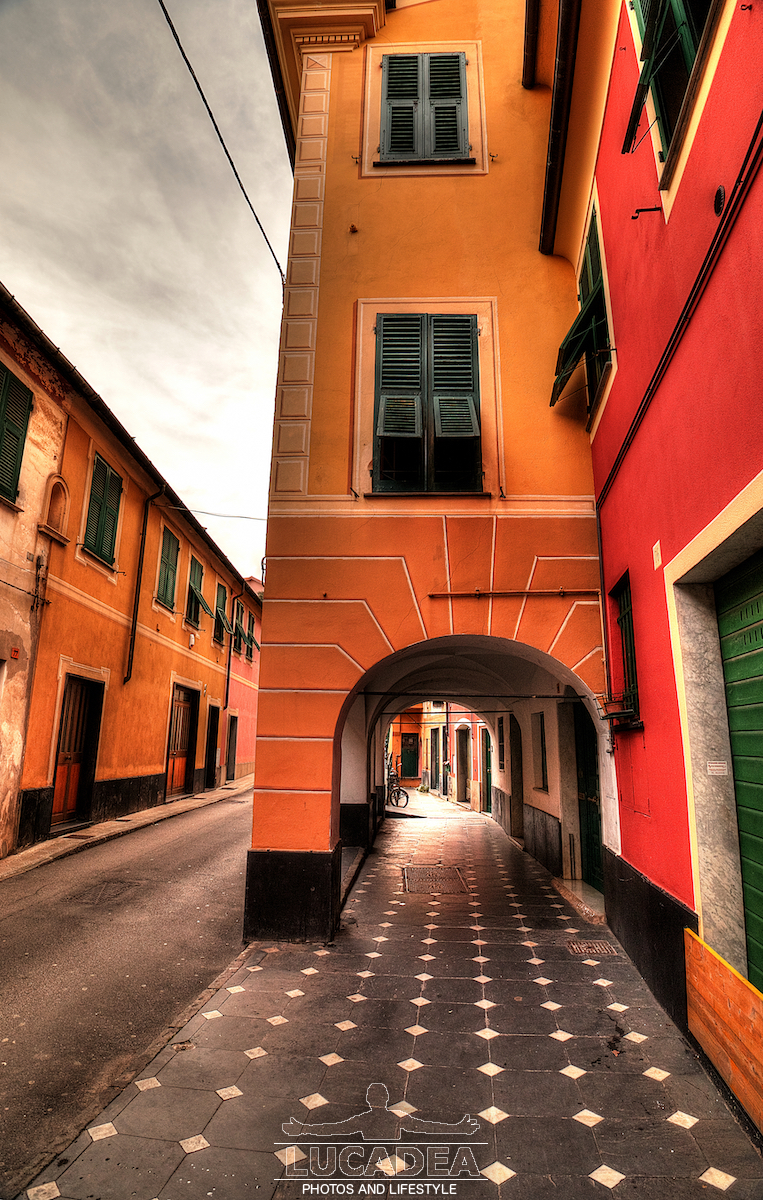
While walking through the historic center of Lavagna, I stopped to photograph one of the details that most clearly characterizes the town’s streets: the porticoes decorated with slate. It is a simple view, but that is exactly what I like about it, because it captures a very recognizable part of this corner of the Tigullio.
I took this photograph a few months ago in Lavagna, Liguria, Italy, in the Metropolitan City of Genoa, during a day spent photographing the historic center. I had started walking without a precise plan for the images I wanted to take and, as often happens to me, it was a small architectural detail that eventually made me stop.
The porticoes are one of the elements that make walking through the old streets so enjoyable. As I move beneath them, my attention keeps shifting between columns, doorways, façades and, above all, the slate. This dark stone is deeply connected with the building tradition of Liguria. In this photograph I wanted to capture that combination of materials and shapes without making the scene feel overly arranged.
Slate has a long history in Ligurian architecture, and it has a particularly strong connection with Lavagna and the surrounding area. Local slate quarries played an important role in the development of the material, which was used for centuries not only in architectural details and porticoes but also for roofs, paving and decorative elements.
It is the kind of feature that may not immediately stand out when visiting a town, but becomes much more obvious once you start paying attention to buildings. A dark stone panel, a column or a small decorative element can tell you something about a place beyond its appearance.
If you are wondering what to see in Lavagna, the porticoes of the old town are worth observing slowly. They are not necessarily something you visit as a single landmark, but they are part of the experience of walking through the historic streets. It is often while passing underneath them that some of the most interesting photographic details appear.
That is exactly how this image came about. I did not need a panoramic viewpoint or a famous monument. I simply had to look carefully at what was in front of me. The camera allowed me to stop and preserve a detail that would have been very easy to walk past without giving it much thought.
I took several other photographs in Lavagna on the same day. Some show different parts of the historic center, while others focus on buildings and architectural details that caught my attention during the walk. I like thinking of these images as a small collection from the same afternoon because, when seen together, they give a fuller impression of the town.
One of the photographs I have published over time also shows Santo Stefano Basilica, one of the buildings that most naturally draws attention in the center of Lavagna. The porticoes tell a quieter and more everyday story: they are the kind of architecture you encounter simply by walking through the town.
That is precisely the kind of photograph I enjoy adding to the blog. It does not necessarily need a monumental subject. It can simply preserve the memory of a walk and a detail that made me stop for a moment.
Lavagna is particularly well suited to this way of photographing. Walking slowly through the center reveals new compositions all the time, often created by the materials, colors and shapes of the buildings rather than by a single landmark.
Perhaps that is why, even months after taking this photograph, I still enjoy looking at it. It brings back that walk and the other images I made on the same day.

Which architectural detail in Lavagna do you most enjoy photographing? Add a comment or go to the bottom of the site to read what other visitors have written.

Porticoes in Lavagna's old town decorated with slate, a distinctive feature of traditional Ligurian architecture

Photo taken with a Canon EOS M100 camera and Tamron 16-300 lens.

The town is divided into several districts, named after the ancient *sestieri* (wards) into which the town was split during the era of the Fieschi family.
These are: the Borgo district, corresponding to the historic center; the Scafa district, located in the harbor area and bordering Chiavari; the Moggia district, in the inland part of the city; the Ripamare district in the east; and the Cavi district, which includes the hamlet of Cavi di Lavagna and the hillside hamlets of Santa Giulia, Sorlana, and Barassi.
Read more on Wikipedia

Santo Stefano Basilica in Lavagna

Basilica di Santo Stefano a Lavagna con la grande scalinata e i leoni davanti alla facciata

Santo Stefano Basilica in Lavagna.
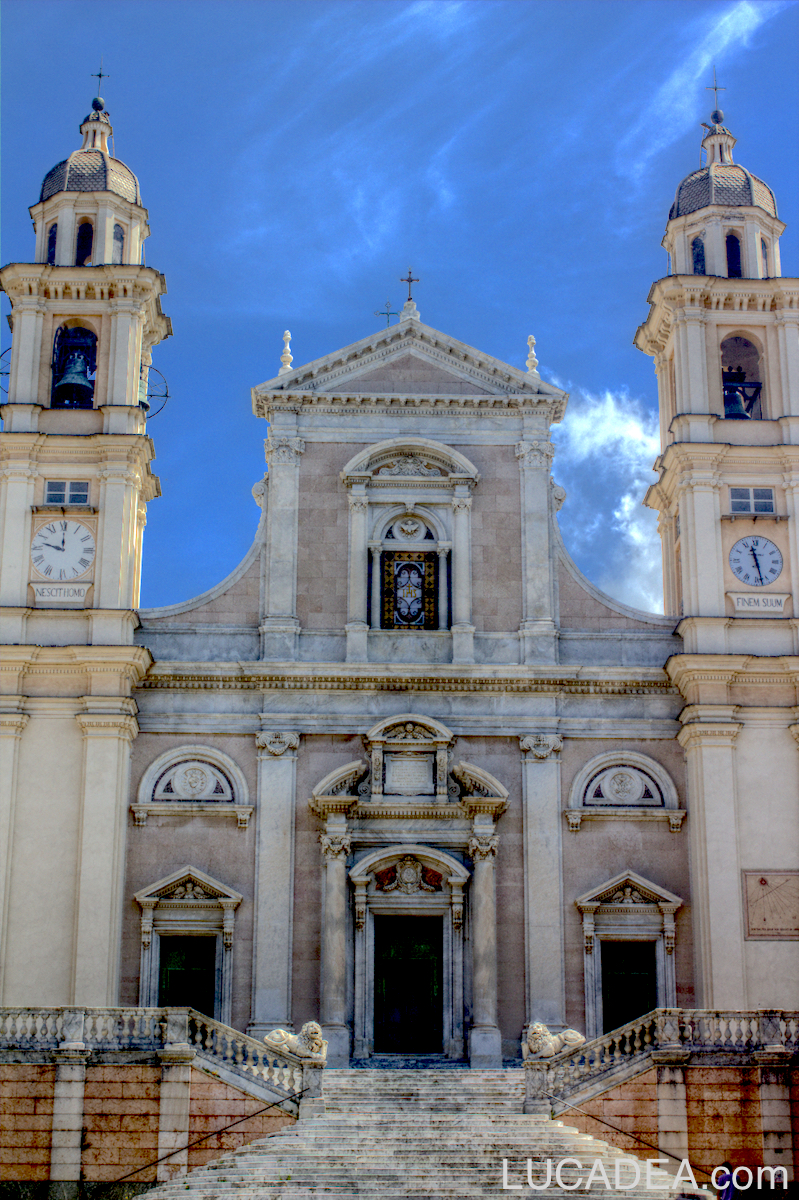
Among the most beautiful churches in the Tigullio area, Santo Stefano Basilica is one of the buildings that most often catches my eye when I walk through the historic center of Lavagna. Its façade, broad staircase and central position make it a natural subject for photography, especially when the church can be framed together with the streets and buildings around it.
I am in Lavagna, Liguria, Italy, in the Metropolitan City of Genoa, and this time I stopped in front of the basilica to look more closely at some of its details. The photograph came from one of those walks without a precise plan, when a familiar building suddenly looks slightly different and becomes worth photographing again.
The basilica dominates the main square of the old town and immediately stands out because of the large staircase leading towards the entrance. On either side are the characteristic stone lions, an architectural detail that makes the façade particularly recognizable and one that I always find interesting to include in the frame.
Through the camera, what I like most is the relationship between the size of the church and the much smaller streets surrounding it. The basilica feels imposing, yet it is also a natural part of Lavagna’s urban fabric. Moving only a few steps can completely change the perspective and reveal another view of the same building.
The present church was built in the seventeenth century, between 1650 and 1668, and was consecrated in 1703. A small historical detail I find interesting is that Pope Benedict XV raised it to the status of minor basilica in 1921. These details help explain the importance of the building in Lavagna’s history without taking attention away from the photograph itself.
If you are wondering what to see in Lavagna, Santo Stefano Basilica is naturally one of the places that belongs on a walk through the historic center. But what interests me here is not writing a guide to the church. I prefer to show how the building appears to someone simply walking through these streets. It is almost impossible to cross the center without eventually finding the basilica in front of you.
I have photographed Lavagna several times, and Santo Stefano appears in more than one of my images. I particularly remember another photograph showing the main old-town alley with the basilica visible in the background. It is a very different composition, but it belongs to the same small visual story I have been building around Lavagna. I like it when photographs taken at different moments can complement each other.
Santo Stefano Basilica is also a good example of the way religious architecture and everyday life remain closely connected in Ligurian historic towns. You do not need to search for a special viewpoint. Simply walking through the old streets is often enough for the building to gradually appear between the surrounding houses.
That is what this photograph brings back to me. A familiar place does not have to be seen for the first time to become interesting again. Sometimes all it takes is a different angle, a few extra seconds of observation and a little more attention to details that may have been overlooked many times before.
For me, Santo Stefano remains one of the churches in the Tigullio that I most enjoy photographing. Whenever I return to Lavagna, it is very easy for this building to catch my attention once again.

Is there a church in the Tigullio area that you particularly enjoy photographing? Add a comment or go to the bottom of the site to read what other visitors have written.

Santo Stefano Basilica in Lavagna with its large staircase and stone lions in front of the façade

A Stormy Sea at Cavi di Lavagna

Mareggiata a Cavi di Lavagna con le onde che colpiscono lo scoglio all'uscita delle Gallerie di Sant'Anna

A Stormy Sea at Cavi di Lavagna.
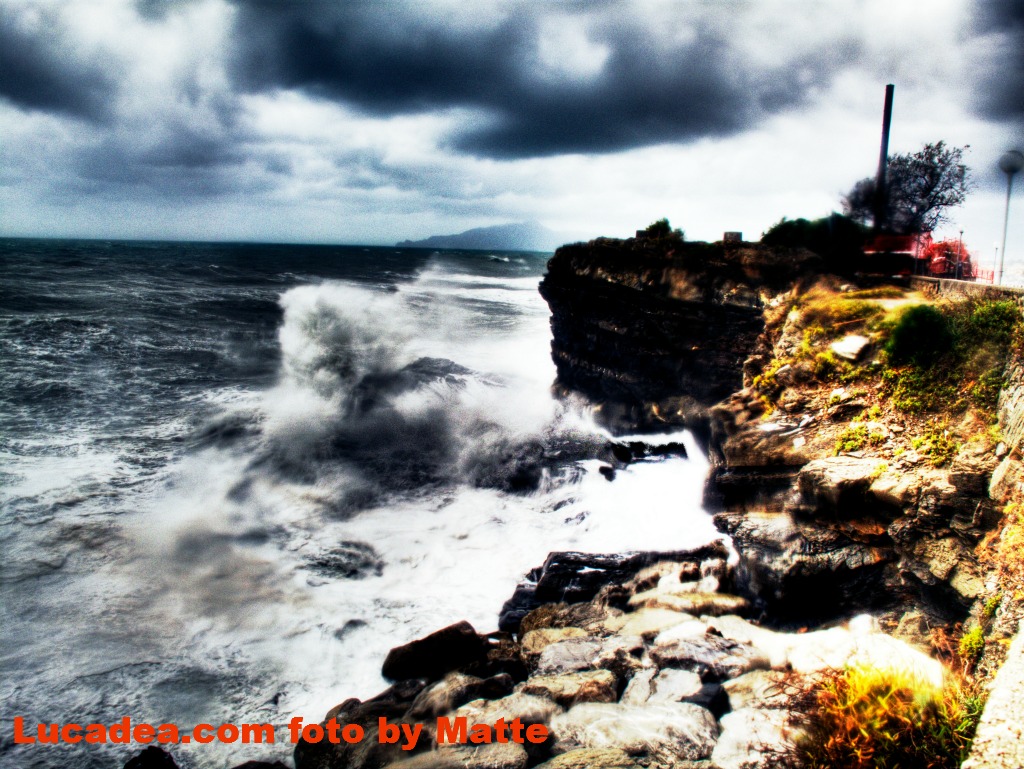
The rough sea crashes against the rock outside the Sant’Anna tunnels, and when I saw this scene I immediately thought it was one of the most striking places along this stretch of coast to photograph a stormy sea. I am Matteo, and this photograph comes from my wish to capture one of those moments when the sea completely changes the appearance of the Ligurian coastline.
Cavi di Lavagna is in Liguria, in the Metropolitan City of Genoa, along the Gulf of Tigullio, not far from Sestri Levante. I know this area quite well, and when the sea becomes rough it offers views that are completely different from those seen on calmer days. The coastline becomes more dynamic and the rocks suddenly take on a much more important role in the landscape.
In this photograph, the main subject is the sea itself as it reaches the rock with considerable force. The rock seems to wait for every new wave and, with each impact, the water takes on a different shape. This is exactly the kind of moment I like to look for with my camera: not a staged scene, but something that changes constantly and has to be captured at the right instant.
The Sant’Anna tunnels are one of the distinctive features of this section of coastline between Lavagna and Sestri Levante. On an ordinary day, perhaps with calm water and clear weather, it is easy to experience the landscape in a completely different way. During a storm, however, the sea inevitably becomes the main attraction as the waves reach the rocks.
If you are wondering where to see a stormy sea around Cavi di Lavagna, this is certainly one of the places I would consider for observing the waves from a suitable and safe position. The power of the sea should never be underestimated, though. Wet rocks and unexpectedly large waves can be dangerous, so even when photographing, I always believe it is important to keep a safe distance.
There is also a small local detail that has always made me curious. In Sestri Levante, a rock is known locally as “il Grugno”, although I do not know the precise origin of the nickname. I would rather not invent an explanation. Local names like this are often part of the memory of the people who live in an area and are passed down through everyday use.
For me, photographing a stormy sea is mainly about waiting. It is not enough to point the camera towards the water and keep taking pictures. Every wave is different, and you have to look for the instant when its shape, the rock and the spray come together to create the photograph you have in mind. Sometimes waiting just a few seconds can produce a completely different image.
That is what I like about this photograph. It does not simply show Cavi di Lavagna; it records a particular moment on the coast, when the sea takes over the landscape we normally see. It is a side of Liguria that only appears under certain conditions and is worth observing carefully.
Over the years I have photographed several parts of the Tigullio, including areas around Lavagna and Sestri Levante. This image naturally becomes part of that personal visual record of the territory, where I try to show not only the best-known places but also their everyday character and the changes that appear when the weather and sea conditions are different.
I think photographs of rough seas preserve something beyond a simple landscape. The sea is constantly changing, while the camera can hold one of its many forms still for a single instant.

Have you ever watched the sea at the Sant’Anna tunnels during a real storm? Add a comment or go to the bottom of the site to read what other visitors have written.

Stormy sea at Cavi di Lavagna photographed by Matteo as waves crash against the rock outside the Sant'Anna tunnels

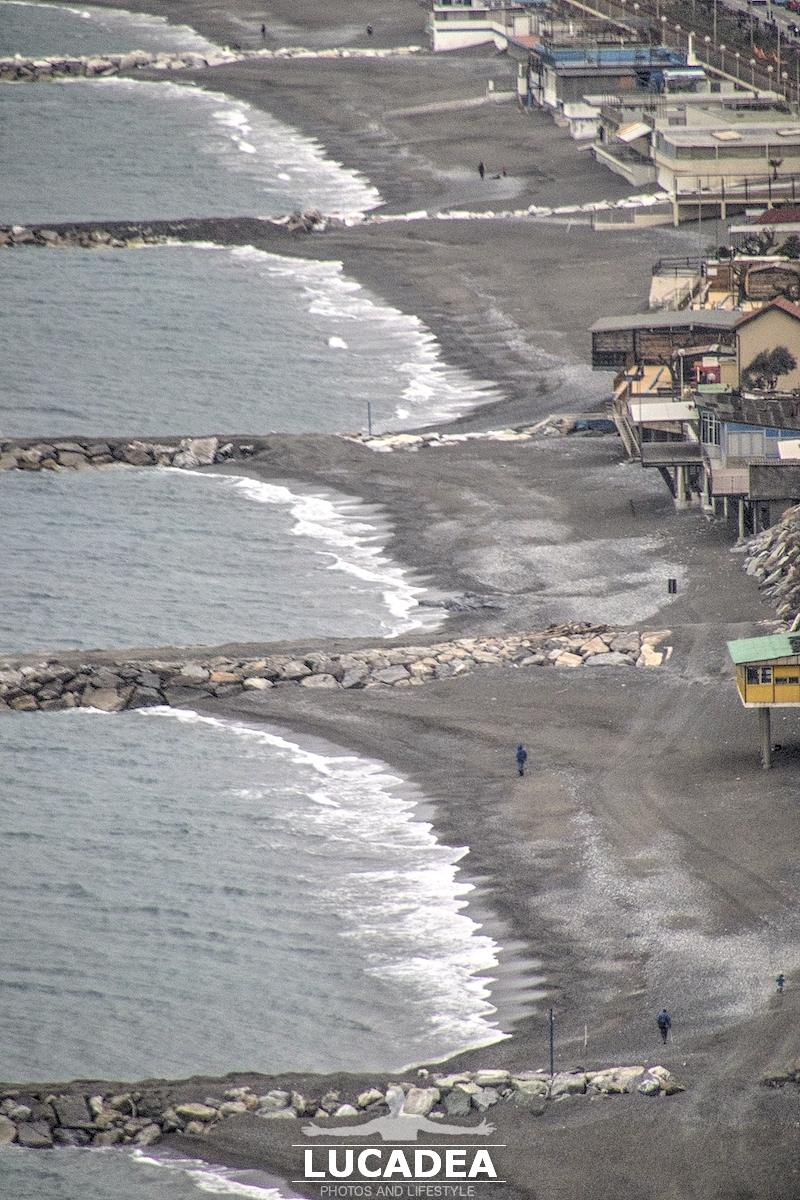
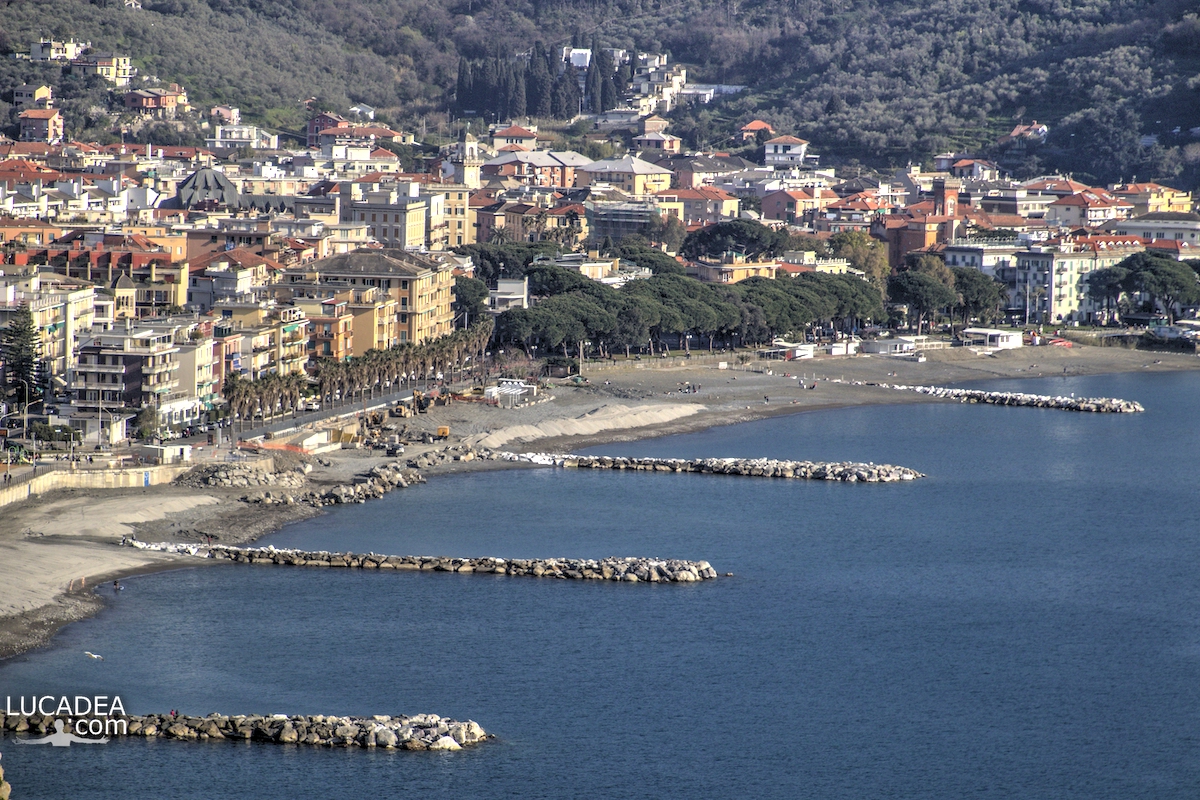
Cavi di Lavagna Beach from Above

La spiaggia di Cavi di Lavagna vista dalle Rocche di Sant’Anna, con i pennelli di scogli sul mare

Cavi di Lavagna Beach from Above.
From the Sant’Anna Cliffs above Sestri Levante, I photographed Cavi di Lavagna Beach on a gloomy March morning, when the overcast sky gave the landscape a softer appearance and left much of the scene to the sea and coastline. Cavi Beach is one of those stretches of coast that reveals details from above that are much harder to notice at sea level.
From this viewpoint, the coastline extends toward Lavagna and the eye naturally follows the beach, interrupted at more or less regular intervals by rock groynes. These structures have become part of the coastal landscape and, when seen from a distance, create an almost geometric rhythm along the edge of the sea.
That detail was what caught my attention. When you look at a beach from close by, it is easy to concentrate on the water, sand or people using it. From the Sant’Anna Cliffs, however, the perspective changes and the shape of the coastline becomes much more apparent, as do the structures built over time to help protect it.
The rock groynes are part of the coastal defense system, helping to manage the movement of sediment and reduce the loss of beach material caused by marine erosion. They are a good example of how, along inhabited coastlines, the natural landscape and human interventions inevitably become part of the same scene.
At Cavi di Lavagna, that relationship is particularly easy to see. The beach follows the coastline for a considerable distance and, from above, it becomes possible to read more clearly both the shapes created by the sea and those introduced to help preserve the shore.
I took this photograph on a March morning that was anything but bright. There was none of the blue sky that is so often associated with photographs of Liguria, and that was exactly what made me stop and look at the landscape. A cloudy day can reduce the intensity of colors, but it can also make the structure of the coastline easier to notice.
I enjoy photographing places even when the conditions are not what we normally expect from a landscape photograph. The light does not have to be spectacular for an image to have something to say. Here, I was mainly interested in the shape of the beach and the way the rock groynes break up the line of the sea at regular intervals.
If you are visiting the area around Lavagna and wondering what to see, Cavi Beach is a stretch of coastline worth observing from a wider perspective. From the Sant’Anna Cliffs in Sestri Levante, the distance makes it easier to understand the shape of the shoreline and its relationship with the surrounding landscape.
Cavi di Lavagna is in Liguria, Italy, along the eastern section of the Gulf of Tigullio. Its proximity to Sestri Levante also makes this viewpoint particularly interesting for photography, since it brings different parts of the coastline into the same visual story.
There is a small curiosity behind the rock groynes themselves. They are not simply barriers designed to block waves. Their position and spacing are related to the movement of sediment along the shore, which means that from above they may look like a regular pattern drawn across the sea while actually serving a specific purpose in coastal management.
I have photographed the coastline from the Sant’Anna heights several times, and once again it was enough to shift my attention slightly to find a different subject. On the blog I have also written about other photographs taken from the cliffs, including a view of Sestri Levante and the Bay of Fables photographed with a telephoto lens. This image naturally connects with those photographs while moving the focus farther east toward Cavi.
What I like about these elevated views is the possibility of seeing the coastline as a whole. The beach is no longer simply a place where people go swimming. It becomes a line that reveals the shape of the shore, the changes that have taken place over time and the ways people have tried to protect it.
On a grey March morning, with the sea in front of me and the coastline stretching toward Lavagna, this was the detail I chose to preserve with my camera.

Do you prefer photographing the coast on clear days, or do you also enjoy these cloudy atmospheres? Add a comment or go to the bottom of the site to read what other visitors have written.

Cavi di Lavagna Beach seen from the Sant’Anna Cliffs, with rock groynes extending into the sea

Photo taken with Canon EOS M100 and lens Tamron 16-300.

Sestri Levante from the Sant’Anna Cliffs

Vista panoramica di Sestri Levante dalle Rocche di Sant’Anna, con la città e il mare sullo sfondo

Sestri Levante from the Sant’Anna Cliffs.
From the Sant’Anna Cliffs, one of the most interesting views of Sestri Levante opens up in front of the camera, with the town spread out below and the sea beyond it. It is one of my favorite viewpoints for photographing Sestri Levante and offers a completely different perspective from the one you get while walking along the seafront.
The Sant’Anna Cliffs are the ruins found along the trail above the tunnels of the same name, which connect Sestri Levante with the nearby town of Lavagna. The viewpoint is relatively easy to reach and takes roughly fifteen minutes on foot, making it possible to reach a very different landscape without a particularly demanding walk.
What I like about this place is its position. From the trail, Sestri Levante can be seen from above, making it easier to appreciate the shape of the coastline and the close relationship between the town and the sea. If you are visiting Sestri Levante and wondering what to see, the Sant’Anna Cliffs are certainly worth considering, especially if you want to photograph the town from a less familiar viewpoint.
The photograph I took shows my Sestri Levante from above. I particularly like it because it does not use the classic perspective normally associated with photographs of the town. At sea level, your attention is naturally drawn to the beaches, houses and bays. From here, the entire landscape becomes easier to read as a whole.
The Sant’Anna trail also preserves traces of the area’s past. The ruins that gave the place its name are remains of an old defensive system that once characterized this section of the coast. Today, it is mainly their position and the surrounding view that make the site interesting.
One of the nicest things about the Sant’Anna Cliffs is how much the view can change throughout the day. Sunset is probably the most popular time for photographers, since the position allows you to watch the landscape change as the light fades. This particular photograph, however, was not taken at sunset, and that is something I like to point out because the viewpoint does not depend on that one specific moment to be interesting.
Some places seem to invite you to photograph them in exactly the same way every time. The Sant’Anna Cliffs are different. You can return repeatedly and still look for something new. The season, sky, vegetation and appearance of the town can all change the image, even when the viewpoint remains the same.
I have returned here myself with the simple idea of photographing Sestri Levante once again, a town I know very well but which can still look different from this particular position. That is one of the things I enjoy most about photography: sometimes the place does not change at all. What changes is simply the point from which we look at it.
The position of the cliffs also creates an interesting visual connection between Sestri Levante and Lavagna. Along this part of the Ligurian coast, the two towns are close to each other, and the trail offers a distinctive perspective on the landscape between them.
I have photographed other views of Sestri Levante on my blog, especially scenes connected with the coast and its beaches. This photograph fits naturally into that collection because it shows the same town from a completely different viewpoint. After photographing the sea from below, I enjoy climbing a little higher and looking back at the coastline from above.
I do not see this photograph simply as a panoramic view. For me, it is a way of describing my relationship with Sestri Levante, my town, through one of the places where I can still look at it with curiosity. Even when I already know the view, bringing my camera with me encourages me to search for a different composition and notice details that might otherwise go unnoticed.
The Sant’Anna Cliffs are therefore one of those places I would suggest to anyone who wants to see Sestri Levante from a different perspective without taking on a particularly difficult route. After a short walk, the road is left behind and a completely different landscape appears.
Perhaps that is what I like most about this viewpoint. After only a short climb, the Sestri Levante in front of the camera can almost seem new, even though it is the same town I have known for so long.

Have you ever seen Sestri Levante from this viewpoint at the Sant’Anna Cliffs? Add a comment or go to the bottom of the site to read what other visitors have written.

Panoramic view of Sestri Levante from the Sant’Anna Cliffs, with the town and sea in the distance

Photo taken with Canon EOS M100 and lens Tamron 16-300.

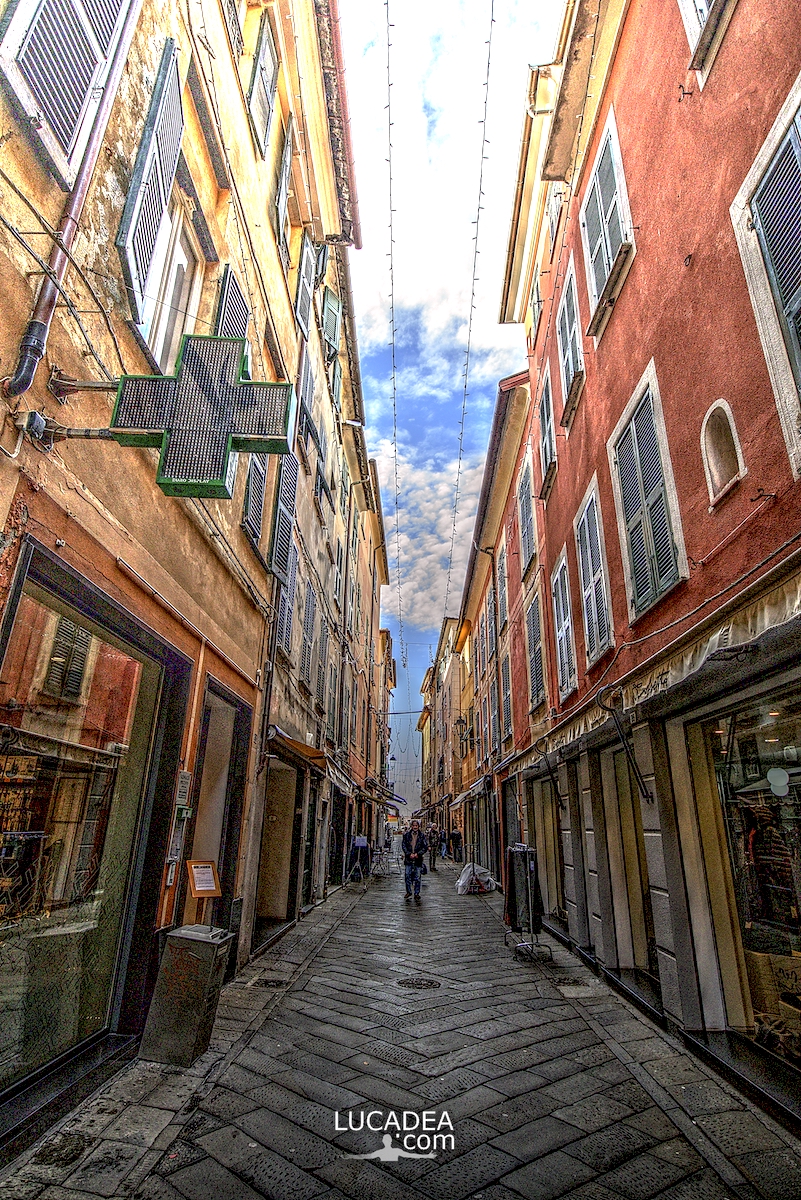
Lavagna’s alley among old houses and shops

Caruggio di Lavagna in Liguria con palazzi colorati e negozi del centro storico del borgo marinaro

Lavagna’s alley among old houses and shops.
Walking through the historic centre of Lavagna, I found one of those typical Ligurian alleys where everyday life and old buildings meet in a quiet and authentic atmosphere. This alley in Lavagna is one of the places worth seeing in Liguria if you want to discover the character of a small coastal town beyond the most famous views.
When I photographed this street, what caught my attention was not a single monument or a particularly impressive detail, but the combination of elements that make these old neighbourhoods unique. The colourful façades, the small shops opening directly onto the street and the narrow passage between the buildings create a scene that feels connected to the traditional life of the Ligurian coast.
The photo was taken by me while looking for a simple view that could represent the daily side of Lavagna. I often enjoy photographing places like this because they reveal the identity of a town through small details: a doorway, the shape of a building, the colours chosen for the walls or the relationship between the street and the people who live there.
Lavagna is located in Liguria, in the city of Genoa area, Italy, along the Gulf of Tigullio between other well-known coastal towns such as Chiavari and Sestri Levante. Walking through its centre, visitors can still find traces of the traditional structure of Ligurian villages, where narrow streets were once the main places for commerce and social life.
The word caruggio comes from the Ligurian dialect and is commonly used to describe a narrow street or alley in historic towns. These alleys are a distinctive feature of many villages along the Ligurian coast and often represent the most interesting places to photograph because every corner has different colours and shapes.
If you are visiting Lavagna, exploring the old centre is a simple way to understand the atmosphere of the town. The interest is not only in famous attractions but also in the small details that appear while walking without a precise destination.
This photograph is part of my interest in Ligurian villages and their characteristic streets. As I have already shared in other posts about the alleys of Moneglia, these narrow roads often become my favourite subjects because they combine architecture, history and everyday moments.

Have you ever walked through Lavagna’s alleyways and stopped to look at the details of the old buildings? Add a comment or go to the bottom of the site to read what other visitors have written.

Lavagna alley in Liguria with colourful historic buildings and small shops in the old coastal town centre

Photo taken with Canon EOS M100 and lens Canon EF-M 11-22.

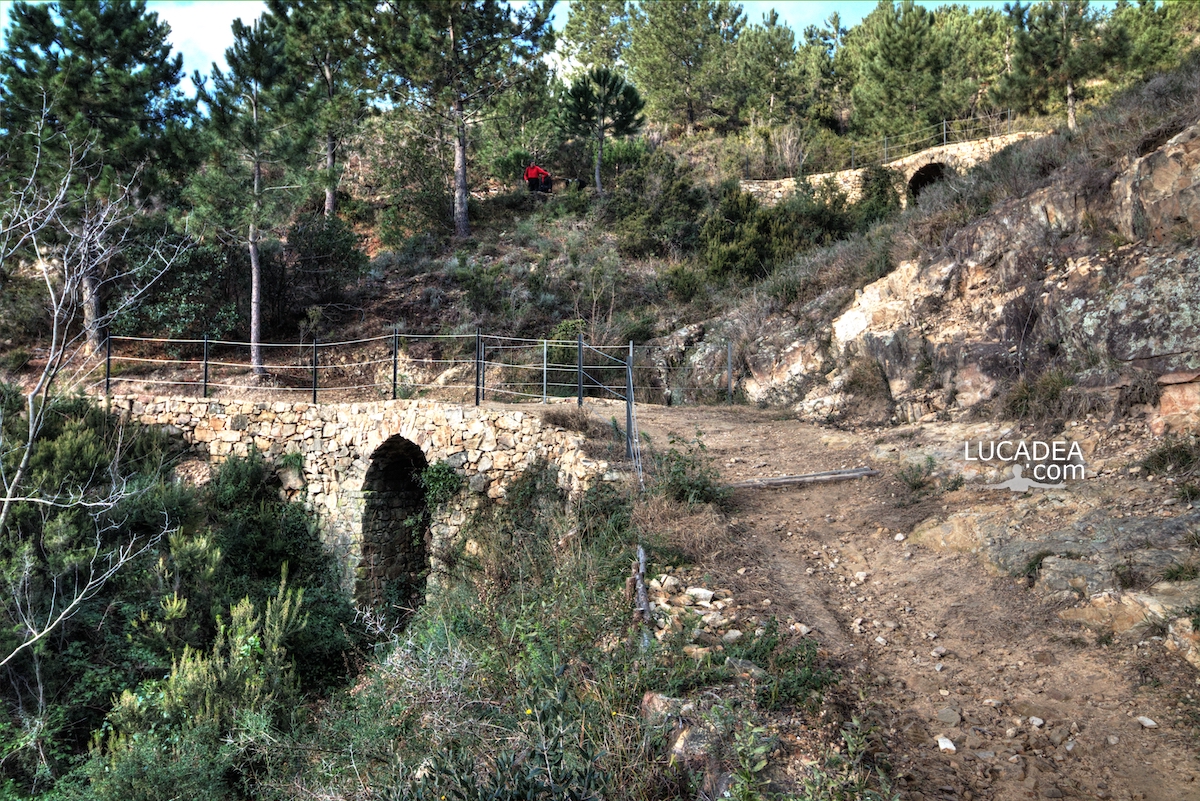
The bridges of Valle del Fico in Sestri Levante

Ponti della Valle del Fico a Sestri Levante lungo il sentiero storico verso le Rocche di Sant’Anna

The bridges of Valle del Fico in Sestri Levante.
While walking towards the Rocche di Sant’Anna in Sestri Levante, I discovered one of the most interesting and lesser-known corners of the area: the ancient bridges of Valle del Fico, part of a route where nature, history and old paths come together. In this photograph, some of these small stone structures can still be seen along the trail.
This image comes from my desire to show a different side of Sestri Levante, away from the famous seaside views and the historic centre. Although the town is best known for its bays and coastal scenery, a short distance away it is still possible to find paths where the past survives through old stones and forgotten routes.
To reach the Rocche di Sant’Anna, where the remains of the ancient church stand above the road and railway tunnels connecting Sestri Levante and Lavagna, there are two possible routes. One is a more direct and steep path carved into the rock, while the other follows an older and gentler route through Valle del Fico, crossing these five bridges.
The bridges of Valle del Fico are usually considered medieval structures, although some theories suggest they may have even older origins, possibly dating back to Roman times. Their presence shows the importance of these paths before modern roads were built. Recently restored, they allow visitors to rediscover a historic route with a unique character.
I wanted to photograph these bridges because they represent a Liguria made of hidden passages, ancient paths and simple structures that were essential for everyday life in the past. They are not large monuments, but this is exactly what makes them fascinating: they preserve a direct connection with the history of the landscape.
One interesting detail is that these bridges were built to overcome small streams and changes in elevation along an old walking route. Their construction shows how even simple infrastructures were carefully designed and built to survive through centuries.
On my blog I often share trails, villages and lesser-known places in Liguria because I believe these areas reveal the most authentic side of the region. Like other walks I have photographed, the route through Valle del Fico towards Rocche di Sant’Anna combines a pleasant hike with the discovery of local history.
If you are looking for things to see in Sestri Levante beyond the beaches and the town centre, Valle del Fico is a fascinating path to explore, especially for those who enjoy finding historical traces while walking.

Have you ever walked along this old trail with the bridges of Valle del Fico? Add a comment or go to the bottom of the site to read what other visitors have written.

Bridges of Valle del Fico in Sestri Levante on the historic trail to Rocche di Sant’Anna

Photo taken with a Canon EOS M100 camera and Canon EF-S 10-18 lens.

I have several photos taken along the trail that climbs to Rocche di Sant’Anna via the Fico Valley; click here to view them:

And here are a couple of videos:


Videos recorded with Gopro Hero 10 Black.

🏠
  • Italiano