Villa Porticciolo’s Entrance in Rapallo

L'ingresso di Villa Tigullio a Rapallo da via Avenaggi

Villa Porticciolo’s Entrance in Rapallo.
A few months ago, I decided to explore the eastern seafront promenade near Rapallo Castle, a part of the town I had never walked along before. It turned out to be a lovely discovery. I was surprised by the scenery and the peaceful views that open up along this stretch of the Ligurian coast, even though I have visited the Tigullio Gulf many times.
The promenade is quite long, extending for roughly a kilometre, and offers a chance to move away from the busiest part of the town centre. Along the way, there are attractive views of the sea, quieter corners and villas surrounded by greenery. I enjoy exploring places like this with my camera, especially when I have no particular destination in mind and can simply follow the path to see what catches my eye.
During this walk, I came across the entrance shown in the photograph. At first, I thought it was a secondary entrance to Villa Tigullio. However, after publishing the picture, Giuseppe contacted me on Facebook to clarify the location. The entrance actually belongs to Villa Porticciolo, a private villa visible in the photograph. According to his explanation, this property was also once owned by the Casale family, like the nearby municipal park area.
It is a useful correction to share, because when exploring an unfamiliar neighbourhood, it is easy to mistake neighbouring properties or their entrances for one another. Villa Tigullio is a little farther along, near the roundabout, where its secondary pedestrian entrance can be found. The distinction does not make this part of Rapallo any less interesting; on the contrary, it gives me another reason to return and explore the area more carefully.
Villa Tigullio is an important part of Rapallo’s local heritage and green spaces. It is also included among the *Places of the Heart* promoted by FAI, the Italian National Trust, which encourages people to recognise and protect places that hold particular value for communities. You can find more information on the official FAI page for Villa Tigullio. The villa and its surroundings offer a different perspective on Rapallo, beyond the familiar castle, harbour and central waterfront.
I took this photograph during what began as an ordinary walk and became a small personal discovery. Sometimes the most enjoyable places are the ones we have overlooked simply because we have never taken the time to explore a different route. This section of the seafront is well worth discovering if you enjoy coastal walks, historic villas and quieter views of the Italian Riviera.

Have you ever walked along the eastern promenade near Rapallo Castle, and did you notice the villas along the way? Add an comment or go to the bottom of the site to read what other visitors have written.

The pedestrian entrance to Villa Porticciolo in Rapallo, photographed during a walk along the seafront east of Rapallo Castle

Photo taken with a Canon EOS M100 camera and Canon EF-S 10-18 lens.

Here’s the spot where I took this photo:

Add one  comment to this article or read  here what other visitors have written.
 
Adv
 
Disclamer

The rights on images, videos, choruses, text and all other material on the LUCADEA.com website are governed as per  Copyright page.

This page has been viewed 0 times today.
This month it has been viewed 0 times.
In total it has been viewed 0 times.
 

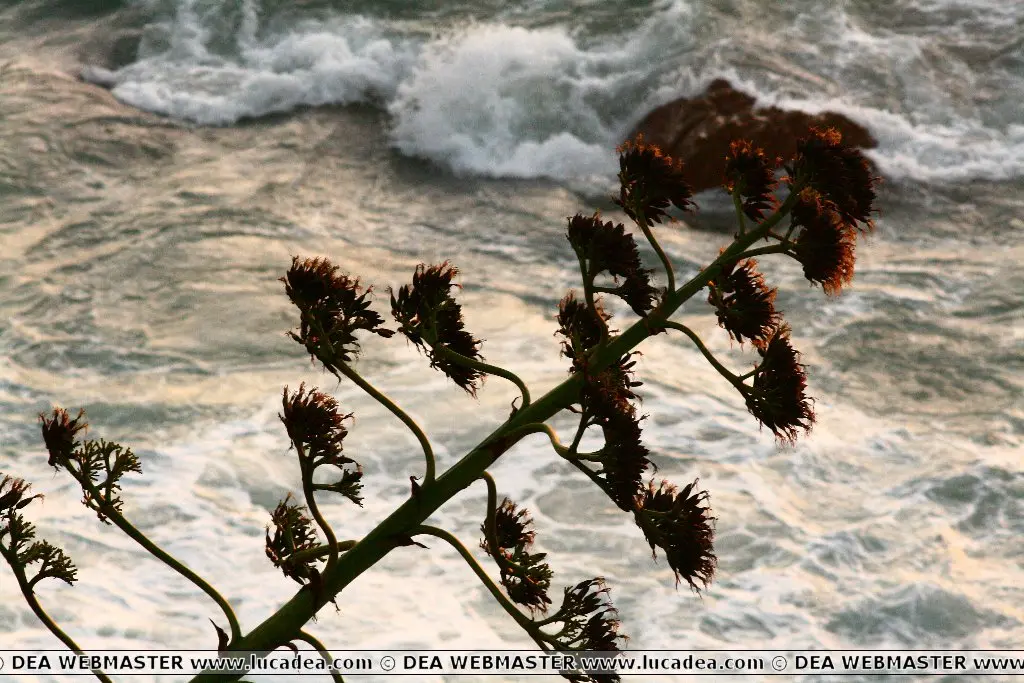
A Flowering Agave by the Sea in Sestri Levante

Agave sul mare

A Flowering Agave by the Sea in Sestri Levante.
Sometimes, the smallest details can make a beautiful landscape even more interesting. This flowering agave growing on the rocky wall above the Bay of Silence in Sestri Levante, on the Ligurian coast of north-western Italy, caught my attention because of its position overlooking the sea. I particularly liked the contrast between the flower rising above the rocks and the waves moving below it.
The Bay of Silence is one of the most recognisable places in Sestri Levante. Its sandy beach, colourful buildings and sheltered curve of coastline attract visitors throughout the year. Many people come here to enjoy the view, walk along the waterfront or take photographs of the picturesque old town. Yet there is more to this corner of Liguria than its famous panorama. Looking carefully at the rocky edges of the bay can reveal small natural details that are easy to miss when admiring the scenery as a whole.
Agaves are remarkable plants, well adapted to challenging environments. Their sturdy leaves help them cope with dry conditions, while their impressive flower stalks can rise well above the surrounding vegetation. Flowering is a distinctive stage in the life of many agave species and, depending on the species, may occur only after many years of growth. Some agaves die after flowering, while others can follow different growth patterns.
What makes this scene special to me is the relationship between the plant and the water beneath it. The agave seems to emerge from the rocky coastline, while the sea provides a constantly changing background. The flower brings an element of stillness to the composition, contrasting with the movement and energy of the waves. It is a simple combination, but one that gives the photograph its character.
When I take photographs around Sestri Levante, I enjoy looking beyond the best-known views. The Bay of Silence offers endless opportunities for pictures, from colourful façades and boats to the changing light on the water. Sometimes, however, a plant growing in an unexpected place becomes the subject that catches my eye. These small discoveries are part of the pleasure of walking around a familiar town and seeing it from a slightly different perspective.
I wanted to capture this agave because its position above the sea made it stand out from the surrounding landscape. It is a reminder that coastal beauty can be found not only in sweeping views, but also in the meeting of plants, rocks and waves.

When you walk along the coast, do you tend to photograph the wide sea views or the little natural details you discover along the way? Add an comment or go to the bottom of the site to read what other visitors have written.

A flowering agave grows on the rocky shore of the Bay of Silence in Sestri Levante, overlooking the waves below

Add one  comment to this article or read  here what other visitors have written.
 
Adv
 
Disclamer

The rights on images, videos, choruses, text and all other material on the LUCADEA.com website are governed as per  Copyright page.


This page has been viewed 0 times today.
This month it has been viewed 0 times.
In total it has been viewed 0 times.
 

Renà on the Morning of May 31, 2016

Renà on the Morning of May 31, 2016.
On the morning of May 31, 2016, I went to Renà, in Sestri Levante, to take some photographs of the coast. The sea was moderately rough, with waves moving towards the shore, and the sky was covered with clouds. It was just the kind of weather that can give a familiar seaside landscape a different mood from the one we see on a bright, sunny day.
I took several pictures during the visit, looking for interesting views of the water, the shoreline and the rocks. Out of all the shots I made that morning, this one is probably my favourite. The main subject is Asseu, the well-known rock at Renà, a distinctive feature of this stretch of the Ligurian coast.
I enjoy photographing the sea when the weather is changing. Clear skies and calm water can be beautiful, of course, but a cloudy day often brings out different textures and tones. The waves create movement, the light becomes softer, and the whole landscape can feel a little more dramatic. Rather than waiting for perfect beach weather, I sometimes find that these less predictable conditions offer the most interesting opportunities for landscape photography.
Asseu gives the photograph a clear focal point. Against the moving sea and the overcast sky, the rock stands out as a familiar landmark in the coastal scenery. It is the sort of subject that can look quite different depending on the season, the light and the state of the water. On this late-May morning, the conditions helped create a view that felt more rugged than the peaceful seaside scenes people often associate with the Italian Riviera.
Renà is part of the Sestri Levante area, on the eastern Ligurian Riviera in Liguria, Italy. The coastline here offers plenty to notice beyond the usual sunny beach views, and it can be rewarding to visit with a camera even when the weather is unsettled. For me, the pleasure was simply being there, watching the waves and trying to capture the character of the place as it looked that morning.

This picture brings back a small memory from May 2016: a cloudy sky, a lively sea and several photographs taken along the coast. Although I made quite a few images, this one remains the most appealing to me. Have you visited Renà and seen the famous Asseu rock? Do you prefer this coastline with rough water and cloudy skies, or when the sea is calm and the sun is shining? Add an comment or go to the bottom of the site to read what other visitors have written..

Asseu, the famous rock at Renà in Sestri Levante, photographed on May 31, 2016, with rough seas and cloudy skies

I’m also attaching two videos made some time later, with my drone, where you can see the work done with the concrete dam that was removed:

Videos made with a drone DJI Mavic Mini.

A Hidden Corner of Sestri Levante

Case di Sestri Levante

A Hidden Corner of Sestri Levante.
It is surprising how often a familiar place can reveal something new when we take the time to look around. That is exactly what happened to me in Sestri Levante, where I noticed this charming view of some houses that I honestly do not remember ever having looked at properly before. What makes it even more amusing is that these buildings stand behind the properties along Corso Colombo, in an area I have visited many times.
The façades caught my attention because of their simple but appealing character. The soft colours, green shutters and traditional architectural details give the buildings a distinctly Ligurian feel. They are not grand monuments or famous attractions, but they have the understated charm that makes exploring Italian towns on foot so enjoyable.
I particularly like the way the houses sit alongside one another, creating a small composition of colours, windows and shutters. The different façades add variety without making the scene feel crowded, and the overall effect is both ordinary and beautiful. These are the kinds of places that residents may pass every day without a second thought, yet they can become interesting photographic subjects when seen from a different angle.
Sestri Levante, in the Metropolitan City of Genoa in Liguria, is best known for its beautiful coastline, especially the Bay of Silence and the Bay of Fables. Visitors naturally gravitate towards the beaches, the waterfront and the historic centre, but there is much more to discover beyond the most familiar views. Quiet side streets, overlooked buildings and everyday corners can reveal another side of the town.
That is one of the things I appreciate most about photography. It encourages me to slow down and pay attention to details that might otherwise go unnoticed. I do not always need a spectacular landscape or a famous landmark to find a subject worth photographing. Sometimes a row of houses, a particular combination of colours or an unexpected view behind a busy street is enough.
This little discovery made me think about how easily we become accustomed to our surroundings. We walk the same routes, pass the same buildings and assume we already know what is there. Then, one day, we notice something we seem to have missed for years. It is a good reminder that familiar places can still offer surprises if we are willing to look at them with fresh eyes.
Since noticing this corner, I have been reminded to pay more attention to the side streets and less obvious views around Sestri Levante. There may be many more details waiting to be discovered, even in places I think I know well.

Have you noticed these houses behind Corso Colombo, or have you ever found a lovely corner in your own town that you had somehow overlooked for years? Add an comment or go to the bottom of the site to read what other visitors have written.

Pastel-coloured houses with green shutters in a charming hidden corner behind the buildings along Corso Colombo in Sestri Levante

Pastel-coloured houses with green shutters in a charming hidden corner behind the buildings along Corso Colombo in Sestri Levante

Photos taken with Canon EOS M100 camera and Canon EF-S 10-18 lens.

Portofino Harbour from the Lighthouse Road

Portofino Harbour from the Lighthouse Road.
Some places along the Italian Riviera are recognised almost instantly, and Portofino is certainly one of them. Its small harbour, colourful waterfront buildings and sheltered bay have made it one of Italy’s most famous coastal destinations. It is also known for its exclusive atmosphere and high prices, making it one of the more expensive places to visit on the Italian mainland. Even so, the beauty of the setting is difficult to deny.
I took this photograph from the road leading towards Portofino’s lighthouse. Leaving the main square and walking along this route offers a different perspective on the village, with glimpses of the sea and the coastline appearing between the bends and the Mediterranean vegetation. It is a lovely way to discover more of the area beyond the familiar harbour scene that appears in so many photographs and travel guides.
From this viewpoint, the harbour looks particularly attractive. The pastel-coloured buildings cluster around the water, and the boats moored in the bay add to the picture-postcard atmosphere. The surrounding green hills frame the village and create a striking contrast with the colours of the houses and the sea. It is a view that captures much of what makes the Ligurian Riviera so distinctive: a dramatic coastline, Mediterranean greenery and small settlements closely connected to the water.
Portofino lies in the Metropolitan City of Genoa, within the Portofino Regional Natural Park. Its international reputation is associated with luxury tourism, elegant restaurants, expensive boutiques and yachts visiting the harbour. The village is compact, but its setting gives it a remarkable sense of place. Looking down from the road, it is easy to understand why so many visitors want to see it for themselves.
What I particularly enjoy when photographing well-known destinations is finding a viewpoint that changes the way I see them. The harbour is beautiful when explored at street level, but from above the relationship between the buildings, the bay and the surrounding landscape becomes much clearer. Even a place that has been photographed countless times can still offer a fresh composition when viewed from a different angle.
The walk towards the lighthouse is worth considering if you visit Portofino and have time to explore beyond the waterfront. It gives you the chance to enjoy the coastal scenery at a slower pace and look back towards the village. Before setting off, check the current conditions of the route and allow enough time to enjoy the walk rather than rushing from one attraction to another.
Portofino may be famous for its exclusivity, but its landscape is what makes the strongest impression on me. The harbour, the colourful façades and the surrounding hills come together in a view that remains memorable long after the visit. I enjoy sharing these photographs alongside other images of the Italian Riviera, where familiar places often reveal something new from a different viewpoint.

Have you seen Portofino Harbour from the road to the lighthouse, or do you prefer exploring the village from the waterfront? Add an comment or go to the bottom of the site to read what other visitors have written.

Portofino harbour seen from the lighthouse road, with colourful waterfront buildings, moored boats and the Ligurian coastline

To see all (or many) of the photos I took in Portofino, click here:
foto gallery

A Quiet Morning in Sestri Levante’s Old Town

Il carruggio di Sestri Levante quasi vuoto al mattino, tra facciate colorate, pavimentazione in pietra e tavolini all'aperto

A Quiet Morning in Sestri Levante’s Old Town.
This morning I took a walk through the old lane in Sestri Levante and found it almost completely empty. It was a lovely surprise to see such a familiar part of town without the usual crowds. I often pass through here among people browsing the shops, chatting as they walk or sitting at the outdoor tables, but today the street felt wonderfully peaceful. I couldn’t resist taking a photograph while I enjoyed the quiet atmosphere.
The narrow street is one of the characteristic features of the town centre, lined with colourful buildings, shopfronts and cafés that bring the area to life throughout the day. In this picture, the warm pink and terracotta façades stand out against the pale sky, while the shutters, wall lanterns and decorative balconies add character to the buildings. On the right, the restaurant tables are waiting for their first guests, making the scene feel as though the day is only just beginning.
I particularly enjoy seeing places like this early in the morning. Without the usual movement of people, small details become easier to notice: the uneven stone paving underfoot, the shape of the old façades and the way the street draws the eye towards the colourful buildings in the distance. The view feels different from the busy scene that will develop later, when visitors and locals fill the lane again.
Sestri Levante is a seaside town in Liguria, north-western Italy, best known for the Bay of Silence and the Bay of Fables. Yet I think the historic centre has its own special charm, beyond the famous coastal views. Its narrow lanes invite you to slow down, look at the architecture and discover the everyday details that make the town distinctive. The atmosphere changes throughout the day, and even a familiar street can feel completely new when it is nearly empty.
That was what I wanted to capture in this morning’s photograph. I didn’t need a dramatic view or a famous landmark; the simple beauty of the street was enough. The colourful buildings, old stone pavement and quiet outdoor seating came together to create a scene that felt calm and inviting. For me, photography is often about noticing these little moments and preserving them before the bustle returns.

Do you enjoy exploring Sestri Levante’s old town when the streets are still quiet, or do you prefer the lively atmosphere later in the day? Add an comment or go to the bottom of the site to read what other visitors have written.

A nearly empty lane in Sestri Levante in the morning, with colourful façades, stone paving and outdoor restaurant tables

Photo taken with iPhone 17e.

The Music Kiosk on Rapallo’s seafront

Chiosco della Musica sulla passeggiata a mare di Rapallo in Liguria con la struttura decorata vicino al mare

The Music Kiosk on Rapallo’s seafront.
Facing the sea in Rapallo, Liguria, Italy, I photographed one of the most recognizable symbols of the town, a small but distinctive structure that has become part of the identity of the seafront promenade.
The Music Kiosk in Rapallo is one of the places worth seeing while walking through the town. Its position near the coastline makes it an easy landmark to notice, but what makes it interesting is not only its appearance. Behind the elegant shape there is also a story connected with the people of Rapallo and their affection for their hometown.
I took this photograph because I like discovering how small architectural details can represent the spirit of a place. The circular shape, the decorations and the open space around the kiosk create a subject that changes depending on the perspective. It is a simple structure, but it immediately gives character to the promenade.
This image was captured in Rapallo, in the Liguria region of Italy, while focusing on a place that has been part of the town’s public life for almost a century. If you are visiting Liguria and looking for interesting places to see beyond the beaches and coastal landscapes, a walk along Rapallo’s seafront offers many details connected with local history and traditions.
A curious detail about the Music Kiosk is its origin. It was inaugurated in 1929 thanks to the contribution of Rapallo citizens who had emigrated to South America. They collected the necessary funds for its construction in only a few years, showing a strong connection with their city even from far away.
I enjoy photographing these kinds of places because they are not just monuments to look at. They are spaces that continue to be part of everyday life. Like the photographs I have shared of Rapallo’s historic streets and other Ligurian locations, this image follows my interest in small details that help tell the story of a town.
The Music Kiosk still represents a meeting point on the promenade and recalls the original idea of a place dedicated to music and community. For me, photographing it means preserving a small piece of the atmosphere that can be found while walking through Rapallo.

Have you ever stopped to admire the Music Kiosk during a walk along Rapallo’s seafront? Add a comment or go to the bottom of the site to read what other visitors have written.

Music Kiosk on Rapallo seafront in Liguria with its decorated structure overlooking the coastal promenade

Photo taken with a Canon EOS M100 camera and a Canon EF-S 10-18 lens.

Here is exactly where the kiosk is located:

Located in gardens or parks, the bandstand is part of a style of festive architecture that developed in European tourist resorts between the late 19th and early 20th centuries; where still preserved, it evokes the pleasures of a seaside holiday.
Read more on Wikipedia

Rapallo’s caruggio between shops and history

Caruggio di Rapallo in Liguria con la via Giuseppe Mazzini tra negozi e palazzi del centro storico

Rapallo’s caruggio between shops and history.
Walking through the centre of Rapallo, in Liguria, Italy, I stopped to photograph one of the most characteristic streets of the town, a place where everyday life meets the traditional atmosphere of a Ligurian historic centre.
The caruggio in Rapallo is a perfect example of what to see in Liguria beyond the famous seaside views. Known by locals simply as the caruggio, the official name of this street is Giuseppe Mazzini Street, and it has always been one of the main meeting points of the city, with shops, old buildings and people moving through it during the day.
I took this photograph because I like capturing places that are part of normal life. Streets like this are not only interesting because of their architecture, but because of the stories that happen there every day. A shop window, a corner of a building or the rhythm of people walking along the street can change the feeling of the same place from one visit to another.
This image was taken in Rapallo, in the Liguria region of Italy, while observing the details of a street that many people cross without always noticing its character. If you are visiting Liguria and looking for places worth seeing, walking through the historic centre of Rapallo is a simple way to discover the local atmosphere and the relationship between the city and its traditional streets.
The word caruggio comes from the Ligurian language and is commonly used for narrow streets and passages found in many towns across the region. In Rapallo, this name identifies a familiar place for locals, while the official street name remains Giuseppe Mazzini Street.
Among my photographs of Ligurian villages and towns, I often return to these urban details because they reveal something authentic about the places I visit. Like the images I have shared of other caruggi and historic streets, this photograph continues my search for small architectural elements that tell the story of a location without needing large monuments.
What I enjoy most about these streets is that they are always changing. The same view can look different depending on the people, the shops and the small details that appear along the way.

Have you ever walked through Rapallo’s caruggio and noticed the details of this historic street? Add a comment or go to the bottom of the site to read what other visitors have written.

Caruggio of Rapallo in Liguria with Giuseppe Mazzini Street, historic buildings and local shops

Photo taken with a Canon EOS M100 camera and Canon EF-S 10-18 lens.

The *Caruggio* (or *Carruggio*)—a word that, in the “official spelling” of the Genoese language, is written *Caroggio* and pronounced *Caruggiu* (since the letter ‘o’ is pronounced ‘u’ in Ligurian)—is the term used to describe a street or alleyway, sometimes featuring arcades, typical of Ligurian historic centers. The term is thought to derive from the Latin *quadrivium*, or the more common *quadruvium*.
Read more on Wikipedia

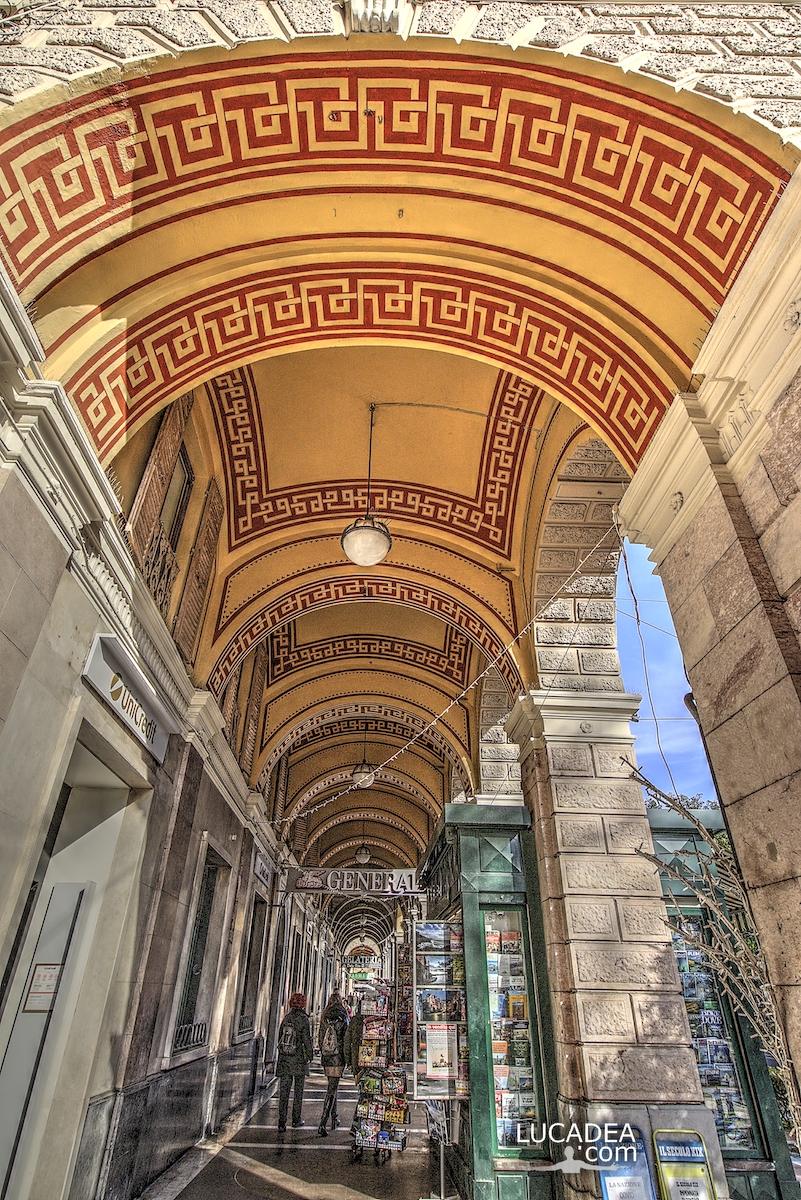
The arcades of Chiodo Street in La Spezia

Portici decorati di via Domenico Chiodo alla Spezia vicino ai giardini pubblici del centro storico

The arcades of Chiodo Street in La Spezia.
Walking through the city centre of La Spezia, I stopped to photograph this elegant sequence of arches, decorations and architectural details that gives a different character to the urban landscape. The arcades of Chiodo Street are one of the interesting places to see in La Spezia if, like me, you enjoy discovering cities through their less obvious corners.
I took this photograph during one of my walks through the town, carrying my camera and looking for details that could tell something about the place. Often, the images I like the most are not necessarily the ones showing the most famous landmarks, but those small everyday views that reveal the atmosphere of a city.
These arcades run along Chiodo Street, next to the Public Gardens of La Spezia, one of the historic green areas in the centre of the city. The covered walkways create a pleasant perspective, with the repeated rhythm of the columns and arches leading the eye along the street. The decorations on the buildings add an elegant touch and make this part of La Spezia particularly interesting to photograph.
Compared with the traditional arcades that can be found in some Ligurian seaside villages, these have a more urban and nineteenth-century appearance. La Spezia changed considerably during that period, especially after the construction of the Naval Arsenal, which transformed the city from a small coastal town into an important military and industrial centre.
A small historical curiosity is connected with the name of the street. Domenico Chiodo was an Italian military engineer and general who played a key role in the design and construction of the Naval Arsenal of La Spezia. The city dedicated this street to him in recognition of his contribution to the development of the area.
What attracted me to this scene was the balance between architecture and everyday life. The arches create a strong geometric pattern, but the street remains a normal place where people walk, meet and continue their daily activities. This contrast is what makes the photograph interesting to me.
As I have already shown in other photographs from Eastern Liguria, from villages in the countryside to historic streets, I often find the identity of a place in these simple details. They are not always the first things visitors notice, but they are often the ones that remain in memory.
If you are visiting La Spezia, this is one of those corners worth seeing while walking through the city centre, especially if you like historic architecture and urban details.

Have you ever walked along Chiodo Street in La Spezia and noticed these decorated arcades? Add a comment or go to the bottom of the site to read what other visitors have written.

Decorated arcades of Chiodo Street in La Spezia beside the Public Gardens in the city centre

Photo taken with a Canon EOS M100 camera and Canon EF-M 11-22 lens.

If you want to see all the photos I took in the city, click here:

Domenico Chiodo (Genoa, October 30, 1823 – La Spezia, March 19, 1870) was an Italian general and architect—an officer in the Military Engineers—who designed the naval arsenals at La Spezia and Taranto and oversaw the expansion of the one in Venice.
Read more and find out more on Wikipedia

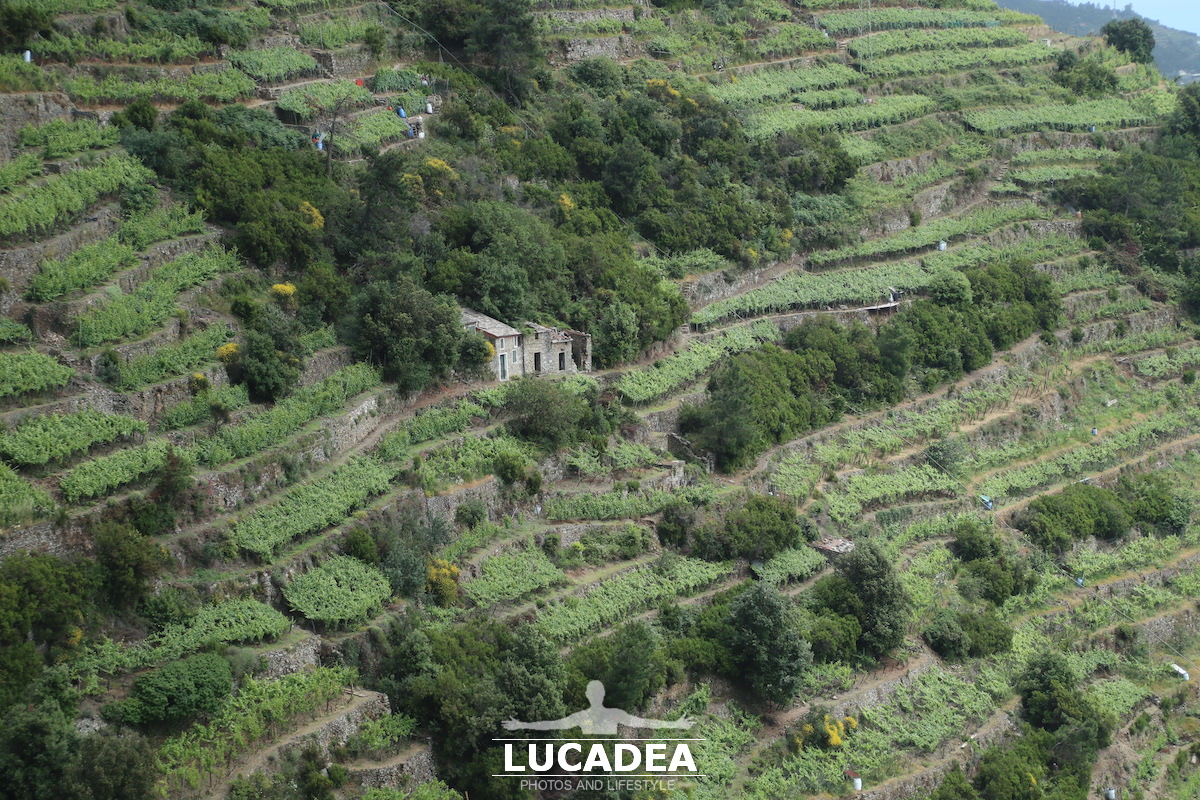
The seaside terraces of Cinque Terre in Liguria

Le terrazze sul mare delle Cinque Terre in Liguria

The seaside terraces of Cinque Terre in Liguria.
There are places where the relationship between humans and nature is so strong that it creates landscapes unlike anywhere else in the world. Cinque Terre, on the Ligurian coast of Italy, is one of these places: small villages overlooking the sea, mountains reaching the coastline, and ancient terraces built over centuries of hard work.
This photograph shows one of the most characteristic features of Cinque Terre: the terraces overlooking the Ligurian Sea that transform the steep hills into a fascinating and carefully shaped landscape. Dry stone walls, vineyards, olive trees, and colorful houses create one of the most beautiful views in Liguria.
Cinque Terre includes five world-famous villages: Monterosso al Mare, Vernazza, Corniglia, Manarola, and Riomaggiore. Each village has its own personality, but all share the same extraordinary balance between sea, mountains, and human activity.
I was in Cinque Terre, Liguria, Italy, and what I wanted to capture with this photograph was the feeling of standing in front of a landscape slowly created over time. These terraces are not only beautiful to see, but they also tell the story of generations of local people who shaped the mountains to cultivate the land.
One of the most famous products of this area is Sciacchetrà, the traditional sweet wine of Cinque Terre, produced from grapes grown on these difficult slopes. Even today, many activities are carried out by hand, preserving an ancient connection with the territory.
Besides the spectacular views, Cinque Terre is also a perfect destination for hiking lovers. The trails connecting the villages offer constantly changing perspectives, with sea views that become different at every turn.
Cinque Terre was declared a UNESCO World Heritage Site in 1997, thanks to its extraordinary beauty and the cultural value of its unique terraced landscape.
What fascinates me most about this place is the contrast between the power of nature and human effort. A difficult territory that has become one of the most recognizable symbols of Liguria around the world.
On my blog I have shared many other views of the Ligurian coast, because these apparently simple landscapes often create the strongest emotions.

Have you ever walked the trails of Cinque Terre or admired these villages from the sea? Add a comment or go to the bottom of the site to read what other visitors have written.

Le terrazze sul mare delle Cinque Terre in Liguria

Photo taken with Canon EOS M100 and lens Tamron 16-300.

The terraces overlooking the sea of the Cinque Terre in Liguria – Les terrasses avec vue sur la mer des Cinque Terre en Ligurie – Las terrazas con vistas al mar de Cinque Terre en Liguria – Os terraços com vista para o mar de Cinque Terre na Ligúria – Die Terrassen mit Blick auf das Meer der Cinque Terre in Ligurien – Ruộng bậc thang nhìn ra biển Cinque Terre ở Liguria – 俯瞰利古里亚五渔村大海的露台 – リグーリア州チンクエテッレの海を見渡すテラス

The text of this post was written with the help of ChatGPT, a language model from OpenAI.

🏠
  • Italiano