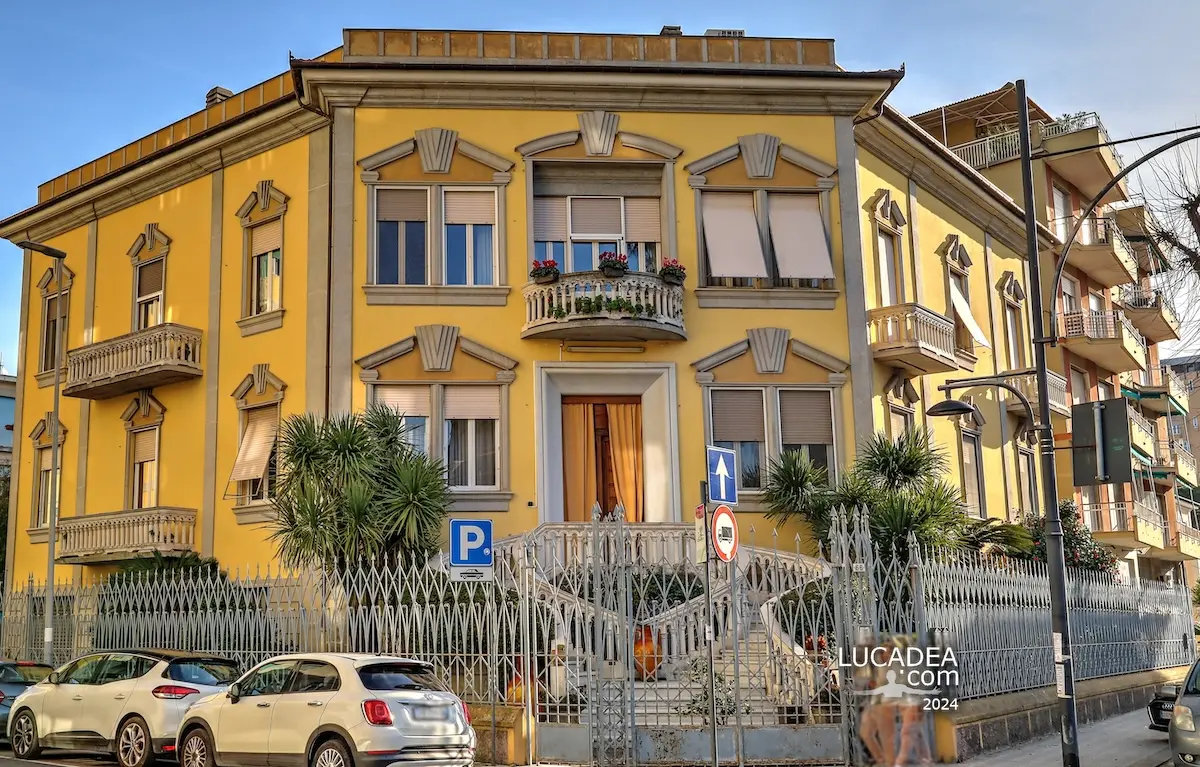
A Fine Building on Angelo Gianelli Avenue

Palazzo signorile in Corso Angelo Gianelli a Chiavari, uno scorcio dell'architettura residenziale della città ligure

A Fine Building on Angelo Gianelli Avenue.
Walking along Angelo Gianelli Avenue in Chiavari, just beyond the railway station heading west, I stopped to look at the elegant buildings lining this part of the street. When I think about what to see in Chiavari, these quieter residential areas often catch my attention because they reveal a side of the town that is easy to overlook.
This is one of the buildings that made me stop and take a closer look. Its façade, proportions and carefully maintained appearance suggested that there might be an interesting story behind it, even though I could not find much precise information about its origins. That uncertainty was actually part of the reason I wanted to photograph it. Sometimes a photograph begins with a question rather than an answer.
I took this picture myself while walking along the avenue. I was not setting out to make a detailed architectural study of Chiavari; I simply noticed the building and wanted to keep the impression it gave me. Looking at the photograph afterwards made me even more curious about when it was built, who designed it and who may have lived there over the years.
The location provides an interesting starting point. Angelo Gianelli Avenue lies beyond Chiavari railway station as you head west, and several refined residential buildings can be seen along this stretch. Chiavari is in Liguria, Italy, in the Province of Genoa, and its architectural character is not limited to the best-known buildings of the historic center.
If you are visiting Chiavari and wondering what is worth seeing beyond the main landmarks, walking through these streets can reveal details that are easy to miss. The official tourism website gives considerable attention to the historic center, its arcades and its best-known historic buildings, including Ravaschieri Palace and the Black Porticoes Palace. I also looked at the official page about art and culture in Chiavari’s historic center while trying to place this building within the wider architectural context of the town.
The building in my photograph seems to belong to a less documented part of that story. That does not necessarily make it less interesting. Quite the opposite: individual residential buildings can be difficult to research because their history may be spread across archival documents, old cadastral maps, historic photographs or memories held by local residents.
There is a small historical detail that helps put the area into context. Chiavari railway station is listed in Italy’s national cultural heritage catalogue as a building from the first half of the twentieth century, within the context of Italian twentieth-century architecture. This does not establish the construction date of the building shown here, but it provides a useful reference point for the architectural development of this part of the town.
This is the kind of research I enjoy after taking a photograph. First comes the visual impression, and only afterwards does the curiosity begin. In this case, I would like to know whether the building originally had the same residential function, whether it was connected to a particular family in Chiavari, and whether there are archival documents that could tell us more about its construction.
I do not want to fill those gaps with assumptions, though. The photograph is more important than pretending to have an answer that I cannot verify. What interested me was the building itself, the way it appeared while I was walking along Angelo Gianelli Avenue, and the feeling that there was probably more to discover behind the façade.
This image also connects naturally with other photographs I have shared on the blog about Chiavari and its less obvious architectural details. In those posts, as here, I am interested in the parts of a town that can easily be passed without a second glance. A façade, a doorway or an entire residential building can become the subject of a photograph simply because something about it makes me stop.
There is also a useful connection with local archives. In 2025, the Municipality of Chiavari hosted an event focused on historic architecture and the city’s archives, highlighting how archival material can help reconstruct the history of buildings and the people connected with them. The municipality’s page about the historic architecture and archives event gives an indication of how much information may exist beyond what is immediately available through an ordinary online search.
For now, then, this photograph remains something of an open question. I would be very interested to hear from anyone who knows Chiavari well and can identify the building, its period, its architect or simply share a memory connected with this part of town. That would add another layer to a photograph that began as a simple observation during a walk.

Do you know anything about the history of this building on Angelo Gianelli Avenue? Add a comment or go to the bottom of the site to read what other visitors have written.
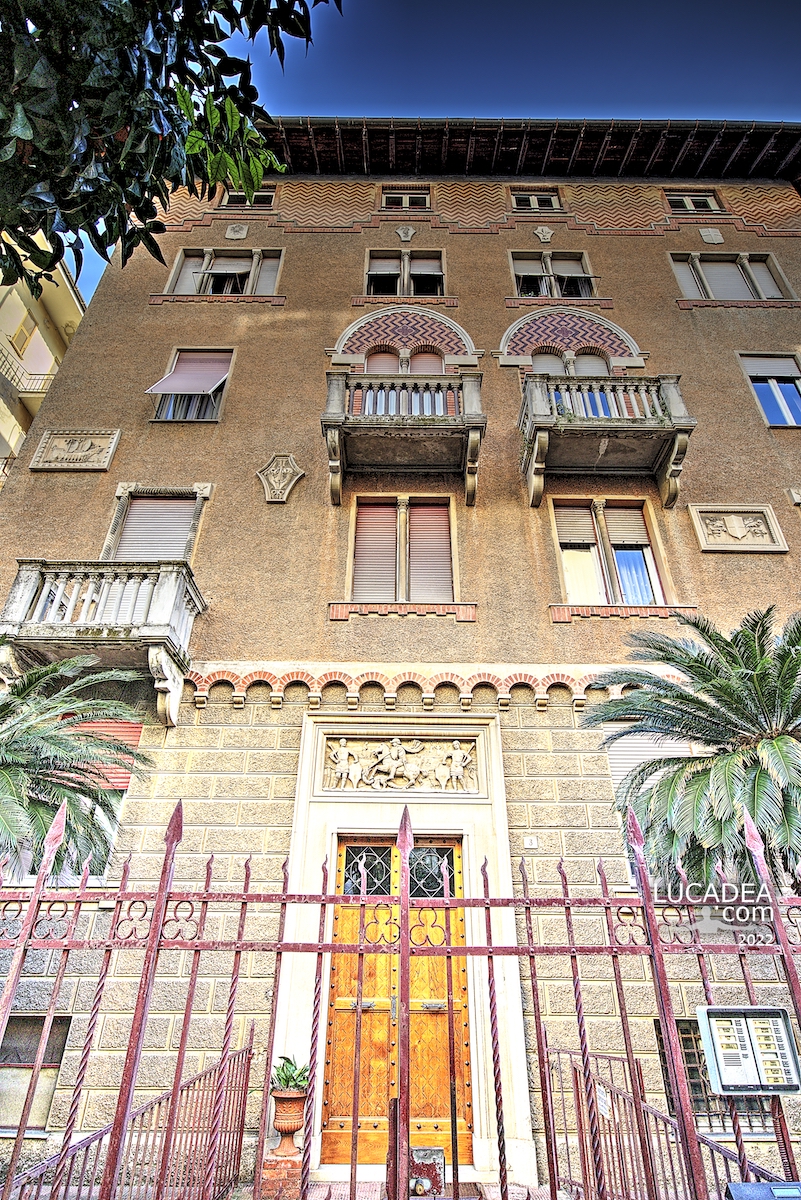
Elegant building on Angelo Gianelli Avenue in Chiavari, showing refined residential architecture in the Ligurian town

Photo taken with a Canon EOS M100 camera and Canon EF-M 11-22 lens.

Here is where the building is located:

Angelo Giannelli (Chiavari, December 16, 1910 – Collubi, August 21, 1936) was an Italian soldier who was posthumously awarded the Gold Medal of Military Valor during major colonial police operations in Italian East Africa.
Read more on Wikipedia

Add one  comment to this article or read  here what other visitors have written.
 
Adv
 
Disclamer

The rights on images, videos, choruses, text and all other material on the LUCADEA.com website are governed as per  Copyright page.


This page has been viewed 0 times today.
This month it has been viewed 0 times.
In total it has been viewed 0 times.
 

Paganini Avenue among the trees in Castelletto

Corso Niccolò Paganini a Genova Castelletto con viale alberato e scorci sulla città

Paganini Avenue among the trees in Castelletto.
Walking along Niccolò Paganini Avenue in Genoa, Liguria, Italy, I found myself in one of those places that show a quieter side of the city. This tree-lined avenue crosses the Castelletto district and offers, through the branches, small glimpses of the city below.
When thinking about Paganini, the famous Genoese violinist immediately comes to mind, even though his house in the city no longer exists. His name, however, lives on through this long avenue, which today is one of the most pleasant places to walk in this part of Genoa.
took this photograph because of the balance between the green of the trees and the views that appear between them. It is not a wide open panorama like the one from Castelletto viewpoint, which I have already photographed in other posts, but something more subtle that changes as you move along the street.
If you are visiting Genoa and looking for places to explore beyond the main landmarks, this avenue is worth a walk. It shows a more everyday side of the city, far from the busy historical center, and offers a different way to experience Genoa.
Castelletto has long been one of the most appreciated residential areas of Genoa, partly because of its elevated position overlooking the city. From here you can understand why Genoa is often called “La Superba”.
This photograph reflects my way of telling the story of a city through its less obvious places, focusing on everyday scenes rather than only famous landmarks. Even a simple avenue can reveal a lot about the character of a place.

Have you ever discovered a city through its quieter streets rather than its main attractions? Add a comment or go to the bottom of the site to read what other visitors have written.

Niccolò Paganini Avenue in Castelletto Genoa with trees and partial views of the city

Photo taken with a Canon EOS M100 camera and a Canon EF-S 10-18 lens.

Here is where the course is located:

Niccolò Paganini (Genoa, October 27, 1782 – Nice, May 27, 1840) was an Italian violinist, guitarist, and composer, and one of the most important figures of the Romantic era. To this day, he remains surrounded by legends concerning his prodigious genius—some fueled by the atmosphere of 19th-century Romanticism—and the famous pact with the devil he allegedly made to gain the fame and skill needed to play the violin, all of which have contributed to the mythologizing of his persona.
Read more on Wikipedia

Add one  comment to this article or read  here what other visitors have written.
 
Adv
 
Disclamer

The rights on images, videos, choruses, text and all other material on the LUCADEA.com website are governed as per  Copyright page.


This page has been viewed 0 times today.
This month it has been viewed 0 times.
In total it has been viewed 0 times.
 

A beautiful villa on Buenos Aires Avenue in Lavagna

Una bella villa in Corso Buenos Aires a Lavagna

A beautiful villa on Buenos Aires Avenue in Lavagna.
Walking along the long tree-lined avenue that runs through Lavagna, I photographed many of the beautiful houses and villas that line it.
This one, in my opinion, is one of the most beautiful.

Do you know anything about this beautiful villa? Add a comment or go to the bottom of the site to read what other visitors have written.

Una bella villa in Corso Buenos Aires a Lavagna

Photo taken with Canon EOS RP camera and Canon RF 24-50 lens.

Here’s where this beautiful building is located:

A beautiful villa in Corso Buenos Aires in Lavagna – Une belle villa à Corso Buenos Aires à Lavagna – Una hermosa villa en Corso Buenos Aires en Lavagna – Uma bela vila no Corso Buenos Aires em Lavagna – Eine wunderschöne Villa im Corso Buenos Aires in Lavagna – Một biệt thự xinh đẹp ở Corso Buenos Aires ở Lavagna

The trees of Mazzini Avenue in Sestri Levante

Gli alberi di Viale Mazzini a Sestri Levante

The trees of Mazzini Avenue in Sestri Levante.
Along Mazzini Avenue, the road that runs longitudinally through my town and continuously changes name (Aurelia Road, Fascie Road), there is a row of trees that I believe are plane trees.

Do you know this avenue in Sestri? Add a comment or go to the bottom of the site to read what other visitors have written.

Gli alberi di Viale Mazzini a Sestri Levante

Photo taken with Honor 20.

Where is this street located:

The trees of Viale Mazzini in Sestri Levante – Les arbres de Viale Mazzini à Sestri Levante – Los árboles de Viale Mazzini en Sestri Levante – As árvores da Viale Mazzini em Sestri Levante – Die Bäume der Viale Mazzini in Sestri Levante – Những cái cây ở Viale Mazzini ở Sestri Levante

A view of Corso Cavour in La Spezia city centre

La vista del centrale Corso Cavour alla Spezia

A view of Corso Cavour in La Spezia city centre.
While walking through the streets of La Spezia, I stopped to capture this view of Corso Cavour, one of the main roads crossing the heart of the city and a place where everyday urban life meets the architecture of Liguria.
This photograph was taken during a simple walk through the centre, when I discovered a perspective that had not previously caught my attention. The long line of the street, the buildings along the road and the rhythm of the urban landscape created a composition that I wanted to preserve with my camera.
If you are visiting La Spezia, Corso Cavour is one of the streets worth seeing to understand the character of the city beyond the most famous attractions. It is not a single landmark, but a living part of the urban fabric, where shops, historic buildings and local life come together along one of the central routes of the city.
I took this image in La Spezia, Liguria, Italy, during my visit to the city centre. What interested me was the possibility of finding a photographic subject in an ordinary street scene. Sometimes a familiar road can reveal its personality through a different viewpoint, and this is exactly what happened with this shot.
The street is named after Camillo Benso, Count of Cavour, an important figure of Italian history and the first Prime Minister of the Kingdom of Italy. Corso Cavour has long been one of the main urban axes of La Spezia, connecting different areas of the city and following its transformation over time.
Looking at this photograph, I like the balance between the historical character of the buildings and the contemporary life that continues around them. For me, these details are often what make a city interesting to photograph: not only its famous monuments, but also the streets where people walk every day.
I have photographed other corners of La Spezia as well, collected in the city gallery on my site, where different streets and views show another side of this Ligurian town. Each photograph becomes a small memory of a place discovered step by step.
This image remains a personal record of that walk through Corso Cavour, a simple street view that represents the atmosphere of La Spezia and its everyday identity.

Have you ever walked along Corso Cavour while exploring the centre of La Spezia? Add a comment or go to the bottom of the site to read what other visitors have written.

View of Corso Cavour in La Spezia with historic buildings and the main street of the Ligurian city centre

Photo taken with Canon EOS RP and Canon RF 24-50 lens.

If you want to see all the photos I took in the city, click here:

Where is the street located:

A Villa on Buenos Aires Avenue in Lavagna

Una villa in corso Bueno Aires a Lavagna

A Villa on Buenos Aires Avenue in Lavagna.
While walking along Buenos Aires Avenue in Lavagna, I stopped once again in front of one of the attractive houses that give this part of the town its character. This is exactly the kind of architecture that often catches my eye when I walk around with my camera, even though it is part of the ordinary urban landscape.
The villa I photographed stands along one of Lavagna’s more elegant streets, where residential buildings create a different atmosphere from the narrower streets of the historic center. There is no need to look for a famous monument here. Simply paying attention to the buildings encountered during a walk can reveal plenty of details worth photographing.
This image came from one of those ordinary encounters. I wanted to photograph the villa because I liked its appearance and the way it fits into the street. It is a simple photograph, but it represents the kind of everyday urban view I enjoy preserving when I explore the towns of the Tigullio area.
Buenos Aires Avenue is in Lavagna, Liguria, in the Metropolitan City of Genoa, Italy. The street passes through an area characterized by residential buildings and houses that also reflect architectural tastes from earlier periods. Its name refers to the Argentine capital, a street name that can be found in several Italian towns and cities.
My interest here, however, is mainly photographic. I enjoy noticing how buildings change from one street to another and how, even in a place I already know, a new viewpoint or an overlooked house can suddenly become an interesting subject.
Lavagna is often associated with its historic center, arcades, the Basilica of Saint Stephen and its long seafront. Yet part of the town’s character can also be found along the streets where everyday life simply continues away from the best-known landmarks. These are often the places where I come across villas, façades and small architectural details that make me stop with the camera.
What I like about photographs like this is that they do not need to tell a grand story. They are images born from observation. You are walking along a street, notice a house or a particular detail, and decide to capture it. Years later, the photograph can become a memory of that walk.
Buenos Aires Avenue feels particularly suitable for this kind of photographic exploration. Walking along it, you can encounter different types of buildings and houses that give the street a more elegant and residential character.
I do not know the specific history of this villa, so I prefer not to attribute details or stories to it that I cannot verify. What I can say is why I photographed it: while walking through Lavagna, its appearance caught my attention and I wanted to preserve that view.
That is also one of the reasons I keep photographing places I already know. I am not always looking for somewhere new to visit. Sometimes I simply want to look at a familiar street differently. A house I may have walked past before can suddenly become the subject of a photograph.
This image therefore joins the other photographs I have shared from Lavagna, including views of the historic center and streets leading towards some of the town’s more distinctive corners. They are different scenes, but together they create a personal record of the town through details I have encountered while walking.

If you are visiting Lavagna and walking along Buenos Aires Avenue, how many other distinctive villas and houses do you think you would notice? Add a comment or go to the bottom of the site to read what other visitors have written.

Elegant villa on Buenos Aires Avenue in Lavagna, photographed along one of the Ligurian town's residential streets

Photo taken with Canon EOS RP and lens Canon RF 24-50.

Where the villa is located:

The trees of Giuseppe Casaregis Street in Genoa

Gli alberi di via Giuseppe Casaregis a Genova

The trees of Giuseppe Casaregis Street in Genoa.
Walking through this area of the city, I wanted to capture with my camera a simple but characteristic detail: the tree-lined avenue of Giuseppe Casaregis Street in Genoa, Liguria, Italy, a road that connects different parts of the city and gains a particular character thanks to the presence of its trees.
Giuseppe Casaregis Street in Genoa is one of those places that many residents probably cross every day without stopping to really observe it. It is not a famous landmark and it is not one of the streets most photographed by visitors, but these everyday spaces are also part of the identity and urban history of Genoa.
This tree-lined avenue connects Aurelia Road, at the final section of Gastaldi Avenue, with Martin Luther King Square. Walking along it, you can notice the transition between different areas of the city, with the trees creating a small element of continuity inside the urban landscape.
This contrast is exactly what caught my attention. Genoa is a city built in a unique space, between the sea and the hills, where buildings often seem to leave little room for nature. For this reason, even a simple row of trees along a street can become an interesting subject for photography.
This photograph comes from my usual way of exploring Genoa: looking carefully at less famous corners, places that do not appear in the most iconic images but that represent the everyday life of the city. I wanted to tell the story of a simple urban view because these details are often what make a neighbourhood recognisable.
A short historical note concerns the name of the street. Giuseppe Casaregis was a Genoese jurist and diplomat who lived between the seventeenth and eighteenth centuries, especially known for his studies on commercial and maritime law. His work is connected with the long mercantile tradition of the Republic of Genoa, a city historically linked to trade and navigation.
This image connects with other stories on my blog dedicated to discovering a lesser-known Genoa, from the narrow streets of the historic centre to everyday routes away from the most common paths. Every area of the city can reveal something interesting when observed carefully.
If you are visiting Genoa, there are not only historic buildings, old streets and harbour views to discover: neighbourhood roads can also tell an important part of the city’s story.

Have you ever photographed a corner of your city that everyone usually walks past without noticing? Add a comment or go to the bottom of the site to read what other visitors have written.

Trees along Giuseppe Casaregis Street in Genoa showing the green avenue of the urban road

Photo taken with Canon EOS M100 camera and Canon EF-S 10-18 lens.

Giuseppe Lorenzo Maria Casaregis or Casaregi (Genoa, 9 August 1670 – Florence, 10 July 1737) was an Italian professor, magistrate, and jurist. He lived between the seventeenth and eighteenth centuries and is known as a famous maritime jurist.
Continue reading and learn more at Wikipedia

Colombo Street in Sestri Levante

Corso Colombo

Colombo Street in Sestri Levante.
Another beautiful HDR of my Sestri Levante: this is Corso Colombo.
One of the central streets of the town of two seas. It’s the street overlooked by the town hall (now a civic museum) and then continues down to the sea, along the alley.

Do you know Sestri Levante? Add a comment or go to the bottom of the site to read what other visitors have written.

Corso Colombo

Here’s where this street is in Sestri Levante:

The Colombo road in the center of Sestri Levante – La route de Colombo au centre de Sestri Levante – La carretera de Colombo en el centro de Sestri Levante – A estrada Colombo no centro de Sestri Levante – Die Colombo-Straße im Zentrum von Sestri Levante – Con đường Colombo ở trung tâm Sestri Levante – 塞斯特里莱万特中心的科伦坡路 – セストリ・レバンテ中心部のコロンボ通り

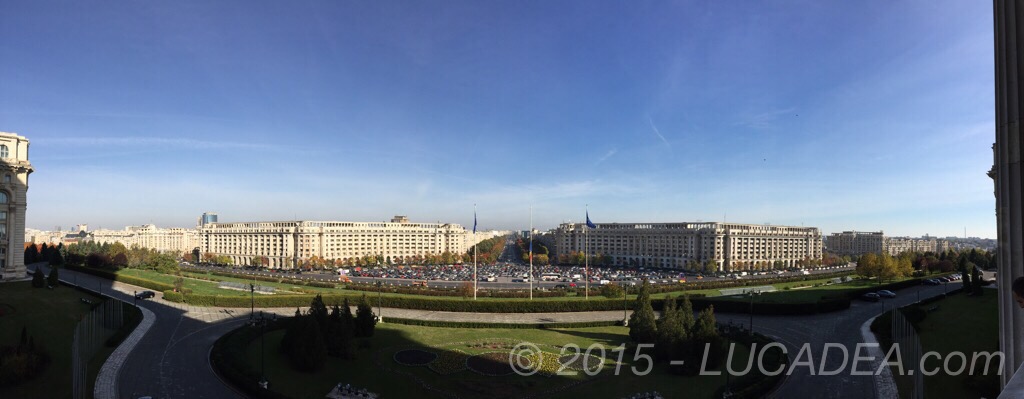
Bucharest seen from the Romanian Parliament

Vista di Bucarest dal balcone del Parlamento rumeno con grande viale, fontane e palazzi monumentali

From the balcony of the Romanian Parliament, the city opens into a remarkable view, with the large avenue stretching ahead and the fountains creating a long perspective through the urban landscape. Seeing Bucharest from the Parliament offers a unique way to understand the scale of the capital, where wide spaces, monumental buildings, and planned architecture create a very distinctive atmosphere.
I stopped to look at the panorama, trying to capture the contrast between the enormous spaces designed around this area and the everyday life continuing throughout the city. From this viewpoint, the avenue almost looks carefully drawn, while the large buildings along its sides add a sense of grandeur to the scene.
Bucharest, Romania, has many different identities, where historic neighborhoods, modern areas, and large urban projects exist together. The view from the Romanian Parliament shows this particular aspect of the city: a capital shaped by ambitious perspectives and wide avenues that strongly influence how the urban space is perceived.
Photographing this panorama made me think about how much a viewpoint can change the way we experience a city. At street level, the details become the main story, while from above the overall design appears more clearly, revealing the relationship between buildings, roads, and open spaces.
It reminded me of another photograph I shared on the site about city viewpoints, because in that case too, the place where you stand became part of the story. Sometimes the most interesting element is not only what you see, but how a certain position allows you to see it.
A small curiosity is that the Palace of the Parliament in Bucharest is one of the largest administrative buildings in the world. It was built during the 1980s under Romania’s communist regime and has become one of the most recognizable symbols of the city.
This photograph shows a monumental side of Bucharest, made of wide perspectives, impressive structures, and urban spaces designed to create a strong visual impact.

Have you ever looked at a city from above and discovered a completely different side of it? Add a comment or go to the bottom of the site to read what other visitors have written.

Vista di Bucarest dal balcone del Parlamento rumeno con grande viale, fontane e palazzi monumentali

Bucharest seen from the Romanian Parliament – Bucarest vue depuis le Parlement roumain – Bucarest vista desde el Parlamento rumano – Bucareste vista do Parlamento Romeno – Bukarest vom rumänischen Parlament aus gesehen – Bucharest nhìn từ Tòa nhà Quốc hội Romania – 从罗马尼亚议会俯瞰布加勒斯特 – ルーマニア国会議事堂から見たブカレスト

The text of this post was written with the help of ChatGPT, a language model from OpenAI.

🏠
  • Italiano