Flavoured Salt at Barcelona’s Boqueria Market

Il sale come souvenir al mercato della Boqueria a Barcellona

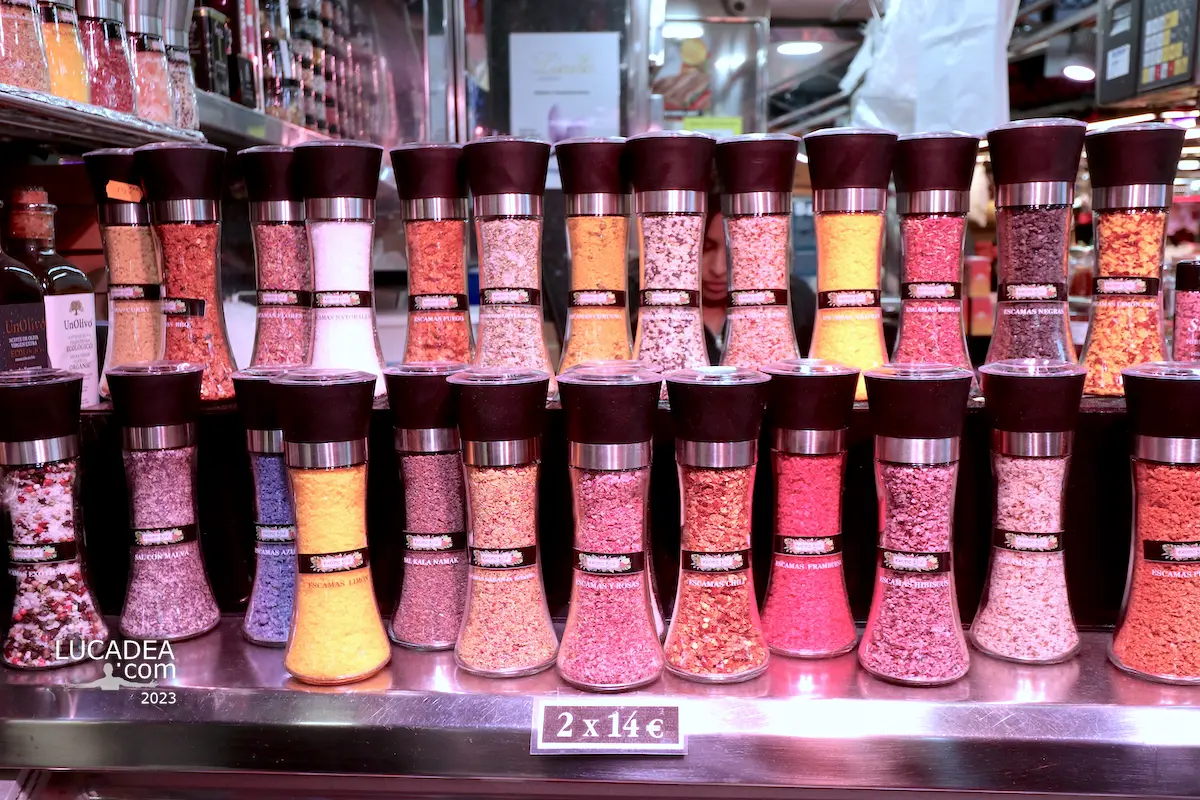
Flavoured Salt at Barcelona’s Boqueria Market.
Whenever my ship calls at Barcelona, I try to make time to go ashore and visit La Rambla. If the schedule allows, I enjoy stopping at the Boqueria Market for a snack before exploring a little more of the city. Even during a short port visit, this lively market is a place where I can enjoy the atmosphere and discover something unexpected.
La Boqueria is one of Barcelona’s best-known markets and attracts plenty of visitors. With so many tourists walking through its aisles, the stalls naturally offer products that catch the eye and reflect current trends. During my most recent visit, one particular item stood out: flavoured salt. I noticed it at stall after stall, displayed in an impressive range of colours and varieties. I had never imagined there could be so many different kinds.
There was blue salt, saffron salt and a blend labelled cinco pimientas, made with five types of pepper. Other varieties combined orange with pink peppercorns, tomato, Merlot wine, turmeric or raspberry. I also saw Himalayan pink salt, garlic salt, basil and lemon, wasabi and chilli. The Spanish names on the labels made browsing even more interesting, as each jar seemed to promise a different flavour and a different use in the kitchen. And that was only the selection I happened to notice; there were so many options that I could probably have spent much longer looking through them.
What surprised me most was how an everyday ingredient could be presented as such a colourful and varied product. Salt is something most of us keep in the kitchen without thinking about it very much, yet these blends turn it into an attractive little gift. For someone who enjoys cooking, a small jar of unusual salt could be a practical souvenir from Barcelona, especially compared with the more familiar tourist trinkets.
I found myself wondering how many of these combinations come from established culinary traditions and how many have been developed to appeal to visitors looking for something distinctive to take home. Either way, the display was fun to discover. It was a reminder that markets are not just places to buy food: they also reveal what sellers believe people might enjoy, taste or give as a present.
I always like these little discoveries when travelling. The Boqueria is well known for its fresh produce and snacks, but a walk through the stalls can also turn up something I never expected to see. I took this photograph during one of those visits, drawn to the variety of salts and the unusual idea of turning such a simple kitchen staple into a souvenir.

Barcelona has plenty to offer even when time ashore is limited, and I enjoy finding small details that make each visit memorable. Which of these flavoured salts would you choose to take home? Add an comment or go to the bottom of the site to read what other visitors have written.

Flavoured salts at Barcelona's Boqueria Market, displayed in colourful varieties with spices, fruit and herbs for sale

Flavoured salts at Barcelona's Boqueria Market, displayed in colourful varieties with spices, fruit and herbs for sale

Flavoured salts at Barcelona's Boqueria Market, displayed in colourful varieties with spices, fruit and herbs for sale

Photos taken with a Canon EOS M100 camera and Canon EF-M 11-22 lens.

Here’s where this market is located:

Add one  comment to this article or read  here what other visitors have written.
 
Adv
 
Disclamer

The rights on images, videos, choruses, text and all other material on the LUCADEA.com website are governed as per  Copyright page.


This page has been viewed 0 times today.
This month it has been viewed 0 times.
In total it has been viewed 0 times.
 

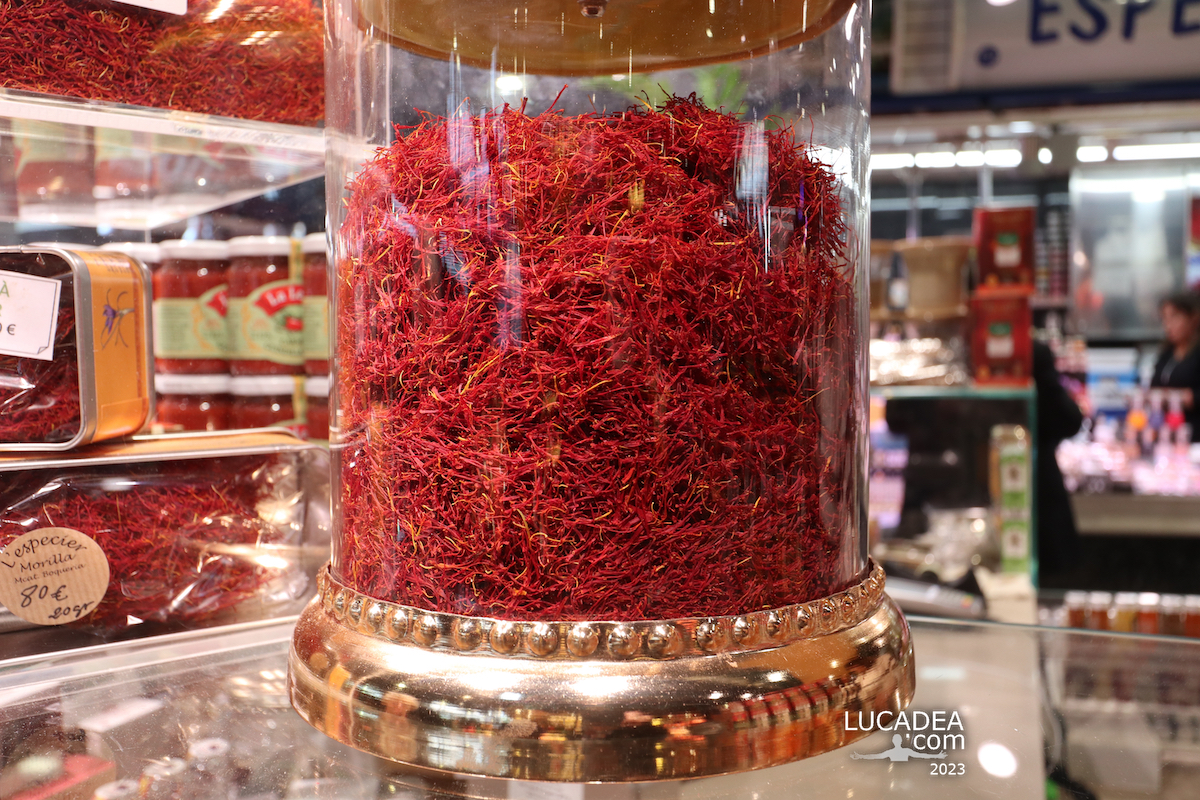
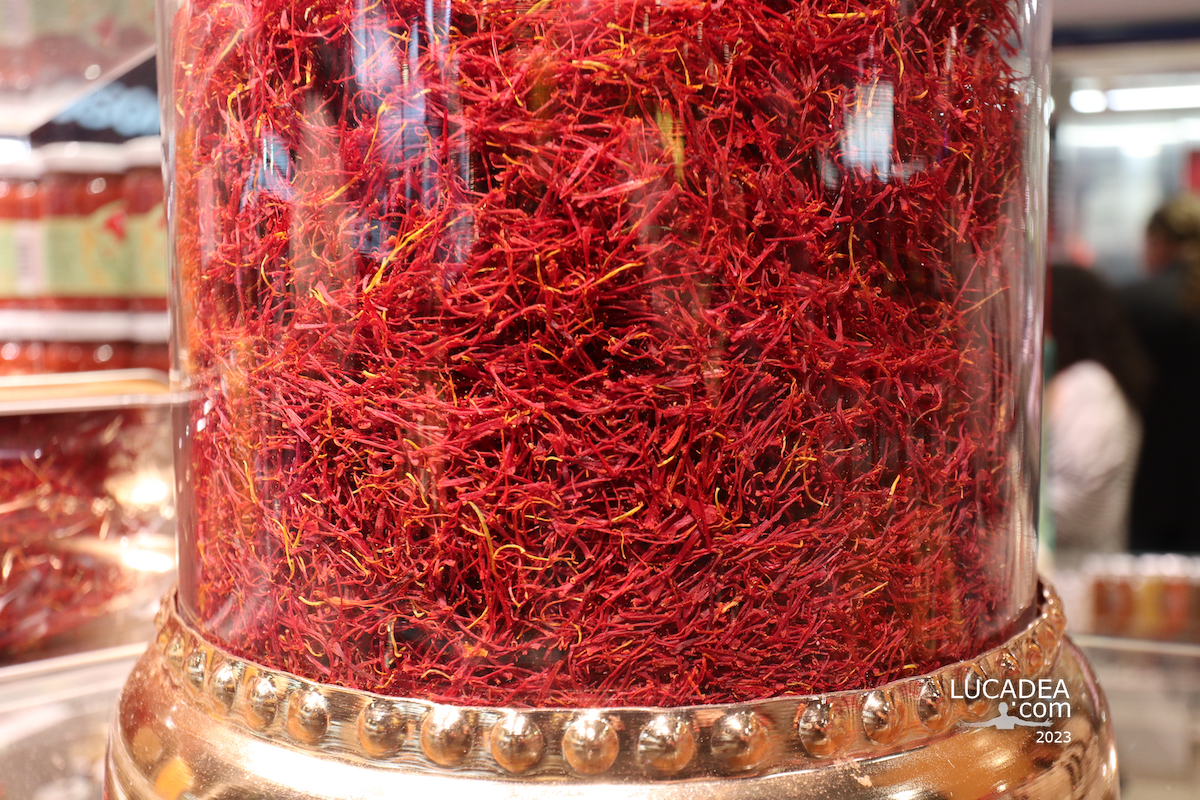
Saffron for sale at Barcelona’s Boqueria Market

Lo zafferano in vendita al mercato della Boqueria a Barcellona

Saffron for sale at Barcelona’s Boqueria Market.
A few months ago, while passing through Barcelona, I stopped to eat at the famous Boqueria Market, admittedly doing what a good tourist is supposed to do. Among all the stalls and products on display, however, it was the saffron that caught my attention, particularly because of the different packages and prices being offered.
Barcelona’s Boqueria Market is one of those places where, even without deliberately looking for it, you can get an idea of what visitors are interested in. It is heavily frequented by tourists, and spending a little time looking at the stalls can reveal which products seem to attract the most attention.
That day I noticed several stalls selling saffron in different quantities and at different prices. That small detail was enough to make me stop and take a photograph. Among fruit, spices, fresh produce and all the other things displayed around the market, those tiny packages of saffron naturally stood out.
I have never been particularly good at judging the price of spices, but one thing seemed obvious: saffron is certainly not cheap. It does not literally cost as much as gold, of course, but when you consider the very small quantities in which it is sold, the price can certainly feel rather high.
The photograph comes from a simple observation during my visit. I like it when travelling gives me opportunities to photograph apparently ordinary things, because these small details often become the images that bring back the atmosphere of a place most clearly. I did not photograph one of the classic views of the Boqueria, but a product displayed on a stall, something that still says a great deal about the experience of being inside the market.
If you are wondering what to see at Barcelona’s Boqueria Market, there are obviously countless colourful products and stalls that can catch your eye. I often find myself stopping instead for details that may not appear in the most familiar photographs. In this case, the saffron interested me precisely because of the contrast between the tiny amount of product and its relatively high value.
There is also a small curiosity behind saffron’s price. The spice comes from the stigmas of the Crocus sativus flower, which have to be harvested by hand. The labour involved, together with the tiny amount of spice obtained from each flower, helps explain why saffron is such an expensive ingredient.
The Boqueria, officially Mercat de Sant Josep de la Boqueria, stands along La Rambla in central Barcelona, and its commercial history goes back much further than its modern reputation as a tourist attraction. For me, though, it remains above all a place to explore through details: a stall, an unusual product, or an interesting way of displaying something for sale.
That is what I enjoy when I take my camera with me while travelling. I am not necessarily looking for the most famous monument or the photograph that everyone has already taken. Sometimes I simply stop because something has caught my attention at that particular moment.
And that day, with its small packets and different prices, saffron managed to do exactly that.
I have also photographed other markets and food products during my travels, because I find food one of the quickest ways to remember a place. Sometimes a single photograph of a market stall is enough to bring back an entire walk through a city.

Would you have bought the saffron at the Boqueria, or would you also have thought it was being sold at a rather high price? Add a comment or go to the bottom of the site to read what other visitors have written.

Saffron packages displayed for sale among the stalls of Barcelona's famous Boqueria Market

Saffron packages displayed for sale among the stalls of Barcelona's famous Boqueria Market

Saffron packages displayed for sale among the stalls of Barcelona's famous Boqueria Market

Photos taken with a Canon EOS M100 camera and Canon EF-M 11-22 lens.

Here is where the famous market on La Rambla is located:

Add one  comment to this article or read  here what other visitors have written.
 
Adv
 
Disclamer

The rights on images, videos, choruses, text and all other material on the LUCADEA.com website are governed as per  Copyright page.


This page has been viewed 1 times today.
This month it has been viewed 2 times.
In total it has been viewed 4 times.
 

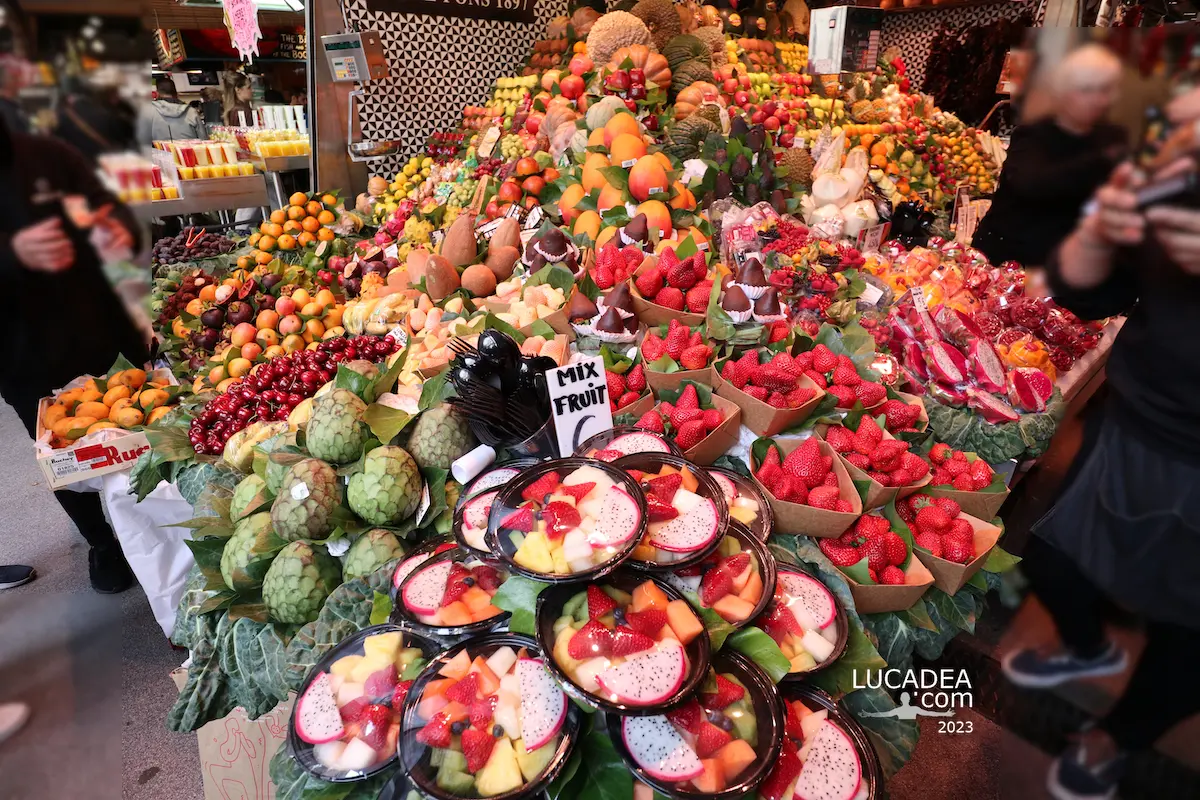
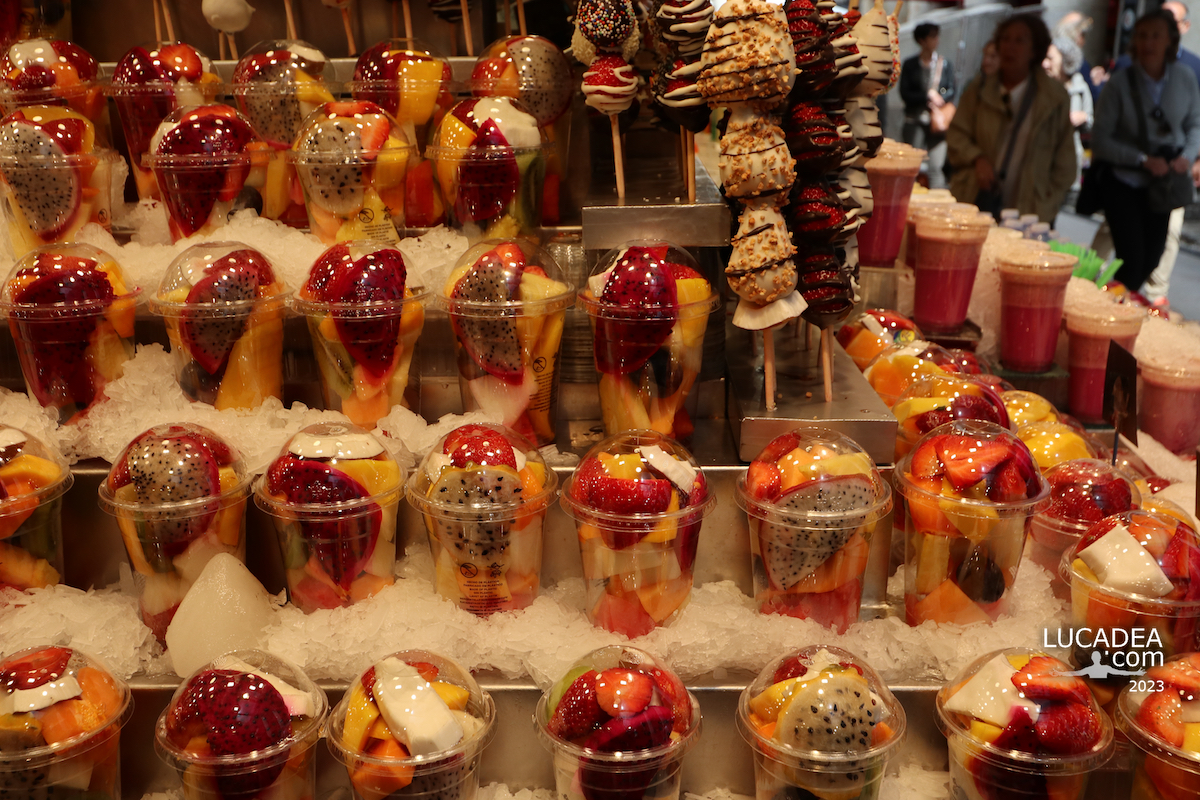
Fresh fruit at La Boqueria in Barcelona

Frutta fresca tagliata sui banchi della Boqueria a Barcellona, tra mango, dragonfruit, fragole e altri prodotti

Fresh fruit at La Boqueria in Barcelona.
Dragonfruit, mango, papaya, cherries, strawberries, coconut and lychees were all arranged across the market stalls, creating an immediate mix of colors and shapes. Fresh fruit at La Boqueria is one of those scenes that naturally catches your attention while walking through the market, especially when the produce has already been prepared to take away and eat straight away.
I took this photograph simply by stopping in front of one of these fruit stalls. As I walked through the market, the freshly cut fruit arranged in small containers caught my eye. It is a very simple subject, but it works particularly well as a photograph because so many different colors, shapes and textures are concentrated in such a small space.
Mercat de Sant Josep de la Boqueria, usually known simply as La Boqueria, stands along La Rambla in central Barcelona, Catalonia, Spain. It is one of the city’s best-known markets and its central position makes it a busy stop for people exploring the city. If you are wondering what to see in Barcelona, La Boqueria offers something different from the usual landmarks: here, the main subjects are the people, the products and the everyday movement of the market.
For this photograph, I wanted to focus on something very ordinary: the fruit stalls. There is no monument to frame and no elaborate architectural detail is needed to make the scene interesting. The way the products are displayed is enough, with the natural colors of the fruit becoming part of the atmosphere around the market.
Dragonfruit, mango and papaya immediately stand out because of their unusual shapes and colors, while more familiar products such as cherries and strawberries sit alongside them. Coconut adds another texture, and lychees, with their distinctive skins, make the display even more varied. It is this abundance that makes the photograph work for me.
There is also a small piece of history behind the market. La Boqueria has a long connection with the development of Barcelona’s markets, eventually becoming the covered market with the distinctive iron structure that is still visible today. It is easy to overlook this history while concentrating on the colorful stalls, but it helps explain why the market has become such a recognizable part of the city.
The ready-to-eat fruit also shows how the market has adapted to the habits of people passing through it. Someone who does not want to stop for a full meal can simply pick up a container and continue walking, turning a basic market product into an easy snack. For a market visited by so many people, it feels like a natural way of presenting fresh produce.
What interests me most, though, remains the photograph itself. I like images that can describe a place without necessarily showing its most famous view. In this case, a fruit stall is enough to bring back the atmosphere of La Boqueria and the constant movement between the market counters.
The scene also connects naturally with other photographs I have published from La Rambla in Barcelona. They are very different images, but they belong to the same walk through the city and show two sides of the same area: the movement of the avenue and the more concentrated, colorful world inside the market.
One of the things I like about La Boqueria is the sheer number of details that appear without having to look for them. You only need to slow down for a moment and pay attention to the stalls. The fruit then becomes a small photographic subject, but also a simple way of describing the lively character of Barcelona.
The ready-to-eat fruit is perhaps one of the easiest things to notice, especially for visitors looking for something quick while exploring the city. I found the display interesting not because it was unusual to see fruit in a market, but because of the care with which such an everyday product had been arranged.
That is often enough to make me take out the camera. A familiar subject can become interesting when the presentation, surroundings and moment come together. At La Boqueria, there are plenty of these small photographic opportunities.

And you, when visiting a market like La Boqueria, can you resist stopping in front of these colorful fruit stalls? Add a comment or go to the bottom of the site to read what other visitors have written.

Fresh fruit displayed at La Boqueria in Barcelona, with mango, dragonfruit, strawberries and other produce

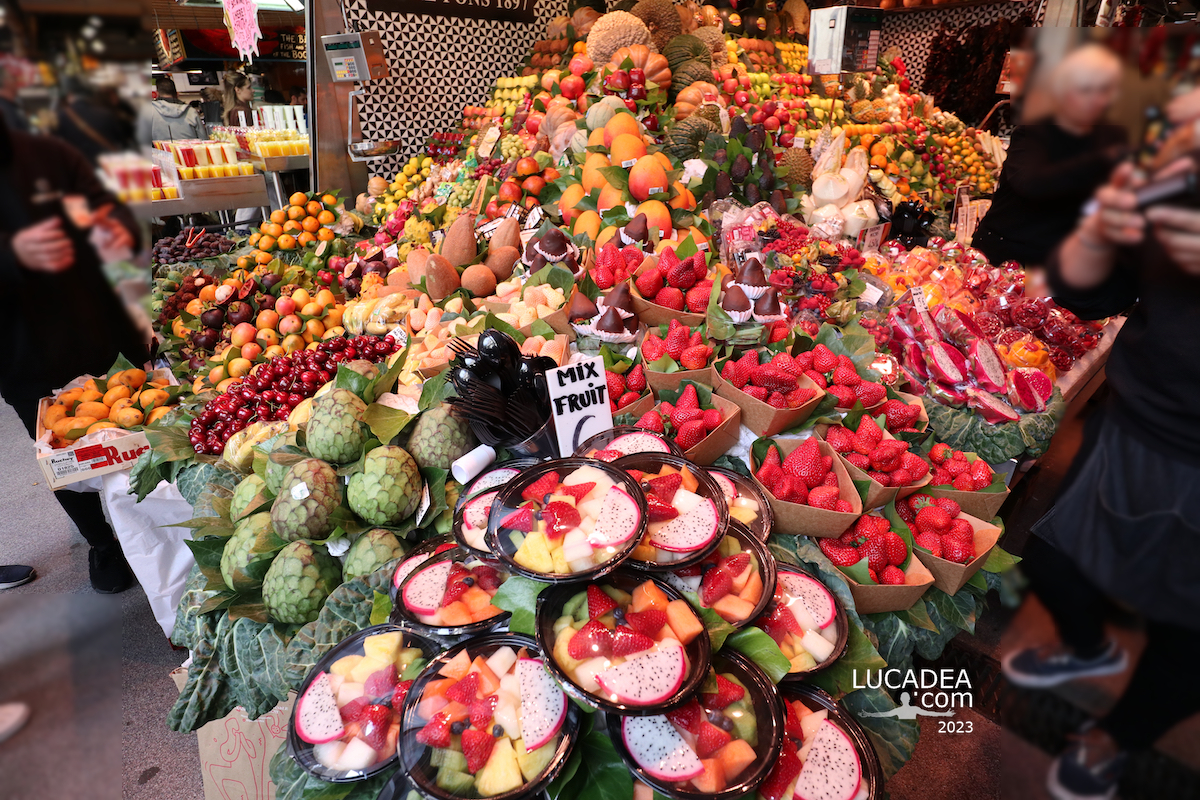
Fresh fruit displayed at La Boqueria in Barcelona, with mango, dragonfruit, strawberries and other produce

Fresh fruit displayed at La Boqueria in Barcelona, with mango, dragonfruit, strawberries and other produce

Photos taken with a Canon EOS M100 camera and Canon EF-M 11-22 lens.

Here is where this market is located:

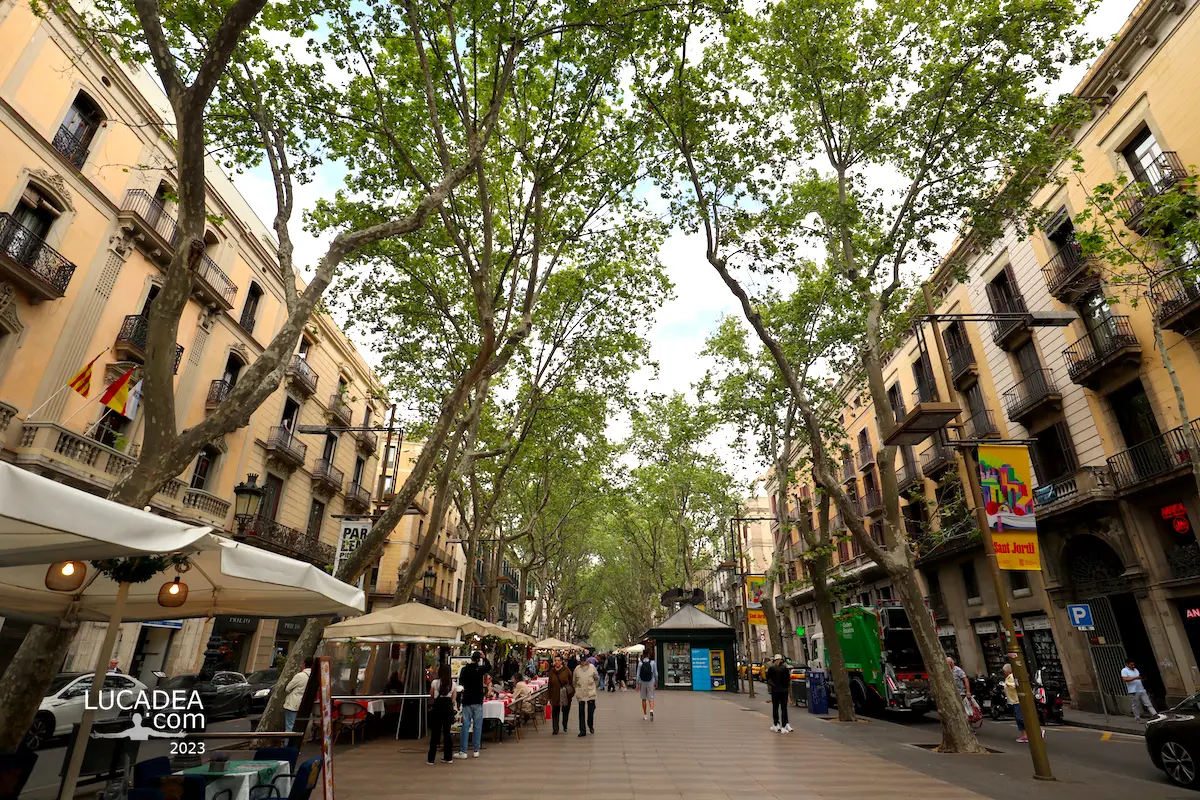
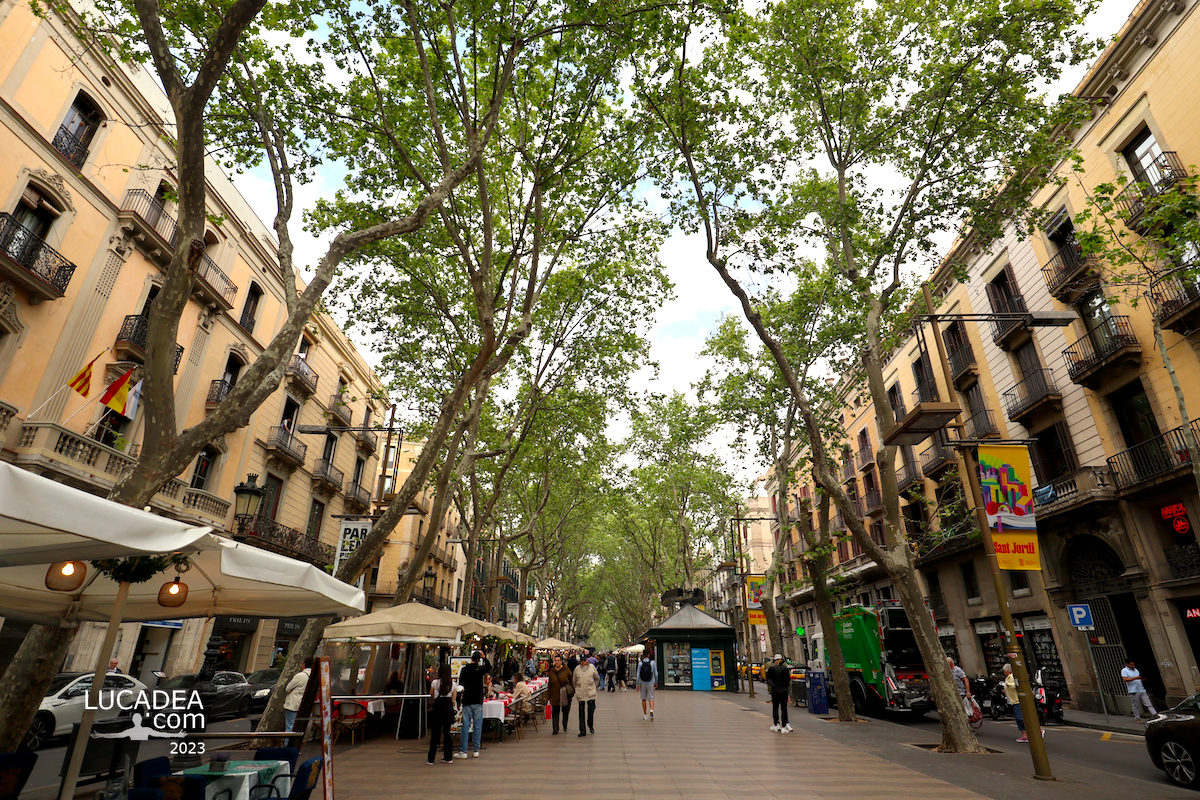
Barcelona’s Rambla, between street and life

La Rambla di Barcellona con il viale alberato, gli edifici e il movimento della strada nel centro della città

Barcelona’s Rambla, between street and life.
Walking along La Rambla, I found myself surrounded by one of those places where the city seems to keep moving in every direction, with people, buildings, trees and changing views appearing from one step to the next. Barcelona’s Rambla is one of the city’s most recognizable streets, but photographing it also means finding a personal viewpoint within a place that is constantly in motion.
Barcelona, in Catalonia, Spain, has La Rambla as one of its most familiar urban landmarks. The street crosses the center of the city, connecting Plaça de Catalunya with the port area, and its atmosphere gradually changes along the way. It is an urban walk where people are an essential part of the scene, together with the buildings, trees and side streets opening along the route.
This photograph came from wanting to preserve one of those passing moments. I wanted to capture the Rambla with my camera without necessarily searching for the most famous landmark or a perfectly arranged composition. I am more interested in photographs that retain something of a street’s everyday character, especially when that street is already known all over the world.
If you are wondering what to see in Barcelona, La Rambla is almost inevitably among the first places mentioned. Its central position also makes it a natural route towards other parts of the city. For me, however, its photographic interest is not only about where the street leads. It is also about how the surroundings change continuously while you walk along it.
Different places appear along the sides of the Rambla. La Boqueria market brings the movement and colors of everyday life, while the Gran Teatre del Liceu gives the street a strong cultural and architectural presence. Then there are street performers, musicians and living statues, all contributing to an urban space that can rarely be photographed in exactly the same way twice.
The word rambla has Arabic origins and comes from ramla, associated with the meaning of sand. The term later became common in several Spanish cities for streets developed along former waterways or areas once crossed by water. I find this a small but interesting detail because behind the name of one of Barcelona’s best-known streets there is still a reference to the landscape from which the name originated.
La Rambla, however, is not only the main pedestrian route seen in the most familiar photographs. One of the interesting parts of walking here is looking at what happens on either side, in the smaller streets and spaces opening between the buildings. The atmosphere can change very quickly, and that is often where I find less predictable photographic subjects.
This image also fits the way I like to document places through personal viewpoints and smaller details. There are already other photographs of Barcelona on the blog, including one dedicated to the Liceu Theatre on the Rambla. Returning to the same place through different images allows a longer visual story to develop naturally, without trying to make every photograph completely different from the previous one.
What interests me most about the Rambla is precisely its ability to change while remaining recognizable. Even when walking along the same stretch, the people, movement, activity and details around the street are never quite identical. A photograph can therefore become a small record of one particular passage rather than simply another representation of a famous place.
For anyone visiting Barcelona, La Rambla is certainly a street worth seeing, but I prefer to think of it as a place to observe rather than simply cross. There is no need to stop at every attraction. Sometimes it is enough to follow the route, look at the façades, watch the people passing by and let a small detail suggest the photograph.
That is where this image comes from. It does not attempt to summarize Barcelona or explain the whole Rambla. It simply keeps one fragment of my own passage through one of the city’s most recognizable streets.

What detail of the Rambla caught your attention most during a walk through Barcelona? Add a comment or go to the bottom of the site to read what other visitors have written.

Barcelona’s Rambla with its tree-lined avenue, historic buildings and everyday movement through the city center

Photo taken with a Canon EOS M100 camera and Canon EF-M 11-22 lens.

To see all the photos I took in Barcelona, ​​click here:
foto gallery

Where the Rambla is located:

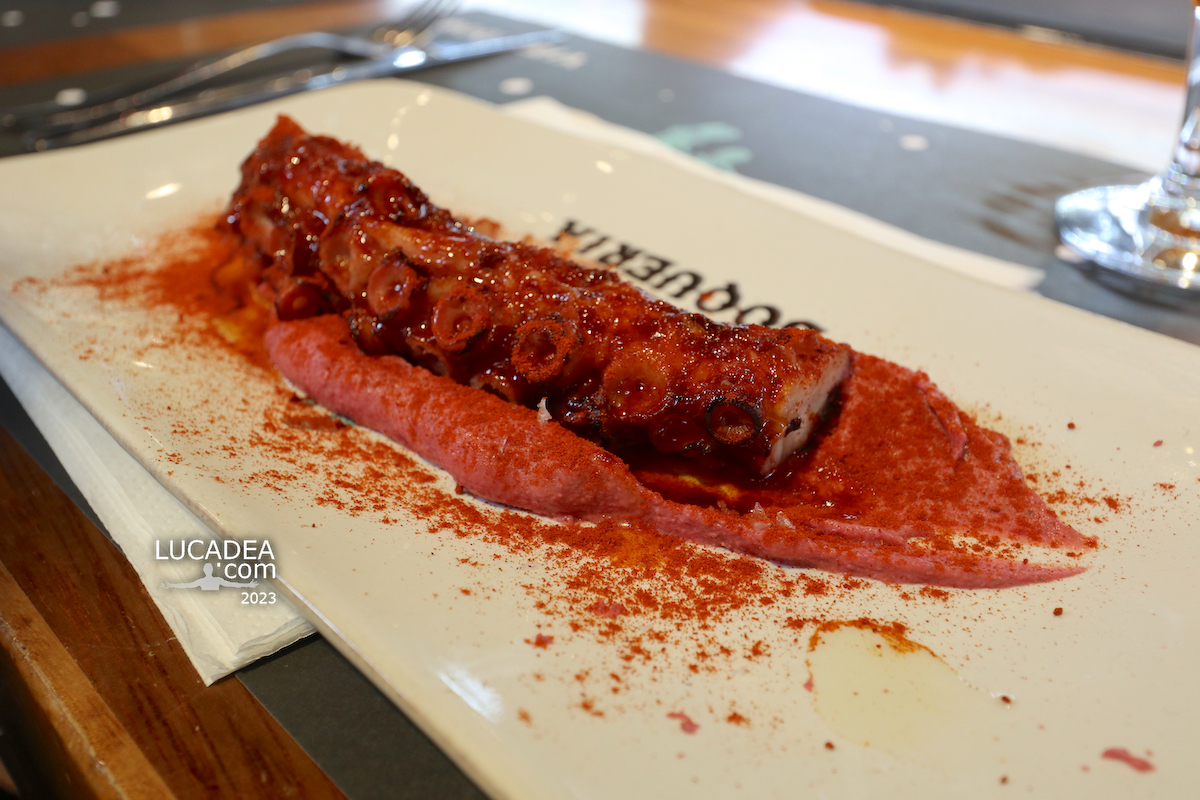
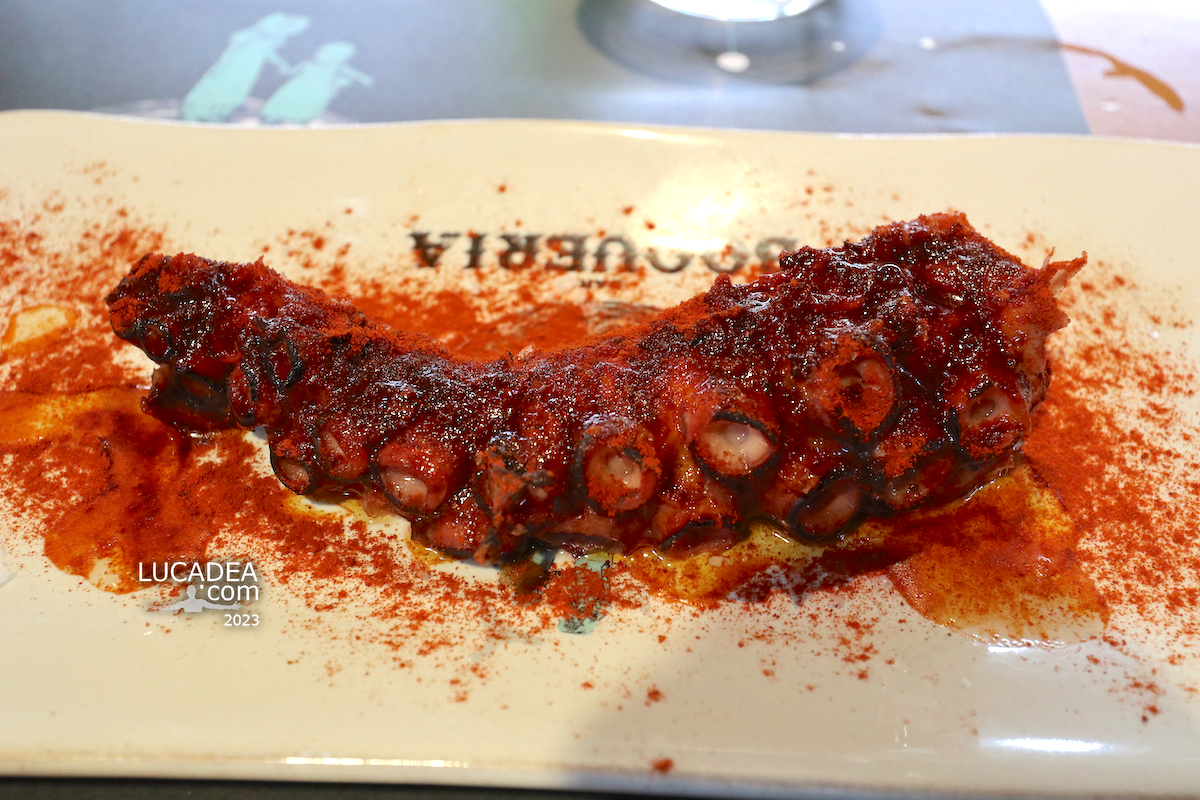
Grilled octopus at La Boqueria in Barcelona

Polpo alla griglia con hummus servito alla Boqueria di Barcellona su banco del mercato con piatto curato e colori vivaci

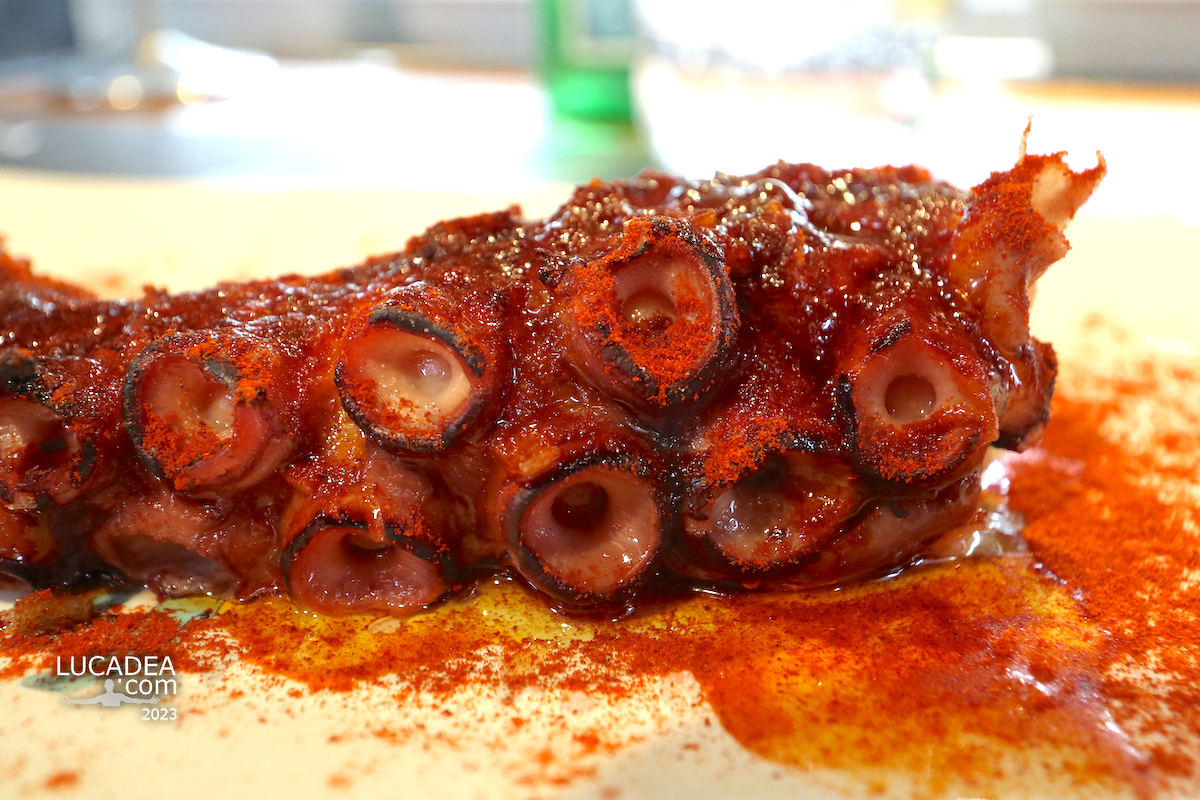
Grilled octopus at La Boqueria in Barcelona.
Among the busy stalls of La Boqueria market in Barcelona, one of the most popular spots if you are looking for what to eat in Barcelona, I stopped in front of a dish that immediately caught my attention: grilled octopus with hummus. It looked familiar and unfamiliar at the same time, something I knew but presented in a different way.
A few months ago, on my way back from the Caribbean by ship, I decided to take a break here, right in the market that opens onto La Rambla. Barcelona, in Catalonia, Spain, is a place I’ve visited more than once, but food is always what brings a new perspective to the experience.
Octopus has always been one of my favorite dishes, and I usually go for the traditional Galician style, with potatoes, paprika, and olive oil. This time, though, the version was grilled and paired with hummus instead. I still ordered it, and I took this photo because visually it worked really well: the texture of the octopus against the creamy base created a strong contrast that felt worth capturing.
The first bite, however, told a slightly different story. It wasn’t bad at all, but it didn’t give me that familiar feeling I was expecting. Sometimes reinterpretations change the balance more than you think, and I found myself missing the simplicity of the classic version.
A quick note: “pulpo a la gallega” comes from the Galicia region in Spain and was traditionally served during local fairs, cooked in large copper pots and enjoyed as a simple but flavorful dish.
While sitting there, I thought about another seafood dish I had photographed before, completely different in style but equally eye-catching. Food, just like places, can surprise you in unexpected ways depending on how it is presented.
If you are visiting La Boqueria and wondering what to eat, it’s worth trying new things—but maybe don’t skip the classics entirely.

Have you ever ordered something that looked perfect and then realized you preferred the traditional version? Add a comment or go to the bottom of the site to read what other visitors have written.

Grilled octopus with hummus served at La Boqueria market in Barcelona with colorful presentation on a food stall

Grilled octopus with hummus served at La Boqueria market in Barcelona with colorful presentation on a food stall

Grilled octopus with hummus served at La Boqueria market in Barcelona with colorful presentation on a food stall

Photos taken with a Canon EOS M100 camera and Canon EF-M 11-22 lens.

Here is where the famous market on La Rambla is located:

Hummus originates from the Middle East, the region where chickpea cultivation began. Similar variations are documented in Damascus as far back as the 18th century. Today, it is widely popular in Middle Eastern cuisine—particularly Levantine cuisine—where it is considered a staple food and is served alongside pita and falafel.
Read more on Wikipedia

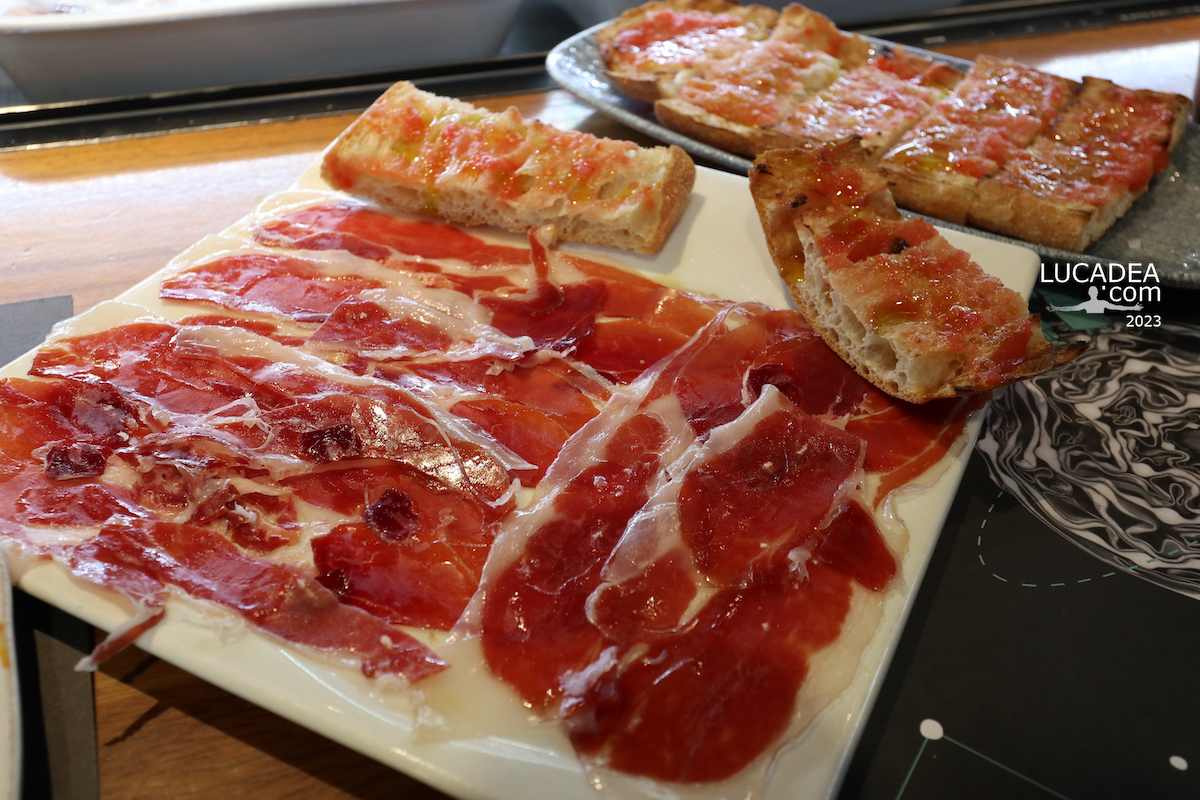
Jamon at Boqueria Market in Barcelona

UPiatto di jamon spagnolo alla Boqueria di Barcellona con pan y tomate della tradizione catalana

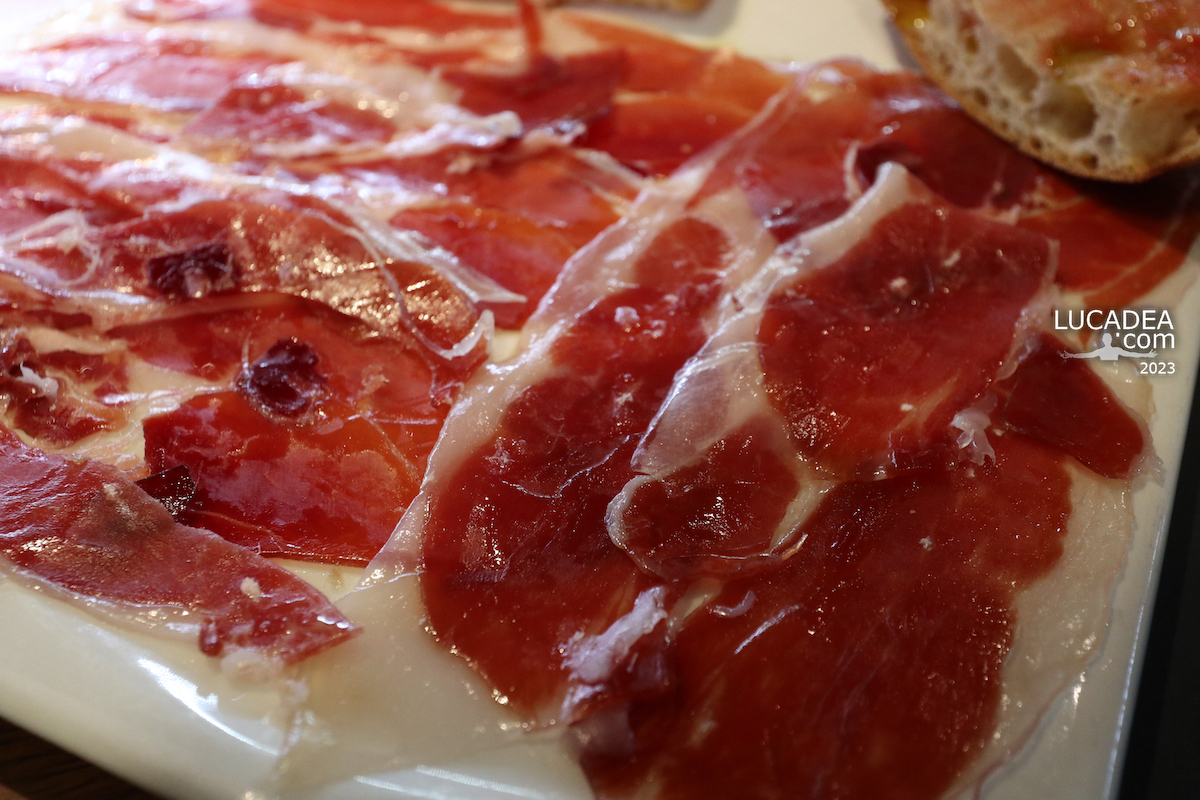
Jamon at Boqueria Market in Barcelona.
During one of my visits to Spain, I captured with my camera a simple but memorable moment: a plate of Spanish jamon enjoyed at Boqueria Market in Barcelona, served with traditional pan y tomate. This photograph is not only about food, but also about a travel memory, one of those small experiences that become connected forever with a place.
Boqueria Market in Barcelona, located on La Rambla in the heart of the city, is one of the places where I enjoy observing the relationship between products, people and traditions. Here Spanish jamon becomes a symbol of local food culture, with large cured hams hanging from the stalls and colourful displays showing an important part of Spanish gastronomy.
Whenever I arrive in Spain by ship, I always try to find some time to taste a plate of jamon. Over the years this has become a small personal tradition connected with my travels. What attracts me is not only the flavour of the food, but also the atmosphere of the place where it is enjoyed, surrounded by the daily rhythm of a city.
This photograph was created from my attention to simple details: a plate on the table, the deep colour of the thinly sliced ham and the traditional pan y tomate served alongside it. This combination of bread with tomato, olive oil and salt represents the Spanish approach to food, where a few ingredients can create something full of character.
Boqueria Market, officially known as Mercat de Sant Josep de la Boqueria, is one of Barcelona’s most famous historic markets. Its origins date back to the nineteenth century, and over time it has become a reference point for discovering local products and specialities from different areas of Spain.
If you are visiting Barcelona, Boqueria Market is a place worth seeing not only for its food but also for the atmosphere created by vendors, visitors and everyday life. It is a place where gastronomy and the identity of the city meet naturally.
As I have already shared in other photographs from my journeys through Spain, I like to preserve the small moments of travel because they often become the strongest memories. A meal, a street, or a simple detail can tell the story of an entire journey.
This plate of jamon at Boqueria Market represents exactly that: a short stop during a trip, an authentic flavour and a photograph connected with the energy of Barcelona.

What traditional dish reminds you most of your travels? Add a comment or go to the bottom of the site to read what other visitors have written.

Plate of Spanish jamon at Boqueria Market in Barcelona with traditional pan y tomate

Plate of Spanish jamon at Boqueria Market in Barcelona with traditional pan y tomate

Photos taken with a Canon EOS M100 camera and a Canon EF-M 11-22 lens.

Here is where this market is located:

Jamón ibérico (Iberian ham)—also known as *pata negra* or *carna negra*—is a type of ham made from Iberian pigs; it is highly prized in Spanish and Portuguese cuisine, where it is considered a gourmet product. To be produced and marketed under this name, the meat must come from animals resulting from a crossbreed that is at least 50% Iberian by genetic makeup.
Read more on Wikipedia

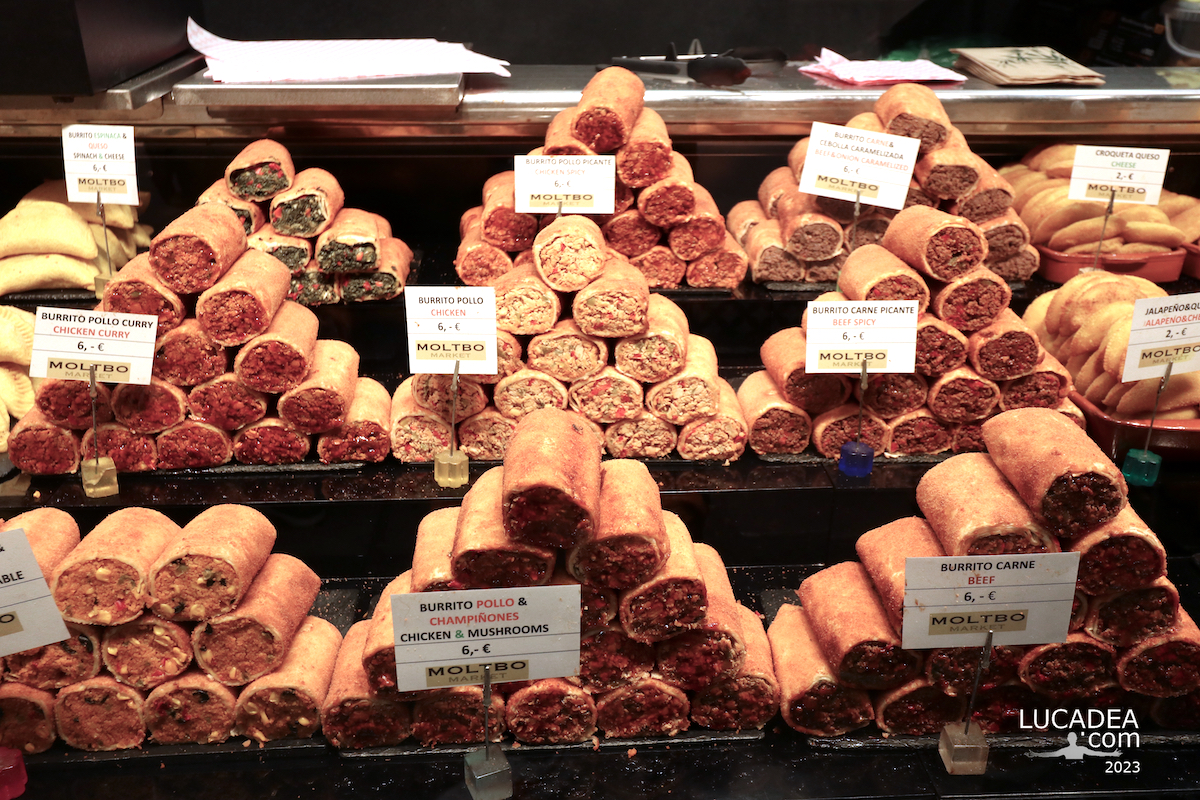
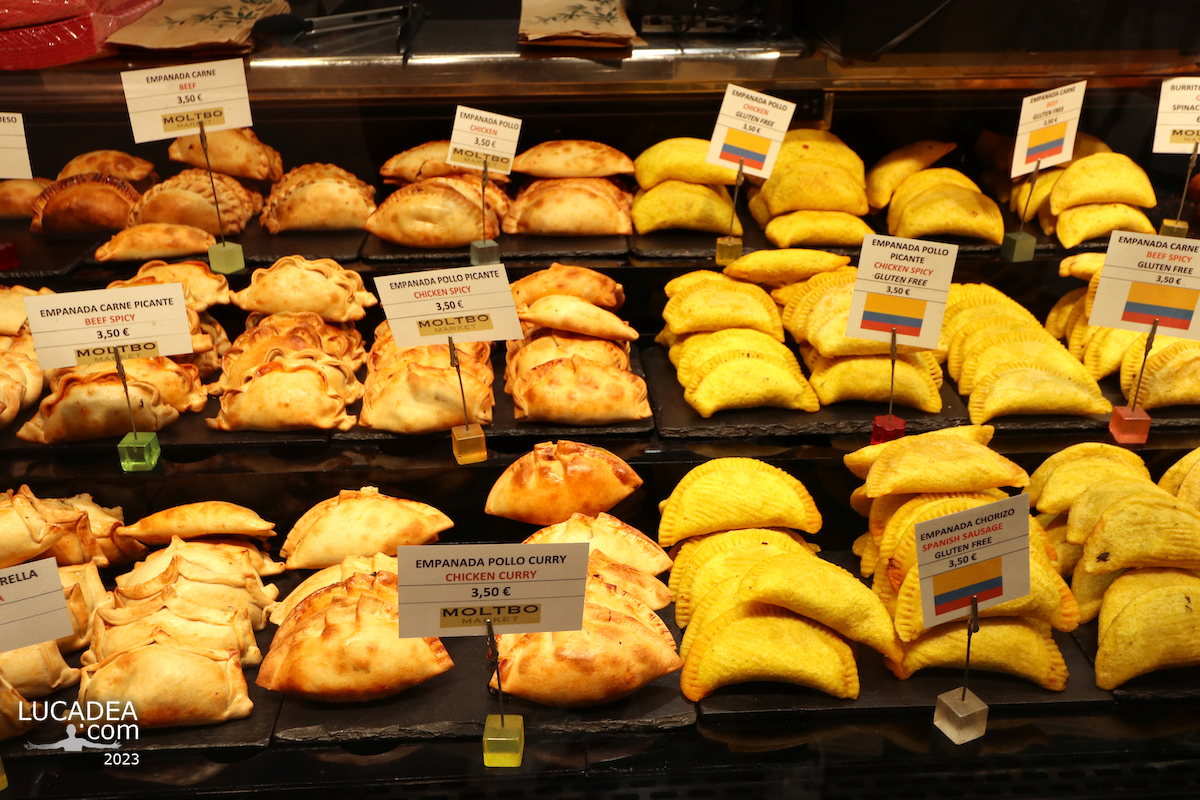
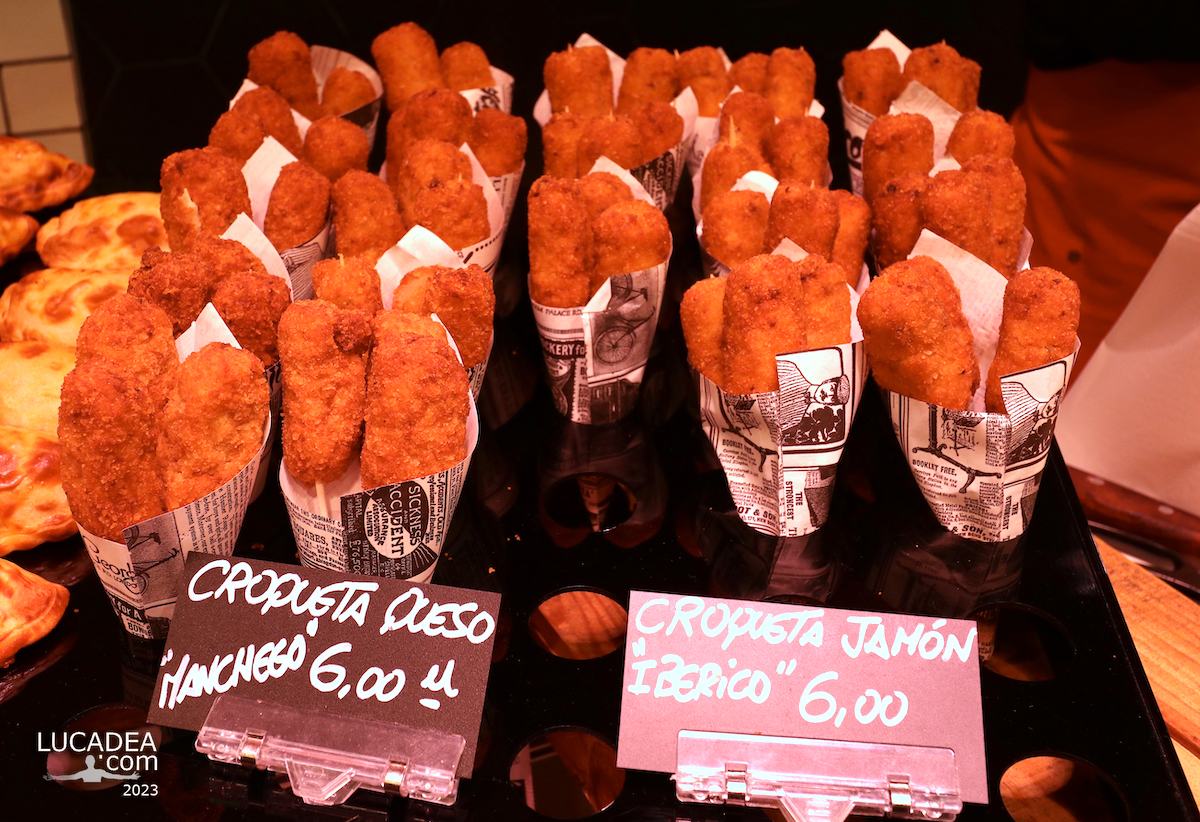
Burritos, empanadas and croquetas at La Boqueria

Burritos, empanadas e croquetas alla Boqueria

Burritos, empanadas and croquetas at La Boqueria.
Walking through La Boqueria Market in Barcelona, I stopped in front of a colorful display of Latin street food where burritos, empanadas and croquetas tell a story of different culinary traditions meeting in one place. Among the things to see in Barcelona, La Boqueria Market is a place where you can experience the city not only through its streets but also through its flavors.
Inside the busy market aisles, I found this small corner filled with simple dishes carrying centuries of influences. Burritos at La Boqueria, with their wrapped flour tortillas and rich fillings, recall Mexican and Tex-Mex cuisine, while empanadas bring a tradition shared between Spain and many Latin American countries. Next to them, croquetas represent a classic Spanish preparation, with a creamy center and a crispy fried coating.
I was in Barcelona, Catalonia, Spain, right on La Rambla, where La Boqueria has become one of the most recognizable places in the city. Photographing these foods was a way to capture a moment where travel meets everyday life. A quick stop at a market stall can become a memory because it shows something genuine about the place. I have shared similar stories on the blog from other markets during my travels, where local food often becomes a different way to understand a city.
The market, officially known as Mercat de Sant Josep de la Boqueria, has ancient origins and has grown into one of Barcelona’s most famous food destinations. An interesting detail is that today it is not only a place for Catalan products but also hosts international cuisines, creating a meeting point between cultures.
What I enjoy most about places like this is the constant movement: different traditions side by side, visitors discovering new flavors, and locals continuing their daily routines. It is not simply about eating, but about experiencing a small part of the city’s identity.
This photograph of burritos, empanadas and croquetas at La Boqueria brings me back to that feeling of discovery that only a market can create.

Have you ever visited La Boqueria Market and Barcelona? Add a comment or go to the bottom of the site to read what other visitors have written.

Burritos, empanadas e croquetas alla Boqueria

Burritos, empanadas e croquetas alla Boqueria

Burritos, empanadas e croquetas alla Boqueria

Photos taken with a Canon EOS M100 camera and a Canon EF-M 11-22 lens.

Here is where this market is located:

La Boqueria is Spain’s most famous market and one of the largest in Catalonia, spanning 2,583 square meters and hosting over 300 stalls. It is also one of the oldest markets in Spain; it originated in the early 17th century just outside the city walls on the Pla de la Boqueria—a small square facing the current market—to avoid taxes on goods. It was later inaugurated in 1836 at its present location midway along the famous Rambla, between the Palau de la Virreina and the Liceu Theatre.
Read more on Wikipedia

Burritos, empanadas and croquetas at La Boqueria – Burritos, empanadas et croquetas à la Boqueria – Burritos, empanadas y croquetas en la Boquería – Burritos, empanadas e croquetas na Boqueria – Burritos, Empanadas und Croquetas an der Boqueria – Burritos, empanadas và croquetas tại Boqueria – 博盖里亚市场的墨西哥卷饼、馅饼和可乐饼 – ボケリア市場のブリトー、エンパナーダ、クロケッタ

The text of this post was written with the help of ChatGPT, a language model from OpenAI.

A myriad of spices at La Boqueria in Barcelona

Una miriade di spezie al mercato della Boqueria di Barcellona

A myriad of spices at La Boqueria in Barcelona.
Walking through La Boqueria market in Barcelona, Spain, I stopped in front of a display full of colorful spices, one of those small details that show what to see in Barcelona beyond the most famous landmarks. La Boqueria is one of the city’s best-known markets and, although it has become a very popular tourist destination, it still manages to surprise visitors with the incredible variety of products found inside.
Whenever I visit a market like this, I try to focus on the details that tell the story of the place. It is not only the fresh fruit stalls or the ready-to-eat food that catch my attention, but also those smaller corners where colors, shapes, and textures create unexpected photographic moments. This spice stall was exactly one of those scenes that made me stop and take out my camera.
In front of me there were containers filled with spices of all kinds. Some were carefully arranged in small bottles, while others were displayed loose and ready to be weighed. The colors were countless: the deep red of paprika, the bright yellow of turmeric, darker shades from aromatic mixtures, and many other tones that transformed the stall into a natural composition.
What impressed me most was not only the visual aspect. Standing close to the stall, I could almost imagine the aromas of the spices, a combination of intense scents connected to distant cuisines and different traditions. This mix of colors and sensations is what makes a visit to La Boqueria such a unique experience.
I have already shared other details from this market on the site, including the dried fruit stalls at La Boqueria in Barcelona and the grilled octopus with hummus enjoyed at La Boqueria. They are two very different experiences, but both show how many photographic ideas can be found inside this market.
La Boqueria was established in the 19th century and has become one of the symbols of Barcelona’s food culture. Even if tourism now plays an important role, small details like this spice stall still reveal the character of the place.

Have you ever visited La Boqueria and which stall caught your attention the most? Add a comment or go to the bottom of the site to read what other visitors have written.

Colorful spices displayed at a stall inside La Boqueria market in Barcelona

Colorful spices displayed at a stall inside La Boqueria market in Barcelona

Colorful spices displayed at a stall inside La Boqueria market in Barcelona

Colorful spices displayed at a stall inside La Boqueria market in Barcelona

Photos taken with Canon EOS M100 camera and Canon EF-M 11-22 lens.

Here’s where this market is located:

La Boqueria is the most famous market in Spain and one of the largest in Catalonia, covering 2,583 square meters and boasting more than 300 stalls. It is also one of the oldest markets in Spain: founded in the early 17th century on the outskirts of the city on the Pla de la Boqueria plain (which is now a small square in front of the current market) to avoid paying taxes on goods, it was later inaugurated in 1836, where it still stands today, halfway down the popular Rambla, between the Palacio de la Virreina and the Liceu Theatre.
Continue and learn more at Wikipedia

Dried fruit at La Boqueria in Barcelona

Frutta secca al mercato della Boqueria di Barcellona in Spagna

Dried fruit at La Boqueria in Barcelona.
Among the colors and shapes of La Boqueria Market, I wanted to capture with my camera a simple but expressive detail: a display of dried fruit that reflects the lively atmosphere of one of Barcelona’s most famous markets. This photograph of dried fruit at La Boqueria shows how even everyday products can become an interesting subject when arranged with care and presented through colors, textures and different shapes.
Walking through La Boqueria Market in Barcelona, Catalonia, Spain, I stopped in front of this stall filled with containers of dried fruit in many different tones. The market is one of the places worth seeing in Barcelona for anyone who wants to experience the city through its food, traditions and daily life. Even a small dried fruit stall can reveal something about the character of the place.
In the photograph, some products can be recognized, such as dried banana, apricot, strawberry and kiwi, together with other fruits that I could not identify with certainty. This variety was exactly what made the display interesting to photograph: different colors, shapes and textures gathered together in one space, creating a natural composition full of visual contrasts.
I chose this image because markets often tell the story of a city through small details. La Boqueria is not only a place where people buy food; it is also an environment where different cultures, traditions and influences meet every day. Each stall has its own personality and contributes to the unique atmosphere that makes this market so recognizable.
The market, officially known as Mercat de Sant Josep de la Boqueria, has ancient origins and became one of Barcelona’s most important food markets over time. One interesting detail is its famous iron structure, created in the nineteenth century, which helped transform the market into one of the most photographed places in the city.
This photograph is not recent, but it still preserves the reason why I enjoy photographing places like this: their ability to tell a story through ordinary objects. Like other images I have shared from Barcelona’s markets and streets, this one focuses on a small detail that can bring back the atmosphere of a place rather than simply documenting a location.
If you are visiting Barcelona and looking for places worth seeing beyond the most famous landmarks, La Boqueria offers a chance to discover the city through colors, flavors and everyday scenes. Sometimes a simple food stall can become a memorable photographic subject.

Which dried fruit from this colorful display would you try first? Add a comment or go to the bottom of the site to read what other visitors have written.

Dried fruit stall at La Boqueria Market in Barcelona with dried banana, apricot, strawberry and kiwi

Dried fruit stall at La Boqueria Market in Barcelona with dried banana, apricot, strawberry and kiwi

Photo taken with Canon EOS M100 camera and Canon EF-M 11-22 lens.

Here’s where this market is located:

La Boqueria is the most famous market in Spain and one of the largest in Catalonia, covering 2,583 square meters and boasting more than 300 stalls. It is also one of the oldest markets in Spain: founded in the early 17th century on the outskirts of the city on the Pla de la Boqueria plain (which is now a small square in front of the current market) to avoid paying taxes on goods, it was later inaugurated in 1836, where it still stands today, halfway down the popular Rambla, between the Palacio de la Virreina and the Liceu Theatre.
Continue and learn more at Wikipedia

🏠
  • Italiano