Campo Alley, a lane in Genoa’s old town

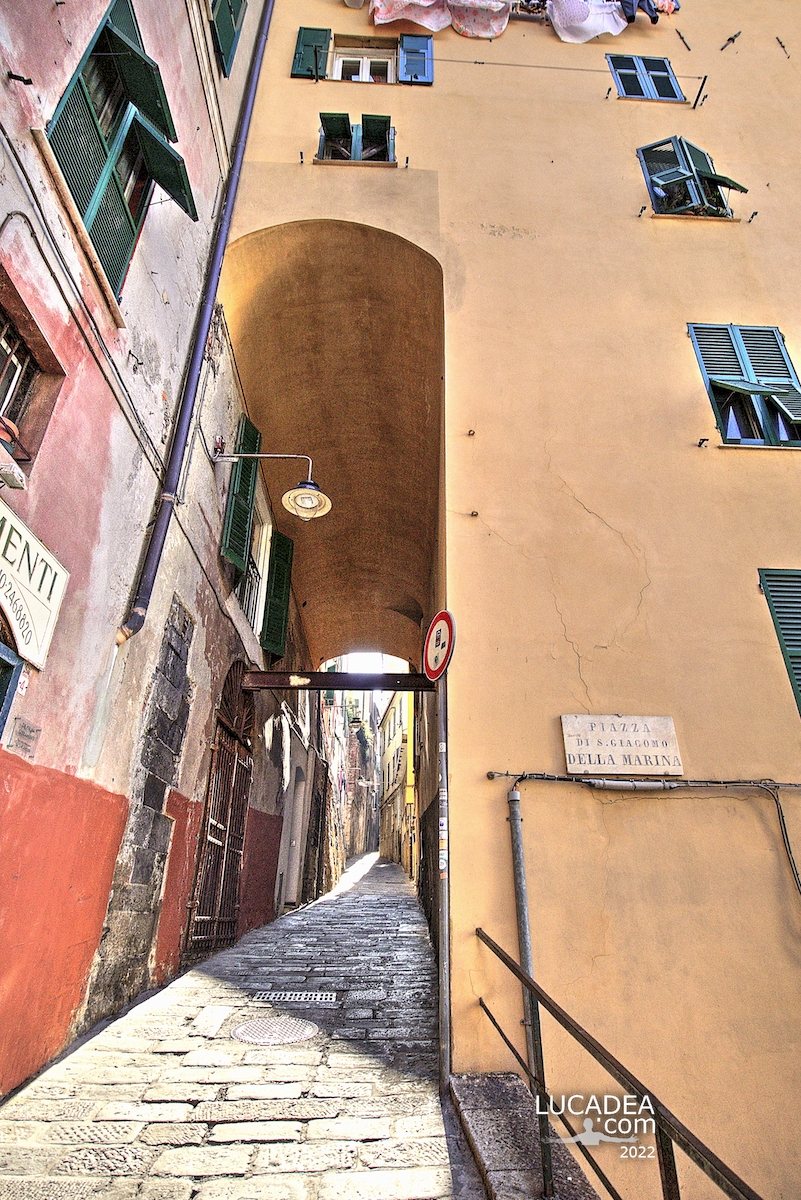
Vico del Campo: un vicolo di ingresso al centro storico di Genova

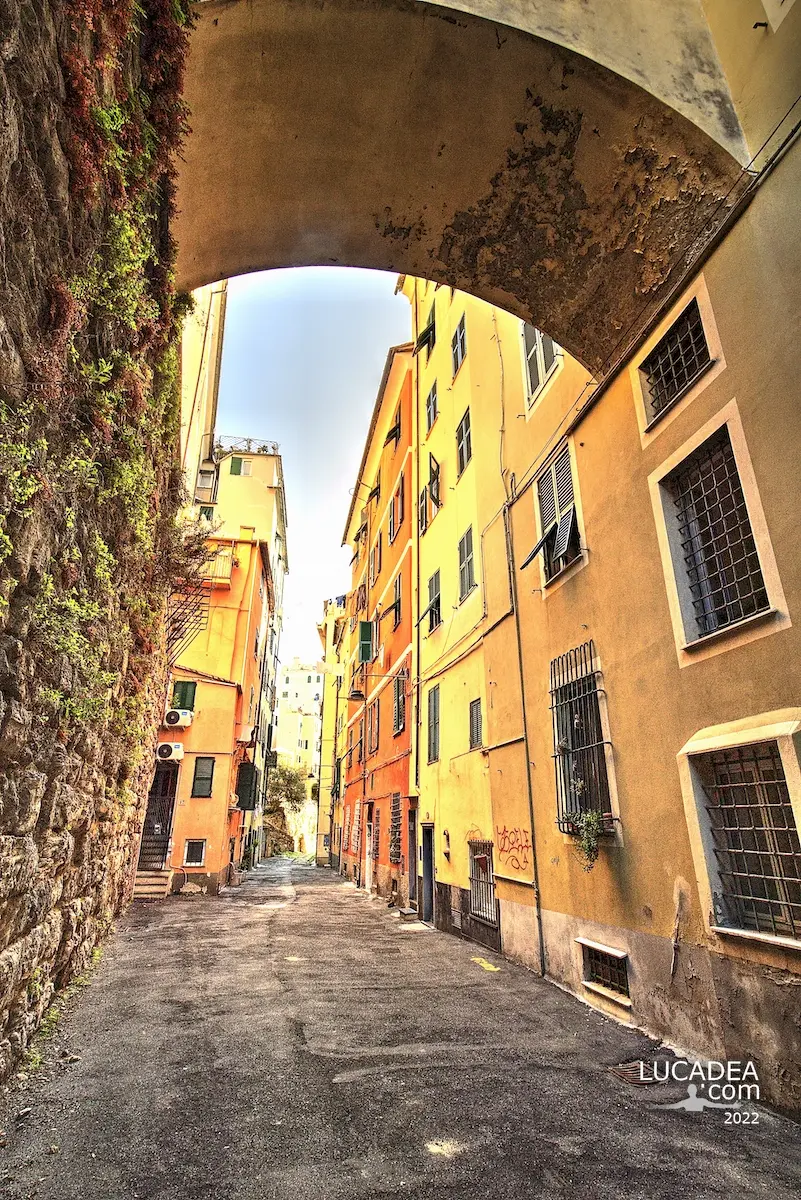
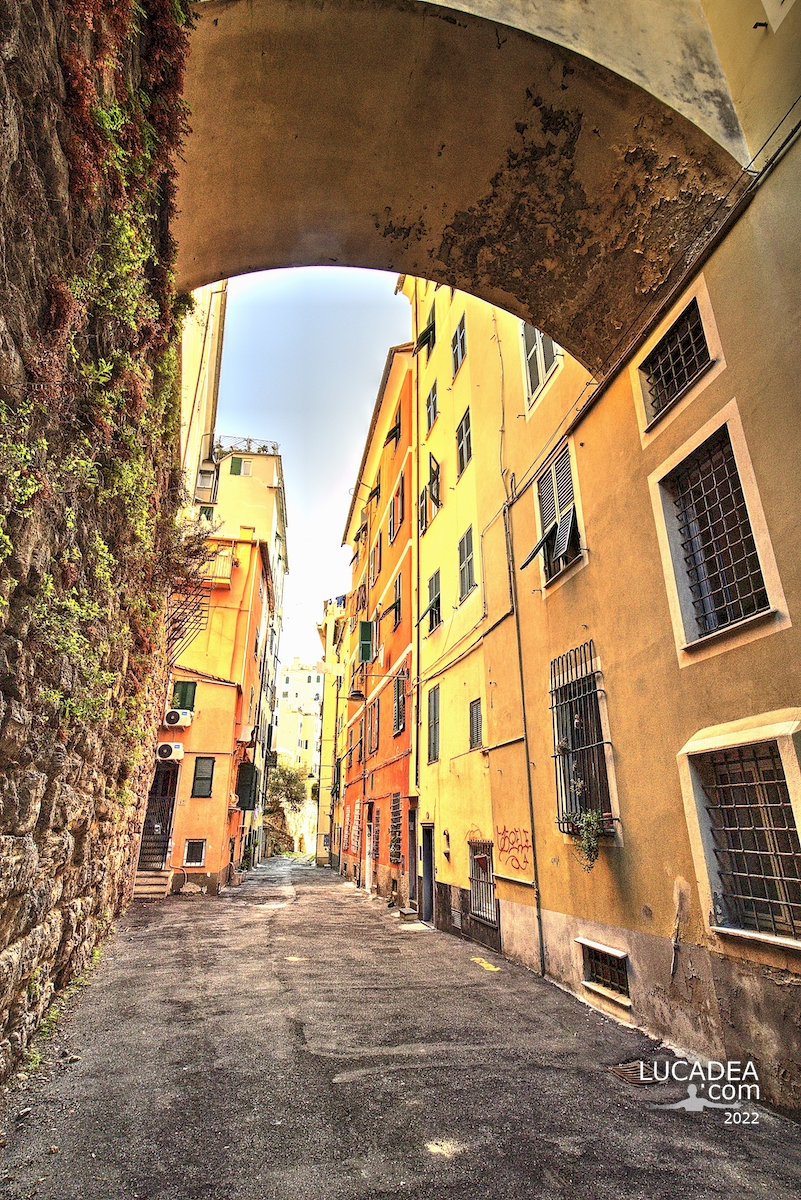
Campo Alley, a lane in Genoa’s old town.
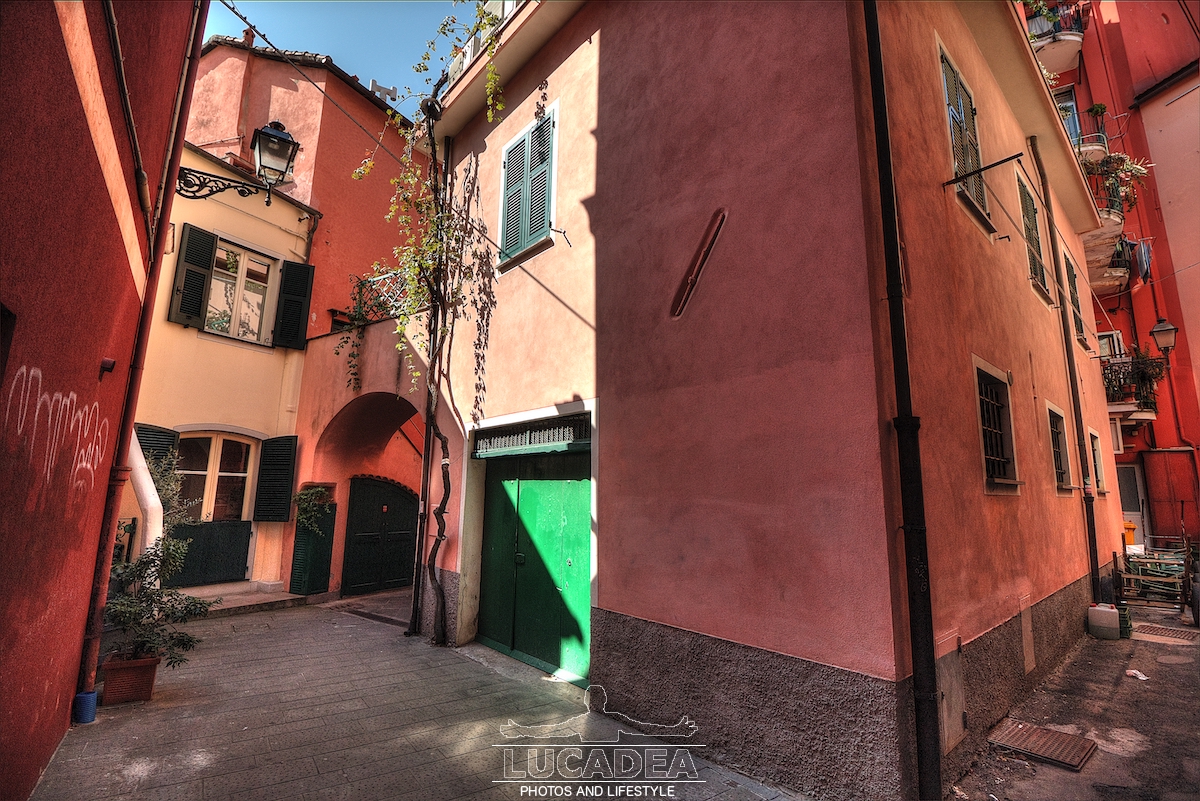
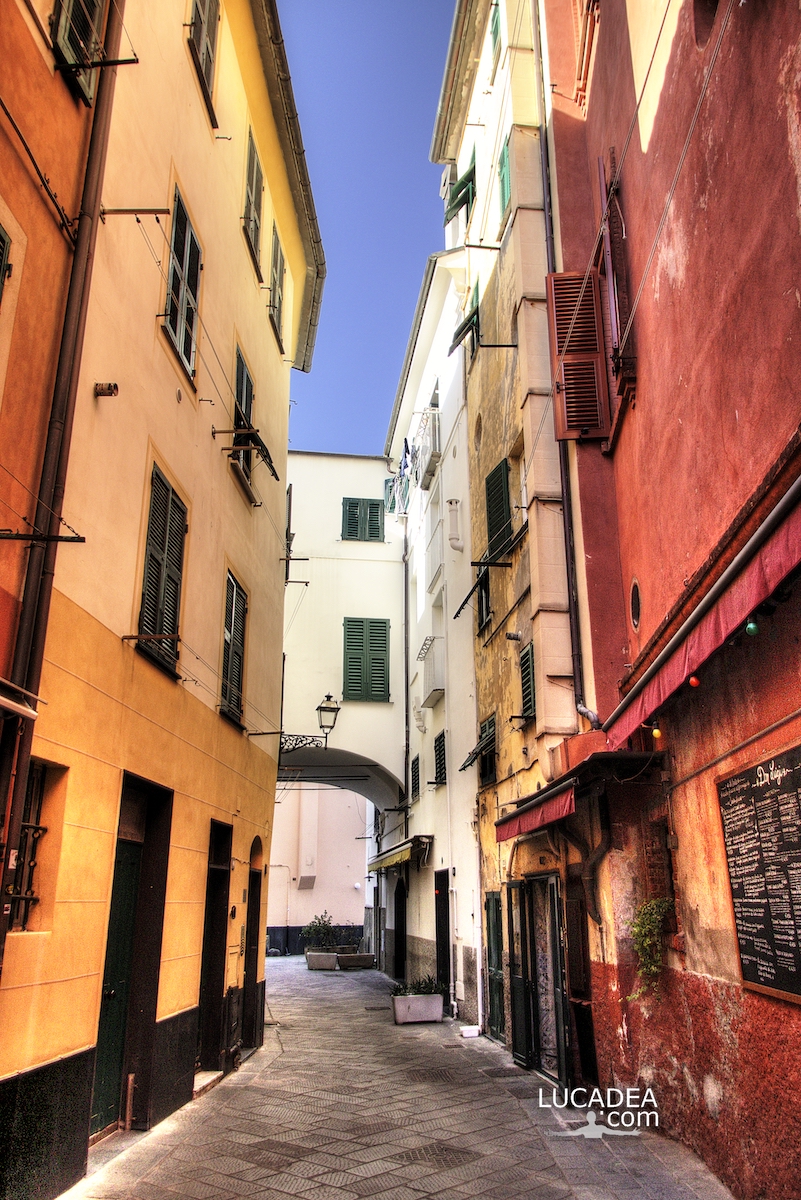
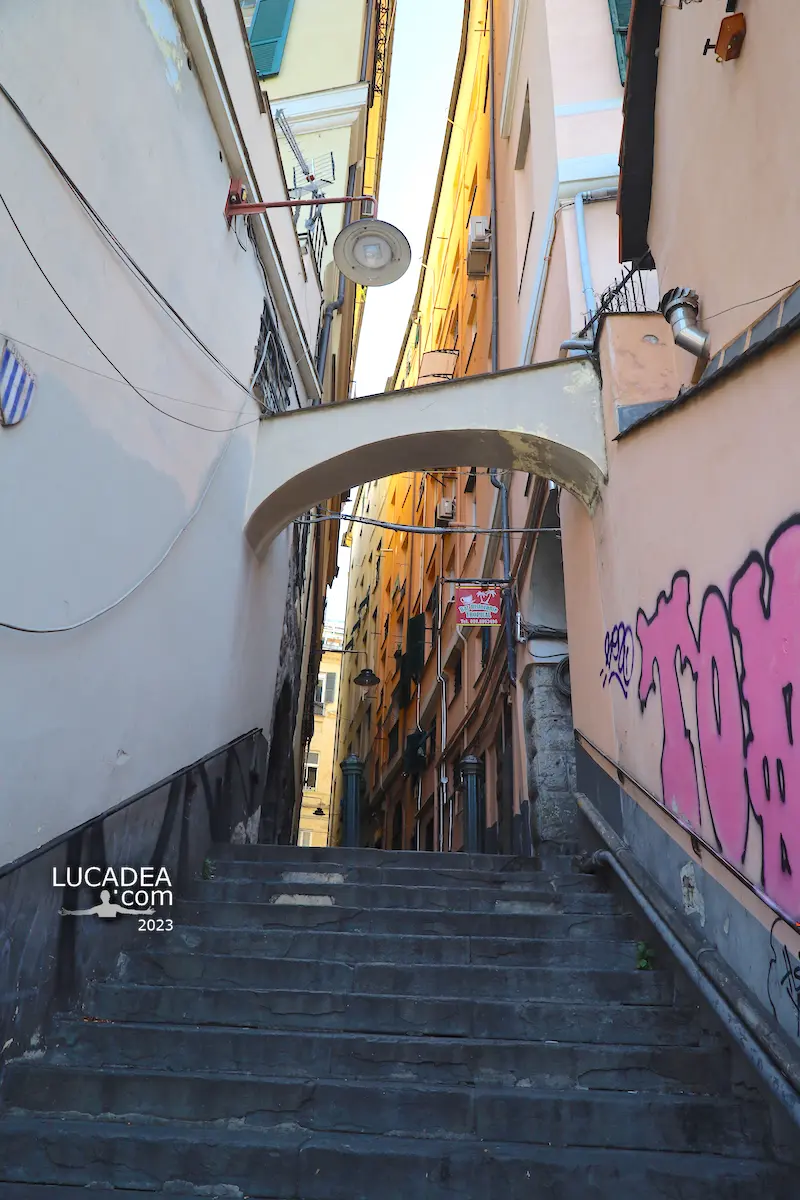
Whenever I walk through the historic center of Genoa, Liguria, Italy, I usually carry my camera because I know that sooner or later some small detail will make me stop. This time it was Campo Alley, a narrow passage connecting Sottoripa street with the well-known Campo street.
This is exactly the kind of view I enjoy photographing in Genoa. Not necessarily the most famous monument or the most recognizable panorama, but an everyday passage, an arch, a facade or a street that reveals something about the unusual structure of the old town. Here, the main subject is the supporting arch spanning the lane, becoming almost a natural frame for anyone walking underneath it.
Campo Alley is in a particularly interesting part of Genoa’s historic center, close to the old port and to the network of streets running along the waterfront. Sottoripa street is one of the city’s historic routes and provides an immediate transition into the dense maze of Genoese lanes. A few steps down one of the side streets and the atmosphere changes completely.
If you are wondering what to see in Genoa’s old town, I think these less obvious passages are worth noticing as well. The historic center is so intricate that you can spend hours walking without following a fixed itinerary. That possibility of getting slightly lost is one of the things that makes it so rewarding to photograph.
The supporting arch visible in the photograph also has a practical purpose. These arches, often found in the narrow lanes of Ligurian historic centers, connect and reinforce buildings on opposite sides of the street, helping to stabilize the structures. At the same time, they have become distinctive elements of the urban landscape and immediately give a narrow Genoese lane its characteristic appearance.
I wanted to capture this particular detail because it represents the Genoa I most enjoy photographing. It is a dense city, built within limited space, where buildings stand so close to one another that streets, arches and houses can almost seem like parts of one continuous structure.
From this lane you can reach the famous Campo street. The street became known well beyond Genoa through the work of singer-songwriter Fabrizio De André, but even before reaching it, this small passage already offers an interesting glimpse of the city. It shows how, in Genoa’s old town, turning a corner can completely change the image in front of you.
I also like the fact that this photograph does not need to show everything. There is no large square and no open panorama, only a small section of the urban fabric. For me, that is enough. When I walk through the old lanes with my camera, these are exactly the situations I am looking for.
Campo Alley belongs to the kind of Genoa that reveals itself slowly. A doorway, a sign, a window, a staircase or an arch can become the reason to stop. I have found the same feeling in other photographs I have published on the blog about the old lanes of Genoa, including the arches and passageways around Sarzano, Campo Pisano and some of the oldest parts of the city.
Its connection with Sottoripa street is also significant. From a street close to the harbor and the sea, you can move within a few meters into a narrow and enclosed lane where the perception of space is completely different. It is one of Genoa’s most distinctive contrasts: the sea is nearby, but inside the old lanes it can almost disappear from sight.
Every time I return to the city, I realize that this way of photographing Genoa never gets tiring. In fact, the more familiar I become with the city, the more I want to look for details that I may have simply walked past without noticing in the past.

When you walk through Genoa’s old town, do you also stop to look at these small architectural details? Add a comment or go to the bottom of the site to read what other visitors have written.
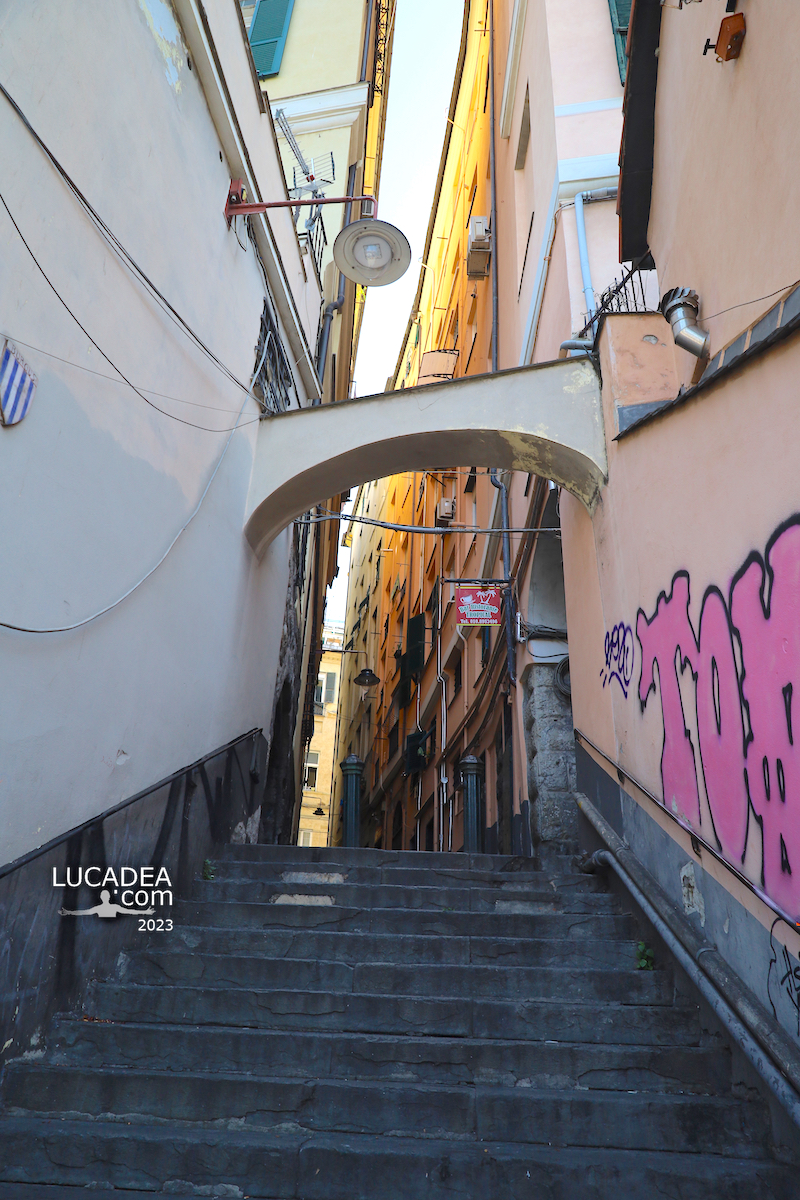
Photos taken with a Canon EOS RP camera and Canon RF 24-50 lens.

Here is exactly where I took the photo:

Add one  comment to this article or read  here what other visitors have written.
 
Adv
 
Disclamer

The rights on images, videos, choruses, text and all other material on the LUCADEA.com website are governed as per  Copyright page.

This page has been viewed 1 times today.
This month it has been viewed 1 times.
In total it has been viewed 1 times.
 

The archway of Vico Sotto le Murette in Genoa

Archivolto di Vico Sotto le Murette nel centro storico di Genova, tra Sarzano e Campo Pisano

The archway of Vico Sotto le Murette in Genoa.
While walking through the historic center of Genoa, Liguria, Italy, I often find that turning into a smaller street reveals a detail worth photographing. This time, I stopped at the archway of Vico Sotto le Murette, a passage below Campidoglio square that leads toward the nearby Campo Pisano square.
Getting lost among Genoa’s narrow caruggi is one of the things I enjoy most when walking through the old town. You can wander for a couple of hours following a completely improvised route and never seem to pass the same place twice. The streets change direction so often that even familiar areas can reveal a different view with just one turn.
This photograph came from one of those walks without a fixed itinerary. I wanted to capture the archway with my camera because I like the way it frames the narrow street continuing beyond it. It is not one of Genoa’s famous monuments, and it may not be the first place someone would look for when visiting the city, but these are exactly the small details that give the historic center much of its character.
If you are wondering what to see in Genoa’s old town, the famous palaces, churches, harbor and better-known streets will naturally come to mind. Yet part of the appeal lies in the network of smaller lanes, arches, stairways and passages connecting different parts of the city in ways that are not always immediately obvious.
Vico Sotto le Murette is in the Sarzano area, one of the oldest parts of Genoa. From here, the route can lead toward Campo Pisano, a distinctive square known for its black-and-white cobbled pavement and colorful surrounding buildings.
There is also a small historical curiosity behind the name Campo Pisano. Tradition connects it with Pisan prisoners captured by the Genoese after the Battle of Meloria in 1284, who were reportedly brought and held in this area. The name therefore recalls one of the episodes in the long medieval rivalry between Genoa and Pisa.
Beyond the history, what interests me most in this photograph is the relationship between the archway and the lane. The arch creates a kind of threshold, a point where the street changes character and naturally invites you to continue. These architectural details appear repeatedly throughout Genoa’s caruggi and can easily go unnoticed if you move through the historic center too quickly.
The Sarzano area is especially rewarding for this kind of wandering. Within a few minutes, relatively open spaces give way to narrow lanes, while monumental buildings can suddenly be replaced by houses standing directly along the street. The layout makes long, orderly views difficult, but it also means that new perspectives are constantly appearing.
When I photograph these corners of Genoa, I am not simply trying to document a location. I am interested in capturing a particular moment during the walk: the instant when an archway, staircase or small opening between buildings suddenly becomes the subject of the photograph.
This image naturally connects with other photographs I have published on the blog about Genoa’s historic lanes. In some posts I have focused on plaques and inscriptions, while in others I have simply recorded views discovered while walking. They are different photographs, but they belong to the same way of looking at Genoa, paying attention to details away from the city’s most familiar perspectives.
That is why I think wandering without a precise destination can be such a good way to photograph the old town. You do not necessarily need to search for a monument. Sometimes it is enough to follow a narrow street and see what appears around the next corner.
The archway of Vico Sotto le Murette is, in itself, a simple subject. But within the dense fabric of the caruggi, it becomes something more: a small threshold between two streets, one of the many passages that make Genoa’s historic center so rewarding to explore with a camera.

Have you ever walked through this archway on the way to Campo Pisano? Add a comment or go to the bottom of the site to read what other visitors have written.

Archway of Vico Sotto le Murette in Genoa's historic center, between Sarzano and Campo Pisano square

Photo taken with a Canon EOS M100 camera and Canon EF-M 11-22 lens.

Here is where this vaulted archway is located:

Add one  comment to this article or read  here what other visitors have written.
 
Adv
 
Disclamer

The rights on images, videos, choruses, text and all other material on the LUCADEA.com website are governed as per  Copyright page.

This page has been viewed 0 times today.
This month it has been viewed 0 times.
In total it has been viewed 0 times.
 

Naples’ Spanish Quarters from Toledo Street

Ingresso ai Quartieri Spagnoli da via Toledo a Napoli, tra vicoli stretti nel cuore della città

Naples’ Spanish Quarters from Toledo Street.
While walking along Toledo street in Naples, Campania, Italy, I noticed one of the entrances to the Spanish Quarters, the dense network of narrow streets that is such a distinctive part of the city. The contrast between the broad, busy street and the much tighter passage beyond immediately caught my attention.
I was simply exploring Naples when I stopped to take this photograph. From Toledo street, the entrance offered a glimpse into a completely different urban environment, where the buildings seem to close in around a network of lanes and passages. I did not need to see the whole neighborhood to understand that there was something worth photographing just beyond the entrance.
The Spanish Quarters are one of the most recognizable areas of Naples because of their compact layout. Narrow streets, stairways and closely packed buildings create an urban landscape that feels very different from the larger streets surrounding it. In this photograph, I captured only one of the entrances, but even this small section gives an idea of how quickly the character of the city can change.
I should be clear about one detail: I did not actually enter the Spanish Quarters on that occasion. I was passing along Toledo street and photographed one of the entrances from outside. I prefer to keep that distinction because the photograph records what I really saw, while everything beyond the entrance remained something I had not yet explored personally.
Looking at the image, I immediately thought of Genoa. The narrow streets of the Spanish Quarters reminded me of the caruggi in Genoa’s historic center, which I have photographed on several occasions. The two areas have very different histories and architectural characteristics, but there is something familiar in the way both urban landscapes invite you to look beyond the main street and discover what is hidden between the buildings.
If you are wondering what to see in Naples, the Spanish Quarters are naturally one of the areas that attract attention. Their position just behind Toledo street makes the transition particularly noticeable. One moment you are walking along a major urban road, surrounded by shops and the movement of the city; a few steps later, the scale becomes smaller and the streets begin to form a much more intricate pattern.
The name Spanish Quarters reflects their historical origins. They developed during the sixteenth century, when Naples was under Spanish rule, and were originally connected with the presence of Spanish troops in the city. Their current appearance is the result of centuries of urban development, but the basic structure still helps explain why this part of Naples feels so different from the surrounding streets.
That historical background adds another layer to the photograph, but I do not want to turn the image into a history lesson. What interested me was the physical experience suggested by the entrance: the feeling that a different part of the city begins immediately beyond the main road.
This is often what makes urban photography interesting to me. I do not necessarily need a famous monument or a panoramic view. Sometimes an entrance, a doorway or a narrow lane can be enough to suggest the character of an entire neighborhood. The photograph becomes a small fragment of a much larger place.
The position of the Spanish Quarters makes this particularly effective. Toledo street is one of the main routes through central Naples, while the narrow streets behind it create a much more enclosed environment. The contrast is visible almost immediately and gives the entrance a visual importance that might otherwise be easy to overlook.
I also like the fact that the photograph leaves part of the scene outside the frame. We can see where the entrance leads, but we cannot see the whole network of streets beyond it. For me, that sense of incompleteness is useful in a photograph because it leaves room for curiosity.
As with some of my photographs of Genoa’s caruggi, I find myself drawn to these smaller urban spaces because they reveal something about how a city has developed. Large squares and famous monuments are important, but narrow streets often provide a more intimate impression of everyday urban life.
The Spanish Quarters are also a good example of how difficult it can be to describe Naples with a single image. The city contains monumental architecture, busy commercial streets, old residential areas and narrow passages within a remarkably compact space. Moving only a short distance can completely change the visual character of the surroundings.
This photograph records one of those small transitions. I was on Toledo street, looking toward an entrance, and for a moment the rest of the neighborhood was hidden just beyond the frame. I did not know exactly what I would find if I followed the passage, and on that occasion I left the question unanswered.
Perhaps that is also why I still like the photograph. It reminds me that photographing a city does not always mean seeing everything. Sometimes it is enough to notice one detail and let it create the desire to come back.
The comparison with Genoa remains in my mind as well. Having spent time photographing the caruggi, I naturally recognized something familiar in the narrow urban structure, even though I know that the two neighborhoods are not interchangeable. The resemblance is more about the experience suggested by the streets than about their actual history.
One day I would like to return to Naples and explore the Spanish Quarters properly, camera in hand, following some of those narrow streets beyond the entrance shown here. Until then, this photograph remains a view from the edge of a neighborhood that I saw but did not yet enter.

Do you know the Spanish Quarters well, and do you also see a resemblance to Genoa’s caruggi? Add a comment or go to the bottom of the site to read what other visitors have written.

Entrance to Naples' Spanish Quarters from Toledo street, with narrow lanes between the historic buildings

Photo taken with a Canon EOS M100 camera and a Canon EF-S 10-18 lens.

Here you can find other photos I’ve taken around the city:
foto gallery

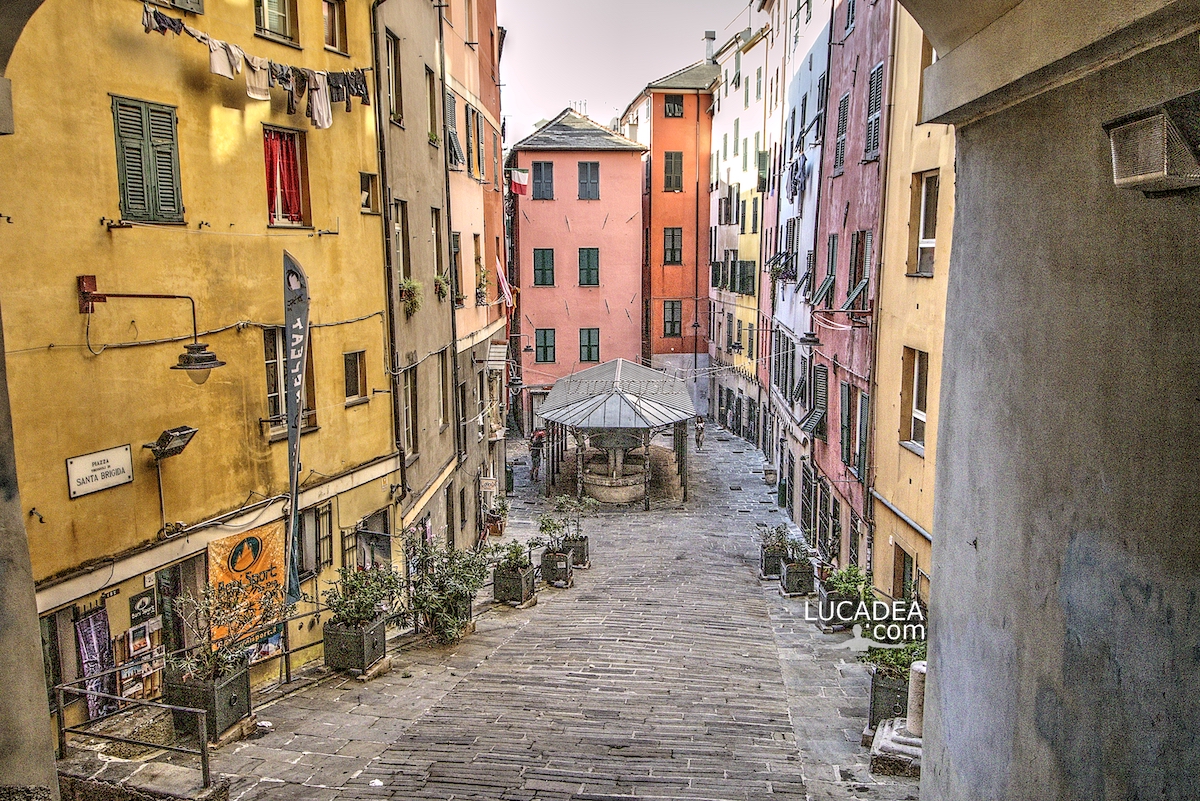
The Santa Brigida washhouses in Genoa

Truogoli di Santa Brigida a Genova, antico lavatoio pubblico circondato dalle case della caratteristica piazzetta

The Santa Brigida washhouses in Genoa.
Walking downhill from Genoa Principe station along Balbi street, it only takes a few steps to reach this small square and its old public washhouses. In Genoa, Liguria, Italy, places like this can appear almost unexpectedly between the main streets and the dense buildings of the historic centre, and that is exactly what made me stop and take this photograph.
The Santa Brigida washhouses are one of those urban details that are easy to miss if you are simply heading towards the centre of the city. Balbi street is an important route from the railway station towards the historic centre, the University and the Old Port, but a short detour reveals a much quieter and more intimate space.
What immediately caught my attention was the relationship between the old washhouse and the buildings around the square. The houses create a compact architectural setting, while the washhouse remains a very visible reminder of the everyday life that once took place here.
I took this photograph because I like finding this kind of detail while walking through Genoa. It is not one of the city’s monumental landmarks, but it has something that I find just as valuable for a personal photoblog: it shows how the city was used by ordinary people and how some traces of that past have survived.
The word “truogolo” traditionally refers to a trough or basin, and in this context it is connected with public washing facilities. Before washing clothes at home became the normal solution, public washhouses were important parts of neighbourhood life. They were practical places where people could carry out an everyday task, but they also naturally became places where neighbours met and talked.
That small piece of history is what makes the photograph more interesting to me. The structure we see today is not simply an old feature preserved in an attractive square. It is a reminder of a completely different way of living in the city.
If you are looking for things to see around Genoa Principe station, the Santa Brigida washhouses are an easy place to include in a walk towards the historic centre. They are very close to Balbi street, so visiting them does not require a major detour, and the surrounding buildings make the short walk worthwhile for anyone interested in Genoa’s older urban fabric.
The square itself is also particularly pleasant to photograph. The surrounding façades, the compact layout and the old washhouse create a scene that feels very different from the larger streets nearby. I liked the fact that there was no need to search for a single dominant subject: the whole space worked together.
This is one of the reasons I enjoy photographing Genoa. The city constantly changes scale. A main street can suddenly become a narrow passage, a steep climb or a small square hidden just behind a corner. For a photographer, those transitions can be more interesting than a perfectly planned route.
I also connected this photograph with another image I took very close by, showing Santa Brigida slope. The two locations are practically opposite each other and show different sides of the same small area. One photograph looks towards the steep route climbing towards Castelletto, while this one focuses on the washhouse and the buildings surrounding the square.
That connection is useful because it shows how much can be found within a very small part of Genoa. You do not necessarily have to walk for kilometres to discover different photographic subjects. Sometimes a few metres are enough.
The old washhouses also tell us something about the density of Genoa’s historic neighbourhoods. In a city where buildings stand close together and space has always been valuable, shared facilities had an important practical role. Their survival today gives us a glimpse of that older urban organisation.
For me, this is more interesting than simply knowing that the square is picturesque. The photograph has a story behind it, even though the story is only suggested by what remains.
I like photographing places like this because they add another layer to my photographs of Genoa. The city is full of famous buildings and views, but its character can also be found in small squares, old structures and everyday architectural details.
The Santa Brigida washhouses are a good example. They are close to one of the city’s main routes, yet once you step into the square the atmosphere changes. The old washhouse and the surrounding façades create a small scene that feels separate from the traffic and movement of the nearby streets.
That was enough to make me take out my camera.

Have you ever stopped to look at the Santa Brigida washhouses when walking down from Genoa Principe station? Add a comment or go to the bottom of the site to read what other visitors have written.

Santa Brigida washhouses in Genoa, an old public laundry surrounded by historic buildings in the small square

Photo taken with Canon EOS M100 and lens Canon EF-S 10-18.

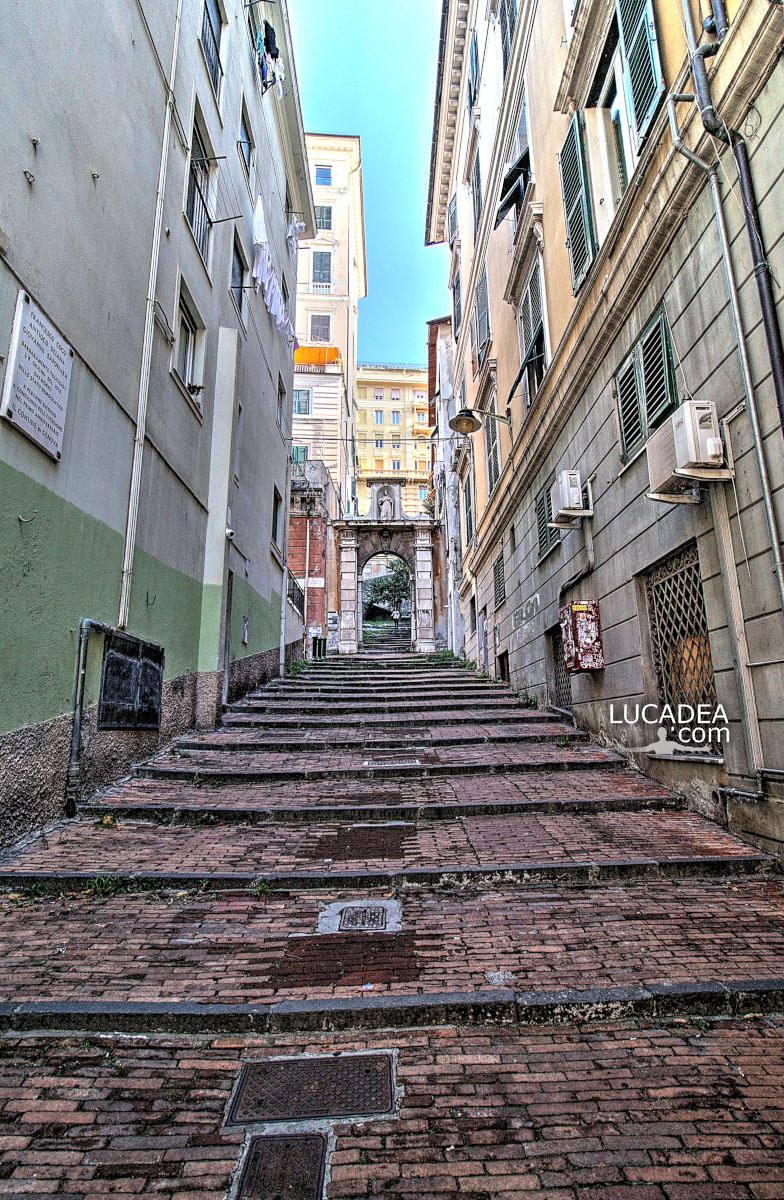
Santa Brigida slope, between Principe and Castelletto

Salita Santa Brigida a Genova, ripida strada tra via Balbi e il quartiere di Castelletto

Santa Brigida slope, between Principe and Castelletto.
Leaving Genoa Principe station, I only had to walk a short distance along Balbi street before noticing the steep entrance to Santa Brigida slope. It is one of those corners where the urban landscape of Genoa changes almost immediately, with the broad street giving way to a much narrower uphill passage.
The photograph shows this steep climb towards Castelletto, just a few steps from Balbi street. On the opposite side are the historic Santa Brigida washhouses, known as the Truogoli, while this side opens into a very different kind of urban space.
I took the photograph because I liked the sudden change in perspective. From the station, Balbi street feels like a straightforward route towards the historic centre, the University and eventually the Old Port. Then, almost without warning, a steep lane begins to climb into the hills.
This is one of the details I enjoy when walking around Genoa, Liguria, Italy. The city constantly moves between relatively level streets and steep climbs, reflecting its position between the sea and the hills. A route that looks simple on a map can quickly become a staircase, a narrow lane or a demanding uphill walk.
If you are visiting Genoa and wondering what to see around Principe station before reaching the historic centre, this area is worth paying attention to. The most obvious route is Balbi street, but looking into the side streets can reveal a completely different side of the city.
Santa Brigida slope is not the kind of place that needs a long visit. For me, its interest is photographic: the steep perspective, the surrounding buildings and the contrast with the busier street below create a scene that feels very characteristic of Genoa.
The photograph was taken simply because I noticed this particular view while walking. I was not looking for one of the city’s major monuments. Instead, I wanted to record an ordinary urban detail, the kind of place that can easily be overlooked while heading towards somewhere else.
Just across Balbi street are the Santa Brigida Truogoli, which I had already photographed for Lucadea. I like these connections between photographs because they gradually create a more personal record of the city, moving from well-known places to smaller corners nearby.
One small historical curiosity is the way Genoa’s streets preserve names and traces connected with older neighbourhoods and religious institutions. Santa Brigida is one of those names that has remained part of the urban landscape, even as the surrounding city has changed considerably.
The steepness of this street is also a reminder that Genoa cannot really be understood only by following its main roads. The city has developed in layers, with routes climbing away from the waterfront and connecting different levels of the urban fabric.
That is why I often prefer to walk rather than simply move from one destination to another. A short detour can reveal a completely different perspective, and in Genoa there always seems to be another staircase, alley or uphill street waiting around the corner.
For a photographer, this makes the city particularly rewarding. The architecture changes quickly, people move through narrow spaces, and the relationship between the street and the hills is constantly visible.
In this photograph, I was interested in precisely that transition. Santa Brigida slope begins close to one of the city’s important routes and immediately points upwards towards Castelletto. It is a small scene, but it says quite a lot about the physical character of Genoa.
I also like the fact that this photograph can be connected with the nearby Truogoli. Two very different views, only a few metres apart, become part of the same walk through the city.
There is no famous monument in the centre of this image and no spectacular panorama. Instead, it is a photograph of a street that I happened to notice and wanted to remember.
That is often what keeps me interested in photographing Genoa: the city does not need to present its best-known sights every time. Sometimes its character is much easier to find in a steep street, an old building or an unexpected view between two roads.

Have you ever followed one of Genoa’s steep side streets instead of staying on the main route? Add a comment or go to the bottom of the site to read what other visitors have written.

Santa Brigida slope in Genoa, a steep street climbing from Balbi street towards the Castelletto district

Photo taken with a Canon EOS M100 camera and a Canon EF-S 10-18 lens.

Out of curiosity, here is the link to the article about the legend of Saint Bridget’s terrible prophecy, which I found on genovatoday.it.

Vacca Gate at the start of Genoa’s alleys

Porta dei Vacca a Genova all’inizio di via del Campo, storico accesso ai caruggi del centro antico

Vacca Gate at the start of Genoa’s alleys.
When I reached Genoa’s historic centre, I found myself once again in front of one of the city’s most recognisable gateways to the narrow old-town streets, right where Campo street begins. If you are looking for what to see in Genoa’s old town, Vacca Gate is one of those places that immediately brings you into the atmosphere of the caruggi, where the wider streets give way to the dense network of historic alleys.
I was in Genoa that day with my camera and had taken many photographs that I planned to publish gradually on the blog and in my section dedicated to Zena. This was one of the images I decided to keep because it captures a simple but very characteristic moment: the entrance into the older part of the city.
Vacca Gate is more than an old gateway in the medieval walls. Its position is what makes it particularly interesting to me. Immediately beyond the arch begins Campo street, one of the best-known streets in Genoa’s historic centre. The gate therefore works almost like a threshold, marking the moment when the character of the surrounding city begins to change.
The structure belongs to Genoa’s medieval fortifications and dates back to the twelfth century. It was originally known as the Gate of Santa Fede, after the nearby church, while its current name is connected with the Vacca family. I find this kind of small historical detail useful because it gives a little more depth to something that might otherwise look simply like an old stone gateway.
Genoa, Liguria, Italy, still preserves a remarkably dense network of narrow streets in its historic centre, and it is very easy to lose your sense of direction while walking through them. That is one of the things I enjoy photographing. I am not always looking for the most famous monument; sometimes I am more interested in the point where a street narrows, changes direction or, as here, passes through an old gateway.
Vacca Gate has survived centuries of change and is now completely integrated into everyday city life. People pass through the area, traffic moves along the surrounding streets and businesses continue to operate nearby, while the medieval arch remains as a reminder of the defensive system that once surrounded Genoa.
I took this photograph because I liked that contrast. I was not trying to create an isolated architectural portrait of the gate. I wanted to show an old element of Genoa still surrounded by the life of the modern city, precisely at the point where one of its most characteristic historic streets begins.
Then there is Campo street itself. The street became famous far beyond Genoa through Fabrizio De André, who dedicated one of his best-known songs to it. That connection with music has given the street another layer of cultural memory, alongside its history and architecture.
I have already written on Lucadea.com about walking from Campo street to Fossatello square. It is a natural continuation of this photograph, because here the journey begins at the gateway and then continues deeper into the old-town streets. I like these connections between photographs because they allow individual images to become part of a larger record of walking through Genoa.
Another photograph I published in English shows the same Vacca Gate from Antonio Gramsci street. That different viewpoint makes the gate look quite different, and it is a good reminder that familiar places can change considerably depending on where the camera is standing.
This is one of the reasons I keep photographing Genoa even when I already know the area. I do not necessarily need a completely new subject. A different viewpoint, a different walk or simply a little more attention can be enough to produce another photograph.
For anyone visiting Genoa, this is also a useful point from which to understand the geography of the historic centre. From Vacca Gate, Campo street leads directly into the network of narrow streets that makes this part of the city so distinctive. You can continue walking without following a strict itinerary and simply let the streets guide you.
That freedom is part of what I like about the caruggi. The city reveals itself gradually. A doorway, an old façade, a small square or a passage beneath a building can become the subject of a photograph simply because I happened to notice it while walking.
That day I had planned to take many pictures around Genoa, but I did not know which ones would eventually become articles. Some photographs stay in my archive, while others immediately feel connected to a particular memory. This one belongs to the second group because Vacca Gate is such a clear marker of the transition into the old town.
Looking at the image again, I still like its simplicity. I was not trying to create a dramatic composition. I simply wanted to preserve a place I had encountered during my walk, at the exact point where the wider urban environment gives way to Campo street and the narrow streets beyond it.
For me, this is an important part of keeping a photographic blog. The photographs are not only about famous landmarks. They also record the places I actually walked through, the details that caught my attention and the small discoveries that gradually build my personal memory of a city.
Vacca Gate works particularly well in that sense. It is a historic monument, but it is also an entrance, a meeting point and part of an ordinary Genoese street scene. Its meaning comes from both its history and the way it continues to be used today.

Have you ever walked through Vacca Gate on your way into the caruggi of Genoa? Add a comment or go to the bottom of the site to read what other visitors have written.

Vacca Gate in Genoa at the beginning of Campo street, leading into the historic centre and its narrow alleys

Photo taken with Canon EOS M100 and lens Tamron 16-300.

Where is the Gate:

The San Giacomo archway in Genoa

Archivolto dell’oratorio di San Giacomo in via Santa Croce, tra i vicoli del centro storico di Genova

The San Giacomo archway in Genoa.
While walking through the narrow streets of Genoa’s old town, I came across another one of those small corners that can easily go unnoticed. This one is on Santa Croce street, where a narrow alley passes beneath a tall archway just behind the Walls of the Grazie.
This is exactly the kind of detail I enjoy looking for when I walk through Genoa without a strict destination in mind. The old streets constantly change direction, become narrower, climb and descend, and often hide passages that are almost invisible from the main streets. Here, the archway was enough to make me stop and take out my camera.
The photograph is centered on a simple architectural feature, but its surroundings give it a much deeper context. The archway connects the narrow passage with the historic fabric of the neighborhood, while the nearby Walls of the Grazie are a reminder of the defensive role this part of Genoa once played.
When people search for what to see in Genoa, they will probably think first of the city’s best-known palaces, churches and squares. I often find something different by looking at the smaller details. The narrow passages, stairs and archways are an essential part of the character of Genoa’s historic center, and they give the caruggi an atmosphere that is difficult to reproduce anywhere else.
The location is quite specific: this photograph was taken in Genoa, Liguria, Italy, on Santa Croce street, in an area where different layers of the city’s history can still be seen very close to one another.
The name of the archway refers to the Oratory of San Giacomo, one of the religious places that form part of the dense historic fabric of this area. One small architectural curiosity is the word “archway” itself: in Italian, archivolto refers to an arch following the curve of a vault or opening, and in historic urban areas such structures can also form covered passages between buildings.
Whenever I photograph places like this, I naturally become curious about what came before. I want to understand why a passage was built in a certain way, what it connected and how people used it in the past. I do not always find every answer, but that curiosity is part of what makes photographing old places interesting to me.
It is also one of the reasons I enjoy walking through Genoa’s narrow streets. A route I have already taken can reveal something completely different the next time. Looking up, turning into a side alley or simply choosing another direction can change the whole experience.
This small passage behind the Walls of the Grazie caught my attention precisely because it is not a monumental scene. There is no famous panorama to photograph here. Instead, there are stone walls, the tall arch, the narrow passage and the feeling of being inside a part of the city that has developed over many different periods.
If you are visiting Genoa and want to understand the old town beyond its most famous sights, these smaller architectural details are worth paying attention to. They are not necessarily destinations in themselves, but they help explain why walking through the historic center is such a rewarding photographic experience.
I have written about other narrow streets and small historic corners of Liguria on the blog, and they often remind me of the same thing: the best photograph is not always the one you planned to take. Sometimes it is simply the one you discover while walking.
That is what happened here. I was exploring the narrow streets, came across the archway on Santa Croce street and decided to stop for a photograph before continuing my walk.

What is your favorite corner among the narrow streets of Genoa’s old town? Add a comment or go to the bottom of the site to read what other visitors have written.

San Giacomo archway on Santa Croce street, among the narrow streets of Genoa's historic city center

Photo taken with a Canon EOS M100 camera and Canon EF-M 11-22 lens.

Here is where I took this photo:

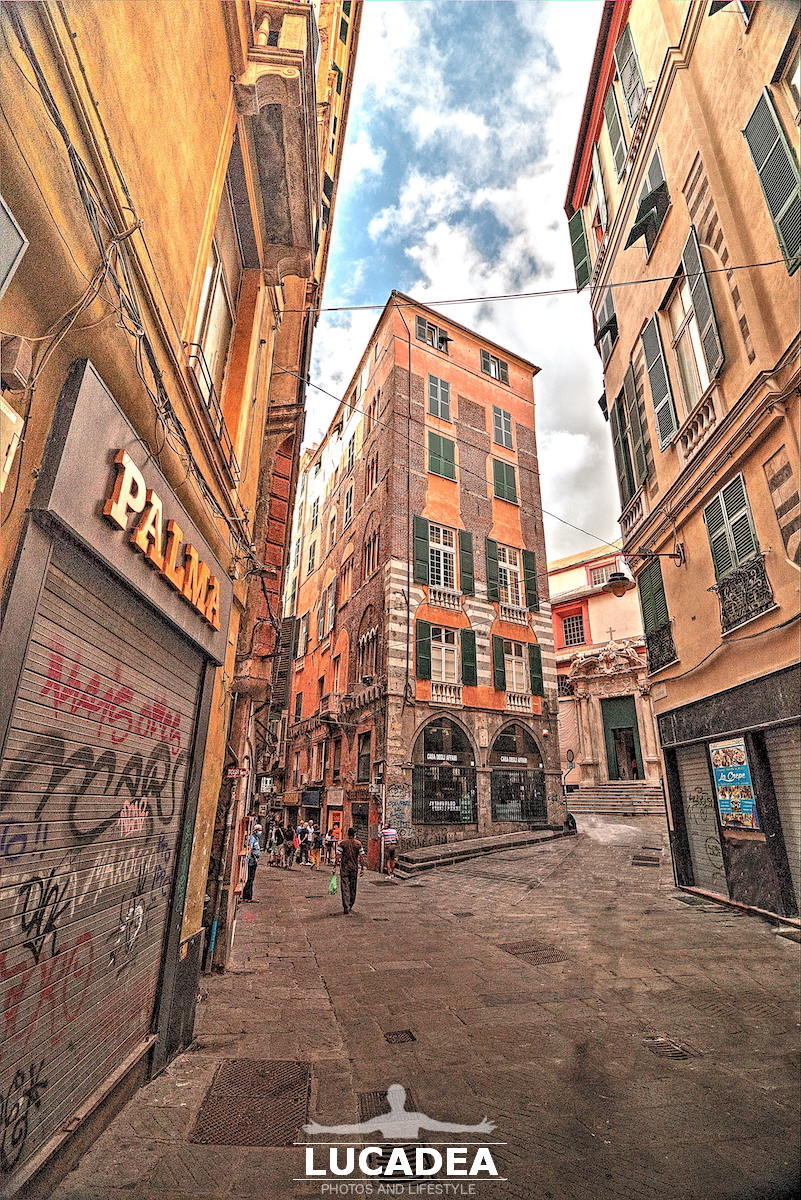
Where Genoa’s narrow streets meet

Incrocio tra via San Luca, via San Siro e via di Fossatello nei vicoli del centro storico di Genova

Where Genoa’s narrow streets meet.
Between Via San Luca, Via San Siro and Via di Fossatello, I stopped at an intersection in the historic centre that feels less like a proper square and more like a small open space created naturally by three streets coming together. It is the kind of view of Genoa I enjoy photographing because it does not need a famous monument to make the city recognizable.
I had arrived from Via San Luca, which is behind me in the photograph, while Via San Siro opens to the right and Via di Fossatello continues ahead. In the middle of this meeting point stands an attractive historic building that almost becomes the visual anchor of the entire scene. I tried to find out whether this particular space had a specific name, but I could not find one that actually identified it as a square.
Perhaps that uncertainty is part of what makes the image interesting to me. Walking through the historic centre of Genoa, not every corner has an obvious name or an entry in a guidebook. Some places simply belong to the structure of the city itself, shaped by streets, buildings and centuries of urban development rather than by the fame of a particular monument.
I took this photograph myself while walking through the narrow streets of Genoa, and it came from observation rather than from a planned search for a specific subject. There was no famous building I had set out to photograph. Instead, the spontaneous geometry of the three streets caught my attention, together with the building standing at their centre. Sometimes an ordinary intersection creates a better photographic composition than a carefully chosen landmark.
The scene is in the historic centre of Genoa, Liguria, Italy, in the part of the city where narrow streets constantly change direction and a short turn can completely alter the atmosphere around you. If you are wondering what to see in Genoa’s old town, I think these small encounters between streets are worth noticing because they show a side of the city that is easy to miss when concentrating only on its best-known attractions.
The historic centre grew over many centuries within a dense urban space, and its famous narrow streets are closely connected with that development. The network of caruggi, with buildings often standing very close to one another, creates an environment where streets, passages and small openings continually produce new perspectives. That is one reason why walking through this part of Genoa can feel so different from following a conventional city plan.
In this photograph, I particularly like the fact that no single element completely dominates the scene. Via San Luca leads away behind me, Via San Siro opens on the right, and Via di Fossatello continues forward, while the building in the middle seems to hold the whole composition together. It is a simple arrangement, but it felt worth stopping for.
The name Zena, the Genoese name for Genoa, also seems fitting to me here. I am not using it as a decorative reference to local culture, but because it reminds me of the identity that becomes more visible when you move away from the city’s most photographed views and simply walk through the caruggi.
That is why I described this as perhaps the most authentic Genoa. The city’s cathedrals, historic palaces and famous viewpoints are certainly important parts of its identity. But there is another Genoa that appears in everyday corners like this one, in narrow streets, entrances, façades and intersections that may not have a famous name but still form the character of the old city.
This photograph also connects naturally with the other images of Genoa that I have published on the blog. Even when I photograph an important church, a historic building or an architectural detail, the route often takes me through these narrow streets first. Sometimes the streets themselves become the subject, as they did here.
Looking at the photograph now, I like the idea that it captures a small fragment of Genoa that might be difficult to identify for someone who does not know the area, but immediately familiar to people who regularly walk through the historic centre. A place does not need a famous name to be memorable. Sometimes three streets meeting around an old building are enough.
This is exactly the kind of corner that makes me take out my camera even when I had not planned to photograph anything.

Which narrow street or intersection in Genoa has stayed in your memory? Add a comment or go to the bottom of the site to read what other visitors have written.

Intersection of Via San Luca, Via San Siro and Via di Fossatello in Genoa’s historic narrow streets

Photo taken with a Canon EOS M100 camera and a Canon EF-S 10-18 lens.

Here is the location where I took the shot:

The Vine House in Marina di Ponente alley

Casa delle Viti in Vico Marina di Ponente a Sestri Levante con una pianta di vite sulla facciata

The Vine House in Marina di Ponente alley.
In the historic centre of Sestri Levante there are some particularly unusual houses, recognisable for the grapevines climbing along their façades.
This is the third one I have photographed, and it is located in Vico Marina di Ponente, one of the small lanes you come across while walking through the historic centre of my town.
The other two are the Vine House on Chiusa street and the one on Bottone alley. Three different buildings, but all connected by this distinctive feature that makes them immediately recognisable.
I find these houses fascinating because they are a good example of how, in Ligurian lanes, even an element of everyday life can become an integral part of the architecture. The grapevines climb along the façades and reach towards the upper floors, creating a remarkably unusual sight.
The one in Vico Marina di Ponente is perhaps less well known than the house on Via della Chiusa, which is probably the most photographed of the three. That is precisely why I enjoy looking for the less obvious corners of Sestri Levante as well.
Vico Marina di Ponente is a small passage in the historic centre and, as often happens in Sestri’s narrow lanes, you only have to move a few metres away from the busier streets to find views that could easily go unnoticed. In this case, however, the vine covering the façade makes the house impossible to confuse with the others.
The existence of these three Vine Houses has always intrigued me. I do not know whether there are any more in Sestri Levante with similar characteristics, and that is why I would be very interested in hearing from anyone who knows of another one.
There may be another house hidden somewhere in one of the town’s lanes that I have not photographed yet.
One of the things I enjoy most about photography is precisely this: continuing to look at a place I know very well while searching for new details. Sestri Levante is my town and there are streets I have walked along hundreds of times, yet I still occasionally discover something I had never really noticed.
This Vine House has therefore become part of my small photographic journey dedicated to these unusual buildings. After photographing the one on Via della Chiusa and the one in Vico del Bottone, this was the one that was still missing.
And now the obvious question is: are there any more? If you know of another house in Sestri Levante with a grapevine climbing along its façade that I have not yet included in my collection, let me know in the comments. I am always curious to discover new corners of my town.

Have you ever noticed this Vine House while walking through Vico Marina di Ponente? Add a comment or go to the bottom of the site to read what other visitors have written.

Vine House in Vico Marina di Ponente in Sestri Levante with a grapevine climbing the façade

Vine House in Vico Marina di Ponente in Sestri Levante with a grapevine climbing the façade

Photos taken with Canon EOS M100 and lens Canon EF-M 22.

Here is where the house is located:

The character of Giuseppe Garibaldi street

Via Giuseppe Garibaldi nel centro storico di Sestri Levante con archivolto e vicoli caratteristici

The character of Giuseppe Garibaldi street.
Among the narrow lanes of the historic centre of Sestri Levante, Liguria, Italy, this small street preserves one of the views that most reminds me of the older side of my hometown. Giuseppe Garibaldi street is easy to walk through without paying much attention, but stopping for a moment reveals the archway, the old façades and the way the lane continues towards Marina di Ponente alley.
This is exactly the kind of detail I enjoy photographing when I walk around Sestri Levante. I am not always looking for the most famous panorama or another view of the Bay of Silence. Sometimes I simply enter the narrow streets and slow down enough to notice what is around me.
I took this photograph during one of those moments. I wanted to capture a section of Giuseppe Garibaldi street that represents the atmosphere of Sestri Levante’s historic centre. The lane is narrow and enclosed, with buildings that seem to almost meet above your head, creating the familiar character of many old Ligurian streets.
The element that first caught my attention was the archway. Structures like these are common in historic Ligurian centres and help create a sense of continuity between one street and another. For photography, they can also provide naturally framed views without needing anything elaborate.
Giuseppe Garibaldi street continues towards Marina di Ponente alley and belongs to the part of the historic centre that sits very close to the waterfront promenade. This location reveals another interesting detail about the street: the back rooms of several restaurants and pizzerias open onto it, while their main entrances face the seafront.
Over the years, some of these secondary spaces have become places where restaurants can add tables and welcome customers. The atmosphere is quite different from sitting along the busier waterfront. There is something more private and almost home-like about eating in a small historic lane surrounded by old façades.
If you are wondering what to see in Sestri Levante beyond its famous bays, these narrow streets are worth noticing as well. The historic centre is not only about sea views. It is also made of archways, doorways, small passages and businesses that continue to give everyday life to the older part of town.
What I find interesting is how easily these details can be overlooked. When walking through Sestri Levante, it is natural to think about where you are going next, especially when the sea is only a short distance away. I often find myself doing the opposite: slowing down when a perspective looks interesting through the camera.
The connection with the sea is still present here even when the water cannot be seen in the photograph. Knowing that the waterfront is just beyond these lanes helps explain the way the historic centre and the more active seafront area fit together.
One small architectural curiosity is the widespread presence of archways and covered passages in old Ligurian settlements. They helped make efficient use of limited urban space and became part of the everyday structure of historic neighbourhoods. In Sestri Levante, they remain a natural part of the streetscape and often create some of the most interesting photographic perspectives.
What I particularly like about Giuseppe Garibaldi street is its ordinary character. There is no need for every photograph to celebrate a famous monument. An everyday street can tell us just as much about a place when we take the time to look at it carefully.
Here, the restaurants also show that the lane is not simply a preserved fragment of the past. It remains a working part of the town, with businesses and people using the old spaces in contemporary ways.
That combination is what makes the photograph interesting to me. The façades and archway provide the historic character, while the restaurants and tables reveal that the street is still part of everyday life in Sestri Levante.
I have already photographed and written about several corners of Sestri Levante, and like those other views of the historic centre, this image adds another small piece to the collection. It is quite different from photographs of the bays, but it belongs to the same town and to the same personal experience of photographing it.
There is also something rewarding about photographing a place I know well. After returning to the same streets many times, I still find details that make me stop and take out the camera. Sometimes a familiar street only needs a different point of view to become interesting again.

When walking through the historic centre of Sestri Levante, do you tend to notice the narrow streets and archways, or are you usually drawn straight towards the sea? Add a comment or go to the bottom of the site to read what other visitors have written.

Giuseppe Garibaldi street in historic Sestri Levante with a traditional archway and narrow old-town lanes

Photo taken with Canon EOS M100 and lens Tamron 16-300.

Here’s where the street is:

🏠
  • Italiano