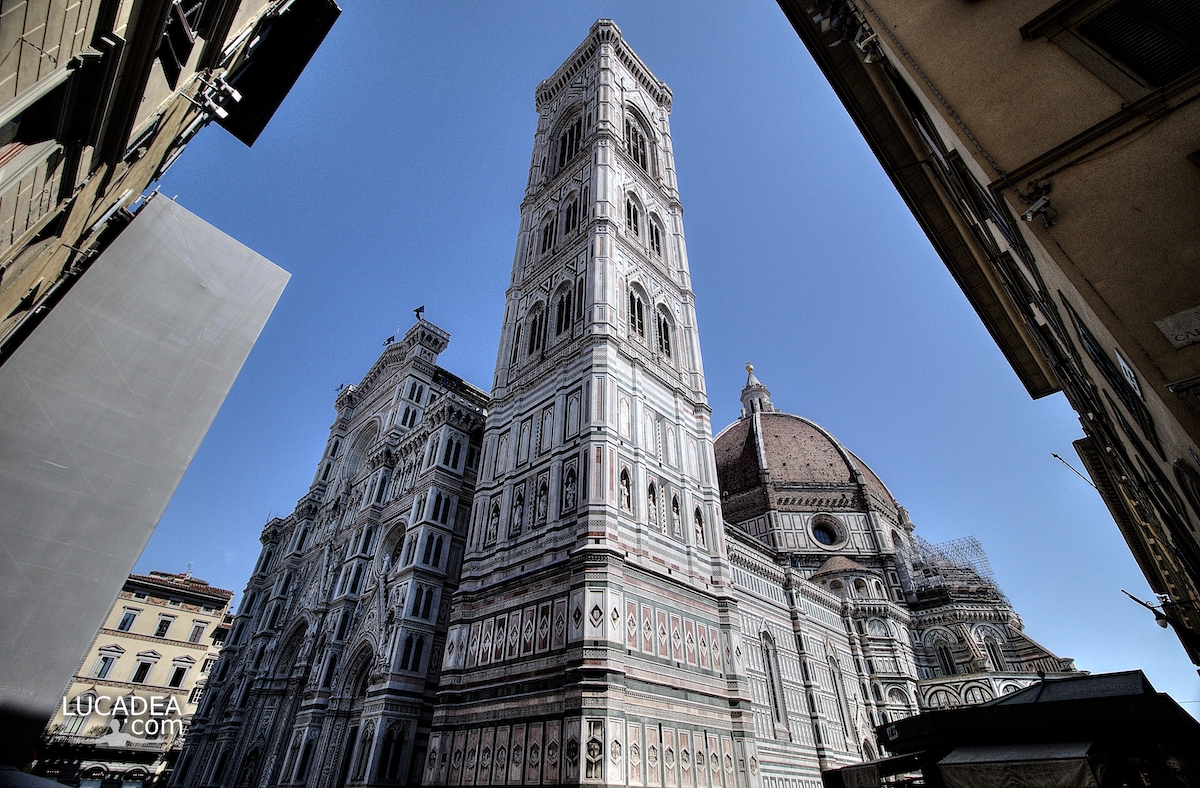
The Main Altar of Fiesole Cathedral.
Inside the Cathedral of San Romolo, in the hills above Florence, I was immediately struck by the contrast between the rather austere interior and the richer presence of the main altar and the frescoed apse. This is the detail I wanted to capture with my camera.
Fiesole is only a few kilometres from Florence, but climbing into the hills quickly creates a different feeling. In this ancient Tuscan town I found a quieter dimension than the better-known centre of Florence, and the cathedral is one of the most important landmarks of the village.
The photograph shows one of the most visually significant parts of the church: the main altar in front of the apse, with its decorations and frescoes drawing the eye towards the end of the nave. The interior of San Romolo Cathedral is quite restrained, almost austere in places, and this makes the decorative elements around the altar stand out even more.
If you are wondering what to see in Fiesole, the cathedral is certainly one of the places I would include. Not only because of its religious importance, but also because it offers a glimpse into the history of a town that can easily be overshadowed by the much more famous Florence nearby.
Looking at this image, what I like most is the way the architecture guides the eye towards the apse. The altar becomes the visual centre of the composition, while the surrounding structure seems to frame it naturally. When I took the photograph, I wanted to preserve this relationship rather than isolate a single decorative detail.
The Cathedral of San Romolo has very ancient origins and has undergone several alterations and transformations over the centuries. One small curiosity is that its present appearance contains elements from different periods, reflecting the changes the building experienced throughout its long history. Looking carefully at the architecture, it is possible to sense that several generations have contributed to the appearance of the church we see today.
Fiesole, in Tuscany, within the Metropolitan City of Florence, is often considered mainly in relation to the nearby capital of the region. Yet the town has a strong historical identity of its own and preserves evidence of a past that developed alongside, and in some respects before, the better-known history of Florence.
That is one of the things I enjoy when photographing places that are close to famous destinations but have a character of their own. A visit to Fiesole can take you away from the usual Florence itinerary for a while, without actually taking you far from the city. The landscape, architecture and atmosphere change surprisingly quickly as you climb into the hills.
The interior of the cathedral stayed with me precisely because of its simplicity. It is not a church that tries to overwhelm the visitor with decoration at every turn, and perhaps that is why the main altar and the frescoed apse have such a strong visual presence. My attention was drawn to this particular view, and I preferred to preserve that impression in a photograph rather than turn the post into a detailed description of the entire building.
As with other photographs of churches and cathedrals I have shared on the blog, this image comes from the same personal approach: looking for the detail or viewpoint that stays with me after a visit. I have previously written about other religious interiors encountered during my travels, and this photograph from Fiesole naturally continues that thread.
Looking back at the image, I still like the balance between the severe character of the architecture and the richer decoration concentrated around the altar. It is probably something that becomes even clearer when standing inside the cathedral, with the nave leading the eye naturally towards the apse.
If you know Florence already, have you ever climbed up to Fiesole to discover this quieter side of Tuscan history and art? Add a comment or go to the bottom of the site to read what other visitors have written.

Photo taken with a Canon EOS M100 camera and Canon EF-M 11-22 lens.
To see all the photos taken in the Cathedral, click here:

Here is where the cathedral is located:
The rights on images, videos, choruses, text and all other material on the LUCADEA.com website are governed as per Copyright page.