
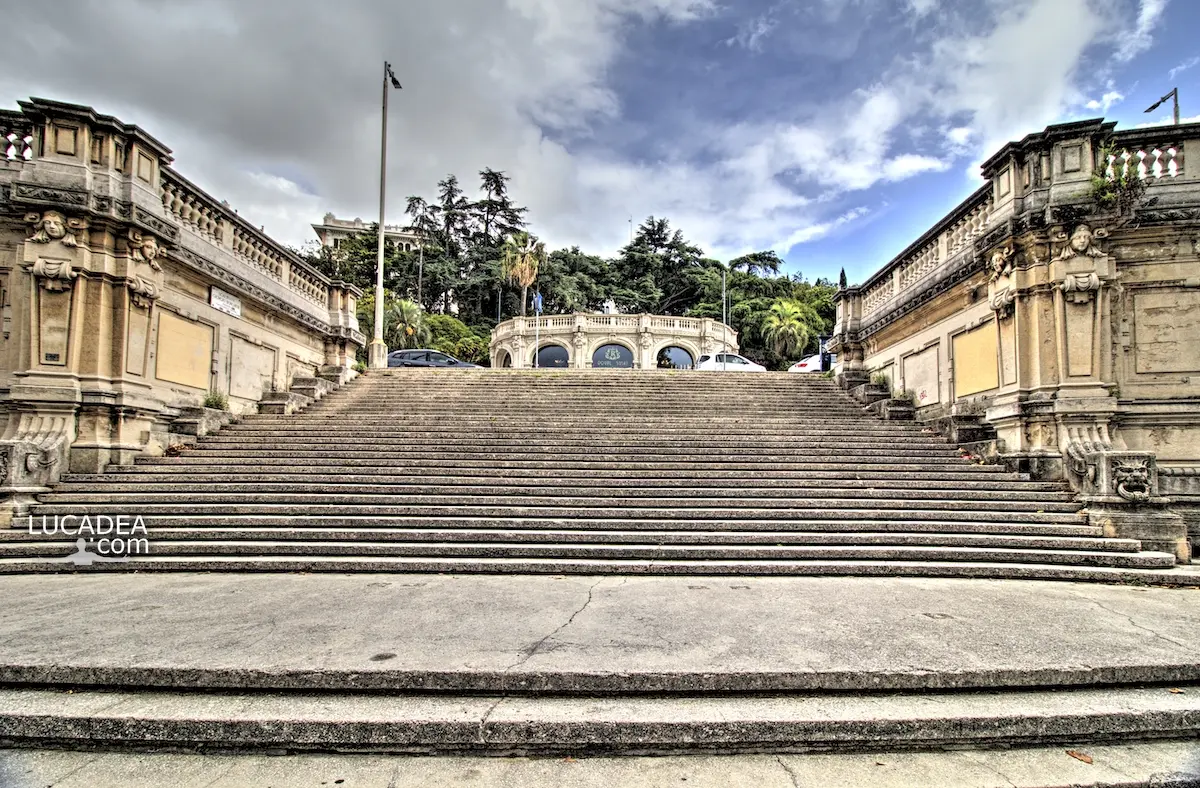
The Giorgio Borghese Staircase in Genoa

La Scalinata Giorgio Borghese a Genova

The Giorgio Borghese Staircase in Genoa.
In the Foce district, climbing towards the hillside neighbourhood of Albaro, you come across one of the city’s most impressive stairways. This monumental passage connects two parts of Genoa and deserves a closer look, not only for its architecture but also for the story of the man whose name it bears.
The staircase is located beside Niccolò Tommaseo Square and leads uphill towards the upper part of Francesco Pozzo Street. Its design features flights of steps, terraces, decorative details and elegant Art Nouveau elements. The result is an unusual architectural setting that stands out from the surrounding streets. As you climb, you can also enjoy views over the square and the nearby neighbourhoods, where the urban landscape of Foce meets the first slopes of Albaro.
The Borghese Staircase was inaugurated in 1910. The original project was much more ambitious than the structure we see today. It was intended to form part of a large cultural complex, with museums, art exhibitions and other civic institutions. Financial difficulties and budget cuts meant that the plan had to be scaled down, leaving the striking staircase and its Art Nouveau building as its most visible features. During the twentieth century, the premises were used for various purposes, including municipal offices and other services, before falling into a prolonged period of neglect. Following a major restoration project, the complex was officially returned to the city in 2020.
But who was Giorgio Borghese, the man commemorated by the staircase? His name might suggest a local Genoese figure, but his story takes us much further afield, across the Atlantic to South America. Giorgio Borghese was born in Rapallo in 1691 and moved with his family to Montevideo in 1724, when the settlement was still taking shape on the northern bank of the Río de la Plata.
Borghese became an important figure in the early administration of the growing city. He held several public offices, including that of alcalde, a position broadly comparable to a mayor, and took part in the civic life of the settlement during its first decades. He is remembered among Montevideo’s earliest permanent civilian residents and as one of the people who helped organise the young community.
I find this connection particularly interesting: a staircase in the heart of Genoa commemorates a man from Liguria who crossed the ocean and played a part in the development of what would become Uruguay’s capital. It is a small but fascinating link between Liguria and South America, shaped by migration, ambition and the history of the Italian presence overseas.

Have you ever noticed this staircase in Genoa? Did you know the story of Giorgio Borghese and his connection with Montevideo? Add a comment or go to the bottom of the site to read what other visitors have written.
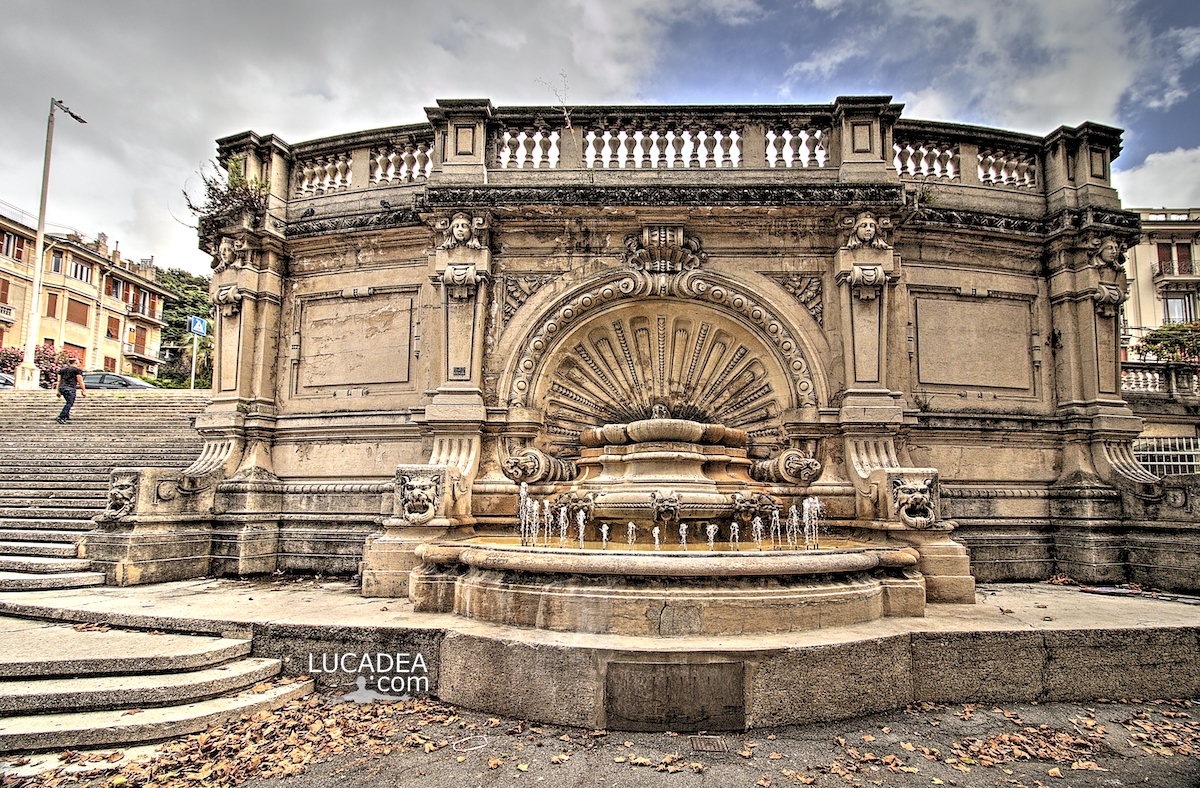
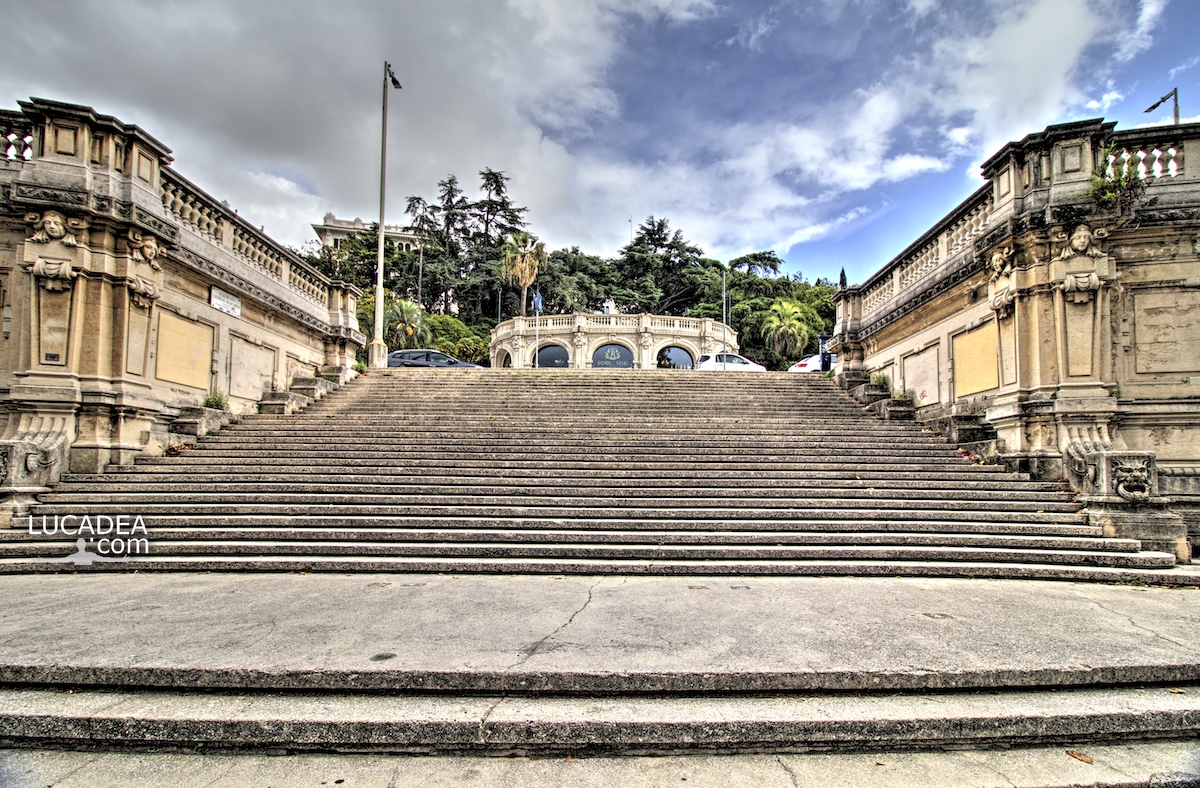
The monumental Giorgio Borghese Staircase in Genoa, connecting Tommaseo Square with the hillside district of Albaro

The monumental Giorgio Borghese Staircase in Genoa, connecting Tommaseo Square with the hillside district of Albaro

Photos taken with Canon EOS M100 camera and Canon EF-S 10-18 lens.

Add one  comment to this article or read  here what other visitors have written.
 
Adv
 
Disclamer

The rights on images, videos, choruses, text and all other material on the LUCADEA.com website are governed as per  Copyright page.


This page has been viewed 0 times today.
This month it has been viewed 0 times.
In total it has been viewed 0 times.
 

The Tree-Lined Corso Torino in Genoa

Gli alberi di Corso Torino all'altezza di piazza Savonarola a Genova.

The Tree-Lined Corso Torino in Genoa.
Walking near Piazza Savonarola, in the Foce district, I found myself following the long row of trees lining Corso Torino. This tree-lined avenue is one of those urban views I enjoy observing during my photographic walks around Genoa. I particularly like the way the greenery blends into the surrounding architecture, adding a distinctive character to an otherwise everyday city street.
Corso Torino runs through one of the best-known areas of eastern Genoa. This is the Foce district, in Genoa, Liguria, Italy, an urban neighbourhood characterised by relatively wide streets, residential buildings and spaces shaped around everyday city life. The atmosphere here is quite different from the narrow lanes of the historic centre. Instead of the dense network of alleys and old buildings, the streets open up, offering longer perspectives in which trees and buildings share the same urban landscape.
I enjoy photographing places like this during my walks around the city, even when there is no famous monument or particularly remarkable building to capture. Sometimes the most ordinary details provide the most interesting photographic opportunities. In this case, I wanted to focus on the sequence of trees along Corso Torino. Their presence creates a visual rhythm along the avenue and makes this stretch of Genoa recognisable in its own way.
The area around Piazza Savonarola is an interesting place to observe this part of the city. The square forms part of the urban fabric of Foce, a neighbourhood where residential architecture, everyday businesses and greenery coexist. It is not a natural landscape, of course, but an urban environment in which trees play an important role. They soften the appearance of the street and help make the surrounding buildings feel less imposing.
There are also two small details in this photograph that deserve a closer look: the green newsstands along the avenue. They are modest structures, easy to overlook when walking past without paying attention, but they add a familiar touch to this part of Corso Torino. What caught my eye was the fact that they are still there, surviving the changes that have gradually transformed the city and the way people use its streets.
Traditional newsstands once played an important role in Italian neighbourhood life. They were places where people stopped to buy newspapers, magazines and other publications, often becoming familiar meeting points for residents. Their number and function have changed over time, partly because of the shift towards digital news and online reading. Those that remain are still a visible reminder of an older form of everyday street commerce.
I took this photograph myself during one of my walks through Genoa. I was not looking for a particular landmark or a famous architectural feature. I simply wanted to capture a familiar urban scene, paying attention to the relationship between the trees, the buildings and the small structures along the pavement. This is one of the aspects I appreciate most about urban photography: it encourages me to look more carefully at places that might otherwise become part of the background of everyday life.
If you are exploring Genoa and wondering what to see beyond the historic centre, the Foce district offers a different perspective on the city. Walking along Corso Torino, especially around Piazza Savonarola, gives you an opportunity to observe a more residential and everyday side of Genoa. It may not be one of the city’s most famous attractions, but it is precisely this ordinary character that makes the area interesting to photograph.
On Lucadea.com, I have also shared other photographs of Genoa, featuring historic streets, squares and less familiar corners of the city. Together, these images create a personal collection of urban impressions, showing that Genoa is not only about its best-known monuments and picturesque old town. Its identity can also be found in the avenues, neighbourhoods and small details encountered during an ordinary walk.

When you explore a city, do you prefer its tree-lined avenues and open streets, or do you find yourself more attracted to the narrow alleys of the historic centre? Add a comment or go to the bottom of the site to read what other visitors have written.

Tree-lined Corso Torino in Genoa, with two green newsstands near Piazza Savonarola in the Foce district

Photo taken with Canon EOS M100 camera and Canon EF-S 10-18 lens.

Here’s the exact spot where I took the photo:

Add one  comment to this article or read  here what other visitors have written.
 
Adv
 
Disclamer

The rights on images, videos, choruses, text and all other material on the LUCADEA.com website are governed as per  Copyright page.


This page has been viewed 1 times today.
This month it has been viewed 1 times.
In total it has been viewed 1 times.
 
🏠
  • Italiano