Dreamlike Waters: Monterosso al Mare in the Cinque Terre

Monterosso vista dal... da dentro il mare

Dreamlike Waters: Monterosso al Mare in the Cinque Terre.
Even though the swimming season is now over, looking at these two photographs takes me straight back into the water off the coast of Monterosso al Mare. I took them more than a year ago during a visit to one of the five villages of the Cinque Terre, along the Ligurian coast in north-western Italy. They recently came back to my attention, just as I was thinking about the last swims of the season.
What makes these pictures different is the viewpoint. I took them with my GoPro camera positioned directly in the sea. This is not the usual view of a beach from the shore or a landscape photographed from a scenic viewpoint. Instead, the camera is already in the water, giving us a perspective that feels much closer to the experience of swimming there.
And what beautiful water! The first thing I notice when looking at these images is the colour and clarity of the sea. The different shades of blue make the scene particularly appealing. From this position, the coastline becomes part of the background and the water itself takes centre stage. It is a simple change of perspective, but it gives the photographs a completely different character.
I enjoy experimenting with this kind of viewpoint when travelling. A photograph does not always have to show a famous landmark or a wide panoramic view to capture the feeling of a place. Sometimes getting closer to the subject, or even placing the camera in the middle of it, can produce a much more personal image. With a GoPro, it is possible to record a moment from the water and preserve a little of the sensation of actually being there.
Monterosso al Mare is the westernmost village of the Cinque Terre, in the Province of La Spezia, Liguria. It is particularly well known for its beach and its beautiful coastal setting. This stretch of the Italian Riviera is full of distinctive landscapes, where villages, rocky headlands and small bays meet the Mediterranean Sea.
These two photographs remind me of the pleasure of spending time in the water, without having to think about anything else. There is something special about swimming in a place like this, looking towards the coast and enjoying the colours and movement of the sea. The images bring back that feeling much more vividly than an ordinary view of the beach might do.
The swimming season may have ended, although it had not been all that many weeks since my last dip when I came across these pictures again. Looking at them was a lovely way to hold on to a little of the summer atmosphere and remember just how beautiful the sea around the Cinque Terre can be.

Which of the two photographs do you prefer? Do you like this unusual viewpoint, with the camera placed directly in the water? Add a comment or go to the bottom of the site to read what other visitors have written.

Two GoPro photographs of the clear blue sea at Monterosso al Mare in the Cinque Terre, taken from directly inside the water

Two GoPro photographs of the clear blue sea at Monterosso al Mare in the Cinque Terre, taken from directly inside the water

Photos taken with Gopro Hero5.

Add one  comment to this article or read  here what other visitors have written.
 
Adv
 
Disclamer

The rights on images, videos, choruses, text and all other material on the LUCADEA.com website are governed as per  Copyright page.


This page has been viewed 2 times today.
This month it has been viewed 3 times.
In total it has been viewed 3 times.
 

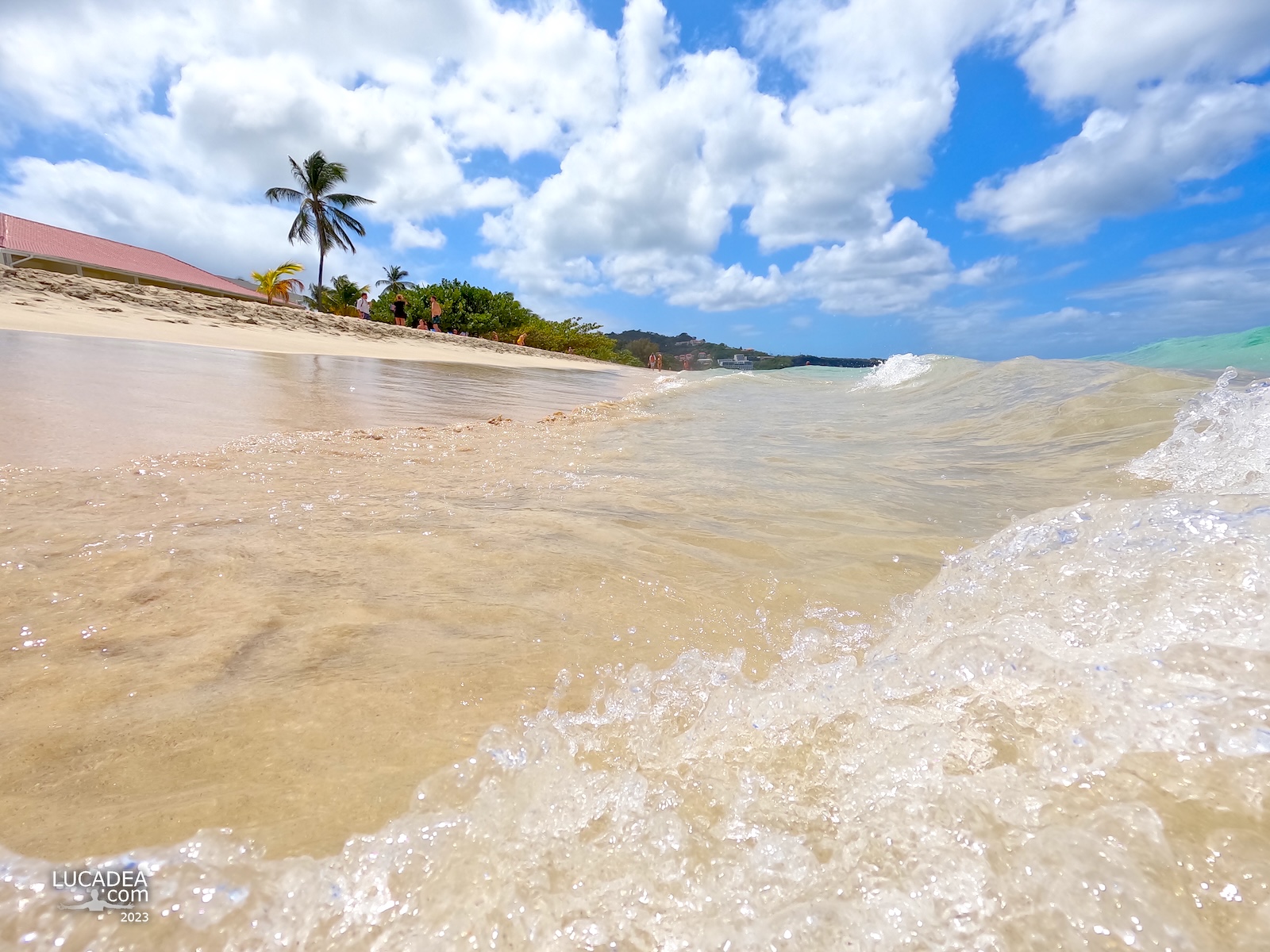
Grand Anse waves from right in the water

Onde che si infrangono sulla spiaggia di Grand Anse viste da vicino con prospettiva bassa sull’acqua e spruzzi in primo piano

Grand Anse waves from right in the water.
On the island of Grenada in the Caribbean, I was practically standing in the sea when I took this photograph, with my GoPro just skimming the surface as the waves came towards me. It is a completely different viewpoint from watching the water from the shore because the camera is almost inside the movement itself.
I deliberately kept the camera very low, almost at the same level as the waves. I wanted to photograph Grand Anse not simply as a beach seen from a distance, but as a place to physically enter, even if only for the few moments needed to capture the image.
What I remember most clearly is the feeling of being part of the movement. When you are this close to the surface, an approaching wave no longer looks the same as it does from the beach. You see it coming, changing shape, rising and then breaking almost directly in front of the lens. Every small movement completely changes the scene.
The sound of the water was also much more intense from that position. The splashes suddenly became part of the subject, and a slightly larger wave was enough to leave me completely wet. Taking photographs under those conditions also requires a certain amount of attention because there is not always time to wait for the perfect composition.
In fact, I was not thinking too much about composition at that moment. I was mainly trying to follow the rhythm of the sea and press the shutter whenever the shape of a wave seemed particularly interesting. It is a fairly instinctive way of photographing, where you have to accept that the water will partly determine the final result.
If you are wondering what to see in Grenada, Grand Anse is naturally one of the places most closely associated with the island. For me, however, this photograph tells a different story from the usual Caribbean beach image. I was not interested in simply showing the sand and the panorama. I wanted to get close enough to make the wave itself the main subject.
Grand Anse is on the island of Grenada, in the Caribbean country of Grenada, and is one of the island’s best-known beaches. Its long stretch of pale sand and the sea in front of it create a very recognisable landscape, but getting close to the water reveals much less obvious details.
One small curiosity is that the name Grand Anse, which appears in several parts of the Caribbean, refers to the idea of a large bay or large beach. In Grenada, the name suits the long curve of the shoreline particularly well, creating very different views depending on where you stand.
What interested me, though, was not the beach as a whole but the surface of the water itself. From close up, the waves become almost temporary pieces of architecture: transparent crests, broken reflections, splashes and shapes that exist for only a few seconds before disappearing.
That is one of the things I enjoy most about photographing the sea. A seemingly simple landscape is constantly changing, and it is impossible to capture exactly the same wave twice. Even if you remain in exactly the same position, a few seconds are enough to create a completely different scene.
On this occasion, the GoPro allowed me to search for precisely that close perspective that would be difficult to achieve while staying completely dry on the beach. Keeping a camera so close to the water means accepting a certain amount of unpredictability, but it also produces images that can better convey the feeling of actually being inside the scene.
Looking back at the photographs, I realised that I was not simply trying to freeze a wave. What I wanted to preserve was the feeling of being there, with the water practically in front of the camera and the movement of the sea constantly deciding what would enter the frame.
It is a perspective that changes the way you look at Grand Anse. From a distance, the beach is a large landscape. From close up, it becomes a sequence of small events, each one different from the previous one. That difference is exactly what I like remembering through photography.
In other stories on my photo blog I have also photographed places from unusual perspectives, trying to move beyond the classic panoramic view. Here, instead of moving away from the subject, I chose to get as close to it as possible.
In the end, I think that is why I like this photograph. For a few moments, the sea was no longer something I was simply watching. I was inside its movement, with the camera only a few centimetres above the surface.

Would you have dared to take your camera this close to the waves? Add a comment or go to the bottom of the site to read what other visitors have written.

Photos taken with Gopro Hero 10 black.

Add one  comment to this article or read  here what other visitors have written.
 
Adv
 
Disclamer

The rights on images, videos, choruses, text and all other material on the LUCADEA.com website are governed as per  Copyright page.

This page has been viewed 1 times today.
This month it has been viewed 2 times.
In total it has been viewed 7 times.
 

Carlisle Bay in Barbados: a Caribbean dream beach

Carlisle Bay a Barbados con spiaggia caraibica, mare cristallino e il paesaggio di una delle baie più belle dell'isola

Carlisle Bay in Barbados: a Caribbean dream beach.
Among the most beautiful Caribbean beaches I have seen during my travels, Carlisle Bay in Barbados is one of those places I wanted to capture with my camera to preserve its colors and the feeling of being there.
When I reached the coast near Bridgetown, the first thing that caught my attention was the combination of clear water, light sand and the wide open view of the bay. When people search for the best beaches in Barbados or places worth seeing on the island, Carlisle Bay is often one of the landscapes that immediately represents the Caribbean atmosphere.
This photograph comes from my desire to keep a personal memory of that journey. I was not only looking for a picture of a tropical beach, but for an image capable of bringing back the sensation of that moment: the sea, the horizon and the peaceful rhythm of the coastline.
Carlisle Bay is located close to Bridgetown, in Saint Michael parish, Barbados, an island belonging to the Lesser Antilles in the Caribbean Sea. Its location makes it a popular stop for many visitors, including travelers arriving by cruise ship who want to experience one of the island’s most recognizable coastal areas.
One interesting curiosity about Carlisle Bay is the presence of several shipwrecks beneath its waters. These underwater remains attract snorkeling enthusiasts because they can be explored without needing to go far from the beach, adding another reason why the bay is appreciated by visitors.
For this photograph I also used the HDR function of my GoPro, which enhances colors and contrasts, especially in landscapes with water and sky. This type of setting can make the blue tones stronger, but the real appearance of Carlisle Bay was already very close to what you can see in this image.
My photographic archive contains many memories collected during trips by sea and visits to distant places, just like the other Caribbean destinations and travel experiences I have shared on my website. Each image represents a personal moment, connected not only to the location but also to the reason why I decided to press the shutter button.
If you are visiting Barbados and looking for a beautiful Caribbean beach, Carlisle Bay is a place worth seeing for its clear waters, relaxing atmosphere and unique coastal landscape.

Would you like to visit Carlisle Bay, or have you already experienced the beaches of Barbados? Add a comment or go to the bottom of the site to read what other visitors have written.

Carlisle Bay in Barbados with a Caribbean beach, clear sea and the beautiful coastal landscape of the famous bay

Carlisle Bay in Barbados with a Caribbean beach, clear sea and the beautiful coastal landscape of the famous bay

Carlisle Bay in Barbados with a Caribbean beach, clear sea and the beautiful coastal landscape of the famous bay

Carlisle Bay in Barbados with a Caribbean beach, clear sea and the beautiful coastal landscape of the famous bay

Photos taken with the GoPro Hero 10 Black.

Here are also a couple of videos recorded at this beautiful beach:

Videos recorded with Gopro Hero 10 Black.

Here is where the bay is located:

Barbados is composed primarily of limestone. It is a tropical island, constantly swept by equatorial winds. Parts of the island’s interior are covered by large sugarcane plantations. Barbados is one of the Lesser Antilles; it lies east of the main island chain, and the nearest nations are Saint Lucia and Saint Vincent and the Grenadines.
Read more on Wikipedia

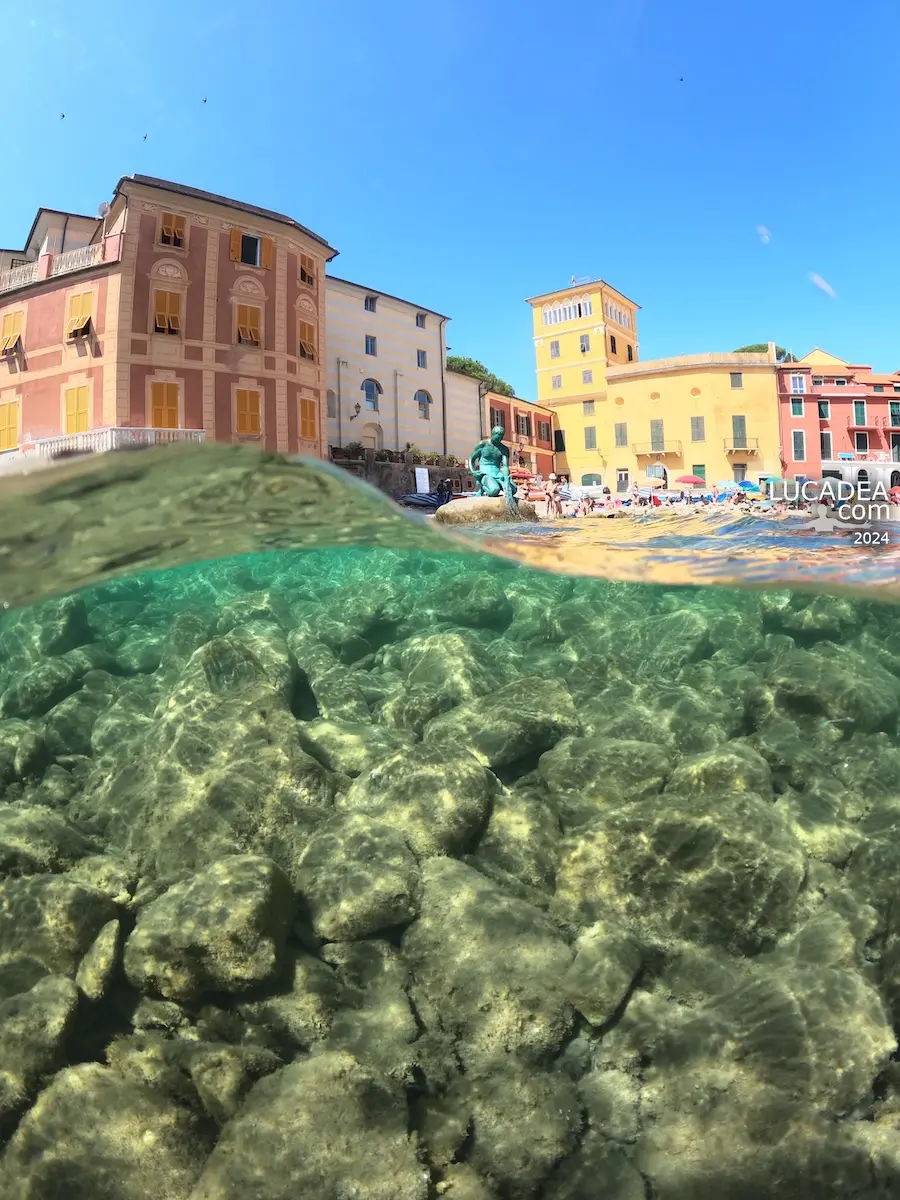
The Fisherman Statue in the Bay of Silence

Il Pescatore in Baia del Silenzio da sotto il mare

The Fisherman Statue in the Bay of Silence.
Some places I know well still manage to offer me a completely new perspective. The Bay of Silence, in Sestri Levante, Liguria, is one of them. It is one of the most charming spots on the Italian Riviera, known for its waters, colourful houses overlooking the beach and peaceful atmosphere that encourages visitors to slow down and appreciate the scenery.
I took this photograph last year while experimenting with a different point of view. To capture it, I used my GoPro together with a Dome, an accessory that makes it possible to create unusual images from the water’s surface, showing elements above and below the sea in a single frame. I enjoy trying this technique because it allows me to see familiar places from an unexpected angle and turn a well-known landscape into something visually different from a traditional view of the bay.
The subject of the photograph is the fisherman statue in the Bay of Silence. Capturing it from water level creates an interesting effect: the sculpture seems to rise from the sea, while the water becomes an essential part of the composition. The figure is not a real fisherman at work, but a statue that offers an intriguing subject for photography, especially when viewed from a less conventional angle.
The Bay of Silence lies in the heart of Sestri Levante, in the Metropolitan City of Genoa, along the Ligurian coast of north-western Italy. Together with the nearby Bay of Fables, it is one of the town’s best-known landmarks. The name Bay of Fables is traditionally associated with the Danish writer Hans Christian Andersen, who stayed in Sestri Levante in 1833. The Bay of Silence has a more intimate and atmospheric character, with its waterfront buildings framing the beach and the sea.
When I take photographs with my GoPro and Dome, I enjoy experimenting with the waterline, looking for a balance between what can be seen above the surface and what lies beneath it. Waves, lighting and water clarity can all change the final result, making every photograph different even when I return to the same subject.
On my photoblog, Lucadea.com, I often share photographs of places I visit, from familiar Ligurian landscapes to less conventional views discovered during my photography outings. I like returning to places I already know and finding a personal way to portray them instead of relying only on the classic postcard image.

This photograph is a small memory of a day by the sea and of the pleasure of exploring a new perspective on one of Sestri Levante’s most beloved locations. When you photograph a familiar place, do you also look for unusual angles, or do you prefer a classic panoramic view? Add a comment or go to the bottom of the site to read what other visitors have written.

The fisherman statue in the Bay of Silence in Sestri Levante, photographed from the sea surface using a GoPro and Dome

Photo taken with GoPro Hero 10 Black and Telesin Dome Port.

Here are also a couple of videos taken from the water:

Videos recorded with Gopro Hero 10 Black and Telesin Dome Port.

🏠
  • Italiano