The yellow house with lanterns in Hoi An

Casa gialla a Hoi An con lanterne e piante sospese, edificio tradizionale trasformato in café nel centro storico vietnamita

The yellow house with lanterns in Hoi An.
The yellow house with lanterns in Hoi An immediately draws my attention as I walk through the old streets, where every building seems layered with color, plants, and soft light. The yellow house with lanterns in Hoi An, Vietnam, stands out not because it breaks the rhythm of the town, but because it fits so naturally into it.
As I move closer, the yellow house with lanterns in Hoi An reveals itself as more than just a house. Like many buildings in the historic center, it has been transformed into a café or a small multi-level restaurant, blending daily life with architectural heritage in a seamless way.
I stop for a moment and observe the hanging plants, the lanterns swaying gently, and the worn yellow paint reflecting the humid light of central Vietnam. In Hoi An Ancient Town, Vietnam, this combination of nature and architecture is not decorative but essential to the identity of the place.
If you are visiting Hoi An in central Vietnam, you will quickly notice how many of these old merchant houses have been adapted over time while still preserving their original wooden structure. One of the most interesting aspects of Hoi An is how it maintains its historic atmosphere while remaining fully alive and functional.
There is a quiet connection here with other travel memories I have shared on the site, such as the elegant seafront buildings in Rapallo, where architecture feels more formal and structured. In Hoi An, everything is more organic, more layered, and more visually dense.
A small historical detail often mentioned is that many of these houses were originally part of a busy trading port network, which explains their narrow shape and deep interior layout, still visible today.

The yellow house with lanterns in Hoi An stays with me as a place where architecture and daily life merge without boundaries. What would it feel like to sit inside that light and watch the street go by? Add a comment or go to the bottom of the site to read what other visitors have written.

Casa gialla a Hoi An con lanterne e piante sospese, edificio tradizionale trasformato in café nel centro storico vietnamita

Photo taken with Canon EOS RP and lens Canon RF 28.

Click here to see all the photos of the town:
foto gallery

The former Champa port city, located on the Thu Bon estuary, was an important center of Vietnamese trade during the 16th and 17th centuries, when Japanese and Chinese from various provinces, as well as Dutch and Indians, settled there. During this period of trade with China, the city was called Hai Pho (City on the Sea) in Vietnamese.
Continue and learn more at Wikipedia

The yellow house with lanterns in Hoi An – La casa gialla con lanterne nel cuore di Hoi An – La casa amarilla con faroles en Hoi An – A casa amarela com lanternas em Hoi An – Das gelbe Haus mit Laternen in Hoi An – Ngôi nhà vàng với đèn lồng ở Hội An – 会安带灯笼的黄色房子 – ホイアンの提灯がある黄色い家

The text of this post was written with the help of ChatGPT, a language model from OpenAI.

Add one  comment to this article or read  here what other visitors have written.
 
Adv
 
Disclamer

The rights on images, videos, choruses, text and all other material on the LUCADEA.com website are governed as per  Copyright page.


This page has been viewed 1 times today.
This month it has been viewed 1 times.
In total it has been viewed 1 times.
 

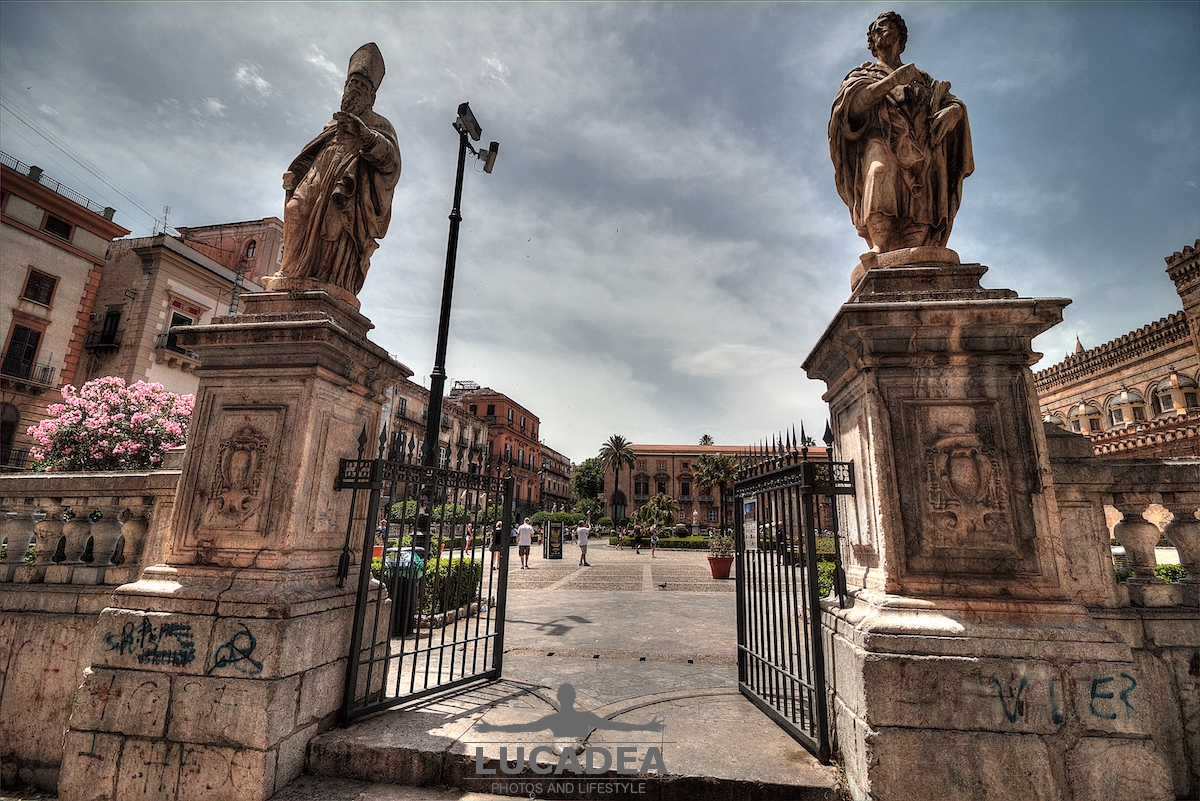
Statues outside Palermo Cathedral

Statue davanti alla Cattedrale di Palermo, fotografate nello spazio esterno del monumento nel centro storico

Statues outside Palermo Cathedral.
During my summer visit to Palermo, I also stopped to photograph some of the details surrounding one of the city’s most recognisable monuments. If you are wondering what to see in Palermo, the cathedral is an obvious place to visit, but the area in front of the building also deserves some attention, especially because of the statues and decorative elements that complete the view of its monumental façade.
I took this photograph myself during that visit, as part of a larger series of images I made around the cathedral. I still had many photographs from Palermo waiting to be published and, as I often do with places that give me several photographic ideas, I preferred to spread them out over time rather than publish everything together. Each image can then tell a slightly different part of the same visit.
The photograph focuses on the statues outside Palermo Cathedral in Sicily. They can easily become secondary details when compared with the enormous façade, towers and architectural complexity of the building itself. Yet they contribute considerably to the appearance of the space in front of the cathedral. I often enjoy looking for precisely these details, because it is easy to concentrate on the main monument and overlook everything around it.
Palermo Cathedral stands in the heart of the historic centre of Palermo, Sicily, Italy, occupying a large area that allows the façade to be seen from several viewpoints. The statues and other decorative features create a visual connection between the cathedral and the surrounding urban space, making the transition between architecture and the city feel more natural.
The history of the cathedral is particularly long and reflects the different cultures and periods that shaped Palermo. The present building began to take shape in the twelfth century under Archbishop Walter Ophamil, and numerous changes were made over the centuries. This layered history is one reason why even a simple photograph of the exterior can reveal several different aspects of the monument.
It is therefore not a building that needs to be photographed only from straight in front. As you change position, different details come into view: statues, columns, arches, decorative elements and sections of the façade that look different depending on where you stand. During that visit I allowed myself to follow these changes, looking for photographs that were not simply another full view of the cathedral.
This image came from that kind of observation. I was not necessarily trying to make the classic photograph of Palermo Cathedral. Instead, I wanted to isolate one of the elements around the exterior that had caught my attention. I like working this way because returning to the same monument from different angles can produce photographs that feel completely different.
If you are exploring what to see around Palermo Cathedral, it is worth looking beyond the main façade. The surrounding space contains architectural and decorative details that can become photographic subjects in their own right. For anyone who enjoys noticing small details while walking, this is one of those places where changing your viewpoint slightly can reveal something new.
What I remember most from that visit is the number of photographs I managed to make without moving very far from the cathedral. I started by photographing the monument as a whole and then gradually moved towards smaller details. This happens to me quite often: once I find an interesting area, I prefer to explore it photographically before moving on.
This photograph also connects naturally with the article I published about the Chapel of Santa Rosalia inside Palermo Cathedral. There I turned the camera towards the interior of the monument, while here I stayed outside and focused on the elements surrounding the façade. They are two different ways of telling the story of the same place.
Looking at this image again, I like the fact that you do not need to know the exact history of every statue to appreciate its role in the composition. The photograph is more about observing the relationship between the figures, the building and the surrounding space than about documenting one precise historical detail.
The cathedral remains the dominant visual reference in this part of Palermo. Its size and architecture give even smaller elements greater importance when they are photographed within its surroundings. That relationship between the monumental building and the details around it is what I wanted to preserve in the image.
I still have several photographs from that summer visit and I will continue to publish them gradually, as I usually do. Some will show more of the cathedral itself, while others will focus on details that might initially seem secondary but were enough to make me stop and take out my camera.
For me, that is also part of what a personal photo blog is about. It is not necessary to publish every photograph from the same place at once. Giving each image its own space allows it to bring back a different moment from the visit and a different way of seeing the same location.

And when you visit a large cathedral, do you also stop to look at the statues and smaller details outside? Add a comment or go to the bottom of the site to read what other visitors have written.

Statues outside Palermo Cathedral, photographed in the open space surrounding the historic monument in Palermo

Photo taken with a Canon EOS RP camera and a Canon EF-S 10-18 lens.

Don’t forget the Cathedral’s official website: cattedrale.palermo.it, which offers a complete virtual tour of the monument.

Click here to see more stunning images of the city:
foto gallery

Add one  comment to this article or read  here what other visitors have written.
 
Adv
 
Disclamer

The rights on images, videos, choruses, text and all other material on the LUCADEA.com website are governed as per  Copyright page.

This page has been viewed 1 times today.
This month it has been viewed 1 times.
In total it has been viewed 1 times.
 

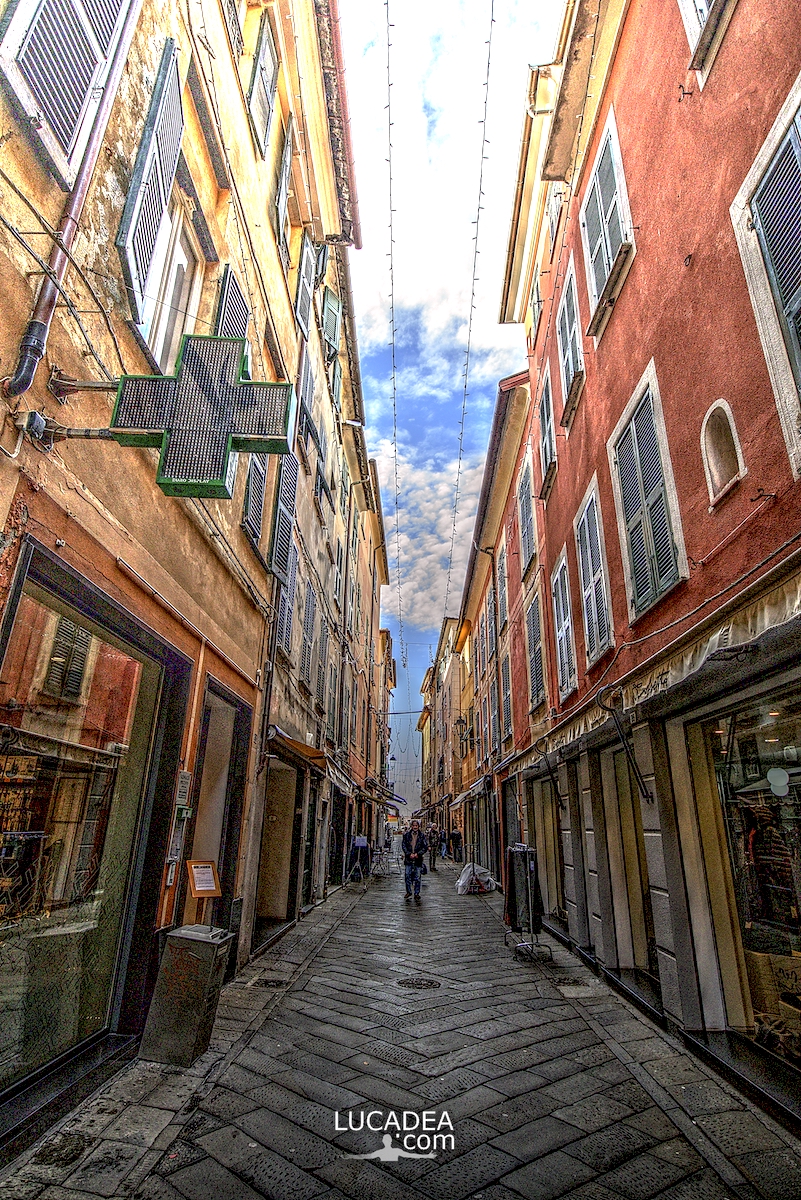
Lavagna’s alley among old houses and shops

Caruggio di Lavagna in Liguria con palazzi colorati e negozi del centro storico del borgo marinaro

Lavagna’s alley among old houses and shops.
Walking through the historic centre of Lavagna, I found one of those typical Ligurian alleys where everyday life and old buildings meet in a quiet and authentic atmosphere. This alley in Lavagna is one of the places worth seeing in Liguria if you want to discover the character of a small coastal town beyond the most famous views.
When I photographed this street, what caught my attention was not a single monument or a particularly impressive detail, but the combination of elements that make these old neighbourhoods unique. The colourful façades, the small shops opening directly onto the street and the narrow passage between the buildings create a scene that feels connected to the traditional life of the Ligurian coast.
The photo was taken by me while looking for a simple view that could represent the daily side of Lavagna. I often enjoy photographing places like this because they reveal the identity of a town through small details: a doorway, the shape of a building, the colours chosen for the walls or the relationship between the street and the people who live there.
Lavagna is located in Liguria, in the city of Genoa area, Italy, along the Gulf of Tigullio between other well-known coastal towns such as Chiavari and Sestri Levante. Walking through its centre, visitors can still find traces of the traditional structure of Ligurian villages, where narrow streets were once the main places for commerce and social life.
The word caruggio comes from the Ligurian dialect and is commonly used to describe a narrow street or alley in historic towns. These alleys are a distinctive feature of many villages along the Ligurian coast and often represent the most interesting places to photograph because every corner has different colours and shapes.
If you are visiting Lavagna, exploring the old centre is a simple way to understand the atmosphere of the town. The interest is not only in famous attractions but also in the small details that appear while walking without a precise destination.
This photograph is part of my interest in Ligurian villages and their characteristic streets. As I have already shared in other posts about the alleys of Moneglia, these narrow roads often become my favourite subjects because they combine architecture, history and everyday moments.

Have you ever walked through Lavagna’s alleyways and stopped to look at the details of the old buildings? Add a comment or go to the bottom of the site to read what other visitors have written.

Lavagna alley in Liguria with colourful historic buildings and small shops in the old coastal town centre

Photo taken with Canon EOS M100 and lens Canon EF-M 11-22.

The colorful houses of Verdi Square in Chiavari

Case colorate di Piazza Verdi a Chiavari con facciate liguri e portici in ardesia nel centro storico.

The colorful houses of Verdi Square in Chiavari.
Walking through the historic center of Chiavari, Liguria, I often find myself stopping to photograph the details of buildings, streets and arcades that make this town so interesting.
The colorful houses of Verdi Square in Chiavari are one of those simple views that immediately attract my attention during a photographic walk. Behind the famous Caruggio Dritto, the main street of the old town, this square opens up with a collection of facades where bright colors meet the darker tones of traditional Ligurian architecture.
This photograph was taken because of my habit of looking at the smaller details of the places I visit. I do not always search for famous landmarks or well-known viewpoints; sometimes a row of windows, the shape of an arcade or the contrast between different materials is enough to make me stop and take out my camera. I wanted to capture this corner of Chiavari because it shows a typical atmosphere of the Ligurian Riviera, where historic buildings are still part of everyday life.
The image was photographed in Chiavari, Liguria, Italy, a town where walking through the old streets reveals many unexpected views. If you are visiting Chiavari, one of the most interesting things to do is simply exploring the historic center, where colorful buildings, traditional arcades and small architectural details appear around every corner.
What caught my eye in this scene is the contrast between the warm colors of the houses and the dark slate used in the columns supporting the arcades. Slate has a strong connection with this area, especially with nearby Lavagna, and for centuries it has been one of the most recognizable materials used in Ligurian architecture.
Chiavari is a place I have photographed several times, including other views of its old town and the Riviera di Levante. Every time I walk through these streets, I discover new details because the character of the town is often hidden in small elements rather than only in its main attractions.
This photograph is part of my personal archive dedicated to Liguria: a simple urban view that preserves colors, materials and memories of a place I enjoy returning to with my camera.

Have you ever discovered a town by paying attention to its buildings and small architectural details? Add a comment or go to the bottom of the site to read what other visitors have written.

Colorful houses in Verdi Square in Chiavari with Ligurian facades and slate arcades in the historic town center.

<Photo taken with a Canon EOS M100 camera and a Canon EF-S 10-18 lens.

Here is where this small square is located:

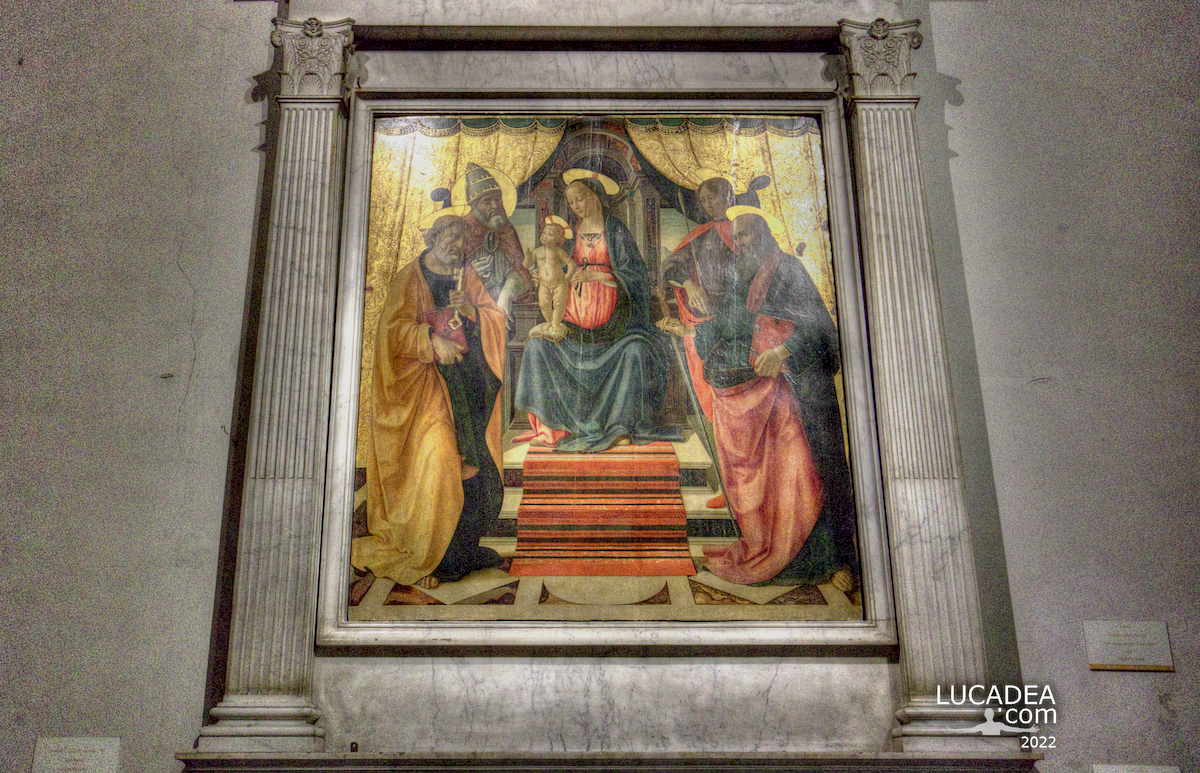
Ghirlandaio’s Madonna in Lucca Cathedral

Il dipinto "Madonna in trono col Bambino e Santi" del Ghirlandaio a Lucca

Ghirlandaio’s Madonna in Lucca Cathedral.
During a visit to Lucca, I stopped to admire the Madonna Enthroned with Child and Saints, a Renaissance painting displayed inside the Cathedral of San Martino, one of the most important landmarks in the historic center of the Tuscan city.
In Italy, we are surrounded by so many works of art that sometimes we risk looking at them without truly noticing their details. While walking through Lucca, I found myself in front of this beautiful painting by Ghirlandaio and decided to capture it with my camera, preserving a small moment of that encounter with Renaissance art.
The photograph shows the Madonna Enthroned with Child and Saints by Domenico Ghirlandaio, an artwork kept inside Lucca Cathedral in Lucca, Tuscany, Italy. It may not be the most famous creation by the Florentine painter, but it remains a valuable example of Renaissance painting and of the artistic heritage that can be found throughout Italian cities.
Visiting Lucca means walking among medieval streets, historic buildings and churches filled with centuries of history. Places like the Cathedral of San Martino are a perfect example of how a simple walk can turn into a photographic discovery. I was not looking for the most famous artwork of the city, but for those details that catch the eye and deserve to be remembered.
The cathedral where this painting is preserved has been one of Lucca’s main religious buildings for centuries. Its interior contains several important works of art, including the famous funeral monument of Ilaria del Carretto, another masterpiece from Lucca that I have already photographed and shared on this blog.
One of the most interesting things about visiting Italian cities is that many remarkable artworks are hidden in places that people pass every day. The Madonna Enthroned with Child and Saints is a perfect example: a painting that rewards those who take the time to stop and observe.
If you are visiting Lucca, this is one of the places worth seeing for anyone interested in art, history and photography, especially inside the beautiful Cathedral of San Martino.

What artwork or hidden detail in Lucca would you like to photograph? Add a comment or go to the bottom of the site to read what other visitors have written.

Ghirlandaio’s Madonna Enthroned painting inside Lucca Cathedral, a Renaissance artwork photographed in Tuscany.

Photo taken with a Canon EOS M100 camera and Canon EF-M 11-22 lens.

If you’re interested, here is the cathedral’s official website: museocattedralelucca.it.

To see all the photos I took of the Cathedral, click here:

The *Madonna Enthroned with the Child and Saints* is a tempera painting on an oak panel (170 x 160 cm) by Domenico Ghirlandaio, datable to around 1479 and housed in the Cathedral of San Martino in Lucca. The work is one of the artist’s earliest known panel paintings, created after his initial successes working for the Vespucci family in Florence and on the Chapel of Santa Fina in San Gimignano.
Read more on Wikipedia

The ancient bridge, symbol of the village of Bogliasco

L'antico ponte simbolo del borgo di Bogliasco in Liguria

The ancient bridge, symbol of the village of Bogliasco in Liguria.
One of the symbols of the beautiful village of Bogliasco, a pearl of the Gulf of Paradise in Liguria, is certainly this medieval bridge that allows you to cross the Bogliasco stream and is generally called the “Roman bridge”.

On the official Cultural Heritage website I then found other interesting information: here.

Do you know or have you ever been to Bogliasco? Add your own comment or go to the bottom of the site to read what other visitors have written.

L'antico ponte simbolo del borgo di Bogliasco in Liguria

L'antico ponte simbolo del borgo di Bogliasco in Liguria

Photos taken with GoPro Hero 10 black.

To see all the photos I took in the village, click here:
foto gallery

And here are some videos I made:

Videos recorded with Gopro Hero 10 Black.

It is the first municipality you encounter when travelling from Genoa towards the Riviera di Levante, in a small inlet at the mouth of the stream of the same name. Among the area’s peaks are Mount Cordona (803 m), along the ancient path to the hamlet of Sessarego, and Mount Rotondo (789 m). The beaches alternate with deep, characteristic cliffs. Surfing is possible here. The hinterland is typical of eastern Liguria, partly covered in olive groves, offering hiking opportunities.
Continue and learn more on Wikipedia

The ancient bridge symbol of the village of Bogliasco in Liguria – L’ancien pont symbole du village de Bogliasco en Ligurie – El antiguo puente símbolo del pueblo de Bogliasco en Liguria – O antigo símbolo da ponte da aldeia de Bogliasco, na Ligúria – Das alte Brückensymbol des Dorfes Bogliasco in Ligurien – Biểu tượng cây cầu cổ của làng Bogliasco ở Liguria – 利古里亚博格利亚斯科村的古桥象征 – リグーリア州ボリアスコ村の古代の橋のシンボル

A statue of Saint George and the dragon in Barcelona

A statue of Saint George and the dragon in Barcelona.
On the back of the Palau de la Generalitat de Catalunya there is this beautiful Gothic decoration depicting Saint George on horseback defeating the dragon.
To be honest, the statue has been slightly altered (the lance is missing and the dragon is almost unrecognizable), but it still has a proud appearance.
I really enjoy photographing monuments dedicated to this Saint, who is also deeply loved in Liguria.

Do you know Barcelona? Add a comment or go to the bottom of the site to read what other visitors have written.

Una statua di San Giorgio ed il drago a Barcellona

Una statua di San Giorgio ed il drago a Barcellona

Una statua di San Giorgio ed il drago a Barcellona

Photos taken with Canon EOS RP and Tamron 16-300 lens.

To see all the photos I took in Barcelona, ​​click here:
foto gallery

Where is the statue located:

It is said that in a city called Silena, in Libya, there was a large pond, large enough to hide a dragon. As it approached the city, it would kill everyone it encountered with its breath. To appease it, the inhabitants offered it two sheep a day, but when these began to run low, they were forced to offer it a sheep and a young man drawn by lot.
Continue and learn more at Wikipedia

A statue of Saint George and the dragon in Barcelona – Une statue de Saint Georges et le dragon à Barcelone – Una estatua de San Jorge y el dragón en Barcelona – Uma estátua de São Jorge e do dragão em Barcelona – Eine Statue des Heiligen Georg und des Drachen in Barcelona – Tượng Thánh George và con rồng ở Barcelona – 巴塞罗那圣乔治和龙的雕像 – バルセロナの聖ジョージとドラゴンの像

A historic jewelry shop in La Spezia

Vetrina in legno dell'oreficeria Caracciolo nel centro storico della Spezia, una gioielleria storica della città

A historic jewelry shop in La Spezia.
While walking through the city center, I stopped in front of the Caracciolo jewelry shop, a long-established presence whose own signage dates its activity back to 1880. What caught my attention, however, was not simply the jewelry displayed inside, but the wooden shop window itself, which has retained an unmistakably old-fashioned character.
When I photograph a city, I do not always look for monuments or famous viewpoints. Sometimes an ordinary business encountered during a walk can reveal something much more personal about a place. This historic jewelry shop in La Spezia became interesting to me because its storefront seemed to preserve a small piece of the city’s commercial past right in the middle of everyday urban life.
The wooden display window is the detail that makes the photograph for me. Its proportions, materials and overall appearance feel very different from the bright, highly polished storefronts commonly found in modern jewelry stores. Here, the display itself has a presence. It does not simply provide a setting for the objects inside; it becomes part of the story.
That is exactly the kind of detail I enjoy finding while walking with my camera. A shop window may seem purely functional, designed to attract customers and display products, but when an old structure has survived for generations, it can become an informal record of how a street and its businesses have changed. The photograph therefore says something about the shop, but also about the continuity of the surrounding city.
La Spezia is in Liguria, Italy, on the Gulf of Poets in the eastern part of the region. Its city center offers a mixture of urban architecture, commercial streets and everyday details that can be particularly rewarding to photograph. If you are visiting La Spezia and wondering what to see beyond the most familiar sights, walking through the central streets can reveal small details that are easy to miss when moving too quickly.
I took this photograph myself because I wanted to preserve that particular storefront as I found it during my walk. There was no elaborate photographic setup behind the image. I simply noticed the old wooden display and thought it deserved to be recorded. For me, that spontaneous reaction is an important part of photographing cities.
The Caracciolo jewelry shop identifies its history as beginning in 1880. That date gives the business a remarkably long connection with the city, but from a photographic point of view, the wooden storefront is what makes the history visible. Rather than needing a long historical explanation, the surviving details of the shop allow the passage of time to be felt directly through the image.
There is a small curiosity here about historic shopfronts. They are often overlooked when people think about architectural heritage, yet old display windows can preserve materials, proportions and decorative choices that tell us how businesses presented themselves in earlier periods. In this photograph, the wood is therefore much more than a background: it is the element that first made me stop.
I also like the contrast between the jewelry and its surroundings. Jewelry is associated with precision, elegance and carefully selected details, while the wooden display creates a warmer and more traditional visual setting. The two elements belong to different aesthetic periods, yet they work naturally together.
This photograph also connects with other images I have shared from Ligurian towns, where I have often focused on streets, storefronts and smaller urban details rather than only on the most recognizable landmarks. These photographs become a kind of visual thread through the places I have visited, linking one walk to another.
One of the pleasures of urban photography is precisely this lack of certainty about what will become the subject. I can start a walk without having a particular photograph in mind and end up stopping because of an old sign, a doorway or a shop window. In this case, the history associated with the jewelry shop made the encounter even more interesting, but it was the wooden storefront that ultimately convinced me to take the picture.
La Spezia naturally offers many more obvious subjects, yet I think these smaller encounters deserve space in a photographic blog as well. A long-established shop can become part of the visual identity of a street simply by continuing to be there, year after year.

Have you ever stopped to photograph an old shop window because it seemed to preserve a piece of a city’s history? Add a comment or go to the bottom of the site to read what other visitors have written.

Wooden display window of Caracciolo jewelry shop in central La Spezia, a historic storefront in the Ligurian city

Photo taken with Canon EOS RP camera and Canon RF 24-50 lens.

If you want to see all the photos I took in the city, click here:

This is the jewelry store’s website: spezia.caracciolononsologioielli.it.
Here’s where it is located:

The San Rufino Fountain in Assisi

La fontana di San Ruffino ad Assisi

The San Rufino Fountain in Assisi.
The Fountain of San Rufino is one of the historical attractions of Assisi, located in the picturesque San Rufino Square, just a few steps from the Cathedral of San Rufino. Built in 1532, the fountain served as one of the main sources of fresh water for the city.
This fountain, with its long rectangular stone basin, resembles more a large drinking trough than a traditional fountain. It is set into the wall of Sermatti Palace, which runs along one side of the square. The fountain is decorated with six lion heads from which water flows, creating a evocative and historic atmosphere.
San Rufino Square, where the fountain is located, is a place of great historical and cultural importance. The adjacent cathedral, dedicated to San Rufino, is a magnificent example of Romanesque architecture and houses numerous artistic and historical treasures. The fountain itself is a symbol of daily life in Assisi in the past, when public fountains were essential for the community.
Today, the San Rufino Fountain is a landmark for tourists visiting Assisi. It is an ideal place to stop and take photos, enjoying the beauty and tranquility of the square. Even if visiting the fountain may take only a few minutes, it is an experience that enriches the understanding of Assisi’s history and culture.

Do you know or have you ever been to Assisi? Add a comment or go to the bottom of the site to read what other visitors have written.

La fontana di San Ruffino ad Assisi

Photo taken with Canon EOS RP and Canon RF 24-50 lens.

To see all the photos of Assisi, click here:

Here’s where the fountain is located:

The central portal in particular is richly ornamented, especially the multiple lintel decorated with reliefs of vine shoots, spirals, allegorical figures, and monstrous animals; the lunette features Christ enthroned within a shield, between the sun, the moon, the Madonna nursing, and Saint Rufino.
Continue and learn more at Wikipedia

The fountain of San Ruffino in Assisi – La fontaine de San Ruffino à Assise – La fuente de San Rufino en Asís – A fonte de San Ruffino em Assis – Der Brunnen von San Ruffino in Assisi – Đài phun nước San Ruffino ở Assisi

This post was written with the help of Copilot, an AI-powered virtual assistant.

Garibaldi Street in Genoa and the Rolli Palaces

Via Garibaldi a Genova con i Palazzi dei Rolli e le eleganti facciate storiche nel centro della città

Garibaldi Street in Genoa and the Rolli Palaces.
While walking through the historic center of Genoa, I stopped to capture the elegant perspective of Garibaldi Street, observing the decorated façades and the architectural details that make this place one of the most fascinating corners of the city.
This photograph of Garibaldi Street in Genoa comes from my desire to tell the story of a place that is well known but always able to reveal something new. Even after several visits, this historic street offers different views depending on where you stop, with details on the buildings, entrances and decorations that often remain unnoticed when walking quickly.
Garibaldi Street, also known as Strada Nuova in its original historical context, is one of the most important examples of Renaissance architecture in Genoa. Walking here means crossing a part of the city where the elegance of the past blends naturally with everyday life, between museums, historic buildings and people moving through the old city.
Garibaldi Street is located in Genoa, Liguria, Italy, in the heart of the historic center, and it is famous for the Rolli Palaces, the magnificent residences built by Genoese noble families during the period of the ancient Republic of Genoa. These buildings represent one of the most valuable examples of the city’s artistic and architectural heritage.
One curiosity about the Rolli Palaces is that they were included in official lists used by the Republic of Genoa to select private residences suitable for hosting important guests and visitors. This created a unique connection between private homes and public events, giving this street a role that went beyond simple urban decoration.
When I took this photograph, I wanted to focus on the atmosphere created by the entire street rather than on a single building. The rhythm of the façades, the perspective of the road and the richness of the details are what make this place so recognizable.
For anyone visiting Genoa, Garibaldi Street is one of the most interesting places to see because it offers a direct encounter with the history and architecture of the city without needing to leave the urban environment. The same attention to Genoa’s historic details can also be found in other photographs I shared, such as the article about Banchi Square and the old commercial heart of the city.
I have always enjoyed photographing places where history is still part of everyday life, where a simple walk can become an opportunity to discover something hidden in the details.

Have you ever walked along Garibaldi Street in Genoa and stopped to look at the details of its historic palaces? Add a comment or go to the bottom of the site to read what other visitors have written.

Garibaldi Street in Genoa with the Rolli Palaces and elegant historic façades in the old city center

Photo taken with Canon EOS RP and lens Canon RF 24-50.

🏠
  • Italiano