The Giorgio Borghese Staircase in Genoa

La Scalinata Giorgio Borghese a Genova

The Giorgio Borghese Staircase in Genoa.
In the Foce district, climbing towards the hillside neighbourhood of Albaro, you come across one of the city’s most impressive stairways. This monumental passage connects two parts of Genoa and deserves a closer look, not only for its architecture but also for the story of the man whose name it bears.
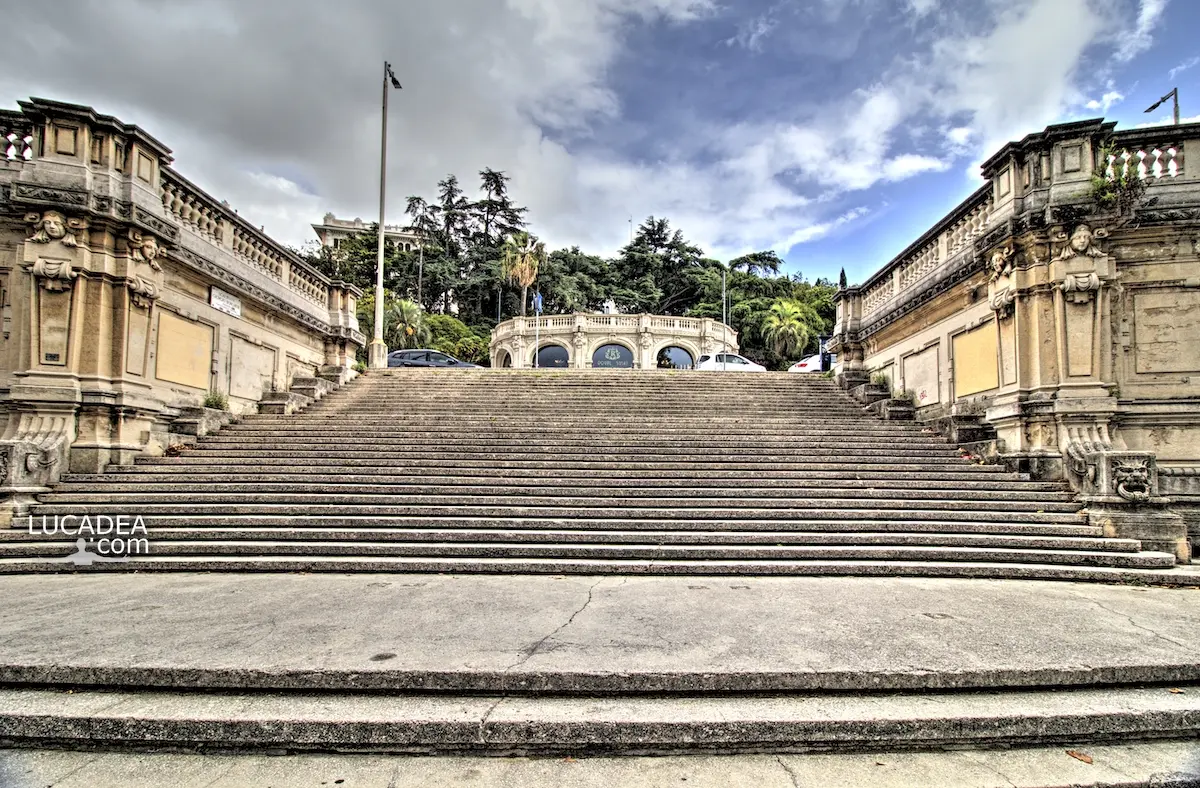
The staircase is located beside Niccolò Tommaseo Square and leads uphill towards the upper part of Francesco Pozzo Street. Its design features flights of steps, terraces, decorative details and elegant Art Nouveau elements. The result is an unusual architectural setting that stands out from the surrounding streets. As you climb, you can also enjoy views over the square and the nearby neighbourhoods, where the urban landscape of Foce meets the first slopes of Albaro.
The Borghese Staircase was inaugurated in 1910. The original project was much more ambitious than the structure we see today. It was intended to form part of a large cultural complex, with museums, art exhibitions and other civic institutions. Financial difficulties and budget cuts meant that the plan had to be scaled down, leaving the striking staircase and its Art Nouveau building as its most visible features. During the twentieth century, the premises were used for various purposes, including municipal offices and other services, before falling into a prolonged period of neglect. Following a major restoration project, the complex was officially returned to the city in 2020.
But who was Giorgio Borghese, the man commemorated by the staircase? His name might suggest a local Genoese figure, but his story takes us much further afield, across the Atlantic to South America. Giorgio Borghese was born in Rapallo in 1691 and moved with his family to Montevideo in 1724, when the settlement was still taking shape on the northern bank of the Río de la Plata.
Borghese became an important figure in the early administration of the growing city. He held several public offices, including that of alcalde, a position broadly comparable to a mayor, and took part in the civic life of the settlement during its first decades. He is remembered among Montevideo’s earliest permanent civilian residents and as one of the people who helped organise the young community.
I find this connection particularly interesting: a staircase in the heart of Genoa commemorates a man from Liguria who crossed the ocean and played a part in the development of what would become Uruguay’s capital. It is a small but fascinating link between Liguria and South America, shaped by migration, ambition and the history of the Italian presence overseas.

Have you ever noticed this staircase in Genoa? Did you know the story of Giorgio Borghese and his connection with Montevideo? Add a comment or go to the bottom of the site to read what other visitors have written.
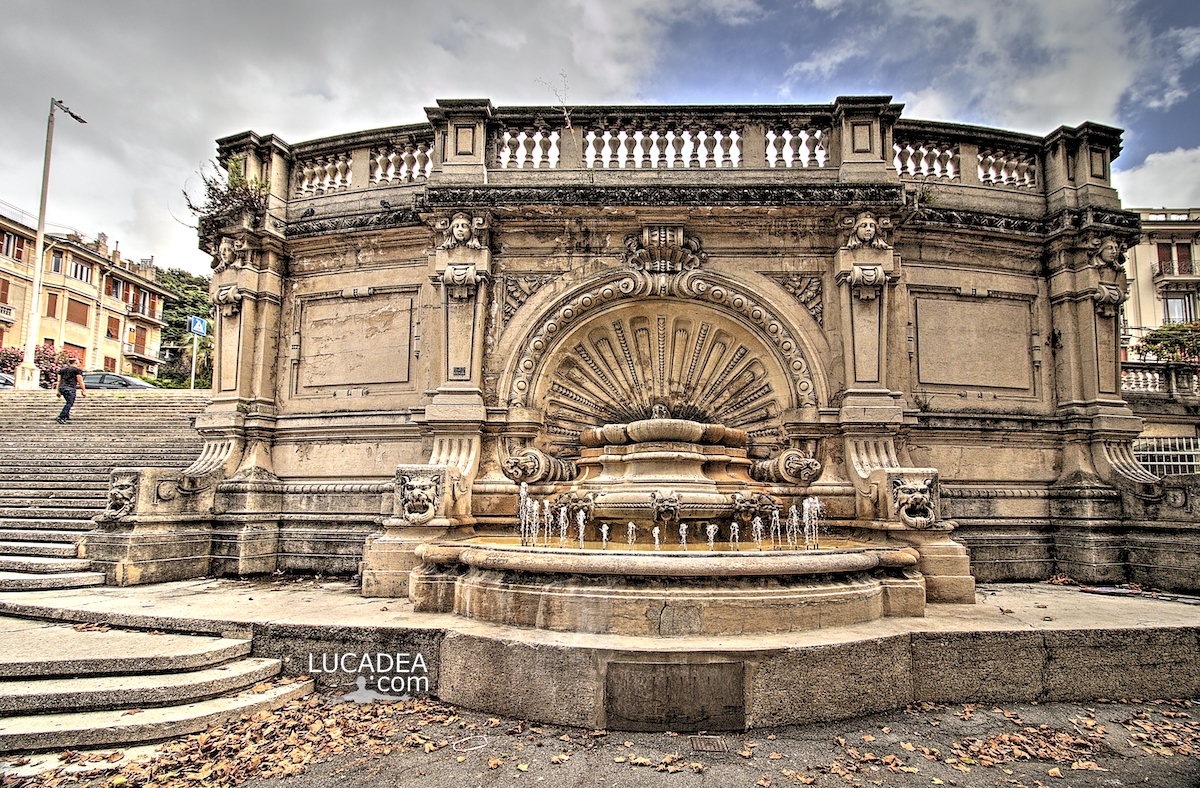
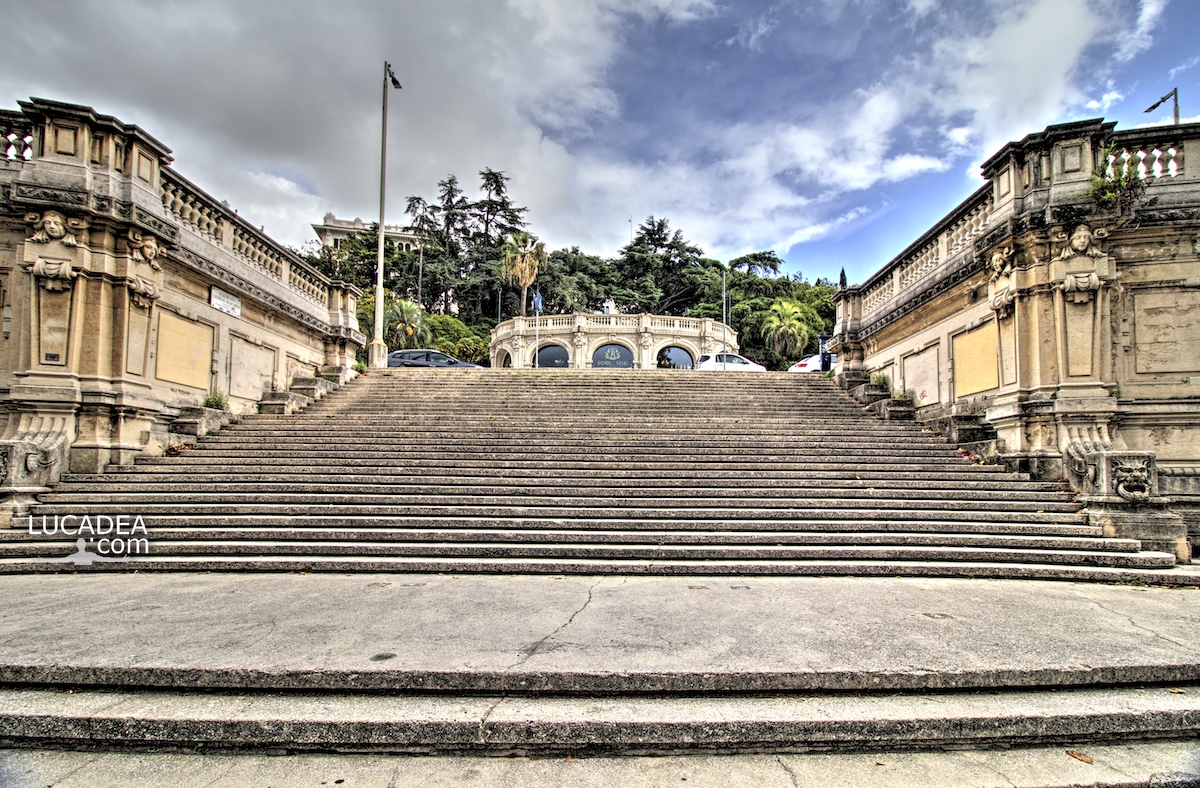
The monumental Giorgio Borghese Staircase in Genoa, connecting Tommaseo Square with the hillside district of Albaro

The monumental Giorgio Borghese Staircase in Genoa, connecting Tommaseo Square with the hillside district of Albaro

Photos taken with Canon EOS M100 camera and Canon EF-S 10-18 lens.

Add one  comment to this article or read  here what other visitors have written.
 
Adv
 
Disclamer

The rights on images, videos, choruses, text and all other material on the LUCADEA.com website are governed as per  Copyright page.


This page has been viewed 0 times today.
This month it has been viewed 0 times.
In total it has been viewed 0 times.
 

Crème Caramel in Uruguay

Creme caramel in Uruguay

Crème Caramel in Uruguay.
I was pleasantly surprised to discover how popular one of my favourite desserts is in South America. Known to me as crème caramel, this familiar sweet is usually called *flan* in Uruguay, with names such as *flan casero* or *flan de leche* also used. Fortunately, the name may be different, but the dessert itself is very close to the one I have always enjoyed back home.
I had already tasted a flan in Buenos Aires, Argentina, and later enjoyed this excellent version at a market in Montevideo, Uruguay. Finding a dessert I love so far from home was a lovely surprise, especially because it felt perfectly at home among the local food offerings.
Flan is a simple custard dessert generally made with eggs, milk and sugar, finished with a layer of caramel. Its appeal lies in the contrast between the smooth, delicate custard and the deeper, slightly bitter sweetness of the caramel. It does not need elaborate decoration or a complicated presentation. When it is made well, its texture and flavour are more than enough.
In Uruguay and neighbouring Argentina, flan is a familiar favourite and is often served with *dulce de leche*, a rich caramelised milk spread. Some versions also come with whipped cream. These additions make the dessert even more indulgent, although I am perfectly happy with a classic caramel topping. Each place may have its own way of serving it, but the basic idea remains wonderfully comforting.
The market in Montevideo provided the setting for this little food discovery. When I travel, I enjoy trying local specialities, but finding one of my personal favourites is an extra pleasure. After tasting flan in Buenos Aires, coming across it again in Uruguay made me smile. Apparently, I had arrived in exactly the right part of the world for someone with a sweet tooth.
Of course, I took a photograph to remember the occasion. Food photography is a way of preserving small moments from a journey, not only the spectacular sights but also the simple pleasures discovered along the way. Looking back at this dessert brings back the taste and the surprise of finding something so familiar in another country.

Have you ever tried South American flan, and would you choose it with classic caramel or with dulce de leche? Add an comment or go to the bottom of the site to read what other visitors have written.

Crème caramel, known locally as flan, served at a market in Montevideo, Uruguay, a favourite dessert discovered during a South American trip

Photo taken with a Canon EOS M100 camera and Canon EF-M 22 lens.

Add one  comment to this article or read  here what other visitors have written.
 
Adv
 
Disclamer

The rights on images, videos, choruses, text and all other material on the LUCADEA.com website are governed as per  Copyright page.


This page has been viewed 0 times today.
This month it has been viewed 0 times.
In total it has been viewed 0 times.
 

Stewed squid at Montevideo’s Mercado del Puerto

Totanetti in umido a Montevideo

Stewed squid at Montevideo’s Mercado del Puerto.
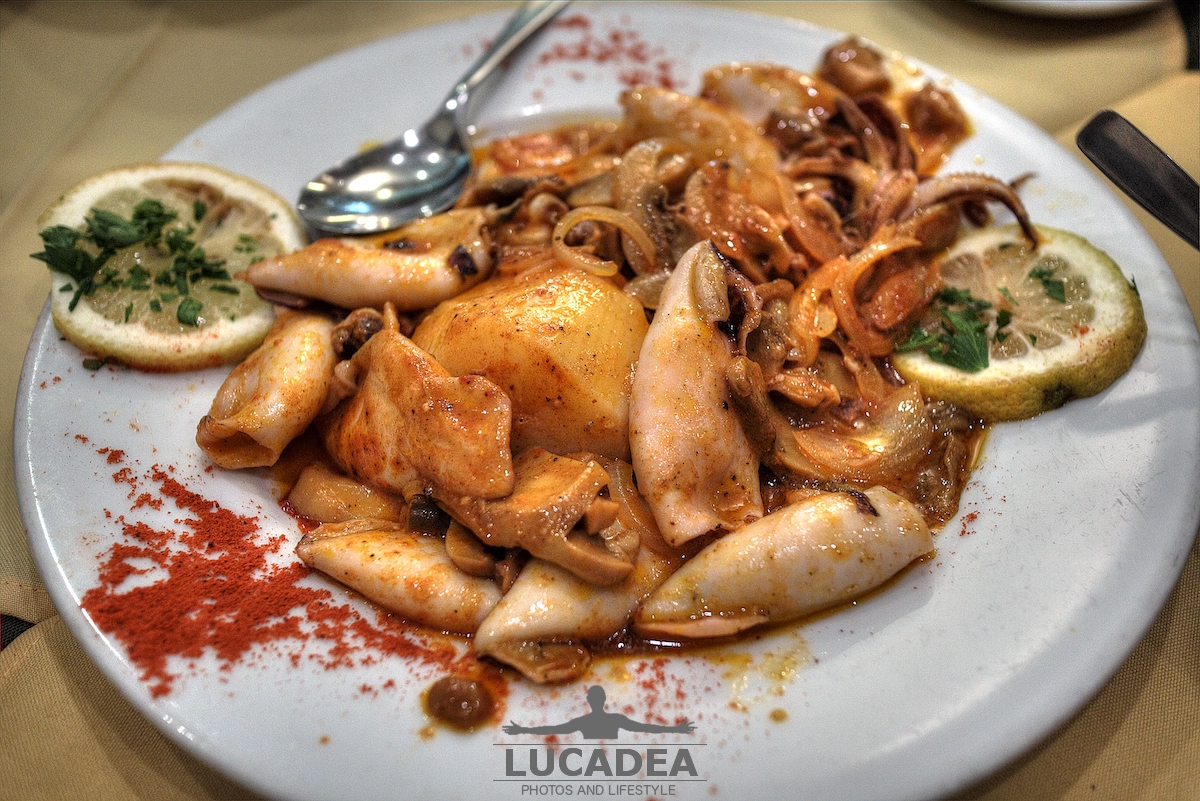
Among the dishes I photographed during a visit to the Mercado del Puerto in Montevideo, this plate of stewed squid caught my attention with its simple and hearty appearance. Montevideo, Uruguay, is a city where food is closely connected with markets and shared meals, and this dish felt like a small but memorable part of that experience.
The Mercado del Puerto is best known for grilled meat and for the atmosphere surrounding Uruguay’s traditional food culture. Yet seafood also has its place among the many dishes served there. That contrast is exactly what made these stewed squid pieces worth photographing when I came across them.
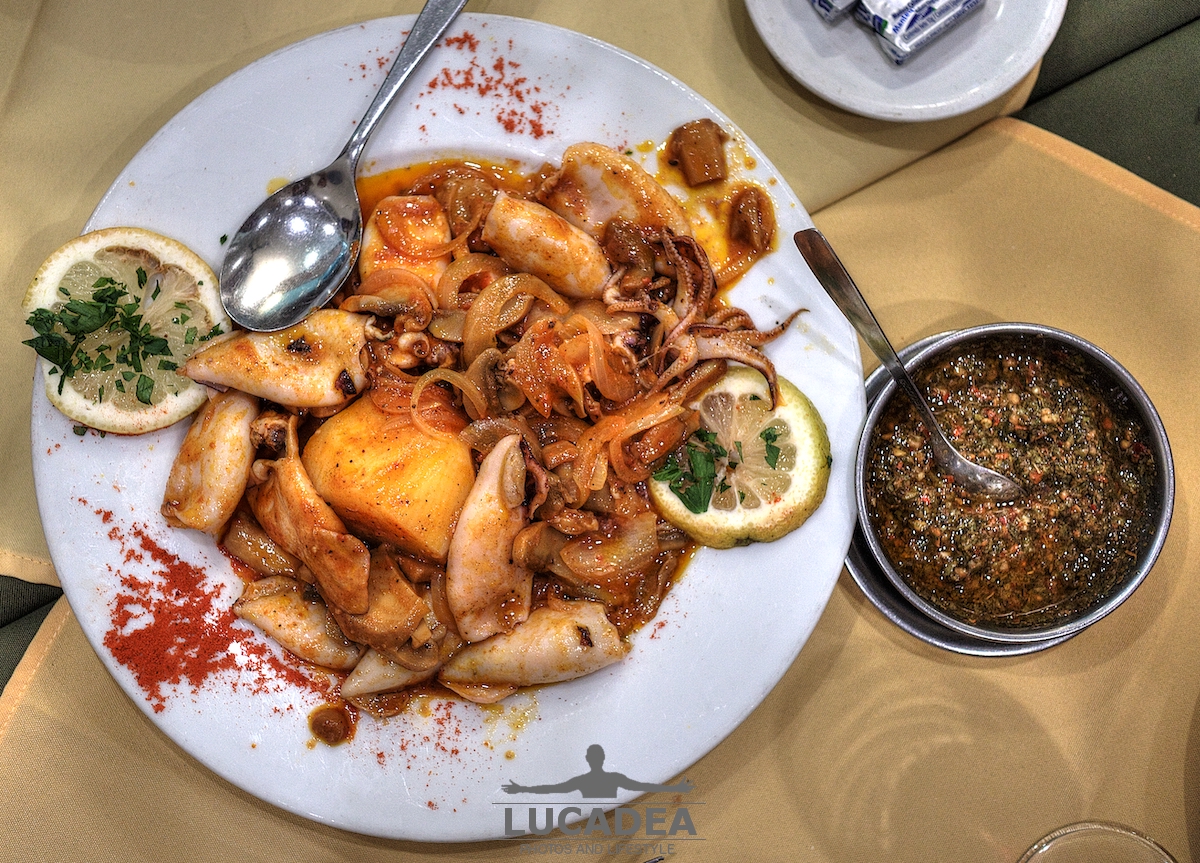
The dish contains squid cooked slowly with onion, potatoes and mushrooms, with a few spices adding flavour to the preparation. Visually, it is not an elaborate composition, but perhaps that is what makes the photograph work for me. The ingredients are easy to recognise and the whole plate immediately suggests something warm, substantial and comforting.
When I photograph food, I am mostly interested in preserving the impression I had when I saw the dish in front of me. Here I wanted to capture something slightly different from the more predictable images associated with the Mercado del Puerto. Meat is naturally one of the main attractions of the market, but this plate shows that seafood can also find its place in such a strongly meat-oriented setting.
What I like about this photograph is its connection with an actual moment from the trip. I am not trying to present a traditional recipe or explain how to cook stewed squid. It is simply a dish I encountered while travelling and thought was worth remembering through a photograph.
The Mercado del Puerto is located in Montevideo’s Ciudad Vieja and is one of the city’s best-known places for experiencing local food. Its history goes back to the nineteenth century, when the building was inaugurated for market activities. Over time, the space developed into an important gastronomic landmark, while retaining much of the character that makes it so recognisable.
If you are wondering what to eat in Montevideo, the market is interesting precisely because of the variety of dishes available there. For me, though, the strongest memory comes from the individual plates I encountered, because each one is connected with a particular moment of the journey.
This stewed squid with onion, potatoes and mushrooms is the kind of dish that could easily be overlooked beside the market’s more famous grilled meats. Yet these unexpected culinary encounters are often what make a trip feel personal when I look back at the photographs later.
I have also photographed other dishes and markets during my travels, always trying to keep the focus on the food as I actually encountered it rather than turning the photograph into a formal restaurant review. In this case, the memory is especially connected with the surprise of finding a seafood dish in a place so strongly associated with meat.

Have you ever tried stewed squid while travelling in Uruguay? Add a comment or go to the bottom of the site to read what other visitors have written.

Stewed squid with onion, potatoes and mushrooms served at the Mercado del Puerto in Montevideo, Uruguay

Stewed squid with onion, potatoes and mushrooms served at the Mercado del Puerto in Montevideo, Uruguay

Photos taken with Canon EOS M100 and lens Canon EF-M 22.

Uruguayan grilled meat in Montevideo

Carne uruguaiana a Montevideo

Uruguayan grilled meat in Montevideo.
Another beautiful photo of a nice piece of grilled meat enjoyed some time ago in Montevideo.
At the famous Mercado del Puerto, a building not far from where the cruise ships dock.
It must have been five hundred grams of meat… my mouth is watering again just looking at the photo.

Do you like grilled meat?
Add a comment or go to the bottom of the site to read what other visitors have written.

Carne uruguaiana a Montevideo

Photo taken with Canon EOS M100 camera and Canon EF-M 22 lens.

The grill was first used by the Achaeans in Ancient Greece, around the 9th century BC, but some artifacts were found in the kingdom of Egypt. From the Achaeans onward, the grill rapidly expanded and developed, transforming itself to make cooking food faster and more efficient. Its first appearance in Italy is documented around the 10th century near Arminum (now Rimini).
Continue and learn more at Wikipedia

Uruguayan Grilled Meat in Montevideo – Viande uruguayenne grillée à Montevideo – Carne uruguaya a la parrilla en Montevideo – Carne uruguaia grelhada em Montevideu – Gegrilltes uruguayisches Fleisch in Montevideo – Thịt nướng Uruguay ở Montevideo

Palmito, or heart of palm, enjoyed in Montevideo.

Palmito, o cuore di palma, gustato a Montevideo

Palm heart, or palmito, tasted in Montevideo.
It’s been a long time since I took this photo and I still hadn’t managed to publish it.
This is a typically South American food, the heart of a certain type of palm tree that is cut into pieces and preserved in oil or vinegar.
I’ve eaten it several times in Brazil, although the photo was taken at the Mercado in Montevideo.

Have you ever tasted this side dish?
Add a comment or go to the bottom of the site to read what other visitors have written.

Palmito, o cuore di palma, gustato a Montevideo

Photo taken with a Canon EOS M100 camera and a Canon EF-M 22 lens.

Palm heart, or more commonly palmito, is a type of food obtained from certain types of palm trees, such as açaí, babassu, juçara, and chontaduro. These palm species are cultivated mainly in South America, Brazil, Ecuador, Paraguay and Argentina, in swampy areas and along tropical rivers.
Continue and learn more on Wikipedia

Palmito, or heart of palm, enjoyed in Montevideo – Palmito, ou cœur de palmier, apprécié à Montevideo – Palmito, oder Palmenherz, genossen in Montevideo – Palmito, hay trái tim của cọ, được thưởng thức ở Montevideo
🏠
  • Italiano