Waterfalls of Geirangerfjord in Norway

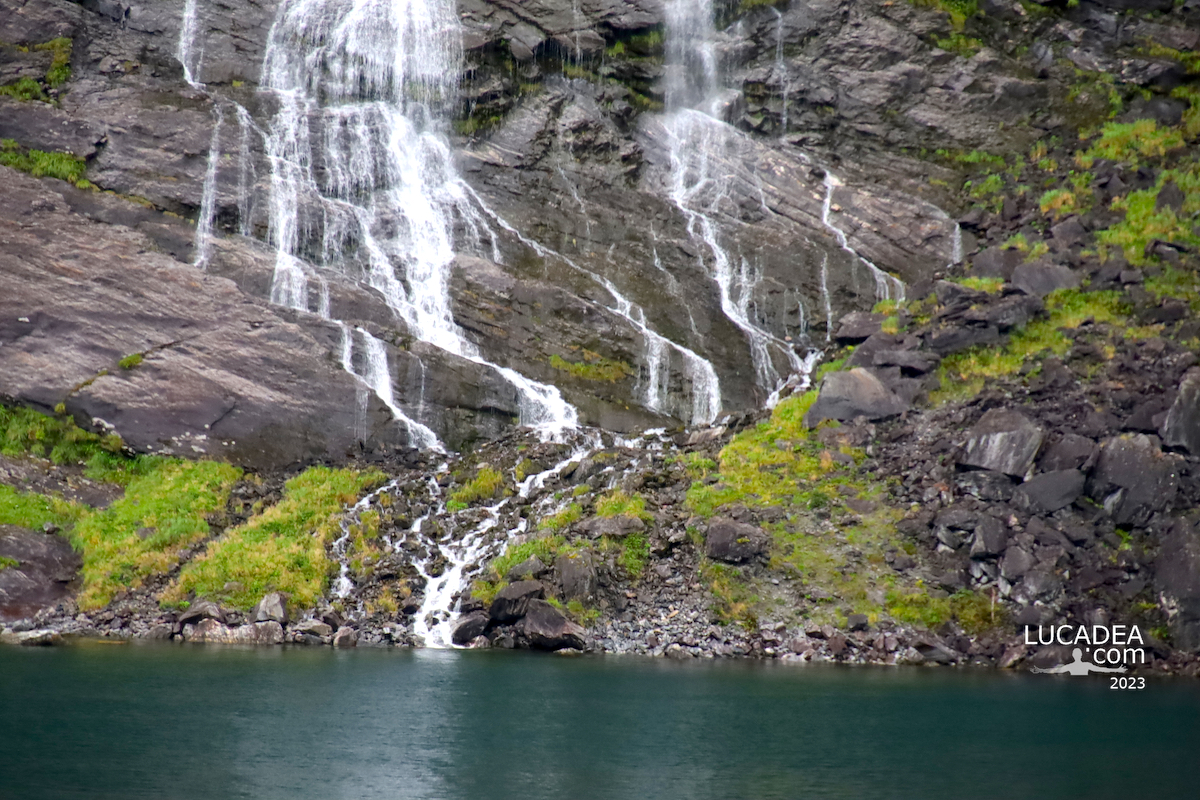
Alcune cascate che si ammirano nel Geirangerfjord in Norvegia

Waterfalls of Geirangerfjord in Norway.
After several years away from Norwegian fjords, sailing again between these mountains was one of those experiences that remain in your memory. From the ship, I watched the landscape slowly change, with huge rocky walls and countless waterfalls flowing down towards the sea.
This photograph was taken during one of my journeys aboard Costa Firenze by Costa Cruises, when during the summer season I had the opportunity to spend about a month exploring some Northern Europe routes. Among them, sailing through Geirangerfjord was certainly one of the most fascinating moments of the trip.
The waterfalls of Geirangerfjord are one of the elements that make this place so special. From the top of the mountains, the water runs down the steep green and rocky slopes until it reaches the cold waters of the fjord. Every viewpoint offers a different perspective, and from the ship the feeling of being surrounded by such a vast landscape is unforgettable.
I was in Geirangerfjord, in Møre og Romsdal, Norway, and what I wanted to capture with this image was the relationship between the ship, the water, and the enormous natural environment around it. It is not simply a beautiful view, but a place where every element reminds you of the power of nature.
If you are visiting Norway by cruise, Geirangerfjord is definitely one of the places worth seeing. Its mountains, waterfalls, and calm waters create a landscape that feels unique and almost unreal.
A curious detail is that Geirangerfjord has been included in the UNESCO World Heritage list together with nearby Nærøyfjord because of its exceptional natural beauty and geological importance.
On my blog I have shared other moments from my journeys by ship, because the view from a cruise deck often offers perspectives that are difficult to experience in any other way.

Have you ever sailed through Norwegian fjords or visited a place that gave you the same feeling of wonder? Add a comment or go to the bottom of the site to read what other visitors have written.
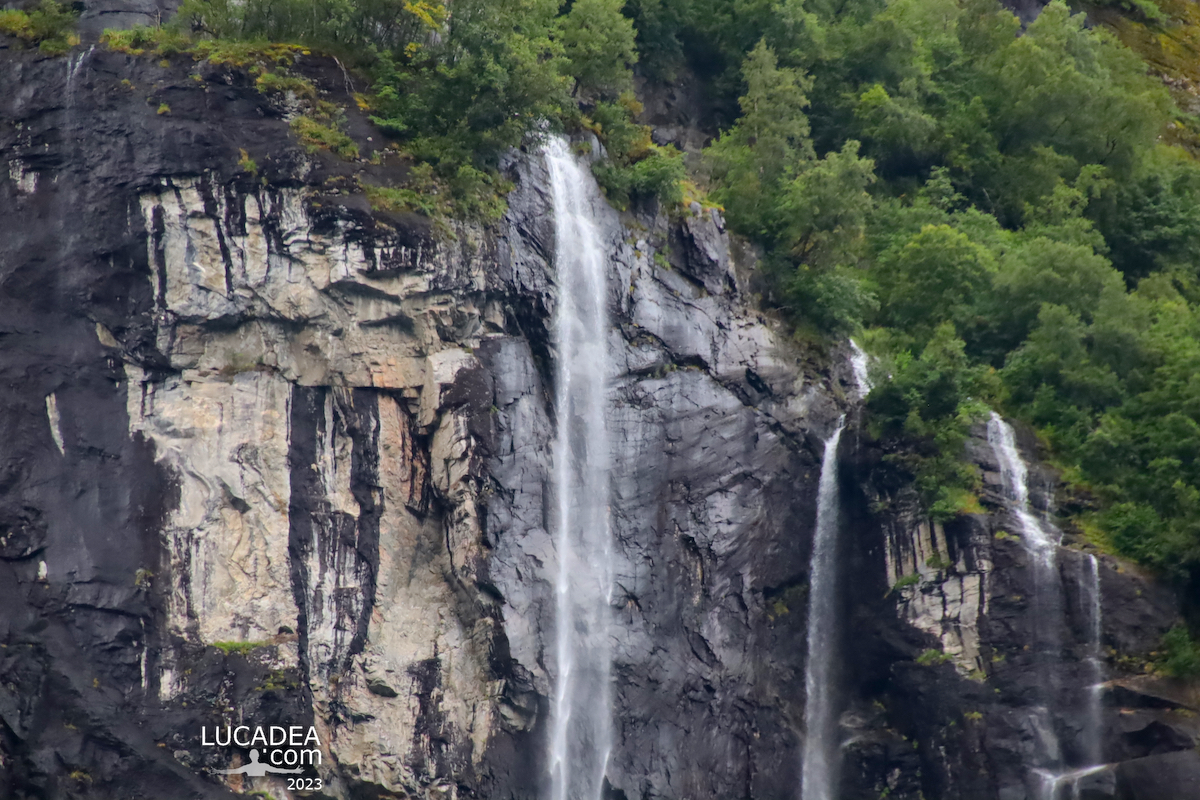
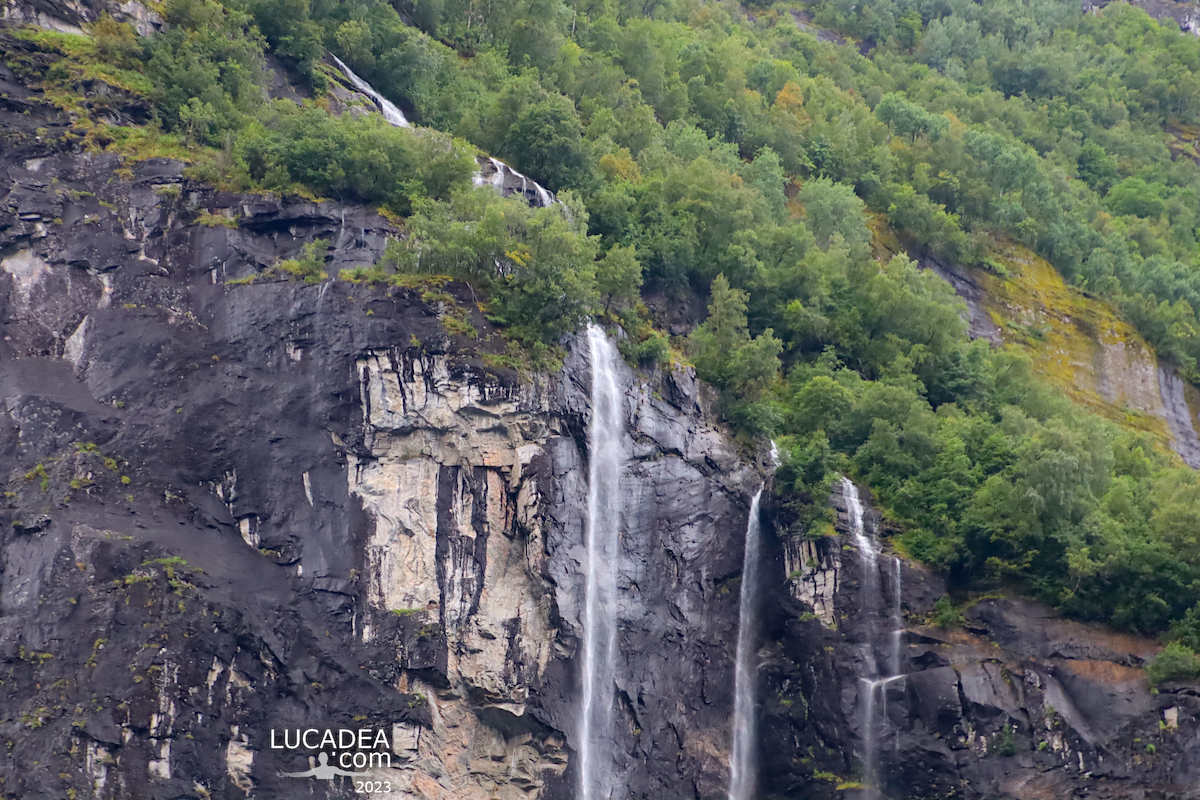
Photos taken with a Canon EOS RP camera and a Tamron 16-300 lens.

To see all the other photos, click here:
foto gallery

Here is where the fjord is located:

The Geirangerfjord (Geirangerfjorden) is a fjord winding through the Sunnmøre region in the southern part of Møre og Romsdal county, Norway. It is a branch of the much larger Storfjorden, and the famous village of Geiranger is located within it. The fjord is one of Norway’s most visited natural sites and, since 2005, has been included—along with the Nærøyfjord—on the UNESCO World Heritage List. However, the inclusion of these two fjords on the list is threatened by a plan to construct power lines across the fjord.
Read more on Wikipedia

The waterfalls of Geirangerfjord in Norway – Les cascades du Geirangerfjord en Norvège – Las cascadas del Geirangerfjord en Noruega – As cascatas do Geirangerfjord na Noruega – Die Wasserfälle des Geirangerfjords in Norwegen – Những thác nước ở Geirangerfjord Na Uy – 挪威盖朗厄尔峡湾的瀑布 – ノルウェーのガイランゲルフィヨルドの滝

The text of this post was written with the help of ChatGPT, a language model from OpenAI.

Add one  comment to this article or read  here what other visitors have written.
 
Adv
 
Disclamer

The rights on images, videos, choruses, text and all other material on the LUCADEA.com website are governed as per  Copyright page.


This page has been viewed 1 times today.
This month it has been viewed 1 times.
In total it has been viewed 1 times.
 

Red houses on the Flåm fjord in Norway

Casette rosse sul fiordo di Flåm in Norvegia vicino al porto delle navi da crociera

Red houses on the Flåm fjord in Norway.
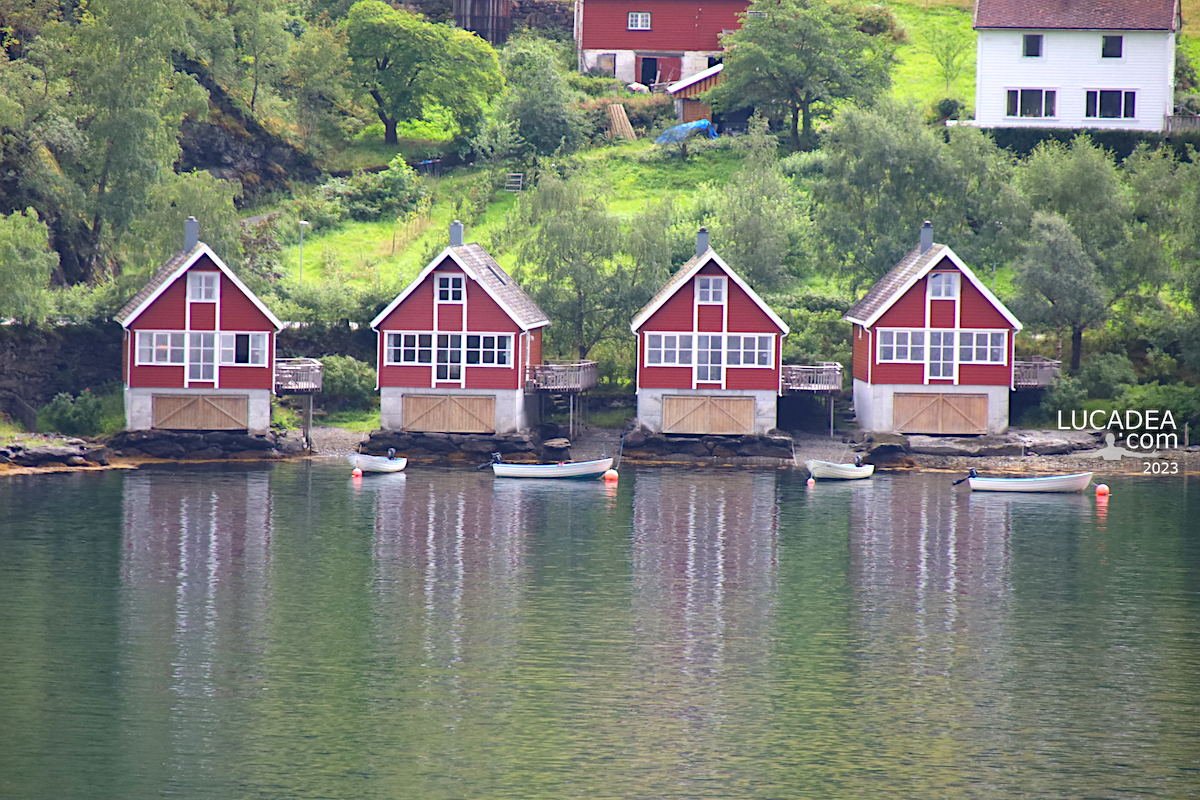
Arriving in Flåm during a cruise through the Norwegian fjords, I found inspiration in a small detail that deserved to be photographed. The red houses on the Flåm fjord tell a quieter story of this village, made of simple colors, local traditions, and a landscape where nature is always the main character.
The huge cruise ships arriving in the harbor are certainly impressive, but what caught my attention was the contrast between their size and these small wooden buildings standing close to the water. These four red houses seem to belong to another time, perhaps connected to the old life of local fishermen who depended on the fjord.
I was in Flåm, Vestland, Norway, and this photograph was created with the desire to capture a detail rather than just a famous landscape. The village lies at the end of the Aurlandsfjord, one of the branches of Norway’s spectacular fjord system, where mountains, water, and peaceful scenery create a unique atmosphere.
If you are visiting Flåm, one of the most interesting things to see is not only the dramatic nature around the village but also the small details that reveal its history and character. The red houses on the Flåm fjord are a perfect example of how simple elements can become part of a memorable view.
A curious detail is that red paint became very common in Norway because it was once one of the most affordable colors available and was widely used for houses belonging to fishermen and farmers.
What I like most about this image is the contrast between two worlds: modern cruise tourism and the traditional appearance of a small fjord village. The large ships bring thousands of visitors every year, while these small houses quietly preserve the atmosphere of the past.
On the blog I have shared other photographs from my cruise journeys, because I often find that the smallest details encountered along the way create the strongest memories.

Have you ever visited a Norwegian fjord village and discovered a small detail that told its story? Add a comment or go to the bottom of the site to read what other visitors have written.
Casette rosse sul fiordo di Flåm in Norvegia vicino al porto delle navi da crociera

Photo taken with a Canon EOS RP camera and a Tamron 16-300 lens.

To see all the photos of the small town of Flåm, click here:

Here is where the small village is located:

Flåm is a Norwegian village of approximately 500 inhabitants, located at the head of the Aurlandsfjord, a branch of the Sognefjord. The village lies within the municipality of Aurland, in Vestland County, Norway. It is served by the European route E16. The Flåm Valley was formed by a thick layer of ice that persisted in the area for millions of years; glacial erosion carved out the landscape, creating the deep, wide valleys that attract large numbers of tourists every year.
Read more on Wikipedia

The red houses on Flåm fjord in Norway – Les maisons rouges sur le fjord de Flåm en Norvège – Las casas rojas en el fiordo de Flåm en Noruega – As casas vermelhas no fiorde de Flåm na Noruega – Die roten Häuser am Flåm Fjord in Norwegen – Những ngôi nhà đỏ bên vịnh hẹp Flåm ở Na Uy – 挪威弗洛姆峡湾的红色房屋 – ノルウェーのフロムフィヨルドにある赤い家々

The text of this post was written with the help of ChatGPT, a language model from OpenAI.

Add one  comment to this article or read  here what other visitors have written.
 
Adv
 
Disclamer

The rights on images, videos, choruses, text and all other material on the LUCADEA.com website are governed as per  Copyright page.


This page has been viewed 1 times today.
This month it has been viewed 1 times.
In total it has been viewed 1 times.
 

Seven Sisters waterfall in the Geirangerfjord

La cascata del Pretendente nel Geirangerfjord

Seven Sisters waterfall in the Geirangerfjord.
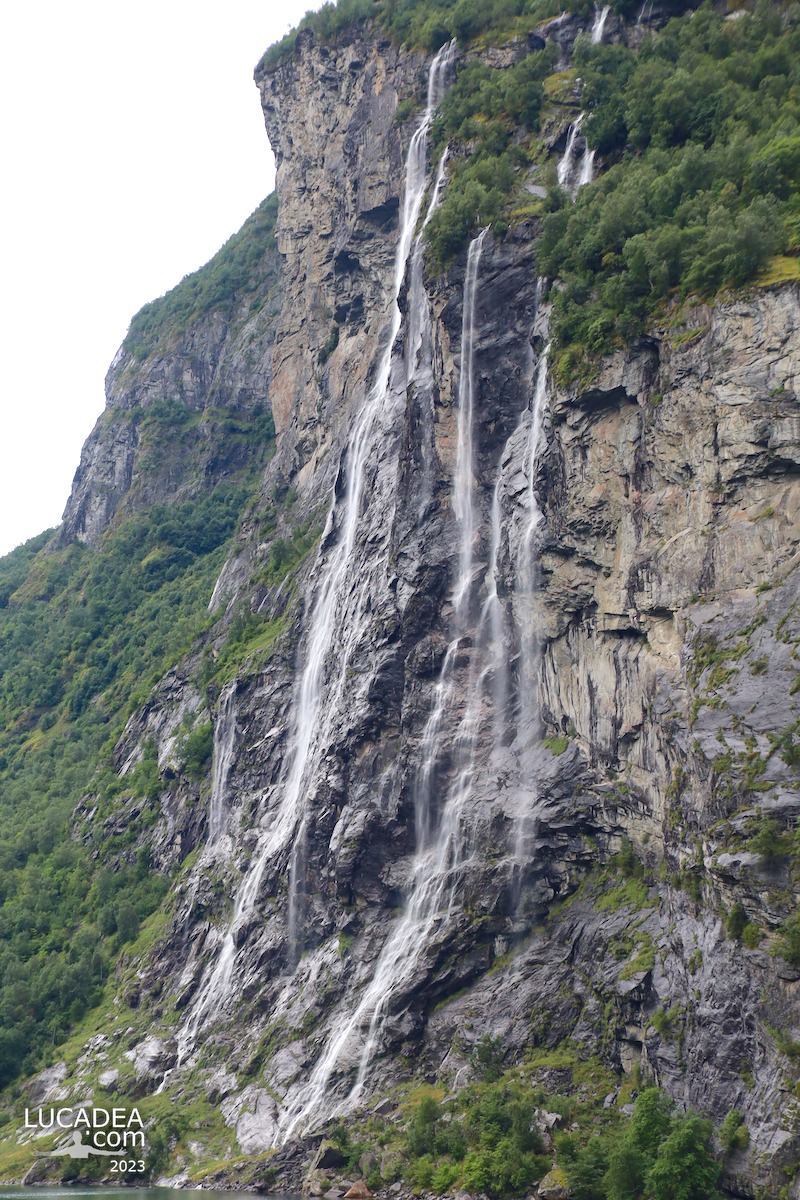
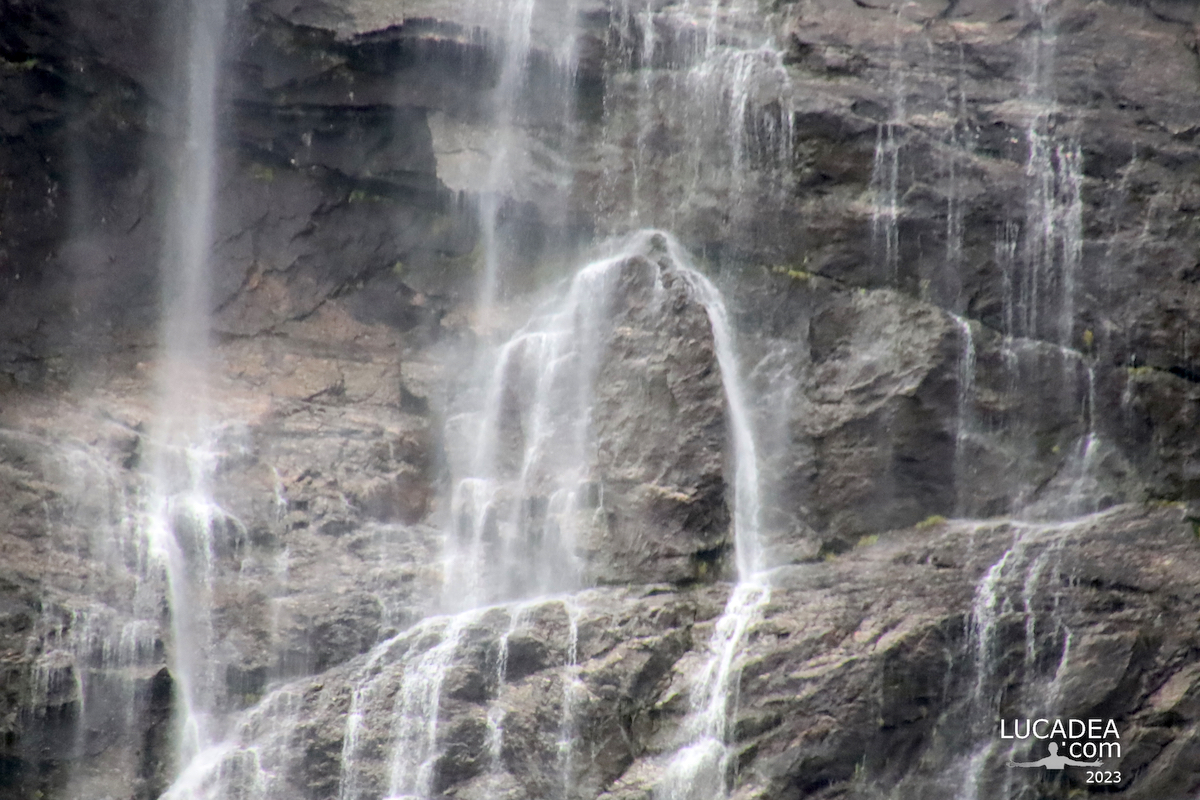
The Seven Sisters waterfall in the Geirangerfjord reveals itself almost suddenly, as your eyes follow the steep walls of the fjord and drift between rock and water. Seeing the Seven Sisters waterfall in Norway is one of those moments that stays with you, especially when you try to capture it in a photograph. Photographing the Seven Sisters waterfall in the Geirangerfjord means dealing with a landscape that feels alive, even when it seems still.
I remember raising my camera and pausing for a second. The sound of water cascading down the cliffs filled the air, while a light breeze carried a fine mist that reached my face. The seven streams fall side by side, each with its own shape and rhythm, creating a natural composition that constantly changes depending on light and perspective.
Geiranger, in the Møre og Romsdal region of Norway, is one of those places that deserves to be experienced slowly. If you are visiting and wondering what to see in the Geirangerfjord, this waterfall is definitely one of the most iconic sights, but being there in person is something else entirely. There is a sense of depth and scale that no image can fully capture.
A small but fascinating detail is the legend behind its name: the seven waterfalls are said to represent seven sisters dancing down the mountainside, while across the fjord stands “The Suitor,” another waterfall symbolizing a persistent admirer.
What struck me the most, though, was how the water breaks into countless droplets before reaching the fjord below. Every shot I took felt different, every second slightly changing the scene. It’s not easy to capture a place like this in a single image, but that challenge is part of what makes it so rewarding.
Thinking back, it reminds me of another story I shared on lucadea.com, about a completely different landscape but with the same sense of awe. The places change, but the feeling I look for through the lens remains the same.
In the end, standing in front of such a view, words feel almost unnecessary. You just let nature take over and speak for itself. And maybe that’s exactly why some places stay with you forever.

Have you ever stood somewhere that made you feel both small and deeply present at the same time? Add a comment or go to the bottom of the site to read what other visitors have written.
Photos taken with Canon EOS RP and Tamron 16-300 lens.

To see all the photos of the fjord, click here:
foto gallery

Here’s where the waterfall is located:

The two most important waterfalls in the Geirangerfjord are the Seven Sisters and the Suitor (also called The Wooer). The two waterfalls face each other, and according to legend, the Suitor courts the Seven Sisters.
Continue and learn more at Wikipedia

Costa Firenze docked in the fjords of Flam

La Costa Firenze ormeggiata a Flam in Norvegia

Costa Firenze docked in the fjords of Flam.
Standing in front of the landscape of Flam, Norway, I found the yellow funnel of Costa Firenze surrounded by a completely different atmosphere from the ports where I had seen it before. Among the things to see in the Norwegian fjords, the contrast between a large cruise ship and the mountains around the small village of Flam creates one of those scenes that remain in your memory.
After several years, I was finally back in Northern Europe, sailing again on board Costa Firenze. During our stop in Flam, I went ashore for a walk and to take a few photographs, but naturally my eyes kept returning to that familiar yellow funnel. For me, it was not just part of the ship, but a small visual reference that followed me even when I was exploring new places.
The photograph was taken in Flam, Vestland County, Norway, while Costa Firenze was docked in the fjord. The image captures the meeting of two very different worlds: the ship, representing movement and travel, and the quiet Norwegian village surrounded by nature. If you are visiting Flam and wondering what to see, the dramatic fjord scenery is usually the main attraction, but the relationship between the harbor and the cruise ships is also an interesting part of the experience.
The yellow funnel has become one of the most recognizable features of Costa ships and, after spending many days on board, it had almost become a familiar presence. Seeing it between the mountains and the calm waters of the fjord created a unique feeling, very different from previous images I shared, such as the one taken during my stop in Cadiz.
One interesting fact about Flam is that, despite being a small village, it is one of Norway’s best-known destinations thanks to its location at the end of the Aurlandsfjord and the famous scenic railway connecting it with the mountains.
I enjoy photographing these moments because they show how a ship can completely change its character depending on its surroundings. The same Costa Firenze I had seen in other ports looked different here, almost smaller compared to the immense scale of the natural landscape.
This image comes from that contrast: a human creation surrounded by one of the most spectacular environments in Northern Europe.

Have you ever seen a familiar object become completely different because of the landscape around it? Add a comment or go to the bottom of the site to read what other visitors have written.

La Costa Firenze ormeggiata a Flam in Norvegia

La Costa Firenze ormeggiata a Flam in Norvegia

Photos taken with a Canon EOS RP camera and a Tamron 16-300 lens.

I was aboard the former Costa Firenze

To see all the photos of the little Flam, click here:

Here’s where the little village is located:

Flåm is a Norwegian village of about 500 inhabitants, located at the end of the Aurlandsfjord, a branch of the Sognefjord. The village is located in the municipality of Aurland, in the county of Vestland, Norway. It is connected to the European route E16. The Flåm valley was formed by the thick layer of ice that remained in this area for millions of years: glacier erosion caused the land to sink, creating the deep and wide valleys that attract large numbers of tourists every year.
Continue and learn more at Wikipedia

Costa Firenze docked in the fjords of Flam – Costa Firenze amarré dans les fjords de Flam – Costa Firenze atracado en los fiordos de Flam – Costa Firenze atracado nos fiordes de Flam – Costa Firenze im Fjord von Flam festgemacht – Costa Firenze neo đậu trong vịnh hẹp Flam – Costa Firenze停靠在弗洛姆峡湾 – フロムのフィヨルドに停泊するコスタ・フィレンツェ

The text of this post was written with the help of ChatGPT, a language model from OpenAI.

Waterfalls sailing through the Geiranger Fjord

Alcune cascate ammirate navigando attraverso il Geirangerfjord

Some waterfalls admired while sailing through the Geiranger Fjord.
Last year I spent a couple of months cruising through the Norwegian fjords. Perhaps the most famous one is Geiranger Fjord and its waterfalls.
Geiranger Fjord is a fjord located in western Norway, known for its breathtaking beauty and spectacular natural scenery. It was included in the UNESCO World Heritage list in 2005, recognizing its ecological and landscape importance.

Some distinctive features of Geiranger Fjord:
Incredible landscape: Geiranger Fjord is surrounded by steep mountains, rocky walls, and towering peaks rising vertically from the fjord waters. This creates an extraordinary visual spectacle, with dramatic waterfalls, green valleys, and small villages along the coast.
Seven Sisters and the Bridal Veil: The Seven Sisters and the Bridal Veil are among the most famous waterfalls in Geiranger Fjord. The Seven Sisters are seven separate streams cascading down the mountains, while the Bridal Veil is a thin waterfall that looks like a veil hanging along a rock face.
Fjord cruises: One of the best ways to explore Geiranger Fjord is by boat cruises, offering a unique perspective of its spectacular rock formations and waterfalls. During the cruise, visitors can enjoy panoramic views and discover the rich flora and fauna of the region.
Dalsnibba: The Dalsnibba viewpoint offers a breathtaking view over Geiranger Fjord and the surrounding mountains. Located at about 1,500 meters above sea level, this viewpoint allows visitors to admire the full beauty of the fjord.
Outdoor activities: The region around Geiranger Fjord offers many opportunities for outdoor activities such as hiking, mountain walks, and kayaking. Nature lovers can explore trails leading to stunning panoramic views and experience immersive Norwegian nature.
UNESCO World Heritage Site: In 2005, Geiranger Fjord was added to the UNESCO World Heritage list, recognizing its ecological importance and unique value as one of the most spectacular fjords in the world.

In short, the Geirangerfjord is a Norwegian treasure, a gem of natural beauty that attracts visitors from around the world for its majesty and magical atmosphere.
Have you ever been on a cruise in the Norwegian fjords? Add your own comment or go to the bottom of the site to read what other visitors have written.

Photos taken with Canon EOS RP and Tamron 16-300 lens.

To see all the other photos, click here:
foto gallery

Here’s where the fjord is located:

The Geirangerfjord (Geirangerfjorden) is a fjord in the Norwegian region of Sunnmøre, in the southern county of Møre og Romsdal. It is a branch of the much larger Storfjorden, and within it lies the famous village of Geiranger. The fjord is one of Norway’s most visited natural sites and, along with the Nærøyfjord, has been on the UNESCO World Heritage List since 2005. However, the presence of these two fjords on the list is threatened by a plan to build power lines across the fjord.
Continue and learn more at Wikipedia

Some waterfalls admired while sailing through the Geirangerfjord in Norway – Algunas cascadas admiradas mientras navegamos por el fiordo de Geirangerfjord en Noruega – Algumas cachoeiras admiradas enquanto navegamos pelo Fiorde de Geiranger, na Noruega – Einige Wasserfälle konnten beim Segeln durch den Geirangerfjord in Norwegen bewundert werden – Một số thác nước được chiêm ngưỡng khi đi thuyền qua Geirangerjord ở Na Uy – 航行穿过挪威盖朗厄尔峡湾时欣赏到的一些瀑布 – ノルウェーのガイランゲルフィヨルドを航行中に感嘆するいくつかの滝

The text of this post was written with the help of ChatGPT, a language model from OpenAI.

The wooden bridge of Flåm in Norway

Il ponte in legno di Flam in Norvegia

The wooden bridge of Flåm in Norway.
Hidden among the majestic mountains of Norway, the picturesque village of Flåm is famous not only for its breathtaking landscapes but also for its charming wooden bridge. This bridge, which crosses the Flåm river, has become a local icon, a symbol of connection between humans and nature.
The wooden bridge of Flåm, with its elegant and rustic architecture, blends perfectly with the surrounding environment. Its massive wooden beams rise toward the sky, while the intertwined railings create an artistic effect that captures the attention of anyone who crosses it. The choice of wood as the main material is not only aesthetically pleasing but also a tribute to Norwegian building tradition, which for centuries has made skilled use of natural resources.
Beyond its visual beauty, the Flåm bridge plays a fundamental role in the life of the local community. By connecting the two banks of the river, it facilitates the daily movement of residents and visitors, creating a tangible link between people and the surrounding nature. Walking across this bridge is a unique experience, allowing visitors to fully immerse themselves in the natural beauty of Norway.
During the warmer seasons, the bridge becomes a gathering point for locals and tourists, offering a scenic space to admire the surrounding landscape. In winter, however, the bridge takes on a different charm, with snow gently settling on the wooden beams, creating an enchanting scene.
The construction of the Flåm wooden bridge is also an example of ecological engineering, aimed at minimizing environmental impact. Architects have skillfully integrated the bridge into the natural topography, avoiding disturbance and preserving the beauty of the area.
In conclusion, the Flåm wooden bridge is much more than a simple crossing structure. It is a symbol of connection, unity, and respect for the environment. Crossing this bridge allows one to experience a moment of quiet and contemplation, surrounded by the untouched beauty of Norway and the warmth of a community that values its history and natural environment.

Do you know Norway? Add your own comment or go to the bottom of the site to read what other visitors have written.

Il ponte in legno di Flam in Norvegia

Il ponte in legno di Flam in Norvegia

Il ponte in legno di Flam in Norvegia

Photos taken with Canon EOS RP and Tamron 16-300 lens.

To see all the photos of little Flam, click here:

Here’s where the bridge is located:

Flåm is a Norwegian village of about 500 inhabitants, located at the end of the Aurlandsfjord, a branch of the Sognefjord. The village is located in the municipality of Aurland, in the county of Vestland, Norway. It is connected to the European route E16. The Flåm valley was formed by the thick layer of ice that remained in this area for millions of years: glacier erosion caused the land to sink, creating the deep and wide valleys that attract large numbers of tourists every year.
Continue and learn more at Wikipedia

The Flam wooden bridge in Norway – Le pont en bois de Flam en Norvège – El puente de madera de Flam en Noruega – A ponte de madeira Flam na Noruega – Die Flam-Holzbrücke in Norwegen – Cây cầu gỗ Flam ở Na Uy – 挪威弗洛姆木桥 – ノルウェーのフロムの木の橋

The text of this post was written with the help of ChatGPT, a language model from OpenAI.

The yellow funnel of Costa Diadema in Bergen

Il fumaiolo giallo della Costa Diadema a Bergen

The yellow funnel of Costa Diadema in Bergen.
A few months ago I was on board the beautiful Costa Diadema (operated by Costa Crociere) in Northern Europe and, as I often do, I took a photo from the town of the iconic yellow funnel with the blue “C”, the symbol of the company I work for.

Have you ever been on a Costa cruise? Add a comment or go to the bottom of the site to read what other visitors have written.

Il fumaiolo giallo della Costa Diadema a Bergen

Photo taken with Canon EOS RP and Tamron 16-300 lens.

To see all the photos I took in Bergen, click here:

Costa Crociere is an Italian cruise company. Its headquarters are in Genoa. Costa Crociere is part of the Carnival Corporation & plc group and controls the German AIDA Cruises. Until 2014, the Costa Crociere S.p.A. group also included the Spanish Ibero Cruceros, a brand that has since been discontinued.
Continue and learn more at Wikipedia

The yellow funnel of the Costa Diadema in Bergen – La cheminée jaune du Costa Diadema à Bergen – La chimenea amarilla del Costa Diadema en Bergen – A chaminé amarela do Costa Diadema em Bergen – Der gelbe Schornstein der Costa Diadema in Bergen – Ống khói màu vàng của Costa Diadema ở Bergen

Costa Diadema seen from the small streets of Stavanger

La Costa Diadema vista dalle viuzze di Stavanger

Costa Diadema seen from the small streets of Stavanger.
Until a few months ago I was on board the Costa Diadema (of Costa Crociere) working on fjord cruises.
After many years, I went for a walk in the colorful Fargegaten district (which I did not remember at all), and from there the yellow funnel of the ship was visible.

Have you ever been on a Costa cruise in the fjords? Add a comment or go to the bottom of the site to read what other visitors have written.

Photos taken with Canon EOS RP camera and Tamron 16-300 lens.

Here’s where I took the shot:

Costa Diadema is a cruise ship operated by the Genoa-based Costa Crociere company. Upon completion, it was the largest ship ever built under the Italian flag. On October 30, 2014, the ship was launched publicly at the same shipyard, marking the start of the inaugural events. On November 1, it set sail for a vernissage cruise departing from Trieste. On November 7, the ship was christened in the port of Genoa.
Continue and learn more at Wikipedia

The Costa Diadema seen from the streets of Stavanger – La Costa Diadema vue depuis les rues de Stavanger – La Costa Diadema vista desde las calles de Stavanger – A Costa Diadema vista das ruas de Stavanger – Die Costa Diadema von den Straßen Stavangers aus gesehen – Costa Diadema nhìn từ đường phố Stavanger

Costa Diadema in the Geiranger Fjord

La Costa Diadema nel fiordo di Geiranger

Costa Diadema in the Geiranger Fjord.
Until a few months ago I was on board the Costa Diadema (of Costa Crociere) working on fjord cruises.
One of the most beautiful cruises you can do (not in the heat).
In these two images, the ship was “parked” in front of the town of Geiranger, which is located right at the end of the fjord of the same name, famous for the waterfalls of the Seven Sisters and the Suitor.

Have you ever been on a Costa cruise in the fjords? Add a comment or go to the bottom of the site to read what other visitors have written.

Photos taken with Canon EOS RP camera and Tamron 16-300 lens.

Where is this location?

Costa Diadema is a cruise ship operated by the Genoa-based Costa Crociere company. Upon completion, it was the largest ship ever built under the Italian flag. On October 30, 2014, the ship was launched publicly at the same shipyard, marking the start of the inaugural events. On November 1, it set sail for a vernissage cruise departing from Trieste. On November 7, the ship was christened in the port of Genoa.
Continue and learn more at Wikipedia

Costa Diadema in the Geirangerfjord – Le Costa Diadema dans le fjord de Geiranger – La Costa Diadema en el fiordo de Geiranger – A Costa Diadema no Fiorde de Geiranger – Die Costa Diadema im Geiranger Fjord – Costa Diadema ở Geiranger Fjord
🏠
  • Italiano