Cycle path in Mandela Park on a humid evening

Pista ciclabile al Parco Mandela di Sestri Levante con lampioni e umidità serale visibile nell’aria

Cycle path in Mandela Park on a humid evening.
I walk along the cycle path in Mandela Park while the humidity hangs in the air, creating that soft, diffused atmosphere that often appears in autumn evenings; the cycle path in Sestri Levante becomes one of those quiet places worth seeing in Liguria, especially if you are visiting outside the busy summer season. The streetlights glow through the mist, gently lighting the way ahead.
It’s October, and the late afternoon slowly fades into evening without a clear transition. The cycle path in Mandela Park, in Sestri Levante, Liguria, Italy, feels both familiar and slightly different every time I pass through. The grass on the sides looks damp, and the nearby sports field seems distant, softened by the light fog that blurs the edges of everything.
I pause for a moment, watching how the light reflects on the slightly wet surface. There are only a few people around, moving quietly in the distance. If you are looking for a peaceful walk in Sestri Levante, this part of Mandela Park is a place worth seeing, simple but meaningful.
It reminds me of another photo I took here in a completely different light, showing how much the same place can change depending on the conditions. This time, it’s the humidity that transforms the scene, adding depth and turning something ordinary into something almost cinematic.
A small curiosity: Mandela Park is one of the main green areas in the town, named after Nelson Mandela, a symbol of freedom and reconciliation, which gives even a simple walk a deeper meaning.
I keep walking along the cycle path, following the lights that slowly disappear into the mist. It’s not a long journey, but it’s one that stays with you.

Have you ever seen a park change so much just because of the evening humidity? Add a comment or go to the bottom of the site to read what other visitors have written.

Pista ciclabile al Parco Mandela di Sestri Levante con lampioni e umidità serale visibile nell’aria

Photo taken with Oppo Reno 12.

Cycle path in Mandela Park with evening humidity – Piste cyclable au parc Mandela avec humidité du soir – Carril bici en el Parque Mandela con humedad nocturna – Ciclovia no Parque Mandela com umidade ao entardecer – Radweg im Mandela Park mit abendlicher Feuchtigkeit – Đường xe đạp trong công viên Mandela với độ ẩm buổi tối – 曼德拉公园的自行车道与傍晚湿气 – マンデラ公園の自転車道と夕方の湿気

The text of this post was written with the help of ChatGPT, a language model from OpenAI.

Add one  comment to this article or read  here what other visitors have written.
 
Adv
 
Disclamer

The rights on images, videos, choruses, text and all other material on the LUCADEA.com website are governed as per  Copyright page.


This page has been viewed 1 times today.
This month it has been viewed 1 times.
In total it has been viewed 2 times.
 

Bamboo at Villa Rocca in Chiavari

Canne di bambù

Bamboo at Villa Rocca in Chiavari.
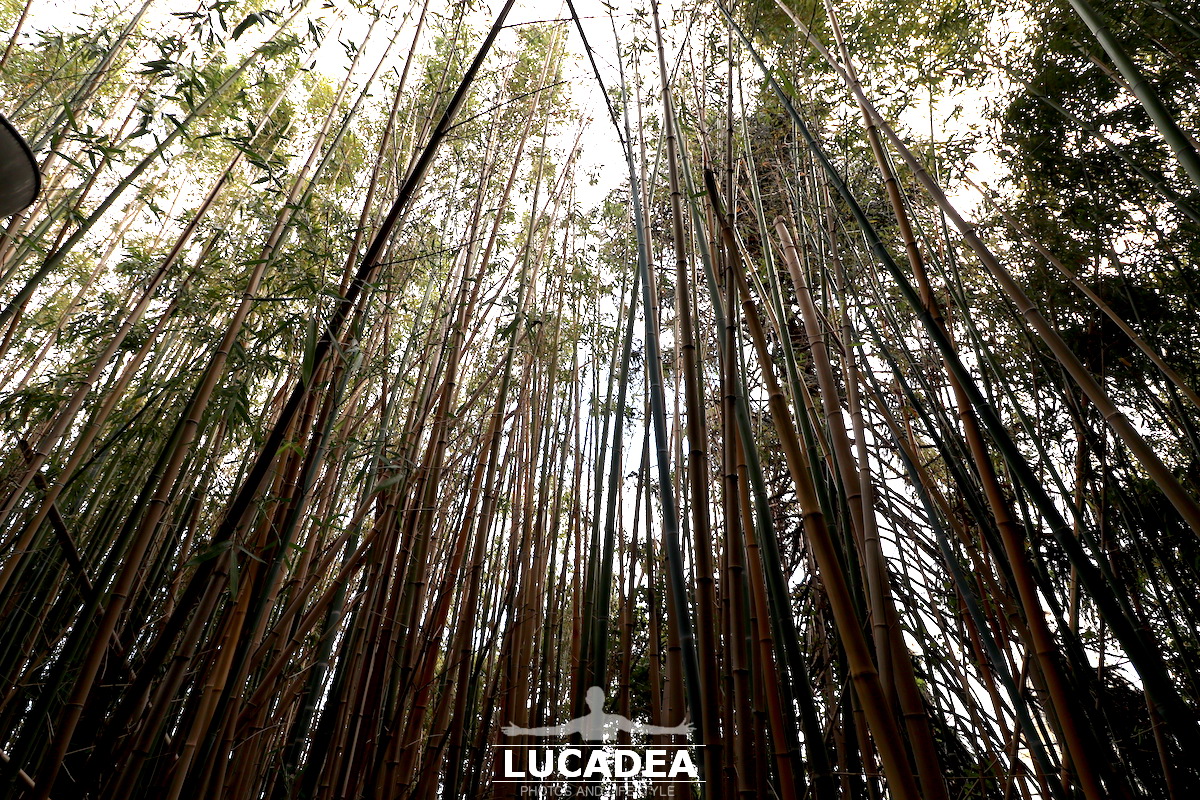
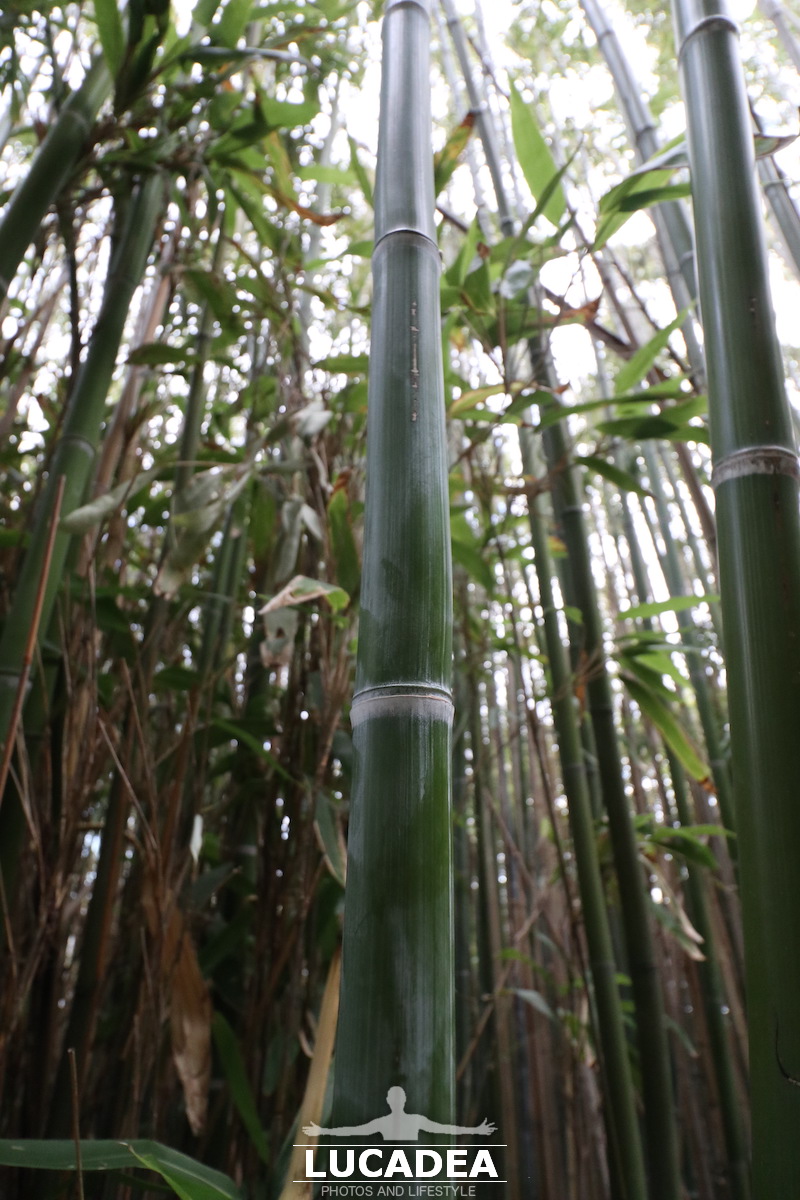
At first glance, this dense patch of vegetation could easily make me think of Asia, perhaps one of the landscapes I encountered during my travels in Vietnam. This time, however, there was no long journey involved: these bamboo canes grow close to where I live, forming a small but distinctive green area along the edge of Villa Rocca park.
That contrast is what first caught my attention. With my strong connection to Asia and Vietnam in particular, photographing bamboo so close to home felt slightly amusing. The subject could have belonged to a completely different part of the world, yet it was right there in Chiavari, somewhere I can reach without boarding a plane.
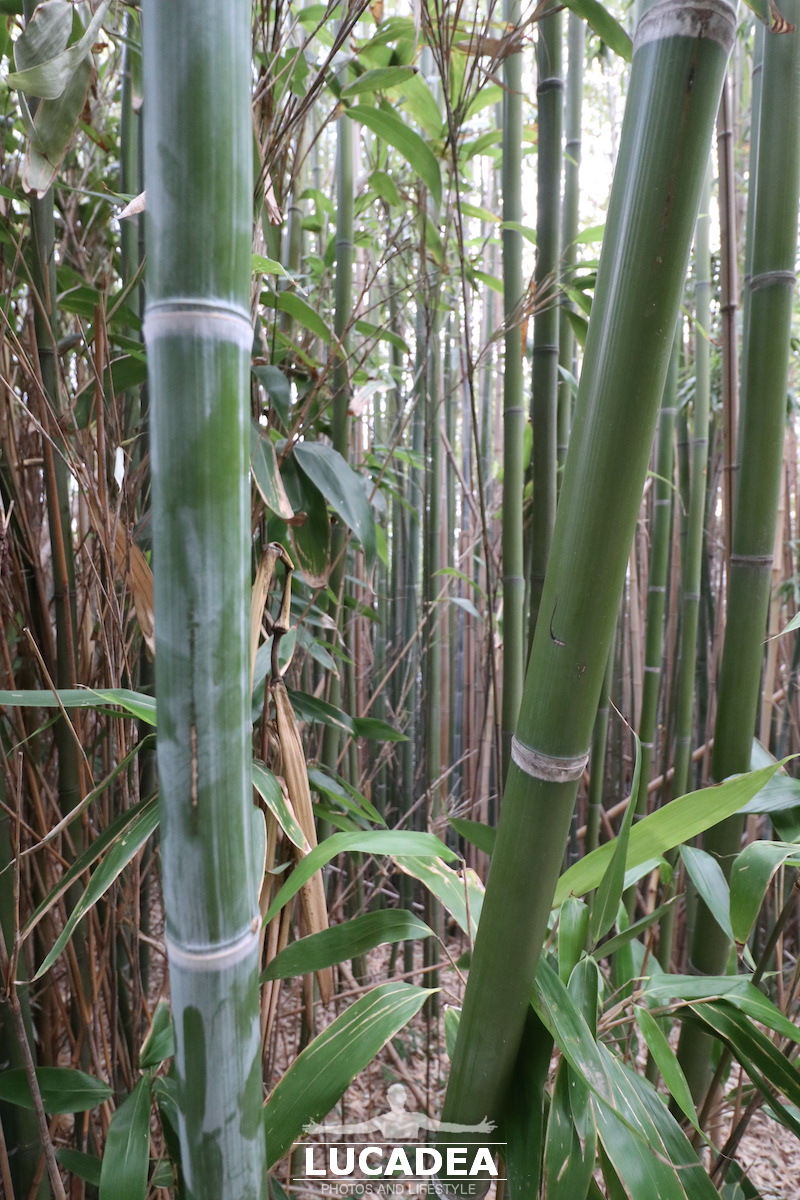
I took this photograph myself, and what I like most about it is its simplicity. There is no famous monument or spectacular landscape here. Instead, the image is built around a group of bamboo canes growing closely together, dense enough to create the impression of a tiny forest. It is exactly the kind of detail that can easily disappear into the background of a familiar place until you stop and look at it differently.
The bamboo grows near Villa Rocca in Chiavari, Liguria, Italy, where it helps mark the edge of the park. The setting is obviously very different from the large bamboo forests commonly associated with Asian landscapes, but the visual impression can still be surprisingly similar when the plants grow close enough together.
If you are looking for things to see in Chiavari beyond the better-known streets and historic sights, Villa Rocca also offers smaller details that can be interesting to discover while walking around. I would not describe this bamboo as a major attraction by itself. What interests me is its role in the landscape and the way an apparently ordinary plant can completely change the feeling of a photograph.
Bamboo is actually a large group of grasses rather than a single type of plant, and different species can reach very different sizes. Its characteristic segmented, hollow stems are easy to recognize, while dense growth can create the almost woodland-like appearance visible here. That is the small botanical detail behind the visual effect of this photograph.
I did not want to turn the subject into something it is not. I simply liked the fact that this little patch of bamboo exists in a familiar part of Chiavari. After taking so many photographs during trips to distant places, it can be surprisingly rewarding to discover that something close to home can create the same visual associations.
The connection with Vietnam comes naturally for me. People who know my photographs will already know that Asia, and Vietnam especially, have often been part of my photographic interests. So when I saw these bamboo canes, the association with those journeys appeared almost immediately. It is obviously not the same experience, but a plant so strongly associated with Asian landscapes can be enough to bring those memories back.
This is also one of the reasons I enjoy photographing places close to home. When travelling, almost everything deserves attention because almost everything is unfamiliar. In familiar surroundings, it is much easier to walk past the same details without really seeing them. A photograph like this reminds me that there are still small subjects worth noticing in places I already know well.
The image also fits naturally with the other stories from Chiavari that I have published on the blog. Those photographs come from a much more familiar environment than the places I have visited abroad, but they show another side of my relationship with the area. I do not always need to search for something extraordinary. Sometimes a small detail is enough to make me stop and take out the camera.
And perhaps that is what I like most about these bamboo canes. They are simply there, growing along the edge of Villa Rocca park, but for a moment they can make a familiar corner of Chiavari feel thousands of kilometres away.

Have you ever found something close to home that suddenly reminded you of another part of the world? Add a comment or go to the bottom of the site to read what other visitors have written.

Bamboo canes in Villa Rocca park in Chiavari, a green corner that recalls Asian landscapes

Bamboo canes in Villa Rocca park in Chiavari, a green corner that recalls Asian landscapes

Bamboo canes in Villa Rocca park in Chiavari, a green corner that recalls Asian landscapes

Photos taken with Canon EOS M100 and lens Canon EF-S 10-18.

Add one  comment to this article or read  here what other visitors have written.
 
Adv
 
Disclamer

The rights on images, videos, choruses, text and all other material on the LUCADEA.com website are governed as per  Copyright page.

This page has been viewed 1 times today.
This month it has been viewed 1 times.
In total it has been viewed 1 times.
 

A camel caravan in Timanfaya Park

I cammelli del Timanfaya nell'isola di Arrecife

A camel caravan in Timanfaya Park on the island of Lanzarote.
Last year, I finally managed to visit Timanfaya National Park on the island of Lanzarote.
The park is visited via a tour, in my case by bus, through the many volcanic peaks (both active and inactive) in the area.
However, there is also the possibility of taking a camel tour, animals that were widely used in the past on the island — and this is the camel caravan I photographed.

Do you know the city of Arrecife on the island of Lanzarote? Add a comment or go to the bottom of the site to read what other visitors have written.

I cammelli del Timanfaya nell'isola di Arrecife

I cammelli del Timanfaya nell'isola di Arrecife

I cammelli del Timanfaya nell'isola di Arrecife

Photos taken with Canon EOS RP and Tamron 16-300 lens.

To see all the photos I took in the park, click here:
foto gallery

Timanfaya National Park is a national park covering the southern portion of Tinajo and the northern portion of Yaiza, in Lanzarote, Spain. The park occupies a substantial part of the southwestern quadrant of the island of Lanzarote.
Continue and learn more on Wikipedia

Uma caravana de camelos no parque Timanfaya, na ilha de Arrecife – Une caravane de chameaux dans le parc Timanfaya sur l’île d’Arrecife – Una caravana de camellos en el parque de Timanfaya en la isla de Arrecife – Uma caravana de camelos no parque Timanfaya, na ilha de Arrecife – Eine Kamelkarawane im Timanfaya-Park auf der Insel Arrecife – Đoàn lạc đà ở công viên Timanfaya trên đảo Arrecife – 阿雷西费岛蒂曼法亚公园的骆驼商队 – アレシフェ島のティマンファヤ公園のラクダのキャラバン

The rose garden of Nervi Parks out of season

Il roseto dei Parchi di Nervi fuori stagione

The Rose Garden of the Nervi Parks Off-Season.
The Rose Garden of the Nervi Parks is a charming place to visit even off-season, when the roses aren’t in bloom. During these times, you can still enjoy the beauty of the park and the tranquility it offers. The green spaces, well-maintained paths, and sea views make the park an ideal place for relaxing walks and moments of reflection.
Furthermore, the Nervi Parks are home to other interesting attractions, such as the Museum of Modern and Contemporary Art and the Gallery of Modern Art, which can enrich your visit with a cultural touch. Even without the roses in bloom, the park retains its charm and offers a pleasant experience in every season.
Located in the splendid setting of the Nervi Parks, the Rose Garden is one of Genoa’s botanical jewels. Inaugurated in 1981 thanks to the initiative of Dr. Luigi Viacava, then director of the Gardens and Forestry Department of the City of Genoa, the Rose Garden covers an area of ​​approximately 6,000 square meters and houses a vast collection of roses of various varieties and colors.
The Rose Garden was founded with the aim of creating a space dedicated to the beauty and diversity of roses. Initially, it housed approximately 800 varieties, but over the years, that number has been reduced to about a third. Despite this, the Rose Garden continues to be a place of great botanical charm and interest.

Have you ever visited the Nervi Parks outside of spring? Add a comment or go to the bottom of the site to read what other visitors have written.

Il roseto dei Parchi di Nervi fuori stagione

Photo taken with Canon EOS RP and Canon RF 28 lens.

I took several photos during a couple of visits to the parks and the promenade. If you’d like to see them, click here:
foto gallery

The rose garden of the Nervi Parks out of season – La roseraie des Parcs Nervi hors saison – La rosaleda de los Parques Nervi fuera de temporada – O roseiral dos Parques Nervi fora de época – Der Rosengarten des Nervi Parks außerhalb der Saison – Vườn hồng của công viên Nervi hết mùa

This post was written with the help of Copilot, an AI-powered virtual assistant.

The sumptuous Villa Grimaldi Fassio in the Nervi Parks

La sontuosa Villa Grimaldi Fassio nei Parchi di Nervi

The sumptuous Villa Grimaldi Fassio in the Nervi Parks.
Villa Grimaldi Fassio is one of the architectural and cultural jewels nestled in Genoa’s Nervi Parks, a place where history, art, and nature blend in perfect harmony.
Located on Via Capolungo, within the vast Nervi Parks complex, Villa Grimaldi Fassio is a historic residence likely dating back to the 16th century. Its presence is documented since at least 1773, and over the centuries it has undergone various phases of ownership and transformation. The last significant renovation dates back to the late 1950s, when architect Luigi Carlo Daneri redesigned the spaces to adapt them to the residential needs of the Fassio Lomellini family, Genoese shipowners who were its last private owners.
Since 1979, the villa has been owned by the City of Genoa and houses the Raccolte Frugone, an art collection featuring works by Italian and international artists active between the second half of the 19th century and the early decades of the 20th century. Among the artists featured are Silvestro Lega, Giovanni Boldini, Giuseppe De Nittis, and many others. The elegant and bright exhibition rooms offer a refined journey through painting, sculpture, and decorative arts.
The villa is immersed in an English-style park of approximately 28,000 square meters, which slopes gently towards the sea. The garden is an oasis of tranquility, with manicured lawns, centuries-old trees, fountains, and rose gardens. Strolling along the park’s paths immerses you in a suspended atmosphere, where every corner tells a story and every glimpse offers a suggestive view of the Golfo Paradiso.
Next to the villa is an 18th-century chapel, now deconsecrated, which adds a further touch of charm to the complex. Villa Grimaldi Fassio is not just a cultural stopover, but a complete sensory experience, ideal for those who love art, nature, and the discreet beauty of authentic places.

Have you ever visited the Nervi Parks?
Add a comment or go to the bottom of the site to read what other visitors have written.

La sontuosa Villa Grimaldi Fassio nei Parchi di Nervi

Photo taken with Canon EOS RP and Canon RF 28 lens.

I took several photos during a couple of visits to the parks and the promenade. If you’d like to see them, click here:
photo gallery

Where is the villa located?

The sumptuous Villa Grimaldi Fassio in the Nervi Parks – La somptueuse Villa Grimaldi Fassio dans les parcs de Nervi – La suntuosa Villa Grimaldi Fassio en los Parques Nervi – A sumptuosa Villa Grimaldi Fassio nos Parques Nervi – Die prachtvolle Villa Grimaldi Fassio in den Nervi-Parks – Biệt thự xa hoa Grimaldi Fassio ở Nervi Parks

This post was written with the help of Copilot, an AI-powered virtual assistant.

Sempione Park in the center of Milan

Il Parco Sempione nel centro di Milano

Sempione Park in the center of Milan.
In the beating heart of Milan, amidst the majestic architecture and urban bustle, lies an oasis of tranquility and beauty: Sempione Park. This green lung of the city is a place where nature harmoniously blends with history and culture, offering a refreshing and inspiring refuge for Milanese residents and visitors alike.
Sempione Park, spanning 47 hectares, is located just behind the Sforza Castle, one of Milan’s historic icons. Its history dates back to the 19th century, when architect Emilio Alemagna presented a plan to transform the area surrounding the castle into a public park. It was designed in the English Romantic style, following the trends of the time, with wide lawns, ancient trees, ponds, and winding paths.
Sempione Park boasts a series of iconic attractions that make it a must-see for residents and tourists:
The Arch of Peace: At the western end of the park stands the imposing Arch of Peace, inspired by the Arch of Constantine in Rome. Built in the 19th century in honor of Napoleon, it represents an icon of grandeur and majesty.
The Secret Gardens: Within the park are enchanting hidden gardens, perfect for a romantic stroll or a quiet moment immersed in nature.
The Milan Civic Aquarium: Housed in an Art Nouveau building, the aquarium offers a surprising variety of marine species from around the world, making it a fascinating destination for both adults and children.
The Civic Arena: This ancient amphitheater hosts sporting events, concerts, and cultural performances, adding vitality and dynamism to the park.

Sempione Park is much more than just a green space; it is a thrilling refuge where nature, history, and culture blend together in a unique blend. It offers a refreshing break from the hustle and bustle of city life, encouraging relaxation, exploration, and well-being. Whether you’re a Milanese resident seeking serenity or a tourist eager to discover the city’s most authentic side, Parco Sempione will welcome you with open arms, offering an unforgettable experience in the heart of Milan.

Have you ever been to the park?
Add a comment or go to the bottom of the site to read what other visitors have written.

Il Parco Sempione nel centro di Milano

Il Parco Sempione nel centro di Milano

Photos taken with Canon EOS RP and Canon RF 24-50 lens.

Click here if you want to see all the photos I took:
foto gallery

Here is where the park is located:

The name derives from Corso Sempione, the monumental roadway built during the Napoleonic era along the historic Via del Seprio, with the new Porta Sempione, successor to the ancient Porta Giovia. Sempione Park stands where the Visconti ducal park called “Barcho” once stood, located near the Sforza Castle. It was enlarged and fenced by the Sforza family until it reached over 3 million square meters (300 hectares).
Continue and learn more at Wikipedia

Sempione Park in the center of Milan – Parc Sempione au centre de Milan – Parque Sempione en el centro de Milán – Parque Sempione no centro de Milão – Sempione Park im Zentrum von Mailand – Công viên Sempione ở trung tâm Milan

The text of this post was written with the help of ChatGPT, a language model from OpenAI.

One of the galleries of Park Guell in Barcelona

Una delle gallerie del Parco Guell a Barcellona

One of the galleries in Park Güell in Barcelona.
I’ve been wanting to visit this famous Barcelona attraction for a long time, and last year I finally got around to it.
What’s impressive are the forms that architect Antoni Gaudí conceived and applied in this visionary architectural project.
Like this gallery with rounded shapes that are reminiscent of a sea wave.

Have you ever visited this famous Barcelona park?
Add a comment or go to the bottom of the site to read what other visitors have written.

Photos taken with Canon EOS RP and Tamron 16-300.

This is the park’s official website: parkguell.barcelona.

To see all the photos, click here:
foto gallery

Here’s where the park is located:

Park Güell (Parc Güell in Catalan and Park Güell in its original name) is a 17.18-hectare public park with gardens and architectural features located in the upper part of the city of Barcelona, ​​on the southern slope of Mount Carmel. Conceived as an urban complex, it was designed by the architect Antoni Gaudí, the greatest exponent of Catalan Modernism, under the direction of the impresario Eusebi Güell, and inaugurated as a public park in 1926.
Continue and learn more at Wikipedia

One of the galleries of Park Güell in Barcelona – Une des galeries du Parc Güell à Barcelone – Una de las galerías del Parque Güell de Barcelona – Uma das galerias do Parque Guell em Barcelona – Eine der Galerien des Park Güell in Barcelona – Một trong những phòng trưng bày của Park Güell ở Barcelona – 巴塞罗那桂尔公园的画廊之一 – バルセロナのグエル公園のギャラリーの 1 つ

Walking Among the Ruins of Valle Christi

Passeggiando dal monastero di Valle Christi a Rapallo

Walking Among the Ruins of Valle Christi.
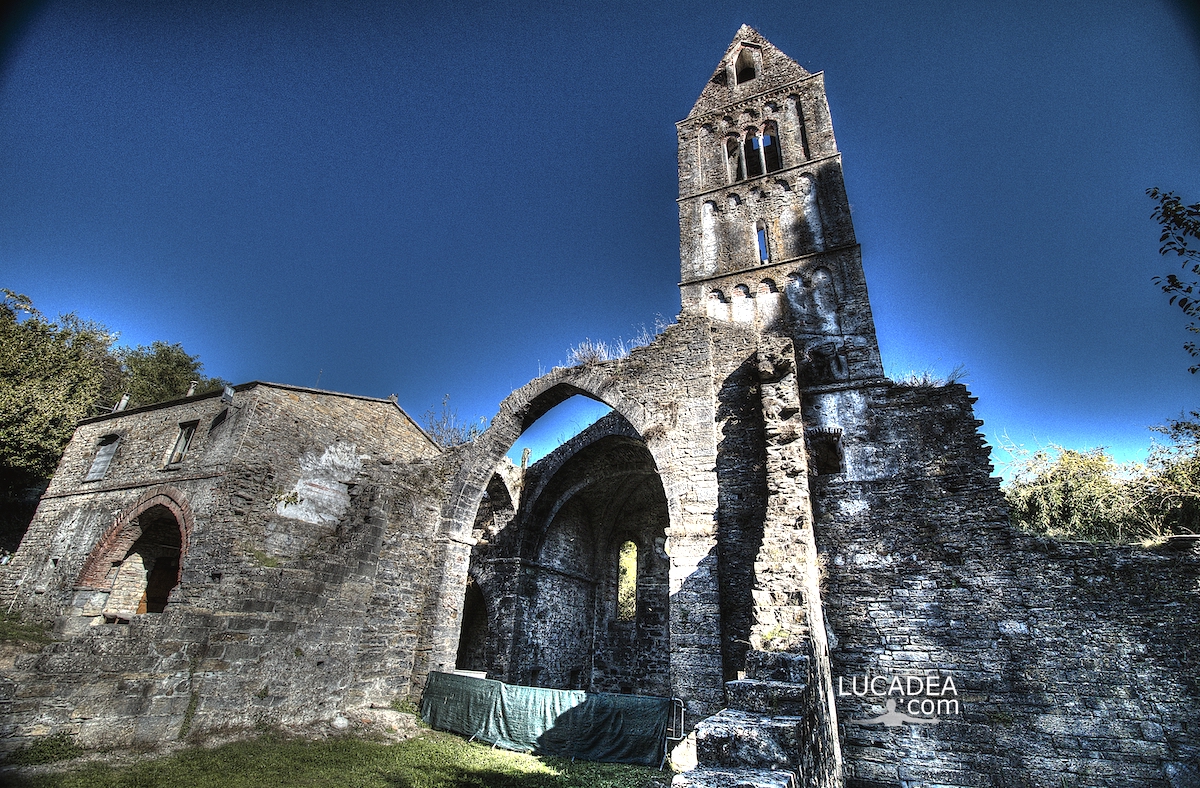
Among the places I had wanted to visit for a long time around the Tigullio area, Valle Christi was certainly one of the most intriguing. When I finally found the opportunity to go there, I quickly realized that the wait had been worthwhile. The ruins surrounded by greenery, the quiet atmosphere of the park and the feeling of the place left a strong impression on me.
Valle Christi is located in Rapallo, Liguria, Italy, in a slightly secluded area not far from the town itself. Despite its peaceful setting, it is surprisingly easy to reach. While walking through the grounds, I found myself wondering why I had postponed the visit for so long. Sometimes we travel far away to discover new places while overlooking interesting locations that are practically on our doorstep.
As soon as I entered the park, I started exploring the paths leading toward the remains of the old monastery. The surrounding vegetation helps create a sense of separation from the rest of the town. It is one of those places where everyday noise seems to fade away and where you naturally slow down to observe your surroundings more carefully.
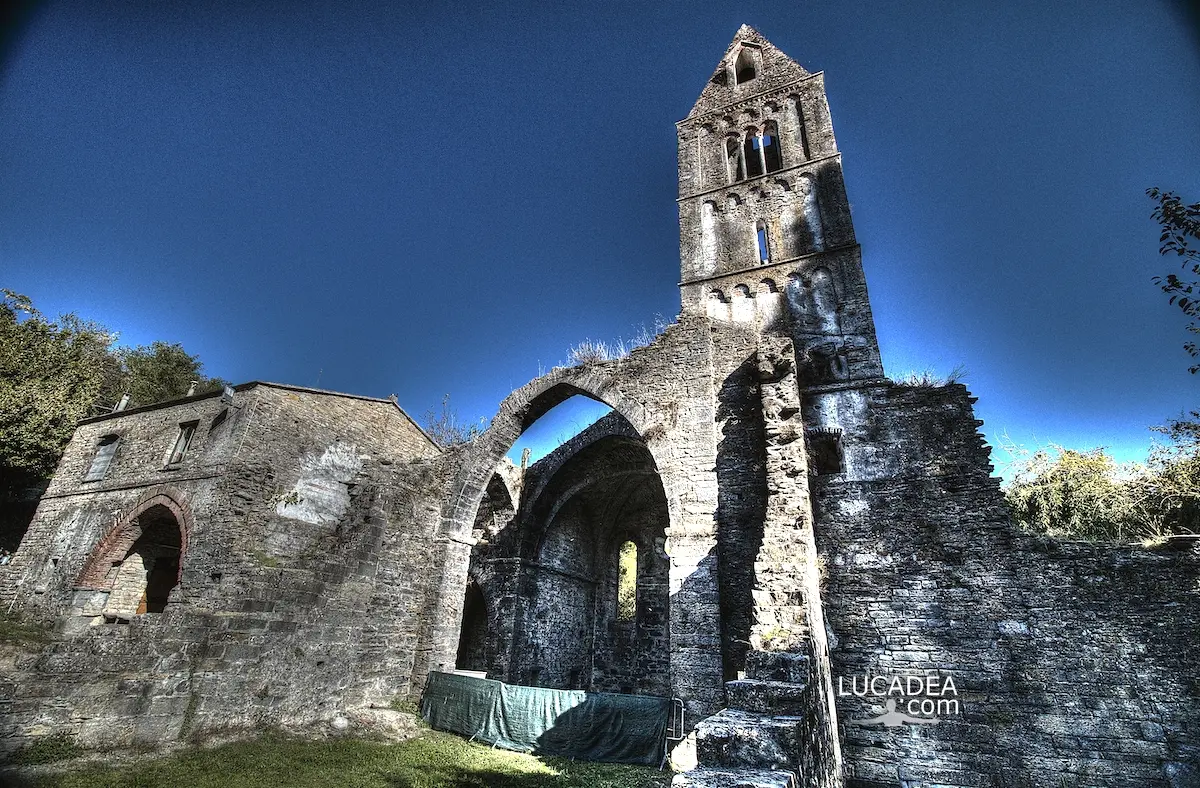
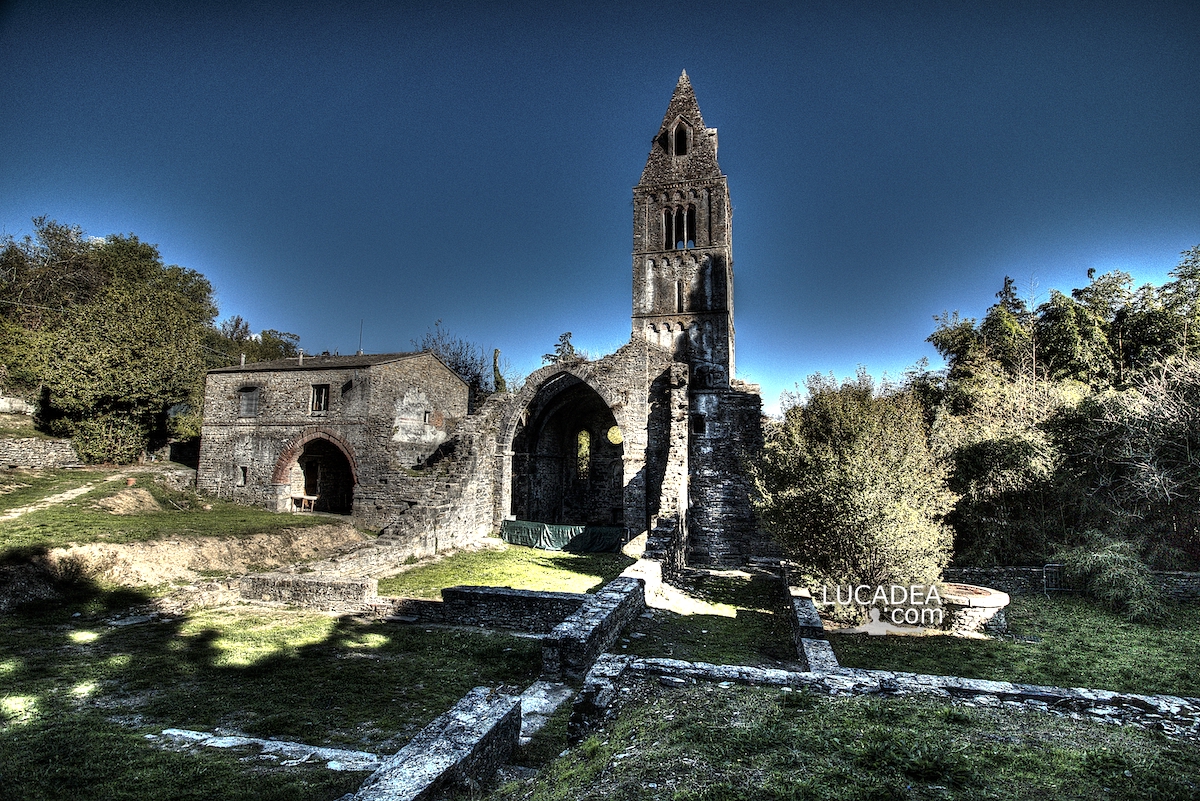
I took this photograph during that walk. I wanted to capture not only the ruins themselves but also the environment around them. When photographing a historic site, it is easy to focus exclusively on the architecture. Here, however, the relationship between the stone structures and the surrounding landscape seemed equally important.
If you are visiting Rapallo and looking for places beyond the seafront and the castle, Valle Christi is worth considering. It is not a location that impresses through size or grandeur. Instead, it attracts attention through atmosphere and character. Walking among the remains, you become very aware of the passage of time.
The monastery dates back to the thirteenth century and was originally connected with a community of Cistercian nuns. Over the centuries it experienced a complex history that eventually led to its abandonment. Today, the most recognizable remains belong to the Gothic church, whose walls still convey a sense of the site’s former importance. It is a small historical detail that adds depth to the visit without overshadowing the experience itself.
What impressed me most was not a specific architectural feature but the overall feeling of the place. Roofless walls, openings framing the sky and nature gradually blending with stone create a distinctive atmosphere. It is a location that seems to combine history with a certain sense of mystery.
During my walk through the park, I repeatedly stopped to observe the ruins from different angles. Every viewpoint slightly changed the perception of the space and offered new photographic opportunities. It is the kind of place where photography comes naturally from careful observation rather than from rushing to take pictures.
I have already shared several photographs from the Tigullio area on the blog, including coastal walks and historic villages. Valle Christi fits naturally into that collection because it shows a lesser-known side of the region, away from the more familiar images of the Ligurian coast.
Although the complex now survives only as ruins, it never feels abandoned. The site is maintained and accessible, making the visit enjoyable and welcoming. It encourages visitors to slow down, take their time and appreciate details that might otherwise go unnoticed.
Looking back at this photograph, I immediately remember the quiet atmosphere of that day. The greenery, the stone walls and the silence all come together in a way that reflects the character of Valle Christi. You do not need to be particularly interested in history or architecture to appreciate it; curiosity alone is enough.
That is why I often recommend Valle Christi when someone asks me about interesting places to see near Rapallo. It is easy to reach, yet it offers a feeling of stepping away from everyday life for a while.

Have you ever visited the ruins of Valle Christi and experienced their unique atmosphere for yourself? Add a comment or go to the bottom of the site to read what other visitors have written.

Ruins of Valle Christi monastery in Rapallo surrounded by greenery within the peaceful historic park

Ruins of Valle Christi monastery in Rapallo surrounded by greenery within the peaceful historic park

Photos taken with Canon EOS M100 and Canon EF-S 10-18 lens.

If you want to see all the photos I took at the monastery, click here:

There is also the official website for the festival celebrated annually there: vallechristi.it.

The monastery of Santa Maria in Valle Christi was a Catholic place of worship located in the hamlet of San Massimo, on Via San Massimo, in the municipality of Rapallo in the metropolitan city of Genoa. The former 13th-century monastic complex is listed as an Italian national monument; it is one of the few surviving examples of Gothic architecture in the entire Ligurian region.
Continue and learn more at Wikipedia

Chiavari seen from the Rocca Park

Chiavari vista dal Parco Rocca

Chiavari seen from Rocca Park.
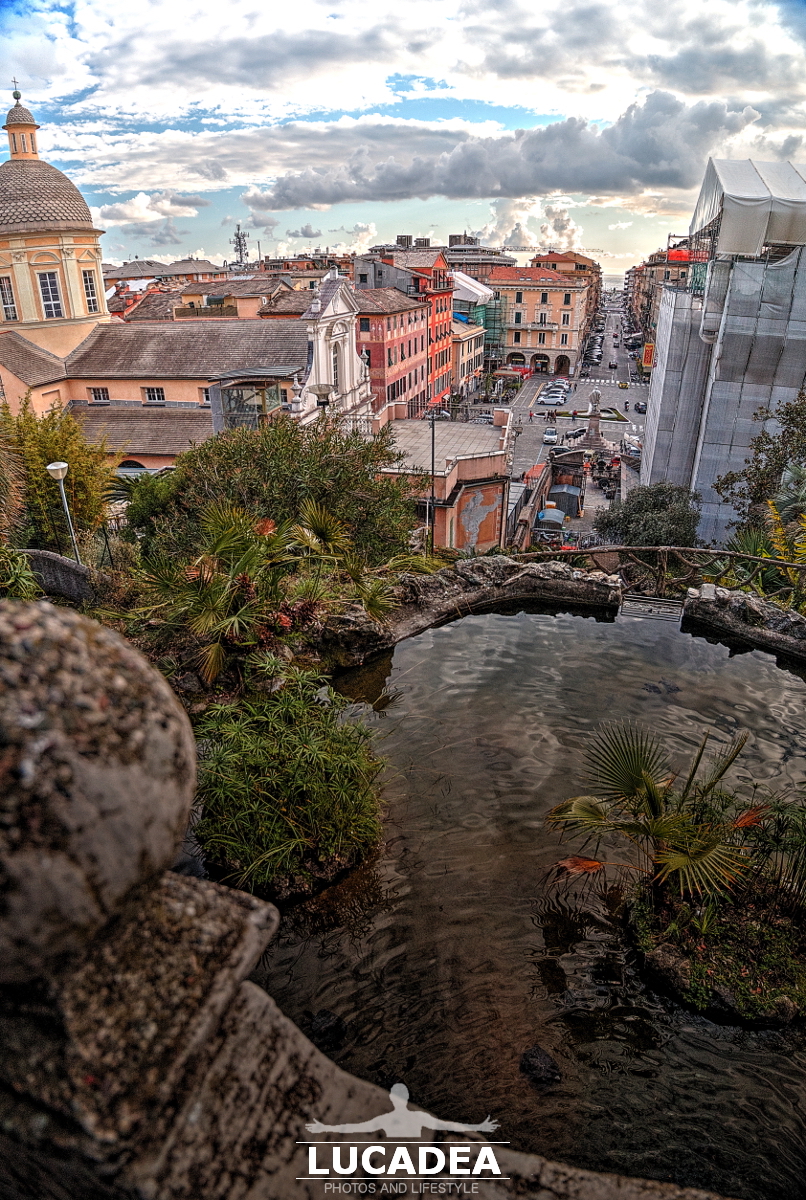
Some time ago I visited Rocca Park in Chiavari.
Walking along the flowerbeds and fountains, I found this view: the turtle pond at the bottom (if you look closely, you can even see one), the former Church of San Francesco (now the Auditorium), Piazza Matteotti, and Corso Garibaldi at the end.

Do you know Rocca Park? Add a comment or go to the bottom of the site to read what other visitors have written.

Chiavari vista dal Parco Rocca

Photo taken with Canon EOS M100 and lens Canon EF-S 10-18.

Chiavari seen from the Rocca Park – Chiavari vu du parc Rocca – Chiavari visto desde el Parque Rocca – Vista de Chiavari a partir do Parque Rocca – Chiavari vom Rocca Park aus gesehen – Chiavari nhìn từ Công viên Rocca – 从罗卡公园眺望基亚瓦里街 – ロッカ公園から見たキアヴァリ

The statue of Mariele Ventre in Sestri Levante

La statua di Mariele Ventre a Sestri Levante

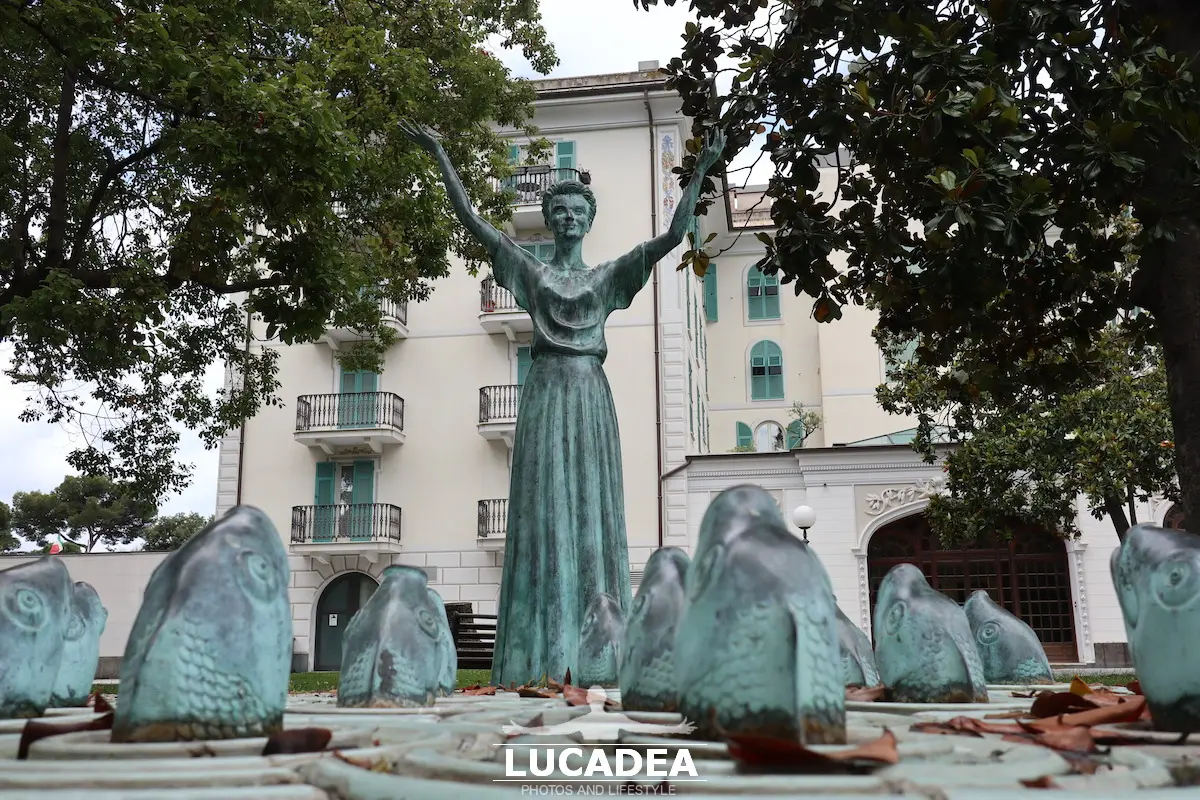
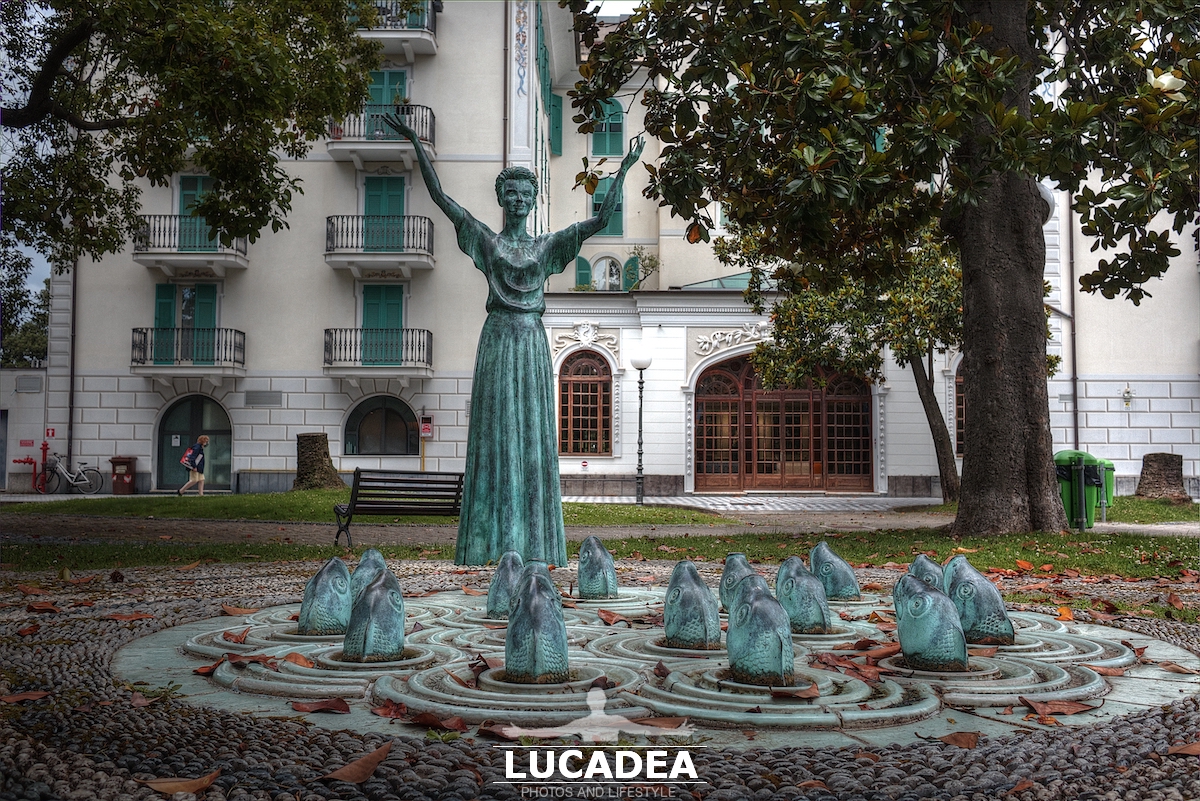
The statue of Mariele Ventre in Sestri Levante.
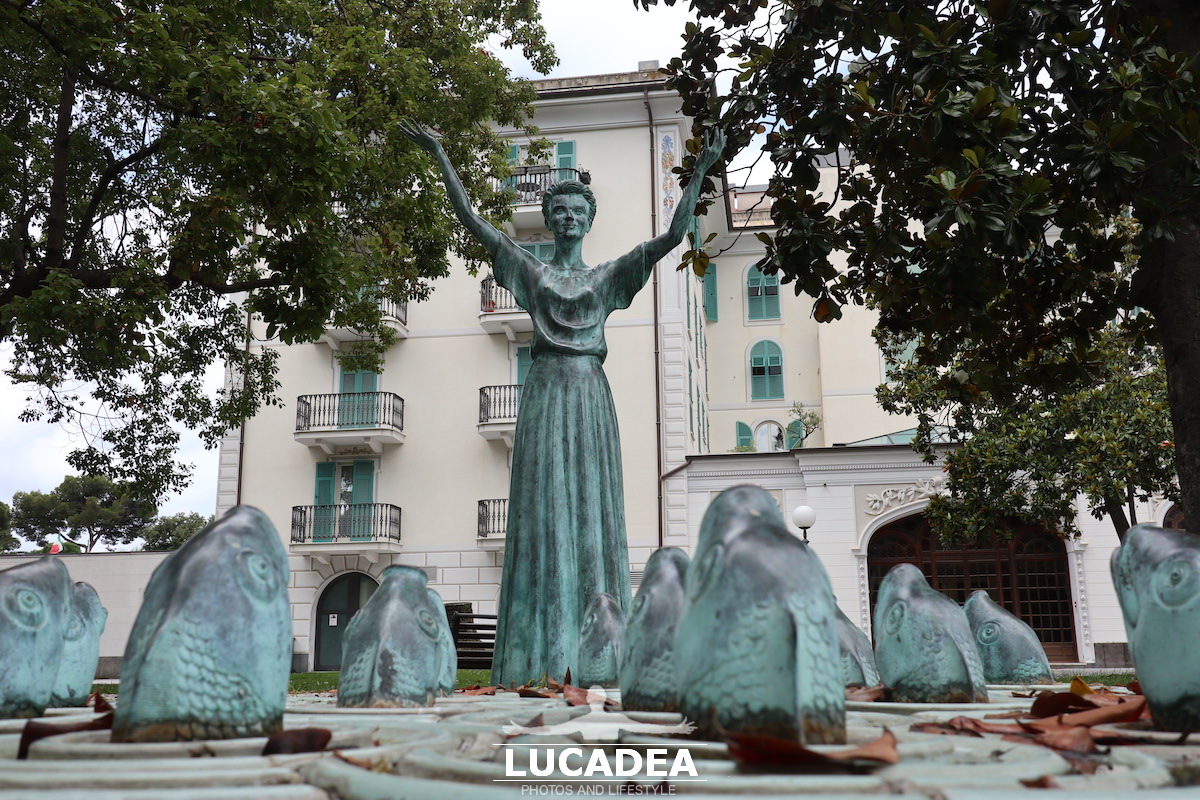
The beautiful bronze statue of the famous woman who founded the Piccolo Coro dell’Antoniano in Bologna and who will soon be beatified.
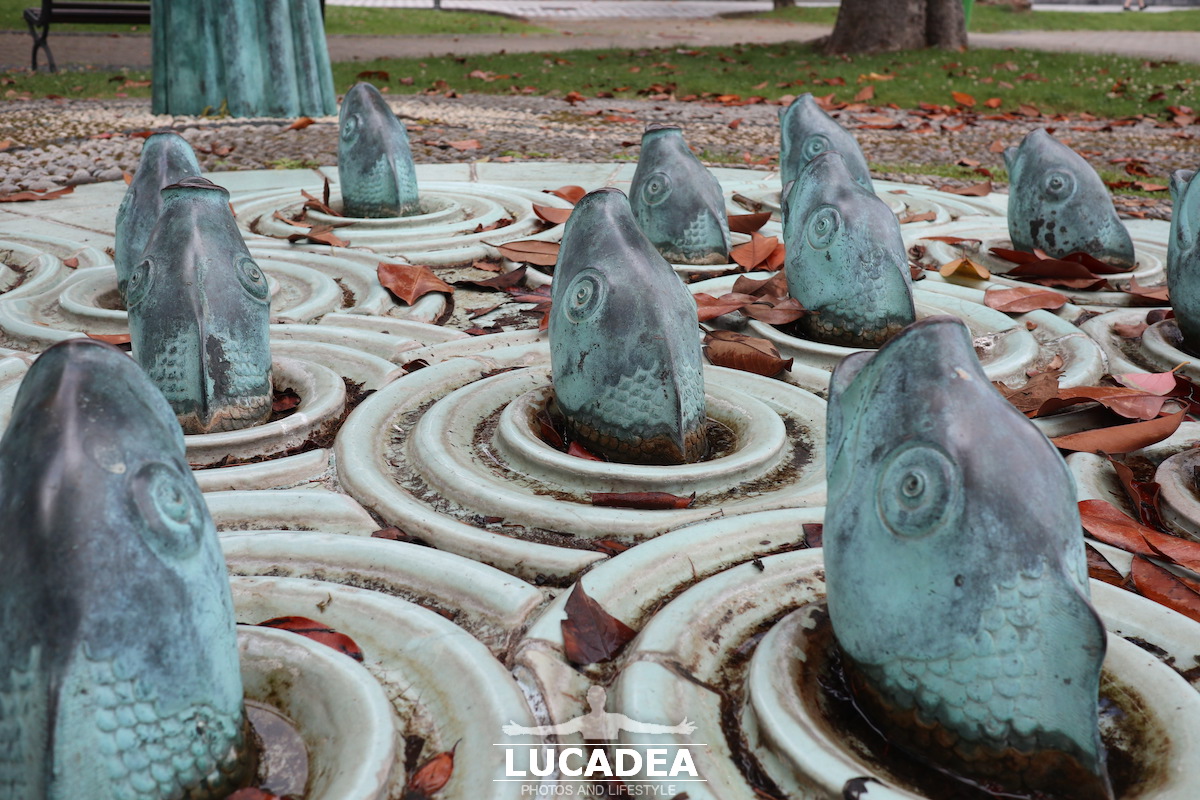
In the depiction by Sestri artist Alfredo Gioventù, the director teaches the fish to sing!

Have you ever seen this statue? Add your own comment or go to the bottom of the site to read what other visitors have written.

La statua di Mariele Ventre a Sestri Levante

La statua di Mariele Ventre a Sestri Levante

La statua di Mariele Ventre a Sestri Levante

Photos taken with Canon EOS M100 camera and Canon EF-M 22 lens.

Maria Rachele Ventre, known as Mariele (Bologna, July 16, 1939 – Bologna, December 16, 1995), was an Italian choir director. She was the founder of the Piccolo Coro dell’Antoniano in Bologna, which she directed for over thirty years. His beatification process began in 2013.
Continue and learn more on Wikipedia

The statue of Mariele Ventre in Sestri Levante – La statue de Mariele Ventre à Sestri Levante – La estatua de Mariele Ventre en Sestri Levante – A estátua de Mariele Ventre em Sestri Levante – Die Statue von Mariele Ventre in Sestri Levante – Tượng Mariele Ventre ở Sestri Levante – 塞斯特里莱万特的 Mariele Ventre 雕像 – セストリ レバンテのマリエーレ ヴェントレ像
🏠
  • Italiano