Dream Beaches: The Beautiful Hòn Khô in Vietnam

Spiagge da sogno: la bella Hòn Khô in Vietnam

Dream Beaches: The Beautiful Hòn Khô in Vietnam.
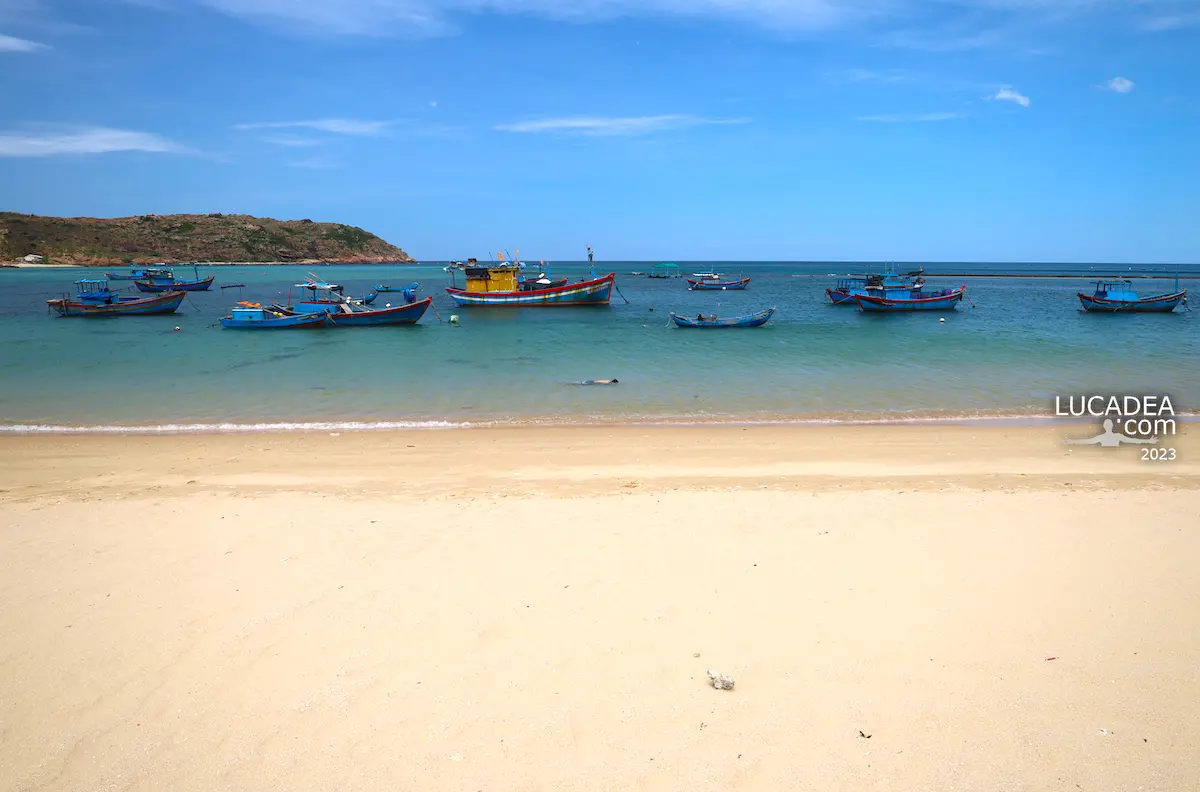
Hòn Khô Beach, on Vietnam’s central coast, is the kind of tropical destination that immediately captures the imagination of anyone who loves the sea and unspoilt natural landscapes. Located a short distance from the lively city of Nha Trang, this Vietnamese beach offers a quieter atmosphere and a very different feeling from the country’s better-known seaside resorts.
When I imagine an idyllic tropical beach, I picture clear water, pale sand, lush vegetation and unusual rock formations along the shoreline. Hòn Khô brings all these elements together in a particularly attractive setting. The sea displays beautiful turquoise shades, contrasting with the green hills and the darker colours of the rocks. It is a landscape full of different shapes and tones, with plenty of details to catch the eye.
One of the most appealing aspects of this place is its peaceful atmosphere. Away from the busiest tourist destinations, Hòn Khô offers the opportunity to enjoy the coast at a slower pace. It is easy to understand why a beach like this appeals to travellers looking for a little time away from crowded resorts. Instead of rushing from one attraction to another, visitors can simply take in the scenery, listen to the water and enjoy the natural surroundings.
The coastline itself provides much of the beach’s charm. The combination of rocky formations, green vegetation and light-coloured sand creates an interesting contrast. The changing shades of the sea add another layer of colour to the view, making the beach an appealing subject for photography. I particularly like places where the landscape is not made up of just one dominant feature, but where different natural elements come together to create a balanced composition.
The clear water is also one of Hòn Khô’s main attractions. For those who enjoy exploring beneath the surface, snorkelling offers a chance to discover the underwater environment. With a mask and snorkel, visitors can look for tropical fish, colourful corals and other forms of marine life. Even for those who prefer to stay on the shore, the transparency of the water makes the sea itself an attraction worth spending time admiring.
Of course, there is no need to be an adventurous traveller to appreciate this beach. Hòn Khô is also a place to relax, enjoy the sunshine, walk along the water’s edge and take in the scenery. Its rocky coastline gives the landscape character, while the pale sand and turquoise sea create the familiar colours of a tropical paradise.
For me, places like this are among the most rewarding discoveries of travelling. They offer the chance to experience a different landscape, appreciate nature and step away from everyday routines for a while. Hòn Khô is a beautiful corner of Vietnam that invites visitors to slow down and enjoy the simple pleasure of being by the sea.

Would you enjoy spending a relaxing day on a beach like Hòn Khô? Add a comment or go to the bottom of the site to read what other visitors have written.

Conosci il Vietnam? Aggiungi un commento oppure vai nella parte bassa del sito per leggere cosa hanno scritto gli altri visitatori.

Hòn Khô Beach in Vietnam, with turquoise water, pale sand and rugged rock formations along the tropical coastline

Hòn Khô Beach in Vietnam, with turquoise water, pale sand and rugged rock formations along the tropical coastline

Hòn Khô Beach in Vietnam, with turquoise water, pale sand and rugged rock formations along the tropical coastline

Photos taken with the Canon EOS RP camera and Canon RF 24-50 lens.

Here’s where the beach is located:

Add one  comment to this article or read  here what other visitors have written.
 
Adv
 
Disclamer

The rights on images, videos, choruses, text and all other material on the LUCADEA.com website are governed as per  Copyright page.


This page has been viewed 1 times today.
This month it has been viewed 1 times.
In total it has been viewed 1 times.
 

Ky Co beach in Quy Nhon, Vietnam

Mare da sogno: la spiaggia di Ky Co in Quy Nhon in Vietnam

Ky Co beach in Quy Nhon, Vietnam.
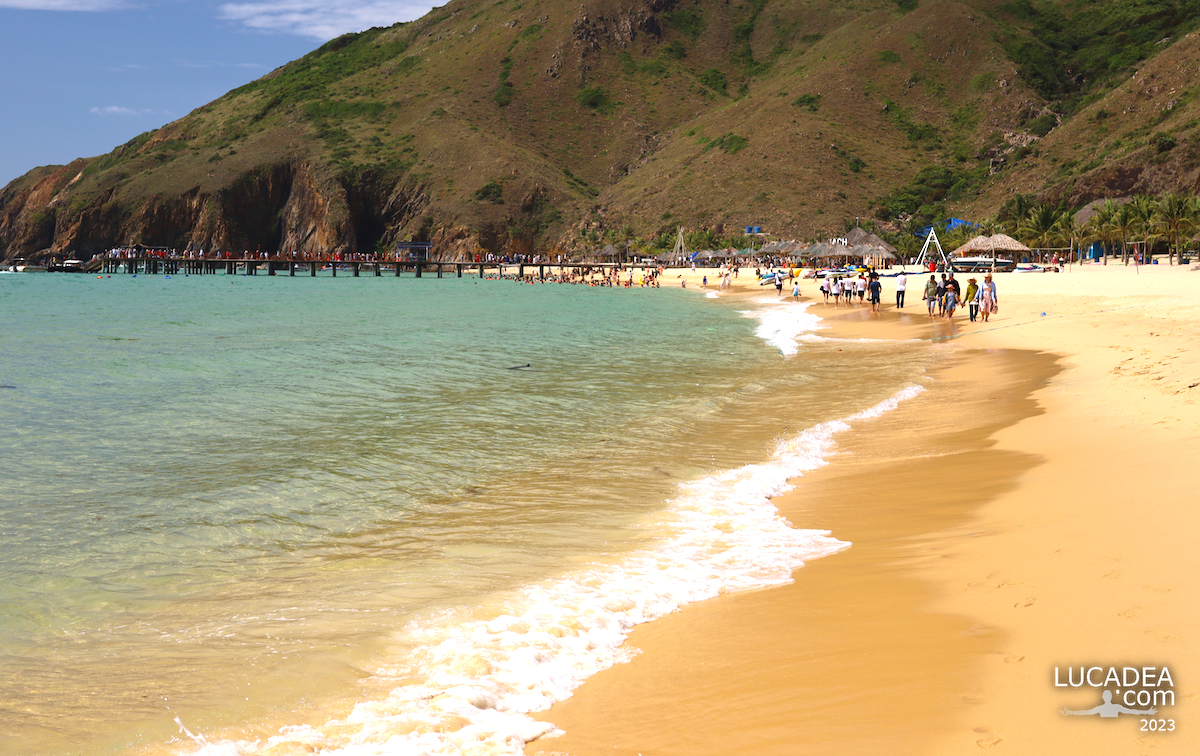
During my latest holiday in Vietnam, I had another opportunity to stop and photograph this beautiful stretch of coastline, and this is one of the images I chose to keep. Ky Co stayed in my memory because of the direct relationship between the beach, the sea and the landscape around it.
If you are wondering what to see in Quy Nhon, Ky Co beach is certainly one of the coastal places worth seeing. I experienced it mainly through photography, trying to collect a few views that could preserve at least part of what it felt like to stand in front of this landscape.
This photograph comes from a moment during my latest trip to Vietnam. There is no complicated story behind the image. I simply like having a visual record of the places I have actually visited, and when I travel I usually keep my camera ready for the views that catch my attention along the way.
Ky Co is located near Quy Nhon, in Binh Dinh province on the central coast of Vietnam. It offers a coastal setting quite different from the better-known images of Vietnam’s large cities. Here, the sea, beach and surrounding rocky landscape become the main subjects, and for me that simplicity is part of what makes the location interesting.
Looking at this photograph brings back one of the things I enjoy most about travelling. Arriving somewhere unfamiliar means that, for a few moments, I do not yet know exactly where the best viewpoint will be. Sometimes I take the camera out immediately. Other times I stop, look around and try to understand what has actually caught my eye.
With Ky Co, it was the character of the beach and the surrounding coastline that made me want to photograph it. A travel photograph does not always have to document a major experience or an entire itinerary. Sometimes it can simply preserve the memory of a short stop, a particular stretch of coast and the impression it left behind.
There is also a small geographical detail that I find interesting. Quy Nhon is the coastal capital of Binh Dinh province, while Ky Co is one of the beach destinations in the surrounding area. This makes the relationship between the city and the nearby coastline particularly interesting: a relatively short journey can take you from an urban setting to a much more open coastal landscape.
If you are looking for a beach in Vietnam with strong photographic appeal, Ky Co offers a very different subject from the country’s busy streets and historic cities. Here, the story is told by the coastline itself, by the sea and by the relationship between the water and the land.
This is also why I enjoy publishing several photographs from the same trip. One image can rarely tell the whole story of a place. Each photograph captures a different fragment, and together those fragments often recreate the memory of a holiday much better than a general description could.
On my photo blog I have already shared other moments and places from my travels, and I like keeping those images connected. Sometimes looking at a new photograph brings back the memory of an older one, creating a kind of visual diary that grows naturally over time.
This photograph of Ky Co is therefore simply another small piece of my latest trip to Vietnam. A beach, a stretch of coastline and a moment when I stopped to look through my camera and keep what I saw.

Have you ever been to a beach in Vietnam? Add a comment or go to the bottom of the site to read what other visitors have written.

Ky Co beach in Quy Nhon, Vietnam, showing the coastline and sea in a quiet travel photograph

Ky Co beach in Quy Nhon, Vietnam, showing the coastline and sea in a quiet travel photograph

Ky Co beach in Quy Nhon, Vietnam, showing the coastline and sea in a quiet travel photograph

Photos taken with Canon EOS RP and lens Canon RF 24-50.

Here is where the beach is located:

Add one  comment to this article or read  here what other visitors have written.
 
Adv
 
Disclamer

The rights on images, videos, choruses, text and all other material on the LUCADEA.com website are governed as per  Copyright page.

This page has been viewed 1 times today.
This month it has been viewed 1 times.
In total it has been viewed 1 times.
 

Dream Beach at Hòn Khô, Quy Nhon

Spiaggia cristallina di Hòn Khô a Quy Nhon in Vietnam con acqua turchese, sabbia chiara e mare calmo in una giornata luminosa.

Dream Beach at Hòn Khô, Quy Nhon.
Arriving at Hòn Khô, Quy Nhon feels like stepping into a place where time loosens its grip and light settles on the sea with an almost unreal softness. The dream beach at Hòn Khô, Quy Nhon is not just a destination, but a lingering sensation that stays with you long after you leave.
I remember the journey unfolding slowly, as if the sea itself was guiding the way. The dream beach at Hòn Khô, Quy Nhon appeared gradually, revealing its clarity in layers—water turning from deep blue to crystal transparency as we moved closer. Everything felt suspended, as if the landscape had been waiting in silence.
When I finally reached the shore, the sand felt cool and slightly damp under my feet, absorbing every step without resistance. The dream beach at Hòn Khô, Quy Nhon was quiet at that moment, and that absence of noise made everything sharper in perception. Waves rolled in with a gentle rhythm, setting the pace for everything I did and observed.
I spent long stretches just standing and looking out at the water, where reflections shifted constantly without ever repeating themselves. Hòn Khô, Quy Nhon became less of a location and more of a state of mind, a space where everything slowed down enough to be truly seen.
Even taking photos felt secondary to simply being there. The dream beach at Hòn Khô, Quy Nhon didn’t need to be captured to be remembered—it already engraved itself through light, silence, and movement.
Looking back now, I realize how rare it is to find places that feel untouched not only physically, but emotionally. And perhaps that is what makes this beach so unforgettable.

Have you ever been somewhere that felt more like a dream than a real place? Add a comment or go to the bottom of the site to read what other visitors have written.

Spiaggia cristallina di Hòn Khô a Quy Nhon in Vietnam con acqua turchese, sabbia chiara e mare calmo in una giornata luminosa.

Spiaggia cristallina di Hòn Khô a Quy Nhon in Vietnam con acqua turchese, sabbia chiara e mare calmo in una giornata luminosa.

Photos taken with Gopro Hero 10 black.

Here’s where the beach is located:

Spiaggia da sogno a Hòn Khô, Quy Nhon – Dream beach Hòn Khô Quy Nhon – Playa de ensueño Hòn Khô Quy Nhon – Plage de rêve Hòn Khô Quy Nhon – Traumstrand Hòn Khô Quy Nhon – Praia dos sonhos Hòn Khô Quy Nhon – Droomstrand Hòn Khô Quy Nhon – ホンコーの夢のビーチクイニョン

The text of this post was written with the help of ChatGPT, a language model from OpenAI.

Quy Nhơn beach on Vietnam’s central coast

Spiaggia di Bãi Biển in Quy Nhơn

Quy Nhơn beach on Vietnam’s central coast.
Standing in front of this long stretch of golden sand, I found myself looking at one of the quieter faces of Vietnam’s coastline. Bãi Biển in Quy Nhơn runs along the sea, with hotels and restaurants following the coast and becoming part of the cityscape.
I took this photograph last year while travelling through Vietnam with my wife. What I remember most is the sheer length of the beach and the way the city seemed to unfold behind it. It was not one of those perfectly sunny days that photographers always hope for, but the softer conditions were enough to make me stop and capture the scene.
If you are wondering what to see in Quy Nhơn, the beach is naturally one of the places worth seeing. Not necessarily because it offers the typical tropical postcard view, but because it gives a good sense of the relationship between the city and the sea. Here, the coastline is not separated from everyday urban life: hotels, restaurants and buildings facing the water are all part of the landscape.
Quy Nhơn is in Bình Định province in central Vietnam, and its position on the coast has played an important role in the city’s development. During my visit, however, I was mostly interested in experiencing the place at a slower pace, looking along the beach and finding small details that could become photographs.
The golden sand takes up much of the scene and creates a wide open foreground in front of the buildings. Even without strong sunlight, its colour remains visible and provides a natural contrast with the sea. This balance between the natural coastline and the built-up city is one of the things I enjoy photographing in seaside towns.
There is also a small detail about the name. Quy Nhơn is commonly written as Quy Nhon when Vietnamese diacritics are omitted in international contexts. The city is now one of the main urban centres of Bình Định province and has strong connections with the culture and history of central Vietnam.
I did not try to hide the lack of sunshine in this photograph. It is part of the memory of that particular day. When travelling, we naturally hope for perfect conditions, especially when carrying a camera, but photographs made under less-than-perfect skies can sometimes feel more honest because they preserve the journey as it actually happened.
This photograph also has a personal meaning because I was not travelling alone. My wife was with me, and that makes the image part of a shared memory rather than simply a picture of a beach in Vietnam. When I look back at photographs taken far from home, I often remember not only the place itself but also the circumstances in which I first saw it.
After photographing other coastal towns and beaches during my travels, Quy Nhơn has become another small part of my personal collection of places encountered along the way. Not every photograph needs perfect light or dramatic scenery to be worth keeping. Sometimes an image is valuable simply because it brings back a place, a journey and a particular moment.
For anyone interested in a less immediately familiar side of Vietnam, Quy Nhơn offers an interesting combination of a long coastal beach and a growing seaside city. That mixture is what caught my attention more than any single landmark.

Would you rather see Quy Nhơn under a bright blue sky, or do you like the softer atmosphere in this photograph? Add a comment or go to the bottom of the site to read what other visitors have written.

Photos taken with Canon EOS RP camera and Canon RF 24-50 lens.

Here’s where this beach is located:

The famous stony beach of Eo Gió in Vietnam

La famosa spiaggia pietrosa di Eo Gió in Vietnam

The famous rocky beach of Eo Gió in Vietnam.
This small bay, famous in Vietnam, is located in the town of Quang Trung (Thành phố Qui Nhơn, Bình Dinh Province).
I was there last year when my wife and I visited a friend of hers who lives in the area.
We took a trip to the beach and then took a bus to visit this small bay (which is very crowded with tourists).
The peculiarity is that the coast is very rocky and the stones are all very square-shaped.

Do you know Vietnam? Add a comment or go to the bottom of the site to read what other visitors have written.

La famosa spiaggia pietrosa di Eo Gió in Vietnam

La famosa spiaggia pietrosa di Eo Gió in Vietnam

La famosa spiaggia pietrosa di Eo Gió in Vietnam

Photo taken with Canon EOS RP and lens Canon RF 24-50.

Here is where the beach is located:

The famous stony beach of Eo Gió in Vietnam – La célèbre plage de galets d’Eo Gió au Vietnam – La famosa playa pedregosa de Eo Gió en Vietnam – A famosa praia rochosa de Eo Gió no Vietnã – Der berühmte Steinstrand von Eo Gió in Vietnam – Bãi đá Eo Gió nổi tiếng ở Việt Nam – 越南著名的 Eo Gió 石滩 – ベトナムのエオジオの有名な石のビーチ

Vietnamese cuisine: chíp chíp hấp, the recipe

Cucina vietnamita: chíp chíp hấp, la ricetta

Vietnamese Cuisine: Chíp Chíp Hấp, the Recipe.
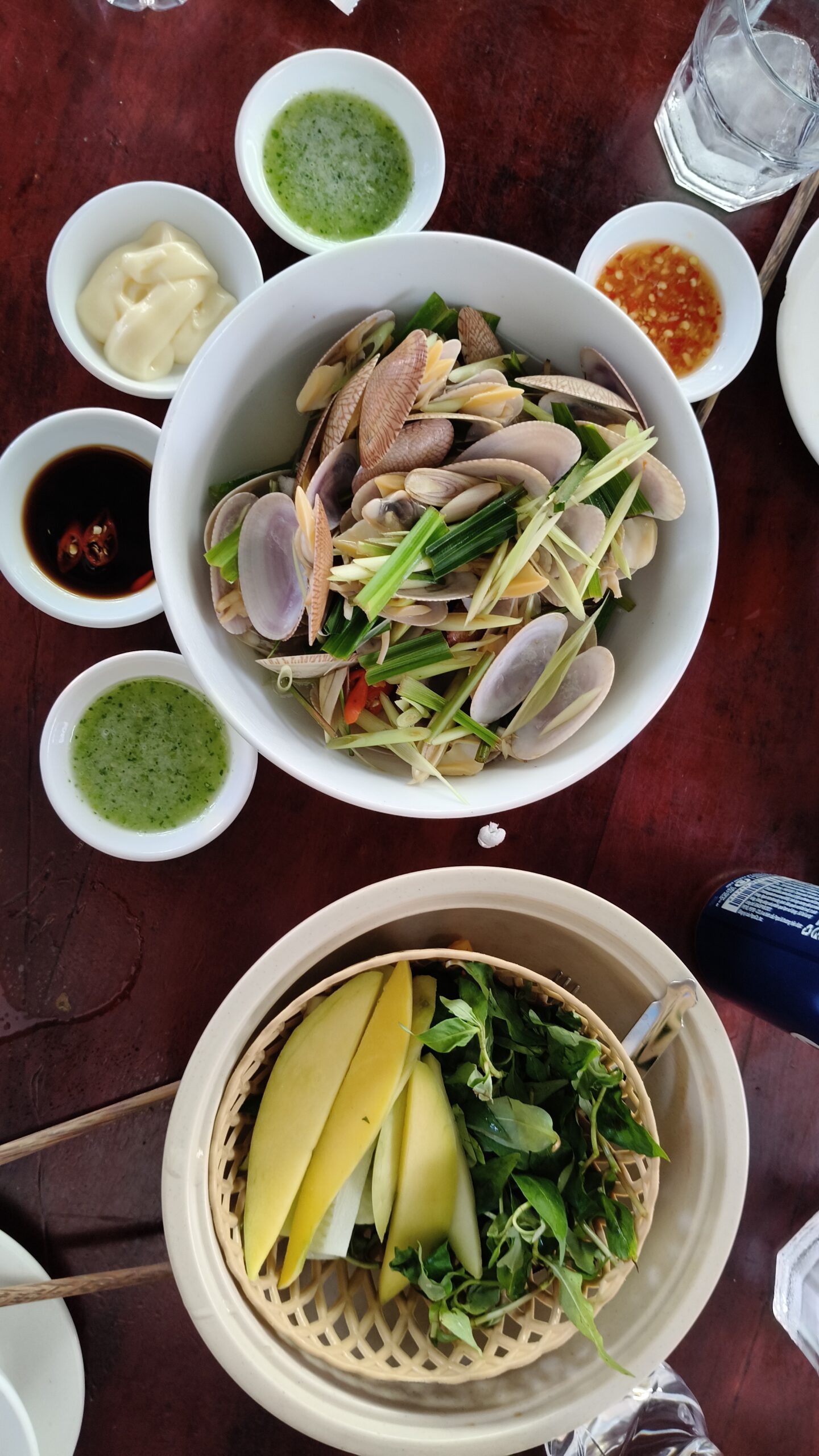
A few nights ago, in Quy Nhon, we ordered a dish that for many Vietnamese is a simple, everyday staple, yet one that always surprises me with its intense aroma: Chíp Chíp Hấp.
It was a calm evening, the sea not far away, and the air still warm. A large, steaming bowl filled with small local clams arrived on the table, steamed open and immersed in a fragrant broth. On top, thin slices of lemongrass, ginger, and a few red chili peppers added color and promised a bold flavor.
Chíp Chíp are small clams that are very common along the coast of central Vietnam. In seafood restaurants or local eateries, they are often cooked in the simplest way possible: steamed. It is precisely this simplicity that allows the flavor of the sea to take center stage.
When the dish arrives, it is usually accompanied by small bowls of sauces. One with soy sauce and fresh chili pepper, another with a more aromatic green sauce. Everyone can dip the clams to their liking, but often the light, fragrant broth that forms during cooking is enough.
I love how in Vietnam, even the simplest dishes strike a perfect balance between fresh ingredients and natural flavors. Lemongrass adds a citrus note, ginger adds freshness, and chili pepper adds a subtle heat that livens things up.
At the end of dinner, the same thing always happens: when the clams are finished, someone picks up the bowl and drinks the remaining broth. It’s too good to leave it there.
Here’s how to make this dish at home.

Ingredients

– 1 kg small clams;
– 2 stalks lemongrass;
– 1 piece fresh ginger;
– 1 red chili pepper;
– 2 spring onions;
– 200 ml water;
– salt or fish sauce (optional).

Preparation

Wash the clams thoroughly and let them purge in salted water to remove any sand.
Thinly slice the lemongrass and julienne the ginger.
Place the clams in a pot with water, lemongrass, ginger, and chili pepper.
Cover with a lid and cook over medium heat until the clams open.
Add the chopped spring onions and stir lightly.
Serve immediately with the cooking broth.
This dish is perfect as an appetizer or as a sharing centerpiece. It’s light, fragrant, and captures all the flavors of the Vietnamese coast.

Would you like to try this simple yet fragrant dish? Add a comment or go to the bottom of the site to read what other visitors have written.

Photos taken with Oppo Reno 12.

Vietnamese cuisine: chíp chíp hấp, the recipe – Cuisine vietnamienne : chíp chíp hấp, la recette – Cocina vietnamita: chíp chíp hấp, la receta – Cozinha vietnamita: chíp chíp hấp, a receita – Vietnamesische Küche: chíp chíp hấp, das Rezept – Ẩm thực Việt Nam: chíp chíp hấp, công thức – 越南美食:chíp chíp hấp 食谱 – ベトナム料理:チップチップハップのレシピ

The text of this post was written with the help of ChatGPT, a language model from OpenAI.

Bún cá between the hills and the sea of ​​Quy Nhơn

Bún cá tra le colline e il mare di Quy Nhơn

Bún cá between the hills and the sea of ​​Quy Nhơn.
Sometimes the simplest dishes are the ones that best express a place. I ate this bún cá in a small restaurant in Quy Nhơn province, an area where the sea is always close and the fish arrives in the kitchen just hours after being caught.
When the bowl arrived at the table, the first thing I noticed was the aroma of the broth: light, clean, with a delicate note of fish and fresh herbs. Floating inside were the thin rice noodles, the bún, almost hidden among the green leaves and spring onions.
On the surface were a few slices of fish and a spoonful of bright red chili paste that added color and character to the dish. Alongside, thinly sliced ​​cabbage and aromatic herbs, which are never in short supply in Vietnam: fresh, fragrant, capable of completely transforming the flavor of the broth with every bite.
Bún cá is one of the most popular soups in northern Vietnam, especially in Hanoi, but it’s also easily found along the coast. Here near Quy Nhơn, fish is obviously the star, often sourced directly from the fishing villages that dot the coast.
The beauty of this dish is its balance. The broth is light, almost transparent, yet rich in flavor. The herbs add freshness, the chili pepper adds a spicy touch, while the rice noodles make the soup hearty without weighing it down.
It’s one of those dishes you can eat in Vietnam at any time of day: for breakfast, lunch, or when you simply want something warm and comforting.
Sitting at the table, with the steaming bowl in front of you and the distant rumble of motorbikes on the road, I thought: this is exactly the kind of cuisine that makes me love Vietnam: simple ingredients, clean flavors, and that sense of authenticity you only find in small local restaurants.

Have you ever tried Vietnamese cuisine? Add a comment or go to the bottom of the site to read what other visitors have written.

Photos taken with Oppo Reno 12.

Fish noodle soup in Quy Nhơn – Soupe de nouilles au poisson à Quy Nhơn – Sopa de fideos con pescado en Quy Nhơn – Sopa de macarrão de peixe em Quy Nhơn – Fisch-Nudelsuppe in Quy Nhơn – Bún cá ở Quy Nhơn – 归仁鱼粉汤 – クイニョンの魚ヌードルスープ

The text of this post was written with the help of ChatGPT, a language model from OpenAI.

Small Bánh xèo of the sea in Quy Nhơn

Piccoli Bánh xèo di mare a Quy Nhơn

Small seafood Bánh xèo in Quy Nhơn.
In a small, simple restaurant along a dusty road in Quy Nhơn province, I found myself faced with a dish that perfectly captures the cuisine of this part of Vietnam. A large plate of small, golden crepes arrived on the table: the famous Bánh xèo, but in a different version from the larger, more popular version in the south of the country.
Here, they’re small, almost like mini, crispy pancakes. The surface is lightly golden and full of tiny holes, a sign that the rice flour batter has sizzled well on the hot griddle. Inside, you can see pink shrimp, a few pieces of squid, and a handful of lightly seared bean sprouts. Simple ingredients, but with all the flavor of the sea that surrounds this region of central Vietnam.
Alongside the dish, other essential elements always arrive: a heap of fresh herbs, crisp lettuce, and thin strips of unripe green mango, which add a tangy, refreshing note. And then something that comes as a surprise to many travelers: the thin sheets of transparent rice paper, Bánh tráng.
That’s exactly how they’re eaten here. You take a sheet of rice paper, place it in the palm of your hand, and add one of the small, crispy crepes. Top with herbs, a little lettuce, and a few strips of green mango. Then you roll everything up with your fingers to form a small roll.
Then comes the finishing touch: the roll is dipped in Nước chấm sauce, the classic Vietnamese sauce made with fish sauce, lime, sugar, and chili pepper. The contrast between the warm, crispy crepe, the fresh herbs, and the savory sauce creates a perfect balance of flavors.
It’s a convivial, informal dish, eaten slowly, chatting, while new, freshly cooked crepes continue to arrive from the back of the kitchen. In these parts of Quy Nhơn province, the sea is always close by, and you can taste it in every bite.
It’s dishes like this that demonstrate how Vietnamese cuisine is made of simple gestures and fresh ingredients. Not much else is needed: a hot pan, some shrimp, a few herbs, and the desire to sit down together.

Would you like to try this dish? Add a comment or go to the bottom of the site to read what other visitors have written.

Photos taken with Oppo Reno 12.

Crispy sea bánh xèo in Quy Nhơn – Petites crêpes bánh xèo de Quy Nhơn – Pequeños bánh xèo de mar en Quy Nhơn – Pequenos bánh xèo do mar em Quy Nhơn – Kleine Meeres-Bánh-xèo in Quy Nhơn – Bánh xèo hải sản nhỏ ở Quy Nhơn – Quy Nhơn 海鲜小煎饼 – クイニョンの小さな海鮮バインセオ

The text of this post was written with the help of ChatGPT, a language model from OpenAI.

Bún mắm nêm a Quy Nhon between friendship and smiles

Bún mắm nêm a Quy Nhon

Bún mắm nêm in Quy Nhon, amidst friendship and smiles.
Some dinners are not forgotten for their flavor alone, but for the hands that prepared them. I didn’t eat this bún mắm nêm in just any restaurant: it was cooked by a friend of mine, a friend who is almost family to me. She owns a small restaurant in Quy Nhon, and every time I go in, I feel not like a customer, but a guest.
The bowl arrived at the table simple, without any special effects. Light, white rice noodles, glossy, fragrant pork slices, fresh herbs, crunchy cucumber, coarsely chopped peanuts. And then there, the absolute star: the mắm nêm sauce. Intense, fermented, alive. A scent that might frighten those who aren’t used to it, but for me, it now feels like home.
I watched her mix the sauce with crushed pineapple, a little sugar, fresh chili pepper, a few drops of lime. Every gesture was confident, natural, as if she were telling a story she’d learned as a child. When I combined everything in the bowl and stirred, the aroma changed: from pungent to harmonious. The first bite was an explosion. Salty, sweet, spicy, fresh. The herbs lightened the sauce’s potency, the pineapple added an almost timid sweetness, the peanuts added depth.
As we ate, we laughed. Talking in Vietnamese, in Italian, with gestures. The language doesn’t matter when there’s a dish that unites. In that moment, I thought that Bún mắm nêm isn’t just a Central Vietnamese recipe. It’s character. It’s identity. It’s something that doesn’t try to please everyone, but once it wins you over, it never lets go.
And maybe that’s exactly what I love about Quy Nhon: its authenticity, its direct, unfiltered approach, just like this sincere sauce.

Have you ever tasted a dish that initially surprises you, then wins you over?
Add a comment or go to the bottom of the site to read what other visitors have written.

Photos taken with Oppo Reno 12.

Bún mắm nêm in Quy Nhon among friendship and smiles – Bún mắm nêm à Quy Nhon entre amitié et sourires – Bún mắm nêm en Quy Nhon entre amistad y sonrisas – Bún mắm nêm em Quy Nhon entre amizade e sorrisos – Bún mắm nêm in Quy Nhon zwischen Freundschaft und Lächeln – Bún mắm nêm ở Quy Nhon giữa tình bạn và nụ cười – Bún mắm nêm 在归仁 友情与微笑之间 – クイニョンのブンマムネム 友情と笑顔の中で

The text of this post was written with the help of ChatGPT, a language model from OpenAI.

Bún đậu special in Quy Nhơn

Bún đậu speciale a Quy Nhơn

Special bun đậu in Quy Nhơn.
Last night, in Quy Nhơn, I chose to order a dish that for me is always a small statement of identity: bun đậu. Not the simple one, not the one “for foreigners,” but the complete version, the one that makes you smile when it arrives at the table because you already know it will be an intense, authentic, uncompromising dinner.
The tray arrived rich and colorful, resting on a large, glossy green leaf. The soft, white rice vermicelli on one side, the golden fried tofu on the other. Then the boiled bacon, neatly sliced, and next to it the boldest protagonists: the dark, firm, almost black dồi chiên, and the crispy phèo chiên. There was also chả cá, chả cốm, and the small fried chả ram. A combination that smells of the North, but which can now also be found here, on the Central Sea.
The mắm tôm, in its little bowl, was as intense as it should be. I stirred it slowly, with a little lime and chili pepper, until it became slightly foamy. The first bite was my favorite: a bit of bún, a piece of tofu, a slice of ba chỉ, and a leaf of aromatic herb. Then I dared with the dồi chiên, which gives that deep and decisive note that divides people: you either love it or avoid it. I love it.
Sitting there, in a simple diner, with the noise of the street and the warm evening air, I thought about how much this dish speaks of the most authentic Vietnam. It’s not elegant, it’s not touristy, it’s not delicate. It’s direct. It’s convivial. It’s full of contrasts: soft and crunchy, fresh and fermented, light and intense.
At 40,000 đồng, it was also incredibly generous. But the true value isn’t in the price. It’s in the act of sharing, in eating with your hands, in fearlessly mixing strong flavors.
Last night, in Quy Nhơn, I didn’t just dine. I tasted a piece of culture. And every time I bring this dish to the center of the table, I feel like I’m choosing something that speaks of home, tradition, and identity.

And you, which bite would you choose first? Add a comment or go to the bottom of the site to read what other visitors have written.

Photos taken with Oppo Reno 12.

Special bún đậu in Quy Nhơn – Bún đậu spécial à Quy Nhơn – Bún đậu especial en Quy Nhơn – Bún đậu especial em Quy Nhơn – Besonderes Bún đậu in Quy Nhơn – Bún đậu đặc biệt tại Quy Nhơn – 归仁的特色Bún đậu – クイニョンの特別なブン・ダウ

The text of this post was written with the help of ChatGPT, a language model from OpenAI.

🏠
  • Italiano