The Heron Often Seen in Sestri Levante

L'airone che spesso si trova a Sestri Levante

The Heron Often Seen in Sestri Levante.
For the past few years, I have occasionally come across a heron in different parts of Sestri Levante, especially around waterways such as the Gromolo and Petronio rivers. I cannot say whether it is always the same bird, but by now its presence has become a small recurring part of my walks. This time, luckily, I had my telephoto lens with me and managed to photograph it reasonably well.
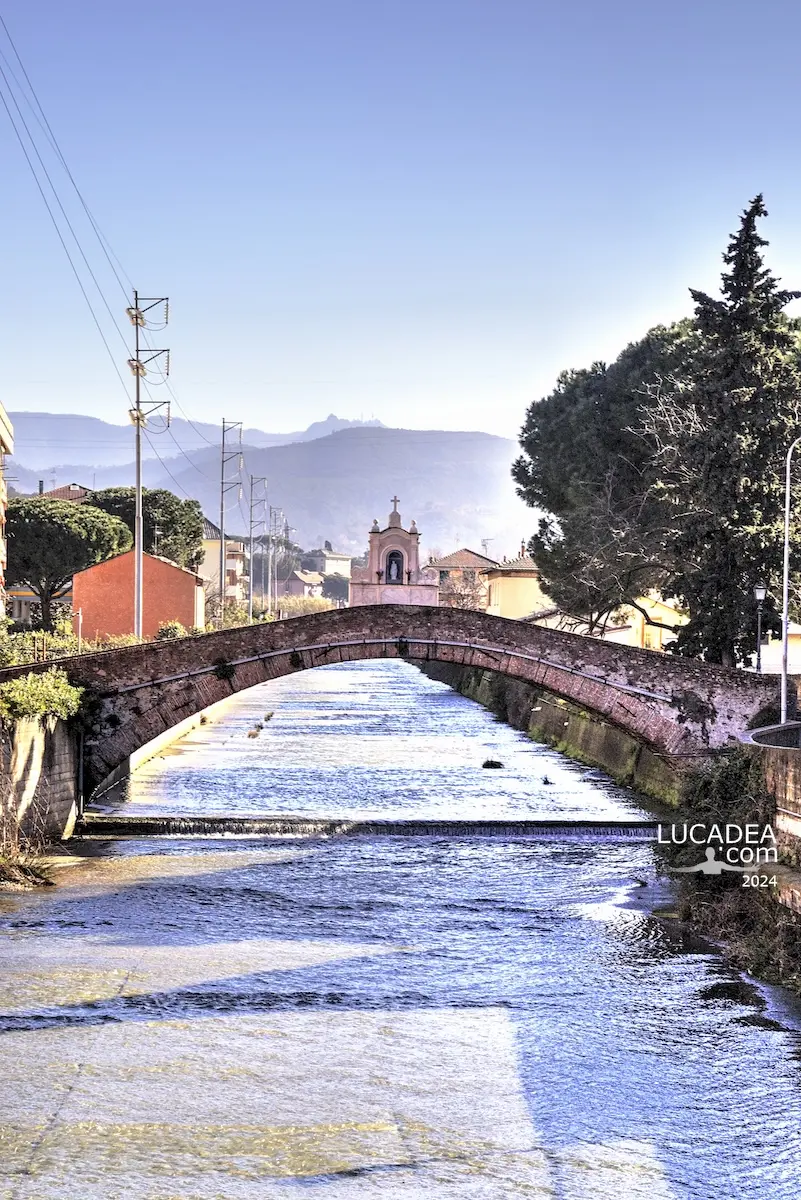
The heron was near the bridge over the Gromolo leading towards Santo Stefano, not far from Villa Sertorio. It was simply standing there, enjoying the sun, apparently unconcerned by the people nearby. It was one of those moments when being ready with the camera matters, because a bird like this can move away or fly off just as you are trying to find the right position.
If you are wondering what to see in Sestri Levante, a heron may not be the first answer that comes to mind. Yet this is exactly the kind of detail I enjoy documenting. Alongside the beaches, historic center and better-known views of the town, there is also a quieter natural side connected with the waterways and small habitats around them.
Sestri Levante is in Liguria, in the Metropolitan City of Genoa, Italy, and its position between the sea and the hills creates a surprising variety of environments within a relatively compact area. The Gromolo and Petronio waterways pass through areas that can provide birds with places to feed, rest or simply stop for a while.
It is along these routes that I have noticed the heron several times over the years. I obviously cannot know whether it is always the same individual, and that is not really the important part of the photograph. What interests me is the fact that a wild animal can become a recurring presence in the everyday life of a town.
This time, having my telephoto lens made a real difference. It allowed me to keep a respectful distance while still getting a reasonably close image. When I photograph wildlife, I prefer not to disturb the subject and instead wait for the situation itself to provide the right frame.
In this photograph, the heron looks almost completely relaxed as it enjoys the sun near the bridge. Its posture is quite different from the one it might have while searching the water for fish or other small prey. At that moment, it seemed simply to have found a quiet place to stop.
Herons are birds strongly associated with wetlands and are often found along rivers, streams, ponds, lagoons and coastal areas. One of their most recognizable features is their long neck, which can be folded back or extended quickly when the bird strikes at prey. It is a simple detail, but it helps explain why these birds are so closely connected with water.
Here, the Gromolo is therefore more than just a background element. It is part of the environment that makes this encounter possible. The bridge towards Santo Stefano and the area around Villa Sertorio provide a concrete setting, while the heron introduces something that was not placed there by people.
I enjoy this kind of photography because it is rarely planned. I did not go out that day specifically looking for a heron. I was simply walking around Sestri Levante when I came across a subject I had seen before, and this time I happened to have the right equipment to try to preserve the moment.
Looking at the photograph afterwards also made me think about how differently a familiar place can appear once you start recognizing some of its recurring wildlife. A bridge, a stream or an ordinary stretch of road can become much more interesting when a wild animal suddenly appears within the scene.
This is one of the reasons I keep photographing Sestri Levante. I am interested not only in the most recognizable landmarks, but also in the small events that belong to everyday life and rarely appear in conventional images of the town. In that sense, this heron has almost become a small recurring character in my local photographs.
I have already shared several photographs of Sestri Levante on the blog, including views and details around the town and the Gromolo area. This image naturally connects with those stories, although the subject is completely different. This time it is not a building, street or landscape that caught my attention, but a wild bird encountered almost by chance.
I do not know whether I will see this heron again the next time I walk near the Gromolo. It could be the same bird I have noticed before, or another individual that regularly uses the same area. In the end, I do not really need to know.
For me, it is enough to know that while walking through Sestri Levante, you can sometimes look towards the river and find a heron standing quietly near the water. These unexpected encounters are what make familiar places interesting even after many visits.

Have you ever spotted a heron around the Gromolo or Petronio? Add a comment or go to the bottom of the site to read what other visitors have written.

Photo taken with a Canon EOS RP camera and a Tamron 16-300 lens.

The grey heron (*Ardea cinerea* Linnaeus, 1758) is a bird belonging to the Ardeidae family. Native to the temperate regions of the Old World as well as Africa, it is the heron species that ranges furthest north; indeed, in summer, it is commonly found along the Norwegian coast, well beyond the Arctic Circle.
Read more on Wikipedia

Add one  comment to this article or read  here what other visitors have written.
 
Adv
 
Disclamer

The rights on images, videos, choruses, text and all other material on the LUCADEA.com website are governed as per  Copyright page.


This page has been viewed 0 times today.
This month it has been viewed 0 times.
In total it has been viewed 0 times.
 

A woodland flower along the Gromolo stream

Fiore selvatico nel bosco lungo il sentiero del torrente Gromolo vicino a Sestri Levante

A woodland flower along the Gromolo stream.
Walking along the path leading to the springs of the Gromolo stream, in Sestri Levante, Liguria, Italy, I came across this small flower that immediately caught my attention because of the contrast with the surrounding landscape. Hidden among the woodland vegetation and the shade of the trees, this wild flower looked almost like a tiny orchid growing quietly along the trail.
I took this photograph some time ago during one of those walks where I am not necessarily looking for famous views, but simply observing the small details that nature places along the way. I enjoy capturing these unexpected encounters because the simplest subjects are often the ones that remain in memory the longest.
The path towards the Gromolo stream springs crosses a green area where the sound of water and the presence of the forest accompany the walk. In this environment, where sunlight reaches the ground filtered through the vegetation, finding such a particular flower was a small but memorable discovery. Its shape reminded me of an orchid, even though it was simply one of the many examples of the rich wild flora found in local woodlands.
This photograph comes from that curiosity: stopping to capture a detail that could easily go unnoticed. A woodland flower does not need to grow in a carefully maintained garden to be beautiful; sometimes the natural setting where it appears is what makes it truly interesting.
One curious detail is that many wild flowers growing in Ligurian forests have developed specific adaptations to survive in areas with limited light, competition from other plants, and seasonal changes. Every part of the vegetation follows its own balance, something that is often invisible during a simple walk.
This image connects with other photographic stories I have shared about trails and green areas around Sestri Levante, because even the landscape close to home continues to offer unexpected subjects to photograph. Sometimes there is no need to travel far to discover something worth capturing.
Nature still has the ability to surprise us with shapes and colors that seem almost designed to attract our attention.

Have you ever stopped to photograph a small natural detail that you did not expect to find? Add a comment or go to the bottom of the site to read what other visitors have written.

Wild flower in the woodland along the Gromolo stream trail near Sestri Levante

Wild flower in the woodland along the Gromolo stream trail near Sestri Levante

Photos taken with Canon EOS M100 and lens Tamron 16-300.

Add one  comment to this article or read  here what other visitors have written.
 
Adv
 
Disclamer

The rights on images, videos, choruses, text and all other material on the LUCADEA.com website are governed as per  Copyright page.


This page has been viewed 1 times today.
This month it has been viewed 1 times.
In total it has been viewed 1 times.
 

The Old Bridge of Cicagna in Val Fontanabuona

Il Ponte Vecchio di Cicagna in Val Fontanabuona

The Old Bridge of Cicagna in Val Fontanabuona.
While passing through the village, I stopped for a moment on Ponte della Vittoria and looked toward one of the oldest-looking corners of Cicagna, where the stone bridge crosses the Lavagna stream and blends naturally with the buildings around it. This view of Cicagna in Liguria immediately caught my attention because the Old Bridge of Cicagna has a quiet presence, the kind of place that does not need to be imposing to tell a story.
I took this photograph by focusing on the relationship between the bridge, the water, and the old part of the village. What interested me most was not only the structure itself, but the atmosphere created by a simple connection between human work and the landscape of the valley. The old stone bridge seems to preserve the memory of many passages, of people moving through the village long before this moment when I stopped with my camera.
The Old Bridge of Cicagna is located in the Val Fontanabuona, in the municipality of Cicagna, Liguria, Italy, and it represents one of those small historical details that can reveal the character of a place. When searching for information about this bridge, I found references to it also as the Fieschi Bridge, a name connected to the important Fieschi family, a noble Genoese family that had strong ties with this area.
A small historical curiosity is that ancient stone bridges in Liguria were often much more than simple crossings. They were important links between villages, valleys, and commercial routes, becoming part of everyday life for local communities. Their value today comes not only from their architecture but also from the stories they have silently carried through the centuries.
If you are visiting Liguria and looking for places worth seeing beyond the most famous destinations, small villages like Cicagna can offer unexpected views and authentic details. Walking through these areas, I often find that the most memorable subjects are not always the grand landmarks, but the corners where history and daily life still meet.
This image also connects with other stories I have shared on the blog about Ligurian villages, where I often search for details that reveal the identity of a place through simple architectural elements. Like those previous photographs, this one was born from a spontaneous stop and from the curiosity of observing what surrounds me while travelling.
Photographing the Old Bridge of Cicagna reminded me that a place does not need to be spectacular to be meaningful. Sometimes a bridge made of stone, a quiet stream, and the shape of an old village are enough to create a lasting memory. These are the moments I enjoy capturing because they transform a simple view into a personal story.

Have you ever discovered a small place during a journey that stayed in your memory more than a famous attraction? Add a comment or go to the bottom of the site to read what other visitors have written.
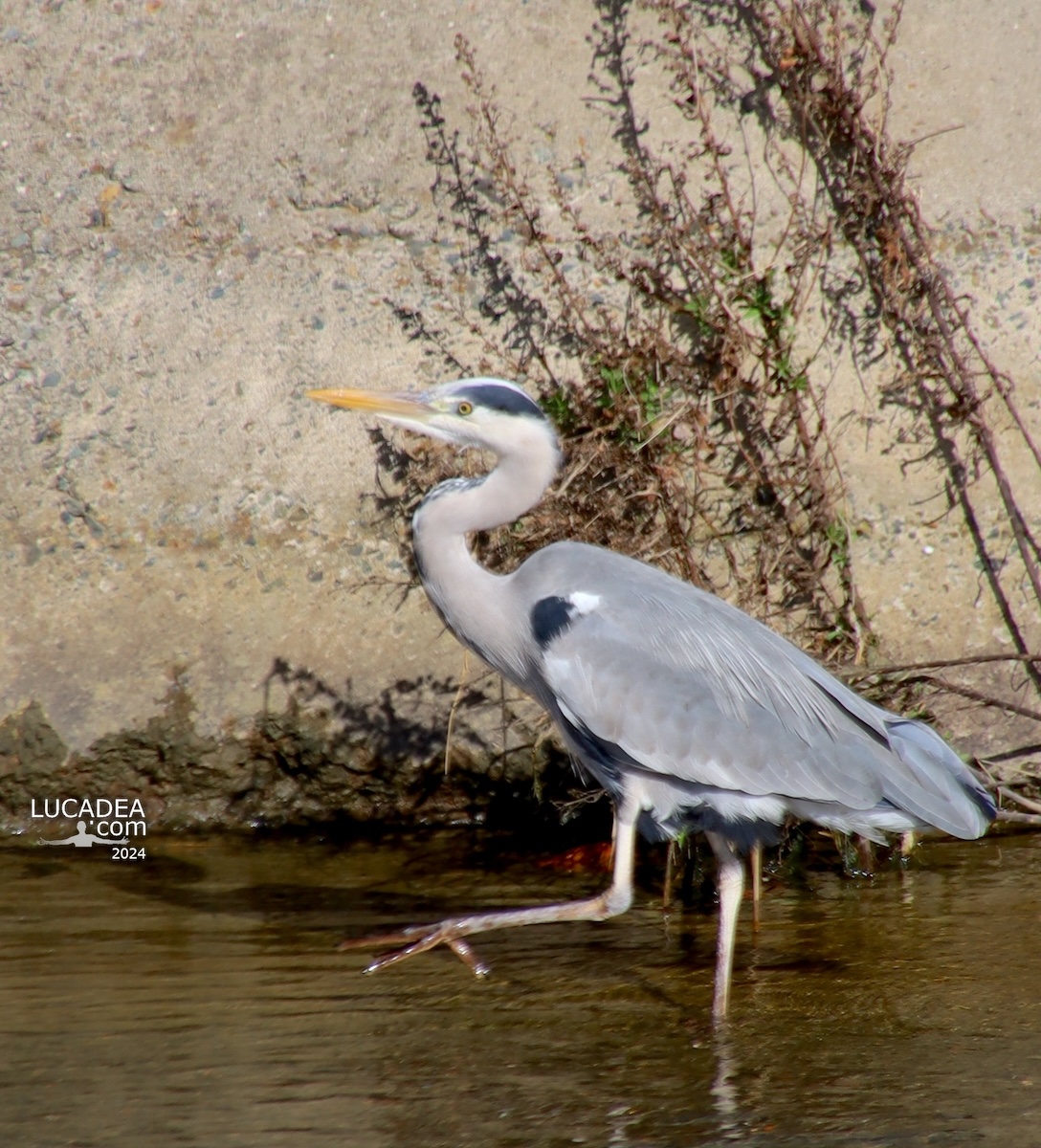
Foto scattate con Honor 20.

Questa la pagina dei beni culturali sul Ponte dei Fieschi: catalogo.beniculturali.it.

Dove si trova il ponte:

Il paese fu dominio della famiglia Malaspina fino al 1114, anno in cui fu inglobato nelle terre della Repubblica di Genova. In un antico documento risalente al 1143 è citato con il toponimo di Plicania, che venne poi trasformato in Chinaglia e quindi nell’odierna Cicagna.
Da sempre punto importante della val Fontanabuona, la comunità fu inclusa nella podesteria di Rapallo e successivamente nel suo capitaneato (istituito nel 1608), nello storico “quartiere” di Oltremonte.
Continua e approfondisci su Wikipedia

The Old Bridge of Cicagna in Val Fontanabuona – Le Vieux Pont de Cicagna dans la Val Fontanabuona – El Puente Viejo de Cicagna en Val Fontanabuona – A Ponte Velha de Cicagna no Val Fontanabuona – Die Alte Brücke von Cicagna im Val Fontanabuona – Cầu Cũ Cicagna ở Val Fontanabuona – 丰塔纳布奥纳山谷的奇卡尼亚老桥 – ヴァル・フォンタナブオーナ渓谷のチチャーニャ旧橋

The text of this post was written with the help of ChatGPT, a language model from OpenAI.

A small Roman bridge over the Gromolo stream

Il ponte Romano di Santo Stefano a Sestri Levante e la sua edicola

A small Roman bridge over the Gromolo stream.
I pass by it often without thinking, yet every time it reminds me what to see in Sestri Levante beyond the obvious, like this quiet Roman bridge crossing the Gromolo stream. Among the places to see in Sestri Levante, it’s not only the famous bays that define the town, but also these small, almost hidden corners along National Street.
Walking back home, I naturally slow down as soon as it appears between the greenery and nearby buildings. It’s not an imposing structure, and maybe that’s why many people overlook it. Still, if you are visiting and wondering what to see in Sestri Levante, this small bridge is worth a moment, because it holds a sense of time that is easy to feel but hard to explain.
Sestri Levante, Liguria, Italy becomes tangible as I stop for a second. The stream flows quietly underneath, while the stone structure stands still, almost untouched. Right next to it, the small roadside shrine adds a personal, almost intimate feeling, as if this spot has always been part of everyday life. It reminds me of other hidden places I’ve shared on my site, far from the well-known views of the Bay of Silence.
One interesting detail is that although it is called a Roman bridge, it has likely been modified over centuries, adapting to changing needs. The name preserves its origin, even if the structure has evolved.
I keep walking, but I often glance back. It’s an instinctive gesture. Places like this don’t need to impress to stay with you—they just need to exist quietly.
If you are looking for what to see in Sestri Levante, sometimes the most interesting places are not the ones everyone talks about, but the ones you almost miss.

Have you ever grown attached to a place that most people don’t even notice? Add a comment or go to the bottom of the site to read what other visitors have written.

Photos taken with Canon EOS RP and lens Tamron 16-300.

This is the page of the Cultural Heritage website in which the bridge is catalogued: catalogo.beniculturali.it.

A beautiful villa on Petronio Street in Riva Trigoso

Una bella villetta in via Petronio a Riva Trigoso

A beautiful villa on Petronio Street in Riva Trigoso.
Every time I walk along the road that runs beside the Petronio stream, my attention always falls on this very charming little villa.
On the façade there are several coats of arms that intrigue me, but I don’t know anything about them.

Do you know this house? Add a comment or go to the bottom of the site to read what other visitors have written.

Una bella villetta in via Petronio a Riva Trigoso

Photo taken with Canon EOS M100 and lens Tamron 16-300.

A beautiful villa in via Petronio in Riva Trigoso – Une belle villa via Petronio à Riva Trigoso – Una hermosa villa en via Petronio en Riva Trigoso – Uma bonita aldeia na via Petronio em Riva Trigoso – Eine wunderschöne Villa in der Via Petronio in Riva Trigoso – Một biệt thự xinh đẹp ở via Petronio ở Riva Trigoso

Giacomo Balbi street, a road through Riva Trigoso

Via Giacomo Balbi a Riva Trigoso

Giacomo Balbi street, a road through Riva Trigoso.
One of the main streets in western Riva Trigoso, Giacomo Balbi street has become an even more interesting part of the local landscape since its route was extended eastward through the new bridge over the Petronio stream. This photograph focuses on a simple stretch of road, but it also captures a small change in the way this part of the town is connected.
This is the kind of image I enjoy because it documents a real transformation without needing a monument or a spectacular view. The road itself is the subject, while the surrounding buildings and landscape help show its role within the settlement. For anyone familiar with Riva Trigoso, Giacomo Balbi street is one of the main routes through the western part of the locality, and its continuation toward the east has made the connection between the two areas more direct.
Riva Trigoso, in the municipality of Sestri Levante, Liguria, Italy, is a coastal locality with a strong connection to both the sea and the inland landscape. The Petronio stream is one of the geographical features that help shape the area, and the bridge makes the relationship between the two sides particularly visible.
I wanted to photograph this street because I like observing how familiar places change over time. A road may seem like an ordinary photographic subject compared with a historic building or a panoramic view, but when its route is altered or extended, it becomes a small record of how a community develops according to its needs.
The new bridge over the Petronio has created continuity toward the eastern part of Riva Trigoso and made the connection between the two sides more immediate. It is an infrastructure project rather than a traditional attraction, but that is precisely what makes it interesting from my point of view. Everyday infrastructure is part of the story of a place, even when it rarely appears in photographs intended for visitors.
When I think about Riva Trigoso, I do not think only about the beach, the sea, or its maritime traditions. I also think about its streets, bridges, buildings, and ordinary routes. These are the elements people use every day, often without consciously noticing them. Photographing them gives me a way to build a more complete visual memory of the place.
There is a small geographical curiosity connected with the Petronio stream. It flows through the territory of Sestri Levante and reaches the sea in the Riva Trigoso area. Like many waterways that cross developed areas, it is both a natural feature and something that influences the way roads and connections are organized around it.
Looking at the photograph, what interests me most is the relationship between the road and the surrounding landscape. Giacomo Balbi street is not simply a route from one point to another. It is one of the main lines through western Riva Trigoso, and its continuation across the bridge makes that role even clearer.
If you are looking for what to see in Riva Trigoso, the first images you will probably encounter are those of the sea and the beach. That makes perfect sense, but I also think there is value in looking at the ordinary streets. They show how people actually move through the locality, how the spaces are connected, and how the landscape has adapted over time.
This photograph naturally connects with the other images I have published from Riva Trigoso and Sestri Levante. I like gradually building a collection that includes not only the most recognizable places, but also the roads and everyday corners that form part of local life.
Giacomo Balbi street is therefore a simple subject with a small story behind it: a main road in western Riva Trigoso that now continues toward the east thanks to the bridge over the Petronio. It is a concrete change that can be seen in the landscape and that has become part of my photographic record of the locality.

Do you know this part of Riva Trigoso, and have you noticed how the road changed after the new connection toward the eastern side? Add a comment or go to the bottom of the site to read what other visitors have written.

Giacomo Balbi street in Riva Trigoso with the new connection toward the east across the Petronio stream

Photo taken with Canon EOS M100 camera and Canon EF-S 10-18 lens.

🏠
  • Italiano