Đậu đũa xào thịt heo cooked at home in Italy, the recipe

Padella di Đậu đũa xào thịt heo con fagiolini e maiale saltati in casa in Italia, piatto vietnamita casalingo ricco e saporito

Đậu đũa xào thịt heo cooked at home in Italy.
The smell of stir-fried long beans and pork fills my kitchen here in Italy, and every time I prepare Đậu đũa xào thịt heo, I feel like I am reconnecting with my roots in Vietnam. This simple Đậu đũa xào thịt heo dish carries more meaning than just food for me; it is memory, family, and distance all in one pan.
I live in Italy, and cooking Đậu đũa xào thịt heo here has become part of my daily rhythm, blending Vietnamese tradition with Italian life. The sound of pork sizzling in the pan, followed by the fresh green beans, creates a familiar harmony that reminds me of home kitchens in Vietnam. Even here in Europe, the spirit of Đậu đũa xào thịt heo remains unchanged.
While I cook, I often think about how food travels with us. My husband watches me prepare this dish, curious about every step, and for him it is a small window into another culture. I sometimes write about similar Vietnamese dishes on my blog, especially those I adapt while living abroad, and this recipe is one of the most meaningful.
If you are visiting Italy or simply curious about Vietnamese home cooking, this is one of those dishes that shows how simple ingredients can create something deeply emotional. It is not just stir-fried beans and pork; it is a story in a pan.
A lesser-known detail is that this dish is often cooked in many variations across Vietnam, depending on the region, but the heart of it always stays the same: quick cooking, strong flavor, and family sharing.

Ingredients

– Long green beans (đậu đũa);
– Pork pieces;
– Garlic;
– Fish sauce;
– Soy sauce;
– Oil;
– Salt and pepper.

Preparation

First, I prepare all the ingredients ahead of time, as this dish requires quick, high-heat cooking. I cut the long green beans (đậu đũa) into pieces about 4–5 cm, trying to keep them the same size for even cooking. I choose a slightly fatty pork, so it remains more tender and flavorful in the pan, and I cut it into bite-sized pieces.
I heat a wok or a large skillet with a drizzle of oil. Once the oil is hot, I add the minced garlic and let it brown slightly, being careful not to burn it, as this would give the dish a bitter flavor.
At this point, I add the pork and sauté it over medium-high heat. I let it brown well on all sides, until it turns a light golden brown and begins to release its aroma. If needed, I add a pinch of salt and a grind of pepper to immediately flavor the base.
When the meat is almost cooked (but still slightly tender), I raise the heat and add the green beans. I quickly sauté them with the meat, stirring often to blend the flavors without letting them become too soft: they should remain crunchy and maintain their bright green color.
At this point, I pour in the fish sauce and a small splash of soy sauce. The aroma immediately changes, becoming more intense and “Vietnamese.” I continue sautéing everything for a few minutes, until the green beans are cooked but still firm and the meat is perfectly coated in the sauce.
If the dish is too dry, I add a tablespoon of hot water to create a light sauce that binds the ingredients better.
Before turning off the heat, I taste and adjust if necessary with a splash of fish sauce or a pinch of pepper.
I serve the Đậu đũa xào thịt heo immediately, still steaming hot, often accompanied by plain white rice, which perfectly absorbs the juices from the meat and green beans.

And every time I serve it, I ask myself again: how can something so simple feel so close to home even when you are far away? Add a comment or go to the bottom of the site to read what other visitors have written.
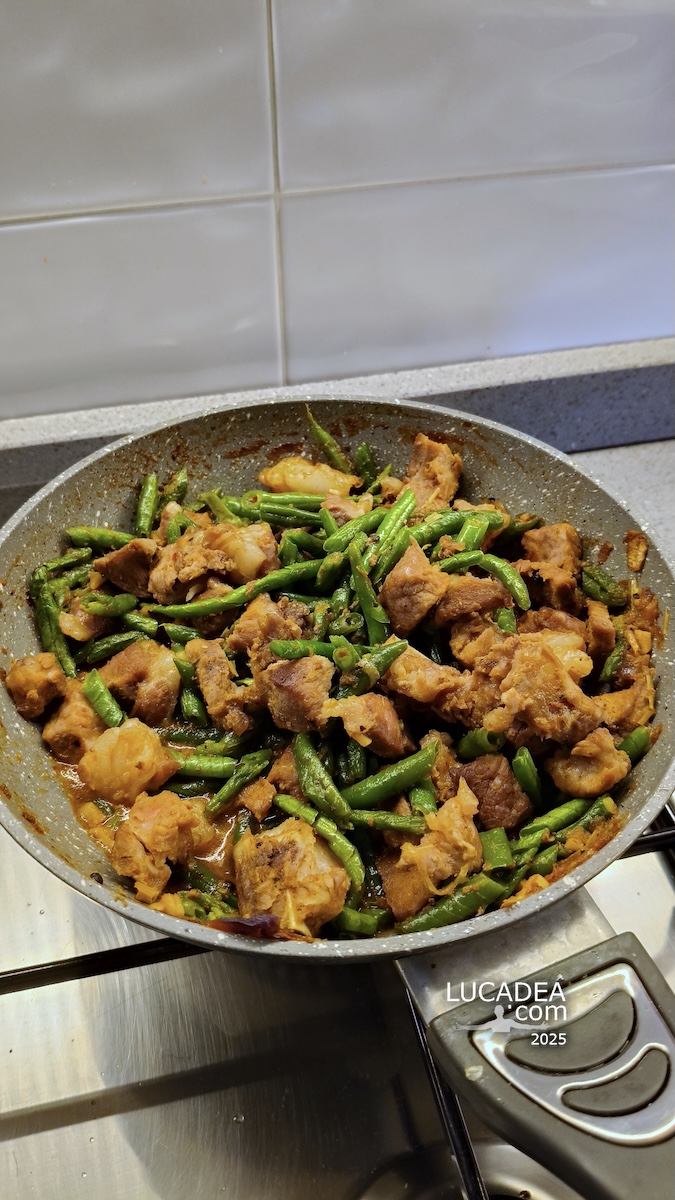
Photos taken with Honor 20.

Add one  comment to this article or read  here what other visitors have written.
 
Adv
 
Disclamer

The rights on images, videos, choruses, text and all other material on the LUCADEA.com website are governed as per  Copyright page.


This page has been viewed 1 times today.
This month it has been viewed 1 times.
In total it has been viewed 1 times.
 

Hanoi cathedral between faith and urban chaos

Cattedrale cattolica di Hanoi con facciata gotica tra traffico e vita urbana, meta tipica per chi cerca cosa vedere a Hanoi

Hanoi cathedral between faith and urban chaos.
Walking through the center of Hanoi, trying to figure out what to see in Hanoi among the constant motion of the streets, I suddenly found myself standing in front of the Catholic cathedral of Hanoi. Among the places to see in Hanoi, this one stands out immediately, almost unexpectedly, as if it belonged somewhere else entirely.
The noise doesn’t stop. Motorbikes flow around you, people talk, sit, move, live their routines. And right in the middle of it all, the cathedral rises with its Gothic lines and weathered facade. When you search for what to see in Hanoi, you might expect temples or lakes, but this building tells a different story, one shaped by history and contrast.
Here we are in Hanoi, in northern Vietnam, where the cathedral becomes part of everyday life rather than something separated from it. I stood there for a while, watching how people interacted with the space. No one seemed particularly impressed, and that made it even more interesting. It felt real, not staged.
If you are visiting Hanoi and wondering what to see, this is definitely a place worth seeing, not just for its architecture but for the atmosphere around it. It shows how different layers of history can coexist naturally, without needing explanations.
It reminded me of another photo I shared on my site from a nearby street, where colonial buildings and modern life blend in a similar way. Hanoi has this ability to surprise you quietly, without trying too hard.
A small interesting fact: St. Joseph’s Cathedral was built in 1886 during the French colonial period and remains one of the oldest churches in the city, inspired by the famous Notre-Dame in Paris.
If you’re exploring what to see in Hanoi, you might realize that some of the most memorable places are the ones that don’t try to stand out, but simply exist within the rhythm of the city.

Have you ever found something unexpected right in the middle of the chaos? Add a comment or go to the bottom of the site to read what other visitors have written.

Cattedrale cattolica di Hanoi con facciata gotica tra traffico e vita urbana, meta tipica per chi cerca cosa vedere a Hanoi

Photo taken with Canon EOS RP and Canon RF 28 lens.

To see all the photos I took in Hanoi, click here:
foto gallery

Add one  comment to this article or read  here what other visitors have written.
 
Adv
 
Disclamer

The rights on images, videos, choruses, text and all other material on the LUCADEA.com website are governed as per  Copyright page.


This page has been viewed 1 times today.
This month it has been viewed 1 times.
In total it has been viewed 1 times.
 

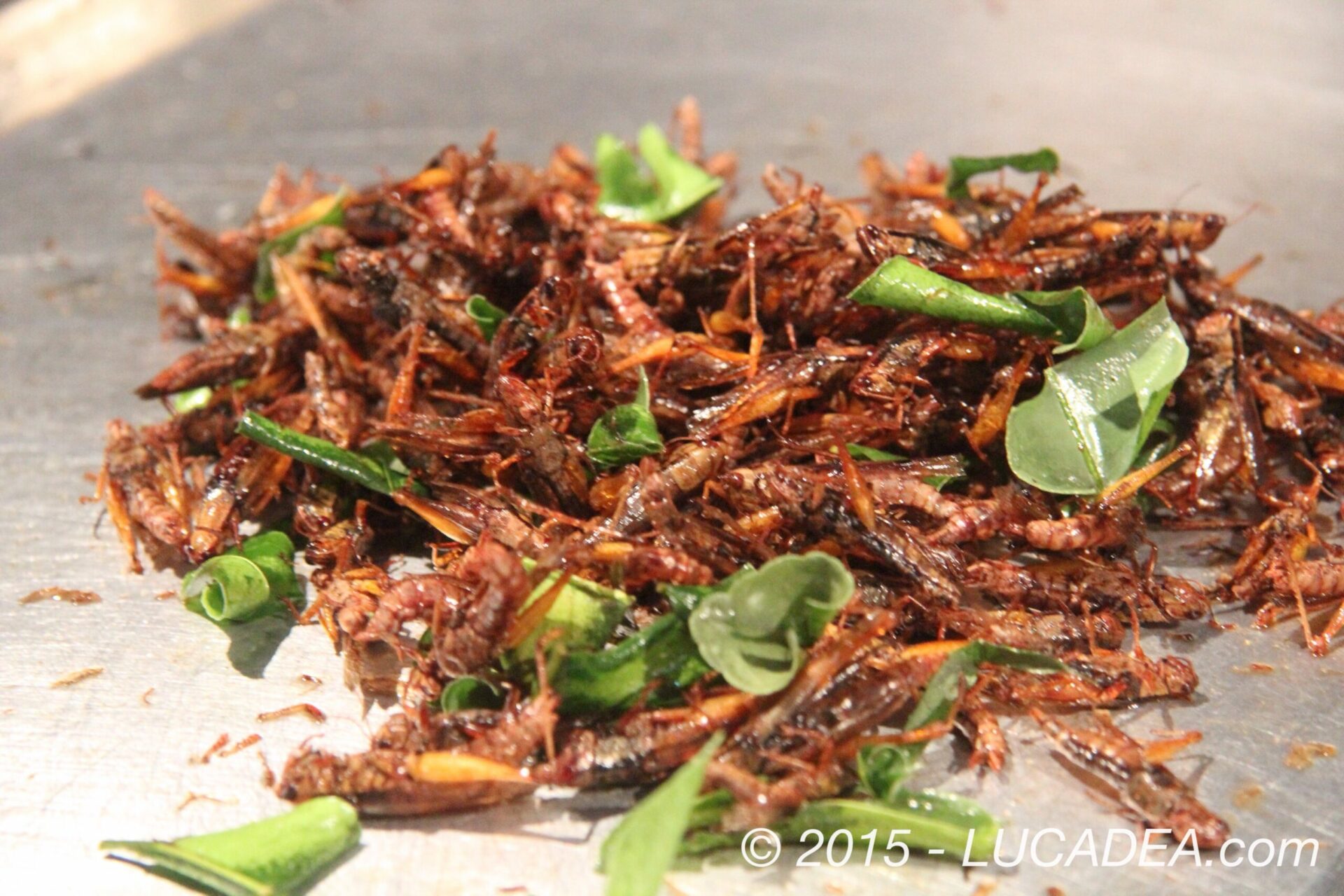
Edible crickets spotted on Koh Samui, Thailand

Insetti da gustare

Edible crickets spotted on Koh Samui, Thailand.
Looking at the photograph, these really do seem to be crickets, prepared and ready to be eaten as one of the many unusual insect snacks that can be found in Thailand. I had already photographed other edible insects on Koh Samui, and once again the sight was curious enough to make me take out my camera.
Their shape is immediately recognisable. Unlike some other food items that are difficult to identify at first glance, these insects look very much like crickets, gathered together and displayed ready for customers. I cannot be completely certain about the exact species from a photograph alone, though, so I prefer to describe them as crickets rather than turn an impression into a definite identification.
Edible insects are part of the food traditions of several parts of Thailand, although they are certainly not an everyday food for everyone in the country. They can appear at markets and street food stalls, where different varieties are prepared in fairly simple ways, often by frying them. The result is usually a crisp snack that can look rather unusual to a visitor from Europe.
I came across this kind of food while in Koh Samui, one of Thailand’s best-known islands. These are precisely the little details I enjoy photographing while travelling because they reveal something about local food habits without needing a staged scene or a famous landmark.
If you are visiting Thailand and looking for something genuinely different from the dishes you might normally encounter, edible insects are certainly one of the more unexpected sights at some markets. I found the visual side of it particularly interesting: trays filled with insects are difficult to ignore, especially when you are seeing them as food for the first time.
I have to admit that when faced with a tray full of insects, my first thought is probably to wonder exactly what I am looking at and, after that, whether I would actually have the courage to taste it. In this case, I was happy to stick with photography. The camera lets me get close to these unusual culinary discoveries without necessarily having to put them on my plate!
There is a small cultural detail worth mentioning. Eating insects is especially associated with parts of northern and northeastern Thailand, where the practice has deeper culinary roots. Fried insects are among the preparations that can be found as snacks, although their availability varies considerably from one place to another.
This photograph also fits naturally with other images I have taken of unusual foods and objects during my travels. Just as with the other insects I have photographed, what interests me is not deciding whether they look appetising, but preserving that moment of surprise when something very different from my usual food culture appears in front of me.

In the end, the photograph leaves me with the obvious question: would you be brave enough to taste these crickets? Add a comment or go to the bottom of the site to read what other visitors have written.

Edible crickets displayed at a street food stall on Koh Samui, Thailand

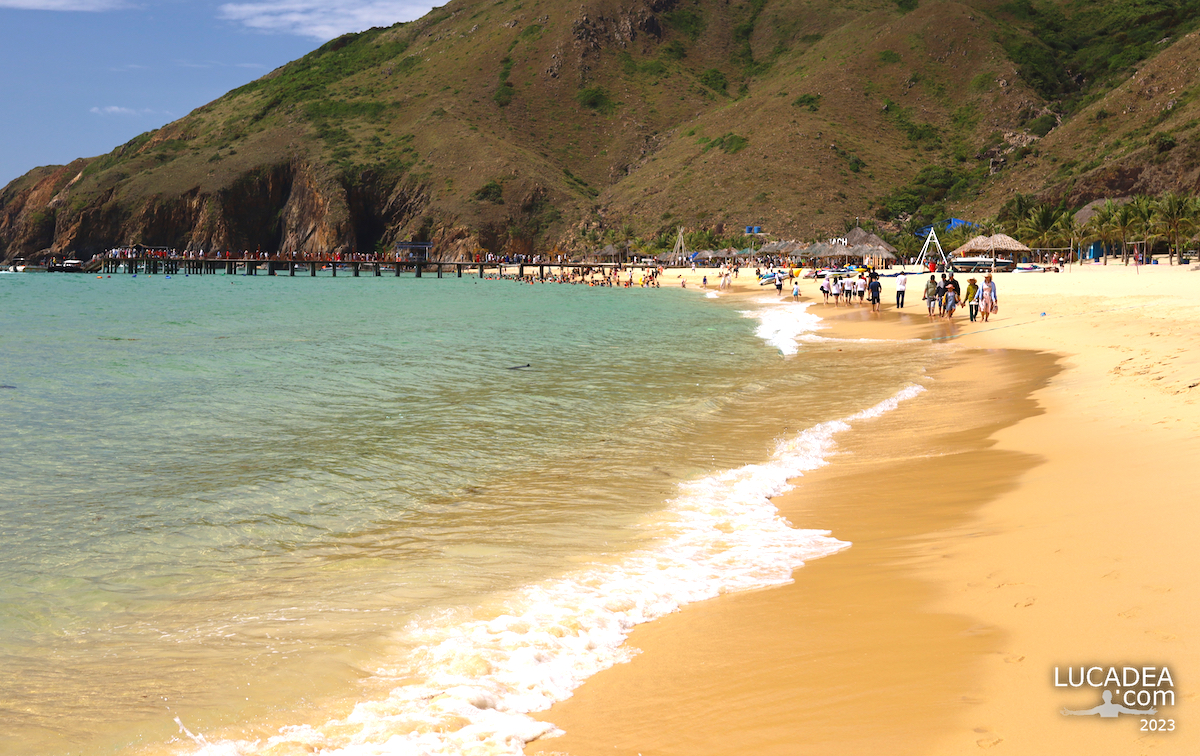
Ky Co beach in Quy Nhon, Vietnam

Mare da sogno: la spiaggia di Ky Co in Quy Nhon in Vietnam

Ky Co beach in Quy Nhon, Vietnam.
During my latest holiday in Vietnam, I had another opportunity to stop and photograph this beautiful stretch of coastline, and this is one of the images I chose to keep. Ky Co stayed in my memory because of the direct relationship between the beach, the sea and the landscape around it.
If you are wondering what to see in Quy Nhon, Ky Co beach is certainly one of the coastal places worth seeing. I experienced it mainly through photography, trying to collect a few views that could preserve at least part of what it felt like to stand in front of this landscape.
This photograph comes from a moment during my latest trip to Vietnam. There is no complicated story behind the image. I simply like having a visual record of the places I have actually visited, and when I travel I usually keep my camera ready for the views that catch my attention along the way.
Ky Co is located near Quy Nhon, in Binh Dinh province on the central coast of Vietnam. It offers a coastal setting quite different from the better-known images of Vietnam’s large cities. Here, the sea, beach and surrounding rocky landscape become the main subjects, and for me that simplicity is part of what makes the location interesting.
Looking at this photograph brings back one of the things I enjoy most about travelling. Arriving somewhere unfamiliar means that, for a few moments, I do not yet know exactly where the best viewpoint will be. Sometimes I take the camera out immediately. Other times I stop, look around and try to understand what has actually caught my eye.
With Ky Co, it was the character of the beach and the surrounding coastline that made me want to photograph it. A travel photograph does not always have to document a major experience or an entire itinerary. Sometimes it can simply preserve the memory of a short stop, a particular stretch of coast and the impression it left behind.
There is also a small geographical detail that I find interesting. Quy Nhon is the coastal capital of Binh Dinh province, while Ky Co is one of the beach destinations in the surrounding area. This makes the relationship between the city and the nearby coastline particularly interesting: a relatively short journey can take you from an urban setting to a much more open coastal landscape.
If you are looking for a beach in Vietnam with strong photographic appeal, Ky Co offers a very different subject from the country’s busy streets and historic cities. Here, the story is told by the coastline itself, by the sea and by the relationship between the water and the land.
This is also why I enjoy publishing several photographs from the same trip. One image can rarely tell the whole story of a place. Each photograph captures a different fragment, and together those fragments often recreate the memory of a holiday much better than a general description could.
On my photo blog I have already shared other moments and places from my travels, and I like keeping those images connected. Sometimes looking at a new photograph brings back the memory of an older one, creating a kind of visual diary that grows naturally over time.
This photograph of Ky Co is therefore simply another small piece of my latest trip to Vietnam. A beach, a stretch of coastline and a moment when I stopped to look through my camera and keep what I saw.

Have you ever been to a beach in Vietnam? Add a comment or go to the bottom of the site to read what other visitors have written.

Ky Co beach in Quy Nhon, Vietnam, showing the coastline and sea in a quiet travel photograph

Ky Co beach in Quy Nhon, Vietnam, showing the coastline and sea in a quiet travel photograph

Ky Co beach in Quy Nhon, Vietnam, showing the coastline and sea in a quiet travel photograph

Photos taken with Canon EOS RP and lens Canon RF 24-50.

Here is where the beach is located:

Ha Long Bay from above

Vista dall’alto della baia di Ha Long Bay con isolotti rocciosi che emergono dal mare e vegetazione verde tra le formazioni

Ha Long Bay from above.
From this viewpoint, Ha Long Bay opens up in front of me with a perspective that is completely different from anything I could see from the water. It is one of those photographs that shows what to see in Ha Long Bay when you manage to look at this extraordinary landscape from a higher position.
Getting up there was not immediate, but once I reached the highest point, I understood straight away that the climb had been worth it. In front of me was a vast landscape that seemed almost impossible to fit into a single photograph, with the sea filling the spaces between hundreds of islands and the great rocky formations rising from the water.
Ha Long Bay lies in Quang Ninh Province in northeastern Vietnam, and from above it takes on a completely different appearance from the views normally seen from the water. At sea level, the islands can look like enormous walls of rock; from here, they become part of a much wider composition made of shapes, distances and constantly changing perspectives.
I stopped to look before even thinking about taking the photograph. A few boats were moving far away, almost tiny compared with the scale of the bay, while the limestone islands rose from the water covered in vegetation. From this height, distances seemed to stretch out, and even the boats, normally an important element in photographs of the bay, became little points within the landscape.
I wanted to take this photograph because I was trying to capture that feeling of vastness. Finding a composition that included enough of the panorama without losing every small detail was not easy. The bay is so complex that the eye keeps moving from one island to another, following the irregular lines of the rocks and the strips of water between them.
If you are wondering what to see in Ha Long Bay, boat trips naturally offer the chance to experience the landscape up close, but a view from above adds another way of understanding it. From here, the number of rock formations and the intricate shape of the bay become much easier to appreciate. It is almost like moving from looking at one detail to seeing the entire composition at once.
One interesting fact is that Ha Long Bay is a UNESCO World Heritage Site, recognized for its exceptional karst landscape. Its limestone formations are the result of geological processes that developed over millions of years, shaped by water and weathering. That long natural evolution created the extraordinary succession of islands, cliffs and rocky formations visible in the photograph.
Looking back at the image, however, it is not the geological story that comes to mind first. What I remember most is the feeling of suspension I had when I reached the top. The landscape seemed almost motionless and, despite the boats in the distance, time appeared to move much more slowly.
Photographing such a well-known place also comes with a particular challenge. Ha Long Bay has been photographed countless times, so finding a viewpoint that can convey even part of what it feels like to stand there is not easy. I was not necessarily looking for a perfect image. I simply wanted a photograph that could preserve some of the scale I was seeing.
What I like most about this view is the contrast between the relative calm of the water and the irregular shapes of the islands. Some rock formations appear completely isolated, while others gather together to create natural passages and corridors. The vegetation covering much of their surface makes the difference between the green land and the blue water even more striking.
This photograph also connects with my wider photographic memories of Vietnam, where I have collected images from very different places and moments. After photographing streets, cities and everyday details, standing in front of a landscape on this scale required a completely different way of looking and composing.
I took this image because I wanted to preserve that particular perspective and sense of space. From the ground or from a boat, it is possible to appreciate the details of individual formations, while from above everything becomes one enormous natural mosaic. Perhaps that is why Ha Long Bay from above stays in the memory for so long: it does not simply show the bay, but gives you a sense of its true scale.
Looking at the photograph again, I can almost imagine being back there for a moment, standing above that quiet landscape filled with irregular shapes. It is one of those places where a photograph can preserve only part of the experience, leaving out the very feeling of immensity that comes from actually standing in front of the scene.

Have you ever seen Ha Long Bay from above, or would you rather discover it by boat among the islands? Add a comment or go to the bottom of the site to read what other visitors have written.

Ha Long Bay from above, with limestone islands covered in vegetation rising from the sea

Photo taken with Canon EOS RP and Tamron 16-300 lens.

To see all the photos I took in Ha Long Bay, click here:

Where is the bay located:

Bamboo at Villa Rocca in Chiavari

Canne di bambù

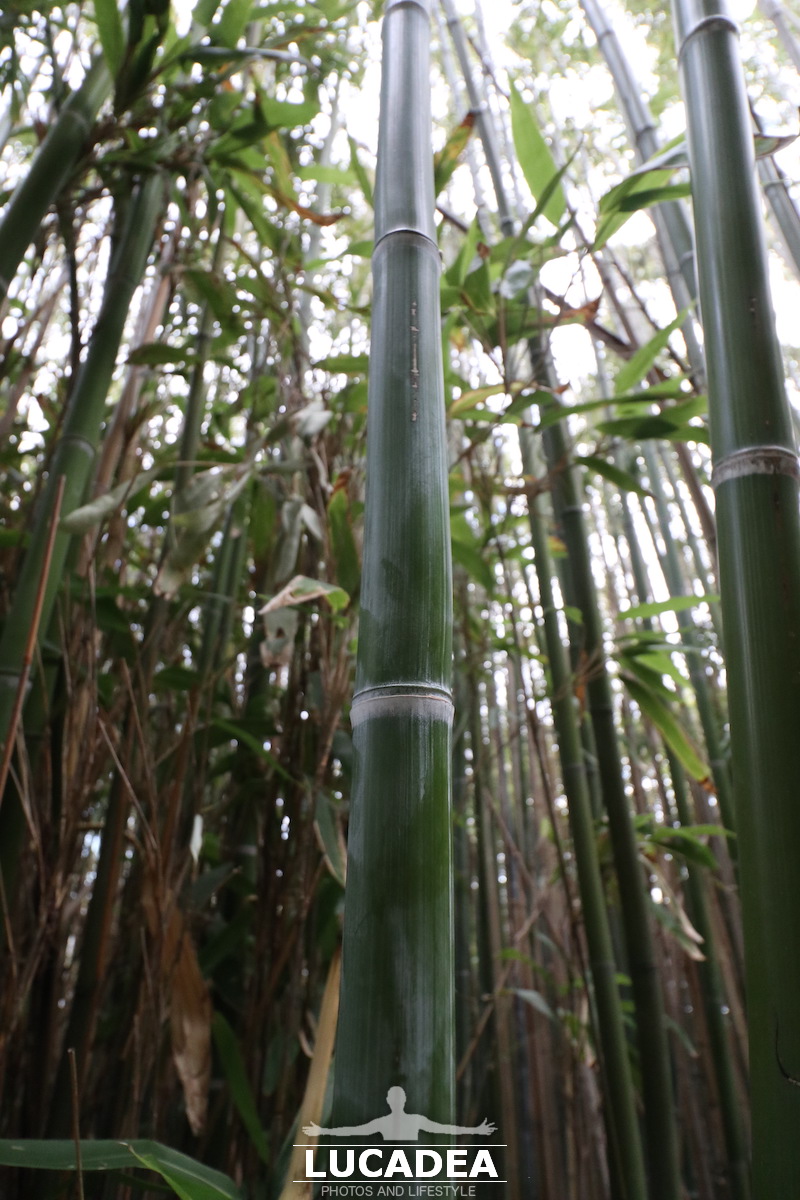
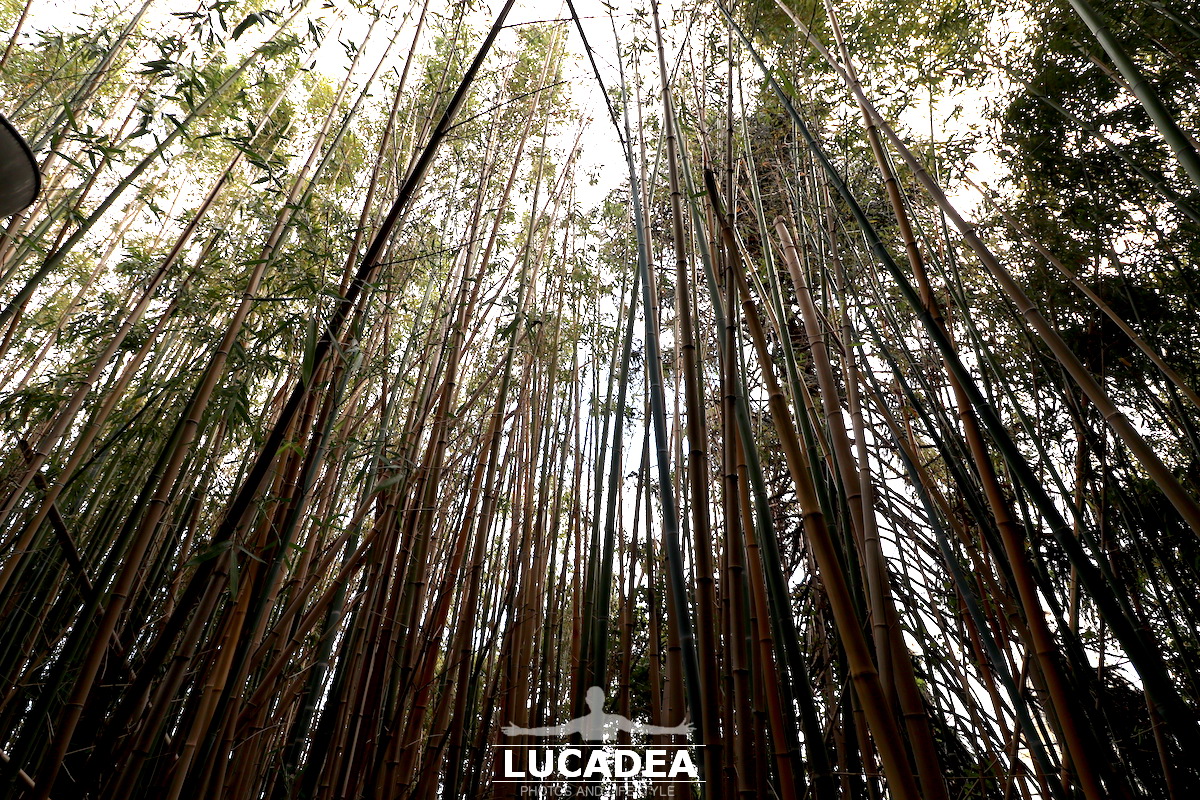
Bamboo at Villa Rocca in Chiavari.
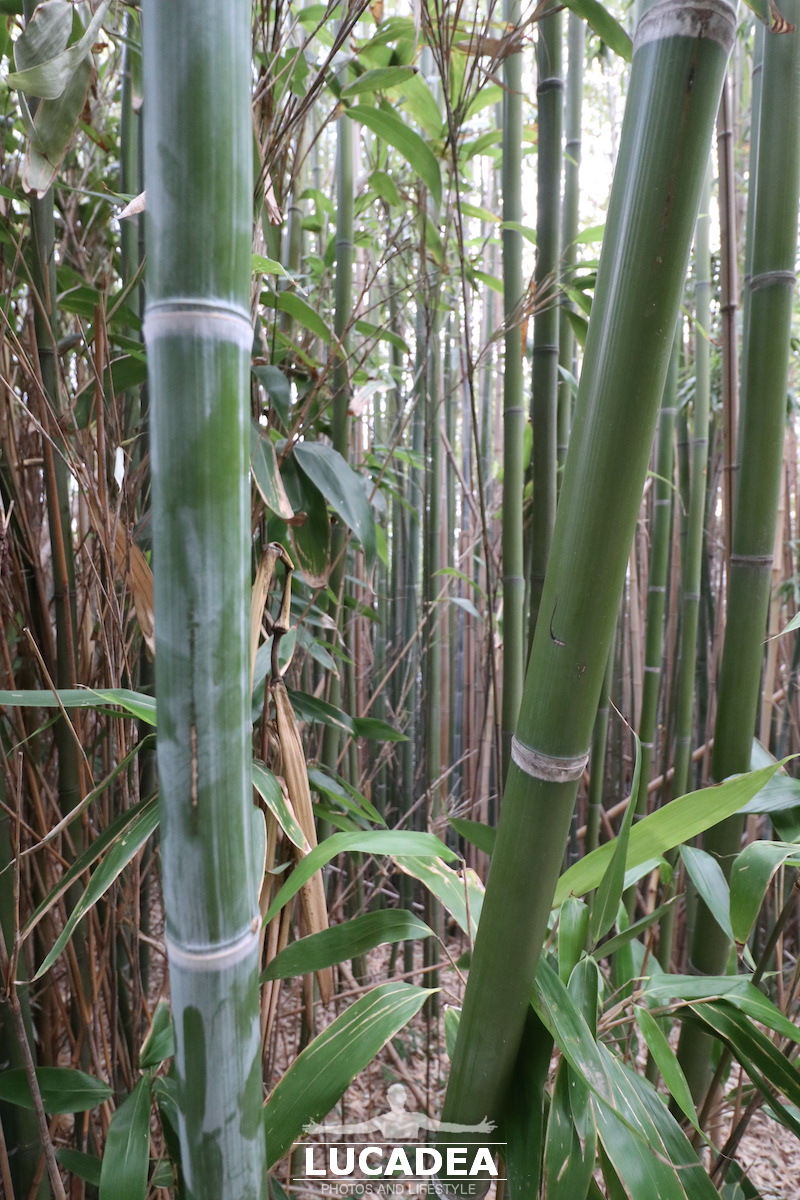
At first glance, this dense patch of vegetation could easily make me think of Asia, perhaps one of the landscapes I encountered during my travels in Vietnam. This time, however, there was no long journey involved: these bamboo canes grow close to where I live, forming a small but distinctive green area along the edge of Villa Rocca park.
That contrast is what first caught my attention. With my strong connection to Asia and Vietnam in particular, photographing bamboo so close to home felt slightly amusing. The subject could have belonged to a completely different part of the world, yet it was right there in Chiavari, somewhere I can reach without boarding a plane.
I took this photograph myself, and what I like most about it is its simplicity. There is no famous monument or spectacular landscape here. Instead, the image is built around a group of bamboo canes growing closely together, dense enough to create the impression of a tiny forest. It is exactly the kind of detail that can easily disappear into the background of a familiar place until you stop and look at it differently.
The bamboo grows near Villa Rocca in Chiavari, Liguria, Italy, where it helps mark the edge of the park. The setting is obviously very different from the large bamboo forests commonly associated with Asian landscapes, but the visual impression can still be surprisingly similar when the plants grow close enough together.
If you are looking for things to see in Chiavari beyond the better-known streets and historic sights, Villa Rocca also offers smaller details that can be interesting to discover while walking around. I would not describe this bamboo as a major attraction by itself. What interests me is its role in the landscape and the way an apparently ordinary plant can completely change the feeling of a photograph.
Bamboo is actually a large group of grasses rather than a single type of plant, and different species can reach very different sizes. Its characteristic segmented, hollow stems are easy to recognize, while dense growth can create the almost woodland-like appearance visible here. That is the small botanical detail behind the visual effect of this photograph.
I did not want to turn the subject into something it is not. I simply liked the fact that this little patch of bamboo exists in a familiar part of Chiavari. After taking so many photographs during trips to distant places, it can be surprisingly rewarding to discover that something close to home can create the same visual associations.
The connection with Vietnam comes naturally for me. People who know my photographs will already know that Asia, and Vietnam especially, have often been part of my photographic interests. So when I saw these bamboo canes, the association with those journeys appeared almost immediately. It is obviously not the same experience, but a plant so strongly associated with Asian landscapes can be enough to bring those memories back.
This is also one of the reasons I enjoy photographing places close to home. When travelling, almost everything deserves attention because almost everything is unfamiliar. In familiar surroundings, it is much easier to walk past the same details without really seeing them. A photograph like this reminds me that there are still small subjects worth noticing in places I already know well.
The image also fits naturally with the other stories from Chiavari that I have published on the blog. Those photographs come from a much more familiar environment than the places I have visited abroad, but they show another side of my relationship with the area. I do not always need to search for something extraordinary. Sometimes a small detail is enough to make me stop and take out the camera.
And perhaps that is what I like most about these bamboo canes. They are simply there, growing along the edge of Villa Rocca park, but for a moment they can make a familiar corner of Chiavari feel thousands of kilometres away.

Have you ever found something close to home that suddenly reminded you of another part of the world? Add a comment or go to the bottom of the site to read what other visitors have written.

Bamboo canes in Villa Rocca park in Chiavari, a green corner that recalls Asian landscapes

Bamboo canes in Villa Rocca park in Chiavari, a green corner that recalls Asian landscapes

Bamboo canes in Villa Rocca park in Chiavari, a green corner that recalls Asian landscapes

Photos taken with Canon EOS M100 and lens Canon EF-S 10-18.

Garlic Stalls at a Vietnamese Market

Bancarella del mercato in Vietnam piena di teste d’aglio bianche e violacee impilate in grandi quantità ravvicinate

Garlic Stalls at a Vietnamese Market.
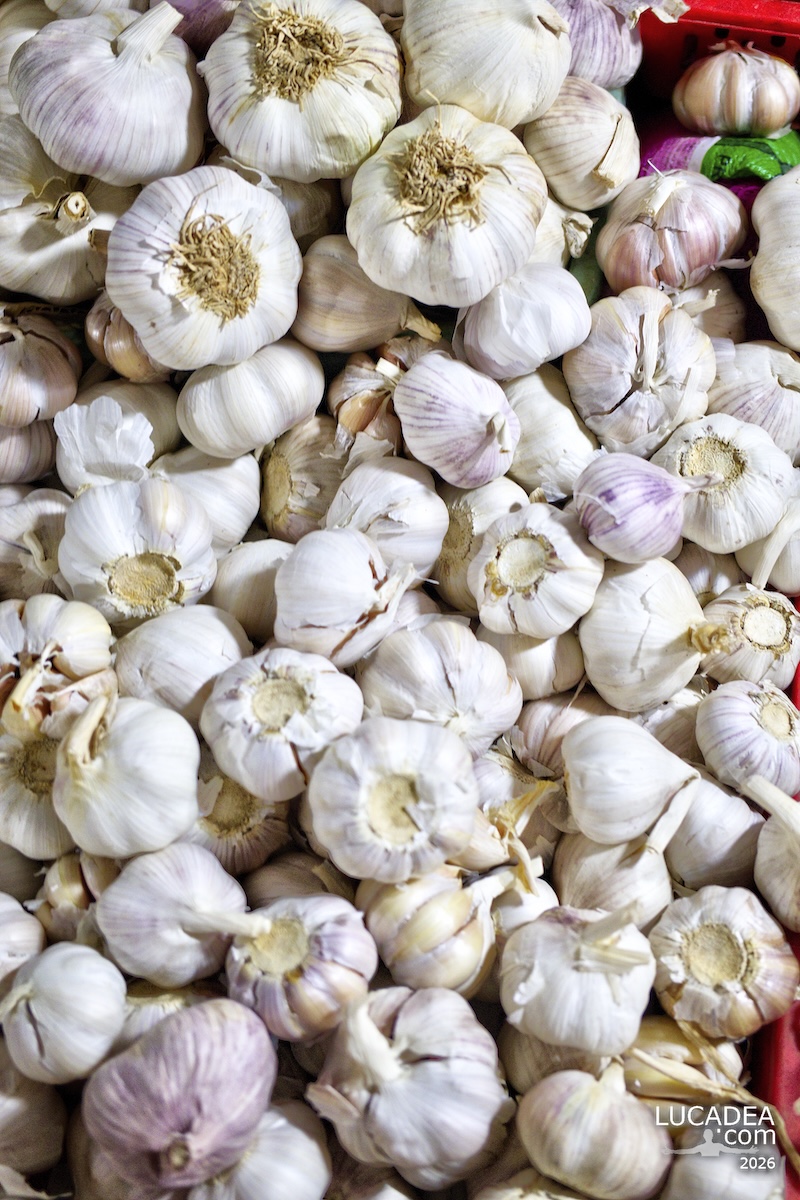
I find myself standing in front of a dense field of garlic that fills the frame so completely that everything else seems to fade into the background, and garlic becomes the immediate focus of this simple yet powerful scene. The garlic is stacked in countless clusters, some bulbs bright white, others marked with soft purple streaks that hint at different varieties and different hands that have shaped their journey to this market in Vietnam. Here, garlic is not just an ingredient but a constant presence, almost like a silent rhythm that structures the movement of sellers and buyers around the stalls.
As I look closer, I imagine the texture of each bulb, the dry papery layers protecting the cloves inside, and I think about how garlic defines so many everyday meals across Vietnam. The garlic here feels alive in its stillness, forming small landscapes of repetition and abundance that speak of harvest and labor. Even without sound or smell, the visual intensity of garlic is enough to fill the senses.
There is a small culinary truth tied to garlic in Vietnamese cuisine: it is often one of the first ingredients to hit the hot oil in a pan, building the aromatic foundation of countless dishes alongside shallots and chili. This simple step transforms garlic into something essential, shaping flavors that feel deeply rooted in local food culture.

Watching this scene, I start to wonder how many journeys each garlic bulb has taken before reaching this point, and how many meals it will continue to influence far beyond this market. How often do we stop and really observe something as ordinary, yet as essential, as garlic? Add a comment or go to the bottom of the site to read what other visitors have written.

Photos taken with Canon EOS R50 V and Canon RF 28 lens.

To see all the photos I took at the market, click here:

Hanoi, colorful houses by Train Street

Case colorate accanto ai binari della Train Street nel centro di Hanoi, Vietnam, uno scorcio della capitale

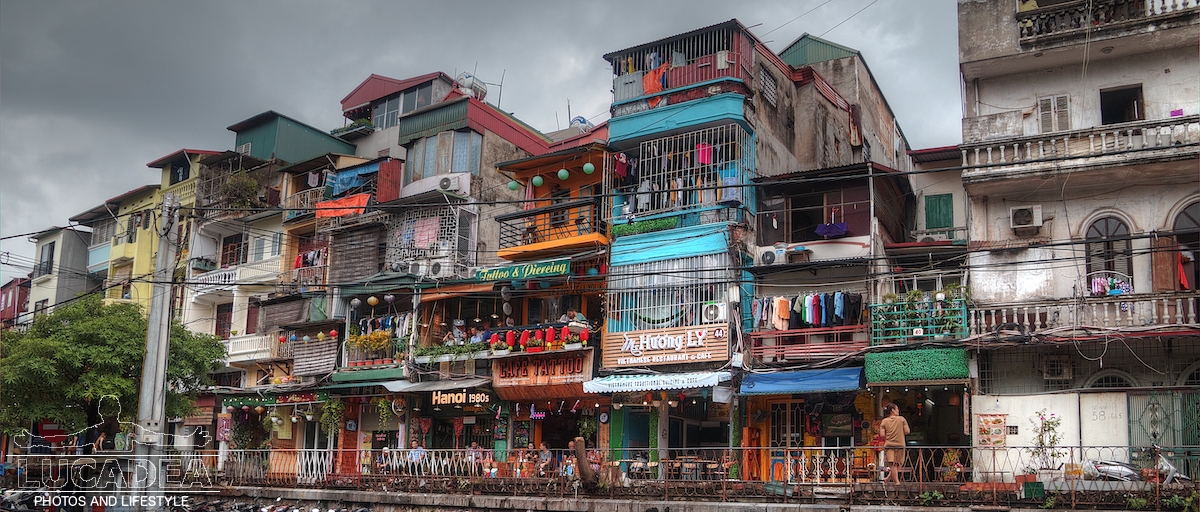
Hanoi, colorful houses by Train Street. Walking through Vietnam’s capital, I came across one of those scenes that seemed to capture several sides of the city at once: narrow colorful houses, greenery, urban noise and, just beyond them, the railway tracks of the famous Train Street. It is one of the things worth seeing in Hanoi, not only because of the train itself, but because of the unusual way the railway runs through such a tightly packed urban setting.
I took this photograph along one side of Train Street, focusing on the small houses built right beside the railway. What caught my attention was the contrast between ordinary homes and the tracks passing almost directly in front of them.
Hanoi, Vietnam, is a city where traffic, people, trees and street businesses constantly seem to share the same limited space. Even when walking without a particular destination, it is easy to turn a corner and find something completely different. These houses along Train Street were exactly the kind of detail that made me stop and take out my camera.
Train Street became famous because the railway passes through an extremely narrow corridor between the surrounding buildings. In some sections there is so little room that, when a train approaches, anyone standing near the tracks has to move away and leave the railway completely clear. It is an unusual urban scene, and the closeness between the railway and everyday life has made this part of Hanoi one of the city’s most recognizable images.
When I took this photograph, the small cafés beside the railway were still part of the experience offered to visitors. People could sit just a few inches from the tracks and wait for the train to pass. Shortly afterwards, however, authorities ordered the closure of several businesses operating too close to the railway because of safety concerns. In that sense, the photograph also preserves a particular moment in the recent life of the neighborhood.
The curiosity of Train Street is that it was not originally created as a tourist attraction. It is an ordinary railway line that has long been part of Hanoi’s urban fabric. Its unusual layout and the growing attention from visitors gradually turned it into one of the most photographed places in the capital.
For me, though, Hanoi is much more than Train Street. What I remember most is the combination of narrow colorful façades, constant traffic, trees along the streets, small lakes and, of course, street food. I like this photograph because it captures only one small part of that atmosphere rather than trying to represent the entire city.
Walking around Hanoi, I often felt that another photograph was waiting just around the next corner. I had a similar feeling in other parts of Vietnam that I have photographed for the blog, including Hoi An, where everyday streets and small details became just as interesting as the better-known sights.
The city felt chaotic, lively and full of contrasts, but that is exactly what made it so interesting to photograph. Train Street is certainly one of its most unusual places, although its relationship with tourism has become more complicated because of safety concerns.

I wonder whether Train Street will still be experienced in the same way in the future. Would you have sat that close to the railway to wait for the train? Add a comment or go to the bottom of the site to read what other visitors have written.

Colorful houses beside the railway tracks on Train Street in Hanoi, Vietnam, a distinctive view of the capital

Photo taken with a Canon EOS M100 camera and Tamron 16-300 lens.

Click here to see all the photos of the city:
foto gallery

Where the city is located:

Hanoi’s urban landscape is characterized by numerous lakes (such as the central Hoan Kiem Lake, or “Lake of the Returned Sword”) as well as various religious buildings—primarily Confucian and Taoist (the Temple of Literature and Ngoc Son Temple), but also Catholic (such as St. Joseph’s Cathedral). Its Old Quarter also features a large number of Buddhist pagodas.
Read more on Wikipedia

Ho Chi Minh Museum in Hanoi

Museo di Ho Chi Minh ad Hanoi in Vietnam con la moderna architettura del complesso storico

Ho Chi Minh Museum in Hanoi.
Among the things to see in Hanoi, Vietnam, the Ho Chi Minh Museum is one of the places most connected to the political and cultural history of the country. Located near the Ho Chi Minh Mausoleum, inside the large complex dedicated to the Vietnamese leader, the museum tells his story through photographs, documents and objects related to one of the most important figures in modern Vietnamese history.
I captured this photograph during my trip to Vietnam, when almost a year ago I visited Hanoi and some of its most representative places. While walking around the mausoleum area, I wanted to photograph this building as well, a place that may receive less attention than the main monument but that is equally meaningful for understanding the connection between Vietnam and Ho Chi Minh’s legacy.
The museum stands out from the outside because of its unusual architecture, with modern geometric shapes that contrast with the historical atmosphere of the surrounding area. Inside, the exhibition follows different stages of Ho Chi Minh’s life, from his early years and political education to his role in the creation of the Democratic Republic of Vietnam.
Visiting the Ho Chi Minh Museum offers an opportunity to understand an important part of Vietnamese history, but also to observe how national memory is represented through public spaces. The mausoleum complex is one of the most symbolic areas of Hanoi and is visited every day by both Vietnamese citizens and international travelers.
Hanoi, located in northern Vietnam, Vietnam, is a city where traditional Vietnamese culture, French colonial influences and contemporary history come together. The Ho Chi Minh Museum is located in the Ba Đình district, an area that contains some of the most important political and institutional buildings of the capital.
A small historical detail about Ho Chi Minh is that he was born in 1890 and became the main figure of the Vietnamese independence movement. He served as president of the Democratic Republic of Vietnam until his death in 1969, and his image remains deeply connected with the country’s national identity.
This photograph is part of my travel story through Vietnam, where I tried to capture not only famous landmarks but also places that help explain the history and culture of the country. Like other images I have shared from Vietnam, this one shows how the meaning of a photograph often comes from the context surrounding the subject.
If you are visiting Hanoi and wondering what to see, the Ho Chi Minh Museum is an interesting stop for anyone who wants to understand more about Vietnam’s recent history beyond the most famous views of the capital.

Which museum you visited during a trip helped you understand a country’s history the most? Add a comment or go to the bottom of the site to read what other visitors have written.

Ho Chi Minh Museum in Hanoi Vietnam showing the modern architecture of the historic complex

Photo taken with a Canon EOS M100 camera and Tamron 16-300 lens.

Click here to see all the photos taken in the capital:
foto gallery

The museum is located within the Ho Chi Minh complex in the Ba Dinh district, behind the Ho Chi Minh Mausoleum, and opened to the public in 1990.
Read more on Wikipedia.

The golden statue inside Khai Dinh Tomb in Hue

Statua dorata dell’imperatore nella Khai Dinh Tomb a Hue con dettagli decorativi e ambiente interno riccamente decorato

The golden statue inside Khai Dinh Tomb in Hue.
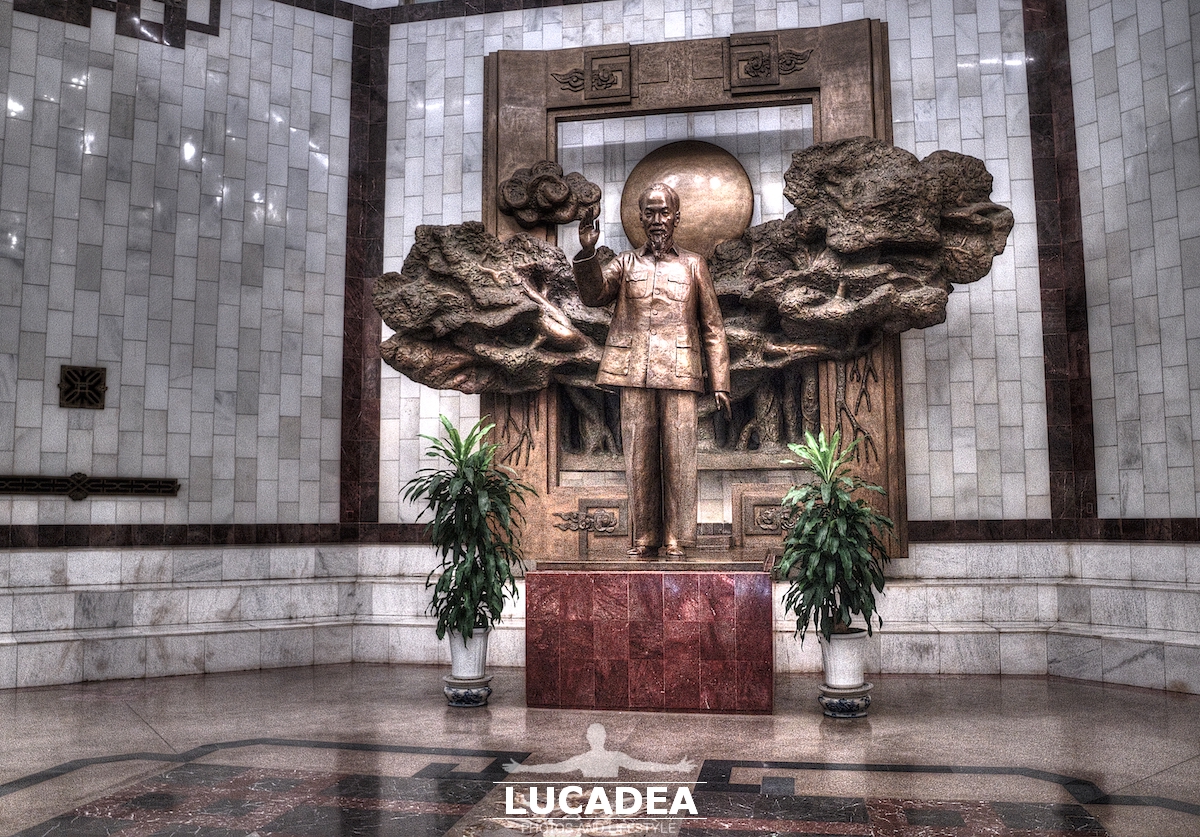
Stepping inside the Khai Dinh Tomb in Hue, my attention was immediately drawn to the golden statue dominating the space with a still yet powerful presence. The golden statue inside Khai Dinh Tomb seems to watch everything without moving, seated in a silence that fills the room more than any sound could.
I paused in front of the figure, trying to understand what was truly striking me. It wasn’t just the gold or the posture, but the combination of details that made it feel almost alive despite its stillness. The surfaces reflected light unevenly, creating brighter and softer areas, as if time itself had left subtle marks. The golden statue inside Khai Dinh Tomb is not just decorative; it feels like it holds something deeper.
While taking the two photos, I slightly changed my position to see how the perception would shift. From one angle, the figure felt distant, almost unreachable; from another, it seemed closer, with facial and hand details becoming clearer. In both cases, there was a natural sense of respect that emerged simply from being there.
The interior of the tomb is richly decorated, yet this statue stands out effortlessly. It feels as though everything else is there to support it without ever overpowering it. An interesting detail is that Khai Dinh Tomb was built for Emperor Khải Định, and the statue represents him, symbolically preserving his presence beyond death.
I stayed there a bit longer, trying not to overthink the moment and letting the atmosphere guide me. The photographs I took are not meant to explain, but to capture that quiet mix of stillness and grandeur.

Have you ever stood in front of a statue that felt almost like a living presence? Add a comment or go to the bottom of the site to read what other visitors have written.

Photos taken with Canon EOS R50 V and Tamron 16-300 lens.

To see all the photos I took of the tomb, click here:
foto gallery

Khải Định (8 October 1885 – 6 November 1925) was a Vietnamese emperor. He visited France in 1922, and in 1923 he built the Tứ Phương Vô Sự Pavilion in Huế. Khải Định suffered from health problems like his father and became a drug addict. He died of tuberculosis in the Forbidden Purple City in Huế, according to his concubine Ba Phi, who described him as “not interested in sex” and “physically weak”.
Continue and learn more at Wikipedia

The golden statue inside Khai Dinh Tomb in Hue – La statue dorée dans la tombe de Khai Dinh à Hué – La estatua dorada en la tumba de Khai Dinh en Hue – A estátua dourada no túmulo de Khai Dinh em Hue – Die goldene Statue im Khai Dinh Grab in Hue – Tượng vàng trong lăng Khai Dinh ở Huế – 顺化启定陵中的金色雕像 – フエのカイディン廟の金色の像

The text of this post was written with the help of ChatGPT, a language model from OpenAI.

🏠
  • Italiano