A Swallow Nest in the Caruggio of Sestri Levante

Un nido di rondini nel caruggio di Sestri Levante

A swallow nest in the caruggio of Sestri Levante.
In spring and autumn, the caruggio of Sestri Levante is home every year to dozens of swallows that build their nests under balconies or beneath the awnings of the local shops.
It is one of those small natural spectacles that can be seen right in the center of town, without having to go anywhere special. All you need to do is look up while walking along the caruggio and, between the shops and old houses, you may find these little nests full of life.
The swallows fly above the houses, come and go from their nests and fill the street with their calls. Rather than simply chirping, as we often say, swallows chatter and twitter, and their distinctive calls immediately make me think of the warmer seasons.
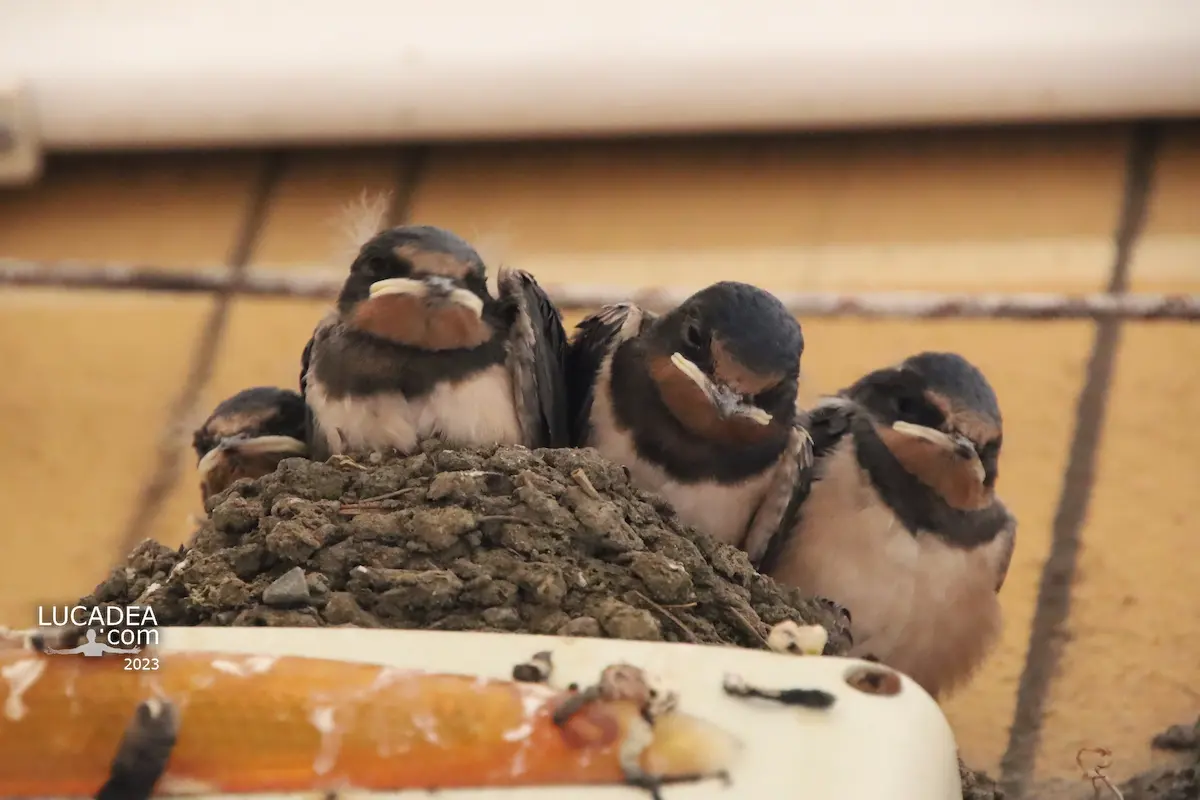
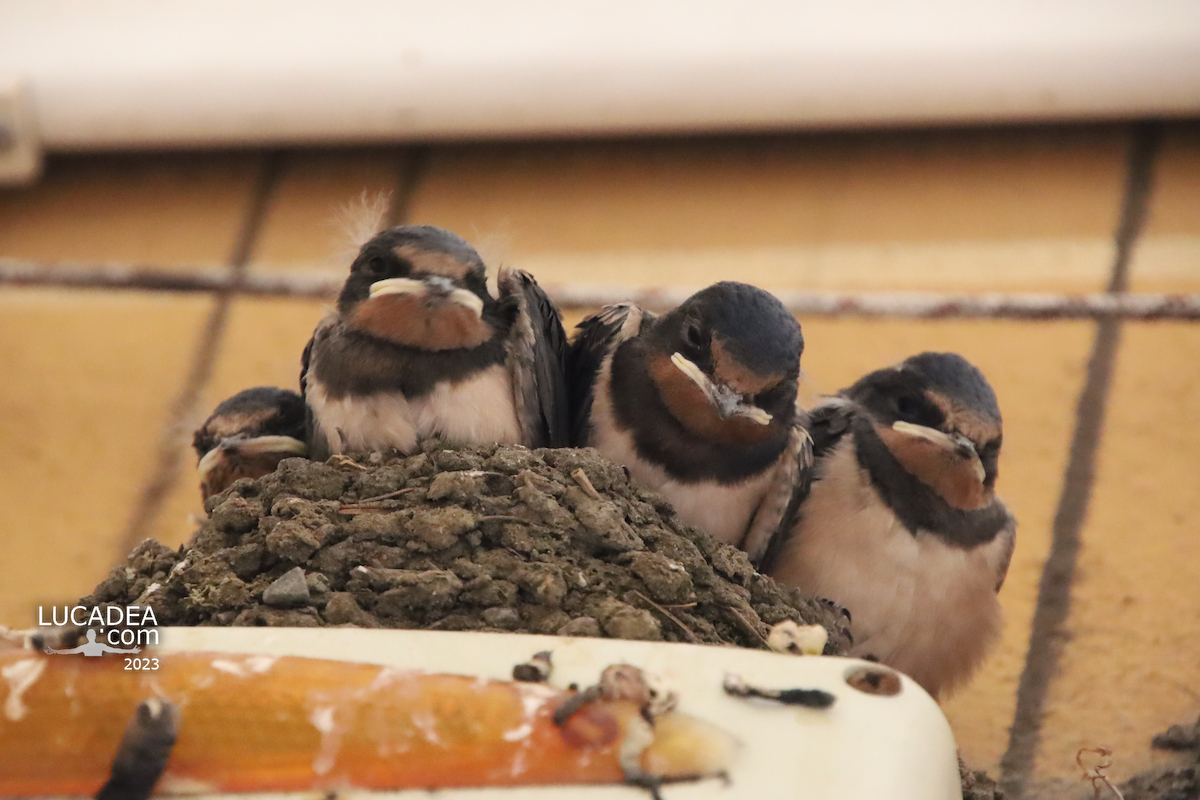
This time I stopped to photograph one of the nests in the caruggio. The young birds, who are not really that small anymore, were waiting impatiently for their parents to return, ready for the next meal.
It is a very simple scene, but that is exactly what I like about it. The caruggio is normally associated with people, shops, walks and everyday life in Sestri Levante. In spring, however, it also becomes a small natural habitat for these birds, which return every year to occupy the same kinds of sheltered spaces.
Photographing a swallow nest in the middle of a town is a reminder of how nature can find its own space even in urban environments. A balcony, a shop awning or a small recess beneath a roof can become a safe place to build a nest and raise a new generation.
And then there are the young birds themselves, with their wide-open beaks and impatient expressions as they wait for one of their parents to return. It is the kind of scene that always makes me smile.
Sestri Levante is best known for the Bay of Silence, the Bay of Fables and its coastline, but the historic center and the caruggio also tell an important part of the story of everyday life in the town. Sometimes you simply have to look up to find something worth photographing.
This photograph is therefore a small tribute to the swallows that return to Sestri Levante every year and, with their flights and calls, bring a little extra joy to the heart of the town.

Have you ever noticed the swallow nests in the caruggio of Sestri Levante? Add a comment or go to the bottom of the site to read what other visitors have written.

Swallow nest in the caruggio of Sestri Levante with young birds waiting for their parents

Swallow nest in the caruggio of Sestri Levante with young birds waiting for their parents

Swallow nest in the caruggio of Sestri Levante with young birds waiting for their parents

Photos taken with Canon EOS RP and lens Tamron 16-300.

Add one  comment to this article or read  here what other visitors have written.
 
Adv
 
Disclamer

The rights on images, videos, choruses, text and all other material on the LUCADEA.com website are governed as per  Copyright page.


This page has been viewed 0 times today.
This month it has been viewed 0 times.
In total it has been viewed 0 times.
 

A stork photographed in Romania

Cicogna fotografata in Romania vicino al confine serbo sopra un palo della luce con il nido sul paesaggio rurale.

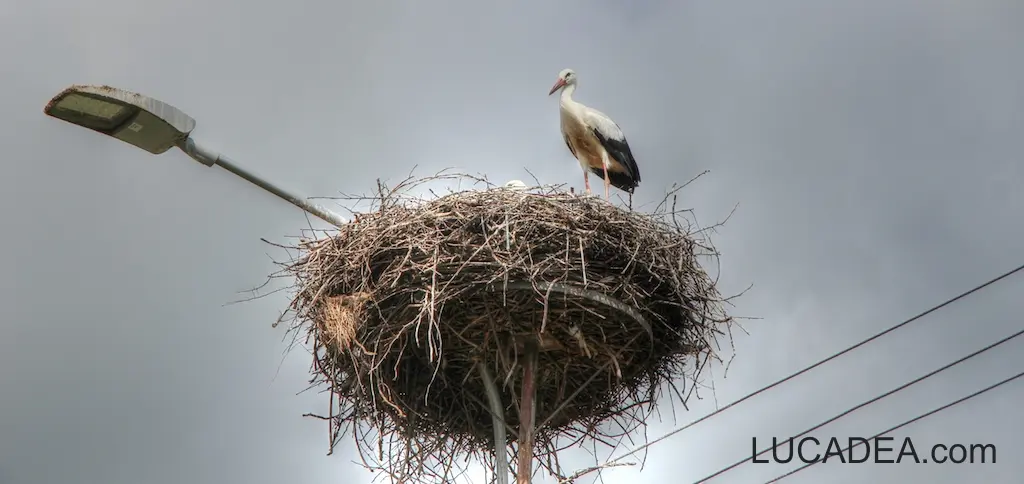
A stork photographed in Romania.
During a journey near the border between Romania and Serbia, I came across some storks that had chosen a rather unusual place to build their nest.
Seeing a stork in Romania is not something extraordinary, but finding these large birds resting on electricity poles along the road was definitely an unexpected and memorable encounter. What caught my attention was the contrast between a simple everyday object, such as a power pole, and the presence of these elegant birds using it as their home.
I decided to capture this moment with my camera because it represented one of those small discoveries that make travelling interesting. It was not a famous landmark or a spectacular landscape, but a natural scene found while moving through the countryside, something that could easily be missed without taking the time to look around.
The photograph was taken in Romania, in an area close to the Serbian border, where rural landscapes, open fields and small villages create a different rhythm compared with the larger cities. If you are visiting Romania, exploring the countryside can reveal many unexpected views and encounters with wildlife that are closely connected to everyday life.
Storks have always been associated with European rural landscapes and are often considered a symbol of good luck and new beginnings. One interesting fact is that these birds frequently return to the same nesting place, adding new material over the years and creating very large nests that become part of the surrounding landscape.
This image belongs to my personal collection of photographs taken around the world, where I often try to preserve simple moments rather than only famous attractions. As in other travel photographs collected in my World Photos section, I like keeping memories of small situations encountered along the way.
Looking back at this scene, the stork remains one of the most curious moments of that journey: an unexpected presence that appeared almost by chance in front of my camera.

Have you ever found an animal in a place where you absolutely did not expect to see it? Add a comment or go to the bottom of the site to read what other visitors have written.

Stork photographed in Romania near the Serbian border standing on an electricity pole with its nest above the rural landscape

Add one  comment to this article or read  here what other visitors have written.
 
Adv
 
Disclamer

The rights on images, videos, choruses, text and all other material on the LUCADEA.com website are governed as per  Copyright page.

This page has been viewed 0 times today.
This month it has been viewed 0 times.
In total it has been viewed 0 times.
 

Seagulls in the port seen from a ship in Malaga

Gabbiani in fila sul muro del porto di Malaga visti dalla nave con il mare sullo sfondo

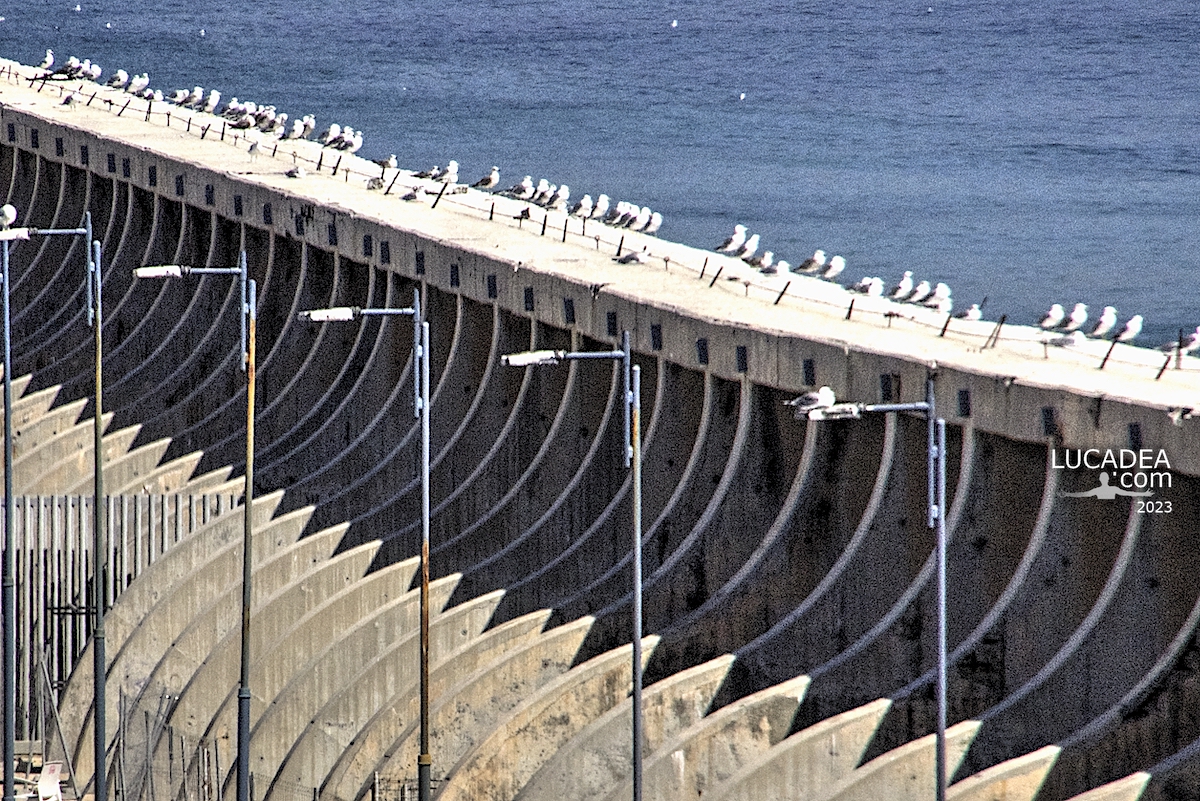
Seagulls in the port seen from a ship in Malaga.
The seagulls in the port of Malaga were something I always noticed from the top of the ship, watching them instead of stepping ashore. Seeing seagulls in Malaga from this perspective became a habit over time, a way of experiencing a place without ever really entering it. The line of seagulls along the port wall in Malaga looked almost unreal, perfectly spaced as if they were part of the structure itself.
Throughout my life at sea, I have docked here many times, yet I have never actually visited the city. In the beginning, it was just coincidence. Every time I arrived, something would happen, small setbacks or unexpected issues that kept me onboard. Over time, it slowly turned into a kind of superstition, something I never really questioned anymore. So Malaga remained a place I only knew from a distance.
Malaga, in Andalusia, Spain, is widely known as one of the most interesting cities to visit in southern Spain. If you are visiting and wondering what to see in Malaga, there are countless options, but for me the image that defines it is much simpler: a long row of seagulls resting quietly by the water.
One interesting fact is that seagulls are highly adaptable birds, and ports provide them with ideal conditions, from easy access to food to safe resting spots. That’s why it’s common to see them lined up like this, especially during calmer moments of the day.
Watching them, I was struck by their stillness. Despite all the movement around the harbor, they remained motionless, like silent observers of everything happening nearby. I took several photos, trying to capture that long, continuous line cutting across the frame.
It reminded me of other stories I’ve shared on lucadea.com, where the sea becomes more of a viewpoint than a destination. Sometimes you don’t need to step ashore to carry a memory with you.
Maybe one day I will finally break this habit and explore Malaga for real. But for now, this is how I remember it: a row of seagulls, a harbor, and a view from above.

Have you ever felt like you knew a place without ever truly setting foot in it? Add a comment or go to the bottom of the site to read what other visitors have written.

Gabbiani in fila sul muro del porto di Malaga visti dalla nave con il mare sullo sfondo

Photo taken with Canon EOS RP and Tamron 16-300 lens.

Here’s where the port of Malaga is located:

Gulls (Larinae Rafinesque, 1815) are a subfamily of larid seabirds in the order Charadriiformes. The main genus of this subfamily is Larus. They usually live in colonies, nesting along the coast or in wetlands and inland waters. They feed on fish, eggs, small carrion, scraps, and even human waste, insects, and worms.
Continue and learn more at Wikipedia

Seagulls in the port seen from a ship in Malaga – Mouettes dans le port vues depuis un navire à Malaga – Gaviotas en el puerto vistas desde un barco en Málaga – Gaivotas no porto vistas de um navio em Málaga – Möwen im Hafen von einem Schiff in Málaga gesehen – Hải âu trong cảng nhìn từ tàu ở Málaga – 从船上看到的马拉加港海鸥 – 船から見たマラガ港のカモメ

The text of this post was written with the help of ChatGPT, a language model from OpenAI.

🏠
  • Italiano