Pomodoro’s Large Disk in Milan

Grande Disco di Pomodoro a Milano in bronzo con incisioni complesse, tra le opere da vedere a Milano nel centro città

Pomodoro’s Large Disk in Milan.
Walking through the center of Milan, trying to figure out what to see in Milan beyond the most famous landmarks, I unexpectedly came across the Large Disk by Pomodoro. Among the places to see in Milan, this sculpture stands out immediately, even in a city that is already full of visual contrasts.
It doesn’t blend into the background. The bronze surface, full of intricate carvings and openings, seems to shift as the light changes, creating different impressions depending on where you stand. When you search for what to see in Milan, you might think of cathedrals or historic buildings, but works like this offer a completely different perspective on the city.
Here we are in Milan, Lombardy, Italy, where everything feels fast-paced and dynamic. Yet standing in front of this sculpture, I slowed down without even realizing it. The details suggest hidden mechanisms, almost like the object is alive beneath its surface. It’s not just something to look at, but something to observe carefully.
If you are visiting Milan and wondering what to see, this is a place worth seeing not only for its artistic value but for the way it interacts with the surrounding space. It becomes part of the urban landscape rather than something separate from it.
It reminded me of another photo I shared on my site, also taken in Milan, where contemporary art blended seamlessly with everyday city life. There’s a continuity in these scenes that makes the city feel layered and complex.
A small interesting fact: the sculpture was created by Arnaldo Pomodoro, one of the most important contemporary Italian sculptors, known for his bronze works that reveal complex inner structures beneath smooth outer surfaces.
If you’re exploring what to see in Milan, you might discover that some of the most interesting spots are not the most obvious ones.

Have you ever stopped in front of a piece of art without fully understanding why it caught your attention? Add a comment or go to the bottom of the site to read what other visitors have written.

Grande Disco di Pomodoro a Milano in bronzo con incisioni complesse, tra le opere da vedere a Milano nel centro città

Photo taken with Canon EOS R50 V camera and Canon RF 28 lens.

Click here to see all the photos I took:
foto gallery

Add one  comment to this article or read  here what other visitors have written.
 
Adv
 
Disclamer

The rights on images, videos, choruses, text and all other material on the LUCADEA.com website are governed as per  Copyright page.

This page has been viewed 1 times today.
This month it has been viewed 3 times.
In total it has been viewed 3 times.
 

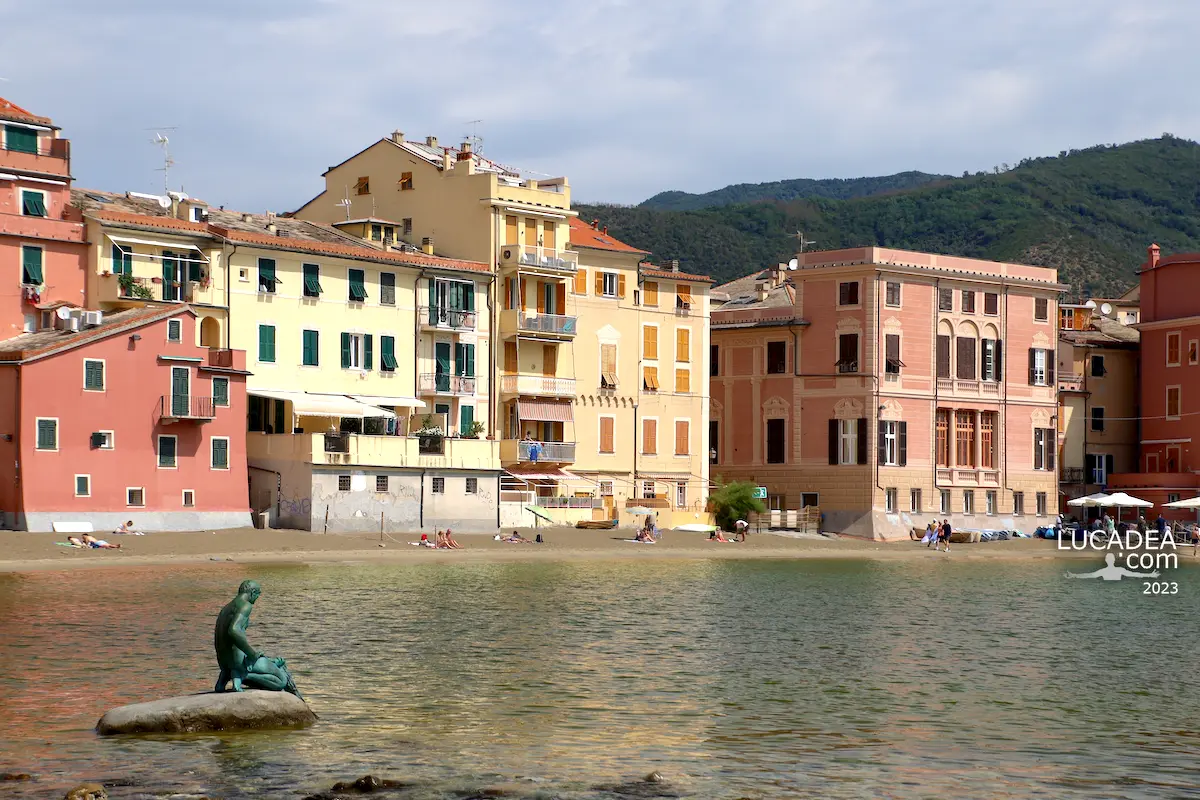
The Fisherman statue in the Bay of Silence

La statua del Pescatore in Baia del Silenzio fotografata il 13 luglio 2023

The Fisherman statue in the Bay of Silence.
Whenever I walk into the Bay of Silence in Sestri Levante, my attention often settles again on the Fisherman and the houses standing so close to the sea. It is one of those subjects I keep photographing because the relationship between the statue, the water and the buildings changes with every viewpoint. Even when the scene is familiar, moving a few steps can make the sculpture feel completely different within the frame.
I took this photograph on July 13, 2023, following the same instinct that has brought me back to this corner of my hometown many times. When I have my camera with me, I almost naturally look for the Fisherman. I am not interested only in recording the sculpture itself. What keeps me coming back is the way it belongs to the landscape around it, with the sea and the houses creating a setting that is immediately recognizable as the Bay of Silence.
If you are visiting Sestri Levante and wondering what to see in the Bay of Silence, the Fisherman is one of those details worth noticing rather than simply passing by. The sculpture stands on the rocks beside the bay and adds a human figure connected with the area’s maritime character. In Sestri Levante, Liguria, Italy, it has become a familiar part of the coastal view and a natural subject for photographs of the bay.
From a photographic point of view, I like the fact that the statue cannot really be separated from its surroundings. The rocks, the water and the houses by the shore all become part of the composition. This makes the image more interesting to me than a straightforward photograph of a sculpture. The Fisherman gives the eye a clear point to start from, while the rest of the scene provides the context.
There is also a small detail about the sculpture that helps explain its connection with the place. Made in bronze, it depicts a young fisherman lowering a net into the sea. The gesture refers to the traditional relationship between Liguria and fishing, while the position of the figure makes the connection with the water especially direct. I find that this simple subject works well precisely because it does not feel detached from the setting.
Over the years I have photographed the same statue from several different perspectives. On another occasion I went much closer to the water and photographed the Fisherman from below the surface using a GoPro and a dome. That experiment changed the proportions of the scene and showed me once again how much a familiar subject can change through photography. I also wrote about that different viewpoint in another post about the Fisherman in the Bay of Silence from below the sea.
This photograph from July 13, 2023 is therefore part of a longer personal relationship with the place. I have photographed the Bay of Silence many times, but I still find myself returning to the same subjects. The Fisherman has become one of the visual landmarks I instinctively look for when I am there with a camera, especially when I want the photograph to include both the sculpture and the houses along the shore.
For me, that is one of the pleasures of photographing a place I already know well. I do not always need a new location or an unusual subject. Sometimes it is enough to return to a familiar view and look at it again. The Fisherman, the rocks, the sea and the houses give me a composition I recognize immediately, but each photograph can still feel slightly different because my own way of seeing it changes.
That is probably why I continue to photograph this statue whenever I return to the bay. It has become one of the images I most naturally associate with Sestri Levante, not because it replaces the landscape, but because it sits so comfortably within it.

Have you ever photographed the Fisherman in the Bay of Silence? Add a comment or go to the bottom of the site to read what other visitors have written.

Photos taken with a Canon EOS RP camera and a Tamron 16-300 lens.

Here is exactly where the statue is located:

Add one  comment to this article or read  here what other visitors have written.
 
Adv
 
Disclamer

The rights on images, videos, choruses, text and all other material on the LUCADEA.com website are governed as per  Copyright page.


This page has been viewed 1 times today.
This month it has been viewed 1 times.
In total it has been viewed 1 times.
 

Napoleon Bonaparte depicted as Mars the Peacemaker

Il Napoleone Bonaparte come Marte pacificatore nel giardino di Palazzo Brera a Milano

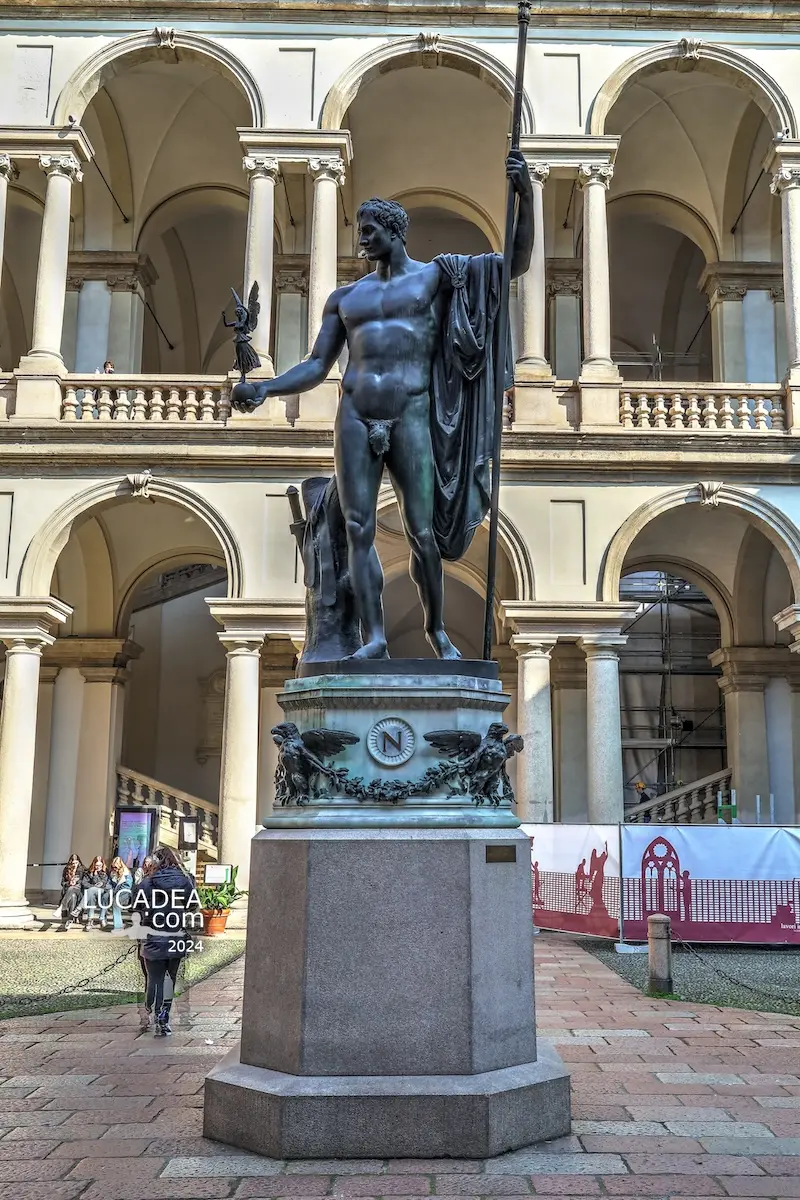
Napoleon Bonaparte depicted as Mars the Peacemaker in the garden of Palazzo Brera in Milan.
Entering the courtyard of the Pinacoteca di Brera in Milan, you are greeted by this imposing bronze statue of Napoleon.
It immediately becomes clear that art and beauty in general will be the main focus of a visit to this Italian museum.

Do you know Milan? Add a comment or go to the bottom of the site to read what other visitors have written.

Il Napoleone Bonaparte come Marte pacificatore nel giardino di Palazzo Brera a Milano

Photo taken with Canon EOS RP and Canon RF 24-50 lens.

To see all the photos I took in Milan, click here:

Where exactly is the statue located:

In the spring of 1807, Minister Charles-Jean-Marie Alquier, French ambassador to Rome, by order of Prince Eugene de Beauharnais, viceroy of the Kingdom of Italy and Napoleon’s stepson, commissioned Canova, for the sum of five thousand French louis, to make an exact bronze copy of the marble statue. The statue was not installed until 1859, when it was placed in the center of the courtyard of honor of the Brera Palace, on the occasion of Napoleon III’s visit to Milan.
Continue and learn more at Wikipedia

Napoleon Bonaparte as Mars the Peacemaker in the Garden of Palazzo Brera in Milan – Napoléon Bonaparte dans le rôle de Mars pacificateur dans le jardin du Palazzo Brera à Milan – Napoleón Bonaparte como Marte pacificador en el jardín del Palazzo Brera de Milán – Napoleão Bonaparte como Marte, o pacificador, no jardim do Palazzo Brera, em Milão – Napoleon Bonaparte als Friedensstifter Mars im Garten des Palazzo Brera in Mailand – Napoléon Bonaparte trong vai Mars, người hòa giải trong khu vườn của Palazzo Brera ở Milan

The Little Mermaid statue in Copenhagen

La statua della Sirenetta a Copenaghen

The Little Mermaid statue in Copenhagen.
The Little Mermaid statue, located at the entrance to Copenhagen Harbor, is one of the most iconic symbols of the Danish capital. This bronze sculpture, 1.25 meters tall and weighing 175 kg, depicts the protagonist of Hans Christian Andersen’s famous fairy tale, “The Little Mermaid.”
The statue was commissioned in 1909 by Carl Jacobsen, son of the founder of Carlsberg beer, after he was captivated by a ballet based on Andersen’s fairy tale. The work was created by sculptor Edvard Eriksen and unveiled on August 23, 1913. Eriksen used his wife Eline as the model for the statue’s body, while the face was inspired by ballerina Ellen Price.
Since its unveiling, the Little Mermaid has become one of Copenhagen’s most visited tourist attractions. Its picturesque location, overlooking the Baltic Sea, attracts millions of visitors every year, eager to admire this melancholic and captivating figure up close.
Over the years, the Little Mermaid statue has been the target of numerous acts of vandalism. It has been decapitated several times, daubed with paint, and even blown up with a small dynamite charge. Despite these incidents, the statue has always been restored and continues to represent a symbol of resilience and beauty for the city of Copenhagen.
The Little Mermaid’s fame has inspired numerous copies around the world. A replica stands in Solvang, California, while other versions of the statue can be seen in New Zealand, Thailand, and even on the island of Ischia, Italy.
Visiting the Little Mermaid statue is a must-see for anyone visiting Copenhagen. This timeless symbol of the city not only tells a fascinating story, but also represents Danish culture and art around the world.

Do you know the beautiful Danish city of Copenhagen? Add your own comment or go to the bottom of the site to read what other visitors have written.

Photos taken with Canon EOS RP camera and Tamron 16-300 lens.

Click here to see all the photos of the Danish capital:
foto gallery

Here’s where the statue is located:

The Little Mermaid statue is a 1.25 m tall, 175 kg bronze sculpture located at the entrance to Copenhagen Harbour and is one of the symbols of the Danish capital. It depicts the protagonist, the Little Mermaid, from one of Hans Christian Andersen’s most famous fairy tales, The Little Mermaid. The statue was commissioned in 1909 by Carl Jacobsen, son of the founder of Carlsberg, who was fascinated by Hans Beck’s ballet adaptation of the fairy tale. It was created by sculptor Edvard Eriksen (1876–1959) and first displayed to the public on August 23, 1913. Eriksen used his wife Eline as a model.
Continue and learn more at Wikipedia

The Little Mermaid statue in Copenhagen – La statue de la Petite Sirène à Copenhague – La estatua de la Sirenita en Copenhague – A estátua da Pequena Sereia em Copenhaga – Die Statue der kleinen Meerjungfrau in Kopenhagen – Tượng nàng tiên cá ở Copenhagen

The text of this post was written with the help of Copilot, an artificial intelligence-based virtual assistant.
References:
– https://www.scopricopenaghen.com/sirenetta

The two lions of Palermo’s Teatro Massimo

I due leoni del Teatro Massimo di Palermo

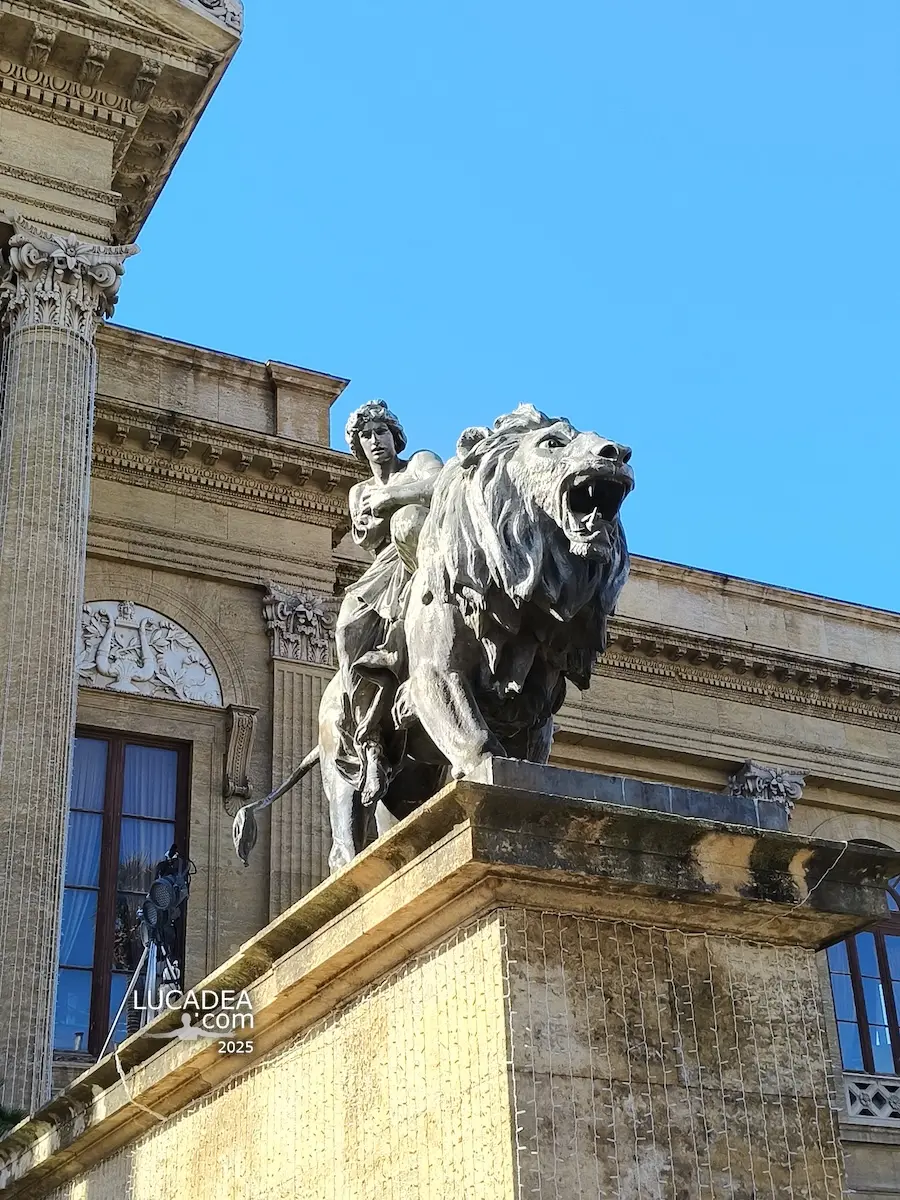
The two lions of Palermo’s Teatro Massimo.
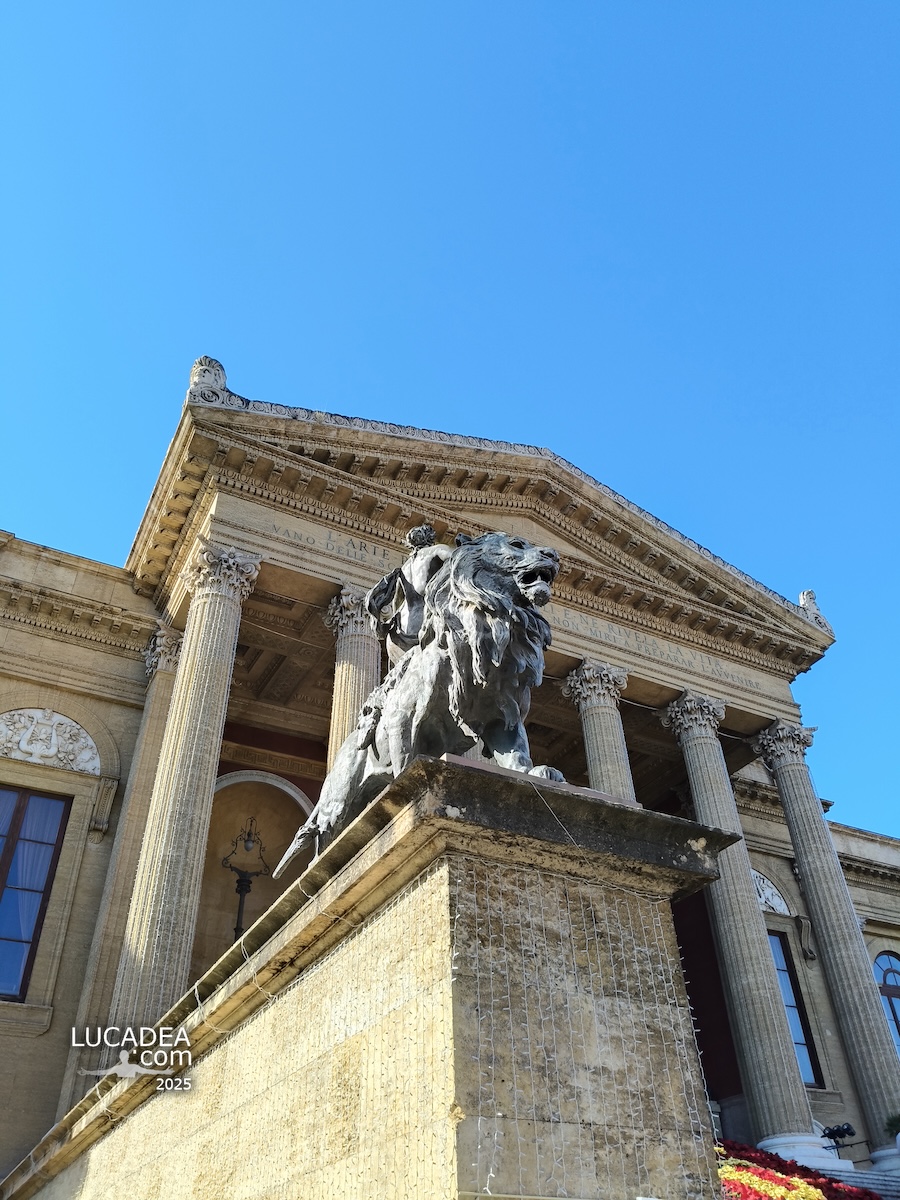
Standing in front of the grand staircase of Teatro Massimo in Palermo, I found my attention drawn first to the two bronze lions. Motionless on either side of the entrance, they seem to watch everyone climbing towards the theatre, giving the staircase a particularly imposing presence.
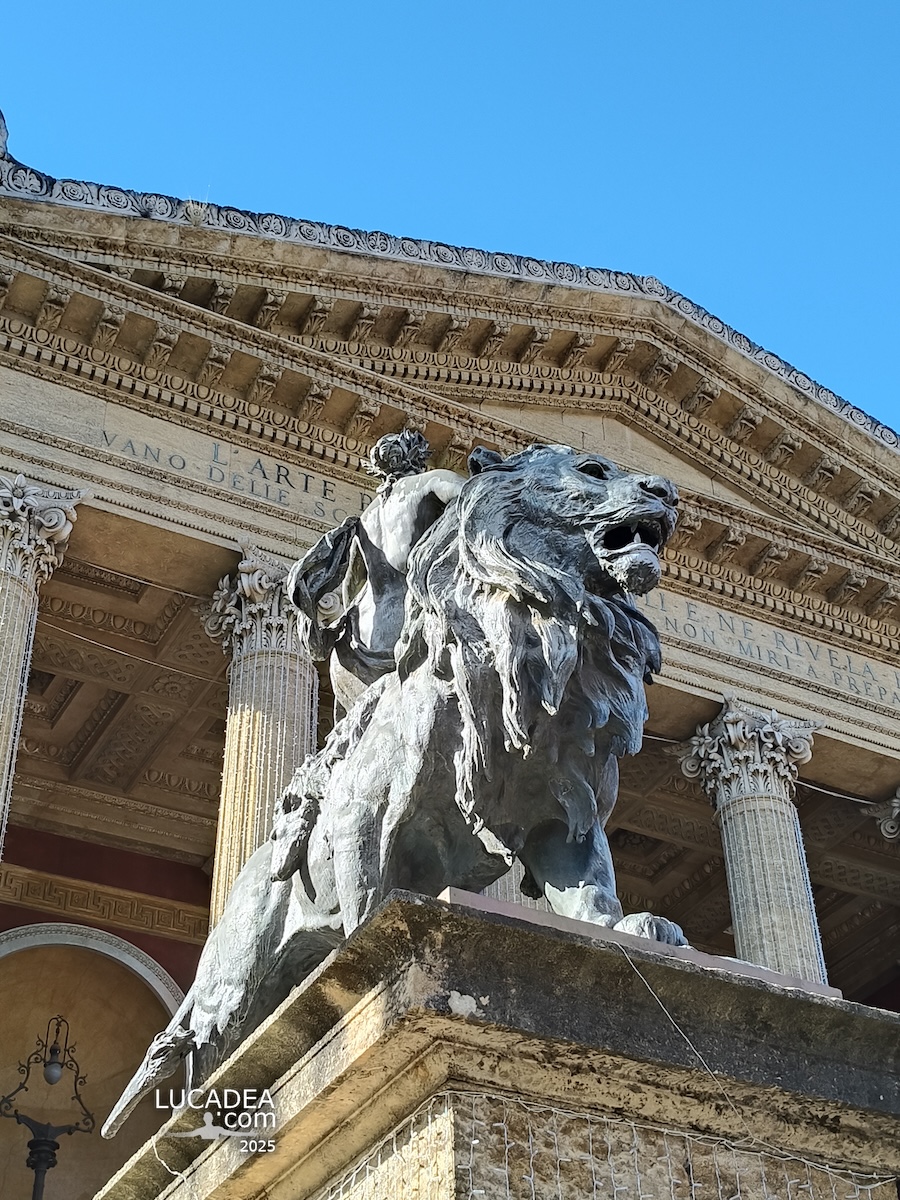
I took this photograph because I wanted to focus on a detail that can easily disappear within the much larger architecture of Teatro Massimo. From a closer view, the lions reveal plenty of carefully worked details: their manes, muscles, paws and the way their powerful forms fit into the monumental setting of the entrance.
The two lions stand on either side of the main staircase and form part of the sculptural decoration welcoming visitors to the theatre. Nearby are also the female allegorical figures associated with Tragedy and Opera, creating an artistic composition that connects the entrance directly with the cultural role of the building.
If you are wondering what to see at Teatro Massimo in Palermo, it is natural to focus first on the enormous architecture, the facade and the famous staircase. On this occasion, however, I preferred to concentrate on the details. This is one of the things I enjoy about photography: even when standing in front of a very familiar landmark, it is possible to find a closer viewpoint and tell part of its story through a single element.
I took this photograph myself during my visit to Palermo. What interested me most was the presence of the lions within the larger scene, because the heavy bronze forms create an interesting contrast with the stone staircase and the architecture behind them.
Teatro Massimo is one of Palermo’s major cultural landmarks and was inaugurated in 1897. It was dedicated to Vittorio Emanuele II and was built as part of the city’s ambition to have a major opera house. The lions on the staircase have since become one of the recognisable details of the theatre’s entrance.
What caught my attention was not only their imposing size. Looking at them more closely, you can see how the sculptural treatment tries to suggest movement even though the animals are completely still. The manes and muscular bodies are particularly noticeable and reinforce the sense of strength traditionally associated with the lion.
Their symbolic meaning also fits naturally within the setting of a theatre. Lions have long been associated with strength, protection and authority, while the allegorical figures nearby connect the sculptures with the world of performance and art. They are therefore more than simple decorative additions to the staircase; they help create the monumental character of the entrance.
For this photograph, I tried not to become distracted by the entire building. Teatro Massimo is so large and recognisable that it would be easy to concentrate only on its overall appearance. By moving closer to the lions, I found a more contained subject made up of shapes, details and proportions.
Their position is important too. They stand exactly where visitors arrive and begin climbing the staircase. They are seen by people entering the theatre, attending performances, visiting the building or simply walking through this part of central Palermo.
It is interesting to think about how many people have passed these lions over the decades. Visitors, spectators, performers and local residents have all seen the same figures, perhaps without ever stopping to study them closely. This is exactly the kind of detail I like to recover through photography.
During my visit to Palermo, I took several photographs of architectural and urban details because I often find that these smaller elements can reveal something about a place that a wide view cannot. A photograph of the lions at Teatro Massimo naturally belongs to that same collection of images from the city.
I was not looking for a particularly dramatic effect. I simply wanted to photograph two sculptures that had caught my attention and preserve their appearance as part of the memory of my visit. In the end, this is one of the reasons I take photographs: to stop for a moment when something interests me and then be able to look at it again later from a different perspective.
The two lions remain still in front of the theatre while everything around them keeps changing. People move up and down the staircase, Palermo continues its daily rhythm and Teatro Massimo remains behind them as one of the city’s most recognisable landmarks.
Perhaps that is part of their appeal. They do not need to move to attract attention. You only have to stop for a moment, look more carefully and realise how many details can be hidden inside something that, at first glance, might seem like a simple decorative element.

Have you ever stopped to look closely at the two lions in front of Teatro Massimo in Palermo? Add a comment or go to the bottom of the site to read what other visitors have written.

Photo taken with Oppo Reno 12.

To see all the photos I’ve taken of Palermo over time, click here:

Where is the theater located?

Winged bronze statue in Pompeii

Statua antichi romani

Winged bronze statue in Pompeii.
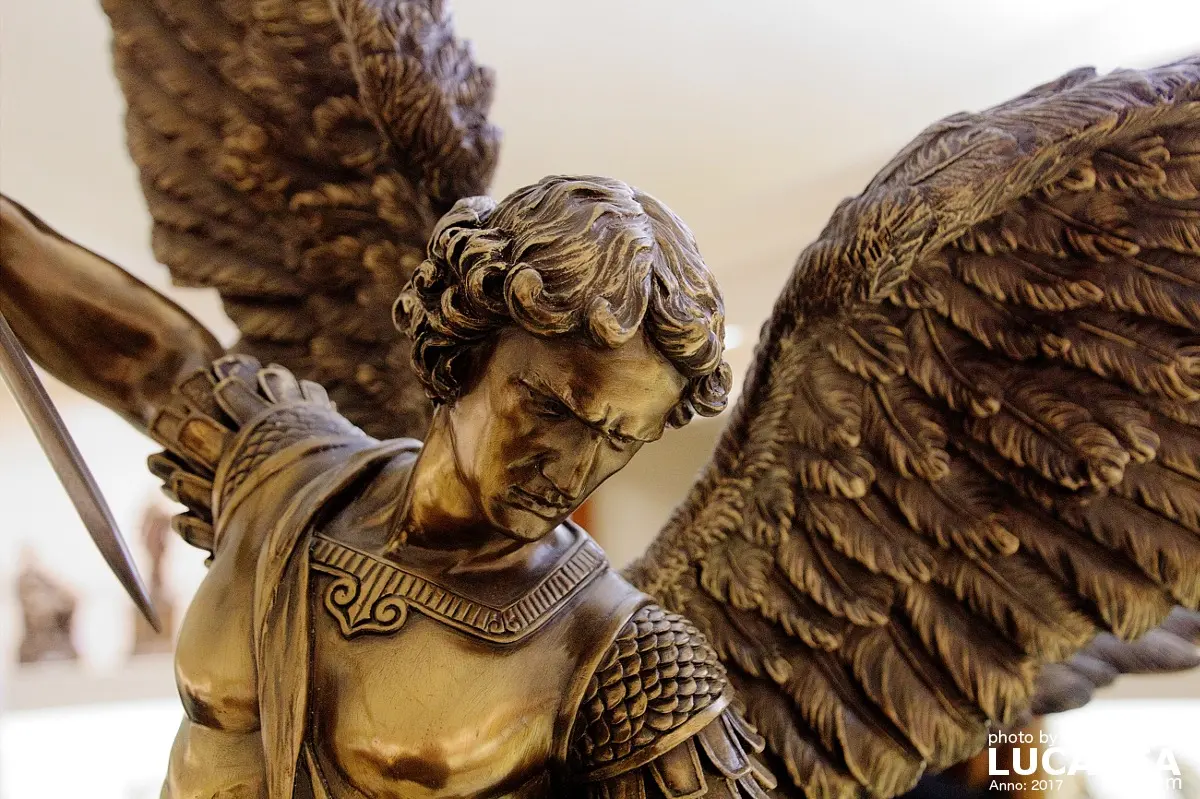
There are details that immediately capture your gaze, without needing to think too much. In this photo, what strikes me is the intensity of the face: focused, almost tense, as if frozen in a precise moment, suspended between action and stillness. The winged bronze statue in Pompeii has something magnetic, even though I know full well that it is a modern souvenir and not an ancient artifact.
I like photographing statues for this very reason. Even when they are reproductions, they manage to convey a story. Just change the angle, get a little closer, find the right light, and suddenly they come to life. Here the light is soft, warm, and slides across the wings, highlighting every single feather. It’s a detail that made me pause: the care in the workmanship, the depth of the carvings, the contrast between the smooth and the more sculpted parts.
I’m not sure who exactly this figure represents. It might resemble a warrior angel, or a mythological figure like a divine messenger or a protector. The sword, the wings, the posture: everything suggests strength but also a certain elegance. And it’s precisely this ambiguity that makes it interesting to photograph. Not knowing exactly who it is leaves more to the imagination.
In the shop Cellini in Pompeii, where I saw this statue, there were many other similar objects. But this one struck me more than the others. Perhaps it was the expression, perhaps the position of the wings, or simply the way it let itself be photographed in that moment.
A brief thought occurred to me just as I was shooting: even in the most touristy places, full of objects meant to be taken away, you can find interesting subjects. Just take a moment to observe. It doesn’t always take something rare or unique; sometimes it’s the gaze that makes the difference.
And ultimately, this image is just that: a detail, a chance encounter, a subject that many might have overlooked but which, seen up close, reveals much more than meets the eye.

Have you ever found something interesting in a seemingly “touristy” object?
Add a comment or go to the bottom of the site to read what other visitors have written.

Statua antichi romani

Photo taken with Canon 600D and Tamron 16-300.

Winged bronze statue in Pompeii – Statue ailée en bronze à Pompéi – Estatua alada de bronce en Pompeya – Estátua alada de bronze em Pompeia – Geflügelte Bronzestatue in Pompeji – Tượng đồng có cánh ở Pompeii – 庞贝的青铜翼像 – ポンペイの翼のあるブロンズ像

The text of this post was written with the help of ChatGPT, a language model from OpenAI.

The Sailors’ Monument in central Bergen

Il monumento ai marinai a Bergen in Norvegia

The Sailors’ Monument in central Bergen.
Walking through central Bergen, the Sailors’ Monument catches my attention with its bronze figures and the imposing structure that gathers them together. This monument to sailors is one of the most recognizable sculptures in Bergen, and it stands on Torgallmenningen, in the heart of Bergen, Vestland, Norway.
For this photograph, I wanted to focus on the figures rather than simply record the monument as a whole. Seen from close by, the sailors have very different attitudes, clothes and expressions, and those details make the sculpture feel much more personal. The central structure is large and solid, but it is the human presence of the bronze figures that gives the monument its character.
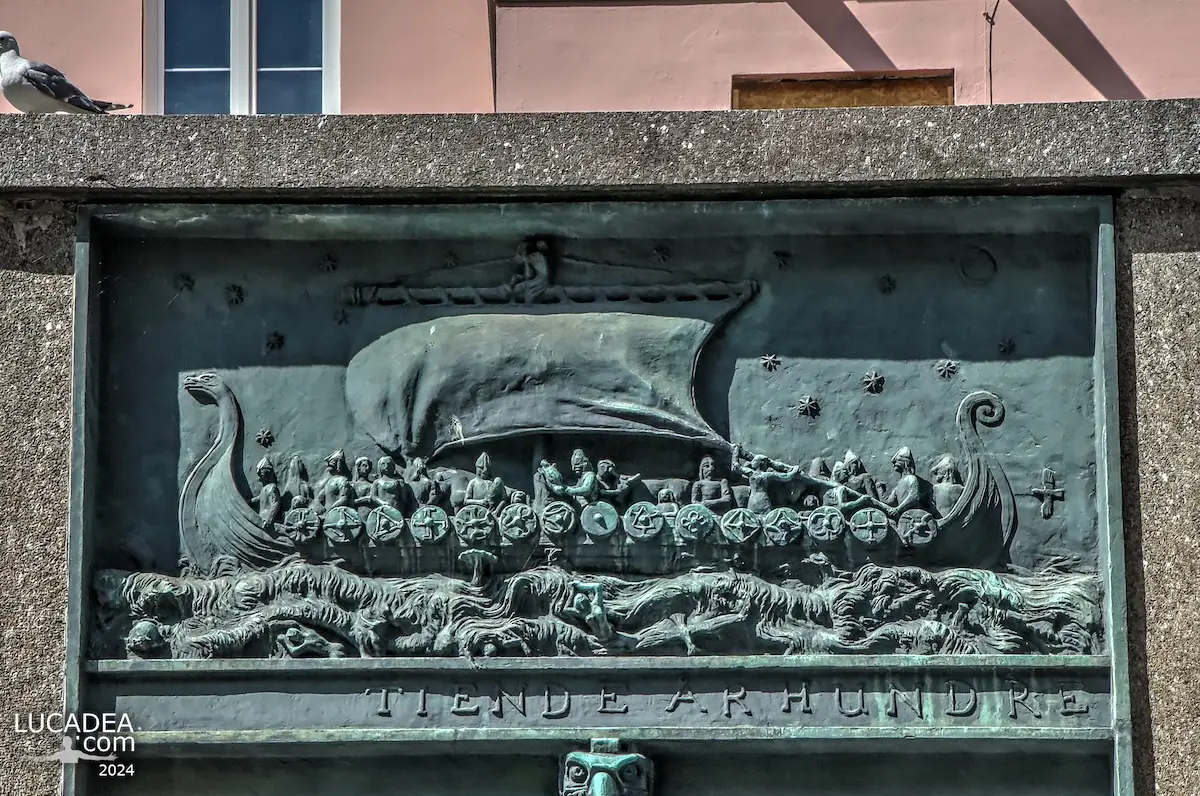
The Sailors’ Monument in Bergen is known in Norwegian as Sjømannsmonumentet and was created by sculptor Dyre Vaa. It was unveiled on June 7, 1950, as a tribute to Norwegian sailors and their contribution to the country’s maritime history. Its location is particularly meaningful because Bergen has long been closely connected with shipping, trade and life at sea. Placing such a monument in the middle of the city makes that connection part of the everyday urban landscape rather than something confined to the waterfront.
The twelve bronze figures do not all represent the same period. Together with the reliefs, they form a visual story that moves through different stages of Norwegian maritime history, from the Viking Age to the twentieth century. Each group of figures therefore has its own historical context, and walking around the monument changes the way the story appears. What looks like a single large sculpture from a distance becomes a collection of individual characters when viewed more carefully.
One small historical detail makes the monument even more interesting to me. The winning design was selected before the Second World War, but the conflict delayed its completion, so the monument was not unveiled until 1950. The structure rises to about seven metres and combines the bronze figures with reliefs arranged on different levels, making it possible to discover new details from each side.
That is also what I tried to preserve in this photograph. Instead of treating the monument simply as a landmark to be documented, I wanted the image to leave room for observation. A face, a gesture, the texture of the bronze or the way the figures relate to the central block can become more important than the monument’s overall shape. For me, this is one of the pleasures of photographing Bergen: even in a well-known part of the city, there are details that reward a slower look.
If you are visiting Bergen and wondering where the Sailors’ Monument is, Torgallmenningen is the easiest reference point. The square is right in the city centre, so the monument naturally becomes part of a walk through Bergen rather than a separate destination. Its position also creates an interesting contrast: a memorial dedicated to people whose lives were connected with the sea stands surrounded by the streets and buildings of the city.
I photographed this scene myself with my Canon EOS RP and a Tamron 16-300 lens. I wanted to keep enough of the monument in the frame to make its structure understandable while still giving the bronze sailors the attention they deserve. I do not have the complete EXIF information for the original photograph available on the page, so I prefer not to invent a precise shooting date or time.
This photograph also connects naturally with another Bergen story I have shared on Lucadea, the wooden houses of Bryggen. They are very different subjects, but together they show two sides of the same city: the historic urban fabric and the maritime identity that has shaped Bergen for centuries.

Looking at the Sailors’ Monument again, what stays with me is not only its size but the way twelve human figures bring a broad piece of Norwegian maritime history into an ordinary city square. If you were standing here with your camera, which detail would you choose to photograph? Add a comment or go to the bottom of the site to read what other visitors have written.

The Sailors’ Monument in Bergen with bronze figures standing around the central structure in Torgallmenningen

Photos taken with Canon EOS RP and Tamron 16-300 lens.

To see all the photos I took in Bergen, click here:

Here’s where the monument is located:

The Mercury statue on Købmagergade street

La statua di Mercurio in via Købmagergade a Copenaghen

The statue of Mercury on Købmagergade street in Copenhagen.
In the vibrant heart of Copenhagen, along the lively Købmagergade street, stands a statue that captures the attention of residents and tourists: the statue of Mercury. This sculpture, created in 1896 by the sculptor Julius Schultz, is positioned on the roof of a building at the corner of Købmagergade and Klareboderne.
Mercury, in Roman mythology, is the god of commerce, financial gain, and travel. His presence on one of Copenhagen’s main shopping streets is no coincidence. The statue symbolizes economic prosperity and the importance of trade for the city. With his winged feet and caduceus in hand, Mercury symbolically watches over Købmagergade, one of the busiest and most dynamic streets in the Danish capital.
Købmagergade is one of the oldest streets in Copenhagen, with a history dating back to the 13th century. Originally known as Bjørnebrogade, the street has undergone several transformations over the centuries, becoming an important commercial center. The statue of Mercury was installed during a period when Copenhagen was experiencing rapid economic and urban growth.
Today, the statue of Mercury is an iconic landmark for those visiting Købmagergade. Its elevated position allows it to be admired from various angles, making it a perfect subject for photographs. Furthermore, the sculpture adds a touch of elegance and history to the modern shopping street, creating a fascinating contrast between past and present.
It is not only a work of art, but also a symbol of Copenhagen’s rich commercial history. It represents the importance of trade and economic prosperity for the city, making it a must-see for anyone who wants to discover the beating heart of the Danish capital.

Do you know the beautiful Danish city of Copenhagen? Add your own comment or scroll to the bottom of the page to read what other visitors have written.

Photos taken with a Canon EOS RP camera and a Tamron 16-300 lens.

Click here to see all the photos of the Danish capital.
photo gallery

Here’s where the street is located:

The Mercury statue on Købmagergade street in Copenhagen – La statue de Mercure dans la rue Købmagergade à Copenhague – La estatua de Mercurio en la calle Købmagergade en Copenhague – A estátua de Mercúrio na rua Købmagergade, em Copenhaga – Die Merkurstatue in der Købmagergade in Kopenhagen – Tượng thần Mercury trên phố Købmagergade ở Copenhagen

The text of this post was written with the help of Copilot, an artificial intelligence-based virtual assistant.
References:
– https://en.wikipedia.org/wiki/K%C3%B8bmagergade
– https://helloecho.com/l/mercury-statue-on-the-main-shopping-street/

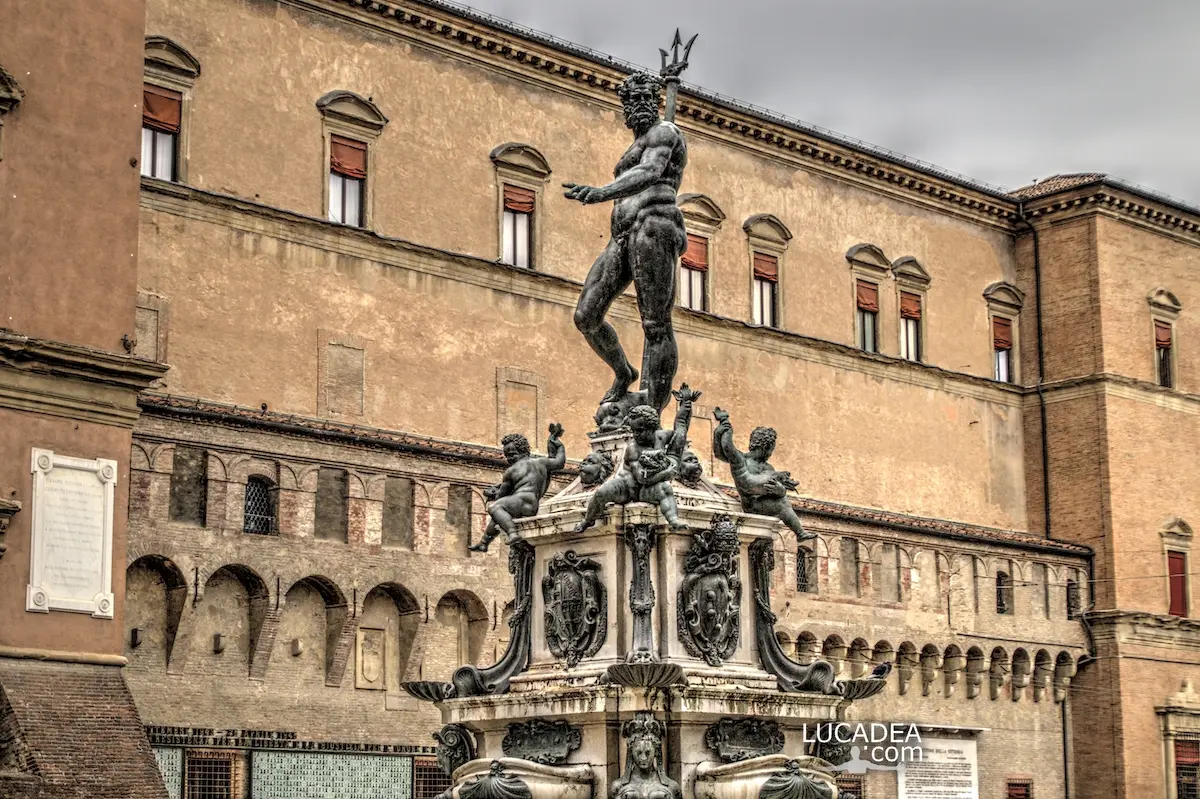
The Fountain of Neptune in Bologna

La Fontana del Nettuno a Bologna

The Fountain of Neptune in Bologna.
It is undoubtedly the most famous fountain in the Emilian city of Bologna.
Located in Piazza del Nettuno (practically Piazza Maggiore) between the Salaborsa Library, Palazzo Re Enzo, and Palazzo d’Accursio.
It obviously depicts the god of the sea surrounded by cherubs holding dolphins and four Nereids.
There’s also a secret (which is no longer a secret) of the seven that can be found in the city, linked to the god’s finger, which, when viewed from a certain angle, appears to be his genitals.

Do you know Bologna? Add a comment or go to the bottom of the site to read what other visitors have written.

La Fontana del Nettuno a Bologna

Photo taken with Canon EOS M100 and Tamron 16-300 lens.

If you want to see all the photos I took in the city, click here:

The Fountain of Neptune, nicknamed al Żigànt in dialect (“the giant” in Italian) by the Bolognese due to the size of the statue of Neptune, is located in Bologna’s Piazza del Nettuno.
Continue and learn more on Wikipedia

The Fountain of Neptune in Bologna – La fontaine de Neptune à Bologne – La fuente de Neptuno en Bolonia – A fonte de Netuno em Bolonha – Der Neptunbrunnen in Bologna – Đài phun nước Neptune ở Bologna – 海王星喷泉在博洛尼亚 – ボローニャのネプチューンの噴水

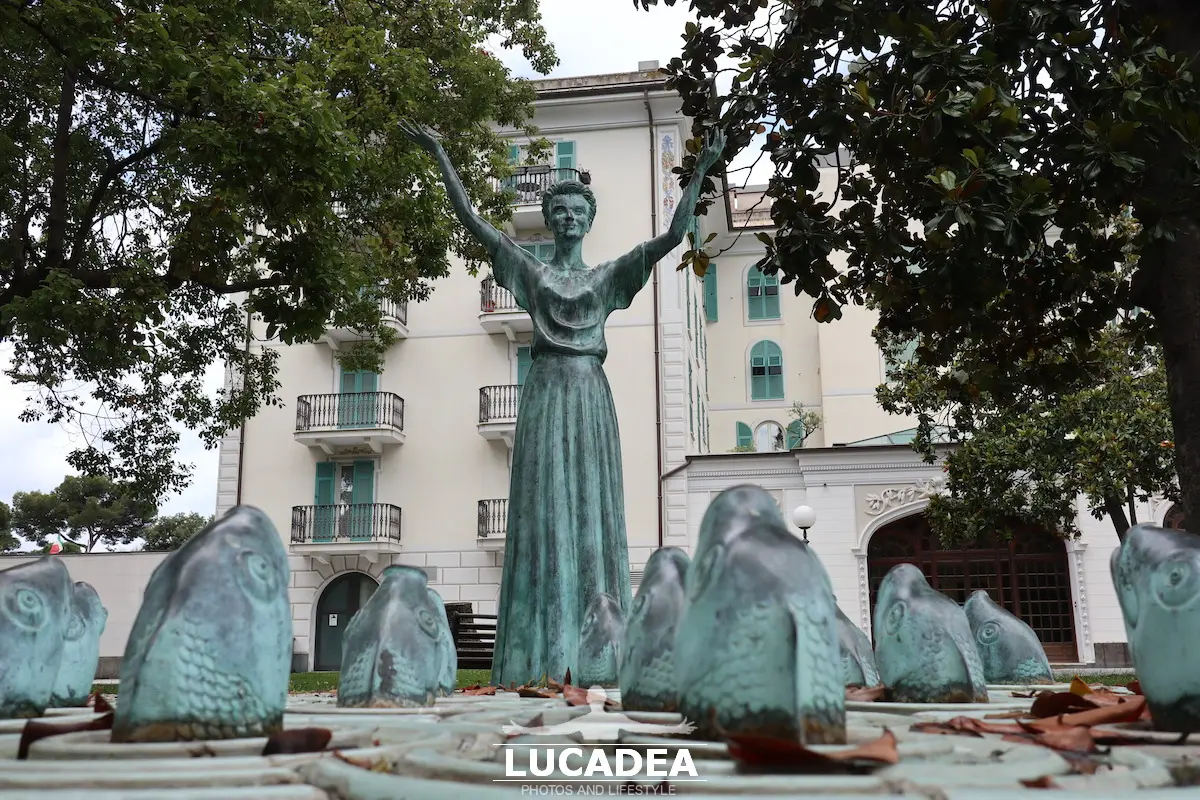
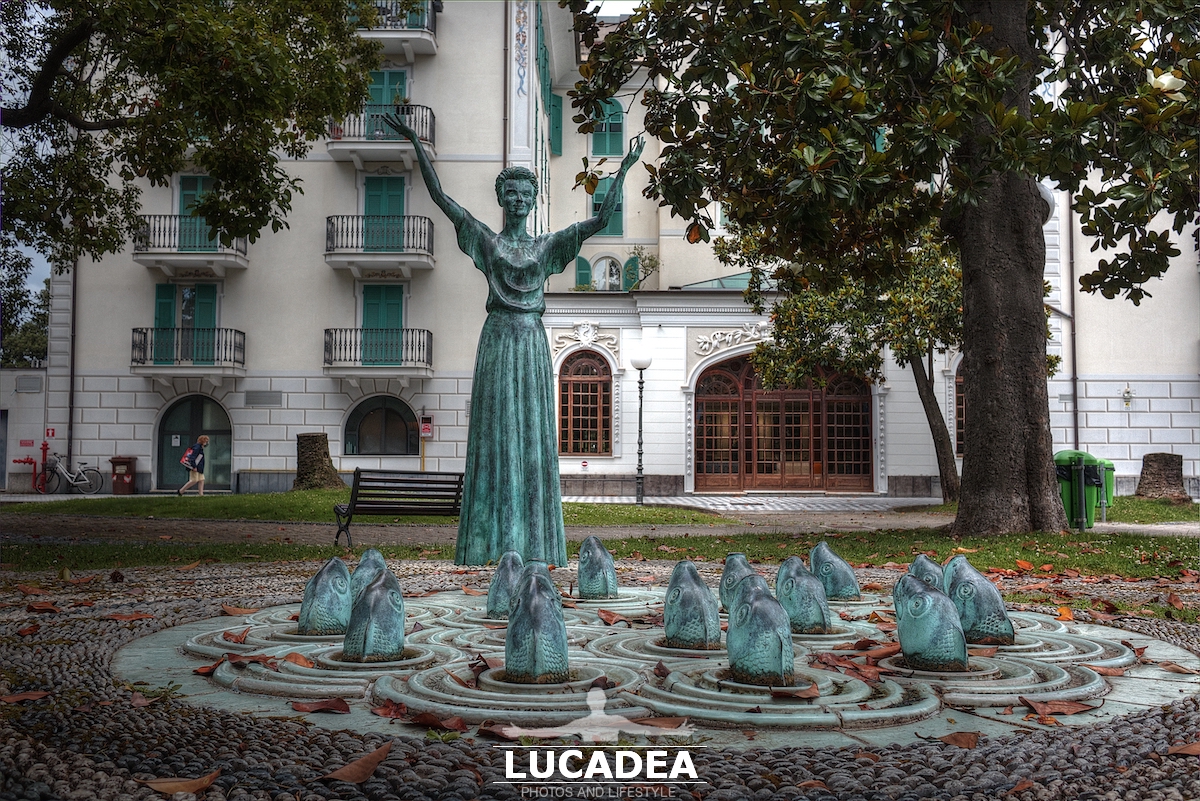
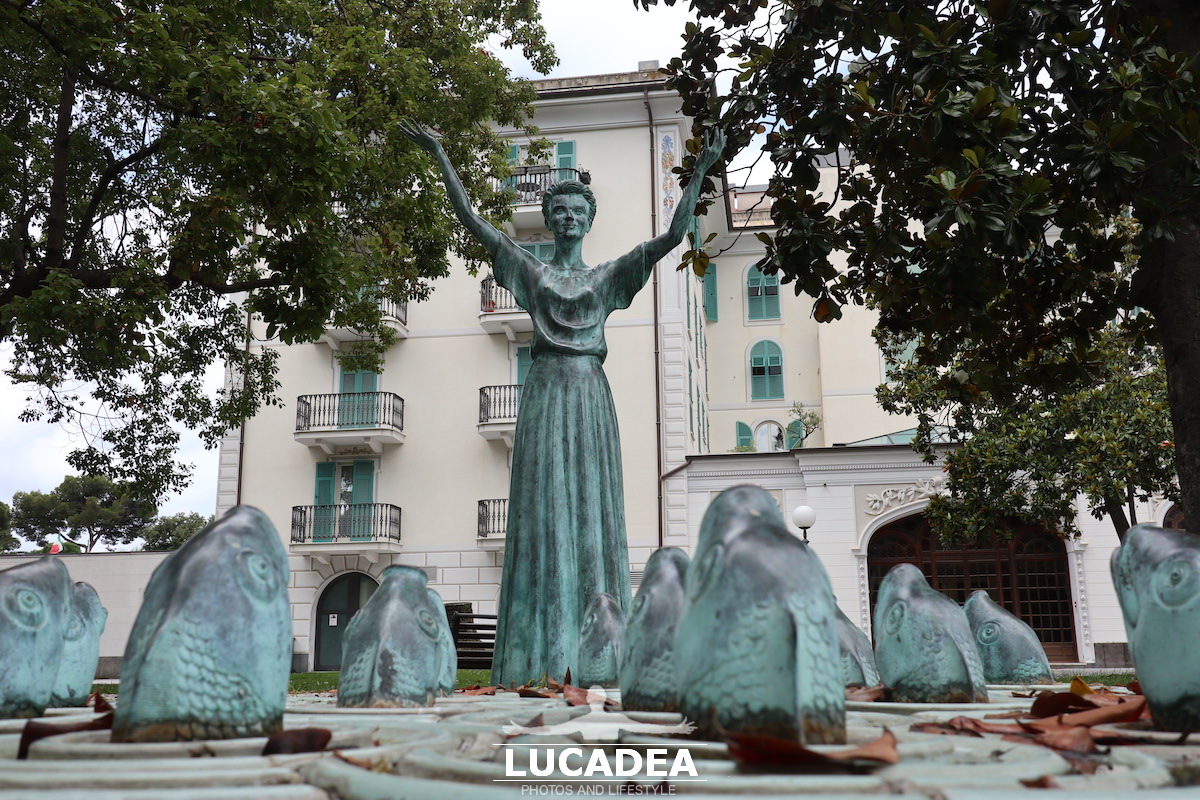
The statue of Mariele Ventre in Sestri Levante

La statua di Mariele Ventre a Sestri Levante

The statue of Mariele Ventre in Sestri Levante.
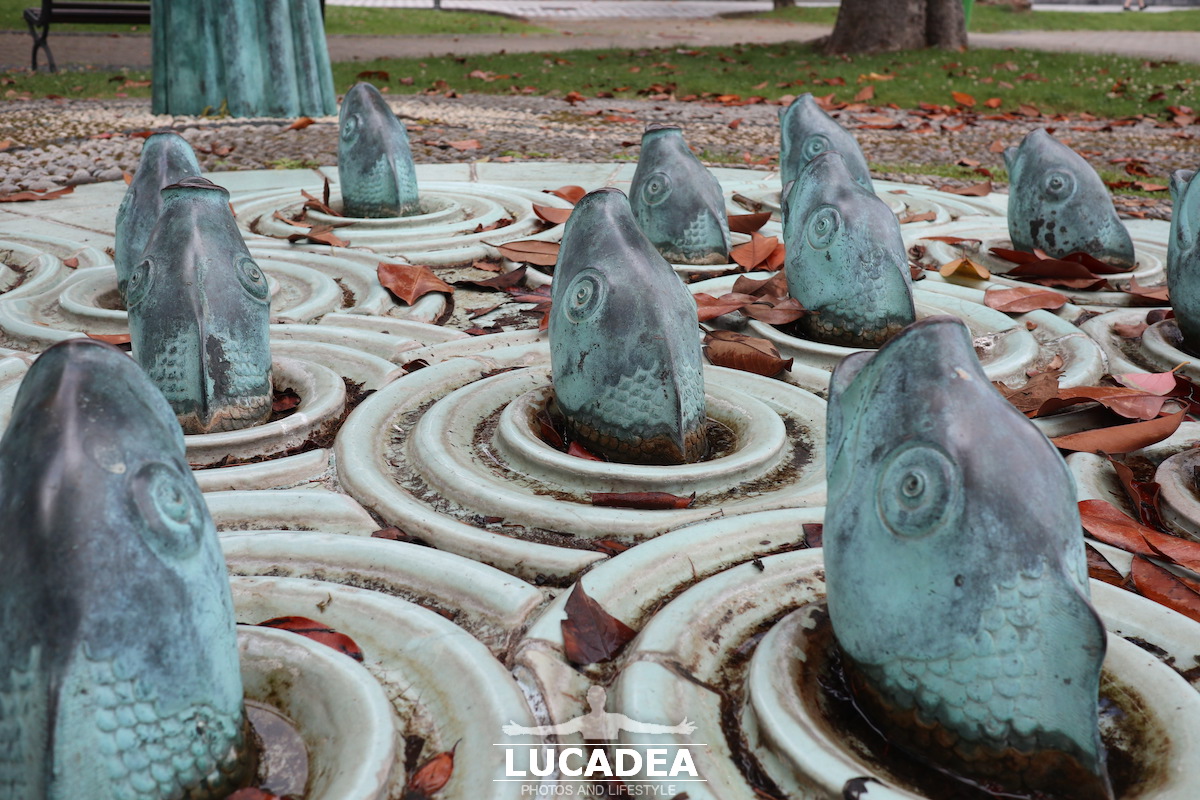
The beautiful bronze statue of the famous woman who founded the Piccolo Coro dell’Antoniano in Bologna and who will soon be beatified.
In the depiction by Sestri artist Alfredo Gioventù, the director teaches the fish to sing!

Have you ever seen this statue? Add your own comment or go to the bottom of the site to read what other visitors have written.

La statua di Mariele Ventre a Sestri Levante

La statua di Mariele Ventre a Sestri Levante

La statua di Mariele Ventre a Sestri Levante

Photos taken with Canon EOS M100 camera and Canon EF-M 22 lens.

Maria Rachele Ventre, known as Mariele (Bologna, July 16, 1939 – Bologna, December 16, 1995), was an Italian choir director. She was the founder of the Piccolo Coro dell’Antoniano in Bologna, which she directed for over thirty years. His beatification process began in 2013.
Continue and learn more on Wikipedia

The statue of Mariele Ventre in Sestri Levante – La statue de Mariele Ventre à Sestri Levante – La estatua de Mariele Ventre en Sestri Levante – A estátua de Mariele Ventre em Sestri Levante – Die Statue von Mariele Ventre in Sestri Levante – Tượng Mariele Ventre ở Sestri Levante – 塞斯特里莱万特的 Mariele Ventre 雕像 – セストリ レバンテのマリエーレ ヴェントレ像
🏠
  • Italiano