
The houses of Marina Giulia in Chiavari

Casette colorate del quartiere Marina Giulia vicino alla passeggiata mare di Chiavari

The houses of Marina Giulia in Chiavari.
Walking near the seafront promenade of Chiavari, Liguria, Italy, I discovered a small corner of the town that I have to admit I did not know very well before: the Marina Giulia neighborhood. Among the things worth seeing in Chiavari there are not only the historic center, the narrow streets, and the coastline, but also these quiet residential areas where architecture preserves curious and unexpected details.
To be honest, I had never photographed this area before. I had passed nearby several times without really paying attention to its particular features. When I finally stopped to look at these colorful terraced houses, with their entrances raised above street level, I realized they were a perfect subject to capture with my camera.
Marina Giulia is located almost directly on the Chiavari seafront, close to the mouth of the Rupinaro stream. It is a small street that feels almost separated from the rest of the city and, because of some architectural elements, it reminded me of a typical English residential street. Without the colorful facades, strongly connected to the Ligurian and Genoese tradition, it could almost look like a neighborhood in London.
The most interesting feature of these houses is their structure: the raised entrances and the lower half-level below the street create an unusual arrangement for a coastal town like Chiavari. This contrast between the Ligurian environment and some European architectural influences is exactly what caught my attention.
The neighborhood was probably built in the early 20th century, a period when many cities were developing new residential areas with different housing models. The simplicity of the houses, together with their bright colors, still makes this small corner easily recognizable today.
I like when a photograph comes from discovering a place close to home that I had almost overlooked. Sometimes you do not need to travel far to find interesting images; you only need to look more carefully at the streets you usually walk through.

Have you ever walked through Marina Giulia in Chiavari? Add a comment or go to the bottom of the site to read what other visitors have written.
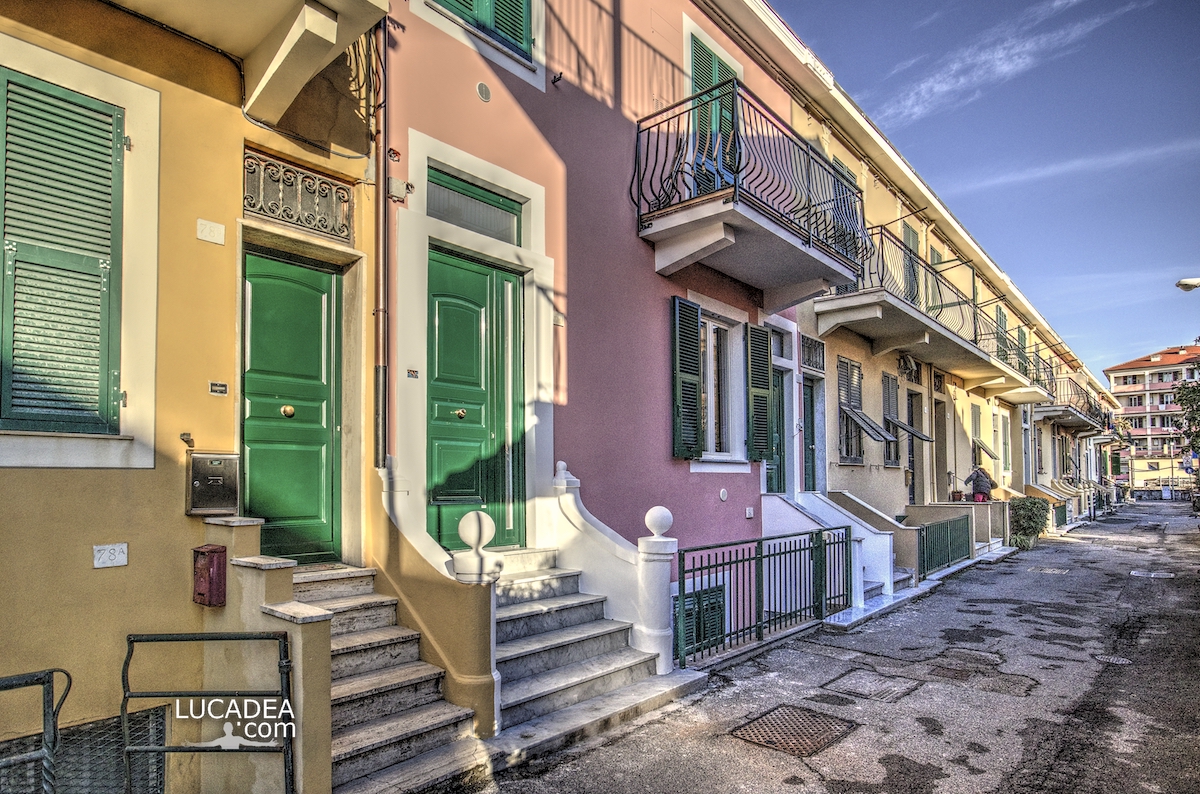
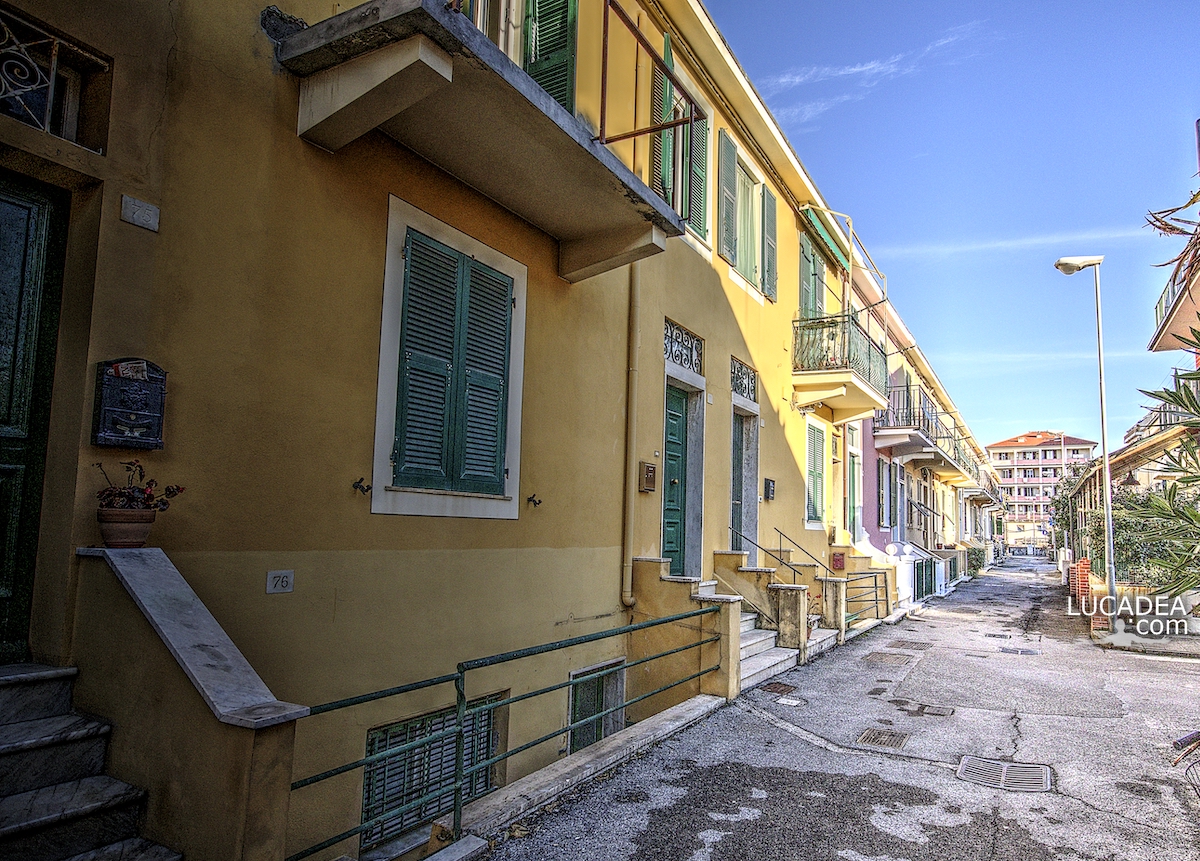
Colorful houses of Marina Giulia neighborhood near the seafront in Chiavari

Colorful houses of Marina Giulia neighborhood near the seafront in Chiavari

Photos taken with Canon EOS M100 camera and Canon EF-M 11-22 lens.

And this is a nice video taken while walking around the area:

Video recorded with Gopro Hero 10 Black.

Here’s where the neighborhood is located:

Add one  comment to this article or read  here what other visitors have written.
 
Adv
 
Disclamer

The rights on images, videos, choruses, text and all other material on the LUCADEA.com website are governed as per  Copyright page.


This page has been viewed 0 times today.
This month it has been viewed 0 times.
In total it has been viewed 4 times.
 

Arriving in the seaside village of Boccadasse in Genoa

Arrivando nel borgo marinaro di Boccadasse a Genova

Arriving in the seaside village of Boccadasse in Genoa.
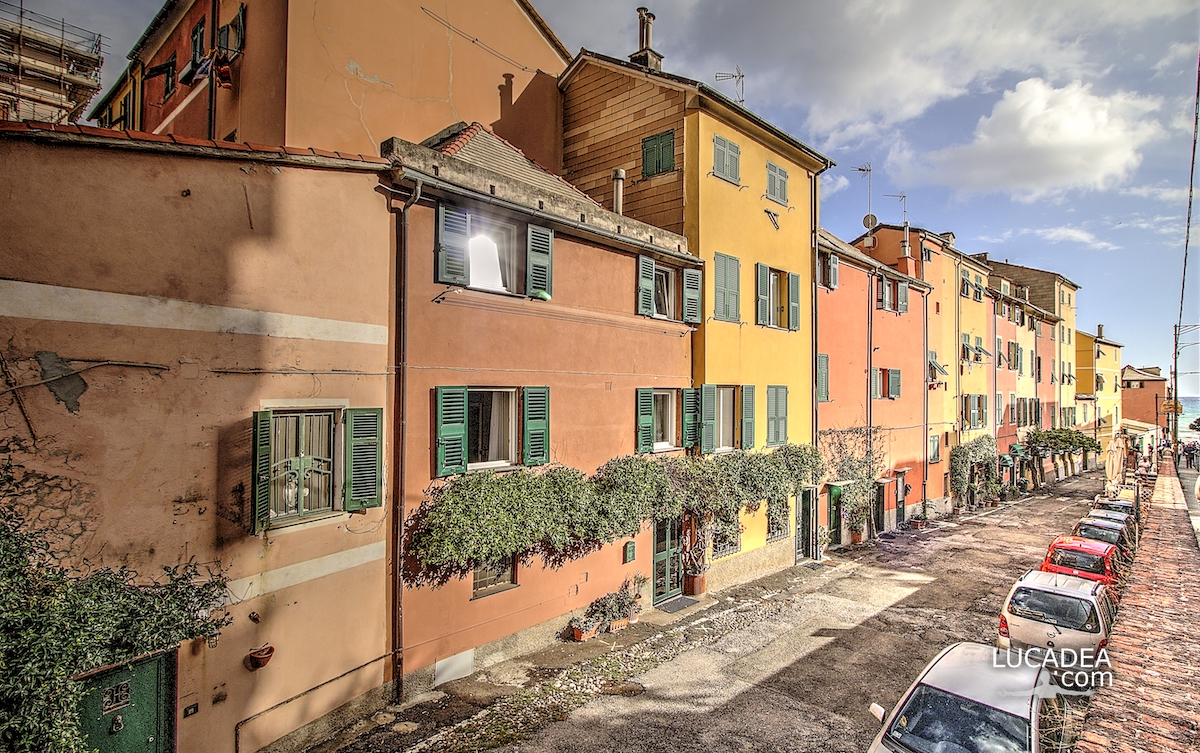
To reach the famous little beach of this fishing village on the eastern side of Genoa, there are several roads and creuze (traditional Genoese footpaths).
This is the drivable road, but it is no less beautiful than the pedestrian-only creuze. Here there is a straight street with all the colorful houses on display.

Do you like the photo? Have you ever been to Boccadasse? Add a comment or go to the bottom of the site to read what other visitors have written.

Arrivando nel borgo marinaro di Boccadasse a Genova

Photo taken with Canon EOS M100 and Canon EF-S 10-18 lens.

All photos here:
foto gallery

Where is the village located:

Boccadasse (Boca d’azë or Bocadâze in Genoese) is an ancient fishing village in the city of Genoa, part of the Albaro district. In the current administrative division of the municipality of Genoa, it is therefore included in Municipio VIII – Medio Levante, which in addition to Albaro also includes the Foce and San Martino districts.
Continue on Wikipedia

Arriving in the seaside village of Boccadasse in Genoa – Arrivée dans le village balnéaire de Boccadasse à Gênes – Llegando al pueblo costero de Boccadasse en Génova – Chegando na vila costeira de Boccadasse em Gênova – Ankunft im Küstenort Boccadasse in Genua – Đến ngôi làng bên bờ biển Boccadasse ở Genoa – 抵达热那亚的海滨村庄 Boccadasse – ジェノヴァの海辺の村ボッカダッセに到着
Add one  comment to this article or read  here what other visitors have written.
 
Adv
 
Disclamer

The rights on images, videos, choruses, text and all other material on the LUCADEA.com website are governed as per  Copyright page.

This page has been viewed 1 times today.
This month it has been viewed 1 times.
In total it has been viewed 6 times.
 

The houses of the Bryggen district in Bergen, Norway

Le case del quartiere di Bryggen a Bergen in Norvegia

The houses of the Bryggen neighborhood in Bergen, Norway.
Bryggen, the historic heart of Bergen, is one of Norway’s most iconic landmarks. This charming neighborhood, with its characteristic colorful wooden houses, was declared a UNESCO World Heritage Site in 1979.
The houses of Bryggen date back to the 14th century, when Bergen was an important trading center of the Hanseatic League. These wooden structures, with their sloping roofs and vibrant facades, have been faithfully rebuilt after numerous fires, preserving their medieval appearance intact.
Walking through the narrow alleys of Bryggen is like taking a journey back in time. The houses now house craft shops, art galleries, and cozy cafés. Don’t miss the opportunity to visit the Hanseatic Museum, which offers an in-depth look at the lives of merchants of the time.
Bryggen is located on the eastern side of Vågen Bay, an easy walk from Bergen city center. Bus lines 10, 18, 103, and 200 stop nearby, making it convenient for visitors.
Whether you’re a history buff, an architecture enthusiast, or simply looking for a picturesque place to explore, Bryggen is a must-see. Its colorful houses and unique atmosphere will leave you breathless.

Do you know the beautiful Norwegian city of Bergen?
Add a comment or go to the bottom of the site to read what other visitors have written.

Le case del quartiere di Bryggen a Bergen in Norvegia

Photo taken with Honor 20.

To see all the photos I took in Bergen, click here

Where is the neighborhood located:

Bryggen (Norwegian for “wharf” or “landing place”), also called Tyskebryggen (German or “German Landing”), is the historic waterfront district of the city of Bergen, Norway. It consists of wooden houses built in rows and was home to Hanseatic League traders from the 14th to the 18th centuries. The district occupies the entire eastern side of Vågen Bay.
Continue and learn more at Wikipedia

The houses in the Bryggen district in Bergen, Norway – Les maisons du quartier de Bryggen à Bergen, Norvège – Las casas del barrio de Bryggen en Bergen, Noruega – As casas do bairro Bryggen em Bergen, Noruega – Die Häuser des Stadtteils Bryggen in Bergen, Norwegen – Những ngôi nhà ở khu phố Bryggen ở Bergen, Na Uy

This post was written with the help of Copilot, an AI-powered virtual assistant.

An alley in the colorful village of Burano

Un vicolo del colorato borgo di Burano

An alley in the colorful village of Burano.
Walking around the beautiful island of Burano, not far from Venice, I took tons of photos, and this is one of the last I had archived.

Do you know the island of Burano?
Add your own comment or go to the bottom of the site to read what other visitors have written.

Un vicolo del colorato borgo di Burano

Photo taken with Honor 20.

To see all the photos I took on the island, click here:

Here’s where the island is located:

Burano is a town of 2,270 inhabitants spread across four islands in the northern Venetian lagoon. It is part of the municipality of Venice, specifically the municipality of Venice-Murano-Burano. It is connected by a bridge to the island of Mazzorbo, which has become a sort of appendage. The town is known for its characteristic brightly colored houses and the centuries-old artisanal needlework of Burano lace.
Continue and learn more at Wikipedia

An alley in the colorful village of Burano – Une ruelle dans le village coloré de Burano – Un callejón en el colorido pueblo de Burano – Um beco na colorida aldeia de Burano – Eine Gasse im farbenfrohen Dorf Burano – Một con hẻm ở ngôi làng đầy màu sắc Burano

A Colorful Doorway on Fargegaten in Stavanger

Colorful doorway on Fargegaten in Stavanger, surrounded by the bright façades of Øvre Holmegate in Norway

A Colorful Doorway on Fargegaten in Stavanger.
Walking along Fargegaten in Stavanger, Norway, I found myself drawn to one of the smaller details in the street: a brightly painted doorway standing out among the colorful façades. In this colorful street in Stavanger, even an ordinary entrance can become a natural photographic subject because the entire surroundings are built around strong colors and carefully chosen details.
I took this photograph because of the way the doorway became part of the wider visual rhythm of the street. Fargegaten is the popular name for Øvre Holmegate, one of the most recognizable streets in central Stavanger. The colorful appearance does not come only from the walls of the buildings. Doors, windows, signs and other architectural elements all contribute to the atmosphere, making the street particularly rewarding to photograph.
When I photograph an urban area like this, I often prefer to look beyond the obvious view. A doorway normally has a simple practical purpose, but here its color gives it another role. It becomes part of the identity of the building and, at the same time, part of the visual language of the entire street. That small change in perspective is what made me stop and take the picture.
Fargegaten became well known for its colorful transformation. During the 1990s, local artists and residents helped develop the idea of giving the street a much more distinctive appearance in order to bring new energy to the area. The use of bright colors gradually became its defining feature, turning what could have remained an ordinary urban street into one of Stavanger’s most recognizable places.
There is also a simple curiosity behind the name. Fargegaten can be understood as “the street of colors,” which fits the setting particularly well. Here, color is not merely an occasional decorative touch. It is central to the way the street is experienced, and it naturally encourages anyone with a camera to pay attention to details that might otherwise be overlooked.
If you are wondering what to see in Stavanger beyond the city’s better-known sights, Fargegaten is an interesting example of how a street can become memorable through design rather than through a single historic monument. Walking slowly makes a difference here. The doors, windows and contrasting façades offer plenty of small subjects, each one contributing to the character of the whole street.
For me, this is one of the pleasures of street photography. A photograph does not always need to describe an entire neighborhood. Sometimes focusing on one object creates a stronger connection with the place. In this image, the doorway is the starting point, while the surrounding colors provide the context and immediately suggest Fargegaten.
The colorful façades also create an interesting contrast with the more traditional architecture found elsewhere in Stavanger. Here, the strong palette gives the buildings a different visual identity and creates a sequence of shapes and colors along the street. Each doorway has its own character, yet none of them feels completely separate from the larger composition.
Looking at the image again, I like its simplicity. There is no need for a dramatic landscape or a famous landmark. The doorway, its color and the surrounding façade are enough to bring the street back to mind. It is the kind of detail that can easily be passed without a second thought, but once photographed it becomes a small visual record of the place.
As in some of my other photographic stories about urban details, this image came from paying attention to something close at hand rather than searching for a conventional city view. I was not trying to summarize Stavanger in one photograph. I simply wanted to capture a detail that represented the distinctive atmosphere of Fargegaten.
That is also what I enjoy about photographing cities. Sometimes the identity of a place is concentrated in a doorway, a window or a particular color. Fargegaten makes that idea especially clear because color has become such an important part of the street’s personality.

What color would you choose for your own front door if you lived on a street like Fargegaten? Add a comment or go to the bottom of the site to read what other visitors have written.

Colorful doorway on Fargegaten in Stavanger, surrounded by the bright façades of Øvre Holmegate in Norway

Photo taken with a Canon EOS RP camera and a Tamron 16-300 lens.

If you want to see all the photos I took in Stavanger, click here:

Here’s where the main street is located:

Colorful animals at Park Guell in Barcelona

Statue di animali colorati al Parco Guell di Barcellona

Colorful animal statues at Park Güell in Barcelona.
Park Güell, located on Carmel Hill in Barcelona, ​​is one of the most famous works by Antoni Gaudí, the Catalan architect known for his unique and visionary style. Among the many artistic and architectural elements that characterize this park, the colorful animal statues occupy a special place, captivating visitors of all ages with their vivacity and originality.
Designed and built between 1900 and 1914, Park Güell was initially intended as a residential garden city, but the project was later abandoned and converted into a public park. Gaudí conceived the park as a place where nature and art harmoniously blended, creating a unique and magical environment.

The colorful animal statues of Park Güell are distributed throughout the park and are one of the most distinctive features of the site. Crafted primarily using the trencadís technique, a form of mosaic using colored ceramic fragments, these statues reflect Gaudí’s passion for nature and organic forms.

In my photos, you’ll find the Salamander (El Drac) and a snake: probably the most famous statue in the park is the salamander located at the main entrance. Known as “El Drac” (The Dragon), this colorful figure has become an icon of Barcelona. The salamander, with its brilliant mosaic of colors, welcomes visitors and perfectly embodies Gaudí’s aesthetic, which combines natural forms with a burst of color. Other reptilian statues, such as snakes and lizards, are scattered throughout the park. These figures, decorated with trencadís, seem to emerge from the ground, creating a surprising and playful effect. Each statue is unique, with different color schemes and designs, demonstrating Gaudí’s attention to detail.

The colorful animal statues in Park Güell are not just decorative elements; they also carry a profound symbolic meaning. Gaudí, a deeply religious man and nature lover, saw these animals as symbols of regeneration, life, and spirituality. The salamander, for example, is often associated with alchemy and fire, representing transformation and purification.
Visiting Park Güell and admiring its colorful animal statues is an experience that stimulates the senses. The vibrant colors of the mosaics, the sinuous forms of the statues, and the harmonious integration with the natural landscape create a visually captivating and stimulating environment. Every corner of the park offers new surprises, making the visit a continuous adventure.

Have you ever visited this park? Add a comment or go to the bottom of the site to read what other visitors have written.

Photos taken with Canon EOS RP and Tamron 16-300.

This is the park’s official website: parkguell.barcelona.

To see all the photos, click here:
foto gallery

Here’s where the park is located:

Park Güell (Parc Güell in Catalan and Park Güell in its original name) is a 17.18-hectare public park with gardens and architectural features located in the upper part of the city of Barcelona, ​​on the southern slope of Mount Carmel. Conceived as an urban complex, it was designed by the architect Antoni Gaudí, the leading exponent of Catalan Modernism, under the direction of the impresario Eusebi Güell, and inaugurated as a public park in 1926.
Continue and learn more at Wikipedia

The colorful animal statues at Park Guell in Barcelona – Statues d’animaux colorées au parc Guell à Barcelone – Estátuas coloridas de animais no Parque Guell em Barcelona – Coloridas estatuas de animales en el Parque Güell de Barcelona – Bunte Tierstatuen im Park Güell in Barcelona – Những bức tượng động vật đầy màu sắc tại Công viên Guell ở Barcelona

The text of this post was written with the help of ChatGPT, a language model from OpenAI.

The colorful arcades of Varese Ligure

The colorful arcades of Varese Ligure.
A detail of the arcades.
We went to Varese with Simone on Saturday, and we couldn’t miss a few photos of the village.

Do you know Borgo Rotondo? Add a comment or go to the bottom of the site to read what other visitors have written.

I portici di Varese Ligure

Click here to see more photos of the village.
foto gallery

The origins of the Varese village lie in its strategic location at the crossroads of the trans-Apennine roads leading to Parma and Tortona. The roads from Sestri Levante and Luni to Varese Ligure had easy access to the Po Valley, resulting in the creation of a trading market.
As always, I’m posting the link to continue reading on Wikipedia

The colorful arcades of Varese Ligure – Les arcades colorées de Varese Ligure – Las coloridas arcadas de Varese Ligure – As coloridas arcadas de Varese Ligure – Die farbenfrohen Arkaden von Varese Ligure – Những mái vòm đầy màu sắc của Varese Ligure
🏠
  • Italiano