Simple grilled salmon fillet

Trancio di filetto di salmone alla griglia semplice e senza contorni, cotto su piastra con superficie leggermente segnata

Simple grilled salmon fillet.
A simple grilled salmon fillet appears in front of me in its most essential form, with no garnish, no side dishes, just the fish itself. A simple grilled salmon fillet in Italy represents that kind of food that does not need embellishment to communicate its value, because everything is already expressed through its texture and cooking.
As I look closely, the grilled salmon fillet shows light marks from the grill, a surface that speaks of direct heat and careful timing. There is nothing distracting here, only the pure presence of a single ingredient prepared in a straightforward way.
In modern Mediterranean-inspired cuisine, fish like this is often appreciated for its simplicity, where minimal cooking methods highlight natural flavor and nutritional value. One interesting fact is that salmon, although not traditionally Mediterranean, has become widely used in Italian kitchens due to its versatility and high content of omega-3 fatty acids.
While observing this dish, I am reminded of other visual moments I have shared on the site, such as the coastal atmosphere of Rapallo or the vibrant streets of Hoi An, where simplicity often becomes the strongest impression. Here, however, there is no landscape, only food in its most direct form.

The simple grilled salmon fillet remains a quiet reminder that balance can be found in minimalism, where nothing is added and nothing is taken away. Do you ever find that the simplest dishes leave the most lasting impression? Add a comment or go to the bottom of the site to read what other visitors have written.

Photos taken with Oppo Reno 12.

Simple grilled salmon fillet – Il trancio di salmone alla griglia essenziale – Filete de salmón a la plancha simple – Filé de salmão grelhado simples – Einfaches gegrilltes Lachsfilet – Phi lê cá hồi nướng đơn giản – 简单的烤三文鱼片 – シンプルなグリルサーモンフィレ

The text of this post was written with the help of ChatGPT, a language model from OpenAI.

Add one  comment to this article or read  here what other visitors have written.
 
Adv
 
Disclamer

The rights on images, videos, choruses, text and all other material on the LUCADEA.com website are governed as per  Copyright page.


This page has been viewed 1 times today.
This month it has been viewed 1 times.
In total it has been viewed 1 times.
 

Salted anchovies and the taste of simplicity

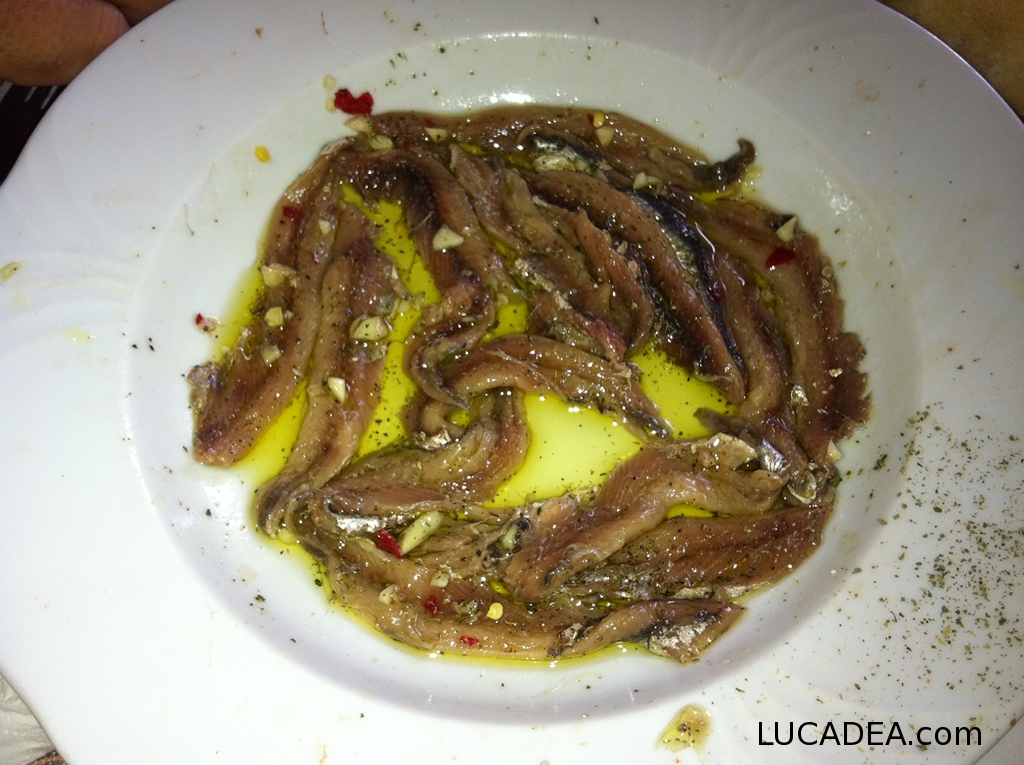
Acciughe sotto sale condite con olio, aglio, rosmarino e peperoncino, tolte dall’arbanella

Salted anchovies and the taste of simplicity.
The anchovies in front of me have already been taken out of their preserving jar and dressed with olive oil, garlic, rosemary, and chili pepper. It is a straightforward way to serve them, but their strong flavor is exactly what makes salted anchovies so useful in many other dishes.
The word “poor” in the expression “poor cuisine” can sometimes be misleading. In this case, it refers to a style of cooking based on simple ingredients, practical methods, and the ability to make the most of what was available. It certainly does not mean poor in flavor. Salted anchovies are actually the opposite: they are intensely savory and can add a remarkable amount of taste even when used in small quantities.
That is what caught my attention when I photographed this dish. The anchovies had already gone through their preservation process and were ready to be eaten. A little oil surrounds the fish, while garlic, rosemary, and chili pepper add fragrance and a sharper note. Nothing is complicated, and nothing needs to be hidden.
I wanted to keep the photograph focused on the food as it actually was rather than turning it into a carefully constructed restaurant-style image. The ingredients are simple enough to speak for themselves. There is something satisfying about seeing a preserved ingredient return to the table in such an uncomplicated form.
Salted anchovies are made using salt as a preservation method. The process allows the fish to be kept for much longer than fresh anchovies and also changes its texture and concentrates its flavor. This traditional technique became particularly important in coastal communities, where preserving fish was a practical part of everyday food culture.
When I think about this kind of preparation, I also think of Genoa, Liguria, Italy, where anchovies and preserved fish have a strong connection with local culinary traditions. The photograph itself does not need to belong to that particular place, though, because salted anchovies have long been used across Italian cooking. Their ability to bring a deep savory flavor to other ingredients is what made them so enduring.
The jar itself is worth mentioning too. In parts of northern Italy, the word “arbanella” is traditionally used for a jar or container, often made of glass, used for preserving food. It is a small everyday detail, but it fits perfectly with the practical character of this kind of cooking.
If you are looking at what makes salted anchovies interesting, the answer is not only the way they are served. Their real strength is their versatility. They can be enjoyed simply with oil and herbs, but they can also be used to strengthen sauces, accompany vegetables, flavor pasta dishes, or become part of preparations where the anchovy itself is no longer the main visible ingredient.
That concentrated flavor is one of the reasons I find them so interesting to photograph. They are a small ingredient with a surprisingly large role in the kitchen. A few anchovies can change the character of a dish without requiring a long list of additional ingredients.
This photograph captures the stage after preservation, when the fish has left the jar and returned to the table. I like that transition because it connects two different moments: the practical need to preserve food and the pleasure of eating it later.
It also fits naturally with the other food-related photographs I have shared on the blog. I often find that familiar ingredients become more interesting when I stop to look at them outside the context of a complete recipe. Here, the anchovies themselves are enough to suggest a story about taste, preservation, and everyday cooking.
If you are interested in traditional Italian food, this is one of those simple ingredients worth seeing beyond its appearance: its importance comes from what it can do to the flavor of everything around it.

How do you usually enjoy salted anchovies, simply dressed or as an ingredient in another dish? Add a comment or go to the bottom of the site to read what other visitors have written.

Salted anchovies with olive oil, garlic, rosemary and chili pepper, removed from their preserving jar

Add one  comment to this article or read  here what other visitors have written.
 
Adv
 
Disclamer

The rights on images, videos, choruses, text and all other material on the LUCADEA.com website are governed as per  Copyright page.


This page has been viewed 0 times today.
This month it has been viewed 0 times.
In total it has been viewed 0 times.
 

The small Giuseppe Garibaldi Street in Sestri

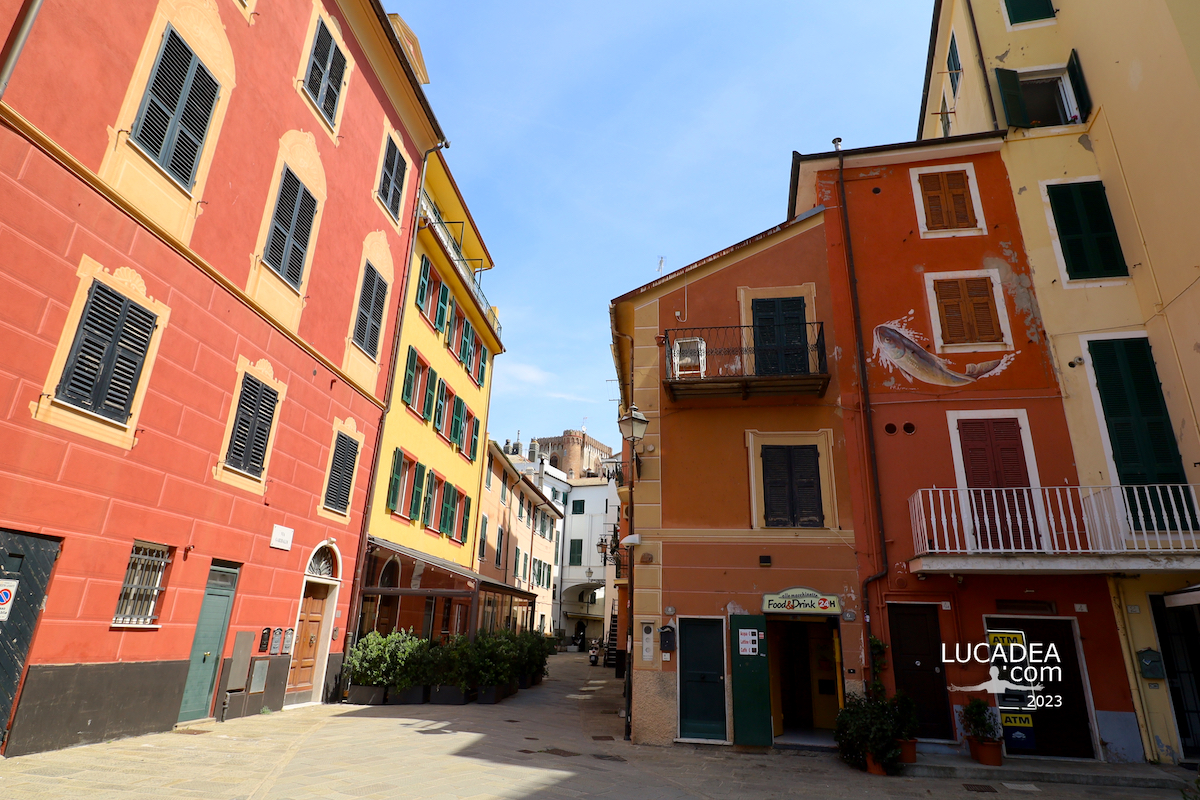
Via Giuseppe Garibaldi a Sestri Levante con il vicolo del centro storico e il pesce dipinto sulla facciata.

The small Giuseppe Garibaldi Street in Sestri.
Among the lesser-known corners of the historic center of Sestri Levante, there is a small street that often goes unnoticed but that I always enjoy walking through because of its quiet atmosphere.
Giuseppe Garibaldi Street in Sestri Levante is not one of the city’s most photographed places, especially compared with the famous Bay of Silence or Bay of Fairy Tales. This is exactly why I find it interesting: it is a more peaceful corner where even a small detail can capture your attention and make a simple walk more special.
In this photograph, the main subject is not only the narrow street itself, but also the large fish painted on the façade of the building in Matteotti Square, which makes this view immediately recognizable. Without that particular detail, many people might simply walk past without noticing this small passage.
I wanted to capture this corner with my camera because it represents a more everyday side of Sestri Levante, made of small streets and hidden views rather than the classic postcards of the town. These are often the details that remain in our memories because they are connected to a personal discovery of a place.
Giuseppe Garibaldi Street is located in the historic center of Sestri Levante, Liguria, Italy, just a short walk from the sea and from the main streets of the town. It is one of those small streets that invites you to slow down and observe the buildings, colors and details that are easy to miss.
One small curiosity is that, despite carrying the important name of Giuseppe Garibaldi, this street still keeps a quiet and almost hidden character compared with the busiest areas of the town.
I enjoy returning to these corners because every visit can reveal a different perspective. I have also shared other photographs of Sestri Levante on the site, including views of its small streets and less-known areas, because I believe these details help tell the true identity of a place.
This image was born from a simple walk and from the desire to preserve a small corner that many people may cross without really looking at it.

Do you know this little street in the historic center of Sestri Levante? Add a comment or go to the bottom of the site to read what other visitors have written.

Giuseppe Garibaldi Street in Sestri Levante with the historic alley and painted fish on the building façade.

Photo taken with a Canon EOS RP camera and Canon EF-S 10-18 lens.

Here is where the street is located:

I’m also sharing a great video recorded while traveling along the route:

Video recorded with Gopro Hero 10 Black.

Grilled baby cuttlefish by the sea in Riva Trigoso

Piatto di seppioline alla griglia servito a Riva Trigoso con cottura dorata e aspetto semplice su tavolo all’aperto

Grilled baby cuttlefish by the sea in Riva Trigoso.
The scent of the sea blends with the unmistakable aroma of grilled baby cuttlefish, creating a memory that feels vivid even before the first bite. Sitting at the table, the dish in front of me seems simple, almost understated, yet it carries a quiet depth that unfolds slowly.
The grilled baby cuttlefish are lightly charred on the outside, with subtle grill marks that hint at careful cooking. Nothing feels overdone or excessive. The presentation is minimal, allowing the natural qualities of the seafood to take center stage. It’s the kind of dish that doesn’t try to impress visually but ends up doing so through its authenticity.
Each bite is clean and balanced. The texture is tender, with just enough firmness to remind you of the sea it comes from. A drizzle of olive oil and perhaps a touch of lemon enhance the flavor without masking it. Eating grilled baby cuttlefish in Riva Trigoso creates a connection between the plate and the surrounding environment that feels almost seamless.
Riva Trigoso, part of Sestri Levante, has long been tied to maritime traditions and shipbuilding, and that relationship with the sea still echoes in its cuisine. Knowing this adds a subtle layer to the experience, making the dish feel rooted in something deeper than just taste.
Time seems to slow slightly as I continue eating. There’s no rush, no need to move on quickly. The experience is not just about the food but about everything around it—the air, the distant sounds, the quiet rhythm of the moment.
Looking back, the memory of those grilled baby cuttlefish is inseparable from the place itself. It’s not just a dish I remember, but a complete scene that stays with me.

Have you ever remembered a meal not only for its flavor but for everything that surrounded it? Add a comment or go to the bottom of the site to read what other visitors have written.

Photos taken with Honor 20.

Meal enjoyed at the pizzeria U Cantu in Riva Trigoso.

Grilled baby cuttlefish in Riva Trigoso – Petites seiches grillées à Riva Trigoso – Sepiolas a la parrilla en Riva Trigoso – Lulinhas grelhadas em Riva Trigoso – Gegrillte kleine Sepien in Riva Trigoso – Mực nang nhỏ nướng tại Riva Trigoso – 里瓦特里戈索的烤小墨鱼 – リーヴァ・トリゴーゾの焼きコウイカ

The text of this post was written with the help of ChatGPT, a language model from OpenAI.

Grilled fish in Vietnam with table cooking

Pesce alla griglia in Vietnam cotto al tavolo su braciere con stile della cucina asiatica

Grilled fish in Vietnam with table cooking.
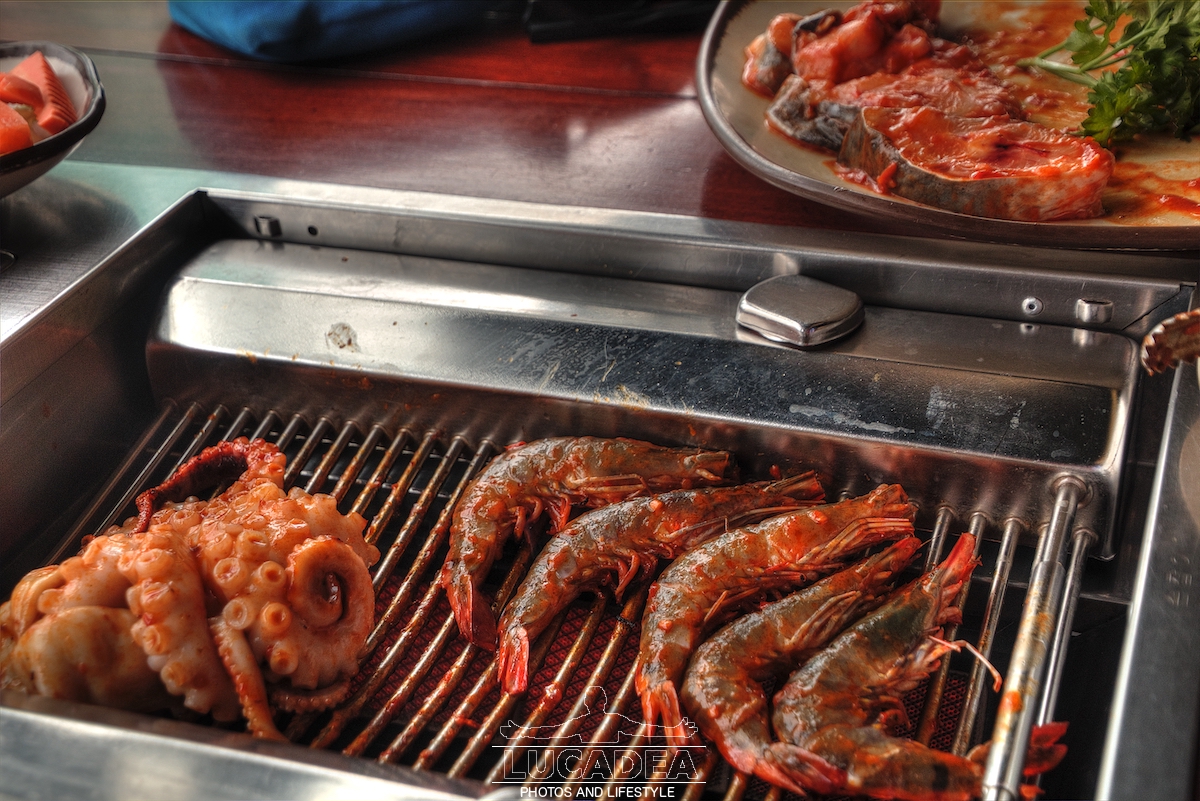
During my trip to Vietnam, I discovered a different way of experiencing dinner: not just receiving a finished dish, but becoming part of the cooking process. This grilled fish in Vietnam is prepared directly at the table, with a small grill that turns the meal into a shared experience.
In the middle of the table there is a gas burner that is switched on before the food arrives. Once you choose what to order, fish, meat or other ingredients are placed on the grill by the customer or by the waiter. This style of cooking immediately reminded me of Japanese and Korean traditions, where preparing food at the table is an important part of the dining experience. In Vietnam, seafood such as octopus is widely used, but this self-cooking style seems to have influences from other Asian cuisines.
The photograph captures exactly this atmosphere: a different way to discover local food, with the smell of grilling ingredients filling the air and the anticipation of watching the cooking process. The dish I tried was slightly spicy, as many Vietnamese dishes are, but it was still enjoyable even for someone like me who is not a big fan of spicy flavors.
The seafood was perhaps a little firmer than expected, but the taste was interesting and enjoyable. One thing I appreciated was the attention of the staff: even though the restaurant was not particularly crowded, the waitress occasionally came back to check the cooking and make sure everything was going well.
The photograph was taken in Vietnam during a food experience far from ordinary restaurants. If you are visiting Vietnam and wondering what food experiences are worth trying, a table grill is certainly a curious way to discover local habits and Asian culinary influences.
One interesting fact is that in many East Asian cuisines, cooking together at the table is not only a method of preparation but also a social moment. Food becomes a way to spend time together and share the experience.
On my photoblog, I often share encounters with different cuisines, from traditional Italian dishes to flavors discovered during my travels. This image comes from the same curiosity: finding something new and preserving a memory that goes beyond the food itself.

Have you ever tried a cuisine where preparing the meal becomes part of the dinner itself? Add a comment or go to the bottom of the site to read what other visitors have written.

Pesce alla griglia in Vietnam cotto al tavolo su braciere con stile della cucina asiatica

Photo taken with Canon EOS M100 and lens Tamron 16-300.

Grilled fish in Vietnam with table cooking – Poisson grillé au Vietnam avec cuisson à table – Pescado a la parrilla en Vietnam con cocción en mesa – Peixe grelhado no Vietnã com preparo à mesa – Gegrillter Fisch in Vietnam mit Tischzubereitung – Cá nướng ở Việt Nam với cách nấu tại bàn – 越南餐桌烤鱼料理 – ベトナムのテーブルグリル魚料理

The text of this post was written with the help of ChatGPT, a language model from OpenAI.

A fish fry enjoyed in Riva Trigoso

Frittura di pesce dorata servita al ristorante a Riva Trigoso, piatto tipico della cucina di mare ligure

A fish fry enjoyed in Riva Trigoso.
When I am at home, I often go out for lunch with my family on Sundays, and I almost always end up photographing whatever arrives at the table. This time the subject was a generous plate of fried fish, a classic choice in many restaurants around my area and one of my wife’s favorite dishes.
In Riva Trigoso, as in many other coastal villages in Liguria, fish naturally has an important place on the table. There is no need for an elaborate dish to find something worth photographing. Sometimes a plate that has just arrived is enough, especially when it is part of an ordinary family meal.
Fried fish is one of those dishes that is immediately recognizable. Different pieces of fish, sometimes together with small fish traditionally used for mixed frying, are cooked in hot oil until the outside becomes golden and crisp. The result can vary depending on the catch and the preparation, which is part of what makes every plate slightly different.
For this photograph, I was mainly interested in the dish as it arrived at the table. I did not try to create an elaborate food scene or arrange everything specially. I simply took my camera before we started eating and captured the plate as part of the memory of that Sunday lunch.
This is something I do fairly often when I am at home. Going to a restaurant with my family is an ordinary part of life, but for me it also becomes a small opportunity to take a photograph. After spending so much time photographing landscapes, towns, monuments and people, I enjoy turning my attention to something much more everyday, such as a dish served at the table.
The funny part is that while I was thinking about the composition, my wife was probably thinking about something much more important: when she could finally start eating her favorite fried fish. For me, taking a photograph has almost become automatic. For her, the reason for being at the restaurant was obviously the food itself.
If you are wondering what to eat in Liguria, seafood and simple dishes connected with the local coastal cuisine are naturally among the possibilities that come to mind. Fried fish is probably one of the most straightforward choices. It arrives at the table hot and crisp, needs very little explanation and usually disappears rather quickly.
There is a small detail about the traditional mixed fry known in Italy as “frittura di paranza”. The term generally refers to small fish, often different species, fried together. The name comes from the traditional paranza fishing boat, once commonly used along parts of the Italian coast.
Riva Trigoso, a district of Sestri Levante in the Province of La Spezia, Liguria, Italy, is exactly the kind of place where a photograph like this fits naturally into the story. There is no need to make the dish seem extraordinary. Its connection with the sea and with everyday local food is already enough.
Other photographs on my blog have also come from simple moments, including meals photographed at restaurants or at home. I like that continuity because a photo blog does not have to be about major journeys all the time. An ordinary Sunday with the family can leave a photograph worth keeping.
This image is really about that small personal habit. When I am home and the weekend comes around, we may go out for lunch, order something we enjoy and, before eating, I take a photograph. The camera does not always have to record a distant place or a spectacular landscape. Sometimes a plate on a restaurant table is enough to bring back the memory of a normal day spent together.
And perhaps that is why I enjoy photographing food as well. A landscape can remind me of where I was, while a dish can remind me of what a particular day felt like.

Do you usually manage to wait before eating when you want to photograph your dish at a restaurant? Add a comment or go to the bottom of the site to read what other visitors have written.

Golden fried fish served at a restaurant in Riva Trigoso, a classic dish from Ligurian coastal cuisine

Photo taken with Honor 20.

This dish was from the restaurant Le Gardenie in Riva.

A tasty mixed fried fish dish in Genoa

Uno sfizioso fritto misto di pesce a Genova

A tasty mixed fried fish dish in Genoa.
Some time ago, for lunch, I went to Genoa to the Piedigrotta pizzeria-restaurant and my wife ordered a fried fish dish.
I have to say it was really good!

Do you like fried fish? Add a comment or go to the bottom of the site to read what other visitors have written.

Uno sfizioso fritto misto di pesce a Genova

Photo taken with Honor 20.

A delicious mixed fried fish in Genoa – Un délicieux poisson frit à Gênes – Un delicioso pescado frito mixto en Génova – Uma deliciosa mistura de peixe frito em Génova – Ein köstlicher gemischter frittierter Fisch in Genua – Món cá chiên trộn thơm ngon ở Genoa

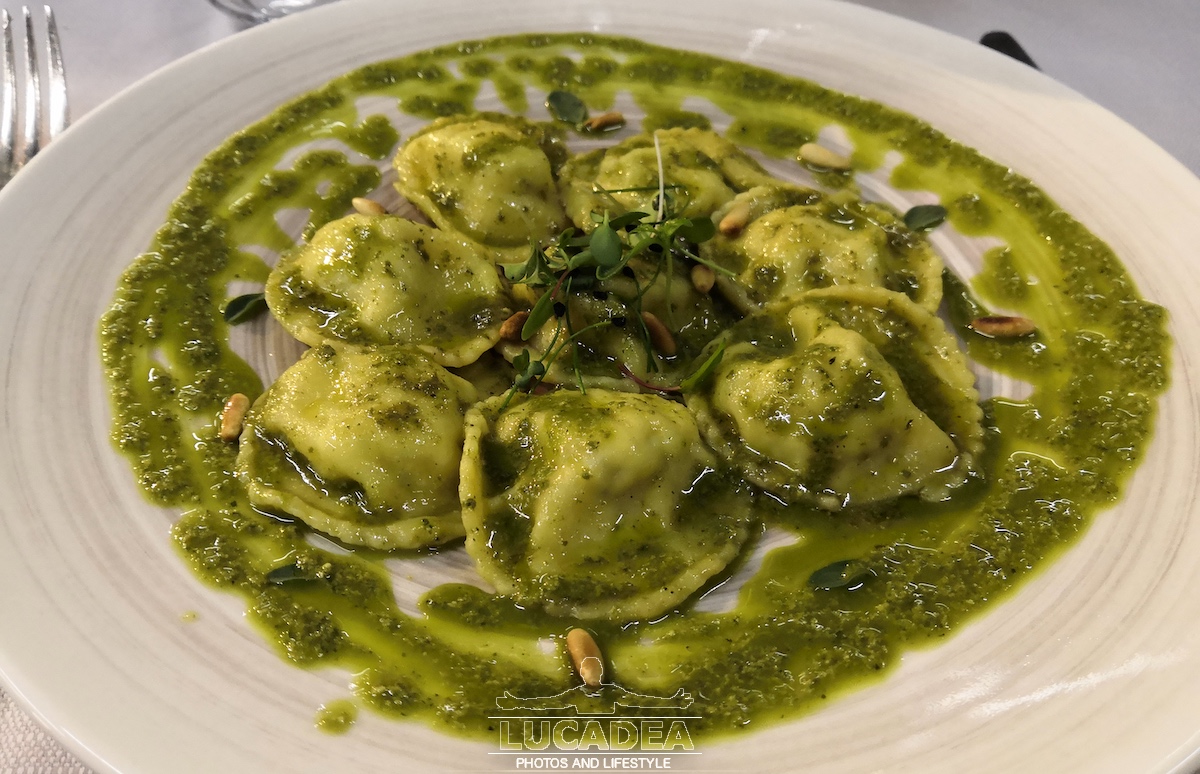
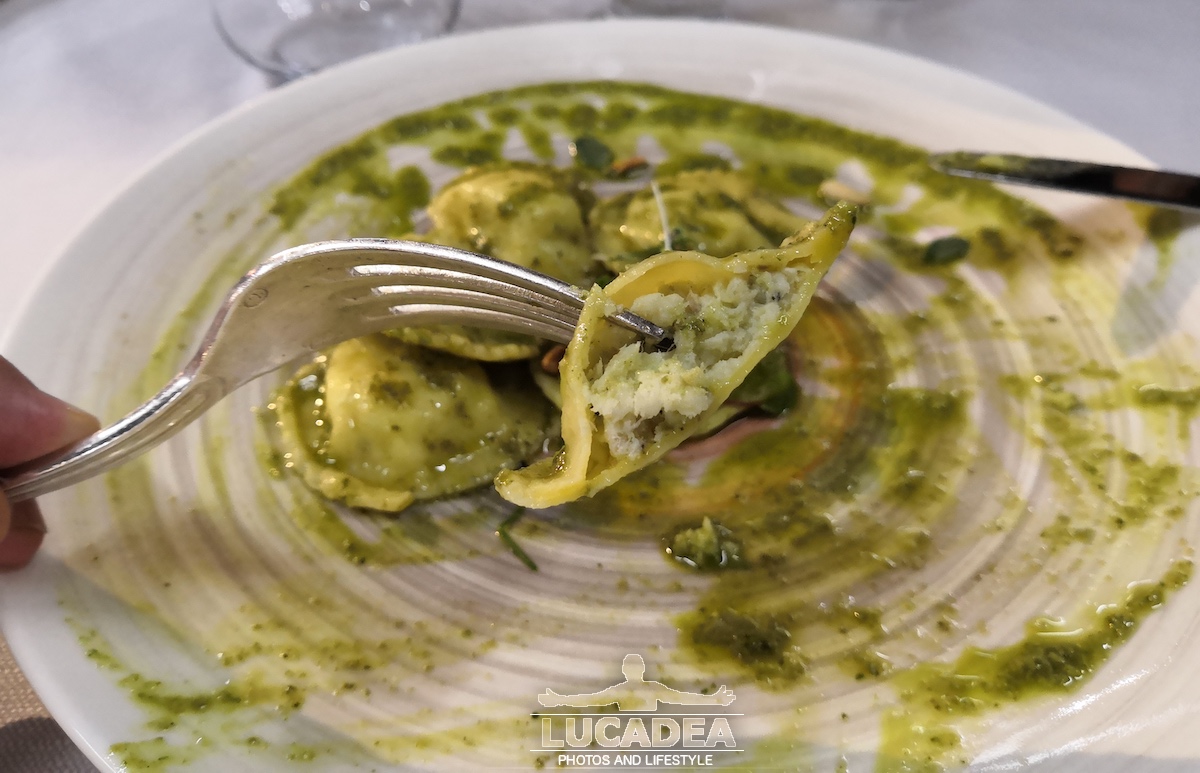
Fish ravioli with pesto, a tasty surprise

Ravioli di pesce con pesto

Fish ravioli with pesto, a tasty surprise.
Fish ravioli with pesto was a first for me, and I discovered the combination during a dinner in Sestri Levante. I usually associate fish ravioli with a seafood sauce, while pesto is something I would normally pair with ordinary pasta rather than a filled pasta dish.
A few evenings ago, at Delfino Bianco in Sestri Levante, I decided to try it anyway. I was curious to see how two flavours that I already knew very well would work together in the same dish. The result surprised me in a good way and made this simple plate worth remembering.
I took the photograph during that dinner, before starting to eat. I often like to photograph dishes when they are connected to a particular memory, and this was one of those occasions. There was nothing particularly elaborate about the scene I wanted to capture; what interested me was the combination itself and the fact that I had never tried it before.
Pesto is one of the flavours I most strongly associate with Liguria. Traditionally made with basil, pine nuts, garlic, cheese and extra virgin olive oil, it has a distinctive flavour that can easily become the main character of a dish. With fish ravioli, however, I wondered whether it might overpower the filling.
Instead, I found the combination surprisingly balanced. The pesto added plenty of character, while the fish filling still had its own presence. It was different from the seafood sauces I normally expect with fish ravioli, but that was exactly what made the experience interesting.
Delfino Bianco is in Sestri Levante, Liguria, Italy, and this was the restaurant where I first tried this particular combination. I could not find an official website for the restaurant, so the original post included a link to Tripadvisor for anyone wanting to look up the restaurant.
The link is useful for identifying the place, but the story behind this photograph is simply my own experience at the table. I am not trying to present the dish as a definitive version of a traditional recipe. What I found interesting was discovering an option that was outside my usual habits.
That is something I enjoy about eating out. Sometimes the most memorable dishes are not the ones you would automatically choose. I knew both flavours separately, but I had never thought much about putting them together. Trying something different gave me a reason to reconsider what I normally expect from fish ravioli.
The other issue was the portion. For my taste, I could easily have eaten twice as many. Fish ravioli often arrive in portions that feel more like a refined tasting than a serious attempt to fill the plate, and this was no exception. Just when I had started to appreciate the combination, the ravioli were already gone.
Still, perhaps that also helped the dish remain in my memory. It was not a huge meal or a complicated culinary experience. It was simply the first time I had tasted fish ravioli with pesto, and I was pleased that I had decided to order something different.
Looking at the photograph now, I remember the curiosity I had before taking the first bite. I knew exactly what pesto tasted like and I knew what to expect from fish ravioli, but I had no idea how the two would behave together. That small uncertainty was enough to make the dish more interesting.
I often photograph food during my outings, just as I photograph streets, buildings and landscapes. The reason is not necessarily that the dish is exceptional. Sometimes a photograph is worth keeping because it is connected to a personal moment, a first taste or an unexpected discovery.
That is also how I like to approach my photographs of Sestri Levante. They are not intended to be a complete guide to the town. They are fragments of places and moments I have actually experienced, from walks around the town to meals that caught my attention.
This plate of fish ravioli with pesto belongs to that same collection of memories. The photograph records the dish, but the story behind it is really about trying something outside my usual choices and finding out that the combination worked better than I expected.
For anyone searching for fish ravioli with pesto, I would say that it is certainly an interesting combination to try if you come across it. Whether it becomes your favourite version is another matter, but I am glad I did not stick to my usual order that evening.

Have you ever tried fish ravioli with pesto, or would you still choose a traditional seafood sauce? Add a comment or go to the bottom of the site to read what other visitors have written.

Fish ravioli with pesto served at Delfino Bianco in Sestri Levante, a Ligurian dish with an unusual combination

Fish ravioli with pesto served at Delfino Bianco in Sestri Levante, a Ligurian dish with an unusual combination

Photos taken with Honor 10.

🏠
  • Italiano