Chiavari, arcades of Garibaldi street

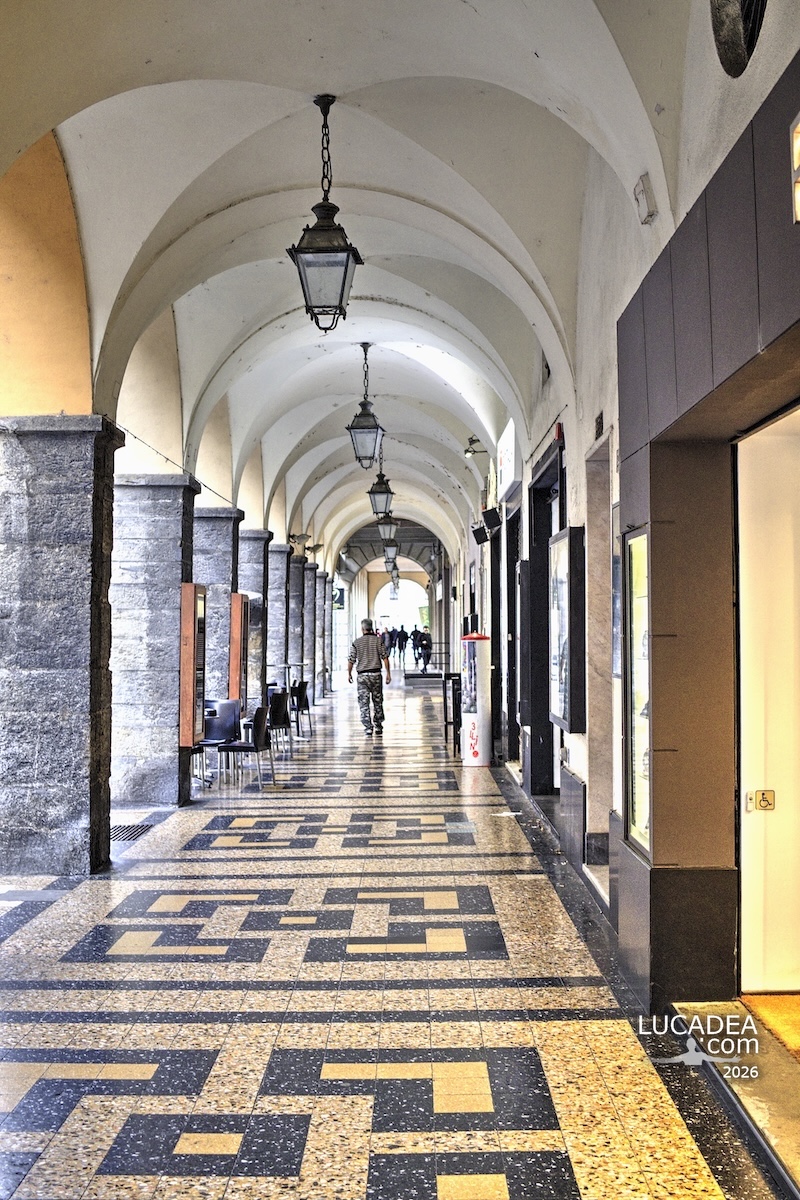
Porticato di Corso Garibaldi a Chiavari con pavimento decorato e arcate storiche nel centro urbano della città ligure

Chiavari, arcades of Garibaldi street.
The arcades of Garibaldi street in Chiavari immediately create a strong visual rhythm, and the arcades of Garibaldi street in Chiavari become the central element of this photograph as I walk through the covered passage. The arcades of Garibaldi street in Chiavari guide the eye forward with a continuous sequence of arches, stone columns, and patterned flooring that naturally shapes the perspective.
I am in Chiavari, Liguria, Italy, where the historic town center is built around these sheltered walkways that define both movement and daily life. The arcade feels almost like an architectural corridor, where sound, light, and space are compressed into a single linear experience.
Historically, arcades in Italian towns like Chiavari were designed not only for protection against weather conditions but also to support social and commercial life. They created a hybrid space between public street and private architecture, a feature that is still clearly readable today in many Ligurian and northern Italian cities.
If you are exploring Liguria, Italy, this is one of those urban elements worth noticing because it represents how architecture can shape behavior and perception at the same time. The repetition of arches becomes almost hypnotic, especially when seen in long perspective like in this stretch of Garibaldi street.
I have already described similar architectural passages in other posts on this site about Chiavari, where the relationship between light and covered walkways often changes the entire mood of a scene.
Walking through the arcades of Garibaldi street in Chiavari feels like moving inside a structured frame, where every step is part of a visual composition already defined by the city itself. The exit toward open light always feels like a sudden change of dimension.

Have you ever noticed how a simple arcade can completely change the way you perceive distance? Add a comment or go to the bottom of the site to read what other visitors have written.

Porticato di Corso Garibaldi a Chiavari con pavimento decorato e arcate storiche nel centro urbano della città ligure

Photo taken with Canon EOS R50 V and lens Canon RF 28.

Add one  comment to this article or read  here what other visitors have written.
 
Adv
 
Disclamer

The rights on images, videos, choruses, text and all other material on the LUCADEA.com website are governed as per  Copyright page.


This page has been viewed 1 times today.
This month it has been viewed 1 times.
In total it has been viewed 1 times.
 

Summer nightlife in Sestri Levante

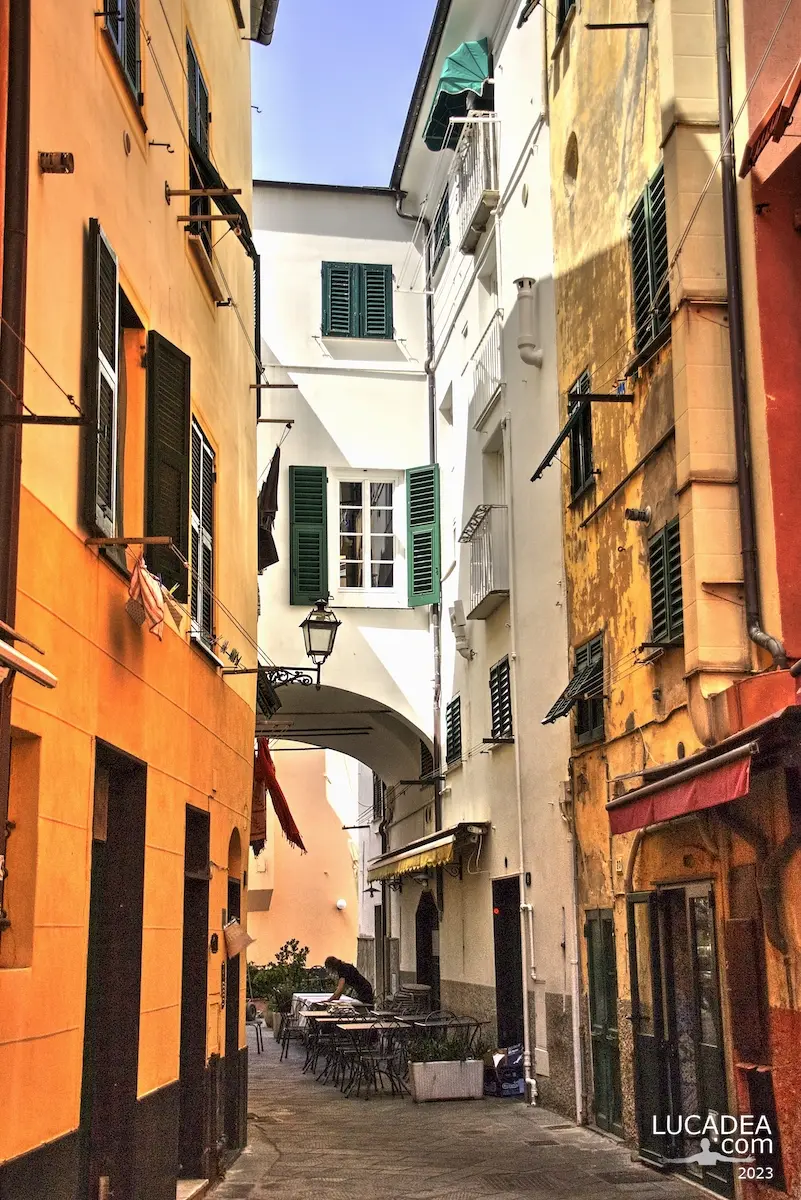
Archivolto di via Garibaldi a Sestri Levante con tavoli di un ristorante durante la vita notturna estiva

Summer nightlife in Sestri Levante.
In the historic center of Sestri Levante, Liguria, Italy, the streets gradually change character in the evening as restaurant tables fill and the town’s summer nightlife begins. It is a different way of experiencing Sestri Levante after dark, less connected with the crowds I remember from years ago and increasingly shaped by visitors choosing to spend the evening in the many restaurants around the old town.
This photograph, however, shows a much quieter moment. I was near the archway on Garibaldi street when I photographed this small corner occupied by a few restaurant tables. There is no large crowd here, no packed alleyway and no obvious rush. For that reason, I think the image captures a quieter side of nightlife in Sestri Levante that can still be found among the streets of the historic center.
Compared with the past, summer evenings in Sestri seem to me to have changed considerably. I remember the old town being particularly popular with younger people, who would often spend part of the evening walking through the center before continuing toward the Castelli swimming pool. The town center was then one of the stages of a longer night out.
In recent years, evening tourism has developed in a different direction. There are more restaurants and many more outdoor tables than I remember from years ago. During summer evenings, visitors often stay in the center for dinner, making the narrow streets feel like a natural extension of the restaurants themselves.
The character of the noise changes too. Once dinner is over and the restaurant tables begin to empty, the atmosphere can become considerably livelier. Groups of young people take over parts of the center and the relative quiet of the earlier evening can give way to a much noisier scene.
My photograph tells the other side of that story. The archway on Garibaldi street creates a small, enclosed space that feels almost separate from the movement elsewhere in the town. A few tables beneath the passage are enough to turn an ordinary corner into a place where people can sit, eat and talk.
That small detail is what caught my attention. I was not trying to photograph the busiest side of Sestri Levante or document its nightlife at its loudest. I was more interested in showing a brief moment of an evening, one of those places where the night is already underway but has not yet reached its more chaotic rhythm.
If you are wondering what to do in Sestri Levante at night, the historic center naturally offers plenty of choices during the summer season. But the evening is not necessarily about crowds and noise everywhere. There are still corners where the night moves at a slower pace, perhaps around a dinner table beneath an old archway like this one.
Sestri Levante is a place where the historic center, restaurants and seaside atmosphere are closely connected. The town is compact enough that its different evening moods eventually meet in the same streets. A quiet dinner, a walk through the old town and a much livelier late evening can all belong to the same night.
Looking at this photograph also reminds me how difficult it is to describe a town through a single image. A street can be almost empty at one moment and crowded shortly afterward. The same corner can have a completely different atmosphere depending on the hour and the particular stage of the summer season.
This is one of the things I enjoy photographing in Sestri Levante. I do not always want to photograph the classic views of the Bay of Silence or the most recognizable parts of the town. Sometimes I prefer recording small changes in everyday life, such as the way a quiet corner becomes part of the evening scene.
The photograph also connects naturally with other posts I have written about Sestri Levante, where I have focused on less obvious corners of the town rather than only its best-known views. Together, these images create a more personal record of a place that I have seen change over time.
The archway on Garibaldi street, with its few restaurant tables and discreet activity, feels almost like a small pause within the summer evening. It does not represent the loudest version of Sestri Levante, but perhaps that is exactly why I like the photograph.
Nightlife changes with habits, tourism and generations, and the way people experience a town during summer inevitably changes with them. Some things disappear, others take their place, while small details remain almost unnoticed. Photographing these changes is also a way of keeping a record of what an ordinary summer evening once looked like.

How do you remember summer evenings in Sestri Levante: did you prefer the livelier nights of the past or these quieter corners? Add a comment or go to the bottom of the site to read what other visitors have written.
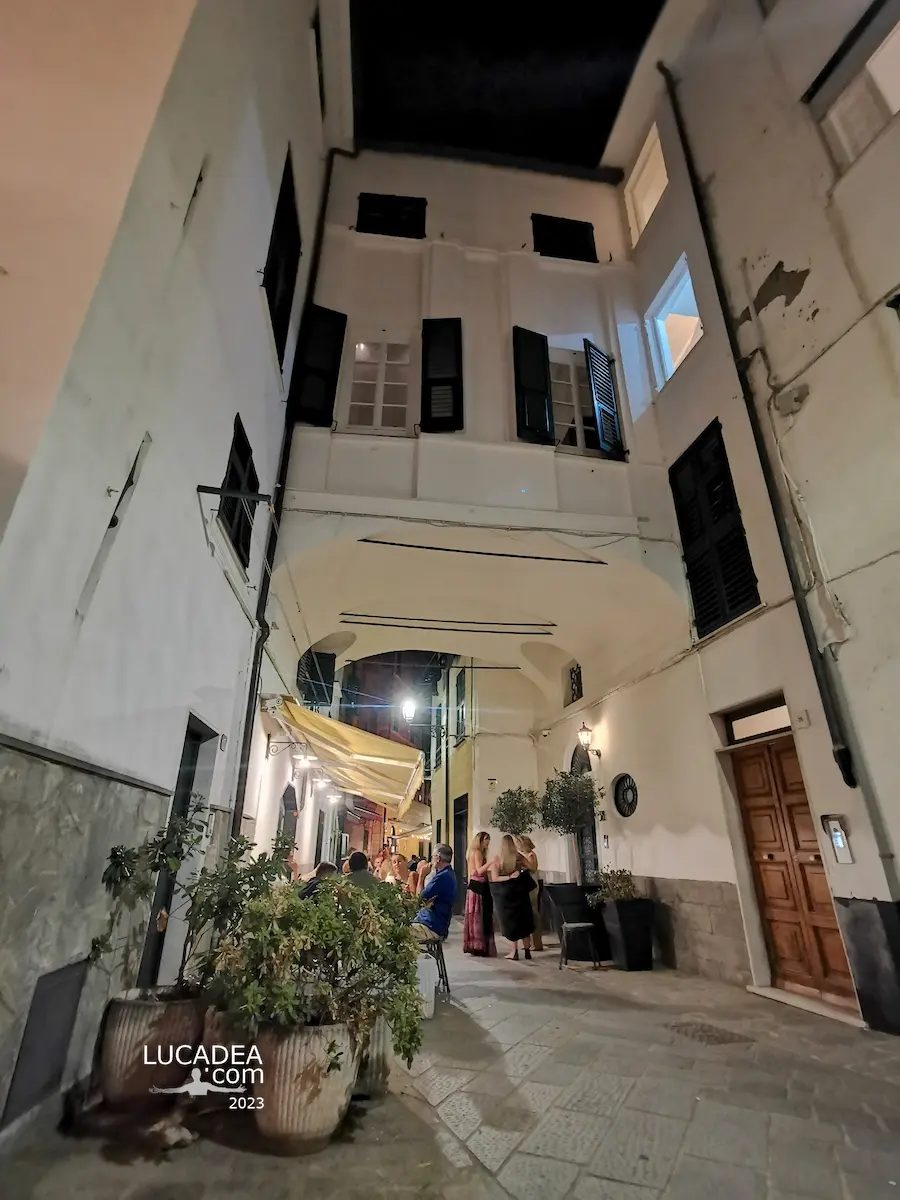
Archway on Garibaldi street in Sestri Levante with restaurant tables during summer nightlife

Photo taken with Honor 20.

Here is the exact location:

Add one  comment to this article or read  here what other visitors have written.
 
Adv
 
Disclamer

The rights on images, videos, choruses, text and all other material on the LUCADEA.com website are governed as per  Copyright page.


This page has been viewed 1 times today.
This month it has been viewed 1 times.
In total it has been viewed 3 times.

 

Doria Tursi Palace Courtyard in Genoa

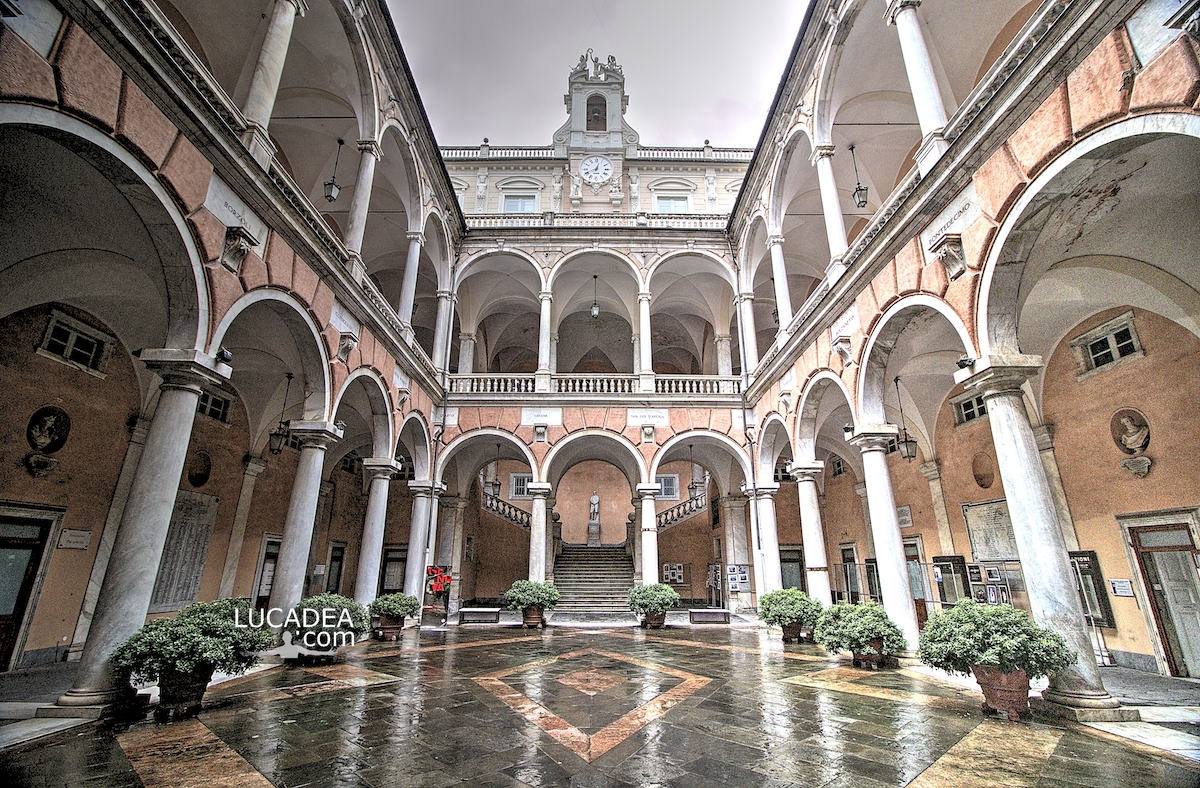
Cortile di Palazzo Doria Tursi a Genova fotografato dall'ingresso con l'architettura storica del palazzo

Doria Tursi Palace Courtyard in Genoa.
During my first visit to the Musei di Strada Nuova in the historic center of Genoa, I photographed the courtyard of Doria Tursi Palace from the entrance, capturing a different perspective of one of the most important historic buildings in the city.
The reason I added “courtyard” to this title is linked to the point of view of the photograph. This is not a classic image of the exterior facade or one of the famous rooms inside the building, but a view taken from below, looking into the inner space of the palace. I wanted to capture this particular angle with my camera because sometimes the most interesting details are found in the places people simply walk through.
Doria Tursi Palace is located on Garibaldi Street in Genoa, Liguria, Italy, and is part of the famous Musei di Strada Nuova museum route. For visitors looking for what to see in Genoa, this area of the historic center is one of the most interesting places because it combines Renaissance architecture, art and centuries of city history.
I took this photograph during my first visit to the Musei di Strada Nuova. While exploring the palace, I also photographed another view of the courtyard from a higher level, creating two different images of the same place and showing how the perspective can completely change the perception of a building.
Doria Tursi Palace was built in the 16th century for the Doria family and today houses the Municipality of Genoa. Inside the palace there are important artistic collections, including the famous Cannone violin, the instrument played by the great Genoese composer Niccolò Paganini.
What I like about photographing Genoa is discovering these hidden corners that are part of everyday life but also preserve centuries of history. A courtyard, a doorway or a small architectural detail can often tell as much about a city as its most famous monuments.
This photograph is part of my collection dedicated to Genoa and its historic buildings, together with other images of streets, squares and architectural details that I have photographed while exploring the city over the years. Similar views can also be found among my photographs dedicated to the old buildings and historic areas of Liguria.

Have you ever visited Doria Tursi Palace or the Musei di Strada Nuova in Genoa? Which historic building in the city impressed you the most? Add a comment or go to the bottom of the site to read what other visitors have written.

Doria Tursi Palace courtyard in Genoa photographed from the entrance showing historic architecture and details

Photo taken with a Canon EOS M100 camera and Canon EF-S 10-18 lens.

Palazzo Doria-Tursi, also known as Palazzo Niccolò Grimaldi, is a building located at 9 Via Garibaldi in Genoa’s historic center; on July 13, 2006, it was included in the list of 42 palaces registered in the *Rolli di Genova*.
Read more on Wikipedia

The arch of Garibaldi Street in Sestri Levante

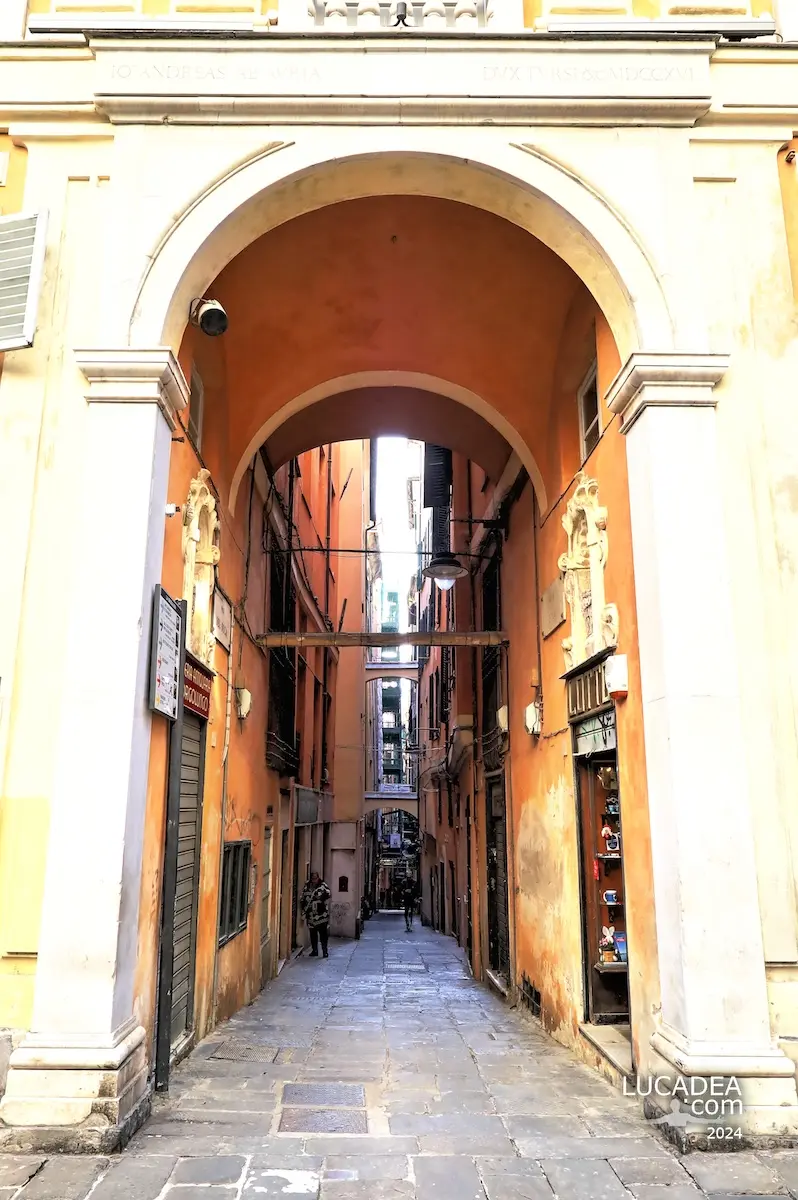
L'archivolto di via Garibaldi a Sestri Levante

The arch of Garibaldi Street in Sestri Levante.
Walking through the historic center of Sestri Levante in Liguria Italy, I always find myself drawn to this narrow stone passage. The arch of Garibaldi Street in Sestri Levante appears almost unexpectedly, connecting the tight path between Lombardo alley and Matteotti square, and giving the feeling of stepping through a quiet threshold in the old town.
The arch of Garibaldi Street in Sestri Levante is not a monumental structure, but its presence is strong in its simplicity. As I pass underneath it, I notice how the stone frames the movement of the street, shaping light and shadow in a way that feels perfect for photography. In another article on this site about Garibaldi Street, I mentioned how this area was once known as the “caruggiu de l’ou,” a name tied to the old manganese warehouses from Libiola, which adds an unexpected historical layer to such a small corner.
If you are visiting Sestri Levante, you might walk past this spot without realizing its significance, but I often think that these are exactly the places worth noticing. The arch of Garibaldi Street in Sestri Levante carries traces of everyday life and forgotten trade routes, quietly embedded in the stones of the town.
There is something about the way the passage compresses space that makes me slow down every time. It feels like a pause in the rhythm of the city, a moment where the past and present briefly overlap without announcing themselves.

As several visitors wrote to me in another post (here in italian) the alley was also called “caruggiu de l’ou” (alley of gold) since there were warehouses of manganese (coming from the Libiola mine) from which they were loaded onto ships bound for England.

Standing here, I wonder how many people remember it after passing through, and whether they would see it differently if they knew its story? Add a comment or go to the bottom of the site to read what other visitors have written.

Photos taken with Canon EOS RP camera and Tamron 16-300 lens.

Here’s the exact location:

L’archivolto di via Garibaldi a Sestri Levante – The archivolt of Via Garibaldi in Sestri Levante – L’arc de la Via Garibaldi à Sestri Levante – O arquivolto da Via Garibaldi em Sestri Levante – Das Archivolt der Via Garibaldi in Sestri Levante – Vòm Via Garibaldi ở Sestri Levante – 塞斯特里莱万特加里波第街拱门 – セストリ・レバンテのガリバルディ通りのアーチ

The text of this post was written with the help of ChatGPT, a language model from OpenAI.

Duca Alley in the historic center of Genoa

Vico del Duca nei caruggi del centro storico di Genova vicino a Palazzo Doria Tursi

Duca Alley in the historic center of Genoa.
Walking along the beautiful Via Garibaldi, probably one of the most beautiful and fascinating streets in Genoa, Liguria, Italy, you can notice that several narrow alleys start from this elegant street and descend into the hidden caruggi of the historic center.
One of these is Duca Alley, a small passage that begins right in front of Doria Tursi Palace, one of the most important buildings among Genoa’s Rolli Palaces and today the seat of the Municipality of Genoa.
This contrast is exactly what makes the city unique: on one side there are magnificent noble palaces, with monumental and richly decorated façades, while on the other side there are narrow medieval alleys that lead into the oldest heart of the city.
Walking through these alleys means discovering a different Genoa, made of hidden corners, unexpected views, and small details that often go unnoticed by visitors in a hurry. Just moving a few meters away from the most famous streets is enough to experience the authentic atmosphere of the caruggi.
Duca Alley perfectly represents the Genoese spirit: a connection between the grandeur of historic palaces and the everyday life of the old city’s narrow streets.
Every time I walk through Genoa, I am amazed by how many small treasures can be discovered simply by looking beyond the most famous routes. A doorway, a sign, an unusual perspective, or a tiny alley can tell a story that goes back centuries.

Did you know Duca Alley and this hidden corner of Genoa’s historic center? Add a comment or go to the bottom of the site to read what other visitors have written.

Duca Alley in Genoa historic center near Doria Tursi Palace

Photo taken with Canon EOS RP camera and Canon RF 24-50 lens.

Here’s where this exact spot is:

On Via Garibaldi, in front of Genoa’s Town Hall, lies the Vico del Duca (Duke’s Alley). The alley takes its name from the Palazzo del Duca di Tursi, the palace of the Duke of Tursi, the seat of the first citizen of Genoa. Tursi is a town in Basilicata that was granted as a fiefdom in 1552 to Admiral Andrea Doria as a marquisate (later a duchy) by Emperor Charles V.
Continue and learn more at amezena.net

Garibaldi Street in Genoa and the Rolli Palaces

Via Garibaldi a Genova con i Palazzi dei Rolli e le eleganti facciate storiche nel centro della città

Garibaldi Street in Genoa and the Rolli Palaces.
While walking through the historic center of Genoa, I stopped to capture the elegant perspective of Garibaldi Street, observing the decorated façades and the architectural details that make this place one of the most fascinating corners of the city.
This photograph of Garibaldi Street in Genoa comes from my desire to tell the story of a place that is well known but always able to reveal something new. Even after several visits, this historic street offers different views depending on where you stop, with details on the buildings, entrances and decorations that often remain unnoticed when walking quickly.
Garibaldi Street, also known as Strada Nuova in its original historical context, is one of the most important examples of Renaissance architecture in Genoa. Walking here means crossing a part of the city where the elegance of the past blends naturally with everyday life, between museums, historic buildings and people moving through the old city.
Garibaldi Street is located in Genoa, Liguria, Italy, in the heart of the historic center, and it is famous for the Rolli Palaces, the magnificent residences built by Genoese noble families during the period of the ancient Republic of Genoa. These buildings represent one of the most valuable examples of the city’s artistic and architectural heritage.
One curiosity about the Rolli Palaces is that they were included in official lists used by the Republic of Genoa to select private residences suitable for hosting important guests and visitors. This created a unique connection between private homes and public events, giving this street a role that went beyond simple urban decoration.
When I took this photograph, I wanted to focus on the atmosphere created by the entire street rather than on a single building. The rhythm of the façades, the perspective of the road and the richness of the details are what make this place so recognizable.
For anyone visiting Genoa, Garibaldi Street is one of the most interesting places to see because it offers a direct encounter with the history and architecture of the city without needing to leave the urban environment. The same attention to Genoa’s historic details can also be found in other photographs I shared, such as the article about Banchi Square and the old commercial heart of the city.
I have always enjoyed photographing places where history is still part of everyday life, where a simple walk can become an opportunity to discover something hidden in the details.

Have you ever walked along Garibaldi Street in Genoa and stopped to look at the details of its historic palaces? Add a comment or go to the bottom of the site to read what other visitors have written.

Garibaldi Street in Genoa with the Rolli Palaces and elegant historic façades in the old city center

Photo taken with Canon EOS RP and lens Canon RF 24-50.

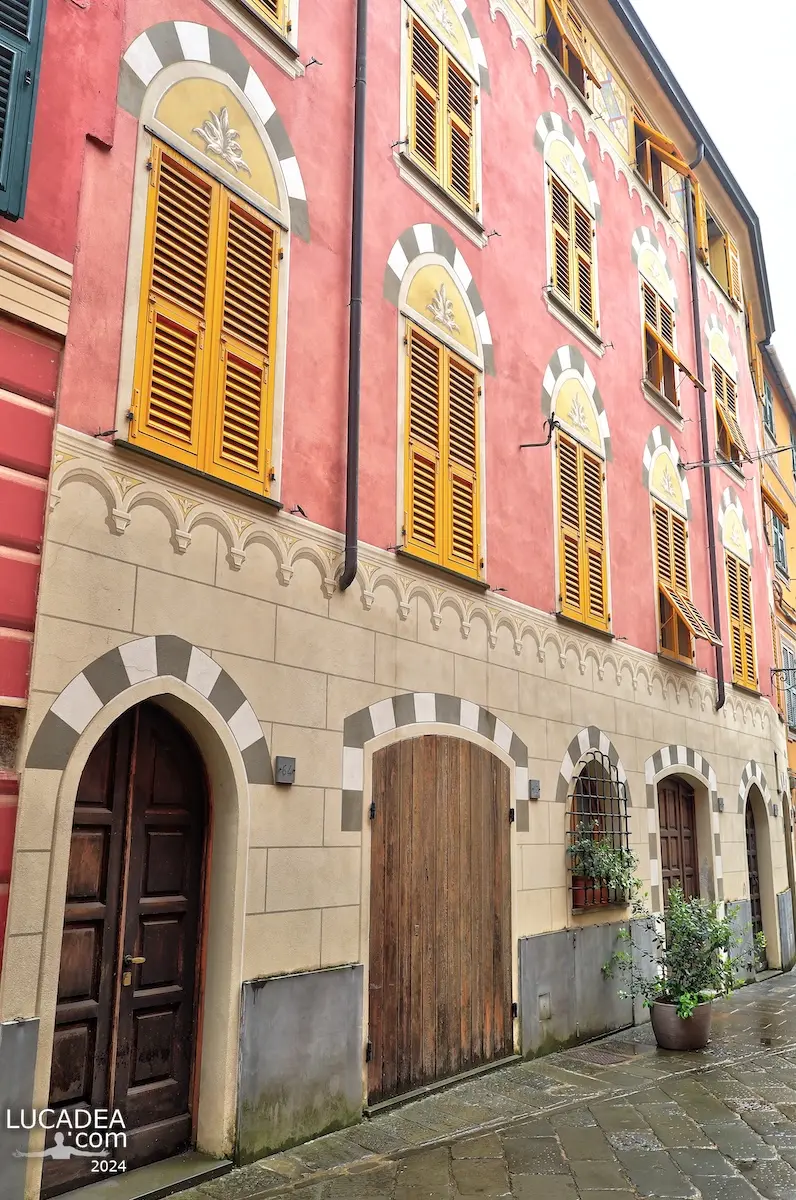
A building on Garibaldi street in Varese Ligure

Un palazzo in via Garibaldi a Varese Ligure

A building on Garibaldi street in Varese Ligure.
Strolling through the town of Varese, I always find something beautiful to photograph.
Like this palace with its beautiful decorations.

Have you ever visited Varese Ligure? What struck you most about this enchanting town? Add a comment or go to the bottom of the site to read what other visitors have written.

Un palazzo in via Garibaldi a Varese Ligure

Photo taken with Canon EOS RP and Canon RF 28 lens.

If you’d like to see all the photos taken in Varese that afternoon and previously, click here:
foto gallery

Here’s where the palace is located:

A building in via Garibaldi in Varese Ligure – Un immeuble de la via Garibaldi à Varese Ligure – Un edificio en via Garibaldi en Varese Ligure – Um edifício na via Garibaldi em Varese Ligure – Ein Gebäude in der Via Garibaldi in Varese Ligure – Một tòa nhà ở via Garibaldi ở Varese Ligure

The charming Garibaldi Street in Sestri Levante

La affascinante via Garibaldi nel centro di Sestri Levante

The charming Garibaldi Street in the center of Sestri Levante.
Via Garibaldi, formerly known as “Via dell’Oro,” is one of the most charming streets in Sestri Levante, a picturesque town located on the Ligurian coast. Named after the famous Italian patriot Giuseppe Garibaldi, this street is rich in history and culture, perfect for a relaxing stroll.
The street was known as “Via dell’Oro” (Golden Street) due to the mineral riches of the nearby Libiola area. Libiola was famous for its copper mines, which were intensively exploited since Roman times. The extracted minerals were stored in warehouses along Via Garibaldi, awaiting shipment by sea. The nickname derives from the luster of some of these metals.
Via Garibaldi is characterized by historic buildings dating back to different periods, offering a mix of architectural styles that reflect the town’s rich history. The colorful facades of the houses and unique architectural details make this street a true gem for art and history lovers.
One of the main attractions of Via Garibaldi is its proximity to the sea. Just a few steps from the street, visitors can reach the splendid beaches of Sestri Levante, such as Baia del Silenzio and Baia delle Favole. These beaches are perfect for relaxing and enjoying the breathtaking views of the Ligurian Sea.

Are you familiar with this street in Sestri? Add a comment or go to the bottom of the site to read what other visitors have written.

La affascinante via Garibaldi nel centro di Sestri Levante

Photo taken with Canon EOS RP and lens Canon EF-S 10-18.

Where is this street located:

The charming Via Garibaldi in the centre of Sestri Levante – La fascinante via Garibaldi au centre de Sestri Levante – La fascinante vía Garibaldi en el centro de Sestri Levante – A fascinante via Garibaldi no centro de Sestri Levante – Die faszinierende Via Garibaldi im Zentrum von Sestri Levante – Sự hấp dẫn qua Garibaldi ở trung tâm Sestri Levante

This post was written with the help of Copilot, an AI-powered virtual assistant.

The street called Giuseppe Garibaldi in Varese

La via chiamata Giuseppe Garibaldi a Varese Ligure

Giuseppe Garibaldi Street in Varese Ligure.
Walking through the streets of Varese Ligure on a rather gloomy Sunday, trying to take some photos that offer a different perspective from Piazza Fieschi with its houses and porticoes.

Have you ever visited Varese Ligure? What struck you most about this enchanting village? Add a comment or go to the bottom of the site to read what other visitors have written.

La via chiamata Giuseppe Garibaldi a Varese Ligure

Photo taken with Canon EOS RP and Canon RF 28 lens.

If you’d like to see all the photos taken in Varese that afternoon and previously, click here:
foto gallery

Here’s where the street is:

Giuseppe Maria Garibaldi (Nice, July 4, 1807 – Caprera, June 2, 1882) was an Italian general, politician, patriot, sailor, and writer. A leading figure of the Risorgimento, he was one of the most celebrated historical figures of his era. He is also known as the “Hero of Two Worlds” for his military exploits in both Europe and South America. Considered Italy’s foremost national hero by 20th-century historiography and popular culture, he began his travels around the world as a merchant ship’s officer, later becoming a sea captain. His most famous feat was the victorious Expedition of the Thousand, which led to the annexation of the Kingdom of the Two Sicilies to the nascent Kingdom of Italy, a pivotal episode in the unification of the new nation.
Continue and learn more on Wikipedia

The street called Giuseppe Garibaldi in Varese Ligure – La rue Giuseppe Garibaldi à Varese Ligure – La calle llamada Giuseppe Garibaldi en Varese Ligure – A rua chamada Giuseppe Garibaldi em Varese Ligure – Die Straße namens Giuseppe Garibaldi in Varese Ligure – Con phố có tên Giuseppe Garibaldi ở Varese Ligure

The Minaret Tower of Lomellino Palace in Genoa

La torre del palazzo Nicolosio Lomellino a Genova

The Minaret Tower of Lomellino Palace in Genoa.
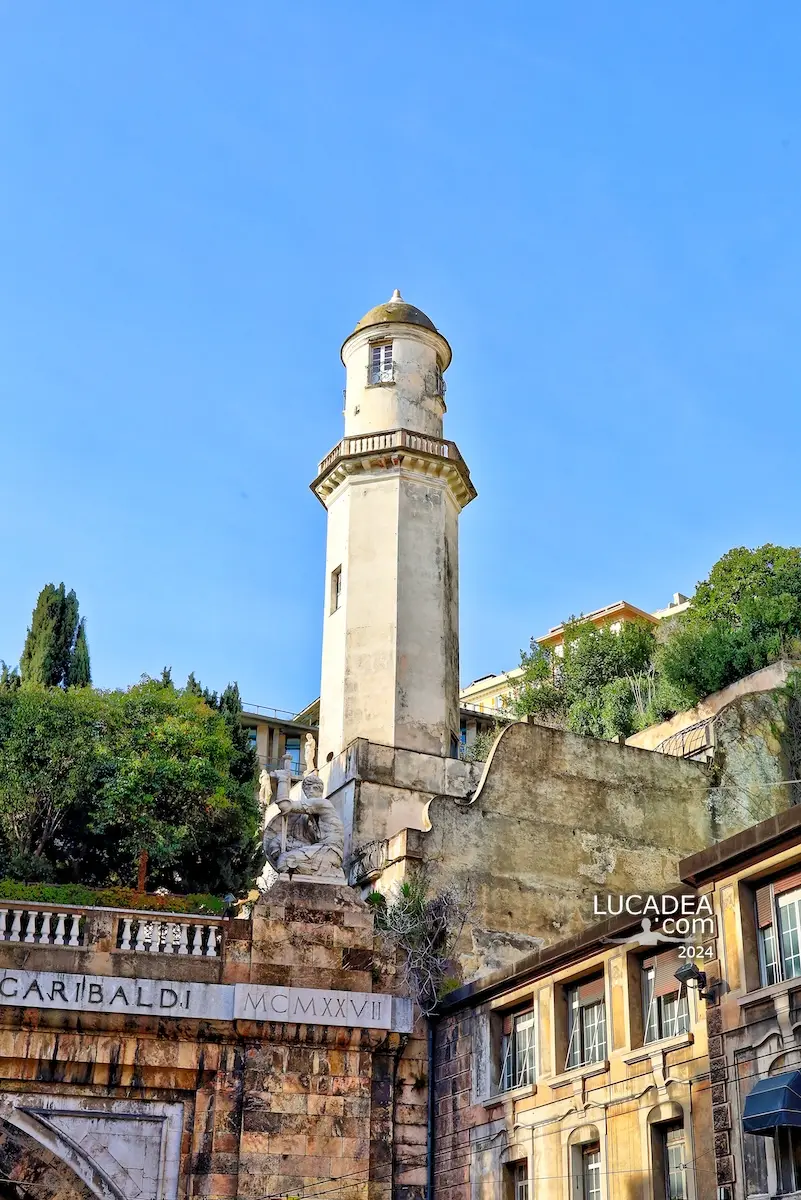
The Minaret Tower of Palazzo Nicolosio Lomellino is one of those hidden architectural details that can easily be missed while walking through Genoa. Every time I find myself in Piazza del Portello, my eyes naturally move upward to look at this unusual tower rising above the monumental Galleria Giuseppe Garibaldi, creating a surprising contrast with the historic buildings around it.
I took this photograph because this small architectural detail caught my attention once again while passing through the city. It was not a planned visit to a famous landmark, but rather a moment of curiosity toward something I had noticed before. With my camera, I wanted to capture the character of this unusual view and preserve a small piece of Genoa’s rich architectural landscape.
The Mirador of Palazzo Nicolosio Lomellino, also known as the Minaret Tower because of its oriental-inspired style, is located in the historic centre of Genoa, Liguria, Italy. The tower rises above one of the important buildings of Via Garibaldi, one of the most representative streets of the city’s Renaissance heritage. Seen from Piazza del Portello, it appears almost unexpectedly between the surrounding buildings.
If you are visiting Genoa and looking for places worth seeing beyond the main attractions, details like this tower reveal another side of the city. Genoa is not only made of famous palaces and museums but also of unusual viewpoints, decorations and architectural elements that reward those who take time to observe.
Palazzo Nicolosio Lomellino was built in the sixteenth century along Strada Nuova, today known as Via Garibaldi, a street famous for its historic residences. A small curiosity about the tower is its decorative style, which includes references inspired by oriental architecture and gives the building a distinctive Mediterranean character.
I have always enjoyed photographing these less obvious corners of Genoa because they show how much history can be hidden above the everyday paths of the city. This approach is also present in other photographs of Genoese historic buildings that I have shared on Lucadea.com, where small details often become the main subject of the image.
Looking again at this photograph, I appreciate how a simple view from a square can reveal something unexpected. The Minaret Tower is not the largest or most famous monument in Genoa, but it has the ability to surprise anyone who looks beyond the usual perspective.

Have you ever noticed the Minaret Tower of Palazzo Lomellino while walking through Genoa’s historic centre? Add a comment or go to the bottom of the site to read what other visitors have written.

Minaret Tower of Palazzo Nicolosio Lomellino seen from Piazza del Portello in Genoa

Photo taken with Canon EOS RP and Canon RF 24-50 lens.

This is the palace’s official website: palazzolomellino.org.

Here’s where the tower is located:

Minaret of a mosque?… not the 16th-century Mirador of Palazzo Nicolosio Lomellini, the tower, later expanded in the 18th century, with which the coral lords of Tabarca intended to amaze and stun their guests.
Continue and learn more at amezena.net

🏠
  • Italiano