Egg tagliolini with bottarga and delicate soffritto, recipe

Tagliolini all’uovo con bottarga mantecati con soffritto cremoso di acciughe e spigola

Egg tagliolini with bottarga and delicate soffritto, recipe.
When I prepare egg tagliolini with bottarga, I always start from the feeling I want the dish to give rather than just the ingredients themselves. This bottarga pasta is built around balance, where nothing should overpower the rest. In tagliolini with bottarga, it’s easy to let the flavor become too strong, but I prefer a softer, more layered result.
The base is everything. I focus on creating a soffritto that feels smooth and integrated, using garlic, fresh spring onion, and anchovies blended into a cream. Instead of regular oil, I use the fat from fresh sea bass belly, which brings a deeper, more marine character to the dish. It’s not about richness alone, but about creating a base that supports the pasta without making it heavy.
When I move to the pasta, the process becomes more intuitive. I like finishing the tagliolini directly in the pan, treating them almost like a risotto so they absorb the flavors fully. If you are visiting Italy and looking for something different, this is one of the most interesting ways to experience a seafood pasta without turning it into a heavy dish.
The bottarga is always added off the heat. This is a small but crucial detail: too much heat would ruin its texture and make it stick. Using only the residual warmth keeps everything smooth and well combined.
Bottarga itself has ancient origins across the Mediterranean and is often referred to as “sea gold” because of its intense flavor and traditional value.
This reminds me of another dish I shared on the blog where a simple off-heat step completely changed the final result. These are the details that matter most in cooking.
In the end, this is not a complicated recipe, but one that requires attention and timing. Every step counts, even the quiet ones.
This recipe was suggested to me by my friend Maître Gianni!

Ingredients

– egg tagliolini;
– bottarga;
– garlic;
– fresh spring onion;
– anchovies;
– fresh sea bass belly fat;
– salt;
– pasta cooking water.

Preparation

Blend the garlic, fresh spring onion, and anchovies until smooth. Separately, blend the sea bass belly fat until smooth. Combine everything in a pan over very low heat and let the soffritto develop slowly, stirring frequently: it shouldn’t sizzle, but melt and become creamy. Cook the tagliolini in salted water and drain when very al dente. Transfer them directly to the pan with the soffritto and add a little of the cooking water. Begin stirring like a risotto, allowing the sauce to absorb until it reaches a creamy consistency. Turn off the heat and add the grated bottarga. Stir quickly using only the residual heat, without returning to the heat to prevent the bottarga from sticking. Serve immediately.

Do you prefer bold bottarga flavors, or do you like blending them into something more balanced like this? Add a comment or go to the bottom of the site to read what other visitors have written.

Tagliolini all’uovo con bottarga mantecati con soffritto cremoso di acciughe e spigola

Egg tagliolini with bottarga and soffritto, recipe – Tagliolini aux œufs avec poutargue et sofrito, recette – Tagliolini al huevo con bottarga y sofrito, receta – Tagliolini com ovo e bottarga e refogado, receita – Eier-Tagliolini mit Bottarga und Soffritto, Rezept – Mì tagliolini trứng với bottarga và sofrito, công thức – 鸡蛋细面配鱼子酱与香炒底料,食谱 – 卵のタリオリーニとボッタルガのソフリット、レシピ

The text of this post was written with the help of ChatGPT, a language model from OpenAI.

Add one  comment to this article or read  here what other visitors have written.
 
Adv
 
Disclamer

The rights on images, videos, choruses, text and all other material on the LUCADEA.com website are governed as per  Copyright page.

This page has been viewed 1 times today.
This month it has been viewed 2 times.
In total it has been viewed 3 times.
 

Garlic Stalls at a Vietnamese Market

Bancarella del mercato in Vietnam piena di teste d’aglio bianche e violacee impilate in grandi quantità ravvicinate

Garlic Stalls at a Vietnamese Market.
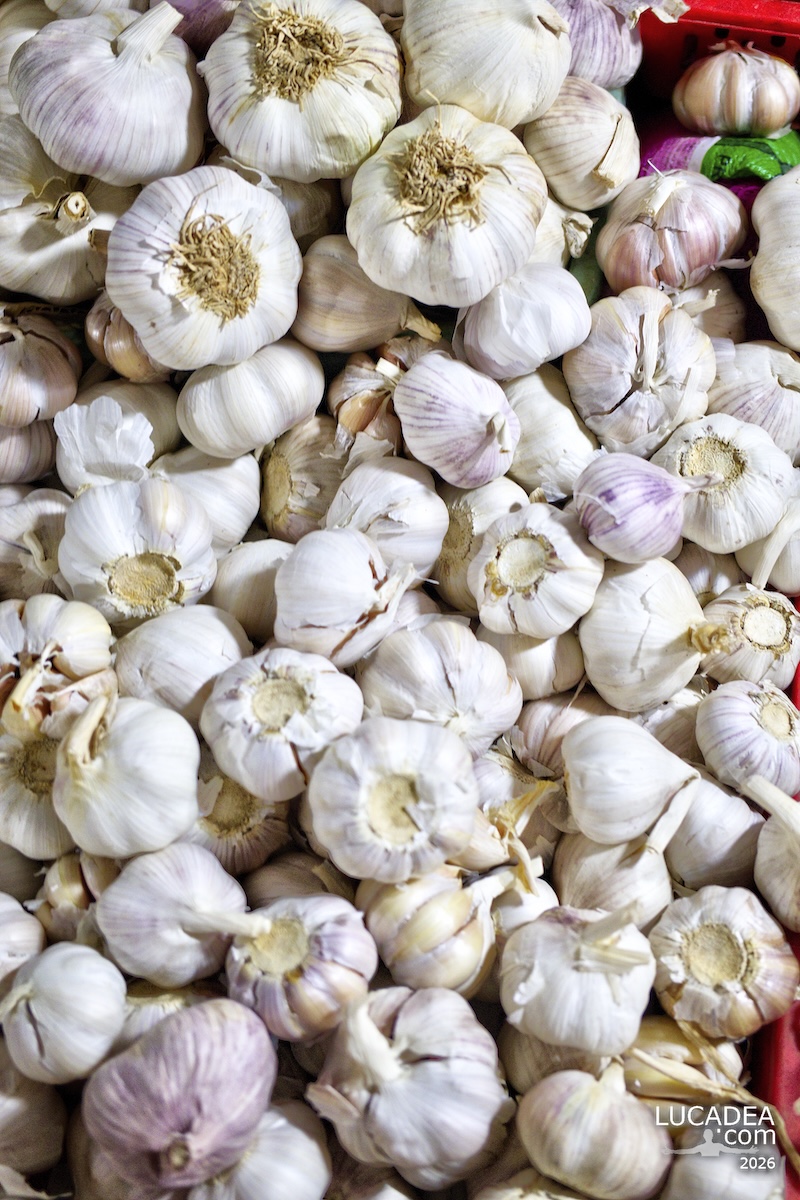
I find myself standing in front of a dense field of garlic that fills the frame so completely that everything else seems to fade into the background, and garlic becomes the immediate focus of this simple yet powerful scene. The garlic is stacked in countless clusters, some bulbs bright white, others marked with soft purple streaks that hint at different varieties and different hands that have shaped their journey to this market in Vietnam. Here, garlic is not just an ingredient but a constant presence, almost like a silent rhythm that structures the movement of sellers and buyers around the stalls.
As I look closer, I imagine the texture of each bulb, the dry papery layers protecting the cloves inside, and I think about how garlic defines so many everyday meals across Vietnam. The garlic here feels alive in its stillness, forming small landscapes of repetition and abundance that speak of harvest and labor. Even without sound or smell, the visual intensity of garlic is enough to fill the senses.
There is a small culinary truth tied to garlic in Vietnamese cuisine: it is often one of the first ingredients to hit the hot oil in a pan, building the aromatic foundation of countless dishes alongside shallots and chili. This simple step transforms garlic into something essential, shaping flavors that feel deeply rooted in local food culture.

Watching this scene, I start to wonder how many journeys each garlic bulb has taken before reaching this point, and how many meals it will continue to influence far beyond this market. How often do we stop and really observe something as ordinary, yet as essential, as garlic? Add a comment or go to the bottom of the site to read what other visitors have written.

Photos taken with Canon EOS R50 V and Canon RF 28 lens.

To see all the photos I took at the market, click here:

Add one  comment to this article or read  here what other visitors have written.
 
Adv
 
Disclamer

The rights on images, videos, choruses, text and all other material on the LUCADEA.com website are governed as per  Copyright page.


This page has been viewed 1 times today.
This month it has been viewed 1 times.
In total it has been viewed 1 times.
 

Colorful spices at Da Nang market

Spezie fresche al Con Market di Da Nang con zenzero, aglio e cipolle colorate disposte in ceste di plastica

Colorful spices at Da Nang market.
As soon as I step into the narrow aisles of Con Market, it’s the colors that strike me before anything else: the deep purple of the onions, the pale white of garlic, and the earthy tones of ginger piled high in plastic baskets. The spices create a vivid patchwork that feels both chaotic and perfectly balanced, a visual rhythm that draws me in without hesitation.
I move closer, careful not to interrupt the natural flow around me. The market in Da Nang moves with a quiet efficiency, where every gesture has meaning. Hands reach into baskets, weigh produce instinctively, and exchange goods in a seamless routine. The scent of ginger is sharp and energizing, while garlic carries a heavier, almost comforting aroma. Together, these spices form the invisible backbone of countless dishes.
I raise my camera and begin to frame the scene. There’s no need to arrange anything—the beauty is already there. The light falls unevenly across the baskets, highlighting textures and imperfections. Each root of ginger looks unique, almost sculptural, while the onions shine softly under the ambient light. It’s a moment that feels raw and unfiltered, exactly what I want to capture.
I linger on the details, noticing how these everyday ingredients hold a deeper cultural significance. In Vietnamese cooking, ginger and garlic are essential, quietly shaping flavors without ever demanding attention. They are the foundation, the subtle presence that makes everything else come alive.
Around me, the market continues its steady pulse. Vendors call out softly, customers negotiate, and life moves forward without pause. I take a few more shots, adjusting my perspective slightly, trying to capture not just the image but the feeling of being here.
When I finally step back, I realize that what stays with me isn’t just the photograph, but the sensory memory of the place—the colors, the smells, the rhythm.

Can you almost smell these spices just by looking at the scene? Add a comment or go to the bottom of the site to read what other visitors have written.

Spezie fresche al Con Market di Da Nang con zenzero, aglio e cipolle colorate disposte in ceste di plastica

Photo taken with Canon EOS RP and lens Canon RF 28.

To see all the photos I took at the market, click here:

Spezie colorate al mercato di Da Nang – Colorful spices at the market in Da Nang – Épices colorées au marché de Da Nang – Especias coloridas en el mercado de Da Nang – Especiarias coloridas no mercado de Da Nang – Bunte Gewürze auf dem Markt in Da Nang – Kleurrijke specerijen op de markt in Da Nang – ダナン市場の色とりどりのスパイス

The text of this post was written with the help of ChatGPT, a language model from OpenAI.

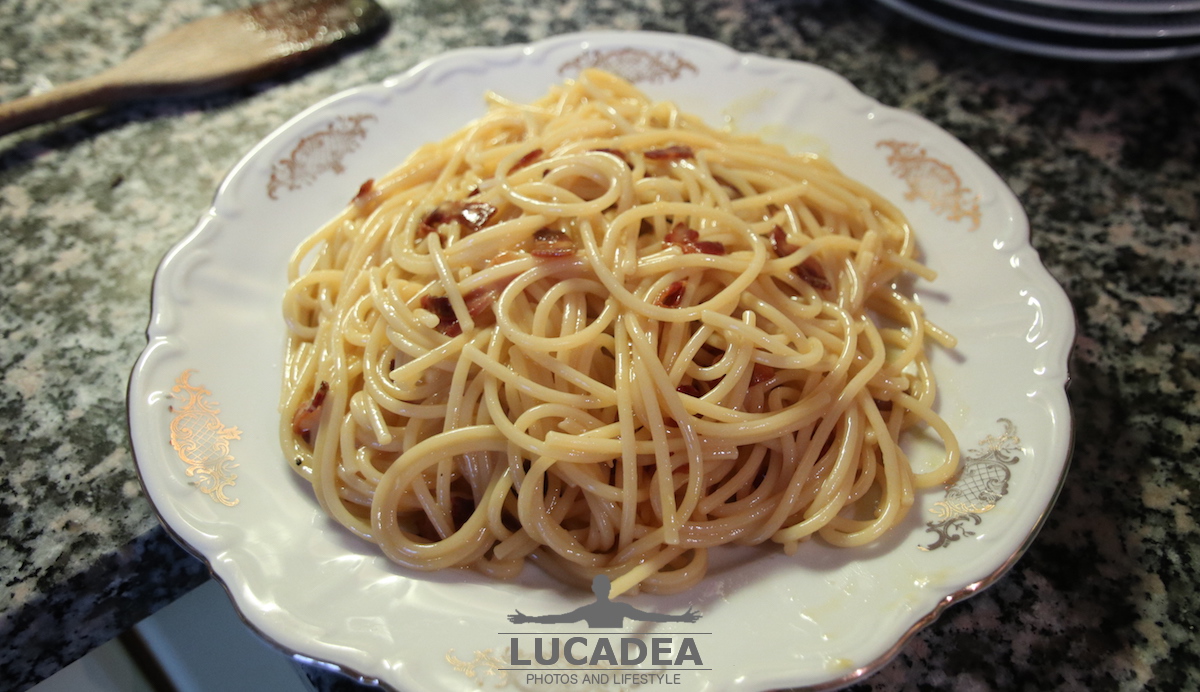
Pasta with garlic, oil, and chili pepper

Pasta aglio, olio e peperoncino

Pasta with garlic, oil, and chili pepper.
One of the classics of Italian cuisine is pasta simply dressed with garlic, oil, and chili pepper.
Who has never smelled its aroma or tasted a forkful?
These, as you can easily see from the photo, are spaghetti.

I love them so much, what about you? Add a comment or go to the bottom of the site to read what other visitors have written.

Pasta aglio, olio e peperoncino

Photo taken with Canon EOS M100 camera and Tamron 16-300 lens.

Spaghetti aglio e olio (spaghetti with garlic and oil) is a typical Neapolitan dish, part of the group of recipes known as cucina piccina partenopea.
Continue on Wikipedia

A dish of pasta with garlic, oil and chilli pepper – Un plat de pâtes à l’ail, à l’huile et au piment – Un plato de pasta con ajo, aceite y guindilla – Um prato de massa com alho, azeite e malagueta – Ein Nudelgericht mit Knoblauch, Öl und Chili – Món mì ống với tỏi, dầu và ớt

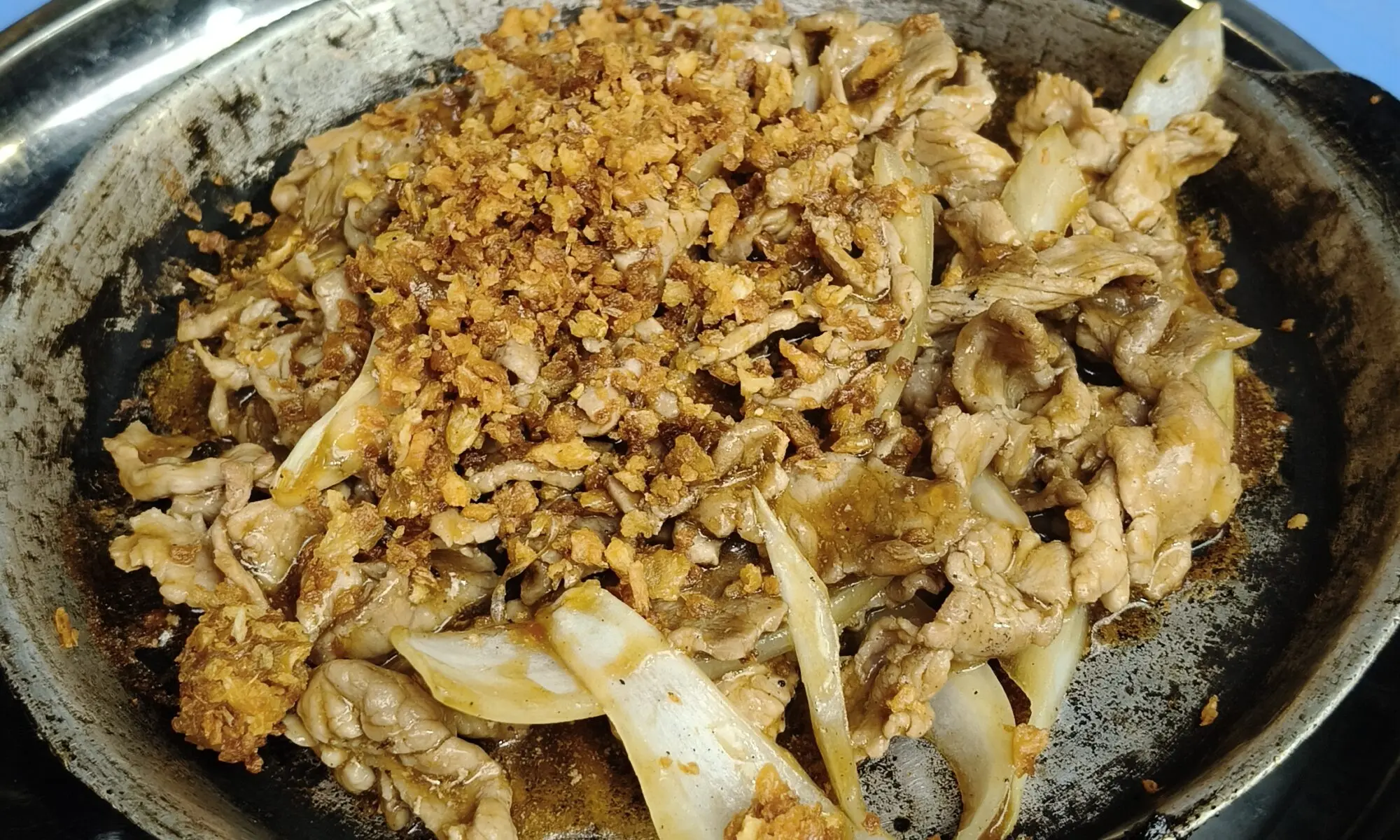
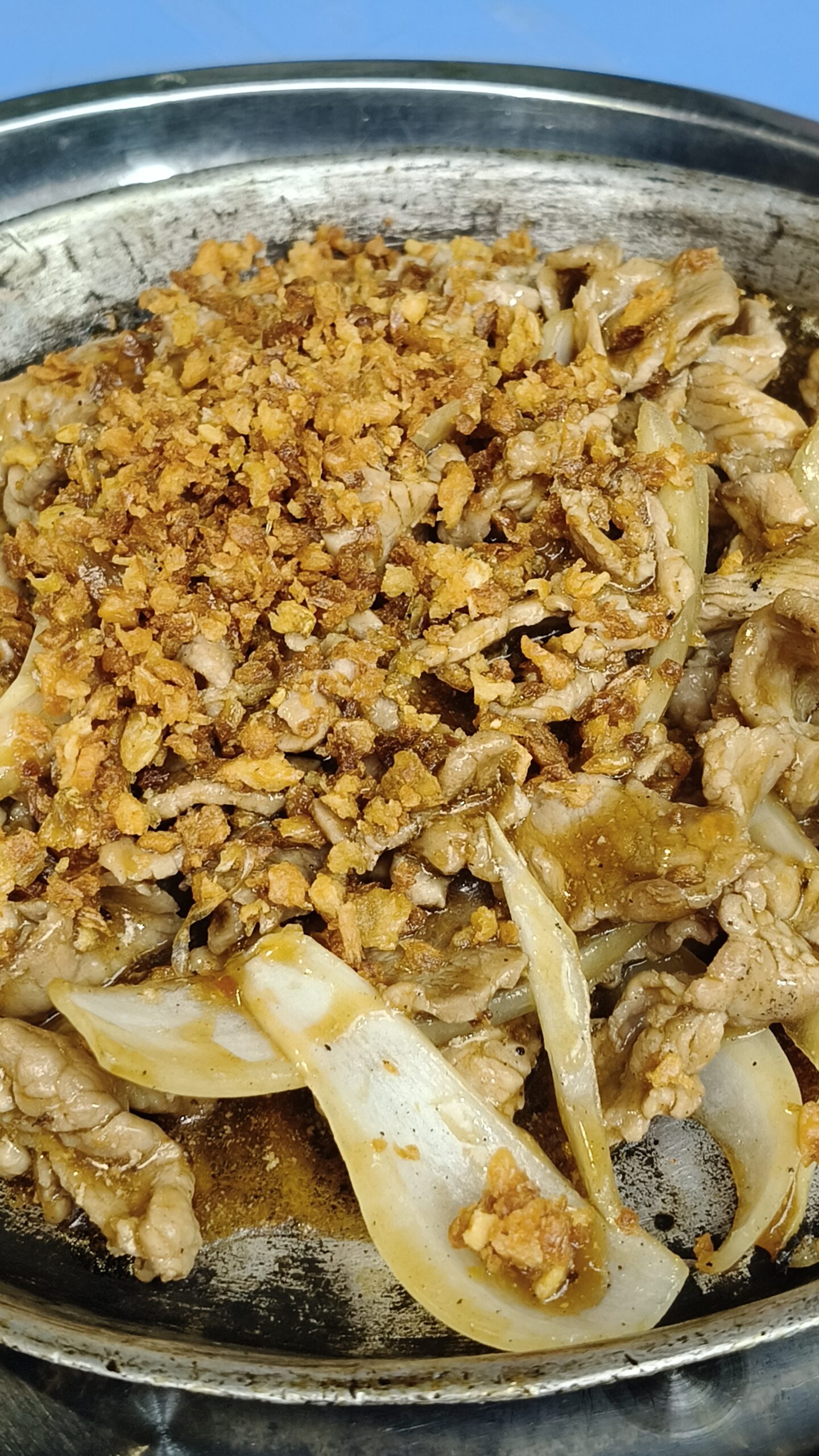
Bò xào tỏi in Hanoi, love and garlic

Bò xào tỏi ad Hanoi, amore e aglio

Bò xào tỏi in Hanoi, love and garlic.
There’s one thing I learned from marrying an Italian: I can take him to the other side of the world, but if there are too many vegetables on the plate… he turns up his nose. So in Hanoi, a few days ago, I chose something simple, straightforward, without “distractions”: Bò xào tỏi.
We were sitting on those typical low blue plastic stools, on a noisy, lively street in the capital. In front of us, the intense aroma of browned garlic filled the air even before the dish arrived on the table. When that sizzling pan appeared, I saw his eyes change.
Thin slices of beef quickly sautéed over very high heat, just a few onion petals—the only “vegetable” concession accepted—and a generous cascade of golden fried garlic on top. No green vegetables, no overbearing aromatic herbs. Only tender, juicy meat, glistening with sauce, with that wonderful contrast between the softness of the beef and the crunchiness of the garlic.
In Vietnam, we say the secret of “xào” is the fire: it must be strong, very fast. The meat must not boil, but sear. It must remain tender on the inside and slightly caramelized on the outside. In that little restaurant in Hanoi, they know how to do it very well.
He took the first bite in silence. Then the second, larger one. Finally, he admitted that yes, this is one of his favorite Vietnamese dishes. And I smiled, because through such a simple dish, two worlds meet: mine, made of intense flavors and street food, and his, more selective but curious.
Sometimes love also passes through a scorching pan full of garlic.

Add a comment or go to the bottom of the site to read what other visitors have written.

Photos taken with Oppo Reno 12.

Stir fried beef with garlic in Hanoi – Bœuf sauté à l’ail à Hanoï – Carne salteada con ajo en Hanói – Carne salteada com alho em Hanói – Gebratenes Rindfleisch mit Knoblauch in Hanoi – Thịt bò xào tỏi ở Hà Nội – 河内蒜香牛肉 – ハノイのガーリックビーフ

The text of this post was written with the help of ChatGPT, a language model from OpenAI.

Fried rice, the recipe

Il fried rice o riso fritto, la ricetta

Fried rice, the recipe.
Fried rice is a versatile and tasty Asian dish, loved around the world for its simplicity and rich flavor. Perfect for using up leftover rice, this dish can be customized with a variety of fresh, colorful ingredients. Here’s how to make authentic Asian fried rice at home. Obviously, the recipe is much better if you use Asian rice (at my house, we use jasmine rice).

Ingredients:

– 300 g cooked white rice (preferably day-old);
– 2 eggs;
– 200 g peeled shrimp (optional);
– 1 carrot, diced;
– 1 red bell pepper, diced;
– 100 g peas;
– 2 spring onions, sliced;
– 2 garlic cloves, minced;
– 3 tablespoons soy sauce;
– 2 tablespoons sesame oil;
– 1 tablespoon vegetable oil;
– Salt and pepper to taste;
– Fresh cilantro for garnish (optional);

Preparation:

Make sure all ingredients are ready and on hand. This will make cooking quicker and easier.
In a large skillet or wok, heat 1 tablespoon vegetable oil over medium-high heat. Crack the eggs into the pan and stir quickly to scramble them. Once cooked, remove them from the pan and set aside.
In the same skillet, add another tablespoon of vegetable oil and cook the shrimp until they turn pink and opaque. Remove them from the pan and set aside with the eggs.
Add the sesame oil to the pan and sauté the garlic for about 30 seconds. Add the carrots, bell pepper, and peas and cook for 3-4 minutes, until the vegetables are tender but still crunchy.
Add the cooked rice to the pan and stir well to combine with the vegetables. Make sure the rice is well separated and doesn’t stick together.
Pour the soy sauce over the rice and stir well to evenly distribute the flavor. Add the scrambled eggs and cooked shrimp and stir again.
Add the sliced ​​spring onions and season with salt and pepper to taste. Cook for another 2-3 minutes, stirring constantly.
Transfer the fried rice to a serving platter and garnish with fresh cilantro, if desired. Serve hot and enjoy this delicious dish!

Fried rice is a dish that brings authentic Asian flavors to life, easy to prepare, and perfect for any occasion. With this recipe, you can surprise your guests or simply enjoy a tasty and nutritious meal at home.

Do you like this dish?
Add a comment or go to the bottom of the site to read what other visitors have written.

Il fried rice o riso fritto, la ricetta

Photo taken with Honor 20.

Fried rice, the recipe – Riz sauté ou riz sauté, la recette – Arroz frito o arroz frito, la receta – Arroz frito ou arroz frito, a receita – Gebratener Reis oder gebratener Reis, das Rezept – Cơm chiên hay cơm chiên, công thức

This post was written with the help of Copilot, an AI-powered virtual assistant.

Spaghetti with garlic and oil, the recipe

Spaghetti aglio e olio, la ricetta

Spaghetti with garlic and oil, the recipe.
Spaghetti with garlic and oil is a classic Italian dish, simple yet rich in flavor. This version without chili pepper is perfect for those who prefer a more delicate yet delicious flavor.

Ingredients

– 320g spaghetti;
– 4 garlic cloves;
– 100ml extra virgin olive oil;
– Salt to taste;
– Chopped fresh parsley.

Preparation

First, peel the garlic cloves and thinly slice them.
In a large pot, bring plenty of salted water to a boil. Cook the spaghetti until al dente according to the package directions.
While the pasta is cooking, heat the extra virgin olive oil in a large skillet over medium-low heat. Add the sliced ​​garlic and brown slowly, without burning, for about 2-3 minutes.
Drain the spaghetti a couple of minutes ahead of time, reserving a cup of the cooking water. Add the spaghetti to the pan with the oil and garlic, stirring well to coat the sauce and release some of the starch. If necessary, add a little of the cooking water to further combine the sauce and form the famous creamy sauce.
Divide the spaghetti among plates, garnishing with a little chopped fresh parsley, if desired. Serve immediately.

Tips: For a more intense flavor, you can lightly crush the garlic cloves before slicing them; use a high-quality extra virgin olive oil for the best possible flavor; always reserve a little of the pasta cooking water to help bind the sauce.

Spaghetti aglio e olio is a versatile and quick recipe, ideal for a simple yet tasty dinner. Try this version without chili pepper for a light and aromatic dish, perfect for any occasion.
Add a comment or go to the bottom of the site to read what other visitors have written.

Photos taken with Honor 20.

Spaghetti with garlic and oil, the recipe – Spaghetti à l’ail et à l’huile, la recette – Espaguetis con ajo y aceite, la receta – Esparguete com alho e azeite, a receita – Spaghetti mit Knoblauch und Öl, das Rezept – Spaghetti mit Knoblauch und Öl, das Rezept

This post was written with the help of Copilot, an artificial intelligence-based virtual assistant.

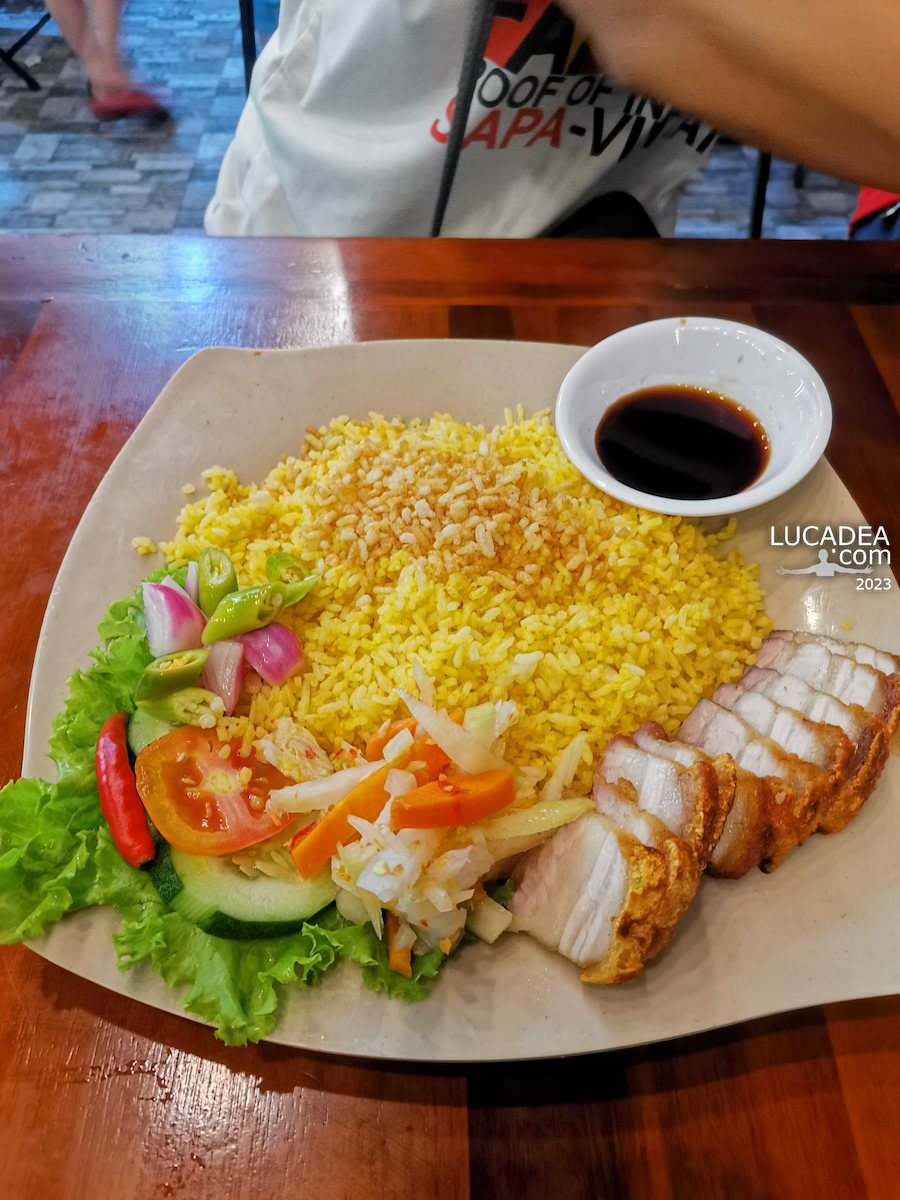
Vietnamese Cuisine: Fried Rice with Pork, the Recipe

Cucina vietnamita: riso fritto con maiale, la ricetta

Vietnamese Cuisine: Fried Rice with Pork, the Recipe.
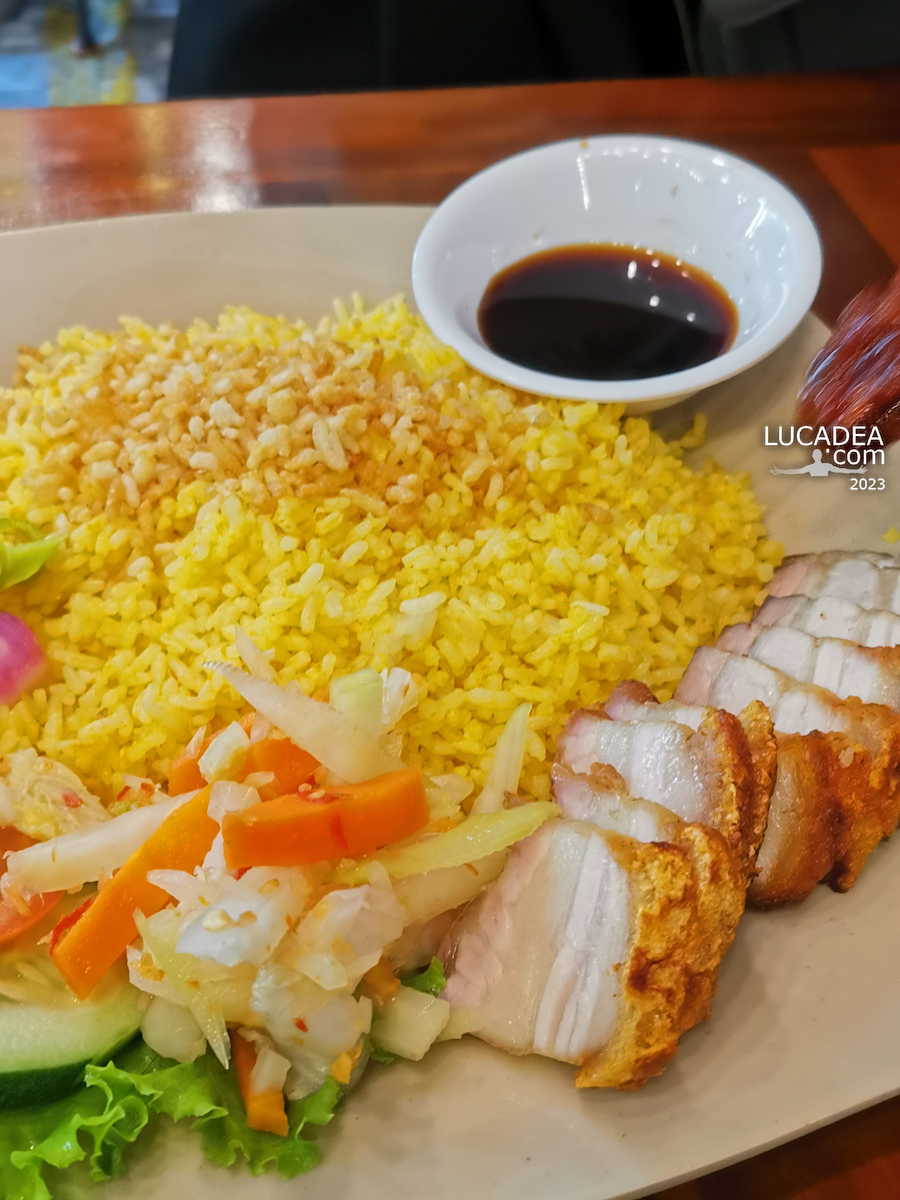
As in my previous post, where I featured A.Hai Chicken Rice (a long-established and quite famous restaurant in Da Nang), I’m now introducing another delicious and interesting restaurant, located near my hometown, Gia Vinh on Le Thanh Nghi Street, also in Da Nang.
We stumbled upon this restaurant by chance: it was quite large and had attractive decor, so we stopped in. My husband ordered fried rice and seasoned shredded chicken, and I ordered fried rice with crispy skinned fried pork belly. It exceeded our expectations; the food here is delicious. The rice is soft and grainy, not greasy. The fried rice includes crispy fried rice grains, so eating it makes me feel very special; delicious but not greasy. The pork belly is low in fat, the skin is very crispy, and the seasoning is just right. The restaurant also offers many side dishes, such as kimchi, pickled onions, garlic, and chili sauce.

If you’re curious about this recipe or Vietnamese food in general, please leave me a comment or scroll down to the bottom of the site to read what other visitors have written.

By the way: I’d like to show you how to make crispy-skinned fried pork belly.

Ingredients

* 500g pork belly;
* purple onion;
* garlic;
* 1 teaspoon star anise powder, cloves, cinnamon;
* lemon;
* Spices: salt, monosodium glutamate, pepper, sugar;

Preparation

Wash the pork belly and drain it. Place the water, 2 purple onions, and 1 teaspoon salt in a pot and bring to a boil. When the water boils, add the meat and cook for 4 minutes. Then remove the meat, wash it, let it cool, and drain it.
Use a fork to poke evenly across the surface of the skin (but not too deep into the fat).
Marinate the meat with 1 teaspoon MSG, 1/2 teaspoon sugar, 1/2 teaspoon pepper, and 1 teaspoon ground spice. Mash 3 purple onions and 2 garlic cloves, squeeze out the juice, and use this water to marinate the meat.
Caution: try to only coat the meat, not the skin.
Now refrigerate for about an hour.

After marinating for 1 hour, place the meat in a baking dish (skin side up) and apply a thin layer of the mixture (1 teaspoon salt and 3 tablespoons lemon juice, mixed well until the salt has dissolved).

Preheat the oven to 200 degrees Celsius for 10 minutes on high and low heat.
Then place the meat in the oven and cook for 30 minutes.
After 30 minutes of cooking, open the oven, add a thin layer of the mixture to the skin, and continue cooking for another 30 minutes.
Next, adjust the heat to 150 degrees Celsius and set the cooking time to 15 minutes. If the skin swells evenly, you can turn off the oven and remove the meat.
The finished product should have a crispy, flavorful skin. Cut into small pieces and serve with fried rice and a cup of soy sauce.

Foto scattate con Honor 20.

Vietnamese cuisine: fried rice with pork, the recipe – Cuisine vietnamienne : riz frit au porc, la recette – Cocina vietnamita: arroz frito con cerdo, la receta – Cozinha vietnamita: arroz frito com carne de porco, a receita – Vietnamesische Küche: Gebratener Reis mit Schweinefleisch, das Rezept – Ẩm thực Việt Nam: cơm chiên thịt heo, công thức – 越南菜:猪肉炒饭,食谱 — ベトナム料理:豚肉入りチャーハンのレシピ

Vietnamese cuisine: Ốc len xào dừa, the recipe

Cucina vietnamita: Ốc len xào dừa, lumache in padella, la ricetta

Vietnamese cuisine: Ốc len xào dừa, pan-fried snails, the recipe.
Pan-fried snails with coconut is a simple and easy-to-prepare dish, and you can find it in most snail restaurants in Vietnam.
Along with the crunchy, sweet flavor of the snails, there’s the rich, fragrant flavor of coconut; it’s often eaten with herbs (laksa leaves, aromatic herbs) or with bread, dipped in the snail sauce—delicious.

If you’re curious about this recipe or Vietnamese food in general, please leave me a comment or scroll to the bottom of the site to read what other visitors have written.

Ingredients

* ​​500 grams snails;
* 4 tablespoons coconut milk;
* 1 cup coconut water (can substitute canned coconut water);
* Thinly sliced ​​fresh coconut (50 grams);
* Chopped lemongrass and chili pepper;
* 1 tablespoon minced garlic;
* Salt, sugar, seasoning powder, monosodium glutamate, pepper;
* Cooking oil.

Preparation

Choose your snails carefully: buy fresh ones so they can be stir-fried. Fresh snails have their “antennae” close to the outside, and when touched, their bodies retract. After purchasing the snail, soak it for at least 3 hours to release all the slime.
Soak it in rice water or tap water and add chopped chili pepper, or crack an egg and add it to let the snails eat the egg and release the dirty slime.
Then rinse them 2-3 more times with clean water and then drain.

Use a knife or hair clippers to break the snail’s tail so that, when sautéed with coconut, the coconut milk will penetrate inside, making it fattier and more delicious.

How to cook them:
Place 2 tablespoons of cooking oil in a pan. When the oil is hot, add 1 tablespoon of chopped lemongrass and the minced garlic and fry until golden brown.
Then add the snails and stir them evenly for about 1 minute. Next, pour enough coconut water into the pot to cover the snails.
While waiting for the coconut water to boil, add the lemongrass, chili pepper, and chopped fresh coconut (you can add chopped lemongrass for more flavor).
Then add about 1 teaspoon of seasoning powder, 2 teaspoons of sugar, 1/4 teaspoon of MSG, and a little salt.
When the snails boil, lower the heat and add the coconut milk. Stir gently a few more times until the coconut milk is smooth, then turn off the heat.
Sprinkle a little pepper for flavor, and the dish is complete.
Although this dish is simple to make, it’s delicious and never boring.

Cucina vietnamita: Ốc len xào dừa, lumache in padella, la ricetta

Vietnamese cuisine: Ốc len xào dừa, pan-fried snails, the recipe – Cocina vietnamita: Ốc len xào dừa, caracoles fritos, la receta – Cozinha vietnamita: Ốc len xào dừa, caracóis fritos, a receita – Vietnamesische Küche: Ốc len xào dừa, gebratene Schnecken, das Rezept – Ẩm thực Việt Nam: Ốc len xào dừa, ốc xào, công thức – 越南菜:Ốc len xào dừa,煎蜗牛,食谱 – ベトナム料理:Ốc len xào dừa、カタツムリの炒め物、レシピ

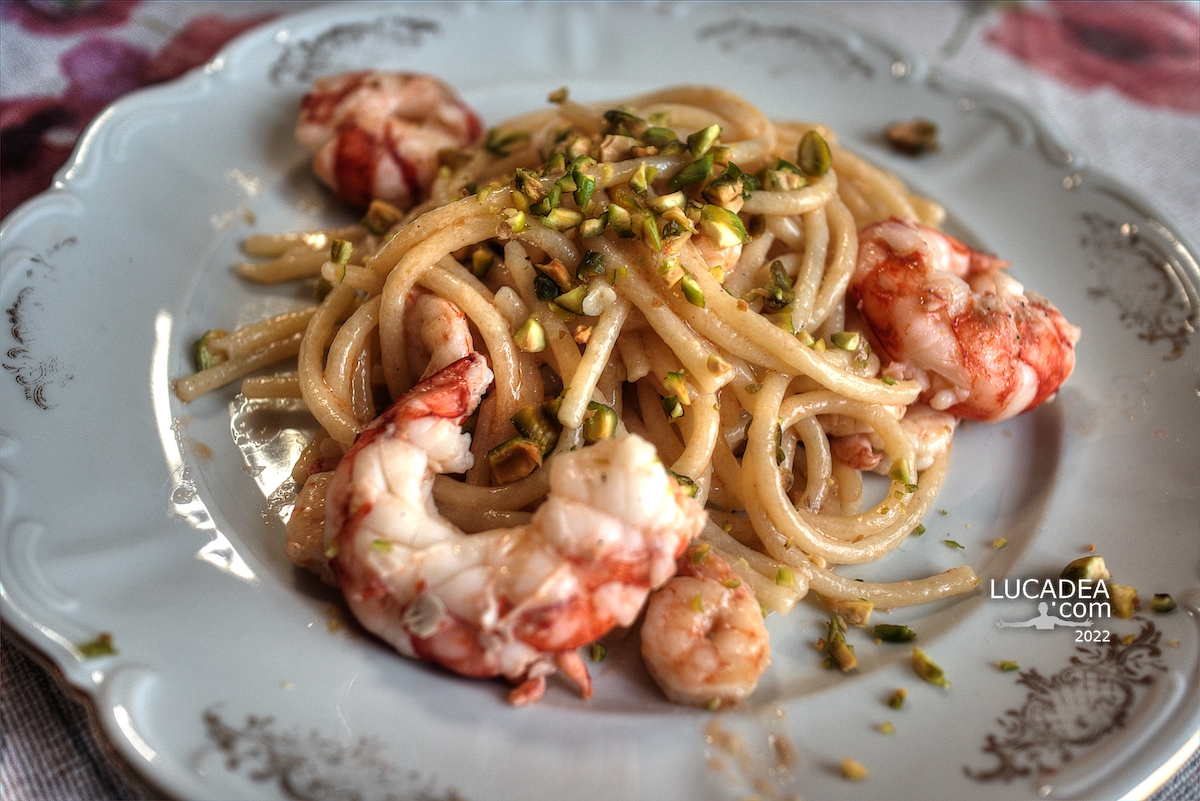
Spaghetti with prawns and pistachios, the recipe

Spaghettoni with shrimp and pistachios, the recipe.
A while ago I was in Palermo, Sicily, and I tried this dish, which amazed me with its flavor.
I tried it again at home, and the result (which I can certainly improve on) was pretty good.
I’ll explain how I did it!

Please note: if you have any suggestions or questions, add a comment or go to the bottom of the site to read what other visitors have written.

Ingredients

– No. 5 spaghetti (or larger);
– About a dozen cleaned shrimp (preferably fresh);
– A handful of pistachios (shelled, but unshelled ones are fine, but you’ll need to spend a little time shelling them);
– Garlic;
– Olive oil;
– a lemon (we’ll just use it to grate a little zest);
– white wine.

Preparation

Put a pot of salted water on to boil (for the pasta), and while it boils, prepare the sauce.
Heat some water in a small saucepan and add the pistachios to blanch for just a minute. Then, remove them from the water and place them on a kitchen towel. Close the towel with the pistachios inside and press down to rub the seeds against each other and the towel. This way, the skin surrounding the pistachios is removed (or should be) very easily (it doesn’t matter if some skin remains).
Once peeled, chop them coarsely with a knife.
In a pan, sauté the olive oil and garlic; when the oil is hot, add the shrimp and, when they turn white, pour in the wine and add half of the prepared pistachios. Let the alcohol evaporate for less than a minute and turn off the heat.
Meanwhile, if the water is boiling, throw in the pasta.
Once the pasta is almost al dente, add it to the pan to finish cooking and release a little of the starch (which makes the creamy sauce), and the dish is almost ready.
Pour into a plate, add the remaining pistachios, and grate the lemon (to taste)!

And this is the result:

Spaghettoni con gamberi e pistacchi, la ricetta

Spaghettoni con gamberi e pistacchi, la ricetta

Photos taken with Canon EOS M100 and lens Canon EF-M 22.

Spaghetti pasta with prawns and pistachios, the recipe – Pâtes spaghetti aux crevettes et pistaches, la recette – Pasta espaguetis con gambas y pistachos, la receta – Macarrão espaguete com camarão e pistache, a receita – Spaghettoni với tôm và quả hồ trăn, công thức – 大虾和开心果意大利面,食谱 – エビとピスタチオのスパゲットーニ、レシピ
🏠
  • Italiano