Squid skewers enjoyed on Costa Toscana

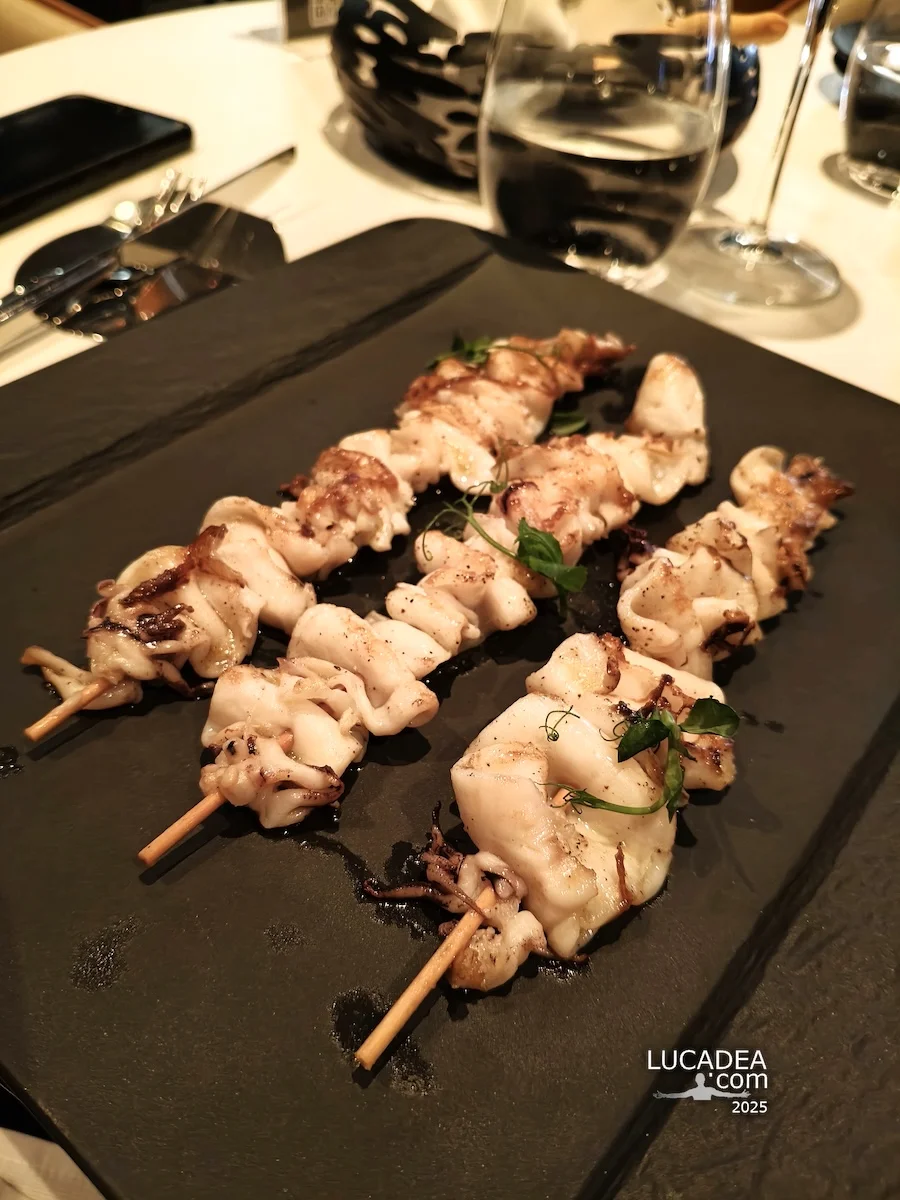
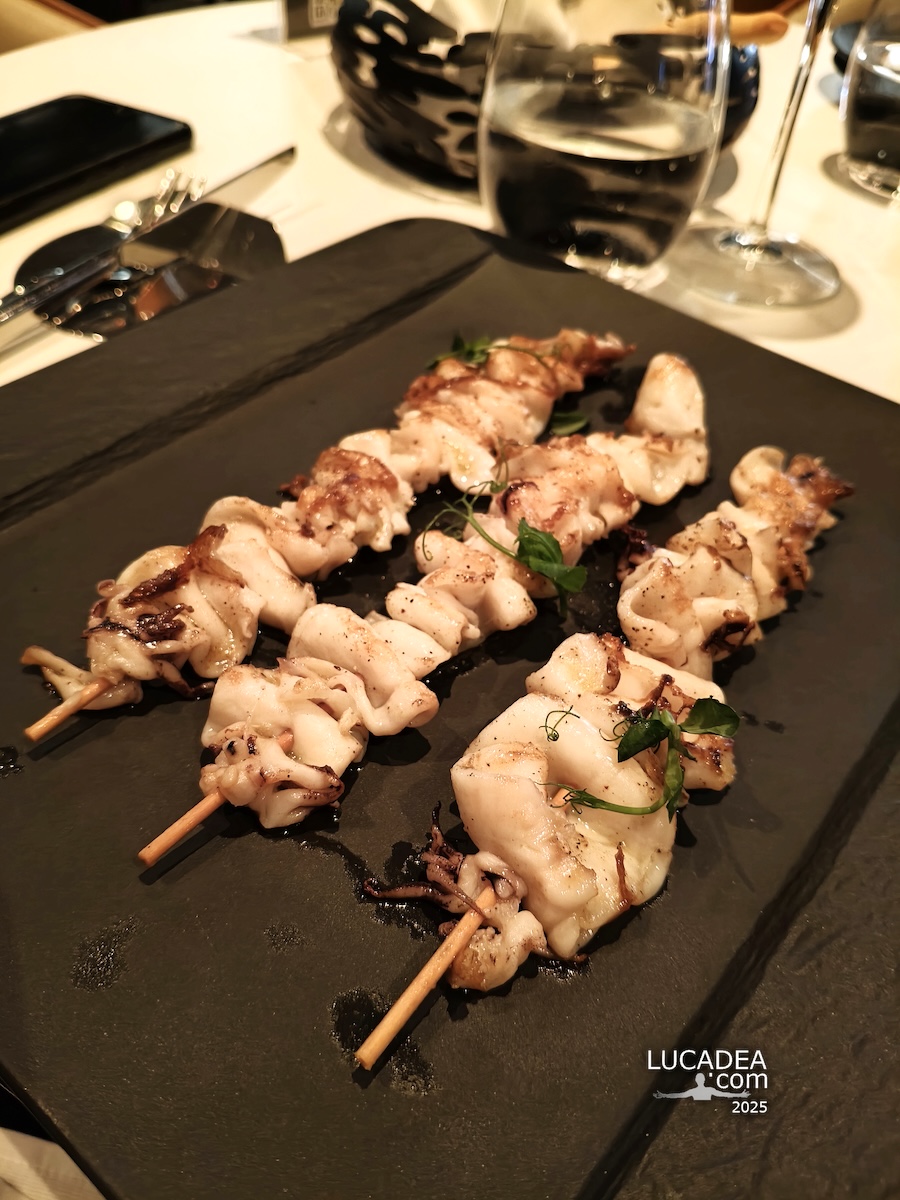
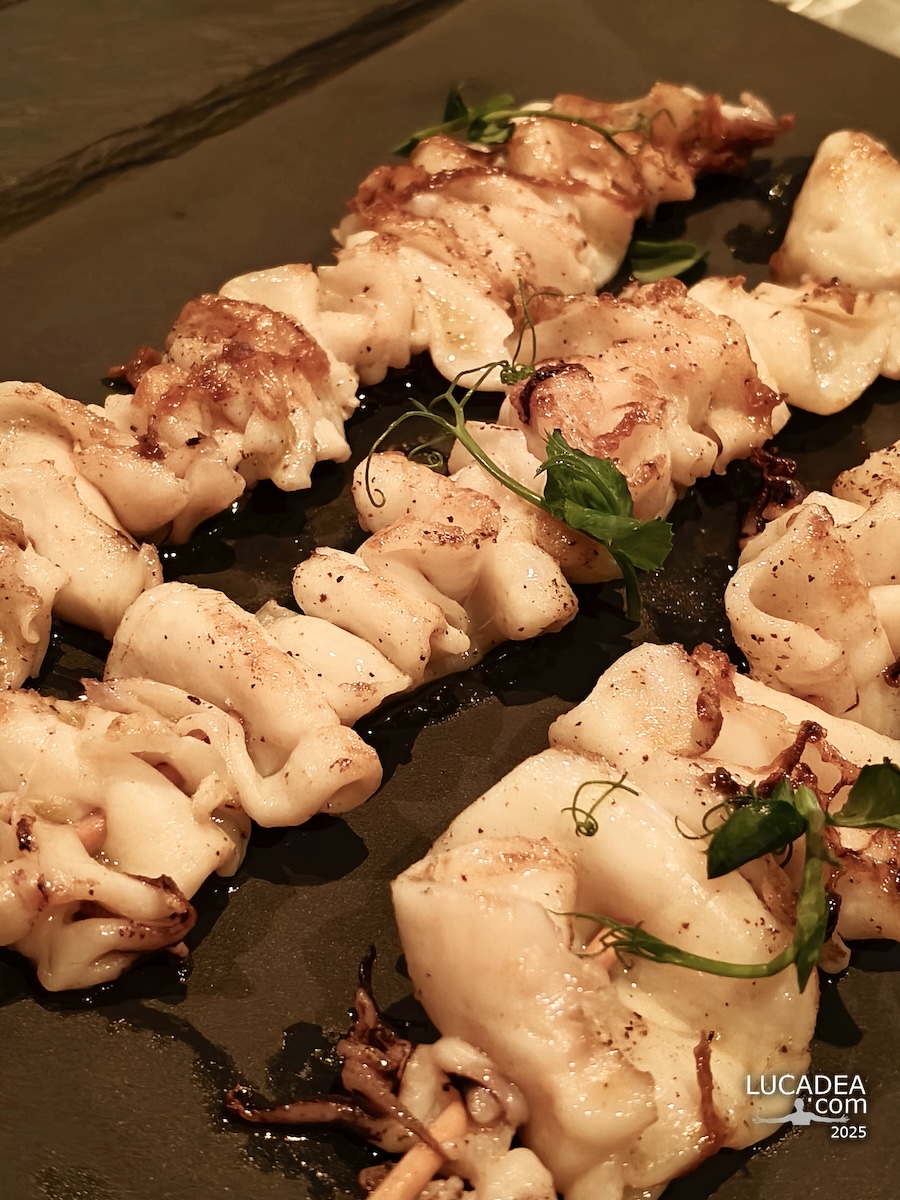
Spiedini di calamari al Ferrai bar sulla Costa Toscana, un piatto di mare fotografato durante una pausa in crociera.

Squid skewers enjoyed on Costa Toscana.
In this photograph I wanted to preserve a simple moment connected to the pleasure of tasting a seafood dish during a cruise experience, where even a small detail can become part of a personal travel memory. These squid skewers on Costa Toscana represent a meeting between Mediterranean flavors and the emotions created by discovering something new while travelling.
I chose to capture this dish because food often becomes one of the strongest connections to a place and a moment. A carefully presented meal can tell a story without needing many words, bringing back memories through its appearance, its flavors, and the atmosphere surrounding it. At the Ferrai bar on Costa Toscana, this small seafood experience became a moment worth remembering.
For me, food photography is not only about showing what is on the plate. It is also about capturing the feeling connected to it: the pause during the journey, the curiosity before tasting something, and the memory that remains afterward. These squid skewers became a small symbol of a cruise moment, a detail that could easily pass unnoticed but deserved to be preserved.
Squid is a common ingredient in Mediterranean cuisine and has always been appreciated for its ability to adapt to many different preparations. Grilled, cooked in simple recipes, or served as skewers, it remains a familiar flavor connected with coastal traditions and the relationship between people and the sea.
When I look at this image, I think about how travel memories are often created by unexpected details. A large landscape can be impressive, but sometimes a simple dish can bring back the atmosphere of a journey even years later. Like other stories I have shared on my photoblog about small discoveries along the way, this photograph focuses on a personal experience rather than a famous view.
Costa Toscana becomes the setting for this memory, a place where moments of relaxation, taste, and curiosity come together naturally. If you are visiting a cruise ship, sometimes the most interesting memories are found in the quiet moments between the main experiences, when you simply stop and enjoy what is in front of you.

Have you ever photographed a meal during a trip because it represented something more than just food? Add a comment or go to the bottom of the site to read what other visitors have written.
Photos taken with Oppo Reno 12.

Add one  comment to this article or read  here what other visitors have written.
 
Adv
 
Disclamer

The rights on images, videos, choruses, text and all other material on the LUCADEA.com website are governed as per  Copyright page.


This page has been viewed 0 times today.
This month it has been viewed 0 times.
In total it has been viewed 0 times.
 

Bún Ngan: Hanoi’s Vietnamese Duck Noodle Soup

Bun Ngan Hanoi

Bún ngan is a traditional duck noodle soup associated with Hanoi, the capital of Vietnam. I photographed this Vietnamese dish during a visit to the city several months ago, but I still have a few questions about its exact ingredients. What I feel fairly confident about is the duck broth, which gives this local speciality much of its distinctive character.
The name bún ngan refers to a noodle dish prepared with ngan, a type of duck commonly eaten in northern Vietnam. It is a familiar choice in Hanoi, where small restaurants and casual food stalls serve it as part of everyday life. The basic combination is straightforward: duck meat, noodles and a flavourful broth. Depending on the restaurant and the particular recipe, the bowl may also include vegetables, fresh herbs and other toppings.
While looking for more information about the dish, I found descriptions mentioning bamboo shoots, spring onions and coriander. Rice vermicelli is often used, although some versions feature glass noodles instead. The broth is generally prepared by cooking the duck and using its flavour to create a warm, savoury soup. However, I cannot say with certainty which ingredients were included in the bowl shown in my photograph. Rather than guessing, I prefer to keep the description honest and leave the finer details open until I can confirm them.
Hanoi has a rich everyday food culture, and its cuisine goes far beyond internationally famous dishes such as pho. Many local specialities are less familiar to visitors but offer a fascinating glimpse into the way people eat in the Vietnamese capital. Bún ngan is one of those dishes: comforting, filling and built around a combination of noodles, duck and broth that can vary from one establishment to another.
One interesting detail is that bún ngan is enjoyed throughout the year and can be eaten for breakfast or lunch. It is not simply a dish prepared for tourists who want to try something unusual; it is part of the regular food scene in Hanoi. In a city where meals are often enjoyed in small neighbourhood eateries, a bowl of hot duck noodle soup can be a satisfying way to take a break from exploring the busy streets.
Unfortunately, I did not collect enough information about the recipe when I took this picture. I plan to ask Dao to comment on the dish and help me identify its ingredients more accurately. That is one of the enjoyable parts of documenting food while travelling: the photograph preserves the memory, while conversations with people who know the local cuisine can reveal the story behind it.

Have you ever tried bún ngan in Hanoi, or is this Vietnamese duck noodle soup new to you? Add a comment or go to the bottom of the site to read what other visitors have written.

Bún ngan, a Vietnamese duck noodle soup photographed in Hanoi, the capital of Vietnam

Photo taken with a Canon EOS M100 camera and Canon EF-M 22 lens.

Add one  comment to this article or read  here what other visitors have written.
 
Adv
 
Disclamer

The rights on images, videos, choruses, text and all other material on the LUCADEA.com website are governed as per  Copyright page.


This page has been viewed 1 times today.
This month it has been viewed 1 times.
In total it has been viewed 1 times.
 

Hanging Jamón, a Familiar Sight in Spain

Jamon Serrano appeso

Hanging Jamón, a Familiar Sight in Spain.
Whenever I travel around Spain, I often notice cured hams hanging in shops, bars and restaurants. They are so distinctive that I find myself looking at them not only as food, but also as photographic subjects. Their shape, texture and arrangement make them an interesting part of the surroundings, and sometimes a simple detail like this can become one of the things I remember most clearly from a trip.
This photograph came from one of those moments when something familiar in Spanish food culture caught my attention. A hanging ham has a strong visual presence, especially when several are displayed together. There is something appealing about the contrast between an everyday product and the care that goes into preparing and presenting it. Even without knowing the exact variety, it is easy to understand why these hams are such a recognizable sight in Spain.
I cannot say for certain whether the ones I photographed were jamón serrano, jamón ibérico or pata negra. Their appearance alone is not enough to identify them reliably, and I would rather leave the question open than assign them a name without knowing their origin and production details. For me, the photograph is first and foremost a small record of Spanish food culture, captured because I liked the way these hams looked where they were displayed.
Jamón has a special place in everyday Spanish gastronomy. It can be served in thin slices as part of a meal, shared with friends over a drink or enjoyed as a simple tapa. Hanging whole hams are also a familiar sight in many traditional establishments, where they contribute to the atmosphere as much as to the menu. For a visitor from Italy, where cured ham is also an important part of the food tradition, the way these products are displayed can be particularly striking.
There is an interesting distinction between the names. Jamón serrano is generally made from white pig breeds and cured to develop its characteristic flavour and texture. Jamón ibérico comes from Iberian pigs, with differences in feeding, farming methods and ageing affecting the final product. Pata negra is commonly associated with high-quality Iberian ham, particularly certain premium categories, but it should not be used as a label for every dark-coloured ham hanging in a restaurant. Without reliable information about the product, the exact identification remains uncertain.
From a photographic point of view, I like how a simple food item can tell a wider story about a place. The hams become part of the interior, creating a visual link between the product, the establishment and the traditions behind it. Their repeated shapes and the way they occupy the space can be just as interesting as a more obvious travel subject. Sometimes I find that these small details offer a more personal memory of a destination than a photograph of a well-known landmark.
This is also part of what I enjoy documenting on Lucadea.com. Alongside landscapes, historic streets and buildings, I like to keep images of everyday scenes that catch my attention while travelling. Food, shop displays and local customs can all become part of a photographic diary. They may seem like small subjects, but they help preserve the atmosphere of a place and the impressions that remain after the journey is over.
If you are visiting Spain, noticing how jamón is displayed can be a small way to appreciate the country’s food culture. Of course, the most important part for many people is tasting it, but there is also something worth observing in the traditional presentation of whole cured hams. The photograph allowed me to keep that visual impression without needing to turn the moment into a detailed food review.
I still cannot tell you exactly which variety appears in my picture, and perhaps that uncertainty is part of the fun. I saw something that looked good, stopped to photograph it and left the precise identification for another time. Not every travel photograph needs to answer every question; sometimes it is enough to preserve a detail that made us pause.

Would you be able to tell jamón serrano apart from jamón ibérico, or would you stop to take a photograph first, as I did? Add a comment or go to the bottom of the site to read what other visitors have written.

Whole cured Spanish hams hanging in a traditional establishment, a familiar sight associated with jamón serrano

Whole cured Spanish hams hanging in a traditional establishment, a familiar sight associated with jamón serrano

Photos taken with a Canon 600D camera and a Canon EF 40 lens.

Salted anchovies and the taste of simplicity

Acciughe sotto sale condite con olio, aglio, rosmarino e peperoncino, tolte dall’arbanella

Salted anchovies and the taste of simplicity.
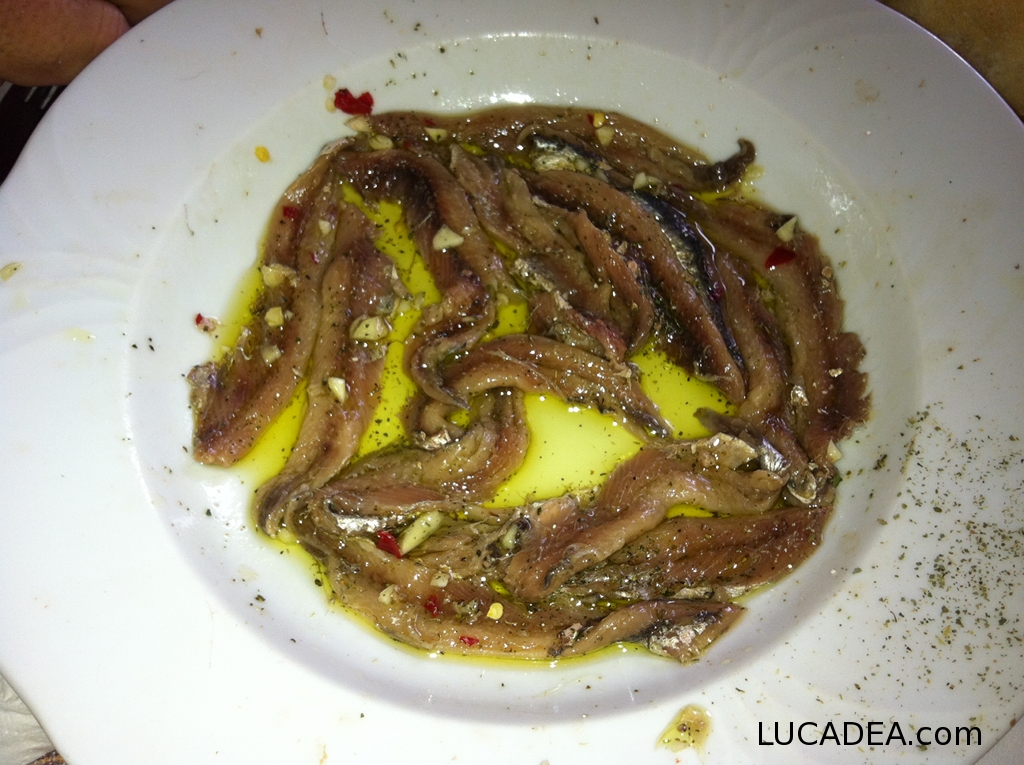
The anchovies in front of me have already been taken out of their preserving jar and dressed with olive oil, garlic, rosemary, and chili pepper. It is a straightforward way to serve them, but their strong flavor is exactly what makes salted anchovies so useful in many other dishes.
The word “poor” in the expression “poor cuisine” can sometimes be misleading. In this case, it refers to a style of cooking based on simple ingredients, practical methods, and the ability to make the most of what was available. It certainly does not mean poor in flavor. Salted anchovies are actually the opposite: they are intensely savory and can add a remarkable amount of taste even when used in small quantities.
That is what caught my attention when I photographed this dish. The anchovies had already gone through their preservation process and were ready to be eaten. A little oil surrounds the fish, while garlic, rosemary, and chili pepper add fragrance and a sharper note. Nothing is complicated, and nothing needs to be hidden.
I wanted to keep the photograph focused on the food as it actually was rather than turning it into a carefully constructed restaurant-style image. The ingredients are simple enough to speak for themselves. There is something satisfying about seeing a preserved ingredient return to the table in such an uncomplicated form.
Salted anchovies are made using salt as a preservation method. The process allows the fish to be kept for much longer than fresh anchovies and also changes its texture and concentrates its flavor. This traditional technique became particularly important in coastal communities, where preserving fish was a practical part of everyday food culture.
When I think about this kind of preparation, I also think of Genoa, Liguria, Italy, where anchovies and preserved fish have a strong connection with local culinary traditions. The photograph itself does not need to belong to that particular place, though, because salted anchovies have long been used across Italian cooking. Their ability to bring a deep savory flavor to other ingredients is what made them so enduring.
The jar itself is worth mentioning too. In parts of northern Italy, the word “arbanella” is traditionally used for a jar or container, often made of glass, used for preserving food. It is a small everyday detail, but it fits perfectly with the practical character of this kind of cooking.
If you are looking at what makes salted anchovies interesting, the answer is not only the way they are served. Their real strength is their versatility. They can be enjoyed simply with oil and herbs, but they can also be used to strengthen sauces, accompany vegetables, flavor pasta dishes, or become part of preparations where the anchovy itself is no longer the main visible ingredient.
That concentrated flavor is one of the reasons I find them so interesting to photograph. They are a small ingredient with a surprisingly large role in the kitchen. A few anchovies can change the character of a dish without requiring a long list of additional ingredients.
This photograph captures the stage after preservation, when the fish has left the jar and returned to the table. I like that transition because it connects two different moments: the practical need to preserve food and the pleasure of eating it later.
It also fits naturally with the other food-related photographs I have shared on the blog. I often find that familiar ingredients become more interesting when I stop to look at them outside the context of a complete recipe. Here, the anchovies themselves are enough to suggest a story about taste, preservation, and everyday cooking.
If you are interested in traditional Italian food, this is one of those simple ingredients worth seeing beyond its appearance: its importance comes from what it can do to the flavor of everything around it.

How do you usually enjoy salted anchovies, simply dressed or as an ingredient in another dish? Add a comment or go to the bottom of the site to read what other visitors have written.

Salted anchovies with olive oil, garlic, rosemary and chili pepper, removed from their preserving jar

Saffron for sale at Barcelona’s Boqueria Market

Lo zafferano in vendita al mercato della Boqueria a Barcellona

Saffron for sale at Barcelona’s Boqueria Market.
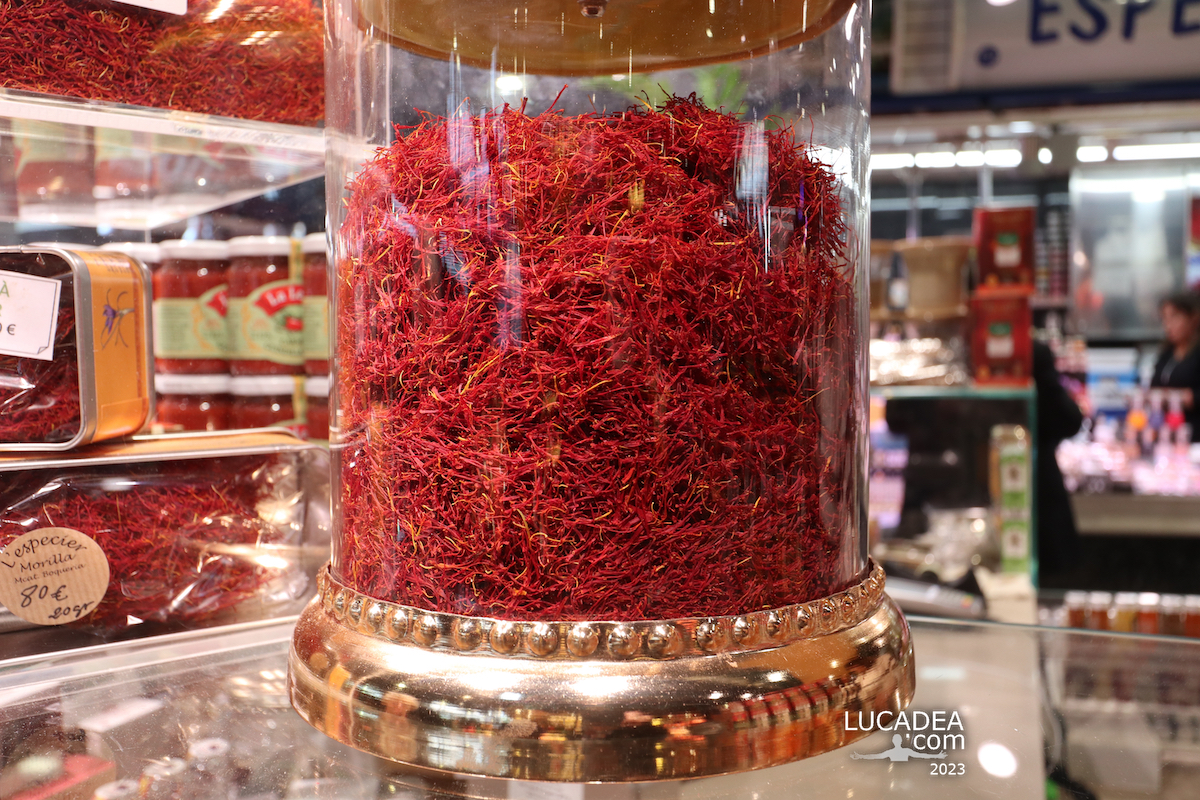
A few months ago, while passing through Barcelona, I stopped to eat at the famous Boqueria Market, admittedly doing what a good tourist is supposed to do. Among all the stalls and products on display, however, it was the saffron that caught my attention, particularly because of the different packages and prices being offered.
Barcelona’s Boqueria Market is one of those places where, even without deliberately looking for it, you can get an idea of what visitors are interested in. It is heavily frequented by tourists, and spending a little time looking at the stalls can reveal which products seem to attract the most attention.
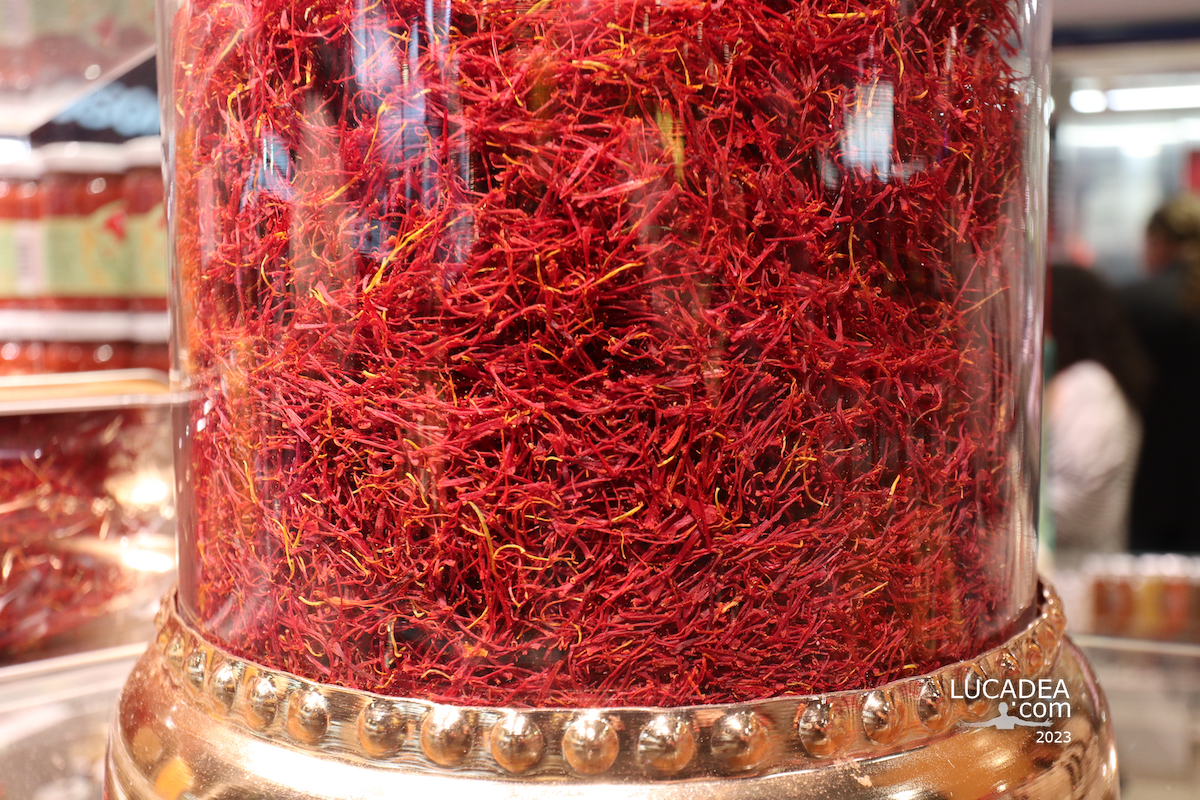
That day I noticed several stalls selling saffron in different quantities and at different prices. That small detail was enough to make me stop and take a photograph. Among fruit, spices, fresh produce and all the other things displayed around the market, those tiny packages of saffron naturally stood out.
I have never been particularly good at judging the price of spices, but one thing seemed obvious: saffron is certainly not cheap. It does not literally cost as much as gold, of course, but when you consider the very small quantities in which it is sold, the price can certainly feel rather high.
The photograph comes from a simple observation during my visit. I like it when travelling gives me opportunities to photograph apparently ordinary things, because these small details often become the images that bring back the atmosphere of a place most clearly. I did not photograph one of the classic views of the Boqueria, but a product displayed on a stall, something that still says a great deal about the experience of being inside the market.
If you are wondering what to see at Barcelona’s Boqueria Market, there are obviously countless colourful products and stalls that can catch your eye. I often find myself stopping instead for details that may not appear in the most familiar photographs. In this case, the saffron interested me precisely because of the contrast between the tiny amount of product and its relatively high value.
There is also a small curiosity behind saffron’s price. The spice comes from the stigmas of the Crocus sativus flower, which have to be harvested by hand. The labour involved, together with the tiny amount of spice obtained from each flower, helps explain why saffron is such an expensive ingredient.
The Boqueria, officially Mercat de Sant Josep de la Boqueria, stands along La Rambla in central Barcelona, and its commercial history goes back much further than its modern reputation as a tourist attraction. For me, though, it remains above all a place to explore through details: a stall, an unusual product, or an interesting way of displaying something for sale.
That is what I enjoy when I take my camera with me while travelling. I am not necessarily looking for the most famous monument or the photograph that everyone has already taken. Sometimes I simply stop because something has caught my attention at that particular moment.
And that day, with its small packets and different prices, saffron managed to do exactly that.
I have also photographed other markets and food products during my travels, because I find food one of the quickest ways to remember a place. Sometimes a single photograph of a market stall is enough to bring back an entire walk through a city.

Would you have bought the saffron at the Boqueria, or would you also have thought it was being sold at a rather high price? Add a comment or go to the bottom of the site to read what other visitors have written.

Saffron packages displayed for sale among the stalls of Barcelona's famous Boqueria Market

Saffron packages displayed for sale among the stalls of Barcelona's famous Boqueria Market

Saffron packages displayed for sale among the stalls of Barcelona's famous Boqueria Market

Photos taken with a Canon EOS M100 camera and Canon EF-M 11-22 lens.

Here is where the famous market on La Rambla is located:

Stewed squid at Montevideo’s Mercado del Puerto

Totanetti in umido a Montevideo

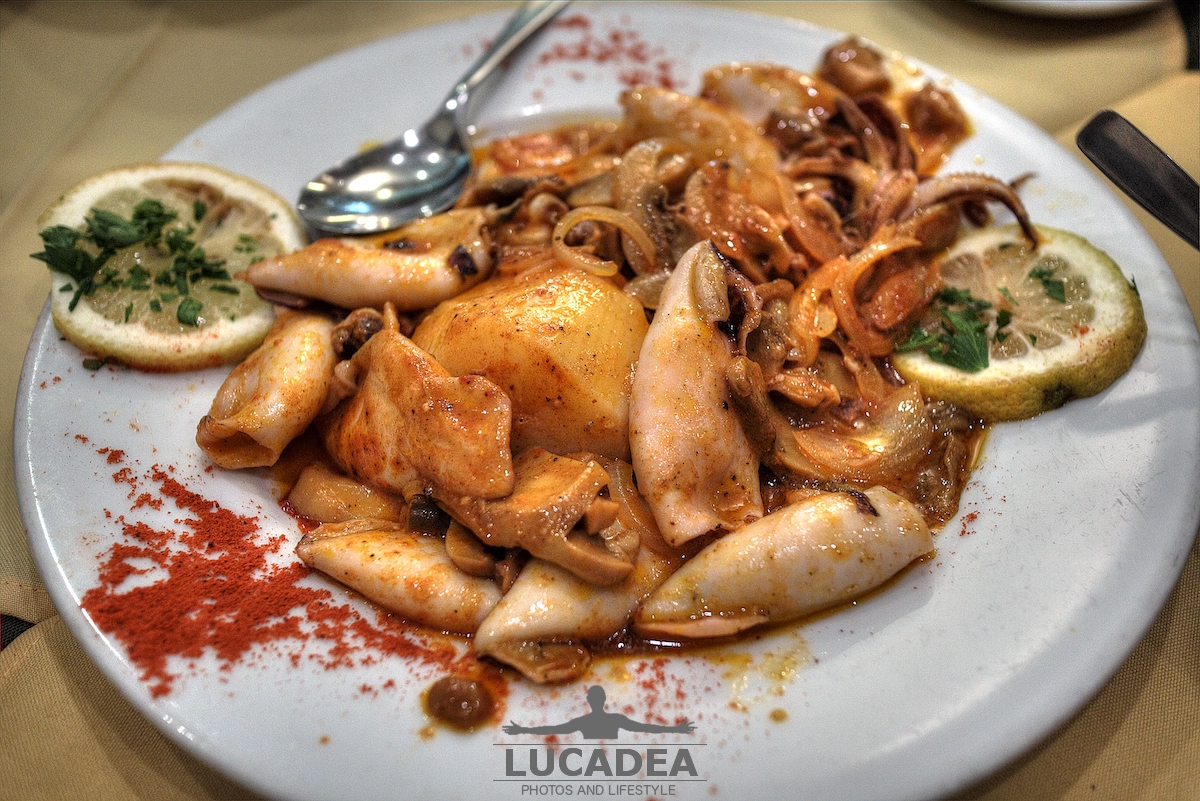
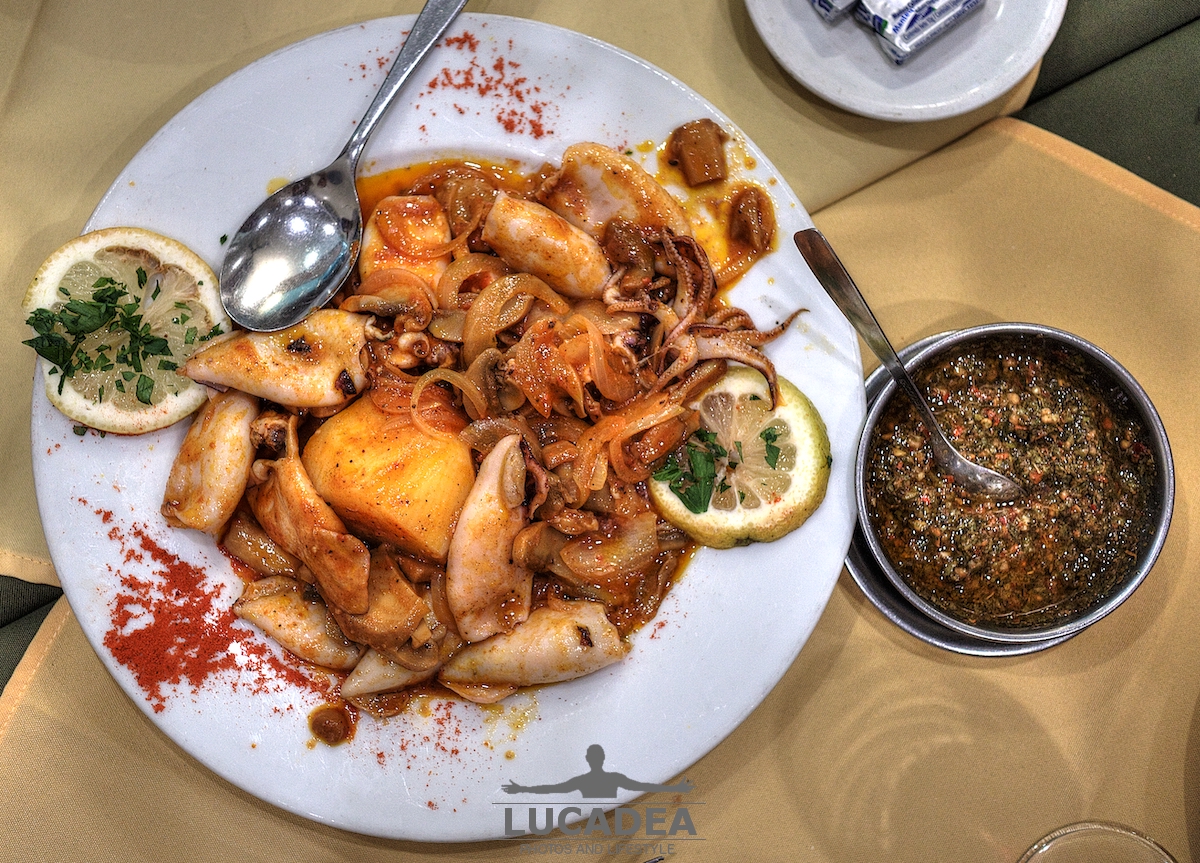
Stewed squid at Montevideo’s Mercado del Puerto.
Among the dishes I photographed during a visit to the Mercado del Puerto in Montevideo, this plate of stewed squid caught my attention with its simple and hearty appearance. Montevideo, Uruguay, is a city where food is closely connected with markets and shared meals, and this dish felt like a small but memorable part of that experience.
The Mercado del Puerto is best known for grilled meat and for the atmosphere surrounding Uruguay’s traditional food culture. Yet seafood also has its place among the many dishes served there. That contrast is exactly what made these stewed squid pieces worth photographing when I came across them.
The dish contains squid cooked slowly with onion, potatoes and mushrooms, with a few spices adding flavour to the preparation. Visually, it is not an elaborate composition, but perhaps that is what makes the photograph work for me. The ingredients are easy to recognise and the whole plate immediately suggests something warm, substantial and comforting.
When I photograph food, I am mostly interested in preserving the impression I had when I saw the dish in front of me. Here I wanted to capture something slightly different from the more predictable images associated with the Mercado del Puerto. Meat is naturally one of the main attractions of the market, but this plate shows that seafood can also find its place in such a strongly meat-oriented setting.
What I like about this photograph is its connection with an actual moment from the trip. I am not trying to present a traditional recipe or explain how to cook stewed squid. It is simply a dish I encountered while travelling and thought was worth remembering through a photograph.
The Mercado del Puerto is located in Montevideo’s Ciudad Vieja and is one of the city’s best-known places for experiencing local food. Its history goes back to the nineteenth century, when the building was inaugurated for market activities. Over time, the space developed into an important gastronomic landmark, while retaining much of the character that makes it so recognisable.
If you are wondering what to eat in Montevideo, the market is interesting precisely because of the variety of dishes available there. For me, though, the strongest memory comes from the individual plates I encountered, because each one is connected with a particular moment of the journey.
This stewed squid with onion, potatoes and mushrooms is the kind of dish that could easily be overlooked beside the market’s more famous grilled meats. Yet these unexpected culinary encounters are often what make a trip feel personal when I look back at the photographs later.
I have also photographed other dishes and markets during my travels, always trying to keep the focus on the food as I actually encountered it rather than turning the photograph into a formal restaurant review. In this case, the memory is especially connected with the surprise of finding a seafood dish in a place so strongly associated with meat.

Have you ever tried stewed squid while travelling in Uruguay? Add a comment or go to the bottom of the site to read what other visitors have written.

Stewed squid with onion, potatoes and mushrooms served at the Mercado del Puerto in Montevideo, Uruguay

Stewed squid with onion, potatoes and mushrooms served at the Mercado del Puerto in Montevideo, Uruguay

Photos taken with Canon EOS M100 and lens Canon EF-M 22.

Testaieu with pesto at Turin in Sestri Levante

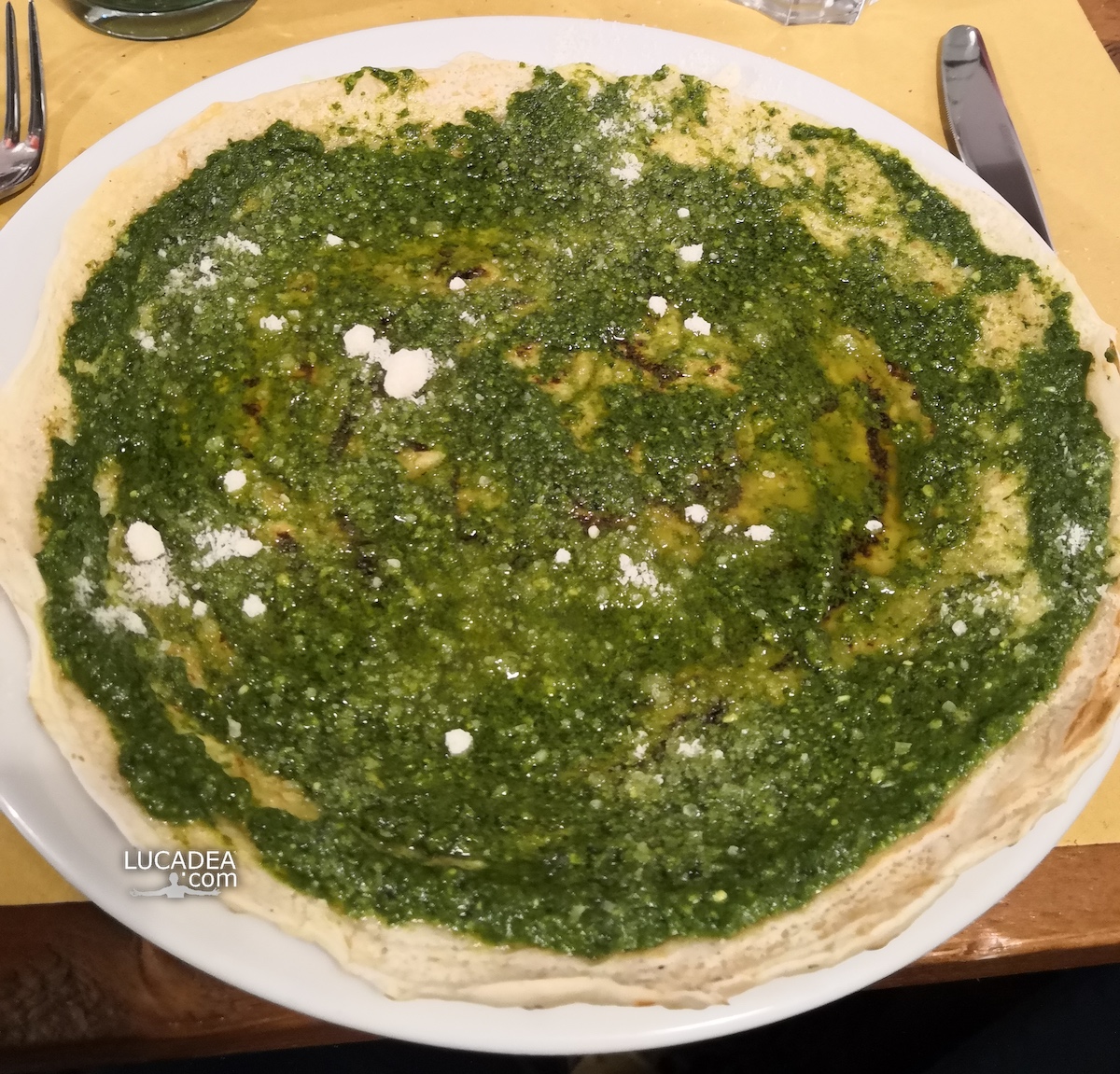
Testaieu al pesto con parmigiano gustati alla trattoria Turin nel centro di Sestri Levante

Testaieu with pesto at Turin in Sestri.
When I am in the centre of Sestri Levante with friends and an aperitivo runs later than expected, we often end up stopping somewhere for something to eat. Testaieu with pesto is one of the dishes I am always happy to choose, especially when I want something simple with a strong connection to Ligurian cuisine.
I took this photograph at Turin in Sestri Levante, Liguria, Italy, during one of those evenings. It was not a dinner planned around discovering a particular dish. We were already in town, the aperitivo had gone on for a while, and eventually we decided to stop for something quick to eat. These ordinary moments are exactly the kind of memories I like to keep through photographs.
The plate shows testaieu, also known as testaroli in Italian, served with pesto and a little grated Parmesan. It is one of my favourite combinations. The pesto immediately brings the flavour I associate with Ligurian cooking, while the texture of testaieu is quite different from the pasta we normally imagine served with this sauce.
Testaieu is a traditional Ligurian preparation, particularly common in the eastern part of the region. One small detail I find interesting is the connection between the dish and the traditional testi used for cooking it. These are terracotta cooking vessels that are heated before the mixture is prepared, giving the finished food its distinctive character.
What I like about testaieu is that they do not need much else. The pesto already provides plenty of flavour and aroma, while the Parmesan adds a slightly stronger savoury note. When I have a plate like this in front of me, I am not looking for an elaborate preparation. I simply want to enjoy it.
That is also why I took the photograph. I did not prepare the dish for the camera and I did not create a special setting around the table. I simply wanted to capture something I had actually chosen to eat, something that represents one of the small routines of evenings spent in Sestri Levante.
Turin is one of the places where we sometimes stop when we are already in the centre. I do not want to turn this post into a full restaurant review, because the photograph and the dish remain the main subjects. For people interested in other opinions about the restaurant, the original post included a TripAdvisor review of Turin.
If you are visiting Sestri Levante and looking for something connected with local food, testaieu are certainly a dish worth knowing. They are not simply another type of pasta found everywhere, and that local character is part of what makes them interesting to me.
I had already photographed testaieu with pesto on another occasion, at Da E Figge Du Baratta. There is also an English article on Lucadea about testaieu with pesto cooked in the testi, which fits naturally with this photograph and creates a direct connection between the two memories without using the Italian version of the article.
Pesto is probably one of the flavours I most naturally associate with Liguria. With testaieu, I think it works particularly well because the dish remains uncomplicated while still having plenty of character. The Parmesan adds another small detail, and for my taste it completes the combination nicely.
I also enjoy photographing food without trying to make every image look like a professional food campaign. The plate arrives at the table, I look at it, I think it is something worth remembering and I take the photograph. The image remains connected to the actual moment rather than becoming a carefully constructed scene.
If you enjoy Genoese pesto and would like fresh Basilico Genovese DOP delivered anywhere in Italy, I had also included this offer for fresh Genoese Basil DOP in the original article.
There is another reason I like having food photographs on the blog. They allow me to tell the story of Sestri Levante from a different perspective. When people think about the town, the sea, the Baia del Silenzio, the beaches and the views naturally come to mind. But there is also the everyday side of the town: friends, aperitivi, restaurants and traditional dishes.
Testaieu are particularly well suited to this kind of story because of their connection with the local area. I did not choose them because they happen to look good in a photograph. I genuinely enjoy eating them, and they are one of the traditional dishes I am always happy to find when I am around Sestri Levante.
For me, pesto remains probably the favourite combination. The texture of the testaieu holds the sauce nicely, while the Parmesan adds a final savoury touch without making the dish complicated. After an aperitivo with friends, it is exactly the kind of informal dinner I enjoy.
This photograph therefore says very little about a major event and quite a lot about an ordinary evening in Sestri Levante. That is precisely why I wanted it in the photoblog. Simple moments can still be worth remembering when they are connected with a place, good food and people I enjoy spending time with.
I like that this photograph can also sit alongside the other food memories on Lucadea. Looking at them together, the subject is not really just food: it is the connection between local dishes, familiar places and the ordinary moments in which I happen to photograph them.
For me, that is what makes a food photograph worth keeping. It does not have to show something sophisticated or unusual. What matters is that the photograph has a real connection with the place, the people and the moment when I pressed the shutter.

Have you ever tried testaieu with pesto, and which sauce do you prefer with them? Add a comment or go to the bottom of the site to read what other visitors have written.

Testaieu with pesto and Parmesan served at Turin restaurant in central Sestri Levante

Photo taken with Honor 10.

Lobster in Moneglia, lunch at La Ruota

Un ottimo astice gustato nel ristorante La Ruota a Moneglia

Lobster in Moneglia, lunch at La Ruota.
Among the things worth seeing and experiencing in Moneglia, there is also the simple pleasure of sitting down for a good meal, especially when a generous lobster dish arrives at the table. I remember that lunch at La Ruota quite clearly, with the village and the Ligurian coast providing the setting for a relaxed midday meal.
Some time ago I was invited to have lunch at this restaurant in Moneglia, and this was the dish that made me reach for my camera. There was plenty of lobster on the plate, enough to make the meal feel immediately special without needing an elaborate presentation. I like photographs like this because they preserve something very ordinary and very personal at the same time: a meal shared with other people, a place I happened to be visiting, and a dish that deserved to be remembered.
The view from the dining room was almost a second part of the experience. The village and the coastline provided the wider setting, while our attention was naturally drawn back to the food in front of us. I did not take this photograph as a restaurant review or as a promotional image. I simply wanted to keep a visual memory of that invitation and of a particularly generous seafood course enjoyed during lunch.
If you are visiting Moneglia and looking for things to see as well as places connected with local food, this kind of moment can become part of the memory of the town. Moneglia is in Liguria, in the Province of Genoa, Italy, and its position along the Ligurian coast gives the village a particular relationship with the sea. In this case, however, I was not trying to create a classic coastal photograph. I was simply having lunch, enjoying the occasion, and noticed that the meal itself was worth photographing.
One small curiosity about lobster is the dramatic change in appearance that takes place during cooking. Live lobster can have darker bluish or brownish tones, while cooking brings out the familiar red-orange color associated with the finished dish. It is a simple detail, but one that makes seafood interesting to photograph because its visual appearance changes so noticeably between the kitchen and the plate.
What makes this photograph meaningful to me is therefore not only the lobster. It is the combination of food, company and place. La Ruota became part of my memory of Moneglia through this lunch, while the view from the room connected the meal with the coastal landscape outside. A photograph can sometimes work precisely because it does not try to explain everything. It keeps one particular moment and lets the details bring the memory back.
This image also fits naturally with the other stories from Liguria that I have shared on the site. In some of those photographs the landscape or architecture takes center stage; here, the subject is much closer and more immediate. The wider setting is still present, but it remains in the background, leaving the lobster to tell the story of that particular lunch.
There is also something I like about photographing food during a trip or a visit to another place. These images are often less planned than photographs of monuments or landscapes, but years later they can bring back very specific memories. In this case, the lobster immediately reminds me of that lunch at La Ruota and of the view from the dining room.
Looking at the photograph again, I remember more than what was on the plate. I remember being there, sitting down for lunch and discovering that the view from the room made the whole experience feel connected to Moneglia itself. That is why I wanted to keep this image in the blog: it records a real moment rather than simply a dish.

Would you choose a generous lobster dish like this for lunch in Moneglia? Add a comment or go to the bottom of the site to read what other visitors have written.

Photo taken with Honor 20.

This is the restaurant’s website: laruotamoneglia.it.

Balin Seghezzo remembered in Santa Margherita

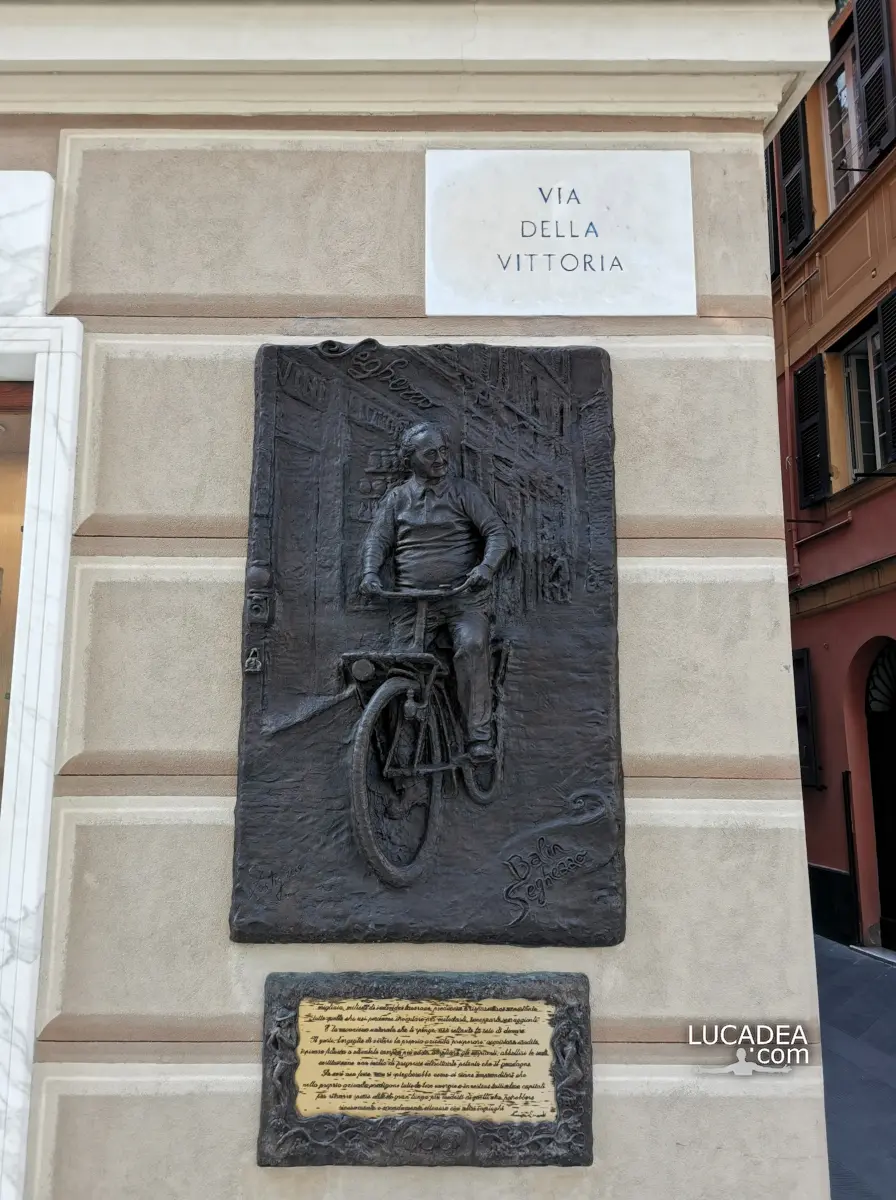
Bassorilievo di Balin Seghezzo nel centro di Santa Margherita Ligure accanto alla storica drogheria Seghezzo

Balin Seghezzo remembered in Santa Margherita.
Walking through the center of Santa Margherita Ligure, I noticed again the small relief dedicated to the man who founded the historic Seghezzo grocery shop. It is an understated detail, easy to pass without stopping, yet the presence of the shop immediately beside it gives the photograph a meaning that goes beyond the relief itself. The image connects a person, a business and a part of the town that is still alive today.
I photographed this kind of detail because I enjoy looking beyond the most obvious views of a place. Santa Margherita Ligure is naturally associated with the sea, the harbor and the colorful buildings along the coast, but its identity is also made up of smaller stories found in its streets. This relief is one of them. It stands beside the Seghezzo grocery shop, creating a direct link between the person remembered and the business he founded.
The Seghezzo shop dates back to 1900 and is still open today. Its presence gives the relief a particularly interesting context because the story represented by the memorial is not confined to the past. The shop continues to offer local specialties together with other food products, keeping a connection with the gastronomic traditions of the area. If you are wondering what to see in Santa Margherita Ligure beyond the better-known waterfront, details like this can reveal another side of the town.
What I find most interesting from a photographic point of view is precisely this relationship between the relief and the shop. The two elements belong to the same story. One preserves the memory of Balin Seghezzo, while the other shows the continuation of the activity associated with his name. Because of that, I did not see the relief simply as an isolated piece of public art. Its surroundings are essential to understanding the photograph.
A plaque beneath the relief carries a quotation by Luigi Einaudi about work, entrepreneurship and the motivations that can lead someone to build a business over time. The text reflects on the satisfaction of seeing a company grow, earn the trust of an increasingly large clientele and develop through the effort of the people who run it. In the context of this memorial, the quotation gives the small artwork a broader meaning connected with the value of work and enterprise.
The relief is located in Santa Margherita Ligure, Liguria, Italy, and for me its interest comes precisely from this combination of local history and everyday life. There is no need for a grand monument or a spectacular setting. The story can be read by looking at the few meters that separate the memorial from the shop beside it.
This is also the kind of subject that fits naturally with the way I like to photograph Ligurian towns. In other posts about Santa Margherita Ligure, I have focused on different corners and details, trying to preserve not only the views that everyone recognizes but also those small elements that give a place its personality. The relief dedicated to Balin Seghezzo belongs to the same photographic approach.
For me, the most valuable part of this scene is the continuity. A commemorative work remembers the founder, while the business next to it remains part of the present. The photograph can therefore hold both moments together: the memory of the person who started the story and the visible trace of what that story became.
If you are interested in the history of local businesses, this is a detail worth noticing while walking through the center of Santa Margherita Ligure. It does not require a separate destination or a long detour. The relief is part of the street itself, and its meaning becomes clearer once you notice the historic shop immediately beside it.
Photographs like this remind me why I often stop for details that might otherwise disappear into the background. A small relief can lead to a much larger story, especially when the place connected with it is still part of everyday life.

The plaque beneath the bas-relief reads as follows:
“Thousands, millions of individuals work, produce, and save, despite everything we might devise to harass, hinder, or discourage them. It is a natural calling that drives them—not merely a thirst for profit. The satisfaction and pride of seeing one’s business prosper, gain standing, inspire confidence in an ever-growing clientele, and expand facilities serve as a driving force for progress just as powerful as profit itself. Were this not the case, one could not explain the existence of entrepreneurs who pour all their energy and capital into their businesses, only to reap profits often far more modest than those they could surely and comfortably obtain through other investments.”
Luigi Einaudi

Had you ever noticed the relief dedicated to Balin Seghezzo in Santa Margherita Ligure? Add a comment or go to the bottom of the site to read what other visitors have written.

Balin Seghezzo relief in central Santa Margherita Ligure beside the historic Seghezzo grocery shop

Photo taken with Honor 20.

This is the official website of the shop: seghezzo.com.

🏠
  • Italiano