The little-known Marsala Square in Sestri Levante

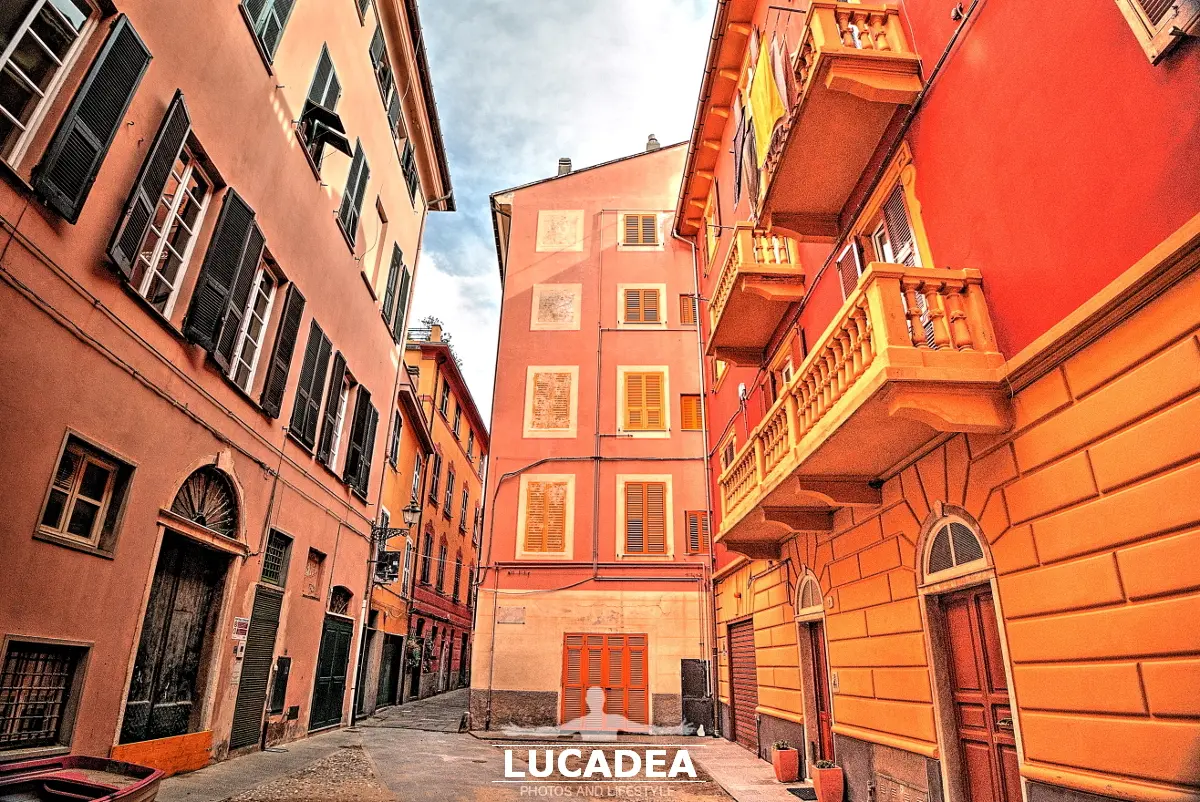
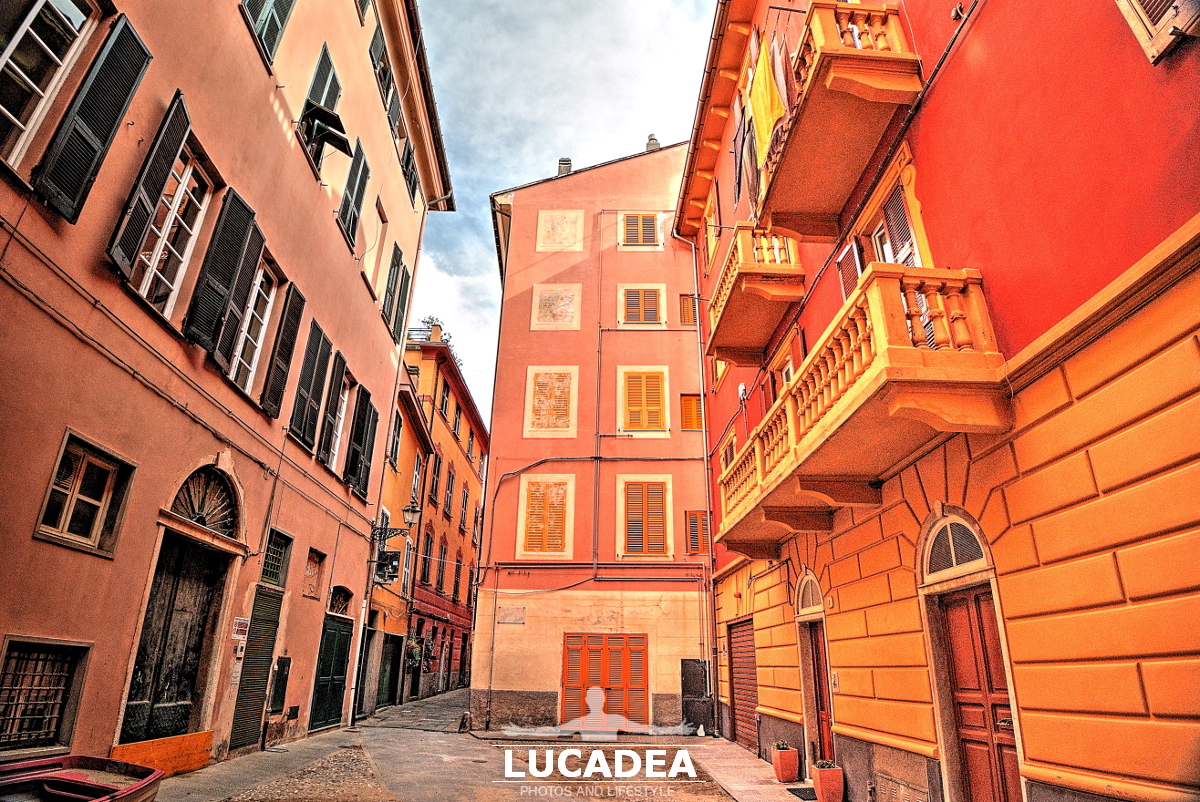
Piazza Marsala a Sestri Levante

The little-known Marsala Square in Sestri Levante.
One of the most hidden and, perhaps, most original spots in my town.
A true Maina square located in a small bay just behind the Bay of Silence.

Do you know Sestri Levante? Add a comment or go to the bottom of the site to read what other visitors have written.

Piazza Marsala a Sestri Levante

Photo taken with Canon EOS M100 camera and Canon EF-S 10-18 lens.

Here’s exactly where the square is located:

The birth of Marsala as a fortified wine is centered on and credited to the English merchant John Woodhouse from Liverpool, who landed in the port of Marsala in 1773.
According to tradition, during their stopover, he and the rest of the crew had the opportunity to taste the wine produced in the area, which was aged in oak barrels and acquired a flavor similar to the Spanish and Portuguese wines that were very popular in England at the time.
Continue and learn more at Wikipedia

The little known square called Marsala in Sestri Levante – La place peu connue appelée Marsala à Sestri Levante – La plaza poco conocida llamada Marsala en Sestri Levante – A praça pouco conhecida chamada Marsala em Sestri Levante – Der wenig bekannte Platz namens Marsala in Sestri Levante – Quảng trường ít được biết đến có tên Marsala ở Sestri Levante – 塞斯特里莱万特 (Sestri Levante) 鲜为人知的广场 Marsala – セストリ レバンテのマルサラと呼ばれるあまり知られていない広場
Add one  comment to this article or read  here what other visitors have written.
 
Adv
 
Disclamer

The rights on images, videos, choruses, text and all other material on the LUCADEA.com website are governed as per  Copyright page.


This page has been viewed 1 times today.
This month it has been viewed 1 times.
In total it has been viewed 4 times.
 

Dreamlike sea coves along Framura’s coast

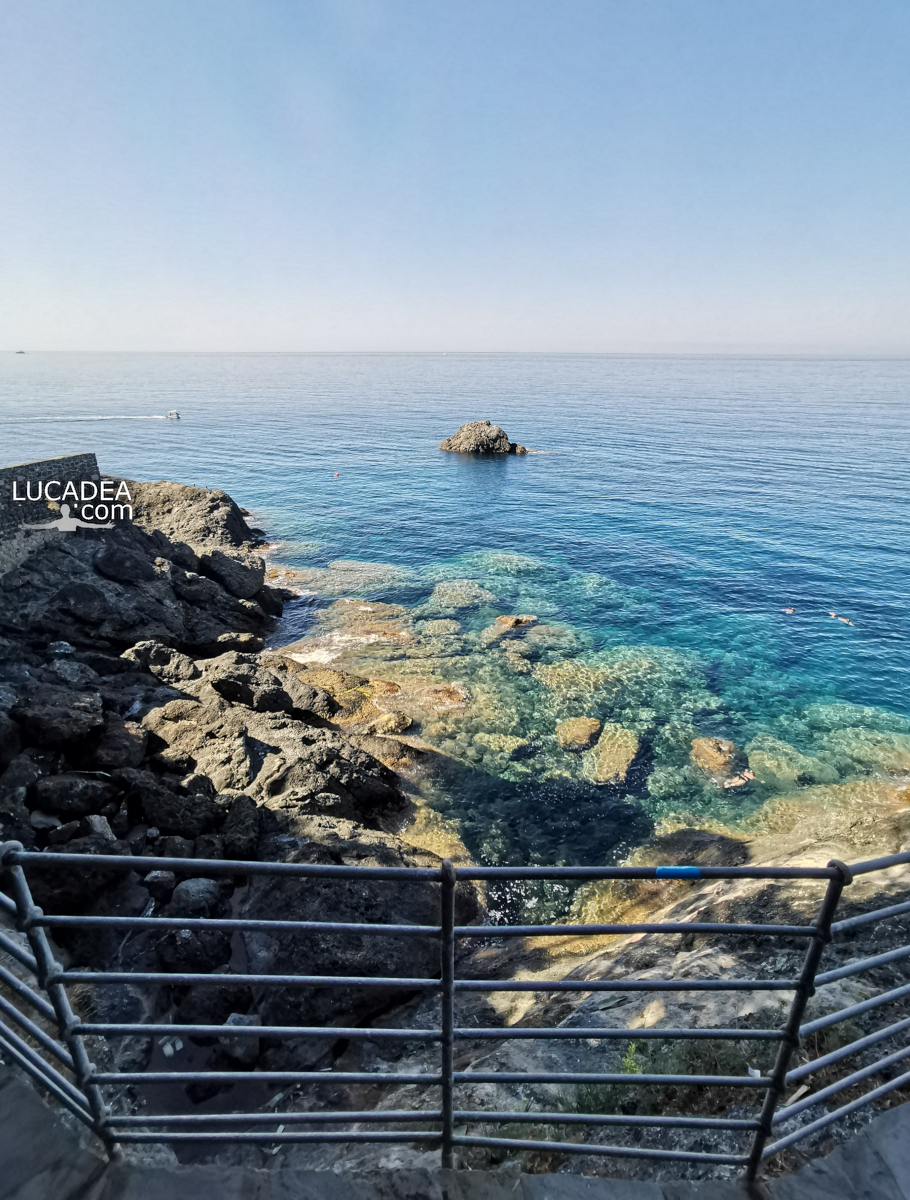
Caletta lungo la passeggiata sul mare di Framura, con acqua limpida e costa rocciosa della Liguria

Dreamlike sea coves along Framura’s coast.
After putting it off for quite a while, last summer I finally made it to the seaside in Framura, a small village in eastern Liguria not far from the Cinque Terre. From the railway station, a short walk through the underpass leads almost directly towards the seaside path, where a series of small coves and beaches are scattered along the rocky coastline.
I find that transition particularly interesting. Within a few minutes, you can move from the railway environment into a landscape shaped by rock, water and small spaces along the shore. This is not the kind of coastline built around one large, easily accessible beach. Instead, the coves become part of the experience of following the coast and discovering one viewpoint after another.
I took this photograph during that day by the sea, capturing one of the views I came across while walking along Framura’s coastal path. I had been meaning to visit for a long time, so finally seeing this stretch of coastline in person made the photograph feel like the conclusion of a promise I had made to myself.
Framura is in Liguria, in the Province of La Spezia, Italy, along the Riviera di Levante, just west of the Cinque Terre. If you are wondering what to see in Framura, the seaside path and its small coves are among the most distinctive parts of the village. The coastline itself is what makes the walk interesting, with different viewpoints and bathing spots appearing along the route.
What stayed with me most was the way the sea is experienced here. The landscape asks you to adapt to the shape of the coast, with rocks, narrow beaches and small coves replacing the broad sandy stretches found elsewhere. It feels much more connected to the natural structure of the shoreline.
If you enjoy seeing what lies beneath the surface, I would definitely bring a mask and fins. The rocky coastline makes the underwater environment another part of the experience, and swimming gives you a perspective that cannot be seen from the path above. It was one of the things that helped me understand why I had heard so many good things about Framura before finally visiting.
There are also places where you can make the day more comfortable, with sun loungers and umbrellas available along parts of the coast. That can be slightly surprising considering how compact and rugged some of the beaches are. During my visit, however, I was more interested in following the path and stopping whenever I found a view that caught my attention.
One small geographical detail makes Framura particularly distinctive. The village is not simply a settlement spread along one flat strip beside the sea. It is made up of several small inhabited areas extending between the coast and the inland hills. This gives the relationship between the village, the railway and the sea a character that is quite different from many other Ligurian coastal towns.
The railway station is also a useful part of the experience. Arriving by train brings you directly to the starting point of the coastal area, after which the sea can be reached on foot through the station underpass. For anyone exploring this part of Liguria without constantly relying on a car, that is a genuinely useful feature of the location.
This photograph also reminds me how easy it is, when living in Liguria, to keep postponing places that are actually quite close. Framura was one of those places for me. I already knew about the coastal path and the coves, but I had always found a reason to wait. Once I finally went, I discovered a stretch of coast that immediately made sense as a photographic subject.
On my blog I have often written about the sea along the Riviera di Levante, from well-known destinations to smaller corners encountered along the coast. This photograph fits naturally into those stories because Framura shows how quickly the landscape can change from one cove to the next.
Looking at the photograph now, I mainly feel like going back with more time. A first visit is useful for understanding a place; the next one can be devoted to noticing the smaller details that were easy to miss. With a mask, fins and plenty of sunscreen, there is certainly plenty of reason to spend another day exploring the coast.

Have you ever walked along Framura’s seaside path and discovered its small coves? Add a comment or go to the bottom of the site to read what other visitors have written.
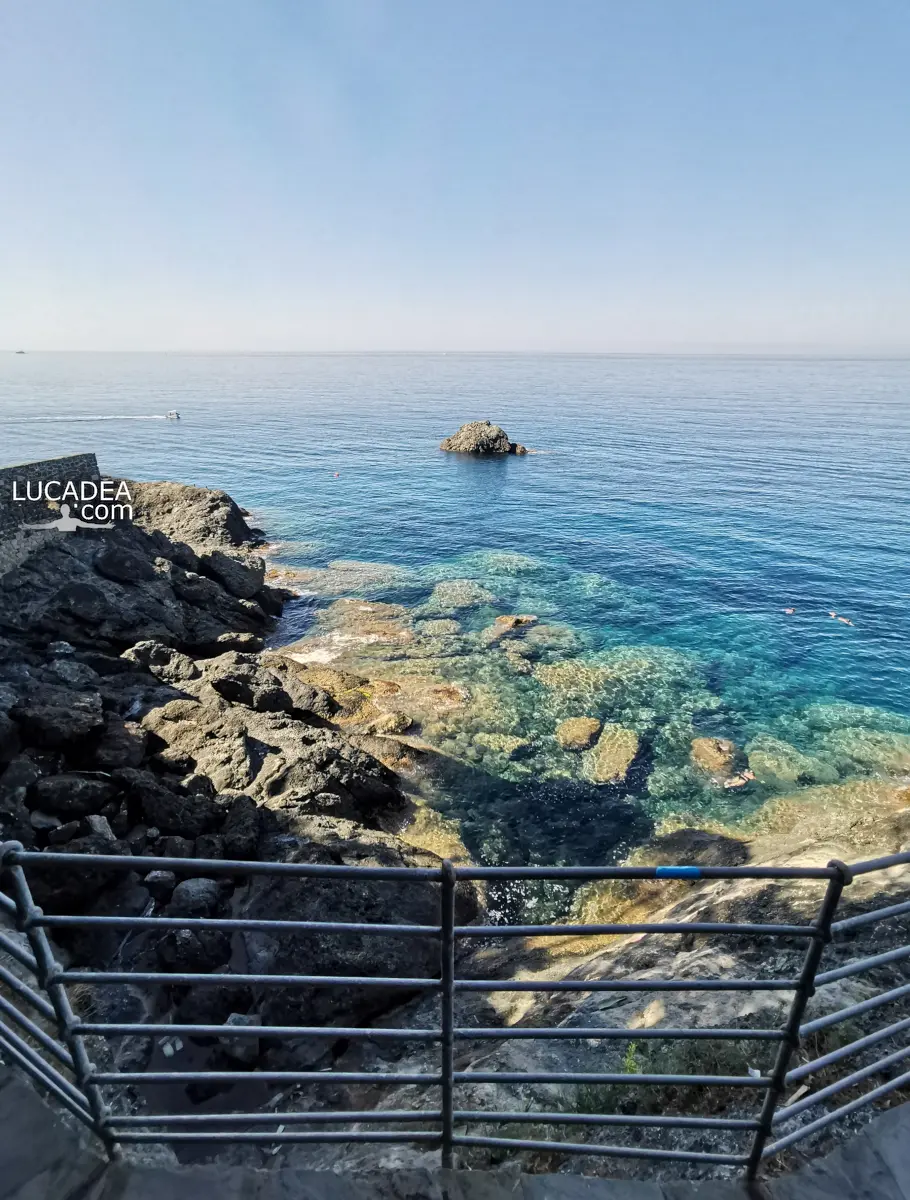
Small cove along Framura's seaside path, with clear water and the rocky Ligurian coastline

Photo taken with Honor 20.

Here’s where the walk is:

Add one  comment to this article or read  here what other visitors have written.
 
Adv
 
Disclamer

The rights on images, videos, choruses, text and all other material on the LUCADEA.com website are governed as per  Copyright page.


This page has been viewed 1 times today.
This month it has been viewed 1 times.
In total it has been viewed 6 times.

 

Vernazza from the Trail to Corniglia

Vernazza from the Corniglia trail with colorful houses, harbor and Cinque Terre sea view

Vernazza from the Trail to Corniglia.
On 14 August 2014, while walking along the coastal path between two of the villages of the Cinque Terre in Liguria, Italy, I stopped to photograph a view that has become one of the most familiar images of this part of the Italian coast. Vernazza sits between the hillside and the sea, its colourful buildings gathered around a small harbour. Above the rooftops, the outline of Doria Castle adds another distinctive feature to the scene.
The village gradually comes into view as you follow the trail. At first, the landscape is mostly made up of the sea and the surrounding hills. Then the colourful houses appear, followed by the harbour and the small inlet where boats find shelter. From this elevated viewpoint, the shape of Vernazza becomes especially clear. It is easy to understand why so many visitors look for this particular perspective when photographing the Cinque Terre.
I took this photograph with my camera during that summer walk. What I particularly like about the image is that it was made along the route to Corniglia, rather than from within the village itself. Walking between the villages offers a different way of experiencing this stretch of coastline. The view is wider, and the settlements become part of a much larger landscape of steep slopes, cultivated terraces and open sea.
Vernazza seems to follow the natural shape of the coastline. Its buildings are clustered closely together, adapting to the available space between the hillside and the water. The harbour forms the centre of the composition, while the surrounding slopes provide a natural frame. The sea adds depth and gives the colourful facades an even stronger presence. The appeal of this view is not simply the bright colours of the houses, but the balance between the village and its remarkable setting.
There is an interesting detail about the paths connecting the Cinque Terre villages. Although they are now famous hiking routes, attracting visitors from many different countries, they were originally practical connections used by local people. They linked the settlements with vineyards, cultivated terraces and other areas of the surrounding countryside. In a region where steep terrain has always made travel challenging, these paths were an essential part of everyday life rather than scenic walking routes.
Vernazza is often described as the jewel of the Cinque Terre. The phrase may be familiar to anyone who has read about this part of Liguria, but it is easy to see why it has become so popular when looking at the village from this angle. The harbour, the colourful buildings and the hills behind them create a combination that is difficult to mistake for anywhere else.
I have shared other photographs and articles about the Cinque Terre on my blog, including views that reveal different aspects of this remarkable coastline. This particular photograph takes me back to a summer afternoon in 2014, when walking the trail was as much a part of the experience as reaching the next village.

Have you ever walked the trail between Vernazza and Corniglia, or have you admired Vernazza from the sea? Add a comment or go to the bottom of the site to read what other visitors have written.

Vernazza viewed from the trail to Corniglia, showing its colourful houses, small harbour and the sea along the Cinque Terre coast

More or less the point from where I took the photo:

Colorful houses of Corniglia in Cinque Terre alleys

Colorful houses of Corniglia in Cinque Terre with windows and Ligurian village facades

Colorful houses of Corniglia in Cinque Terre alleys.
During my walk through Corniglia on August 14, 2014, I wanted to capture with my camera a small detail of the village’s colorful houses, one of those elements that can easily be missed when focusing only on the most famous views. This photograph of Corniglia tells the story of Cinque Terre houses through colors, windows and architectural details that make the village unique.
In Corniglia, in the municipality of Vernazza, Liguria, Italy, the houses are built along the hillside, following the shape of the promontory and creating a network of narrow streets, steps and small passages. Looking closely at the colorful houses of Corniglia, you can discover details that reveal everyday life in the village: shutters, balconies, different wall tones and simple decorations that make every building slightly different.
That August day started as a trip to Cinque Terre, taking advantage of weather forecasts that suggested a less sunny day than the typical summer conditions. This gave me the chance to focus more on small details rather than only on the most famous panoramic views. Among the many photographs I took that day, I chose this one because it represents a quieter side of the village, away from the classic landscape images usually associated with Corniglia.
I slightly processed the image in HDR to enhance the colors of the facades and highlight the differences between the various surfaces while keeping the original feeling of the scene. The purpose was not to create an artificial image, but to bring back the impression I had while looking at those houses, where every color contributes to the identity of the place.
Corniglia is the highest village of Cinque Terre and, unlike the other villages, it does not have a harbor directly connected to the sea. Its unique position on top of a cliff offers different perspectives and creates a quieter atmosphere among historic streets and homes.
A small curiosity concerns the structure of the village itself: visitors arriving by train must climb the Lardarina staircase, a long series of steps connecting the station level with the historic center. This path is part of the experience of visiting Corniglia and shows the strong relationship between the village and its landscape.
If you are visiting Cinque Terre and looking for places worth seeing, there is much more than famous viewpoints. A simple house, a window or a narrow street can reveal the personality of these villages. Like other photographs I have shared from Cinque Terre, this image was created by observing a small element and turning it into a memory.
The colorful houses of Corniglia, with their particular position and character, are still one of the details that bring my thoughts back to that August day.

Which small detail from a village or town has stayed in your memory after a trip? Add a comment or go to the bottom of the site to read what other visitors have written.

Colorful houses of Corniglia in Cinque Terre with windows and Ligurian village facades

Click here to see more photos.
photo gallery

Here’s where the village is located:

🏠
  • Italiano