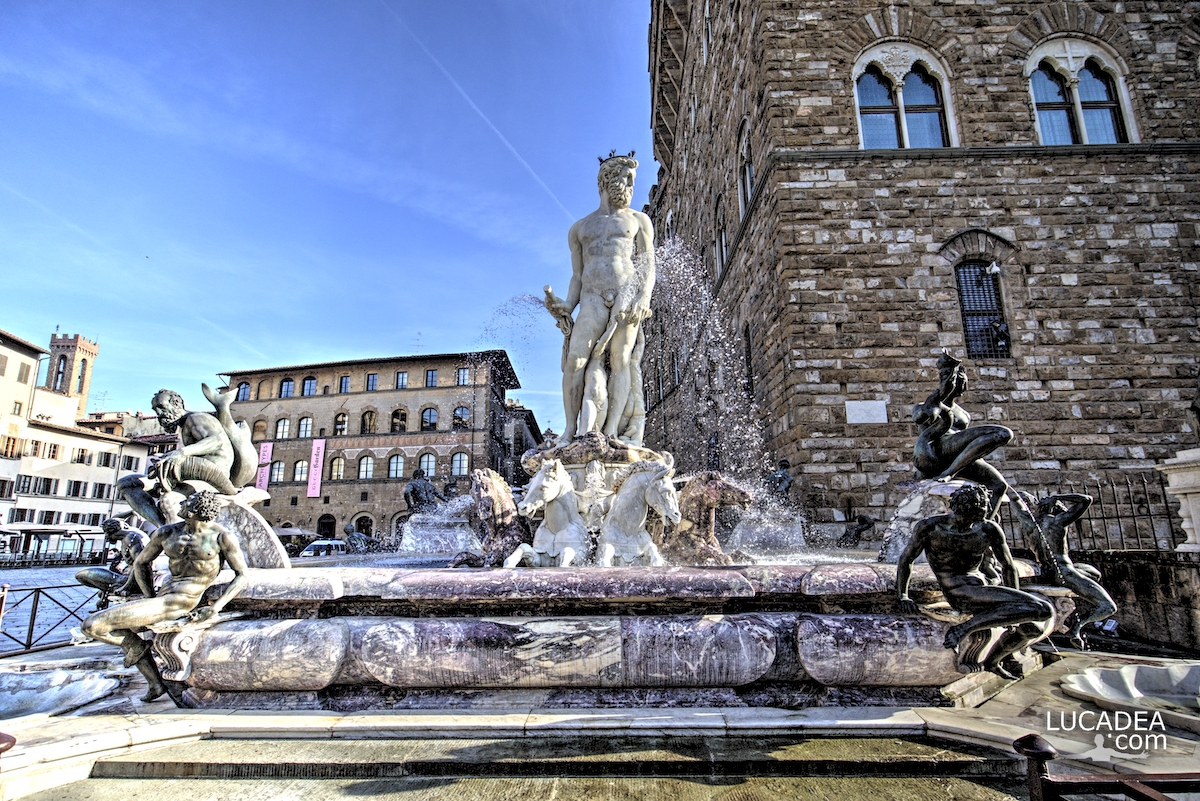
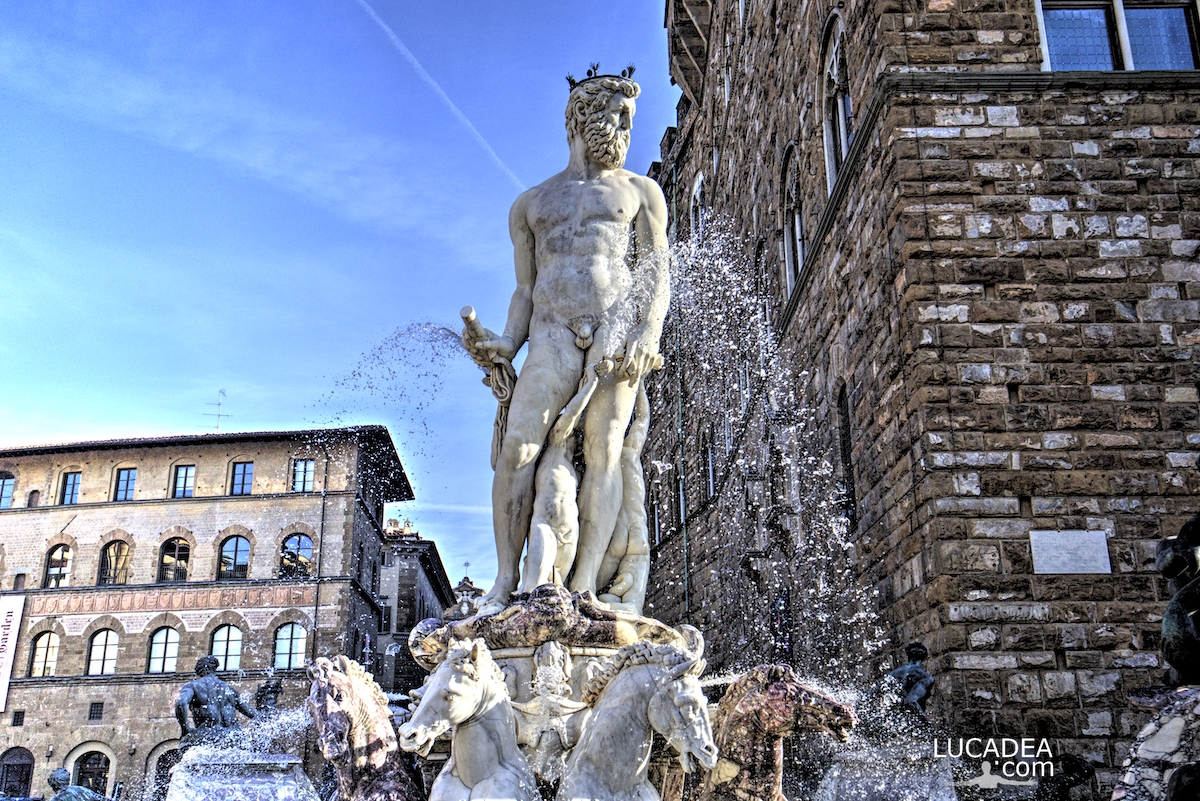
Neptune Fountain in Signoria Square, Florence.
During a walk through the heart of Florence, I wanted to dedicate a photograph to one of the city’s best-known monuments: the Neptune Fountain, standing in the open space of Signoria Square beside Palazzo Vecchio. In this image, I focused especially on the materials and small details of the fountain, elements that are often overlooked because of its fame.
The Neptune Fountain in Signoria Square, Florence, Tuscany, Italy, is one of the artworks that best represents the connection between art and history in the Renaissance city. I photographed this monument while observing the contrast between the different types of stone and marble used to create a rich composition, where every surface contributes to the final appearance of the work.
When you arrive in this area of Florence, your attention is immediately drawn to the historic buildings surrounding the square, but by stopping in front of the fountain for a while, many interesting details appear: the sculptures, the decorations, the natural colours of the materials and the way light changes the perception of the surfaces.
My photograph comes from this attention to details. Even a very famous monument can be told in a different way, choosing not only to photograph it as a symbol of the city but also to search for the elements that make it unique. In this case, the variety of stones and marbles captured my attention because it creates a balance between sculptural strength and elegance.
If you are visiting Florence, Signoria Square is one of the most interesting places to see in the historic centre. Here you can find some of the city’s most representative artworks, and every corner tells the story of the relationship between political power, art and culture that shaped Florence over the centuries.
A historical curiosity about the fountain is that it was created by Bartolomeo Ammannati in the sixteenth century after being commissioned by Cosimo I de’ Medici. The figure of Neptune, carved in Carrara marble, also had a symbolic meaning connected with Florence’s ambitions at sea and the power of the Medici family.
I wanted to capture this detail with my camera because materials, textures and small differences in surfaces are often what make an artwork truly interesting. Photography allows me to get closer to details that can easily be missed during a quick visit.
This image connects with other stories on my blog dedicated to artistic details of Italian cities, where I often try to tell famous places through less obvious elements.
Have you ever stopped to observe the different materials used in historic Italian fountains? Add a comment or go to the bottom of the site to read what other visitors have written.
Photos taken with a Canon EOS M100 camera and Canon EF-M 11-22 lens.
To see all the photos I took in the beautiful Tuscan town, click here:

Numerous sculptors participated, adopting an approach characterized by the use of materials differing in nature and color—a style favored by the patron. However, the result drew harsh criticism immediately upon its completion; today, it is viewed as an emblematic example of the renewal of Mannerist sculpture in the mid-16th century, standing in opposition to the prevailing Michelangelesque academicism.
Read more on Wikipedia
The rights on images, videos, choruses, text and all other material on the LUCADEA.com website are governed as per Copyright page.