Jellyfish at the Aquarium of Genoa

Meduse all'Acquario di Genova

Jellyfish at the Aquarium of Genoa.
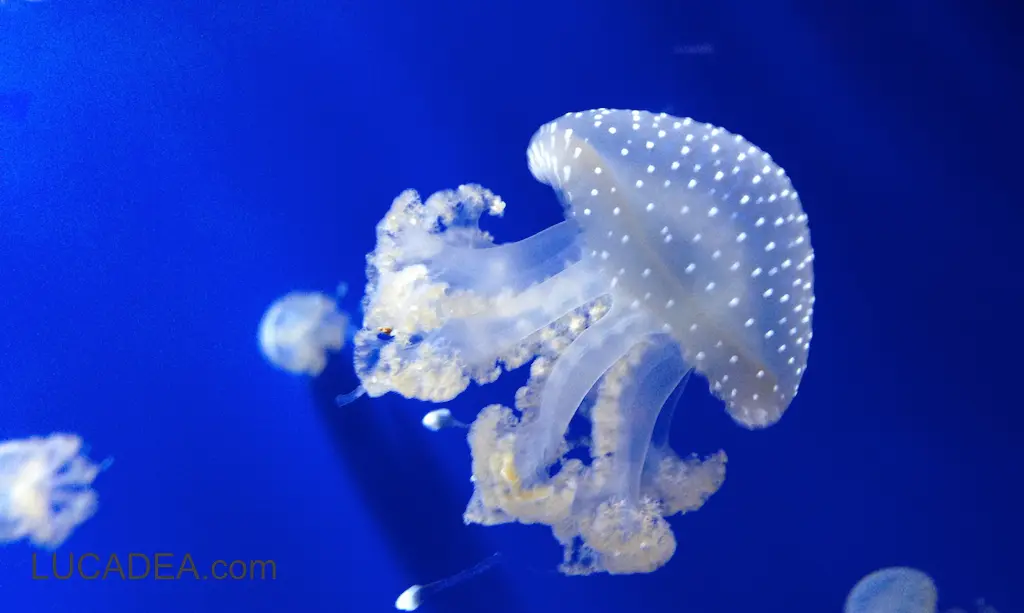
One of the most fascinating sights at the Aquarium of Genoa is a jellyfish floating gracefully inside its illuminated tank. Jellyfish at the Aquarium of Genoa are captivating subjects to watch, with their delicate shapes, translucent bodies and slow, almost hypnotic movements.
Here is a photograph of one of the jellyfish that welcome visitors along the aquarium route. I stopped for a while to observe it and take a picture, trying to capture some of the quiet elegance of these marine animals. They move in such a distinctive way: rather than swimming like fish, they seem to drift through the water, gently pulsing and changing direction as they go.
It had been quite a long time since my last visit to the Aquarium of Genoa. There is a curious habit many of us share: we sometimes overlook the attractions closest to home. Because they are always there, we assume we can visit them whenever we like, and somehow the visit keeps getting postponed. We may be more likely to explore places far away while forgetting to rediscover what is right on our doorstep.
This time I finally went back, and I have to say that I was genuinely impressed. I found the aquarium very beautiful and interesting. It also seemed to me that it had expanded over the years, while continuing to feel fresh and relevant. Walking through the different exhibition areas is an opportunity to see a remarkable variety of marine life and to spend time observing creatures that we would rarely encounter so closely in everyday life.
The Aquarium of Genoa is located in the Porto Antico area, in the historic port district of Genoa, in Liguria, north-western Italy. It is one of the city’s best-known attractions and a place worth visiting whether you are discovering Genoa for the first time or returning after many years.
Jellyfish are particularly rewarding subjects for photography. Their transparent bodies, delicate tentacles and flowing movements create ever-changing shapes in the water. Photographing them through the glass of an aquarium tank is not always straightforward. Reflections, lighting conditions and movement all make it a little challenging, but they also make the attempt more interesting. I like trying to capture a moment in which the animal’s shape and movement are clearly visible.
This picture is a small reminder of a very enjoyable return visit. It also made me think that we should sometimes take the time to explore the places we have nearby, instead of always looking for something new far away. The Aquarium of Genoa certainly deserves another visit.

Have you visited the Aquarium of Genoa recently, or is it one of those places you keep meaning to see again? Add a comment or go to the bottom of the site to read what other visitors have written.

A translucent jellyfish floating inside a tank at the Aquarium of Genoa in the Porto Antico harbour area

Here’s the official website: acquariodigenova.it.

Add one  comment to this article or read  here what other visitors have written.
 
Adv
 
Disclamer

The rights on images, videos, choruses, text and all other material on the LUCADEA.com website are governed as per  Copyright page.


This page has been viewed 2 times today.
This month it has been viewed 2 times.
In total it has been viewed 2 times.
 

Turtles in Grand Cayman

Tartarughe a Grand Cayman

Turtles in Grand Cayman.
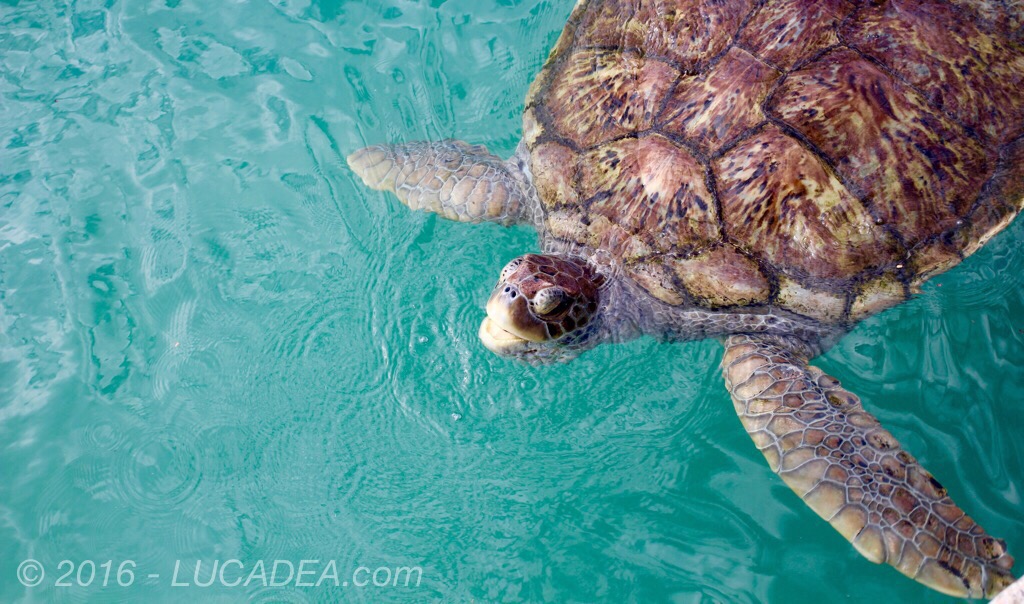
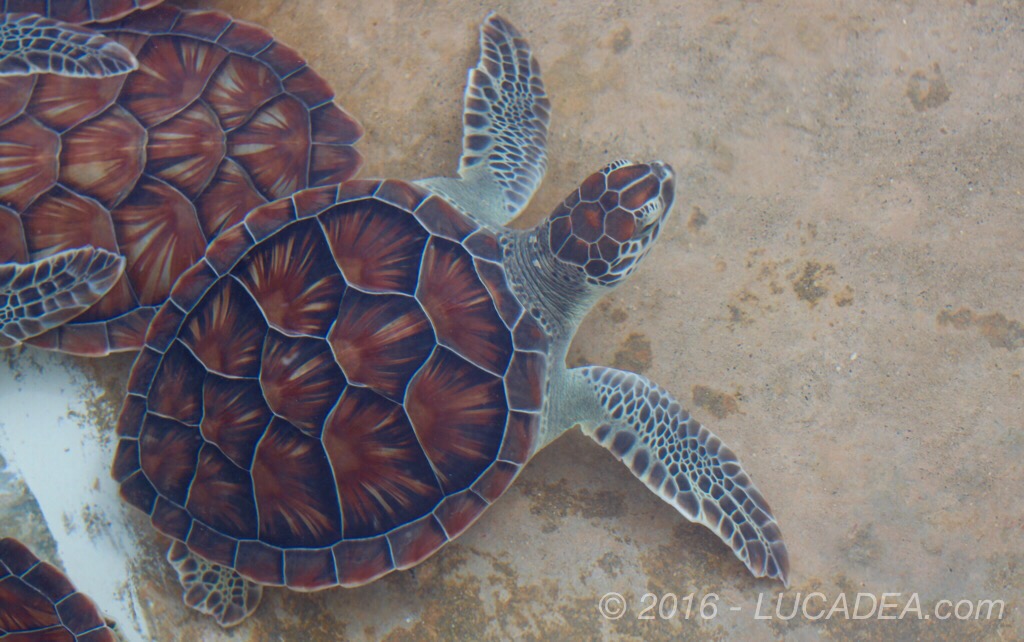
I finally managed to go and see, and touch, some turtles. Here in Grand Cayman there is a park where they raise them to study them, help them grow, and then release them into the sea.
They are truly incredible animals, and being able to hold one in your hands is a unique experience.

Are you familiar with the Caribbean? Add a comment or go to the bottom of the site to read what other visitors have written.

The order Testudines (Linnaeus, 1758) or Chelonia includes reptiles commonly known as turtles or tortoises. In common parlance, the term turtle sometimes refers to aquatic turtles (whether freshwater—such as the Emydidae, with skin membranes between their claws—or marine turtles—with limbs transformed into flippers), carnivorous and with a low-profile carapace; while the term tortoise (from the Latin testudo) refers to any species adapted to terrestrial life, herbivorous, with powerful claws and a (generally) raised carapace. In reality, this distinction has no taxonomic significance, as there is no such distinction phylogenetically.
Continue on Wikipedia

Some beautiful turtles in Grand Cayman – Quelques belles tortues à Grand Cayman – Algunas hermosas tortugas en Gran Caimán – Algumas belas tartarugas em Grand Cayman – Einige wunderschöne Schildkröten auf Grand Cayman – Một số loài rùa đẹp ở Grand Cayman – 大开曼岛的一些美丽的海龟 – グランドケイマンのいくつかの美しいカメ
Add one  comment to this article or read  here what other visitors have written.
 
Adv
 
Disclamer

The rights on images, videos, choruses, text and all other material on the LUCADEA.com website are governed as per  Copyright page.


This page has been viewed 1 times today.
This month it has been viewed 1 times.
In total it has been viewed 2 times.
 

The Delicate Dance of Jellyfish in Valencia

Danza trasparente delle meduse a Valencia

The Delicate Dance of Jellyfish in Valencia.
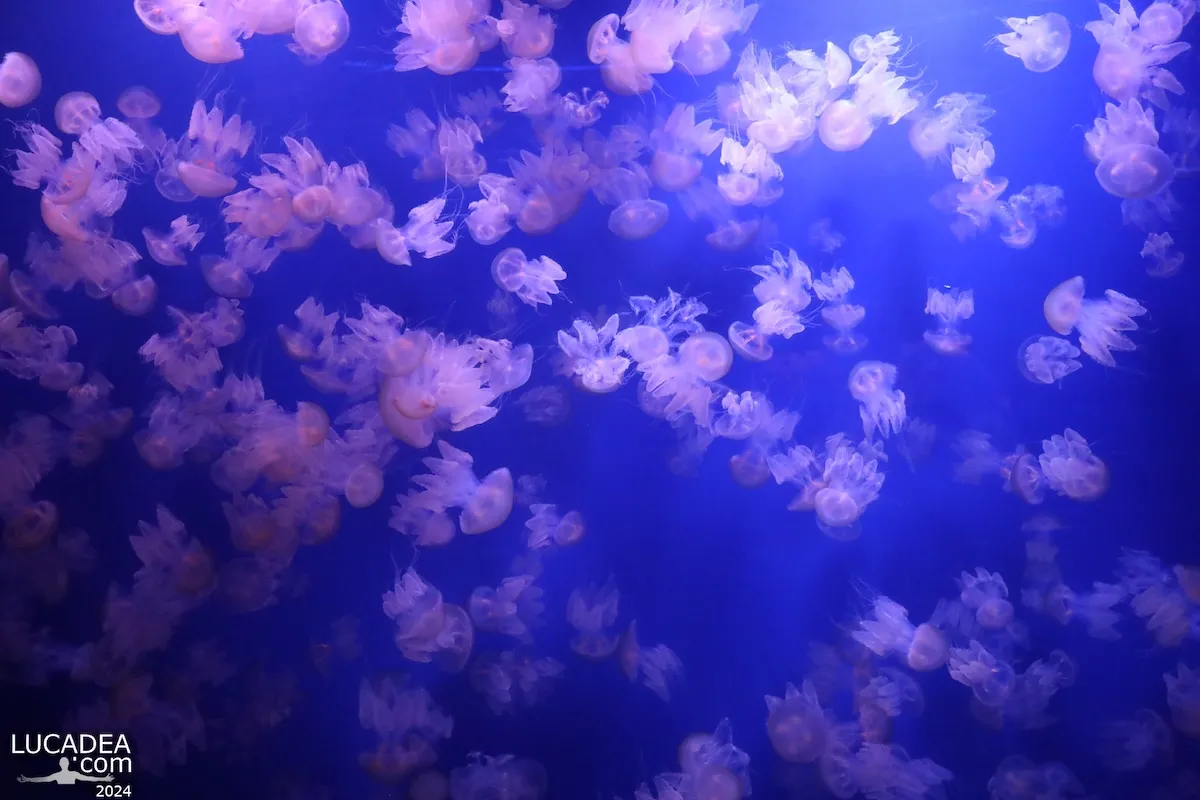
Inside Valencia’s Oceanogràfic, jellyfish drift through the water with slow, graceful movements. Their transparent bodies and delicate tentacles form constantly changing shapes, creating a quiet underwater dance that naturally draws the eye. Watching them for a while reveals a world of subtle movements, shifting reflections and details that never seem to stay the same for long.
I took these photographs a few years ago during a visit to Valencia’s aquarium. What caught my attention was the way the jellyfish seemed to blend into the water, leaving only the outlines of their bodies and the fine lines of their tentacles clearly visible. Their shapes changed with every movement, making each moment different from the one before. This constant transformation was what made them such interesting subjects for my camera.
The Oceanogràfic is located in Valencia, in the Valencian Community, Spain, within the City of Arts and Sciences complex. It offers visitors the chance to observe marine species from close range and notice details that are easy to miss when experiencing the sea only from the shore. With jellyfish, simply following their movements for a few minutes is enough to appreciate how different their rhythm is from the world we usually experience.
Their fragile appearance conceals a remarkably ancient evolutionary history. Jellyfish belong to a group of animals that has existed in the oceans for hundreds of millions of years, long before many of the marine creatures familiar to us today. Some species have unusual regenerative abilities, although these vary considerably. It would be misleading to assume that all jellyfish can regenerate in the same way or reverse the ageing process.
Photographing them requires patience. There is no fixed subject waiting to be framed, but rather a constantly changing shape that expands, contracts and moves through the water. I focused on the delicate lines of their tentacles and the transparency of their bodies, allowing the visible details to guide the composition. Even a slight change in movement can completely transform the appearance of the scene.
For anyone interested in wildlife photography, the jellyfish at Valencia’s aquarium offer an opportunity to explore the relationship between shape, colour and movement. You do not necessarily need a dramatic landscape to find a compelling photographic subject. Sometimes, the most delicate organisms provide the most unusual visual details.
These images are part of my personal photographic memories of Valencia. They also connect naturally with other posts on my blog featuring small details I have noticed while travelling. I enjoy keeping photographs that capture more than a location: they preserve a moment of personal observation, something that caught my eye and that I wanted to record with my camera.
Beyond their visual appeal, the Oceanogràfic carries out activities related to research, education and marine conservation. Observing marine animals at close range can encourage visitors to think about the complexity of ocean ecosystems and the importance of protecting them. Marine life depends on delicate relationships between species and their surroundings, and these relationships can be affected by human activity and environmental change.
Looking back at these photographs brings me back to those slow, continuous movements and the shapes that appeared and disappeared against the blue water. That was the detail I wanted to preserve: the ability of jellyfish to hold our attention without any dramatic gesture, simply by moving at their own pace.
If you would like to learn more about marine species and the aquarium’s activities, you can visit the official Oceanogràfic Valencia website.

Have you ever watched a jellyfish up close and been surprised by the delicate way it moves through the water? Add a comment or go to the bottom of the site to read what other visitors have written.

Transparent jellyfish drift through the blue tanks of Valencia’s Oceanogràfic, their fine tentacles trailing through the water

Transparent jellyfish drift through the blue tanks of Valencia’s Oceanogràfic, their fine tentacles trailing through the water

Transparent jellyfish drift through the blue tanks of Valencia’s Oceanogràfic, their fine tentacles trailing through the water

Transparent jellyfish drift through the blue tanks of Valencia’s Oceanogràfic, their fine tentacles trailing through the water

Photos taken with Canon EOS RP and lens Canon RF 24-50.

🏠
  • Italiano