Edible crickets spotted on Koh Samui, Thailand

Insetti da gustare

Edible crickets spotted on Koh Samui, Thailand.
Looking at the photograph, these really do seem to be crickets, prepared and ready to be eaten as one of the many unusual insect snacks that can be found in Thailand. I had already photographed other edible insects on Koh Samui, and once again the sight was curious enough to make me take out my camera.
Their shape is immediately recognisable. Unlike some other food items that are difficult to identify at first glance, these insects look very much like crickets, gathered together and displayed ready for customers. I cannot be completely certain about the exact species from a photograph alone, though, so I prefer to describe them as crickets rather than turn an impression into a definite identification.
Edible insects are part of the food traditions of several parts of Thailand, although they are certainly not an everyday food for everyone in the country. They can appear at markets and street food stalls, where different varieties are prepared in fairly simple ways, often by frying them. The result is usually a crisp snack that can look rather unusual to a visitor from Europe.
I came across this kind of food while in Koh Samui, one of Thailand’s best-known islands. These are precisely the little details I enjoy photographing while travelling because they reveal something about local food habits without needing a staged scene or a famous landmark.
If you are visiting Thailand and looking for something genuinely different from the dishes you might normally encounter, edible insects are certainly one of the more unexpected sights at some markets. I found the visual side of it particularly interesting: trays filled with insects are difficult to ignore, especially when you are seeing them as food for the first time.
I have to admit that when faced with a tray full of insects, my first thought is probably to wonder exactly what I am looking at and, after that, whether I would actually have the courage to taste it. In this case, I was happy to stick with photography. The camera lets me get close to these unusual culinary discoveries without necessarily having to put them on my plate!
There is a small cultural detail worth mentioning. Eating insects is especially associated with parts of northern and northeastern Thailand, where the practice has deeper culinary roots. Fried insects are among the preparations that can be found as snacks, although their availability varies considerably from one place to another.
This photograph also fits naturally with other images I have taken of unusual foods and objects during my travels. Just as with the other insects I have photographed, what interests me is not deciding whether they look appetising, but preserving that moment of surprise when something very different from my usual food culture appears in front of me.

In the end, the photograph leaves me with the obvious question: would you be brave enough to taste these crickets? Add a comment or go to the bottom of the site to read what other visitors have written.
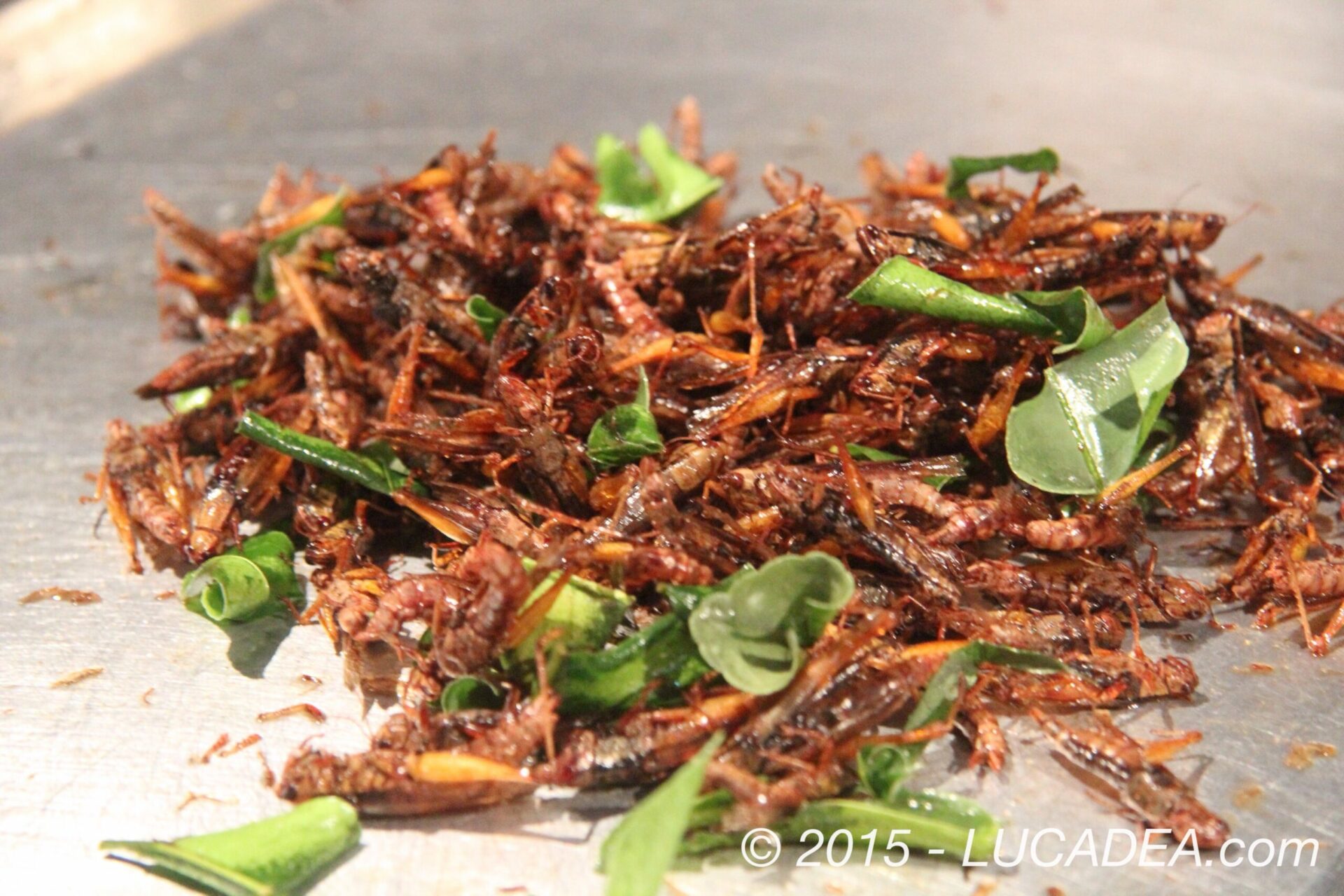
Edible crickets displayed at a street food stall on Koh Samui, Thailand

Add one  comment to this article or read  here what other visitors have written.
 
Adv
 
Disclamer

The rights on images, videos, choruses, text and all other material on the LUCADEA.com website are governed as per  Copyright page.


This page has been viewed 0 times today.
This month it has been viewed 0 times.
In total it has been viewed 0 times.
 

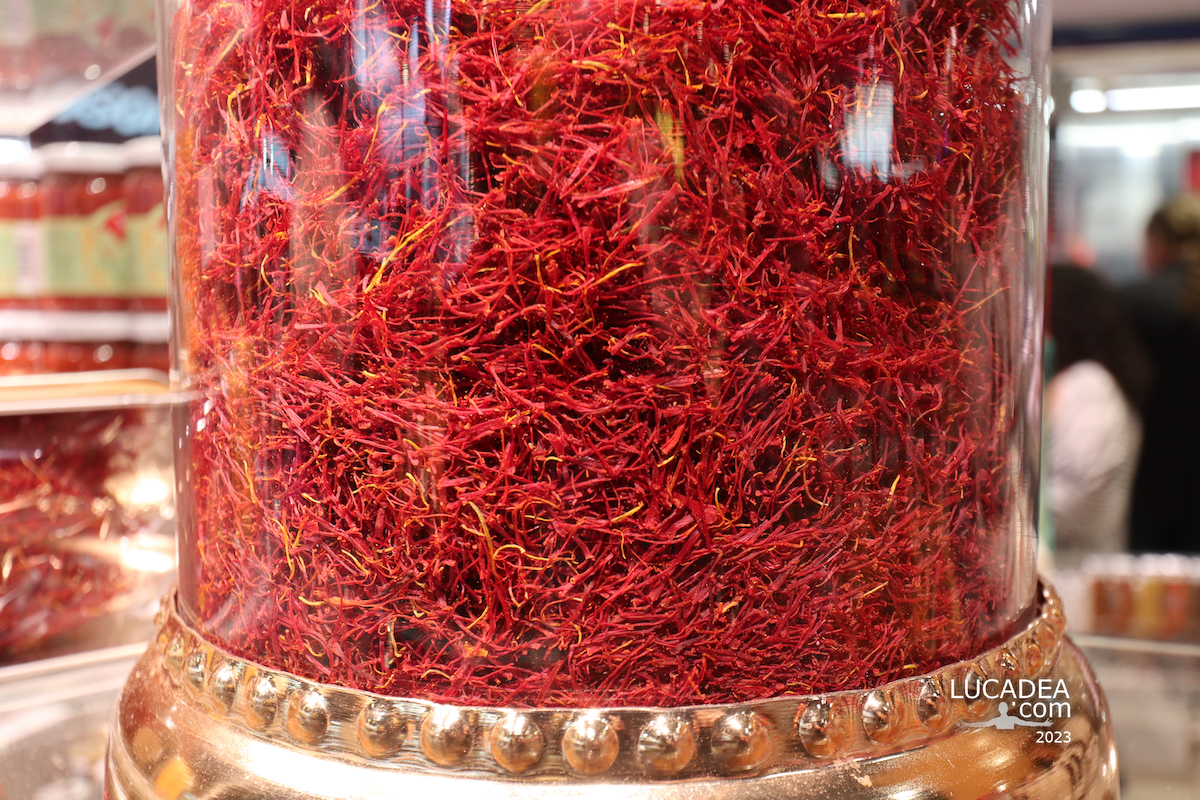
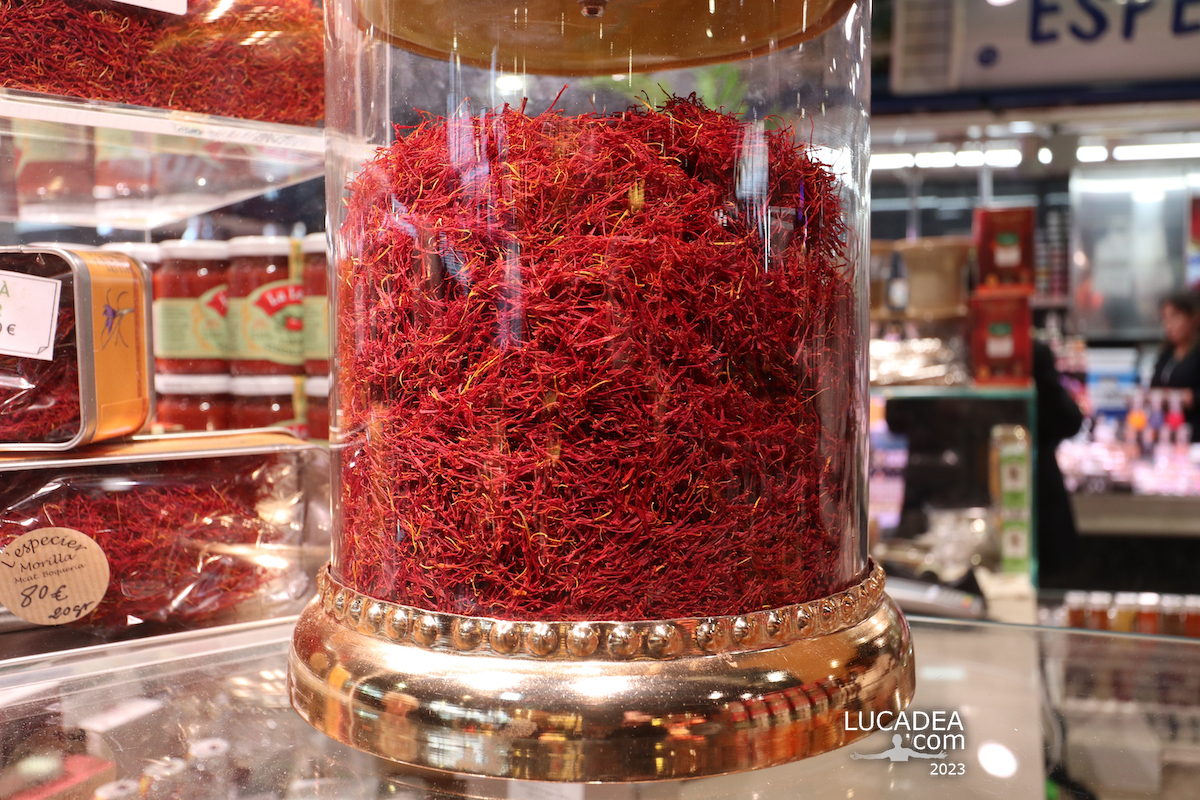
Saffron for sale at Barcelona’s Boqueria Market

Lo zafferano in vendita al mercato della Boqueria a Barcellona

Saffron for sale at Barcelona’s Boqueria Market.
A few months ago, while passing through Barcelona, I stopped to eat at the famous Boqueria Market, admittedly doing what a good tourist is supposed to do. Among all the stalls and products on display, however, it was the saffron that caught my attention, particularly because of the different packages and prices being offered.
Barcelona’s Boqueria Market is one of those places where, even without deliberately looking for it, you can get an idea of what visitors are interested in. It is heavily frequented by tourists, and spending a little time looking at the stalls can reveal which products seem to attract the most attention.
That day I noticed several stalls selling saffron in different quantities and at different prices. That small detail was enough to make me stop and take a photograph. Among fruit, spices, fresh produce and all the other things displayed around the market, those tiny packages of saffron naturally stood out.
I have never been particularly good at judging the price of spices, but one thing seemed obvious: saffron is certainly not cheap. It does not literally cost as much as gold, of course, but when you consider the very small quantities in which it is sold, the price can certainly feel rather high.
The photograph comes from a simple observation during my visit. I like it when travelling gives me opportunities to photograph apparently ordinary things, because these small details often become the images that bring back the atmosphere of a place most clearly. I did not photograph one of the classic views of the Boqueria, but a product displayed on a stall, something that still says a great deal about the experience of being inside the market.
If you are wondering what to see at Barcelona’s Boqueria Market, there are obviously countless colourful products and stalls that can catch your eye. I often find myself stopping instead for details that may not appear in the most familiar photographs. In this case, the saffron interested me precisely because of the contrast between the tiny amount of product and its relatively high value.
There is also a small curiosity behind saffron’s price. The spice comes from the stigmas of the Crocus sativus flower, which have to be harvested by hand. The labour involved, together with the tiny amount of spice obtained from each flower, helps explain why saffron is such an expensive ingredient.
The Boqueria, officially Mercat de Sant Josep de la Boqueria, stands along La Rambla in central Barcelona, and its commercial history goes back much further than its modern reputation as a tourist attraction. For me, though, it remains above all a place to explore through details: a stall, an unusual product, or an interesting way of displaying something for sale.
That is what I enjoy when I take my camera with me while travelling. I am not necessarily looking for the most famous monument or the photograph that everyone has already taken. Sometimes I simply stop because something has caught my attention at that particular moment.
And that day, with its small packets and different prices, saffron managed to do exactly that.
I have also photographed other markets and food products during my travels, because I find food one of the quickest ways to remember a place. Sometimes a single photograph of a market stall is enough to bring back an entire walk through a city.

Would you have bought the saffron at the Boqueria, or would you also have thought it was being sold at a rather high price? Add a comment or go to the bottom of the site to read what other visitors have written.

Saffron packages displayed for sale among the stalls of Barcelona's famous Boqueria Market

Saffron packages displayed for sale among the stalls of Barcelona's famous Boqueria Market

Saffron packages displayed for sale among the stalls of Barcelona's famous Boqueria Market

Photos taken with a Canon EOS M100 camera and Canon EF-M 11-22 lens.

Here is where the famous market on La Rambla is located:

Add one  comment to this article or read  here what other visitors have written.
 
Adv
 
Disclamer

The rights on images, videos, choruses, text and all other material on the LUCADEA.com website are governed as per  Copyright page.

This page has been viewed 1 times today.
This month it has been viewed 2 times.
In total it has been viewed 4 times.
 

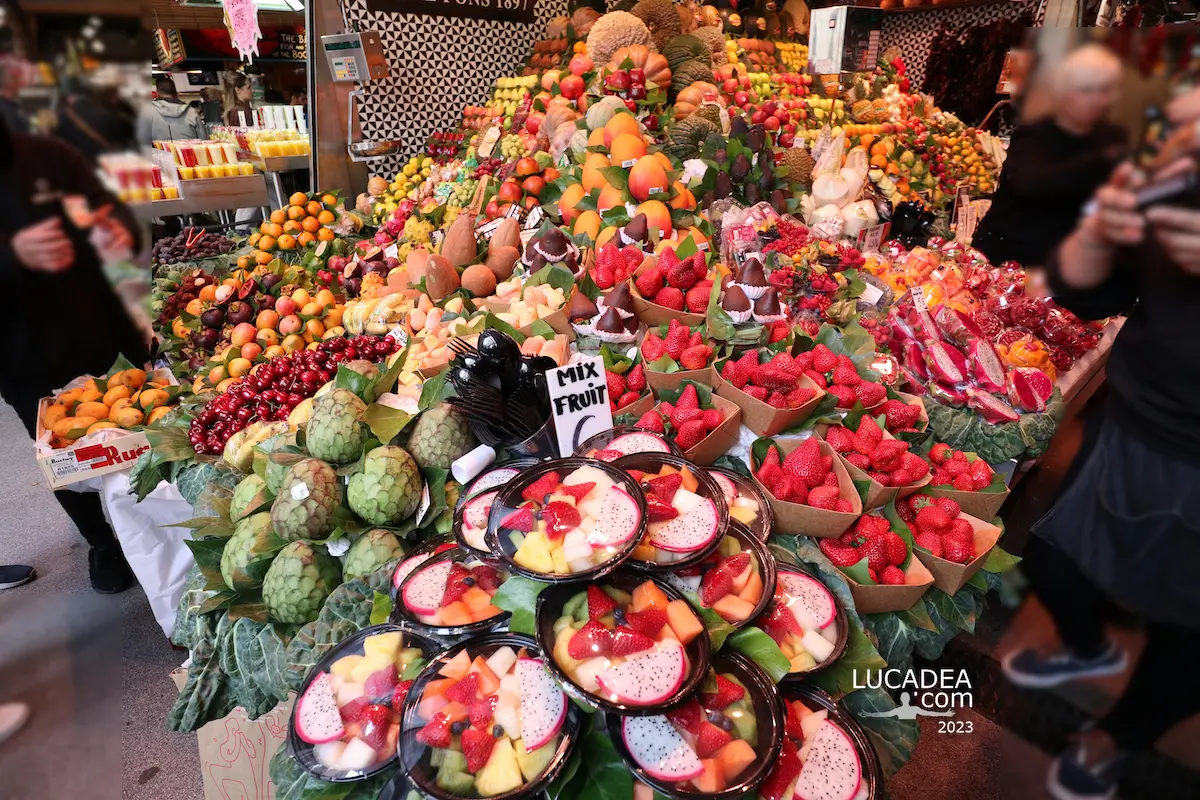
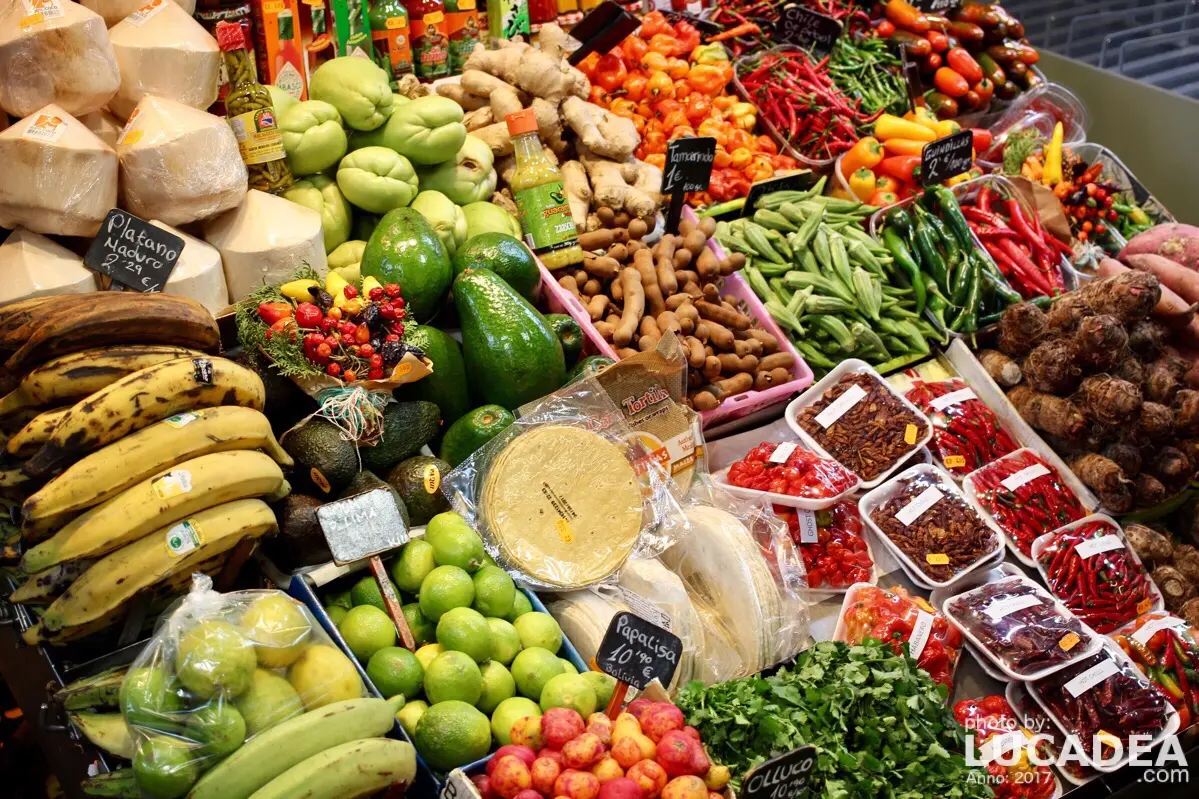
Fresh fruit at La Boqueria in Barcelona

Frutta fresca tagliata sui banchi della Boqueria a Barcellona, tra mango, dragonfruit, fragole e altri prodotti

Fresh fruit at La Boqueria in Barcelona.
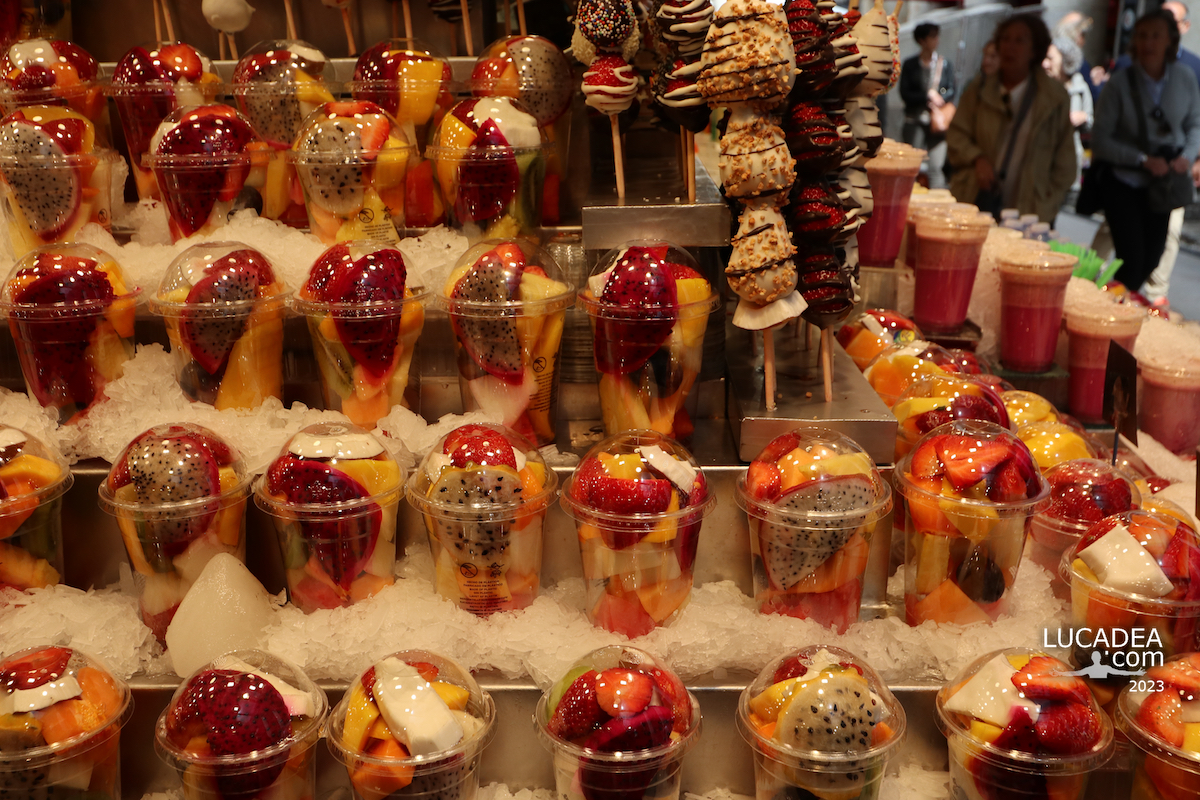
Dragonfruit, mango, papaya, cherries, strawberries, coconut and lychees were all arranged across the market stalls, creating an immediate mix of colors and shapes. Fresh fruit at La Boqueria is one of those scenes that naturally catches your attention while walking through the market, especially when the produce has already been prepared to take away and eat straight away.
I took this photograph simply by stopping in front of one of these fruit stalls. As I walked through the market, the freshly cut fruit arranged in small containers caught my eye. It is a very simple subject, but it works particularly well as a photograph because so many different colors, shapes and textures are concentrated in such a small space.
Mercat de Sant Josep de la Boqueria, usually known simply as La Boqueria, stands along La Rambla in central Barcelona, Catalonia, Spain. It is one of the city’s best-known markets and its central position makes it a busy stop for people exploring the city. If you are wondering what to see in Barcelona, La Boqueria offers something different from the usual landmarks: here, the main subjects are the people, the products and the everyday movement of the market.
For this photograph, I wanted to focus on something very ordinary: the fruit stalls. There is no monument to frame and no elaborate architectural detail is needed to make the scene interesting. The way the products are displayed is enough, with the natural colors of the fruit becoming part of the atmosphere around the market.
Dragonfruit, mango and papaya immediately stand out because of their unusual shapes and colors, while more familiar products such as cherries and strawberries sit alongside them. Coconut adds another texture, and lychees, with their distinctive skins, make the display even more varied. It is this abundance that makes the photograph work for me.
There is also a small piece of history behind the market. La Boqueria has a long connection with the development of Barcelona’s markets, eventually becoming the covered market with the distinctive iron structure that is still visible today. It is easy to overlook this history while concentrating on the colorful stalls, but it helps explain why the market has become such a recognizable part of the city.
The ready-to-eat fruit also shows how the market has adapted to the habits of people passing through it. Someone who does not want to stop for a full meal can simply pick up a container and continue walking, turning a basic market product into an easy snack. For a market visited by so many people, it feels like a natural way of presenting fresh produce.
What interests me most, though, remains the photograph itself. I like images that can describe a place without necessarily showing its most famous view. In this case, a fruit stall is enough to bring back the atmosphere of La Boqueria and the constant movement between the market counters.
The scene also connects naturally with other photographs I have published from La Rambla in Barcelona. They are very different images, but they belong to the same walk through the city and show two sides of the same area: the movement of the avenue and the more concentrated, colorful world inside the market.
One of the things I like about La Boqueria is the sheer number of details that appear without having to look for them. You only need to slow down for a moment and pay attention to the stalls. The fruit then becomes a small photographic subject, but also a simple way of describing the lively character of Barcelona.
The ready-to-eat fruit is perhaps one of the easiest things to notice, especially for visitors looking for something quick while exploring the city. I found the display interesting not because it was unusual to see fruit in a market, but because of the care with which such an everyday product had been arranged.
That is often enough to make me take out the camera. A familiar subject can become interesting when the presentation, surroundings and moment come together. At La Boqueria, there are plenty of these small photographic opportunities.

And you, when visiting a market like La Boqueria, can you resist stopping in front of these colorful fruit stalls? Add a comment or go to the bottom of the site to read what other visitors have written.

Fresh fruit displayed at La Boqueria in Barcelona, with mango, dragonfruit, strawberries and other produce

Fresh fruit displayed at La Boqueria in Barcelona, with mango, dragonfruit, strawberries and other produce

Fresh fruit displayed at La Boqueria in Barcelona, with mango, dragonfruit, strawberries and other produce

Photos taken with a Canon EOS M100 camera and Canon EF-M 11-22 lens.

Here is where this market is located:

Where Chiusa street meets the caruggio

Via della Chiusa incontra il caruggio di Sestri Levante, tra le case del centro storico e il passaggio verso il borgo

Where Chiusa street meets the caruggio.
I almost always reach the caruggio in Sestri Levante by walking along Chiusa street, and this is the view I usually have when I enter the historic center. It has become one of those familiar perspectives that I recognize immediately, partly because when I arrive by car or motorcycle, I usually park near Market square.
There is another reason why Chiusa street has become such a familiar part of my route through Sestri Levante: my friend Alessandro has his shop here. Over time, that has made me pay attention to small details along the street that I might otherwise pass without noticing. This photograph came from one of those ordinary moments, when I stopped to look at the point where the street meets the caruggio.
Sestri Levante, in Liguria, Italy, is best known for the Bay of Silence and its position between the sea and the headland, but the historic center reveals a different side of the town when you walk through it. I am not photographing one of the famous coastal views here. The subject is a simple connection between two streets, but it also has a personal meaning because it is part of a route I take so often.
If you are wondering what to see in Sestri Levante, the beaches, bays and seafront naturally come to mind first. Yet the streets of the historic center are part of the town’s character too. Walking along Chiusa street towards the caruggio, the surroundings gradually become more enclosed, with buildings and shops coming closer to the pedestrian route.
That transition is what I wanted to keep in the photograph. I was not looking for one particular building or landmark, but for the feeling of entering the heart of the old town through a street that I know well. Photographing familiar places has always been slightly different for me. I am not discovering something unknown; instead, I am trying to stop an ordinary perspective for a moment and look at it with fresh attention.
The word caruggio belongs to Liguria’s traditional urban vocabulary and refers to a narrow street, especially one found in historic centers. The term immediately evokes the compact layout of many Ligurian towns, where buildings stand close to the pedestrian passage and streets often feel more intimate than modern roads. It is a small linguistic detail, but it helps explain why these streets have such a recognizable character.
Here in Sestri Levante, the caruggio is therefore not simply somewhere I am heading towards. It is something I encounter almost naturally whenever I follow Chiusa street. That is probably what I like most about this photograph: it shows a familiar place through a personal route, made up of parking the car or motorcycle, meeting friends, running everyday errands and eventually entering the historic center.
Alessandro’s shop adds another personal layer to this corner. It may not be the main subject of the image, but it is part of the reason why this street has become meaningful to me. A photograph of a familiar place can contain things that are not visible in the frame: the people we meet there, the routines that bring us back and the paths we repeat over the years.
I often find myself photographing Sestri Levante through these less celebrated details. Other posts on the blog have focused on different corners and views of the town, and this photograph naturally continues that visual journey, but from a more everyday and personal perspective.
For me, reaching the caruggio from Chiusa street means entering the historic center through a route I know almost by heart. It is a simple view, connected to ordinary habits rather than a special occasion, and perhaps that is exactly why it feels representative of the way I experience and photograph Sestri Levante.

What is your usual way of reaching the caruggio in Sestri Levante? Add a comment or go to the bottom of the site to read what other visitors have written.

Chiusa street meeting the caruggio in Sestri Levante, with historic buildings lining the entrance to the old town

Photo taken with a Canon EOS RP camera and a Tamron 16-300 lens.

Here is the location where I took the shot:

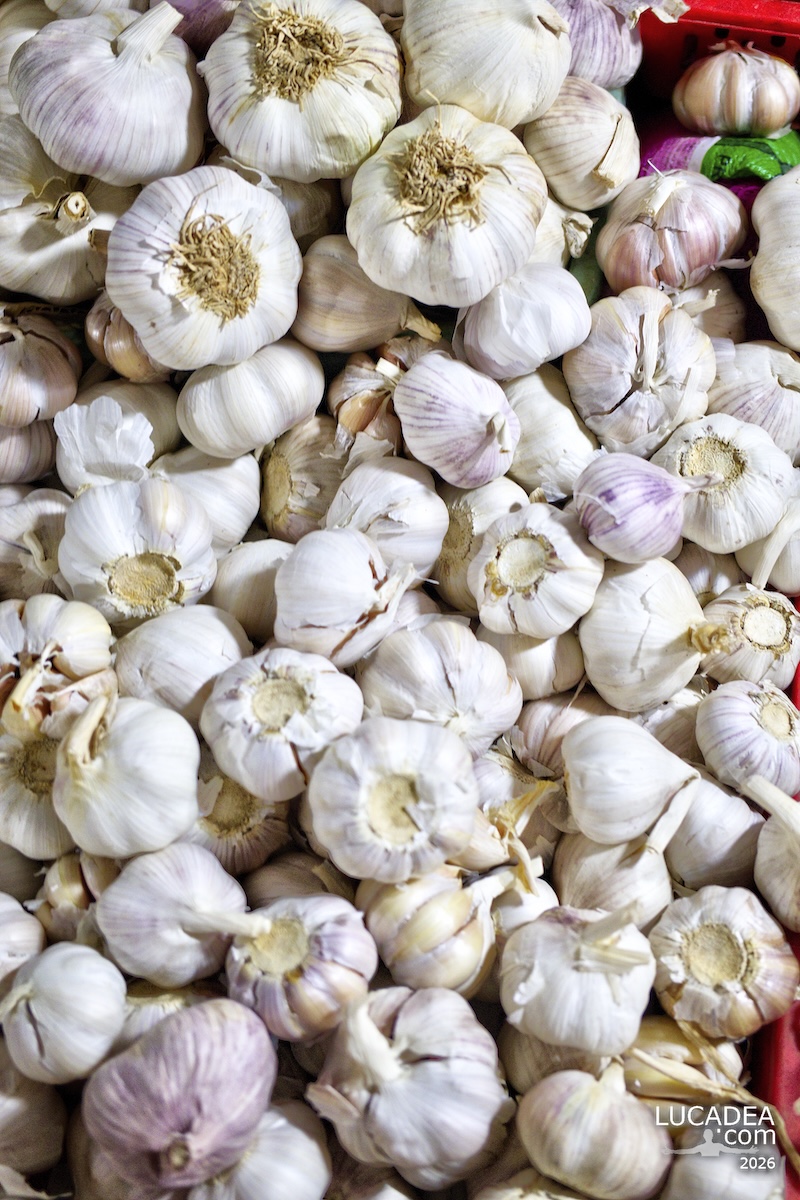
Garlic Stalls at a Vietnamese Market

Bancarella del mercato in Vietnam piena di teste d’aglio bianche e violacee impilate in grandi quantità ravvicinate

Garlic Stalls at a Vietnamese Market.
I find myself standing in front of a dense field of garlic that fills the frame so completely that everything else seems to fade into the background, and garlic becomes the immediate focus of this simple yet powerful scene. The garlic is stacked in countless clusters, some bulbs bright white, others marked with soft purple streaks that hint at different varieties and different hands that have shaped their journey to this market in Vietnam. Here, garlic is not just an ingredient but a constant presence, almost like a silent rhythm that structures the movement of sellers and buyers around the stalls.
As I look closer, I imagine the texture of each bulb, the dry papery layers protecting the cloves inside, and I think about how garlic defines so many everyday meals across Vietnam. The garlic here feels alive in its stillness, forming small landscapes of repetition and abundance that speak of harvest and labor. Even without sound or smell, the visual intensity of garlic is enough to fill the senses.
There is a small culinary truth tied to garlic in Vietnamese cuisine: it is often one of the first ingredients to hit the hot oil in a pan, building the aromatic foundation of countless dishes alongside shallots and chili. This simple step transforms garlic into something essential, shaping flavors that feel deeply rooted in local food culture.

Watching this scene, I start to wonder how many journeys each garlic bulb has taken before reaching this point, and how many meals it will continue to influence far beyond this market. How often do we stop and really observe something as ordinary, yet as essential, as garlic? Add a comment or go to the bottom of the site to read what other visitors have written.

Photos taken with Canon EOS R50 V and Canon RF 28 lens.

To see all the photos I took at the market, click here:

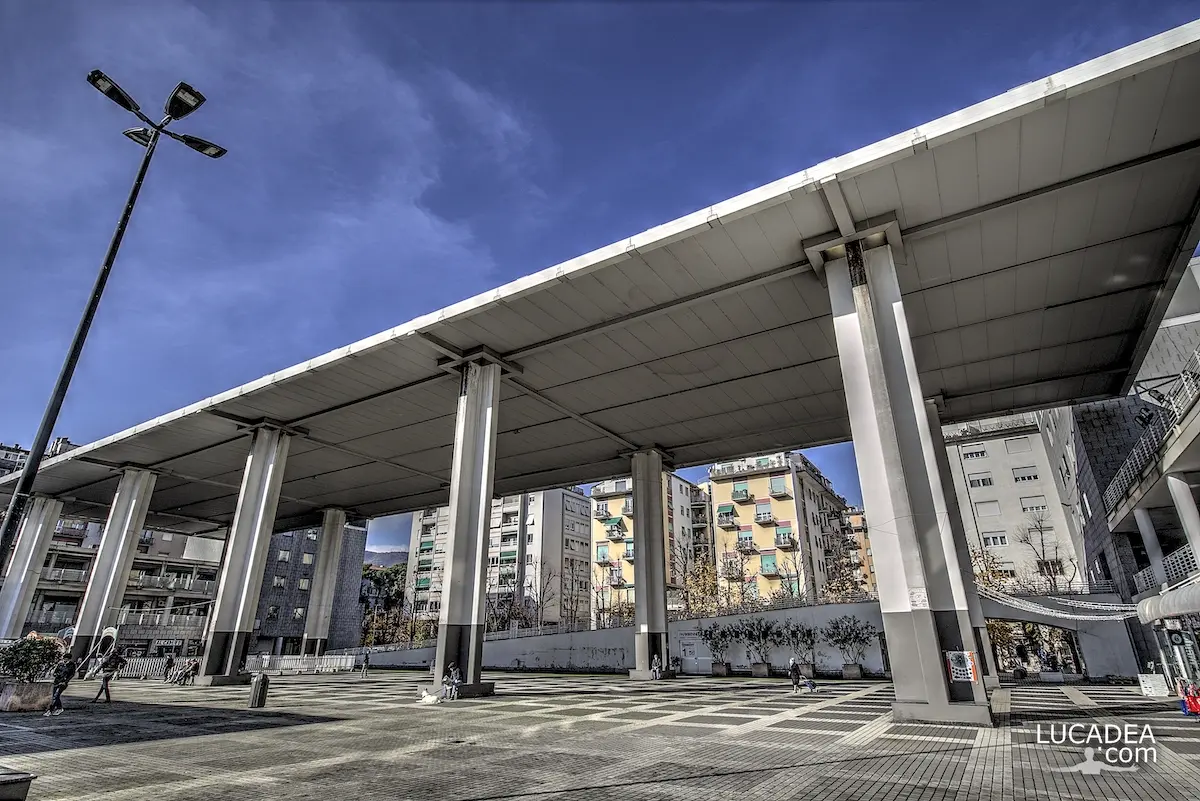
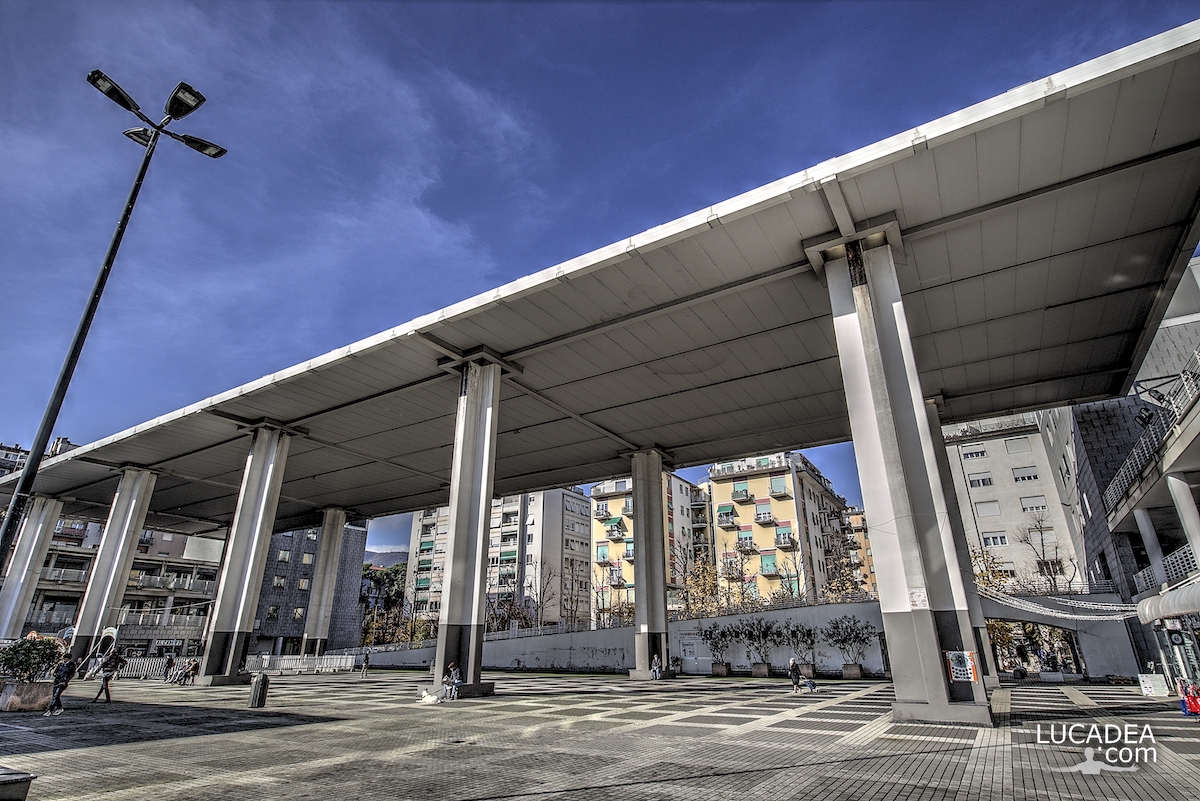
Modern John Fitzgerald Kennedy Square in La Spezia

Piazza John Fitzgerald Kennedy alla Spezia con la moderna struttura di copertura che caratterizza lo spazio urbano

Modern John Fitzgerald Kennedy Square in La Spezia.
While walking through the eastern part of La Spezia, Liguria, Italy, I came across this very modern-looking square, quite different from the narrow streets and older buildings I usually associate with the city. What immediately caught my attention was the large structure covering part of the space, giving the square a distinctive and contemporary appearance.
When I took this photograph, I did not know much about the place. I had tried to find some information but had not discovered much, so I could only interpret what I was seeing. The large roof-like structure made me wonder whether the square was used for markets, public activities, or events where some protection from the weather might be useful.
Piazza John Fitzgerald Kennedy is in the eastern part of La Spezia, in Liguria, and it offers a completely different photographic subject from the historic streets I have photographed elsewhere in the city. There are no narrow alleys here and no old façades competing for attention. Instead, the open space and the modern architecture create a much simpler urban composition.
That difference is precisely what made me stop.
Since then, I have managed to learn a little more about the square. It is connected with the Kennedy Center, an area with commercial and everyday services. The square also hosts the local farmers’ market on Thursdays, with producers bringing fruit, vegetables, cheeses and other products. Knowing this gives the structure in my photograph a little more context. What first looked to me like an unusual piece of modern architecture is also part of a space designed to accommodate everyday activities in the city.
If you are looking for places to see in La Spezia beyond the better-known historic streets, this is the kind of urban detail I find worth noticing. It may not be a traditional landmark, but it shows another side of the city, one made of contemporary spaces, commercial areas and places used by local people every day.
I like photographs that begin with a question. This one certainly did. I had simply encountered an unusual square while walking around La Spezia and found myself wondering what the structure was actually intended for. Sometimes the curiosity comes before the information, and for me that is part of the reason for taking photographs in the first place.
It also reminds me of other photographs I have published from La Spezia, where ordinary corners of the city became interesting simply because something caught my eye while I was walking.

Do you know this part of La Spezia, and have you ever stopped to look at the unusual structure in this square? Add a comment or go to the bottom of the site to read what other visitors have written.

Piazza John Fitzgerald Kennedy alla Spezia con la moderna struttura di copertura che caratterizza lo spazio urbano

Photo taken with a Canon EOS M100 camera and Canon EF-M 11-22 lens.

If you want to see all the photos I took in the city, click here:

John Fitzgerald Kennedy—commonly known as John Kennedy, simply JFK, or by the nickname Jack (Brookline, May 29, 1917 – Dallas, November 22, 1963)—was an American politician and author who served as the 35th President of the United States from 1961 to 1963.
Read more and learn more on Wikipedia

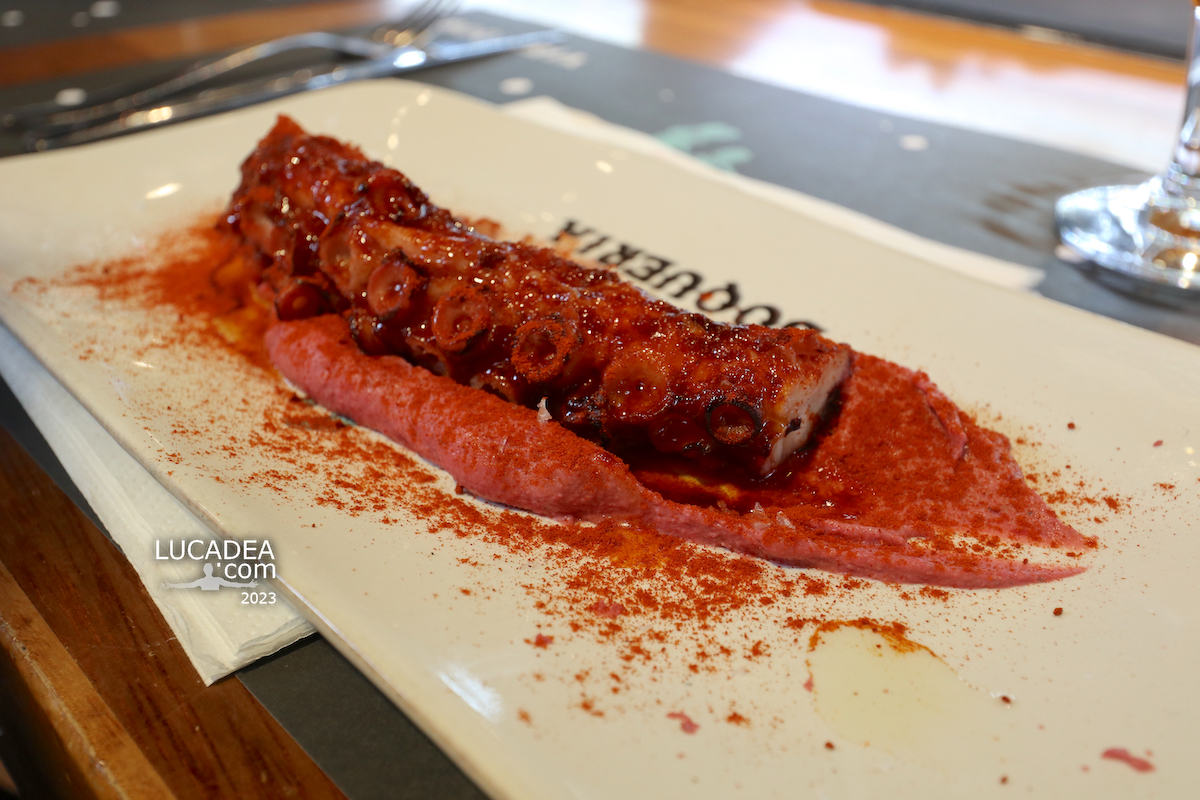
Grilled octopus at La Boqueria in Barcelona

Polpo alla griglia con hummus servito alla Boqueria di Barcellona su banco del mercato con piatto curato e colori vivaci

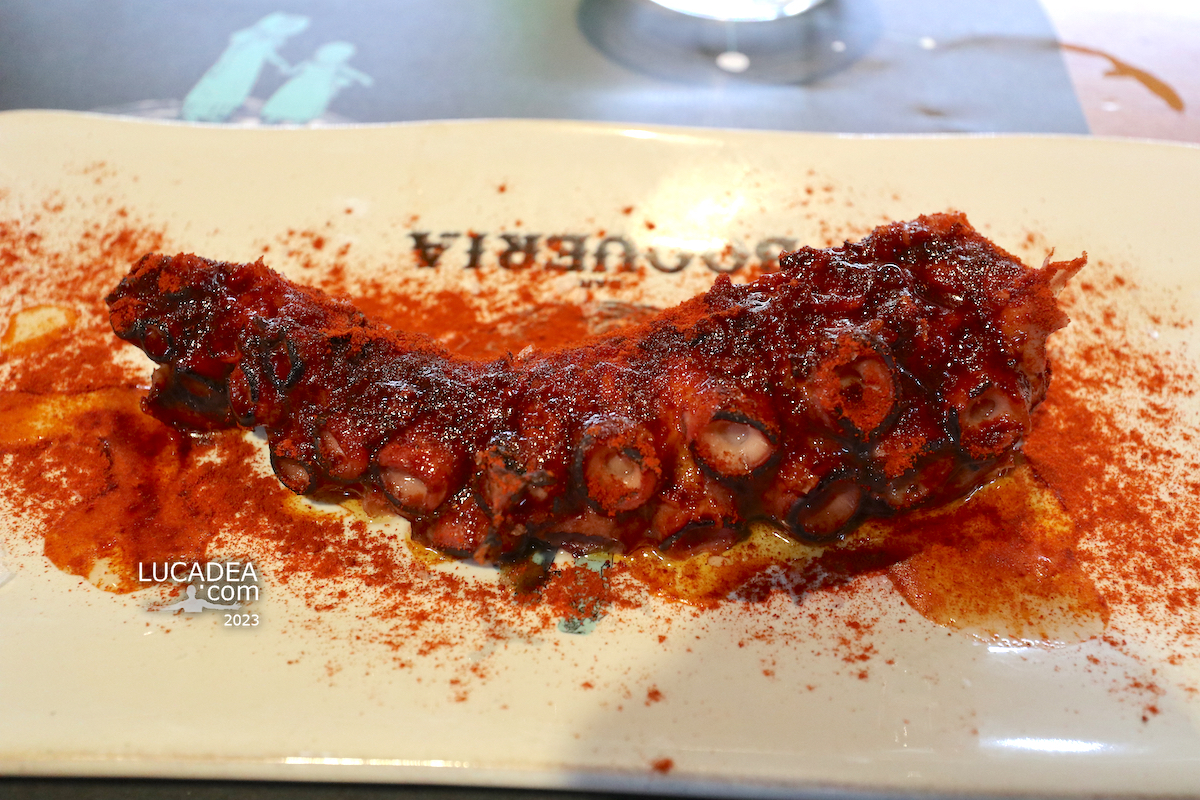
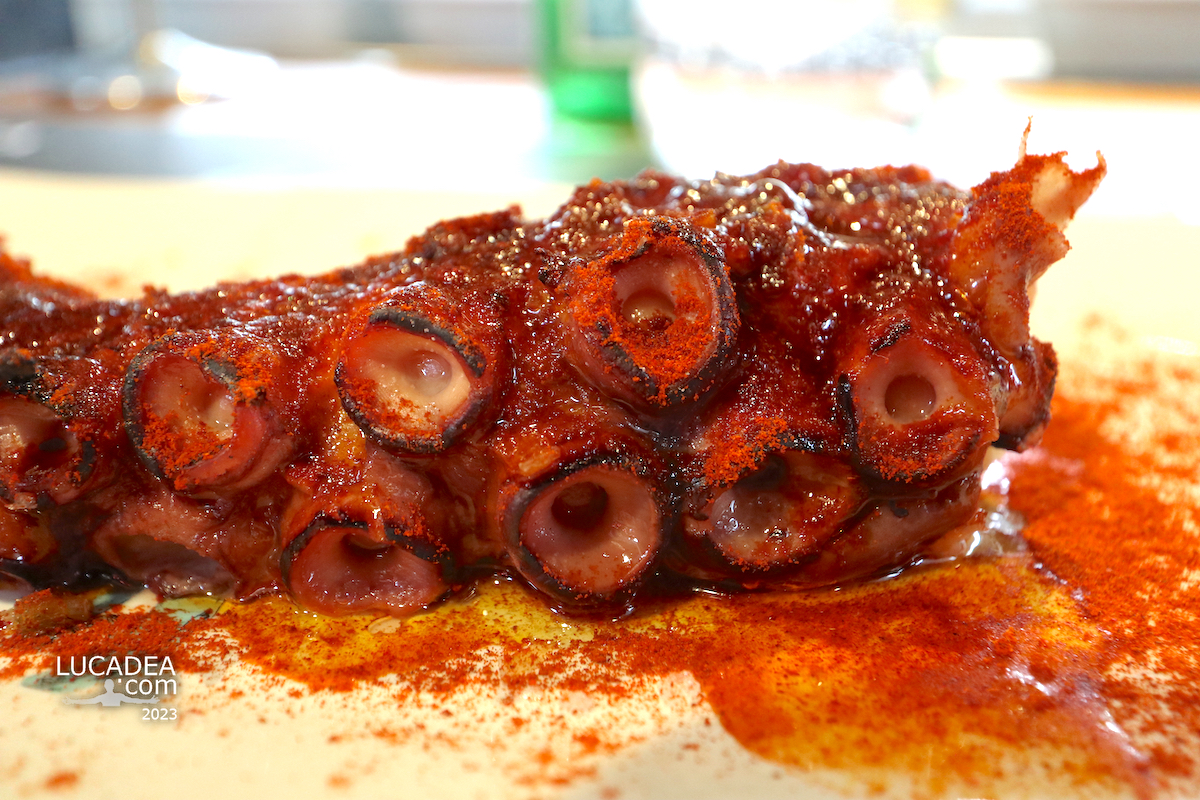
Grilled octopus at La Boqueria in Barcelona.
Among the busy stalls of La Boqueria market in Barcelona, one of the most popular spots if you are looking for what to eat in Barcelona, I stopped in front of a dish that immediately caught my attention: grilled octopus with hummus. It looked familiar and unfamiliar at the same time, something I knew but presented in a different way.
A few months ago, on my way back from the Caribbean by ship, I decided to take a break here, right in the market that opens onto La Rambla. Barcelona, in Catalonia, Spain, is a place I’ve visited more than once, but food is always what brings a new perspective to the experience.
Octopus has always been one of my favorite dishes, and I usually go for the traditional Galician style, with potatoes, paprika, and olive oil. This time, though, the version was grilled and paired with hummus instead. I still ordered it, and I took this photo because visually it worked really well: the texture of the octopus against the creamy base created a strong contrast that felt worth capturing.
The first bite, however, told a slightly different story. It wasn’t bad at all, but it didn’t give me that familiar feeling I was expecting. Sometimes reinterpretations change the balance more than you think, and I found myself missing the simplicity of the classic version.
A quick note: “pulpo a la gallega” comes from the Galicia region in Spain and was traditionally served during local fairs, cooked in large copper pots and enjoyed as a simple but flavorful dish.
While sitting there, I thought about another seafood dish I had photographed before, completely different in style but equally eye-catching. Food, just like places, can surprise you in unexpected ways depending on how it is presented.
If you are visiting La Boqueria and wondering what to eat, it’s worth trying new things—but maybe don’t skip the classics entirely.

Have you ever ordered something that looked perfect and then realized you preferred the traditional version? Add a comment or go to the bottom of the site to read what other visitors have written.

Grilled octopus with hummus served at La Boqueria market in Barcelona with colorful presentation on a food stall

Grilled octopus with hummus served at La Boqueria market in Barcelona with colorful presentation on a food stall

Grilled octopus with hummus served at La Boqueria market in Barcelona with colorful presentation on a food stall

Photos taken with a Canon EOS M100 camera and Canon EF-M 11-22 lens.

Here is where the famous market on La Rambla is located:

Hummus originates from the Middle East, the region where chickpea cultivation began. Similar variations are documented in Damascus as far back as the 18th century. Today, it is widely popular in Middle Eastern cuisine—particularly Levantine cuisine—where it is considered a staple food and is served alongside pita and falafel.
Read more on Wikipedia

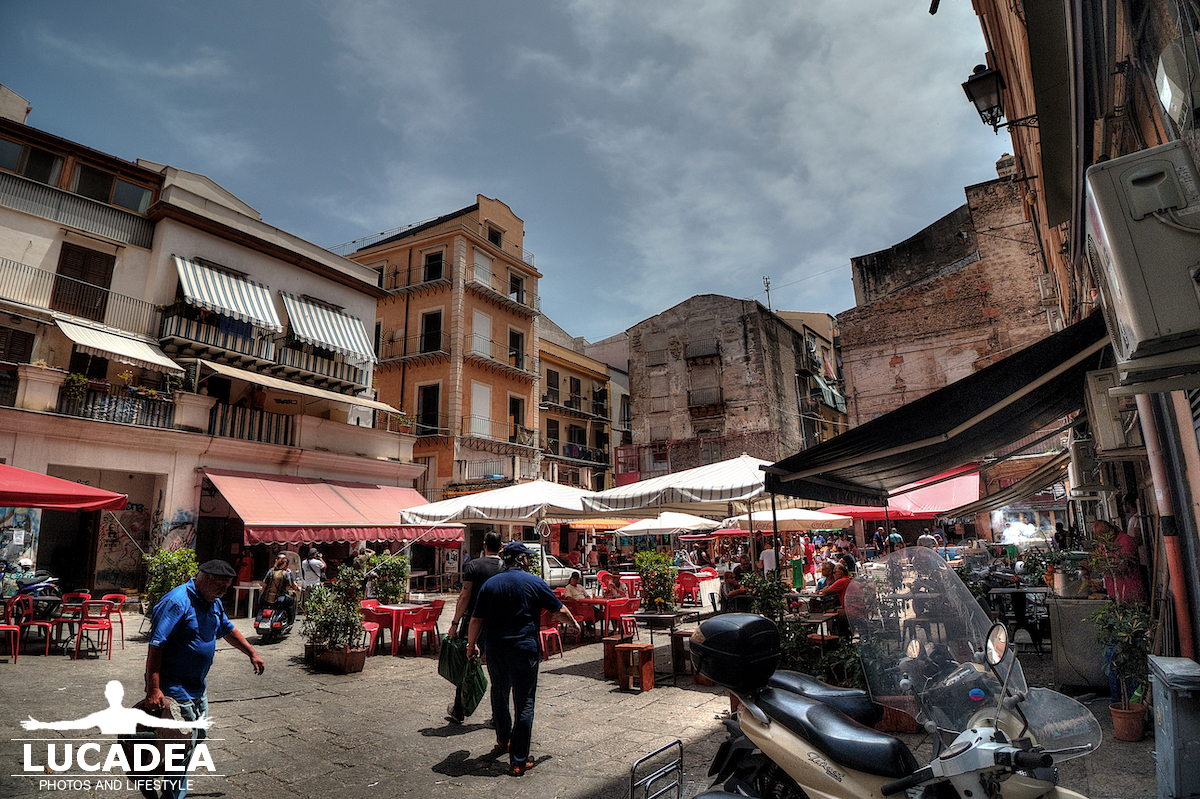
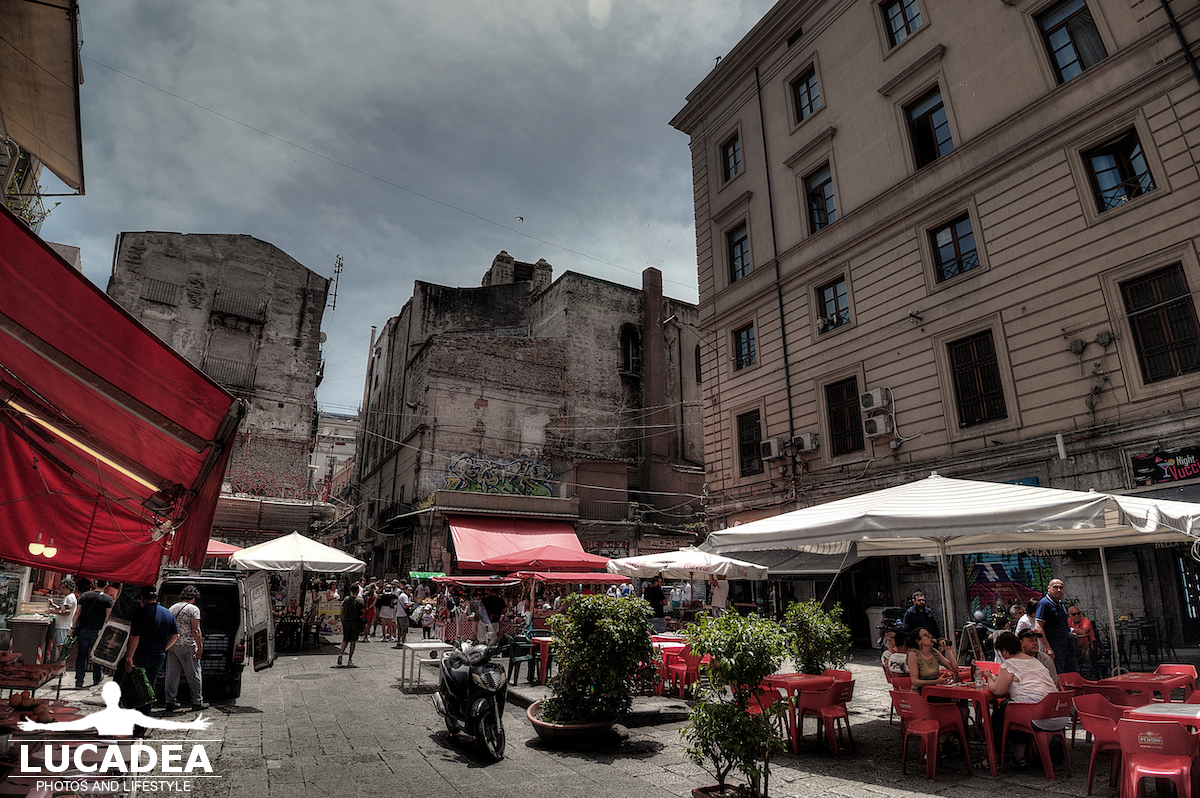
The Vucciria district in Palermo

La Vucciria a Palermo

The Vucciria district in Palermo.
Among the most characteristic places in the historic centre of Palermo, Sicily, there is certainly the Vucciria district, one of the city’s historic markets and a place that still preserves a very distinctive atmosphere. Walking through its narrow streets and small squares means discovering colours, flavours and details that tell the story of a different side of Palermo.
A few weeks ago I visited this area with some colleagues and we decided to stop in one of the small squares to eat something. It was a simple moment, but these everyday experiences often become the most memorable parts of a trip and, of course, interesting subjects for my camera.
The Vucciria is located in the heart of Palermo, Sicily, Italy, in an urban area where centuries of history can still be seen in the buildings, streets and old commercial spaces. Today the neighbourhood is known not only for its past as a popular market, but also for the restaurants, bars and evening atmosphere that have brought new life to these streets.
What caught my attention was the contrast between the old surroundings and the daily life taking place inside them. Tables, signs, people talking and historic buildings all come together to create a unique scene.
I took this photograph because I wanted to capture more than just a famous destination. I wanted to preserve a normal moment of the neighbourhood, the kind of detail that often reveals the real character of a place. My photography is frequently focused on these small scenes where architecture and everyday life meet.
A small curiosity about the Vucciria is that its name probably comes from the French word “boucherie”, meaning butcher shop, because the area was originally connected with meat markets. Over the centuries, the market changed and became one of Palermo’s most recognizable symbols.
After photographing many Ligurian villages, squares and alleys, this visit to Palermo allowed me to add a completely different atmosphere to my collection. Just like the narrow streets of Genoa and Liguria that I often photograph, here too the details of everyday life are what make the place fascinating.
The Vucciria is certainly one of the places worth seeing in Palermo, not only because of its history but because of the atmosphere you can experience while walking through its streets.

Have you ever visited the Vucciria district in Palermo, and what was your impression? Add a comment or go to the bottom of the site to read what other visitors have written.

Small square in the Vucciria district of Palermo with tables and historic market atmosphere

Small square in the Vucciria district of Palermo with tables and historic market atmosphere

Photos taken with a Canon EOS RP camera and a Canon EF-S 10-18 lens.

The name of this market derives from the word *Bucceria*—taken from the French *boucherie*—meaning “butcher shop.” Indeed, the market was originally designated for slaughtering (a slaughterhouse stood there during the Angevin era) and the sale of meat. Later, it became a market for selling fish, fruit, and vegetables. In the past, it was known as “la Bucciria grande” (the Great Bucciria) to distinguish it from smaller markets. In the Palermitan dialect, *Vuccirìa* means “confusion” or “hubbub.” Today, the clamor of overlapping voices and the shouts of the vendors (known as *abbanniati*) are among the defining characteristics of this market in Palermo.
Read more on Wikipedia

Spices at Olivar Market in Palma

Banco di spezie al mercato dell’Olivar a Palma di Maiorca con curry, peperoncino e colori diversi

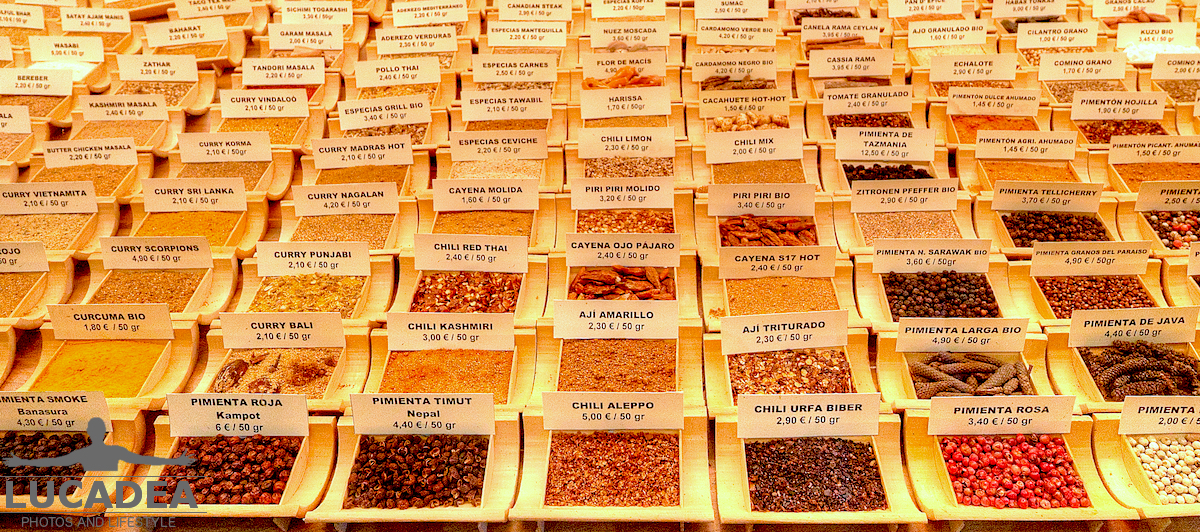
Spices at Olivar Market in Palma.
Among the colors and aromas of Olivar Market, I wanted to capture with my camera a small detail that tells a much bigger story: a journey through cultures and traditions represented by spices in Palma de Mallorca. This photograph comes from my attention to those simple elements often discovered while travelling, details that can reveal the identity of a place better than a large landmark.
Walking through Olivar Market in Palma de Mallorca, Balearic Islands, Spain, I stopped in front of this display filled with colorful containers and labels, each one suggesting a different story. It was not simply a collection of spices for sale, but a meeting point of flavors coming from different parts of the world, from Asia to the Mediterranean, from the Middle East to Latin America.
What immediately attracted my attention was the extraordinary variety of products available. Among the many names visible were Saharat, Zathar, Kashmiri Masala, Butter Chicken Masala, Garam Masala, Tandori Masala, Curry Vindaloo, Curry Korma, Curry Sri Lanka and Curry Madras Hot. Alongside these famous blends, there were also more unusual ingredients such as Chili Urfa Biber, Timut Pepper from Nepal, Black Cardamom, Mace Flower, Ají Amarillo and several varieties of pepper from distant regions.
I chose to photograph this stall because it represents the way a market can become a meeting place between people, cultures and culinary traditions. The image is not only about bright colors and carefully arranged containers; it suggests aromas, recipes and distant journeys hidden inside small packages.
Olivar Market is one of the places worth seeing in Palma de Mallorca if you want to experience a more everyday side of the city. Opened in the twentieth century, it remains a reference point for fresh products, local specialties and an atmosphere that feels more authentic than the busiest tourist areas.
A small curiosity about spice blends is that many famous mixtures, such as Garam Masala and different types of curry, do not have a single fixed recipe. Their ingredients often change according to region, family tradition and culinary use, making every version slightly different.
This photograph reflects my way of exploring places through simple details. After photographing streets, squares and architecture, I also enjoy finding stories in markets and everyday scenes. Like other images I have shared from local markets and urban life, this one tries to capture a place through something that might easily be overlooked.

If you were standing in front of this display, which spice or blend would you choose first? Add a comment or go to the bottom of the site to read what other visitors have written.

Spice stall at Olivar Market in Palma de Mallorca with colorful curry, masala and chili containers

Photo taken with a Canon EOS M100 camera and Canon EF-S 10-18 lens.

The term “spezie” (spices) generally refers to aromatic substances of plant origin (such as tarragon, thyme, lemon balm, juniper, marjoram, and saffron) used to flavor and season foods and beverages, and—especially in the past—in medicine and pharmacy. The word is “spezie” in both the plural and the singular (derived from “specie”), though the form “spezia” is also common in everyday usage.
Read more on Wikipedia

🏠
  • Italiano