Valle Christi Monastery in Rapallo

Il monastero di Valle Christi a Rapallo, con le antiche rovine immerse nel verde della Riviera ligure

Valle Christi Monastery in Rapallo.
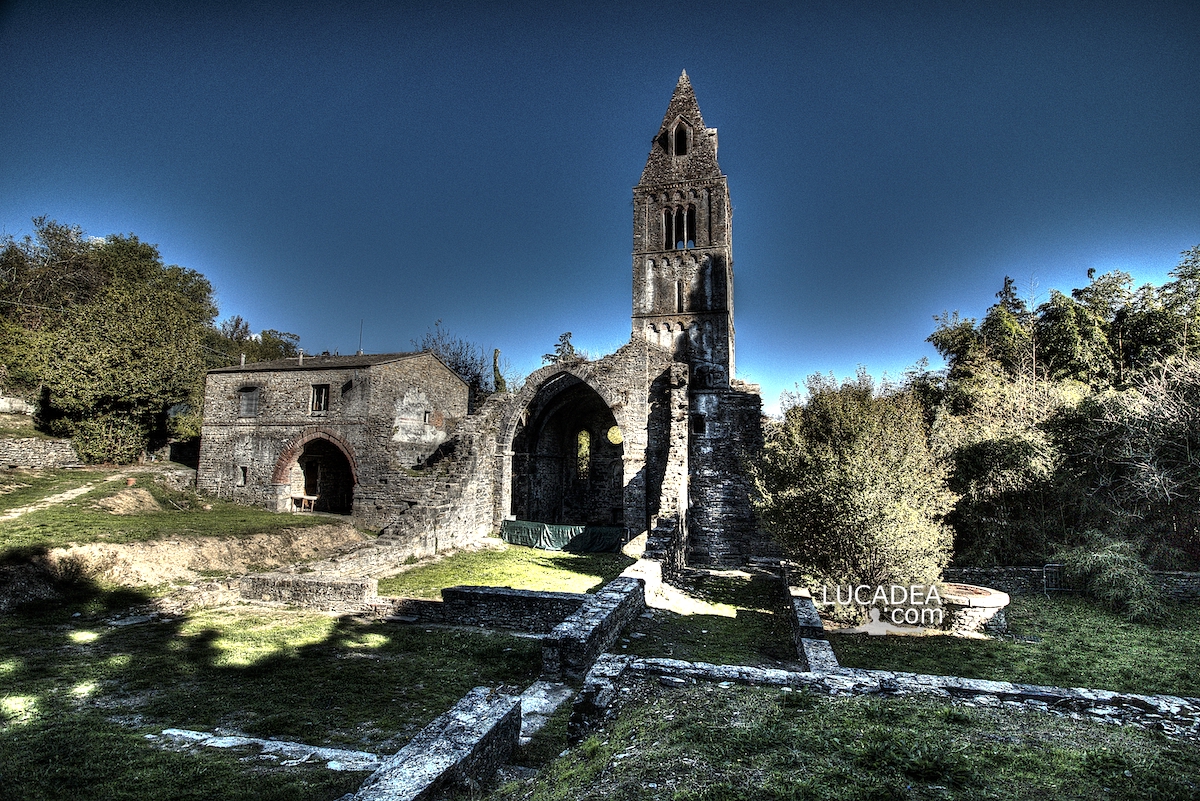
For a long time, I had only seen this place in other people’s photographs, until a couple of weeks ago when I finally decided to visit it myself. Valle Christi Monastery, behind Rapallo’s golf course, immediately caught my attention with its ancient remains rising among the greenery and the distinctive atmosphere surrounding the ruins.
This time I did not simply pass nearby. I entered the small area around the complex and finally had the chance to see it at close range. I had been postponing this visit for quite a while, so I was particularly curious to compare the images I had seen before with the real place. As often happens with photography, seeing a location in person is a completely different experience.
I took this photograph during that visit. I wanted to capture the monastery as part of its surroundings rather than isolate the architecture from the landscape. The ruins have a particular character because they do not simply look like an old building. They seem to have gradually become part of the vegetation and the landscape around them.
If you are wondering what to see in Rapallo beyond the better-known places along the Ligurian coast, Valle Christi is certainly worth considering. It is located in Rapallo, Liguria, Italy, behind the local golf course, and it is surprisingly convenient to reach by car. The monastery is only a few hundred meters from the Rapallo motorway exit, which makes it an easy stop even during a short exploration of the area.
I remember finding a parking area close to the entrance, which seemed convenient and free, although I would not treat that as permanent information because arrangements can change. For access to the site itself, it is best to check the current opening hours before visiting, as they may vary.
Once you arrive, however, the convenience of reaching the place quickly becomes secondary. You are suddenly standing in front of something that feels connected to another period of history. The stone walls, openings and vegetation create a view very different from the Rapallo usually shown in photographs of the seafront and town center.
The complex dates back to the thirteenth century and was founded as a Cistercian monastery for women. Over the centuries, it went through several changes and was eventually abandoned, leaving mainly the remains of the church and convent buildings. That ruined condition is part of what makes the place so interesting to photograph: you are not simply looking at an old building, but at what time has left behind.
For me, the atmosphere goes beyond its historical importance. There is something quiet and slightly mysterious about seeing those walls surrounded by vegetation. I would not automatically describe every historic site as magical, but in this particular case I understand why Valle Christi had fascinated me after seeing it so many times in photographs.
What I enjoyed most was being able to walk around the complex and change my viewpoint. From a photographer’s perspective, this makes a big difference. Moving only a few steps can completely alter the composition. In one frame the ruins become the main subject, while another view may be more about the relationship between stone, trees and sky.
During the visit, I tried not to rush. After knowing Valle Christi only through photographs on a screen for so long, it seemed important to give myself enough time to actually observe the place. This is one of the things I like about photography: sometimes carrying a camera simply encourages you to look more carefully.
I have already written about the ruins of Valle Christi on the blog through another photograph, and this image comes from the same visit. I like keeping this kind of continuity between posts because different photographs of the same place can reveal completely different aspects. One image may focus on the ruins, another on the surrounding landscape, and another on a small detail that was easy to miss the first time.
For anyone who has never visited Valle Christi, I would not let its proximity to the motorway put you off. It is one of those places that, despite being very easy to reach, can make you slow down for a while. You arrive by car and shortly afterwards you are looking at medieval remains surrounded by greenery, with a much stronger sense of distance from everyday life than the actual location would suggest.
It was a visit I should probably have made much earlier. Now, whenever I look back at the photographs I took, I find myself wanting to return and see the monastery again from different viewpoints.

Do you already know Valle Christi Monastery, or had you only seen it in photographs like I had until recently? Add a comment or go to the bottom of the site to read what other visitors have written.

Valle Christi Monastery in Rapallo, with its medieval ruins surrounded by the greenery of the Ligurian coast

Photo taken with a Canon EOS M100 camera and a Canon EF-S 10-18 lens.

There is also the official website for the festival held there annually: vallechristi.it.

If you would like to see all the photos I took at the monastery, click here:

The Monastery of Santa Maria in Valle Christi was a Catholic place of worship located in the hamlet of San Massimo—on Via San Massimo—within the municipality of Rapallo, in the Metropolitan City of Genoa. This former 13th-century monastic complex is listed among Italy’s national monuments and stands as one of the few surviving examples of Gothic architecture in the entire Liguria region.
Read more on Wikipedia

Add one  comment to this article or read  here what other visitors have written.
 
Adv
 
Disclamer

The rights on images, videos, choruses, text and all other material on the LUCADEA.com website are governed as per  Copyright page.


This page has been viewed 1 times today.
This month it has been viewed 1 times.
In total it has been viewed 1 times.
 

The beautiful Borzone Abbey in Liguria

L'Abbazia di Borzone

The beautiful Borzone Abbey in Liguria.
Borzone Abbey may not be one of the world’s most famous monuments, but standing in front of it is enough to understand why it can leave such a strong impression. Hidden among the greenery of the Ligurian hinterland near Borzonasca, it feels like one of those discoveries that deserves to be remembered.
Some places are not particularly famous, yet they stay with you after you leave. Borzone Abbey was like that for me. I had already photographed it before, but returning to the area gave me another opportunity to look at the building and, above all, at the landscape around it.
That relationship between architecture and nature is what I wanted to preserve in this photograph. There is no monumental square or busy historic centre surrounding the abbey. Instead, the building stands in a much quieter setting, surrounded by greenery and the hills of inland Liguria.
Borzone Abbey is a few kilometres from Borzonasca, in the Province of Genoa, Liguria, Italy. If you are looking for something worth seeing in the Ligurian hinterland away from the better-known coastal towns, this is exactly the kind of place that can turn into an unexpected discovery.
During my visit I was able to photograph the exterior, but unfortunately the abbey was closed and I could not see the inside. I would have liked to continue the photographic exploration indoors as well, especially after spending time looking at the building from outside. It gives me a good reason to return one day.
There is also a curious tradition associated with Borzone and the so-called Sacred Line of Saint Michael, an imaginary alignment traditionally said to connect several places of worship dedicated to the Archangel Michael across Europe. It is a fascinating piece of lore surrounding the area, adding another layer of curiosity without taking away from what can actually be seen at the abbey.
For me, however, the landscape remains one of the most interesting parts of the photograph. The greenery almost seems to embrace the building, giving it a secluded character that would be very different if the same structure were surrounded by modern streets and buildings.
This is also why I enjoy photographing lesser-known places. A famous monument often comes with an image already fixed in our minds. A place like Borzone gives me the opposite experience: I arrive, look around, notice something unexpected and discover the subject through the camera.
I have already shared other photographs of Borzone Abbey on the blog, and this image becomes another small piece of that photographic memory. Looking back at different pictures of the same place is something I particularly enjoy because each one can preserve a slightly different impression.
If you are visiting the area around Borzonasca, this is the sort of place I would keep in mind for a quiet stop away from the more crowded destinations. It is not the fame of the monument that makes it interesting, but the combination of the building, the surrounding landscape and the feeling of having discovered something for yourself.

Have you ever visited Borzone Abbey, or would this be a new discovery for you? Add a comment or go to the bottom of the site to read what other visitors have written.

Beautiful Borzone Abbey near Borzonasca, surrounded by greenery in the peaceful Ligurian hinterland

Beautiful Borzone Abbey near Borzonasca, surrounded by greenery in the peaceful Ligurian hinterland

Beautiful Borzone Abbey near Borzonasca, surrounded by greenery in the peaceful Ligurian hinterland

Beautiful Borzone Abbey near Borzonasca, surrounded by greenery in the peaceful Ligurian hinterland

There is also a website: abbaziaborzone.it

I visited the abbey again and took many more photos, which you can find here:

Where the Abbey is located:

Add one  comment to this article or read  here what other visitors have written.
 
Adv
 
Disclamer

The rights on images, videos, choruses, text and all other material on the LUCADEA.com website are governed as per  Copyright page.


This page has been viewed 1 times today.
This month it has been viewed 1 times.
In total it has been viewed 1 times.
 

The beautiful Borzone Abbey near Borzonasca

Abbazia di Borzone vicino a Borzonasca, immersa nel verde dell’entroterra ligure e dedicata a Sant’Andrea Apostolo

The beautiful Borzone Abbey near Borzonasca.
I have already photographed this beautiful abbey dedicated to Saint Andrew the Apostle, but I still wanted to stop here again when I returned to the area. It stands a few kilometres from Borzonasca, in the Ligurian hinterland of the Province of Genoa, surrounded by greenery and a landscape that gives the place much of its quiet character.
Borzone Abbey is one of those places that can remain interesting even after the first photograph. What caught my attention this time was not only the historic building itself, but also the way it sits within the surrounding landscape. The vegetation and the peaceful setting make the abbey feel naturally connected to its surroundings rather than simply placed in them.
That was the reason I took this photograph. I wanted to capture the abbey together with the environment around it, because the greenery is an important part of the scene. When I photograph historic buildings, I often prefer to leave some space around them rather than isolate the architecture completely. It gives a better sense of where the building actually stands.
Unfortunately, during my last visit the abbey was closed. I would have liked to photograph the interior as well, especially because I had already taken several photographs of the outside on previous occasions. Instead, I had to concentrate on the exterior and on the details that could still be appreciated from outside.
If you are looking for things to see near Borzonasca, Borzone Abbey is certainly a place worth considering. This part of Liguria is very different from the better-known coastal towns. Moving inland brings a quieter landscape of small villages, secondary roads, woodland and historic buildings surrounded by nature.
There is also an unusual historical and legendary curiosity connected with Borzone. The abbey is associated with the so-called Sacred Line of Saint Michael, an alleged straight alignment connecting several places of worship dedicated to the Archangel Michael across Europe. It is best understood as a tradition and a fascinating piece of local lore rather than as a reason to overlook the abbey itself, which remains interesting for its architecture and setting.
For me, this combination of history, landscape and architecture is exactly what makes photographing the Ligurian hinterland so enjoyable. A place does not have to be enormous or internationally famous to deserve a photograph. Sometimes a small historic building surrounded by trees can be much more rewarding to look at.
This image therefore becomes another small chapter in my photographs of Borzone Abbey. I like the idea that the blog can preserve these returns to the same places over the years. A familiar building can look slightly different each time, depending on the moment, the viewpoint and simply on what catches my attention that day.
If you are visiting the area around Borzonasca, this is the kind of place where I would take my time rather than simply passing through. The setting itself is part of the experience, and the abbey becomes even more interesting when seen together with the landscape around it.
Perhaps on another visit I will finally find the doors open and have the opportunity to photograph the interior as well. For now, this photograph remains my view of the abbey surrounded by the green landscape of the Ligurian hinterland.

Have you ever visited Borzone Abbey, or is this a place you have yet to discover? Add a comment or go to the bottom of the site to read what other visitors have written.

Borzone Abbey near Borzonasca, surrounded by greenery in the Ligurian hinterland and dedicated to Saint Andrew

Photo taken with a Canon EOS M100 camera and Canon EF-M 11-22 lens.

You can find all the photos I took here:

Here is where the abbey is located:

The Great Buddha at Ngoc Hoa Monastery

Grande statua dorata del Buddha nel monastero Ngoc Hoa nella zona di Qui Nhon, Vietnam

The Great Buddha at Ngoc Hoa Monastery.
During a trip to Vietnam last year, my wife and I travelled around the Qui Nhon area and, during one of our excursions, visited Ngoc Hoa Monastery. Among the things that immediately caught my attention was the huge golden Buddha statue standing within this small spiritual centre.
This photograph comes directly from that visit. I wanted to capture the Buddha with my camera because its size made it dominate the surrounding scene. The golden surface also made the statue particularly noticeable, creating a very clear focal point even when viewed from some distance.
When I think about what to see around Qui Nhon, this is one of the visits I remember with particular curiosity. The area is not only about beaches and the sea. There are also religious and cultural places that offer a completely different perspective on the region and on everyday spiritual life in Vietnam.
Ngoc Hoa Monastery is in the Qui Nhon area, in Binh Dinh Province, Vietnam. Visiting a place like this means stepping away for a while from the more urban side of the destination and entering an environment where the religious character of the site becomes immediately apparent.
The Buddha statue was clearly the main subject I wanted to photograph. Its scale naturally draws the eye upwards and gives the image a very precise focal point. I enjoy this kind of photography because the composition does not always need to be complicated. Sometimes the proportions of the subject itself are enough to create the structure of the photograph.
There is also an interesting detail behind Buddhist representations: Buddha statues can look very different depending on the artistic tradition and cultural setting in which they are created. Body position, hand gestures and facial expression can carry symbolic meanings, so even a seemingly simple statue can offer many details to observe.
During the visit I looked at more than just the statue, of course, but it was definitely the element that stayed with me most strongly. Its scale, colour and position within the monastery made it the dominant feature of the whole setting.
That is one of the things I enjoy about travel photography. You do not always have to search for the most famous monument or the most recognisable viewpoint. Sometimes you simply encounter a subject whose proportions, position or relationship with the surrounding space immediately catches your eye.
My camera allowed me to preserve that particular impression. Looking at the image again today brings back the excursion I made with my wife and, above all, the surprise of finding such an imposing statue in a place that was completely new to me.
If you are wondering what to see around Qui Nhon, places like this can add another dimension to a visit. It is not simply about photographing a large Buddha statue, but about experiencing a setting where architecture, spirituality and the surrounding landscape come together.
The golden Buddha remains the strongest visual memory I have of Ngoc Hoa Monastery. This photograph belongs to that journey through Vietnam and, rather than trying to explain the entire place, it allows me to remember one specific moment from our excursion.
As with other travel photographs I have shared, I like this image because there is a real experience behind it. I was there, I saw the statue with my own eyes and I chose to photograph it because something about its presence immediately caught my attention.
This is one of the reasons I continue to keep and publish photographs that might seem simple at first glance. Years later, a single image can bring back not just the subject itself, but an entire journey, a particular day and the feeling of discovering somewhere completely new.

Have you ever come across such an imposing Buddha statue while travelling through Vietnam? Add a comment or go to the bottom of the site to read what other visitors have written.

Large golden Buddha statue at Ngoc Hoa Monastery near Qui Nhon, Vietnam

Photo taken with Canon EOS RP and lens Canon RF 24-50.

Here’s where the statue is located:

According to Buddhism, a Buddha, also known as budda in Italian, is a being who has reached the highest level of enlightenment (bodhi). Buddha is the past participle of the Sanskrit budh, meaning to become aware, to awaken. Buddha therefore means “awakened,” referring to the passage of consciousness from the state of sleep (ὕπνος, hypnos) to the state of full realization.
Continue and learn more at Wikipedia

The San Gregorio Armeno gateway in Naples

Portale del complesso monastico di San Gregorio Armeno nel centro storico di Napoli, lungo la famosa via dei presepi

The San Gregorio Armeno gateway in Naples.
I had already walked along Via San Gregorio Armeno a couple of times, following the famous street known for its nativity workshops, but I had never really noticed the religious complex sharing the same name. This time the monumental entrance caught my eye, and I stopped to photograph it.
What I like about this image is the way I found the subject. I was not looking for the entrance to San Gregorio Armeno monastery. I came across it while walking along a street I thought I already knew. This happens to me quite often when photographing Naples: a familiar street can reveal something completely different when I slow down and pay attention to what stands beside the main attraction.
Via San Gregorio Armeno is famous around the world for its traditional Neapolitan nativity figures and the small workshops where artisans make and display them. The street is narrow, lively and usually busy, and it is very easy to focus entirely on the shop windows while walking through it. I had done exactly that myself on previous visits, passing the entrance without stopping.
The gateway in my photograph stands in the historic centre of Naples, Campania, Italy, along Via San Gregorio Armeno and gives access to the religious complex dedicated to Saint Gregory of Armenia. Its position makes the scene particularly interesting to me because this imposing entrance appears directly within one of the city’s most recognizable streets.
When I finally noticed it, the entrance seemed to deserve a photograph on its own. Its scale and decoration create a clear contrast with the narrow urban space around it. I did not need to search for an elaborate subject. The architectural details were already there, waiting to be noticed.
The complex has a long connection with Benedictine nuns and very old origins. According to tradition, the monastery was established in the Middle Ages by nuns who came from Constantinople and brought relics associated with Saint Gregory of Armenia. Much of the complex visible today, however, reflects later transformations, particularly those carried out between the sixteenth and seventeenth centuries. That layered history helps explain why such a substantial religious complex can remain partly hidden behind a gateway on a busy historic street.
One detail I find particularly interesting is the relationship between the monastery and the fame of the street itself. When people hear San Gregorio Armeno, they usually think immediately of Naples and its nativity figures. Yet the street takes its name from the religious complex and its church, rather than from the artisan tradition that later made the area famous.
That discovery is part of what made me take the photograph. The entrance had been there during my previous walks, but I had not really seen it. Photography often works this way for me. Taking the camera out changes the way I look at familiar places and makes me pay attention to architectural details that might otherwise remain part of the background.
If you are visiting Naples and wondering what to see along Via San Gregorio Armeno, this entrance is an easy detail to include in your walk. You do not have to leave the famous nativity street to find it. It belongs to the same urban setting, but it tells a different story, one connected with the religious history of the old city.
This photograph also fits naturally with other Naples stories on my blog. I have previously photographed the interior of San Domenico Maggiore, the Chapel of the Crucifix and the Madonna Enthroned mosaic inside Santa Restituta. Together, these images form a kind of personal walk through the churches and historic spaces of Naples, with each photograph beginning from something that caught my attention while I was already there.
For me, that is one of the best reasons to keep photographing a city. Familiarity does not necessarily mean that there is nothing left to discover. Sometimes the most interesting subject is the one that has been in front of you all along.
In this case, I simply needed to walk past the same street one more time before the gateway finally made me stop.

Had you noticed this entrance while walking along Via San Gregorio Armeno? Add a comment or go to the bottom of the site to read what other visitors have written.

San Gregorio Armeno monastery gateway in Naples, opening onto the famous historic street known for its nativity workshops

Photo taken with Canon EOS M100 and Canon EF-M 11-22 lens.

To see all the photos I took in Naples, both that weekend and on other trips, click here:

The castle square of Varese Ligure

La piazza del castello di Varese Ligure

The castle square in Varese Ligure.
The square dedicated to Guglielmo Marconi in Varese, which overlooks the town center.
The façade of the church dedicated to Saint Philip Neri and Saint Teresa of Avila, which was part of the Augustinian Nuns’ Monastery, stands out.

Do you know the town of Varese Ligure? Add a comment or go to the bottom of the site to read what other visitors have written.

La piazza del castello di Varese Ligure

Photo taken with Canon EOS RP and Canon RF 28 lens.

If you want to see all the photos taken in Varese Ligure, click here:
foto gallery

Where is the spot where I took the shot:

Filippo Romolo Neri (Florence, 21 July 1515 – Rome, 26 May 1595) was an Italian priest and educator, beatified in 1615 and proclaimed a saint by Pope Gregory XV in 1622. Originally from Florence, he moved to Rome, while still very young, where he decided to dedicate himself to his evangelical mission in a corrupt and dangerous city, so much so that he received the nickname of “the second apostle of Rome”. He gathered around him a group of street children, introducing them to liturgical celebrations and entertaining them, singing and playing without distinction between males and females, in what would later become the Oratory, considered and proclaimed a true congregation by Pope Gregory XIII in 1575.
Continue and learn more at Wikipedia

The castle square of Varese Ligure – La place du château de Varese Ligure – La plaza del castillo de Varese Ligure – A praça do castelo de Varese Ligure – Der Schlossplatz von Varese Ligure – Quảng trường lâu đài Varese Ligure

Battistine Stairway among Genoa’s historic alleys

La Salita delle Battistine a Genova

Battistine Stairway among Genoa’s historic alleys.
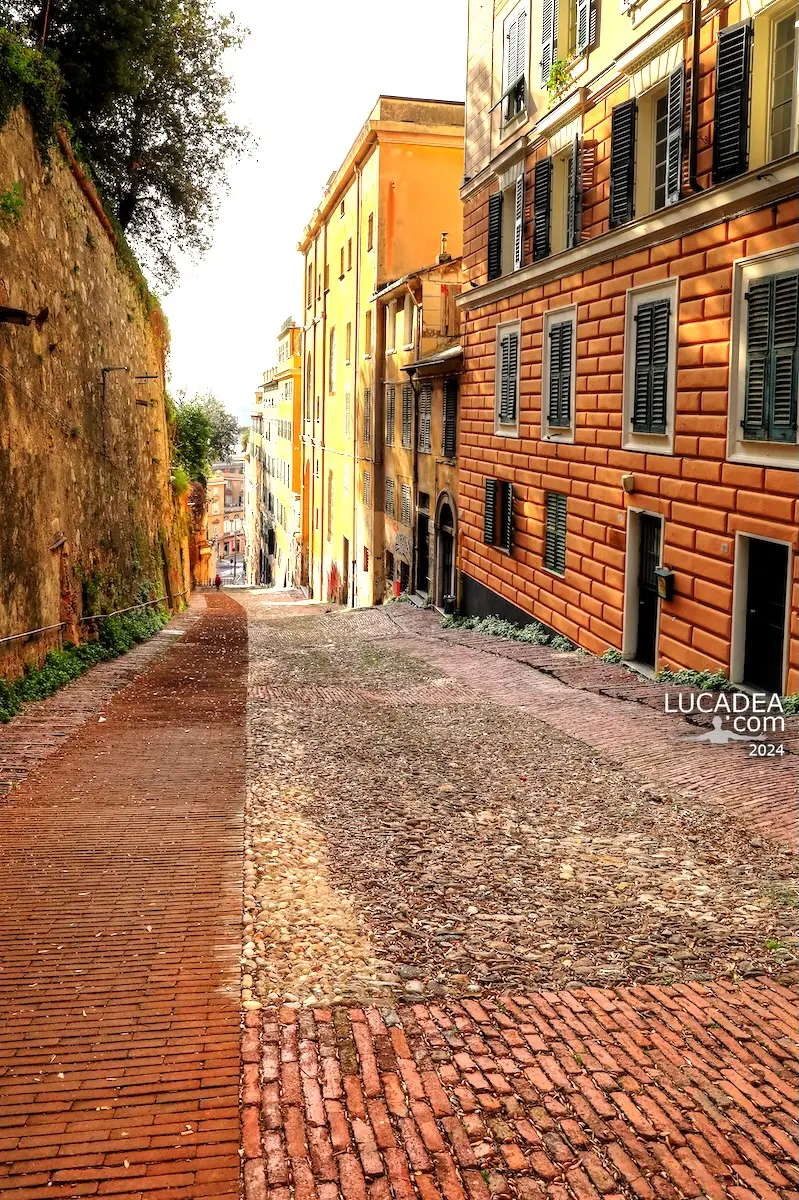
While walking through the historic centre of Genoa, I photographed this steep street, one of those urban paths that still reveal the unique character of the city. The Battistine Stairway connects Piazza Portello with Piazza dei Cappuccini and immediately gives the feeling of entering an older Genoa, made of slopes, narrow passages and changing perspectives.
The Battistine Stairway in Genoa, Liguria, Italy, is one of the typical uphill routes of the Maddalena district, an area where modern city life and historic streets exist side by side. I took this photograph because I enjoy looking for places that are not necessarily famous landmarks but can still tell the real structure and personality of Genoa, a city built between the sea and the hills.
This street is not simply a connection between two squares; it is a small journey through the history of the old city. Walking uphill, you can notice the relationship between buildings, ancient passages and the narrow spaces that characterise many parts of Genoa’s historic centre. These urban details are often what attract my attention when I photograph the city.
The name of the street comes from the church and convent of the Romite di San Giovanni Battista, known as the Battistine. The old religious complex played an important role in the history of the area, and today the former convent spaces are used as a school.
A curiosity connected with the Battistine Stairway is its link with Friedrich Nietzsche. The German philosopher stayed in Genoa and spent time in this area of the city. According to tradition, he worked here on some pages of the manuscripts of “Thus Spoke Zarathustra”. This detail adds another layer of interest to a street that could otherwise appear as just a simple passage through the alleys.
During works connected with the opening of the Nino Bixio tunnel, parts of the ancient twelfth-century city walls were discovered, including a secondary entrance to the convent with a pointed arch. It is another example of how Genoa’s past often appears unexpectedly in everyday places.
This photograph connects with other stories on my blog dedicated to Genoa’s historic alleys and uphill streets, because these less-known routes often reveal the true shape of the city. As in other photographs of Genoa’s old centre, I wanted to capture a small urban detail capable of transmitting the atmosphere of the place.
The Battistine Stairway may be a simple street, but between its stones it preserves many stories waiting to be discovered.

Have you ever walked through a historic street simply following your curiosity? Add a comment or go to the bottom of the site to read what other visitors have written.

Photos taken with Canon EOS RP and lens Canon RF 24-50.

Here’s where this street is located:

The steep and spectacular creuza, descending downhill, seems to catapult you into the city center. At number 12 is the former church and convent of San Giovanni Battista (1744), which gives the street its name. Today, it houses the Giano Grillo primary school and the Bertani Ruffini secondary school.
Continue and learn more at Amezena

Cloister of the monastery of San Gregorio Armeno

Il chiostro del complesso religioso di San Gregorio Armeno a Napoli

The cloister of the religious complex of San Gregorio Armeno in Naples.
The splendid cloister of this monastery located in the alley of the same name in the historic center of Naples.
It was a surprise to visit this place.

Have you ever been to Naples and visited this monastery in the alleys of Naples? Add a comment or go to the bottom of the site to read what other visitors have written.

Il chiostro del complesso religioso di San Gregorio Armeno a Napoli

Foto scattata con macchina Canon EOS M100 e lente Canon EF-M 11-22.

I took several photos of the complex; click here to see them:

The Church of San Gregorio Armeno (also popularly known as the Church of Santa Patrizia) is a monumental church in Naples located on the street of the same name, between the Decumanus The main and lower levels of the old town center. Together with the adjacent monastic complex, it is one of the oldest, largest, and most important religious buildings in the city.
Continue and learn more at Wikipedia

The cloister of the religious complex of San Gregorio Armeno in Naples – Le cloître du complexe religieux de San Gregorio Armeno à Naples – El claustro del complejo religioso de San Gregorio Armeno en Nápoles – O claustro do complexo religioso de San Gregorio Armeno em Nápoles – Der Kreuzgang des religiösen Komplexes von San Gregorio Armeno in Neapel – Tu viện của khu phức hợp tôn giáo San Gregorio Armeno ở Naples – 那不勒斯圣格雷戈里奥阿尔梅诺宗教建筑群的修道院 – ナポリのサン・グレゴリオ・アルメーノの宗教施設の回廊

Walking Among the Ruins of Valle Christi

Passeggiando dal monastero di Valle Christi a Rapallo

Walking Among the Ruins of Valle Christi.
Among the places I had wanted to visit for a long time around the Tigullio area, Valle Christi was certainly one of the most intriguing. When I finally found the opportunity to go there, I quickly realized that the wait had been worthwhile. The ruins surrounded by greenery, the quiet atmosphere of the park and the feeling of the place left a strong impression on me.
Valle Christi is located in Rapallo, Liguria, Italy, in a slightly secluded area not far from the town itself. Despite its peaceful setting, it is surprisingly easy to reach. While walking through the grounds, I found myself wondering why I had postponed the visit for so long. Sometimes we travel far away to discover new places while overlooking interesting locations that are practically on our doorstep.
As soon as I entered the park, I started exploring the paths leading toward the remains of the old monastery. The surrounding vegetation helps create a sense of separation from the rest of the town. It is one of those places where everyday noise seems to fade away and where you naturally slow down to observe your surroundings more carefully.
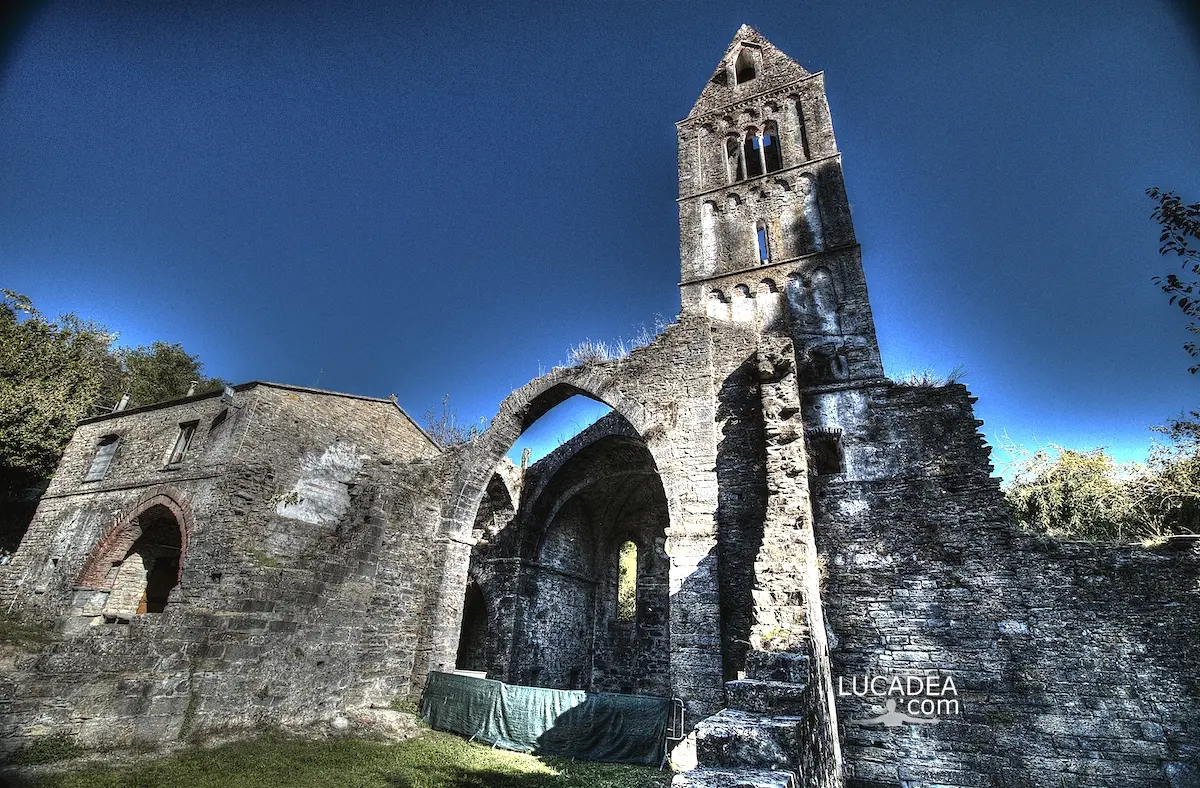
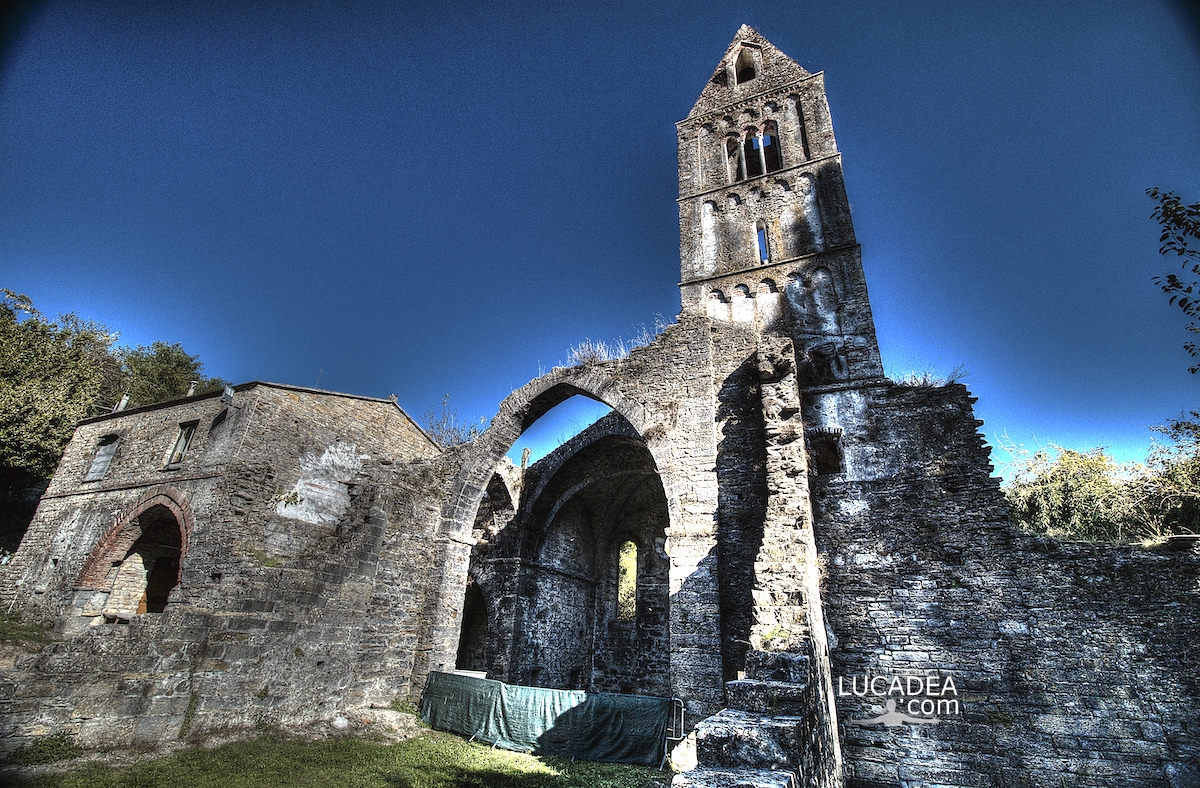
I took this photograph during that walk. I wanted to capture not only the ruins themselves but also the environment around them. When photographing a historic site, it is easy to focus exclusively on the architecture. Here, however, the relationship between the stone structures and the surrounding landscape seemed equally important.
If you are visiting Rapallo and looking for places beyond the seafront and the castle, Valle Christi is worth considering. It is not a location that impresses through size or grandeur. Instead, it attracts attention through atmosphere and character. Walking among the remains, you become very aware of the passage of time.
The monastery dates back to the thirteenth century and was originally connected with a community of Cistercian nuns. Over the centuries it experienced a complex history that eventually led to its abandonment. Today, the most recognizable remains belong to the Gothic church, whose walls still convey a sense of the site’s former importance. It is a small historical detail that adds depth to the visit without overshadowing the experience itself.
What impressed me most was not a specific architectural feature but the overall feeling of the place. Roofless walls, openings framing the sky and nature gradually blending with stone create a distinctive atmosphere. It is a location that seems to combine history with a certain sense of mystery.
During my walk through the park, I repeatedly stopped to observe the ruins from different angles. Every viewpoint slightly changed the perception of the space and offered new photographic opportunities. It is the kind of place where photography comes naturally from careful observation rather than from rushing to take pictures.
I have already shared several photographs from the Tigullio area on the blog, including coastal walks and historic villages. Valle Christi fits naturally into that collection because it shows a lesser-known side of the region, away from the more familiar images of the Ligurian coast.
Although the complex now survives only as ruins, it never feels abandoned. The site is maintained and accessible, making the visit enjoyable and welcoming. It encourages visitors to slow down, take their time and appreciate details that might otherwise go unnoticed.
Looking back at this photograph, I immediately remember the quiet atmosphere of that day. The greenery, the stone walls and the silence all come together in a way that reflects the character of Valle Christi. You do not need to be particularly interested in history or architecture to appreciate it; curiosity alone is enough.
That is why I often recommend Valle Christi when someone asks me about interesting places to see near Rapallo. It is easy to reach, yet it offers a feeling of stepping away from everyday life for a while.

Have you ever visited the ruins of Valle Christi and experienced their unique atmosphere for yourself? Add a comment or go to the bottom of the site to read what other visitors have written.

Ruins of Valle Christi monastery in Rapallo surrounded by greenery within the peaceful historic park

Ruins of Valle Christi monastery in Rapallo surrounded by greenery within the peaceful historic park

Photos taken with Canon EOS M100 and Canon EF-S 10-18 lens.

If you want to see all the photos I took at the monastery, click here:

There is also the official website for the festival celebrated annually there: vallechristi.it.

The monastery of Santa Maria in Valle Christi was a Catholic place of worship located in the hamlet of San Massimo, on Via San Massimo, in the municipality of Rapallo in the metropolitan city of Genoa. The former 13th-century monastic complex is listed as an Italian national monument; it is one of the few surviving examples of Gothic architecture in the entire Ligurian region.
Continue and learn more at Wikipedia

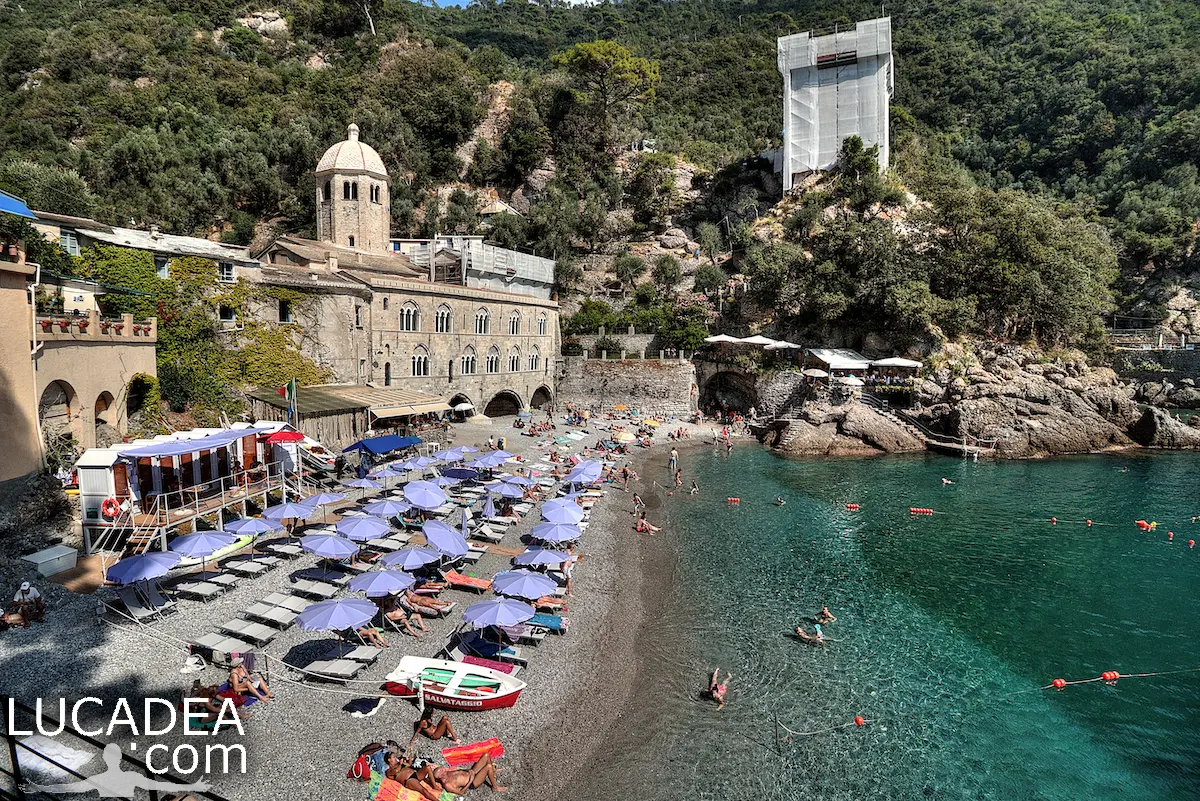
The splendid San Fruttuoso of Camogli

La splendida San Fruttuoso di Camogli

The splendid San Fruttuoso di Camogli.
My eyes never cease to pop out of my head every time I see one of the photos I took on one of my trips to San Fruttuoso.
I’ve already reached the splendid Abbey both from Camogli (the Sentiero delle Catena) and from Santa Margherita Ligure (from Mount Portofino), and both trails were very challenging and long, but they also provided me with dozens of stunning nature shots.

Do you know San Fruttuoso?
Add a comment or go to the bottom of the site to read what other visitors have written.

La splendida San Fruttuoso di Camogli

Photo taken with Canon EOS M100 and Canon EF-S 10-18 lens.

If you’re interested in seeing some photos taken along the trail from Camogli to San Fruttuoso, click below:
foto gallery

Here is where the Abbey is located:

The abbey is dedicated to Saint Fruttuoso of Tarragona, a 3rd-century Catalan bishop and saint, whose ashes are preserved at the abbey, where they were supposedly transferred following the Arab invasion of the Iberian Peninsula.
The abbey is not accessible by any major road; it can only be accessed by sea or by following two scenic paths: one descending from the Portofino mountain above and the other following the coast from the Portofino bay. The abbey overlooks the swimming beach opposite.
Continue and learn more at Wikipedia

The splendid San Fruttuoso di Camogli – Le splendide San Fruttuoso de Camogli – El espléndido San Fruttuoso de Camogli – O esplêndido São Fruttuoso de Camogli – Das herrliche San Fruttuoso di Camogli – San Fruttuoso di Camogli lộng lẫy
🏠
  • Italiano