Genoa’s Old Port, a classic waterfront view

Il Porto Antico di Genova

Genoa’s Old Port, a classic waterfront view.
Some photographs do not claim to reveal anything new, yet they are still worth taking. This is one of those pictures.
A while ago I was in Zena, as Genoa is affectionately called by its inhabitants, walking around the Old Port area. I could not resist stopping to capture one of the city’s most familiar views. I know this is not an original composition and that countless photographers have probably photographed the same panorama from every possible angle. Still, when I find myself in front of such a recognisable scene, I sometimes feel like taking a classic photograph instead of searching for an unusual perspective.
I wanted to include several of the features that make this part of Genoa so easy to recognise. On the right, in the foreground, there are a few privately owned boats moored in the marina. Further back stands the Bigo, one of the most distinctive structures along the waterfront. Designed by Renzo Piano as part of the redevelopment for the 1992 celebrations marking the 500th anniversary of Christopher Columbus’s voyage, its shape recalls the old cranes once used in the harbour. Its steel arms spread out above the water, supporting the panoramic lift that takes visitors up for a view over the port and the city.
Nearby is Piazza delle Feste, a covered venue used for events and public gatherings. During the winter season, the space can become an ice-skating rink, bringing a different atmosphere to this waterfront setting. Further along, the large structure of the Genoa Aquarium comes into view. Opened in 1992, it has become one of the city’s best-known attractions. Its arrival helped turn the Old Port into a lively destination for local residents as well as visitors from all over the world.
At the end of this sequence of buildings and structures, the Biosphere is also visible. This glass-and-steel sphere, designed by Renzo Piano and added to the area in 2001, houses a small tropical environment with plants and animals. Its transparent shape seems almost to float above the water, making it another distinctive feature of the harbour.
The whole area is the result of a major urban transformation. For many years, the old harbour had gradually lost its original commercial and maritime functions as port activities moved towards other parts of Genoa. The redevelopment carried out for the 1992 celebrations gave the city back an important stretch of its waterfront. Today, the Old Port brings together leisure, culture, entertainment and the opportunity to enjoy the sea just a short walk from the historic centre.
I took this photograph using HDR, a technique that combines different exposures to retain detail in both bright and shadowed areas. I like using it when a scene contains several structures, reflections and contrasting levels of light, as in this view of the harbour.

It may not be a new or unusual photograph, but it remains a pleasant memory of a walk around Genoa’s Old Port. Which is your favourite corner of this part of the city? Add a comment or go to the bottom of the site to read what other visitors have written.

Classic HDR view of Genoa's Old Port, with private boats, the Bigo panoramic lift, the Aquarium and the Biosphere

Photo taken with Canon EOS M100 camera and Canon EF-M 22 lens.

Here’s where everything is located:

Add one  comment to this article or read  here what other visitors have written.
 
Adv
 
Disclamer

The rights on images, videos, choruses, text and all other material on the LUCADEA.com website are governed as per  Copyright page.

This page has been viewed 2 times today.
This month it has been viewed 3 times.
In total it has been viewed 3 times.
 

San Giorgio Palace Overlooking Genoa’s Old Port

Il maestoso Palazzo San Giorgio di fronte al Porto Antico di Genova

San Giorgio Palace Overlooking Genoa’s Old Port.
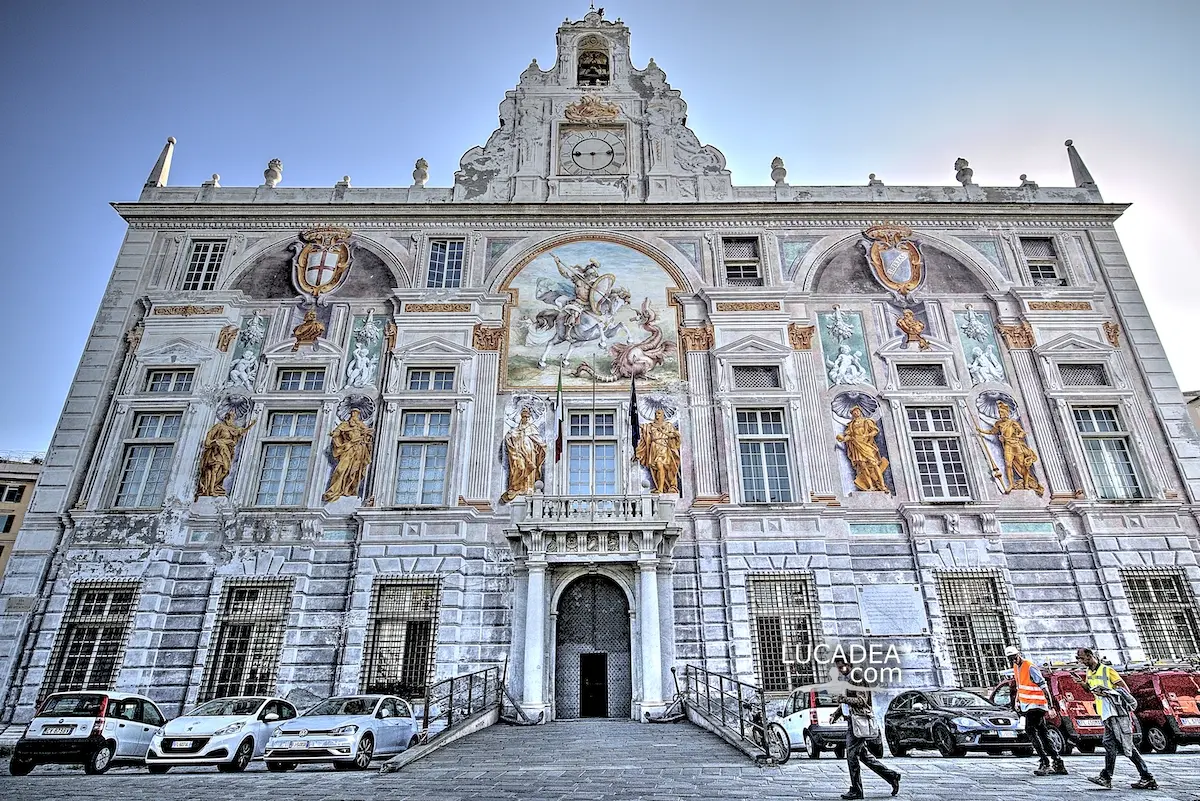
San Giorgio Palace is one of the most recognisable and frequently photographed buildings in Genoa, Italy. Located right beside the Old Port, it immediately catches the attention of visitors, especially because of the large painting on its façade depicting Saint George slaying the dragon. It is one of those familiar views that help define this part of the city and make it such a popular place to stop and take photographs.
The palace occupies a particularly interesting position, directly in front of the Old Port and close to the entrance to Genoa’s historic centre. Here, two different sides of the city meet. On one side are the open spaces of the harbour, with its quays and waterfront; on the other are the narrow streets and alleyways of the old town, where historic buildings stand close together. It is a place where a short walk can take you from the atmosphere of the port straight into the heart of historic Genoa.
Whenever I visit this area, San Giorgio Palace is one of the buildings that naturally draws my attention. Its façade is full of decorative details, but the large image of Saint George is undoubtedly the main attraction. The saint is shown on horseback, armed and facing the dragon. The scene is dramatic and immediately recognisable, giving the building a distinctive appearance that makes it stand out from its surroundings.
Saint George has a special place in Genoa’s identity. The image of the saint fighting the dragon is one of the city’s best-known symbols and also appears in its coat of arms. Seeing such a prominent representation on the façade of this historic building feels particularly appropriate. San Giorgio Palace is not simply an attractive landmark: it is also closely connected with the history of Genoa and its maritime and commercial importance.
The palace itself has a long and fascinating past. Built in the Middle Ages, it became closely associated with the financial and commercial activities of the Republic of Genoa. Its name is linked to the House of Saint George, an institution that played an important role in the city’s economic history. Today, many visitors know the building primarily as one of the most photographed sights around the Old Port, but its historical importance goes far beyond its attractive exterior.
From a photographic point of view, its location offers plenty of interesting possibilities. I particularly like the contrast between the richly decorated façade and the more open surroundings of the harbour. People are constantly walking past, stopping to admire the building or continuing towards the old town. This combination of architecture, movement and maritime atmosphere makes the area especially appealing to photograph.
For anyone visiting Genoa, stopping in front of San Giorgio Palace is almost unavoidable. The building stands in a natural position along the route between the Old Port and the historic centre, inviting visitors to pause and admire its details. The painting of Saint George and the dragon is certainly one of the features that makes it memorable.

Have you ever photographed San Giorgio Palace while walking around Genoa’s Old Port? Add a comment or go to the bottom of the site to read what other visitors have written.

San Giorgio Palace in Genoa, featuring the large façade painting of Saint George slaying the dragon beside the Old Port

Photo taken with a Canon EOS M100 camera and Canon EF-M 11-22 lens.

Where is the building located:

Add one  comment to this article or read  here what other visitors have written.
 
Adv
 
Disclamer

The rights on images, videos, choruses, text and all other material on the LUCADEA.com website are governed as per  Copyright page.


This page has been viewed 1 times today.
This month it has been viewed 2 times.
In total it has been viewed 2 times.
 

Palace of Saint George in Genoa

Palazzo San Giorgio

Palace of Saint George in Genoa.
Whenever I walk around the Old Port, I find it difficult to pass this historic building without stopping to admire its elegant façade. The Palace of Saint George is one of the landmarks that best expresses Genoa’s long relationship with the sea, maritime trade and civic history. Standing close to the waterfront in Genoa, Liguria, Italy, the palace immediately catches the eye with its architectural details and colourful painted decorations.
The sea-facing façade is especially striking. Among its painted figures, one of the most recognisable is Saint George defeating the dragon. This image is much more than a decorative feature: Saint George was the patron saint of the Republic of Genoa, and the red cross on a white background associated with him remains an important symbol of the city’s historical identity. It is a detail that connects the building to the proud maritime republic that once played a major role in Mediterranean commerce.
The palace itself has a long and fascinating past. Construction began in the second half of the thirteenth century, when Guglielmo Boccanegra commissioned a public building near the harbour, close to the centre of Genoa’s commercial activity. Over the centuries, the building changed its purpose and appearance. It later became the headquarters of the Bank of Saint George, a powerful financial institution involved in managing public finances and revenues connected with the Republic. Its Renaissance appearance developed through later extensions and decorative work, including the celebrated frescoes painted by Lazzaro Tavarone between 1606 and 1608.
When I photograph historic places, I enjoy looking beyond the overall view and paying attention to the details that give each building its own character. Here, the painted façade offers plenty to discover, from the central scene of Saint George and the dragon to the surrounding figures and architectural decorations. I took this photograph to capture the charm of a building that continues to stand out, even in an area visited by so many people.
The Palace of Saint George is an excellent stop for anyone exploring Genoa’s Old Port. From here, it is easy to continue towards the historic lanes, the arcades of Sottoripa and other landmarks in the old city. If you are searching for historic buildings to see in Genoa, this palace deserves a place on your itinerary, even if you only have a few minutes to spare.
I also enjoy photographing the city’s less obvious details, from old façades and narrow streets to the squares that reveal different layers of Genoese history. Each image becomes a way to remember a place and share a little of its atmosphere.

When you visit Genoa’s Old Port, do you stop to admire the painted façade of the Palace of Saint George? Add an comment or go to the bottom of the site to read what other visitors have written.

The Palace of Saint George in Genoa, a historic building overlooking the Old Port with a painted façade depicting Saint George and the dragon

The Palace of Saint George in Genoa, a historic building overlooking the Old Port with a painted façade depicting Saint George and the dragon

Photos taken with a Canon EOS M100 camera and Tamron 16-300 lens.

Where is the building located:

Ancient decorations under Genoa’s Sottoripa arcades

Decorazioni antiche in via di Sottoripa a Genova

Ancient decorations under Genoa’s Sottoripa arcades.
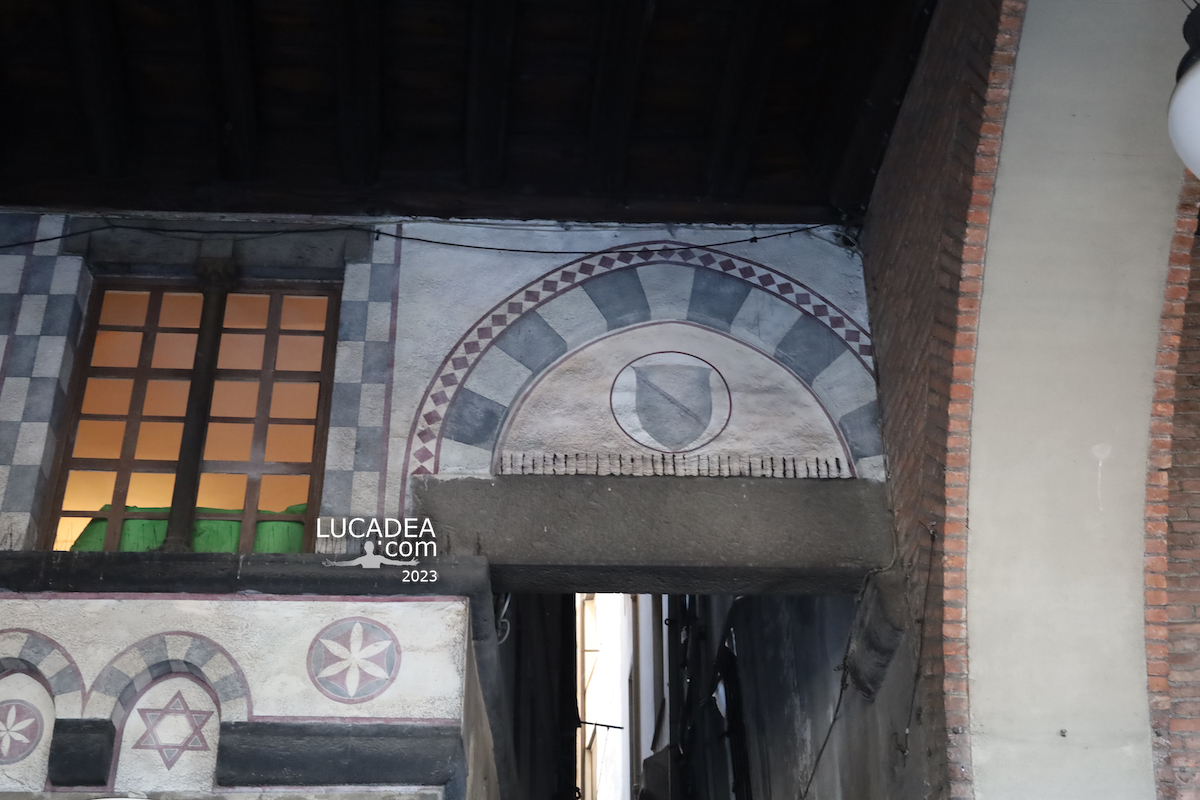
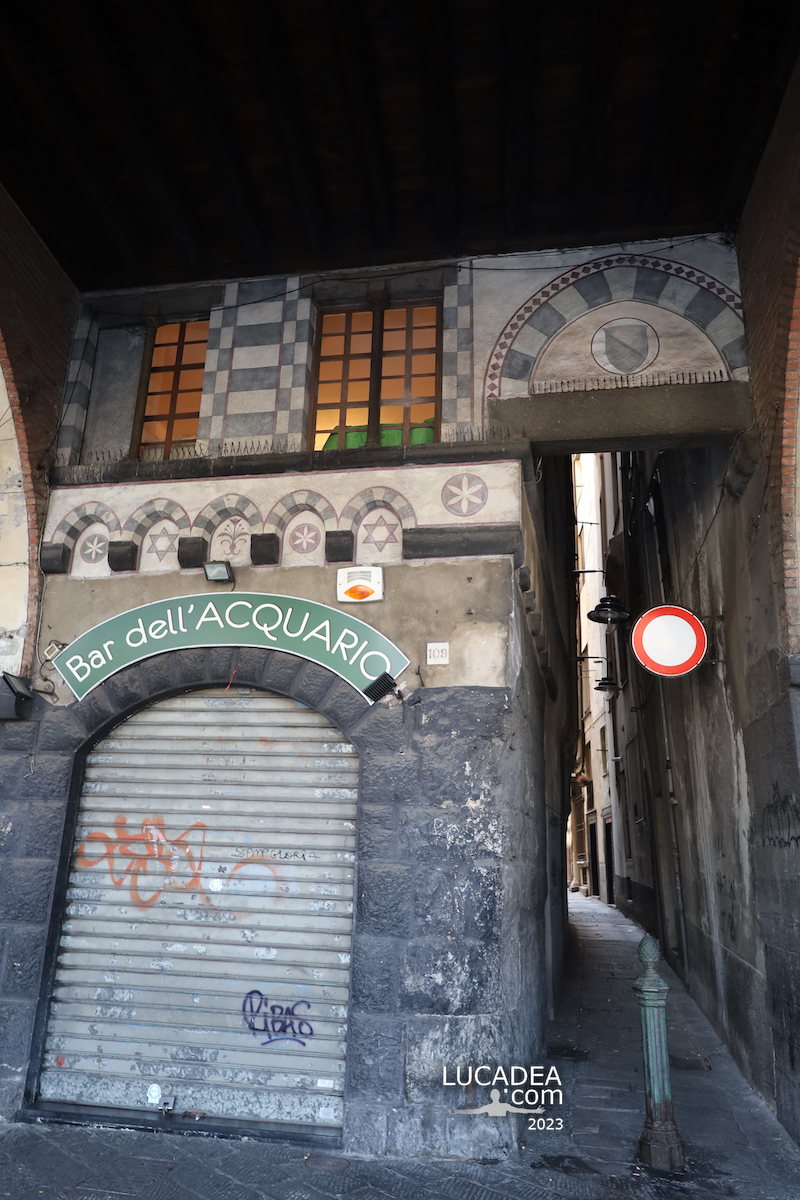
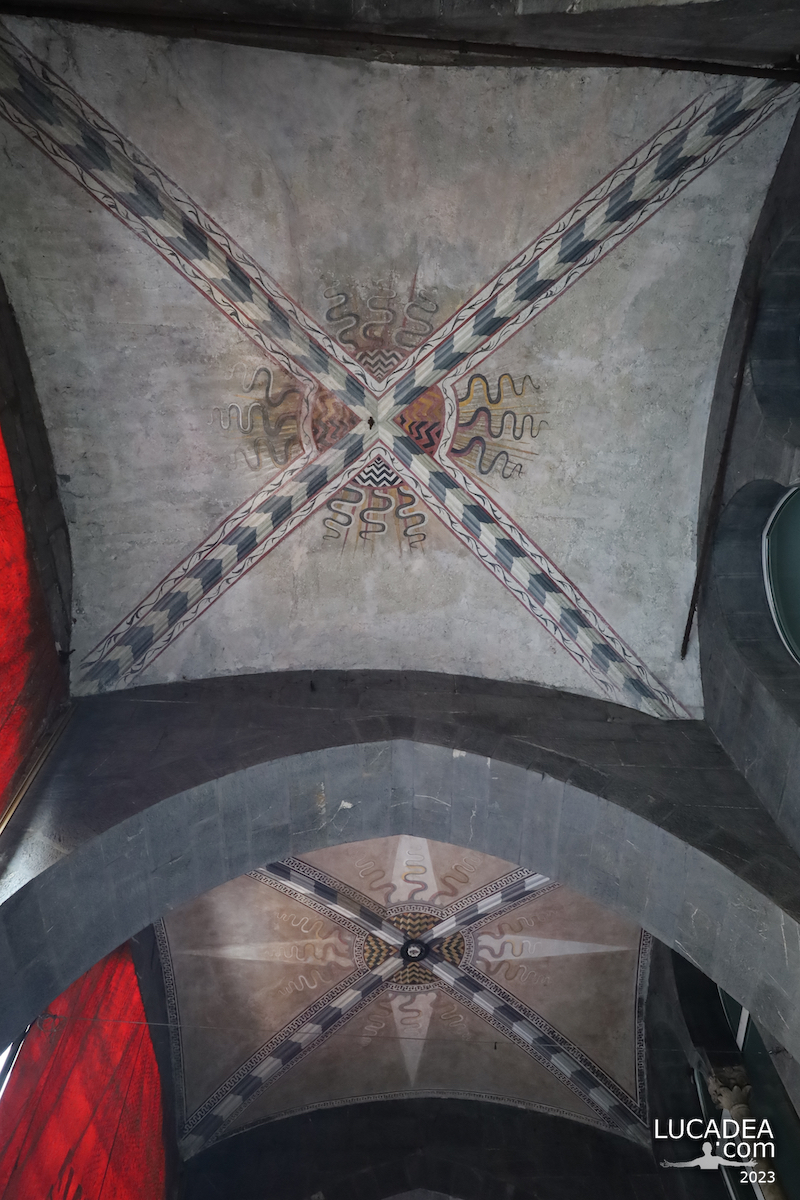
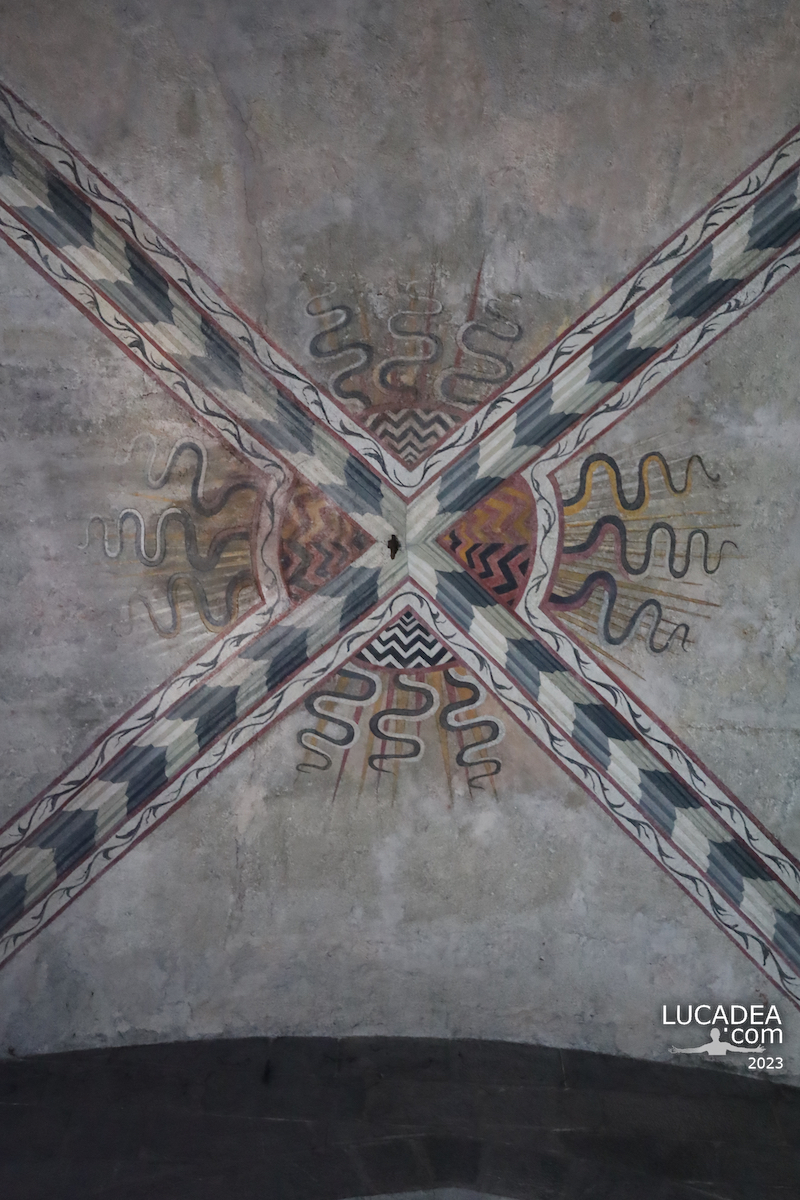
While walking through the historic center of Genoa, I stopped to look at these ancient decorations in Sottoripa, a hidden detail that reveals a quieter side of the city. Among the things to see in Genoa, it is often the small architectural elements that create the most surprising memories.
The decorated vault beneath the arcades of Sottoripa caught my attention while I was passing through this unique street facing the Old Port. It is one of those places where different periods exist together: old buildings and historic structures stand beside modern shops and local businesses, creating a mix that feels very Genoese.
I was in Genoa, Liguria, Italy, near the Old Port and the Genoa Aquarium, and this walk reminded me how many stories can still be found above eye level. Sottoripa is one of the most characteristic streets in the city, running beneath the waterfront buildings and preserving the connection between Genoa and its maritime past. In earlier times, these spaces hosted shops and workshops connected to trade, while today they have a more international atmosphere.
One interesting fact is that these medieval arcades are among the oldest in Europe and represent the historic relationship between Genoa and the sea. Looking at the decorations on the vault, I could not help imagining all the people who have walked beneath them throughout the centuries.
I could not find precise information about the building where these decorations belong, and this is exactly why I wanted to share this photograph. Sometimes an image can become an invitation to discover more, especially when local knowledge can add details that are not immediately visible.
This reminds me of other posts I have shared about hidden corners of Italian cities, where small details often tell stories just as important as famous landmarks.

Have you ever discovered a hidden detail in a street you thought you already knew? If you know something more about this place, feel free to share it by leaving a comment or go to the bottom of the site to read what other visitors have written.

Decorazioni antiche in via di Sottoripa a Genova

Photos taken with Canon EOS RP and lens Canon RF 24-50.

Here’s where the street is:

The street, originally about 900 meters long (3,613 Genoese *palmi*), now extends for approximately 500 meters; 300 meters of this run beneath the row of buildings forming the seaward frontage of the Maddalena *sestiere* (district)—between Via al Ponte Reale and Via al Ponte Calvi—and continue eastward into the Molo *sestiere* as far as Piazza Cavour. A further, lesser-known section—featuring lower arcades and set back from the Ripa—continued past Via al Ponte Calvi to the Porta di Santa Fede, running parallel to Via del Campo.
Read more on Wikipedia

Ancient decorations under the Sottoripa arcades in Genoa – Décorations anciennes sous les arcades de Sottoripa à Gênes – Decoraciones antiguas bajo los soportales de Sottoripa en Génova – Decorações antigas sob os pórticos de Sottoripa em Génova – Alte Verzierungen unter den Arkaden von Sottoripa in Genua – Những trang trí cổ dưới mái vòm Sottoripa ở Genoa – 热那亚索托里帕拱廊下的古老装饰 – ジェノヴァのソットリーパ回廊下にある古い装飾

The text of this post was written with the help of ChatGPT, a language model from OpenAI.

The figurehead of Galeone Neptune in Genoa

Polena del Galeone Neptune al Porto Antico di Genova con la figura di Nettuno sulla prua della nave

The figurehead of Galeone Neptune in Genoa.
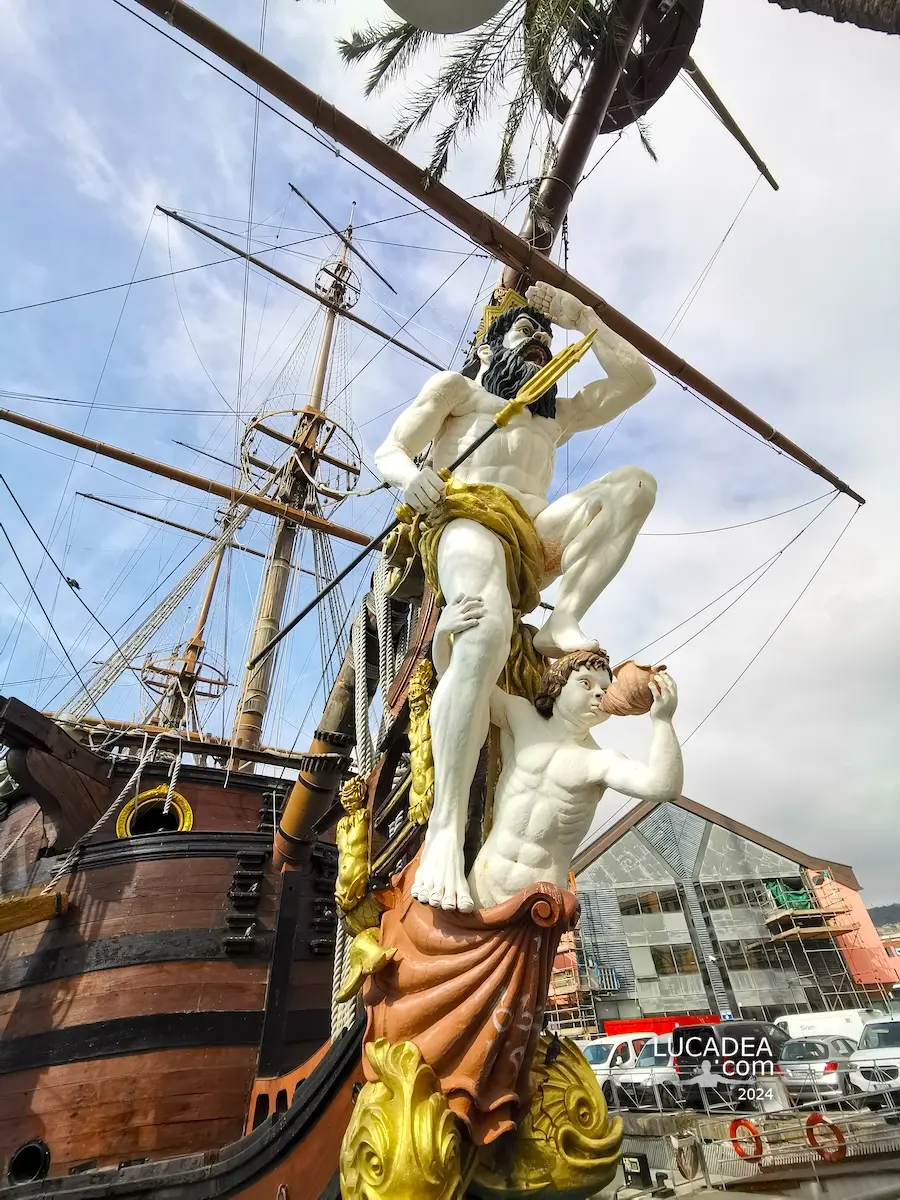
Among the things to see in Genoa’s Old Port, I stopped to photograph the large figurehead of Galeone Neptune, one of the most recognizable details of the ship and a fascinating connection with the world of historic sailing vessels. The Neptune figure on the bow of the Genoa galeon immediately catches the eye and recalls the symbols once used by ships during long sea journeys.
While walking through the Porto Antico area in Genoa, Liguria, Italy, I focused on this particular detail of the vessel, trying to capture not only the size of the wooden sculpture but also the atmosphere it creates beside the sea. This photograph comes from my attention to small elements that can often be overlooked, even though they carry stories from another time.
Galeone Neptune is a replica of a Spanish galeon built in 1986 for the movie “Pirates” directed by Roman Polański. Today the ship is permanently located in Genoa’s Old Port and has become one of the most recognizable sights of the area, thanks to its impressive appearance and its strong connection with the imaginary world of pirates.
The figurehead represents Neptune, the Roman god associated with the sea. For many centuries, figureheads placed on the bow of ships were not only decorative elements but also carried symbolic meanings. They could show the power and wealth of the ship owner, represent protection for sailors, and give each vessel a unique identity.
I wanted to capture this part of the ship with my camera because a carved wooden figure can become a way to look at a larger story made of legends, navigation and distant adventures. Sometimes historical details are not hidden inside museums; they can be found during a simple walk along a harbor, waiting to be noticed.
As I have already shown in other photographs from Genoa’s Old Port, this part of the city continues to offer interesting subjects, from maritime architecture to the many details connected with Genoa’s relationship with the sea.
The figurehead of Galeone Neptune remains a small but powerful symbol of the harbor, able to attract both history enthusiasts and visitors who simply stop for a moment to admire the ship.

Have you ever seen Galeone Neptune and its famous figurehead in Genoa? Add a comment or go to the bottom of the site to read what other visitors have written.

Figurehead of Galeone Neptune at Genoa Old Port showing the Neptune sculpture on the ship’s bow

Photo taken with Honor 20.

Fresh clam spaghetti by the port in Genoa

Un buon piatto di spaghetti con le vongole veraci gustato a Genova

Fresh clam spaghetti by the port in Genoa.
Among the seafood dishes I photograph most often, spaghetti with fresh clams is certainly one of the recurring subjects on my blog. It is a simple recipe, but when it is prepared well it can represent the connection between Italian cuisine and the sea.
I took this photograph during a lunch at I Portici, a restaurant near Piazza Caricamento, right in front of the Old Port of Genoa, Liguria, Italy. When I am in Genoa for errands or simply for a walk around the city, I always try to find a place where I can enjoy good food without looking for something too formal.
Fresh clam spaghetti is one of those dishes that proves how a few ingredients can create a memorable experience. Pasta, fresh clams and the flavour of the sea are enough to bring together simplicity and taste. When this plate arrived at the table, I decided to capture it with my camera because food photographs can also preserve the memory of a particular day.
My wife was with me, and as often happens when we eat out, dishes with clams are usually among her favourite choices. This is one of the reasons why similar pasta dishes appear several times in my photographs: they are connected to our moments together and to the small habits that become part of everyday life.
If you are visiting Genoa and wondering what to eat, seafood dishes are certainly worth considering alongside the most famous Ligurian specialities. The city has always had a strong relationship with the sea, and recipes like spaghetti with clams reflect this connection in a very direct way.
Piazza Caricamento is also an interesting area to photograph because it connects different sides of Genoa: the historic centre, the harbour and the renovated waterfront. A small curiosity about this place is its historical importance as a meeting point between the city and its port activities.
I wanted to photograph this dish because my blog is not only about famous views, churches or buildings. Sometimes a simple lunch can become a meaningful image, especially when it is connected to a place I often visit.
After sharing other photographs from Genoa, including its narrow streets and historic corners, this plate of fresh clam spaghetti adds a more everyday memory to my collection.
The meal at I Portici was a pleasant discovery and another small story connected to the Ligurian capital.

What seafood dish do you usually choose when you go to a restaurant? Add a comment or go to the bottom of the site to read what other visitors have written.

Fresh clam spaghetti from I Portici restaurant near Piazza Caricamento in Genoa, Ligurian seafood cuisine

Photo taken with Honor 20.

Here’s where this restaurant is located:

Spaghetti alle vongole is a dish made with pasta and clams. Like many other seafood dishes, there are multiple versions of the same dish: red and white. The pasta can be spaghetti, linguine, or vermicelli and is cooked al dente and then tossed in the pan with the sautéed clams, possibly deglazed with dry white wine.
Continue and learn more at Wikipedia

Buildings in Caricamento Square in Genoa

I palazzi che si affacciano sul porto in piazza Caricamento a Genova

Buildings in Caricamento Square in Genoa.
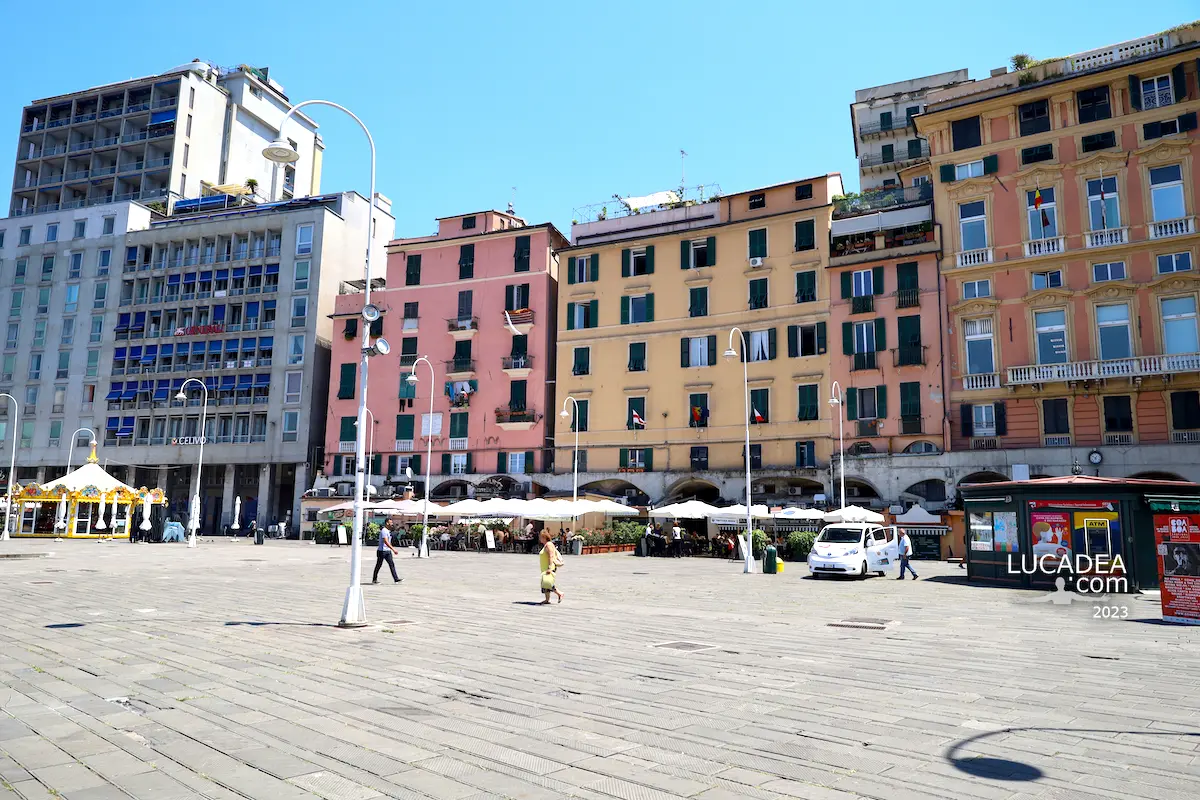
Piazza Caricamento is one of the busiest places in the city of Genoa, even though many people hardly notice it. This is mainly because it serves as a transit point between the Old Port area, with the Aquarium, and the historic centre with its narrow alleys.
However, if you stop for a moment and take a closer look, the square reveals a number of interesting architectural features. The buildings surrounding it are elegant and reflect different periods of the city’s history. Many of them have been carefully renovated over time while preserving their original character.
The location of the square makes it a key connection point. On one side there is the sea and the renovated harbour area, and on the other side the entrance to the historic centre, with its famous alleys. Because of this, most people simply pass through without paying attention to the details.
Walking across Caricamento Square, you can notice decorated windows, large entrance doors and facades that change colour depending on the light. These are small details that often go unnoticed but help define the identity of the place.
This photograph was taken with the intention of focusing on one of these “in-between” places and showing that even a simple transit area can have its own charm. Sometimes it is enough to slow down to discover something new.
Over time, I have taken many photos in Genoa, from narrow alleys to well-known squares. Piazza Caricamento may not always be the main attraction, but it plays an important role in connecting different parts of the city.
Its well-preserved buildings contribute to creating a balanced and pleasant urban space, worth observing more carefully.

Have you ever discovered interesting details in places you usually just pass through? Add a comment or go to the bottom of the site to read what other visitors have written.

Historic buildings in Caricamento Square in Genoa between the Old Port and the historic centre

Historic buildings in Caricamento Square in Genoa between the Old Port and the historic centre

Photos taken with Canon EOS RP and lens Canon RF 24-50.

Here is where the square is located:

The square, built in 1839 as the terminus of the new coastal road named after King Charles Albert (now Via Gramsci), was called Caricamento starting in 1854, when it became the terminus for loading and unloading goods for the port. It was the terminus of the railway, designed as an extension of the Turin-Genoa line to serve port traffic. Numerous photographs from the late 19th and early 20th centuries show the square crowded with carts pulled by donkeys, oxen, or horses, waiting to load or unload goods of all kinds.
Continue on Wikipedia

Doge’s Viewpoint at Genoa Old Port

Belvedere dei Dogi

Doge’s Viewpoint at Genoa Old Port.
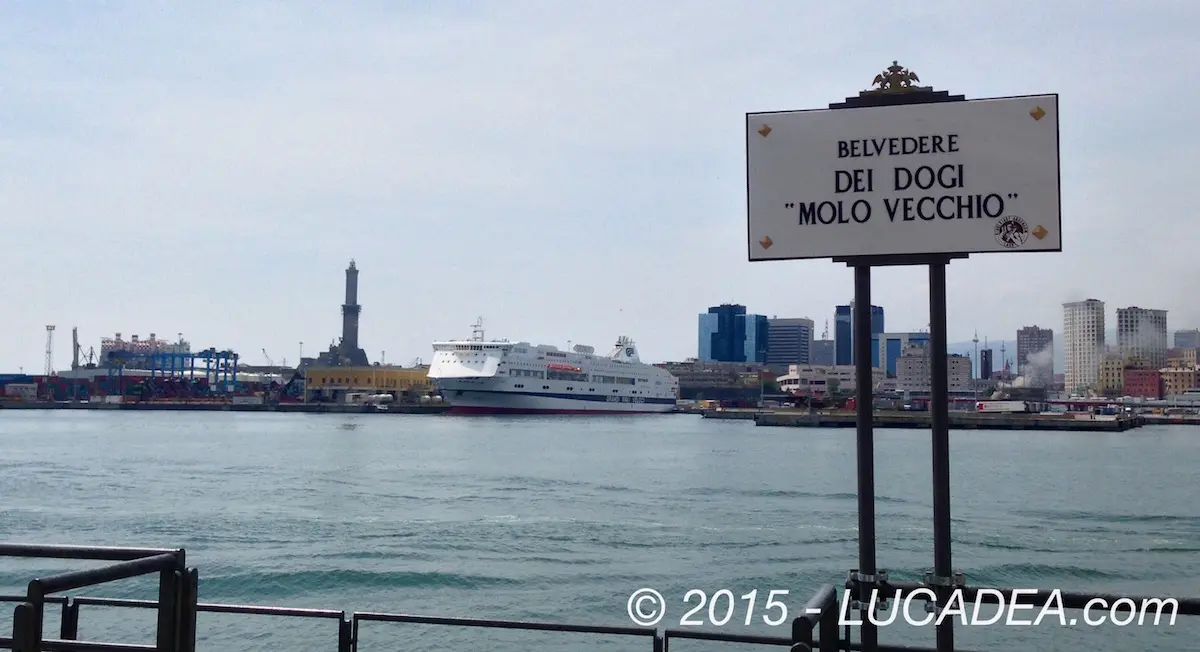
Walking along the Cotton Warehouses at the Old Port of Genoa, Liguria, Italy, I reached the Doge’s Viewpoint, one of the most interesting places to admire the harbor and the Lantern of Genoa in the distance. Among the things worth seeing in Genoa there are not only the historic buildings and narrow streets of the old town, but also these viewpoints where the city reveals its deep connection with the sea.
I had a couple of hours to explore the Old Port area and decided to walk around the Molo Vecchio without following a strict route. During this simple walk, I arrived at the Doge’s Viewpoint, a place where the perspective of Genoa changes completely compared with the most famous views of the city.
I wanted to capture this photograph because from here it is possible to understand the scale and importance of Genoa’s harbor. In front of me was the old commercial port area, with the Cotton Warehouses nearby and the Lantern of Genoa standing in the background. It is one of those views where the maritime history of the city meets its more modern identity.
The Doge’s Viewpoint is located in the Molo Vecchio area of the Old Port, a part of Genoa that was transformed during the redevelopment of the harbor in the 1990s. The old commercial docks, once dedicated mainly to port activities, have become a public space with museums, restaurants, walking areas, and viewpoints.
The Lantern of Genoa, visible in the background of the photograph, is one of the oldest still-functioning lighthouses in the world and has guided ships entering the harbor for centuries. Its presence makes the view immediately recognizable and connects this image with the city’s long maritime tradition.
This photograph was born from my curiosity to observe Genoa from a different perspective. After sharing other views of the city on the site, I enjoy continuing to discover corners where architecture, sea, and history naturally come together.
The Old Port is one of those places where a simple walk can reveal new viewpoints and unexpected details.

Have you ever looked at Genoa from the Doge’s Viewpoint at the Molo Vecchio? Add a comment or go to the bottom of the site to read what other visitors have written.

Doge’s Viewpoint at Genoa Old Port with harbor view and the Lantern in background

The figurehead of Galleon Neptune in Genoa port

polena galeone porto antico

The figurehead of Galleon Neptune in Genoa port.
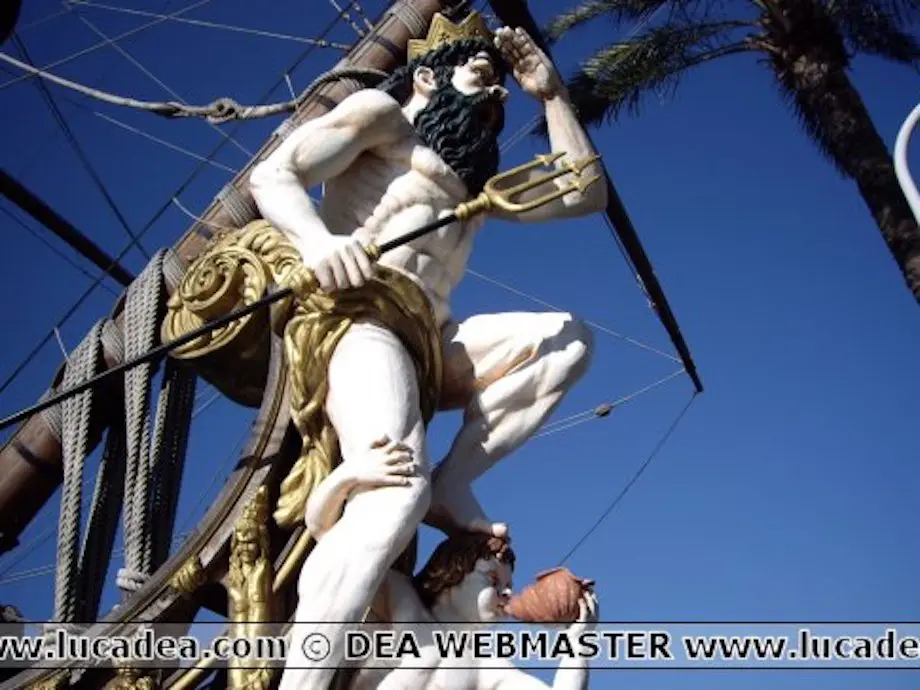
Among the photographs I have taken in Genoa’s Old Port over the years, this one shows one of the most distinctive details of Galleon Neptune, the large ship that immediately recalls the atmosphere of old sailing vessels and pirate stories. The figurehead of Galleon Neptune in Genoa, with the statue of Neptune holding his trident on the bow, is one of those details that catches the eye before looking at the entire ship.
I took this photograph in 2006, during one of my walks through the Old Port area of Genoa, Liguria, Italy. At that time, the ship was already a well-known presence in the harbor, and I stopped to capture this particular element of the bow because it was the detail that gave the vessel its strongest personality.
Galleon Neptune is a replica of a Spanish galleon built in 1986 for the movie “Pirates” directed by Roman Polański. After the filming, the ship remained connected with Genoa and became one of the most recognizable sights of the Old Port. Its presence beside the sea creates an unusual contrast between the real maritime history of the city and the imaginary world of pirate adventures.
The figurehead represents Neptune, the Roman god of the sea, with his traditional trident. For centuries, figureheads were important decorative elements placed on the bows of ships. They were not only artistic decorations but also symbols connected with the identity, strength and protection of the vessel and its crew.
I wanted to capture this detail with my camera because sometimes a small part of a larger subject can tell an entire story. The size of the ship is impressive, but the figurehead is what gives it a recognizable face and makes it different from any other vessel. Looking at it, it is easy to imagine the stories that have always surrounded ships, sailors and long journeys across the sea.
As I have already shown in other photographs dedicated to Genoa and its relationship with the sea, the Old Port continues to offer many interesting subjects. Walking along the harbor, between historic buildings and maritime elements, it is possible to discover details that connect the present city with its long history as an important port.
If you are visiting Genoa, Galleon Neptune is one of the most interesting things to see in the Old Port, especially for those who love ships, maritime history and unusual details. The ship is a perfect example of how a photographic subject can combine reality, memory and imagination in the same scene.

Have you ever seen the figurehead of Galleon Neptune in Genoa’s Old Port? Add a comment or go to the bottom of the site to read what other visitors have written.

Figurehead of Galleon Neptune at Genoa Old Port showing Neptune with his trident on the ship’s bow

Originally built in 1986 in the shipyards of Port El Kantaoui, Tunisia, as a set for Roman Polański’s film “Pirates,” the Neptune has left an indelible mark on the collective imagination. The vessel was crafted as a real, seaworthy and functional ship, with a steel hull and a superstructure and masts made of iroko wood. With 20 kilometers of rigging, weighing a total of 11 tons, and a surprising sail area of ​​4,500 m², it also participated in the 39th Cannes Film Festival, enchanting and inspiring audiences of all ages.
Continue reading and learn more on visitgenoa.it

🏠
  • Italiano