Egg tagliolini with bottarga and delicate soffritto, recipe

Tagliolini all’uovo con bottarga mantecati con soffritto cremoso di acciughe e spigola

Egg tagliolini with bottarga and delicate soffritto, recipe.
When I prepare egg tagliolini with bottarga, I always start from the feeling I want the dish to give rather than just the ingredients themselves. This bottarga pasta is built around balance, where nothing should overpower the rest. In tagliolini with bottarga, it’s easy to let the flavor become too strong, but I prefer a softer, more layered result.
The base is everything. I focus on creating a soffritto that feels smooth and integrated, using garlic, fresh spring onion, and anchovies blended into a cream. Instead of regular oil, I use the fat from fresh sea bass belly, which brings a deeper, more marine character to the dish. It’s not about richness alone, but about creating a base that supports the pasta without making it heavy.
When I move to the pasta, the process becomes more intuitive. I like finishing the tagliolini directly in the pan, treating them almost like a risotto so they absorb the flavors fully. If you are visiting Italy and looking for something different, this is one of the most interesting ways to experience a seafood pasta without turning it into a heavy dish.
The bottarga is always added off the heat. This is a small but crucial detail: too much heat would ruin its texture and make it stick. Using only the residual warmth keeps everything smooth and well combined.
Bottarga itself has ancient origins across the Mediterranean and is often referred to as “sea gold” because of its intense flavor and traditional value.
This reminds me of another dish I shared on the blog where a simple off-heat step completely changed the final result. These are the details that matter most in cooking.
In the end, this is not a complicated recipe, but one that requires attention and timing. Every step counts, even the quiet ones.
This recipe was suggested to me by my friend Maître Gianni!

Ingredients

– egg tagliolini;
– bottarga;
– garlic;
– fresh spring onion;
– anchovies;
– fresh sea bass belly fat;
– salt;
– pasta cooking water.

Preparation

Blend the garlic, fresh spring onion, and anchovies until smooth. Separately, blend the sea bass belly fat until smooth. Combine everything in a pan over very low heat and let the soffritto develop slowly, stirring frequently: it shouldn’t sizzle, but melt and become creamy. Cook the tagliolini in salted water and drain when very al dente. Transfer them directly to the pan with the soffritto and add a little of the cooking water. Begin stirring like a risotto, allowing the sauce to absorb until it reaches a creamy consistency. Turn off the heat and add the grated bottarga. Stir quickly using only the residual heat, without returning to the heat to prevent the bottarga from sticking. Serve immediately.

Do you prefer bold bottarga flavors, or do you like blending them into something more balanced like this? Add a comment or go to the bottom of the site to read what other visitors have written.

Tagliolini all’uovo con bottarga mantecati con soffritto cremoso di acciughe e spigola

Egg tagliolini with bottarga and soffritto, recipe – Tagliolini aux œufs avec poutargue et sofrito, recette – Tagliolini al huevo con bottarga y sofrito, receta – Tagliolini com ovo e bottarga e refogado, receita – Eier-Tagliolini mit Bottarga und Soffritto, Rezept – Mì tagliolini trứng với bottarga và sofrito, công thức – 鸡蛋细面配鱼子酱与香炒底料,食谱 – 卵のタリオリーニとボッタルガのソフリット、レシピ

The text of this post was written with the help of ChatGPT, a language model from OpenAI.

Add one  comment to this article or read  here what other visitors have written.
 
Adv
 
Disclamer

The rights on images, videos, choruses, text and all other material on the LUCADEA.com website are governed as per  Copyright page.


This page has been viewed 1 times today.
This month it has been viewed 2 times.
In total it has been viewed 3 times.
 

Stewed squid at Montevideo’s Mercado del Puerto

Totanetti in umido a Montevideo

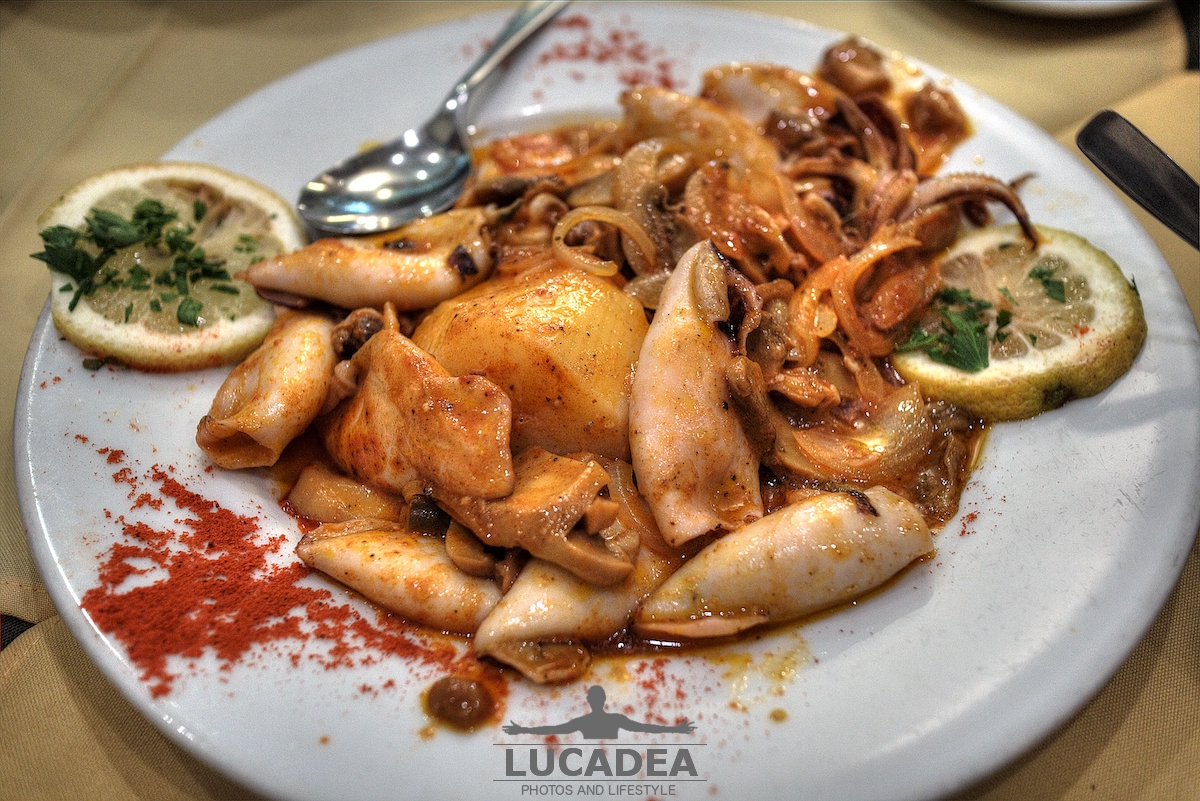
Stewed squid at Montevideo’s Mercado del Puerto.
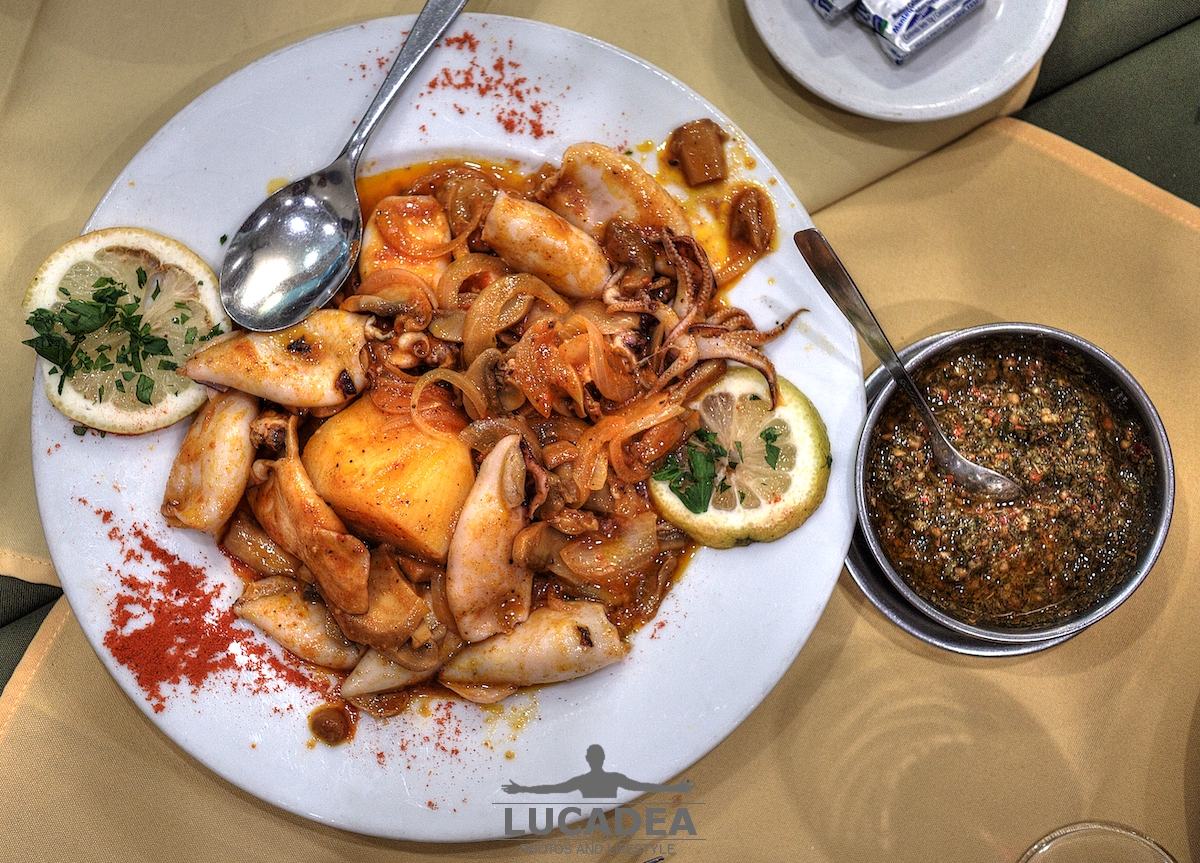
Among the dishes I photographed during a visit to the Mercado del Puerto in Montevideo, this plate of stewed squid caught my attention with its simple and hearty appearance. Montevideo, Uruguay, is a city where food is closely connected with markets and shared meals, and this dish felt like a small but memorable part of that experience.
The Mercado del Puerto is best known for grilled meat and for the atmosphere surrounding Uruguay’s traditional food culture. Yet seafood also has its place among the many dishes served there. That contrast is exactly what made these stewed squid pieces worth photographing when I came across them.
The dish contains squid cooked slowly with onion, potatoes and mushrooms, with a few spices adding flavour to the preparation. Visually, it is not an elaborate composition, but perhaps that is what makes the photograph work for me. The ingredients are easy to recognise and the whole plate immediately suggests something warm, substantial and comforting.
When I photograph food, I am mostly interested in preserving the impression I had when I saw the dish in front of me. Here I wanted to capture something slightly different from the more predictable images associated with the Mercado del Puerto. Meat is naturally one of the main attractions of the market, but this plate shows that seafood can also find its place in such a strongly meat-oriented setting.
What I like about this photograph is its connection with an actual moment from the trip. I am not trying to present a traditional recipe or explain how to cook stewed squid. It is simply a dish I encountered while travelling and thought was worth remembering through a photograph.
The Mercado del Puerto is located in Montevideo’s Ciudad Vieja and is one of the city’s best-known places for experiencing local food. Its history goes back to the nineteenth century, when the building was inaugurated for market activities. Over time, the space developed into an important gastronomic landmark, while retaining much of the character that makes it so recognisable.
If you are wondering what to eat in Montevideo, the market is interesting precisely because of the variety of dishes available there. For me, though, the strongest memory comes from the individual plates I encountered, because each one is connected with a particular moment of the journey.
This stewed squid with onion, potatoes and mushrooms is the kind of dish that could easily be overlooked beside the market’s more famous grilled meats. Yet these unexpected culinary encounters are often what make a trip feel personal when I look back at the photographs later.
I have also photographed other dishes and markets during my travels, always trying to keep the focus on the food as I actually encountered it rather than turning the photograph into a formal restaurant review. In this case, the memory is especially connected with the surprise of finding a seafood dish in a place so strongly associated with meat.

Have you ever tried stewed squid while travelling in Uruguay? Add a comment or go to the bottom of the site to read what other visitors have written.

Stewed squid with onion, potatoes and mushrooms served at the Mercado del Puerto in Montevideo, Uruguay

Stewed squid with onion, potatoes and mushrooms served at the Mercado del Puerto in Montevideo, Uruguay

Photos taken with Canon EOS M100 and lens Canon EF-M 22.

Add one  comment to this article or read  here what other visitors have written.
 
Adv
 
Disclamer

The rights on images, videos, choruses, text and all other material on the LUCADEA.com website are governed as per  Copyright page.

This page has been viewed 0 times today.
This month it has been viewed 0 times.
In total it has been viewed 0 times.
 

Greek octopus salad from Santorini

Insalata di polpo alla greca fotografata a Santorini, con lattuga, pomodori, cipolla e origano

Greek octopus salad from Santorini.
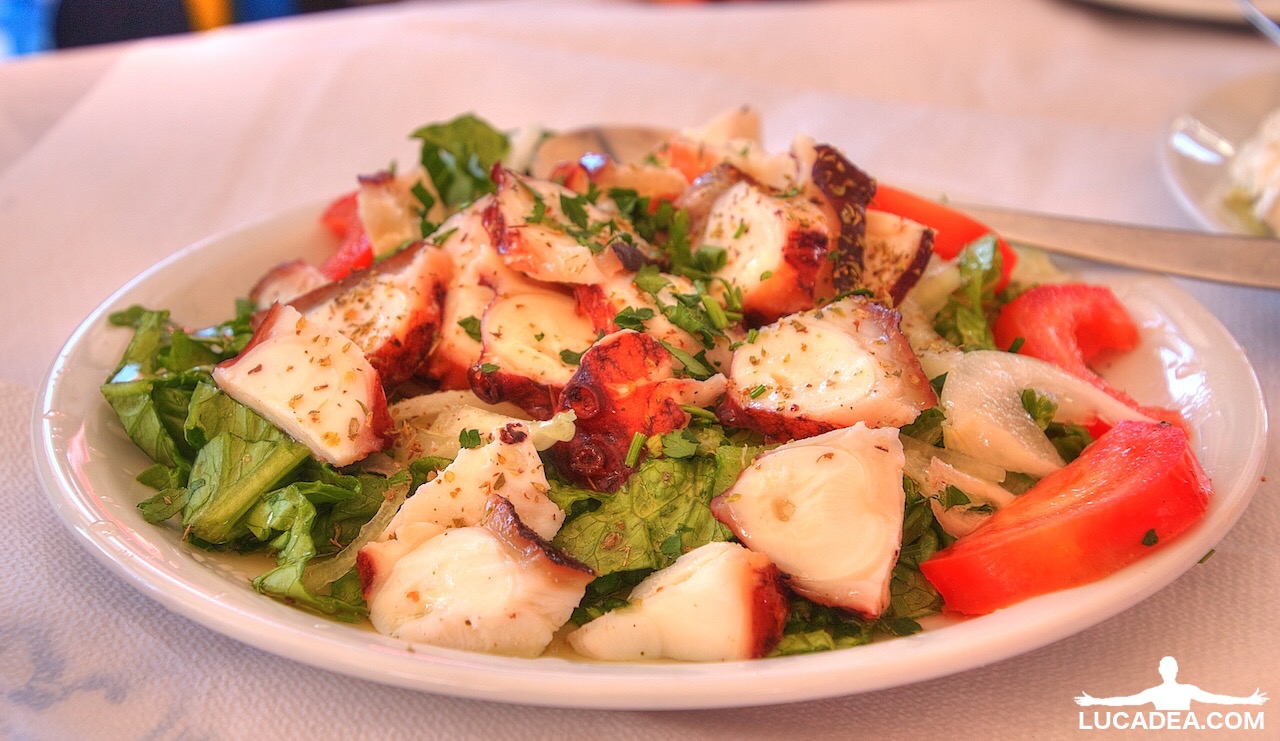
While I was in Santorini, Greece, I found myself looking at a simple but very appealing dish in which octopus was clearly the main ingredient. This Greek octopus salad, made with fresh vegetables, olive oil, vinegar and oregano, is the kind of food that can say quite a lot about local cooking without needing a long list of ingredients.
Many of my recent food photographs have focused on seafood, and octopus in particular has appeared several times. Whenever I come across a dish that catches my attention, I like to photograph it before eating, trying to preserve something of the moment rather than creating an image that feels too carefully arranged.
Here the ingredients were straightforward: lettuce, onion, tomatoes and stewed octopus, dressed with a little olive oil and a few drops of vinegar. A light sprinkling of oregano finished the dish and immediately gave it a flavour that, at least to me, feels closely connected with Greek cooking.
I took this photograph myself in Santorini during my trip to Greece. I did not want to turn the plate into an overly staged food photograph. I simply wanted to show what was actually in front of me. I enjoy food images more when they retain something of the real situation in which they were taken, because they become part of the memory of the journey rather than looking like catalogue photographs.
If you are wondering what to eat in Santorini, octopus is one of the ingredients you can easily encounter in the island’s local cuisine. Being surrounded by the Aegean Sea, it is natural for seafood to have an important place on local tables, and octopus can be prepared in several different ways, from grilled dishes to slower cooking methods and cold preparations such as the salad I photographed.
What I liked about this particular salad was the balance between the ingredients. The octopus brings its distinctive texture, while lettuce and tomatoes add freshness. Onion, vinegar and oregano give the dish more character, while olive oil brings everything together without making the preparation feel complicated.
It is not the kind of dish that needs a complicated explanation. The photograph immediately reveals most of the main ingredients and gives an idea of what the combination might taste like. This is one of the things I appreciate about Mediterranean cooking: a relatively small number of ingredients can be enough when they work well together.
Octopus has also long been an important ingredient in the cooking of Greek islands and coastal communities. One small culinary curiosity is that Greek tavernas commonly serve octopus grilled or cooked after being allowed to dry, a traditional practice connected with preparing and preserving the catch. It is a simple detail, but it reflects the long relationship between island communities and the sea.
In Santorini, food and landscape often seem to belong to the same Mediterranean setting. Even when sitting at a table with a relatively uncomplicated dish, the ingredients can evoke the island around you. Tomatoes, olive oil, oregano, vegetables and seafood all belong to a very recognisable culinary landscape.
That is why the simplicity of this photograph appealed to me. There was no need to add many elements or create an elaborate composition. The colours of the vegetables, the pieces of octopus and the dressing were enough to tell the story.
After photographing so many places, monuments and city details during my travels, I enjoy occasionally switching to something much more ordinary: a dish that has just been served. Food photographs preserve another part of a journey, the pauses at a table and the meals that can become just as memorable as a beautiful view.
This Greek octopus salad belongs exactly to that kind of memory. It may not be the most elaborate dish I encountered in Santorini, but it caught my attention and, naturally, it also caught the attention of my camera.
I also like the fact that the photograph does not really tell only the story of the food. It brings back the journey in which I discovered it. Santorini remains part of the memory behind the image, while the plate becomes a small reminder of time spent in Greece.
In other food stories on my photo blog, I have also written about dishes I encountered while travelling, always trying to keep the personal experience and the photograph at the centre. Here, I am returning to Greek flavours through a preparation that is simple and immediately recognisable.
Sometimes these uncomplicated dishes are the ones that stay with us. A portion of octopus, a few vegetables, olive oil, vinegar and oregano: ordinary ingredients that together bring back some of the Mediterranean atmosphere I experienced in Santorini.

Have you ever tried octopus salad while travelling in Greece? Add a comment or go to the bottom of the site to read what other visitors have written.

Greek octopus salad photographed in Santorini, with lettuce, tomatoes, onion and oregano on the plate

Photos taken with Canon 600D and Tamron 16-300.

Chicken with white wine, olives and pine nuts, the recipe

Pollo al vino bianco con olive e pinoli servito con riso Jasmine in un piatto semplice e casalingo

Chicken with white wine, olives and pine nuts, the recipe.
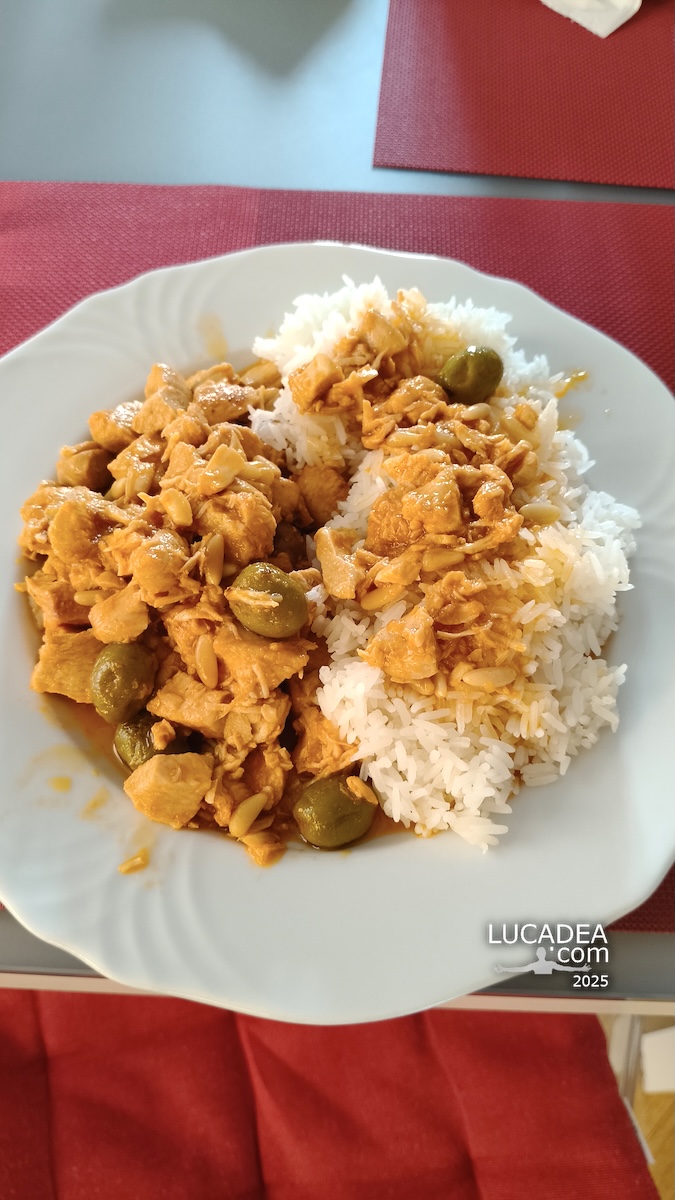
Some dishes don’t need refinement or reinterpretation because they already carry meaning through memory and repetition. This chicken with white wine is one of those recipes that instantly takes me back to familiar moments, where simple ingredients were enough to create something deeply satisfying. The scent that rises as the onion begins to soften in olive oil is unmistakable, warm and comforting in a way that feels almost instinctive.
As I cut the chicken into small pieces, I think about how little this recipe has changed over time. Chicken with white wine develops gradually, allowing each ingredient to play its role without rushing. The green olives bring a slightly salty contrast, balancing the sweetness of the onion, while the pine nuts add a softer, richer texture that makes every bite more interesting.
When the chicken starts to brown, a light crust forms on the surface, and that’s the moment everything begins to come together. Pouring in the white wine transforms the dish, creating a deeper aroma that fills the kitchen. It slowly evaporates, binding all the flavors into something cohesive and inviting. It’s hard not to check on it repeatedly, drawn in by the evolving smell.
A small but interesting detail is that cooking meat with white wine is a common Mediterranean technique, as the acidity helps tenderize the meat while enhancing its natural flavor rather than masking it.
Recently, I’ve been serving this chicken with white wine alongside Jasmine rice, which absorbs the sauce beautifully and completes the dish without overwhelming it. It’s a simple combination, yet it works incredibly well, bringing everything into balance.

Ingredients

– Whole chicken breast;
– Jasmine rice;
– Tomato paste;
– Onion;
– White wine;
– Green olives;
– Pine nuts;
– Extra virgin olive oil;
– Salt.

Preparation

First, sauté the chopped onion in a saucepan with plenty of oil. Once the onion is well browned, add the diced chicken breast and tomato paste.
Toast the chicken and add the salt, olives, and pine nuts.
When the chicken has developed a light crust, add plenty of white wine.
Cook over medium heat for about 40 minutes.
Meanwhile, cook the jasmine rice (you can use a rice cooker), which will be ready in about 15 minutes.
Combine everything and serve hot.

Do you have a recipe that instantly brings you back to a specific memory? Add a comment or go to the bottom of the site to read what other visitors have written.

Photos taken with Oppo Reno 12.

Bánh ướt tôm khô hot morning in Da Nang

Bánh ướt tôm khô caldo del mattino a Da Nang

Hot morning Bánh ướt tôm khô in Da Nang.
This morning I chose a simple dish, one that for me means home. Bánh ướt tôm khô is a breakfast that in Da Nang is easily found in small neighborhood restaurants, among low plastic chairs and tables overlooking the street. It’s a humble dish, but full of flavor.
The rice sheets are soft, very thin, almost transparent. When I lift them with chopsticks, they are springy and delicate. On top are shredded dried shrimp, with an intense and slightly salty flavor, followed by slices of chả lụa, crispy fried onion, fresh chili pepper, and a few green herbs for freshness. Alongside, shrimp chips add a crunchy note that contrasts with the softness of the rice.
I like to mix everything together, letting the nuoc mam bind the flavors. Every bite is different: first you taste the sweetness of the rice, then the concentrated aroma of the dried shrimp, then the subtle spiciness. It’s a balanced dish, not heavy but filling, perfect for starting the day.

Today I want to share the recipe as I make it at home.

Ingredients

– 300g fresh bánh ướt
– 40g dried shrimp (tôm khô)
– 200g chả lụa
– 1 tablespoon fried onion
– 1 fresh chili pepper
– Lettuce and herbs
– Shrimp chips
– Nuoc mam (fish sauce), sugar, lime, water

Preparation

Soak the dried shrimp in warm water for 10 minutes, then drain and chop coarsely.
Cut the chả lụa into thin slices.
Arrange the bánh ướt sheets on a large plate.
Top with the shrimp, chả lụa, fried onion, and sliced ​​chili pepper.
Serve with fresh herbs and shrimp chips.
Prepare the nuoc mam by mixing fish sauce, water, sugar, and a few drops of lime.
It’s a simple dish, but it speaks to my city, my childhood, and slow breakfasts before the sun gets too strong.

And you, do you prefer bánh ướt with dried shrimp or with meat? Add a comment or go to the bottom of the site to read what other visitors have written.

Photos taken with Oppo Reno 12.

Bánh ướt with dried shrimp in Da Nang – Bánh ướt aux crevettes séchées à Da Nang – Bánh ướt con camarones secos en Da Nang – Bánh ướt com camarão seco em Da Nang – Bánh ướt mit getrockneten Garnelen in Da Nang – Bánh ướt tôm khô buổi sáng ở Đà Nẵng – 岘港清晨的干虾米蒸米皮 – ダナンの朝の干しエビ入りバインウット

The text of this post was written with the help of ChatGPT, a language model from OpenAI.

Fried rice, the recipe

Il fried rice o riso fritto, la ricetta

Fried rice, the recipe.
Fried rice is a versatile and tasty Asian dish, loved around the world for its simplicity and rich flavor. Perfect for using up leftover rice, this dish can be customized with a variety of fresh, colorful ingredients. Here’s how to make authentic Asian fried rice at home. Obviously, the recipe is much better if you use Asian rice (at my house, we use jasmine rice).

Ingredients:

– 300 g cooked white rice (preferably day-old);
– 2 eggs;
– 200 g peeled shrimp (optional);
– 1 carrot, diced;
– 1 red bell pepper, diced;
– 100 g peas;
– 2 spring onions, sliced;
– 2 garlic cloves, minced;
– 3 tablespoons soy sauce;
– 2 tablespoons sesame oil;
– 1 tablespoon vegetable oil;
– Salt and pepper to taste;
– Fresh cilantro for garnish (optional);

Preparation:

Make sure all ingredients are ready and on hand. This will make cooking quicker and easier.
In a large skillet or wok, heat 1 tablespoon vegetable oil over medium-high heat. Crack the eggs into the pan and stir quickly to scramble them. Once cooked, remove them from the pan and set aside.
In the same skillet, add another tablespoon of vegetable oil and cook the shrimp until they turn pink and opaque. Remove them from the pan and set aside with the eggs.
Add the sesame oil to the pan and sauté the garlic for about 30 seconds. Add the carrots, bell pepper, and peas and cook for 3-4 minutes, until the vegetables are tender but still crunchy.
Add the cooked rice to the pan and stir well to combine with the vegetables. Make sure the rice is well separated and doesn’t stick together.
Pour the soy sauce over the rice and stir well to evenly distribute the flavor. Add the scrambled eggs and cooked shrimp and stir again.
Add the sliced ​​spring onions and season with salt and pepper to taste. Cook for another 2-3 minutes, stirring constantly.
Transfer the fried rice to a serving platter and garnish with fresh cilantro, if desired. Serve hot and enjoy this delicious dish!

Fried rice is a dish that brings authentic Asian flavors to life, easy to prepare, and perfect for any occasion. With this recipe, you can surprise your guests or simply enjoy a tasty and nutritious meal at home.

Do you like this dish?
Add a comment or go to the bottom of the site to read what other visitors have written.

Il fried rice o riso fritto, la ricetta

Photo taken with Honor 20.

Fried rice, the recipe – Riz sauté ou riz sauté, la recette – Arroz frito o arroz frito, la receta – Arroz frito ou arroz frito, a receita – Gebratener Reis oder gebratener Reis, das Rezept – Cơm chiên hay cơm chiên, công thức

This post was written with the help of Copilot, an AI-powered virtual assistant.

Spanish tortilla with potatoes, onion and eggs, the recipe

La tortilla spagnola con patate, cipolla e uova, la ricetta

Spanish tortilla with potatoes, onion, and eggs, the recipe.
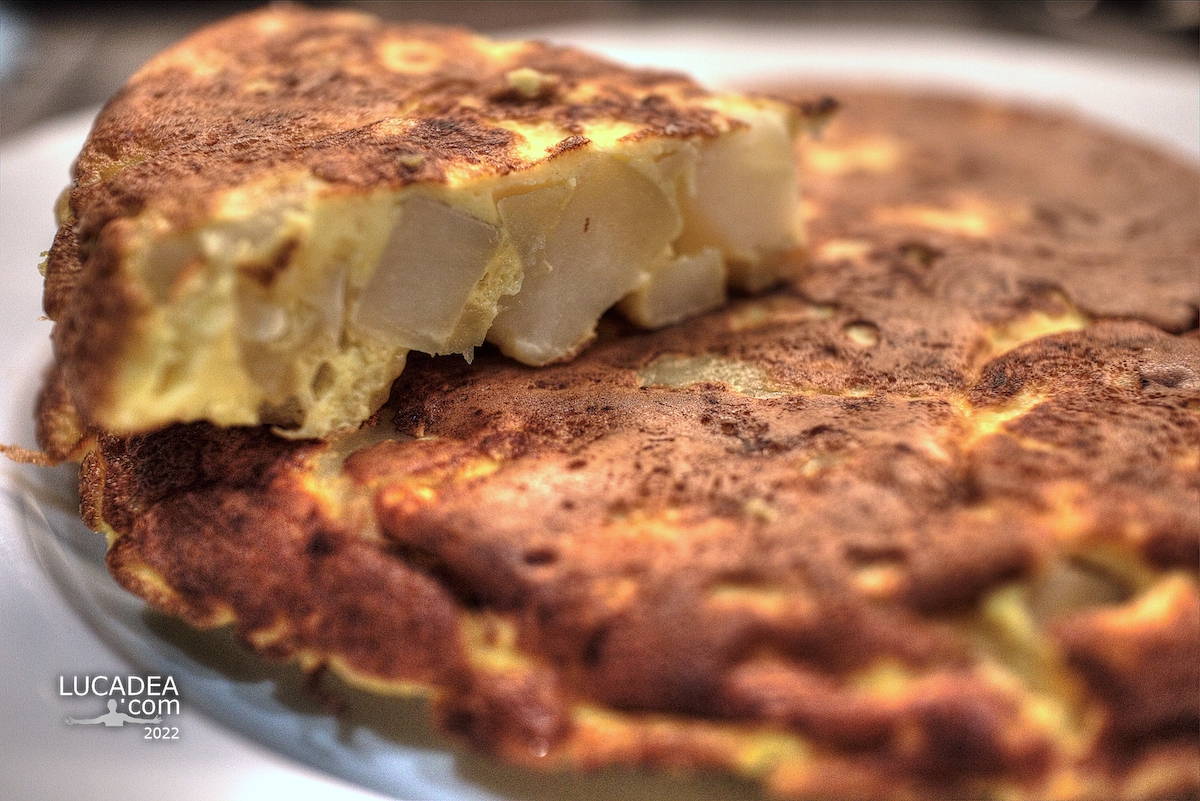
One of my favorite Spanish dishes, after Galician octopus and ham, is definitely tortilla. I made one a while ago, and it was delicious, but compared to the original recipe, I added very little onion.

Ingredients

– 4-5 medium potatoes;
– 1 large onion;
– 4-5 eggs;
– Extra virgin olive oil;
– Salt;
– Pepper.

Preparation

Prepare the potatoes and onion: First, peel the potatoes and cut them into thin slices (about 1/8 inch thick) or cubes.
Also thinly slice the onion.
Fry the potatoes and onion: In a large nonstick skillet, heat plenty of olive oil over medium-high heat and add the potato and onion slices. Cook the potatoes and onion over medium heat, stirring occasionally to prevent them from sticking to the bottom of the pan. They should be tender but not browned (this will take about 10-15 minutes).
When the potatoes and onions are cooked, remove them from the oil using a colander or slotted spoon. Let the excess oil drain well.
Now prepare the eggs: In a bowl, beat the eggs; add a pinch of salt and pepper to taste and transfer the drained potatoes and onions to the bowl with the beaten eggs. Stir well so that the potatoes are coated with the egg.

Now it’s time to cook the tortilla: in a smaller nonstick skillet, heat a little olive oil over medium heat. Pour the egg, potato, and onion mixture into the hot pan and spread it evenly. Cook over medium-low heat for about 5-7 minutes, or until the bottom of the tortilla is set.
Flip and cook on the other side. (To flip the tortilla, use a lid or a flat plate. Place it over the pan and flip the tortilla firmly. The cooked side should now be on top.)
Return the pan to the heat and cook the other side for another 5-7 minutes, or until cooked through and golden brown.

Transfer the tortilla to a serving platter. You can serve it warm or at room temperature, cut into wedges or cubes.
Spanish tortilla is a versatile dish that can be enjoyed as an appetizer, snack, or main course. Its creamy, flavorful texture is loved by many. Enjoy!

Do you like this dish? Do you have any suggestions for improving it?
Add a comment or go to the bottom of the site to read what other visitors have written.

La tortilla spagnola con patate, cipolla e uova, la ricetta

La tortilla spagnola con patate, cipolla e uova, la ricetta

La tortilla spagnola con patate, cipolla e uova, la ricetta

La tortilla spagnola con patate, cipolla e uova, la ricetta

Photos taken with Canon EOS M100 and lens Canon EF-M 22.

The Spanish tortilla with potatoes, onion and eggs, the recipe – La tortilla espagnole aux pommes de terre, oignons et œufs, la recette – La tortilla española con patatas, cebolla y huevos, la receta – A tortilha espanhola com batata, cebola e ovos, a receita – Die spanische Tortilla mit Kartoffeln, Zwiebeln und Eiern, das Rezept – Công thức làm bánh tortilla Tây Ban Nha với khoai tây, hành tây và trứng – 西班牙玉米饼配土豆、洋葱和鸡蛋,食谱 – ジャガイモ、玉ねぎ、卵が入ったスペインのトルティーヤ、レシピ

The text of this post was written with the help of ChatGPT, a language model from OpenAI.

Vietnamese Cuisine: Fried Rice with Pork, the Recipe

Cucina vietnamita: riso fritto con maiale, la ricetta

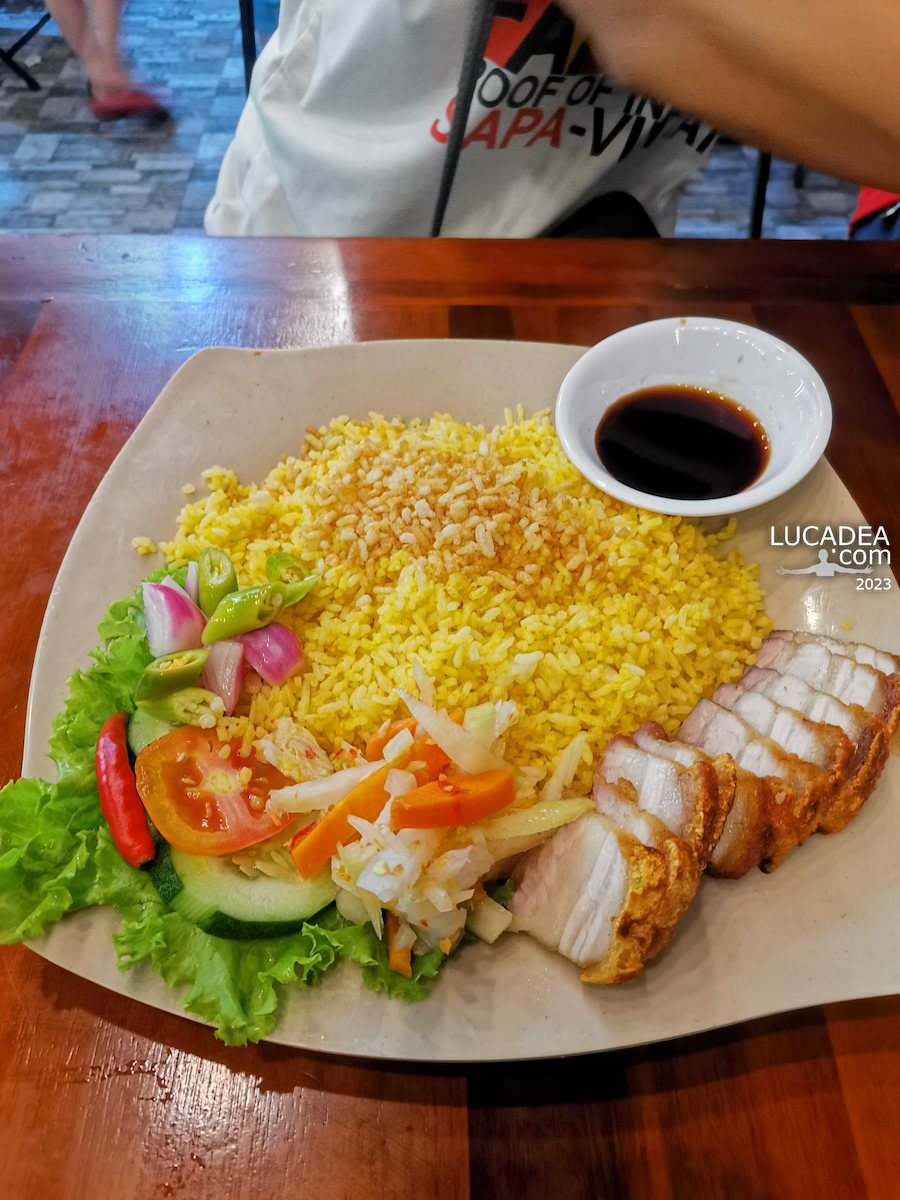
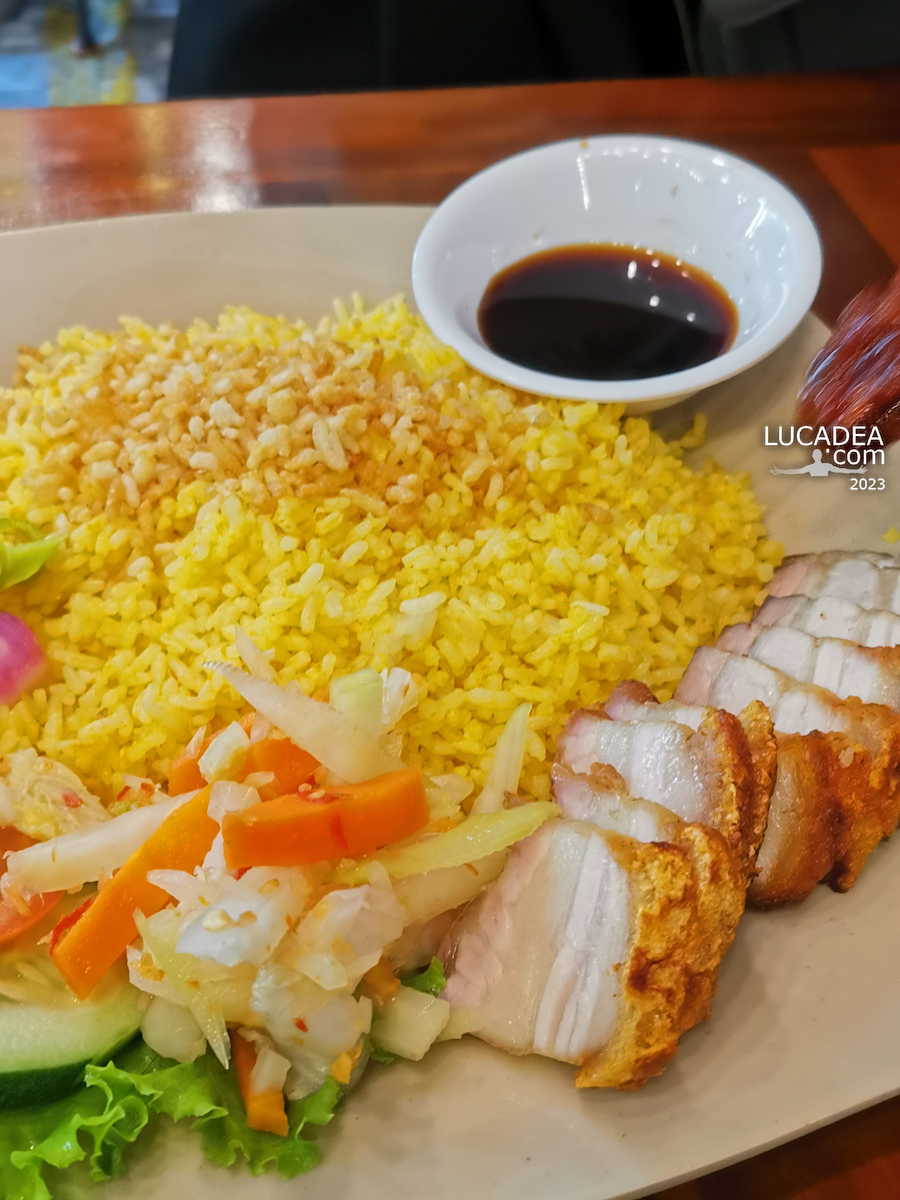
Vietnamese Cuisine: Fried Rice with Pork, the Recipe.
As in my previous post, where I featured A.Hai Chicken Rice (a long-established and quite famous restaurant in Da Nang), I’m now introducing another delicious and interesting restaurant, located near my hometown, Gia Vinh on Le Thanh Nghi Street, also in Da Nang.
We stumbled upon this restaurant by chance: it was quite large and had attractive decor, so we stopped in. My husband ordered fried rice and seasoned shredded chicken, and I ordered fried rice with crispy skinned fried pork belly. It exceeded our expectations; the food here is delicious. The rice is soft and grainy, not greasy. The fried rice includes crispy fried rice grains, so eating it makes me feel very special; delicious but not greasy. The pork belly is low in fat, the skin is very crispy, and the seasoning is just right. The restaurant also offers many side dishes, such as kimchi, pickled onions, garlic, and chili sauce.

If you’re curious about this recipe or Vietnamese food in general, please leave me a comment or scroll down to the bottom of the site to read what other visitors have written.

By the way: I’d like to show you how to make crispy-skinned fried pork belly.

Ingredients

* 500g pork belly;
* purple onion;
* garlic;
* 1 teaspoon star anise powder, cloves, cinnamon;
* lemon;
* Spices: salt, monosodium glutamate, pepper, sugar;

Preparation

Wash the pork belly and drain it. Place the water, 2 purple onions, and 1 teaspoon salt in a pot and bring to a boil. When the water boils, add the meat and cook for 4 minutes. Then remove the meat, wash it, let it cool, and drain it.
Use a fork to poke evenly across the surface of the skin (but not too deep into the fat).
Marinate the meat with 1 teaspoon MSG, 1/2 teaspoon sugar, 1/2 teaspoon pepper, and 1 teaspoon ground spice. Mash 3 purple onions and 2 garlic cloves, squeeze out the juice, and use this water to marinate the meat.
Caution: try to only coat the meat, not the skin.
Now refrigerate for about an hour.

After marinating for 1 hour, place the meat in a baking dish (skin side up) and apply a thin layer of the mixture (1 teaspoon salt and 3 tablespoons lemon juice, mixed well until the salt has dissolved).

Preheat the oven to 200 degrees Celsius for 10 minutes on high and low heat.
Then place the meat in the oven and cook for 30 minutes.
After 30 minutes of cooking, open the oven, add a thin layer of the mixture to the skin, and continue cooking for another 30 minutes.
Next, adjust the heat to 150 degrees Celsius and set the cooking time to 15 minutes. If the skin swells evenly, you can turn off the oven and remove the meat.
The finished product should have a crispy, flavorful skin. Cut into small pieces and serve with fried rice and a cup of soy sauce.

Foto scattate con Honor 20.

Vietnamese cuisine: fried rice with pork, the recipe – Cuisine vietnamienne : riz frit au porc, la recette – Cocina vietnamita: arroz frito con cerdo, la receta – Cozinha vietnamita: arroz frito com carne de porco, a receita – Vietnamesische Küche: Gebratener Reis mit Schweinefleisch, das Rezept – Ẩm thực Việt Nam: cơm chiên thịt heo, công thức – 越南菜:猪肉炒饭,食谱 — ベトナム料理:豚肉入りチャーハンのレシピ

Vietnamese cuisine: Cá kho nghệ, the recipe

Ricetta vietnamita: pesce in padella con curcuma

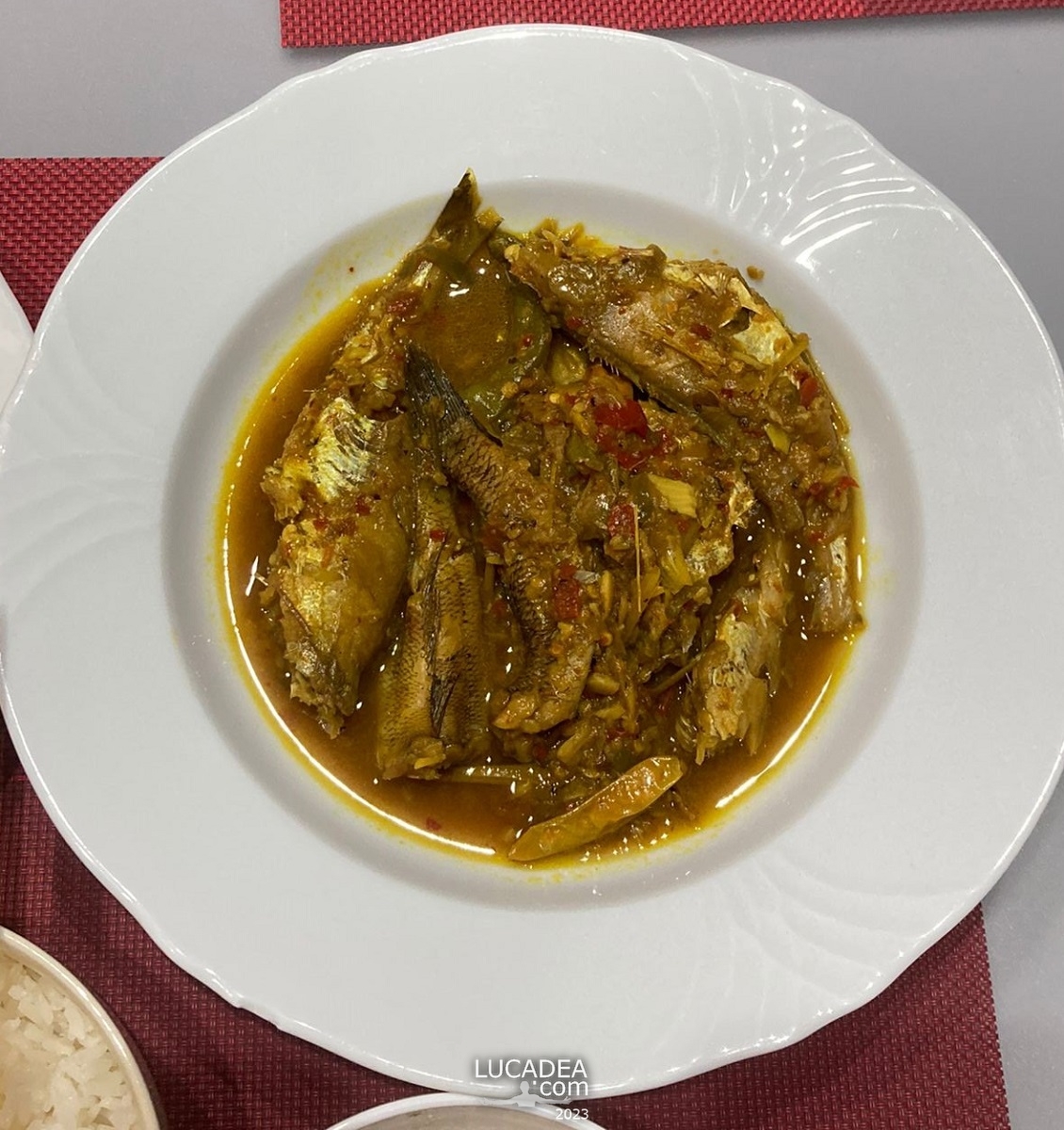
Vietnamese Cuisine: Cá kho nghệ, Stir-fried Fish with Turmeric, the Recipe.
Today, when I went to the supermarket, I saw a nice fish on sale, so I thought I could buy it to make a dish I really like: stir-fried fish with turmeric, which in Vietnam is called cá kho nghệ. As a side dish, I also prepared some boiled vegetables with fish sauce and steamed rice.

If you’re curious about this recipe or Vietnamese food in general, please leave me a comment or scroll down to the bottom of the site to read what other visitors have written.

Ingredients

* ​​Fish: You can choose the type of fish based on your family’s preferences; today there were many suitable types of fish… I bought one about half a kilo;
* Turmeric: 1 large piece;
* Garlic: 3 cloves;
* Purple onion: 2 pieces;
* Fresh chili peppers: 6 chili peppers (half crushed, half added after preserving);
* Lemongrass: 1 sprig;
* Seasonings: Olive oil, fish sauce, soy sauce, sugar, paprika, monosodium glutamate, white wine, ground pepper, chili powder, shrimp paste.

Preparation

First, take the onions, garlic, turmeric, lemongrass, and three chili peppers and chop them up (I do it in the marble mortar that my husband used to make pesto alla Genovese).
Then clean the fish and drain it well under running water.
Now marinate for about thirty minutes with: 2 tablespoons fish sauce, 1 tablespoon soy sauce, 1/2 teaspoon MSG, 1 tablespoon white wine, 1 teaspoon paprika, and 1/2 teaspoon pepper. Marinate for 30 minutes.
Place a pan on the heat, add 4 tablespoons oil and 1 tablespoon sugar until golden brown. Continue adding the crushed onion, garlic, and turmeric mixture and sauté well until fragrant. Then add the marinated fish.
After about 3-5 minutes, when the fish has gradually dried, add a cup of boiling water and cook until boiling. Then add 1/2 teaspoon fish sauce and continue boiling for about ten minutes.
Now you can season to taste and let it rest with the heat off for another five minutes to allow some of the water to evaporate.
Depending on your tastes, you can add more or less chili pepper and onion.

I like extremely spicy food, and my dishes are usually those originating from Central Vietnam with a bit of Southern influence.

Here’s the dish:

Ricetta vietnamita: pesce in padella con curcuma

Ricetta vietnamita: pesce in padella con curcuma

Ricetta vietnamita: pesce in padella con curcuma

Vietnamese recipe: pan-fried fish with turmeric – Recette vietnamienne : poisson poêlé au curcuma – Recette vietnamienne : poisson poêlé au curcuma – Receita vietnamita: peixe frito com açafrão – Vietnamesisches Rezept: Gebratener Fisch mit Kurkuma – Công thức Việt Nam: cá áp chảo nghệ – 越南食谱:姜黄煎鱼 – ベトナム料理レシピ:魚のターメリック炒め

Vietnamese cuisine: Chả giò, the recipe

Involtini primavera di maiale e gamberi

Vietnamese Cuisine: Pork and Shrimp Spring Rolls, the Recipe.
Shrimp and meat spring rolls are a famous dish in central Vietnam, my hometown of Quang Nam-Da Nang. When I was a child, they were prepared for every family feast, along with a variety of other dishes. Today, they’ve become more popular with every family meal, and it’s even easy to find them frozen.
They’re usually made with pork, shrimp, and a few ingredients that I unfortunately don’t have on hand, exactly like in Vietnam, but the flavor is the same!

Click vào đây để đọc bằng tiếng việt!
If you’re curious about this recipe or Vietnamese food in general, write me a comment or go to the bottom of the site to read what other visitors have written.

Ingredients

– 500 g minced or lean pork;
– 1 small carrot, thinly sliced ​​or grated;
– 1 small taro, thinly sliced ​​or grated (purchased at Asian grocery stores, and if you don’t know what it is, go to Wikipedia);
– 2 chicken eggs;
– 1 handful of finely chopped shallots and cilantro;
– A few purple onions and garlic: minced;
– Olive oil;
– Spices: seasoning, sugar, pepper, fish sauce, monosodium glutamate;
– 1-2 stacks of rice paper rolls with ram (purchased at Asian meat supermarkets).

Preparation

Mix the meat mixture, carrots, taro, cilantro, eggs, onions, and minced garlic, then season with: 1.5 tablespoons fish sauce, 1.5 teaspoons seasoning, 1/2 teaspoon MSG, 1/3 teaspoon sugar, and 1/2 teaspoon pepper, and mix well.

Refrigerate the mixture for 10 minutes to allow the spices to infuse the entire mixture.
Spread a little of the mixture evenly over each piece of rice paper. Then, fold the two ends over and roll them up as desired, then place them on a plate.
Heat a nonstick pan with olive oil (enough to cover the rolls) over medium-high heat, then fry the rolls in batches until golden brown. Arrange them on a plate and serve with homemade satay (which I described in a previous post) or with Detchland’s Sweet and Sour Chili Sauce (available at Co-op or Asian supermarkets).
Note: If you don’t like the taste of taro, you can add carrots instead. Once you’ve grated the carrots and taro, remember to squeeze out the water so that when you mix the mixture, it’s not too wet and difficult to fry. The mixture is perfect when it’s neither too dry nor too wet and has the sticky consistency of egg. To make sure the seasoning is just right, after mixing the mixture, you can roll one up and fry it first to test the spices again to adapt them to your taste.

Involtini primavera di maiale e gamberi

Vietnamese recipe: pork and shrimp spring rolls – Recette vietnamienne : nems au porc et aux crevettes – Receta vietnamita: rollitos de primavera de cerdo y gambas – Receita vietnamita: rolinhos primavera de carne de porco e camarão – Vietnamesisches Rezept: Frühlingsrollen mit Schweinefleisch und Garnelen – Công thức món Việt: chả giò tôm thịt – 越南食谱:猪肉和大虾春卷 – ベトナムのレシピ:豚肉と海老の春巻き
🏠
  • Italiano