A castle-like villa on Fiume street in Chiavari

Villa dall’aspetto signorile in via Fiume a Chiavari, con elementi architettonici che ricordano un antico castello

A castle-like villa on Fiume street in Chiavari.
Walking along Fiume street in Chiavari, coming from the roundabout leading towards the motorway entrance, I noticed this large villa with a rather unusual appearance. I could not identify its name with certainty, which is part of what makes the photograph interesting to me: the building looks almost like a small castle, but I do not have enough reliable information to say exactly what it is.
The façade immediately stands out from the more ordinary buildings along this part of the town. It is the kind of place I might easily have walked past without paying much attention, but carrying my camera made me stop and look more carefully at its architecture.
I took this photograph simply because the building caught my eye. I did not have a detailed historical description or a confirmed name to accompany it. I was just walking through Chiavari and came across a villa that seemed unusual enough to deserve a place in my photographic archive.
Chiavari, Liguria, Italy, is a town where more familiar landmarks coexist with many residential buildings that reveal different architectural styles and periods. This is one of the reasons I enjoy walking through its streets rather than concentrating only on the best-known parts of the historic centre.
Fiume street is also an interesting route through the town. Coming from the roundabout towards the motorway entrance, the villa appears along the road and immediately catches the eye because of its rather imposing and elegant character.
At first glance, some of its architectural features can give the impression of a castle. There are elements that suggest a fortified building, at least visually, but I do not want to turn that first impression into a historical claim. I have not found sufficiently reliable information about the building to confirm that it was actually a castle or to identify its original purpose.
That uncertainty is part of the reason I decided to publish the photograph anyway. Urban photography does not always begin with a famous monument or a well-documented building. Sometimes I photograph something simply because it catches my attention while I am walking, and only afterwards do I realise that I know very little about it.
So the question remains open. What is the history of this villa? Was it actually designed with references to medieval architecture, or is its castle-like appearance simply the result of the architectural style chosen for a private residence?
Rather than inventing an answer, I prefer to leave the question open. The photograph is my own record of the building as I encountered it, while anyone familiar with Chiavari may perhaps know more about its history.
This is also one of the reasons I enjoy keeping a photographic blog. Not every image needs to provide a complete historical explanation. Sometimes a photograph can simply document a curiosity and invite further discussion.
I have photographed other villas, palaces and architectural details around Chiavari and the surrounding area, and over time these images have become a small personal collection of the buildings I encounter during my walks. Some are immediately recognisable, while others remain unidentified for a while.
This villa on Fiume street belongs to the second category. What attracted me was not necessarily a single architectural detail, but the overall impression created by the building. It has a presence that makes it different from the surrounding streetscape.
If you are interested in what to see in Chiavari beyond its best-known landmarks, these less obvious buildings can be worth noticing as well. They may not appear in a conventional itinerary, but they can reveal another side of the town, especially when you are simply walking rather than following a fixed route.
For me, the most interesting part is still the unanswered question behind the photograph. Who built the villa? When was it constructed? Was there a particular reason for its unusual appearance? Without reliable information, I would rather not turn guesses into facts.
That is also why I have kept the description deliberately close to what I actually saw. The building is there, on Fiume street in Chiavari, and its architecture certainly resembles that of a small historic castle. Everything beyond that deserves confirmation.
Perhaps someone who lives in the area or knows Chiavari’s architectural history will recognise it immediately. If so, I would be very interested in adding that information to the story of the photograph.
Until then, the image remains a record of one of those unexpected discoveries that make walking with a camera worthwhile. I was simply passing along Fiume street when this villa caught my attention, and now it has become one of those photographs that leaves me with a question rather than an answer.

Do you know the name of this villa or anything about its history? Add a comment or go to the bottom of the site to read what other visitors have written.
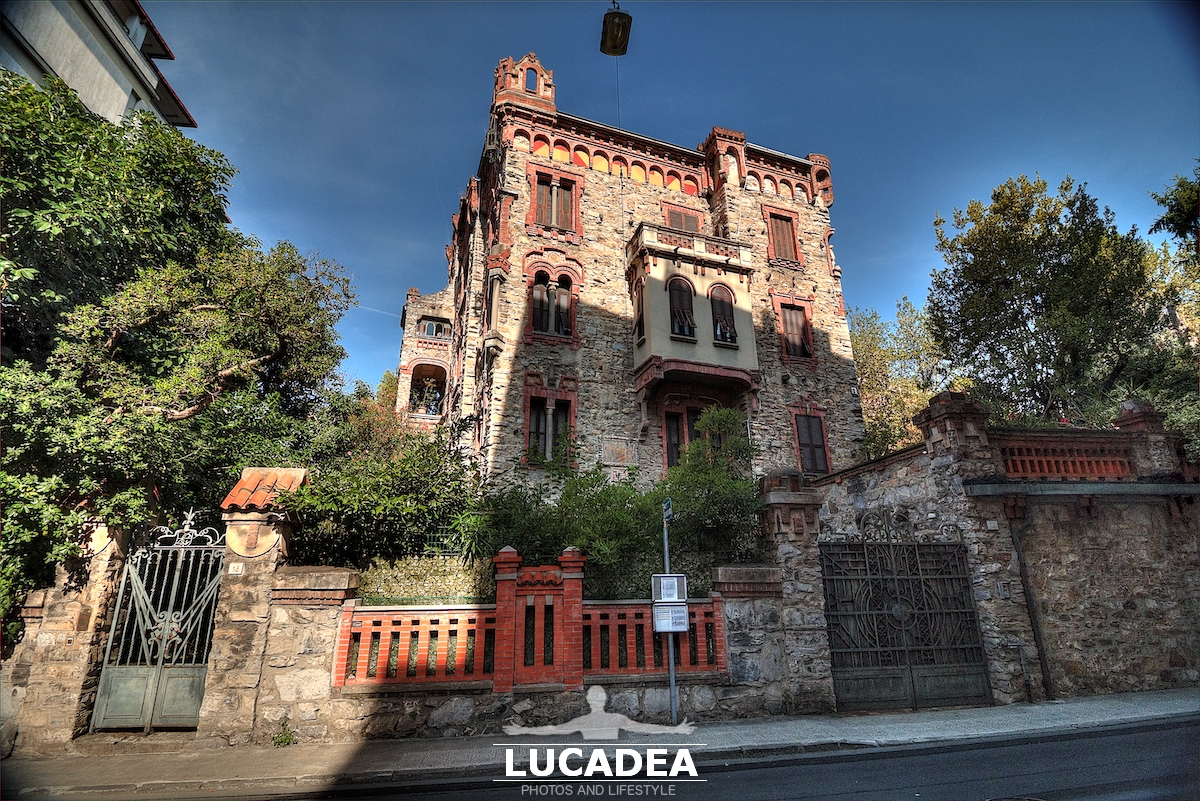
Castle-like villa on Fiume street in Chiavari, with elegant architecture resembling an old fortified residence

Photo taken with camera Canon EOS M100 and lens Canon EF-S 10-18.

Add one  comment to this article or read  here what other visitors have written.
 
Adv
 
Disclamer

The rights on images, videos, choruses, text and all other material on the LUCADEA.com website are governed as per  Copyright page.


This page has been viewed 1 times today.
This month it has been viewed 3 times.
In total it has been viewed 4 times.
 

The Courthouse Palace in Finalborgo

Palazzo Nazionale in piazza del Tribunale a Finalborgo

The Courthouse Palace in Finalborgo.
Among the places to see in Finalborgo, Liguria, the Courthouse Palace is one of the historic buildings that best represents the medieval identity of this Italian village. This photograph shows the Palazzo Nazionale in Tribunale Square in Finalborgo, part of Finale Ligure, Liguria, Italy, a building where justice was once administered during the rule of the Del Carretto marquises.
While walking through the historic streets of Finalborgo, I was attracted by the elegance of the buildings surrounding the main squares. I wanted to capture this palace with my camera because it represents the feeling that makes this village so interesting: every façade, every square and every architectural detail seems to preserve a piece of its history.
The Courthouse Palace stands in one of the most important squares of Finalborgo and reflects the political and administrative importance that the village had in the past. It is not only a beautiful building to admire, but also a place connected with the history of the Marquisate of Finale, when the Del Carretto family governed this territory.
If you are visiting Finalborgo, this palace is one of the places worth seeing while exploring the old town. Visitors often focus on the medieval walls, historic gates and churches, but the noble buildings are also essential to understanding the character of the village. The Palazzo Nazionale is a fine example of local aristocratic architecture, with elegant proportions and details that blend perfectly with the surrounding streets.
A short historical curiosity concerns the name of the square itself: Tribunale Square recalls the original function of the building, which hosted the rooms used for judicial administration. Today the palace remains an important cultural reference point for Finalborgo and continues to contribute to the preservation of the village’s historical heritage.
This photograph comes from my passion for Liguria and from my desire to share places that reveal their beauty slowly, through careful observation. As with other photographs of Finalborgo published on Lucadea.com, this image focuses on the architectural details that make this village unique.
Finalborgo is a place where history is not limited to museums or monuments, but remains visible in the squares and buildings that are still part of everyday life. The Courthouse Palace represents this connection between the past and the present.
To learn more about this historic building and its cultural activities, you can also visit the official website of the Palazzo del Tribunale di Finalborgo.

Which historic building in Finalborgo would you like to discover during a walk through the village? Add a comment or go to the bottom of the site to read what other visitors have written.

Courthouse Palace in Tribunale Square in Finalborgo with historic Ligurian architecture

Photo taken with a Canon EOS RP camera and Canon EF-S 10-18 lens.

I took dozens of photos in this beautiful town in Western Liguria; click here to see them all:
foto gallery

Add one  comment to this article or read  here what other visitors have written.
 
Adv
 
Disclamer

The rights on images, videos, choruses, text and all other material on the LUCADEA.com website are governed as per  Copyright page.


This page has been viewed 0 times today.
This month it has been viewed 0 times.
In total it has been viewed 0 times.
 

Doria Tursi Palace Courtyard in Genoa

Cortile di Palazzo Doria Tursi a Genova fotografato dall'ingresso con l'architettura storica del palazzo

Doria Tursi Palace Courtyard in Genoa.
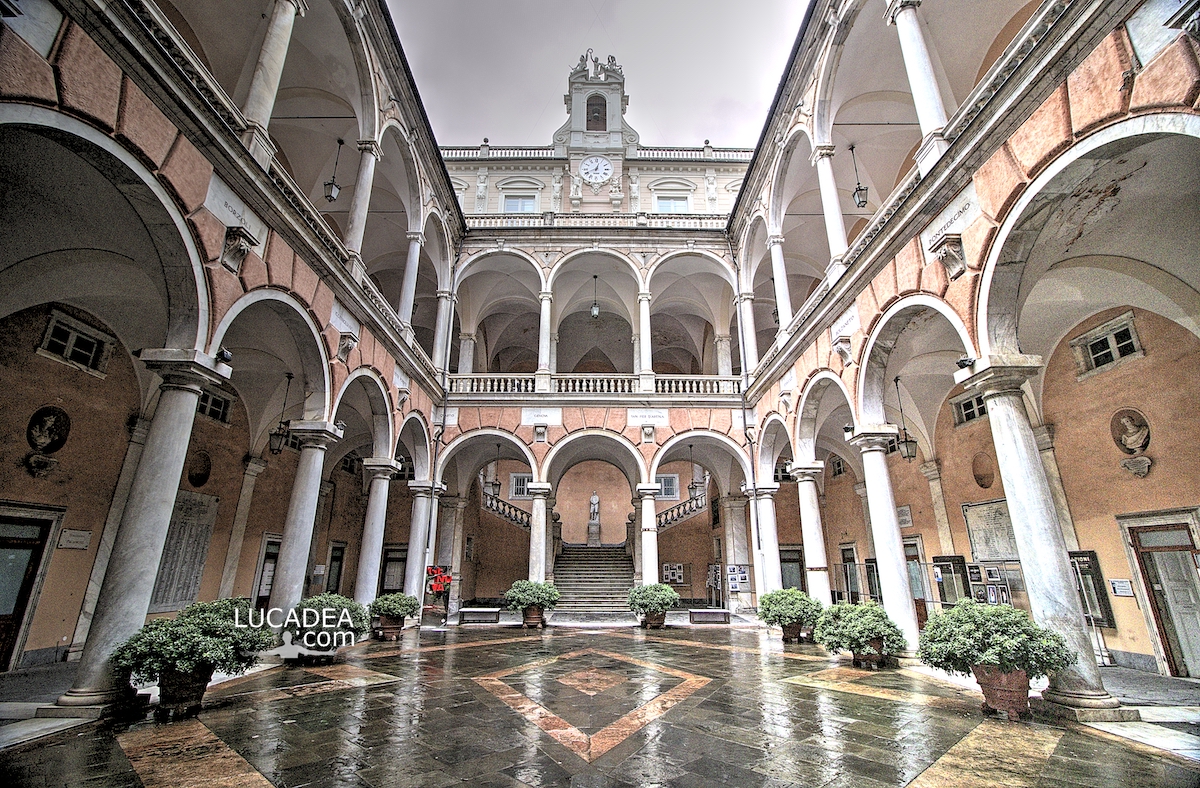
During my first visit to the Musei di Strada Nuova in the historic center of Genoa, I photographed the courtyard of Doria Tursi Palace from the entrance, capturing a different perspective of one of the most important historic buildings in the city.
The reason I added “courtyard” to this title is linked to the point of view of the photograph. This is not a classic image of the exterior facade or one of the famous rooms inside the building, but a view taken from below, looking into the inner space of the palace. I wanted to capture this particular angle with my camera because sometimes the most interesting details are found in the places people simply walk through.
Doria Tursi Palace is located on Garibaldi Street in Genoa, Liguria, Italy, and is part of the famous Musei di Strada Nuova museum route. For visitors looking for what to see in Genoa, this area of the historic center is one of the most interesting places because it combines Renaissance architecture, art and centuries of city history.
I took this photograph during my first visit to the Musei di Strada Nuova. While exploring the palace, I also photographed another view of the courtyard from a higher level, creating two different images of the same place and showing how the perspective can completely change the perception of a building.
Doria Tursi Palace was built in the 16th century for the Doria family and today houses the Municipality of Genoa. Inside the palace there are important artistic collections, including the famous Cannone violin, the instrument played by the great Genoese composer Niccolò Paganini.
What I like about photographing Genoa is discovering these hidden corners that are part of everyday life but also preserve centuries of history. A courtyard, a doorway or a small architectural detail can often tell as much about a city as its most famous monuments.
This photograph is part of my collection dedicated to Genoa and its historic buildings, together with other images of streets, squares and architectural details that I have photographed while exploring the city over the years. Similar views can also be found among my photographs dedicated to the old buildings and historic areas of Liguria.

Have you ever visited Doria Tursi Palace or the Musei di Strada Nuova in Genoa? Which historic building in the city impressed you the most? Add a comment or go to the bottom of the site to read what other visitors have written.

Doria Tursi Palace courtyard in Genoa photographed from the entrance showing historic architecture and details

Photo taken with a Canon EOS M100 camera and Canon EF-S 10-18 lens.

Palazzo Doria-Tursi, also known as Palazzo Niccolò Grimaldi, is a building located at 9 Via Garibaldi in Genoa’s historic center; on July 13, 2006, it was included in the list of 42 palaces registered in the *Rolli di Genova*.
Read more on Wikipedia

Villa Matilde on the Sestri Levante Peninsula

Villa Matilde sulla Penisola di Sestri Levante vista dalla Baia delle Favole

Villa Matilde on the Sestri Levante Peninsula.
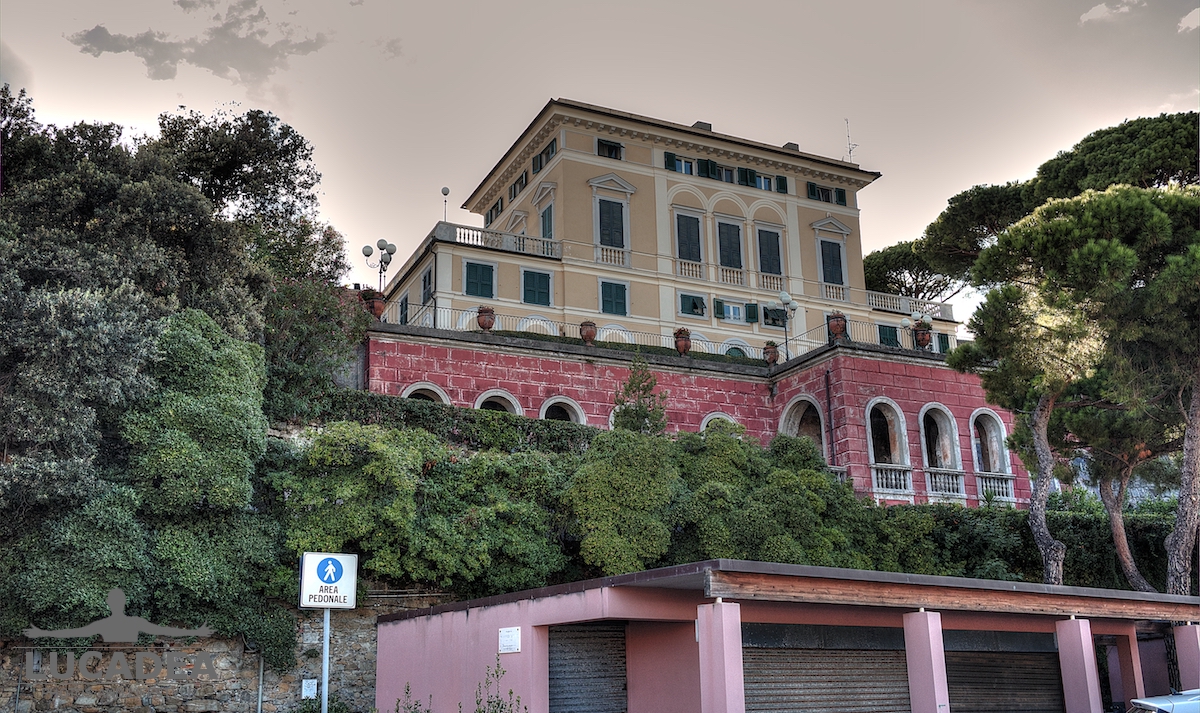
Walking along the Bay of Fables in Sestri Levante, Liguria, Italy, I photographed one of the most recognizable buildings that can be seen while looking toward the Peninsula: Villa Matilde. Among the things worth seeing in Sestri Levante there are not only the sea, the beaches, and the famous views, but also the historic villas that tell the story of the elegant past of this Ligurian coastal town.
This photograph comes from paying attention to a detail that often accompanies people during a walk along the waterfront but deserves a closer look. The villa stands on the part of Sestri Levante that was once a real island before being connected to the mainland, and its elevated position makes it one of the most distinctive elements of the landscape seen from the Bay of Fables.
I wanted to capture this building with my camera because it represents a side of Sestri Levante that goes beyond the most familiar images of beaches and the sea. When I photograph a place, I often look for details that can help understand its story: a facade, a villa overlooking the gulf, or a particular architectural element can reveal a lot about the surrounding area.
Villa Matilde, which according to some local references may have previously been known as Villa Pallavicini, is one of the most interesting historic buildings on the Peninsula. The villa overlooks the port area and stands above the newer fish market, in a privileged position where the relationship between architecture and the coastal landscape is easy to appreciate.
The historic villas of Sestri Levante are connected with the period when the town became a popular holiday destination. Many residences were built in panoramic locations, where the beauty of the buildings could combine with views over the sea and the Gulf of Tigullio.
I enjoy photographing places like this because they allow me to tell the story of a town from different perspectives. The most interesting subject is not always the most famous one: sometimes a building seen during an ordinary walk can suggest a new story waiting to be discovered. Other views of the Sestri Levante Peninsula that I have shared on the site come from the same curiosity toward less obvious details.
If you are visiting Sestri Levante, Villa Matilde is one of those architectural details worth noticing while walking along the Bay of Fables, because it adds another layer to the identity of the town.

Have you ever looked at Villa Matilde from the Bay of Fables, and do you know any stories or curiosities about this villa? Add a comment or go to the bottom of the site to read what other visitors have written.

Villa Matilde on the Sestri Levante Peninsula seen from the Bay of Fables

Photo taken with Canon EOS M100 and lens Canon EF-M 22.

Here is where this villa is located:

Fieschi street in the heart of modern Genoa

Via Fieschi a Genova nel cuore moderno tra Via XX Settembre e salita verso Carignano e la basilica

Fieschi street in the heart of modern Genoa.
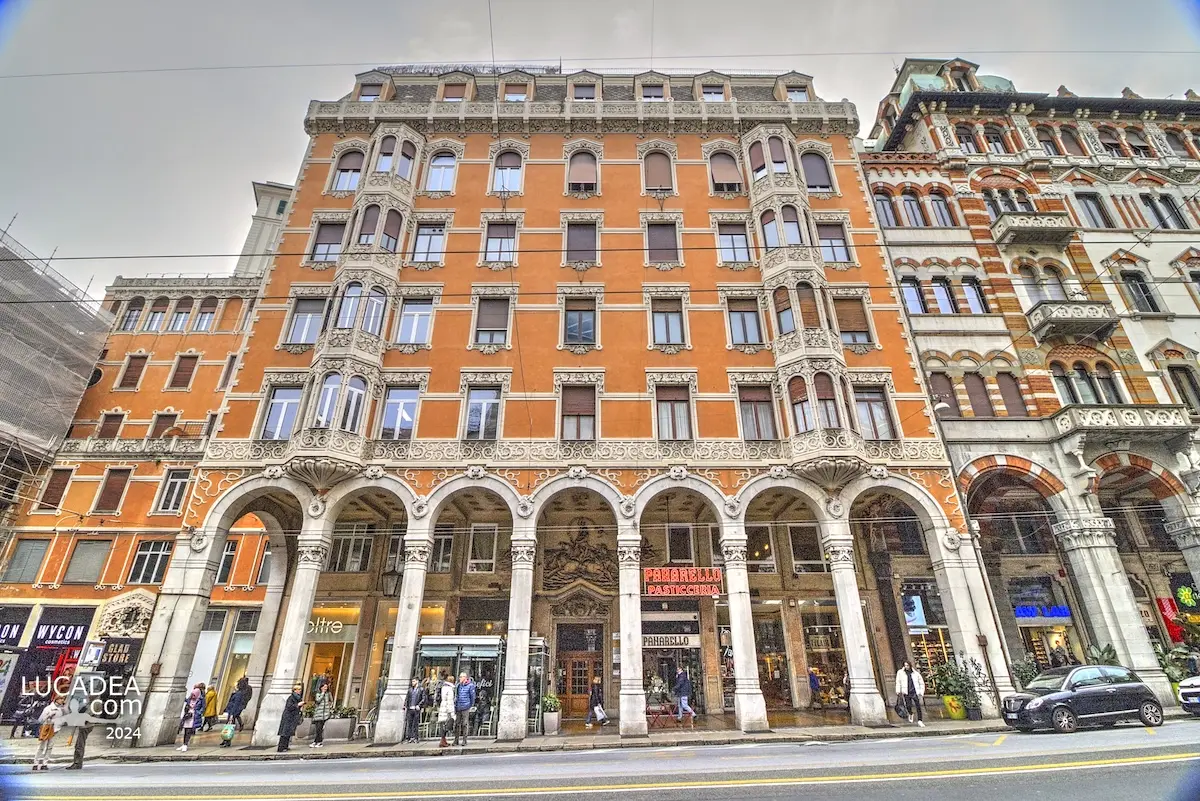
Walking through this part of the city, I found myself looking at a very different side of Genoa from the one usually associated with narrow medieval alleys, historic palaces and the waterfront. This photograph shows Fieschi street, an elegant urban road in central Genoa where another side of the city becomes visible through its buildings, shops and everyday activity.
I took this photograph myself while walking through Genoa, stopping to look at the perspective created by the street and its architecture. What caught my attention was the contrast between this part of the city and the older historic centre. A short walk can completely change the atmosphere, taking you from narrow alleys to wider streets and a more contemporary urban landscape.
Fieschi street is in central Genoa, Liguria, Italy, connecting the area around Dante square with the central streets leading towards Paolo da Novi square and XX Settembre avenue. If you are visiting Genoa and wondering what to see beyond the best-known landmarks, this is an interesting street to encounter while walking through the central districts, especially because it connects several important areas of the city.
In the photograph, what interests me most is the perspective. The buildings guide the eye forward and create a sequence of façades in which homes, businesses and offices share the same urban space. There is no single monument dominating the composition. Instead, the photograph is about the city itself and the ordinary rhythm of a central Genoese street.
The name Fieschi street refers to one of the most influential noble families in Genoese history. The Fieschi were a powerful aristocratic family from Liguria, connected with the history of nearby Lavagna and deeply involved in the political life of the Republic of Genoa. Among the family’s most important figures was Sinibaldo Fieschi, who became Pope Innocent IV in the thirteenth century. It is only a small historical detail, but it shows how the names of powerful families from the past remain present throughout the streets of Genoa and the surrounding region.
This connection between the present city and its older history is one of the things I enjoy noticing while walking through Genoa. A street can look completely contemporary, yet its name may refer to people and events from centuries ago. The city is full of these layers, and photography often gives me a reason to stop and pay attention to them.
The area is also close to XX Settembre avenue, one of Genoa’s main commercial streets. From here, it is possible to continue towards De Ferrari square and the historic centre or explore other central neighbourhoods. For anyone interested in discovering Genoa on foot, routes like this make it possible to move naturally between modern streets, historic buildings and older alleys without following a rigid itinerary.
I have photographed several other parts of Genoa for my photoblog, and I like connecting these stories because the city changes dramatically from one neighbourhood to another. Some of my photographs focus on the historic centre and its narrow alleys, creating a very different visual atmosphere from this image. Together, however, they show the same city from different perspectives.
When I photograph Genoa, I am often interested in this contrast. On one side are the medieval alleys, the historic palaces and the narrow streets that made the old centre famous. On the other are streets such as Fieschi street, where traffic, shops and more recent buildings show a city that has continued to evolve.
The movement of people and changing light can completely alter the feeling of a street, but for this photograph I preferred to concentrate on the urban structure itself. The lines of the buildings, the depth of the road and the succession of façades were enough to recreate the impression I had while walking here.
If you are wondering where Fieschi street is in Genoa, it is centrally located and easy to include in a wider walk through the city. I would not necessarily consider it a destination on its own, but rather an interesting part of an urban route while exploring central Genoa.
This is also why I continue photographing streets that might initially seem ordinary. A photoblog does not have to show only famous monuments. Sometimes an image of a normal city street can say more about a place, particularly when it shows architecture, commerce and everyday life sharing the same space.
Looking at this photograph again, I think about a side of Genoa that can remain hidden behind the more traditional images of the city. It is the Genoa of daily journeys, streets crossed every day and buildings that people may pass without stopping to look at them. Photographing these places is also a way of preserving small fragments of the city before they become simply part of memory.
Fieschi street therefore seemed like a good place from which to photograph this particular side of Genoa: modern without being completely detached from history, central without having the monumental appearance of the city’s most famous squares.

When you walk around Genoa, do you prefer the historic alleys, or do you enjoy discovering the city’s more modern central streets as well? Add a comment or go to the bottom of the site to read what other visitors have written.

Fieschi street in central Genoa, with historic buildings, shops and the urban perspective of the road

Photo taken with Canon EOS RP camera and Canon RF 24-50 lens.

Here’s where I took the shot:

Grillo Spinola Palace in Genoa’s old town

Palazzo Grillo Spinola in Piazza dei Greci nel centro storico di Genova con dettagli della facciata storica

Grillo Spinola Palace in Genoa’s old town.
While walking through the narrow alleys of Genoa’s historic centre, I stopped to photograph a building that immediately caught my attention because of its architecture and the details hidden among the old streets. This is one of the reasons why I love exploring Genoa: when looking for things to see in Genoa’s old town, it is often the quieter corners that reveal the true character of the city.
The photograph shows Grillo Spinola Palace, a historic building located between Greci Square and Vigne Square, in Genoa, Liguria, Italy. This area is part of the ancient heart of the city, where noble residences, small squares and narrow streets create the unique atmosphere that makes Genoa’s old town so fascinating.
I took this photograph without initially knowing the complete story behind the building. As often happens during my photographic walks, curiosity comes first: I see a façade, a doorway or a particular view that attracts my attention, and only afterwards I try to discover more about the place that appeared in my camera.
Grillo Spinola Palace is connected with the history of the Spinola family, one of the most important noble families of the former Republic of Genoa. Built during the medieval period, the palace is part of the complex urban fabric of the historic centre, where buildings from different periods still stand close together and create a fascinating contrast between past and present.
One interesting detail about Genoa’s old town is the presence of many historic palaces linked to the families who played an important role in the city’s maritime history. Several of these residences were included in the Rolli system, the official lists of buildings chosen to host important visitors arriving in Genoa during the time of the Republic.
What I like about places such as Grillo Spinola Palace is the possibility of discovering history while simply walking through the city. It is not always necessary to search for the most famous monument; sometimes a small square or a hidden street can reveal architectural details that tell centuries of stories.
This photograph is part of the many images I have taken around Genoa’s historic centre, where every walk can become an opportunity to discover something new. Like other buildings and hidden corners I have shared on Lucadea, this place shows how much beauty can still be found by observing carefully.
The old streets around Greci Square and Vigne Square still preserve the atmosphere of a Genoa that was shaped by merchants, noble families and centuries of history.

Have you ever walked through this area of Genoa’s old town and noticed Grillo Spinola Palace? Add a comment or go to the bottom of the site to read what other visitors have written.

Grillo Spinola Palace in Greci Square in Genoa old town with historic architectural details

Photo taken with Canon EOS RP and Canon EF-S 10-18 lens.

Here’s where the building is located:

The medieval stone portico on the ground floor remains, with the pointed arch overlooking Piazza delle Vigne broken by the insertion of two windows. The side arch on Via delle Vigne is still perfectly intact and clearly visible. Furthermore, the small crowning arches between the ground floor loggia and the first floor have been retained, although they feature later decoration.
Continue and learn more at spinola.it

The palace designed by Benvenuto Pesce Maineri

Il palazzo costruito da Benvenuto Pesce Maineri in via XX Settembre

The palace designed by Benvenuto Pesce Maineri on XX Settembre Street.
At number 26 on XX Settembre Street in Genoa there is this beautiful palace, which I have already photographed several times, but only today have I discovered something about it.
It was designed by the urbanist Benvenuto Pesce Maineri, a representative of Art Nouveau and eclecticism.

Do you know or have you ever seen this palace? Add a comment or go to the bottom of the site to read what other visitors have written.

Il palazzo costruito da Benvenuto Pesce Maineri in via XX Settembre

Photo taken with Canon EOS RP camera and Canon EF-S 10-18 lens.

Where exactly is the building located?

Number 26, characterized by a more mature and less academic style, features sea water as its main theme: spiraling seaweed motifs that are repeated on the façade and form the constituent elements of the antherids, leviathans that become the finishing touches of the arches and uprights of the internal railings, dolphins, and mythological motifs.
Continue and learn more at Wikipedia

The building built by Benvenuto Pesce Maineri in via XX Settembre – Le palais construit par Benvenuto Pesce Maineri dans la via XX Settembre – El palacio construido por Benvenuto Pesce Maineri en via XX Settembre – O palácio construído por Benvenuto Pesce Maineri na via XX Settembre – Der von Benvenuto Pesce Maineri in der Via XX Settembre erbaute Palast – Cung điện được xây dựng bởi Benvenuto Pesce Maineri qua XX Settembre –

The San Rufino Fountain in Assisi

La fontana di San Ruffino ad Assisi

The San Rufino Fountain in Assisi.
The Fountain of San Rufino is one of the historical attractions of Assisi, located in the picturesque San Rufino Square, just a few steps from the Cathedral of San Rufino. Built in 1532, the fountain served as one of the main sources of fresh water for the city.
This fountain, with its long rectangular stone basin, resembles more a large drinking trough than a traditional fountain. It is set into the wall of Sermatti Palace, which runs along one side of the square. The fountain is decorated with six lion heads from which water flows, creating a evocative and historic atmosphere.
San Rufino Square, where the fountain is located, is a place of great historical and cultural importance. The adjacent cathedral, dedicated to San Rufino, is a magnificent example of Romanesque architecture and houses numerous artistic and historical treasures. The fountain itself is a symbol of daily life in Assisi in the past, when public fountains were essential for the community.
Today, the San Rufino Fountain is a landmark for tourists visiting Assisi. It is an ideal place to stop and take photos, enjoying the beauty and tranquility of the square. Even if visiting the fountain may take only a few minutes, it is an experience that enriches the understanding of Assisi’s history and culture.

Do you know or have you ever been to Assisi? Add a comment or go to the bottom of the site to read what other visitors have written.

La fontana di San Ruffino ad Assisi

Photo taken with Canon EOS RP and Canon RF 24-50 lens.

To see all the photos of Assisi, click here:

Here’s where the fountain is located:

The central portal in particular is richly ornamented, especially the multiple lintel decorated with reliefs of vine shoots, spirals, allegorical figures, and monstrous animals; the lunette features Christ enthroned within a shield, between the sun, the moon, the Madonna nursing, and Saint Rufino.
Continue and learn more at Wikipedia

The fountain of San Ruffino in Assisi – La fontaine de San Ruffino à Assise – La fuente de San Rufino en Asís – A fonte de San Ruffino em Assis – Der Brunnen von San Ruffino in Assisi – Đài phun nước San Ruffino ở Assisi

This post was written with the help of Copilot, an AI-powered virtual assistant.

Garibaldi Street in Genoa and the Rolli Palaces

Via Garibaldi a Genova con i Palazzi dei Rolli e le eleganti facciate storiche nel centro della città

Garibaldi Street in Genoa and the Rolli Palaces.
While walking through the historic center of Genoa, I stopped to capture the elegant perspective of Garibaldi Street, observing the decorated façades and the architectural details that make this place one of the most fascinating corners of the city.
This photograph of Garibaldi Street in Genoa comes from my desire to tell the story of a place that is well known but always able to reveal something new. Even after several visits, this historic street offers different views depending on where you stop, with details on the buildings, entrances and decorations that often remain unnoticed when walking quickly.
Garibaldi Street, also known as Strada Nuova in its original historical context, is one of the most important examples of Renaissance architecture in Genoa. Walking here means crossing a part of the city where the elegance of the past blends naturally with everyday life, between museums, historic buildings and people moving through the old city.
Garibaldi Street is located in Genoa, Liguria, Italy, in the heart of the historic center, and it is famous for the Rolli Palaces, the magnificent residences built by Genoese noble families during the period of the ancient Republic of Genoa. These buildings represent one of the most valuable examples of the city’s artistic and architectural heritage.
One curiosity about the Rolli Palaces is that they were included in official lists used by the Republic of Genoa to select private residences suitable for hosting important guests and visitors. This created a unique connection between private homes and public events, giving this street a role that went beyond simple urban decoration.
When I took this photograph, I wanted to focus on the atmosphere created by the entire street rather than on a single building. The rhythm of the façades, the perspective of the road and the richness of the details are what make this place so recognizable.
For anyone visiting Genoa, Garibaldi Street is one of the most interesting places to see because it offers a direct encounter with the history and architecture of the city without needing to leave the urban environment. The same attention to Genoa’s historic details can also be found in other photographs I shared, such as the article about Banchi Square and the old commercial heart of the city.
I have always enjoyed photographing places where history is still part of everyday life, where a simple walk can become an opportunity to discover something hidden in the details.

Have you ever walked along Garibaldi Street in Genoa and stopped to look at the details of its historic palaces? Add a comment or go to the bottom of the site to read what other visitors have written.

Garibaldi Street in Genoa with the Rolli Palaces and elegant historic façades in the old city center

Photo taken with Canon EOS RP and lens Canon RF 24-50.

A beautiful building in Bo square in Sestri Levante

Un bel palazzo in piazza Bo a Sestri Levante

A beautiful building in Bo square in Sestri Levante.
I’ve passed this square thousands of times, but I admit I’ve never photographed this beautiful building in Piazza Bo.
By the way, I’m asking for visitors’ help because I noticed that the square is dedicated to Francesco Bo, about whom I couldn’t find any information online.

Can you tell me something about it? Add a comment or go to the bottom of the site to read what other visitors have written.

Un bel palazzo in piazza Bo a Sestri Levante

Photo taken with Canon EOS RP and lens Canon RF 24-50.

Where the square is located:

A beautiful building in the square dedicated to Francesco Bo in Sestri Levante – Un bel immeuble sur la place dédiée à Francesco Bo à Sestri Levante – Un hermoso edificio en la plaza dedicada a Francesco Bo en Sestri Levante – Um belo edifício na praça dedicada a Francesco Bo em Sestri Levante – Ein wunderschönes Gebäude auf dem Francesco Bo gewidmeten Platz in Sestri Levante – Một tòa nhà đẹp ở quảng trường dành riêng cho Francesco Bo ở Sestri Levante
🏠
  • Italiano