Sori churchyard and its traditional risseu.
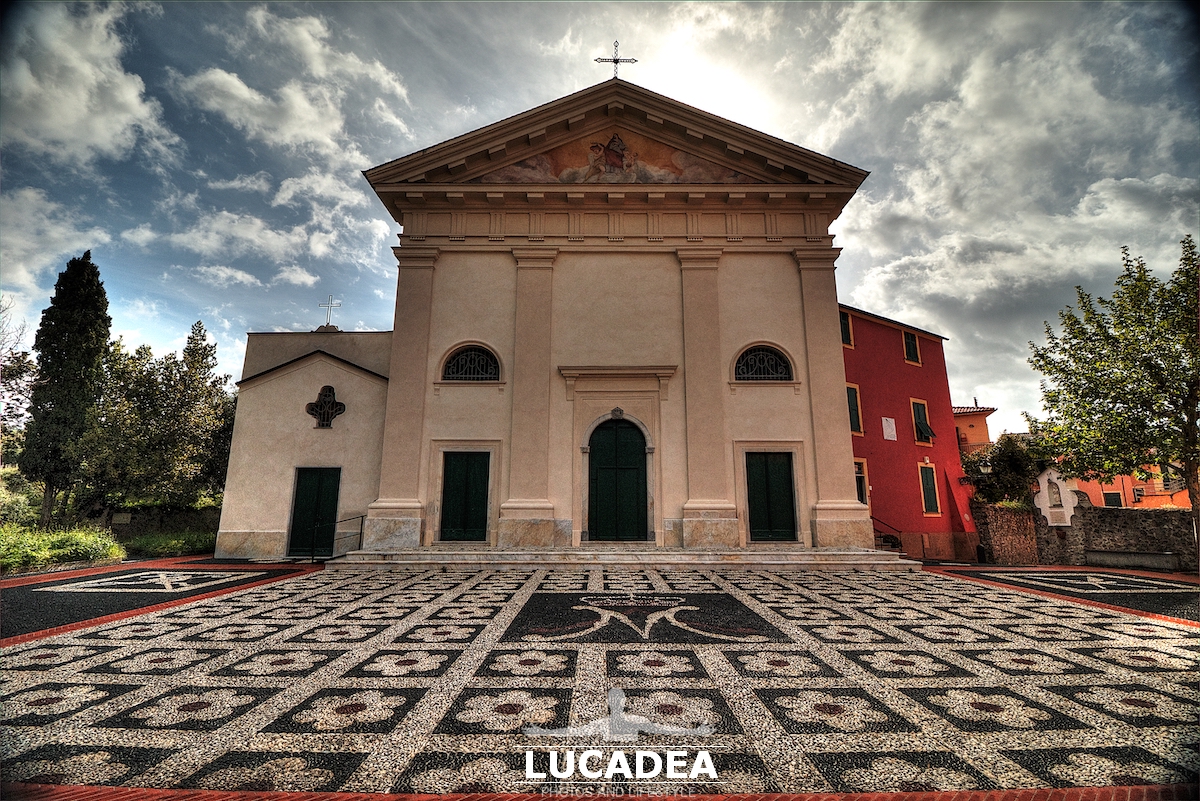
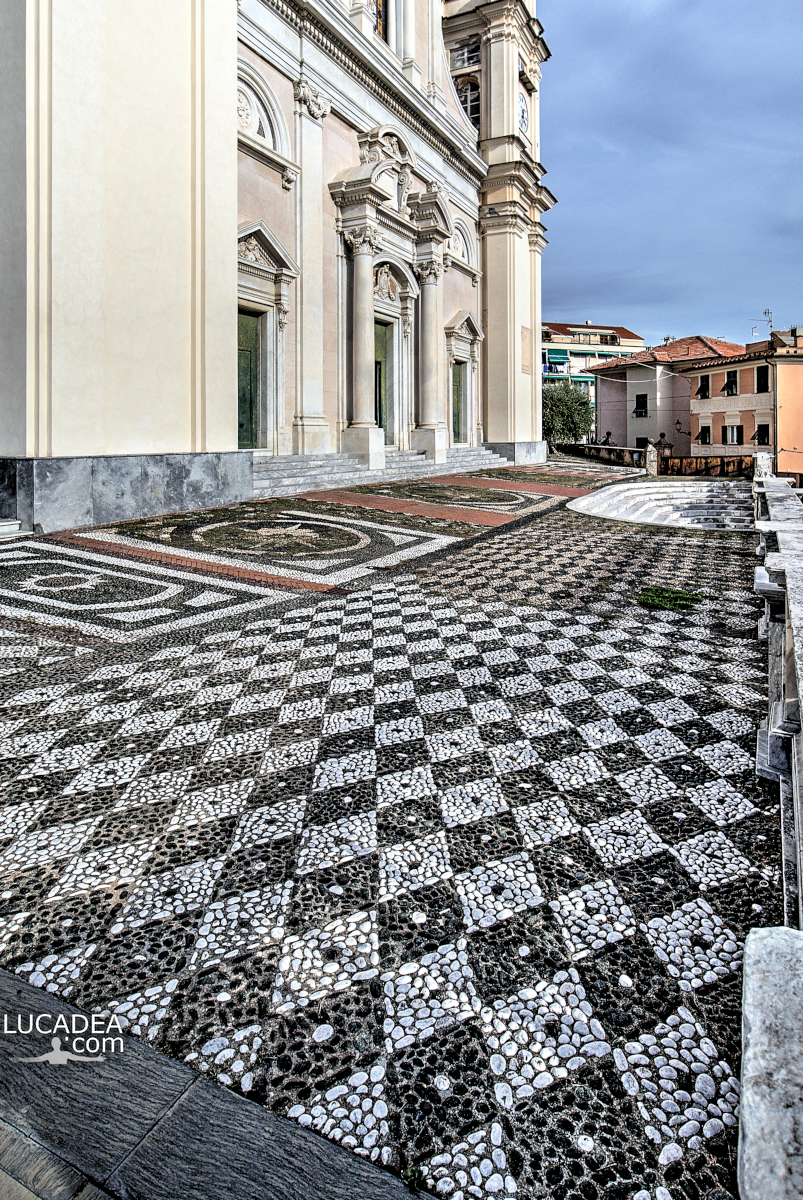
During a recent stop in Sori, Liguria, I found myself looking down at the small square in front of Santa Margherita di Antiochia church, where a pattern made of black and white pebbles immediately caught my attention. The traditional risseu pavement is one of those local details that can easily be overlooked when the church itself is naturally the main focus.
I have not visited Sori very many times, but I happened to stop there a couple of times recently, and this little churchyard stayed in my mind. The pavement creates a distinctive decorative pattern by arranging small pebbles in contrasting shades. In this photograph, I wanted to preserve that detail while keeping its connection with the church and the small square around it.
When I think about what to see in Sori, the churchyard of Santa Margherita di Antiochia is probably not the first thing that comes to mind. Yet it is exactly the kind of small feature that becomes more interesting when you stop for a moment. From a distance, the surface can look almost like a decorated floor; closer up, it becomes clear that the pattern is made from individual stones carefully placed next to one another.
This is Sori, in Liguria, in the Metropolitan City of Genoa, Italy, and the churchyard lies directly in front of Santa Margherita di Antiochia church. Its position makes the pavement part of the architecture of the square rather than simply a practical surface to walk across. It helps define the approach to the church and gives the small space a character of its own.
I took this photograph myself during one of my recent visits to Sori. I was not necessarily looking for a particular composition, but the pavement seemed worth recording because it is the kind of detail that can disappear when you concentrate only on the building. Once I stopped and looked more closely, the amount of work contained in such a simple-looking surface became much easier to appreciate.
Risseu is a traditional Ligurian technique that uses small pebbles, often arranged in contrasting black and white tones, to create decorative figures and patterns. This type of pebble mosaic is particularly associated with churchyards and other outdoor spaces in Ligurian villages. What I find appealing is the simplicity of the material: ordinary stones are arranged carefully enough to become a recognizable image.
In the case of the churchyard in Sori, the central design seems to resemble the coat of arms of the municipality. I would not state that as an absolute fact, because I cannot verify the exact correspondence simply from looking at the photograph. The resemblance is nevertheless what first made me pay closer attention to the pattern and made the pavement more interesting as a photographic subject.
I enjoy this kind of detail because it requires a slightly different way of looking at a town. The church may be the obvious subject, but sometimes the ground directly in front of it becomes the real reason to take out the camera. Here, the contrast between the light and dark pebbles makes the design easy to recognize and gives the square a much richer surface than an ordinary pavement would have.
The material itself is part of the visual appeal. Each pebble has its own irregular shape, so the pattern never becomes completely mechanical. When I look closely, I can see the individual stones; when I step back, the overall figure becomes more important. That movement between the small details and the complete design is something I particularly enjoy when photographing this kind of traditional pavement.
Looking back at the photograph, I think it tells something about Sori that a straightforward picture of the church façade might not. The church is obviously important, but the risseu adds a local decorative tradition to the scene. It is precisely the sort of small feature I like to collect during my visits and eventually bring back into the blog.
This photograph also fits naturally with other images I have published on the site about small details found in Ligurian villages. I often find that these apparently secondary elements give me new subjects to photograph, especially when I visit places I have not explored many times before.
If you are visiting Sori and wondering what to see, the coastline and the village are obvious places to explore, but it is also worth looking down when you reach the church of Santa Margherita di Antiochia. The risseu pavement is a modest detail, yet it is distinctive enough to deserve a closer look and, at least for me, a place in the photographic archive.
I am glad I stopped to photograph it before continuing my walk. I did not come to Sori specifically to find a risseu pavement, but that is one of the things I enjoy most about photographing places: sometimes the image worth keeping comes from a detail I had not planned to look for.
Have you ever noticed the risseu pavements in front of churches when visiting Ligurian villages? Add a comment or go to the bottom of the site to read what other visitors have written.
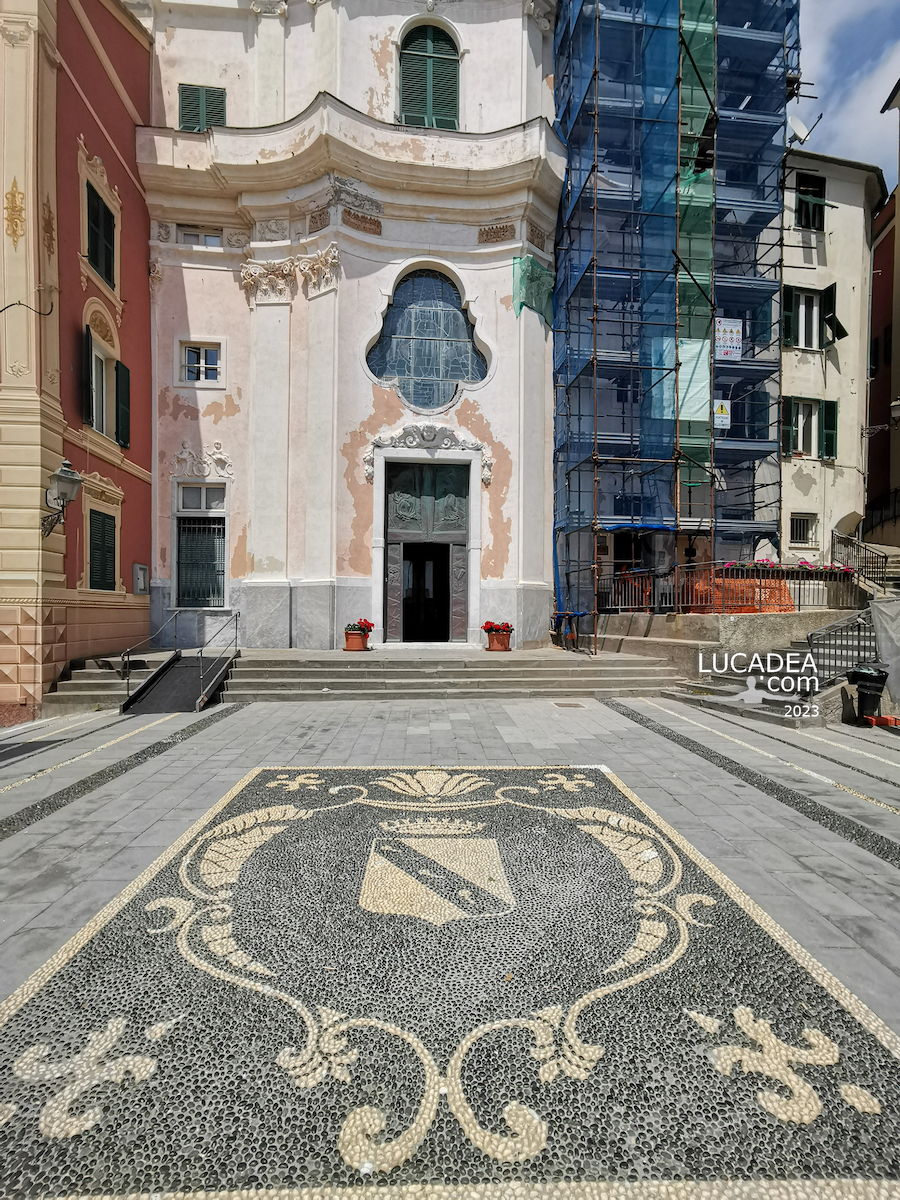
Photo taken with an Honor 20.
Here is where the church is located:
The original religious building was erected around the 12th century—possibly in the Romanesque style—with a size suited to the local population. From 1143 onwards, like other places of worship in the area, it fell under the jurisdiction of the parish church of San Michele Arcangelo in Pieve Ligure. The structure was rebuilt between 1711 and 1714 based on designs by the architect Giovanni Antonio Ricca (the Younger), while construction of the tall bell tower began on April 15, 1740.
Read more on Wikipedia
The rights on images, videos, choruses, text and all other material on the LUCADEA.com website are governed as per Copyright page.