
A Slate Portico in Lavagna’s Old Town

Portico del centro storico di Lavagna con pavimento, portale in ardesia e caratteristico portone verde

A Slate Portico in Lavagna’s Old Town.
While walking through the historic center of Lavagna, I stopped in front of this portico because, looking at it carefully, I realized how many details were gathered into a single frame. The slate, pavement, green doorway and carved stone portal create a small architectural scene that says quite a lot about the traditional character of the Tigullio.
I took this photograph in Lavagna, Liguria, Italy, in the Metropolitan City of Genoa, with the slate decoration of the portico as the main subject. At first it might seem like a photograph devoted to just one architectural detail, but the longer I look at it, the more elements I find worth noticing.
The slate pavement leads the eye towards the entrance, while the large green doorway adds a touch of color that I often notice in the porticoes and historic streets of the Ligurian Riviera. Above the arch, there is another slate portal, carefully incorporated into the building. These are exactly the kinds of small details that can make a photographic walk much more interesting.
Slate has a strong presence in Ligurian architecture and an especially close connection with the Lavagna area, which has a long history of slate extraction and craftsmanship. The dark stone appears in many parts of local buildings, from roofs and paving to portals and decorative elements.
This is also why the view immediately reminded me of some photographs I took in Sestri Levante. In particular, the portal above the arch brought back memories of the slate portals I photographed in the old lanes of Sestri Levante. They are different places, but they share architectural details shaped by the same Ligurian tradition.
That is one of the things I enjoy about photographing historic centers. I do not always need to look for the most famous monument or the widest view. Sometimes it is enough to stop in front of a portico and observe the way materials, colors and shapes work together.
There is also a small connection with everyday life in this photograph. The portico is home to a wine shop, Monna Bianca. I like the fact that the image does not show only a historic architectural detail, but also a space that is still part of daily life in the town. The portico is not something frozen in the past; it continues to be used.
If you are wondering what to see in Lavagna, these are precisely the details that make a walk through the old town rewarding. Between one street and another, you can find porticoes, slate portals, old doorways and stone paving that deserve a moment of attention.
I wanted to capture this particular view with my camera because it seemed like a good example of how an urban photograph can tell something about a place without necessarily showing an entire square or monument. The composition is relatively close, but it contains several elements connected with both the history and everyday life of Lavagna.
Lavagna, like Chiavari and other towns along the Ligurian Riviera, still preserves many of these architectural characteristics. Walking slowly and looking not only ahead but also upwards, or even down towards the pavement, often reveals details that would otherwise go unnoticed.
This is the kind of photograph I enjoy keeping on the blog: an image of a place I know, or am still getting to know, captured through a detail that may be small but can immediately take me back to the exact spot where I took it.

When you walk through Lavagna, do you also find yourself noticing the slate details of its porticoes? Add a comment or go to the bottom of the site to read what other visitors have written.
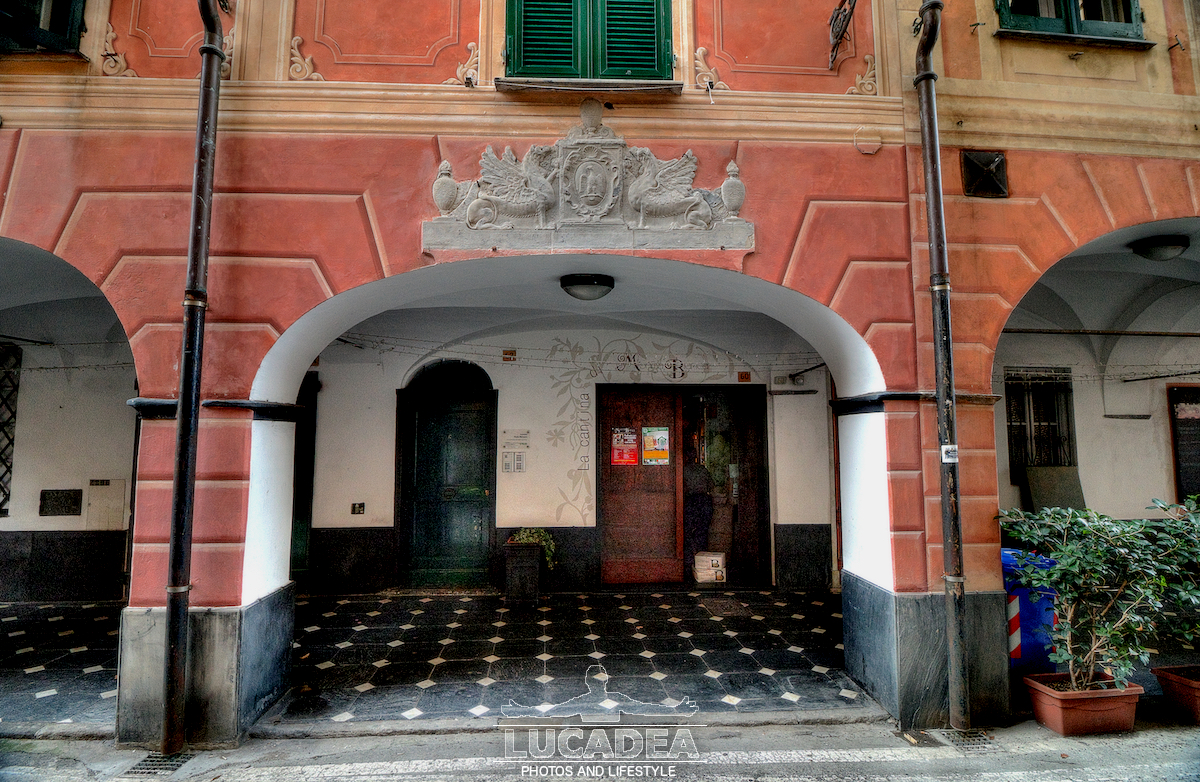
Portico in Lavagna's old town with slate paving, carved slate portal and distinctive green doorway

Photo taken with a Canon EOS M100 camera and Canon EF-S 10-18 lens.

Lavagna is divided into several districts, named after the ancient *sestieri* (sixths) into which the town was split during the era of the Fieschi family.
These are: the Borgo district, corresponding to the historic center; the Scafa district, located in the harbor area and bordering Chiavari; the Moggia district, in the town’s inland area; the Ripamare district in the east; and the Cavi district, which encompasses the hamlet of Cavi di Lavagna—from which it takes its name—as well as the hillside hamlets of Santa Giulia, Sorlana, and Barassi.
Read more on Wikipedia

Add one  comment to this article or read  here what other visitors have written.
 
Adv
 
Disclamer

The rights on images, videos, choruses, text and all other material on the LUCADEA.com website are governed as per  Copyright page.


This page has been viewed 1 times today.
This month it has been viewed 1 times.
In total it has been viewed 1 times.
 

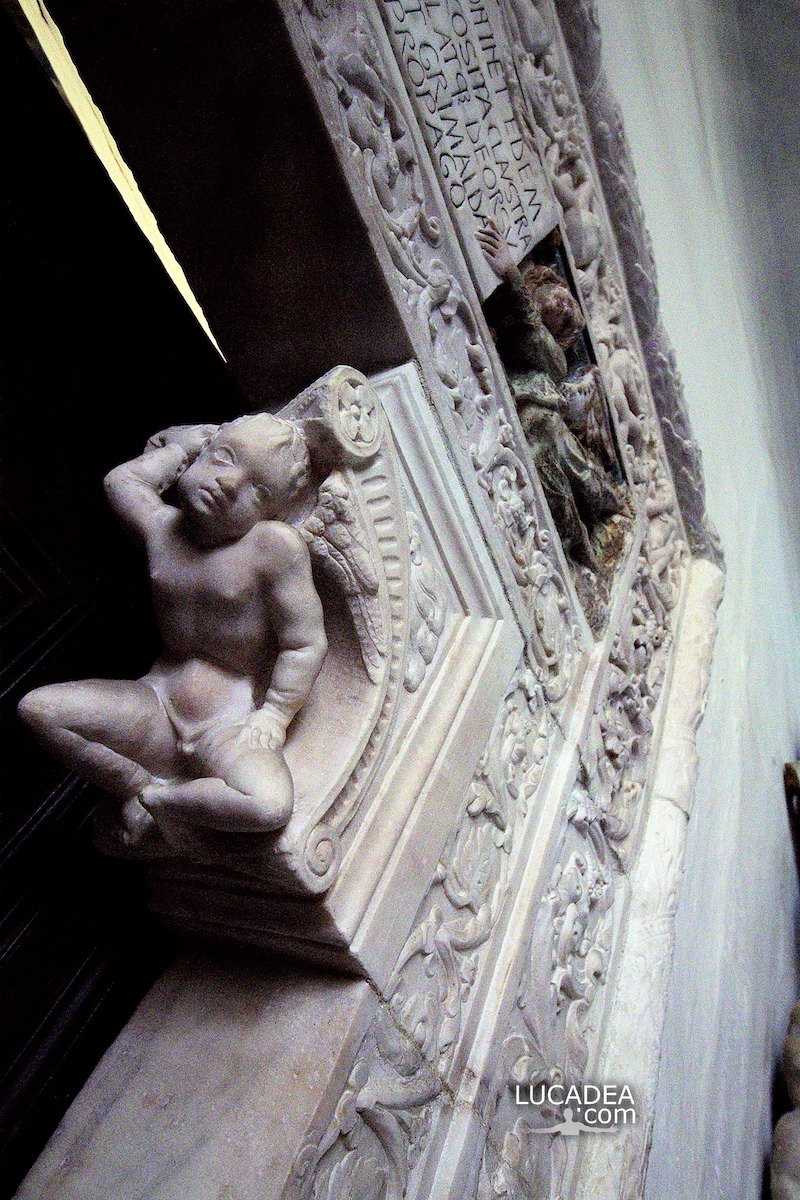
The cherub on the Grimaldi Chapel portal

Putto scolpito nel marmo sul portale della Cappella Grimaldi in Santa Maria in Castello a Genova

The cherub on the Grimaldi Chapel portal.
Among the things worth seeing in Genoa, inside Santa Maria in Castello, there are also details that can easily go unnoticed, such as this small marble figure carved into one of the jambs of the Grimaldi Chapel portal. It is exactly the kind of detail in Genoa’s art and architecture that I enjoy looking for with a camera in my hands: not necessarily the whole monument, but a smaller element that can become interesting when seen on its own.
The Grimaldi Chapel offers several photographic opportunities, and near its entrance my attention settled on this little child carved in marble. Whether we call it a cherub, putto or little angel is less important to me than the way the figure has been incorporated into the larger decoration of the portal. What caught my eye was the contrast between the small human form and the much larger architectural structure surrounding it.
When looking at a portal, it is natural to see it as one composition: the marble, the decorative elements, the jambs and the entrance itself. Getting closer, either physically or simply with the eye, reveals a completely different collection of details. This little figure almost seems to invite you to look for it, because it is certainly not the first thing that dominates the entrance.
That is what I like about photographing Genoa. The city has an extraordinary amount of architecture, churches and historic interiors, but very often it is a small decorative detail that makes me stop. In this case, I wanted to isolate part of the portal and let the marble child become the actual subject of the photograph.
The image came from a very simple moment of observation. In front of an entrance containing many different elements, I noticed this particular figure and decided to move closer rather than simply photographing the entire chapel. It is a different way of looking at a place, searching for something that might not immediately attract attention during a normal visit.
A small artistic curiosity is connected with the word “putto”. In European decorative art, the term generally refers to a childlike figure used as an ornamental or symbolic element. Putti can sometimes resemble angels, but the two ideas are not necessarily identical; their meaning depends on the artistic and religious context in which they appear.
The Grimaldi Chapel therefore gave me another example of why looking closely at architectural decoration can be rewarding. Photographing such a small detail changes the way the building is perceived. Instead of seeing only a religious space or a historic monument, I begin to see it as a collection of many individual artistic choices.
If you are visiting Genoa and interested in places worth seeing beyond the larger architectural views, details like this are often where I find the most personal photographic opportunities. They do not necessarily require a long explanation. Sometimes the simple act of noticing them is enough.
This photograph also connects naturally with other posts on my site dedicated to details found inside churches and historic buildings in Genoa. I enjoy collecting these close-up views because they create a different kind of visual record of the city, one made from small discoveries rather than only from its most recognizable landmarks.
Here, I wanted to keep the story deliberately small: a marble child set into one side of a portal, noticed during a visit to the chapel and photographed because something about the figure caught my attention.

When you visit a church, do you find yourself looking for details like this, or do you usually photograph the whole building? Add a comment or go to the bottom of the site to read what other visitors have written.

Marble cherub carved into the portal of the Grimaldi Chapel at Santa Maria in Castello in Genoa

Photo taken with a Canon EOS M100 camera and a Canon EF-S 10-18 lens.

To see all the photos I took at Santa Maria in Castello and in its cloisters, click here:

This is the church’s official website: santamariadicastello.it.

Situated on Castello Hill—the site of Genoa’s earliest ancient settlement—the Church of Santa Maria di Castello is one of the city’s oldest Christian places of worship and one of its most well-preserved and evocative examples of Romanesque architecture.
Read more on Wikipedia

Add one  comment to this article or read  here what other visitors have written.
 
Adv
 
Disclamer

The rights on images, videos, choruses, text and all other material on the LUCADEA.com website are governed as per  Copyright page.

This page has been viewed 0 times today.
This month it has been viewed 0 times.
In total it has been viewed 0 times.
 

The Southern Portal of Santa Maria Maggiore in Bergamo

Bergamo Città Alta porta sud Santa Maria Maggiore ingresso con arco decorato colonne leoni pietra facciata romanica torre campanaria cielo nuvoloso

The Southern Portal of Santa Maria Maggiore in Bergamo.
The southern portal of Santa Maria Maggiore in Bergamo revealed itself unexpectedly as I wandered through the cobbled streets of Città Alta with no particular destination in mind. The southern portal of Santa Maria Maggiore in Bergamo is not just an entrance, but a quiet and solid presence, shaped by time and defined by its intricate stonework.
As I got closer, my eyes followed the curve of the decorated arch, naturally guided toward the large wooden door. The columns framing the entrance felt almost alive in their detail, each one telling a fragment of a larger story. On either side, the stone lions stood still, guardians of a space that has welcomed visitors for centuries.
The soft light of a cloudy sky flattened the contrasts, allowing every texture to emerge gently. The warm tones of the stone seemed to hold onto the light, giving the façade a sense of depth without harsh shadows. I paused longer than I expected, drawn into the quiet strength of the structure.
What struck me most was the balance. Despite the richness of decoration, nothing felt excessive. Everything seemed placed with intention, yet without forcing attention. There is a kind of harmony here that does not need to be explained, only observed.
Places like this do not demand your attention loudly. They simply hold it, quietly, letting you take your time. Standing there, I realized that I didn’t need to understand every detail to feel connected to it.

Have you ever stopped in front of a doorway that felt like it held more than just an entrance? Add a comment or go to the bottom of the site to read what other visitors have written.

Bergamo Città Alta porta sud Santa Maria Maggiore ingresso con arco decorato colonne leoni pietra facciata romanica torre campanaria cielo nuvoloso

Photo taken with Canon EOS RP and Canon RF 24-50 lens.

To see all the photos I took in Bergamo, click here:
Galleria delle foto

The Southern Portal of Santa Maria Maggiore in Bergamo – Le portail sud de Santa Maria Maggiore à Bergame – La puerta sur de Santa Maria Maggiore en Bérgamo – O portal sul de Santa Maria Maggiore em Bérgamo – Das Südportal von Santa Maria Maggiore in Bergamo – Cổng phía nam của Santa Maria Maggiore ở Bergamo – 贝加莫圣母大教堂南门 – ベルガモのサンタ・マリア・マッジョーレ南門

The text of this post was written with the help of ChatGPT, a language model from OpenAI.

The climb named after Alessio Levaggi in Chiavari

La salita intitolata ad Alessio Levaggi a Chiavari

The climb named after Alessio Levaggi in Chiavari.
A beautiful little street in Chiavari, near the church of Rupinaro, dedicated to the esteemed physician Andrea Lavaggi (whom I previously wrote was a craftsman who, with his brothers, founded the company that produces the Sedia di Chiavarina) with this beautiful entrance portal to a lovely villa.
Unfortunately, I haven’t been able to find anything about this entrance online.

Update: As Gian wrote in comment, “Alessio Lavaggi was a physician who died in 1966. The portal belonged to the Falcone-Marana palace.”

Do you know this part of Chiavari? Add a comment or go to the bottom of the site to read what other visitors have written.

Photos taken with Honor 20.

Where I took the photo:

The climb named after Alessio Levaggi in Chiavari – L’ascension nommée d’après Alessio Levaggi à Chiavari – La subida que lleva el nombre de Alessio Levaggi en Chiavari – A subida que leva o nome de Alessio Levaggi em Chiavari – Der nach Alessio Levaggi benannte Aufstieg in Chiavari – Cuộc leo núi mang tên Alessio Levaggi ở Chiavari – 位于基亚瓦里的以 Alessio Levaggi 命名的攀登路线 – キアーヴァリのアレッシオ・レヴァッジにちなんで名付けられた登山道

The stylophorous lion of Santa Maria Maggiore in Bergamo

Il leone stiloforo di Santa Maria Maggiore a Bergamo

The stylophorous lion of Santa Maria Maggiore in Bergamo.
In the beautiful Cathedral Square of Bergamo Alta there is this impressive portal, known as the “Porta dei Leoni” (Gate of the Lions), where two red marble lions support two columns.
Since this is not the first stylophorous lion I’ve come across, I decided to dedicate a specific post to them.

Do you know Bergamo? Add a comment or go to the bottom of the site to read what other visitors have written.

Il leone stiloforo di Santa Maria Maggiore a Bergamo

Photo taken with Canon EOS RP camera and Canon RF 24-50 lens.

To see all the photos I took in Bergamo, click here:

Where is the basilica located:

The northern door, known as the Red Lions, which opens into the left transept and leads to Piazza del Duomo, is surmounted by a porch by Giovanni da Campione, dated 1353 but with significant late-14th-century renovations. It is supported by columns supported by two standing lions in Veronese marble, surrounded by human and animal figures.
Continue and learn more at Wikipedia

The column-bearing lion of Santa Maria Maggiore in Bergamo – Le lion stylophore de Santa Maria Maggiore à Bergame – El león estilóforo de Santa Maria Maggiore en Bérgamo – O leão estilóforo de Santa Maria Maggiore em Bérgamo – Der Griffellöwe von Santa Maria Maggiore in Bergamo – Sư tử Stylophore của Santa Maria Maggiore ở Bergamo

The San Gregorio Armeno gateway in Naples

Portale del complesso monastico di San Gregorio Armeno nel centro storico di Napoli, lungo la famosa via dei presepi

The San Gregorio Armeno gateway in Naples.
I had already walked along Via San Gregorio Armeno a couple of times, following the famous street known for its nativity workshops, but I had never really noticed the religious complex sharing the same name. This time the monumental entrance caught my eye, and I stopped to photograph it.
What I like about this image is the way I found the subject. I was not looking for the entrance to San Gregorio Armeno monastery. I came across it while walking along a street I thought I already knew. This happens to me quite often when photographing Naples: a familiar street can reveal something completely different when I slow down and pay attention to what stands beside the main attraction.
Via San Gregorio Armeno is famous around the world for its traditional Neapolitan nativity figures and the small workshops where artisans make and display them. The street is narrow, lively and usually busy, and it is very easy to focus entirely on the shop windows while walking through it. I had done exactly that myself on previous visits, passing the entrance without stopping.
The gateway in my photograph stands in the historic centre of Naples, Campania, Italy, along Via San Gregorio Armeno and gives access to the religious complex dedicated to Saint Gregory of Armenia. Its position makes the scene particularly interesting to me because this imposing entrance appears directly within one of the city’s most recognizable streets.
When I finally noticed it, the entrance seemed to deserve a photograph on its own. Its scale and decoration create a clear contrast with the narrow urban space around it. I did not need to search for an elaborate subject. The architectural details were already there, waiting to be noticed.
The complex has a long connection with Benedictine nuns and very old origins. According to tradition, the monastery was established in the Middle Ages by nuns who came from Constantinople and brought relics associated with Saint Gregory of Armenia. Much of the complex visible today, however, reflects later transformations, particularly those carried out between the sixteenth and seventeenth centuries. That layered history helps explain why such a substantial religious complex can remain partly hidden behind a gateway on a busy historic street.
One detail I find particularly interesting is the relationship between the monastery and the fame of the street itself. When people hear San Gregorio Armeno, they usually think immediately of Naples and its nativity figures. Yet the street takes its name from the religious complex and its church, rather than from the artisan tradition that later made the area famous.
That discovery is part of what made me take the photograph. The entrance had been there during my previous walks, but I had not really seen it. Photography often works this way for me. Taking the camera out changes the way I look at familiar places and makes me pay attention to architectural details that might otherwise remain part of the background.
If you are visiting Naples and wondering what to see along Via San Gregorio Armeno, this entrance is an easy detail to include in your walk. You do not have to leave the famous nativity street to find it. It belongs to the same urban setting, but it tells a different story, one connected with the religious history of the old city.
This photograph also fits naturally with other Naples stories on my blog. I have previously photographed the interior of San Domenico Maggiore, the Chapel of the Crucifix and the Madonna Enthroned mosaic inside Santa Restituta. Together, these images form a kind of personal walk through the churches and historic spaces of Naples, with each photograph beginning from something that caught my attention while I was already there.
For me, that is one of the best reasons to keep photographing a city. Familiarity does not necessarily mean that there is nothing left to discover. Sometimes the most interesting subject is the one that has been in front of you all along.
In this case, I simply needed to walk past the same street one more time before the gateway finally made me stop.

Had you noticed this entrance while walking along Via San Gregorio Armeno? Add a comment or go to the bottom of the site to read what other visitors have written.

San Gregorio Armeno monastery gateway in Naples, opening onto the famous historic street known for its nativity workshops

Photo taken with Canon EOS M100 and Canon EF-M 11-22 lens.

To see all the photos I took in Naples, both that weekend and on other trips, click here:

The San Rufino portal in Assisi

Il portale centrale del Duomo di Assisi

The San Rufino portal in Assisi.
Among the things to see in Assisi, the central portal of San Rufino Cathedral is one of the details that captured my attention while walking through the historic centre of this Umbrian town. The richly carved stone decoration tells the story of an important building located in Assisi, Umbria, Italy, often overlooked compared with the world-famous Basilica of Saint Francis.
While exploring the streets of the old town, I wanted to focus on the smaller details that are easy to pass by without stopping. The façade of San Rufino Cathedral immediately stands out, but the central portal offers a closer way to appreciate the craftsmanship behind the building. Every carved element and every decorative detail creates a visual story connected to the history of the city.
I took this photograph by focusing on the entrance of the cathedral, trying to capture not only an architectural feature but also the feeling of standing in front of a place that has witnessed centuries of history. Through my camera, I wanted to preserve the connection between the ancient stone and the everyday life that still surrounds it.
When people search for what to see in Assisi, the Basilica of Saint Francis is usually the first landmark that comes to mind. However, San Rufino Cathedral is another essential place for understanding the identity of the city. Its Romanesque façade and its position in the historic centre make it one of the most interesting buildings to discover while walking through Assisi.
The central portal is decorated with a complex series of carved details typical of medieval art. These elements were not only ornamental but also had a symbolic role, creating a visual language that helped communicate religious stories and traditions through stone.
A short historical curiosity is the connection between San Rufino Cathedral and the Franciscan tradition. According to local religious tradition, Saint Francis of Assisi and Saint Clare were baptized here. This makes the cathedral significant both as an artistic monument and as a place connected with the spiritual history of Assisi.
This photograph comes from my attention to details that often reveal the true character of a place. As with other images I have shared on Lucadea.com about Umbrian villages and historic locations, I enjoy finding small elements that preserve the memory of a journey.
Assisi is known for its famous monuments, but details like this portal show another side of the city: a quieter story carved into stone, waiting to be observed by those who take the time to look.

Which detail of San Rufino Cathedral would you like to photograph during a visit to Assisi? Add a comment or go to the bottom of the site to read what other visitors have written.

Decorated central portal of San Rufino Cathedral in Assisi, showing Romanesque stone details in Umbria

Photo taken with Canon EOS RP and Canon RF 24-50 lens.

To see all the photos of Assisi, click here:

Here’s where the cathedral is located:

The central portal in particular is richly ornamented, especially the multiple lintel decorated with reliefs of vine shoots, spirals, allegorical figures, and monstrous animals; the lunette features Christ enthroned within a shield, between the sun, the moon, the Madonna nursing, and Saint Rufino.
Continue and learn more at Wikipedia

A doorway on Via del Carmine in Milan

L'ingresso del Comando Militare Esercito Lombardia in Via del Carmine a Milano

The entrance to the Lombardy Army Military Command on Via del Carmine in Milan.
Walking through the streets of central Milan, I came across this door decorated with military statues and a plaque next to it that read: “Lombardy Army Military Command.”
Via del Carmine is a street located in the heart of Milan, characterized by historic buildings and a charming atmosphere. The street is known for its tranquility and the presence of numerous shops and businesses, making it a lively and popular place. Via del Carmine’s central location allows easy access to the city’s main attractions, making it a popular area for both residents and visitors.
The Lombardy Army Military Command building, located on this street, is easily recognizable for its imposing architecture and the presence of highly qualified military personnel. Lombardy Army Military Command is constantly seeking synergies with local authorities to improve the services offered to citizens. Among these services, documentation and administrative support activities stand out, which are essential for the efficient functioning of military operations.
The Lombardy Army Military Command (CME), located at Via del Carmine 8 in Milan, is a key point of reference for military activities in the region. This territorial command of the Northern Military Region is responsible for numerous functions, including recruitment, reserve forces, and promotion and public information in Lombardy.

Do you know Milan? Add a comment or go to the bottom of the site to read what other visitors have written.

Photos taken with Canon EOS RP and Canon RF 24-50 lens.

Click here if you want to see all the photos I took:
foto gallery

Where is Via del Carmine located:

In the 12th century, a group of Catholic monks retreated there, beginning a life of contemplation. From these monks, the Order of Carmel, a Catholic order, was born. The liturgical feast of the Blessed Virgin Mary of Mount Carmel (one of the names by which the Catholic Church venerates Mary, including its variant of Carmine, through the Spanish equivalent Carmen), was established to commemorate this Marian apparition and is celebrated on July 16.
Continue and learn more at Wikipedia

The entrance of the Lombardy Army Military Command in Via del Carmine in Milan – L’entrée du commandement militaire de l’armée lombarde dans la Via del Carmine à Milan – La entrada del Comando Militar del Ejército de Lombardía en Via del Carmine en Milán – A entrada do Comando Militar do Exército da Lombardia na Via del Carmine, em Milão – Der Eingang des Militärkommandos der lombardischen Armee in der Via del Carmine in Mailand – Lối vào của Bộ chỉ huy quân sự quân đội Lombardy ở Via del Carmine ở Milan

The text of this post was written with the help of Copilot, a virtual assistant based on artificial intelligence.
References:
– https://www.esercito.difesa.it/organizzazione/capo-di-sme/COMFOTER/Comando-Truppe-Alpine/CME-Lombardia
– https://www.difesa.it/protocollo/aoo-difesa/esercito/e24469/35396.html

The Labours of Hercules on Spinola Palace’s Portal

Le Fatiche di Ercole a Palazzo Gio Batta Spinola

The Labours of Hercules on Spinola Palace’s Portal.
Walking along Goldsmiths Street in Genoa’s historic centre, I came across an elaborate sixteenth-century entrance that deserves more than a passing glance. The portal of Palazzo Gio Batta Spinola, at number 7, is known for its sculptural programme inspired by the Labours of Hercules. Mythological figures, expressive faces and intricate stonework turn an architectural entrance into a scene full of details to discover.
I took this photograph to preserve the character of a work that rewards careful observation. The portal is much more than a frame around a doorway: its sculptures create a visual narrative, bringing together strength, mythology and Renaissance decoration. In a busy street, it is easy to walk past such details without noticing them, especially when attention is focused on reaching the next destination. Stopping for a moment reveals how much craftsmanship has been concentrated in a relatively small space.
Two imposing telamons are among the most striking features. These sculpted male figures appear to support the architectural structure above them, while their feet rest on monstrous heads, one resembling a lion and the other showing a snarling human face. The contrast between the figures and the heads beneath them gives the entrance a distinctive character. Their poses and expressions create a sense of physical effort that connects the sculptures to the heroic subject of the decoration.
On the left, Hercules is recognisable by his beard, the skin of the Nemean Lion draped around him and the club in his hand. In Greek mythology, Hercules became famous for completing twelve labours that tested his strength and courage. On the opposite side stands a clean-shaven man with a more relaxed expression, also holding a club. The contrast between the two figures makes it worth examining their faces, clothing and attributes rather than viewing the portal as a single decorative element.
At the base of the telamons, additional reliefs depict Hercules in different poses. One shows him seated with his club, while another captures the struggle between the hero and a lion. These scenes extend the mythological narrative and link the vertical figures along the sides of the entrance with the ornamentation above them.
Looking upwards, the carved details become even more varied. The metopes feature helmets, shouting heads, round shields and bucrania, or ox skulls, alternating with projecting triglyphs. At the centre is a winged head of Medusa, another reference to classical mythology. Higher up, two draped female figures holding or accompanied by amphorae frame a moustached mask. According to the description traditionally associated with the portal, this mask occupies the position of the original Spinola family coat of arms, which was removed during the Napoleonic period.
The portal is attributed to Giacomo Della Porta, a sixteenth-century architect and sculptor. Its decoration reflects the Renaissance interest in classical mythology and the close relationship between architecture and sculpture. The figures are not merely added embellishments: they form an integral part of the entrance and determine its visual identity.
For anyone interested in learning more about this remarkable piece of Genoese heritage, I also recommend the detailed article on Amezena about the Labours of Hercules portal. It offers further information about the sculptures and their interpretation, providing useful context for anyone who wants to look beyond the overall composition and explore its individual details.
Genoa, in Liguria, Italy, has a historic centre filled with architectural features that reflect the wealth and ambitions of the families who shaped the city over the centuries. Not every discovery requires a visit to a famous landmark or a large monument. Sometimes, the most memorable details are found around a doorway on an ordinary street. This portal is a good example of how a walk through the old town can reveal works of art that might otherwise go unnoticed.
That is what I wanted to capture with my photograph: not only an impressive sculptural composition, but also its place within the everyday fabric of Genoa. On Lucadea.com, I enjoy sharing similar architectural details and lesser-known corners of Liguria, where looking closely can reveal a different side of familiar places.

If you find yourself walking along Goldsmiths Street, take a moment to examine the portal as a whole before looking at the individual figures. The telamons, monstrous heads, Hercules and Medusa each contribute something different to the composition. Which detail would catch your eye first? Add a comment or go to the bottom of the site to read what other visitors have written.

The Labours of Hercules portal at Palazzo Gio Batta Spinola on Goldsmiths Street in Genoa, featuring carved figures and mythological reliefs

Photo taken with Canon EOS RP and lens Canon RF 24-50.

Where is the palace:

The Lunette of Santa Croce in Florence

La lunetta del portale centrale di Santa Croce a Firenze

The Lunette of Santa Croce in Florence.
Among the many details to be found on the façade of the Basilica of Santa Croce in Florence, I wanted to focus on the one above the central portal. It is the kind of detail that can easily disappear when looking at the façade as a whole, but moving closer reveals a remarkable amount of sculptural detail.
The photograph shows the lunette above the central portal, with the sculptural group known as The Triumph of the Cross, created by Giovanni Duprè. This is the kind of detail I enjoy photographing when visiting an historic city: not only the monument as a whole, but also the smaller sections of a façade that tell a story through sculpture and architecture.
When thinking about what to see in Florence, the Basilica of Santa Croce is naturally one of the places worth paying attention to. Its large marble façade immediately catches the eye, but standing in front of the central portal for a few minutes reveals how much there is to discover in the smaller details. In this photograph I wanted the lunette to become the main subject rather than simply part of a wider view.
The subject represented is the Cross, the central symbol of the basilica and of Christian tradition. The sculptural group is known as The Triumph of the Cross and was created by Giovanni Duprè, a nineteenth-century Italian sculptor. The scene belongs to the nineteenth-century decorative programme of the façade and contributes to the monumental appearance that still makes Santa Croce one of the most recognisable landmarks in Florence.
There is a small historical detail that makes the façade particularly interesting. Although the basilica itself has medieval origins, the façade we see today dates from the nineteenth century and was created as part of the completion of the church’s exterior. Looking at Santa Croce therefore means looking at different historical periods layered together: the much older history of the basilica and the considerably later decorative intervention visible on its façade.
That contrast is part of what interests me in this photograph. The lunette is not simply an isolated decoration. It belongs to a much more elaborate façade where marble, arches, columns and sculptures form a complex composition. By moving closer with my camera, however, I chose to leave most of the building outside the frame and concentrate on the sculpted scene.
I wanted to capture this detail because small elements like this are often the things that remain in my memory after visiting a place. The façade of Santa Croce is one of those views that can be recognised immediately, but looking at it carefully reveals countless different photographic subjects.
The basilica stands in the historic centre of Florence, Tuscany, Italy, in an area that has an extraordinary concentration of artistic and historical landmarks. Santa Croce is closely associated with many important figures of Italian culture, but in this post I prefer to leave that larger story aside and focus on the particular detail that caught my attention.
It also continues a thread running through other articles I have published about churches and architectural details photographed during my travels. As with my photograph of the portico beneath the Vasari Corridor, I was not interested in simply reproducing another classic view of Florence. I wanted to isolate a detail that takes on its own character when seen from closer up.
Looking through the camera, what caught my attention most was the relationship between the sculpted figures and the architectural frame around them. Because the lunette sits directly above the central entrance, it becomes a visual point of transition: anyone entering the basilica passes beneath this representation of the Cross.
The photograph therefore does not attempt to tell the entire story of Santa Croce. It focuses on a small fragment of its façade. Yet that is enough to show how a single lunette can become a subject capable of bringing together art, history and architecture.

If you are visiting Florence, have you ever stopped to look closely at the lunette above Santa Croce’s central portal? Add a comment or go to the bottom of the site to read what other visitors have written.

Lunette above the central portal of Santa Croce Basilica in Florence with The Triumph of the Cross

Photo taken with Canon EOS M100 and Canon EF-M 11-22 lens.

To see all the photos of the basilica, click here:

This is the official website: santacroceopera.it.

🏠
  • Italiano