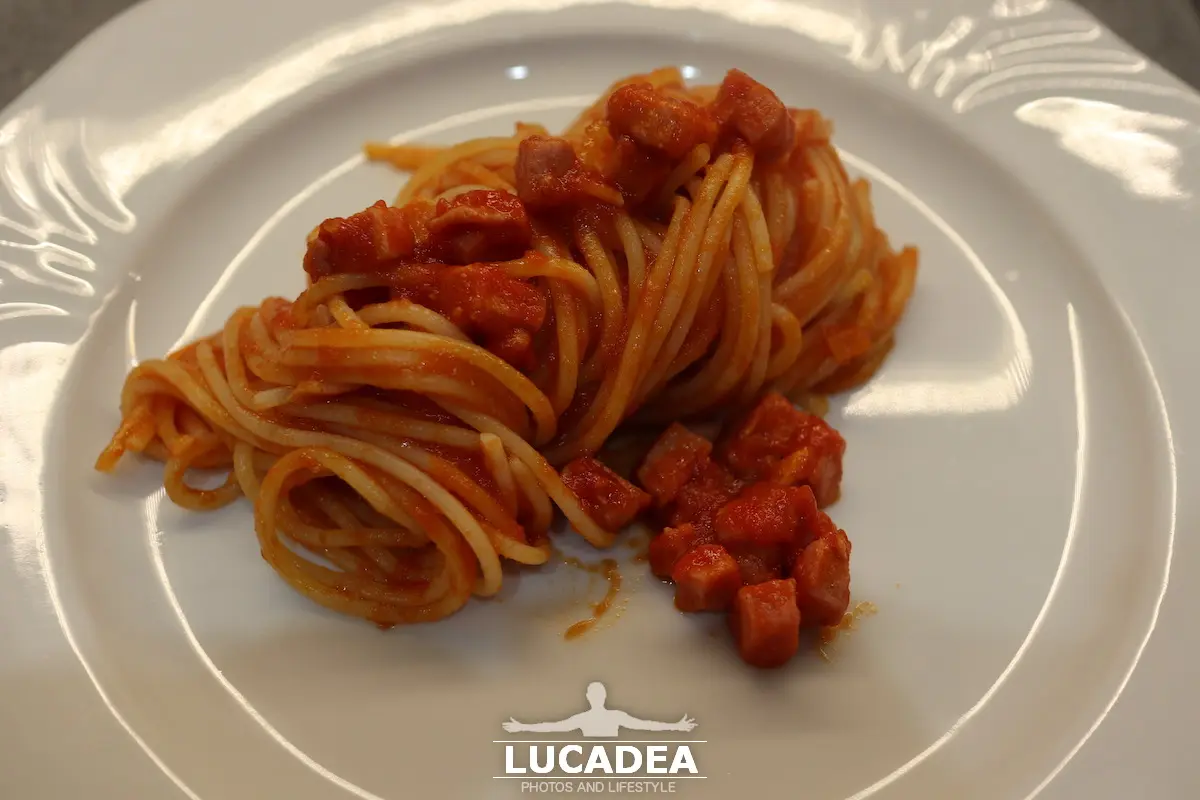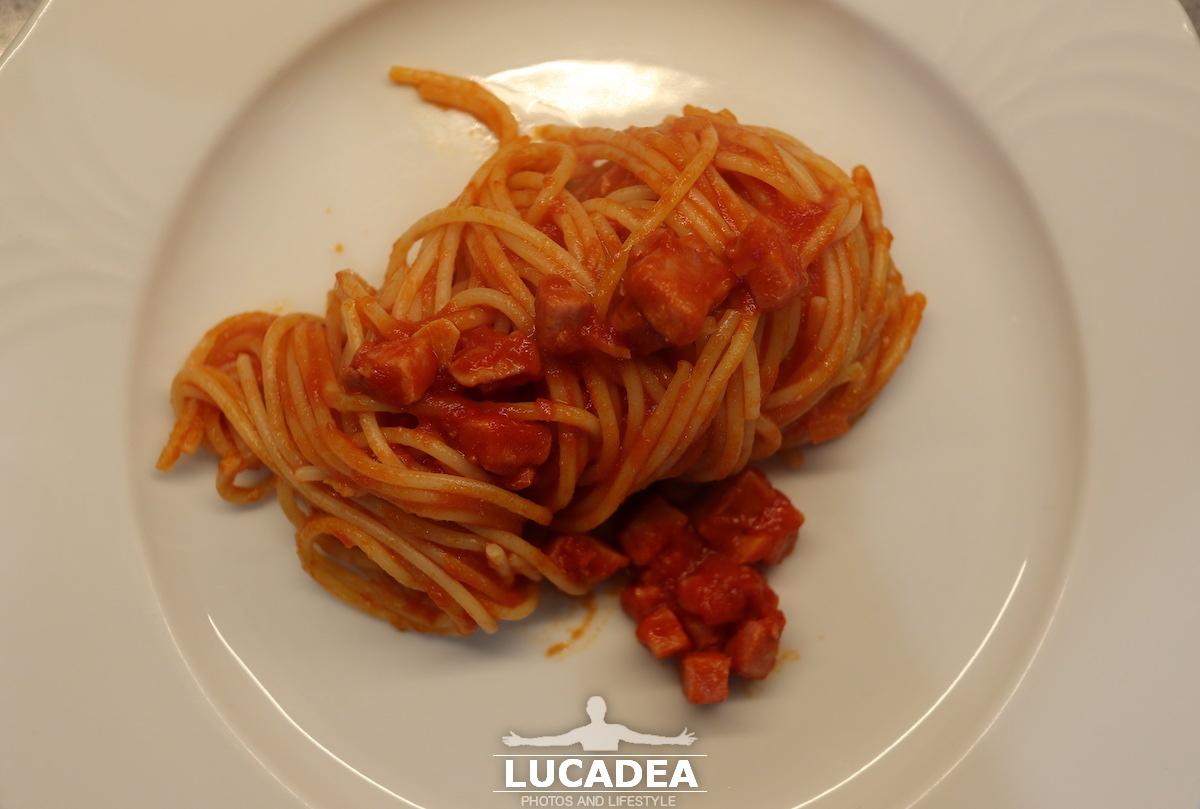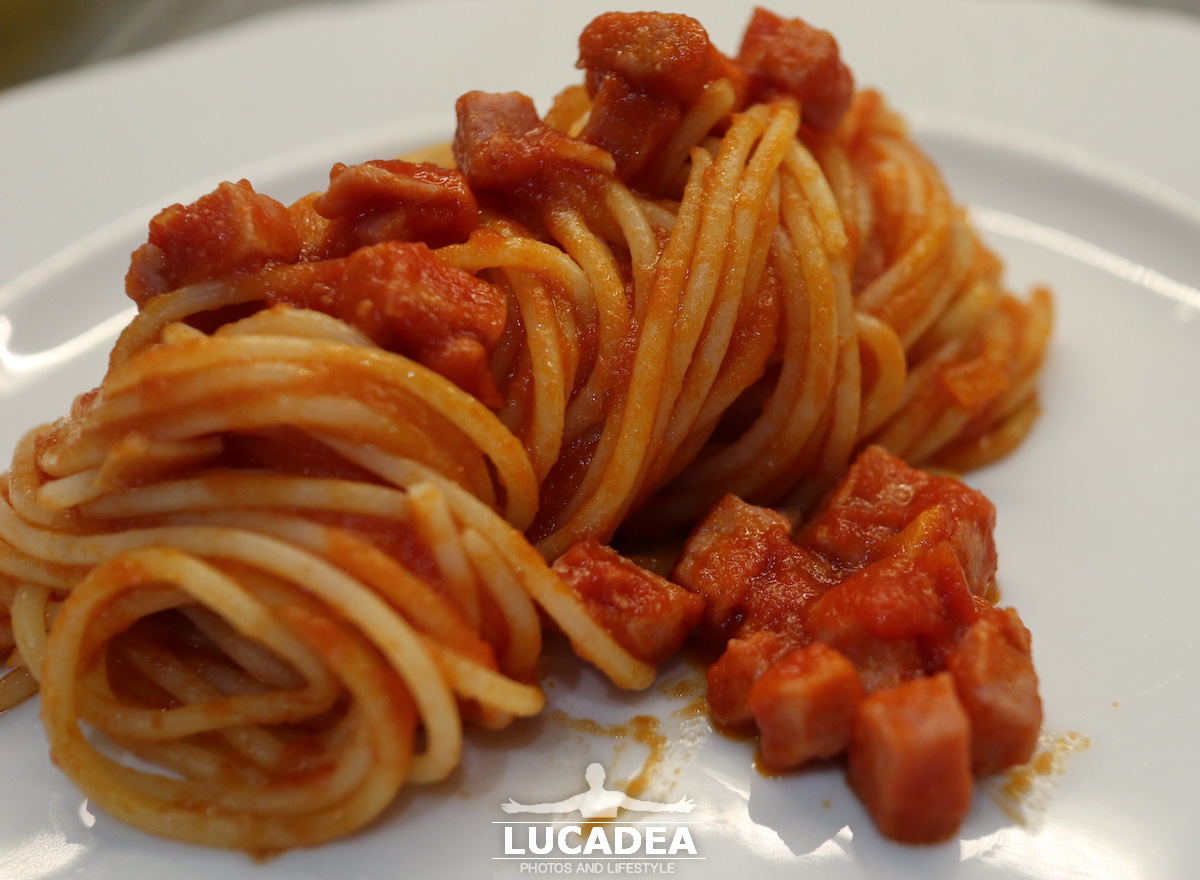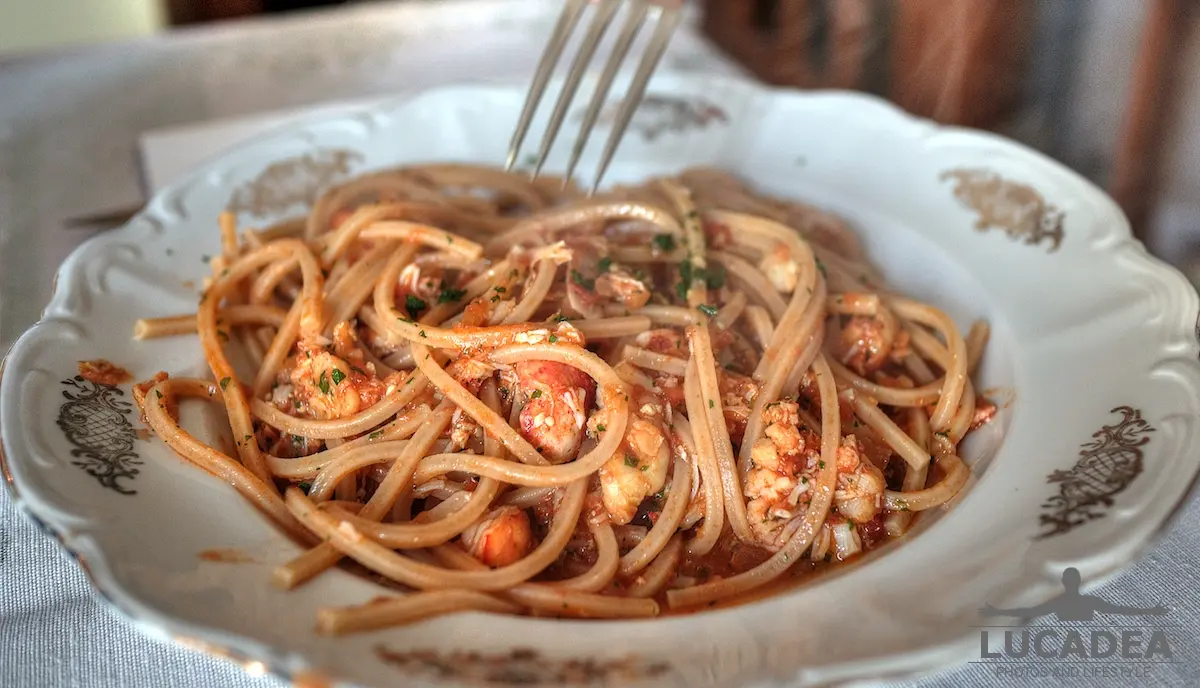
Whole wheat pasta with fresh lobster sauce

Trenette integrali al sugo di astice fresco servite in un piatto di cucina di mare

Whole wheat pasta with fresh lobster sauce.
Among the pasta dishes that combine simplicity and seafood flavours, this whole wheat pasta with fresh lobster sauce is certainly one of the most interesting. In this photograph I wanted to capture a dish where the intense taste of lobster meets the more rustic character of whole wheat pasta, creating a balance between tradition and a slightly different interpretation.
This image comes from my habit of photographing not only places, landscapes and historic buildings, but also everyday moments connected with food. A carefully prepared dish can tell a story just like a village street or a beautiful view, because behind every recipe there are choices, memories and the pleasure of sharing something special.
Whole wheat pasta with lobster sauce is an appealing variation of classic seafood pasta. The stronger flavour and texture of whole wheat pasta create a different experience, while the lobster remains the main character thanks to its delicate but distinctive taste. The result is a dish where the flavours of the sea are enhanced without being overwhelmed.
I took this photograph focusing on the finished plate, the colour of the sauce and the presence of the fresh lobster that makes this preparation so inviting. Food photography, like the images of places I often share on my blog, is about paying attention to details. A single ingredient, a colour contrast or the way a dish is presented can completely change the feeling of an image.
One interesting detail about crustacean recipes is that traditional cooking often tries to extract as much flavour as possible from the ingredient itself. This attention to every part of the lobster is what helps create richer and more aromatic sauces.
This dish is also connected with other food stories I have shared on my website, such as spaghetti with lobster sauce and cherry tomatoes or other seafood recipes. In all these cases, my goal is not only to show a plate of food, but to preserve a small personal moment through photography.
A plate of whole wheat pasta with fresh lobster is one of those meals that already creates anticipation before the first taste. The combination of quality ingredients and careful preparation can turn a simple lunch into something memorable.

Have you ever tried whole wheat pasta with lobster sauce? Add a comment or go to the bottom of the site to read what other visitors have written.
Whole wheat pasta with fresh lobster sauce served as a Mediterranean seafood dish

Photo taken with a Canon EOS M100 camera and Canon EF-M 22 lens.

Bluish in color, with yellow patches on its back and a light-colored underside, it has two pairs of antennae—one long pair and one short pair—and eight walking legs, in addition to two chelae (claws); one claw is larger than the other to better perform different tasks. The carapace is smooth and indented, featuring two spines located near the eyes. It can reach half a meter in length, though typical specimens measure between 30 and 40 cm.
Read more on Wikipedia

Add one  comment to this article or read  here what other visitors have written.
 
Adv
 
Disclamer

The rights on images, videos, choruses, text and all other material on the LUCADEA.com website are governed as per  Copyright page.


This page has been viewed 0 times today.
This month it has been viewed 0 times.
In total it has been viewed 0 times.
 

Spaghetti with lobster sauce and cherry tomatoes

Una succulenta pasta al sugo di astice e pomodorini

Spaghetti with lobster sauce and cherry tomatoes.
Among the seafood dishes I enjoy photographing and sharing, spaghetti with lobster sauce and cherry tomatoes is definitely one of the most appealing. This image captures a dish that combines the rich flavour of lobster with the freshness of tomatoes, creating a meal that represents the pleasure of Mediterranean cooking.
This photograph comes from my passion for documenting not only places, villages and landscapes, but also the small details of everyday life. On my blog, food sometimes becomes another way to tell a story, especially when a simple dish is connected with memories, preparation and the pleasure of sharing a meal.
Spaghetti with lobster sauce and cherry tomatoes is one of those seafood recipes that can immediately create a special atmosphere around the table. The intense taste of lobster, together with the sweetness of cherry tomatoes and the simplicity of pasta, creates a balance that makes this dish loved by many people who appreciate traditional Mediterranean flavours.
I took this photograph to focus on the final result: the colours of the sauce, the presence of the lobster and the feeling of a freshly prepared dish ready to be enjoyed. Just like photography, cooking is also about details. The right combination of colours and ingredients can make a simple moment much more memorable.
Some time ago I already shared the complete preparation of this recipe in my dedicated recipe article, where I described the steps to prepare this seafood dish. I hope those who follow my blog have not missed it, because it is one of those recipes worth trying at least once.
A small curiosity is that seafood sauces with crustaceans are part of the wider Mediterranean culinary tradition, where simple ingredients are often used to highlight the natural flavour of the sea rather than hide it.
Like other food photographs I have shared on my blog, this image is not only about the dish itself but also about the memory connected with it. A meal can become a story, a moment to remember and a way to share a passion with others.

Have you ever tasted spaghetti with lobster sauce and cherry tomatoes? Add a comment or go to the bottom of the site to read what other visitors have written.

Spaghetti with lobster sauce and cherry tomatoes in a seafood dish from Mediterranean cuisine

Photo taken with Honor 20.

Add one  comment to this article or read  here what other visitors have written.
 
Adv
 
Disclamer

The rights on images, videos, choruses, text and all other material on the LUCADEA.com website are governed as per  Copyright page.


This page has been viewed 0 times today.
This month it has been viewed 0 times.
In total it has been viewed 60 times.
 

Spaghetti with homemade fresh tuna tomato sauce

Spaghetti al sugo di tonno

Spaghetti with homemade fresh tuna tomato sauce.
Some dishes show that simple cooking can still create an excellent result. These spaghetti with fresh tuna tomato sauce come from an easy idea with just a few ingredients, but they create a rich and satisfying flavor.
Some time ago I prepared this dish starting with one ingredient I really enjoy: fresh tuna cut into small cubes. After making the tomato sauce, I added the fish and created a simple but tasty pasta sauce. The beauty of this recipe is its simplicity: there is no need for complicated preparation to enjoy a very flavorful meal.
The photograph probably does not fully show how good the dish actually was, but the important part is the memory of the taste. Sometimes a homemade meal is not photographed in perfect conditions, yet it remains something worth sharing because the final result can be much better than expected.
Spaghetti with fresh tuna tomato sauce are a great example of how fish can become part of everyday cooking without making the preparation difficult. Fresh tuna, compared with preserved tuna, has a different texture and a more delicate flavor, especially when combined with a good tomato sauce.
The photograph was taken during a homemade cooking moment in Italy. If you are looking for what to prepare with fresh tuna, this kind of pasta sauce is an easy way to create a tasty first course without spending too much time in the kitchen.
One interesting fact is that tuna has always played an important role in Mediterranean cuisine, appearing in many regional traditions both fresh and preserved because different parts of the fish can be used in many ways.
I enjoy sharing these moments on my photoblog, just like other posts dedicated to homemade dishes, because food is not only about the final plate but also about the ingredients, the preparation and the pleasure of creating something yourself.
This dish represents exactly that idea: a few simple elements, little preparation time and a lot of satisfaction. Sometimes the easiest recipes are the ones we remember the most.

What is that simple dish you prepare when you want something delicious without spending too much time cooking? Add a comment or go to the bottom of the site to read what other visitors have written.

Spaghetti al sugo di tonno

Spaghetti al sugo di tonno

Spaghetti al sugo di tonno

Photos taken with Canon EOS M100 and lens Canon EF-M 22.

Spaghetti with fresh tuna tomato sauce made at home – Spaghetti à la sauce tomate au thon frais maison – Espaguetis con salsa de tomate y atún fresco casera – Esparguete com molho de tomate e atum fresco caseiro – Spaghetti mit frischer Thunfisch-Tomatensauce hausgemacht – Mì Ý sốt cà chua cá ngừ tươi tự làm – 自制新鲜金枪鱼番茄酱意大利面 – 手作りツナトマトソースのスパゲッティ

The text of the post was written with the help of ChatGPT, a language model from OpenAI.

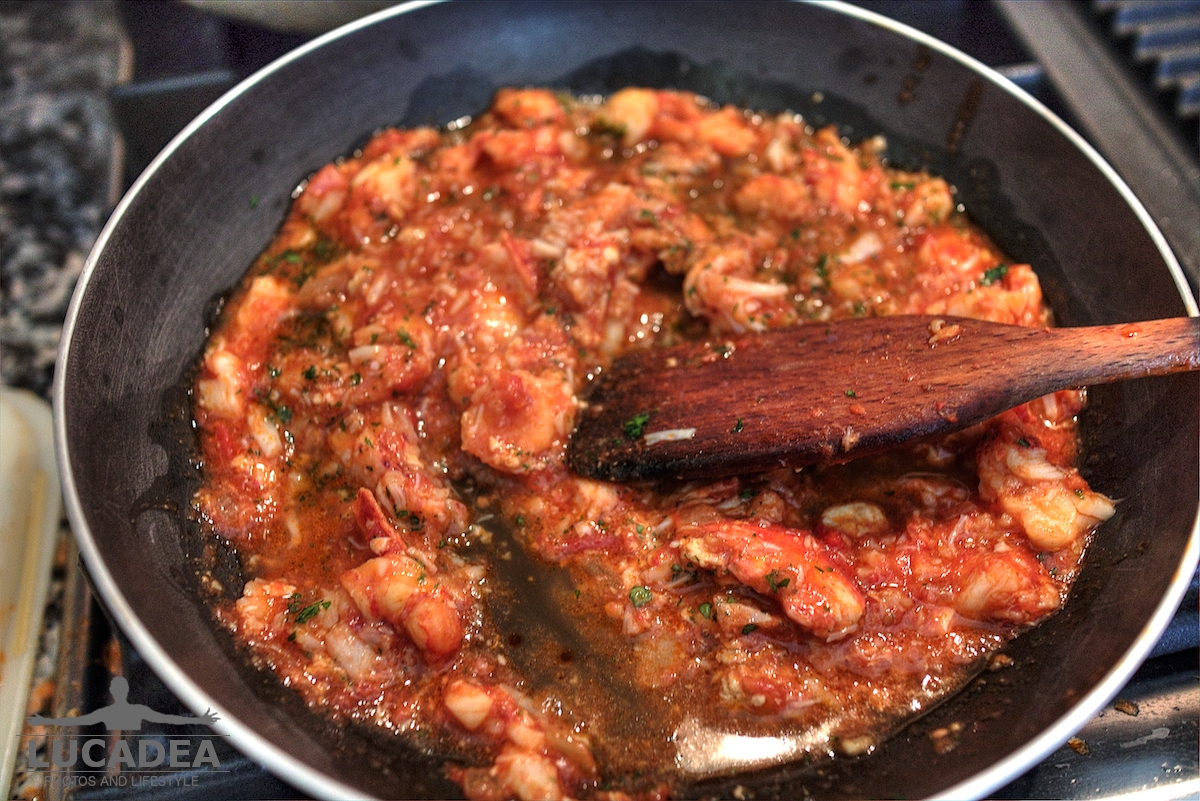
Lobster sauce ready for homemade pasta

Sugo di astice

Lobster sauce ready for homemade pasta.
Among the dishes that are often prepared at home, pasta with lobster sauce is definitely one of my family’s favourites. This photograph shows the sauce ready to become the final seasoning for the pasta, prepared by my father Loris with the attention and care needed to enhance such a special seafood ingredient.
This image comes from my desire to share simple moments connected with home cooking. My blog is not only about villages, landscapes and historic places: sometimes I like to capture a dish with my camera, especially when it is connected to a person, a family memory and a moment of everyday life.
Pasta with lobster sauce is one of those dishes that always brings something special to the table. Of course, the type of seafood can change depending on what is available: sometimes we prepare it with lobster, other times with crayfish or prawns, but the idea remains the same, combining the flavours of the sea with a traditional pasta dish.
I wanted to photograph the sauce before it reached the plate because even the preparation stage has its own beauty. The colours, texture and ingredients already tell the story of the final dish, turning a simple cooking moment into a small photographic memory.
One interesting detail about seafood sauces is that Mediterranean cooking often tries to use as much flavour as possible from the ingredient itself. The shell and natural juices of the crustacean can add richness and depth to the sauce, creating a more intense taste.
This sauce was made by my father Loris, who often enjoys cooking and preparing different dishes at home. I hope that one day he will also share the complete recipe, because family recipes are often worth preserving and passing on.
Like other photographs of food and local products that I have shared on my blog, this image tells a small part of my everyday life. Food, just like a landscape or a historic building, can preserve memories and create connections between people.
If you are looking for an idea for pasta with lobster sauce, this is one of those dishes worth trying, especially when it is prepared with passion and carefully chosen ingredients.

Is pasta with lobster sauce one of your favourite dishes at home too? Add a comment or go to the bottom of the site to read what other visitors have written.

Lobster sauce ready to season pasta, prepared in a homemade kitchen

Photo taken with Canon EOS M100 camera and Canon EF-M 22 lens.

Bluish in color, with yellow spots on its back and a light-colored belly, it has two pairs of antennae, one long and one short, and eight locomotory legs, as well as two chelates, one larger and one smaller, to better perform various tasks. The carapace is smooth and hollow, with two spines located near the eyes. It can reach half a meter in length, but common specimens measure 30 to 40 cm.
Continue on Wikipedia

Ligurian octopus and potato salad, the recipe

insalata di polpo bollito

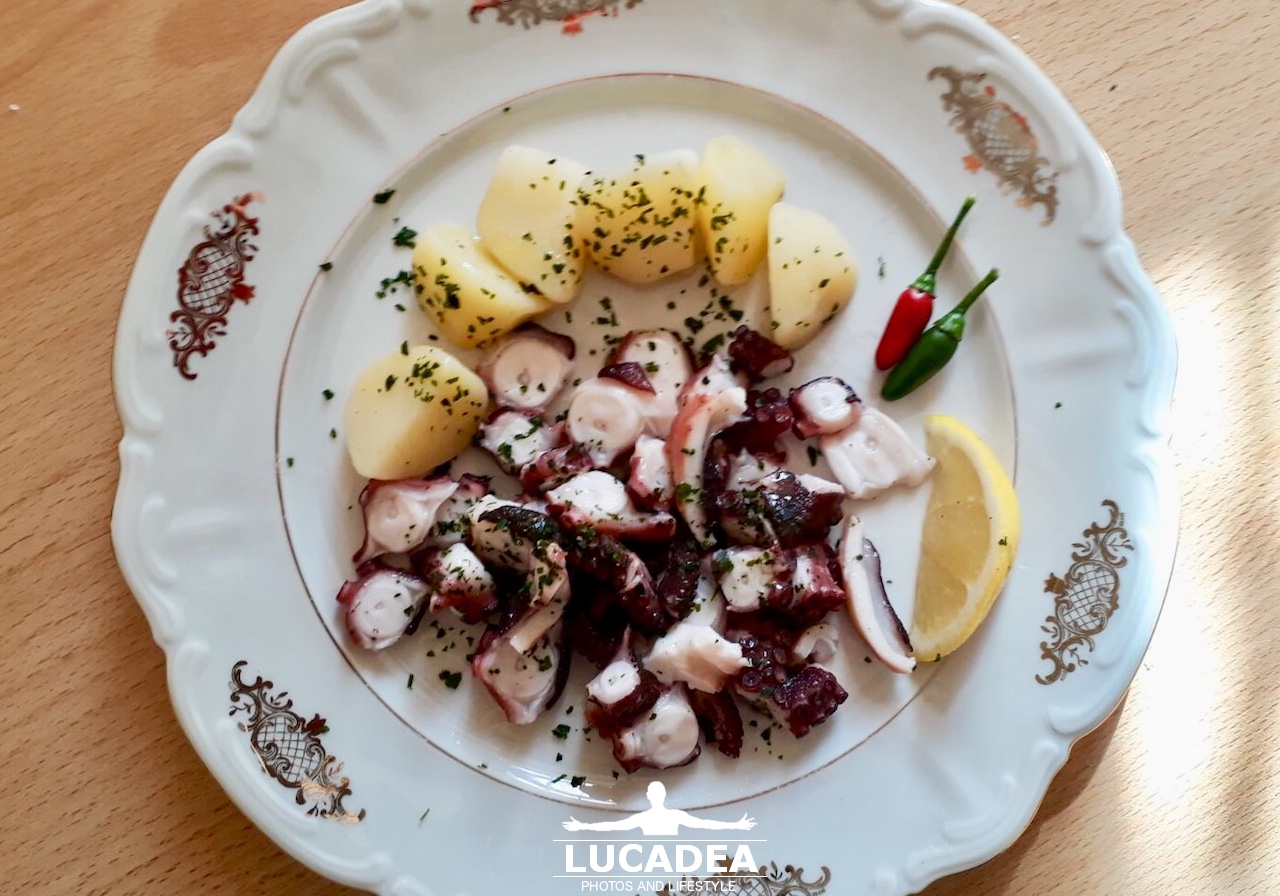
Ligurian octopus and potato salad, the recipe. It is a simple dish made with just a few ingredients, which is exactly why the quality of each one matters. This time I found a couple of local octopuses and decided to prepare them for my son Luca, turning them into one of those straightforward seafood dishes I enjoy making when I want something fresh and full of flavour.
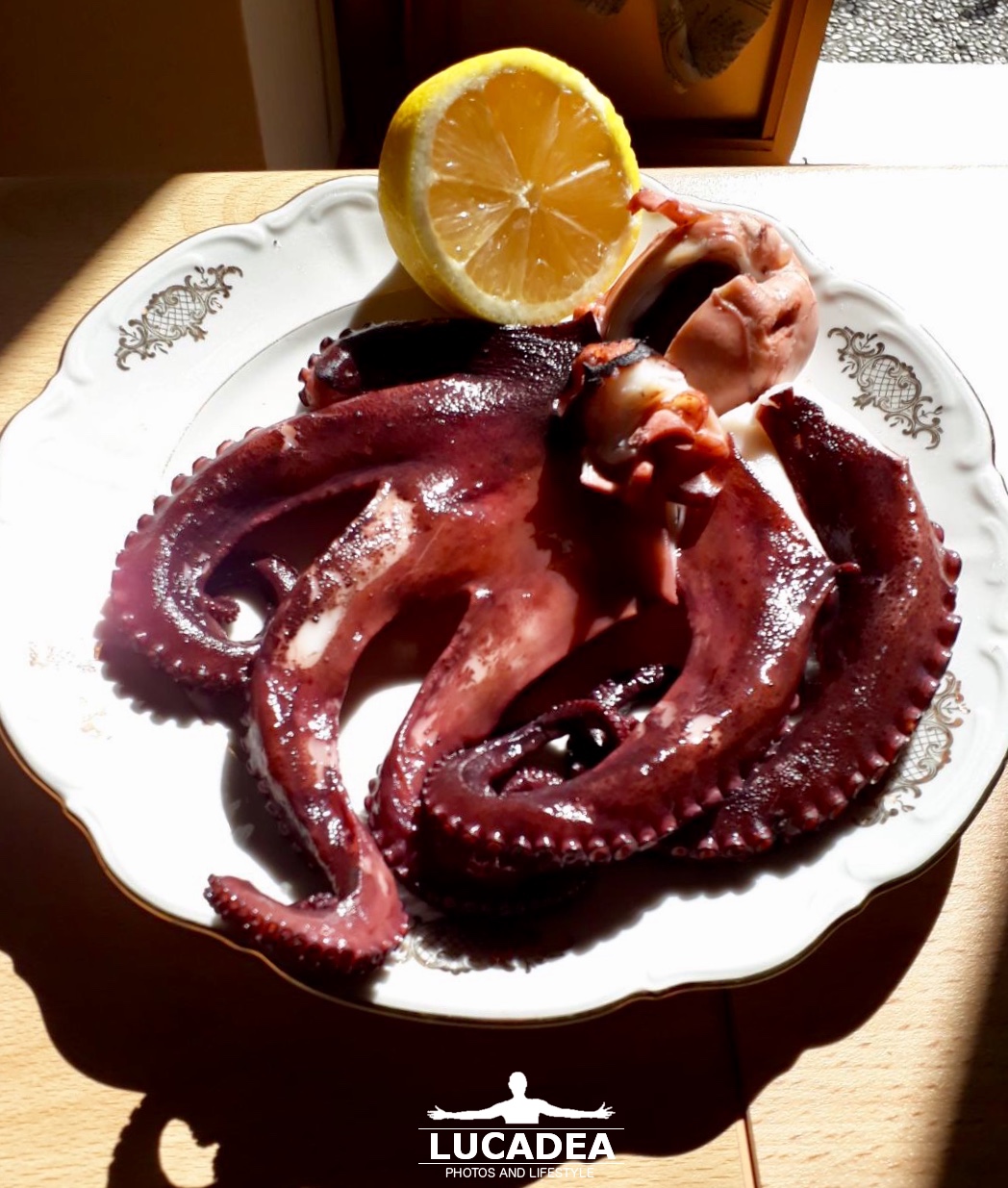
For the boiled octopus, I filled a large pot with plenty of water and added salt and a little vinegar. Before leaving the octopus to cook, I held it by the head and dipped the tentacles into the boiling water several times. This makes the tentacles curl up and gives them the familiar shape that looks so good once the dish is served.
After that, I left the octopus to cook for about half an hour. I then prefer not to rush the next step, leaving it to cool in its cooking water. It is a simple way of finishing the cooking gently and preparing the octopus for slicing.
Meanwhile, I boiled some excellent mountain potatoes that came from my friend Enrico Segarini. Once the potatoes were cooked and cooled, I cut them into pieces and combined them with the sliced octopus.
The dressing is where a simple recipe like this really comes together. I used excellent local olive oil from my friend Paolino Muzio in San Bernardo, a locality belonging to Sestri Levante known for the quality of its olives. I then added the juice of a lemon from my own garden and finished everything with a little chopped parsley.
I did not want to add much else. With a dish like this, I prefer the octopus, potatoes, olive oil and lemon to remain the main flavours. The result is fresh and savoury, and it works well either as a starter or as a light main course.
What I particularly like about this recipe is its strong connection with the local area. The local octopus, mountain potatoes, olive oil made from nearby olives and even the lemon from my garden all tell the story of a style of cooking based more on good ingredients than on complicated techniques.
One small detail about cooking octopus is that allowing it to cool in its cooking water can help it retain a pleasant, even texture. It is a simple step, but one I find useful whenever I prepare an octopus salad ahead of serving.
This time there was also a very personal reason for preparing it: my son Luca. Cooking something for someone in your family gives even a simple recipe a different meaning, especially when the ingredients have been found fresh that same morning.
It also fits naturally with the other seafood recipes I have shared on the blog, where I tend to prefer straightforward preparations that allow the main ingredient to remain recognizable rather than covering it with too many flavours.
Once everything was ready, I gently mixed the octopus and potatoes, allowing the olive oil and lemon to coat the ingredients without breaking the potatoes. After a short rest, the salad was ready to serve.
That is what I like about recipes such as this one: there is no need for complicated techniques, just a little care during cooking and ingredients that are good enough to speak for themselves.

How do you prepare octopus and potato salad? Add a comment or go to the bottom of the site to read what other visitors have written.

Ligurian octopus and potato salad with lemon, olive oil and parsley served as a simple seafood dish

Photo taken with Samsung Galaxy.

This is the boiled octopus before being seasoned:

polpo bollito

Photo taken with Samsung Galaxi.

Homemade raviolini in broth made by my mother

Raviolini in brodo

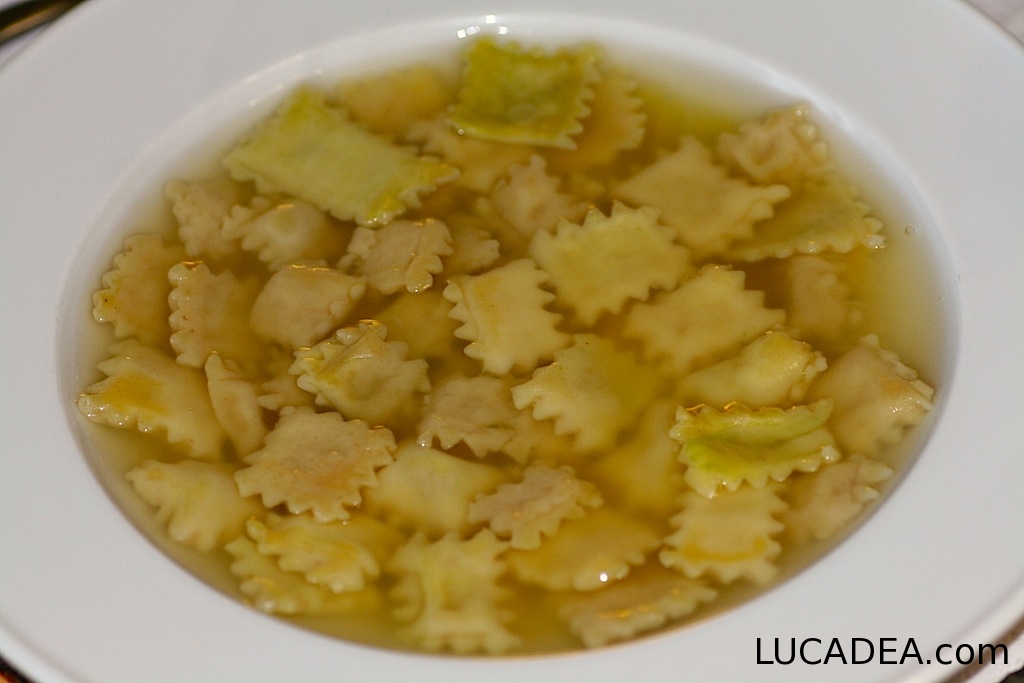
Homemade raviolini in broth made by my mother.
I photographed this plate of raviolini in broth because it represents one of those family memories where flavour comes from patience, care and the time spent preparing food by hand. Looking closely at these homemade raviolini, the first detail that stands out is that every piece has a slightly different shape, showing the personal touch of the person who made them.
This photograph is about a simple tradition that still has an important place in many Italian homes: handmade filled pasta prepared with attention and passed down through generations. A bowl of raviolini in broth is not only a meal, but also the result of familiar gestures, recipes preserved over time and a way of cooking based on dedication.
In this case, the credit goes to my mother, the cook who prepared these raviolini and turned simple ingredients into something truly special. I wanted to capture with my camera not only the finished dish, but also the meaning behind a homemade preparation created with care.
The difference between handmade pasta and industrial products can often be seen immediately. The slightly irregular shapes, the small details and the careful way each raviolino is closed tell the story of a manual process. Those small imperfections are exactly what make homemade pasta unique.
Raviolini in broth are strongly connected with Italian culinary traditions, especially during colder seasons and family gatherings. The warm broth enhances the flavour of the filled pasta without covering it, creating a simple balance that has been appreciated for generations.
A curious detail about Italian filled pasta is that almost every region, and often every family, has its own version with different shapes, fillings and preparation methods. This variety is one of the reasons why Italian cuisine has such a rich identity.
This photograph connects with other stories on my blog dedicated to food and everyday memories, because I believe that even a simple dish can tell a personal story. Photography is not only about places and landscapes, but also about moments that belong to our daily lives.
Looking at a plate of homemade raviolini in broth like this, the value is not only in the taste. It is also in the memories it brings back: the time spent preparing them, the hands that shaped them and the affection behind a meal made for others.

What family dish reminds you most of home? Add a comment or go to the bottom of the site to read what other visitors have written.

Homemade raviolini in broth served in a bowl, showing a traditional Italian family dish

Ravioli are a typical Italian dish. They can be described as squares or circles of egg pasta folded to contain a filling of meat, fish, vegetables, or cheese, depending on the local recipe. Ravioli can be served in broth or dry with sauces or gravies. The choice also depends on the type of filling.
Continue and learn more at Wikipedia

Genovese cima, a taste of Ligurian tradition

Cima alla genovese

Genovese cima, a taste of Ligurian tradition.
A slice of cima immediately brings to mind the kind of Ligurian cooking that relies on simple ingredients, careful preparation and recipes passed down through generations. This particular dish has an even more personal connection for me because the cima in the photograph was prepared by my mother.
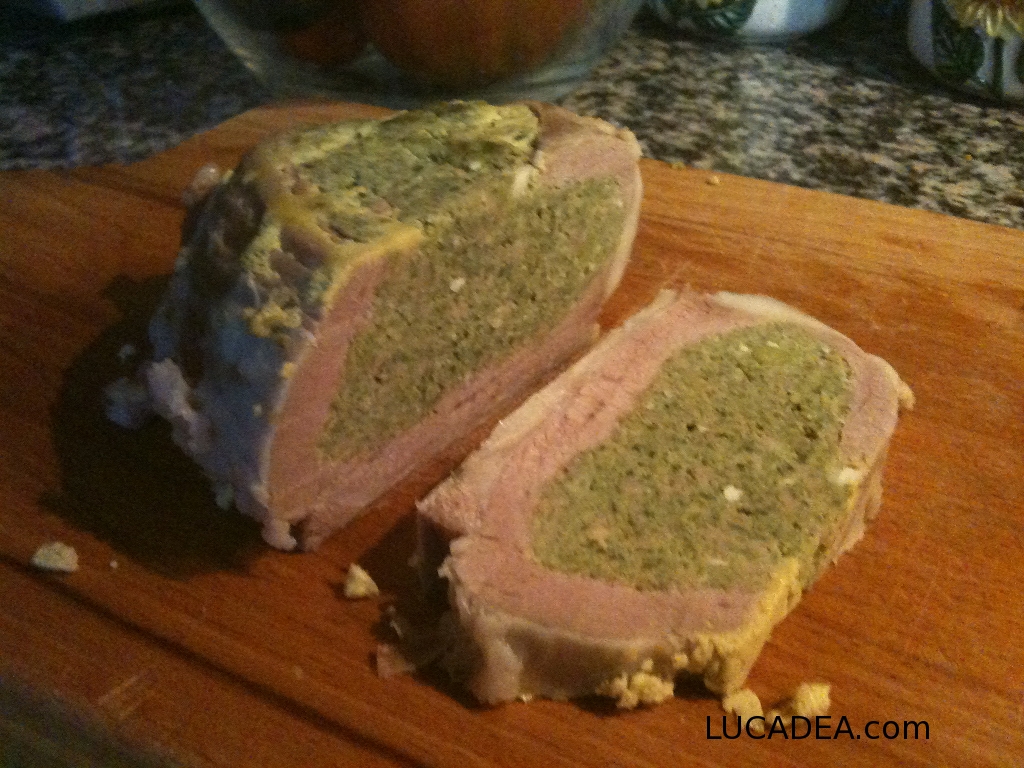
Cima, also known locally as cimma, is one of the traditional dishes most closely associated with Genoa and Liguria. At first glance, it may look like nothing more than a slice of stuffed meat, but cutting into it reveals something much more interesting. The filling creates a pattern of colours and textures, with each ingredient contributing to the appearance as well as the flavour.
I took this photograph because I wanted to preserve that moment before the dish disappeared from the table. In this case, the subject is not simply a traditional Ligurian recipe. It is also part of home cooking and of the memories connected with family meals, which makes the photograph more personal than a picture taken in a restaurant.
Genovese cima is particularly associated with Genoa, Liguria, Italy, although variations can be found throughout the region. If you are wondering what to eat in Liguria to discover something genuinely connected with local traditions, cima is certainly one of the dishes worth knowing. It shows how Ligurian cooking can turn relatively ordinary ingredients into a carefully prepared dish.
The most recognisable feature is the pocket of meat. Traditionally, a piece of veal is opened, filled and then sewn closed before cooking. The filling can include eggs, herbs, pine nuts and other ingredients, with recipes changing according to family traditions and local habits. Once cooked, the cima is allowed to cool before being sliced.
The slice itself is what makes the dish particularly interesting from a photographic point of view. The meat surrounds a compact but varied filling, while the egg helps create the characteristic structure and the other ingredients appear as small details throughout the slice. No two homemade versions necessarily look exactly alike, especially when family recipes are involved.
One small historical detail I find interesting is that cima was not originally conceived simply as an elaborate or luxurious dish. Its roots are connected with domestic cooking and the practical use of available cuts of meat and ingredients. Over time, that practical preparation became part of Ligurian culinary tradition. It is often this kind of everyday cooking, shaped by necessity and then preserved through generations, that gives a regional dish its strongest identity.
For this photograph, I did not have to find a restaurant or trattoria to experience an example of Genoese cooking. I only had to wait for my mother to prepare her cima. That is probably one of the reasons I like the image so much. Behind the dish there is not only a recipe, but also a person, a kitchen and a familiar habit repeated over time.
Cima is also a very rewarding subject to photograph because its appearance changes completely once it is sliced. Before cutting, the preparation looks compact and relatively simple. On the plate, however, the cross-section becomes almost like a small edible mosaic, revealing the ingredients hidden inside.
I have written about Ligurian food several times on my blog, from dishes enjoyed in local restaurants to recipes connected with my own experiences. This photograph fits naturally into those stories because it shows another side of the same culinary tradition: not the restaurant version, but the one that comes from a family kitchen.
Looking at this image, I think the main goal was achieved: to make the viewer a little hungry. Genovese cima is one of those dishes that can be difficult to ignore once it reaches the table, especially when it has been prepared following a family recipe.

Have you ever tasted Genovese cima, perhaps prepared according to a family recipe? Add a comment or go to the bottom of the site to read what other visitors have written.

Slice of Genovese cima filled with eggs, herbs and pine nuts, a traditional dish from Ligurian cuisine

🏠
  • Italiano