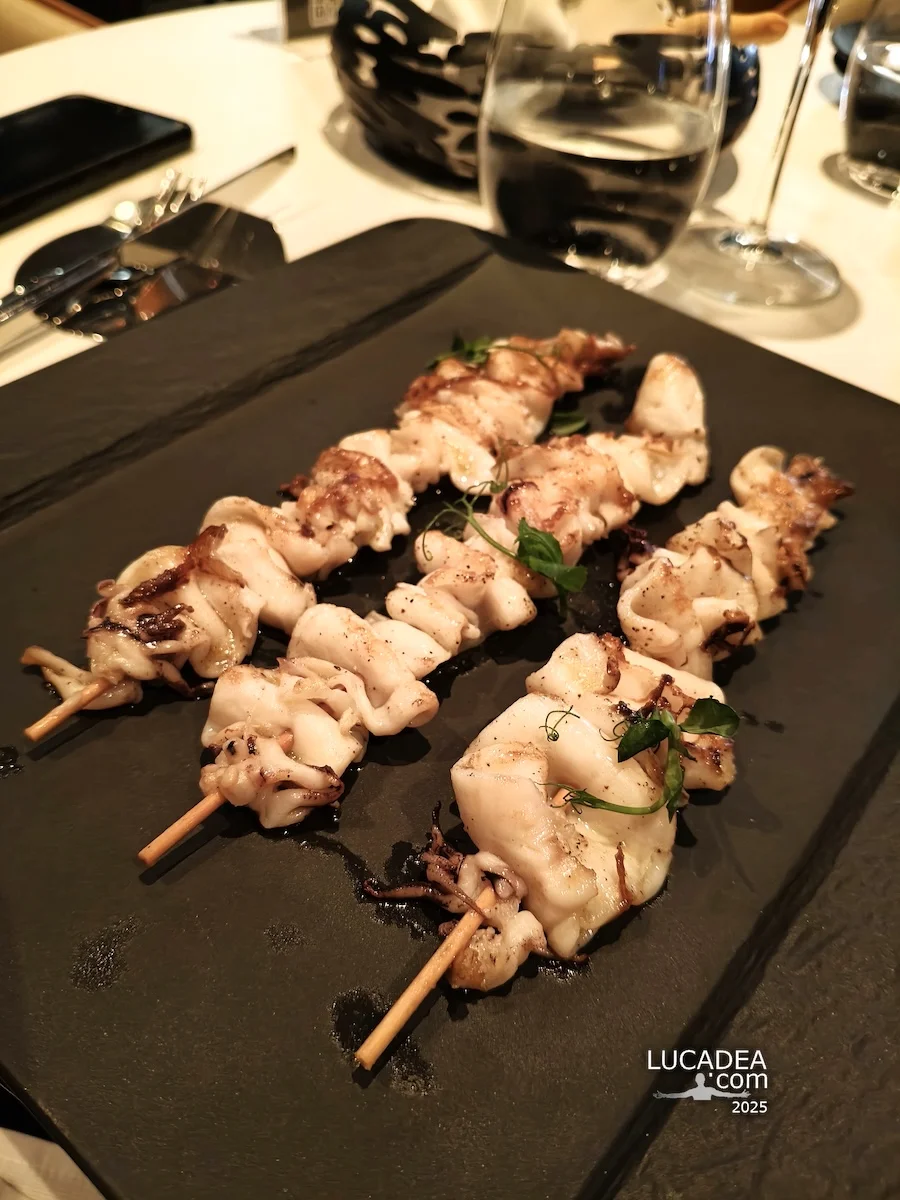
Squid skewers enjoyed on Costa Toscana

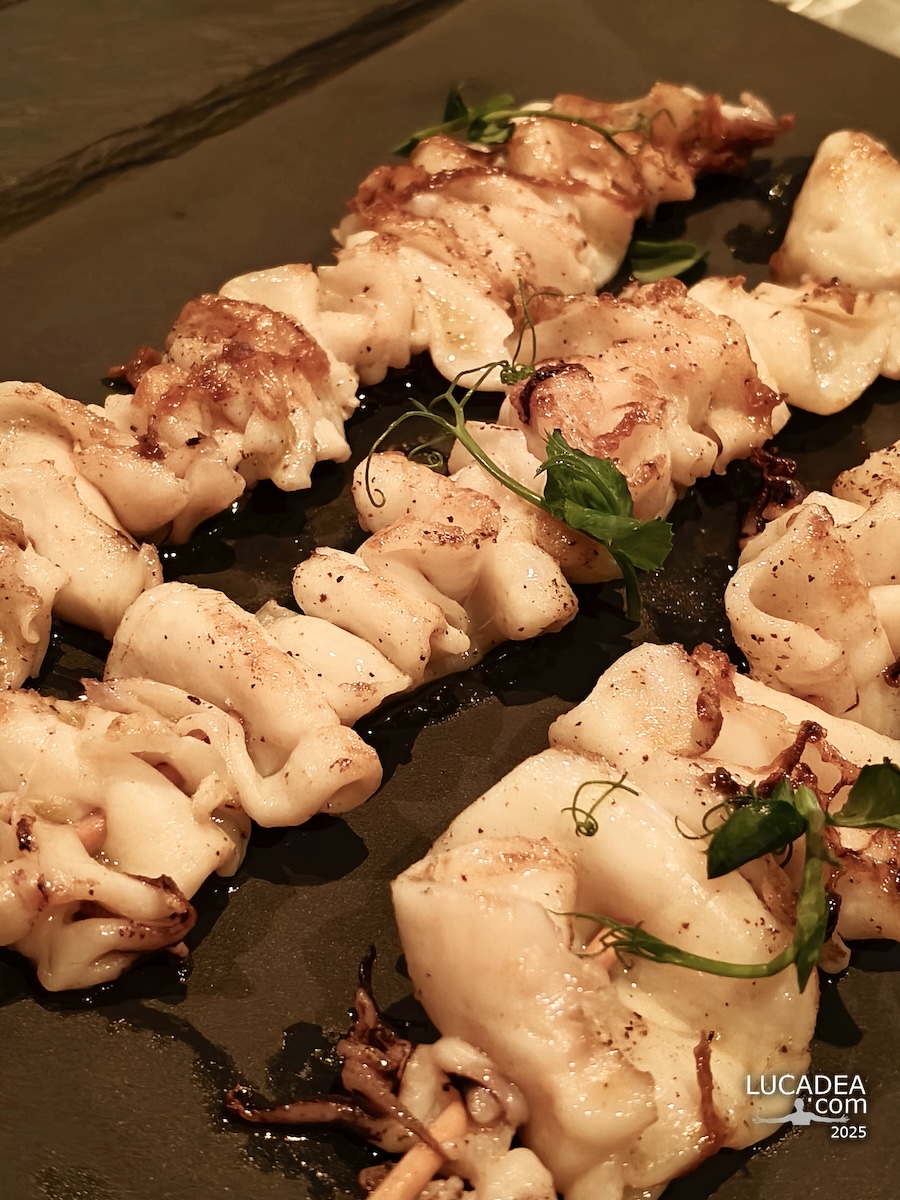
Spiedini di calamari al Ferrai bar sulla Costa Toscana, un piatto di mare fotografato durante una pausa in crociera.

Squid skewers enjoyed on Costa Toscana.
In this photograph I wanted to preserve a simple moment connected to the pleasure of tasting a seafood dish during a cruise experience, where even a small detail can become part of a personal travel memory. These squid skewers on Costa Toscana represent a meeting between Mediterranean flavors and the emotions created by discovering something new while travelling.
I chose to capture this dish because food often becomes one of the strongest connections to a place and a moment. A carefully presented meal can tell a story without needing many words, bringing back memories through its appearance, its flavors, and the atmosphere surrounding it. At the Ferrai bar on Costa Toscana, this small seafood experience became a moment worth remembering.
For me, food photography is not only about showing what is on the plate. It is also about capturing the feeling connected to it: the pause during the journey, the curiosity before tasting something, and the memory that remains afterward. These squid skewers became a small symbol of a cruise moment, a detail that could easily pass unnoticed but deserved to be preserved.
Squid is a common ingredient in Mediterranean cuisine and has always been appreciated for its ability to adapt to many different preparations. Grilled, cooked in simple recipes, or served as skewers, it remains a familiar flavor connected with coastal traditions and the relationship between people and the sea.
When I look at this image, I think about how travel memories are often created by unexpected details. A large landscape can be impressive, but sometimes a simple dish can bring back the atmosphere of a journey even years later. Like other stories I have shared on my photoblog about small discoveries along the way, this photograph focuses on a personal experience rather than a famous view.
Costa Toscana becomes the setting for this memory, a place where moments of relaxation, taste, and curiosity come together naturally. If you are visiting a cruise ship, sometimes the most interesting memories are found in the quiet moments between the main experiences, when you simply stop and enjoy what is in front of you.

Have you ever photographed a meal during a trip because it represented something more than just food? Add a comment or go to the bottom of the site to read what other visitors have written.
Photos taken with Oppo Reno 12.

Add one  comment to this article or read  here what other visitors have written.
 
Adv
 
Disclamer

The rights on images, videos, choruses, text and all other material on the LUCADEA.com website are governed as per  Copyright page.

This page has been viewed 0 times today.
This month it has been viewed 0 times.
In total it has been viewed 0 times.
 

Squid ink spaghetti, the recipe

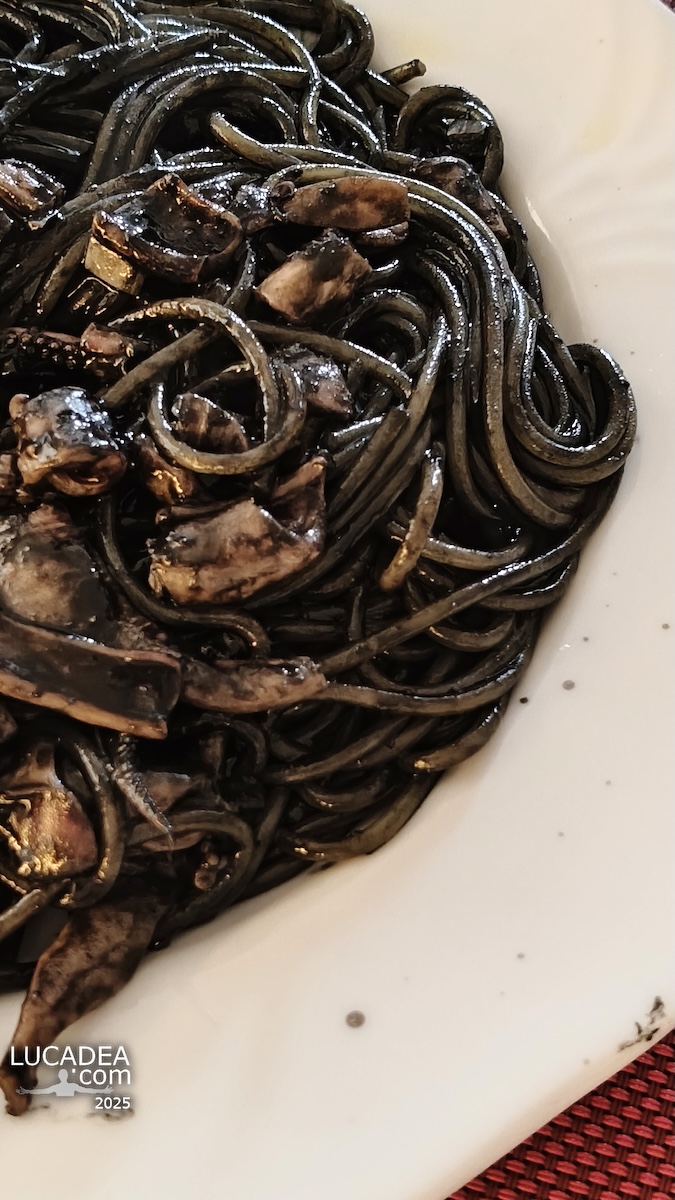
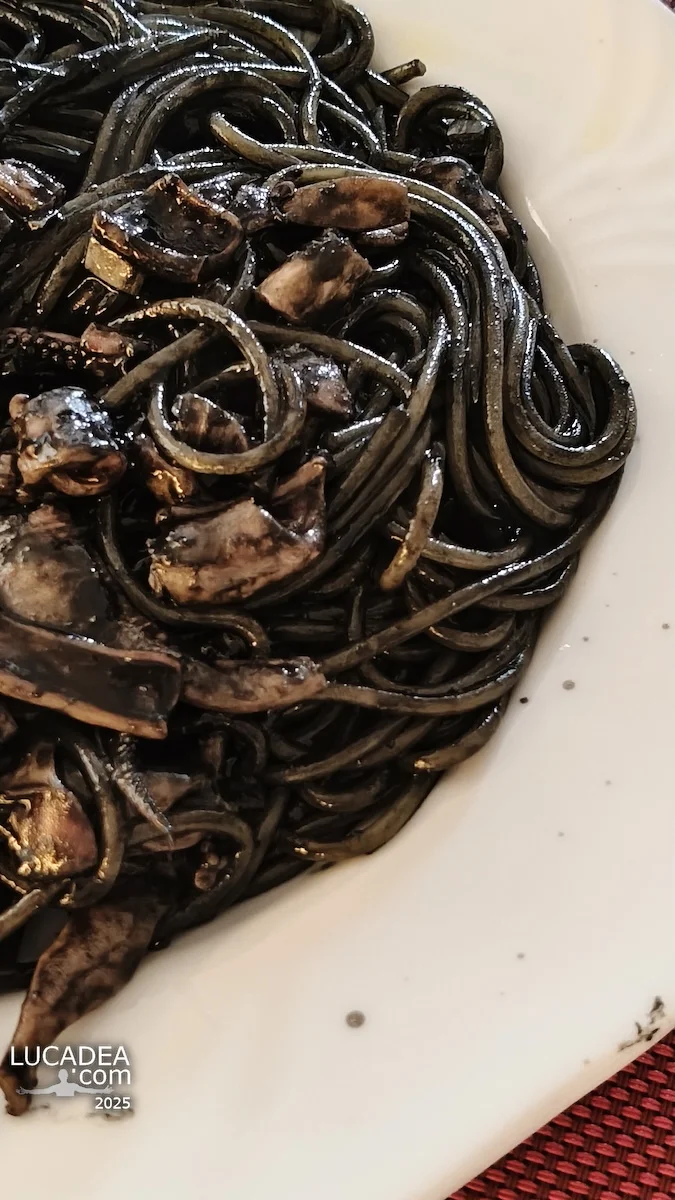
Piatto di spaghetti al nero di seppia cremosi con prezzemolo su fondo scuro

Squid ink spaghetti, the recipe.
There are dishes that instantly bring the sea to mind, and squid ink spaghetti is definitely one of them for me. That deep, glossy black color already tells a story before you even taste it. It’s a recipe I’ve come to appreciate over time, especially after learning how such simple ingredients can create something so bold and distinctive.
Making it is not complicated, but it does require attention to detail, especially when handling fresh squid. The key lies in respecting the main ingredient and building a sauce that is rich, smooth, and balanced without overpowering its natural flavor.

Ingredienti

– spaghetti;
– fresh squid (with ink sac);
– garlic;
– extra virgin olive oil;
– white wine;
– parsley;
– salt;
– pepper.

Preparazione

Start by carefully cleaning the squid. Gently remove the ink sac without breaking it and set it aside. Rinse the squid thoroughly under running water, remove any remaining parts, and slice it into thin strips.
In a large pan, heat a generous drizzle of extra virgin olive oil and add a clove of garlic. Let it cook on low heat until fragrant, making sure it doesn’t burn. Add the squid and sauté for a few minutes, stirring regularly.
Pour in a splash of white wine and let the alcohol evaporate completely. Once the squid starts to soften, lower the heat and add the ink, dissolving it with a bit of warm water. Stir well until the sauce becomes smooth and evenly black.
Meanwhile, cook the spaghetti in salted boiling water. Drain them al dente and transfer directly into the pan with the sauce. Toss everything together, adding a bit of cooking water if needed to achieve a creamy consistency.
Finish with chopped parsley and a touch of black pepper. The final result should be rich, silky, and well combined.

Do you enjoy the bold flavor of squid ink or do you prefer milder seafood dishes? Add a comment or go to the bottom of the site to read what other visitors have written.

Photos taken with Oppo Reno 12.

Add one  comment to this article or read  here what other visitors have written.
 
Adv
 
Disclamer

The rights on images, videos, choruses, text and all other material on the LUCADEA.com website are governed as per  Copyright page.


This page has been viewed 1 times today.
This month it has been viewed 1 times.
In total it has been viewed 1 times.
 

Stewed squid at Montevideo’s Mercado del Puerto

Totanetti in umido a Montevideo

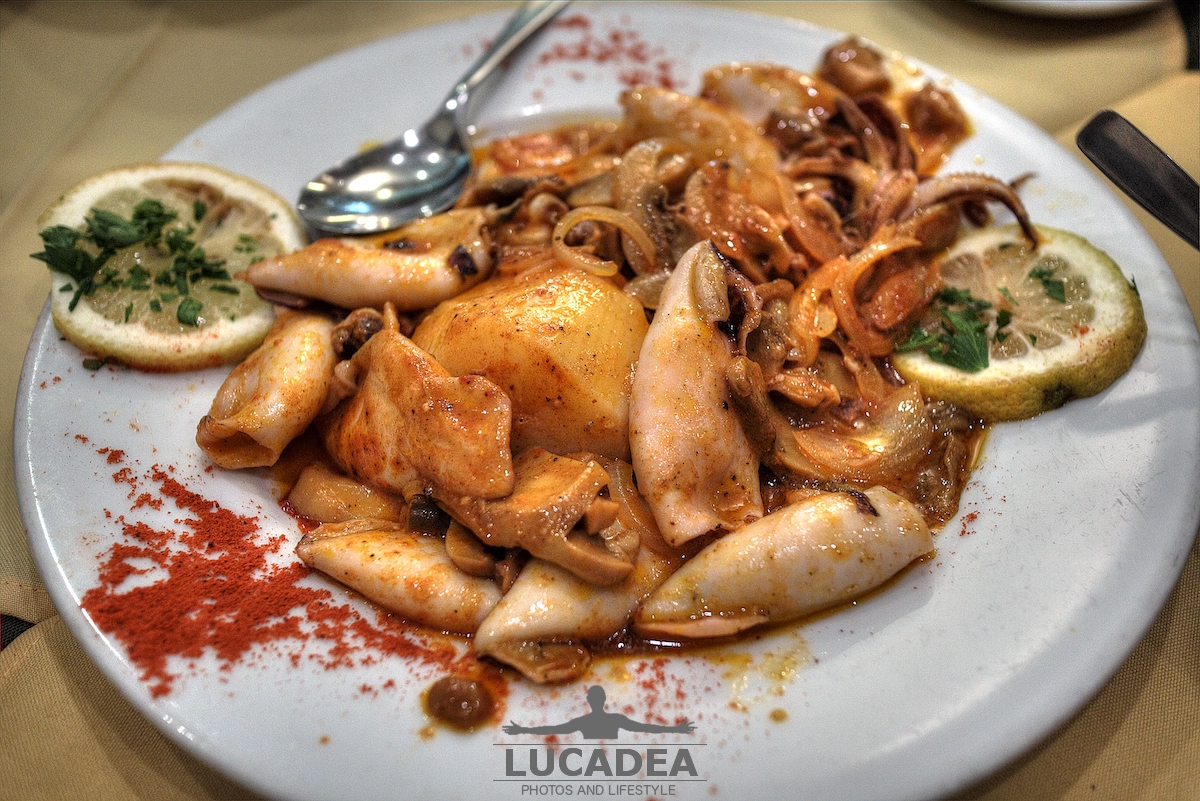
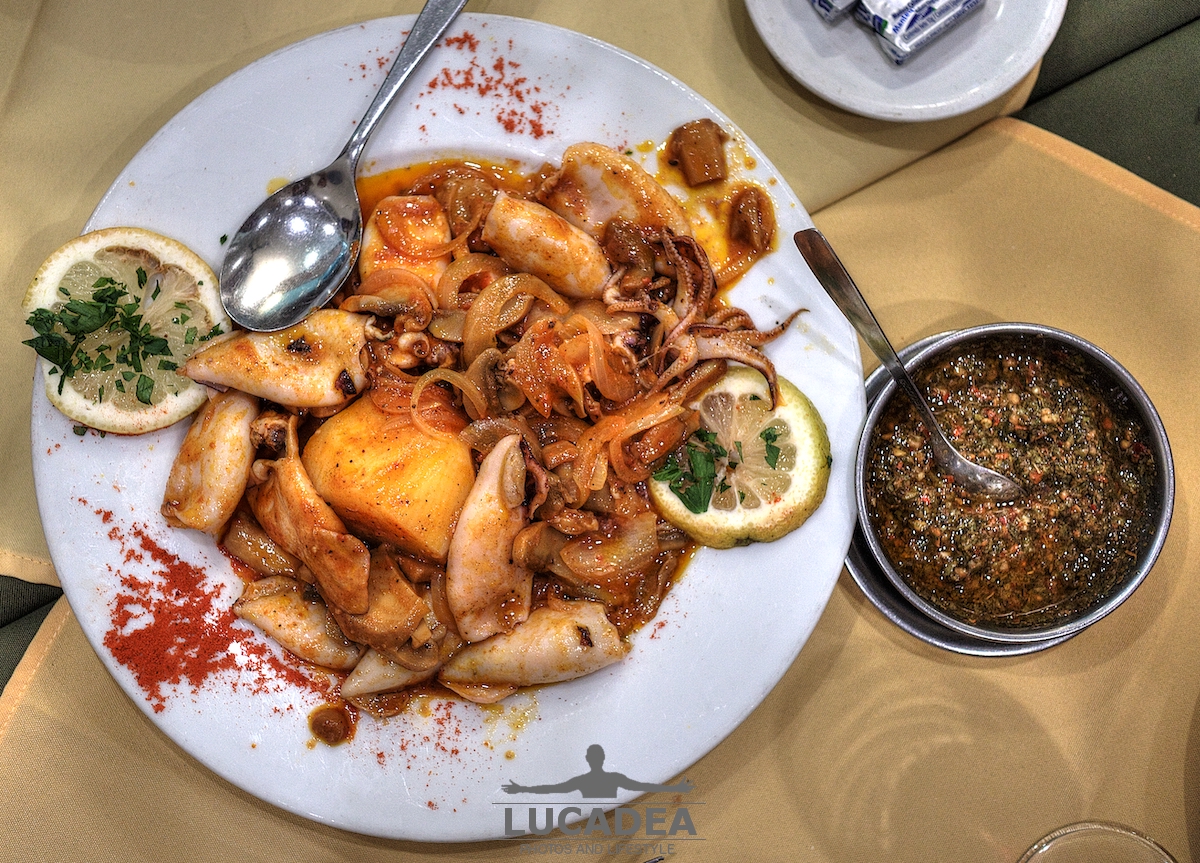
Stewed squid at Montevideo’s Mercado del Puerto.
Among the dishes I photographed during a visit to the Mercado del Puerto in Montevideo, this plate of stewed squid caught my attention with its simple and hearty appearance. Montevideo, Uruguay, is a city where food is closely connected with markets and shared meals, and this dish felt like a small but memorable part of that experience.
The Mercado del Puerto is best known for grilled meat and for the atmosphere surrounding Uruguay’s traditional food culture. Yet seafood also has its place among the many dishes served there. That contrast is exactly what made these stewed squid pieces worth photographing when I came across them.
The dish contains squid cooked slowly with onion, potatoes and mushrooms, with a few spices adding flavour to the preparation. Visually, it is not an elaborate composition, but perhaps that is what makes the photograph work for me. The ingredients are easy to recognise and the whole plate immediately suggests something warm, substantial and comforting.
When I photograph food, I am mostly interested in preserving the impression I had when I saw the dish in front of me. Here I wanted to capture something slightly different from the more predictable images associated with the Mercado del Puerto. Meat is naturally one of the main attractions of the market, but this plate shows that seafood can also find its place in such a strongly meat-oriented setting.
What I like about this photograph is its connection with an actual moment from the trip. I am not trying to present a traditional recipe or explain how to cook stewed squid. It is simply a dish I encountered while travelling and thought was worth remembering through a photograph.
The Mercado del Puerto is located in Montevideo’s Ciudad Vieja and is one of the city’s best-known places for experiencing local food. Its history goes back to the nineteenth century, when the building was inaugurated for market activities. Over time, the space developed into an important gastronomic landmark, while retaining much of the character that makes it so recognisable.
If you are wondering what to eat in Montevideo, the market is interesting precisely because of the variety of dishes available there. For me, though, the strongest memory comes from the individual plates I encountered, because each one is connected with a particular moment of the journey.
This stewed squid with onion, potatoes and mushrooms is the kind of dish that could easily be overlooked beside the market’s more famous grilled meats. Yet these unexpected culinary encounters are often what make a trip feel personal when I look back at the photographs later.
I have also photographed other dishes and markets during my travels, always trying to keep the focus on the food as I actually encountered it rather than turning the photograph into a formal restaurant review. In this case, the memory is especially connected with the surprise of finding a seafood dish in a place so strongly associated with meat.

Have you ever tried stewed squid while travelling in Uruguay? Add a comment or go to the bottom of the site to read what other visitors have written.

Stewed squid with onion, potatoes and mushrooms served at the Mercado del Puerto in Montevideo, Uruguay

Stewed squid with onion, potatoes and mushrooms served at the Mercado del Puerto in Montevideo, Uruguay

Photos taken with Canon EOS M100 and lens Canon EF-M 22.

Black taglierini with squid, cherry tomatoes and olives

Taglierini neri con calamaretti, pomodorini e olive serviti in un ristorante di Genova dopo una partita allo stadio

Black taglierini with squid, cherry tomatoes and olives.
After a football match in Genoa, my wife, some friends and I stopped in the city to grab something to eat, still carrying the energy of the game with us. While looking for where to eat in Genoa after the stadium, we once again chose Ristorante Pizzeria Piedigrotta, a place we know well and often return to after matches.
The restaurant is simple but reliable, mainly known for its generous pizzas, but it also offers some interesting dishes beyond pizza. That evening I noticed a special dish on the menu: black taglierini pasta with squid, cherry tomatoes and olives.
The visual contrast immediately stood out, with the dark pasta highlighting the bright colors of the ingredients. The taste confirmed the impression: a balanced combination of sea flavors and Mediterranean freshness, with tender squid, sweet tomatoes and the salty touch of olives.
We are in Genoa, Liguria, Italy, a city where the sea is deeply connected to its cuisine, especially in seafood dishes served around the stadium and city center. This plate is a simple but very representative example of that tradition.
In other posts on the blog I often describe Genoa through its architecture and street scenes, but here the memory is tied to a shared moment after a match, where food becomes part of the experience.
An interesting detail is that squid ink pasta is part of traditional Mediterranean cuisine, born from the idea of using every part of the catch and turning it into something refined over time.
In the end, it was not just a meal, but a moment linked to the atmosphere of the evening.

Do you remember a dish that stayed with you more for the moment than for the food itself? Add a comment or go to the bottom of the site to read what other visitors have written.

Taglierini neri con calamaretti, pomodorini e olive serviti in un ristorante di Genova dopo una partita allo stadio

Photo taken with Honor 20.

Dish enjoyed at Piedigrotta pizzeria restaurant (here’s the review on TripAdvisor

Black taglierini with squid, cherry tomatoes and olives – Taglierini noirs aux calamars, tomates et olives – Tagliarines negros con calamares, tomate y aceitunas – Taglierini negros com lulas, tomate e azeitonas – Schwarze Taglierini mit Tintenfisch, Tomaten und Oliven – Mì taglierini đen với mực, cà chua và ô liu – 黑墨鱼面配鱿鱼番茄橄榄 – イカとトマトとオリーブの黒タリオリーニ

The text of this post was written with the help of ChatGPT, a language model from OpenAI.

A nice plate of fregola with seafood

Un bel piatto di fregola con i frutti di mare

A nice plate of fregola with seafood.
A few months ago, a great friend of mine (Giovanni) let me taste an excellent plate of fregola with seafood.
Fregola with seafood is a traditional dish of Sardinian cuisine, much appreciated for its rich flavor and simplicity. Here are some interesting facts about this dish:
Fregola, or fregula, is a semolina pasta typical of Sardinia, similar to couscous but with larger and irregular grains.
Fregola is usually prepared with a variety of seafood such as mussels, clams, shrimp, and squid.
Fregola is toasted in a pan and then cooked in fish broth or salted water. The seafood is added during cooking to flavor the dish.
The dish is often garnished with freshly chopped parsley and served hot.
In this article, you can see a plate of fregola with seafood, with mussels and shrimp clearly visible. The fregola appears well toasted and dressed with a rich sauce, probably tomato-based, which evenly coats the pasta. This dish is a great example of Sardinian cuisine, which enhances local ingredients such as seafood.
It is an ideal dish for those who love sea flavors and want to try something authentic and traditional. If you have any other questions or want to know more about another dish, let me know!

Have you ever eaten fregola? Add a comment or go to the bottom of the site to read what other visitors have written.

Un bel piatto di fregola con i frutti di mare

Un bel piatto di fregola con i frutti di mare

Un bel piatto di fregola con i frutti di mare

Photos taken with Honor 20.

Frègula, often mistakenly Italianized as fregola, is a type of semolina pasta produced in Sardinia. The production of fregula has medieval origins. The first historical document mentioning it is the Statute of the Millers of Tempio Pausania dating back to the 14th century, which regulates its preparation, which had to take place strictly from Monday to Friday, to allow water to be used for the fields on Saturdays and Sundays.
Continue and learn more on Wikipedia

A nice plate of fregola with seafood – Une belle assiette de fregola aux fruits de mer – Un buen plato de fregola con marisco. – Um belo prato de fregola com frutos do mar – Ein schöner Teller Fregola mit Meeresfrüchten – Một đĩa fregola đẹp mắt với hải sản

This post was written with the help of Copilot, an AI-powered virtual assistant.

Thai Cuisine: Tempura Calamari Rings, the Recipe

Cucina thailandese: anelli di calamari in tempura, la ricetta

Thai Cuisine: Tempura Calamari Rings, the Recipe.
Some time ago, while I was on vacation in Vietnam at my wife’s house, we had lunch at an excellent Thai restaurant (Thai cuisine is also highly regarded in Vietnam), and I tried this dish, so I’ll try to share the recipe with you.

Ingredients:

– 500 g calamari, cleaned and cut into rings;
– 1 cup rice flour;
– 1 cup cold sparkling water;
– 1 egg;
– 1 teaspoon salt;
– 100 grams panko;
– Oil for frying.

Preparation:

First, prepare the batter: In a bowl, combine the rice flour, cold sparkling water, and egg. Add the salt and stir gently until you obtain a smooth batter. Don’t overmix to avoid the batter becoming too thick.
Heat the oil in a deep pan or deep fryer to about 180°C.
Dry the calamari rings thoroughly with paper towels. Dip each ring in the batter, making sure it’s well coated, and then dip them in panko. The dish I ate at that restaurant used panko breadcrumbs in addition to the traditional batter for added crunchiness.
Fry the calamari rings in small batches to avoid lowering the oil temperature too much. Fry until golden and crispy, about 2-3 minutes per side.
Remove the calamari rings from the oil and drain them on paper towels to remove excess oil.
Serve the tempura calamari rings hot, accompanied by soy sauce or sweet chili sauce.

Do you like Thai food?
Add a comment or go to the bottom of the site to read what other visitors have written.

Cucina thailandese: anelli di calamari in tempura, la ricetta

Photo taken with Honor 20.

Thai Cuisine: Tempura Squid Rings, The Recipe – Cuisine thaïlandaise : rondelles de calamar tempura, la recette – Cocina tailandesa: anillas de calamar en tempura, la receta – Cozinha tailandesa: anéis de lula tempura, a receita – Thailändische Küche: Tempura-Tintenfischringe, das Rezept – Ẩm thực Thái Lan: mực chiên tempura, công thức

This post was written with the help of Copilot, an AI-powered virtual assistant.

Vietnamese cuisine: hot pot lẩu hải sản, the recipe

Cucina vietnamita: hot pot lẩu hải sản, la ricetta

Vietnamese cuisine: lẩu hải sản hot pot, the recipe.
During my recent visit to Vietnam, there was a dish I enjoyed with my family and friends: “fish stew.”
Asians generally love dishes with hot broth, so “fish stew” is a must-have on restaurant and eatery menus and is popular during parties and gatherings.

If you’re curious about this recipe or Vietnamese food in general, please leave me a comment or scroll to the bottom of the page to read what other visitors have written.

Ingredients

– Clams 300g;
– Fresh shrimp 500g;
– Fresh squid 300g;
– 500g fish fillet;
– 200g fish balls;
– 1 dried onion, 1 clove of garlic;
– 2 lemongrass, 1/2 pineapple, 1 sprig of ginger;
– 50g shiitake mushrooms, 200g enoki mushrooms;
– 3 tomatoes, 2 fresh chili peppers;
– 500g beef bones;
– Lettuce, bok choy, chrysanthemum, bok choy;
– Shallots and coriander leaves: finely chopped;
– Spices: cooking oil, 1 packet of Thai hot pot seasoning, seasoning powder, sugar, salt, fish sauce.

Preparation

Clean the clams, prawns, and calamari (squid cut into pieces), and slice the fish as desired.
Clean and chop the dried onion and garlic.
Pluck the ginger and cut it into strips.
Crush the lemongrass and chop it, and thinly slice the fresh chili pepper.
Cut the pineapple into pieces, soak the shiitake mushrooms in water until soft, then cut off the mushroom legs and halve them.
Pluck the Enoki mushrooms and accompanying vegetables.

Stew the bones for 1-2 hours to obtain the broth.
Next, place the pot on the stove to heat 3 tablespoons of cooking oil, add the chopped onion and garlic, and sauté until fragrant. Add the tomatoes and pineapple and sauté until cooked through. Add the lemongrass and ginger and stir for 1-2 minutes. Then add the shiitake mushrooms and sauté, seasoning to taste.
Stir-fry for 2-3 minutes, then add the bone broth and bring to a boil. Add the Thai hot pot seasoning packet and bring to a boil. Once the broth boils, season to taste and simmer.
Finally, add the green onions and cilantro leaves for flavor.

Arrange the ingredients around the hot pot one by one, adding the enoki mushrooms, fish balls, fish fillets, and seafood until the water boils. Remove them to enjoy gradually, then slowly add the vegetables until the water boils and you’re ready to use. It tastes best served with vermicelli or instant noodles, and don’t forget to add 1 cup of really spicy chili fish sauce on the side.

Vietnamese Cuisine: Fish Hotpot, The Recipe – Cuisine vietnamienne : fondue de poisson, la recette – Cocina vietnamita: estofado de pescado, la receta – Cozinha vietnamita: hotpot de peixe, a receita – Vietnamesische Küche: Fisch-Eintopf, das Rezept – Ẩm thực Việt: Lẩu cá, công thức

Vietnamese cuisine: Mực xào cần tây, the recipe

Mực xào cần tây, calamari saltati in padella

Vietnamese Cuisine: Mực xào cần tây, Pan-fried squid, the Recipe.
Yesterday when I went to Coop, I bought some delicious calamari and celery, leaves that weren’t too old… and I immediately thought of making pan-fried calamari with celery, bell pepper, and pineapple.

If you have any questions about my recipe or Vietnamese food, let me know in the comments!

Ingredients

– 150 grams of fresh squid, cleaned, cut into square pieces;
– Red bell pepper: 1, cut into square pieces;
– Pineapple: Cut about 1 pineapple into 3 cm thick pieces, then cut it into small pieces;
– 1 celery stalk: Here in Italy, it’s very large, so I just took a few young leaves, rolled them up, and sautéed them together;
– Purple onion: 1 onion, thinly sliced;
– Garlic: 2 cloves, minced;
– Shallots, cilantro leaves, fresh bell peppers: finely chopped;
– Spices: cooking oil, fish sauce, seasoning powder, monosodium glutamate (MSG), salt, oyster sauce, chili powder, satay, pepper.

Preparation

After cleaning the squid, marinate them with a tablespoon of oyster sauce, half a teaspoon of seasoning powder, a teaspoon of salt, and a little pepper.

Place a pan on the stove, add vegetable oil, and then add the garlic and purple onion. The garlic will begin to brown. Add the calamari and sauté until slightly firm. Add the bell pepper and sauté for about three more minutes, then add the pineapple and celery and sauté until smooth. Sauté for another 5-7 minutes, then add 1 tablespoon fish sauce, 1/2 teaspoon seasoning powder, and 1/2 teaspoon MSG and cook for another three minutes. If it’s bland, add a little more salt (depending on your family’s tastes), then turn off the heat and sprinkle with green onions, cilantro leaves, fresh chili pepper, a little pepper, and chili powder.

Sautéed calamari with celery and pineapple is delicious and goes well with rice. It has the aroma of celery leaves, combined with the sweetness of squid and pineapple, so this dish doesn’t need much seasoning to be delicious.
I eat a lot of spicy food, so I add plenty of chili powder and fresh chili pepper.
Everyone, please enjoy lunch with me!

Mực xào cần tây, calamari saltati in padella

Mực xào cần tây, calamari saltati in padella

Mực xào cần tây, calamari saltati in padella

Vietnamese cuisine: pan-fried squid with celery, peppers and pineapple, the recipe – Cuisine vietnamienne : calamars poêlés au céleri, poivrons et ananas, la recette – Cocina vietnamita: calamares fritos con apio, pimientos y piña, la receta – Cozinha vietnamita: lula frita com aipo, pimentão e abacaxi, a receita – Vietnamesische Küche: sautierter Tintenfisch mit Sellerie, Paprika und Ananas, das Rezept – Ẩm thực Việt Nam: công thức mực xào cần tây, ớt và dứa – 越南菜:煎鱿鱼配芹菜、辣椒和菠萝,食谱 – ベトナム料理:イカのセロリ、ピーマン、パイナップルの炒め物、レシピ

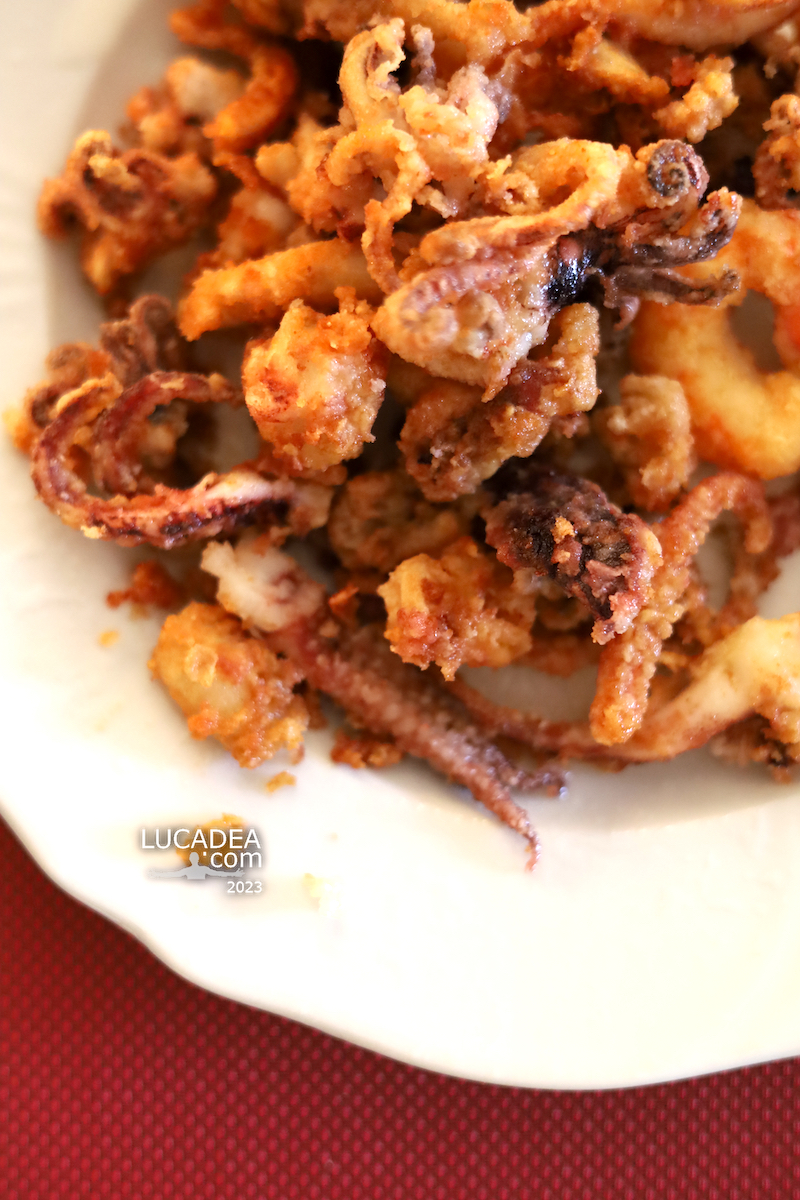
A tasty fried squid, the recipe

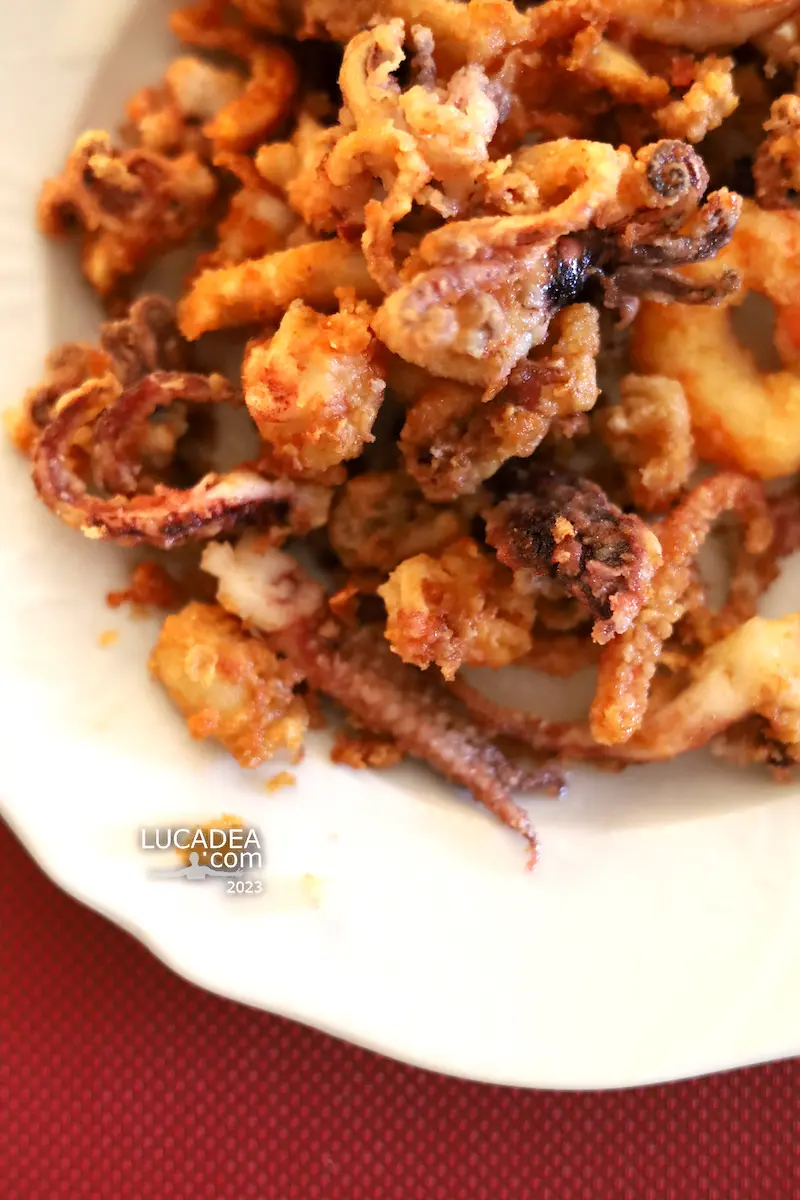
Un gustoso fritto di totani

A tasty fried squid recipe.
A few weeks ago, passing by the fish counter at a supermarket near my house, there were these beautiful fresh squid that I bought to fry.

Ingredients

– Squid (body and tufts);
– Flour;
– Seed oil (but I’m sure you can also get excellent results with an air fryer);
– Salt;
– Lemon;

Preparation

The preparation is really very simple: first, clean the squid (if you haven’t already had the fish counter staff do it) and quickly rinse them under running water.
A friend told me that cuttlefish, squid, and octopus (even fresh ones) should always be put in the freezer for a couple of days to soften their fibers. In this case, I didn’t do so, and I assure you, the final result was soft enough for my taste.

Cut the body into rings and leave the small tentacles whole.
Now, toss everything in a bowl with the flour and knead everything together, trying to coat them evenly. Too much flour isn’t necessary, as it will remain in the oil during cooking (you can use a sieve or colander to avoid excess flour).

Now, in a fairly tall pan, fry the oil (preferably an air fryer) and, once it’s hot enough, add the squid.
Try not to cook them all at once to avoid the oil dropping too much.

I, and my wife actually, like them well done, so we let them cook for about ten minutes.

Do you have any suggestions or questions? Add a comment or go to the bottom of the site to read what other visitors have written.

Un gustoso fritto di totani

Un gustoso fritto di totani

Photos taken with Canon EOS RP and lens Canon RF 50.

A tasty fried squid, the recipe – Un encornet frit savoureux, la recette – Un sabroso calamar frito, la receta – Uma saborosa lula frita, a receita – Ein leckerer frittierter Tintenfisch, das Rezept – Món mực chiên ngon, công thức – 美味的炸鱿鱼,食谱 – おいしいイカフライ、レシピ

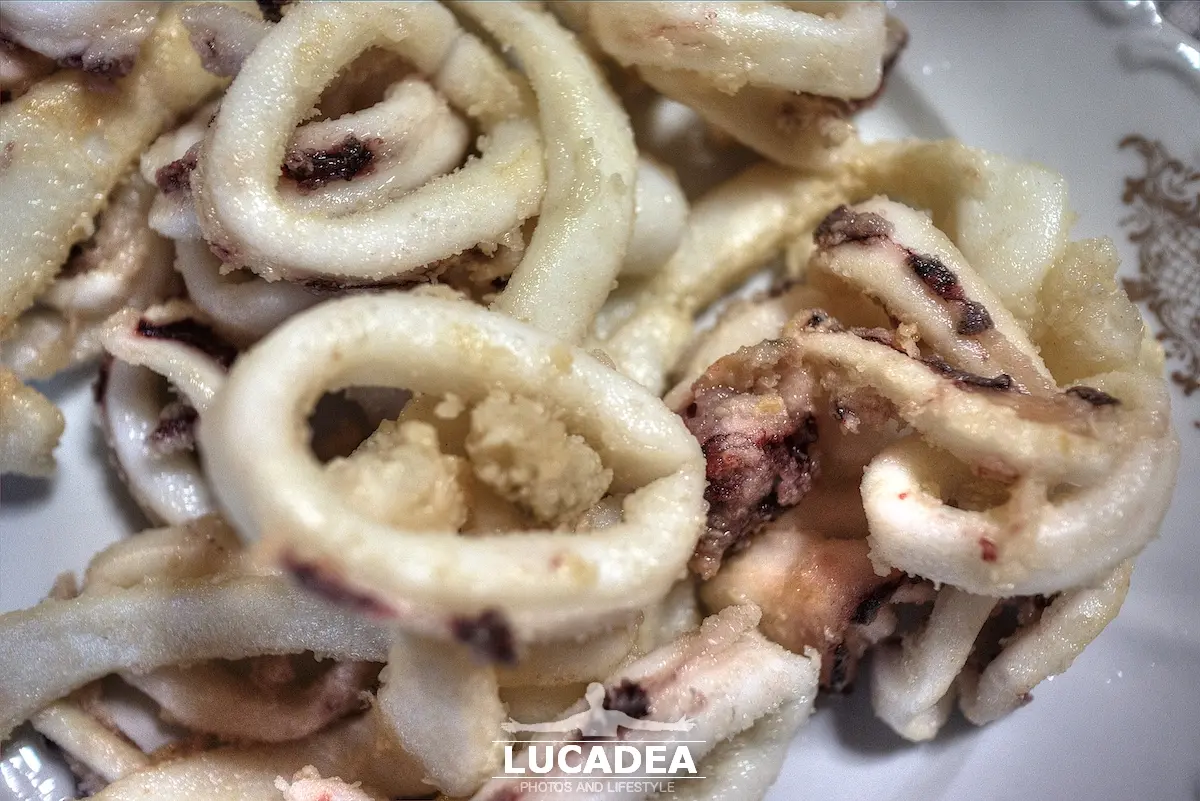
Fried squid rings, the recipe

Anelli di calamaro fritti

Fried Calamari Rings.
Today I want to show you how to make my homemade fried calamari rings.

Ingredients:
– one calamari (depending on the size and number of guests, whether it’s sufficient or not)
– flour
– sunflower oil
– salt
– half a lemon

The preparation is really simple: take the calamari (which if you don’t know how to clean, you can have it done at the fishmonger’s) and cut it into rings. Use the whole squid, even the tentacles (which I like best).
Once cut, “dip” them in flour so that their surface is generously coated.
And now the cooking in oil.
Make sure the oil is very hot.
After a couple of minutes of cooking, turning the rings at least once if using a pan, the dish is ready.
Place them on a sheet of paper towel to remove excess oil, and sprinkle with salt and lemon juice.

This is a photo of the dish, ready to enjoy!

Anelli di calamaro fritti

Photo taken with Canon EOS M100 and lens Canon EF-M 22.

Fried squid rings, the recipe – Anneaux de calamars frits, la recette – Calamares fritos, la receta – Anéis de lula frita, a receita – Gebratene Tintenfischringe, das Rezept – Mực chiên giòn, công thức – 炸鱿鱼圈,食谱 – 揚げイカリング、レシピ
🏠
  • Italiano