Malaysian Street Food at a Stall in Langkawi

Street food malese

Malaysian Street Food at a Stall in Langkawi.
One of the interesting things about Malaysian street food is how much there is to look at before you even decide whether to try anything. These photographs were taken at a food stall along the main road in Langkawi, Malaysia, where a colourful selection of dishes was on display for people passing by.
At first glance, there seems to be a little bit of everything: fish, shellfish, chicken and perhaps other preparations that I cannot confidently identify from the pictures alone. The food is presented openly, making it easy to see the different shapes, colours and textures. What really stands out is the generous use of sauces. They cover the dishes in thick, shiny layers, giving everything a rich and rather indulgent appearance. If you enjoy food with plenty of seasoning and sauce, this stall might look particularly tempting.
Street food is often associated with small roadside stalls, although the expression is sometimes used more loosely for food served in restaurants as well. Here, the setting is unmistakably informal: a stall beside one of Langkawi’s main roads, offering a glimpse of the food available to local customers and visitors. For me, these encounters are part of the pleasure of travelling. Even when I do not sit down to eat, I enjoy looking at the displays and photographing the details that catch my eye.
There is one important detail, though: I did not actually try any of the food. I stopped to take pictures and then continued on my way, so I cannot tell you whether the dishes tasted as good as they looked. I can only imagine that anyone fond of rich sauces might have found plenty to choose from. And while the display certainly makes an impression, photographs cannot tell us everything about the freshness of the ingredients or how the food has been handled. It is always sensible to use your judgement when choosing where and what to eat while travelling.
These pictures are therefore not a restaurant review or a recommendation based on personal tasting. They are simply a record of a roadside food stall I came across on Langkawi, an island in Malaysia. Sometimes travel photography is about documenting exactly these small, everyday scenes rather than visiting a famous landmark.

I would love to know what you would have done: would you have chosen a dish to try, or would you also have taken a few photographs and carried on exploring? Add an comment or go to the bottom of the site to read what other visitors have written.

Malaysian street food stall in Langkawi displaying fish, shellfish and chicken covered with generous amounts of sauce

Malaysian street food stall in Langkawi displaying fish, shellfish and chicken covered with generous amounts of sauce

Photos taken with the Canon EOS M100 camera and Canon EF-M 22 lens.

Add one  comment to this article or read  here what other visitors have written.
 
Adv
 
Disclamer

The rights on images, videos, choruses, text and all other material on the LUCADEA.com website are governed as per  Copyright page.


This page has been viewed 1 times today.
This month it has been viewed 1 times.
In total it has been viewed 1 times.
 

Small seafood at a Da Nang market stall

Piccoli frutti di mare in un mercato di Da Nang con conchiglie miste, erbe e colori naturali tipici della cucina vietnamita

Small seafood at a Da Nang market stall.
As I stepped closer to the stall in Da Nang, the small seafood immediately drew me in, a perfect glimpse of what to eat in Da Nang without needing any explanation. These tiny shells, part of the everyday seafood Vietnam culture, tell a story that goes far beyond food.
There was a natural chaos in the pile, a mix of shapes, textures, and subtle colors, all glistening under the market lights. If you are visiting Da Nang, this is one of the most interesting places to understand local life, because food here isn’t just prepared, it’s displayed in its raw, honest form. Wondering what to eat in Vietnam often starts exactly here, in places like this.
I was in Da Nang, central Vietnam, Vietnam, surrounded by the sounds of vendors and the constant movement of people passing by. It reminded me of another market scene I once shared on the site, but this felt more intimate, more focused on detail.
One interesting detail is that these tiny shellfish are often quickly stir-fried with lemongrass and chili, becoming a popular street food dish across the region. It’s a simple preparation that highlights the freshness of the ingredients.
I leaned in closer with my camera, trying to capture not just the image but the texture and density of the moment. It wasn’t about composition alone, but about preserving a feeling.
A place worth seeing in Da Nang is not always a landmark, sometimes it’s a market stall that quietly reveals the soul of the city.

Have you ever been fascinated by something so simple yet so rich in meaning? Add a comment or go to the bottom of the site to read what other visitors have written.

Piccoli frutti di mare in un mercato di Da Nang con conchiglie miste, erbe e colori naturali tipici della cucina vietnamita

Photo taken with Canon EOS R50 V and lens Canon RF 28.

Add one  comment to this article or read  here what other visitors have written.
 
Adv
 
Disclamer

The rights on images, videos, choruses, text and all other material on the LUCADEA.com website are governed as per  Copyright page.


This page has been viewed 1 times today.
This month it has been viewed 1 times.
In total it has been viewed 1 times.
 

Edible crickets spotted on Koh Samui, Thailand

Insetti da gustare

Edible crickets spotted on Koh Samui, Thailand.
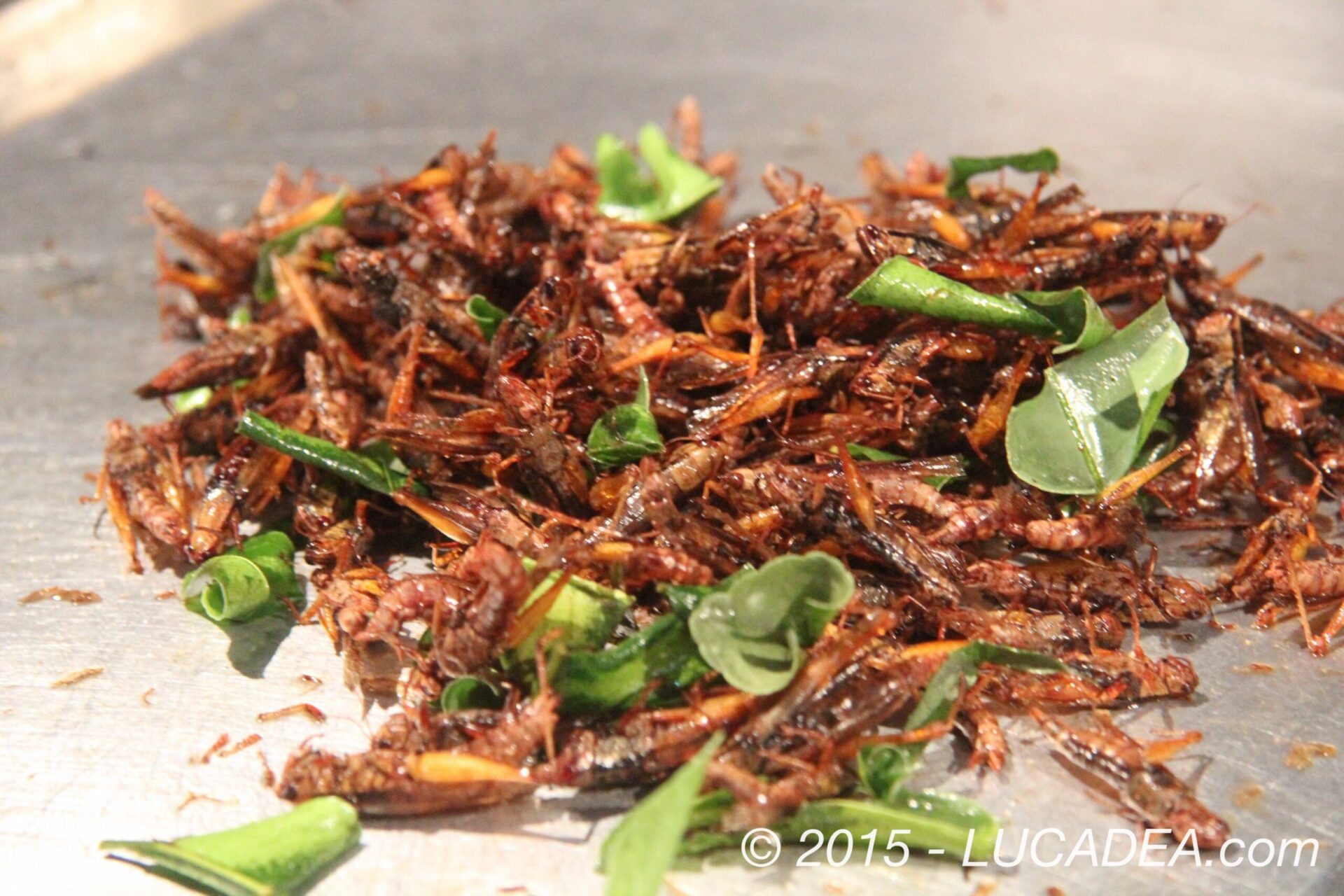
Looking at the photograph, these really do seem to be crickets, prepared and ready to be eaten as one of the many unusual insect snacks that can be found in Thailand. I had already photographed other edible insects on Koh Samui, and once again the sight was curious enough to make me take out my camera.
Their shape is immediately recognisable. Unlike some other food items that are difficult to identify at first glance, these insects look very much like crickets, gathered together and displayed ready for customers. I cannot be completely certain about the exact species from a photograph alone, though, so I prefer to describe them as crickets rather than turn an impression into a definite identification.
Edible insects are part of the food traditions of several parts of Thailand, although they are certainly not an everyday food for everyone in the country. They can appear at markets and street food stalls, where different varieties are prepared in fairly simple ways, often by frying them. The result is usually a crisp snack that can look rather unusual to a visitor from Europe.
I came across this kind of food while in Koh Samui, one of Thailand’s best-known islands. These are precisely the little details I enjoy photographing while travelling because they reveal something about local food habits without needing a staged scene or a famous landmark.
If you are visiting Thailand and looking for something genuinely different from the dishes you might normally encounter, edible insects are certainly one of the more unexpected sights at some markets. I found the visual side of it particularly interesting: trays filled with insects are difficult to ignore, especially when you are seeing them as food for the first time.
I have to admit that when faced with a tray full of insects, my first thought is probably to wonder exactly what I am looking at and, after that, whether I would actually have the courage to taste it. In this case, I was happy to stick with photography. The camera lets me get close to these unusual culinary discoveries without necessarily having to put them on my plate!
There is a small cultural detail worth mentioning. Eating insects is especially associated with parts of northern and northeastern Thailand, where the practice has deeper culinary roots. Fried insects are among the preparations that can be found as snacks, although their availability varies considerably from one place to another.
This photograph also fits naturally with other images I have taken of unusual foods and objects during my travels. Just as with the other insects I have photographed, what interests me is not deciding whether they look appetising, but preserving that moment of surprise when something very different from my usual food culture appears in front of me.

In the end, the photograph leaves me with the obvious question: would you be brave enough to taste these crickets? Add a comment or go to the bottom of the site to read what other visitors have written.

Edible crickets displayed at a street food stall on Koh Samui, Thailand

Kebab, a dish far from my favourite tastes

Kebab servito in un piatto con carne, pane e ingredienti tipici della cucina mediorientale

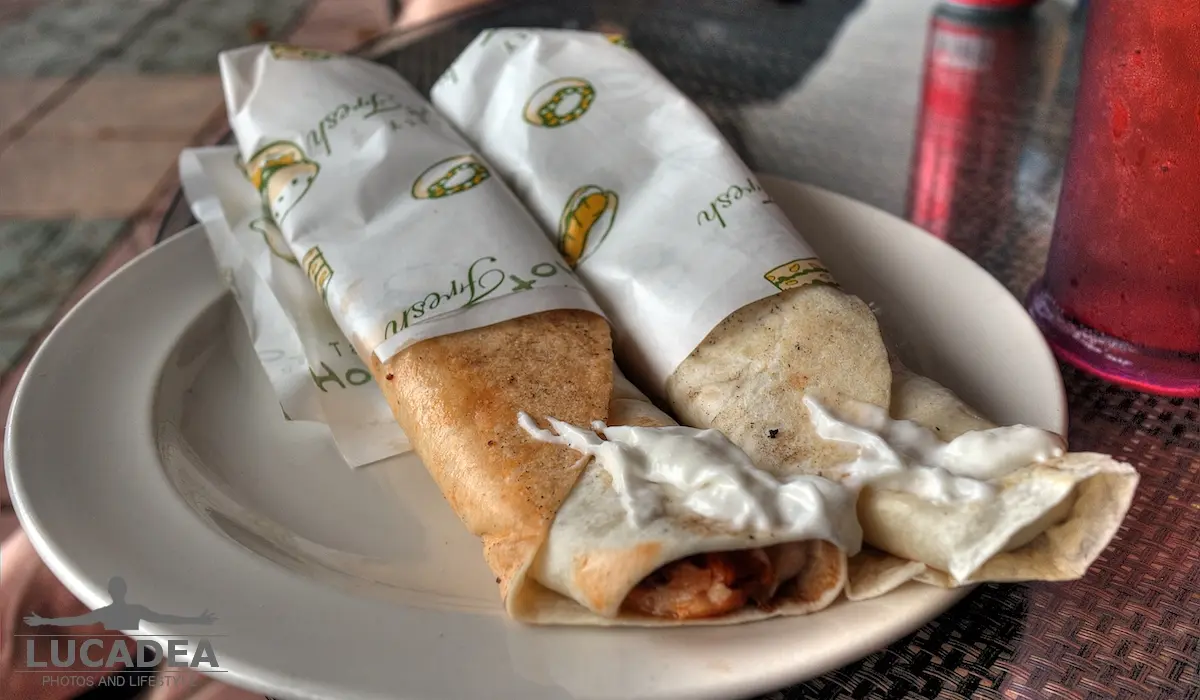
Kebab, a dish far from my favourite tastes.
Among all the different foods that can be discovered around the world, kebab is one of those dishes my son wanted me to write about after trying it during a recent trip to Malaysia.
It is not the kind of food I would usually choose, but this is exactly why I found it interesting to tell its story. Even a dish that is not among my personal favourites can become a reason to remember a journey, discover a different culture and look at how food habits change from one country to another.
Kebab is now one of the most widespread street foods in the world, but its origins are connected to the Middle Eastern area, especially Turkey. The word refers to a way of cooking meat on a spit, and the traditional preparation involves layers of meat slowly cooked on a vertical rotating skewer. The outer part is cut away as it becomes ready, creating the typical thin slices associated with this dish.
The kebab that many people know today is often different from the original version. Like many popular foods, it has adapted to local tastes, available ingredients and economic conditions. In Greece, for example, a similar dish is known as gyros and is often prepared with pork or chicken, served with vegetables, fries and sauces inside a type of flatbread.
This evolution is what makes me a little uncertain about the dish. The quality of a kebab can depend greatly on where it is prepared and on the attention given to the ingredients. The name alone does not guarantee a good experience; as with many foods, preparation and quality make the real difference.
This photograph comes from my son’s experience and from my curiosity about a food that can now be found almost everywhere. Even if kebab is not my ideal meal, I still find fascinating the way a dish can travel across countries, change its appearance and become part of everyday life in completely different cultures.
A small curiosity is that traditional kebab was not originally created as a quick sandwich, but as a method of cooking meat connected to the culinary traditions of Turkey and surrounding regions.
On my blog I have already shared other stories about particular foods and products discovered during travels or brought home, because food, just like the places I photograph, always carries a story.

Have you ever tried kebab and enjoyed it, or do you also consider it a food that is not really for you? Add a comment or go to the bottom of the site to read what other visitors have written.

Kebab served with meat, bread and typical ingredients from Middle Eastern street food tradition

Photo taken with Canon EOS M100 and lens Canon EF-M 22.

Shawerma, (Arabic: شاورما‎, in turn from the Turkish çevirme), is a Middle Eastern meat dish. Although the word derives from the Turkish çevirme, meaning “which turns”, in Türkiye this preparation is called döner kebabı; in Greece it is called γύρος gyros, and in the latter case it is mainly made from pork, an animal excluded from food consumption for Islamic populations.
Continue and learn more on Wikipedia

Chicken feet in Sa Pa, Vietnam

Zampe di gallina esposte su un tavolo a Sa Pa in Vietnam pronte per essere grigliate

Chicken feet in Sa Pa, Vietnam.
During my trip to northern Vietnam, I came across a scene that might feel unusual for many of us: a table filled with different cuts of meat ready to be chosen and grilled. Among them, chicken feet were certainly one of the most curious and, for me, slightly surprising items.
Chicken feet in Sa Pa, Vietnam, are a type of food commonly found across much of Asia, where no part of the animal is wasted and every element has its place in the kitchen. In this case, they were displayed together with other cuts, some already prepared on skewers and ready to be cooked over the grill.
I have to admit that visually they still make quite an impression on me. We are no longer used to seeing this kind of food on our tables, even though in the past, chicken feet were also used in Italy, especially for making broths and soups. In some places, this tradition still exists today, although it is less common.
The scene I photographed says a lot about the way food is experienced in these areas. It is not just about eating, but also about sharing a moment: you choose what you want, watch it being prepared and often take part in the cooking process. It becomes a social and sensory experience that brings you closer to a different food culture.
Sa Pa, a town located in the mountains of northern Vietnam, is known for this kind of street food and small local eateries. Tables full of ingredients act almost like displays, allowing each person to select exactly what they want to eat and create a personalised meal.
Even if these dishes may seem unusual at first glance, they are part of a rich culinary tradition that values simple ingredients and direct cooking methods like grilling. Often, moving beyond the initial impression can lead to discovering new and interesting flavours.
This photograph is part of a wider collection dedicated to food around the world, where I try to tell stories not only about well-known dishes but also about those that surprise and spark curiosity.

Have you ever found yourself in front of a dish that made you hesitate just because of how it looked? Add a comment or go to the bottom of the site to read what other visitors have written.

Chicken feet displayed on a table in Sa Pa Vietnam ready to be grilled

Photo taken with Canon EOS M100 and lens Canon EF-M 22.

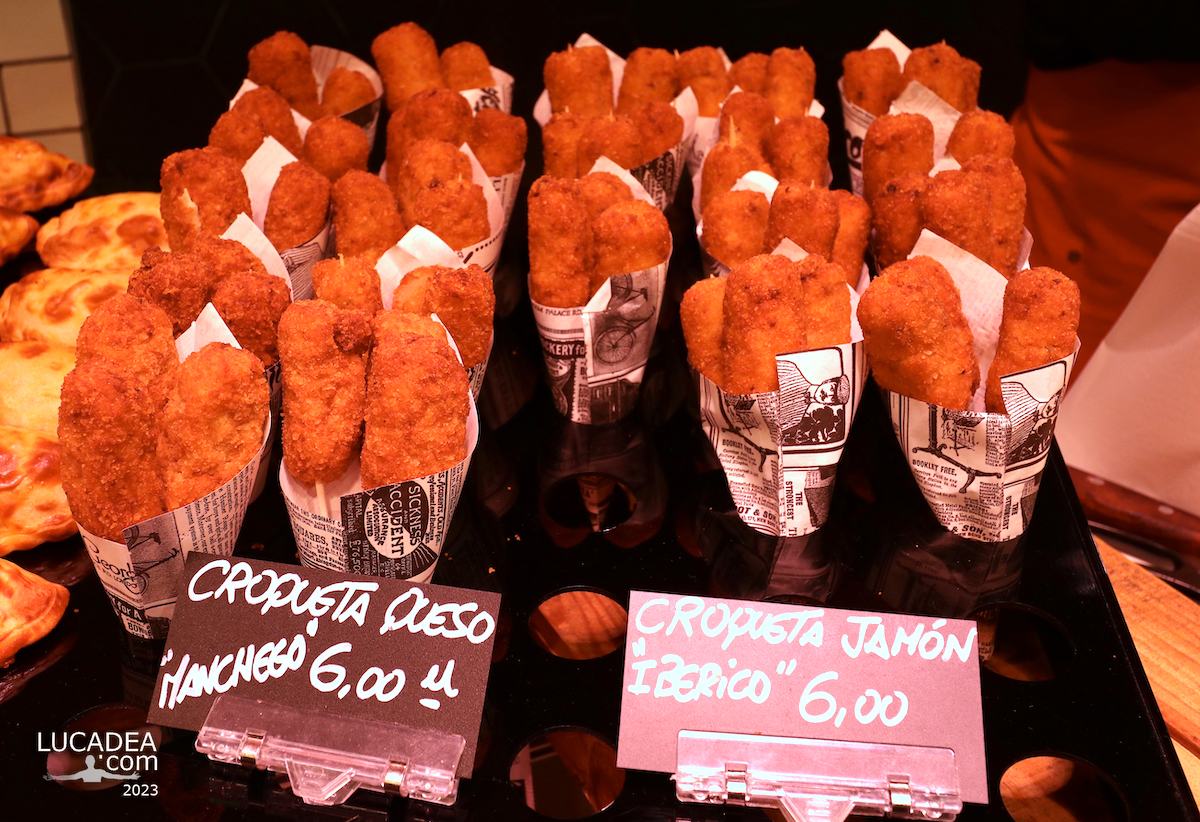
Burritos, empanadas and croquetas at La Boqueria

Burritos, empanadas e croquetas alla Boqueria

Burritos, empanadas and croquetas at La Boqueria.
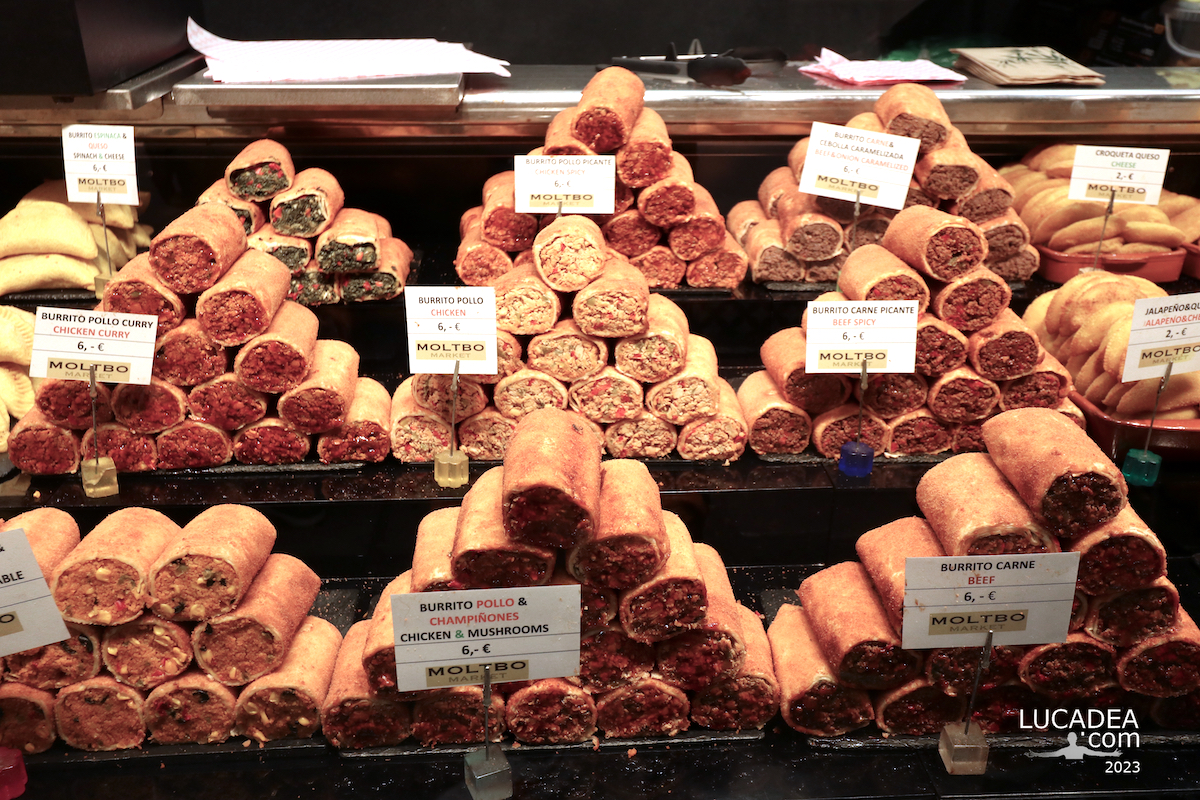
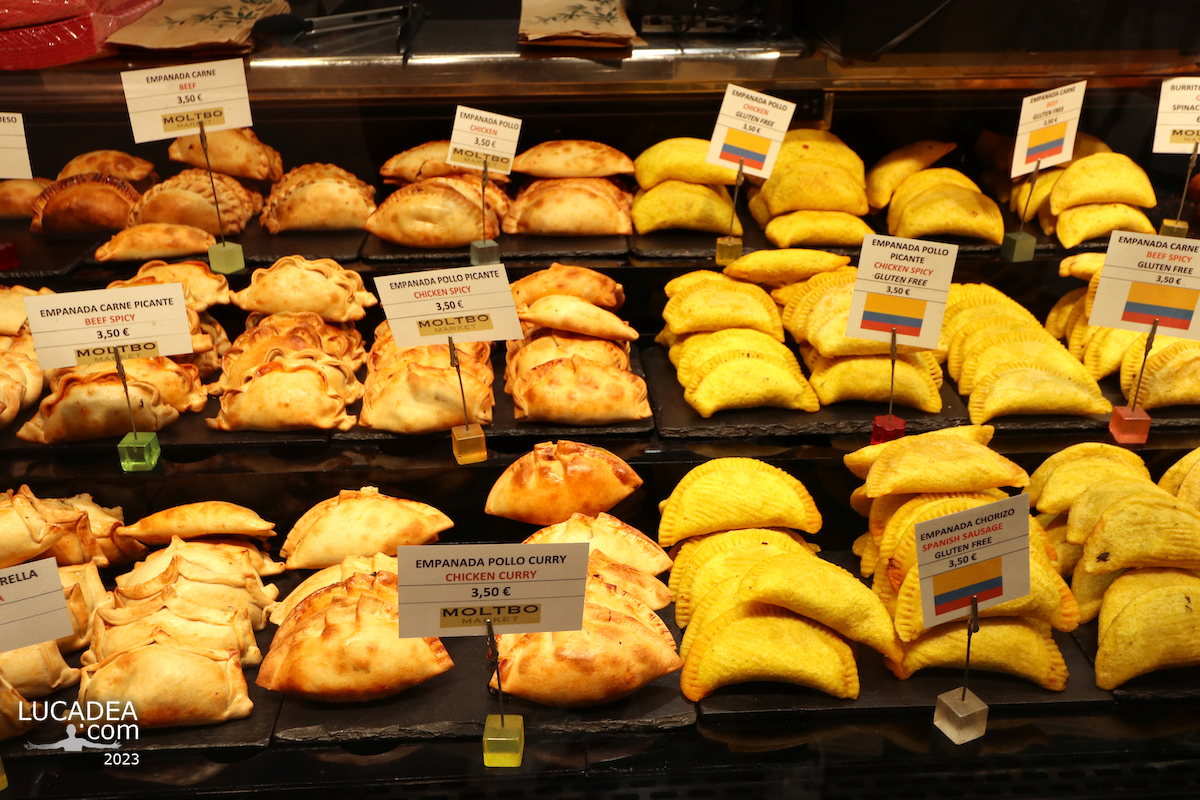
Walking through La Boqueria Market in Barcelona, I stopped in front of a colorful display of Latin street food where burritos, empanadas and croquetas tell a story of different culinary traditions meeting in one place. Among the things to see in Barcelona, La Boqueria Market is a place where you can experience the city not only through its streets but also through its flavors.
Inside the busy market aisles, I found this small corner filled with simple dishes carrying centuries of influences. Burritos at La Boqueria, with their wrapped flour tortillas and rich fillings, recall Mexican and Tex-Mex cuisine, while empanadas bring a tradition shared between Spain and many Latin American countries. Next to them, croquetas represent a classic Spanish preparation, with a creamy center and a crispy fried coating.
I was in Barcelona, Catalonia, Spain, right on La Rambla, where La Boqueria has become one of the most recognizable places in the city. Photographing these foods was a way to capture a moment where travel meets everyday life. A quick stop at a market stall can become a memory because it shows something genuine about the place. I have shared similar stories on the blog from other markets during my travels, where local food often becomes a different way to understand a city.
The market, officially known as Mercat de Sant Josep de la Boqueria, has ancient origins and has grown into one of Barcelona’s most famous food destinations. An interesting detail is that today it is not only a place for Catalan products but also hosts international cuisines, creating a meeting point between cultures.
What I enjoy most about places like this is the constant movement: different traditions side by side, visitors discovering new flavors, and locals continuing their daily routines. It is not simply about eating, but about experiencing a small part of the city’s identity.
This photograph of burritos, empanadas and croquetas at La Boqueria brings me back to that feeling of discovery that only a market can create.

Have you ever visited La Boqueria Market and Barcelona? Add a comment or go to the bottom of the site to read what other visitors have written.

Burritos, empanadas e croquetas alla Boqueria

Burritos, empanadas e croquetas alla Boqueria

Burritos, empanadas e croquetas alla Boqueria

Photos taken with a Canon EOS M100 camera and a Canon EF-M 11-22 lens.

Here is where this market is located:

La Boqueria is Spain’s most famous market and one of the largest in Catalonia, spanning 2,583 square meters and hosting over 300 stalls. It is also one of the oldest markets in Spain; it originated in the early 17th century just outside the city walls on the Pla de la Boqueria—a small square facing the current market—to avoid taxes on goods. It was later inaugurated in 1836 at its present location midway along the famous Rambla, between the Palau de la Virreina and the Liceu Theatre.
Read more on Wikipedia

Burritos, empanadas and croquetas at La Boqueria – Burritos, empanadas et croquetas à la Boqueria – Burritos, empanadas y croquetas en la Boquería – Burritos, empanadas e croquetas na Boqueria – Burritos, Empanadas und Croquetas an der Boqueria – Burritos, empanadas và croquetas tại Boqueria – 博盖里亚市场的墨西哥卷饼、馅饼和可乐饼 – ボケリア市場のブリトー、エンパナーダ、クロケッタ

The text of this post was written with the help of ChatGPT, a language model from OpenAI.

The famous Vietnamese soup: phở bò

La famosa zuppa vietnamita: il phở bò

The famous Vietnamese soup: phở bò.
On my last trip to Vietnam, I ate phở bò many times, the traditional beef noodle soup, also because it is one of the few dishes I truly love.
A very simple dish, but when properly seasoned, extremely tasty.

My wife Dao wrote a great article in which she describes how to prepare this dish.

Do you like Asian cuisine, and Vietnamese in particular? Add a comment or go to the bottom of the site to read what other visitors have written.

Photo taken with Honor 20.

The famous Vietnamese soup: phở bò – La célèbre soupe vietnamienne : phở bò – La famosa sopa vietnamita: phở bò – A famosa sopa vietnamita: phở bò – Die berühmte vietnamesische Suppe: Phở Bò – Món súp nổi tiếng của người Việt: phở bò

Spanish croquetas enjoyed in Tenerife

Delle croquetas spagnole gustate a Tenerife

Spanish croquetas enjoyed in Tenerife.
Two things I truly love eating when I’m in Spain and always try to order are jamón serrano and croquetas.
In Santa Cruz de Tenerife, I found this place just outside the city center where they were really good and perfectly sized for my appetite!

Have you ever tried croquetas? Add a comment or go to the bottom of the site to read what other visitors have written.

Photos taken with Honor 20.

Here’s where the tavern was located:

Some excellent Spanish croquetas enjoyed in Tenerife – Quelques excellentes croquetas espagnoles dégustées à Tenerife – Unas excelentes croquetas españolas disfrutadas en Tenerife – Algumas excelentes croquetas espanholas apreciadas em Tenerife – Einige ausgezeichnete spanische Croquetas, die man auf Teneriffa genießen kann – Một số món croquetas Tây Ban Nha tuyệt vời được thưởng thức ở Tenerife – 在特内里费岛享用一些美味的西班牙炸丸子 – テネリフェ島で楽しむ素晴らしいスペインのコロッケ

Roast duck hanging in Bangkok streets

Anatre arrosto appese in vetrina a Bangkok con pelle lucida e scura, tipico street food thailandese in città

Roast duck hanging in Bangkok streets.
Roast duck in Bangkok what to eat is one of those scenes that immediately answers itself as you walk by, and Thai roast duck quickly becomes both a visual and culinary reference at the same time. Among the things to eat in Bangkok, seeing these ducks hanging in shop windows is something you don’t forget easily.
I remember walking past a small, almost anonymous food stall when the glossy surface of the roasted ducks caught my eye. They were hanging in a neat row, their skin deep red and slightly caramelized, reflecting the ambient light in a way that felt completely natural. No decorations, no effort to impress—just the food itself doing all the work.
Right there in Bangkok, central Thailand, this is part of everyday life. If you are visiting Bangkok, this is one of the most interesting food experiences you can have without planning anything. You don’t need a guide or a list of what to eat in Bangkok—just walk and look around.
There’s something honest about how food is presented. It reminds me of another post I shared about Asian street food, where the boundary between kitchen and street almost disappears. Here, the preparation is visible, the result is visible, and the decision is immediate.
The smell in the air was rich, slightly sweet, mixed with soy sauce and roasted meat. It wasn’t overwhelming, but enough to make you slow down. Roast duck in Bangkok what to eat becomes less of a search and more of a reaction.
A small detail that stayed with me: in many Asian cultures, roast duck is associated with celebration and prosperity, even though in a city like Bangkok it’s something you can enjoy any day.
As I kept walking, I wondered how many people stopped because they were curious, and how many because something instinctive told them to.

Would you stop and try it, or just keep walking past? Add a comment or go to the bottom of the site to read what other visitors have written.

Anatre arrosto appese in vetrina a Bangkok con pelle lucida e scura, tipico street food thailandese in città

Hanging roast duck in the streets of Bangkok – Canard rôti suspendu dans les rues de Bangkok – Pato asado colgado en las calles de Bangkok – Pato assado pendurado nas ruas de Bangkok – Hängende Ente in den Straßen von Bangkok – Vịt quay treo trên đường phố Bangkok – 曼谷街头悬挂的烤鸭 – バンコクの通りに吊るされたローストダック

The text of this post was written with the help of ChatGPT, a language model from OpenAI.

🏠
  • Italiano