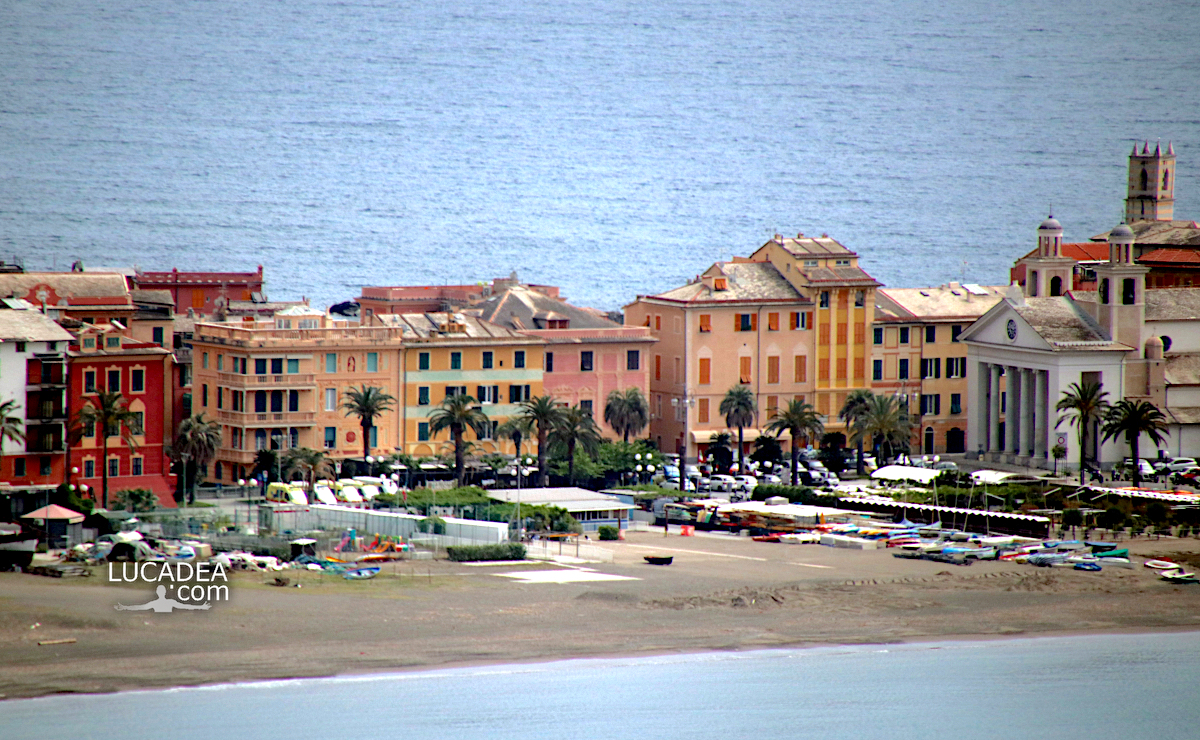
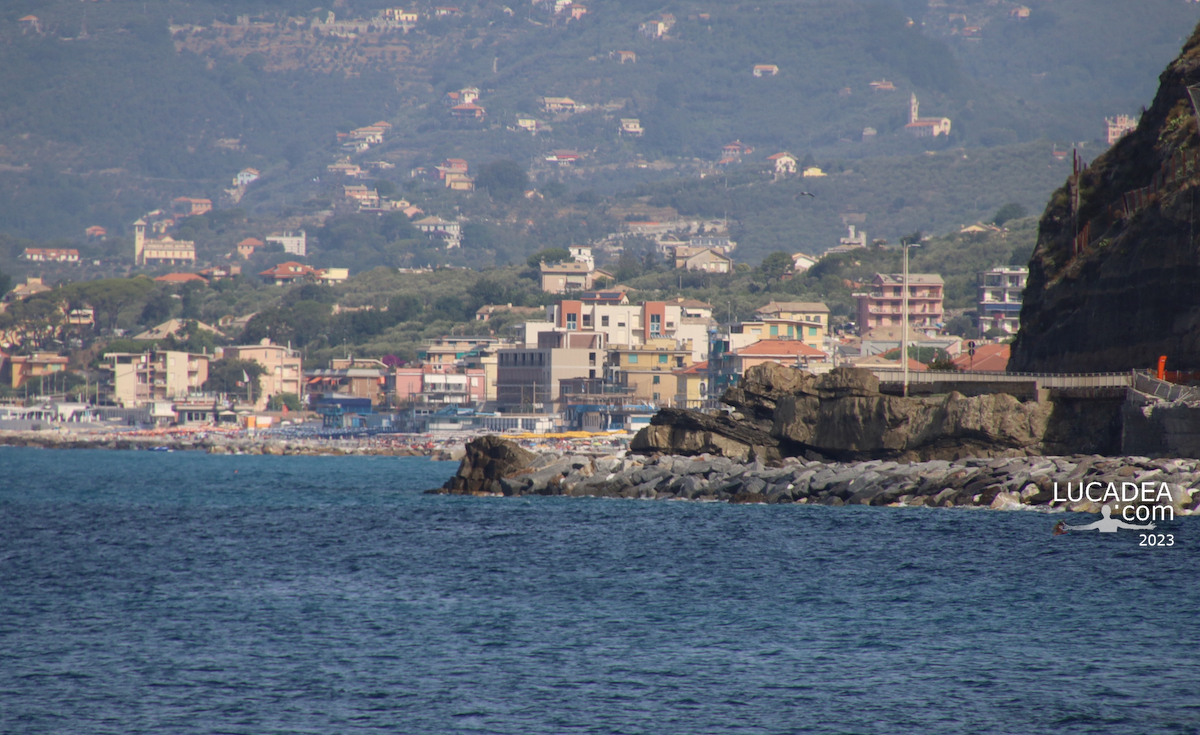
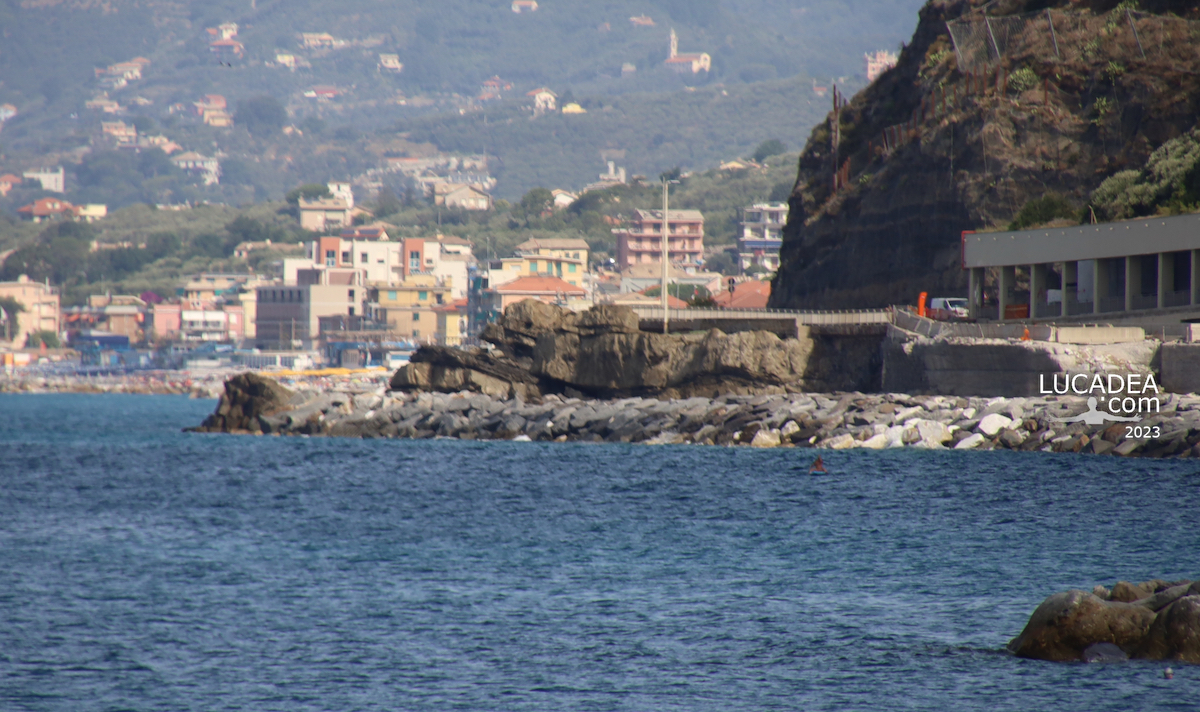
Camogli harbor seen from Recco

Il porticciolo di Camogli visto da Recco con il teleobiettivo

Camogli harbor seen from Recco.
From Recco, I photographed Camogli harbor with a powerful telephoto lens, looking for a different perspective on the Ligurian coast. What interests me about seeing Camogli from Recco is precisely this distance: instead of standing beside the colorful houses and the small harbor, I could observe the village from farther away and use the lens to bring the scene closer.
Some time ago I was in Recco and took the opportunity to photograph Camogli from there. It was not the usual viewpoint I would have chosen while visiting either of the two towns, and that distance made me stop and look for a composition I would not normally have had.
A telephoto lens can completely change the way a familiar place looks. From a distance, it brings apparently small elements much closer while also compressing the sense of depth in the landscape. In this case, Camogli harbor emerges from the wider view and becomes the natural point towards which the eye is drawn.
The photograph was taken in summer, and the sky was not particularly clear. The distance between Recco and Camogli, together with the haze in the atmosphere, made the images slightly soft and less defined than I would normally prefer. I do not necessarily see that as a flaw, though. It is part of the actual conditions in which I took the photograph and therefore part of the story of the image.
If you are wondering what to see in Camogli, the harbor and the colorful buildings overlooking the sea are naturally among the village’s most recognizable features. Photographing it from Recco completely changes that familiar view. I was not looking for a close-up of a facade or a perspective from the waterfront. I wanted to show how Camogli looks when viewed from another point along the coast.
Recco, Liguria, Italy, is only a short distance from Camogli, and that proximity creates interesting views across the coastline. The photograph came from exactly that possibility: being in one place and paying attention to what lies a little farther away, even when it is not the main subject of the day.
The harbor is one of the features that most strongly identifies Camogli. The village has a long connection with the sea and fishing, while today the small harbor remains one of its most recognizable views. Seen from a distance, however, many of the small details disappear and the harbor becomes almost a graphic element within the shape of the coastline.
That unusual perspective is what I like most about this photograph. If I had been standing in Camogli, I would probably have photographed the harbor from close by, looking for boats, houses and small details along the waterfront. From Recco, I had to do exactly the opposite: move away from the subject and use a telephoto lens to bring it back into the frame.
I also find the relationship between technique and place interesting in this kind of photograph. I did not need to find an especially dramatic viewpoint. I simply needed a sufficiently powerful lens and a reason to look carefully at what was in front of me. The telephoto lens turned a distant view into an image where the harbor became clearly recognizable.
The summer haze is naturally still visible. The photographs do not have the sharpness they might have had on a particularly clear day, but I prefer keeping them because they document the real conditions at the time. A personal photograph does not always have to be technically perfect to remain interesting.
I also like comparing this image with other photographs I have published of the Ligurian coast. Changing your viewpoint can completely alter the appearance of a familiar place. That is one reason I continue photographing places I may have already seen many times: moving just a few kilometers can be enough to find a new perspective.
This time the subject was Camogli, but the photograph was made in Recco. The small harbor, seen through a telephoto lens, becomes the result of two places connected by distance.

Have you ever tried photographing Camogli from Recco, or used a telephoto lens to find an unusual view of a place you already know? Add a comment or go to the bottom of the site to read what other visitors have written.
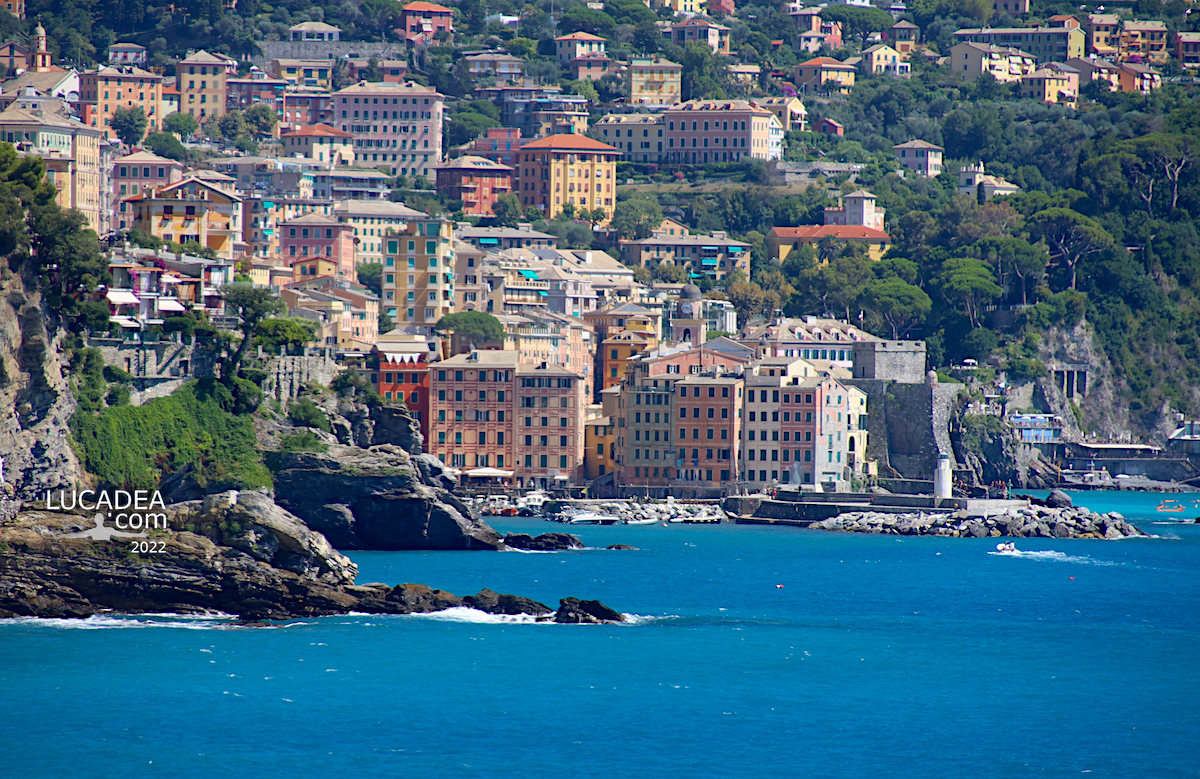
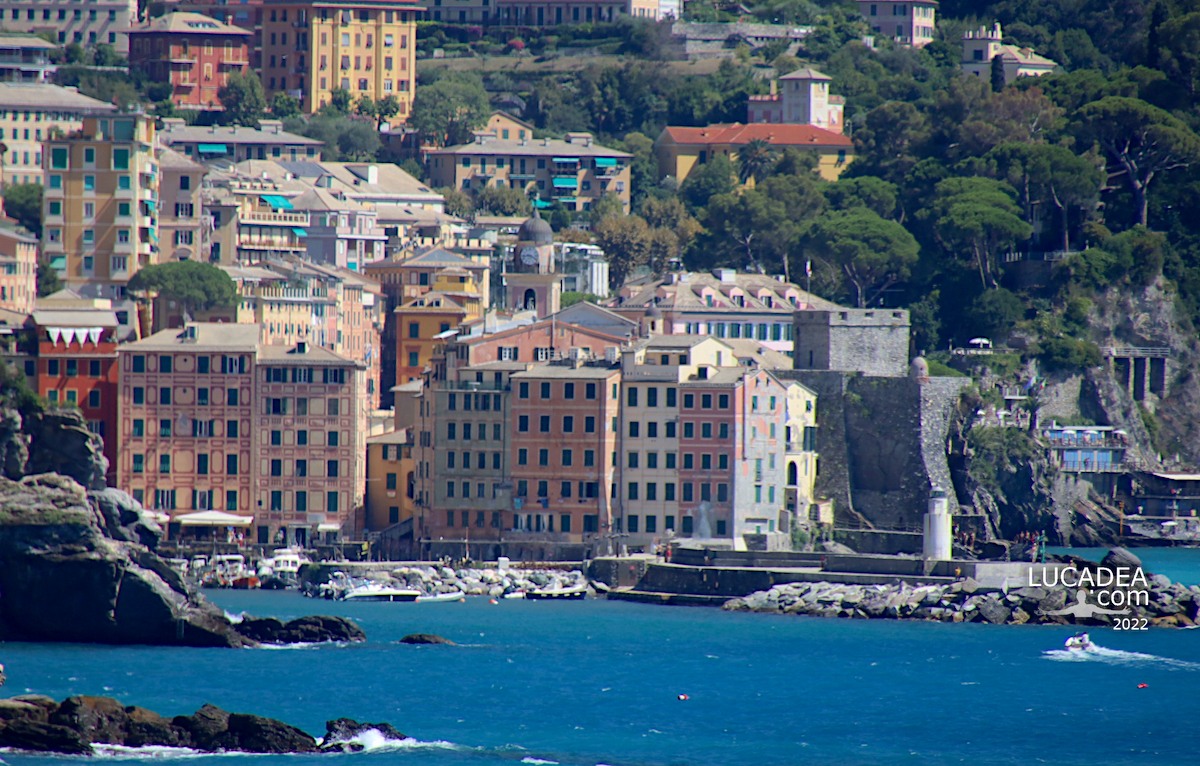
Camogli harbor seen from Recco with a telephoto lens, between the sea and Ligurian coast in summer haze

Camogli harbor seen from Recco with a telephoto lens, between the sea and Ligurian coast in summer haze

Camogli harbor seen from Recco with a telephoto lens, between the sea and Ligurian coast in summer haze

Photos taken with a Canon EOS RP camera and a Tamron 16-300 lens.

Here are a couple of videos of the Camogli small harbor that I filmed on a different day:


Video recorded with the GoPro Hero 10 Black.

Here is where Camogli is located:

Add one  comment to this article or read  here what other visitors have written.
 
Adv
 
Disclamer

The rights on images, videos, choruses, text and all other material on the LUCADEA.com website are governed as per  Copyright page.


This page has been viewed 0 times today.
This month it has been viewed 0 times.
In total it has been viewed 0 times.
 

The Bay of Fables Through a Telephoto Lens

Case affacciate sulla Baia delle Favole a Sestri Levante, fotografate con il teleobiettivo dai ruderi di Sant’Anna

The Bay of Fables Through a Telephoto Lens.
From the ruins above Sant’Anna in Sestri Levante, I tried to photograph the Bay of Fables from a distance that completely changes the way the landscape appears. A telephoto view of the Bay of Fables can reveal details and layers that are easy to miss from closer viewpoints, especially when the camera is used to isolate part of the coastline.
One of the things I enjoy about photographing from a distance is the possibility of finding unusual angles. A long lens does not necessarily need to be used for a huge panorama. Sometimes it is much more interesting to narrow the frame and let the houses, sea and shapes of the coast create the photograph.
That was the idea behind this image. I was standing near the ruins above Sant’Anna, one of the viewpoints from which Sestri Levante can be seen from higher up. From there, the Bay of Fables looks very different from the views you get while walking along the seafront. The houses seem to move closer together visually, while the telephoto lens compresses the distance and creates a much more compact composition.
This was the part that interested me most when I took the photograph. I was not simply trying to make another panoramic picture of Sestri Levante. I wanted to find a different way of looking at a landscape I know very well. In photography, stepping back can sometimes be a way of rediscovering familiar places.
There is, however, a problem that often appears when photographing distant subjects: the air itself. When the subject is far away, particularly across the sea or along the coast, the atmosphere between the camera and the subject can have a significant effect on clarity. Even with a good telephoto lens, an image may look softer than expected.
That happened with this photograph. The distance between my position and the houses along the Bay of Fables was enough for atmospheric conditions to become part of the image. I therefore had to make some adjustments in post-processing to try to improve the result.
That kind of correction does not always work perfectly. When an original photograph is already affected by haze or reduced atmospheric clarity, pushing sharpness or contrast too far can make the result look unnatural. In this case, though, I ended up liking the final appearance precisely because of its unusual rendering.
The colors also took on a different character from what I might have obtained by photographing the same scene from much closer. It is not necessarily a technically perfect photograph, and perhaps that is exactly why I like it. Sometimes an image works despite a limitation, or even because of a characteristic that initially looked like a flaw.
If you are visiting Sestri Levante and wondering what to see, the Bay of Fables is naturally one of the town’s most recognizable coastal landscapes. What interests me about this photograph, however, is the way the place is shown: not from the beach, not from the seafront, but from above Sant’Anna and through a telephoto lens.
In Sestri Levante, Liguria, Italy, there are several places from which the coastline can be viewed from above. I have already written on the blog about the view of the town from the Sant’Anna Cliffs. This photograph comes from the same idea of looking down at the coast, but here I deliberately narrowed the frame and concentrated on the houses along the bay.
There is also a small curiosity behind the name Bay of Fables. It is associated with Hans Christian Andersen, who stayed in Sestri Levante in 1833. The reference to his fairy tales remained in the name of the bay and has since become part of the town’s identity.
What I like about this photograph, then, is its slightly unusual character. It does not only show a place; it also records a particular way of photographing it. The distance, the telephoto lens and the need for some post-processing eventually gave the image an appearance I had not completely anticipated when I pressed the shutter.
Perhaps that is one of the reasons I keep photographing places I already know. Change the position, change the lens or simply change the way you look, and an entirely different image can appear.

Do you enjoy photographs taken from a long distance with a telephoto lens, even when they have a slightly unusual look? Add a comment or go to the bottom of the site to read what other visitors have written.

Houses along the Bay of Fables in Sestri Levante, photographed with a telephoto lens from the Sant’Anna ruins

Photo taken with Canon EOS M100 and lens Tamron 16-300.

Add one  comment to this article or read  here what other visitors have written.
 
Adv
 
Disclamer

The rights on images, videos, choruses, text and all other material on the LUCADEA.com website are governed as per  Copyright page.


This page has been viewed 0 times today.
This month it has been viewed 0 times.
In total it has been viewed 0 times.
 

The Cigno rock with Lavagna in the background

Lo scoglio del Cigno con Lavagna sullo sfondo

The Cigno rock with Lavagna in the background.
While heading toward Lavagna, just after the Sant’Anna tunnels, there is a large rock rising from the sea that easily catches the eye. It is one of those landscape details that many people notice while driving along the Ligurian coast, but rarely stop to observe more carefully.
I have to admit that I called it the “Cigno rock” in the title, even if this is not its official name. I chose this name simply because of the nearby Bagni Cigno, located a bit further along the coast, as I could not find any reliable reference to the real name of this rock. Sometimes photography also becomes a personal way to identify and describe a place.
I took this photo from the seaside promenade of Sestri Levante, using a telephoto lens to bring the subject closer and visually compress the distance with the background, where the town of Lavagna can be seen. This technique allows different elements of the landscape to appear much closer together than they actually are.
Sestri Levante and Lavagna, in Liguria, Italy, are very close to each other and connected by a coastal stretch that offers interesting views, especially for those who enjoy landscape photography. Even a simple rock like this can become an interesting subject when placed in the right perspective.
A small note about the photos: I apologize for the second image, which is slightly blurred. When shooting with a telephoto lens, even the smallest movement can affect sharpness. Still, I decided to include it because it helps show the overall scene.
On lucadea.com I often share photos of lesser-known corners of Liguria, because I believe that even simple elements can become meaningful subjects when observed carefully.
Sometimes all it takes is a rock, a different point of view or even an improvised name to tell a story about a place.

Do you happen to know the real name of this rock or have you ever noticed it while traveling along this coast? Add a comment or go to the bottom of the site to read what other visitors have written.

Lo scoglio del Cigno con Lavagna sullo sfondo

Lo scoglio del Cigno con Lavagna sullo sfondo

Photos taken with Canon EOS RP camera and Tamron 16-300 lens.

Here’s where the snag is exactly:

The Swan rock with Lavagna in the background – Le rocher du Cygne avec Lavagna en arrière-plan – La roca del Cisne con Lavagna al fondo – A rocha do Cisne com Lavagna ao fundo – Der Schwanenfelsen mit Lavagna im Hintergrund – Tảng đá Thiên Nga với Lavagna phía sau – 天鹅岩与拉瓦尼亚背景 – ラヴァーニャを背景にした白鳥の岩

The text of this post was written with the help of ChatGPT, a language model from OpenAI.

The imposing Tavira tower in the centre of Cadiz

La imponente Torre Tavira nel centro di Cadice

The imposing Tavira tower in the centre of Cadiz.
From the ship docked in port, the Tavira Tower in Cadiz stands out among the white rooftops with an almost silent presence, and photographing the Tavira Tower in Cadiz from above becomes a little game of observation between distance and detail. The Tavira Tower in Cadiz is one of those subjects that seem made to be sought out with a telephoto lens, hidden yet easily recognizable.
When the port is so close to the city center, as in Cadiz in Andalusia, Spain, I like to take advantage of these opportunities to observe the city from a different, almost stolen, perspective. The Tavira Tower in Cadiz gradually emerges from among the houses, and each shot seems to reveal something more than just its architectural form.
Knowing that for centuries it was the highest point in the city and a port watchtower makes everything even more interesting. In fact, since 1778, it was designated as an official watchtower precisely because of its privileged position compared to the rest of the city. Looking at it from afar, as I stand on the ship’s deck, I imagine those who once watched the sea from up there to spot incoming ships.
It reminded me of other shots I’ve shared on the site, also taken from the deck, where I look for urban details that are difficult to capture while walking down the street. It’s a different way of describing cities, more distant but perhaps also more curious.
A small detail that struck me is that Cadiz was full of similar towers, built by merchants to control maritime traffic, and many still remain scattered throughout the historic center. The Tavira Tower is simply the most famous, but it’s not the only one that tells of this past.

Have you ever discovered a detail about a city just by looking at it from afar? Add a comment or go to the bottom of the site to read what other visitors have written.

La imponente Torre Tavira nel centro di Cadice

La imponente Torre Tavira nel centro di Cadice

Photos taken with Canon EOS RP and Tamron 16-300.

This is the official website: torretavira.com.

To see all the photos of the Spanish city, click here:
foto gallery

Where is the tower located:

The official watchtower of the port of Cadiz in the 18th century, the Tavira Tower is the highest point in the city. Its main attractions are the camera obscura and the panoramic views from its lookout.
Continue and learn more at spain.info

The imposing Torre Tavira in the center of Cadiz – L’imposante Torre Tavira au centre de Cadix – La imponente Torre Tavira en el centro de Cádiz – A imponente Torre Tavira no centro de Cádiz – Der imposante Torre Tavira im Zentrum von Cadiz – Torre Tavira hùng vĩ ở trung tâm Cadiz – 雄伟的塔维拉塔位于加的斯市中心 – カディス中心部にある堂々としたタビラの塔

The text of this post was written with the help of ChatGPT, a language model from OpenAI.

Vittorio Veneto Street in the center of Chiavari

Via Vittorio Veneto in centro a Chiavari

Vittorio Veneto Street in the center of Chiavari.
The center of Chiavari is crossed by a straight street (a “caruggio”) that also serves as the main promenade.
In the western section it is called Martiri della Liberazione Street, while in the eastern section it is called Vittorio Veneto Street (which then continues into Dante Avenue).
Using a telephoto lens, I took photos that in this case I intentionally made a bit compressed, in order to capture the entire street in a single shot.

Do you know the historic center of Chiavari? Add a comment or go to the bottom of the site to read what other visitors have written.

Photos taken with Canon EOS RP and lens Tamron 16-300.

Where is the street:

Vittorio Veneto is an Italian town of 26,989 inhabitants in the province of Treviso in the Veneto region. The Battle of Vittorio Veneto was fought there during the Great War; the victory of the Italian army over the Austro-Hungarian army resulted in the Austrian surrender and the end of the war.
Continue and learn more at Wikipedia

The historic center of Chiavari: the beautiful via Vittorio Veneto – Le centre historique de Chiavari : la belle via Vittorio Veneto – El centro histórico de Chiavari: la hermosa via Vittorio Veneto – O centro histórico de Chiavari: a bela via Vittorio Veneto – Das historische Zentrum von Chiavari: die wunderschöne Via Vittorio Veneto – Trung tâm lịch sử của Chiavari: người đẹp qua Vittorio Veneto – 基亚瓦里的历史中心:美丽的维托里奥威尼托大街 – キアーヴァリの歴史的中心部:美しいヴィットリオ・ヴェネト通り

The cathedral tower of Funchal on the island of Madeira

La torre della cattedrale di Funchal nell'isola di Madera

The cathedral tower of Funchal on the island of Madeira.
I love photographing cities from the ship when I cannot go ashore, because with a good telephoto lens it is possible to highlight nice details.
As in this case, where I focused on the bell tower of Funchal Cathedral.

Do you know the island of Madeira? Add a comment or go to the bottom of the site to read what other visitors have written.

La torre della cattedrale di Funchal nell'isola di Madera

La torre della cattedrale di Funchal nell'isola di Madera

La torre della cattedrale di Funchal nell'isola di Madera

Photos taken with Canon EOS RP and Tamron 16-300 lens.

Click here to see all the photos of Funchal:
foto gallery

Where is the cathedral located:

The Cathedral of the Assumption of the Virgin Mary is the Catholic cathedral of Funchal, Portugal, and the seat of the Diocese of Funchal. It is located in the city center, not far from the marina, in the area known as Campo del Duca. Its construction began in the late 1400s. It was the first major church built on the island. Previously, there was a church near Calhau Beach, but as the population grew thanks to the booming sugarcane trade, the church could no longer accommodate all the faithful, so it was decided to build a larger one in the city center.
Continue and learn more at Wikipedia

The tower of Funchal Cathedral in the island of Madeira – La tour de la cathédrale de Funchal sur l’île de Madère – La torre de la Catedral de Funchal en la isla de Madeira – A torre da Catedral do Funchal, na ilha da Madeira – Der Turm der Kathedrale von Funchal auf der Insel Madeira – Tháp của Nhà thờ Funchal ở đảo Madeira – 马德拉岛丰沙尔大教堂的塔楼 – マデイラ島のフンシャル大聖堂の塔

The characteristic Levante Peninsula Street in Sestri

La caratteristica via Penisola Levante a Sestri Levante

The characteristic Levante Peninsula Street in Sestri Levante.
One of the most beautiful streets in Sestri, the one that first leads to the small promenade of the Bay of Silence and then, continuing on, climbs up the Peninsula (hence the name) and reaches the Church of San Nicolò and the castles.
I used a telephoto lens here, so the perspective looks slightly compressed, but the effect is intentional!

Do you know this spot in Sestri Levante? Add a comment or go to the bottom of the site to read what other visitors have written.

Photos taken with Canon EOS RP and lens Tamron 16-300.

Here’s where the street is:

The characteristic via Penisola Levante in Sestri Levante – La caractéristique via Penisola Levante à Sestri Levante – La característica vía Penisola Levante en Sestri Levante – A característica via Penisola Levante em Sestri Levante – Die Charakteristik der Via Penisola Levante in Sestri Levante – Đặc điểm qua Penisola Levante ở Sestri Levante – 塞斯特里莱万特 (Sestri Levante) 佩尼索拉莱万特 (Penisola Levante) 的特色 – セストリ・レバンテのペニソラ・レバンテ経由の特徴

The tower of Fascie-Rossi Palace from Bo Square

La torre di Palazzo Fascie-Rossi da piazza Bo a Sestri Levante

The tower of Fascie-Rossi Palace from Bo Square in Sestri Levante.
One of my favourite architectural subjects in Sestri Levante is Fascie-Rossi Palace and its tower.
Also because from many points in the town centre it can be seen and photographed.
This time I took the photo with a telephoto lens from the promenade near Bo Square.

Do you know Sestri Levante? Add a comment or go to the bottom of the site to read what other visitors have written.

Photos taken with Canon EOS RP and Tamron 16-300 lens.

Here is the website for Palazzo Fascie.

Here is where the palace is located:

The tower of the Fascie-Rossi palace from Piazza Bo in Sestri Levante – La tour du palais Fascie-Rossi depuis la Piazza Bo à Sestri Levante – La torre del palacio Fascie-Rossi desde Piazza Bo en Sestri Levante – A torre do palácio Fascie-Rossi da Piazza Bo em Sestri Levante – Der Turm des Fascie-Rossi-Palastes von der Piazza Bo in Sestri Levante – Tháp của cung điện Fascie-Rossi từ Quảng trường Bo ở Sestri Levante – 塞斯特里莱万特博广场的法西罗西宫塔楼 – セストリ・レバンテのボー広場から見たファシエ・ロッシ宮殿の塔

The Sestri Peninsula seen from Ciappa du Lu

La Penisola di Sestri vista dalla Ciappa du Lu

The houses on the Sestri Peninsula seen from Ciappa du Lu.
A while ago, I visited the famous rock called Ciappa du Lu (reachable from the path that starts in Sestri and leads to Punta Manara).
From there, with my telephoto lens, I took several photos of the Sestri Peninsula from an unusual (for me) perspective.

Don’t you also think the view from this rock is splendid?
Add a comment or go to the bottom of the site to read what other visitors have written.

La Penisola di Sestri vista dalla Ciappa du Lu

La Penisola di Sestri vista dalla Ciappa du Lu

Photos taken with Canon EOS M100 and lens Tamron 16-300.

Here’s where I took it from:

The houses on the Sestri peninsula seen from Ciappa du Lu – Les maisons de la péninsule de Sestri vues de Ciappa du Lu – Las casas de la península de Sestri vistas desde Ciappa du Lu – As casas da península de Sestri vistas de Ciappa du Lu – Die Häuser auf der Halbinsel Sestri vom Ciappa du Lu aus gesehen – Những ngôi nhà trên bán đảo Sestri nhìn từ Ciappa du Lu

The tower of Lomellino Palace known as the Mirador

La torre di palazzo Lomellino detta il Minareto a Genova

The tower of Lomellino Palace known as the Mirador, in Genoa.
From the Castelletto viewpoint, a terrace overlooking the entire center of Genoa, I always try to photograph details of the city.
In this case, the tower of Palazzo Lomellino, also known as the Mirador Tower, ended up in the lens of my telephoto lens.

Have you ever seen this tower in Genoa and know more about it?
Add a comment or go to the bottom of the site to read what other visitors have written.

La torre di palazzo Lomellino detta il Minareto a Genova

Photo taken with Canon EOS RP and lens Tamron 16-300.

Here is where the tower is located:

Minaret of a mosque?… no, the 16th-century Mirador of Palazzo Nicolosio Lomellini, the tower, later expanded in the 18th century, with which the coral lords of Tabarca intended to amaze and stun their guests. The Great Beauty…
Continue and learn more at A Me Zena

The tower of Palazzo Lomellino called the Minaret in Genoa – La tour du Palazzo Lomellino connue sous le nom de Minaret à Gênes – La torre del Palazzo Lomellino conocida como el Minarete de Génova – A torre do Palazzo Lomellino conhecida como Minarete de Gênova – Der Turm des Palazzo Lomellino, bekannt als Minarett in Genua – Tháp Palazzo Lomellino được gọi là Minaret ở Genoa
🏠
  • Italiano